TRIS logo image
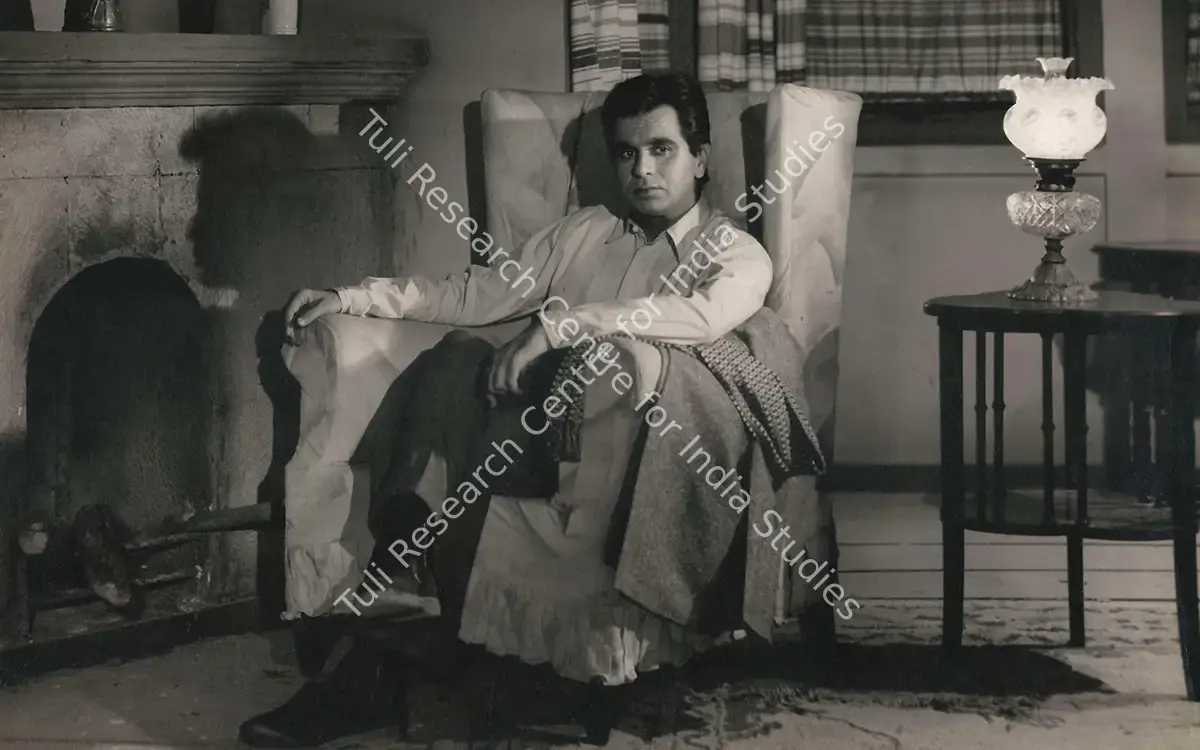
Dilip Kumar — featured artwork

Introduction

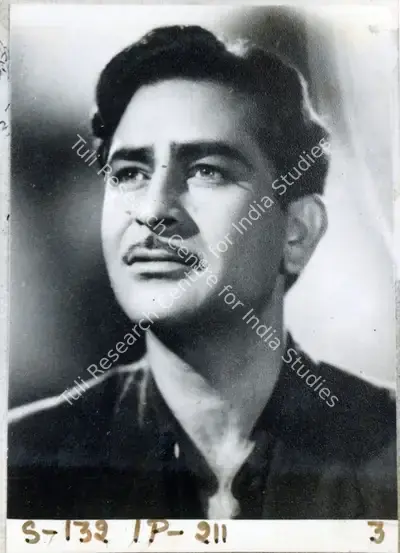
Dilip Kumar From the storised lanes of Peshawar's Qissa Khwani Bazaar emerged a figure, who later came to be known as Dilip Kumar an who would come to embody an entire era of Indian cinema. Born into the family of Lala Ghulam Sarwar Ali Khan, a modest fruit merchant, he was originally named Muhammad Yusuf Khan and grew up between the orchards of Deolali and the vibrant streets of his ancestral city, carrying with him the quiet imprint of a world that would later find expression in his extraordinary screen presence. Among the formative encounters of his youth was his friendship with Raj Kapoor, another son of Peshawar who would eventually ascend to the pantheon of Indian cinema. Their childhood association would acquire, in retrospect, an almost fabled significance, as both men went on to become defining forces in the evolution of the Hindi film hero.
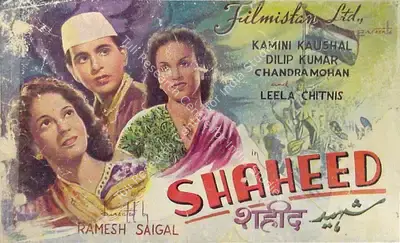
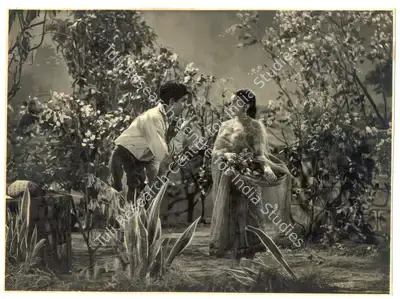
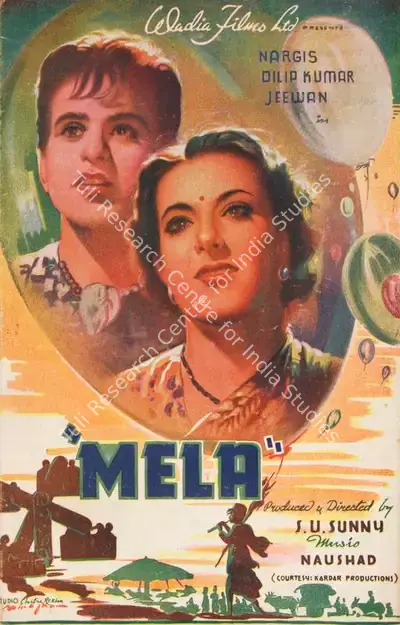
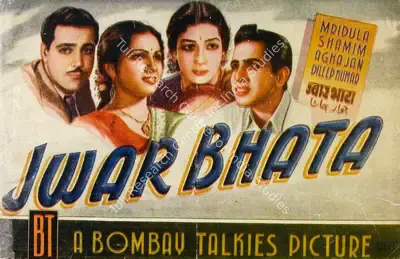
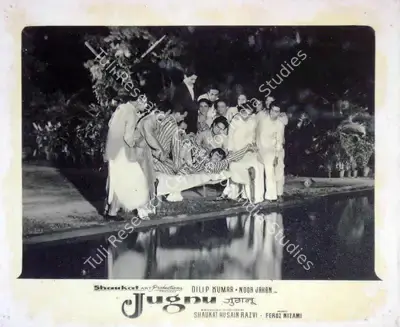
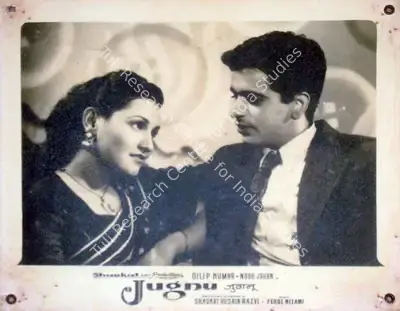
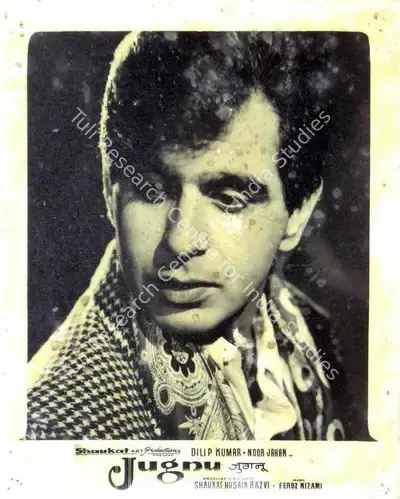
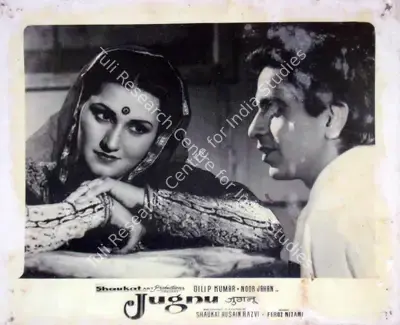
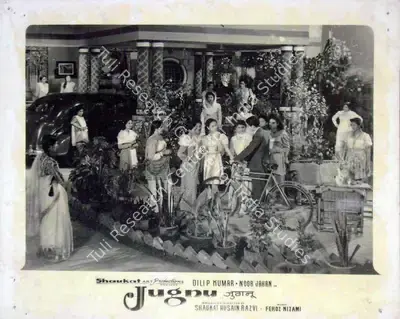
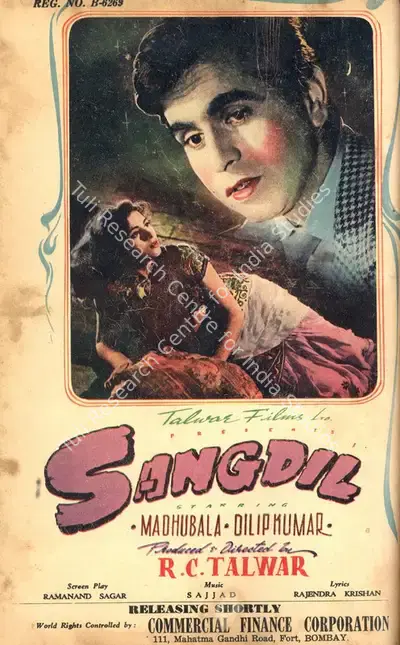
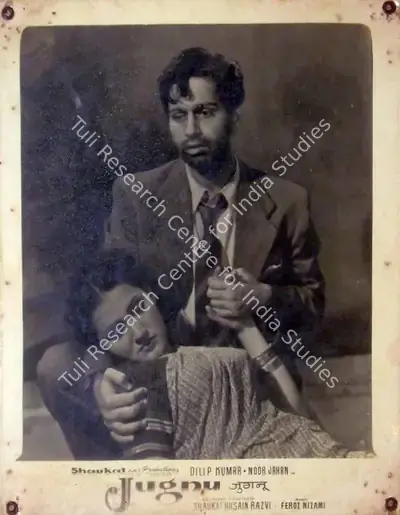
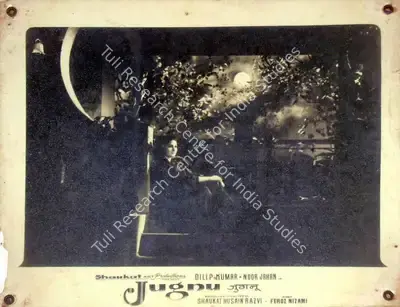
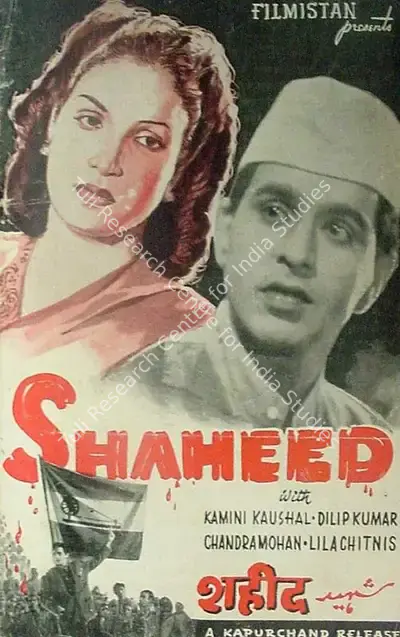
Under the name Dilip Kumar, Yusuf Khan transformed not merely into a celebrated actor but into an institution of performance. His restrained intensity, emotional depth, and remarkable command of silence and gesture gave Indian cinema a new vocabulary of acting. Alongside Raj Kapoor and Dev Anand, he came to constitute one of the legendary triumvirate of Hindi cinema's golden age—three towering artists whose contrasting sensibilities helped redefine stardom and permanently altered the contours of screen performance. destiny, inscrutable yet irresistible, led him to Bombay, where Devika Rani anointed him with the name that would echo across generations. Thus, in Jwar Bhata (1944), he stepped onto the cinematic stage—not yet as a conqueror, but as a quiet herald of greatness. His ascent began with Jugnu (1947), followed by the resounding successes of Shaheed and Mela (1948), each film a rung on the ladder toward immortality.
Dilip Kumar became the defining presence in some of Indian cinema's most acclaimed films and among its most enduring popular successes. In works such as Naya Daur (1957), made in the first decade after India's independence, he gave compelling form to the hopes, anxieties, and struggles of ordinary people navigating the uncertainties of a newly sovereign nation. His performances resonated not simply because of their dramatic power, but because they seemed to capture the emotional landscape of a society in the midst of profound transformation.
Together with Raj Kapoor and Dev Anand, he formed one of the celebrated triumvirate of Hindi cinema's golden age. Yet Kumar's distinction lay equally in the extraordinary seriousness with which he approached his craft. He immersed himself completely in his characters, undertaking whatever preparation a role demanded—from mastering unfamiliar regional accents to learning musical instruments—bringing to each performance a rare combination of discipline, authenticity, and emotional conviction.
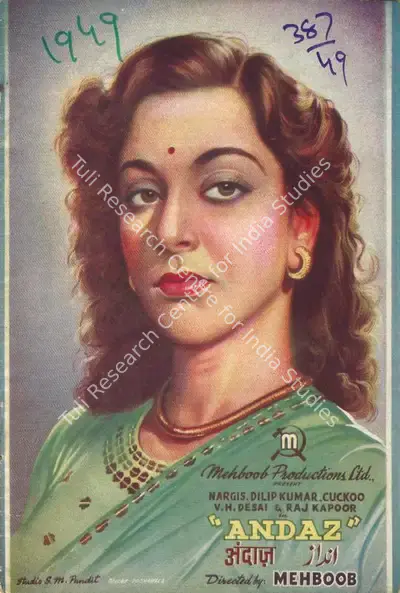
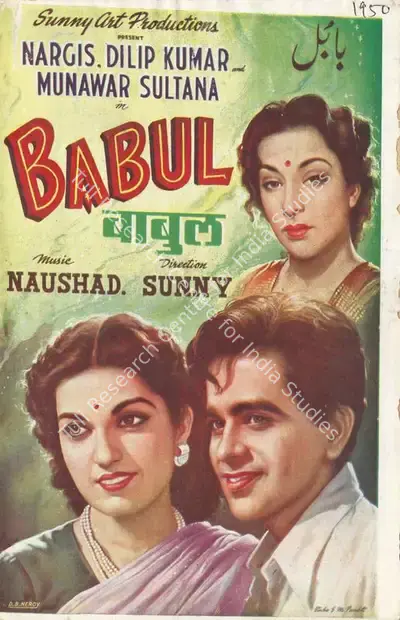
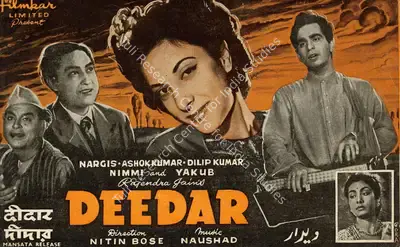
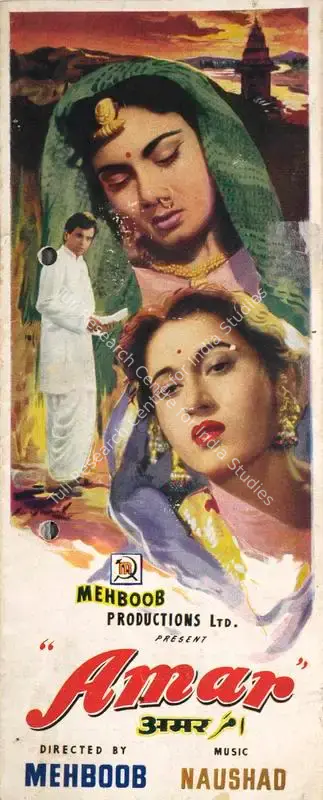
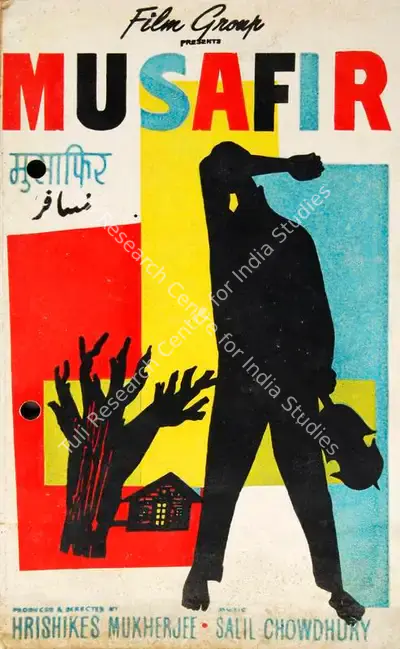
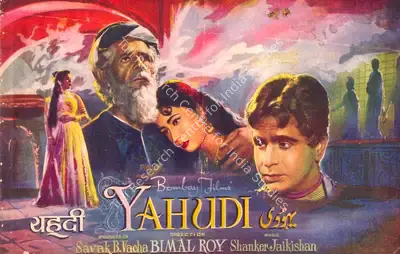
His first towering milestone, Andaz (1949), placed him alongside Raj Kapoor and Nargis, shattering box-office records and inaugurating an era defined by his magnetic presence. What followed was a cascade of triumphs—Babul (1950), Deedar (1951), Aan (1952), Uran Khatola (1955), Insaniyat (1955), Naya Daur (1957), Naya Daur(1957), Paigham (1959)—works that enshrined him as the monarch of Hindi cinema's golden age. His portrayals in Devdas (1955), Amar (1954), Musafir (1957), Yahudi (1958), and Sunghursh (1968) crystallised his legend as the pioneer of subtle, internalised—almost alchemical—method acting.
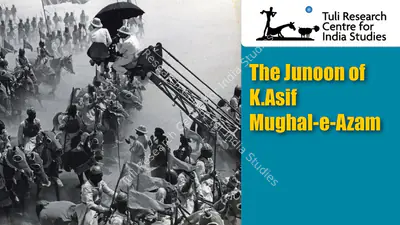
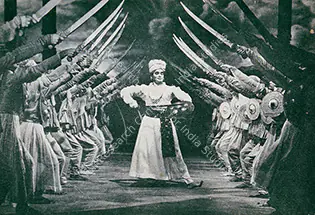
At the zenith of his reign came his portrayal of Prince Salim in K. Asif's monumental epic Mughal-e-Azam (1960), a cinematic colossus whose grandeur remains unmatched. Here, his restrained fire, his whispered rebellions, and his regal bearing transformed not merely a character, but the very grammar of screen acting.
Though the 1970s dimmed the blaze of his earlier decade, he returned with sovereign majesty in Kranti (1981), and continued to command the screen in Vidhaata, Karma, and Saudagar. His final bow came in Qila (1998), closing an illustrious chapter of 57 films over five radiant decades. His marriage to Saira Banu became one of Indian cinema's most cherished unions, a sanctuary away from the glare he so gracefully avoided. Laurels adorned him—the Padma Bhushan, Padma Vibhushan, Dadasaheb Phalke Award, and Pakistan's Nishan-e-Imtiaz, a singular honour never again bestowed on an Indian artist.
When he departed in July 2021, he left not merely memories but a mythic legacy. And in Peshawar, the house of his childhood—now a national heritage monument—stands as a shrine to the thespian who transformed silence into poetry and performance into immortality.
Source:
https://www.britannica.com/biography/Dilip-Kumar
https://en.wikipedia.org/wiki/Dilip_Kumar
पेशावर के क़िस्सा ख़्वानी बाज़ार की मशहूर गलियों से एक ऐसी शख़्सियत उभरी, जिसे बाद में दिलीप कुमार के नाम से जाना गया। वे भारतीय सिनेमा के एक पूरे दौर की पहचान बन गए। एक साधारण फल व्यापारी लाला ग़ुलाम सरवर अली ख़ान के परिवार में जन्मे, उनका असली नाम मुहम्मद यूसुफ़ ख़ान था। वे देवलाली के बाग़ों और अपने पैतृक शहर की जीवंत गलियों के बीच पले-बढ़े। उनके भीतर एक ऐसी दुनिया की गहरी छाप थी, जो बाद में पर्दे पर उनकी असाधारण उपस्थिति के रूप में सामने आई। उनकी जवानी के दिनों में राज कपूर से उनकी दोस्ती हुई, जो ख़ुद भी पेशावर से थे और आगे चलकर भारतीय सिनेमा के दिग्गज बने। बचपन की यह दोस्ती बाद में एक किंवदंती बन गई, क्योंकि इन दोनों ने ही हिंदी फ़िल्मों के नायक के स्वरूप को गढ़ने में अहम भूमिका निभाई।
दिलीप कुमार के नाम से, यूसुफ़ ख़ान न केवल एक मशहूर अभिनेता बने, बल्कि अभिनय की एक पूरी संस्था बन गए। उनकी संयमित तीव्रता, गहरी भावनाएँ, और ख़ामोशी व इशारों पर उनकी अद्भुत पकड़ ने भारतीय सिनेमा को अभिनय की एक नई भाषा दी। राज कपूर और देव आनंद के साथ मिलकर, वे हिंदी सिनेमा के सुनहरे दौर की उस महान तिकड़ी का हिस्सा बने, जिसने तीन ऐसे दिग्गज कलाकार, जिनकी अलग-अलग शैलियों ने स्टारडम को नए सिरे से परिभाषित किया और पर्दे पर अभिनय के तौर-तरीक़ों को हमेशा के लिए बदल दिया। क़िस्मत उन्हें मुंबई ले आई, जहाँ देविका रानी ने उन्हें वह नाम दिया जो पीढ़ियों तक गूँजता रहा। इस तरह, 1944 की फ़िल्म 'ज्वार भाटा' से उन्होंने सिनेमा की दुनिया में क़दम रखा, तब वे एक विजेता के रूप में नहीं, बल्कि महानता के एक शांत अग्रदूत के रूप में आए थे। 1947 की फ़िल्म 'जुगनू' से उनकी सफलता का सफर शुरू हुआ, जिसके बाद 'शहीद' और 'मेला' (1948) जैसी शानदार फ़िल्में आईं। ये सभी फिल्में उन्हें अमरता की ओर ले जाने वाली सीढ़ियां साबित हुईं।
दिलीप कुमार भारतीय सिनेमा की कुछ सबसे प्रशंसित और लंबे समय तक लोकप्रिय रहीं फ़िल्मों का मुख्य चेहरा बने। भारत की आज़ादी के बाद के पहले दशक में बनी 'नया दौर' (1957) जैसी फ़िल्मों में, उन्होंने एक नए स्वतंत्र राष्ट्र की अनिश्चितताओं के बीच जी रहे आम लोगों की उम्मीदों, चिंताओं और संघर्षों को बहुत प्रभावशाली ढंग से पेश किया। उनके अभिनय ने लोगों के दिलों को इसलिए नहीं छुआ कि उनमें कोई नाटकीय दम था, बल्कि इसलिए क्योंकि वे एक ऐसे समाज की भावनाओं को बख़ूबी दर्शाते थे, जो उस समय गहरे बदलाव के दौर से गुज़र रहा था।
राज कपूर और देव आनंद के साथ मिलकर, उन्होंने हिंदी सिनेमा के स्वर्ण युग की उस मशहूर तिकड़ी का निर्माण किया, जिसे आज भी याद किया जाता है। लेकिन दिलीप कुमार की ख़ासियत उनके काम के प्रति उनकी असाधारण गंभीरता में थी। वे अपने किरदारों में पूरी तरह डूब जाते थे, चाहे वह किसी अनजान क्षेत्रीय लहजे को सीखना हो या कोई वाद्य यंत्र बजाना, वे अपने हर अभिनय में अनुशासन, सच्चाई और गहरी भावनाओं का एक अद्भुत मेल लेकर आते थे।
उनकी पहली बड़ी कामयाबी 'अंदाज़' (1949) थी, जिसने उन्हें राज कपूर और नरगिस के बराबर ला खड़ा किया। इस फ़िल्म ने बॉक्स ऑफ़िस के सारे रिकॉर्ड तोड़ दिए और एक ऐसे दौर की शुरुआत की, जिस पर दिलीप कुमार के करिश्माई व्यक्तित्व की छाप थी। इसके बाद तो सफलताओं का ताँता लग गया 'बाबुल' (1950), 'दीदार' (1951), 'आन' (1952), 'उड़न खटोला' (1955), 'इंसानियत' (1955), 'नया दौर' (1957) और 'पैग़ाम' (1959) जैसी फ़िल्मों ने उन्हें हिंदी सिनेमा के स्वर्ण युग का बेताज बादशाह बना दिया। 'देवदास' (1955), 'अमर' (1954), 'मुसाफ़िर' (1957), 'यहूदी' (1958) और 'संघर्ष' (1968) जैसी फ़िल्मों में उनके अभिनय ने उन्हें एक ऐसे कलाकार के रूप में स्थापित किया, जो बहुत ही सूक्ष्म और गहराई से जुड़े 'मेथड एक्टिंग' (method acting) के तरीक़े में माहिर थे।
उनके करियर के शिखर पर आई के. आसिफ़ की भव्य फ़िल्म 'मुग़ल-ए-आज़म' (1960), जिसमें उन्होंने शहज़ादा सलीम का किरदार निभाया। यह एक ऐसी शानदार फ़िल्म थी, जिसकी भव्यता का आज भी कोई सानी नहीं है। इस फ़िल्म में उनके संयमित तेवर, दबी आवाज़ में किए गए विद्रोह और शाही अंदाज़ ने न केवल एक किरदार को जीवंत किया, बल्कि स्क्रीन एक्टिंग के पूरे व्याकरण को ही बदल दिया।
हालाँकि 1970 के दशक में उनके करियर की चमक कुछ फीकी पड़ी, लेकिन 1981 में 'क्रांति' के साथ उन्होंने एक शानदार वापसी की। इसके बाद 'विधाता', 'कर्मा' और 'सौदागर' जैसी फ़िल्मों में भी उनका जलवा क़ायम रहा। 1998 में आई फ़िल्म 'क़िला' (1998) उनके करियर की आख़िरी फिल्म थी, जिसके साथ ही पाँच दशकों तक फैली 57 फ़िल्मों की उनकी शानदार यात्रा का समापन हुआ। सायरा बानो के साथ उनकी शादी भारतीय सिनेमा के सबसे प्यारे जोड़ों में से एक बन गई। यह उस चकाचौंध से दूर एक ऐसी पनाहगाह थी, जिससे वे हमेशा बहुत शालीनता से बचते रहे। उन्हें कई सम्मान मिले, पद्म भूषण, पद्म विभूषण, दादा साहब फाल्के पुरस्कार, और पाकिस्तान का 'निशान-ए-इम्तियाज़'—एक ऐसा अनूठा सम्मान जो फिर कभी किसी भारतीय कलाकार को नहीं दिया गया।
जुलाई 2021 में जब वे विदा हुए, तो अपने पीछे केवल यादें ही नहीं, बल्कि एक महान विरासत छोड़ गए। पेशावर में उनका बचपन का घर, जो अब एक राष्ट्रीय धरोहर स्मारक है। उस कलाकार के लिए एक तीर्थस्थल की तरह है, जिसने ख़ामोशी को कविता में और अभिनय को अमरता में बदल दिया।
स्रोत:
https://www.britannica.com/biography/Dilip-Kumar
https://en.wikipedia.org/wiki/Dilip_Kumar
Date of Birth
11 Dec 1922
Date of Death
07 Jul 2021
Age
98
Nationality
Indian
Place of Birth
Peshawar, Pakistan
Place of Death
Mumbai, Maharashtra, India
Spouse(s)
Saira Banu, Asma Rehman
Year Marriage Registered
1966-2021 | 1981-1983
Parent(s)
Ayesha Begum, Lala Ghulam
Siblings
Aslam Khan, Nasir Khan, Ehsan Khan

Filmography 70

Integrated Timeline

11 entries
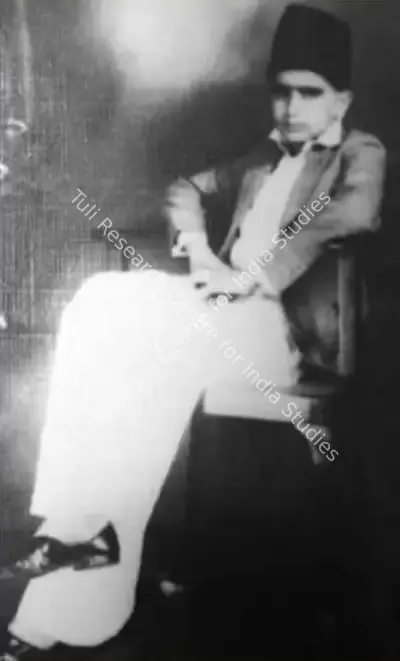
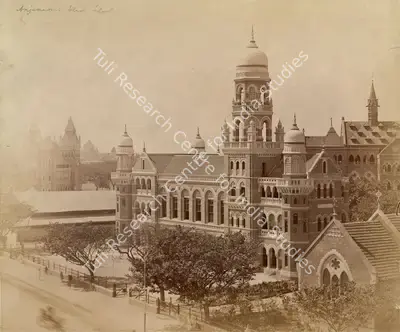
Born as Muhammad Yusuf Khan on December 11 in the Qissa Khawani Bazaar neighbourhood of Peshawar, North-West Frontier Province of Undivided India. He was one of twelve children of fruit merchant Muhammad Sarwar Khan and Ayesha Begum. His family was acquainted with the Kapoors who lived in the same neighbourhood, and Yusuf as a young child became friends with Ranbir Raj Kapoor, who grew up to be the actor, Raj Kapoor. When was 9 years old, the family moved to Bombay (now Mumbai) as his father was worried about diminishing business prospects due to the impending World War II. Admitted to Anjuman-i-Islam School. Here he befriended Mohammad Umar Mukri (who later attained fame as a comic actor). At this time, he also became an avid reader and read books extensively at the school library and elsewhere. He also studied the British Constitution at school which came in handy later when he had to deliver a speech about superiority of the Indian nation at a club in the presence of British officers. The family had to temporarily move to Deolali because his elder brother Ayub had developed a respiratory disorder and Deolali was seen as an ideal location for his treatment and recovery. During this period, Yusuf was admitted to the Barnes School in Deolali. As Ayub's health improved, the family moved back to Bombay.
He attended Khalsa College, where he reconnected with his childhood friend Raj Kapoor. They often played soccer in college, and Raj took him to see his family in Matunga. He also studied briefly at Wilson College for about a year. Later, Yusuf ran away from home after a minor disagreement with his father and went to Poona (now Pune). He secures a job managing a sandwich and dry fruit stall at the British Army Club, earning his first independent income of Rs 5,000. When asked by an officer to deliver a speech at the club about India's position in World War II, Yusuf fell back on his school study of British Constitution to defend India's stand and make a case for its freedom. His comments were not taken well and he was arrested, spending the night in prison with a group of Gandhians. This experience shaped Yusuf's patrotism and worldview. A chance meeting with an old acquiantance at Churchgate station took him to the famous Bombay Talkies studioes and the office of Devika Rani, its star-owner. She offered him the job of an actor, a salaried employee of Bombay Talkies. Though he harboured no desire to join films, the salary was a substantial figure for him to turn her down. He accepted the job.
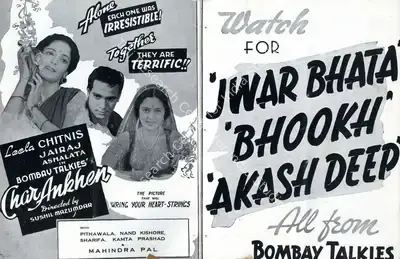
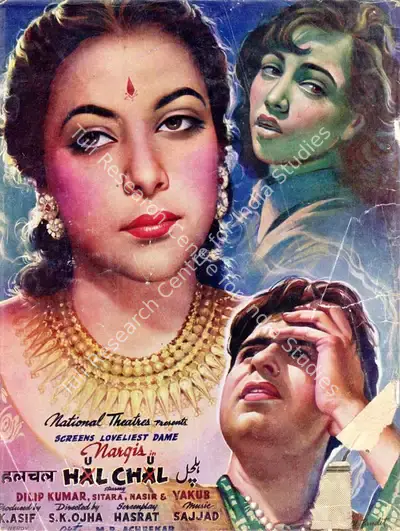
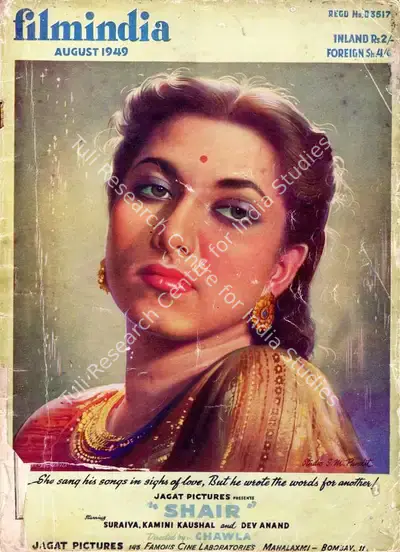
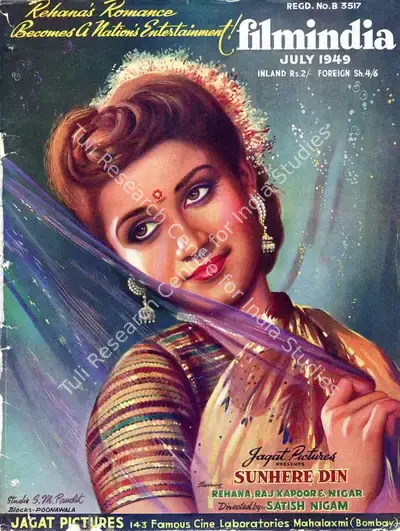
It was suggested that he adopt the screen name Dilip Kumar to have a secular appeal and a romantic image. With that name, he debuted in Amiya Chakraborty's Jwar Bhata (1944). Unlike most new actors, Dilip Kumar wasn't nervous at all. He was instructed to run as soon as director Amiya Chakraborty yelled "action!". Dilip wanted to know why he was running, and the director told him that he was to save the heroine from killing herself. But he ran so fast that the camera only captured a blur. The director asked him to run a little slower, which confused the new actor. How could he run slow while saving a woman who was about to die? Jwar Bhata took two years to make but when it was released in 1944, the film flopped commercially, and Dilip Kumar was panned by film critics across the board. Baburao Patel of Film India called this new hero "anemic", adding that "his acting effort amounts to nil".
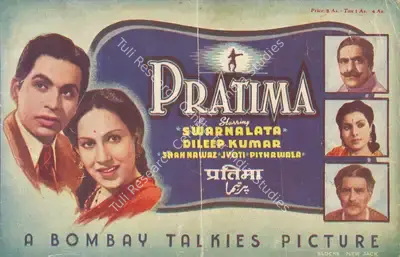
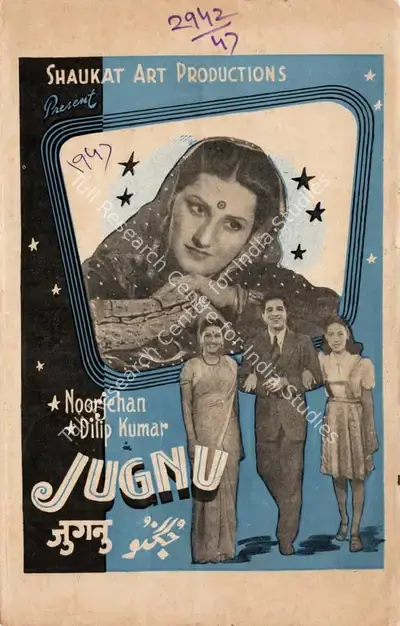
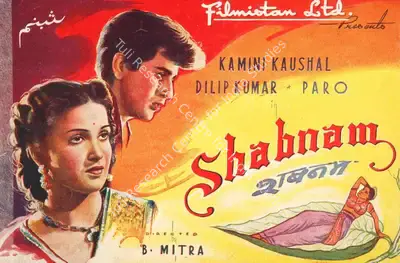
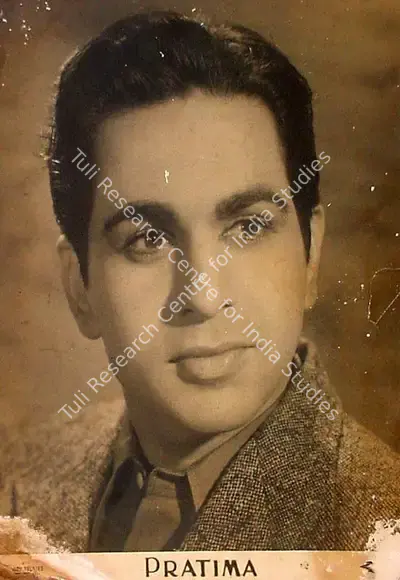
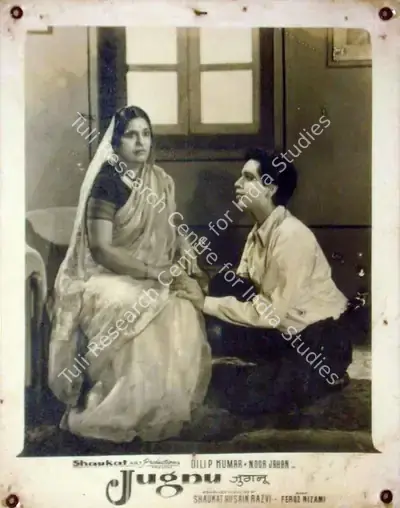
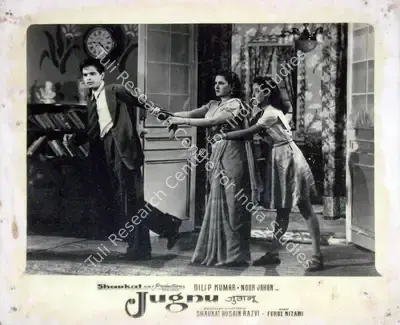
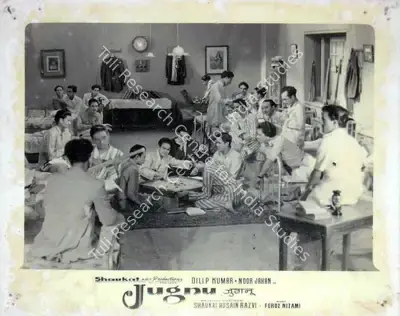
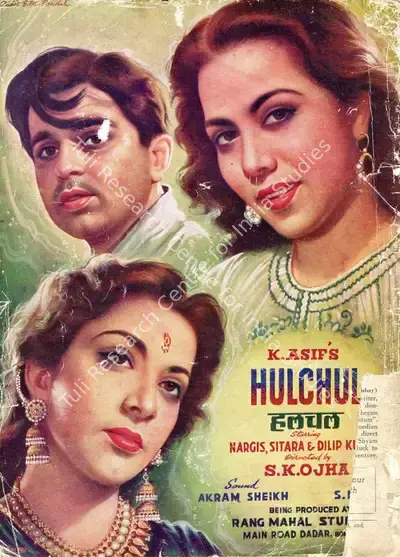
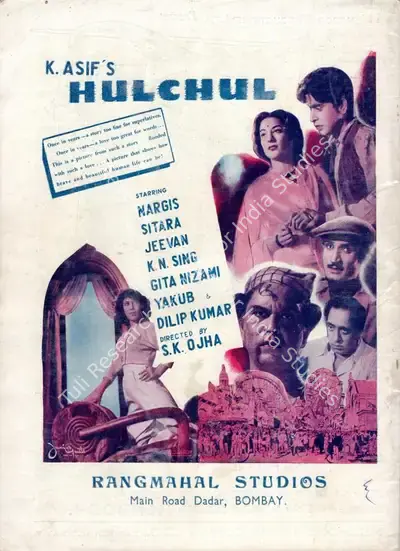
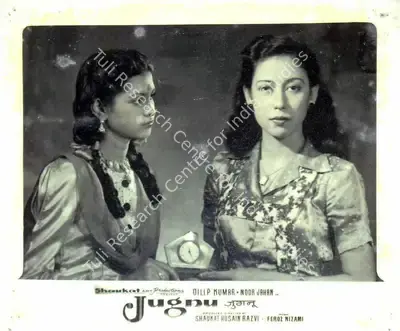
Jwar Bhata was followed by Pratima, actor Paidi Jairaj's directorial debut. It received as lukewarm a response as Dilip Kumar's first outing. The critics had a field day. Dilip Kumar kept working on his craft, trying to hone it with each passing day. This included conversations with his directors and his mentors Sasadhar Mukherjee and Amiya Chakraborty. He watched a film every day, often watching them repeatedly to capture the details. His first box office success came in 1947 with Jugnu, a love story which became immensely popular amongst the youth. Despite the poor reviews and continued criticism of Dilip Kumar's acting, the film was a runaway hit. It pitted him against Noor Jehan, and with Mohammed Rafi, who appeared in the film as one of their classmates. The light, jovial tone of the film worked for youngsters but also ran into foul weather for its candid depiction of romance. Dilip Kumar's winning streak continued with Shaheed and Mela. In 1949, the multi-starrerAndaz pitted him with his old friend Raj Kapoor and with Nargis. A tragic romance, it had several firsts. It was the first and only film starring both Raj Kapoor and Dilip Kumar, the first major success featuring the iconic Raj-Nargis pair, and one of Lata Mangeshkar's early hits as a playback singer. Dilip Kumar's performance was lauded and contributed immensely to his stardom. The film was one of the biggest commercial successes of that era. Shabnam released in the same year was also a huge success. Just five years after his debut, Dilip Kumar was a recognisable star with a fan following of his own. A young man called Harikrishan Goswami, enamoured by Dilip's performance in Shabnam, decided to call himself Manoj Kumar, after Dilip's character in the film.
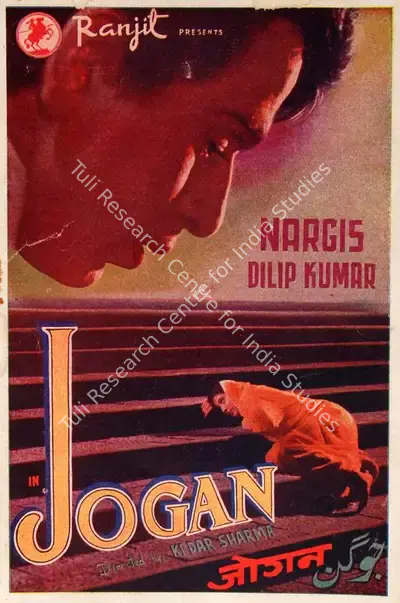
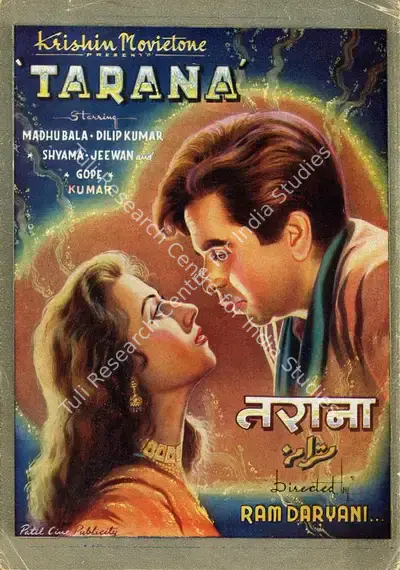
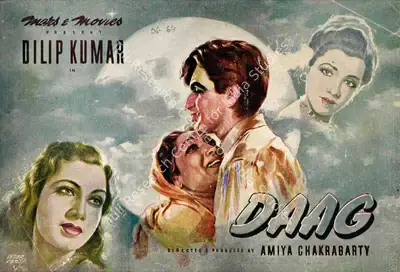
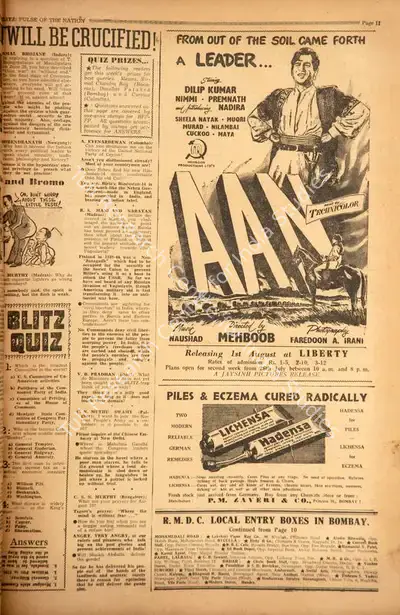
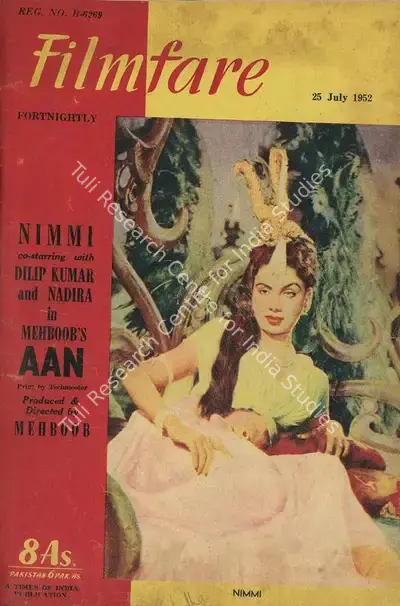
The 1950s saw Dilip Kumar rise to dizzying heights of superstardom. The decade began in right earnest with three big hits: Jogan, Babul and Arzoo (all 1950), followed by Deedar and Tarana (1951), which was his first collaboration with Madhubala. His performance in Daag (1952) won him the very first Filimfare Award for Best Actor. Around this time, Dilip Kumar was given the moniker "Tragedy King", an allusion to his intense and tragic parts. He was beginning to feel that his roles were taking a toll on him. On the advice of one Dr. W.D. Nichols, he decided to switch to comedy and more lighthearted roles. This brought about Aan (1952), a swashbuckling adventure film in technicolour. It became one of the highest-grossing Indian films of the year. The film had a lavish premiere in London, and was released internationally as The Savage Princess. It featured Dilip Kumar in sword-fights and comedy sequences, a far cry from the kind of roles he was seen in till then. Aan was a success both in India as well as overseas.
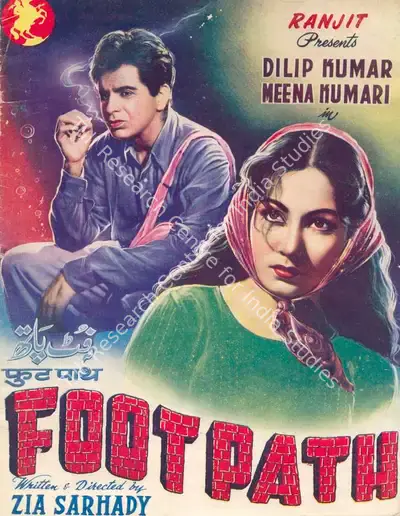
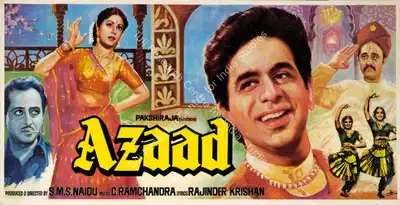
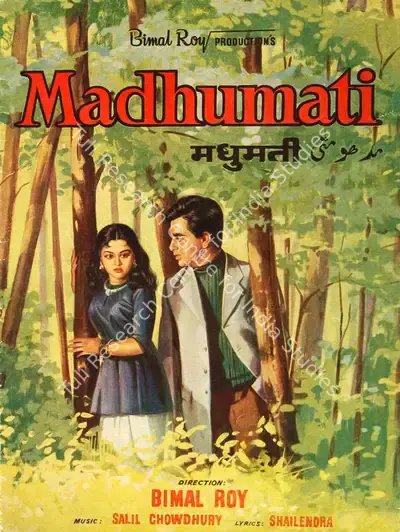
Despite his decision to stick to levity in his performances, some of the sombre and tragic roles Dilip Kumar had signed on for continued to appear, and were lapped up by audiences. Among them was Footpath (1953), which featured one of his most intense performances as a black marketeer overcome with guilt and remorse. The film featured one of his most iconic songs, Shaam-e-gham ki kasam, making Talad Mahmood his 'singing voice' for quite a while. In Amar, he plays yet another grey role of a rich lawyer who ends up molesting a poor woman. The apotheosis of Dilip Kumar's "tragedies" was Bimal Roy's Devdas (1955) in which he played the title role. Widely considered as one of his most accomplished performances and one of the best in Indian cinema, it is considered the definitive portrayal of Sarat Chandra Chattopadhyay's eponymous creation. In his memoirs, Kumar emphasised the power of Rajinder Singh Bedi's dialogues that retained pathos and profundity while being simple enough for generations of Indians to recite. Much of the durablity of these lines could also be attributed to Dilip Kumar's matchless dialogue delivery which endeared them to millions of Indians. His portrayal, despite every reason to be theatrical, was instead marked by nuanced body language and the eloquence of silence. His performance in Azaad, which came out in the same year, was polar opposite. It was a costume drama with a generous amount of comedy and action, allowing Kumar to tap on to the more jovial aspects of his histrionics to pull off scenes that evoked laughter and mirth. Azaad and Devdas won him his second and third Filmfare awards respectively. Dilip Kumar's winning streak continued with Naya Daur (1957) and Madhumati (1958). While B.R. Chopra's Naya Daur was a compelling tale about the clash of tradition and modernity symbolised in the race between an automobile and a tonga, Bimal Roy's Madhumati was a timeless romance of reincarnated lovers. Both stand tall in Dilip Kumar's filmography, showcasing some of his most memorable roles.
The decade saw Dilip Kumar star in three of his most epic masterpieces: Mughal E Azam (1960), Gunga Jumna (1961) and Ram aur Shyam (1961). Mughal E Azam was K. Asif's magnum opus, a decade and a half in the making. Asif had conceived of it in the mid-1940s, basing it on a fictional play about the romance between Mughal emperor Akbar's son prince Salim and Anarkali, a court dancer. Initially, he had plans to cast D.K. Sapru as Salim but it had to be scrapped due to the demise of the actor who was playing Akbar, Chandramohan. When Asif revived the project, the role of Salim came to Dilip Kumar. He was pretty much on his own when it came to preparing for the role, as Asif told him precious little. Kumar sourced some books from his old school library and from other sources. He strove to create a screen persona that followed the descriptions he read in those books. Salim's gait, demeanour and mannerisms were largely derived from Kumar's own research. The film was a major commercial and artistic triumph, and continues to be popular, more than six decades after its release.
GungaJumna (1961) was produced, written (story & screenplay), and ghost-directed and edited by Dilip Kumar. It was during the shoot of Naya Daur that the idea of GungaJumna came to him. One of its objectives was to relaunch his brother Nasir Khan who was facing a downturn in his career. The film had Dilip Kumar play a villager who became a dacoit to fight against the injustices of the feudal landlord. Kumar was driven by the need to make a film about the plight of rural labourers and farmers whose lives hadn't improved even with the Independence of the country. The film required both Dilip and Vyjayanthimala to learn the dialect of Uttar Pradesh for their depiction to be authentic. The plot, which was about two brothers: one an outlaw and the other a police officer, inspired countless films over the years, including Deewaar (1975), and aspects of Amar Akbar Anthony (1977), Trishul (1978), and several others. Ram aur Shyam (1967) was the remake of director Tapi Chanakya's earlier Telugu hit Ramudu Bheemudu (1964), about two twin brothers, one timid and the other brave. The contrast between the characters allowed Dilip Kumar immense scope for improvisation and creative fulfilment. In September 1966, Dilip Kumar married Saira Banu.
The 1970s began with two collaborations with his wife Saira Banu: a Bengali film called Sagina Mahato directed by Tapan Sinha, and Gopi. This followed a string of box office failures, including Dastaan, Sagina (remake of the Bengali film) and the ill-fated Bairaag, which he considered a better overall performance than Ram aur Shyam. He was now in his 50s, too old for playing a conventional hero. A new approach was necessary, which would present itself sometime later, in the 1980s. Dilip Kumar took a break from films. Around 1975, he successfully defended himself against unjust tax evasion allegations and penalties levied by the Income Tax Department, giving a 40-minute mesmerizing testimony before the Income Tax Tribunal.
In the year 1980, Dilip Kumar was appointed as the Sheriff of Bombay by the Government of Maharashtra. In 1981, he returned to the screen with Manoj Kumar's epic period action drama Kranti (1981). He played a revolutionary in a fight against the British rule. This was an era dominated by action films, and Dilip Kumar's new violent avatar was gladly accepted by audiences. This was followed by a string of action roles, but what was new was that in every such role, he was either playing his age or even older. In that respect, Dilip Kumar remains the only Hindi film star who had sustained success as an ageing action hero. And he always had big stars sharing screen space. In Ramesh Sippy's Shakti (1982), he was pitted against the reigning superstar Amitabh Bachchan, and in Subhash Ghai's Vidhaata (1982), he had the young Sanjay Dutt, and a fledgeling Anil Kapoor in Yash Chopra's Mashaal (1984). In Karma (1986), he had a whole bevy of young stars, including Jackie Shroff, Anil Kapoor, Sridevi, Anupam Kher and Naseeruddin Shah. Shakti (1982) was a casting coup, but Ramesh Sippy managed to strike a balance between screen presence of the thespian and the dynamism of the angry young man. A whole generation had come and gone, and Dilip Kumar had to lock horns with the current superstar. He did it admirably, supported by the writers Salim Khan and Javed Akhtar, both fans of the veteran actor. Starting from Vidhaata (1982), Subhash Ghai cast him in three films, including Karma (1986) and Saudagar (1991). In Saudagar, Ghai pitted him with Raaj Kumar, who Dilip had last worked with in Paigham (1959), more than three decades ago. Though both had formidable star personas and iniosyncracies, Ghai was able to play to their strengths and it showed in the film. In the same year, a film called Kalinga was announced with Dilip Kumar attached as director. The film had an ensemble cast but kept getting delayed due to several reasons. Eventually, after shooting quite a bit, the film had to be shelved. Dilip Kumar was conferred the Padma Bhushan by the Government of India in 1991 and Dadasaheb Phalke in 1994. In 1998, Kumar made his final appearance in Umesh Mehra's Qila and hung up his boots.
He was nominated by the Indian National Congress to serve as a Member of Parliament in the Rajya Sabha representing Maharashtra in the year 2000, and he served there till 2006. In 2015, he was honoured with the Padma Vibhushan. On July 7, 2021, he passed away at the age of 98 at Hinduja Hospital in Mumbai after a prolonged illness. He was buried with state honours at the Juhu Muslim Cemetery

Economics of Cinema

  1. 1954

    1. Filmfare Awards

      Best Actor, Daag · Times of India Group

  2. 1956

    1. Filmfare Awards

      Best Actor, Azaad · Times of India Group

  3. 1957

    1. Filmfare Awards

      Best Actor, Devdas · Times of India Group

  4. 1958

    1. Filmfare Awards

      Best Actor, Naya Daur · Times of India Group

  5. 1961

    1. Filmfare Awards

      Best Actor, Kohinoor · Times of India Group

  6. 1962

    1. Bengal Film Journalists Association (BFJA) Awards

      Best Actor (Hindi), Gunga Jumna · Bengal Film Journalists Association

    2. National Film Awards

      Certificate of Merit for Best Feature Film, Gunga Jumna · Information & Boradcasting Ministry, Govt. of India

  7. 1965

    1. Filmfare Awards

      Best Actor, Leader · Times of India Group

  8. 1968

    1. Filmfare Awards

      Best Actor, Ram aur Shyam · Times of India Group

  9. 1971

    1. Bengal Film Journalists Association (BFJA) Awards

      Best Actor, Sagina Mahato · Bengal Film Journalists Association

  10. 1983

    1. Filmfare Awards

      Best Actor, Shakti · Times of India Group

  11. 1991

    1. Padma Bhushan

      Distinguished Service of a High Order (Art) · Government of India

  12. 1994

    1. Filmfare Awards

      Lifetime Achievement Awards · Times of India Group

    2. Dadasaheb Phalke Award

      Outstanding contribution to the growth and development of Indian cinema · Government of India

  13. 1997

    1. NTR National Award

      Lifetime Achievement Awards · Government of Andhra Pradesh

  14. 1998

    1. Nishan-e-ImtiazInternational

      Order of Excellence, Pakistan · Government of Pakistan

    2. Lux Zee Cine Awards

      Lifetime Achievement Award · Zee Entertainment Enterprises

  15. 2001

    1. Mumbai International Film Festival

      Lifetime Achievement Award · Films Division of India, Ministry of Information & Broadcasting

  16. 2004

    1. Apsara Awards

      Outstanding contribution to Indian cinema · Producers' Guild of India

    2. IIFA Special Awards

      Outstanding achievement in Indian Cinema · International Indian Film Academy

20 of 25

Research Centre
20 of 175

Calendar 3

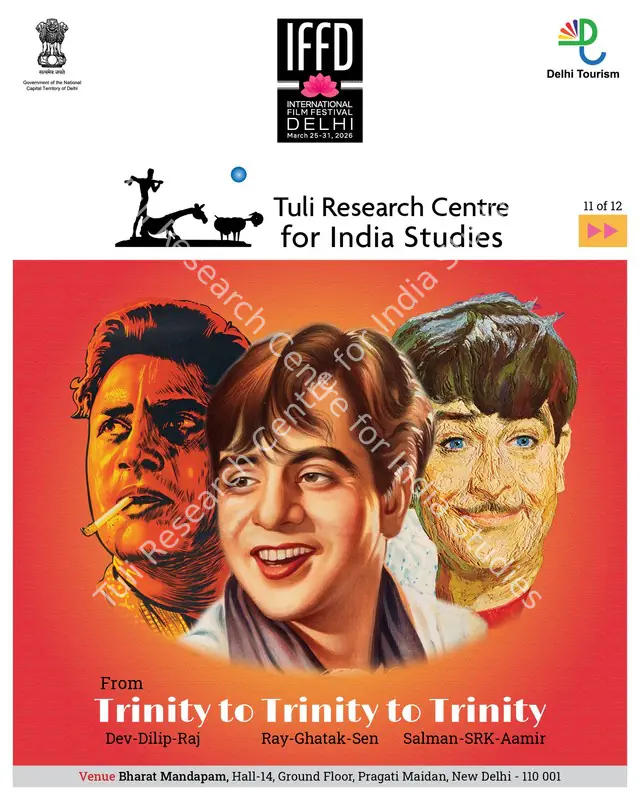
  1. From Trinity to Trinity to Trinity
    ArchivedExhibitionProject 76
    From Trinity to Trinity to Trinity
    Dev-Dilip-Raj | Ray-Ghatak-Sen | Salman-SRK-Aamir
    25th - 31st March 2026
    11:00am - 7:00pm
    Bharat Mandapam, Hall-14, Ground Floor, Pragati Maidan, New Delhi - 110011
    The Exhibition 'From Trinity to Trinity to Trinity | Dev-Raj-Dilip to Ray-Ghatak-Sen to Salman-Aamir-SRK', celebrates three iconic trios that have come to symbolize defining moments in Indian cinema and reflect the diverse heroic characteristics which the Indian public demands.
    Read More →
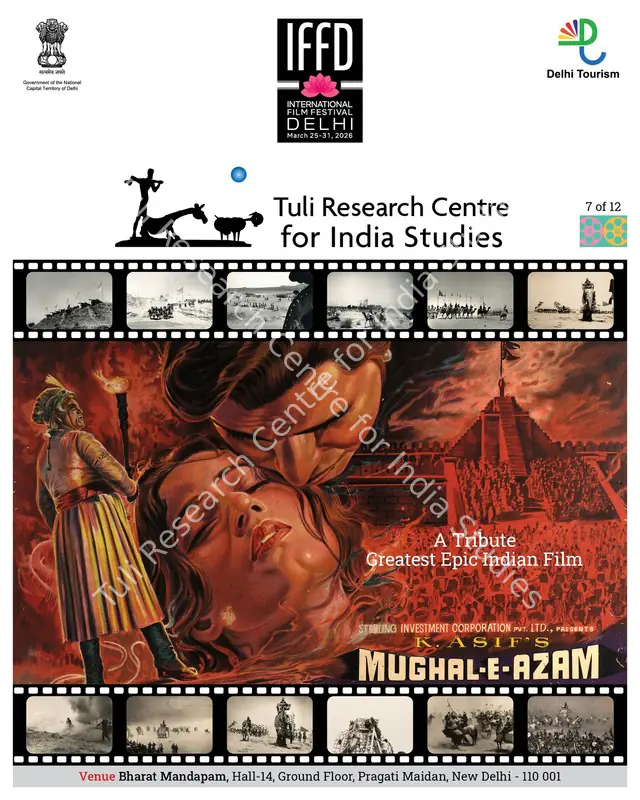
  2. A Tribute to the Greatest Epic Indian Film
    ArchivedExhibitionProject 72
    A Tribute to the Greatest Epic Indian Film
    Mughal-e-Azam
    25th - 31st March 2026
    11:00am - 7:00pm
    Bharat Mandapam, Hall-14, Ground Floor, Pragati Maidan, New Delhi - 110007
    A Tribute to the Greatest Epic Indian Film - Mughal-e-Azam - brings alive the classic film through a diverse range of memorabilia especially its world class black-and-white cinematography and still photography by masters such as R.D. Mathur, A.L. Syed and others.
    Read More →

Related

60