

Explore
732
records
Browse curated Masterlists and editorial Posts from across the archive.
Featured from the archive
8th Osian's-Cinefan Festival for Asian CinemaEvent · International Film Festival
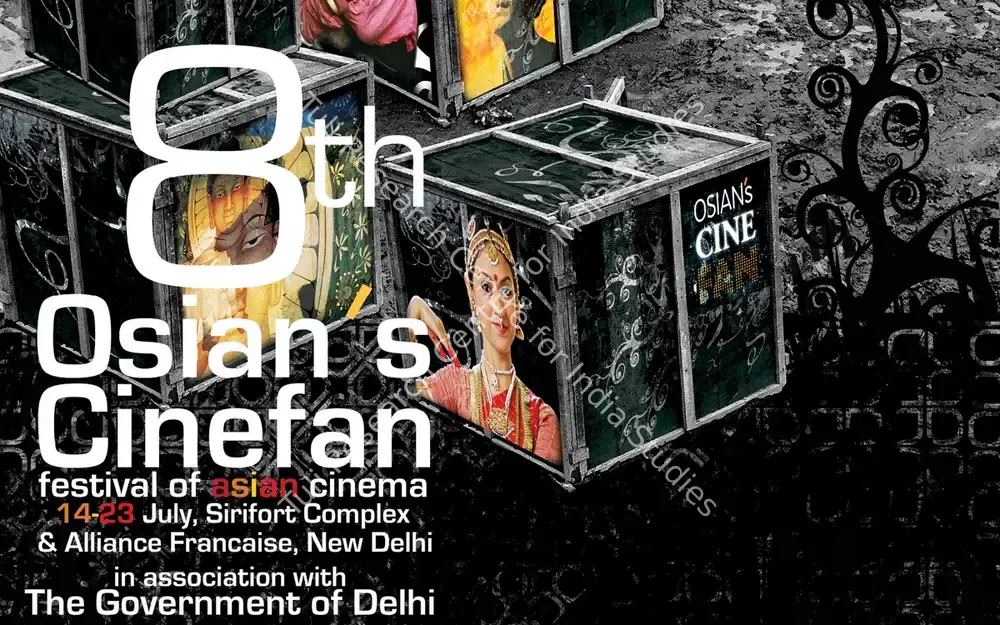
The Film Festival Cinefan was launched in Delhi in 1999 by Aruna Vasudev and acquired by Osian's Connoisseurs of Art in 2004 as part of Neville Tuli's vision of building an integrated Film House for Osian's. The Festival thus changed its title to Osian's-Cinefan. The 8th edition of the Festival had a special focus on the Asian and Arab cinema under the category Asian Frescos and Arabesque. The edition also featured tributes to Stanley Kwan and Ritwik Ghatak. The Middle Path focused on the depiction of Buddhism in cinema and screened films such as The Light of Asia (1925) to the recent releases of the year such as Milarepa (2006). The third edition of Talent Campus was also held in collaboration with Max Mueller Bhavan, the Berlin International Film Festival and the Berlinale Talent Campus.
View record →Featured from the archive
8th Osian's-Cinefan Festival for Asian CinemaEvent · International Film Festival
The Film Festival Cinefan was launched in Delhi in 1999 by Aruna Vasudev and acquired by Osian's Connoisseurs of Art in 2004 as part of Neville Tuli's vision of building an integrated Film House for Osian's. The Festival thus changed its title to Osian's-Cinefan. The 8th edition of the Festival had a special focus on the Asian and Arab cinema under the category Asian Frescos and Arabesque. The edition also featured tributes to Stanley Kwan and Ritwik Ghatak. The Middle Path focused on the depiction of Buddhism in cinema and screened films such as The Light of Asia (1925) to the recent releases of the year such as Milarepa (2006). The third edition of Talent Campus was also held in collaboration with Max Mueller Bhavan, the Berlin International Film Festival and the Berlinale Talent Campus.
View record →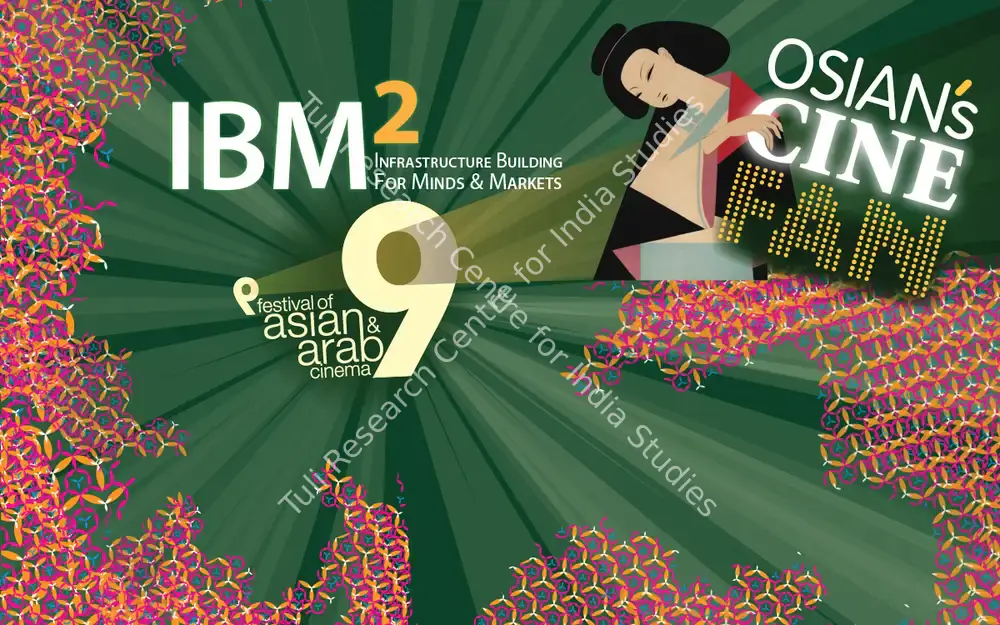
Featured from the archive
9th Osian's-Cinefan Festival for Asian Cinema 2007Event · International Film Festival Edition
The Film Festival Cinefan was launched in Delhi in 1999 by Aruna Vasudev and acquired by Osian's Connoisseurs of Art in 2004 as part of Neville Tuli's vision of building an integrated Film House for Osian's. The Festival thus changed its title to Osian's-Cinefan. Several new features were introduced in the 9th edition. The competition which was limited to Asian Films was broadened to include films by Arab directors. A competition for First Features was also introduced. A Focus on Japan comprised films, an exhibition and a lecture by Life time Achievement Awardee Tadao Sato, and a Tribute to Kenji Mizoguchi. A unique Benshi performance accompanying the screening of Mizoguchi's silent film 'The Water Magicians' was one of the major attractions of the festival. A section called 'Silhouettes' featured women-centric films from different countries.The 150th anniversary of India's First War of Independence was commemorated in a special section titled 'Hymns to Freedom' that screened films about struggles for freedom in former Asian and Arab colonies.
View record →Featured from the archive
9th Osian's-Cinefan Festival for Asian Cinema 2007Event · International Film Festival Edition
The Film Festival Cinefan was launched in Delhi in 1999 by Aruna Vasudev and acquired by Osian's Connoisseurs of Art in 2004 as part of Neville Tuli's vision of building an integrated Film House for Osian's. The Festival thus changed its title to Osian's-Cinefan. Several new features were introduced in the 9th edition. The competition which was limited to Asian Films was broadened to include films by Arab directors. A competition for First Features was also introduced. A Focus on Japan comprised films, an exhibition and a lecture by Life time Achievement Awardee Tadao Sato, and a Tribute to Kenji Mizoguchi. A unique Benshi performance accompanying the screening of Mizoguchi's silent film 'The Water Magicians' was one of the major attractions of the festival. A section called 'Silhouettes' featured women-centric films from different countries.The 150th anniversary of India's First War of Independence was commemorated in a special section titled 'Hymns to Freedom' that screened films about struggles for freedom in former Asian and Arab colonies.
View record →
Featured from the archive
A Musical Glue for Nation-Building - Deconstructing the Film SongEvent · Offline-Online Discussion
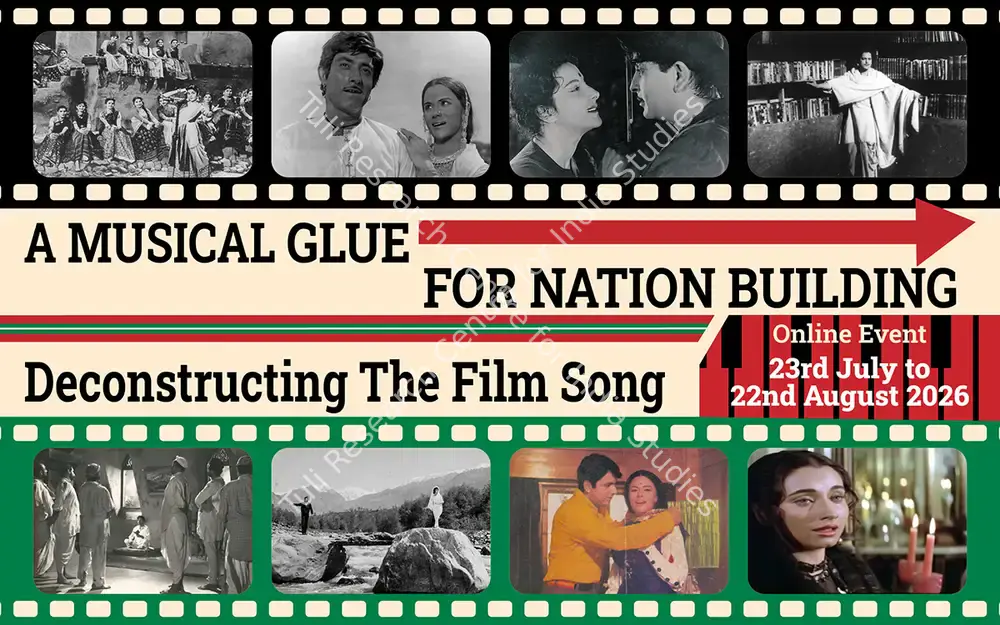
A key section of the India Studies framework at The Tuli Research Centre for India Studies (T.R.I.S.) is “Deconstructing the Film Song”. It began with a series of four workshops during our Self-Discovery via Rediscovering India Festival Series that brought together leading scholars & academics, film practitioners & students, along with fans of the Hindi film song. The objective of these workshops was to deconstruct iconic Hindi film songs to examine their formation across music, lyrics, playback, choreography, directorial visualisation, as they fuse into sites where aesthetics, ideology, and performance intersect, so as to help clarify the nature of India and her relationship to the film song. The Hindi Film Song functions as a narrative device, conveying myriad textures of emotion through melody, voice and poetry. As cultural texts that encode memory, desire, and ideology, songs are integral to the circulation and resonance of films in the public realm. Over time they have become autonomous bundles of creative energy - the glue that binds us over time, articulating and perhaps even defining the idea of Indianness. These first Workshops were an attempt to understand the nature and power of this glue, while contemplating the ways to situate it within TRIS' academic framework for Contemporary India Studies.
View record →Featured from the archive
A Musical Glue for Nation-Building - Deconstructing the Film SongEvent · Offline-Online Discussion
A key section of the India Studies framework at The Tuli Research Centre for India Studies (T.R.I.S.) is “Deconstructing the Film Song”. It began with a series of four workshops during our Self-Discovery via Rediscovering India Festival Series that brought together leading scholars & academics, film practitioners & students, along with fans of the Hindi film song. The objective of these workshops was to deconstruct iconic Hindi film songs to examine their formation across music, lyrics, playback, choreography, directorial visualisation, as they fuse into sites where aesthetics, ideology, and performance intersect, so as to help clarify the nature of India and her relationship to the film song. The Hindi Film Song functions as a narrative device, conveying myriad textures of emotion through melody, voice and poetry. As cultural texts that encode memory, desire, and ideology, songs are integral to the circulation and resonance of films in the public realm. Over time they have become autonomous bundles of creative energy - the glue that binds us over time, articulating and perhaps even defining the idea of Indianness. These first Workshops were an attempt to understand the nature and power of this glue, while contemplating the ways to situate it within TRIS' academic framework for Contemporary India Studies.
View record →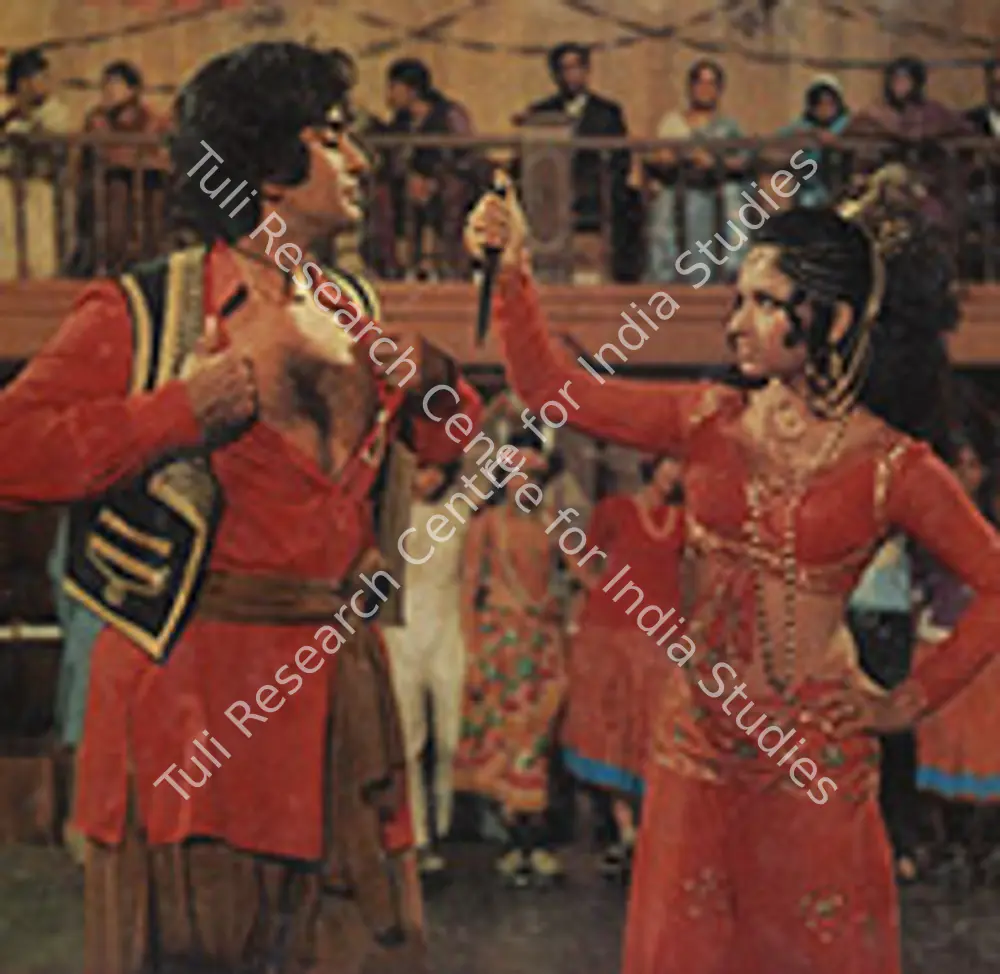
Featured from the archive
Aa Gale Lag Jaa 1973Film · Indian Cinema
Aa Gale Lag Jaa (1973), directed by Manmohan Desai and based on a story by Smt. Jeevanprabha Desai, was a romantic film that broke new ground in terms of its thematic content for the time. The film garnered attention for its bold portrayal of physical intimacy between its lead stars, Shashi Kapoor and Sharmila Tagore, which was daring for its era. The 149-minute narrative centres around Preeti (Sharmila Tagore), a young medico fromBombay, who falls in love with Prem (Shashi Kapoor), a young amateur skater. During a trip to the hills, Preeti meets with an accident, loses consciousness, and to save her from hypothermia, Prem reluctantly becomes physically close to her, leading to their intimacy. As a result, Preeti becomes pregnant. Engaged to Dr. Amar (Shatrughan Sinha), Preeti is devastated, but under the pressure of her father's wishes, she ends up agreeing to get engaged to him. The film featured a memorable soundtrack composed by R.D. Burman, with lyrics penned by Sahir Ludhianvi. The songs, particularly "Tera Mujhse Hai Pehle Ka Nata Koi", performed by Poornima (then known as Sushma Shreshtha), earned the latter a Filmfare nomination for Best Female Playback Singer. The film's music remains iconic, with hits like "Vaada Karo" (an adaptation of Horace Silver's "Song for My Father") and "Tera Mujhse Hai Pehle Ka Nata Koi" (lifted from "The Yellow Rose of Texas"), still widely remembered. The film's popularity led to its remakes in several languages: Manchi Manushulu (Telugu), Uthaman (Tamil), and Ranande-ye-ejbari (Persian). The Sinhalese film Yali Hamuwennai (1980s), directed by Sena Samarasinghe, is considered a direct copy of Aa Gale Lag Jaa. Other films inspired by it include the 1977 Pakistani film Aina and the 1985 Hindi film Pyar Jhukta Nahin. Aa Gale Lag Jaa became a box-office hit, ranking as the 10th highest-grossing Hindi film of 1973. It has maintained an enduring cult status in Algeria, where it is known as Janitou, and its following persists even four decades after its release.
View record →Featured from the archive
Aa Gale Lag Jaa 1973Film · Indian Cinema
Aa Gale Lag Jaa (1973), directed by Manmohan Desai and based on a story by Smt. Jeevanprabha Desai, was a romantic film that broke new ground in terms of its thematic content for the time. The film garnered attention for its bold portrayal of physical intimacy between its lead stars, Shashi Kapoor and Sharmila Tagore, which was daring for its era. The 149-minute narrative centres around Preeti (Sharmila Tagore), a young medico fromBombay, who falls in love with Prem (Shashi Kapoor), a young amateur skater. During a trip to the hills, Preeti meets with an accident, loses consciousness, and to save her from hypothermia, Prem reluctantly becomes physically close to her, leading to their intimacy. As a result, Preeti becomes pregnant. Engaged to Dr. Amar (Shatrughan Sinha), Preeti is devastated, but under the pressure of her father's wishes, she ends up agreeing to get engaged to him. The film featured a memorable soundtrack composed by R.D. Burman, with lyrics penned by Sahir Ludhianvi. The songs, particularly "Tera Mujhse Hai Pehle Ka Nata Koi", performed by Poornima (then known as Sushma Shreshtha), earned the latter a Filmfare nomination for Best Female Playback Singer. The film's music remains iconic, with hits like "Vaada Karo" (an adaptation of Horace Silver's "Song for My Father") and "Tera Mujhse Hai Pehle Ka Nata Koi" (lifted from "The Yellow Rose of Texas"), still widely remembered. The film's popularity led to its remakes in several languages: Manchi Manushulu (Telugu), Uthaman (Tamil), and Ranande-ye-ejbari (Persian). The Sinhalese film Yali Hamuwennai (1980s), directed by Sena Samarasinghe, is considered a direct copy of Aa Gale Lag Jaa. Other films inspired by it include the 1977 Pakistani film Aina and the 1985 Hindi film Pyar Jhukta Nahin. Aa Gale Lag Jaa became a box-office hit, ranking as the 10th highest-grossing Hindi film of 1973. It has maintained an enduring cult status in Algeria, where it is known as Janitou, and its following persists even four decades after its release.
View record →



42 of 732