
TRIS logo image

Posts

40

Posts

Browse through the editorial Posts from across the archive.

"Udein Jab Jab Zulfein Teri"- Romance, Folklore, and the Looming Motor Car | Naya Daur (1957)
Featured post
"Udein Jab Jab Zulfein Teri"- Romance, Folklore, and the Looming Motor Car | Naya Daur (1957)
CinemaEducation · Scholarship
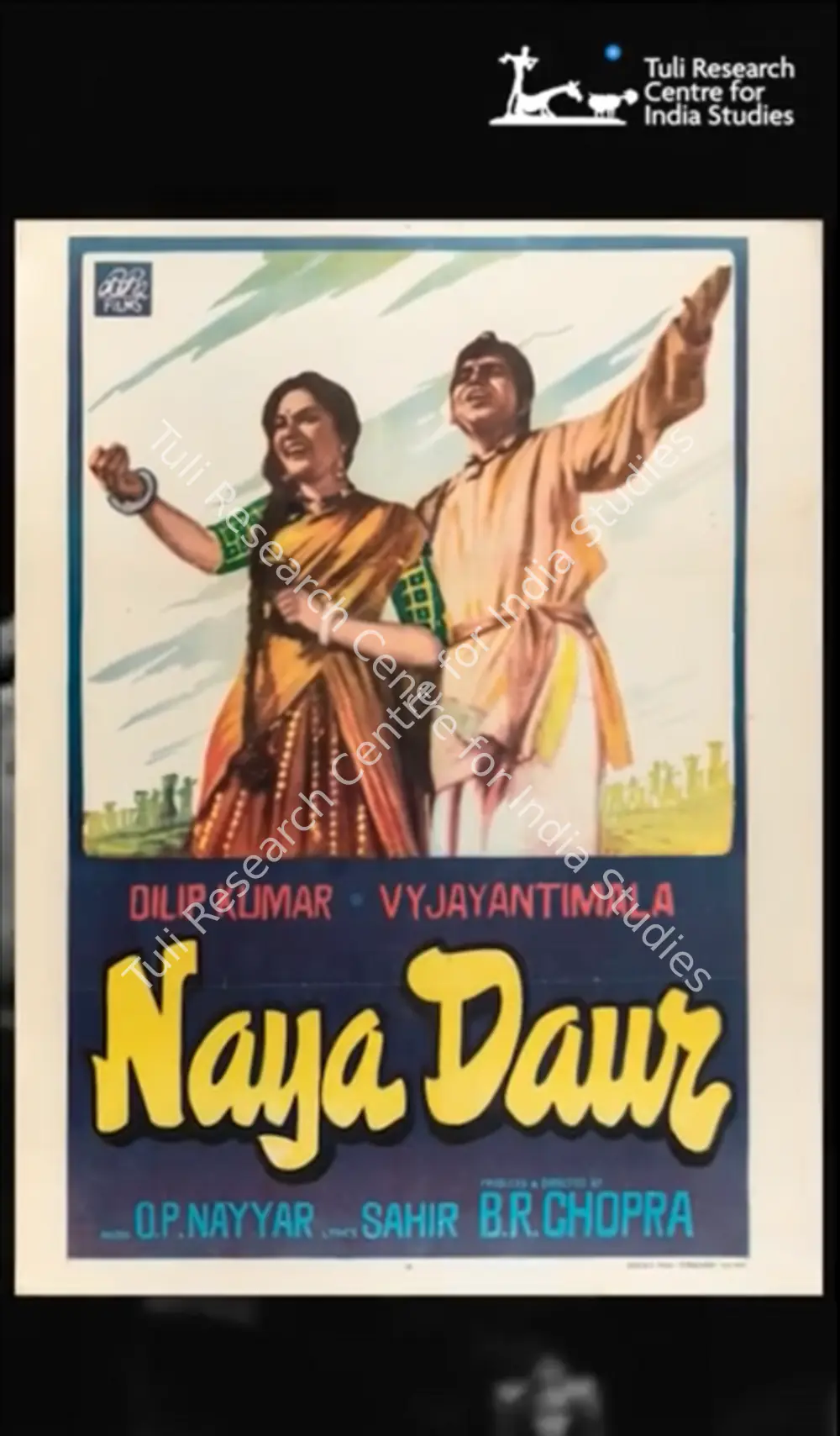
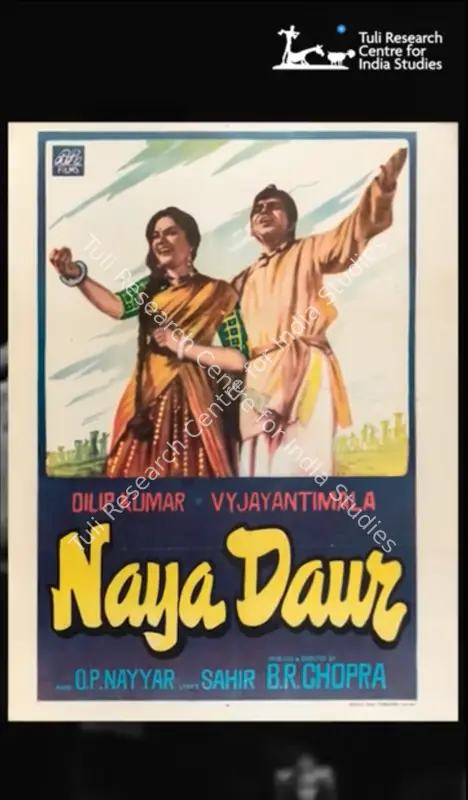
The beautiful “Udein Jab Jab Zulfein Teri” from B.R. Chopra's Naya Daur (1957) feels open‑ended, almost timeless, because it draws from folklore and the rhythms of village life. In this clip, Ravikant, Professor, CSDS, examines the folk‑inflected melody of the duet by Mohammed Rafi and Asha Bhosle, with Sahir Ludhianvi's lyrics and O.P. Nayyar's music. On the surface, the song is a romantic number between the main leads, Dilip Kumar and Vyjayanthimala but the song sits inside a film whose central fear is that of people losing their jobs when machines arrive. Ravikant likens this anxiety with the current state of affairs wherein the threat of AI looms large in our lives. Against that backdrop, this song becomes more than just a romantic number. It becomes an expression of people's power and dignity, a celebration of the community that is sustained by labour and solidarity. This discussion was part of the series 'Deconstructing the Film Song: A Musical Glue for Nation-Building,' presented by the Tuli Research Centre for India Studies (T.R.I.S) as part of the 7th Self-Discovery via Rediscovering India Festival.
Read post
"Udein Jab Jab Zulfein Teri"- Romance, Folklore, and the Looming Motor Car | Naya Daur (1957)
Featured post
"Udein Jab Jab Zulfein Teri"- Romance, Folklore, and the Looming Motor Car | Naya Daur (1957)
CinemaEducation · Scholarship
The beautiful “Udein Jab Jab Zulfein Teri” from B.R. Chopra's Naya Daur (1957) feels open‑ended, almost timeless, because it draws from folklore and the rhythms of village life. In this clip, Ravikant, Professor, CSDS, examines the folk‑inflected melody of the duet by Mohammed Rafi and Asha Bhosle, with Sahir Ludhianvi's lyrics and O.P. Nayyar's music. On the surface, the song is a romantic number between the main leads, Dilip Kumar and Vyjayanthimala but the song sits inside a film whose central fear is that of people losing their jobs when machines arrive. Ravikant likens this anxiety with the current state of affairs wherein the threat of AI looms large in our lives. Against that backdrop, this song becomes more than just a romantic number. It becomes an expression of people's power and dignity, a celebration of the community that is sustained by labour and solidarity. This discussion was part of the series 'Deconstructing the Film Song: A Musical Glue for Nation-Building,' presented by the Tuli Research Centre for India Studies (T.R.I.S) as part of the 7th Self-Discovery via Rediscovering India Festival.
Read post
"Ae Maalik Tere Bande Hum" - A bhajan from V Shantaram's film about prison reform| Do Aankhen Barah Haath (1957)
Featured post
"Ae Maalik Tere Bande Hum" - A bhajan from V Shantaram's film about prison reform| Do Aankhen Barah Haath (1957)
CinemaEducation · Scholarship
V. Shantaram's film about prisoners, reform and second chances, Do Aankhen Barah Haath (1957), gives us the bhajan “Aye Maalik Tere Bande Ham,” which transcended the film to become an integral part of school prayers. Composed by Vasant Desai in a simple, hummable Bhairavi, with Bharat Vyas's lyrics carrying a strong moral core, the song exists in two versions, as a male chorus building a community of voices, and Lata Mangeshkar's solo, where her voice carries a frailty the male version never attempts. Presented here is a glimpse from the session 'Deconstructing the Film Song: A Musical Glue for Nation-Building,' in which Shikha Jhingan, Associate Professor, Cinema Studies, Jawaharlal Nehru University, examines the two versions of the song, the community built through its chorus, and Shantaram's German Expressionist play of light and darkness that accompanies the lyrics of the song. Together, these elements explain why the song remains woven into everyday Indian life. This session was part of the series 'Deconstructing the Film Song: A Musical Glue for Nation-Building,' presented by the Tuli Research Centre for India Studies (T.R.I.S.) as part of the 7th Self-Discovery via Rediscovering India Festival.
Read post
"Ae Maalik Tere Bande Hum" - A bhajan from V Shantaram's film about prison reform| Do Aankhen Barah Haath (1957)
Featured post
"Ae Maalik Tere Bande Hum" - A bhajan from V Shantaram's film about prison reform| Do Aankhen Barah Haath (1957)
CinemaEducation · Scholarship
V. Shantaram's film about prisoners, reform and second chances, Do Aankhen Barah Haath (1957), gives us the bhajan “Aye Maalik Tere Bande Ham,” which transcended the film to become an integral part of school prayers. Composed by Vasant Desai in a simple, hummable Bhairavi, with Bharat Vyas's lyrics carrying a strong moral core, the song exists in two versions, as a male chorus building a community of voices, and Lata Mangeshkar's solo, where her voice carries a frailty the male version never attempts. Presented here is a glimpse from the session 'Deconstructing the Film Song: A Musical Glue for Nation-Building,' in which Shikha Jhingan, Associate Professor, Cinema Studies, Jawaharlal Nehru University, examines the two versions of the song, the community built through its chorus, and Shantaram's German Expressionist play of light and darkness that accompanies the lyrics of the song. Together, these elements explain why the song remains woven into everyday Indian life. This session was part of the series 'Deconstructing the Film Song: A Musical Glue for Nation-Building,' presented by the Tuli Research Centre for India Studies (T.R.I.S.) as part of the 7th Self-Discovery via Rediscovering India Festival.
Read post
Krishna Reddy's Demonstrators
Featured post
Krishna Reddy's Demonstrators
SeekJustice
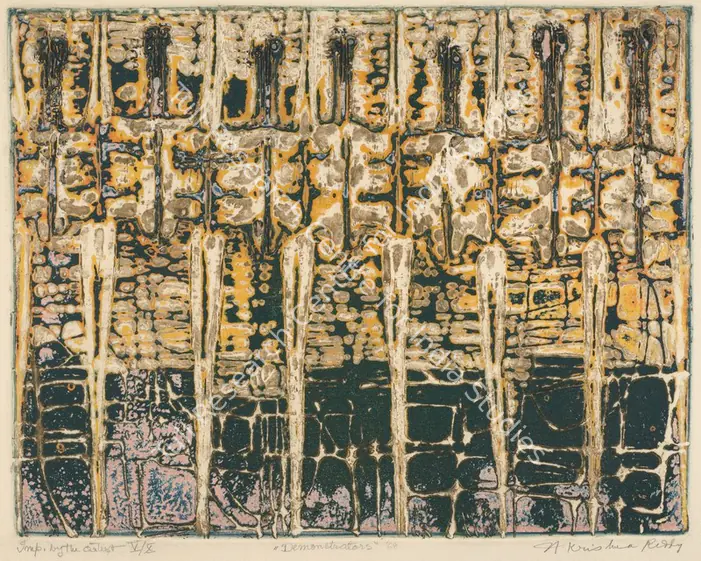
When does a gathering become a force capable of changing history? In Demonstrators, Krishna Reddy captures the energy of student protest through a dense field of rising forms. Figures emerge with arms raised, their bodies gathering into the rhythm of a crowd. Layered colours and deeply worked lines evoke movement, tension and solidarity. Reddy created the work in Paris in 1968, amid student demonstrations, university occupations and workers' strikes. He witnessed people questioning authority and demanding political, social and cultural freedom. Many also consider this protest and the ideas associated with it as a pivotal moment to help further define the birth of postmodernism. This experience shaped his image of a crowd entering public space and asserting its collective voice. A pioneering modern printmaker, Reddy helped develop viscosity printing at Atelier 17, enabling several colours to be printed from a single plate. In Demonstrators, colours meet, surfaces resist and forms rise from the plate, mirroring the pressure of protest. The exhibition also presents Reddy's 1968-69 Demonstrators in synthetic resin, translating raised arms and closely gathered bodies into sculptural form. Together, the works explore the shared energy of protest across printmaking and sculpture. Within SWARAJ: Revisualising India's Political History, these works extend self-rule beyond national independence. Swaraj lives in the courage to question authority, participate in public life and imagine a more equitable society. Demonstrators reminds us that political change can begin when individual convictions gather into a shared demand for transformation. Artwork 1: Demonstrators Artist: Krishna Reddy Medium: Coloured engraving on paper Date: 1968 Artwork 2: Demonstrators Artist: Krishna Reddy Medium: Synthetic Resin Date: 1968-69
Read post
Krishna Reddy's Demonstrators
Featured post
Krishna Reddy's Demonstrators
SeekJustice
When does a gathering become a force capable of changing history? In Demonstrators, Krishna Reddy captures the energy of student protest through a dense field of rising forms. Figures emerge with arms raised, their bodies gathering into the rhythm of a crowd. Layered colours and deeply worked lines evoke movement, tension and solidarity. Reddy created the work in Paris in 1968, amid student demonstrations, university occupations and workers' strikes. He witnessed people questioning authority and demanding political, social and cultural freedom. Many also consider this protest and the ideas associated with it as a pivotal moment to help further define the birth of postmodernism. This experience shaped his image of a crowd entering public space and asserting its collective voice. A pioneering modern printmaker, Reddy helped develop viscosity printing at Atelier 17, enabling several colours to be printed from a single plate. In Demonstrators, colours meet, surfaces resist and forms rise from the plate, mirroring the pressure of protest. The exhibition also presents Reddy's 1968-69 Demonstrators in synthetic resin, translating raised arms and closely gathered bodies into sculptural form. Together, the works explore the shared energy of protest across printmaking and sculpture. Within SWARAJ: Revisualising India's Political History, these works extend self-rule beyond national independence. Swaraj lives in the courage to question authority, participate in public life and imagine a more equitable society. Demonstrators reminds us that political change can begin when individual convictions gather into a shared demand for transformation. Artwork 1: Demonstrators Artist: Krishna Reddy Medium: Coloured engraving on paper Date: 1968 Artwork 2: Demonstrators Artist: Krishna Reddy Medium: Synthetic Resin Date: 1968-69
Read post
Madan Mahatta's architectural photographs
Featured post
Madan Mahatta's architectural photographs
SeekJustice
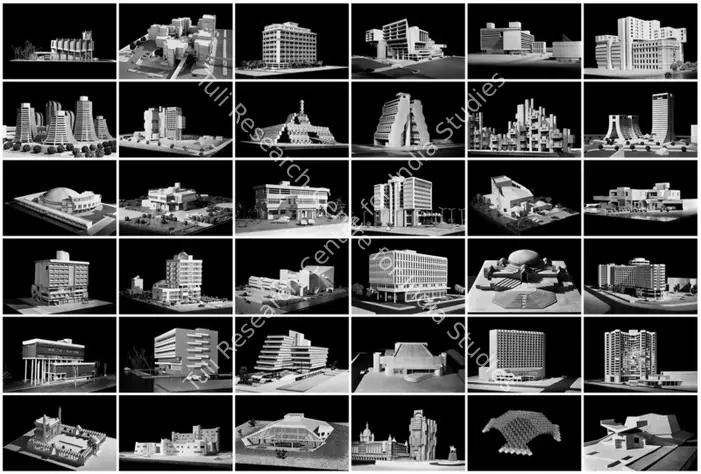
Madan Mahatta's photographs of 36 architectural models belong to a period when India was giving physical form to the ambitions of a newly independent nation. From the 1950s through the 1980s, new universities, research centres, government offices, housing and cultural institutions were being planned across the country. Architects experimented with new materials, technologies and forms, while models became an important means of developing and presenting ideas before construction. Born in Srinagar in 1932, Mahatta came from the Mahatta family of photographers and studied photography at the Guildford School of Art and Crafts in England. Returning to India in 1954, he worked from the family's New Delhi studio, Mahatta & Co., developing a practice spanning commercial, industrial, architectural and documentary photography. From the 1950s onwards, Mahatta photographed architects including Habib Rahman, Achyut P. Kanvinde, Joseph Allen Stein, Charles Correa, Raj Rewal, Kuldip Singh, Ram Sharma, Ranjit Sabhiki and Jasbir Sawhney. Their work reflects the changing vocabulary of post-Independence Indian architecture, from International Modernism and functionalism to Brutalism, Structural Expressionism and Critical Regionalism. The 36 models bring this architectural imagination into focus, revealing how architects explored massing, structure, circulation, geometry, landscape and the relationship between building and city. Alongside his photographs of completed buildings, Mahatta's model photography preserves architecture at the stage of conception, when ideas were still being tested and given form.
Read post
Madan Mahatta's architectural photographs
Featured post
Madan Mahatta's architectural photographs
SeekJustice
Madan Mahatta's photographs of 36 architectural models belong to a period when India was giving physical form to the ambitions of a newly independent nation. From the 1950s through the 1980s, new universities, research centres, government offices, housing and cultural institutions were being planned across the country. Architects experimented with new materials, technologies and forms, while models became an important means of developing and presenting ideas before construction. Born in Srinagar in 1932, Mahatta came from the Mahatta family of photographers and studied photography at the Guildford School of Art and Crafts in England. Returning to India in 1954, he worked from the family's New Delhi studio, Mahatta & Co., developing a practice spanning commercial, industrial, architectural and documentary photography. From the 1950s onwards, Mahatta photographed architects including Habib Rahman, Achyut P. Kanvinde, Joseph Allen Stein, Charles Correa, Raj Rewal, Kuldip Singh, Ram Sharma, Ranjit Sabhiki and Jasbir Sawhney. Their work reflects the changing vocabulary of post-Independence Indian architecture, from International Modernism and functionalism to Brutalism, Structural Expressionism and Critical Regionalism. The 36 models bring this architectural imagination into focus, revealing how architects explored massing, structure, circulation, geometry, landscape and the relationship between building and city. Alongside his photographs of completed buildings, Mahatta's model photography preserves architecture at the stage of conception, when ideas were still being tested and given form.
Read post
How did Sudhir Patwardhan bring marginalised lives within the modern city into public view?
Featured post
How did Sudhir Patwardhan bring marginalised lives within the modern city into public view?
SeekJustice
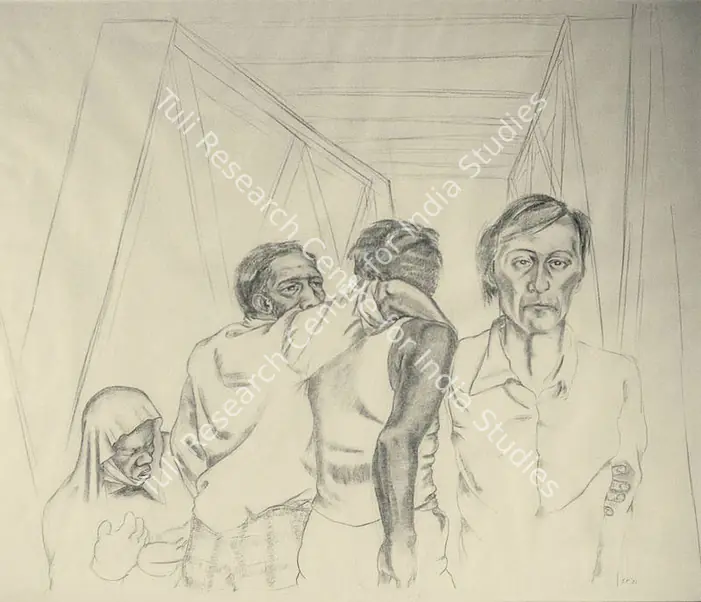
How did Sudhir Patwardhan bring marginalised lives within the modern city into public view? In “Overbridge” (1981) four people coincide upon a pedestrian bridge. This wonderfully large pencil drawing preceded Patwardhan's oil painting of the same title. Two men walk with their arms across each other's shoulders, suggesting that very Indian form of camaraderie within every city. A solitary man faces us Kafkaesque like, while a veiled woman at the edge appears marked by illness, possibly leprosy, and exclusion. Patwardhan observes them as they truly are, as stoic rather than heroic subjects. Created amid social and economic change, Overbridge reflects urban alienation and marginalisation. Subaltern Studies was also taking shape, bringing lives excluded from dominant histories into focus. Patwardhan similarly gives overlooked urban subjects visibility and dignity. Trained as a doctor, Patwardhan works as a radiologist in Thane alongside his self-taught artistic practice. Encounters with commuters, labourers and patients shape his urban realism, a genuinely empathic expression of our people and their daily grind endured with grace and resilience, but not romanticised. Within SWARAJ: Revisualising India's Political History Exhibition, the drawing asks how freedom is experienced at society's margins, placing dignity, recognition and companionship at the heart of Swaraj. Artwork: Overbridge (1981), Pencil Drawing on paper Artist: Sudhir Patwardhan
Read post
How did Sudhir Patwardhan bring marginalised lives within the modern city into public view?
Featured post
How did Sudhir Patwardhan bring marginalised lives within the modern city into public view?
SeekJustice
How did Sudhir Patwardhan bring marginalised lives within the modern city into public view? In “Overbridge” (1981) four people coincide upon a pedestrian bridge. This wonderfully large pencil drawing preceded Patwardhan's oil painting of the same title. Two men walk with their arms across each other's shoulders, suggesting that very Indian form of camaraderie within every city. A solitary man faces us Kafkaesque like, while a veiled woman at the edge appears marked by illness, possibly leprosy, and exclusion. Patwardhan observes them as they truly are, as stoic rather than heroic subjects. Created amid social and economic change, Overbridge reflects urban alienation and marginalisation. Subaltern Studies was also taking shape, bringing lives excluded from dominant histories into focus. Patwardhan similarly gives overlooked urban subjects visibility and dignity. Trained as a doctor, Patwardhan works as a radiologist in Thane alongside his self-taught artistic practice. Encounters with commuters, labourers and patients shape his urban realism, a genuinely empathic expression of our people and their daily grind endured with grace and resilience, but not romanticised. Within SWARAJ: Revisualising India's Political History Exhibition, the drawing asks how freedom is experienced at society's margins, placing dignity, recognition and companionship at the heart of Swaraj. Artwork: Overbridge (1981), Pencil Drawing on paper Artist: Sudhir Patwardhan
Read post
Krishna Reddy's Demonstrators
When does a gathering become a force capable of changing history? In Demonstrators, Krishna Reddy captures the energy of student protest through a dense field of rising forms. Figures emerge with arms raised, their bodies gathering into the rhythm of a crowd. Layered colours and deeply worked lines evoke movement, tension and solidarity. Reddy created the work in Paris in 1968, amid student demonstrations, university occupations and workers' strikes. He witnessed people questioning authority and demanding political, social and cultural freedom. Many also consider this protest and the ideas associated with it as a pivotal moment to help further define the birth of postmodernism. This experience shaped his image of a crowd entering public space and asserting its collective voice. A pioneering modern printmaker, Reddy helped develop viscosity printing at Atelier 17, enabling several colours to be printed from a single plate. In Demonstrators, colours meet, surfaces resist and forms rise from the plate, mirroring the pressure of protest. The exhibition also presents Reddy's 1968-69 Demonstrators in synthetic resin, translating raised arms and closely gathered bodies into sculptural form. Together, the works explore the shared energy of protest across printmaking and sculpture. Within SWARAJ: Revisualising India's Political History, these works extend self-rule beyond national independence. Swaraj lives in the courage to question authority, participate in public life and imagine a more equitable society. Demonstrators reminds us that political change can begin when individual convictions gather into a shared demand for transformation. Artwork 1: Demonstrators Artist: Krishna Reddy Medium: Coloured engraving on paper Date: 1968 Artwork 2: Demonstrators Artist: Krishna Reddy Medium: Synthetic Resin Date: 1968-69
Madan Mahatta's architectural photographs
Madan Mahatta's photographs of 36 architectural models belong to a period when India was giving physical form to the ambitions of a newly independent nation. From the 1950s through the 1980s, new universities, research centres, government offices, housing and cultural institutions were being planned across the country. Architects experimented with new materials, technologies and forms, while models became an important means of developing and presenting ideas before construction. Born in Srinagar in 1932, Mahatta came from the Mahatta family of photographers and studied photography at the Guildford School of Art and Crafts in England. Returning to India in 1954, he worked from the family's New Delhi studio, Mahatta & Co., developing a practice spanning commercial, industrial, architectural and documentary photography. From the 1950s onwards, Mahatta photographed architects including Habib Rahman, Achyut P. Kanvinde, Joseph Allen Stein, Charles Correa, Raj Rewal, Kuldip Singh, Ram Sharma, Ranjit Sabhiki and Jasbir Sawhney. Their work reflects the changing vocabulary of post-Independence Indian architecture, from International Modernism and functionalism to Brutalism, Structural Expressionism and Critical Regionalism. The 36 models bring this architectural imagination into focus, revealing how architects explored massing, structure, circulation, geometry, landscape and the relationship between building and city. Alongside his photographs of completed buildings, Mahatta's model photography preserves architecture at the stage of conception, when ideas were still being tested and given form.
How did Sudhir Patwardhan bring marginalised lives within the modern city into public view?
How did Sudhir Patwardhan bring marginalised lives within the modern city into public view? In “Overbridge” (1981) four people coincide upon a pedestrian bridge. This wonderfully large pencil drawing preceded Patwardhan's oil painting of the same title. Two men walk with their arms across each other's shoulders, suggesting that very Indian form of camaraderie within every city. A solitary man faces us Kafkaesque like, while a veiled woman at the edge appears marked by illness, possibly leprosy, and exclusion. Patwardhan observes them as they truly are, as stoic rather than heroic subjects. Created amid social and economic change, Overbridge reflects urban alienation and marginalisation. Subaltern Studies was also taking shape, bringing lives excluded from dominant histories into focus. Patwardhan similarly gives overlooked urban subjects visibility and dignity. Trained as a doctor, Patwardhan works as a radiologist in Thane alongside his self-taught artistic practice. Encounters with commuters, labourers and patients shape his urban realism, a genuinely empathic expression of our people and their daily grind endured with grace and resilience, but not romanticised. Within SWARAJ: Revisualising India's Political History Exhibition, the drawing asks how freedom is experienced at society's margins, placing dignity, recognition and companionship at the heart of Swaraj. Artwork: Overbridge (1981), Pencil Drawing on paper Artist: Sudhir Patwardhan
Music in the Films of Guru Dutt: Dreams, Desire, and Disillusionment | An Introduction
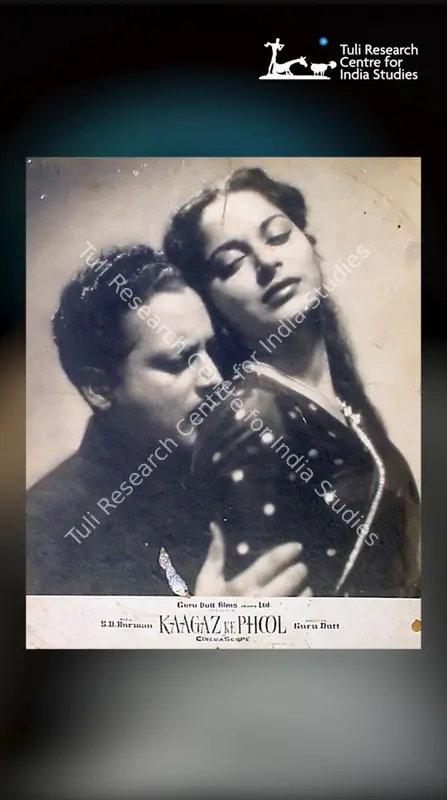
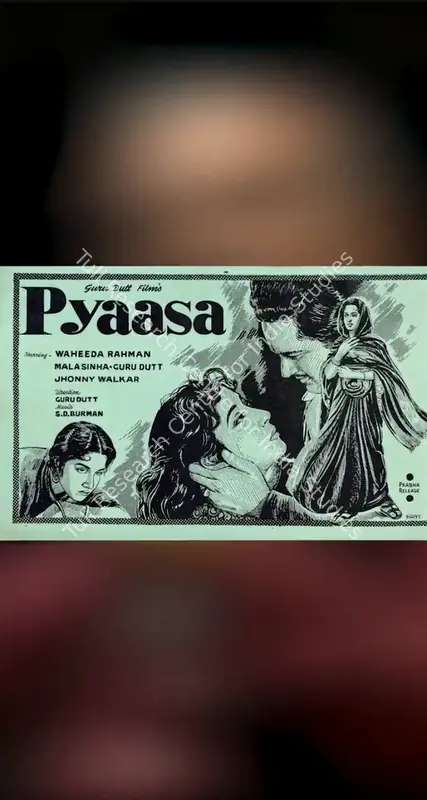
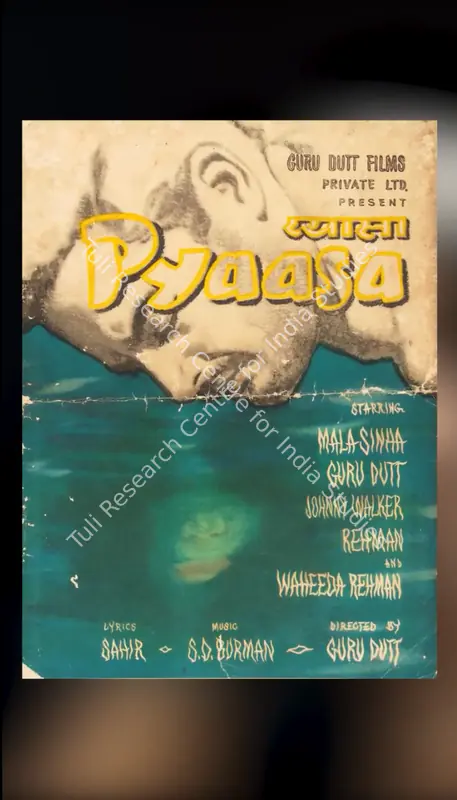
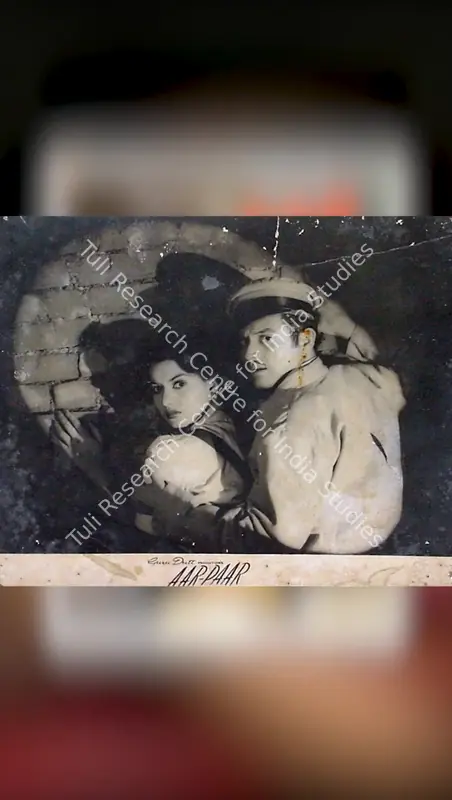
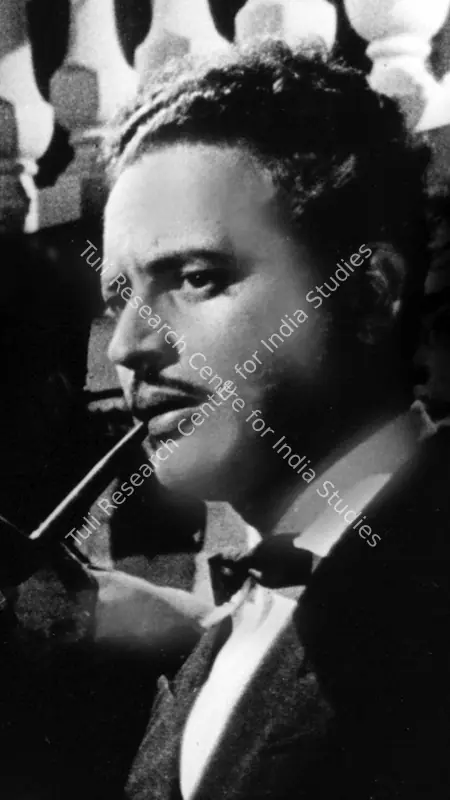
Guru Dutt's cinema blended poetic storytelling with visual brilliance tackling the themes of love, identity, an artist's struggle and social disillusionement. This session explores the nuances of his craft through four of his most enduring songs: "Babuji Dheere Chalna" (Aar Paar, 1954), "Jinhe Naaz Hai Hind Par" (Pyaasa, 1957), "Yeh Duniya Agar Mil Bhi Jaye" (Pyaasa, 1957), and "Waqt Ne Kiya Kya Haseen Sitam" (Kaagaz Ke Phool, 1959). While discussing "Jinhe Naaz Hai Hind Par", Juhi Saklani juxtaposes the grandeur of the Indian national anthem and its celebratory descriptions of the nation's landscapes: "Panjaba-Sindha-Gujrata-Maharata- Dravida-Utkala-Vanga, Vindhya-Himachala-Yamuna-Ganga" with the grim reality that Sahir Ludhianvi's lyrics lay bare through: "Ye kooche ye neelam-ghar dilkashi ke... ye sadiyon se bekhauf, sehmi si galiyan." Where the anthem sees glory, the song sees streets centuries-old in their exhaustion, people living at the margins of the very nation being celebrated. Ravikant adds that Sahir poses a direct and piercing question to the powers that be, holding a newly independent government accountable to the promises it made to its most vulnerable citizens. Reflecting on "Waqt Ne Kiya Kya Haseen Sitam," Madan Gopal Singh observes that it is perhaps the only song in Indian cinema where the process of making the song itself becomes a part of what we see on the screen. In "Yeh Duniya Agar Mil Bhi Jaye," Antara Nanda Mondal reads the line "Ye mahalon, ye takhton, ye taajon ki duniya" ("this world of palaces, thrones, and crowns") as an allusion to British rule, suggesting that Guru Dutt saw colonial hierarchies continuing to shape post-Independence India. On "Babuji Dheere Chalna," Antara Nanda Mondal argues that the song offers a remarkably nuanced portrait of a woman living on the fringes of society. In a single sequence, it reveals how such women are often looked at, desired, and judged, yet rarely understood on their own terms. This segment is part of T.R.I.S.' workshop series "A Musical Glue for Nation-Building: Deconstructing the Film Song," featuring Madan Gopal Singh, Ravikant, Antara Nanda Mondal, Juhi Saklani, and Neville Tuli, presented by the Tuli Research Centre for India Studies (T.R.I.S.) at the 7th Self-Discovery via Rediscovering India Festival.
SWARAJ - Revisualising India's Political History
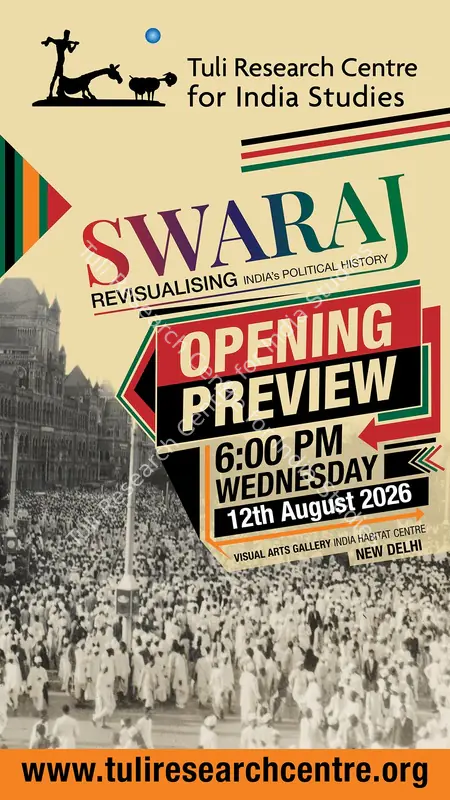
"What does 𝗦𝘄𝗮𝗿𝗮𝗷 truly mean? Is freedom achieved at a single historic moment or period, or must self-rule be continually imagined, questioned and renewed? India's journey towards Swaraj was shaped not by one voice or one path, but through reform and resistance, revolution and non-violence, political thought, public protest, art, print, photography, cinema and the collective will of its people. The Tuli Research Centre for India Studies (T.R.I.S.) presents 𝗦𝗪𝗔𝗥𝗔𝗝: 𝗥𝗲𝘃𝗶𝘀𝘂𝗮𝗹𝗶𝘀𝗶𝗻𝗴 𝗜𝗻𝗱𝗶𝗮'𝘀 𝗣𝗼𝗹𝗶𝘁𝗶𝗰𝗮𝗹 𝗛𝗶𝘀𝘁𝗼𝗿𝘆, a pioneering exhibition curated by Neville Tuli. Bringing together rare artworks, prints, photographs, books, film publicity art, political propaganda and visual-textual-audio archives, SWARAJ traces India's complex journey towards political self-rule and self-discovery. From early European coastal encounters, the Bengal Renaissance and the First War of Independence in 1857 to the rise of Bharat Mata, the Tiranga, Gandhiji's inspired satyagraha, civil disobedience and mass mobilisation, the exhibition explores how the idea of India was envisioned, contested and transformed. It journeys through revolutionary movements and non-violence, subaltern uprisings, the Partition, the Constitution, the integration of the Princely States, the Emergency, wars, civic dissent and people's protests. It also foregrounds the vital role of artists, photographers, publishers, newspapers, journals, cartoons and cinema in recording and shaping the nation's political consciousness. SWARAJ invites us to encounter history not as something distant or settled, but as a daily living inheritance that continues to influence who we are and how we understand freedom, identity, and ourselves today. Watch the video for a glimpse into this expansive visual journey, and follow the exhibition as it revisualises India's political history through art, image, text and sound.
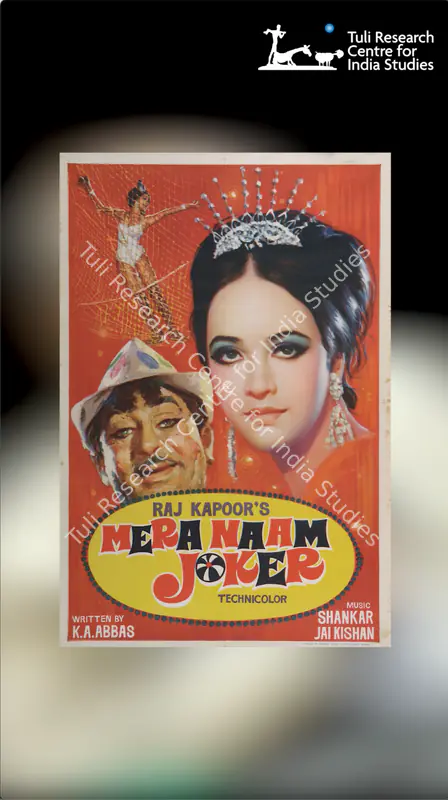
The Nature of Philosophical and Materialistic Existence in Raj Kapoor's "Jeena Yahan Marna Yahan"| Mera Naam Joker (1970)
"Jeena Yahan Marna Yahan" from Mera Naam Joker (1970) was penned by Shailendra, composed by Shankar-Jaikishan, and sung by Mukesh. The song is situated at the philosophical heart of Raj Kapoor's most personal and ambitious film. The film was a commercial disaster on release, and as Neville Tuli notes, both the song and the film found the audiences' acknowledgement only years later. Filmmaker-Lyricist Amit Khanna reveals a lesser-known detail about its making: the song was shot in Delhi at the Gemini Circus, but it had become extremely difficult to gather all the stars, who by that point had become huge in their own careers, at one point of time. The scenes featuring them were shot solo and then later assembled in Bombay to be inserted into the song sequence. Ravikant, Professor, CSDS (The Centre for the Study of Developing Societies), reads the song as both a philosophical and a deeply materialistic reflection on existence. There is a continuity in the persona that may take rebirth, he argues, but it is not the same person who returns. The world itself is one's heaven and hell simultaneously, and that, he suggests, is why we return to this song whenever life demands reflection. This clip is from the workshop "A Musical Glue for Nation-Building: Deconstructing the Film Song," conducted by the Tuli Research Centre for India Studies (T.R.I.S.) at the 7th Self-Discovery via Rediscovering India Festival, featuring Madan Gopal Singh, Amit Khanna, Ravikant, Juhi Saklani, and Neville Tuli.
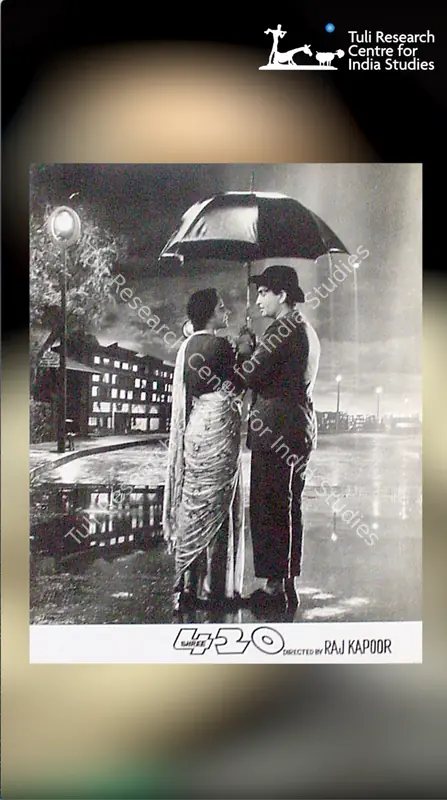
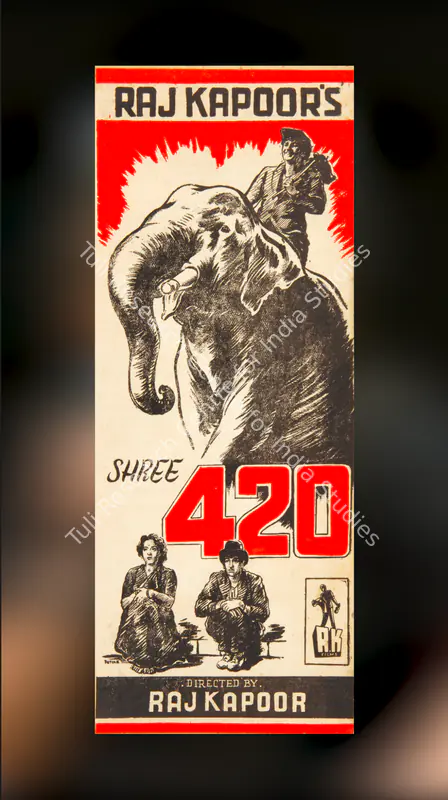
"Pyar Hua Ikrar Hua"- Love, Romance and the Idea of India | Shree 420 (1955)
"Pyar Hua Ikrar Hua" from Shree 420 (1955) at first glance is a song about two people standing in the rain, declaring their love for each other with nothing to their names. This conversation between the panelists peels back the layers, finding in it a richness that a casual listen rarely reveals. Filmmaker-Lyricist Amit Khanna opens with an anecdote about the battle between Raj Kapoor and Shankar-Jaikishan over whether Manna Dey or Mukesh should sing the song. It was Manna Dey who finally got the opportunity, and his voice immortalised it. Ravikant, Professor, CSDS (The Centre for the Study of Developing Societies), draws a parallel between the song and Roland Barthes' A Lover's Discourse, noting how the lovers believe their love to be eternal and absolute. For Ravikant, that sense of transcendence finds its most powerful visual expression when the camera pans to three young children, an image of radiant vitality that lifts the moment beyond the two figures standing in the rain. Composer-Writer Madan Gopal Singh reads the song through a different lens, comparing the condition of the two destitute lovers to that of newly independent India itself, a nation full of longing, uncertain of its footing, but reaching toward something better. This clip is from the workshop "A Musical Glue for Nation-Building: Deconstructing the Film Song" presented by the Tuli Research Centre for India Studies (T.R.I.S.) at the 7th Self-Discovery via Rediscovering India Festival, featuring Madan Gopal Singh, Amit Khanna, Ravikant, Juhi Saklani, and Neville Tuli.
Uncertainty, Destiny and the Tramp in Raj Kapoor's "Awara Hoon" | Awara (1951)
What exactly is “Awaara Hoon” from Raj Kapoor's Awaara (1951) about? A song that lives inside too many uncertainties keeps asking the question, am I a wanderer, or a star in orbit (Gardish mein hun ya aasman ka taara hoon). There is no home, no belongingness, no clear destiny, only movement, longing, and doubt. It is the sound of a world that's unsure of itself, and still singing joyously. Visually, the influence of Charlie Chaplin is unmistakable. From Raj Kapoor's attire to his tramp's gait, the vagabond persona is shaped by Chaplin's image of the little man buffeted by forces beyond his control. The song turns that figure into a symbol of the post-independence anxiety about entitlement, class, and the future; yet capturing the emotion of being spirited, hopeful, and strangely free. The collaboration of Raj Kapoor, the lyricist Shailendra, composers Shankar–Jaikishan, and singer Mukesh, creates a song that is at once both philosophical and popular. It poses questions about destiny and identity while also reaching millions as an unforgettable film hit. Panelists Amit Khanna, Madan Gopal Singh, Ravikant, Juhi Saklani, and Neville Tuli, examine this iconic song, sung by Mukesh, with lyrics by Shailendra and music by Shankar–Jaikishan in this video from 'A Musical Glue for Nation-Building: Deconstructing the Film Song' session, presented by the Tuli Research Centre for India Studies (T.R.I.S.) at the 7th Self-Discovery via Rediscovering India Festival.
Raj Kapoor's Film Songs Decoded | Awara Hoon, Pyar Hua Ikrar Hua & More (Trailer)
"Raj Kapoor's tramp, the wide-eyed wanderer in oversized clothes and a battered hat, was one of Hindi cinema's most deliberate creative constructions. Borrowed in spirit from Charlie Chaplin but rooted firmly in the anxieties of post-independence India, the figure carried the dreams and displacements of a nation still finding its footing. "Awara Hoon" from Awara (1951) became the song that gave that figure its voice, and its reach was extraordinary. In this clip, the panel discusses how the film introduced Raj Kapoor to audiences across the erstwhile Soviet Union, China and beyond. Composer-Writer Madan Gopal Singh points to ""Ramaiya Vastavaiya"" from Shree 420 (1955) as a moment of genuine creative risk, where Lata Mangeshkar's voice moves the song from a collective street chorus into something laden with intimate individuality. The panel also deconstructs two more songs from Raj Kapoor's career: "Pyar Hua Ikrar Hua" from Shree 420 (1955) and "Jeena Yahan Marna Yahan" from Mera Naam Joker (1970), examining what makes them endure across generations. In the workshop "A Musical Glue for Nation-Building: Deconstructing the Film Song," organised by the Tuli Research Centre for India Studies (T.R.I.S.), Madan Gopal Singh, Juhi Saklani, Ravikant, and Amit Khanna, in conversation with Neville Tuli, explore the lasting appeal of these songs and what they reveal about India's greatest showman's vision of cinema, emotion, and India itself.
K. Laxma Goud's Goat
Laxma Goud is a painter, draughtsman, sculptor and one of India’s finest printmakers. Goud’s childhood was spent in Telangana's village-an environment that shaped his sensibility in the years to come. Goud received his training in drawing and painting at the Government College of Fine Arts and Architecture in Hyderabad and studied Mural Painting under veteran artist K.G. Subramanyan in the 1960s at Baroda. To Goud, urban middle-class morality either repressed sexuality or treated it as taboo while rural societies had an unselfconscious and non-prudish attitude towards it. It is no surprise then that many of Goud’s works were overtly sexual in nature, fusing rural imagery with uninhibited eroticism. While his mastery over printmaking is reflected in his monochromatic copper plate etchings, he expanded into sculptural language in the 1980s utilizing materials such as terracotta and bronze. Goud's goat reflects a heavy sculptural form, returning to his traditional roots of Andhra’s craft traditions like leather puppetry and terracotta sculpting. Goud's goats hark, of course, to those dormant indigenous influences but they also, to some extent, remind one of the goat renderings of Picasso, who had famously kept a pet goat named Esmeralda. In both cases, the goat emerges not merely as a pastoral motif but as a charged and affectionate presence too. In the Indian subcontinent, the goat occupies a long-standing place within agrarian and ritual life, tied closely to everyday economy and forming part of rural systems of livelihood across regions. In Goud's work, the goat is held within this spectrum of memory and the conditions of rural life.
M.F. Husain's Tiger Attacking the Horse
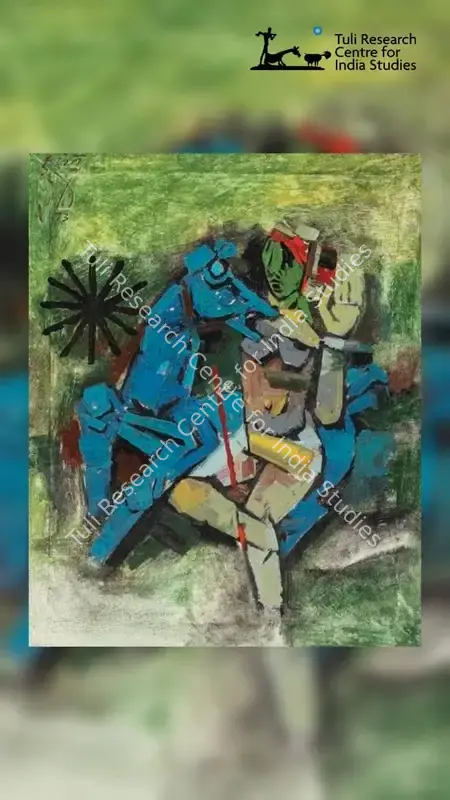
One of the foremost Indian modernists of the 20th century, MF Husain is recognizably the most popular painter of horses. His horses leap and gallop in agonizing, abstracted movements across the length and breadth of his canvases. Though modern in form, Husain remained deeply rooted in India, and his imagery draws from the vast reservoir of the country's mythologies, rituals, and visual traditions. His works are thus both intensely personal and broadly archetypal. Growing up, a major source for Husain's horses was the iconic Duldul, Imam Husain's horse in the battle of Karbala, whose decorated image was carried during the Muharram processions in Indore that Husain had often watched in his boyhood. The symbol of the tiger is another bearer of myth and identity for Husain, at once the 𝙑𝙖𝙝𝙖𝙣𝙖 of the goddess and a national emblem. Rendered in stylized, angular forms, his tiger departs from naturalism and harks back to the miniature paintings and stone sculptures of the sub-continent. Many rare visual narratives and artistic expressions come together in 𝘼𝙡𝙡 𝙇𝙞𝙫𝙞𝙣𝙜 𝙎𝙤𝙪𝙡𝙨 Expressed in the Modern and Contemporary Fine & Popular Indian Arts, a compelling exhibition curated by Neville Tuli that explores the 16th Research Category for India Studies— "The Animal Human Nature Continuum" on 5th to 11th May 2026 at 📍 Visual Arts Gallery, India Habitat Centre, Lodhi Road, New Delhi 110003 Visit the Integrated Timeline of the artist on tuliresearchcentre.org for an extensive, in-depth analysis of the life and works of one of India's most celebrated artists!
Jyoti Bhatt's The Lost Pundit
Jyoti Bhatt's iconic etching “Lost Pundit” is among the featuring works in the exhibition. A pioneering Indian artist, printmaker, and photographer, best known for his contributions to modern printmaking in post-independence India, Bhatt developed a unique visual language by drawing extensively from living traditions including ritual markings and rural craft and folk practices. One of his widely recognisable etchings titled 'Lost Pundit' epitomises a sense of harmony and wit both visually and thematically: an owl is perched atop a somewhat whimsical yet enigmatic figure, a learned man, traditionally associated with knowledge and authority, who appears disoriented or out of place. Bhatt often draws on archetypal figures from Indian society, and here the “Lost Pundit” represents one such figure. This etching is one of Bhatt's early works to be shown at his significant one-man show of prints and paintings at Gallery Chemould in 1967. Many rare visual narratives and artistic expressions come together in 𝘼𝙡𝙡 𝙇𝙞𝙫𝙞𝙣𝙜 𝙎𝙤𝙪𝙡𝙨 Expressed in the Modern and Contemporary Fine & Popular Indian Arts, a compelling exhibition curated by Neville Tuli that explores the 16th Research Category for India Studies- ""The Animal Human Nature Continuum"" on 5th to 11th May 2026 at 📍 Visual Arts Gallery, India Habitat Centre, Lodhi Road, New Delhi 110003 Visit Jyoti Bhatt's Body of Work section on the tuliresearchcentre.org to explore more exhibitions of the master.
Sholay: The Mouth Organ Scene
The iconic mouth-organ scene from the 1975 Ramesh Sippy film Sholay was performed by Bhanu Gupta, an integral part of the film's music composer R.D. Burman's team. Primarily a dacoit film, also referred to as a Dacoit Western, combining tropes of Hollywood Curry Westerns and Indian dacoit films, this scene was a rare moment of expression of outward calm, inner loneliness and an unspoken connection, portrayed beautifully by Amitabh and Jaya Bachchan (née Bhaduri). A review in the popular film magazine of the time Star & Style (12 September 1975) noted that, “Jaya conveys almost everything with her face…we have hardly any other Hindi actress who can do such a feat, of expressing sadness and hope.” In the scene, filmed at dusk, Radha, the young widow of the Thakur's son, lights the lamp of the house while Jai is sitting downstairs playing a melancholic tune on his mouth organ. The sadness of Radha and the longing that Jai feels for her is portrayed beautifully establishing a moment of tranquillity between the two characters with a doomed ending. Ramesh Sippy in an interview recounted how the scene took several days to be satisfactorily filmed as he wanted to capture the perfect lighting and mood for the shot. Termed as a non-starter upon its release and panned by the critics, the film went on to become a cult classic, remembered for its story, acting, music and overall production values, drawing audiences in droves to the theatres. Sholay, has been revered by many film critics and enthusiasts over the years gaining accolades such as the “Top 10 Indian Films” of all time by the British Film Institute in 2002 and the “Best Film of 50 Years” by the Filmfare Awards in 2005.
Coolie: Manmohan Desai's Cinematic Epic of Unity and Drama
A working still from Manmohan Desai's 1983 film Coolie, produced under the banner M.K.D. Films Combine and Aasia Films Pvt. Ltd., was captured on Amitabh Bachchan's return to the shooting of the film after his prolonged stay in hospital. Coolie remains an integral part of the illustrious filmography of Amitabh Bachchan and one of the landmark films of the collaboration between Bachchan and Desai. A classic example of the masala films, Coolie was a blockbuster hit. The film bore all the famous tropes of lost and found family members, romance and a trusted animal coming to the aid of the hero. The film was also spotlit for the near fatal accident that occurred on the sets of the film during a fight scene between Bachchan and Puneet Issar, leaving the former hospitalised for two months at Breach Candy Hospital, Bombay, while the entire nation prayed for the superstar's recovery. Kader Khan, who played the role of the main antagonist in the film also served as its writer, incorporating several references to Sufi mysticism in the script. The sacred number 786, served as the badge number of the coolie Iqbal (played by Bachchan), his falcon named Allah Rakha (meaning in God's protection), and a shroud from the Haji Ali Dargah which landed on Iqbal's shoulder during the final scenes of the film, as he took his revenge from Zafar, killing him at the end while nearly surviving multiple injuries himself. The climax of the film was changed and re-shot after Bachchan's return from hospital capitulating to audience sentiment, which had feverishly prayed for their hero's safe recovery. Prayag Raaj, a trusted collaborator of Desai, directed and co-wrote the script of the film along with some songs. Desai's name was later added as the co-director of the film to get better distribution price; he was originally the producer of the film. Coolie went on to become one of the ten highest grossing films of the decade and the biggest hit of 1983, exceeding 75 weeks in several regional centres with people sleeping overnight at theatres to secure a place in next morning's booking queues.