

Civil Disobedience
About this post
Salt was an everyday necessity, yet under British rule Indians were prohibited from freely producing or collecting it and were required to pay a tax on it. Gandhi chose salt because its injustice was understood and felt in everyday life.
On 12 March 1930, Gandhi and seventy-eight volunteers left Sabarmati Ashram and walked nearly 390 kilometres to Dandi. On 6 April, Gandhi defied the Salt Law by producing salt from seawater, turning an essential commodity into an act of civil disobedience. The action sparked protests across India. People followed suit, while also boycotting foreign-made cloth and liquor, picketing shops and refusing certain taxes.
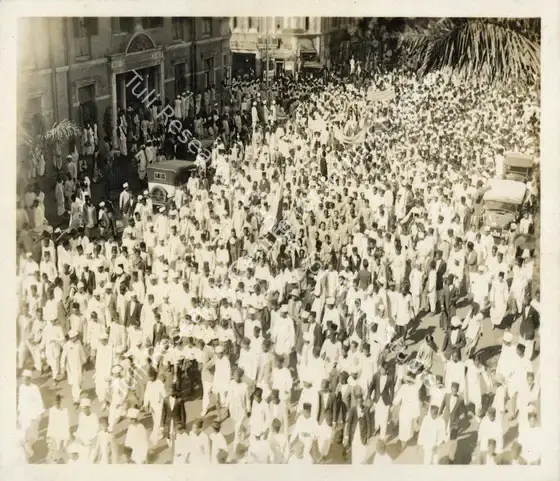
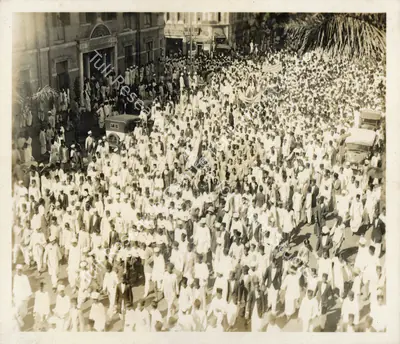
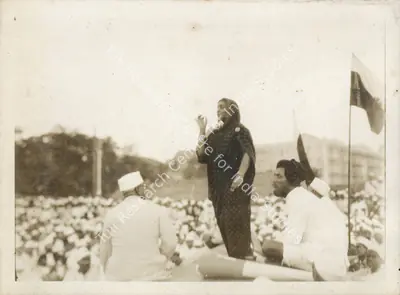
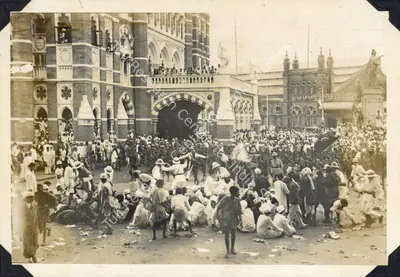
Women, students, youth, merchants, workers and peasants participated in unprecedented numbers, joining processions, making salt, picketing and courting arrest. Their involvement brought the freedom struggle into homes, markets and public spaces.
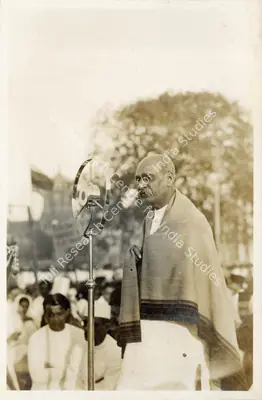
This album of 247 photographs captures the movement's mass character, documenting the crowds, processions and acts of resistance that took the freedom struggle beyond its prominent leaders and into the lives of ordinary people.
The British responded with arrests and repression, but civil disobedience continued through 1932. The colonial salt tax was finally abolished in 1946.
Today, salt itself remains exempt from GST. From an everyday necessity to a powerful symbol of resistance, salt became one of the defining symbols of India's freedom struggle.
On 12 March 1930, Gandhi and seventy-eight volunteers left Sabarmati Ashram and walked nearly 390 kilometres to Dandi. On 6 April, Gandhi defied the Salt Law by producing salt from seawater, turning an essential commodity into an act of civil disobedience. The action sparked protests across India. People followed suit, while also boycotting foreign-made cloth and liquor, picketing shops and refusing certain taxes.
Women, students, youth, merchants, workers and peasants participated in unprecedented numbers, joining processions, making salt, picketing and courting arrest. Their involvement brought the freedom struggle into homes, markets and public spaces.
This album of 247 photographs captures the movement's mass character, documenting the crowds, processions and acts of resistance that took the freedom struggle beyond its prominent leaders and into the lives of ordinary people.
The British responded with arrests and repression, but civil disobedience continued through 1932. The colonial salt tax was finally abolished in 1946.
Today, salt itself remains exempt from GST. From an everyday necessity to a powerful symbol of resistance, salt became one of the defining symbols of India's freedom struggle.
Post 34
Civil Disobedience
Post record
Published14 Aug 2026
Media4 images
Research Categories213_SeekJustice·9_SocialDuty
Masterlists1Mahatma Gandhi