TRIS logo image
Search names, films, exhibitions

EN

EN

English

HI

Hindi

EN

EN

English

HI

Hindi

Tuli Research Centre for India Studies

Home

Tuli Research Centre for India Studies

Vision

Manifesto

Archive & Library

Vanraja Sanctuary & Hospice

Research Categories

Browse All

ICore

1_CinemaEducation_Cinema as a Critical Educational Resource

2_FineArts_Modern and Contemporary Indian Fine Arts

3_Photography_Photography in India

4_PopCulture_The Printed Image, Popular Arts, and Crafts

IIMaterial

5_ArcHeritage_India's Architectural Heritage as Inspiration

6_EconomicsArt_Economics of Art & Cultural Industry

7_Travel_Automobile, Transport and Travel Heritage

8_Uncertainty_Uncertainty

IIICritical

9_SocialDuty_Social Responsibility of the Creative Mind

10_Childhood_The Changing Smile of Childhood & Its Second Coming

11_Sensuality_The Sensual Discipline within Creativity

12_Scholarship_The History & Historiography of Scholarship in the Arts, Humanities, and Social Sciences

IVMeaningful

13_SeekJustice_Seeking Justice and Political Integrity

14_IndoWorld_India and her Relationship with the World

15_SpiritualPoetics_The Religious-Spiritual-Poetic-Philosophical Framework

16_Continuum_The Animal-Human-Nature Continuum

Explore

All

Posts

Masterlists

Calendar

Live | Upcoming

All Events

Timetable

Search names, films, exhibitions

EN

EN

English

HI

Hindi

Satyajit Ray

Satyajit Ray

Taurusb. 02 May 1921, Calcuttad. 23 Apr 1992

Personality.Filmmaker
A-Graphy
Introduction
Filmography74
Integrated Timeline67
Economics of Cinema79
Research Centre1,070
All1,070
Library191
Archive874
Videos5
Highlights12
Posts1
Calendar5
Home/Cinema as a Critical Educational Resource/Personality · Filmmaker/Satyajit Ray
Satyajit Ray — featured artwork

Introduction

Satyajit Ray (2 May 1921 – 23 April 1992) He stands among the most celebrated and influential figures in the history of world cinema. An extraordinary polymath, he excelled not only as a film director but also as a screenwriter, author, lyricist, magazine editor, illustrator, calligrapher, typographer, and music composer. His remarkable versatility and profound artistic vision established him as one of the defining cultural icons of modern India and earned him enduring international recognition. Ray's cinematic masterpieces, including Pather Panchali (1955), Aparajito (1956), Apur Sansar (1959), Jalsaghar (1958), Mahanagar (1963), Charulata (1964), and the Goopy Gyne Bagha Byne trilogy—comprising Goopy Gyne Bagha Byne (1969), Hirak Rajar Deshe (1980), and Goopy Bagha Phire Elo (1992)—transformed Indian cinema by combining aesthetic sophistication with deep humanism.

Ray's creative genius extended well beyond filmmaking. He was a distinguished writer who made significant contributions to Bengali literature, particularly children's fiction. He created two of Bengal's most enduring fictional characters: the detective Pradosh Chandra Mitter, popularly known as Feluda, whose adventures are narrated by his young cousin Topshe, and the eccentric scientist Professor Shonku, whose extraordinary scientific exploits are presented in the form of recovered diary entries. These characters remain immensely popular and have become integral to Bengali literary culture. Ray also authored a celebrated collection of nonsense verse titled Toray Bandha Ghorar Dim, which included a Bengali translation of Lewis Carroll's Jabberwocky. In addition, he adapted humorous tales of Mullah Nasiruddin for Bengali readers. His artistic achievements also encompassed typography and graphic design, as he created several Roman typefaces, including Ray Roman, Ray Bizarre, Daphnis, and Holiday Script, alongside numerous Bengali typefaces designed for Sandesh magazine. Notably, Ray Roman and Ray Bizarre received international recognition by winning a prestigious typeface competition in 1971.

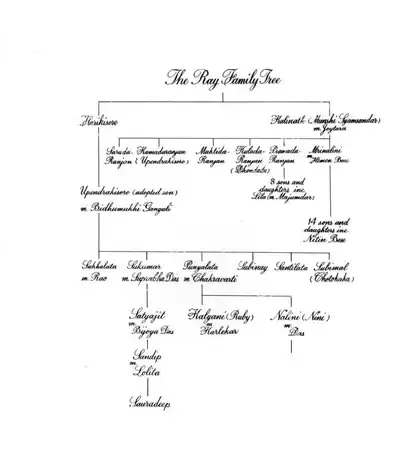
Born in Calcutta into an illustrious Bengali family renowned for its literary and artistic accomplishments, Ray inherited an exceptional cultural legacy. His grandfather, Upendrakishore Ray Chowdhury, was a pioneering writer, illustrator, publisher, philosopher, amateur astronomer, and an influential leader of the Brahmo Samaj. He established the renowned printing press U. Ray and Sons and founded Sandesh, the celebrated Bengali children's magazine. Ray's father, Sukumar Ray, was one of Bengal's greatest writers of nonsense literature, best remembered for his classic work Abol Tabol. His aunt, Shukhalata Rao, was also an accomplished children's author and social reformer. Growing up in such an intellectually vibrant environment, Ray developed an early fascination with printing technology, illustration, and book design through his close association with Sandesh and the family publishing enterprise.

Ray received his early education at Ballygunge Government High School before completing a Bachelor's degree in Economics at Presidency College, Calcutta. During his formative years, he developed a deep appreciation for cinema by watching Hollywood classics featuring Charlie Chaplin, Buster Keaton, Harold Lloyd, and Ernst Lubitsch. Films such as The Thief of Baghdad and Uncle Tom's Cabin left a lasting impression on him, while his growing interest in Western classical music significantly influenced his later work as a composer.

In 1940, Ray enrolled at Visva-Bharati University in Santiniketan, founded by Rabindranath Tagore, to study Fine Arts. His time at Santiniketan profoundly transformed his artistic outlook. Under the guidance of eminent artists Nandalal Bose and Benode Behari Mukherjee, he developed a deep appreciation for Indian and Oriental art traditions. His visits to the cave temples of Ajanta, Ellora, and Elephanta further enriched his understanding of India's artistic heritage. During this period, Ray also immersed himself in film theory through the writings of Paul Rotha, Rudolf Arnheim, and Raymond Spottiswoode, laying the intellectual foundation for his future career in cinema. Although he left Santiniketan before completing his course, the experience permanently shaped his artistic sensibilities.

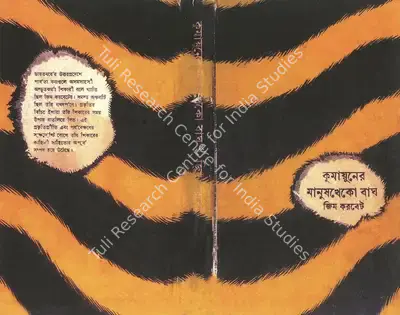
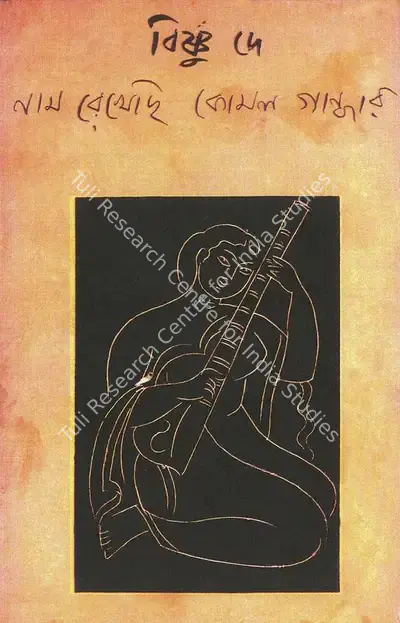
In 1943, Ray began his professional career as a junior visualiser at the British advertising agency D.J. Keymer, where he acquired expertise in commercial art under the guidance of Annada Munshi. Simultaneously, he worked for Signet Press, enjoying considerable creative freedom in designing book covers and illustrations. Ray quickly established himself as one of India's finest graphic designers and typographers, producing memorable cover designs for works by Jibanananda Das, Bibhutibhushan Bandyopadhyay, Jim Corbett, and Jawaharlal Nehru. While illustrating a children's adaptation of Bibhutibhushan Bandyopadhyay's Pather Panchali, he became deeply inspired by the novel's emotional richness. This encounter ultimately led him to adapt the work into his debut feature film.

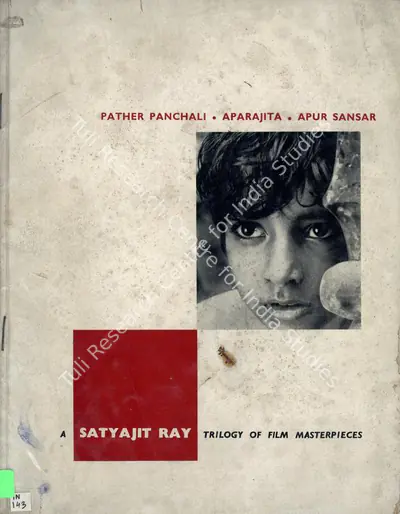
Ray's artistic excellence was distinguished by his extraordinary versatility. Beyond directing, he composed original musical scores, wrote screenplays, designed posters, illustrated books, edited magazines, and produced literary works. His meticulous attention to detail and profound understanding of human psychology endowed his characters with exceptional realism and emotional depth. Ray's transition to filmmaking was profoundly influenced by his meeting with French director Jean Renoir during the latter's visit to India for the production of The River. An equally decisive influence came during Ray's visit to London, where he watched Vittorio De Sica's neorealist masterpiece Bicycle Thieves. Inspired by its realism and emotional authenticity, Ray returned to India determined to create films rooted in everyday life. His debut feature, Pather Panchali (1955), won eleven international awards, including the inaugural Best Human Document Award at the 1956 Cannes Film Festival. Together with Aparajito (1956) and Apur Sansar (1959), it formed the internationally acclaimed Apu Trilogy, widely regarded as one of cinema's greatest achievements. Ray subsequently directed thirty-six films, including feature films, documentaries, and short films, while personally overseeing scripting, casting, music composition, editing, title design, and publicity materials.

Although deeply rooted in Bengali society, his films explored universal themes such as family, identity, social change, moral conflict, and human dignity, enabling audiences worldwide to connect with his work.His cinematic style reflected a synthesis of diverse global influences while remaining unmistakably original. Ray acknowledged Jean Renoir and Vittorio De Sica as formative inspirations and admired the craftsmanship of John Ford, Billy Wilder, and Ernst Lubitsch. He held Akira Kurosawa and Ingmar Bergman in the highest regard, while also appreciating the innovations of François Truffaut, Jean-Luc Godard, Michelangelo Antonioni, Stanley Kubrick, and Sergei Eisenstein. Kurosawa famously remarked that not seeing Ray's films was akin to living without seeing the sun or the moon, a tribute that reflects Ray's immense stature within international cinema.

Ray's contributions received unparalleled recognition throughout his lifetime. He won a record thirty-seven National Film Awards, the Dadasaheb Phalke Award, the Ramon Magsaysay Award, France's Ordre des Arts et des Lettres, the Golden Lion at the Venice Film Festival, the Golden Bear at the Berlin International Film Festival, and the Academy Honorary Award in 1992. He was awarded an honorary doctorate by the University of Oxford and received India's highest civilian honour, the Bharat Ratna, shortly before his death. His films continue to be preserved by the Academy Film Archive, ensuring their accessibility for future generations.

In 1992, Ray's health deteriorated due to severe heart complications. Twenty-four days before his death, he accepted the Honorary Academy Award through a video link from his hospital bed, describing it as the greatest achievement of his filmmaking career. He passed away on 23 April 1992 at the age of seventy.

सत्यजीत रे (2 मई 1921 – 23 अप्रैल 1992) विश्व सिनेमा के इतिहास में मशहूर और प्रभावशाली लोगों में से एक हैं। वे एक असाधारण बहुमुखी प्रतिभा वाले व्यक्ति थे। उन्होंने न केवल एक फिल्म निर्देशक के तौर पर, बल्कि पटकथा लेखक, लेखक, गीतकार, पत्रिका संपादक, चित्रकार, सुलेखक (कैलीग्राफ़ी), टाइपोग्राफ़र और संगीतकार के तौर पर भी बेहतरीन काम किया। उनकी अद्भुत बहुमुखी प्रतिभा और गहरी कलात्मक सोच ने उन्हें आधुनिक भारत के प्रमुख सांस्कृतिक नायकों में से एक के रूप में स्थापित किया। उन्हें अंतरराष्ट्रीय स्तर पर स्थायी पहचान दिलाई। सत्यजीत रे की बेहतरीन फ़िल्में जिनमें पाथेर पांचाली (1955), अपराजितो (1956), अपुर संसार (1959), जलसाघर (1958), महानगर (1963), चारुलता (1964) और 'गुपी गायन बाघा बायन' त्रयी (जिसमें 'गुपी गायन बाघा बायन' (1969), 'हीरक राजार देशे' (1980) और 'गुपी बाघा फिरे एलो (' (1992) शामिल हैं) शामिल हैं, जिसने ने कलात्मक सुंदरता और गहरी मानवीय संवेदनाओं का मेल करके भारतीय सिनेमा को बदल दिया।
सत्यजीत रे की मौलिक प्रतिभा सिर्फ़ फ़िल्म बनाने तक ही सीमित नहीं थी। वे एक जाने-माने लेखक थे जिन्होंने बंगाली साहित्य, ख़ासकर बच्चों की कहानियों में अहम योगदान दिया। उन्होंने बंगाल के दो ऐसे काल्पनिक किरदार बनाए जो आज भी बहुत लोकप्रिय हैं, जासूस प्रदोष चंद्र मित्र, जिन्हें 'फेलुदा' के नाम से जाना जाता है और जिनके कारनामों के बारे में उनका छोटा भतीजा 'तोपशे' ने बताया है। वैज्ञानिक प्रोफ़ेसर शोंकू, जिनके अनोखे वैज्ञानिक कारनामों को उनकी मिली हुई डायरी के पन्नों के ज़रिए दिखाया है। ये किरदार आज भी बहुत पसंद किए जाते हैं और बंगाली साहित्य की संस्कृति का अहम हिस्सा बन गए हैं। सत्यजीत रे ने 'तोराय बांधा घोरार डिम' नाम से मज़ेदार कविताओं का एक मशहूर कलेक्शन भी लिखा, जिसमें लुईस कैरोल की 'जैबरवॉकी' का बंगाली अनुवाद भी शामिल था। इसके अलावा, उन्होंने बंगाली पाठकों के लिए मुल्ला नसरुद्दीन की मज़ेदार कहानियों को भी नए रूप में पेश किया। उनकी कलात्मक उपलब्धियों में टाइपोग्राफ़ी और ग्राफ़िक डिज़ाइन भी शामिल थे। उन्होंने कई रोमन टाइपफ़ेस बनाए, जैसे 'रे रोमन', 'रे बिज़ार', 'डैफ़निस' और 'हॉलिडे स्क्रिप्ट', साथ ही 'संदेश' मैगज़ीन के लिए कई बंगाली टाइपफ़ेस भी डिज़ाइन किए। ख़ास बात यह है कि 'रे रोमन' और 'रे बिज़ार' को 1971 में एक प्रतिष्ठित टाइपफ़ेस प्रतियोगिता जीतकर अंतरराष्ट्रीय पहचान मिली।
साहित्य और कला के क्षेत्र में अपनी उपलब्धियों के लिए मशहूर एक प्रतिष्ठित बंगाली परिवार में कलकत्ता में जन्मे सत्यजीत रे को एक शानदार सांस्कृतिक विरासत मिली। उनके दादा, उपेंद्रकिशोर रे चौधरी, एक पमुख लेखक, चित्रकार, प्रकाशक, दार्शनिक, शौक़िया खगोलशास्त्री और ब्रह्म समाज के प्रभावशाली नेता थे। उन्होंने मशहूर प्रिंटिंग प्रेस 'यू. रे एंड संस' की स्थापना की और बच्चों की प्रसिद्ध बंगाली पत्रिका 'संदेश' शुरू की। रे के पिता, सुकुमार राय, बंगाल के 'नॉनसेंस लिटरेचर' (हास्य और मज़ेदार साहित्य) के सबसे महान लेखकों में से एक थे, जिन्हें उनकी क्लासिक रचना 'आबोल-ताबोल' के लिए सबसे ज़्यादा याद किया जाता है। उनकी बुआ, सुखलता राव, भी बच्चों की एक बेहतरीन लेखिका और समाज सुधारक थीं। बौद्धिक रूप से समृद्ध माहौल में पले-बढ़े सत्यजीत रे की 'संदेश' पत्रिका और परिवार के पब्लिशिंग बिज़नेस से क़रीबी जुड़ाव के कारण प्रिंटिंग टेक्नोलॉजी, चित्रकारी और किताब के डिज़ाइन में कम उम्र से ही दिलचस्पी पैदा हो गई थी।
सत्यजीत रे ने अपनी शुरुआती पढ़ाई बालीगंज गवर्नमेंट हाई स्कूल से की और फिर कलकत्ता के प्रेसिडेंसी कॉलेज़ से इकोनॉमिक्स में बैचलर डिग्री पूरी की। अपने शुरुआती दिनों में, चार्ली चैपलिन, बस्टर कीटन, हेरोल्ड लॉयड और अर्न्स्ट लुबिट्श की हॉलीवुड क्लासिक फ़िल्में देखकर उन्हें सिनेमा के प्रति गहरा लगाव हो गया। 'द थीफ़ ऑफ़ बग़दाद' और 'अंकल टॉम्स केबिन' जैसी फ़िल्मों ने उन पर गहरी छाप छोड़ी, जबकि वेस्टर्न क्लासिकल म्यूज़िक में बढ़ती दिलचस्पी ने बाद में एक कंपोज़र के तौर पर उनके काम को काफ़ी प्रभावित किया।
1940 में सत्यजीत रे ने फाइन आर्ट्स की पढ़ाई के लिए शांतिनिकेतन में विश्व-भारती यूनिवर्सिटी में दाख़िला लिया, जिसकी स्थापना रवींद्रनाथ टैगोर ने की थी। शांतिनिकेतन में बिताए समय ने उनके कला के नज़रिए को पूरी तरह बदल दिया। मशहूर कलाकार नंदलाल बोस और बिनोद बिहारी मुखर्जी की देखरेख में, उन्होंने भारतीय और पूर्वी कला परंपराओं की गहरी समझ विकसित की। अजंता, एलोरा और एलिफेंटा की गुफ़ाओ और मंदिरों की यात्राओं ने भारत की कलात्मक विरासत के बारे में उनकी समझ को और बढ़ाया। इस दौरान सत्यजीत रे ने पॉल रोथा, रुडोल्फ अर्नहेम और रेमंड स्पॉटिसवुड की रचनाओं के ज़रिए फ़िल्म थ्योरी को भी गहराई से समझा, जिससे सिनेमा में उनके भविष्य के करियर की बौद्धिक नींव पड़ी। हालाँकि उन्होंने अपना कोर्स पूरा करने से पहले ही शांतिनिकेतन छोड़ दिया था, लेकिन उस अनुभव ने हमेशा के लिए उनकी कलात्मक समझ को आकार दिया।
1943 में, सत्यजीत रे ने ब्रिटिश एडवरटाइज़िंग एजेंसी डी.जे. कीमर में जूनियर विज़ुअलाइज़र के तौर पर अपना प्रोफ़ेशनल करियर शुरू किया, जहाँ उन्होंने अन्नदा मुंशी की देखरेख में कमर्शियल आर्ट में महारत हासिल की। ​​साथ ही, उन्होंने सिगनेट प्रेस के लिए भी काम किया, जहाँ उन्हें किताबों के कवर और इलस्ट्रेशन डिज़ाइन करने में काफ़ी क्रिएटिव आज़ादी मिली। सत्यजीत रे ने जल्द ही भारत के बेहतरीन ग्राफ़िक डिज़ाइनरों और टाइपोग्राफ़रों में से एक के तौर पर अपनी पहचान बना ली। उन्होंने जीवानंद दास, विभूतिभूषण बंद्योपाध्याय, जिम कॉर्बेट और जवाहरलाल नेहरू की रचनाओं के लिए शानदार कवर डिज़ाइन तैयार किए। विभूतिभूषण बंद्योपाध्याय की 'पाथेर पांचाली' के बच्चों के लिए बनाए गए वर्शन के लिए इलस्ट्रेशन बनाते समय, वे उस उपन्यास की भावनात्मक गहराई से बहुत प्रभावित हुए। इसी अनुभव ने उन्हें आगे चलकर इस रचना पर अपनी पहली फ़ीचर फ़िल्म बनाने के लिए प्रेरित किया।
सत्यजीत रे की कलात्मक उत्कृष्टता उनकी असाधारण बहुमुखी प्रतिभा से पहचानी जाती थी। निर्देशन के अलावा, उन्होंने ओरिजिनल म्यूज़िक स्कोर तैयार किए, पटकथाएँ लिखीं, पोस्टर डिज़ाइन किए, किताबों के लिए चित्र बनाए, पत्रिकाओं का संपादन किया और साहित्यिक रचनाएँ भी कीं। बारीकियों पर उनका बहुत ध्यान और मानव मनोविज्ञान की गहरी समझ ने उनके किरदारों को असाधारण यथार्थवाद और भावनात्मक गहराई दी। सत्यजीत रे का फ़िल्म निर्माण की ओर झुकाव फ़्रेंच निर्देशक जीन रेनॉयर के साथ उनकी मुलाक़ात से काफ़ी प्रभावित हुआ। रेनॉयर 'द रिवर' फ़िल्म के निर्माण के सिलसिले में भारत आए थे। एक और अहम प्रभाव तब पड़ा जब सत्यजीत रे लंदन गए और उन्होंने विटोरियो डी सिका की नव-यथार्थवादी (नियो-रियलिस्टिक) मास्टरपीस 'बाइसिकल थीव्स' देखी। इसकी सच्चाई और भावनात्मक प्रमाणिकता से प्रेरित होकर, रे भारत लौटे और रोज़मर्रा की ज़िंदगी से जुड़ी फ़िल्में बनाने का फ़ैसला किया। उनकी पहली फ़िल्म 'पाथेर पांचाली' (1955) ने ग्यारह अंतरराष्ट्रीय पुरस्कार जीते, जिसमें 1956 के कान फ़िल्म फेस्टिवल में पहला 'बेस्ट ह्यूमन डॉक्यूमेंट अवॉर्ड' भी शामिल था। 'अपराजितो' (1956) और 'अपुर संसार' (1959) के साथ मिलकर इसने अंतरराष्ट्रीय स्तर पर सराही गई 'अपु ट्रिलॉजी' बनाई, जिसे सिनेमा की सबसे बड़ी उपलब्धियों में से एक माना जाता है। इसके बाद सत्यजीत रे ने छत्तीस फ़िल्मों का निर्देशन किया, जिनमें फ़ीचर फ़िल्में, डॉक्यूमेंट्री और शॉर्ट फ़िल्में शामिल थीं। साथ ही उन्होंने स्क्रिप्टिंग, कास्टिंग, संगीत रचना, संपादन, टाइटल डिज़ाइन और प्रचार सामग्री की देखरेख भी ख़ुद की।
भले ही उनकी फ़िल्में बंगाली समाज से गहराई से जुड़ी थीं, लेकिन उनमें परिवार, पहचान, सामाजिक बदलाव, नैतिक द्वंद्व और मानवीय गरिमा जैसे सार्वभौमिक विषयों को दिखाया गया, जिससे दुनिया भर के दर्शक उनके काम से जुड़ सके। उनकी फ़िल्मी शैली में दुनिया भर के अलग-अलग प्रभावों का मिश्रण दिखता था, फिर भी वह पूरी तरह से मौलिक थी। सत्यजीत रे ने जीन रेनॉयर और विटोरियो डी सिका को अपनी शुरुआती प्रेरणा माना और जॉन फोर्ड, बिली वाइल्डर और अर्न्स्ट लुबिट्श की कलाकारी की तारीफ़ की। वह अकीरा कुरोसावा और इंगमार बर्गमैन का बहुत सम्मान करते थे, साथ ही फ़्राँस्वा त्रुफ़ो, जीन-ल्यूक गोडार्ड, माइकलएंजेलो एंटोनियोनी, स्टेनली कुब्रिक और सर्गेई आइज़ेंस्टीन के नए प्रयोगों की भी सराहना करते थे। कुरोसावा ने मशहूर बात कही थी कि सत्यजीत रे की फ़िल्में न देखना सूरज या चाँद को देखे बिना जीने जैसा है। यह बात अंतरराष्ट्रीय सिनेमा में सत्यजीत रे के बहुत बड़े क़द को दर्शाती है।
सत्यजीत रे के योगदान को उनके जीवनकाल में अभूतपूर्व पहचान मिली। उन्होंने रिकॉर्ड 37 राष्ट्रीय फ़िल्म पुरस्कार, दादा साहब फाल्के पुरस्कार, रेमन मैग्सेसे पुरस्कार, फ्रांस का 'ऑर्ड्रे डेस आर्ट्स एट डेस लेट्रेस' (Ordre des Arts et des Lettres), वेनिस फ़िल्म फेस्टिवल में 'गोल्डन लायन', बर्लिन इंटरनेशनल फ़िल्म फेस्टिवल में 'गोल्डन बियर' और 1992 में 'अकादमी मानद पुरस्कार' जीता। उन्हें ऑक्सफ़ोर्ड यूनिवर्सिटी से मानद डॉक्टरेट की उपाधि मिली और मृत्यु से कुछ समय पहले भारत के सर्वोच्च नागरिक सम्मान 'भारत रत्न' से सम्मानित किया गया। उनकी फ़िल्मों को 'अकादमी फ़िल्म आर्काइव' द्वारा संरक्षित किया जा रहा है, ताकि आने वाली पीढ़ियों के लिए वे उपलब्ध रह सकें।
1992 में, दिल की गंभीर समस्याओं के कारण सत्यजीत रे की तबीयत बिगड़ गई। अपनी मौत से चौबीस दिन पहले, उन्होंने अस्पताल के बिस्तर से वीडियो लिंक के ज़रिए 'ऑनररी एकेडमी अवॉर्ड' स्वीकार किया और इसे अपने फ़िल्म-निर्माण करियर की सबसे बड़ी उपलब्धि बताया। 23 अप्रैल 1992 को सत्तर साल की उम्र में उनका निधन हो गया।
Date of Birth
02 May 1921
Time of Birth
1900-01-00
Zodiac sign
Taurus
Date of Death
23 Apr 1992
Age
70
Nationality
Indian
Place of Birth
Calcutta
Spouse(s)
Bijoya Ray (27 Oct 1917 – 02 Jun 2015)
Year Marriage Registered
20 Oct 1948
Children
Sandip Ray (b. 20 Oct 1948)
Parent(s)
Sukumar Ray, Suprabha Ray
Grandparent(s)
Bidhumukhi Devi, Upendrakishore ray
Ancestor(s)
Dwarkanath Ganguly, Kalinath Ray
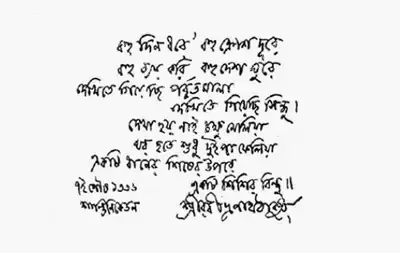
Signatures
Signatures
  1. 1929

    1. Ballygunge Government High School Calcutta
  2. 1936

    1. Presidency College Calcutta

      1936 – 1939

  3. 1940

    1. Visva-Bharati University Santiniketan

      1940 – 1942

    1. Indian New Wave Cinema and Parallel CinemaAssociated Institution
    1. FTII PuneAssociated Institution
  1. 1947

    1. Founder Calcutta Film Society CalcuttaAssociated Institution

      1947 – 1992

  2. 1960

    1. Jury Vienna Film FestivalOfficial Position
  3. 1961

    1. International Feature Film Jury Berlin Film FestivalOfficial Position
  4. 1963

    1. Jury 3rd Moscow International Film FestivalOfficial Position
  5. 1965

    1. Jury Chairman for Feature Films 3rd International Film Festival of India New DelhiOfficial Position
  6. 1966

    1. President Sci-Fi Cine Club CalcuttaAssociated Institution
  7. 1968

    1. Jury Film Festival in TunisiaOfficial Position
  8. 1970

    1. Advisor and Founding Member Chitrabani CalcuttaAssociated Institution
  9. 1972

    1. Jury Tehran Film FestivalOfficial Position
  10. 1974

    1. Jury Chairman 5th International Film Festival of India New DelhiOfficial Position

      1974 – 1975

  11. 1977

    1. Jury Chairman 6th International Film Festival of IndiaOfficial Position
  12. 1982

    1. Jury Manila International Film FestivalOfficial Position
    2. Jury Venice Film FestivalOfficial Position

Filmography 74
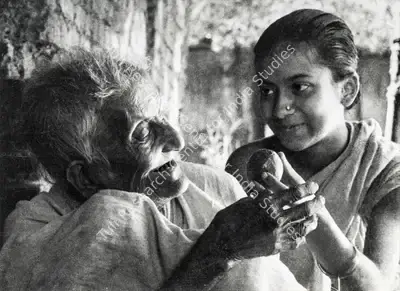
Pather Panchali, Screenplay Writer, Poster Designer, Director, Dialogue Writer, Publicity Designer, 1955
Pather Panchali | পথের পাঁচালী | Bengali | Screenplay Writer, Poster Designer, Director, Dialogue Writer, Publicity Designer
1955 | Feature | Fiction | Black and White | 119 mins | India
Aparajito, Director, Script Writer, Screenplay Writer, Poster Designer, Producer, 1956
Aparajito | অপরাজিত | Bengali | English | Sanskrit | Director, Script Writer, Screenplay Writer, Poster Designer, Producer
1956 | Feature | Fiction | Black and White | 113 mins | India
Parash Pathar, Music Director, Director, Script Writer, 1958
Parash Pathar | পরশ পাথর | Bengali | Music Director, Director, Script Writer
1958 | Feature | Fiction | Black and White | 111 mins | India
Jalsaghar, Poster Designer, Producer, Director, Script Writer, 1958
Jalsaghar | জলসাঘর | Bengali | Poster Designer, Producer, Director, Script Writer
1958 | Feature | Fiction | Black and White | 100 mins | India
Apur Sansar, Director, Script Writer, Poster Designer, Producer, 1959
Apur Sansar | অপুর সংসার | Bengali | Director, Script Writer, Poster Designer, Producer
1959 | Feature | Fiction | Black and White | 106 mins | India
Devi, Screenplay Writer, Poster Designer, Producer, Director, Script Writer, Publicity Designer, 1960
Devi | দেবী | Bengali | Screenplay Writer, Poster Designer, Producer, Director, Script Writer, Publicity Designer
1960 | Feature | Fiction | Black and White | 99 mins | India
Rabindranath Tagore, Director, Script Writer, Narrator, 1961
Rabindranath Tagore | Bengali | English | Director, Script Writer, Narrator
1961 | Short | Documentary | Black and White | 54 mins | India
Teen Kanya, Director, Dialogue Writer, Script Writer, Screenplay Writer, Music Director, Producer, 1961
Teen Kanya | তিন কন্যা | Bengali | Director, Dialogue Writer, Script Writer, Screenplay Writer, Music Director, Producer
1961 | Feature | Fiction | Black and White | 56 mins | India
Abhijan, Screenplay Writer, Music Director, Poster Designer, Director, Dialogue Writer, Script Writer, 1962
Abhijan | অভিযান | Bengali | Screenplay Writer, Music Director, Poster Designer, Director, Dialogue Writer, Script Writer
1962 | Feature | Fiction | Black and White | 150 mins | India
Kanchanjungha, Music Director, Producer, Director, Script Writer, 1962
Kanchanjungha | কাঞ্চনজঙ্ঘা | Bengali | Music Director, Producer, Director, Script Writer
1962 | Feature | Fiction | Colour | 120 mins | India
Mahanagar, Director, Dialogue Writer, Screenplay Writer, Music Director, Poster Designer, 1963
Mahanagar | মহানগর | Bengali | Director, Dialogue Writer, Screenplay Writer, Music Director, Poster Designer
1963 | Feature | Fiction | Black and White | 131 mins | India
Charulata, Screenplay Writer, Music Director, Poster Designer, Director, Script Writer, 1964
Charulata | চারুলতা | Bengali | Screenplay Writer, Music Director, Poster Designer, Director, Script Writer
1964 | Feature | Fiction | Black and White | 117 mins | India
Two
1964
Two | Screenplay Writer, Story Writer, Music Director, Director, Dialogue Writer, Script Writer
1964 | Short | Fiction | Black and White | 12 mins | India
Ka Purush Maha Purush, Director, Dialogue Writer, Script Writer, Screenplay Writer, Music Director, Poster Designer, 1965
Ka Purush Maha Purush | কাপুরুষ | মহাপুরুষ | Bengali | Director, Dialogue Writer, Script Writer, Screenplay Writer, Music Director, Poster Designer
1965 | Feature | Fiction | India
Nayak, Screenplay Writer, Story Writer, Music Director, Poster Designer, Director, Script Writer, 1966
Nayak | নায়ক | Bengali | Screenplay Writer, Story Writer, Music Director, Poster Designer, Director, Script Writer
1966 | Feature | Fiction | Black and White | 120 mins | India
Chidiakhana, Director, Script Writer, Music Director, Poster Designer, 1967
Chidiakhana | চিড়িয়াখানা | Bengali | Director, Script Writer, Music Director, Poster Designer
1967 | Feature | Fiction | Black and White | 125 mins | India
Goopy Gyne Bagha Byne, Screenplay Writer, Music Director, Lyricist, Director, Script Writer, 1969
Goopy Gyne Bagha Byne | গুপী গাইন বাঘা বাইন | Bengali | Screenplay Writer, Music Director, Lyricist, Director, Script Writer
1969 | Feature | Fiction | Black and White | 132 mins | India
Aranyer Din Ratri, Director, Dialogue Writer, Script Writer, Screenplay Writer, Music Director, Poster Designer, 1970
Aranyer Din Ratri | অরণ্যের দিনরাত্রি | Bengali | Director, Dialogue Writer, Script Writer, Screenplay Writer, Music Director, Poster Designer
1970 | Feature | Fiction | Black and White | 115 mins | India
Pratidwandi, Director, Dialogue Writer, Script Writer, Screenplay Writer, Music Director, Poster Designer, 1970
Pratidwandi | প্রতিদ্বন্দ্বী | Bengali | Director, Dialogue Writer, Script Writer, Screenplay Writer, Music Director, Poster Designer
1970 | Feature | Fiction | Black and White | 110 mins | India
Baksa Badal
1970
Baksa Badal | Bengali | Dialogue Writer, Screenplay Writer, Music Director
1970 | Feature | Fiction | Black and White | 106 mins | India
20 of 74

Integrated Timeline

67 entries
Satyajit's grandfather Upendrakishore Roychowdhury (originally from Mymensingh) was a prolific writer of children's fiction who pioneered in printmaking by improving printing processes with his own inventions like half tone block making. He founded the best printing house, then in existence in India. He wrote, illustrated, printed, published and sold books. He has authored an abundance of evergreen classics in Bengali - Tuntunir Boi, Cheleder Ramayan, Cheleder Mahabharat, Goopy Gyne Bagha Byne and many others, and profusely illustrated his stories. England's Penrose Annual published nine papers on typography written by Upendrakishore between 1897 and 1911. He wrote songs that are still sung in Brahmo Samaj sessions, played the flute and violin. Upendrakishore's brothers Kuladaranjan and Promodaranjan translated Jules Verne and Arthur Conan Doyle, while Saradaranjan was a cricketer. His printing press, U. Ray and Sons was officially established on the Garpar property in 1913. To name a notable work amongst many, he published Rabindranath Tagore's autobiography Jeebansmriti and serialized his poem collection Shey from the first edition of his popular children's journal Sandesh in 1913.
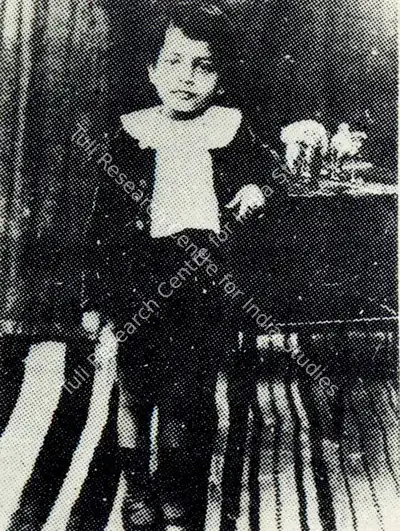
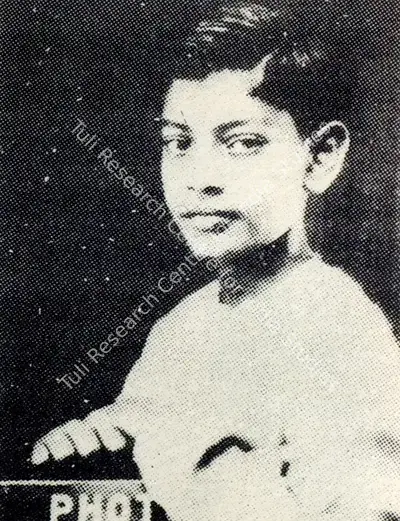
Satyajit Ray was born on 2 May 1921 at 100 Garpar Road, Calcutta (Kolkata) in present day West Bengal, India. Satyajit comes from a familiar tribe of landowners in Bengal- Roy Chowdhury's- a name conferred as Ray in the 18th century. Coming from a rich lineage of painters, illustrators, storytellers and musicians whose intellectual heritage in Calcutta was only next to the formidable clan of the Tagore's', Satyajit's ancestry plays a colossal role in his artistic overtures.
Like the Tagore's, the Rays joined the Brahmo Samaj - a sect of Vedantic Hinduism repackaged in a Christian form, in the urge to unshackle orthodox Hindu society from the fetters of idolatry, the politics of touch, limitations of caste, and the oppression of widows during the pinnacle of Bengal renaissance. Ray's father Sukumar and his brother Subinay took up the cudgel for the family press in their able hands after the passing of Upendrakishore in 1915. Inspired by Louis Carroll, Sukumar introduced Bengali literature to nonsense rhymes - through incomparably inventive collections like Abol Tabol, Jhala Pala, Pagla Dashu and Hajabarala, all with incredibly ingenious illustrations. Sired by his flights of fancy, Kath Buro, Tash Goru, Huko Mukho Hyangla and Kumro Potash still amuse Bengali children and adults alike. An avid photographer and member of the Royal Photographic Society of Great Britain, Sukumar learnt photo engraving and lithography in London. His Monday club was attended by the likes of Acharya Prafulla Chandra Ray, Dr. Jagadish Chandra Bose and P C Mahalanobish. Sukumar was particularly close to his father's old friend, Rabindranath. He married Suprabha Debi who harboured the talents of singing and sculpting clay. Sukumar passed away from kala-azar in 1923 when Satyajit, whom he fondly called Manik, was only two.
Satyajit spent the first five years of his childhood in their Garpar house where the air was thick with the smell of turpentine oil from the press. The rooms were crowded with printing blocks, compositors and process cameras. Amongst his inheritance was a box of paint brushes and a bottle of linseed oil from his deceased grandfather's possessions and a huge debt that liquidated the press and sealed the house off. Upendrakishore's brother Kuladaranjan amused the child with tales from the Mahabharata and Puranas along with wonderful photo enlargement processing in his room. 'Dhandadu' as Satyajit remembered him, brought his dead relatives back to life on his easel and canvas, pleasing the child to no end. His father's sister Madhuri was married to scientist and statistician P C Mahalanobis. He presented Satyajit with his first Gramophone and later when Calcutta's own radio station was launched, a radio, or crystal set as it was called back in the day. A record of Beethoven's violin concerto stayed with Satyajit throughout his childhood along with Romance of Famous Lives - recording the lives of European musicians. Popular vocalists Kanak Das and Sahana Devi, and composer Atul Prasad Sen were all members of his extended family. They gathered in the Brahma Samaj meetings and performed devotional songs.
At the age of five, Ray moved to Bhawanipore Bokulbagan at his uncle's house. His mother was strapped for money. The family enterprise had fallen to ruin and the Garpar house was gone. Satyajit spent long afternoons reading the Book of Knowledge and watching pictures through his stereoscope. The louver windows worked like pinhole cameras. The amused child watched inverted images of the streets outside, the first free bioscope shows, on the walls of his room. Next was the finding of a magic lantern. At Madonna, Elite and Globe Cinema, Ray watched some of his first silent films : Ben Hurr, The Count of Monte Cristo, and Uncle Tom's Cabin. His first talkie was Priyonath Ganguly's Kaal Porinoy at Albian Theatre (now Regal) because Tarzan the Ape Man which was originally on the bill, had a full house. Thus, Tarzan was Ray's second. He moved around in his relatives' houses, from Lucknow, Arrah, Darbhanga, and Hazaribagh to Darjeeling. He learned swimming at the Bhawanipore Swimming Club, exercised with Promodaranjan and attended jujutsu classes by a Japanese teacher with uncle Subimal. When he turned eight, he went to Santiniketan for a three month stay on Tagore's invitation extented to his mother and his aunt, singer Kanak Das. Tagore composed a poem in Ray's autograph book that reads: It took me many days, it took me many miles; I spent a great fortune, I travelled far and wide, To look at all the mountains, And all the oceans, too. Yet, I did not see, two steps away from home, Lying on a single stalk of rice: A single drop of dew. Nandalal Bose made him four paintings on the four instances of his visits. Satyajit kept them as prized possessions throughout his life.
At the age of nine, Satyajit was admitted to Ballygunge Government School in Calcutta. His mother found employment at a widow's school, Vidyasagar Banibhavan. They moved to Beltola Road near Kalighat. Satyajit finished his matriculation exams in 1936. Given his command over language, it was expected of him to study literature and the arts. However it wasn't to be. P C Mahalanobis had offered a job in the Sankhya magazine for a pay of 250 rupees if Satyajit studied economics. Hence without any attachment to the subject, Satyajit completed his honours in Economics at Presidency College. Those years had nothing to offer him. He shifted interest towards photography and began using a Voigtlander Brilliant camera. One of his photographs submitted to Boys' Own Paper in Britain earned him a pound. Satyajit explicitly states his disinterest in Bengali cinema, Indian music and Indian painting at this time. Some films by Nitin Bose, another relative, however impressed him. He hated P. C. Barua. He favoured American-made. Dinkar Kaushik, who became friends with Ray at Santiniketan later in life, revels about Satyajit's adulation for Chaplin's tramp figure in The Kid, Gold Rush and The Great Dictator.
Around 1929, Rabindranath was obsessed with performing séances. He had conjured Sukumar Ray in one of these ghostly sessions. Sukumar requested him to bring his son to Santiniketan. This incident has a written record in the Rabindra bhavan archives. Whether one chooses to believe it or not, but Satyajit ended up at Kala bhavan in July, 1940 even though he had primarily rejected Abanindranath Tagore's brand of artistry and had his own misgivings about the Indian school of painting. But he was converted, his interest redirected to oriental art - Indian miniature, sculpture, Japanese woodcuts and Chinese landscapes, by none other than Nandalal Bose. Ray was a natural at free hand sketching, replicating almost anything under the sun. Nandalal taught him to give less precedence to the Western superficial style of stressing on outlines and instead essentialize the inner rhythm of his subject - to look at an image and interpret it in his mind's eye. Outlines in themselves are dead things. Ray and his colleagues read surveys by Roger Fry, Herbert Read and Anand Coomaraswamy to acquaint themselves with Eastern art. Under the stewardship of Nandalal, Binod Behari Mukherjee and Ramkinkar Baij, Kala Bhavan introduced Indian art to a radically different modernism. Satyajit was one of the exponents of this modernism.
In December 1940, Ray and his three colleagues, Dinkar Kaushik, Prithwish Neogi, and Sakalsurya set out on a sojourn to Ajanta, Ellora, Elephanta, Konark and Khajuraho to observe styles of painting and sculpture. They sketched copiously. By his own admission, Ray's response to nature and man alike, and his ability to give visual representation is informed by Nandalal Bose's teachings. 'I do not think my Pather Panchali would have been possible if I had not done my apprenticeship at Santiniketan. It was there that, sitting at the feet of Mastermoshai, I learnt how to look at Nature and how to feel the rhythm inherent in Nature.' [At Ajanta]' The frescoes were extraordinarily revealing, not just as to the painting, but in their fundamental Indianness. There is a difference between these and European frescoes. In Venice, I went to see everything I could. In European frescoes it is like looking at everything through a window with things receding in perspective. But in Indian frescoes—at Ajunta—everything is coming out towards you." To put it succinctly, Satyajit's conception of graphics and modern Indian composition has entirely informed his filmmaking. He developed his own special expression in painting and calligraphy that allowed him to foray into the world of commercial art or advertising first.
After two and a half years of apprenticeship at Santiniketan, Satyajit made up his mind to return to Calcutta without finishing his degree. His mother was struggling to support them with a paucity of funds, and it was also the time of Second World War. Japan was aerially bombarding Calcutta and Vizag. On his return, Satyajit started looking for a job when through a family connection, he got introduced to D. K. Gupta- the assistant manager at the British advertising agency, D. J. Keymer. Satyajit joined D. J. Keymer as a junior visualizer at a salary of seventy-five rupees. Under the supervision of D K Gupta and Annada Munshi (considered the father of advertisement art in India), Satyajit and a new flock of commercial artists like O. C. Ganguly, Samar Ghosh, Makhan Dasgupta, and Purna Chakraborty ushered in a new quintessentially Indian idiom in graphic design.
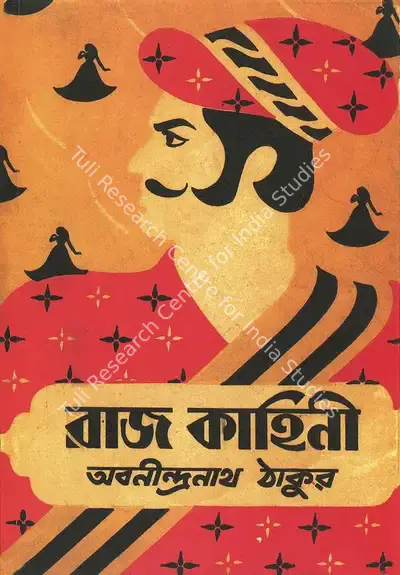
Satyajit was self taught in the commercial art trade. He and his colleague O. C. Ganguly bought English magazines and recreated the layouts of figures in their advertisements by dressing up the sahibs in dhotis and memsahibs in sarees. They employed folk decorative motifs to evoke a certain 'Indianness' in their visuals. In 1945, D. K. Gupta established Signet Press. Post the Second World War there was a boom in the paperback book market. Signet ushered in a new era not just in visual expression and book design but in both form and content of Bengali literature- the selection of books, page layouts, cover design, typography, advertisements, illustrations inside and all other areas of awareness. Gupta started a newsletter 'Tukro Katha' which featured young litterateurs like Sunil Gangopadhyay, Naresh Guha, Shankha Ghosh, Shakti Chattopadhyay and others. For Signet, Ray contributed to the design and layout of Sukumar Ray's Khai Khai, and Pagla Dashu, all the illustrations for an abridged version of Bibhuti Bhushan Bandopadhyay's Pather Panchali titled Aam Aatir Bhepu, Upendrakishore Roychowdhury's Tuntunir Boi, Abanindranath Tagore's Buro Angla and Rajkahini , Naresh Guha's Duranta Dupur, poetry collections by Achintya Kumar Sengupta, Jibanananda Das, Leela Majumdar, etcetera. With Nandalal's famous costume cut-out designs. namabali-style prints, Pata Chitra characters like Golap Sundari, patterns etched on paper attached to scraper boards, use of rubber sols, linotypes, bright poster colours, glossy papers and other various ingenious ways of creating news visualization of the written word.
Ray's Calcutta circle was composed of people who would go on to be filmmakers, critics and collaborators, like Harisadhan Dasgupta, Bansi Chandra Gupta, Chidananda Dasgupta, Z H Khan and Kamal Kumar Dasgupta. In 1947, this eclectic group formed the Calcutta Film Society. It all started from Roger Manville's 1946 revised edition of the book "Film". Different countries over the world were seeing the rise of film clubs and film society movements. Ray's Society collected prints from the British Film Institute, American Embassy and from local film distributors of foreign cinema. The first film they billed was The Great Waltz, a dramatised musical on Austrian composer Johann Strauss II, screened at Satyajit's house in Rash Behari Avenue. The society had no designated space for screenings, no equipment and a very small audience. They claim to have screened Soviet filmmaker Sergei Eisenstein's revolutionary film Battleship Potemkin for the Bengalis for the very first time and perhaps a first for India, as well as Eisenstein's Thunder Over Mexico, Verrier Elwin's documentary on the Naga tribes, and many 'other films.' that were gaining popular acclaim aside of Bombay films at the time. The film society's library was stocked with the Hollywood Quarterly magazine, Sight and Sound, and other books, that Ray helped stock.
Ray illustrated and designed a Bengali alphabet book Hatekhadi, with the text by Bimal Chandra Ghosh (well known by his penname Moumachi) intended for children. The book had long passed into oblivion. Originally published by Dipankar Book House, Indranath Majumder of Subarnarekha publishers located its old copies in his storage. The cover resembles a wooden slate with a pinhole for hanging. Printed in five colours and the typography mimicking children's handwriting, it features colourful illustrations accompanying the alphabets, which would introduce a child to graphic design unbeknownst to them.
When Jean Renoir came to Calcutta to shoot for The River (1951) , Ray met him at The Great Eastern Hotel, introduced himself as a cinephile and one of the founders of the local film society. Renoir's fresh approach to the 'American subject' in The Southerner had greatly impressed him. Ray shared the idea of making Pather Panchali. Renoir encouraged it. Renoir gave him a photograph of his which said at the back: 'To Manik Ray. I look forward to seeing him as a married man. Jean Renoir.'"
Satyajit Ray and Bijoya Ray married in Bombay on 20th October 1948. They got married a second time with the approval of his mother on 3 March 1949.
In 1950 D. J. Keymer sent Satyajit to London on a few advertising assignments, a work that he did not like. In the time of four and a half months with his wife Bijoya, he watched about a hundred films with Lindsay Anderson and Gavin Lambert. He saw a double bill at Curzon Cinema, De Sica's Bicycle Thieves and A Night at the Opera by the Marx Brothers. The formers exercised a decisive influence on him- Ray was pleasantly surprised that one could film in an exclusively exterior setting, with non-professional actors, and he thought what one could do in Italy, one could do in Bengal as well. Satyajit's list of filmmakers included documentary directors like Flaherty and Grierson, soviet filmmakers Eisenstein, Dovzhenko and Pudovkin (Eisenstein's 'Film Sense' had a great impact on him in 1947), Fritz Lang, John Ford, Frank Capra, Billy wilder, Lubitsch, Renoir, John Houston, Julien Duvivier, the silent films of Rene Clair, and Marcel Carne. On his way back by ship, he started writing the script for Pather Panchali. Earlier to Pather Panchali, Ray had already conceived a script for Ghare Baire based on Tagore's novel of the same name. The first treatment of the film was finished in October, 1950, the scenario was illustrated with 500 drawings. Cinematographer Subrata Mitra and set designer Bansi Chandragupta, amateurs like Ray, began test shoots with a 16 mm camera. They had no money. No producer, not even New Theatres bought into the idea.
In 1944 on a visit to Bombay, Ray had the chance to meet the musical maestro Pandit Ravi Shankar. This meeting would later transform into a collaboration between the two maestros for many of Ray's earlier films. "According to Shankar, the two of them first met in Bombay, not Calcutta, at the end of 1944. 'We became known to each other, though not close friends.' After Shankar gave his first major concert in Calcutta in late 1945, attended by Ray, the two of them began to meet periodically. In the late 1940s and early 50s, when performing in Calcutta, Shankar used to stay in a hotel (the same hotel used by Renoir at this time), which was near Ray's office at Keymer's. 'Many times on his way there, or at lunchtime,' Shankar recalled, 'we would meet for a short while. We became quite friendly. That was about all, until he approached me regarding his first film, Pather Panchali.' "Ray did sketches of Ravi Shankar for a documentary which was never made titled A Sitar Recital by Ravi Shankar.
Renoir's The River released on 10 September 1951. "Since writing this we have seen an Indian (or more precisely, Bengali) film, Pather Panchali, the young director of which (Satyajit Ray) had worked with Renoir on The River. This work, typically Indian, made in India by Indians based on a famous Bengali novel, has the same spiritual tone as The River. Appearing in 1955, it confirmed that Renoir's vision of India was neither naive nor superficial, but rather that it went straight to the essential."
In 1952, India hosted the first International Film Festival that swayed aspiring filmmakers in Bombay and Calcutta. Ritwik Ghatak, Mrinal Sen. Utpal Dutt and Satyajit Ray were all in attendance for discussions and screenings. De Sica's Bicycle Thieves and Italian Neo-realism ushered in a new style of filmmaking that redefined the medium as a living documentary. The three stalwarts of Bengali cinema, Ghatak, Sen and Ray set themselves on the task to finally make their own films with this sensibility though their subjects, processes and reception would be very different from each other.
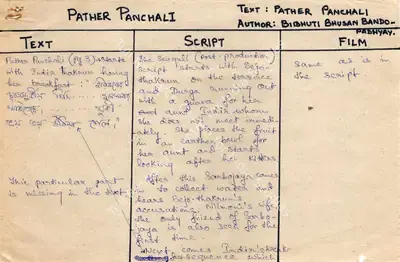
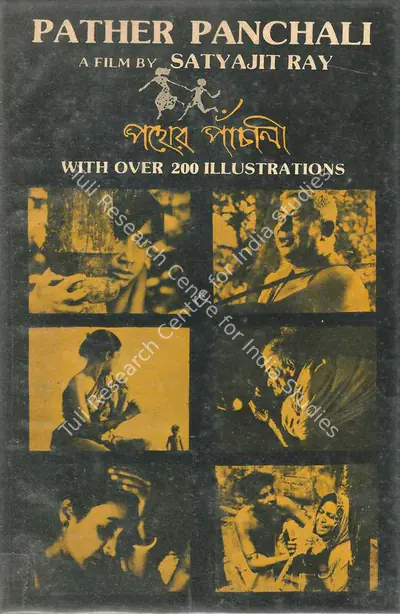
Panchali was on the anvil for five years with Ray still working as an art director at D J Keymer on weekdays and shooting on weekends. He had pawned his books, his life insurance policy and even his wife's jewellery to fund about 40% of it with the rest of the cost choppily handled by an uncomprehending government of West Bengal. In his assessment of Pather Panchali, Lindsay Anderson says that the film is summarily Ray 'going on his knees in the dust'. The day scenes of Panchali were shot on location, at the margins of Calcutta (in a place now called Boral in South 24 Parganas of west Bengal) without stars, without make-up, or song and dance sequences, or romance, with non-professionals working on a shoe string budget of two lakh rupees. The night scenes were shot in the studio duplicating the location in photographic detail. In those five years, Ray was worried about the child actors shooting up with age or the eighty-year Chunibala Devi playing Indir Thakuran- an erstwhile film actress from the red light district - would pass away. Critic and friend Chidananda Dasgupta appraises the release of the film as the 'baptism' of Indian cinema in both cinematic language and in terms of its Indianness. He makes an additional comment that it is an 'exorcism' of Ray's guilt of being privileged. Both the statements can be subject for contestation yet Pather Panchali is undoubtedly the watershed moment for Indian art cinema - not just because of its conception but in the context of its international release and commercial reception - which unfortunately neither Ghatak or Sen could muster at the time for glaringly obvious reasons.
Pather Panchali was premiered at Museum of the Moving Image in New York where it appeared alongside Ali Akbar Khan's sarod recital and Shanta Rao's Bharatanatyam performance, as a representation of Indian culture. Ray focuses more on the 'search' of the synthesis that creates 'Indianness' than on his 'findings' on identity in the inchoate mixture of revivalism, modernism and nostalgia. His search is vertical and tends to establish a notion of continuity in the Indian way of life. His overall cinematic career provides the impression of an English educated urban individual in post-colonial India probing the roots for emotional security. His understanding of structure, form and rhythm is an inheritance of Western Classical music. His articulation of a different language of Indian cinema sets him apart from the predecessors of Pather Panchali like Subramanyam's Balyogini or Himanshu Rai's Achyut Kanya.
Pather Panchali had its authorised Indian release on 26 August 1955 at Basusree cinema in Calcutta. It hardly did any business till the third week when word mouth spread and the box-office sales jumped sharply. People were standing in line for seats. After a six week run, it was taken up by another cinema where the first run continued for seven weeks.
Parash Pathar is Ray's first film outside the trilogy. The film received a lukewarm response both critically and commercially, considered quite unremarkable in its narrative simplicity. Parash Pather is a comic fable and souvenir of early 1950s Calcutta, especially the centres of its business district. Tulsi Chakravarty leaves evidence of his remarkable talent in this film but despite his best efforts, fails to sustain the economy is the extenuation after the first twenty-five minutes of pure cinema.
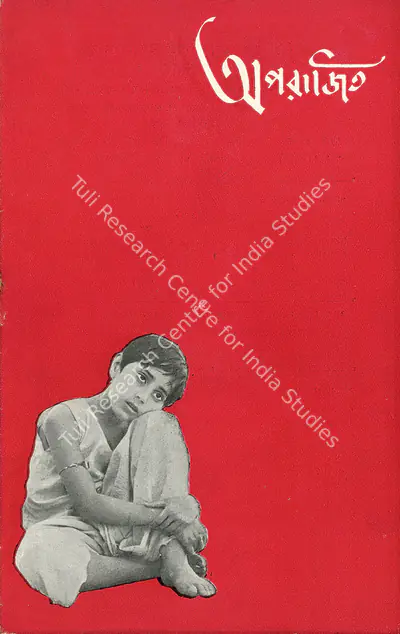
Aparajito, Ray's second film and the second instalment of the Apu trilogy, set in 1934, starts on the last leg of Apu and his family's train journey to Banaras. The child learns that the world is infinitely bigger than Nishchindipur. To comprehend it, he requires a mind that can understand it beyond the circumscription of Hinduism, more specifically, the caste system and what it prescribes or proscribes. The young man in Apu holds the world in his hand and scholarship in his pocket. The spine of the narrative consists of his evolution and his growing need to break free from the narrow bonds of parochial existence. Ray's camera encapsulates Banaras as an ancient city with an evocative visual and cultural appeal, a site significant to Hindus who perceive it as a liminal passage to afterlife. Apu however is intrigued by the workings of a water system, distracted by the club swinger's heavy equipment - suggesting that the child has a mind of his own and modern education can militate him against the age old vocation of priesthood that his mother wants him to take up. The next limen becomes the urban life of Calcutta where he is pushed around by milling crowds and startled by the blaring horn of motor cars. Apu has to eventually cut away from the mutual obligations of the mother-son kinship. Only then can he look forward. The second film, in its totality, provides a distinct contrast to the limitless rural splendour and reflects on the form and mechanisms of modernity, the active, creative and inspirational aspect of Apu's character.
Ray's next film Jalsaghar is a sympathetic treatment of the decline of aristocratic feudal class. It is an adaptation of Tarashankar Bandopadhyay's novel of the same name, with its music directed by Ustad Vilayat Khan. Ray makes a superb concoction, by bringing Begum Akhtar and Roshan Kumari to illuminate the screen with performances of Hindustani classical music and Kathak dance. The river changes its course, the economy goes in flux and everything that thrived on the banks rapidly erodes in the torrential flow. Biswambhar Ray has little foresight. He has the delusion that he can remain self contained in the midst of tides of change. At a time when India was going through shifting paradigms of social and political change, he is stuck to his old ways and squanders all his wealth. His music room, graced by the greatest musicians and dancers from Lucknow, is his largest obsession. When the boat bringing his only son and wife sinks, he plunges into depression. One last time, he spends his last few gold coins on a soiree to establish dominance over an uncouth money lender, who much to Biswambhar's scorn has risen in status and become an unworthy rival. With everything finally lost, and after getting the final satisfaction of a last victory on having outdone that man, Biswambhar rides to his own death.
Ray was over years was criticised by many film critics for the lack of direct political commentary in his films. The political messages in his films were tepid and non-confrontational compared to his contemporise such as Ritwik Ghatak and Mrinal Sen. Ray during his speech at the Amal Bhattacharjee Memorial Lecture in 1982 said, “Our critics too have shown a tendency to judge a film predominantly on what it says rather than how it says it. I have no wish to belittle content, but we must remember that the lousiest of films have been made on the loftiest of themes… Unless a film aims at deliberate obfuscation, or is unintelligible through sheer clumsiness of execution, what it says is usually clear to all. But what it says is only a partial index of a film-maker's personality, because it is the manner of saying which indicates the artist. There are film-makers who are not overly concerned with what they say as long they can say it with style or finesse. One would sooner describe them as craftsmen, because it is difficult to think of an artist who is totally devoid of an attitude to life and society which he reveals in his work. Usually, the attitude is implicit in his choice of material. But his success in portraying it in terms of cinema is in direct ratio to the purity, power, and freshness of his language.”
Apur Sansar, the final instalment of the Apu trilogy is a summation of Apu's messy world where death is a limen, a threshold to cross. After losing his sister in Nischindipur, his father in Banaras and finally his mother, Apu has crossed his childhood and adolescence to finally become a man of the world. the train has receded like a Freudian unconscious figure, he walks on the tracks with his loving wife's letter in his pocket, thinking of his novel and giddy about imminent fatherhood when news awaits at home that the wife has died at childbirth. Apu plunges into depression, abandons his child and begins to travel expansively. The novel will remain unfinished. Ray signals that the coexisting circles of life or Leela as it is conceived in the Indian psyche, perpetuates. Apu crosses the cinematic space by jumping into different moments of piconolepsy. When he returns to his child at the end and accepts continuity, the film finally exhales. With the recognition received by Apur Sansar, the trilogy finally finds worldwide popularity and viewers go back to the first two films. Ray is now a director who can bank on the success to take independent decisions for his cinema.
Devi is part of Ray's Chabi Biswas trilogy. Ray uses the decadent figure of the actor to represent the old feudal-patriarch, Kalikinkar Roy, a devout Hindu who clings to orthodoxy and refuses to confront contemporary reality. The zamindar Biswas portrays, is only a symbolic figurehead in the rapidly shifting paradigms of colonial Bengal where social and political revolution is fast afoot. Unable to reconfigure his role, Kalikinkar desperately grasps on to the last vestiges of power, trying to control the divine energy of the Goddess, by containing it in the human-form of his younger daughter-in-law, Doyamoyee. His desperation almost degenerates into a psychosis."Devi (The Goddess) evoked considerable controversy in India. But for Ray's script being based on the story by a Hindu and not a Brahmo author-the late Prabhat Kumar Mukherjee - the attacks made upon the film might well have been more personally abusive towards Ray as a Brahmo. For a time, Devi embarrassed the Union Government and resulted in a disinclination to send the film abroad."
1961 marked the birth centenary of Rabindranath Tagore. Ray celebrated it with a feature 9 (a triple bill) as well as a long documentary. The documentary on Rabindranath Tagore is biographical, following a simple chronological direction, actors recreate his childhood. Voice-over narration with paintings, contemporary photographs, newsreel material, both footage on Tagore and some that might illustrate the final thoughts of Rabindranath as expressed in his last message to the world—Crisis in Civilisation. In order to find the right footage, Ray went to Paris where he hunted down suitable newsreel and documentary shots, Pathe's vaults serving as the most rewarding source. He was helped in this search by Lotte Eisner. From Paris he went to London to collect information and arrange for footage to be shot of Dwarkanath Tagore's tomb, for he had died in England. Ray also arranged for a long vista shot of Hyde Park. This was subsequently used for back projection for a reconstructed scene of Dwarkanath riding in a carriage through the park."
Ray restarted the publication of the Bengali children's journal Sandesh, carrying forward the legacy of his father and grandfather. He said, it changed his life. For the first edition, Ray translated the poems of Edward Lear. Sandesh went on to publish numerous original pieces of children's literature by eminent authors including Ray himself. Ray's fiction begins to flourish - the sleuth and the scientist came at focal point. Professor Shonku, Feluda, Taranath Tantrik, Bankubabu and a host of characters took the young Bengali mind to impeccable heights of imagination, fantasy, trivia, and depths of detail that still continue to amuse.
Soumitra Chatterjee and Nirmalya Acharya started the Ekkhon magazine - a name selected by Ray himself, who also took the responsibility of illustrating it. Ekkhon featured writings on culture, leftist politics, engaging research on the city of Calcutta, fiction by notable literattures like Manik Bandopadhyay, Kamalkumar Majumder, Nabanita Debsen and others including a special essay from Akira Kurosawa. In the later years, when Chatterjee withdrew from engagement with the magazine, Ray collected literature from his associates to help the publication. Ekkhon published two special editions on Marx and Dante. Ray illustrated both the covers.
Ray adapted three of Tagore's short stories for Teen Kanya - Postmaster, Monihara and Samapti. It was a personal tribute to Tagore, a sort of centenary tribute, in is own words. Underlying Postmaster is the notion of dislocation in the unsettled and perplexed city bred Nandalal and the simple yet deep affections of the orphaned girl, Ratan. The impending separation is inevitable. Ratan's mute anger and protest against the whole world for leaving her so lonely and bereft of love is poignantly brought out by the minimal narrative dynamics. Monihara doesn't have that warm human sentiment of the other two films, and perhaps sits incongruously. A tale of unnatural obsession, marital infidelity and subsequent psychosis wrap into a tantalizing ghost story, Ray's only attempt at creating horror on-screen. Lastly, Samapti is perhaps Tagore's take on Taming of the Shrew- a tomboyish young Mrinmoyee has to submit to marriage to Amulya, and his respect for her free will brings her around to love him.
Ray's writes and directs his first film in colour Kanchenjungha . It is set in the hill station of Darjeeling and focuses on a group of Calcuttans on holiday. The opening scene establishes Rai Bahadur Indranath Roy (played by the legendary Chabi Biswas) as the patriarch and 'lordship' of the family, a colonial bhadralok in his Western suit, with a walking stick and fondness for cigars. He converses with a foreigner about the imperious summit of Mt Kanchanjungha - the third highest mountain in the world - which has been concealed in a purdah like an aristocratic woman for the past seventeen days of this trip and eluded a clear sighting. The visual articulation of remoteness between the peak and the characters in the film is the underlying philosophy that explains the relationships between the characters we meet. "Unlike Mehboob or Shantaram, who when not downright lurid in their use of colour, are merely decorative, Ray uses colour to an emotional and dramatic purpose. This is something new to cinema, as in fact, the whole film is." (Slight Situation, Annihilating Cataclysm; B.D. Garga; Montage Special Issue on Satyajit Ray; 1966)
Ray breaks away again and takes up an entirely different social circumstance in a brand new setting - a Rajput taxi cab driver Singhji and his 1930s Chrysler. Abhijan was Ray's biggest box office hit in Bengal but received a mixed bag critical reception. According to Chidananda Dasgupta, Abhijan was a 'total failure', mainly as a result of Ray's miscasting of Narsingh. In both Ray's Abhijan and Ritwik Ghatak's Ajantrik, the motorcar is fore grounded as a metaphor. For Ray, the car is a conduit while for Ghatak, 1920 Chevrolet is an anthropomorph embodying the romantic pathetic fallacy.
Do you know what Shaw said about girls going out to work?' Subrata asks his mother, in Ray's Mahanagar. Much like Ray's previous films, Mahanagar takes an interest in the idealization of women which comes in conflict with the pater familias who rationalises the prevention of the wife from joining the workforce outside home and hearth, to maintain order. Set in the mid 1950s, independent India was merely seven or eight years old and its economics was struggling with complex ramifications. The film plays out in the poor, lower-middle class family of the Mazumders- and around Arati. Even though the film doesn't reach a resolution, Ray leaves his audience hopeful.
Ray returns to his element with Charulata. With Bengal Renaissance reformism in the background, a Victorian mansion hides a woman peering at the world through her opera glasses. Ray forefronts the emergence of the woman's individual identity and her alienation in love. "In Mahanagar, the instrument is the job which is to give Arati a brief but lingering taste of economic independence; in Charulata, it is the cousin (brother) who opens Charulata's young mind not only to the joy of literature, but to those of a youthful companionship which she does not have with her husband. In both, the husbands are theoretically modern but in practice unable to foresee the consequence of their action in disturbing the status quo of their homes-so preoccupied are they with the man's world. Of woman's new urge for a happiness of her own making, both are blissfully unaware." (Chidananda Das Gupta; Film Quarterly; 1965)
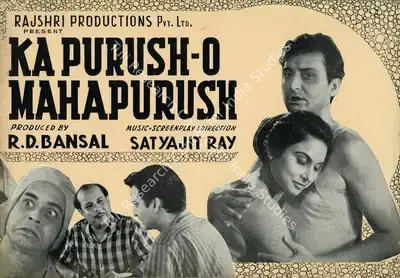
Ka Purush-O-Maha Purush is a set of two films clubbed under one title. The kapurush is the spineless lover who betrays a woman and comes to regret it. He becomes a writer of fiction. The Mahapurush is a self-proclaimed holy-man. It is no surprise that he gets exposed as a fraud. An early influence at work in Mahapurush was Ray's love of games and magic. He felt the need to invent something for Birinchi Baba to do which would convince his public he had supernatural powers. Apart from the laying on of hands, at which Birinchi Baba is an adept, Ray devised, as a supposed symbol of Time Future and Time Past, the revolving of hands: the index finger of the right hand must rotate clockwise (Time Future), while that of the left hand rotates anticlockwise (Time Past).
Ray inaugurated the Sci-Fi Film Club on the 26 January 1966. "The idea to form a film society exclusively for science fiction and fantasy films was mooted by a few sf enthusiasts who also happen to be the contributors to India's first sf monthly magazine Aschorjo since its inception" (Adrish Bardhan).
Nayak is released in India. The film unravels the man behind the star image, to disarm him and resolve some of his insecurities while revealing all of it to the viewer. Though a realist chronicler, Ray is also an idealist satirist. In Nayak, this is immediately noticeable as indeed it was in Kanchanjungha in the vivid sketches of the minor characters. They are shrewdly observed, and carefully dissected and cast aside. A joke current in Calcutta film circles is that no movie has yet been produced in Bengal that hasn't a train in it. The train is symbolic of missed connections, of forever continuing goals, of existentially ambiguous meetings and partings. (Life Satirising Art Satirising Life; P. Lal; Montage Special issue on Satyajit Ray; 1966)
Doordarshan aired a conversation between Satyajit Ray and Marlon Brando, anchored by Amita Malik. “When I heard of the death of Marlon Brando, my mind went back to the priceless conversation I had anchored between Satyajit Ray and Marlon Brando in 1967, when Brando came to Delhi as ambassador for UNICEF. Doordarshan was the only TV channel at the time, and after re-telecasting it a few times, it just lost the tape. They could not tell if they had erased or lost it. Appeals to several I&B Ministers and those under them led nowhere. That classic conversation between two giants of cinema was lost forever.”- Amita Malik
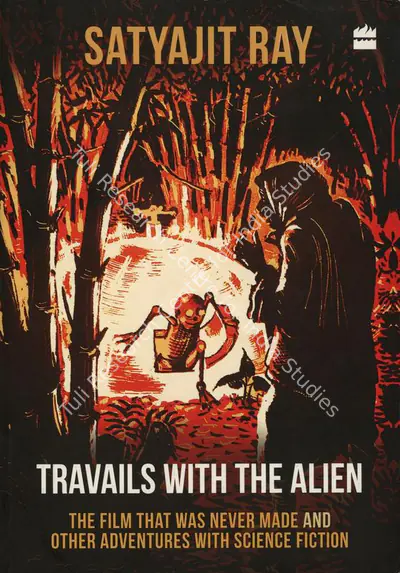
Ray conceived the idea of a sci-fi film from his own short story Bonkubabur Bandhu or Bonkubabu's Friend. A spaceship lands in a bamboo grove. Ang from planet Craneius meets Bonkubihari Dutta, a nutty geography teacher from Lochanpur. In Alien, Ray creates the poor village boy Haba who meets the alien who has landed in a spaceship inside a lotus pond at Mangalpur, West Bengal. The Alien script draft was completed in 1967. By his own admission, "The Alien is not a hundred per cent science fiction because the emphasis is really more on the human aspect, on human reactions to an SF situation, which is an SF situation only towards the end. (Satyajit Ray to Amita Malik; Sight and Sound; Winter 1967)". Expecting it to find a foreign and Indian city oriented English-speaking distribution circuit. Ray pitched the script to Columbia Pictures. He intended to write its music. But the script, as he has claimed in several interviews, was mimeographed and circulated in Hollywood and at least two Spielberg-Lucas films, Close Encounters of the Third Kind and ET would not have been possible without it.
Chidiakhana (1967) is an adaptation of Saradindu Bandopadhyay's detective story of the same name from his series Byomkesh Bakshi. Uttam Kumar plays the ace sleuth in the double murder mystery that unfolds around the archival enquiry into lost history of cinema itself. But Ray's film fails to be a critical or commercial success. It is possibly one of the most overlooked films in Ray's entire oeuvre of work and condemned to be a weak link in his career.
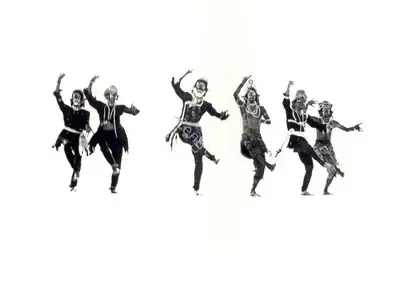
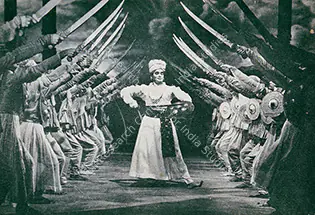
The Dancing Ghosts in Goopy Gyne and Bagha Byne Ray on Ray: "I had to concretize the dance of the ghosts to which the original story (written by Ray's grandfather) refers...I felt that a conventional treatment of the episode would not yield much. I reasoned that since they were ghosts of people once living, why not classify some of the people who were obviously there in Bengal. The kings were there from the Buddhist times, and of course the peasants. Then there were the British-within ten miles of where we were shooting there was a graveyard full of Englishmen, many of whom had died young. Then for sheer visual contrast, why not have a group of fat people-you know the traditional country businessman, the well-fed Brahmin. So the pattern became one of four classes the kings, the peasants, the British and the fat well-fed ones. The division into four classes suggested a form of South Indian classical music which consists of twelve percussion instruments of four kinds-something quite unique in the world, I think. I had the idea of identifying the four classes with the four types of instruments-the drum for the kings, since it is a twin classical instrument, the small cymbal for the peasant because it is a folk instrument, the earthen pot with its hard, rigid sound for the British (whom I shot at slow speed so as to give them a wooden and mechanical style of movement). To the fat people I assigned the extraordinary percussion instrument that South Indians play holding between their teeth. Then comes the question of form. They start playing slow, then in medium tempo, gradually progressing through a total of five movements. Why should the tempo keep going up? So it was decided that the ghosts would come, dance, start fighting, then take the fight to its climax. That's how the story of the dance was built up. Finally, I felt it needed a sort of code in which they must all be in harmony with each other. Since ghosts would not have an internal conflict, their amity would come easily (unlike among humans) and it would come through a song. That's how the whole scheme emerged." (Satyajit Ray)
Goopy Gyne Bagha Byne is released in India. Goopy and Bagha first made their appearance in Sandesh in 1915, with illustrations too by Upendrakishore. Satyajit first read the story when he was about eight, after he had left Garpar Road. It was very enjoyable, 'but in those days one didn't think in film terms you know,' he joked. It was not until the early to mid-1960s, after the revival of Sandesh in 1961, that Ray reread the story. He decided to republish, and at the same time began to contemplate filming it. Goopy and Bagha are two outcasts- simpletons and musicians. The king of the ghosts chances on them in a bamboo grave. They get magical powers, and set on an anti-war mission in which they encounter loony kings, his sinister ministers and crazy scientists.
Aranyer Din Ratri is released in India. Ray was breaking new grounds thematically with films like Devi, Jalsaghar and Mahanagar. He turns away from the immediate reality of the 60s and 70s, turns to nature, and chooses a contemporary novel by Sunil Gangopadhyay. It takes the context of the film outside the conundrum of the city and focuses on a group of four friends who travel to the outskirts of Bengal and encounter themselves through their interactions with women who are far removed from the narrow prejudices of their own lives.
Pratidwandi is the first of Ray's Calcutta trilogy where the city in all its vibrancy and vulnerability becomes a formidable adversary to a young man with little means, trying to make his way in life. Ray creates a trilogy, which is much more direct and political in terms of its subject matter, set on the backdrop of the turbulent 1960s and 70s when Bengal and the world in large was breaking into widespread social unrest. The Bangladesh Liberation War caused mass displacement of Bengalis and Calcutta was flooded on all ends by displaced refugees. The Congress government had been overturned by popular mandate. Socialist ideals brought the Communist Party of India (Marxist-Leninist) to power but the leaders became complicit in oppressing the millions of unemployed, impoverished and displaced people. The youth was ignited against the neo-imperialist empire of the United States at the wake of the Vietnam War. Closer home, the Naxalbari movement and violent state crackdown on Maoist revolutionaries received a critical outcry from the masses. Siddhartha, the protagonist of Pratidwandi, is caught in a Hamletian dilemma. The ghosts of a romantic past rise up to contend a lived reality which is morally abstruse. Ray tries his hand at what Mrinal Sen would essentially called 'gimmicks' and experiments with elliptical narration for the first time.
The documentary on Sikkim was screened on 7 December 1970 in which was to be its first and last public screening. The film in its entirety has been lost now. Annexation of Sikkim to India is taken through and Ray's documentary on Sikkim is banned from release in India. Unfortunately the Indian Government, when it took over Sikkim in 1975, did not see the film in this way. It suppressed it, as certain officials would like to have done twenty years before to prevent Pather Panchali being shown abroad, and would have done but for Nehru's intervention.
As part of his Calcutta Trilogy, Ray makes his second film Seemabaddha which takes a different approach in unravelling the 70s, by focusing on the upper class, ambitious corporate elite, and revealing its implicit hypocrisies to us through the eyes of an outsider - played by the intense Sharmila Tagore.
Ray shoots The Inner Eye, a documentary film on one of the stalwarts who heralded a radically different brand of modernism in Indian painting and was one of Ray's own teachers, Binod Behari Mukherjee.
Ray films Ashani Sanket on the 1943 Bengal famine. Gangacharan Chakraborty (Soumitra Chatterjee) settles in a new village as the resident Brahmin teacher-doctor-priest with his wife (Babita). As the Brahmin who inhabits the highest caste rank in the Hindu feudal order and mediates ritual worship between man and the gods, Gangacharan is treated with high regards by fellow villagers and often receives gifts of fresh produce, fish, jaggery, grains, fruits, clothes etcetera. The film unfolds in a slow pace, revealing the austerity of the caste system, the politics of touch, the subservience of the backward caste who are conditioned to treat the Brahmin with blind faith and the knowing deception of the Brahmin himself who takes glaringly apparent advantage of his position. However, the cataclysmic famine of 1943 upends the order of things. Satyajit Ray planned the outdoor shooting for Ashani Sanket in Bolpur, at a village called Dangalpur, where Gangacharan's hut had to be built. Although Bansi Chandragupta was no longer working with the unit, Ray had found a component art director in Ashok Bose. The hut was not built of brick and mortar, but it proved to be not only strongly built but also authentic looking. So much so that it was later used by a local to house a school.
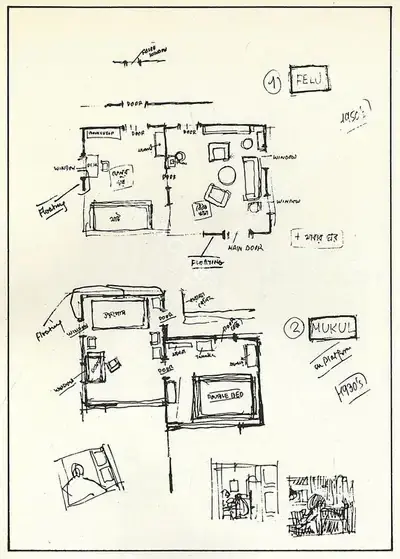
Sonar Kella is an adaptation from Ray's Feluda Series that was serialised in Sandesh edited by Subhash Mukhopadhyay and Ray himself. Feluda, the ace detective with an extraordinary power of perception, his affable cousin Topshe and the inseparable third - Jatayu - the eccentric detective fiction novelist, superbly conceived by Santosh Dutta, head on a mission to rescue a kidnapped child. Mukul the child at focal interest apparently has memories of a past life. Reincarnation, psychology, adventure and criminal investigation all get together in a heady mix. The film expands across Calcutta, Delhi, Jaipur and Jaisalmer. Feluda occupies the fantasy hero of generic public imagination - erudite and street smart with an upright moral character. On the flip-side Felu Mitter can also be interpreted as the dispassionate creation of a figure of public fantasy around whom contemporary Bengali middle-class public anxieties about its worth for historical action congeal, a character symptomatic of middle-class nationalism and necessary for an imagined reform of the decrepit feudal class.
A panel discussion was organised between Satyajit Ray, Elia Kazan, Akira Kurosawa and Michelangelo Antonioni anchored by Amita Malik for Doordarshan. In 1975, Amita Malik anchored a panel discussion with Elia Kazan, Akira Kurosawa, Satyajit Ray and Michelangelo Antonioni which was telecasted in Doordarshan. This could have been a goldmine for any cinema lover anywhere in the globe, but shockingly DD either lost the tape or out of sheer apathy and ignorance erased it from their archive.
The production of Bala, a documentary on the life of Bharatnatyam dancer Balasaraswati completed its production. Ray was originally to have made his film in 1966, when Bala was forty-eight.. He felt a twinge of regret at having missed recording her in her prime but consoled himself with the thought that Bala filmed at fifty-eight was better than Bala not being filmed at all
Filmed five years after Pratidwandi, Jana Aranya (The Middleman) is the third and final instalment in Ray's Calcutta trilogy. The film is set in the depressive period of 1960s and 70s when West Bengal was rife with widespread civil and political unrest, marked by the Naxalbari movement and state crackdown on Maoist revolutionaries. The socialist ideals that had led to the Communist Party of India (Marxist-Leninist) to power were being failed which was seen as a betrayal of the cause. The youth was disillusioned with the political system in general. The young and empathetic protagonist, trying his hand at business, has to navigate the sketchy world that will test his integrity and bring him to fail the idealistic upbringing of his father.
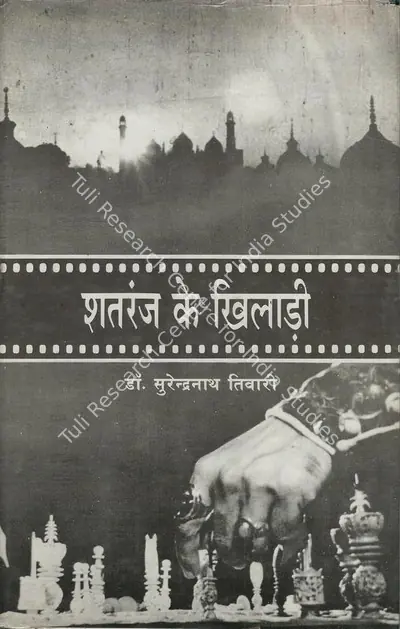
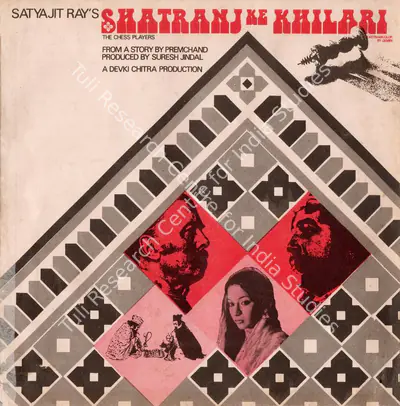
Shatranj Ke Khilari, Ray's only production in Hindi with a cast of Bombay industry actors and a plot derived from Premchand's short story, is congruous with his body of work that takes a vital interest in the historical past and living myths. The basic laws of history, the inevitability of change through time, conflict and dislocation recur in human history; keep repeating themselves like the cock-fight and game of chess. Two parallel themes follow. One tells of the pressure brought to bear on Nawab Wajid Ali Shah, the last independent King of Oudh, to abdicate and his reaction to that demand. Adjoining it, like Rosencrantz and Guildenstern, Mir Roshan Ali and Mirza Sajjad Ali - two of Lucknow's affluent- single-mindedly give in to play a game of chess. The self-defined theme of tragedy is interspersed with touches of melodrama played out by Amjad Khan as the Nawab. The legendary Amitabh Bacchan's voice over narration begins before the titles to provide essential historical data. The British conquest of Oudh does not find a place in the history of military triumphs. as it was, in effect, little more than a very one-sided game of chess in which as the narrator puts it, "If the king is lost, the game is lost."
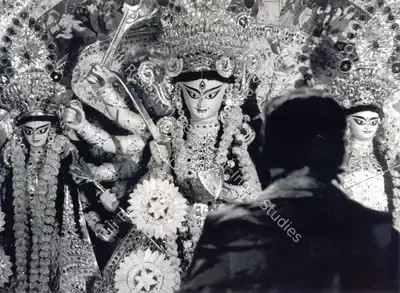
Joi Baba Felunath is the second adaptation of Ray's Feluda, in which the ace Bengali detective and his small retinue set themselves on a conquest to end the villainy of Maganlal Meghraj, a motley Marwari businessman who keeps circus pets and smuggles ancient artefacts through conceit and deadly violence. "The possibility of shooting Benares in colour, twenty years or so after Aparajito – during the first half of 1978 – appealed to Ray, as did the opportunity to depict the ethos of Bengalitola, the area of the city where a large population of Bengalis live, some of them in extraordinary mansions tucked away between narrow alleys. One particular family in Bengalitola, for instance, live in a complex of interconnecting annexes that gives away nothing from the lane outside. They have been in Benares for some four hundred years, since the Mughal time, and theirs is the city's oldest Durga Puja ceremony, in which their clay images of Durga, Lakshmi, Saraswati, Kartik and Ganesh are taken through the lanes on separate palanquins to the ghats for immersion. It is from such a family – grandfather, son and small grandson in the film – that the gem -studded gold Ganesh is taken, and the process of putting the finishing touches to just such a many-armed Durga image, forms the striking, faintly sinister opening scene of the film."
Pikoor Diary, a 26 minute short telefilm was made for French producer Henri Fraise. It was Ray's first project to be commissioned by France. The loss of innocence finds a different expression in Pikoo on a fateful day. The child is now caught in the meshes of the adult world and alienated by the bitterness between his parents, his mother's affair and his grandfather's death, none of which he is able to understand. It is also a take on the ensconced life of the house-wife (played by Aparna Sen) whose maternity is at conflict with her desires as a woman.
Ray is awarded the Doctor of Letters by Jadavpur University, Calcutta.
Hirak Rajar Deshe, next in Ray's oeuvre, is an unabashed satire. Though it has a target audience of children, it reaches far beyond the genre of children's film. It is an engagingly new aspect of Ray's art, excellently integrated with the primary business of ridiculing a totalitarian system (Contemporary Fable; Statesman; 1980). Released right after the end of the Emergency in which prime minister Indira Gandhi suspended democratic rights of India for 21-months from 1975 to 1977, the film has two parallel and complementary themes in which a dictator (superbly played by Utpal Dutt) and his complicit court of ministers suppress dissent of any kind by indoctrination, propaganda, heavy policing, book-burning and suspension of any and every freedom of expression, convert the regime to a carceral state. Adjacently, the magically gifted Goopy and Bagha with their power of songs join forces with a dissident teacher (Udayan Pandit played by Soumitra Chatterjee) to quite literally bring the oppressors to heel.
Sadgati is a Hindi language feature made for television starring Smita Patil and Om Puri as a couple who belong to an untouchable caste. The brahmanical violence, sudden death, the following rack and ruin, and the biopolitics on the Dalit body occupy the central storyline. Ray speaks of Sadgati, "If I had found a story like Sadgati earlier I would have certainly done it. It's just that the story called for that kind of treatment because that force, that anger is already there in the original story. And it seemed absolutely right for this particular story. It didn't need the softening of contours. I mean it had to be hard-edged. I really don't know, I haven't worked it out whether this is a sort of inner change in myself, a looking at things in a more harsh sort of way than in an oblique way. It's just that this style seemed absolutely right for Sadgati, and it's exactly how Premchand conceived the story. I've made almost no changes to the story except perhaps add to a few scenes here and there."
Ray suffers from prolonged illness following a massive heart attack. After undergoing surgery in the United States, and a hiatus for recovery, he returns to shoot for Ghare Baire.
In Ghare Baire (adapted from Tagore's novel), a macrocosmic maelstrom outside examines the microcosmic tension within the home. Set against the Swadeshi movement, a progressive humanist zamindar and his enigmatic nationalist politician friend find themselves in a love triangle with Bimala, the zamindar's wife who stands at the precipice of home and the world. Tagore creates Nikhilesh's zamindar figure in whom the enlightenment ideals congeal; when he discovers the affair between his wife and his friend Sandip, he puts his social authority on the wife to test and chooses not to interfere. Bimala shall have her right to choose. However, the story degenerates into a massacre at the end in which the wife stands culpable of her choice.
After a gap of three years and nine months, Ray once again started shoot at a studio on 5 October 1987. This time to make a documentary tribute to his father, the humourist, illustrator and one the greatest literattures of Bangla, Sukumar Ray. "I'll never forget the day. We were all joyful and enthusiastic. They shot the scene around the song from 'Laxman's Powerful Arrow', with Tapen lip-syncing the song. Soumitra was cast as Ram, Chiranjeet as Laxman; besides, Bimal Deb and many others were present too. A few young boys from Patha Bhavan dressed up as monkeys and gave a splendid performance. Watching Manik at work, it was hard to tell that he was shooting after so long. It was as though nothing had changed—he worked with the same enthusiasm and finished the day's shoot quite early."
The documentary is experimental and full of subtly placed gimmicks that concur with the nature of Sukumar's creations. "It was a perilous task for the camera—particularly for a short sequence from a story called 'Ha-ja-ba-ra-la' (which is similar to Carroll's Alice). After all, what was hilarious in print might not have retained its hilarity in the cinema. But Ray accomplished this task with amazing success, showing a silhouette of each character against a bright background. The words the characters uttered were Sukumar's, and that took care of everything else."
Ganashatru, Ray's adaptation of Norwegian playwright Henrik Ibsen's 1882 play 'An Enemy of the People' is released. The film is a head-on display of confrontation with the menacing powers that control society- religion, capital and media. A well meaning doctor finds himself trapped in the midst with an epidemic threatening to engulf of his town.
With Shakha Proshakha Ray did not hesitate to announce his personal satisfaction. He called it his magnum opus. Interestingly, it was based on an incomplete script that he had written in 1966. It would therefore be wrong to say that the concerns expressed were new. The film is a commentary on the petit bourgeois class losing their integrity in the modern world and an old idealist having to come to terms with corruption, watching his ideals die a painful death. This death of idealism materializes in a family where four generations of men co-exist. The senile great grandfather, the quixotic father, his four sons- two of whom are clearly duplicitous, one who has revolted against the system and the fourth is perceived as a raving lunatic who was once an upstanding genius. The young grand-child- the fourth generation, is an uncharted possibility
Agantuk is Ray's last production before his health fails him and his future endeavours. Utpal Dutt assumes the role of the Monmohan Mitra - who almost transforms himself into Ray's mouthpiece to impart an epilogue on the search that started from Pather Panchali. In fact, Satyajit and Bijoya even sing for the dubbed portions of Dutt and Mamata Shankar. Agantuk is a summation of his politics, ideologies and a coda on the journey that lead to a kind of disillusionment. "My latest film is dealing with urban civilization. The main character is an anthropologist. The anthropologist thinks that the man who eats human flesh is better than the man who drops the nuclear bomb. He studies and wants to be an artist. Then he runs into a painting of a bison, made by a prehistoric people. when he sees this painting, and realizes that it has been done by those people, he thinks that he can never learn as much as they did. He realizes that savage people are better than the civilized". (Satyajit Ray to Kerstin Anderson)
Ray passed away on 23 April 1992 at Calcutta's Belle Vue hospital from his heart and lung collapsing. His last illustration remains Swarna Pari of Professor Shonku Series showing for the first time, the face of young Shonku. His final illustrations for Feluda were done in the same year, for Doctor Munshir Diary and Nayan Rahasya as well as his last fictional story for the same series, Robertsoner Ruby published. Unlike his films, not much has been done to preserve Ray's designs.

Economics of Cinema

  1. 1955

    1. Pather Panchali: Indian PremierePremiere

      Ordinance Club, Calcutta · 1955

    2. Pather Panchali: New York PremierePremiere

      New York · 03 May 1955

  2. 1956

    1. Manila Film Festival: Pather PanchaliFilm Festival

      Manila · 1956

    2. Pather PanchaliFilm Festival

      Cannes · 1956

    3. 9th Edinburgh International Film Festival: Pather PanchaliFilm Festival

      Edinburgh · 1956

    4. Rome Film Festival: Pather PanchaliFilm Festival

      Rome · 1956

  3. 1957

    1. 1st San Francisco International Film Festival: Pather PanchaliFilm Festival

      San Francisco · 1957

    2. Vancouver International Film Festival: Pather PanchaliFilm Festival

      Vancouver International · 1957

    3. 18th Venice International Film Festival: AparajithoFilm Festival

      Venice · 25 Aug 1957

    4. 7th Berlin International Film Festival: Pather PanchaliFilm Festival

      Berlin · 21 Jun 1957

    5. Stratford Film Festival: Pather PanchaliFilm Festival

      Stratford · 1957

  4. 1958

    1. USA Film Festival: AparajithoFilm Festival

      USA · 1958

    2. Cannes Film Festival: Parash PatharFilm Festival

      Cannes, Uruguay · 02 May 1958

    3. 2nd San Francisco International Film Festival: AparajithoFilm Festival

      San Francisco · 1958

  5. 1959

    1. 1st Moscow International Film Festival: JalsagarFilm Festival

      Moscow · 03 Aug 1959

    2. Pather Panchali: New York PremierePremiere

      New York · 01 May 1959

    3. New York Film Festival: Pather PanchaliFilm Festival

      New York · 1959

  6. 1960

    1. Jalsaghar, Devi: United States Premiere, Homage to Satyajit RayPremiere

      University fo California, Berkely · 1960

    2. 7th BFI London Film Festival: Apur SansarFilm Festival

      British Film Institute · 1960

    3. 10th Berlin International Film Festival: AparajithoFilm Festival

      Berlin · 24 Jun 1960

20 of 79
  1. 1956

    1. OCIC Catholic AwardInternational

      International Catholic Organization for Cinema and Audiovisual

    2. Golden CarbaoInternational

      Manila Film Festival

    3. Golden Gate AwardInternational

      Best Film · 1st San Francisco International Film Festival

    4. Vatican AwardInternational

      Rome Film Festival

    5. Diploma Of MeritInternational

      9th Edinburgh International Film Festival

    6. Golden Gate AwardInternational

      Best Direction · 1st San Francisco International Film Festival

    7. Palme d'Or, NominatedInternational

      9th Cannes Film Festival

    8. Best Human DocumentInternational

      9th Cannes Film Festival

  2. 1957

    1. Golden LionInternational

      Best Film · 18th Venice Film Festival

    2. Cinema Nuovo AwardInternational

      18th Venice Film Festival

    3. FIPRESCI Critics AwardInternational

      Best Film · FIPRESCI | 18th Venice Film Festival

    4. FIPRESCI Critics AwardInternational

      Best Film · FIPRESCI | BFI London Film Festival

    5. Selznick Golden LaurelInternational

      Best Film · 7th Berlin International Film Festival

  3. 1958

    1. International Critic' AwardInternational

      Best Film · 2nd San Francisco International Film Festival

    2. Padma Shri

      Government of India

    3. Golden Gate AwardInternational

      Best Film · 2nd San Francisco International Film Festival

    4. Golden Gate AwardInternational

      Best Direction · 2nd San Francisco International Film Festival

    5. Palme d'OrInternational

      Best Film · 11th Cannes Film Festival

    6. Best Film AwardInternational

      Best Film · Vancouver International Film Festival

    7. 11th British Academy Film AwardsInternational

      Best Film from Any Source · British Academy of Film and Television Arts

20 of 180

Research Centre
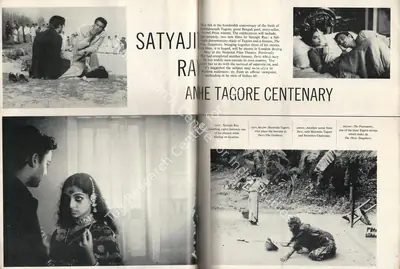
Unknown (Photographer), With Satyajit Ray, Photographic Still
Unknown (Photographer). With Satyajit Ray | Photographic Still
View full record
Rabindranath Tagore (Author), Tagore's Poem for young Satyajit's Autograph Book, Poem
Tagore, Rabindranath (Author). Tagore's Poem for young Satyajit's Autograph Book. n.d. | Poem | 00647280
View full record
Unknown (Interviewer), Apprenticeship, Interview
Unknown (Interviewer). Apprenticeship. n.d. | Interview | 00647279
View full record
Satyajit Ray (Artist), Ray's cover design of Abanindranath Thakur's Rajkahini for Signet Press, Graphic Art
Ray, Satyajit (Artist). Ray's cover design of Abanindranath Thakur's Rajkahini for Signet Press, n.d. | Graphic Art
View full record
Satyajit Ray (Artist), Sketch of Grandfather Dwarkanath Ganguly, Sketch
Ray, Satyajit (Artist). Sketch of Grandfather Dwarkanath Ganguly, n.d. | Sketch
View full record
Unknown (Photographer), Young Satyajit and Wife Bijoya, Contemporary Photograph
Unknown (Photographer). Young Satyajit and Wife Bijoya, n.d. | Contemporary Photograph
View full record
Satyajit Ray (Artist), Ray's cover design of Upendrakishore Roychowdhury's Tuntunir Boi for Signet Press, Graphic Art
Ray, Satyajit (Artist). Ray's cover design of Upendrakishore Roychowdhury's Tuntunir Boi for Signet Press, n.d. | Graphic Art
View full record
Chidananda Dasgupta (Author), Comparative analysis of Pather Panchali as Novel, Script and Film, Research Material
Dasgupta, Chidananda (Author). Comparative analysis of Pather Panchali as Novel, Script and Film. n.d. | Research Material | 00647278
View full record
Satyajit Ray (Artist), Cover Design of Kumayoner Manushkheko Bagh by Jim Corbet, for Signet Press, Graphic Art
Ray, Satyajit (Artist). Cover Design of Kumayoner Manushkheko Bagh by Jim Corbet, for Signet Press, n.d. | Graphic Art
View full record
Unknown (Photographer), Sukumar Ray, Contemporary Photograph
Unknown (Photographer). Sukumar Ray, n.d. | Contemporary Photograph
View full record
Satyajit Ray (Artist), Ray's cover Design for Bishnu Dey's Naam Rekhechi Komol Gandhar, in the style of a linocut depicting golap Sundari from Kalighat Patachitra tradition, Graphic Art
Ray, Satyajit (Artist). Ray's cover Design for Bishnu Dey's Naam Rekhechi Komol Gandhar, in the style of a linocut depicting golap Sundari from Kalighat Patachitra tradition, n.d. | Graphic Art
View full record
Satyajit Ray (Artist), The Ray Family Tree, Graphic Art
Ray, Satyajit (Artist). The Ray Family Tree, n.d. | Graphic Art
View full record
Unknown (Photographer), Satyajit, aged two, Contemporary Photograph
Unknown (Photographer). Satyajit, aged two, n.d. | Contemporary Photograph
View full record
Unknown (Photographer), Satyajit, aged eleven, Contemporary Photograph
Unknown (Photographer). Satyajit, aged eleven, n.d. | Contemporary Photograph
View full record
Unknown (Photographer), Mrinal Sen with Satyajit Ray, Contemporary Photograph
Unknown (Photographer). Mrinal Sen with Satyajit Ray, n.d. | Contemporary Photograph
View full record
Unknown (Writer), Untitled, Essay
Unknown (Writer). Untitled. In On the Cultural 'Front'. | Essay | 00457194
View full record
Surendra Tiwari (Author), Shatranj Ke Khilari, Authored Book
Tiwari, Surendra (Author). Shatranj Ke Khilari, n.d. | Authored Book | 00166836
View full record
Satyajit Ray (Artist), Untitled (Feluda from the story of the Pink Pearl), Drawing
Ray, Satyajit (Artist). Untitled (Feluda from the story of the Pink Pearl), n.d. | Drawing
View full record
Satyajit Ray (Artist), Ray, Satyajit (Artist), Sketch of a scene layout | Original Artwork, n.d., Original Artwork
Ray, Satyajit (Artist), Sketch of a scene layout | Original Artwork, n.d.
View full record
David Wilson (Essayist), Illuminating Ray, Essay
Wilson, David (Essayist). Illuminating Ray. n.d. | Essay | 00731600
View full record
20 of 1,070
Unknown (Writer), Untitled, Essay
Unknown (Writer). Untitled. In On the Cultural 'Front'. | Essay | 00457194
View full record
Chidananda Dasgupta (Author), Comparative analysis of Pather Panchali as Novel, Script and Film, Research Material
Dasgupta, Chidananda (Author). Comparative analysis of Pather Panchali as Novel, Script and Film. n.d. | Research Material | 00647278
View full record
Unknown (Interviewer), Apprenticeship, Interview
Unknown (Interviewer). Apprenticeship. n.d. | Interview | 00647279
View full record
Rabindranath Tagore (Author), Tagore's Poem for young Satyajit's Autograph Book, Poem
Tagore, Rabindranath (Author). Tagore's Poem for young Satyajit's Autograph Book. n.d. | Poem | 00647280
View full record
David Wilson (Essayist), Illuminating Ray, Essay
Wilson, David (Essayist). Illuminating Ray. n.d. | Essay | 00731600
View full record
Surendra Tiwari (Author), Shatranj Ke Khilari, Authored Book
Tiwari, Surendra (Author). Shatranj Ke Khilari, n.d. | Authored Book | 00166836
View full record
L.P. Rao (Editor), Filmfare, 1959, Magazine
Rao, L.P. (Editor). Filmfare, 28 August 1959 | Magazine | 00793241
View full record
Dulal Dutta (Editor), A Satyajit Ray Trilogy of Film Masterpieces, 1960, Edited Book
Dutta, Dulal (Editor). A Satyajit Ray Trilogy of Film Masterpieces, n.d. | Edited Book | 00169956
View full record
Eric Rhode (Essayist), Satyajit Ray, 1961, Essay
Rhode, Eric (Essayist). Satyajit Ray. 30(3). Summer 1961 | Essay | 00731613
View full record
Satyajit Ray and Tagore Centenary, 1961, Essay
Satyajit Ray and Tagore Centenary. 30(2). Spring 1961 | Essay | 00731605
View full record
Eric Rhode (Essayist), Two Daughters, 1961, Essay
Rhode, Eric (Essayist). Two Daughters. 30(3). Summer 1961 | Essay | 00731614
View full record
Marie Seton (Essayist), Satyajit Ray at Work on His Film, 1962, Essay
Seton, Marie (Essayist). Satyajit Ray at Work on His Film. 31(2). Spring 1962 | Essay | 00731606
View full record
B.K. Karanjia (Editor), Filmfare, 1963, Magazine
Karanjia, B.K. (Editor). Filmfare, 25 January 1963 | Magazine | 00793279
View full record
Erik Barnouw (Joint Author), Indian Film, 1963, Authored Book
Barnouw, Erik (Joint Author) and S. Krishnaswamy. Indian Film, 1963 | Authored Book | 00169885
View full record
Eric Rhode (Essayist), Devi, 1964, Essay
Rhode, Eric (Essayist). Devi. 33(4). Autumn 1964 | Essay | 00731625
View full record
Richard Roud (Essayist), Festivals 64, 1964, Essay
Roud, Richard (Essayist). Festivals 64. 33(4). Autumn 1964 | Essay | 00731624
View full record
Richard Roud (Essayist), Festivals 65, 1965, Essay
Roud, Richard (Essayist). Festivals 65. 34(4). Autumn 1965 | Essay | 00731626
View full record
L.P. Rao (Editor), Star & Style, 1965, Magazine
Rao, L.P. (Editor), Maqbool Hosh Yar Jung and Devyani Chaubal (Editorial Assistant). Star & Style, 1 December 1965 | Magazine | 00808400
View full record
L.P. Rao (Editor), Star & Style, 1965, Magazine
Rao, L.P. (Editor), Maqbool Hosh Yar Jung and Devyani Chaubal (Editorial Assistant). Star & Style, 1 December 1965 | Magazine | 00808400
View full record
B.K. Karanjia (Editor), Filmfare, 1965, Magazine
Karanjia, B.K. (Editor). Filmfare, 05 February 1965 | Magazine | 00793298
View full record
20 of 191
Unknown (Photographer), With Satyajit Ray, Photographic Still
Unknown (Photographer). With Satyajit Ray | Photographic Still
View full record
Satyajit Ray (Artist), Sketch of Grandfather Dwarkanath Ganguly, Sketch
Ray, Satyajit (Artist). Sketch of Grandfather Dwarkanath Ganguly, n.d. | Sketch
View full record
Satyajit Ray (Artist), Cover Design of Kumayoner Manushkheko Bagh by Jim Corbet, for Signet Press, Graphic Art
Ray, Satyajit (Artist). Cover Design of Kumayoner Manushkheko Bagh by Jim Corbet, for Signet Press, n.d. | Graphic Art
View full record
Satyajit Ray (Artist), Ray's cover design of Abanindranath Thakur's Rajkahini for Signet Press, Graphic Art
Ray, Satyajit (Artist). Ray's cover design of Abanindranath Thakur's Rajkahini for Signet Press, n.d. | Graphic Art
View full record
Satyajit Ray (Artist), Ray's cover Design for Bishnu Dey's Naam Rekhechi Komol Gandhar, in the style of a linocut depicting golap Sundari from Kalighat Patachitra tradition, Graphic Art
Ray, Satyajit (Artist). Ray's cover Design for Bishnu Dey's Naam Rekhechi Komol Gandhar, in the style of a linocut depicting golap Sundari from Kalighat Patachitra tradition, n.d. | Graphic Art
View full record
Satyajit Ray (Artist), Ray's cover design of Upendrakishore Roychowdhury's Tuntunir Boi for Signet Press, Graphic Art
Ray, Satyajit (Artist). Ray's cover design of Upendrakishore Roychowdhury's Tuntunir Boi for Signet Press, n.d. | Graphic Art
View full record
Satyajit Ray (Artist), The Ray Family Tree, Graphic Art
Ray, Satyajit (Artist). The Ray Family Tree, n.d. | Graphic Art
View full record
Unknown (Photographer), Mrinal Sen with Satyajit Ray, Contemporary Photograph
Unknown (Photographer). Mrinal Sen with Satyajit Ray, n.d. | Contemporary Photograph
View full record
Unknown (Photographer), Sukumar Ray, Contemporary Photograph
Unknown (Photographer). Sukumar Ray, n.d. | Contemporary Photograph
View full record
Unknown (Photographer), Satyajit, aged eleven, Contemporary Photograph
Unknown (Photographer). Satyajit, aged eleven, n.d. | Contemporary Photograph
View full record
Unknown (Photographer), Young Satyajit and Wife Bijoya, Contemporary Photograph
Unknown (Photographer). Young Satyajit and Wife Bijoya, n.d. | Contemporary Photograph
View full record
Unknown (Photographer), Satyajit, aged two, Contemporary Photograph
Unknown (Photographer). Satyajit, aged two, n.d. | Contemporary Photograph
View full record
Satyajit Ray (Artist), Ray, Satyajit (Artist), Sketch of a scene layout | Original Artwork, n.d., Original Artwork
Ray, Satyajit (Artist), Sketch of a scene layout | Original Artwork, n.d.
View full record
Satyajit Ray (Artist), Untitled (Feluda from the story of the Pink Pearl), Drawing
Ray, Satyajit (Artist). Untitled (Feluda from the story of the Pink Pearl), n.d. | Drawing
View full record
Unknown (Photographer), Ray at a Doordarshan Panel Discussion , Contemporary Photograph
Unknown (Photographer). Ray at a Doordarshan Panel Discussion | Contemporary Photograph
View full record
Unknown (Photographer), Satyajit and Bijoya Ray, Contemporary Photograph
Unknown (Photographer). Satyajit and Bijoya Ray | Contemporary Photograph
View full record
Unknown (Photographer), Satyajit Ray with Mother Teresa, Contemporary Photograph
Unknown (Photographer). Satyajit Ray with Mother Teresa | Contemporary Photograph
View full record
Unknown (Photographer), Ray on the set of Ghare Baire, Contemporary Photograph
Unknown (Photographer). Ray on the set of Ghare Baire | Contemporary Photograph
View full record
Unknown (Photographer), Satyajit with his wife Bijoya Ray, Contemporary Photograph
Unknown (Photographer). Satyajit with his wife Bijoya Ray | Contemporary Photograph
View full record
Unknown (Photographer), Ray and Marlon Brando in conversation with Amita Mallik, for Doordarshan, Contemporary Photograph
Unknown (Photographer). Ray and Marlon Brando in conversation with Amita Mallik, for Doordarshan | Contemporary Photograph
View full record
20 of 874
Tuli Research Centre for India Studies (Editor). The Ray-Renoir Connection: Satyajit Ray on Jean Renoir, 22 February 2025 | In-house Video, 2025 · 1 min 34 seconds · Short
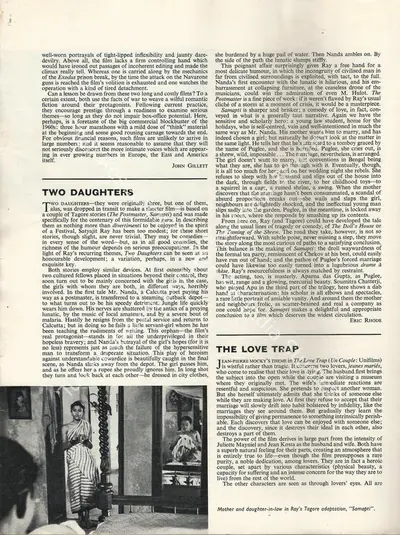
▶
Tuli Research Centre for India Studies (Editor). The Ray-Renoir Connection: Satyajit Ray on Jean Renoir, 22 February 2025 | In-house Video
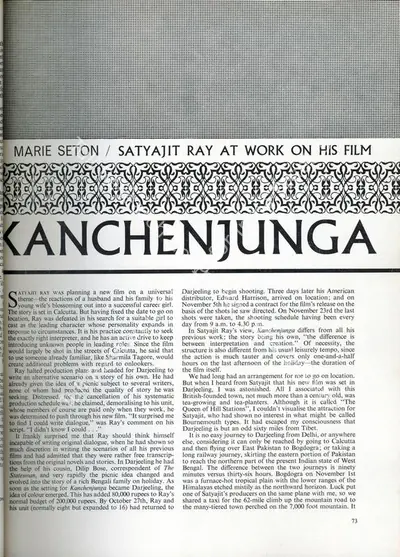
2025 · 1 min 34 seconds · Short
Tuli Research Centre for India Studies (Editor). Re-examining Colonel Mordaunt’s Cock-Fight, 22 February 2025 | In-house Video, 2025 · 2 min 40 sec · Short
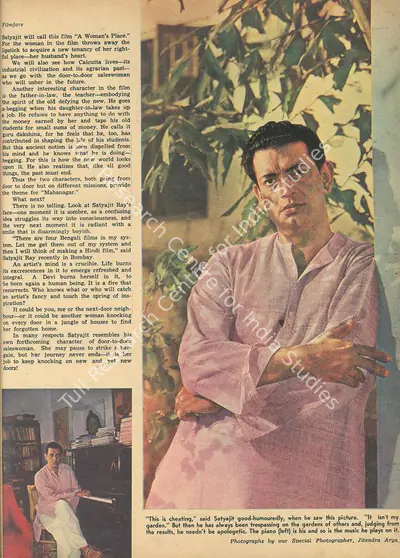
▶
Tuli Research Centre for India Studies (Editor). Re-examining Colonel Mordaunt’s Cock-Fight, 22 February 2025 | In-house Video
2025 · 2 min 40 sec · Short
Tuli Research Centre for India Studies (Editor). Gabbar Singh and Nawab Wajid Ali Khan: Amjad Khan, 17 March 2025 | In-house Video, 2025 ·  1 min 21 sec · Short
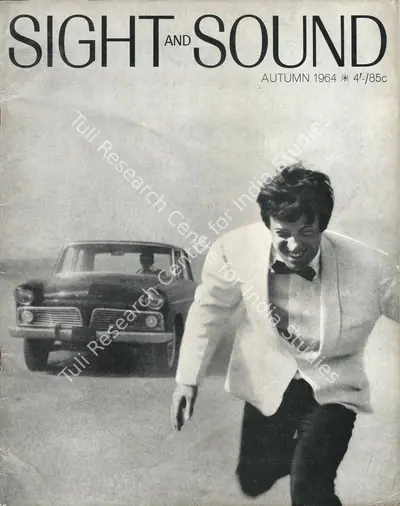
▶
Tuli Research Centre for India Studies (Editor). Gabbar Singh and Nawab Wajid Ali Khan: Amjad Khan, 17 March 2025 | In-house Video
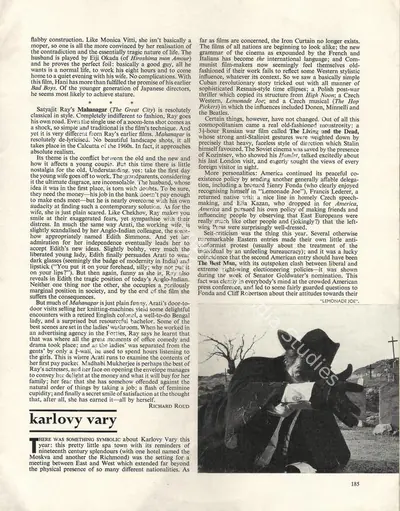
2025 · 1 min 21 sec · Short
Tuli Research Centre for India Studies (Editor). How Polish Posters Inspired Satyajit Ray’s Iconic Designs, 19 March 2025 | In-house Video, 2025 · 1 min 06 sec · Short
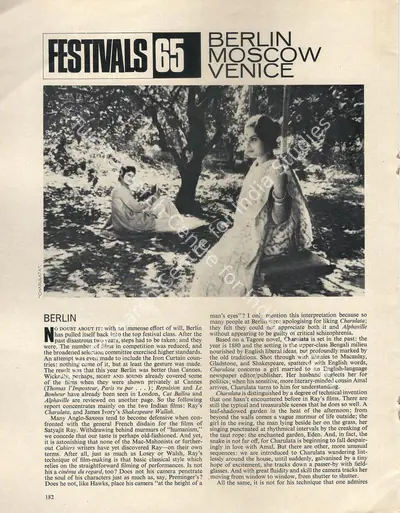
▶
Tuli Research Centre for India Studies (Editor). How Polish Posters Inspired Satyajit Ray’s Iconic Designs, 19 March 2025 | In-house Video
2025 · 1 min 06 sec · Short
Tuli Research Centre for India Studies (Editor). The Films of 1955: Mani Kaul, 27 July 2007 | In-house Video, 2007 · 28 sec · Reel
▶
Tuli Research Centre for India Studies (Editor). The Films of 1955: Mani Kaul, 27 July 2007 | In-house Video
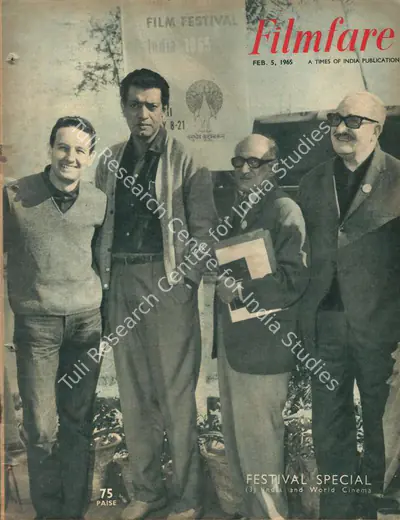
2007 · 28 sec · Reel
Marie Seton (Author), Portrait of a Director Satyajit Ray, 1971, Authored Book
Seton, Marie (Author). Portrait of a Director Satyajit Ray, 1971 | Authored Book | 00169742
View full record
Khwaja Ahmad Abbas (Author), I am Not an Island, 1977, Authored Book
Abbas, Khwaja Ahmad (Author). I am Not an Island, 1977 | Authored Book | 00168164
View full record
Suresh Jindal (Producer), Shatranj Ke Khilari - Test, 1977, Song-Synopsis Booklet
Jindal, Suresh (Producer), Shatranj Ke Khilari - Test, 1977 | Song-Synopsis Booklet
View full record
Chidananda Das Gupta (Author), The Cinema of Satyajit Ray, 1980, Authored Book
Das Gupta, Chidananda (Author). The Cinema of Satyajit Ray, 1980 | Authored Book | 00169732
View full record
Chidananda Das Gupta (Author), Talking About Films, 1981, Authored Book
Das Gupta, Chidananda (Author). Talking About Films, 1981 | Authored Book | 00168104
View full record
Parimal Mukhopadhyay (Editor), Pather Panchali, 1984, Edited Book
Mukhopadhyay, Parimal (Editor). Pather Panchali, 1984 | Edited Book | 00170121
View full record
Santi Das (Editor), Satyajit Ray, 1998, Edited Book
Das, Santi (Editor). Satyajit Ray, 1998 | Edited Book | 00170319
View full record
Geeta Kapur (Author), When was Modernism, 2000, Authored Book
Kapur, Geeta (Author). When was Modernism, 2000 | Authored Book | 00169571
View full record
Andrew Robinson (Editor), Satyajit Ray, 2005, Edited Book
Robinson, Andrew (Editor). Satyajit Ray, 2005 | Edited Book | 00170448
View full record
Jayanti Sen (Author), Looking Beyond, 2012, Authored Book
Sen, Jayanti (Author). Looking Beyond, 2012 | Authored Book | 00169814
View full record
Nemai Ghosh (Author), Satyajit Ray and Beyond, 2013, Authored Book
Ghosh, Nemai (Author). Satyajit Ray and Beyond, 2013 | Authored Book | 00168656
View full record
Sandip Ray (Editor), Travails With the Alien, 2018, Edited Book
Ray, Sandip (Editor). Travails With the Alien, 2018 | Edited Book | 00170589
View full record

Posts 1

  1. Colonel Mordaunt's Cockfight
    Colonel Mordaunt's Cockfight
    Cockfights were a popular sport in India and other parts of the world in the late eighteenth-century. In 1786, the then Governor-General of India Warren Hastings commissioned German-born artist Johann Zoffany to paint the historic cockfight that had many British East India Company employees and Indian royalties in attendance. Several versions of the painting have thus been made and depicted in various mediums over the course of more than two centuries, including the cock-fight scene in Satyajit Ray's 1977 film Shatranj Ke Khilari.
    1_CinemaEducation2_FineArts4_PopCulture6_EconomicsArt
    Shatranj Ke KhilariSatyajit RayLucknowNemai Ghosh
    Read Post →

Calendar 5

View All →
  1. From Trinity to Trinity to Trinity
    ArchivedExhibitionProject 76
    From Trinity to Trinity to Trinity
    Dev-Dilip-Raj | Ray-Ghatak-Sen | Salman-SRK-Aamir
    25th - 31st March 2026
    11:00am - 7:00pm
    Bharat Mandapam, Hall-14, Ground Floor, Pragati Maidan, New Delhi - 110011
    The Exhibition 'From Trinity to Trinity to Trinity | Dev-Raj-Dilip to Ray-Ghatak-Sen to Salman-Aamir-SRK', celebrates three iconic trios that have come to symbolize defining moments in Indian cinema and reflect the diverse heroic characteristics which the Indian public demands.
    Read More →
    1_CinemaEducation
  2. The World of Satyajit Ray through the Lens of Nemai Ghosh | 1969-1990
    ArchivedExhibitionProject 73
    The World of Satyajit Ray through the Lens of Nemai Ghosh | 1969-1990
    25th - 31st March 2026
    11:00am - 7:00pm
    Bharat Mandapam, Hall-14, Ground Floor, Pragati Maidan, New Delhi - 110008
    The World of Satyajit Ray through the lens of Nemai Ghosh, 1969-1990, offers a rare glimpse into the life and work of one of cinema's greatest auteurs. Captured over decades, Ghosh's working stills offer a unique window into Ray's working process and artistry.
    Read More →
    1_CinemaEducation
  3. The Greatest Extravaganza of Cinema's Art
    ArchivedExhibitionProject 65
    The Greatest Extravaganza of Cinema's Art
    25th - 31st March 2026
    11:00am - 7:00pm
    Bharat Mandapam, Hall-14, Ground Floor, Pragati Maidan, New Delhi - 110001
    As we near sharing the vast online India Studies knowledge base on tuliresearchcentre.org with the world, we end with our last grand archival Exhibition on the rare and vintage cinematic arts. The Expo covers over 110 years of cinematic art, created by some of the finest film directors, cinematographers, art directors, technicians and designers working in cinema from India, Hollywood, Japan, Germany, France, and Poland. It is also a key principle at the Tuli Research Centre for India Studies (TRIS) to support new and nascent International Film Festivals in whatever capacity possible. Hence it is our privilege to help the International Film Festival of Delhi (IFFD) successfully launch its first edition on 25th March 2026. In the pioneering tradition of IFFI, and as Head of the erstwhile and much respected Osian's-Cinefan Festival for Asian and Arab Cinema with my dearly departed friend and Founder of Cinefan - Aruna Vasudev - we know what energy, expertise and commitment is required to galvanise and inspire the cinematic fraternities of Delhi, India and the rest of the world. It is a very serious and difficult task. Our audiences are demanding and to attract the young and non-cinephile is also no easy task. I hope these exhibitions will help the public grasp how deeply history is living in the contemporary. That contemporary life or creativity cannot achieve its best version without knowing and respecting the work of the best who came before us, nurturing and guiding our path with their service and vision. We look forward to welcoming you to Bharat Mandapam Hall 14 in the days to come. Please register at https://www.iffdelhi.com for the films and other events, it is free to all.
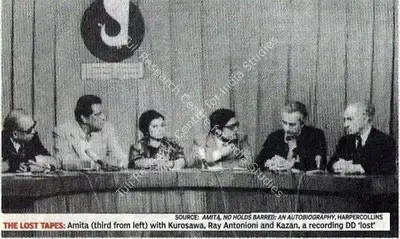
    Read More →
    1_CinemaEducation
  4. Self-Discovery via Rediscovering India Series Part II India's Cinematic Heritage
    ArchivedExhibitionProject 2
    Self-Discovery via Rediscovering India Series Part II India's Cinematic Heritage
    12th - 24th August 2024
    Self-Discovery via Rediscovering India Series Part II
    Read More →
    1_CinemaEducation·The Worlds Greatest Mela Respecting Indias Cinematic Heritage 13 25 August 2024 Project 2 Cal
  5. Self-Discovery via Rediscovering India Series Inaugural Exhibition
    ArchivedExhibitionProject 1
    Self-Discovery via Rediscovering India Series Inaugural Exhibition
    14th - 29th March 2024
    Inaugural Exhibition
    Read More →
    14_IndoWorld·Self Discovery Via Rediscovering India Series 15 30 March 2024 Project 1 Cal

Related

60

Personalities

36

Amitabh BachchanComparable Artworks
Aruna VasudevComparable Artworks
Asha ParekhComparable Artworks
Ashok KumarComparable Artworks
Charlie ChaplinComparable Artworks
Deepti NavalComparable Artworks
Dilip KumarComparable Artworks
Dimple KapadiaComparable Artworks
Geeta KapurComparable Artworks
Hema MaliniComparable Artworks
Jaya Bhaduri BachchanComparable Artworks
Khwaja Ahmad AbbasComparable Artworks
Lata MangeshkarComparable Artworks
Laxman PaiComparable Artworks
M.F. HusainComparable Artworks
MadhubalaComparable Artworks
Meena KumariComparable Artworks
Mrinal SenComparable Artworks
Nemai GhoshComparable Artworks
Osian'sComparable Artworks
Raj KapoorComparable Artworks
Rajendra KumarComparable Artworks
Rajesh KhannaComparable Artworks
RekhaComparable Artworks
Ritwik GhatakComparable Artworks
Sanjeev KumarComparable Artworks
Shabana AzmiComparable Artworks
Shammi KapoorComparable Artworks
Sharmila TagoreComparable Artworks
Shashi KapoorComparable Artworks
Shatrughan SinhaComparable Artworks
Soumendu RoyComparable Artworks
Subrata MitraComparable Artworks
Suchitra SenComparable Artworks
VyjayanthimalaComparable Artworks
Zeenat AmanComparable Artworks

Films

21

Abhijan 1962Screenplay
Aparajito (1956)Screenplay
Aranyer Din Ratri (1970)Screenplay
Ashani Sanket (1973)Screenplay
Baksa Badal 1970Screenplay
Charulata (1964)Screenplay
Devi (1960)Screenplay
Goopy Gyne Bagha Byne (1969)Screenplay
Jana Aranya (1976)Screenplay
Ka Purush Maha Purush (1965)Screenplay
Mahanagar (1963)Screenplay
Nayak (1966)Screenplay
Parash Pathar 1958Comparable Artworks
Pather Panchali 1955Screenplay · Comparable Artworks
Pratidwandi (1970)Screenplay
Sadgati (1981)Screenplay
Seema Baddha (1971)Screenplay
Shatranj Ke Khilari (1977)Film Director
Sonar Kella (1974)Screenplay
Teen Kanya (1961)Screenplay
Two 1964Screenplay

Institutions

2

DAGComparable Artworks
Sotheby'sComparable Artworks

Themes

1

Journal of Arts & IdeasComparable Artworks
Tuli Research Centre for India Studies
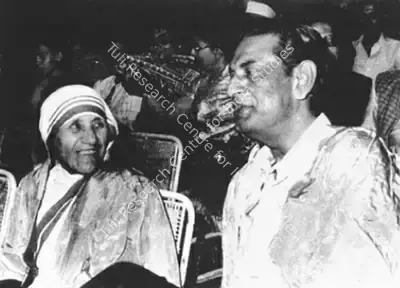
Tuli Research Centre
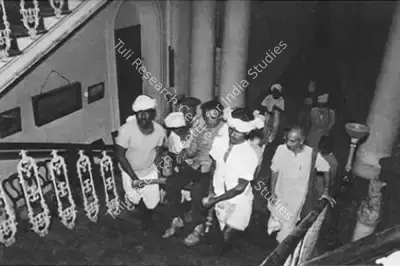
for India Studies

A free and open knowledge base for the modern and contemporary Indian arts, cinema, photography and cultural heritage.

Support

Contact Us

Discover

Tuli Research Centre for India StudiesVisionManifestoArchive & LibraryVanraja Sanctuary & Hospice
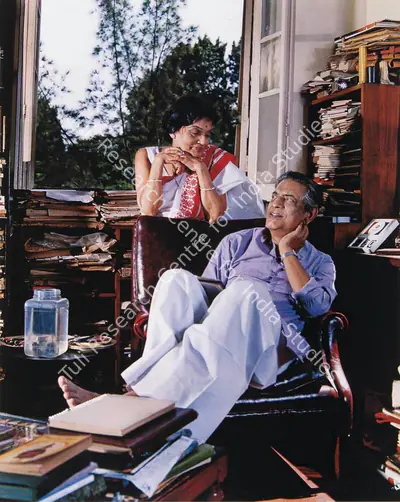
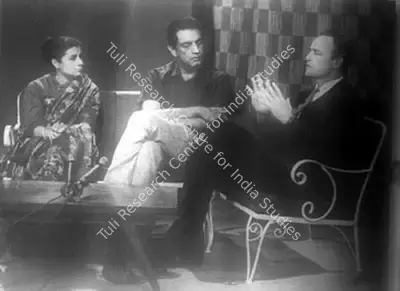
Legal

Privacy PolicyTerms & Conditions

Follow us

Youtube

Youtube

Instagram

Instagram

Facebook

Facebook

© Tuli Research Centre for India Studies 2026

Tuli Research Centre for India Studies

Tuli Research Centre

for India Studies

A free and open knowledge base for the modern and contemporary Indian arts, cinema, photography and cultural heritage.

Tuli Research Centre for India StudiesVisionManifestoArchive & LibraryVanraja Sanctuary & Hospice
Contact Us
Privacy PolicyTerms & Conditions

Follow us

YoutubeInstagramFacebook

© Tuli Research Centre for India Studies 2026

              Ray, Sandip (Editor). Travails With the Alien - The Film That was Never Made and Other Adventures with Science Fiction : Satyajit Ray. Noida: Harper Collins, 2018 | Edited Book | CinemaEducation | 00170589
              Sandip Ray (Editor)
              TitleTravails With the Alien - The Film That was Never Made and Other Adventures with Science Fiction : Satyajit Ray
              Document TypeEdited Book
              PublisherHarper Collins, Noida
              Date of Publication2018
              First Edition2018
              Pages214
              BindingPaperbound
              LanguageEnglish
              ISBN978-9352779154

              Research Categories

              1_CinemaEducation

              Related Links3

              Masterlist2
              Satyajit RayAuthored Edited Books
              Research Categories
              01Cinema as a Critical Educational Resource