TRIS logo image
Search names, films, exhibitions

EN

EN

English

HI

Hindi

EN

EN

English

HI

Hindi

Tuli Research Centre for India Studies

Home

Tuli Research Centre for India Studies

Vision

Manifesto

Archive & Library

Vanraja Sanctuary & Hospice

Research Categories

Browse All

ICore

1_CinemaEducation_Cinema as a Critical Educational Resource

2_FineArts_Modern and Contemporary Indian Fine Arts

3_Photography_Photography in India

4_PopCulture_The Printed Image, Popular Arts, and Crafts

IIMaterial

5_ArcHeritage_India's Architectural Heritage as Inspiration

6_EconomicsArt_Economics of Art & Cultural Industry

7_Travel_Automobile, Transport and Travel Heritage

8_Uncertainty_Uncertainty

IIICritical

9_SocialDuty_Social Responsibility of the Creative Mind

10_Childhood_The Changing Smile of Childhood & Its Second Coming

11_Sensuality_The Sensual Discipline within Creativity

12_Scholarship_The History & Historiography of Scholarship in the Arts, Humanities, and Social Sciences

IVMeaningful

13_SeekJustice_Seeking Justice and Political Integrity

14_IndoWorld_India and her Relationship with the World

15_SpiritualPoetics_The Religious-Spiritual-Poetic-Philosophical Framework

16_Continuum_The Animal-Human-Nature Continuum

Explore

All

Posts

Masterlists

Calendar

Live | Upcoming

All Events

Timetable

Search names, films, exhibitions

EN

EN

English

HI

Hindi

Amitabh Bachchan

Amitabh Bachchan

Librab. 11 Oct 1942, Allahabad

Personality.Actor
A-Graphy
Introduction
Filmography225
Integrated Timeline65
Economics of Cinema217
Research Centre2,094
All2,094
Library245
Archive1,833
Videos16
Highlights39
Posts2
Calendar1
Home/Cinema as a Critical Educational Resource/Personality · Actor/Amitabh Bachchan
Amitabh Bachchan — featured artwork

Introduction

Amitabh Bachchan (born Amitabh Srivastava on 11 October 1942 in Allahabad, now Prayagraj) He is one of the most eminent figures in Hindi cinema, distinguished by an unparalleled career spanning more than two hundred films. Revered for his commanding screen presence and remarkable versatility, he has long occupied a preeminent position within the cultural imagination of India and the global South Asian diaspora. His towering influence during the 1970s and 1980s, when he came to embody the archetype of the disaffected yet morally resolute protagonist, rendered him a defining force in popular cinema.

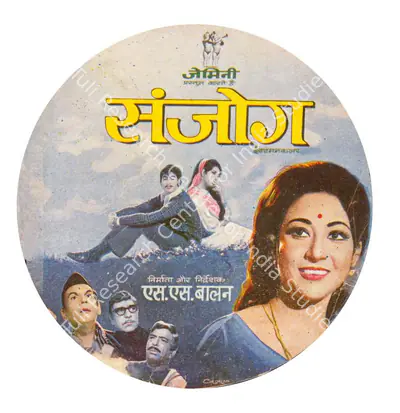
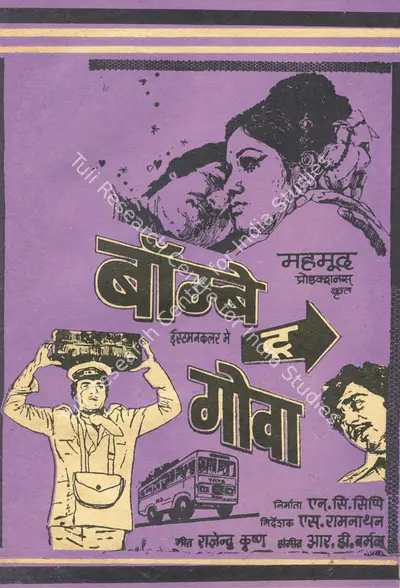
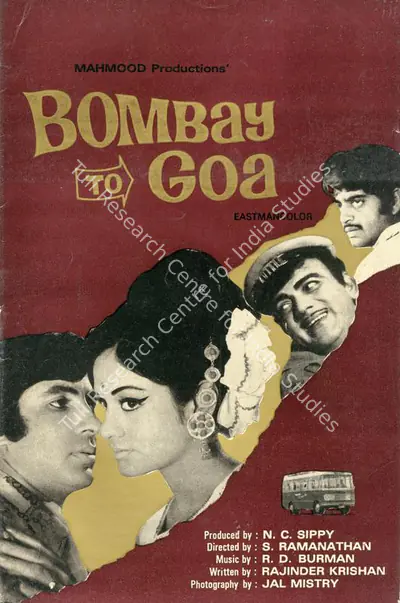
Educated at Sherwood College, Nainital, and Kirori Mal College, University of Delhi, from which he graduated in 1962, Bachchan initially ventured into professional life in Kolkata before turning to theatre and eventually cinema. His cinematic debut occurred as a narrator in Bhuvan Shome (1969), followed by his first acting role in Saat Hindustani (1969). Early performances in Anand (1971), for which he received the Filmfare Award for Best Supporting Actor, Parwana (1971), and Reshma Aur Shera (1971) revealed his potential, though commercial success remained intermittent, as seen in Bombay to Goa (1972) and Sanjog (1972).

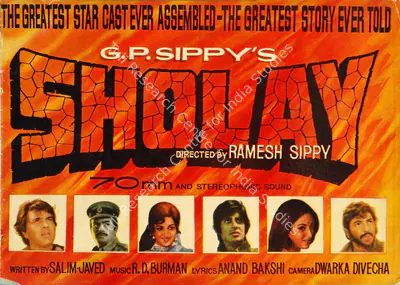
The transformative phase of his career began with Zanjeer (1973), which inaugurated a series of iconic performances in Deewaar (1975) and Sholay (1975), consolidating his image as the angry young man. This period also witnessed a succession of commercially successful films, including Kabhi Kabhie (1976), Hera Pheri (1976), Amar Akbar Anthony (1977), Don (1978), Trishul (1978), Muqaddar Ka Sikandar (1978), Kaala Patthar (1979), Dostana (1980), Laawaris (1981), Coolie (1983), and Mard (1985). His sustained dominance during these decades led observers to characterise the Hindi film industry as revolving singularly around his persona.

After a relative hiatus in the 1990s, Bachchan reasserted his prominence with Mohabbatein (2000), followed by notable performances in Kabhi Khushi Kabhie Gham (2001), Baghban (2003), Black (2005), Sarkar (2005), Kabhi Alvida Naa Kehna (2006), Paa (2009), Piku (2015), Brahmāstra Part One Shiva (2022), Kalki 2898 AD (2024). His performances in Agneepath (1990), Black (2005), Paa (2009), and Piku (2015) earned him multiple National Film Awards for Best Actor, marking an extraordinary achievement in Indian cinema.

Beyond acting, Bachchan has contributed as a playback singer, producer, and television host, most notably through Kaun Banega Crorepati (2000), which significantly expanded his reach across generations.

His brief political career in the mid-1980s and enduring engagement in philanthropic initiatives further attest to his multifaceted public life. Honoured with the Padma Shri in 1984, Padma Bhushan in 2001, Padma Vibhushan in 2015, and the Dadasaheb Phalke Award in 2018, along with France's Legion of Honour in 2007, Bachchan's legacy transcends cinema, embodying a rare synthesis of artistic excellence, cultural authority, and enduring public esteem.

अमिताभ बच्चन (जन्म अमिताभ श्रीवास्तव, 11 अक्टूबर 1942, इलाहाबाद (अब प्रयागराज)) हिंदी सिनेमा के सबसे प्रतिष्ठित व्यक्तियों में से एक हैं, जिन्होंने दो सौ से अधिक फ़िल्मों में अभिनय करके एक अद्वितीय करियर बनाया है। अपनी दमदार उपस्थिति और उल्लेखनीय बहुमुखी प्रतिभा के लिए पूजनीय, उन्होंने भारत और वैश्विक दक्षिण एशियाई प्रवासी समुदाय की सांस्कृतिक कल्पना में एक विशिष्ट स्थान बनाए रखा है। 1970 और 1980 के दशक में, जब उन्होंने असंतुष्ट लेकिन नैतिक रूप से दृढ़ नायक की छवि को साकार किया, तो उनका प्रभाव इतना प्रभावी हुआ कि वे लोकप्रिय सिनेमा में एक निर्णायक शक्ति बन गए।
नैनीताल के शेरवुड कॉलेज और दिल्ली विश्वविद्यालय के किरोड़ी मल कॉलेज से शिक्षा प्राप्त करने के बाद, जहाँ से उन्होंने 1962 में स्नातक की उपाधि प्राप्त की, बच्चन ने प्रारंभ में कोलकाता में पेशेवर जीवन में कदम रखा, फ़िर रंगमंच और अंततः सिनेमा की ओर रुख किया। उनकी सिनेमाई शुरुआत 1969 में आई फ़िल्म भुवन शोम में एक कथावाचक के रूप में हुई, जिसके बाद उन्होंने 1969 में ही सात हिंदुस्तानी में अपनी पहली अभिनय भूमिका निभाई। 1971 में आई फ़िल्म आनंद (जिसके लिए उन्हें सर्वश्रेष्ठ सहायक अभिनेता का फ़िल्मफ़ेयर पुरस्कार मिला), 1971 में आई फ़िल्म परवाना और 1971 में आई फ़िल्म रेशमा और शेरा में उनके शुरुआती प्रदर्शनों ने उनकी प्रतिभा को उजागर किया, हालांकि 1972 में आई फ़िल्म बॉम्बे टू गोवा और 1972 में ही आई फ़िल्म संजोग से पता चलता है कि व्यावसायिक सफलता ठीक नहीं रही।
उनके करियर का परिवर्तनकारी दौर 1973 में आई फ़िल्म 'ज़ंजीर' (1973)से शुरू हुआ, जिसने 'दीवार' (1975) और 'शोले' (1975) जैसी फ़िल्मों में उनके यादगार अभिनय की श्रृंखला आरम्भ किया और उन्हें एक गुस्सैल नौजवान के रूप में स्थापित किया। इसी अवधि में उन्होंने कई व्यावसायिक रूप से सफल फ़िल्में भी दीं, जिनमें 'कभी कभी' (1976), 'हेरा फेरी' (1976), 'अमर अकबर एंथोनी' (1977), 'डॉन' (1978), 'त्रिशूल' (1978), 'मुक़द्दर का सिकंदर' (1978), 'काला पत्थर' (1979), 'दोस्ताना' (1980), 'लावारिस' (1981), 'कुली' (1983) और 'मर्द' (1985) शामिल हैं। इन दशकों में उनके लगातार प्रभाव ने आलोचकों को यह कहने पर मजबूर किया कि हिंदी फ़िल्म उद्योग मूलतः उनके व्यक्तित्व के इर्द-गिर्द घूमता है।
1990 के दशक में अपेक्षाकृत विराम के बाद, बच्चन ने मोहब्बतें (2000) के साथ अपनी प्रमुखता फ़िर से स्थापित की, इसके बाद कभी खुशी कभी ग़म (2001), बाग़बान (2003), ब्लैक (2005), सरकार (2005), कभी अलविदा ना कहना (2006), पा (2009), पिकू (2015), ब्रह्मास्त्र पार्ट वन: शिवा (2022), और कल्कि 2898 एडी (2024) जैसी उल्लेखनीय प्रस्तुतियाँ दीं। अग्निपथ (1990), ब्लैक (2005), पा (2009), और पिकू (2015) में उनके अभिनय ने उन्हें कई बार सर्वश्रेष्ठ अभिनेता के राष्ट्रीय फ़िल्म पुरस्कार दिलाए, जो भारतीय सिनेमा में एक असाधारण उपलब्धि के रूप में दर्ज है।
अभिनय के अलावा, बच्चन ने पार्श्व गायक, निर्माता और टेलीविजन होस्ट के रूप में भी योगदान दिया है, विशेष रूप से कौन बनेगा करोड़पति (2000) के माध्यम से, जिसने पीढ़ियों के बीच उनकी पहुंच को काफी बढ़ाया।
1980 के दशक के मध्य में उनका संक्षिप्त राजनीतिक जीवन और परोपकारी पहलों में उनका निरंतर जुड़ाव उनके बहुआयामी सार्वजनिक जीवन का प्रमाण है। 1984 में पद्म श्री, 2001 में पद्म भूषण, 2015 में पद्म विभूषण और 2018 में दादासाहेब फाल्के पुरस्कार के साथ-साथ 2007 में फ्रांस के लीजन ऑफ़ ऑनर से सम्मानित बच्चन की विरासत सिनेमा से परे भी है, जो कलात्मक उत्कृष्टता, सांस्कृतिक अधिकार और स्थायी जन सम्मान का एक दुर्लभ संगम है।
Date of Birth
11 Oct 1942
Zodiac sign
Libra
Age
84
Nationality
Indian
Place of Birth
Allahabad
Spouse(s)
Jaya bachchan
Year Marriage Registered
1973
Children
Abhishek Bachchan (b. 05 Feb 1976), Shweta Bachchan (b. 17 Mar 1974)
Parent(s)
Harivansh Rai Bachchan (27 Nov 1907 – 18 Jan 2003), Teji Bachchan (12 Aug 1914 – 21 Dec 2007)
Grandparent(s)
Pratap Narayan Srivastav, Saraswati Devi
Siblings
Ajitabh Bachchan (b. 18 May 1947)
  1. 1948

    1. Boys High School and College, Allahabad

      1948 – 1956

  2. 1956

    1. Sherwood College, Nainital

      1956 – 1959

  3. 1959

    1. Government College, Chandigarh
    2. Kirori Mal College, University of Delhi

      1959 – 1962

  1. 1994

    1. Amitabh Bachchan Corporation LtdAssociated Institution

Filmography 225
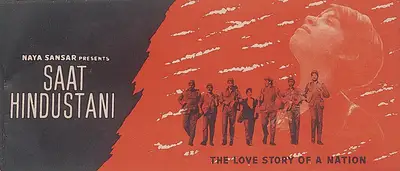
Saat Hindustani, Actor, 1969
Saat Hindustani | Hindi | Actor
1969 | Feature | Fiction | Black and White | India
Bhuvan Shome, Narrator, 1969
Bhuvan Shome | Hindi | Narrator
1969 | Feature | Fiction | Black and White | India
Anand, Actor, 1970
Anand | Hindi | Actor
1970 | Feature | Fiction | Colour | India
Parwana, Actor, 1971
Parwana | Hindi | Actor
1971 | Feature | India
Pyar Ki Kahani, Actor, 1971
Pyar Ki Kahani | Hindi | Actor
1971 | Feature | India
Reshma Aur Shera, Actor, 1971
Reshma Aur Shera | Hindi | Actor
1971 | Feature | India
Sanjog, Actor, 1971
Sanjog | Hindi | Actor
1971 | Feature | Fiction | Colour | India
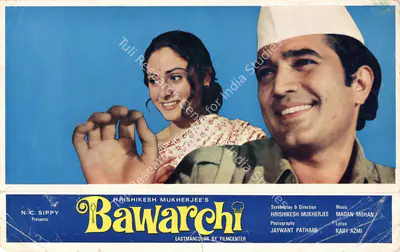
Bawarchi, Narrator, 1972
Bawarchi | Hindi | Narrator
1972 | Feature | Fiction | Colour | India
Bombay To Goa, Actor, 1972
Bombay To Goa | Hindi | Actor
1972 | Feature | Fiction | Colour | India
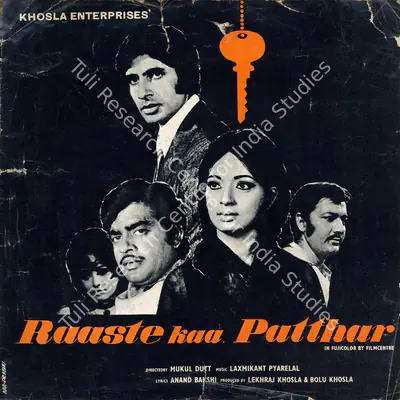
Raaste Kaa Patthar, Actor, 1972
Raaste Kaa Patthar | Hindi | Actor
1972 | Feature | India
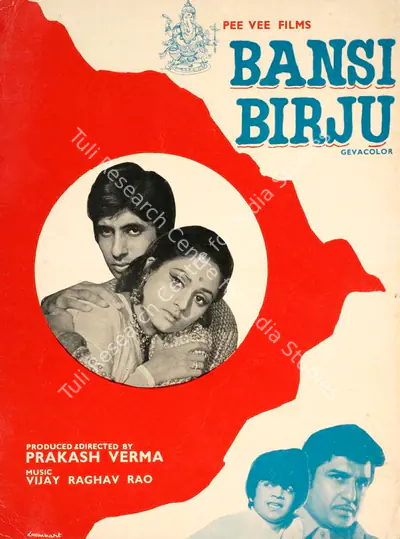
Bansi Birju, Actor, 1972
Bansi Birju | Hindi | Actor
1972 | Feature | India
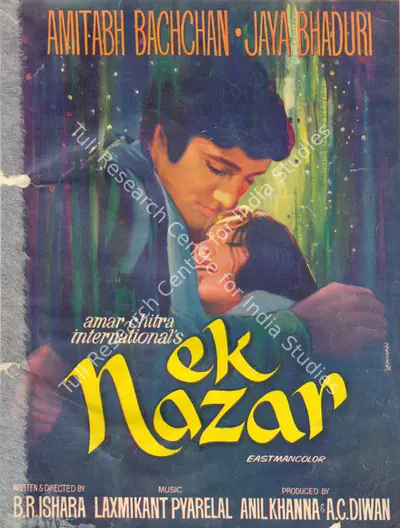
Ek Nazar, Actor, 1972
Ek Nazar | Hindi | Actor
1972 | Feature | India
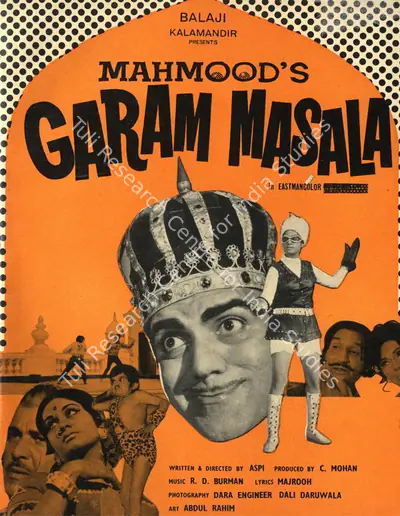
Garam Masala, Actor, 1972
Garam Masala | Hindi | Actor
1972 | Feature | India
Jaban, Actor, 1972
Jaban | Bengali | Actor
1972 | Feature | India
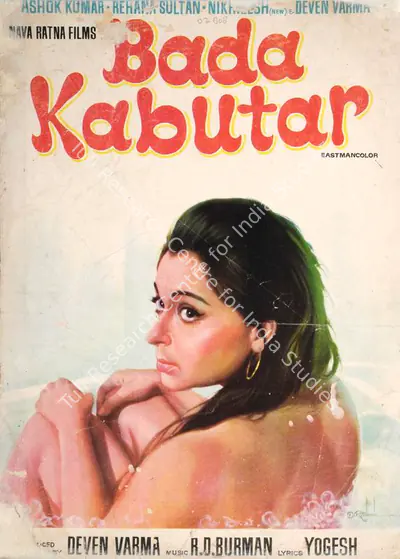
Bada Kabutar, Actor, 1973
Bada Kabutar | Hindi | Actor
1973 | Feature | India
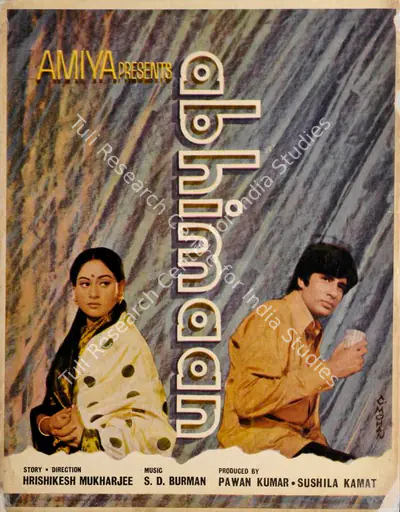
Abhimaan, Actor, 1973
Abhimaan | Hindi | Actor
1973 | Feature | Fiction | Colour | India
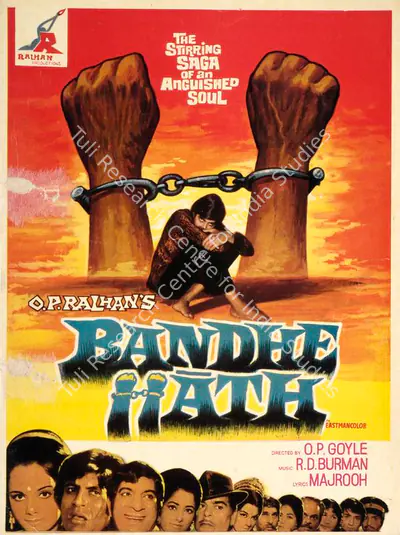
Bandhe Hath, Actor, 1973
Bandhe Hath | Hindi | Actor
1973 | Feature | India
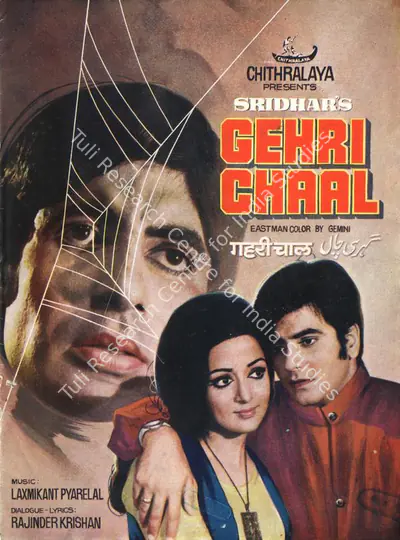
Gehri Chaal, Actor, 1973
Gehri Chaal | Hindi | Actor
1973 | Feature | India
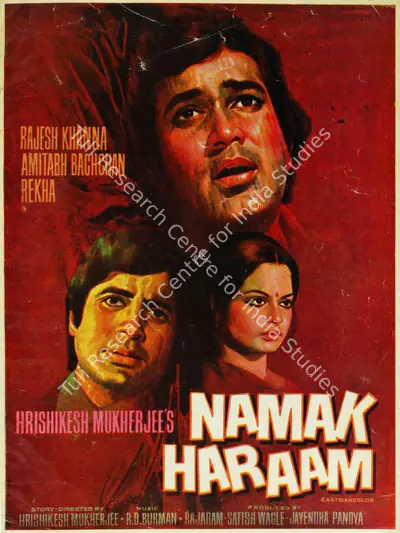
Namak Haraam, Actor, 1973
Namak Haraam | Hindi | Actor
1973 | Feature | Fiction | Colour | India
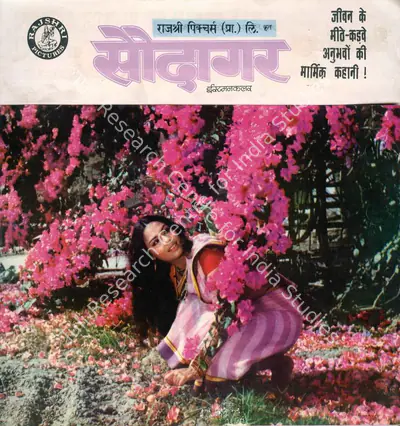
Saudagar, Actor, 1973
Saudagar | Hindi | Actor
1973 | Feature | Fiction | India
20 of 225

Integrated Timeline

65 entries
Born on 11 October 1942, to writer and poet Harivansh Rai Bachchan and Teji Suri, Amitabh Bachchan was the elder of two siblings. He started his education at the St. Mary's Convent School at the behest of his mother Teji but later transferred to Boys High School in Allahabad. The early years of the family were spent at the family home in 17, Clive Road, Allahabad; with the poet father travelling for work and a PhD in London.
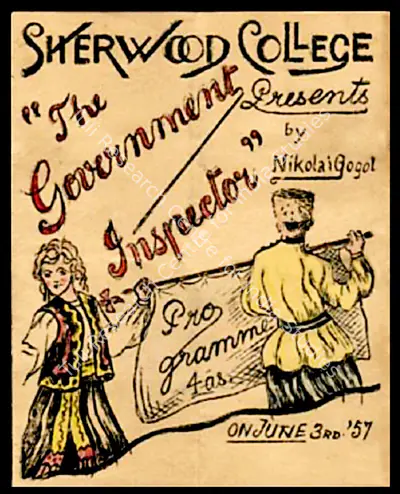
Amitabh and Ajitabh Bachchan were enlisted in the prestigious Sherwood College, Nainital in the March 1956. Life at Sherwood opened up the world of works of the greats like William Shakespeare, George Bernard Shaw and Nikolai Vasilevich Gogol, which would later be reflected in Bachchan's work during his time in Kolkata and early days in Mumbai. At the Annual Function of the school in October 1957, Bachchan played the role of the Mayor in Gogol's play The Inspector General, for which he was awarded the Geoffery Kendal Cup, named after theatre stalwart Geoffery Kendal; founder of the travelling theatre company Shakespeareana, and actor Shashi Kapoor's father-in-law.
While at Kirori Mal College, Amitabh participated in the college drama society, 'The Players' established by Frank Thakurdas and Keval Arora in 1957. He was asked to audition for the role after Thakurdas heard his voice across the corridor. During his graduation years he acted in various plays alongside fellow actors Dinesh Thakur and Kulbhushan Kharbanda as a part of the same theatre group.
After graduating and trying out various career paths, including the role of broadcaster at the All India Radio, where the executives did not find his voice suitable for the radio, Amitabh took an executive job at Bird & Co., Calcutta and later switched to Blacker & Co., a job that provided him better pay with lodgings and conveyance. While in Calcutta, Amitabh joined the Calcutta Amateur Theatre Society (CATS), alongside his regular job, and toured all over rular Bengal, performing the works of Bolt, Miller, Beckett, Pinter and Shakespeare.
The year also marked the launch of what has come to be known as the 'Indian New Wave' cinema. Small budget films produced by the Government of India through National Film Development Corporation, helped for a new aesthetic to be developed in the midst of the commercial song and dance laden films being produced by the Hindi film industry. Largely inspired by Italian Neorealism, and influenced by the broader historical and cultural shifts in India, the Parallel Cinema movement gave voice to a nation in the process of forging its own national identity. Abbas's Saat Hindustani was also influenced by similar ideals, much like his earlier films that he wrote for Raj Kapoor, reflecting the Nehruvian ideology in all his works. In 1969, Mrinal Sen's Bhuvan Shome, among other significant films of this movement, such as Uski Roti by Mani Kaul were completed. Bachchan gave the voice over for Bhuvan Shome starring Utpal Dutt.
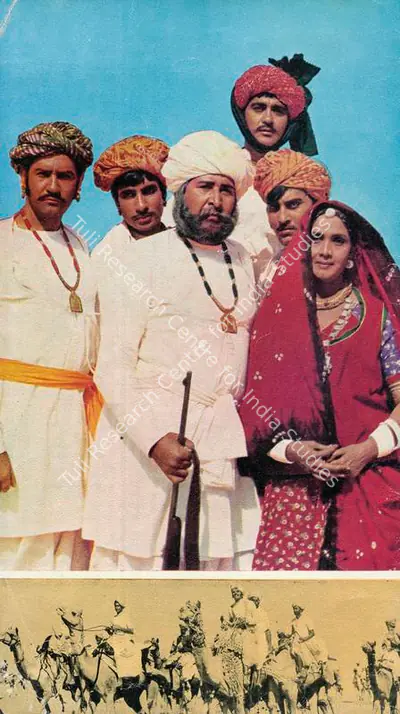
Amitabh's first release as an actor was Khwaja Ahmad Abbas's Saat Hindustani. The film set against the backdrop of the Goan freedom movement released on 7 November 1969 and featured seven comparatively new faces mostly emerging from IPTA's guild of actors and directors in the Hindi cinema - Utpal Dutt, Anwar Ali, Jalal Agha, Madhu, Madhukar, Amitabh Bachchan and Shehnaz Agha. Regarded as an important film for its theme of national integration, it won numerous accolades including the National Film Awards for Best Newcomer for Amitabh Bachchan. Despite being critically acclaimed the film wasn't a huge success with its release being delayed as the distributors were hesitant in releasing a black & white film in the late 60s when colour was the norm. During a preview screening of the film for Meena Kumari, a long time collaborator of Abbas, is said to have been extremely curious about the tall actor cast as the tortured prisioner and predicted that Amitabh would become a major star one day, but nobody believed her at that time.
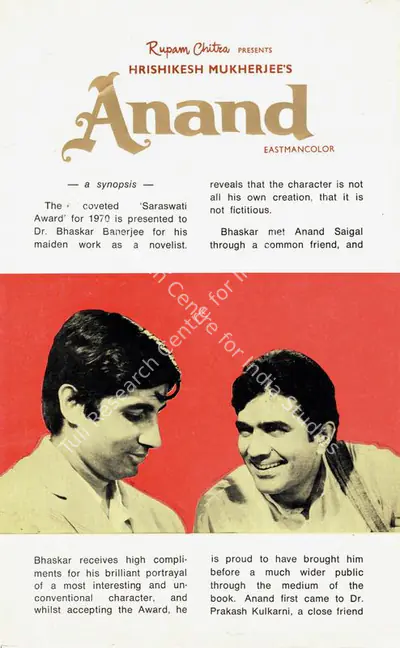
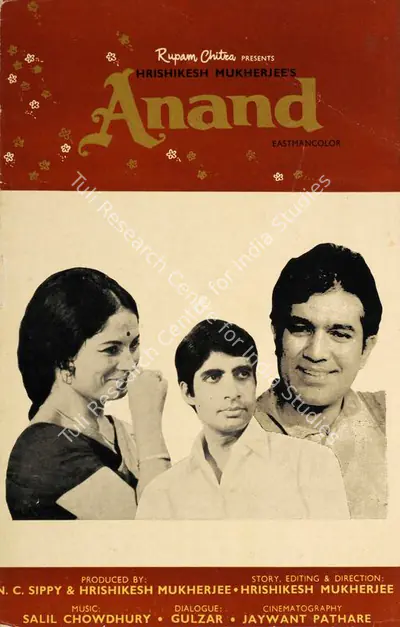
Amitabh was cast as the second lead alongside superstar Rajesh Khanna in Hrishikesh Mukherjee's Anand, released on 12 March 1971. Rajesh Khanna was the winner of the 1965 edition of the All India Talent Contest organised by United Producers and Filmfare, along with Farida Jalal. He went on to achieve superstardom between 1969-1974 giving a series of 15 blockbuster hits starting off with Shakti Samanta's Aradhana in 1969. That kind of stardom was something of an enigma which had been previously unheard or unseen of in the Hindi film industry, probably making Khanna the greatest romantic star, only trumped by the maestro, K.L. Saigal. It has been noted that the crazed adulation and obsessive love he received from his women fans are matters of legend, something that even Bachchan could not achieve at his height of stardom. Anand became a huge success on its release. The film was Amitabh's first release in Bombay, and his character Dr. Bhaskar Banerjee, endearingly called Babu Moshai — a quintessential Bengali form of address used for gentlemen, became quite popular, providing Amitabh with a taste of stardom. For the first time the actor's car was mobbed at a petrol pump in Juhu, on the day of film's release. Bachchan later went on to mention, "Three shows had altered my destiny. I was a transformed man."
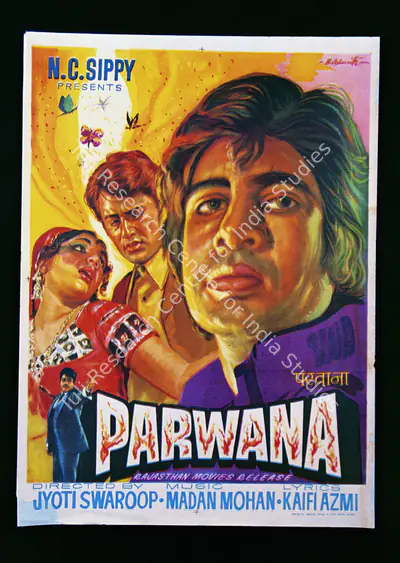
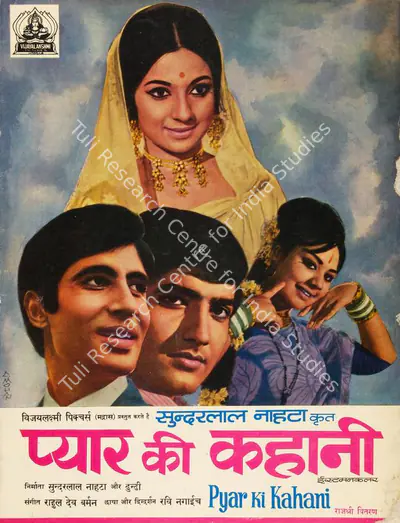
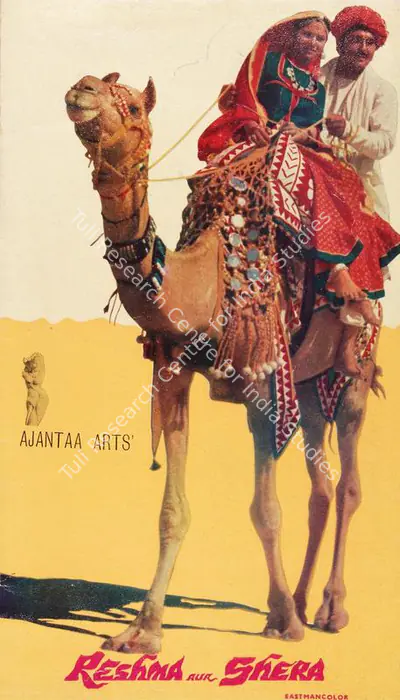
Even after the initial success of Anand, Bachchan was not yet in a position where he could pick and choose his roles, so he grabbed what was offered to him. His next release was Sunil Dutt's directorial Reshma aur Shera, in which he essayed the role of the Thakur's mute son. Released on 23 July 1971, in aid of the Cancer Patients Society, the film could not impress audiences although it was chosen as India's entry to the International Film Festival, San Francisco, 1971 and was selected by the Film Federation of India as India's official entry to the Academy Awards (Oscars) of 1971. The year's releases also included Parwana, in which Bachchan played a grey character, quite early on in his career, and Pyaar Ki Kahani with Tanuja. None of the films though proved to be a commercial success.
Prakash Verma's Bansi Birju, released in 1972, was the story of a courtesan falling in love with a poet, a trope not new in Hindi cinema. While Guru Dutt's Pyaasa (1957) was a dive into the mind of a poet disillusioned by the failures of the world and his encounters with Gulabo, the golden hearted prostitute; Bachchan's Birju marries Bansi, but trouble arises when the village discovers her identity as a prostitute. Shakti Samanta's Amar Prem released in the same year, starring Rajesh Khanna and Sharmila Tagore, looks at the figure of the prostitute through a maternal lens as the characters of Khanna and Tagore never get together romantically but are brought closer through the figure of Nandu, an ill-treated child whom Tagore grows to treat as her own child. Bansi Birju was also the first film of Amitabh Bachchan and Jaya Bhaduri together, who would wed in the course of the next year. Bhaduri who had proved her mettle with films like Satyajit Ray's Mahanagar (1963) and Hrishikesh Mukherjee's Guddi (1971) was notably the bigger star during this time and would go on to work closely in the 'middle of the road' films directed by the likes of Hrishikesh Mukherjee and Basu Chatterjee.
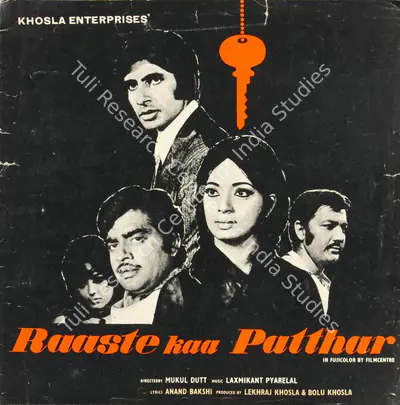
Along with a string of flops with Bansi Birju, Ek Nazar and Raaste Ka Patthar the same year Amitabh Bachchan also starred in S. Ramanathan's Bombay to Goa and S. S. Balan's Sanjog, both a remake of Tamil Films, Madras to Pondicherry (1966) and Iru Kodugal (1969) respectively, which salvaged his standing in the box-office to a certain extent. It was during the shooting of Bombay to Goa, the screenwriting duo Salim-Javed saw Bachchan performing the action scenes of the film and thought of suggesting his name to Prakash Mehra for his forthcoming venture Zanjeer, written by them, a film that would become the starting point of Bachchan's trajectory in the film industry. In a light-hearted anecdote, actor Mehmood reportedly told Mehra, 'He (Bachchan) is so tall that it's difficult to get his duplicate to do fight scenes, so he does them himself.'
Released on 11 May 1973, Zanjeer marked the start of Bachchan's collaboration with Prakash Mehra and also the writers Salim Khan and Javed Akhtar. The duo went on to work in around 7 films together, with genres ranging from serious, to action, to out and out comedy films. With Zanjeer, Amitabh and Jaya Bachchan also forayed into film distribution. According to Bachchan, "Zanjeer was shot at a time when everything I was doing was failing at the box office. There was a great deal of apprehension in the financial market, and amongst the people who had invested money in the project. To their credit, I must say Prakash Mehra and Salim-Javed never once doubted me, or what they expected from me. I was wooing Jaya those days. It was nice to be with someone with whom you knew you were to get together permanently." (Cine Blitz).
A product of its time, Zanjeer started the wave of what came to be known as the Angry Young Man era of Hindi cinema, with Salim-Javed writing the scripts of the uncanny hero in the persona of the common man who takes it upon himself to stand against the injustice of the establishment. Many of these roles were portrayed by Bachchan, sealing his stature as a superstar. It was in the 1970s that the newly re-elected government of Indira Gandhi raised the slogan "Garibi Hatao" in the face of increased inflation, unemployment and widespread political and financial corruption. The period saw a lot of unrestrained anger among the working-class and student uprisings. Bihar saw the revival of retired politician Jay Prakash Narayan, who led the protests against the government. Zanjeer, simulates the anger of the common man turned vigilante standing up against the system he himself is a part of. Both righteous and disillusioned by the system, he grabbed the culprit by the collar and knocked on a dormant conscience. The iconic scene of Bachchan with Pran where his character says the unforgettable line: "Jab tak baithne ko na kaha jaye khade raho. Ye police station hai, tumhare baap ka ghar nahi" (You will not sit till you are asked to. This is a police station not your home!) presented a suppressed rage shared by the audience. The hero was not a romanticised messiah but an everyday figure, rough around the edges, who's beaten down by a predatory social order but chooses to stand against the establishment and speak for his rights and by extension, the rights of every working-class individual. It was the beginning of anti-establishment films where the hero was an anti-hero.
Gehri Chaal released in 1973 portrayed Amitabh Bachchan as the outright villain. The film was shot before Zanjeer and after Seeta aur Geeta. As a result, the distributor insisted that the climax should be only on Hema Malini, who was by then the undisputed top actress. Another release of the year was Saudagar opposite Nutan, which was also India's submission for the Best Foreign Language Film for the 46th Academy Awards. Based on the writer Narendranath Mitra's story Ras, Saudagar is a saga of love, hope and betrayal. The film also sheds light on the unpaid labour of women in marriage. Moti's intention to marry Majubi was only because he wanted to save the jaggery-maker's wage and needed someone who could also take care of the house and when he leaves her to marry the young and innocent Phool Bano, his expectations are broken leading him to go back to Mujabee by the end of the film.
Abhimaan (1973) directed by Hrishikesh Mukherjee, starring Amitabh and Jaya Bachchan was loosely inspired by the 1954 film A Star is Born and went on to become a hit on the box-office and later a classic. Parallels were drawn between Amitabh and Jaya's off-screen equation and the film's plot that revolved around a man's growing insecurity and discomfort with his wife's achievements as a singer. Bachchan's collaborations with Mukherjee mostly portrayed him in roles that strayed from his action hero persona that the audience had grown to recognise. In these films, he rarely lifted a hand, and was rather the egoistical singer envious of his own wife's success in Abhimaan, or the son of the rich businessman in Namak Haraam. Both films were released in the same year as Zanjeer, the film responsible for bringing to life the angry young man of Hindi Cinema.
The 1973 release Namak Haraam, was a continuity of the Anand team with same actors and directors, though with the role reversal in the current instalment. Mukherjee had stated, "In Hindi films the one who dies is considered a hero and Rajesh Khanna and Amitabh were both keen on being heroic. I didn't reveal the end to either of them until the day of shooting. I wanted it to be a secret.” In an interview with the Cine Blitz magazine Bachchan spoke about the importance of Namak Haraam in his film career and stated, “In many ways I consider it to be closer to the 'angry young man' image that would follow later."
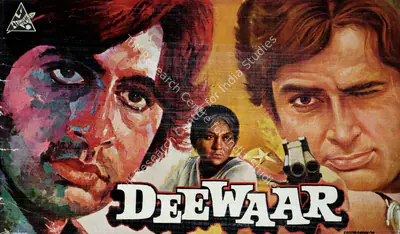
Writers Salim-Javed, introduced the racy Hollywood-type thriller in Deewar but it was done with the archetypical concern for the mother-son relationship that is so crucial to the emotional mooring of the Hindi film. Deewaar became a huge hit running for over 75 weeks in theatres and has earned the status of cult classic. Considered as one of the best screenplays written in Hindi cinema, the film catapulted Salim-Javed to a unique celebrity status never seen before for screenwriters. Their names became the selling point for films being highlighted along with the actor and director.
Legendary producer G.P. Sippy's idea to make the biggest film ever, with Sholay (1975) and to cast the lanky and unconventional looking Amitabh Bachchan catapulted him to the top. Bachchan's characters during this era were not the typical heroes that audiences were used to seeing on screen. Romance in his films became the second fiddle while the main driving force for his characters remained ingrained in the subdued anger of his characters and their quest for justice. In Ramesh Sippy's Sholay, Bachchan, one half of the con duo, Jai and Veeru, is the antithesis of the energetic and charming Veeru played by Dharmendra. He does not engage in extended dialogue with the villain Gabbar Singh treating him instead with extreme condescension. "Sholay was released in 1975, a year after Basu Chatterjee's Rajnigandha. It was made by Ramesh Sippy and featured Amitabh Bachchan, Amjad Khan, Dharmendra, Sanjeev Kumar, Hema Malini and Jaya Bhaduri. The most extraordinary thing about Sholay has been its fabulous success which has made it something of a landmark in Indian film history. Although its textual values were inspired by Amrican spaghetti westerns, it used an idiom that was not only new to Indian audiences but on that indicated the level of cinematic articulation that the Hindi film can achieve."
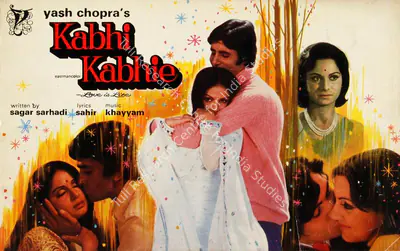
Yash Chopra, who made his directorial debut with the 1959 film Dhool Ka Phool, had announced Kabhi Kabhie, in 1974, with an ensemble cast including Amitabh Bachchan, Rakhee, Shashi Kapoor, Waheeda Rehman, Rishi Kapoor and Neetu Kapoor and started the shoot in Kashmir. During this time, Salim-Javed recited to him the story of a dock worker who rises to be a don, loosely based on the real-life gangster Haji Mastan. Kabhie Kabhie being a complex film was slated for later and Chopra started working on the story with Amitabh and Shashi Kapoor as the two brothers and Nirupa Roy, their mother. Deewaar (1975), a mother-son story based on the lines of Mother India (1957), has since been regarded as one of the best screenplays written in Indian cinema and has gained the status of an important classic.
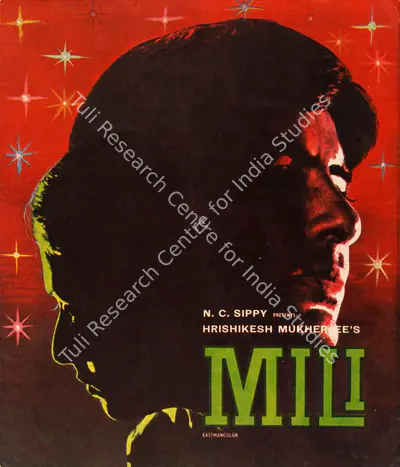
In 1975 Bachchan collaborated again with Hrishikesh Mukherjee in two films, Chupke Chupke and Mili, both alongside his wife Jaya Bachchan. Chupke Chupke released on 11 April 1975 was a remake of the 1971 Uttam Kumar–starrer, Chhadmabeshi, a successful Bengali film directed by Agradoot. The screenplay was jointly adapted in Hindi by D.N. Mukherjee and Gulzar, who gave this film some of its memorable dialogues. The second collaboration of the year, Mili, was released two months after Chupke Chupke. A heartwarming tale of companionship and healing, "Hrishi-da described the film as an antithesis of Anand," stated Amitabh in an interview. Mili proved to be powerful in terms of performances, script, music and direction. This was Amitabh and Jaya Bachchan's third and last film together with their common mentor Hrishikesh Mukherjee as well as with S.D. Burman.
Prakash Mehra's next collaboration with Bachchan was Hera Pheri, a comedy that proved to be extremely successful at the box-office. The film also initiated the actor's pairing with Vinod Khanna, another rising star of the era. They went on to do many films together, including Mehra's Muqaddar Ka Sikandar. The latter was loosely inspired from Sarat Chandra Chattopadhyay's novel Devdas; and became a mega-hit emerging as the biggest earner of the year. Although not necessarily an extreme portrayal of the angry man on the screen, the film had its moments, and the subdued rage of the main character was embodied perfectly by Amitabh.
Announced in 1974, Yash Chopra's Kabhi Kabhie was released in 1976. It followed the usual markers of a Yash Chopra film with a star-studded cast, scenic locations, great music and the trademark romance of the auteur. The film, on release, was a huge success and was shot mostly in Pahalgam, Kashmir; much remembered by Bachchan in his later years. With Kabhi Kabhie Chopra defied sexual mores and created a one-of-a-kind Hindi film hero in Vijay (played by Shashi Kapoor). Contrasting Amitabh's granite-faced toeing of the conservative line in the film, Vijay was refreshingly unconventional and avant grade, a large-hearted man amongst narrow-minded boys. The film's music composed by Khayyam with lyrics written by Sahir Ludhianvi, is considered one of the best of Indian cinema.
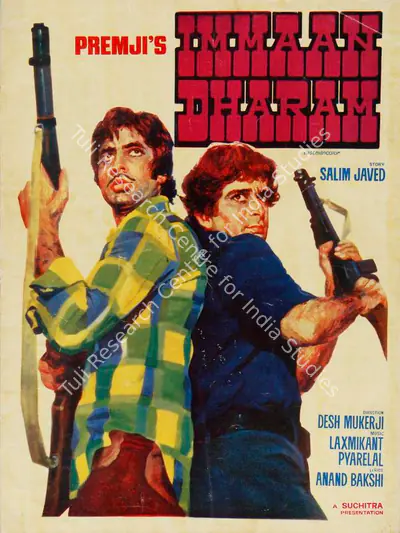
In between the angry young man era of performances, Bachchan also moved away from the archetype created for him in films such as Immaan Dharam and Hera Pheri. Immaan Dharam revolving around two tricksters, played by Bachchan and Shashi Kapoor, features heroes who rise to become good Samaritans, something that Sholay also portrayed with Jai and Veeru. These films anticipated Amitabh as an entertainer, a shift from the broody characters that he was known for playing during that time, giving him a carefree image that Manmohan Desai would soon establish and take to new heights. Another director who took Bachchan and moulded him into characters that were not essentially the saviours but on the contrary, themselves needed to be saved, was Hrishikesh Mukherjee. Even later as producers and directors capitalised on Bachchan's larger than life persona, his collaborations with Mukherjee were melodramas of personal tension between close individuals. Alaap, released in 1977, was a tragic tale of an aspiring singer played by Bachchan and the adopted daughter of legendary singer and Bachchan's mentor, played by Rekha. It was also the first film for which the actor's father, the legendary poet Harivansh Rai Bachchan had penned the lyrics of the song, 'Koi gaata main so jaata' a classic sung by K. J. Yesudas. Mukherjee later mentioned that the original script had a different ending but the gloom of the Emergency had made him pessimistic which reflected in the film and may have led to it not being a commercial hit.
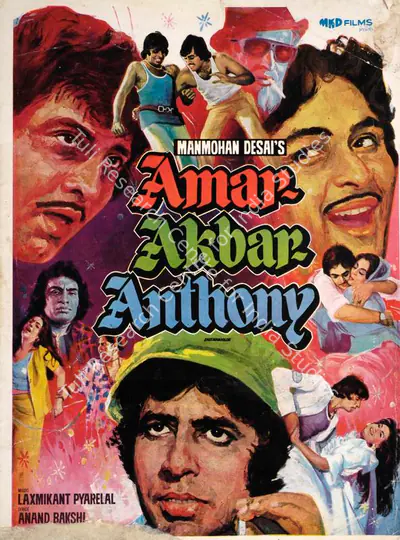
Manmohan Desai and Amitabh Bachchan's first collaboration was the 1977 film Amar Akbar Anthony, starring Vinod Khanna, Rishi Kapoor and Amitabh Bachchan, in the lead roles. Desai's film is a depiction of a Hindi cinema style of syncretism, where references to the nation and appeal for communal amity remain oblique. The film is a testimonial to the limits of the Nehruvian secular nationalism. It explores the religious divide between communities that remains central to national politics. Amar Akbar Anthony's importance was multifaceted, and its success confirmed Bachchan's status as the superstar of the decade. The same year, the one half of the Amar Akbar Anthony team reunited for Desai's Parvarish, a crime drama following similar tropes of lost and found that were a common finding in many of Desai's films.
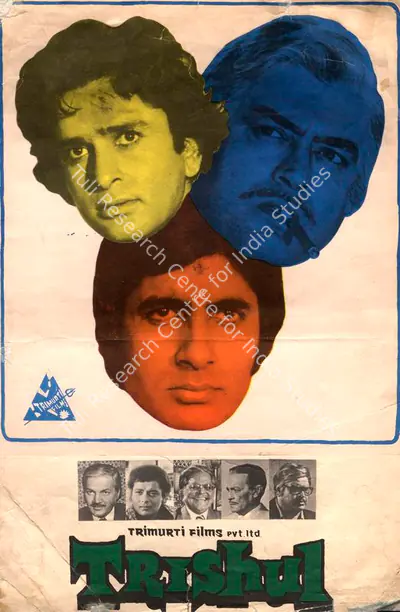
Directed by Yash Chopra and written by Salim-Javed, Trishul (1978) was a quintessential 'angry young man' film, a family revenge saga that combined elements of betrayal, brotherhood, and loyality. The film's idea was later rehashed and used in many films like Uttar Dakshin (1987) and Vansh (1992), but somehow it never had the same impact. Trishul was a blockbuster and the credit went to the extremely gripping and intense script of Salim-Javed. Telling the story of a turbulent relationship between a father and son, the fiery dialogues exchanged between Sanjeev Kumar and Amitabh Bachchan were said to be Akhtar's indirect attacks at his father, Jan Nissar Akhtar. Salim Khan in an interview said that Bachchan's character was probably the first real illegitimate child on the Hindi screen. Unlike the films preceeding this theme, Bachchan's character's anger in this film was more personal as it was a son against his father, instead of a common man against the establishment.
Another Salim-Javed script with Amitabh Bachchan as the lead hero, released in 1978 was Chandra Barot's Don. It was the first time that a hero played a negative character without any justification or a redemption arc. A story of a dangerous criminal, wanted in eleven countries, Bachchan played a double role in the film: as the innocent Vijay and the ruthless criminal, Don. The dialogues by Javed Akhtar became a highlight of the film, with Bachchan's “Don ko pakadna mushkil hi nahi namumkin hai” being iconic even after almost five decades. The film's music composed by Kalyanji-Anandji was used in the Television series American Dad! Episode 'Tearjearker' while the intro of the song 'Yeh Mera Dil' was sampled by Black Eyed Peas for the song “Don't Phunk with my Heart.” A few anecdotes also suggest that the song 'Khaike Paan Banaraswala' was not a part of the original cut of the film. Manoj Kumar had recorded the song for another film but could not use it and suggested his ex-assistant and the director of the film, Chandra Barot, to incorporate it in his film. The song went on to become one of the biggest selling points of the film and was later remade in the remake of the film by Farhan Akhtar in 2006, with Shahrukh Khan portraying the character of Don.
Shakti Samanta's The Great Gambler (1978) saw the director shift from his usual favourite actor Rajesh Khanna to Bachchan for the dual role in this crime action film based on the novel of the same name by Vikramaditya.
Yash Chopra's Kala Patthar brought the era of the angry young man characters played by Amitabh Bachchan to a culminative high. Salim-Javed's writing took inspiration from a real-life incident in Chasnala, Dhanbad, where almost 400 miners lost their lives, and Joseph Conrad's book 'Lord Jim,' a story of a ship's captain who is censured for abandoning his ship, which became the starting point of Bachchan's character, Vijay. Made during the period of major upheaval in the country, which was at the tail-end of post-independence idealism and the aftermaths of the emergency era brought on by Indira Gandhi, the film aptly captured the various facets of this era in Salim-Javed's writing whose 'angry young man' was a direct by-product of the happenings in the country. Though in the later years Bachchan did carry forward this image of the 'angry young man,' in those later outings the anger was more personal and concentrated to the bylines of family and loved ones, it was in Kaala Patthar that both Chopra and Bachchan brought out the societal angst against the system. Possibly the only out and out 'political' film made by Chopra, the film was a commentary on the socialization and nationalization of the country's resources that played a role not only in the self-reliance but also the systematic corruption and looting of those resources along with valuing profit over people's lives.
We again see Amitabh Bachchan the mega-star flirting with middle of the road cinema and real-life characters. This was Bachchan's only film as hero with Basu Chaterjee, though he did cameos in his films like Chhoti Si Baat and Khatta Meetha.
The rumours of the alleged romance between Amitabh Bachchan and Rekha first started during the making of the 1979 film, Mr. Natwarlal. Bachchan also made his singing debut in this film with “Mere paas aao mere doston ek kissa suno”, a song tailor-made for his range by Rajesh Roshan. The lyrics were written by Anand Bakshi, who had all of Bachchan's musical 'firsts' – the first songs lip synched by him, his debut playback song, and the first ABCL film, Tere Mere Sapne, later.
Dostana was the last film by the duo Salim-Javed who were on the verge of a split during the making of this film. It was a turbulent time both on and off screen because even the relationship between the lead stars, Amitabh Bachchan and Shatrughan Sinha, the two protagonists, seemed strained.
Silsila (1981) was Amitabh Bachchan's last collaboration with Yash Chopra, before they collaborated again in 2004 for a special appearance in another Yash Chopra film, Veer Zaara. Starring Bachchan, Rekha and Jaya Bachchan, Silsila was a love triangle written by Sagar Sarhadi and Chopra. Released around the time when the rumours of Bachchan's relationship with Rekha were rampant, many touted the film to be a depiction of the real life story of the three actors, though these claims were denied by all those involved in the film. With music scored by Pandit Hari Prasad Chaurasia and Pandit Shivkumar Sharma, the film's soundtrack was a huge success. The Holi song 'Rang Barse' was penned by Harivansh Rai Bachchan and sung by Amitabh Bachchan. It was the biggest hit of the album and remains one of the most popular Holi songs to date.
Shakti, released in 1982, was one of the last films of Bachchan's angry young man era and also Salim-Javed's last film as a duo with Amitabh. It was the only time he shared the screen with the legendary actor Dilip Kumar playing the role of his father.
The 1982 film Satte Pe Satta was an adaptation of the 1954 musical-comedy film, Seven Brides for Seven Brothers directed by Stanley Donen. While the director had no problems putting 13 pairs in place he could not find the perfect partner for Bachchan. They toyed with various names but kept coming back to Hema Malini. Malini had stopped signing new films because she was pregnant at the time. Sippy met Hema and convinced her that he would complete the film in a few months.
Amitabh Bachchan's last film with director Hrishikesh Mukherjee was released on 5 March 1982, and had a repeat cast from the director's previous film, Jurmana. Based on the 1975 Bengali film, Ami Shey O Shakha, an Uttam Kumar classic based on Ashutosh Mukherjee's eponymous novel; Bemisal featured Bachchan in a double role. Poignantly, the title of the last ever Amitabh Bachchan-Hrishikesh Mukherjee collaboration epitomizes the quality of their association and joint contribution. A deserving end to their decade old relationship, the film went on to complete a silver jubilee at the box-office and was declared a hit. Mukherjee mentioned in an interview, "On the day we were to shoot his last scene, he met with that fateful accident on the sets of Coolie so the scene was eventually shot after a gap of few months." Mukherjee was also the editor of Manmohan Desai's Coolie (1983).
The year marked one of the most defining periods of Amitabh Bachchan's life. While shooting for the Manmohan Desai and Prayag Raj directorial venture Coolie, the actor was involved in a near fatal accident while performing a stunt scene with Puneet Issar, on 26 July 1982. The accident and the subsequent surgery was testament to Bachchan's popularity as a star, as crowds of fans thronged the hospital and organised prayers for the actor's well-being. He was released from the hospital after spending around 2 months in the ICU. In the same year, Bachchan also starred in another Manmohan Desai film, Desh Premee.
Coolie, directed jointly by Manmohan Desi and Prayag Raaj, released on 2 December 1983. The film opened to a fan frenzy, with many people even sleeping on pavements outside the theatres to watch their favourite star in the film which had nearly cost him his life. The scene of his accident was immortalised by the director with a freeze frame within the film during the sequence in which Bachchan meets with the accident. Coolie had a 75-week run at the box-office becoming one of the biggest hits of the year.
Mard was Amitabh Bachchan's last collaboration with Manmohan Desai and was released on 1 November 1985. The success of the film was a deserving end to the collaboration that lasted over 8 films, all of which were a perfect blend of Desai's unusual storytelling and Bachchan's larger than life persona and superstardom. The film incorporated in it all the tropes of a typical bollywood masala film, with the unique touches of Desai's storytelling sensibilities. Bachchan's Raju is found at the orphanage and adopted by a blacksmith couple who then later finds his mother, played by Nirupa Roy and the supposedly dead father, Azad Singh. Animals also make an appearance in the film, playing pivotal roles in the climax in the figure of Raju's trusted horse and Moti, the dog.
Prakash Mehra's last film with Amitabh Bachchan, Jaadugar, released on 25 August 1989, close on the heels of Toofan. Both films had Bachchan playing the role of a magician. The similarity in the plot and a poorly done climax for Mehra's film led to the failure of both films. Bachchan was also berated for not informing the producers and directors about the similarities in the two characters portrayed by him. This caused a fallout between Mehra and Bachchan, who did not collaborate on any films after this.
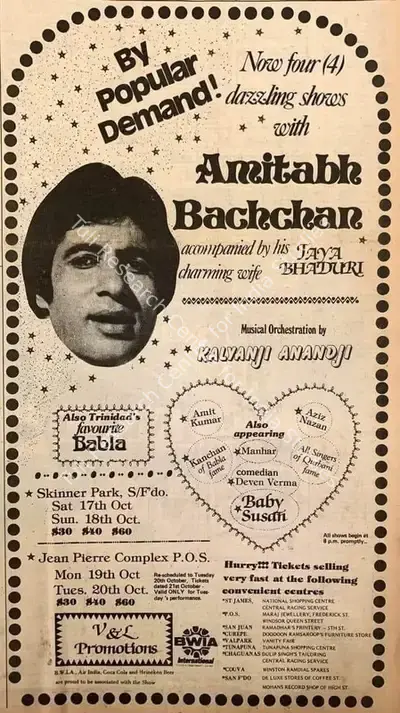
Hrishikesh Mukherjee's film Jurmana starring Amitabh Bachchan boasted of an exceptional soundtrack with the song 'Saawan Ke Jhoole Pade' being the most notable. It was during the film's premiere in Los Angeles that the film's distributor Kirti Trivedi had the idea of organising concerts featuring Bollywood stars. The premier saw a footfall of around 2,000 people on a week-day, showcasing the popularity of Hindi film stars. Trivedi thought that this popularity could be translated into the hosting of successful stage shows. Amitabh Bachchan appeared as the chief guest for Lata Mangeshkar's concert in the USA (1980), at the behest of Kirti Trivedi and director Prakash Mehra for the promotion of the song, 'Mere angne mein' from the film Laawaris, which was received with a thunderous applause. On sensing a bright opportunity, Kirti Trivedi flew to India to discuss the possibilities of organising live shows with Kalyanji-Anandji, the composers of the above-mentioned song.
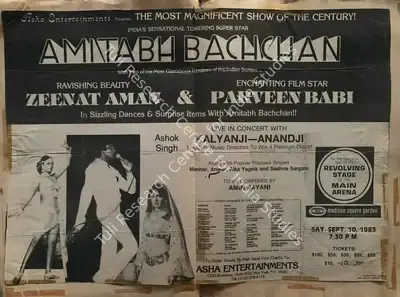
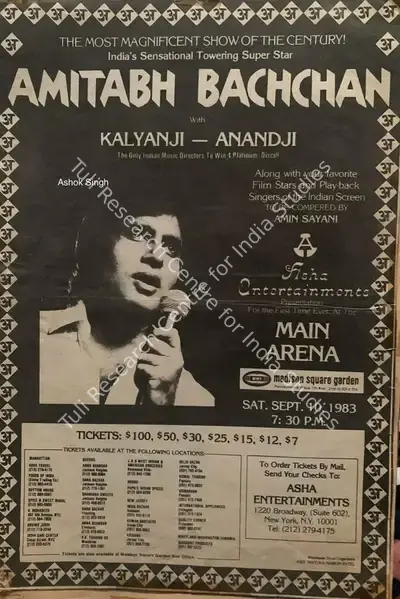
1981-1983 saw Amitabh Bachchan's rise as a performer in stage shows, accompanied with the music directors Kalyanji-Anandji. Between this time he did 25 such performances with each setting a new record. Bachchan's journey as a concert star began with nine shows, one each at Houston, New York, Toronto, Chicago and Detroit, and four in the West Indies. The response was phenomenal. The footfall at the Houston show, on a weekday, crossed 3,300, an unprecedented record at that time for a Hindi film star! People drove from as far as Dallas to attend the concert. In October 1983, Bachchan became the first Asian to perform at Madison's main arena with a capacity of 22,000 people. The show at Madison Square Garden, New York, broke Frank Sinatra's record of $100,000 collections with an impressive $125,000! Such was the craze that $50 tickets were sold in black for $60!
1984 was a tumultous year in India's history. Prime Minister Indira Gandhi's assassination and subsequent pogroms sent the whole country into a state of frenzy. Amitabh Bachchan, a close family acquaintance to the Gandhis chose to stand by his childhood friend Rajiv Gandhi in this time of upheaval. He contested the Lok Sabha elections from the Allahabad constituency, his hometown, on a Congress ticket. This was Bachchan's first foray into the world of politics. Contesting against the Chief Minister of Uttar Pradesh, Hemvati Nandan Bahuguna of the Lok Dal party, Amitabh emerged the winner with a decisive 1,88,000 votes.
In 1987, V. P. Singh, the then Defence Minister, had appointed an American detective agency, Fairfax, to investigate the illegal stashing of foreign exchange in overseas banks by Indians. This investigation brought forward the name of Ajitabh Bachchan, Amitabh Bachchan's brother. Ajitabh sued the Swedish newspaper for defamation and won damages in the United Kingdom in 1990. The Bofors Scandal of 1987 between India and Sweden, brought accusations of several politicans receiving kickbacks from the arms manufacturing company Bofors AB, including Amitabh Bachchan. In lieu of the controversy, Bachchan resigned from his seat in August 1987, never to return to politics again. The controversy had also affected the star's screen image as his popularity hit an all time low.
Amitabh Bachchan was once again linked to politics after a gap of more than 15 years after his wife Jaya Bachchan was elected as the Member of Rajya Sabha from the Samajwadi Party. Acclaimed politician and friend, Amar Singh belonging to the Samajwadi Party had helped the actor during the faliure of his production house ABCL (Amitabh Bachchan Corporation Limited). Bachchan appeared in advertisements and political campaigns of the party.
Mukul S. Anand's 1990 film Agneepath featured Amitabh Bachchan playing the character of Vijay Dinanath Chauhan; a young man on the path of vengeance from the local underworld don, Kaancha Cheena, for his father's death. The title of the film was inspired from the poet Harivansh Rai Bachchan's famous poem Agneepath, likely published in the mid 1970s, and is referenced during the course of the film. Anand echoed the sensibilities seen in previous Bachchan roles, creating a character reminiscent of his collaborations with the 1970s greats such as Manmohan Desai, Prakash Mehra and Ramesh Sippy. He paid homage to the Bachchan mythology and all the tropes that had gone into the making of Big B's superstar persona, riding on the success of his 1970s cinematic touchstones. In an interview Bachchan claimed, “I had taken great effort to alter my voice for the character but the initial feedback to the altered voice was negative, and the distributors panicked so I had to overnight redub the entire film in my original voice. But later, wherever I travelled for my shows, I was always requested to speak in the Agneepath voice.”
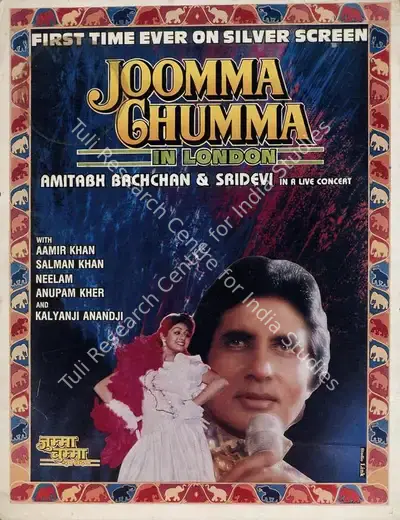
Kimi Katkar was the new generation replacement for Amitabh Bachchan's earlier Westernized heroines like Zeenat Aman and Parveen Babi. The chart-topper "Jumma chumma de de" re-invented Bachchan as being sexy even at 50. The song resurrected the career of singer Sudesh Bhosle but also limited his career hereafter. For a long time he remained just Bachchan's voice until both Bachchan and he sought to find different alter egos. Few people know that this Laxmikant-Pyarelal composition was based on a Mory Kante African number brought by Bachchan to the music composers. A one of its kind concert, Jumma Chumma, was launched with music composers Kalyanji-Anandji and featured stars such as Amitabh Bachchan, Sridevi, Aamir Khan, Salman Khan, Neelam Kothari and Anupam Kher among others. Jumma Chumma released on 10 May 1991 in London.
Playback singer Sudesh Bhosle was introduced to Amitabh Bachchan by Shashi Kapoor at the recording of the song Ya Ali Ya Ali, from the film Ajooba, directed by Kapoor. Bachchan recommended Bhosle to Romesh Sharma, the producer of Hum and it was a co-incidence that Hum was released before Ajooba. It is said that producer-director Shashi Kapoor was keen that Raj Kapoor (who had done a cameo in the song "John Jani Janardhan" in Naseeb with Bachchan) play the role of his father but Raj Kapoor could not do it due to ill health, so Shammi Kapoor stepped in instead. Ajooba was also Bachchan's first film with Dimple Kapadia.
Khuda Gawah marked an important curve in Amitabh Bachchan's career. It was the last of his trilogy with director Mukul S. Anand. It is said that many years ago, Bachchan was very moved by the character of Balraj Sahni in Kabuliwallah (1961). Later, while shooting Zanjeer (1973), he was as attracted by the character of Pran and determined that some day he would play a Pathan in his film. The film was shot in Afghanistan. After Kamal Haasan, Rajnikanth and Aravind Swamy, who played the lead in Bachchan's home production Saat Rang Ke Sapne (1998), this was yet another film with a southern co-star, Nagarjuna. After the film, Bachchan took a 5-year sabbatical from his acting career.
Amitabh Bachchan launched his dream venture ABCL (Amitabh Bachchan Corporation Limited) merging it with Jaya Bachchan's Saraswati Audiovisuals, which had previously produced the Hindi sitcom Dekh Bhai Dekh (1993). The company diversified into film distribution, film production, music and other musical events. The music label named Big B! distributed the music of Mani Ratnam's Bombay (1995) and Shekhar Kapur's Bandit Queen (1996). Tere Mere Sapne released in 1996 and marked ABCL's entry into Hindi film production. The film included several newcomers and became a huge hit. In the same year, the company held the Miss World pageant in Bangalore on 23 November 1996. Getting the event to India was a huge task and it put the company in a lot of financial trouble. Bachchan made his comeback to the film screens with the 1997 film Mrityudaata, produced under the ABCL banner.
ABCL's (Amitabh Bachchan Corporation Limited) next production was Bachchan starrer Major Saab, which too failed to perform well at the box-office. The only success that year for Bachchan as an actor was David Dhawan's Bade Miyan Chhote Miyan, alongside Govinda. The film was a superhit and redeemed the actor's standing at the box-office to a certain extent. Incurring major financial losses due to failed production ventures, ABCL approached the Board of Industrial and Financial Reconstruction (BIFR) in March 1999.
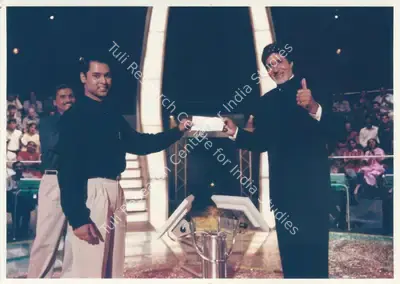
The year also marked Bachchan's entry to television with the game show Kaun Banega Crorepati?, the Indian version of Who Wants To Be A Millionaire? The show debuted on television screens on 3 July 2000, and turned the fortunes for both Star TV, the broadcaster, and Bachchan. The actor has since hosted all the seasons of the show, barring the third season, which was hosted by Shah Rukh Khan. The show catapulted Bachchan to household popularity once again. He was honoured as Superstar of the Millennium (2000) by Filmfare.
Amitabh Bachchan reunited with the Yash Raj Films banner after 19 years, their last collaboration being Silsila (1981), for Mohabbatein directed by Aditya Chopra. Cast as the strict disciplinarian principal of the Gurukul Academy, Bachchan's portrayal was widely acclaimed providing a new path to the actor's career, as a supporting but strong character presence in films. In an interview Bachchan said, "I was on a long sabbatical and unable to decide what roles I should pick. Then one morning after a lot of deliberation I walked across to Yash Chopra's house and told him that I didn't have work and needed a job. He offered me this film." The film proved to be a game changer for the actor and possibly the start of a new innings of his acting career.
After the moderate success of Ek Rishtaa: A Bond of Love and Aks, Bachchan's biggest hit of the year was Karan Johar's family drama, Kabhi Khushi Kabhie Gham, released on 14 December 2000. The film boasted an eminent star cast across three generations of a family, with Amitabh Bachchan and Jaya Bachchan reuiniting on screen after a long break. The film also featured prominent stars such as Shah Rukh Khan, Kajol, Hrithik Roshan and Kareena Kapoor. The film became one of the highest grossers of the decade and has acquired a classic status over the years as an icon of pop-culture for the Indian diaspora audience. Bachchan was awarded with the third-highest civilian honour, presented by the Government of India, the Padma Bhushan in 2001. The same year, he also became the first living Asian to be modelled in wax at Madame Tussauds, London.
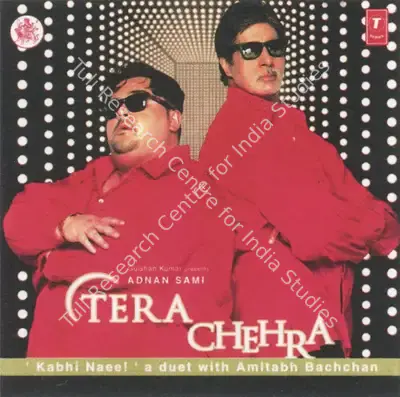
The resurgent career of the actor provided him the opportunity of choosing roles with substance without being typecast. In 2002, his films included a stylised thriller Aankhen that had Bachchan playing the role of a vindictive bank manager planning a bank robbery with the help of three blind men. The film retained shades of the angry young man persona of the actor and proved to be a box-office hit. The same year he also sang and appeared in a music video 'Kabhi Nahi' with Adnan Sami, produced by T-Series.
The biggest highlight of the year was Ravi Chopra's Baghban, that paired Amitabh Bachchan with Hema Malini. Cast as the retired bank manager, Bachchan's heartfelt portrayal of an ageing father and his chemistry with Hema Malini touched the audience's heartstrings. Bachchan's character's final speech in the film was penned down by writer and lyricist Javed Akhtar and the speech for Salman Khan's character, who plays his adoptive son, was written by Salim Khan. It was considered as the last unofficial collaboration of the legendary duo Salim-Javed, who were creators of some of Bachchan's most iconic on-screen characters.
Amitabh Bachchan and Yash Chopra collaborated again after a long gap of 23 years for the Chopra directorial, Veer Zara. After the success of Baghban released in the previous year, the hit pair of Amitabh Bachchan and Hema Malini, were cast in a special appearance as the guardians of Veer (character played by Shah Rukh Khan). Bachchan's portrayl as Chaudhary Sumer Singh was highly appreciated and so was his chemistry with Hema Malini. This would be the last collaboration between Chopra, who had limited his directorial ventures, and Bachchan, before the former's demise in 2012.
Amitabh collaborated with his son twice in the year, first in Shaad Ali's Bunty Aur Babli with Abhishek Bachchan and Rani Mukherjee in the titular roles respectively. The duo were seen playing father and son once again in Ram Gopal Verma's political drama Sarkar, loosely inspired by the 1972 Francis Ford Cappola's film The Godfather, which itself is based on the eponymous novel by Mario Puzo. Karan Johar's Kabhi Alvida Na Kehnaa, featured Amitabh and Abhishek playing father-son again in 2006. Amitabh also received an honorary Doctorate of Arts by De Montfort University, Leicester, UK, for his contribution to the Indian film industry.
Sanjay Leela Bhansali's Black featured Bachchan in the role of 'Debraj Sahai' an unconventional teacher to the deaf-blind girl Michelle McNally (portrayed by Rani Mukherjee). A review in IANS read, "'The film actually belongs to Amitabh Bachchan. It's impossible to imagine any actor playing Debraj, the tutor of manic proportions raging into the darkness like a Shakespearean tragic hero. To say this is Bachchan's finest ever isn't enough. For, what he has done with his character in Black is to endow Indian cinema with a flavour of flamboyant excellence, unparalleled by anything we've seen any actor from any part of the world do or say … I say 'say' because the way Bachchan has used that well known baritone, has to be heard to be believed. Dropping his voice to a whisper, he raises it again to challenge destiny, and toast immortality."
In 2007, Amitabh Bachchan starred in two films that dealt with highly unconventional topics in Hindi cinema. Directed by Ram Gopal Verma, Nishabd released on 2 March 2007, exploring the complex relationship between a married middle-aged man and his daughter's friend. Inspired by Valdimir Nabokov's Lolita, Bachchan played the role of a photographer in his 60s, who falls in love with an 18 year old girl played by Jiah Khan. The film garnered extreme responses from critics, with some hailing it as being an extraordinary film, while others panned the subject brutally. His next release of the year was R. Balki's Cheeni Kum starring him and Tabu. Yet another unusual romance, the film is the story of a 64 year old chef, Buddhadev Gupta who falls in love with a 34 year old software engineer, Nina Verma. The film did well at the box-office and the sparkling chemistry between Bachchan and Tabu was highly praised.
Ram Gopal Verma and Amitabh Bachchan collaborated again in 2007 for the film, Ram Gopal Verma Ki Aag, a remake of the actor's own blockbuster film, Sholay (1975). The film was an absolute disaster, with Bachchan playing the role of a gangster. The film was considered to be the most universally panned remake ever! In a later interview Verma stated, “When I was making RGV Ki Aag, if someone had asked me, 'Will it be as good as Satya?' I was just trying to do a gimmicky version of Sholay. If someone had seriously asked me that question, I'm not sure I would have been able to answer.”
Amitabh Bachchan starred in Rituparno Ghosh's The Last Lear, which is considered as being one of his best performances ever. The film had its international premiere at the Toronto Film Festival on 9 September 2007 and was released worldwide a year later on 12 September 2008. It won the National Film Award for Best Feature Film in English that year.
R. Balki directorial Paa, had Amitabh Bachchan playing arguably one of his most challenging roles. Dealing with a complex father-son relationship, Paa reversed the real life roles of Amitabh and Abhishek. Amitabh played the role of Abhishek's son Auro, suffering from a rare gentic condition called progeria. The role won him his second National Award for Best Actor that year.
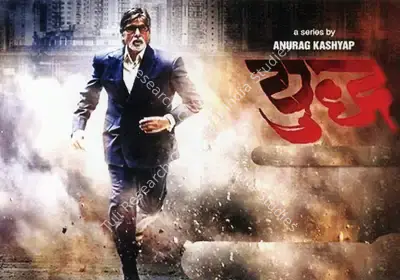
Amitabh Bachchan starred in his first and his only Hollywood film to date, The Great Gatsby directed by Baz Luhrmann. Bachchan received a lot of praise for his performance as Meyer Wolfsheim. He also received the Global Diversity Award from the British Parliament in the same year. Yudh directed by Ribhu Dasgupta marked Bachchan's debut on the TV screen as an actor. Released on 14 July 2014, the limited series had a star cast which included Sarika, Zakir Husain, Mona Vasu, Tigmanshu Dhulia, Kay Kay Menon, Kanika Dang and Nawazuddin Siddiqui.
By the mid to late 2010s, Amitabh Bachchan, the stalwart of the Indian film industry completed his five-decade run in the Indian film industry with a career that saw the biggest of highs to the lowest of lows, with him being possibly the only superstar to have seamlessly transitioned to age-appropriate roles. From 2015-2018, he collaborated thrice with director Shoojit Sarkar, with each film bringing out a different aspect of the actor's work. The 2015 film Piku featured him playing the role of an eccentric yet doting Bengali father to Deepika Padukone. The 2016 courtroom drama Pink featured him in the role of a lawyer who returns for one last battle to defend the three women who find themselves at the receiving end of male ire and social prejudices. The 2020 film Gulabo Sitabo became the first Amitabh Bachchan film to be released directly on a streaming platform skipping theatrical release, in the wake of the 2020 Coronavirus pandemic outbreak.
In the year 2022, Amitabh was credited for eight films of which two were guest roles (Fakt Mahilao Maate and Chup: Revenge of the Artist) and one film, in which he was the narrator (Radhe Shyam).
Amitabh Bachchan's latest release is Nag Ashwin's Kalki 2898 AD. A post-apocalyptic film set in the year 2898 AD, the film is inspired from Hindu scriptures with Bachchan portraying the role of Ashwatthama (the mythological son of sage warrior Dronacharya and an ally to the Kauravas during the battle of Mahabharatha). Bachchan, now past 80 years of age, is wildely regarded as one of the most influential actors of Indian Cinema and a cultural icon, working actively in films and television.

Economics of Cinema

  1. 1970

    1. Saraswati Award
  2. 1972

    1. Filmfare Award

      Best Supporting Actor · The Times Group

  3. 1974

    1. Filmfare Award

      Best Supporting Actor · The Times Group

  4. 1976

    1. BFJA Awards

      Best Actor (Hindi) · Bengal Film Journalists Association

  5. 1978

    1. Filmfare Award

      Best Actor · The Times Group

  6. 1979

    1. Filmfare Award

      Best Actor · The Times Group

  7. 1980

    1. Awadh Samman

      Government of Uttar Pradesh

  8. 1984

    1. Padma Shri

      Government of India

  9. 1989

    1. Lifetime Achievement Award

      Rotary Club Bombay

  10. 1990

    1. National Film Award

      Best Actor · Government of India

  11. 1991

    1. Filmfare Award

      Lifetime Achievement Award · The Times Group

    2. Order of AfghanistanInternational

      Government of Afghanistan

  12. 1992

    1. Filmfare Award

      Best Actor · The Times Group

  13. 1994

    1. Yash Bharti

      Government of Uttar Pradesh

  14. 1997

    1. Distinguished Alumni

      Central University

  15. 1998

    1. Omega Award for Excellence

      Lifetime Achievement Award

  16. 1999

    1. BBC Online Poll

      Greatest Star of Stage or Screen of the Millennium · BBC Network

  17. 2000

    1. Filmfare Award

      Superstar of the Millenium · The Times Group

    2. International Indian Film Academy Awards

      IIFA Special Honorary Award · Wizcraft International Entertainment Pvt Ltd

    3. Indian Television Awards

      Screen Videocon Awards: Best Anchor

20 of 217
20 of 53

Research Centre
Unknown (Organiser), Unknown (Organiser), Amitabh Bachchan's Concert accompanied with Jaya Bhaduri | Advertisement, c. 1990, Advertisement
Unknown (Organiser), Amitabh Bachchan's Concert accompanied with Jaya Bhaduri | Advertisement, c. 1990
View full record
Unknown (Organiser), Unknown (Organiser), Amitabh Bachchan with Zeenat Aman and Parveen Babi | Advertisement, c. 1990, Advertisement
Unknown (Organiser), Amitabh Bachchan with Zeenat Aman and Parveen Babi | Advertisement, c. 1990
View full record
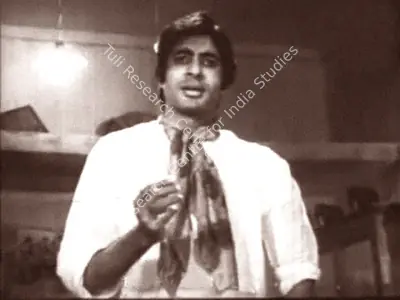
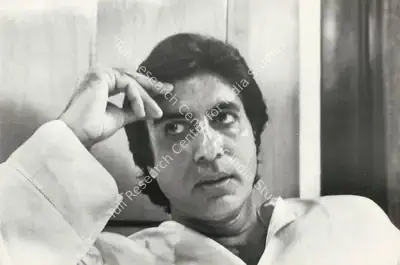
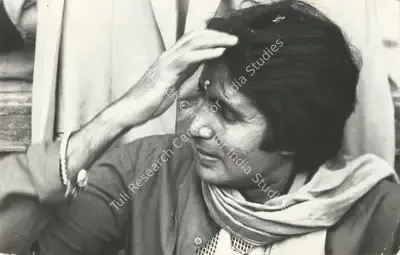
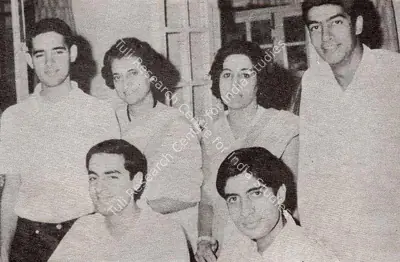
Unknown (Still Photographer), Amitabh Bachchan, Photographic Still
Unknown (Still Photographer), Amitabh Bachchan | Photographic Still
View full record
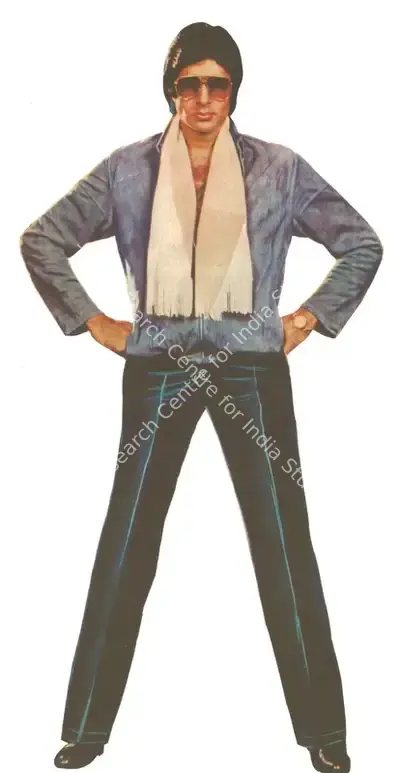
Unknown (Artist), Unknown (Artist), Cut-out of Concert LP | Original Artwork, 1982, Original Artwork
Unknown (Artist), Cut-out of Concert LP | Original Artwork, 1982
View full record
Unknown (Still Photographer), Unknown (Still Photographer) | Photographic Still, Photographic Still
Unknown (Still Photographer) | Photographic Still
View full record
Unknown (Still Photographer), Amitabh Bachchan, Photographic Still
Unknown (Still Photographer), Amitabh Bachchan | Photographic Still
View full record
Unknown (Artist), Unknown (Artist), Poster of the play The Government Inspector | Theatre Related Document, October 1975, Theatre Related Document
Unknown (Artist), Poster of the play The Government Inspector | Theatre Related Document, October 1975
View full record
Unknown (Still Photographer), Amitabh Bachchan, Photographic Still
Unknown (Still Photographer), Amitabh Bachchan | Photographic Still
View full record
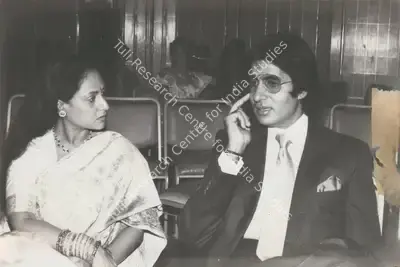
Unknown (Still Photographer), Amitabh and Jaya Bachchan, Photographic Still
Unknown (Still Photographer), Amitabh and Jaya Bachchan | Photographic Still
View full record
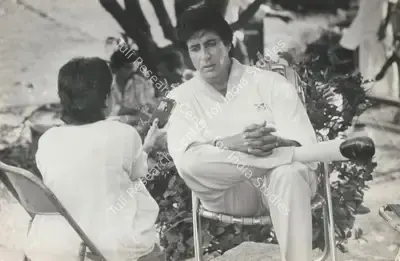
Unknown (Still Photographer), Kaun Banega Crorepati, Photographic Still
Unknown (Still Photographer), Kaun Banega Crorepati | Photographic Still
View full record
Unknown (Organiser), Unknown (Organiser), Jumma Chumma Concert | Advertisement, 1991, Advertisement
Unknown (Organiser), Jumma Chumma Concert | Advertisement, 1991
View full record
Unknown (Still Photographer), Unknown (Still Photographer) | Photographic Still, Photographic Still
Unknown (Still Photographer) | Photographic Still
View full record
Unknown (Producer), Unknown (Producer), Yudh | Poster, 2014, Poster
Unknown (Producer), Yudh | Poster, 2014
View full record
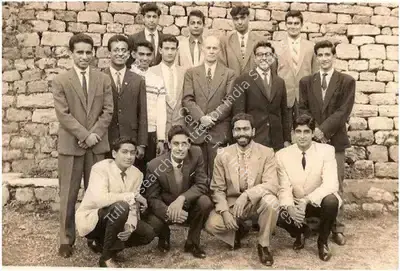
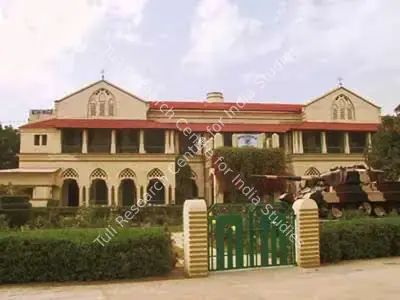
Unknown (Still Photographer), Boys High School, Allahabad, Photographic Still
Unknown (Still Photographer), Boys High School, Allahabad | Photographic Still
View full record
T-Series (Record Company), T-Series (Record Company), Tera Chehra | Record Cover, 2002, Record Cover
T-Series (Record Company), Tera Chehra | Record Cover, 2002
View full record
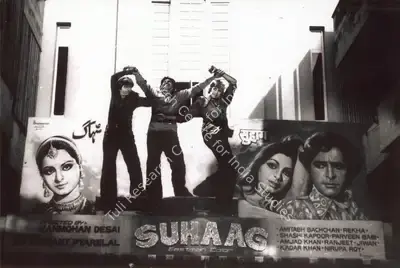
Unknown (Still Photographer), Unknown (Still Photographer) | Photographic Still, Photographic Still
Unknown (Still Photographer) | Photographic Still
View full record
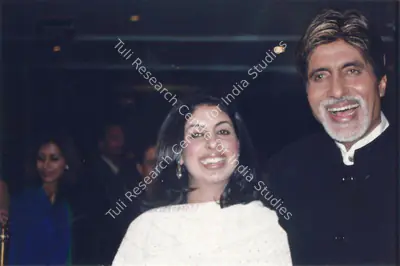
Unknown (Still Photographer), Amitabh and Shweta Bachchan, Photographic Still
Unknown (Still Photographer), Amitabh and Shweta Bachchan | Photographic Still
View full record
Unknown (Still Photographer), Unknown (Still Photographer) | Photographic Still, Photographic Still
Unknown (Still Photographer) | Photographic Still
View full record
Unknown (Organiser), Unknown (Organiser), Amitabh Bachchan with Kalyanji-Anandji | Advertisement, c. 1990, Advertisement
Unknown (Organiser), Amitabh Bachchan with Kalyanji-Anandji | Advertisement, c. 1990
View full record
Unknown (Photographer), Boys High School, Allahabad, Contemporary Photograph
Unknown (Photographer). Boys High School, Allahabad, n.d. | Contemporary Photograph
View full record
20 of 2,094
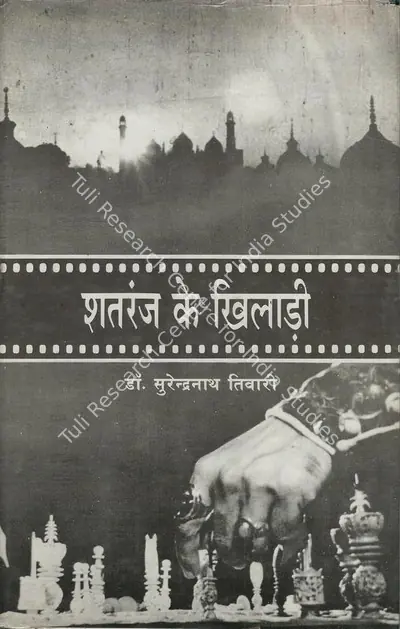
Surendra Tiwari (Author), Shatranj Ke Khilari, Authored Book
Tiwari, Surendra (Author). Shatranj Ke Khilari, n.d. | Authored Book | 00166836
View full record
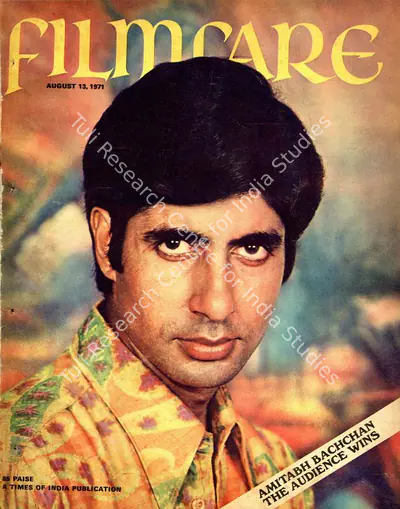
B.K. Karanjia (Editor), Filmfare, 1971, Magazine
Karanjia, B.K. (Editor). Filmfare, 13 August 1971 | Magazine | 00793459
View full record
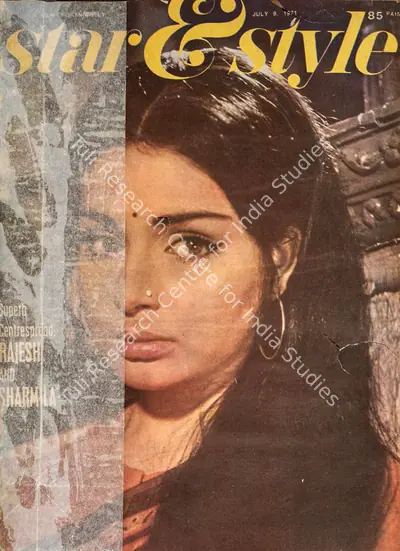
Gulshan Ewing (Editor), Star & Style, 1971, Magazine
Ewing, Gulshan (Editor). Star & Style, 9 July 1971 | Magazine | 00808509
View full record
Gulshan Ewing (Editor), Star & Style, 1971, Magazine
Ewing, Gulshan (Editor). Star & Style, 9 July 1971 | Magazine | 00808509
View full record
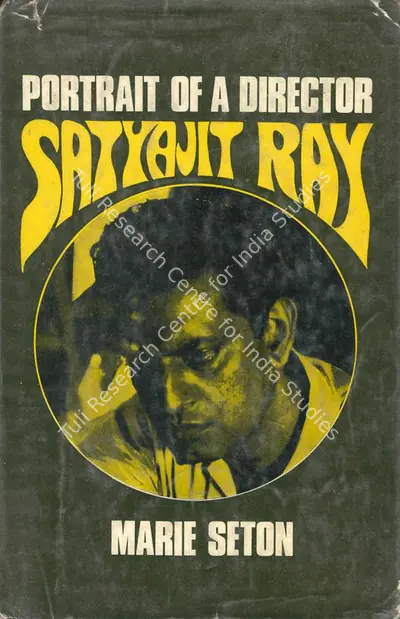
Marie Seton (Author), Portrait of a Director Satyajit Ray, 1971, Authored Book
Seton, Marie (Author). Portrait of a Director Satyajit Ray, 1971 | Authored Book | 00169742
View full record
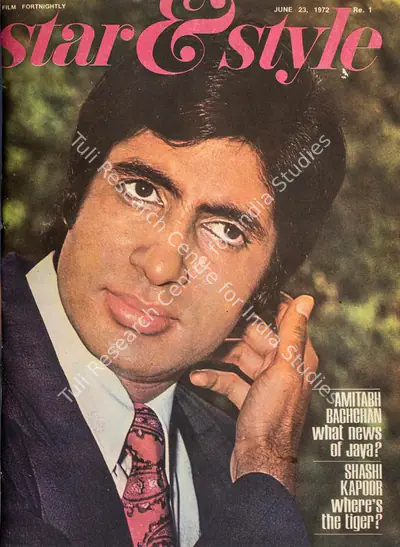
Gulshan Ewing (Editor), Star & Style, 1972, Magazine
Ewing, Gulshan (Editor). Star & Style, 23 June 1972 | Magazine | 00808533
View full record
Gulshan Ewing (Editor), Star & Style, 1972, Magazine
Ewing, Gulshan (Editor). Star & Style, 23 June 1972 | Magazine | 00808533
View full record
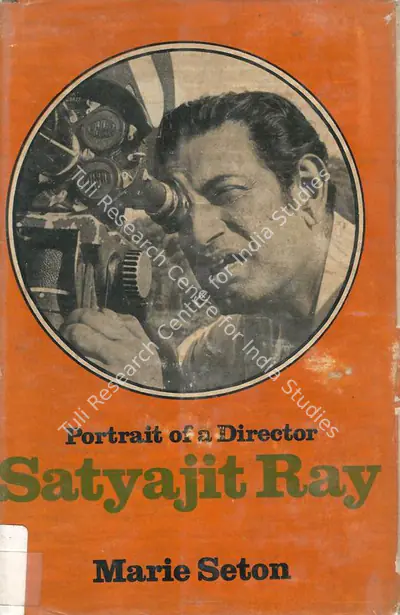
Marie Seton (Author), Portrait of A Director Satyajit Ray, 1972, Authored Book
Seton, Marie (Author). Portrait of A Director Satyajit Ray, 1972 | Authored Book | 00169758
View full record
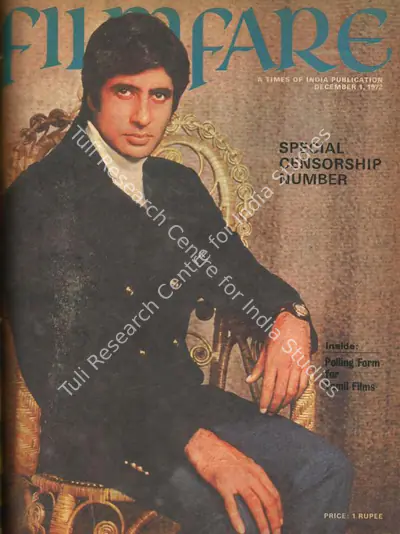
B.K. Karanjia (Editor), Filmfare, 1972, Magazine
Karanjia, B.K. (Editor). Filmfare, 01 December 1972 | Magazine | 00793493
View full record
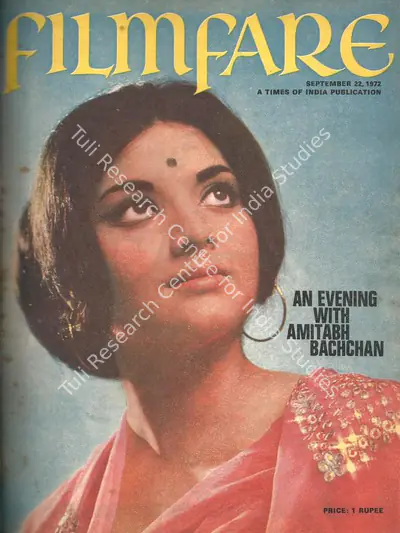
B.K. Karanjia (Editor), Filmfare, 1972, Magazine
Karanjia, B.K. (Editor). Filmfare, 22 September 1972 | Magazine | 00793488
View full record
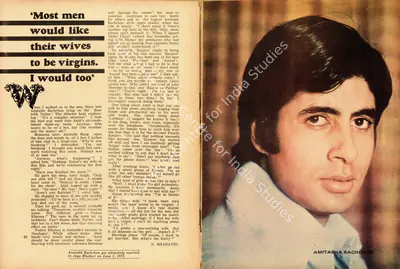
N. Bharathi (Interviewer), Most men would like their wives to be virgins. I would too', 1973, Conversation
Bharathi, N. (Interviewer). Most men would like their wives to be virgins. I would too'. In Sunday. 24 June 1973 | Conversation | 00802274
View full record
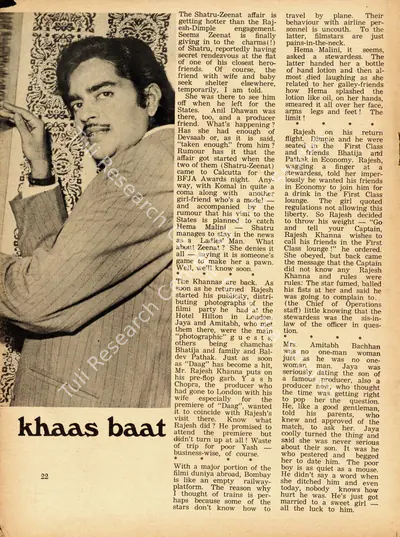
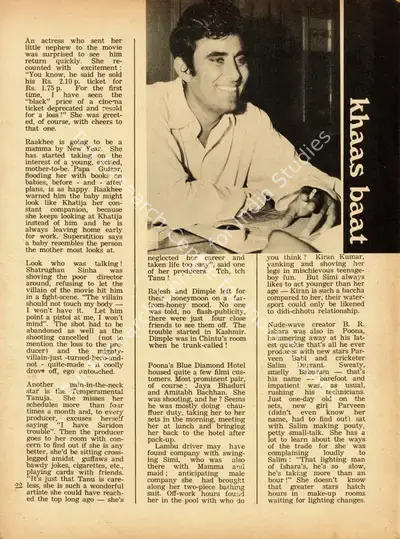
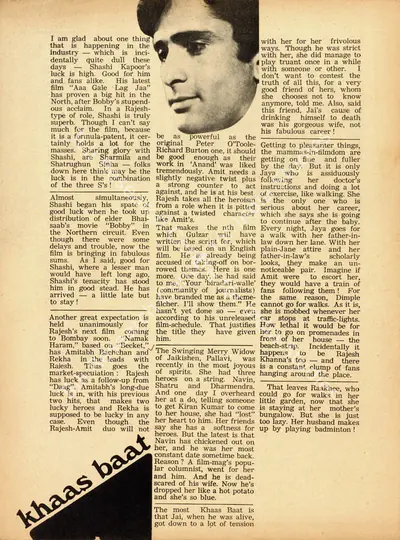
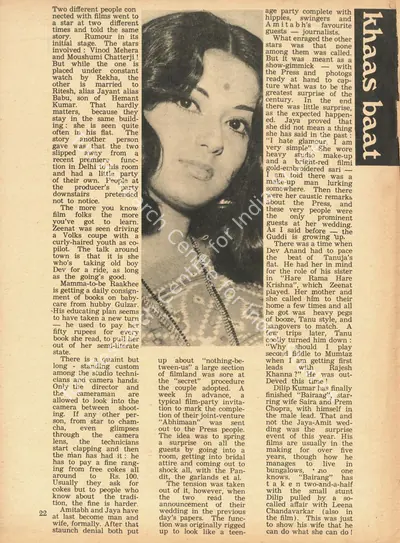
Khaas Baat, 1973, Column
Khaas Baat. In Sunday. 29 July 1973 | Column | 00802285
View full record
Khaas Baat, 1973, Column
Khaas Baat. In Sunday. 08 July 1973 | Column | 00802279
View full record
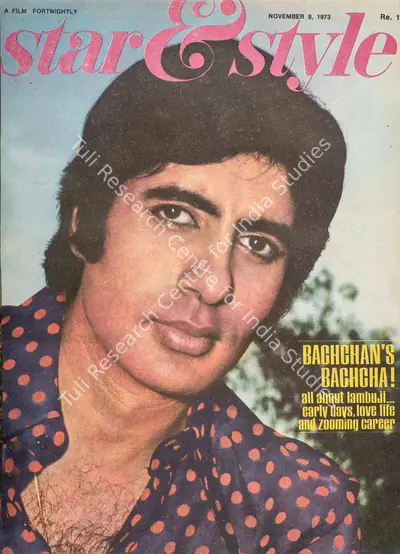
Gulshan Ewing (Editor), Star & Style, 1973, Magazine
Ewing, Gulshan (Editor). Star & Style, 9 November 1973 | Magazine | 00808568
View full record
Aveek Sarkar (Editor), Sunday, 1973, Magazine
Sarkar, Aveek (Editor). Sunday, 24 June 1973 | Magazine | 00842333
View full record
Aveek Sarkar (Editor), Sunday, 1973, Magazine
Sarkar, Aveek (Editor). Sunday, 24 June 1973 | Magazine | 00842333
View full record
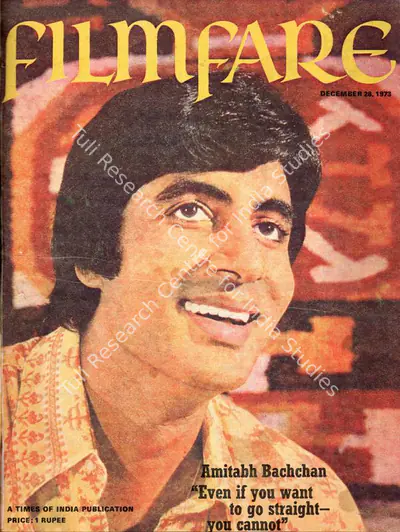
B.K. Karanjia (Editor), Filmfare, 1973, Magazine
Karanjia, B.K. (Editor). Filmfare, 28 December 1973 | Magazine | 00793521
View full record
Khaas Baat, 1973, Column
Khaas Baat. In Sunday. 09 December 1973 | Column | 00802309
View full record
Khaas Baat, 1973, Column
Khaas Baat. In Sunday. 22 July 1973 | Column | 00802283
View full record
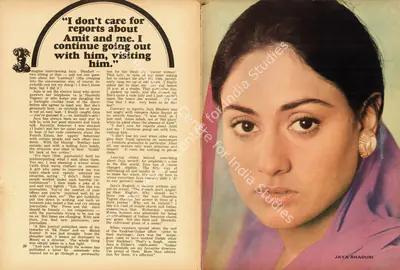
N. Bharathi (Interviewer), "I don't care for reports about Amit and me. I continue going out with him, visiting him", 1973, Conversation
Bharathi, N. (Interviewer). "I don't care for reports about Amit and me. I continue going out with him, visiting him". In Sunday. 17 June 1973 | Conversation | 00802271
View full record
20 of 245
Unknown (Organiser), Unknown (Organiser), Amitabh Bachchan with Kalyanji-Anandji | Advertisement, c. 1990, Advertisement
Unknown (Organiser), Amitabh Bachchan with Kalyanji-Anandji | Advertisement, c. 1990
View full record
Unknown (Still Photographer), Amitabh Bachchan, Photographic Still
Unknown (Still Photographer), Amitabh Bachchan | Photographic Still
View full record
Unknown (Still Photographer), Boys High School, Allahabad, Photographic Still
Unknown (Still Photographer), Boys High School, Allahabad | Photographic Still
View full record
Unknown (Organiser), Unknown (Organiser), Jumma Chumma Concert | Advertisement, 1991, Advertisement
Unknown (Organiser), Jumma Chumma Concert | Advertisement, 1991
View full record
Unknown (Organiser), Unknown (Organiser), Amitabh Bachchan with Zeenat Aman and Parveen Babi | Advertisement, c. 1990, Advertisement
Unknown (Organiser), Amitabh Bachchan with Zeenat Aman and Parveen Babi | Advertisement, c. 1990
View full record
Unknown (Still Photographer), Kaun Banega Crorepati, Photographic Still
Unknown (Still Photographer), Kaun Banega Crorepati | Photographic Still
View full record
Unknown (Artist), Unknown (Artist), Poster of the play The Government Inspector | Theatre Related Document, October 1975, Theatre Related Document
Unknown (Artist), Poster of the play The Government Inspector | Theatre Related Document, October 1975
View full record
Unknown (Still Photographer), Amitabh Bachchan, Photographic Still
Unknown (Still Photographer), Amitabh Bachchan | Photographic Still
View full record
Unknown (Still Photographer), Unknown (Still Photographer) | Photographic Still, Photographic Still
Unknown (Still Photographer) | Photographic Still
View full record
Unknown (Still Photographer), Unknown (Still Photographer) | Photographic Still, Photographic Still
Unknown (Still Photographer) | Photographic Still
View full record
Unknown (Still Photographer), Amitabh and Shweta Bachchan, Photographic Still
Unknown (Still Photographer), Amitabh and Shweta Bachchan | Photographic Still
View full record
Unknown (Still Photographer), Amitabh Bachchan, Photographic Still
Unknown (Still Photographer), Amitabh Bachchan | Photographic Still
View full record
Unknown (Producer), Unknown (Producer), Yudh | Poster, 2014, Poster
Unknown (Producer), Yudh | Poster, 2014
View full record
Unknown (Organiser), Unknown (Organiser), Amitabh Bachchan's Concert accompanied with Jaya Bhaduri | Advertisement, c. 1990, Advertisement
Unknown (Organiser), Amitabh Bachchan's Concert accompanied with Jaya Bhaduri | Advertisement, c. 1990
View full record
T-Series (Record Company), T-Series (Record Company), Tera Chehra | Record Cover, 2002, Record Cover
T-Series (Record Company), Tera Chehra | Record Cover, 2002
View full record
Unknown (Still Photographer), Unknown (Still Photographer) | Photographic Still, Photographic Still
Unknown (Still Photographer) | Photographic Still
View full record
Unknown (Still Photographer), Amitabh and Jaya Bachchan, Photographic Still
Unknown (Still Photographer), Amitabh and Jaya Bachchan | Photographic Still
View full record
Unknown (Still Photographer), Unknown (Still Photographer) | Photographic Still, Photographic Still
Unknown (Still Photographer) | Photographic Still
View full record
Unknown (Artist), Unknown (Artist), Cut-out of Concert LP | Original Artwork, 1982, Original Artwork
Unknown (Artist), Cut-out of Concert LP | Original Artwork, 1982
View full record
Unknown (Photographer), Boys High School, Allahabad, Contemporary Photograph
Unknown (Photographer). Boys High School, Allahabad, n.d. | Contemporary Photograph
View full record
20 of 1,833
Tuli Research Centre for India Studies (Editor). Re-examining Colonel Mordaunt’s Cock-Fight, 22 February 2025 | In-house Video, 2025 · 2 min 40 sec · Short
▶
Tuli Research Centre for India Studies (Editor). Re-examining Colonel Mordaunt’s Cock-Fight, 22 February 2025 | In-house Video

2025 · 2 min 40 sec · Short
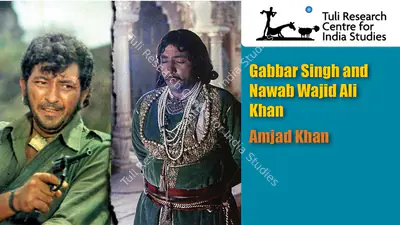
Tuli Research Centre for India Studies (Editor). Gabbar Singh and Nawab Wajid Ali Khan: Amjad Khan, 17 March 2025 | In-house Video, 2025 ·  1 min 21 sec · Short
▶
Tuli Research Centre for India Studies (Editor). Gabbar Singh and Nawab Wajid Ali Khan: Amjad Khan, 17 March 2025 | In-house Video
2025 · 1 min 21 sec · Short
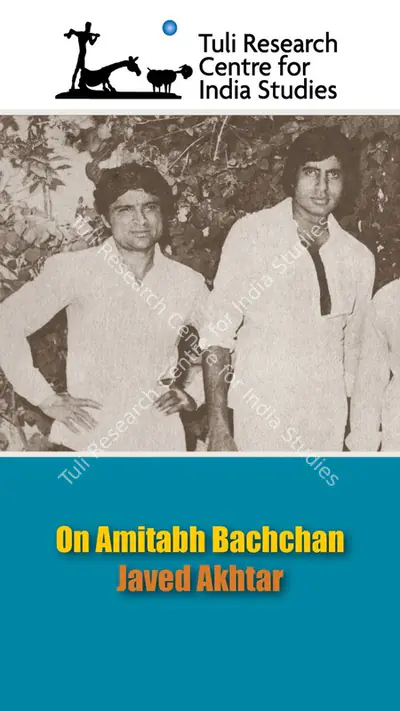
Tuli Research Centre for India Studies (Editor). On Amitabh Bachchan - Javed Akhtar, 04 February 2019 | In-house Video, 2019 · 24 sec · Reel
▶
Tuli Research Centre for India Studies (Editor). On Amitabh Bachchan - Javed Akhtar, 04 February 2019 | In-house Video
2019 · 24 sec · Reel
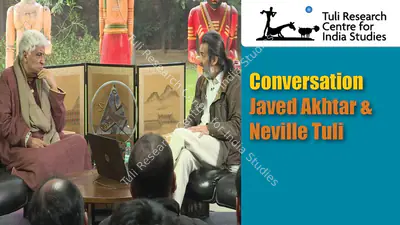
Tuli Research Centre for India Studies (Editor). Conversation: Javed Akhtar & Neville Tuli, 04 February 2019 | In-house Video, 2019 · 1 hr 26 min · Long
▶
Tuli Research Centre for India Studies (Editor). Conversation: Javed Akhtar & Neville Tuli, 04 February 2019 | In-house Video
2019 · 1 hr 26 min · Long
Tuli Research Centre for India Studies (Editor). Main Azaad Hu meets John Doe, 04 February 2019 | In-house Video, 2019 · 1 min 17 sec · Reel
▶
Tuli Research Centre for India Studies (Editor). Main Azaad Hu meets John Doe, 04 February 2019 | In-house Video
2019 · 1 min 17 sec · Reel
Tuli Research Centre for India Studies (Editor). Javed Akhtar Reflects on the Portrayal of the Mother Figure in his Films, 04 February 2019 | In-house Video, 2019 · 1 min 32 sec · Reel
▶
Tuli Research Centre for India Studies (Editor). Javed Akhtar Reflects on the Portrayal of the Mother Figure in his Films, 04 February 2019 | In-house Video
2019 · 1 min 32 sec · Reel
Tuli Research Centre for India Studies (Editor). The Making of Zanjeer - Javed Akhtar, 04 February 2019 | In-house Video, 2019 · 1 min 05 sec · Reel
▶
Tuli Research Centre for India Studies (Editor). The Making of Zanjeer - Javed Akhtar, 04 February 2019 | In-house Video
2019 · 1 min 05 sec · Reel
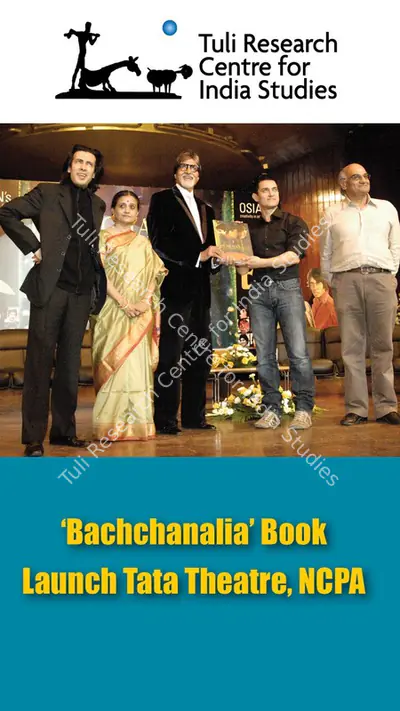
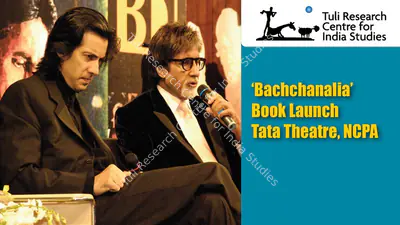
Tuli Research Centre for India Studies (Editor). Bachchanalia' Book Launch Tata Theatre, NCPA., 02 January 2009 | In-house Video, 2009 · 1 min · Reel
▶
Tuli Research Centre for India Studies (Editor). Bachchanalia' Book Launch Tata Theatre, NCPA., 02 January 2009 | In-house Video
2009 · 1 min · Reel
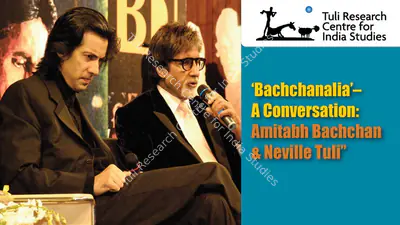
Tuli Research Centre for India Studies (Editor). "Bachchanalia Book Launch" – A Conversation: Amitabh Bachchan & Neville Tuli, 02 January 2009 | In-house Video, 2009 · 35 min · Long
▶
Tuli Research Centre for India Studies (Editor). "Bachchanalia Book Launch" – A Conversation: Amitabh Bachchan & Neville Tuli, 02 January 2009 | In-house Video
2009 · 35 min · Long
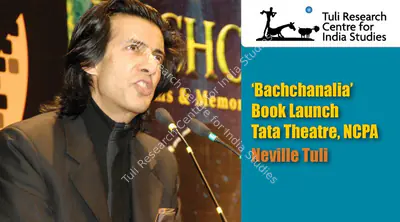
Tuli Research Centre for India Studies (Editor). Neville Tuli at ‘Bachchanalia’ Book Launch – Tata Theatre, NCPA, 02 January 2009 | In-house Video, 2009 · 8 min · Long
▶
Tuli Research Centre for India Studies (Editor). Neville Tuli at ‘Bachchanalia’ Book Launch – Tata Theatre, NCPA, 02 January 2009 | In-house Video
2009 · 8 min · Long
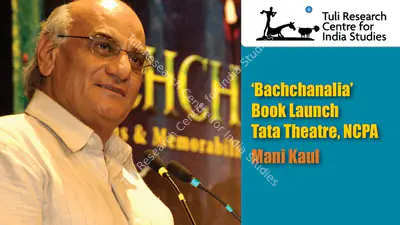
Tuli Research Centre for India Studies (Editor). Mani Kaul at ‘Bachchanalia’ Book Launch – Tata Theatre, NCPA, 02 January 2009 | In-house Video, 2009 · 9 min 37 sec · Long
▶
Tuli Research Centre for India Studies (Editor). Mani Kaul at ‘Bachchanalia’ Book Launch – Tata Theatre, NCPA, 02 January 2009 | In-house Video
2009 · 9 min 37 sec · Long
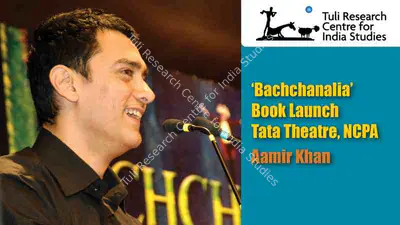
Tuli Research Centre for India Studies (Editor). Aamir Khan at ‘Bachchanalia’ Book Launch – Tata Theatre, NCPA, 02 January 2009 | In-house Video, 2009 · 11 min 14 sec · Long
▶
Tuli Research Centre for India Studies (Editor). Aamir Khan at ‘Bachchanalia’ Book Launch – Tata Theatre, NCPA, 02 January 2009 | In-house Video
2009 · 11 min 14 sec · Long
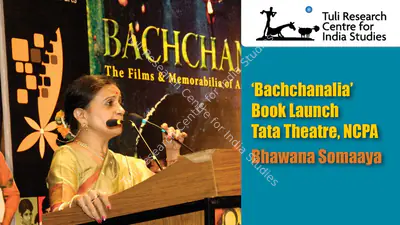
Tuli Research Centre for India Studies (Editor). Bhawana Somaaya at ‘Bachchanalia’ Book Launch – Tata Theatre, NCPA, 02 January 2009 | In-house Video, 2009 · 22 min 45 sec · Long
▶
Tuli Research Centre for India Studies (Editor). Bhawana Somaaya at ‘Bachchanalia’ Book Launch – Tata Theatre, NCPA, 02 January 2009 | In-house Video
2009 · 22 min 45 sec · Long
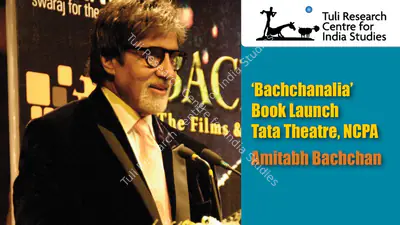
Tuli Research Centre for India Studies (Editor). Amitabh Bachchan at ‘Bachchanalia’ Book Launch – Tata Theatre, NCPA, 02 January 2009 | In-house Video, 2009 · 10 min 57 sez · Long
▶
Tuli Research Centre for India Studies (Editor). Amitabh Bachchan at ‘Bachchanalia’ Book Launch – Tata Theatre, NCPA, 02 January 2009 | In-house Video
2009 · 10 min 57 sez · Long
Tuli Research Centre for India Studies (Editor). Bachchanalia' Book Launch - Tata Theatre, NCPA, 02 January 2009 | In-house Video, 2009 · 1 hr 18 min · Long
▶
Tuli Research Centre for India Studies (Editor). Bachchanalia' Book Launch - Tata Theatre, NCPA, 02 January 2009 | In-house Video
2009 · 1 hr 18 min · Long
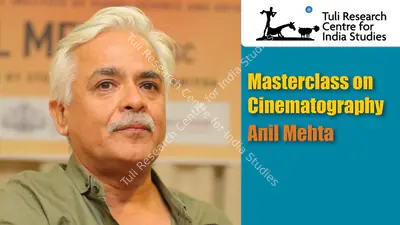
Tuli Research Centre for India Studies (Editor). Masterclass on Cinematography - Anil Mehta, 26 July 2007 | In-house Video, 2007 · 1 hr 27 min · Long
▶
Tuli Research Centre for India Studies (Editor). Masterclass on Cinematography - Anil Mehta, 26 July 2007 | In-house Video
2007 · 1 hr 27 min · Long
Hrishikesh Mukherjee (Producer), Anand, 1970, Song-Synopsis Booklet
Mukherjee, Hrishikesh (Producer), Anand, 1970 | Song-Synopsis Booklet
View full record
Sunil Dutt (Producer), Reshma Aur Shera, 1971, Song-Synopsis Booklet
Dutt, Sunil (Producer), Reshma Aur Shera, 1971 | Song-Synopsis Booklet
View full record
Bolu Khosla (Producer), Raaste Kaa Patthar, 1972, Song-Synopsis Booklet
Khosla, Bolu (Producer), Raaste Kaa Patthar, 1972 | Song-Synopsis Booklet
View full record
Bolu Khosla (Producer), Raaste Kaa Patthar, 1972, Song-Synopsis Booklet
Khosla, Bolu (Producer), Raaste Kaa Patthar, 1972 | Song-Synopsis Booklet
View full record
N.C. Sippy (Producer), Bombay To Goa, 1972, Song-Synopsis Booklet
Sippy, N.C. (Producer), Bombay To Goa, 1972 | Song-Synopsis Booklet
View full record
Prakash Verma (Producer), Bansi Birju, 1972, Song-Synopsis Booklet
Verma, Prakash (Producer), Bansi Birju, 1972 | Song-Synopsis Booklet
View full record
Sushila Kamat (Producer), Abhimaan, 1973, Song-Synopsis Booklet
Kamat, Sushila (Producer), Abhimaan, 1973 | Song-Synopsis Booklet
View full record
Jayendra Pandya (Producer), Namak Haraam, 1973, Song-Synopsis Booklet
Pandya, Jayendra (Producer), Namak Haraam, 1973 | Song-Synopsis Booklet
View full record
Arabind Sen (Producer), Kasauti, 1974, Song-Synopsis Booklet
Sen, Arabind (Producer), Kasauti, 1974 | Song-Synopsis Booklet
View full record
Ranjit Virk (Producer), Benaam, 1974, Song-Synopsis Booklet
Virk, Ranjit (Producer), Benaam, 1974 | Song-Synopsis Booklet
View full record
G.P. Sippy (Producer), Sholay, 1975, Song-Synopsis Booklet
Sippy, G.P. (Producer), Sholay, 1975 | Song-Synopsis Booklet
View full record
Hrishikesh Mukherjee (Producer), Mili, 1975, Song-Synopsis Booklet
Mukherjee, Hrishikesh (Producer), Mili, 1975 | Song-Synopsis Booklet
View full record
Gulshan Rai (Producer), Deewaar, 1975, Song-Synopsis Booklet
Rai, Gulshan (Producer), Deewaar, 1975 | Song-Synopsis Booklet
View full record
Yash Chopra (Producer), Kabhi Kabhie, 1976, Song-Synopsis Booklet
Chopra, Yash (Producer), Kabhi Kabhie, 1976 | Song-Synopsis Booklet
View full record
Tito (Producer), Do Anjaane, 1976, Song-Synopsis Booklet
Tito (Producer), Do Anjaane, 1976 | Song-Synopsis Booklet
View full record
Khwaja Ahmad Abbas (Author), I am Not an Island, 1977, Authored Book
Abbas, Khwaja Ahmad (Author). I am Not an Island, 1977 | Authored Book | 00168164
View full record
Premji (Producer), Immaan Dharam, 1977, Song-Synopsis Booklet
Premji (Producer), Immaan Dharam, 1977 | Song-Synopsis Booklet
View full record
Manmohan Desai (Producer), Amar Akbar Anthony, 1977, Song-Synopsis Booklet
Desai, Manmohan (Producer), Amar Akbar Anthony, 1977 | Song-Synopsis Booklet
View full record
Gulshan Rai (Producer), Trishul, 1978, Song-Synopsis Booklet
Rai, Gulshan (Producer), Trishul, 1978 | Song-Synopsis Booklet
View full record
Sultan Ahmed (Producer), Ganga Ki Saugand, 1978, Song-Synopsis Booklet
Ahmed, Sultan (Producer), Ganga Ki Saugand, 1978 | Song-Synopsis Booklet
View full record
20 of 39

Posts 2

  1. Coolie: Manmohan Desai's Cinematic Epic of Unity and Drama
    Coolie: Manmohan Desai's Cinematic Epic of Unity and Drama
    A working still from Manmohan Desai's 1983 film Coolie, produced under the banner M.K.D. Films Combine and Aasia Films Pvt. Ltd., was captured on Amitabh Bachchan's return to the shooting of the film after his prolonged stay in hospital. Coolie remains an integral part of the illustrious filmography of Amitabh Bachchan and one of the landmark films of the collaboration between Bachchan and Desai. A classic example of the masala films, Coolie was a blockbuster hit. The film bore all the famous tropes of lost and found family members, romance and a trusted animal coming to the aid of the hero. The film was also spotlit for the near fatal accident that occurred on the sets of the film during a fight scene between Bachchan and Puneet Issar, leaving the former hospitalised for two months at Breach Candy Hospital, Bombay, while the entire nation prayed for the superstar's recovery. Kader Khan, who played the role of the main antagonist in the film also served as its writer, incorporating several references to Sufi mysticism in the script. The sacred number 786, served as the badge number of the coolie Iqbal (played by Bachchan), his falcon named Allah Rakha (meaning in God's protection), and a shroud from the Haji Ali Dargah which landed on Iqbal's shoulder during the final scenes of the film, as he took his revenge from Zafar, killing him at the end while nearly surviving multiple injuries himself. The climax of the film was changed and re-shot after Bachchan's return from hospital capitulating to audience sentiment, which had feverishly prayed for their hero's safe recovery. Prayag Raaj, a trusted collaborator of Desai, directed and co-wrote the script of the film along with some songs. Desai's name was later added as the co-director of the film to get better distribution price; he was originally the producer of the film. Coolie went on to become one of the ten highest grossing films of the decade and the biggest hit of 1983, exceeding 75 weeks in several regional centres with people sleeping overnight at theatres to secure a place in next morning's booking queues.
    1_CinemaEducation4_PopCulture
    Amitabh BachchanCoolieManmohan DesaiPrayag Raaj
    Read Post →
  2. Sholay: The Mouth Organ Scene
    Sholay: The Mouth Organ Scene
    The iconic mouth-organ scene from the 1975 Ramesh Sippy film Sholay was performed by Bhanu Gupta, an integral part of the film's music composer R.D. Burman's team. Primarily a dacoit film, also referred to as a Dacoit Western, combining tropes of Hollywood Curry Westerns and Indian dacoit films, this scene was a rare moment of expression of outward calm, inner loneliness and an unspoken connection, portrayed beautifully by Amitabh and Jaya Bachchan (née Bhaduri). A review in the popular film magazine of the time Star & Style (12 September 1975) noted that, “Jaya conveys almost everything with her face…we have hardly any other Hindi actress who can do such a feat, of expressing sadness and hope.” In the scene, filmed at dusk, Radha, the young widow of the Thakur's son, lights the lamp of the house while Jai is sitting downstairs playing a melancholic tune on his mouth organ. The sadness of Radha and the longing that Jai feels for her is portrayed beautifully establishing a moment of tranquillity between the two characters with a doomed ending. Ramesh Sippy in an interview recounted how the scene took several days to be satisfactorily filmed as he wanted to capture the perfect lighting and mood for the shot. Termed as a non-starter upon its release and panned by the critics, the film went on to become a cult classic, remembered for its story, acting, music and overall production values, drawing audiences in droves to the theatres. Sholay, has been revered by many film critics and enthusiasts over the years gaining accolades such as the “Top 10 Indian Films” of all time by the British Film Institute in 2002 and the “Best Film of 50 Years” by the Filmfare Awards in 2005.
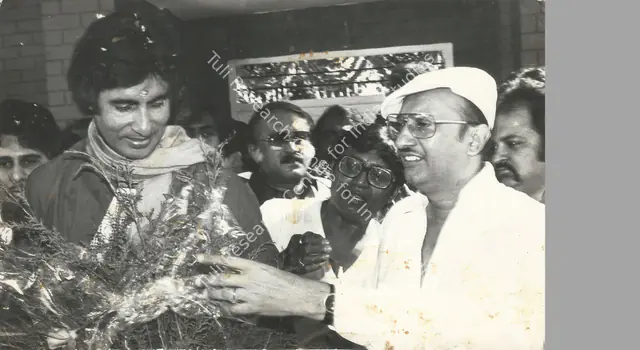
    1_CinemaEducation
    Amitabh BachchanSholayRamesh Sippy
    Read Post →

Calendar 1

View All →
  1. Self-Discovery via Rediscovering India Series Part II India's Cinematic Heritage
    ArchivedExhibitionProject 2
    Self-Discovery via Rediscovering India Series Part II India's Cinematic Heritage
    12th - 24th August 2024
    Self-Discovery via Rediscovering India Series Part II
    Read More →
    1_CinemaEducation·The Worlds Greatest Mela Respecting Indias Cinematic Heritage 13 25 August 2024 Project 2 Cal

Related

55

Personalities

34

A. RamachandranComparable Artworks
Aamir KhanComparable Artworks
Anil KapoorComparable Artworks
Anupam KherComparable Artworks
Aruna VasudevComparable Artworks
Ashok KumarComparable Artworks
B.R. ChopraComparable Artworks
Bimal RoyComparable Artworks
Charlie ChaplinComparable Artworks
Deepti NavalComparable Artworks
Dev AnandComparable Artworks
Devika RaniComparable Artworks
Dharam ChopraComparable Artworks
DharmendraComparable Artworks
Dilip KumarComparable Artworks
Dimple KapadiaComparable Artworks
Dwarka DivechaComparable Artworks
G.P. SippyComparable Artworks
Govind NihalaniComparable Artworks
Hema MaliniComparable Artworks
Jaya Bhaduri BachchanSpouse · Comparable Artworks
Johnny WalkerComparable Artworks
Khwaja Ahmad AbbasComparable Artworks
Kishore KumarComparable Artworks
Lata MangeshkarComparable Artworks
Laxman PaiComparable Artworks
MadhubalaComparable Artworks
Madhuri DixitComparable Artworks
Manmohan DesaiComparable Artworks
Meena KumariComparable Artworks
Naseeruddin ShahComparable Artworks
NutanComparable Artworks
Osian'sComparable Artworks
Pooja BhattComparable Artworks

Films

19

Batwara 1989Narrator
Bawarchi 1972Narrator
Bbuddah... Hoga Terra Baap 2011Film Producer
Begum Jaan 2017Narrator
Bhuvan Shome 1969Narrator
Firangi 2017Narrator
Ghulami 1985Narrator
Hero Hindustani 1998Narrator
Jodhaa Akbar 2008Narrator
Kanoon Kya Karega 1984Narrator
Mrityudaata 1997Film Producer
Mumbai Se Aaya Mera Dost 2003Narrator
Professor Ki Padosan 1994Narrator
Sarkar 3 2017Film Producer
Shatranj Ke Khilari (1977)Narrator
Swami 2007Narrator
Tere Mere Sapne 1996Film Producer
The Ghazi Attack 2017Narrator
Zor Lagaa Ke...Haiya 2009Narrator

Institutions

1

DAGComparable Artworks

Themes

1

Blitz - India's National News MagazineComparable Artworks
Tuli Research Centre for India Studies

Tuli Research Centre

for India Studies

A free and open knowledge base for the modern and contemporary Indian arts, cinema, photography and cultural heritage.

Support

Contact Us

Discover

Tuli Research Centre for India StudiesVisionManifestoArchive & LibraryVanraja Sanctuary & Hospice

Legal

Privacy PolicyTerms & Conditions

Follow us

Youtube

Youtube

Instagram

Instagram

Facebook

Facebook

© Tuli Research Centre for India Studies 2026

Tuli Research Centre for India Studies

Tuli Research Centre

for India Studies

A free and open knowledge base for the modern and contemporary Indian arts, cinema, photography and cultural heritage.

Tuli Research Centre for India StudiesVisionManifestoArchive & LibraryVanraja Sanctuary & Hospice
Contact Us
Privacy PolicyTerms & Conditions

Follow us

YoutubeInstagramFacebook

© Tuli Research Centre for India Studies 2026

              Ewing, Gulshan (Editor). Star & Style - A Film Fortnightly. 22(22). Bombay: J.C. Jain, 9 November 1973 | Magazine | CinemaEducation | 00808568
              1 / 2
              2
              Gulshan Ewing (Editor)
              TitleStar & Style - A Film Fortnightly
              Contributor(s)B.K. Sanil, Kantilal Khatri (Photographer), S.A. Kadir (Designer), Firoze Rangoonwalla (Essayist)
              Document TypeMagazine
              PublisherJ.C. Jain, Bombay
              Date of Publication9 November 1973
              Volume22,Issue22
              BindingHB
              LanguageEnglish
              Featured on Front Coveramitabh-bachchan
              Featured on Back Covertobacco-advertisement | panama-20-cigarattes

              Research Categories

              1_CinemaEducation

              Related Links3

              Masterlist2
              Amitabh BachchanPeriodicals Magazines
              Research Categories
              01Cinema as a Critical Educational Resource