

Introduction
Majrooh Sultanpuri (Asrar ul Hassan Khan; 1 October 1919–24 May 2000) He is among the most distinguished Urdu poets and Hindi film lyricists of the twentieth century, whose work indelibly shaped the sonic and literary landscape of Indian cinema. A central figure in the Progressive Writers' Movement, he combined lyrical elegance with ideological conviction, producing verse that resonated across both literary and popular domains. His celebrated line—Main akela hee chala tha janibe manzil magar, log saath aate gaye aur caravan banta gaya—epitomises his humanistic ethos and enduring poetic appeal.
Born in Sultanpur, Uttar Pradesh, into a Muslim Rajput family, Majrooh received a traditional madrasa education, completing the Dars-e-Nizami curriculum and earning the title of Alim, with proficiency in Arabic and Persian. He later pursued Unani medicine at Lucknow's Takmeel-ut-Tib College and briefly practised as a hakim. His literary vocation emerged serendipitously at a mushaira, where his ghazal received wide acclaim, prompting him to abandon medicine in favour of poetry. Under the mentorship of Jigar Moradabadi, he refined his craft and soon became a prominent presence in mushaira circuits.
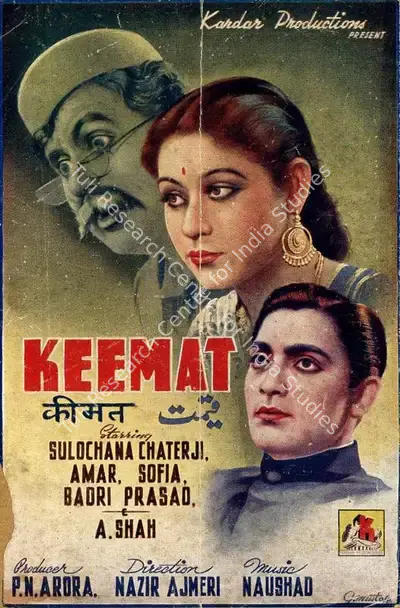
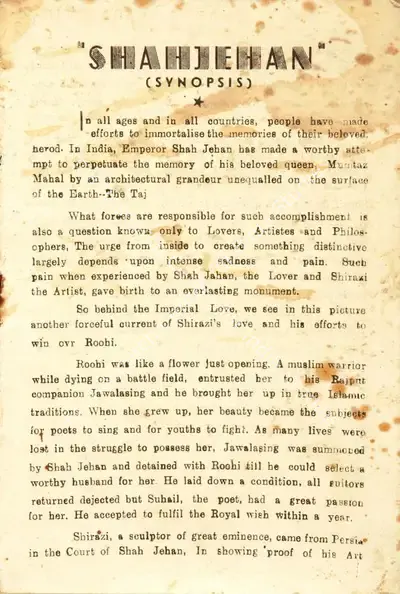
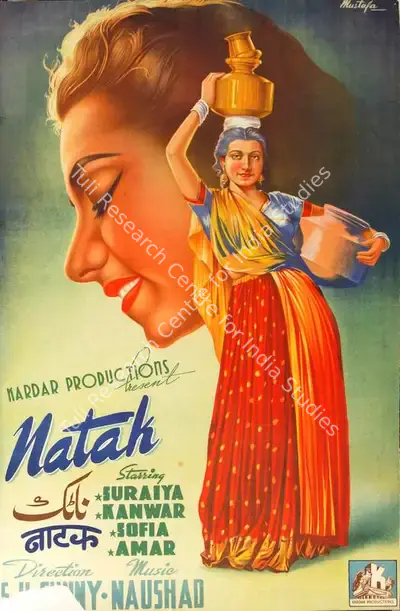
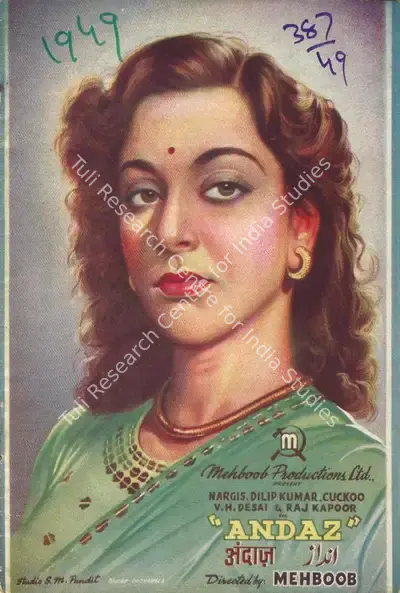
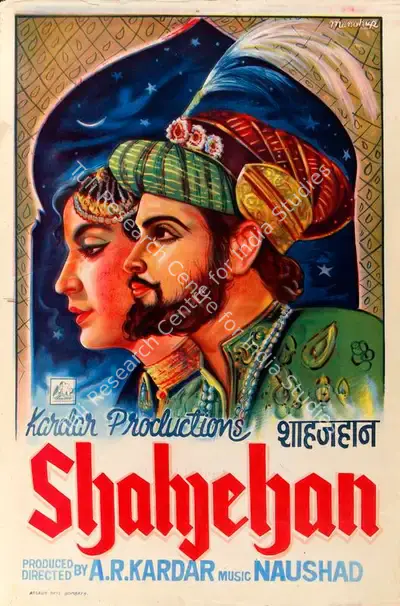
Majrooh's transition to cinema occurred in 1945 in Bombay, where producer A.R. Kardar, impressed by his verse, introduced him to composer Naushad. Initially reluctant, he was persuaded to write for films and debuted with Shah Jehan (1946). Subsequent assignments in Naatak (1947), Doli (1947), and Anjuman (1948) culminated in his breakthrough with Mehboob Khan's Andaz (1949). Over a career spanning six decades, he collaborated with leading composers including Anil Biswas, Naushad, O. P. Nayyar, Madan Mohan, Roshan, Salil Chowdhury, Laxmikant–Pyarelal, and R. D. Burman, demonstrating remarkable adaptability across changing musical idioms.
His career, however, intersected with political turbulence. His leftist commitments led to imprisonment in 1949 during a nationwide crackdown following the Communist Party's 1948 congress. Refusing to recant his views, he served a prison sentence, later re-emerging in cinema with projects such as Baaz (1953). Despite these interruptions, he sustained creative vitality, later collaborating extensively with Anand–Milind in films including Qayamat Se Qayamat Tak (1988), Lal Dupatta Malmal Ka (1989), Love (1991), and Dahek (1999), and with Jatin–Lalit in Jo Jeeta Wohi Sikander (1992) and Yaara Dildara (1991).
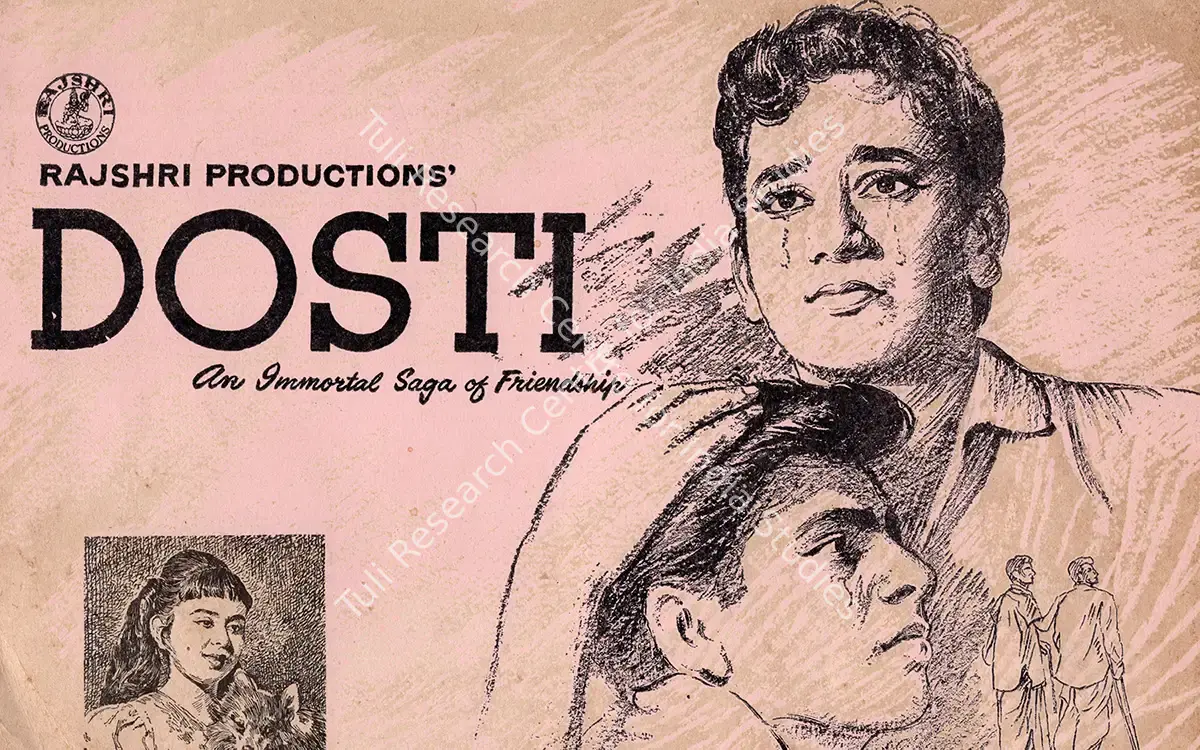
Majrooh's contributions were widely recognised. He received the Filmfare Award for Best Lyricist in 1965 for Chahunga Main Tujhe from Dosti (1964), and in 1993 became the first lyricist to be honoured with the Dadasaheb Phalke Award. Additional accolades include the Ghalib Award (1980) and the Iqbal Samman (1992), alongside honours from the Maharashtra government and the Maharashtra State Urdu Academy. His later work included Akele Hum Akele Tum (1995) and his final credited film, One 2 Ka 4 (2001), released posthumously. He died in Mumbai on 24 May 2000, leaving behind a legacy that bridges poetic refinement and cinematic expression.
उत्तर प्रदेश के सुल्तानपुर में एक मुस्लिम राजपूत परिवार में जन्मे मजरूह ने पारंपरिक मदरसे की शिक्षा प्राप्त की, जहाँ उन्होंने दर्स-ए-निज़ामी पाठ्यक्रम पूरा किया और अरबी और फ़ारसी में निपुणता प्राप्त करते हुए आलिम की उपाधि अर्जित की। बाद में उन्होंने लखनऊ के तकमील-उत-तिब कॉलेज़ में यूनानी चिकित्सा का अध्ययन किया और कुछ समय के लिए हकीम के रूप में भी कार्य किया। उनकी साहित्यिक प्रतिभा संयोगवश एक मुशायरे में जागी, जहाँ उनकी ग़ज़ल को व्यापक प्रशंसा मिली और उन्होंने चिकित्सा छोड़कर कविता को अपना लिया। जिगर मुरादाबादी के मार्गदर्शन में उन्होंने अपनी कला को निखारा और जल्द ही मुशायरों में एक प्रमुख हस्ती बन गए।
मजरूह ने सिनेमा जगत में प्रवेश 1945 में बंबई में किया, जहाँ निर्माता ए.आर. करदार, उनकी कविताओं से प्रभावित होकर, उन्हें संगीतकार नौशाद से मिलवाया। शुरू में रूचि न होने के बावजूद, उन्हें फ़िल्मों के लिए लिखने के लिए राज़ी किया गया और उन्होंने शाहजहाँ (1946) से अपने करियर की शुरुआत की। नाटक (1947), डोली (1947) और अंजुमन (1948) जैसी फ़िल्मों में काम करने के बाद, उन्हें महबूब खान की फ़िल्म अंदाज़ (1949) से सफलता मिली। छह दशकों अपने लम्बे करियर में, उन्होंने अनिल बिस्वास, नौशाद, ओ.पी. नैयर, मदन मोहन, रोशन, सलिल चौधरी, लक्ष्मीकांत-प्यारेलाल और आर.डी. बर्मन जैसे प्रमुख संगीतकारों के साथ काम किया और संगीत की बदलती शैलियों में उल्लेखनीय रूप से खुद को ढालते हुए अपनी बहुमुखी प्रतिभा का परिचय दिया।
हालांकि, उनका करियर राजनीतिक उथल-पुथल से प्रभावित रहा। कम्युनिस्ट पार्टी के 1948 के सम्मेलन के बाद 1949 में देशव्यापी कार्रवाई के दौरान उनकी वामपंथी प्रतिबद्धताओं के कारण उन्हें जेल जाना पड़ा। अपने विचारों से पीछे हटने से इनकार करते हुए उन्होंने कारावास की सज़ा काटी, और बाद में बाज़ (1953) जैसी फ़िल्मों के साथ सिनेमा में वापसी की। इन बाधाओं के बावजूद, उन्होंने अपनी रचनात्मक ऊर्जा को बरक़रार रखा और बाद में आनंद-मिलिंद के साथ क़यामत से क़यामत तक (1988), लाल दुपट्टा मलमल का (1989), लव (1991) और दहक (1999) जैसी फ़िल्मों के लिए गीत लिखें और जतिन-ललित के साथ जो जीता वही सिकंदर (1992) और यारा दिलदारा (1991) में सहयोग किया।
मजरूह के योगदान को व्यापक रूप से सराहा गया। उन्हें 1965 में फ़िल्म 'दोस्ती' (1964) के गीत 'चाहूँगा मैं तुझे' के लिए सर्वश्रेष्ठ गीतकार का फ़िल्मफ़ेयर पुरस्कार मिला और 1993 में वे दादासाहेब फाल्के पुरस्कार से सम्मानित होने वाले पहले गीतकार बने। अन्य सम्मानों में ग़ालिब पुरस्कार (1980) और इक़बाल सम्मान (1992) शामिल हैं, साथ ही महाराष्ट्र सरकार और महाराष्ट्र राज्य उर्दू अकादमी द्वारा भी उन्हें सम्मानित किया गया। उनकी बाद की रचनाओं में 'अकेले हम अकेले तुम' (1995) और उनकी अंतिम फ़िल्म 'वन 2 का 4' (2001) शामिल हैं, जो उनकी मृत्यु के बाद रिलीज़ हुई। 24 मई 2000 को मुंबई में उनका निधन हो गया, और वे अपने पीछे रचनात्मक और सिनेमाई विरासत का संगम छोड़ गए।
Filmography 90
Research Centre
Calendar 2
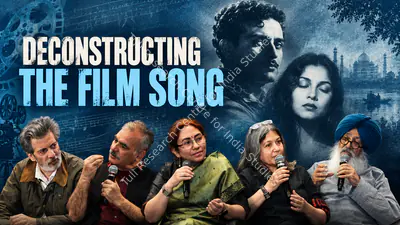
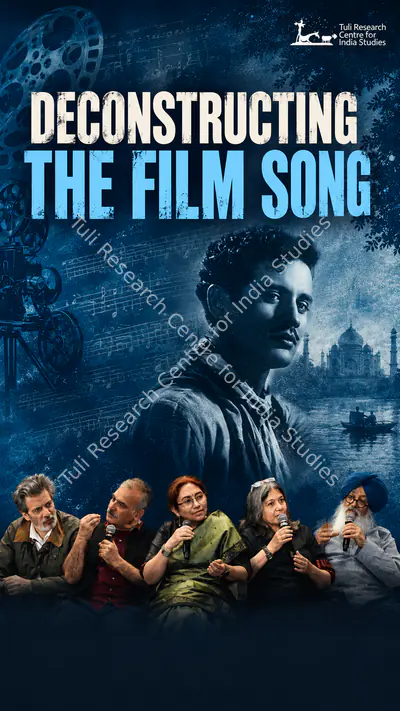
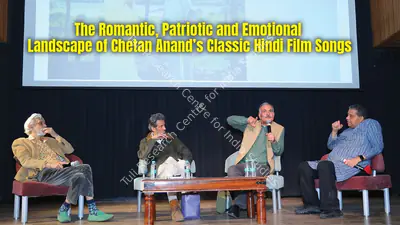
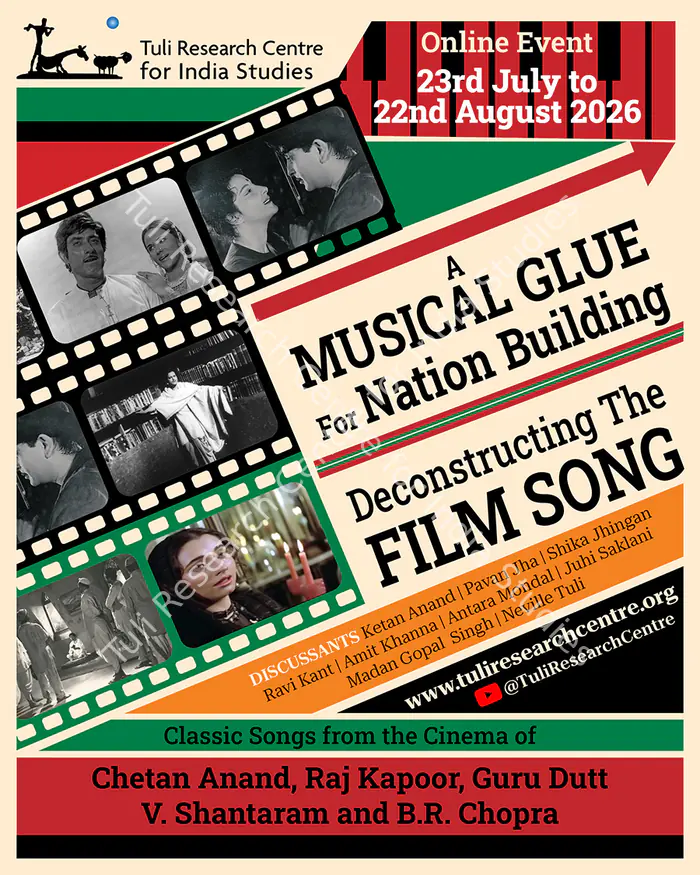
- ArchivedOffline-Online EventProject 80A Musical Glue for Nation-BuildingDeconstructing the Film Song23rd July - 22nd August 2026Ketan Anand | Ravikant | Pavan Jha | Madan Gopal Singh | Amit Khanna | Juhi Saklani | Antara Mondal | Shikha Jhingan | Neville TuliA key section of the India Studies framework at The Tuli Research Centre for India Studies (T.R.I.S.) is “Deconstructing the Film Song”. It began with a series of four workshops during our Self-Discovery via Rediscovering India Festival Series that brought together leading scholars & academics, film practitioners & students, along with fans of the Hindi film song. The objective of these workshops was to deconstruct iconic Hindi film songs to examine their formation across music, lyrics, playback, choreography, directorial visualisation, as they fuse into sites where aesthetics, ideology, and performance intersect, so as to help clarify the nature of India and her relationship to the film song. The Hindi Film Song functions as a narrative device, conveying myriad textures of emotion through melody, voice and poetry. As cultural texts that encode memory, desire, and ideology, songs are integral to the circulation and resonance of films in the public realm. Over time they have become autonomous bundles of creative energy - the glue that binds us over time, articulating and perhaps even defining the idea of Indianness. These first Workshops were an attempt to understand the nature and power of this glue, while contemplating the ways to situate it within TRIS' academic framework for Contemporary India Studies.Read More →
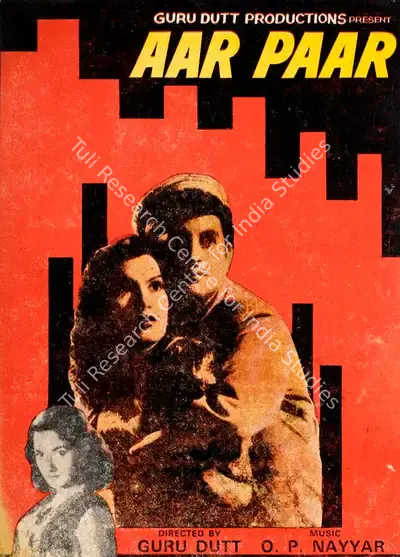
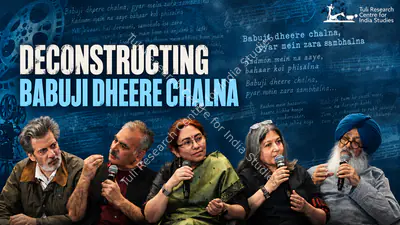
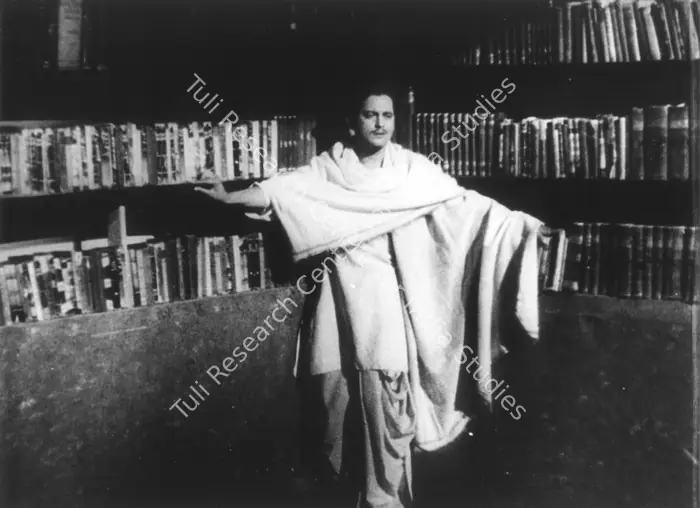
- ArchivedDeconstructing the Hindi Film SongProject 62A Musical Glue for Nation-BuildingFour Classic Songs from the cinema of Guru Dutt and the genius of S.D. Burman, O.P. Nayyar, Sahir Ludhianvi, Majrooh Sultanpuri, Geeta Dutt & Mohammed RafinnBabuji Dheere Chalna | Aar Paar-1954 nJinen Naaz Hai Hind Par | Pyaasa-1957 nYe Duniya Agar Mile Be Jaye | Pyaasa-1957 nWaqt Ne Kiya Kya Haseen Sitam | Kaagaz Ke Phool-195917th February 20266:30pmM.L. Bhartia Auditorium, Alliance Francaise de Delhi, 72 K.K. Birla Lane, Lodi Estate, New Delhi, 110006Madan Gopal Singh, Ravikant, Antara Mondal, Juhi Saklani & Neville TuliA key section of the India Studies framework at The Tuli Research Centre for India Studies (T.R.I.S.) is “Deconstructing the Hindi Film Song”. It will begin with a series of four workshops that brings together leading scholars & academics, film practitioners & students, along with fans of the Hindi film song. The objective of these workshops is to deconstruct iconic Hindi film songs to examine their formation across music, lyrics, playback, choreography, directorial visualisation, as they fuse into sites where aesthetics, ideology, and performance intersect. The Hindi Film Song functions as a narrative device, conveying myriad textures of emotion through melody, voice and poetry. As cultural texts that encode memory, desire, and ideology, songs are integral to the circulation and resonance of films in the public realm. Over time they have become autonomous bundles of creative energy - the glue that binds us over time, articulating and perhaps even defining the idea of Indianness. The first Workshops are an attempt to understand the nature and power of this glue, while contemplating the ways to situate it within TRIS' academic framework for Contemporary India Studies.Read More →
Related
41
Films
21
Personalities
20