
Introduction
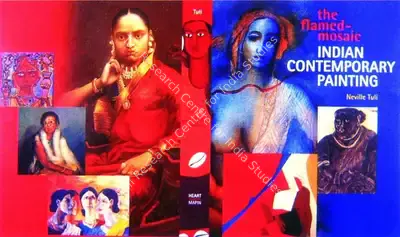
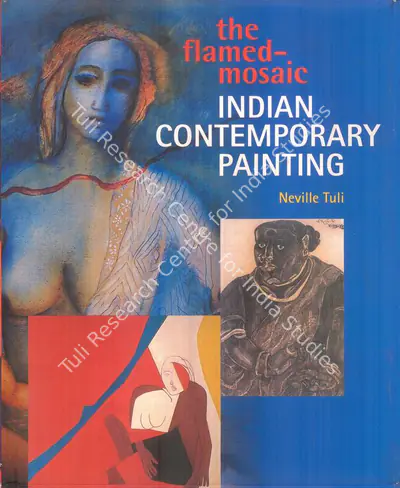
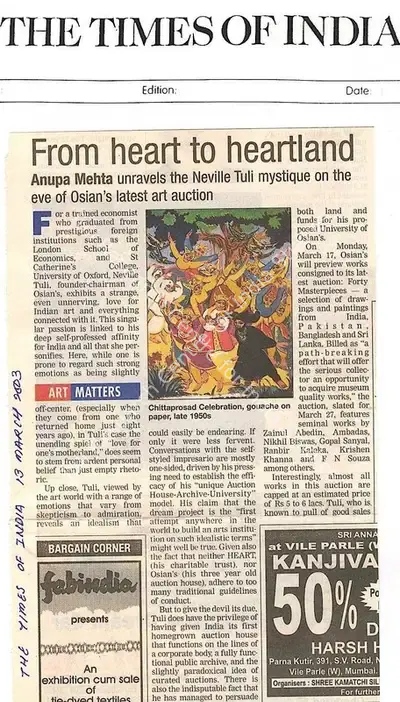
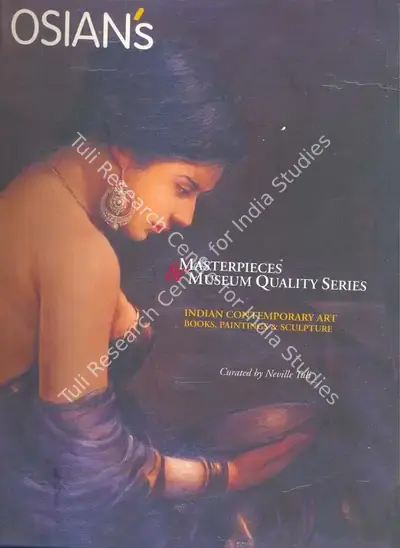
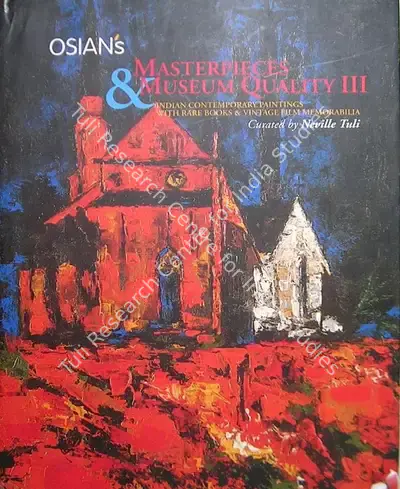
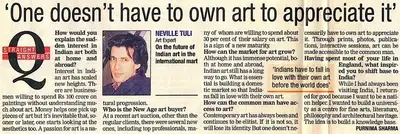
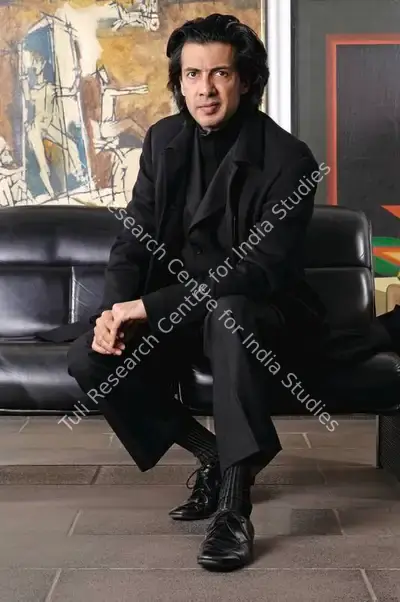
Neville Tuli (born 24 April 1964, London, UK) is a distinguished art collector, cultural historian, author, curator, and archivist of Indian origin, widely recognised for his pioneering contributions to the preservation and promotion of India's artistic and cinematic heritage. Educated in economics and developmental theory at the London School of Economics and St Catherine's College, Oxford, Tuli returned to India after nearly twenty-five years abroad and embarked upon extensive travels across the country, documenting its visual arts, cinema, architecture, and material culture. In 1996, he published The Flamed Mosaic: Indian Contemporary Painting, an influential study exploring the aesthetics and historical evolution of modern and contemporary Indian art.
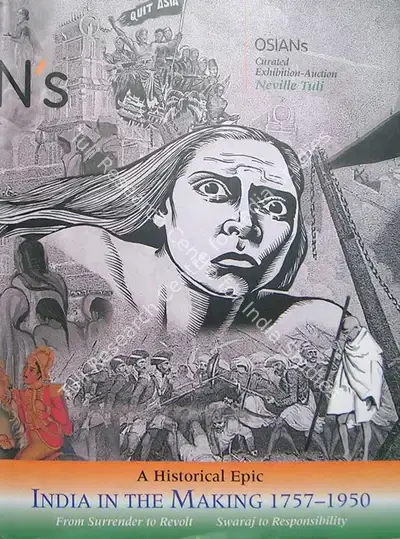
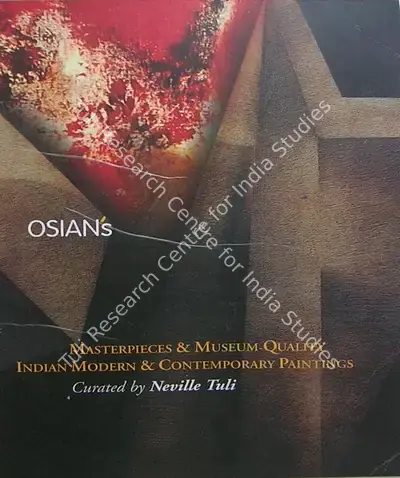
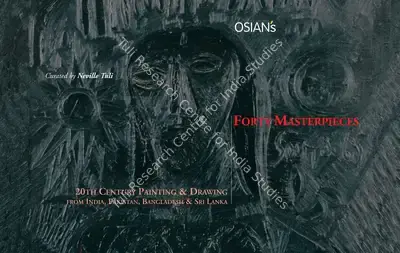
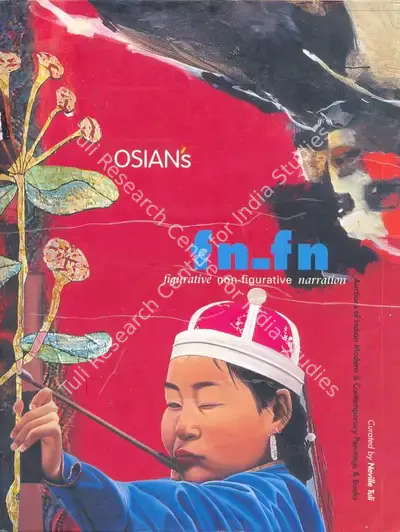
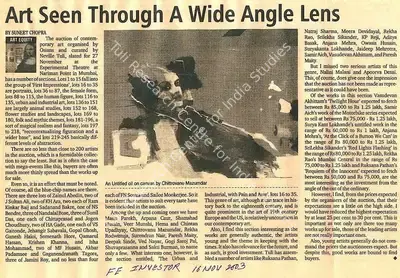
Since relocating to India in 1993, Tuli has devoted over three decades to documenting, conserving, and interpreting the nation's cultural legacy while fostering broader public engagement through scholarship, exhibitions, education, and digital initiatives. He has assembled one of the world's most comprehensive archives of Indian fine art, cinema memorabilia, manuscripts, photographs, and cultural artefacts, comprising more than 400,000 objects. Tuli has curated more than forty landmark auctions-cum-exhibitions that went beyond modern and contemporary Indian art to encompass cinema memorabilia, popular culture, sports collectibles and international works, achieving global visibility and recognition.
Driven by his lifelong vision of cultural self-discovery through India's artistic and intellectual heritage and guided by values of cultural stewardship, intellectual inquiry, and resilience, he has created enduring institutions dedicated to its study and dissemination.
The Tuli Research Centre for India Studies (TRIS) was established in 2023. Through its website tuliresearchcentre.org TRIS makes its unparalleled archives, library, and research resources accessible for students, scholars and lifelong learners across the areas of modern and contemporary fine arts, Indian and world cinema, ecology, animal welfare, the social sciences and the humanities.
The Tuli Research Centre for India Studies (TRIS) remains an independent, non-political institution dedicated to advancing interdisciplinary research, fostering a deeper understanding of India's cultural past while inspiring informed dialogue about its future.
1993 में भारत लौटने के बाद से, तुली ने देश की सांस्कृतिक विरासत को संजोने, संरक्षित करने और उसकी व्याख्या करने में तीन दशकों से अधिक का समय लगाया है। साथ ही, उन्होंने स्कॉलरशिप, प्रदर्शनियों, शिक्षा और डिजिटल पहलों के माध्यम से लोगों की भागीदारी को भी बढ़ावा दिया है। उन्होंने भारतीय ललित कला, सिनेमा से जुड़ी यादगार चीज़ों, पांडुलिपियों, तस्वीरों और सांस्कृतिक कलाकृतियों का दुनिया का बड़ा संग्रह तैयार किया है, जिसमें 400,000 से अधिक वस्तुएँ शामिल हैं। तुली ने चालीस से अधिक महत्वपूर्ण नीलामियों और प्रदर्शनियों का आयोजन किया है। इन आयोजनों में आधुनिक और समकालीन भारतीय कला के अलावा सिनेमा से जुड़ी यादगार चीज़ें, लोकप्रिय संस्कृति, खेल से जुड़ी संग्रहणीय वस्तुएँ और अंतरराष्ट्रीय कलाकृतियाँ भी शामिल थीं, जिससे उन्हें वैश्विक स्तर पर पहचान और ख्याति मिली।
भारत की कलात्मक और बौद्धिक विरासत के ज़रिए सांस्कृतिक आत्म-खोज के अपने जीवन के विज़न से प्रेरित होकर, और सांस्कृतिक संरक्षण, बौद्धिक जिज्ञासा व मज़बूती जैसे मूल्यों को अपनाते हुए, उन्होंने इसके अध्ययन और प्रसार के लिए कई स्थायी संस्थान बनाए हैं।
'तुली रिसर्च सेंटर फ़ॉर इंडिया स्टडीज़' (TRIS) की स्थापना 2023 में हुई थी। अपनी वेबसाइट tuliresearchcentre.org के ज़रिए, TRIS अपने बेजोड़ आर्काइव, लाइब्रेरी और रिसर्च से जुड़े संसाधनों को छात्रों, शोधकर्ताओं और सीखने वालों के लिए उपलब्ध कराता है। ये संसाधन आधुनिक और समकालीन ललित कलाओं, भारतीय और विश्व सिनेमा, पर्यावरण, पशु कल्याण, सामाजिक विज्ञान और मानविकी जैसे क्षेत्रों से संबंधित हैं।
'तुली रिसर्च सेंटर फ़ॉर इंडिया स्टडीज़' (TRIS) एक स्वतंत्र और गैर-राजनीतिक संस्थान है। यह संस्थान अलग-अलग विषयों को मिलाकर अंतर्विषयक रिसर्च (interdisciplinary research) को बढ़ावा देने, भारत के सांस्कृतिक अतीत की गहरी समझ विकसित करने और देश के भविष्य के बारे में जानकारीपूर्ण बातचीत को प्रेरित करने के लिए समर्पित है।
Research Centre
Posts 20
- Tuli Research Centre for India Studies presents All Living Souls - Expressed in the Modern and Contemporary Fine & Popular Indian Arts Curated by Neville Tuli As part of launching the 16th Research Category for India Studies - "The Animal-Human-Nature-Continuum" we present a fascinating exhibition of modern and contemporary Indian fine and popular arts and their expression of the ideas and forms related to the dialogue between animals and humans, and the larger cosmic and spiritual thoughts which abide therein. Please visit the Exhibition and see the artworks by modern and contemporary masters such as Rabindranath Tagore, D.P. Roy Chowdhury, M.F. Husain, J. Swaminathan, J. Sultan Ali, Somnath Hore, Ganesh Pyne, Manjit Bawa, K. Laxma Goud, Krishna Reddy, Jyoti Bhatt, Rekha Rodwittiya, Amit Ambalal, among others, along with vintage and rare prints from the pioneering Indian chromolithographic presses such as Chitrashala, Ravi Varma, Calcutta Art Studio, Chore Bagan & Kansaripara.
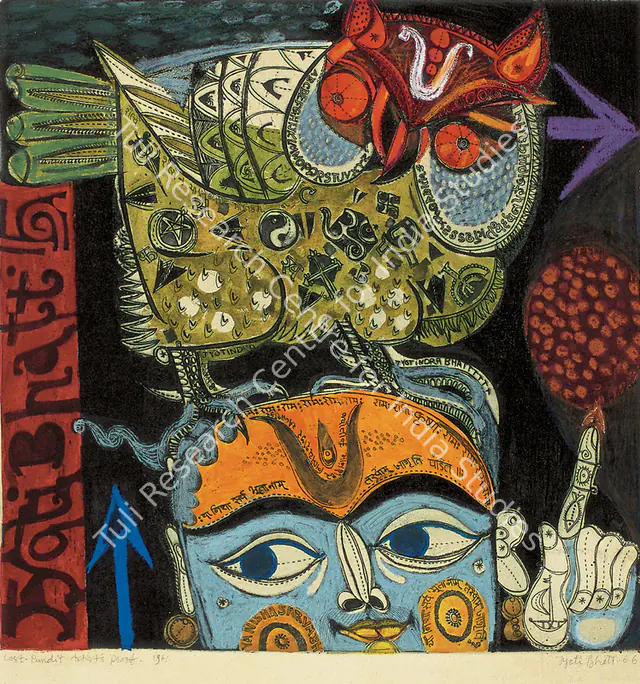
- Jyoti Bhatt's iconic etching “Lost Pundit” is among the featuring works in the exhibition. A pioneering Indian artist, printmaker, and photographer, best known for his contributions to modern printmaking in post-independence India, Bhatt developed a unique visual language by drawing extensively from living traditions including ritual markings and rural craft and folk practices. One of his widely recognisable etchings titled 'Lost Pundit' epitomises a sense of harmony and wit both visually and thematically: an owl is perched atop a somewhat whimsical yet enigmatic figure, a learned man, traditionally associated with knowledge and authority, who appears disoriented or out of place. Bhatt often draws on archetypal figures from Indian society, and here the “Lost Pundit” represents one such figure. This etching is one of Bhatt's early works to be shown at his significant one-man show of prints and paintings at Gallery Chemould in 1967. Many rare visual narratives and artistic expressions come together in 𝘼𝙡𝙡 𝙇𝙞𝙫𝙞𝙣𝙜 𝙎𝙤𝙪𝙡𝙨 Expressed in the Modern and Contemporary Fine & Popular Indian Arts, a compelling exhibition curated by Neville Tuli that explores the 16th Research Category for India Studies- ""The Animal Human Nature Continuum"" on 5th to 11th May 2026 at 📍 Visual Arts Gallery, India Habitat Centre, Lodhi Road, New Delhi 110003 Visit Jyoti Bhatt's Body of Work section on the tuliresearchcentre.org to explore more exhibitions of the master.
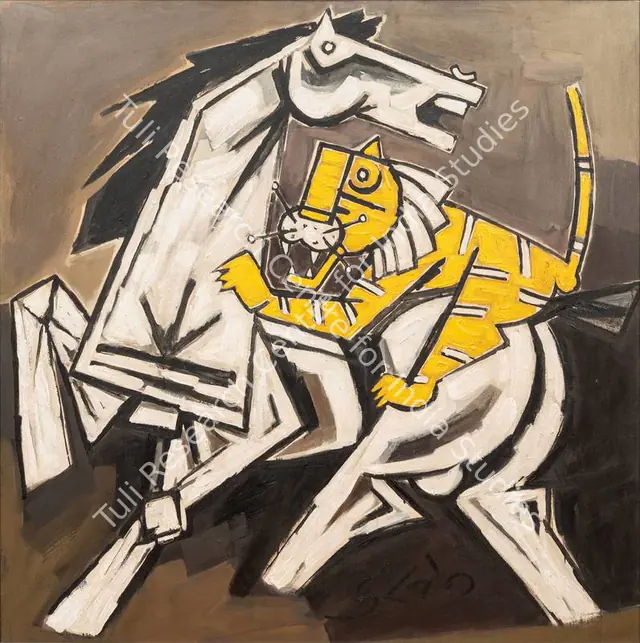
- One of the foremost Indian modernists of the 20th century, MF Husain is recognizably the most popular painter of horses. His horses leap and gallop in agonizing, abstracted movements across the length and breadth of his canvases. Though modern in form, Husain remained deeply rooted in India, and his imagery draws from the vast reservoir of the country's mythologies, rituals, and visual traditions. His works are thus both intensely personal and broadly archetypal. Growing up, a major source for Husain's horses was the iconic Duldul, Imam Husain's horse in the battle of Karbala, whose decorated image was carried during the Muharram processions in Indore that Husain had often watched in his boyhood. The symbol of the tiger is another bearer of myth and identity for Husain, at once the 𝙑𝙖𝙝𝙖𝙣𝙖 of the goddess and a national emblem. Rendered in stylized, angular forms, his tiger departs from naturalism and harks back to the miniature paintings and stone sculptures of the sub-continent. Many rare visual narratives and artistic expressions come together in 𝘼𝙡𝙡 𝙇𝙞𝙫𝙞𝙣𝙜 𝙎𝙤𝙪𝙡𝙨 Expressed in the Modern and Contemporary Fine & Popular Indian Arts, a compelling exhibition curated by Neville Tuli that explores the 16th Research Category for India Studies— "The Animal Human Nature Continuum" on 5th to 11th May 2026 at 📍 Visual Arts Gallery, India Habitat Centre, Lodhi Road, New Delhi 110003 Visit the Integrated Timeline of the artist on tuliresearchcentre.org for an extensive, in-depth analysis of the life and works of one of India's most celebrated artists!
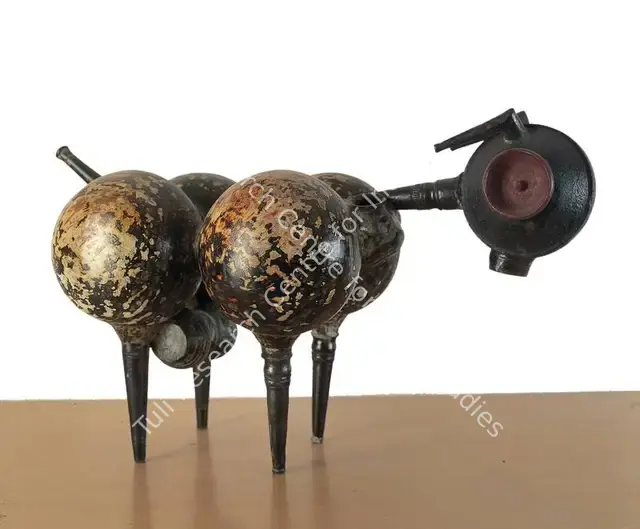
- Laxma Goud is a painter, draughtsman, sculptor and one of India’s finest printmakers. Goud’s childhood was spent in Telangana's village-an environment that shaped his sensibility in the years to come. Goud received his training in drawing and painting at the Government College of Fine Arts and Architecture in Hyderabad and studied Mural Painting under veteran artist K.G. Subramanyan in the 1960s at Baroda. To Goud, urban middle-class morality either repressed sexuality or treated it as taboo while rural societies had an unselfconscious and non-prudish attitude towards it. It is no surprise then that many of Goud’s works were overtly sexual in nature, fusing rural imagery with uninhibited eroticism. While his mastery over printmaking is reflected in his monochromatic copper plate etchings, he expanded into sculptural language in the 1980s utilizing materials such as terracotta and bronze. Goud's goat reflects a heavy sculptural form, returning to his traditional roots of Andhra’s craft traditions like leather puppetry and terracotta sculpting. Goud's goats hark, of course, to those dormant indigenous influences but they also, to some extent, remind one of the goat renderings of Picasso, who had famously kept a pet goat named Esmeralda. In both cases, the goat emerges not merely as a pastoral motif but as a charged and affectionate presence too. In the Indian subcontinent, the goat occupies a long-standing place within agrarian and ritual life, tied closely to everyday economy and forming part of rural systems of livelihood across regions. In Goud's work, the goat is held within this spectrum of memory and the conditions of rural life.
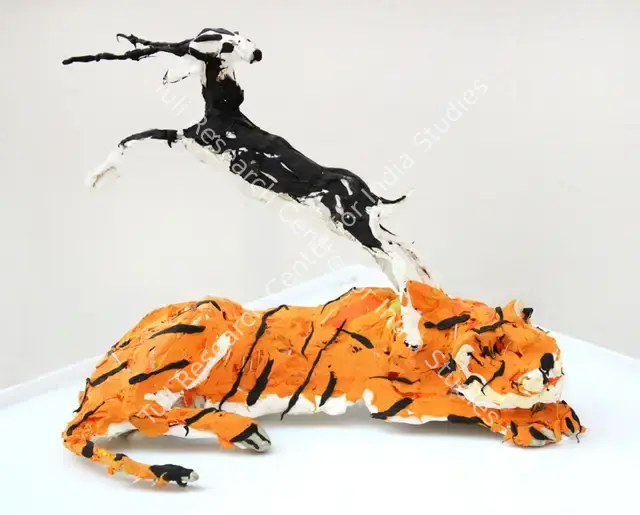
- Amit Ambalal’s exquisite papier mache sculptures embody his larger philosophy of life: to remain inquisitive, playful and humorous, and to embrace life with joy, much like the canine figures that often animate his works. For him, art is an outward expression of an inner spiritual experience, something that is beyond just intellect. Belonging to an industrialist family, Ambalal spent his childhood immersed in stories of Indian mythology wherein the demarcation between reality and mythology often dissolved, and where animals mingled freely with humans. While he was expected to take over his family's business, Ambalal chose to pursue the arts and got trained under veteran artist Chhaganlal Jadav. In Ambalal's papier mache sculptures, a vibrant menagerie of animals emerge as protagonists in his artistic narratives. Inspired by the Pichwais of Nathdwara, he viewed life as Leela or divine play, where all beings, whether human or animal, are interconnected participants. His animals, from pouncing tigers to galloping dogs and leaping and brachiating monkeys are often suspended mid-action on slender rods, creating a sense of weightlessness and motion in a carnivalesque arrangement.
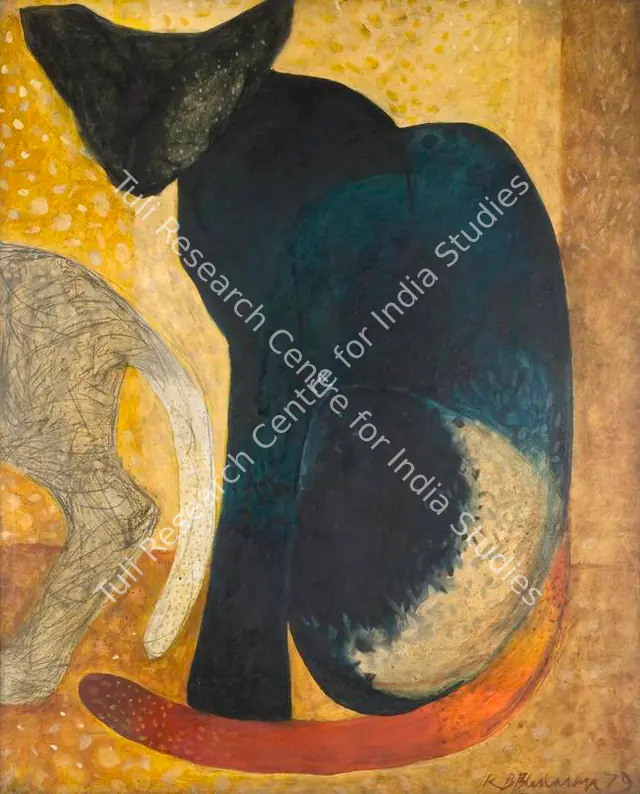
- R.B. Bhaskaran is associated with the Madras Art Movement, often working through recurring motifs and symbolic forms. The cat, within Indian domestic and visual culture, occupies a familiar yet ambiguous space both companion and elusive observer, moving between intimacy and distance. In this work, Bhaskaran elongates and distorts the feline form, allowing it to stretch across the pictorial surface. The animal becomes less a subject and more a sign fluid, shifting, and quietly expressive. Its presence carries both playfulness and unease within the composition. Visit the website to discover more on the artist’s work.
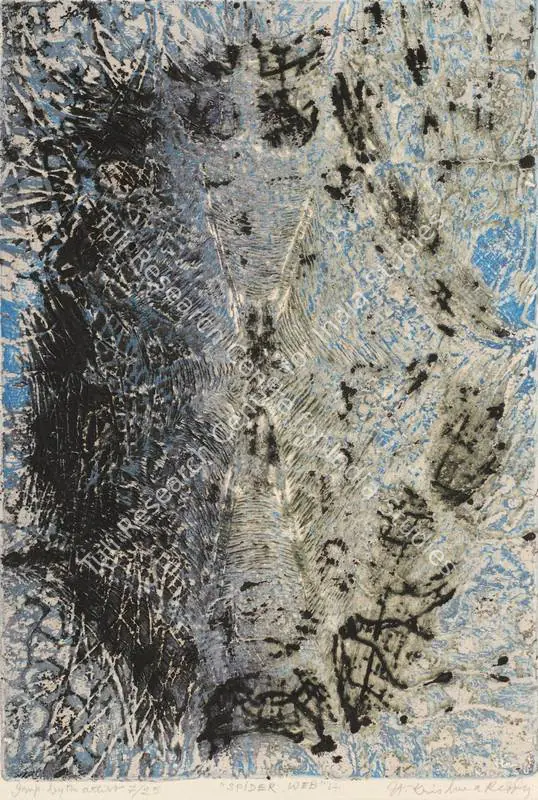
- Krishna Reddy, one of the world's finest printmakers, developed complex viscosity printing techniques to build layered surfaces for his organic artforms, resembling webs or marine organisms which emerge through dense tonal structures. The insect or organism becomes a study of interconnected systems and movement, rooted through a brilliant aesthetic fusing of his individual creative spirit and his unique educational experiences and inspirations at Rabindranath Tagore's Santiniketan with Nandalal Bose, the Slade School of Art with Henry Moore, the Academie Grande Chaumiere with Ossip Zadkine, Atelier 17, Paris with Stanley Hayter and Academia Di Belle Arti Di Brera with Marino Marini during the period 1947-57.
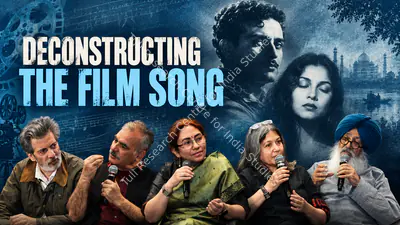
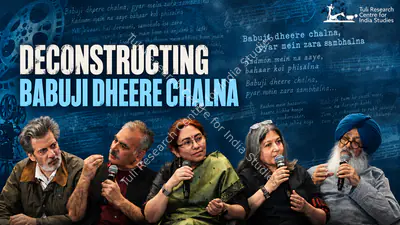
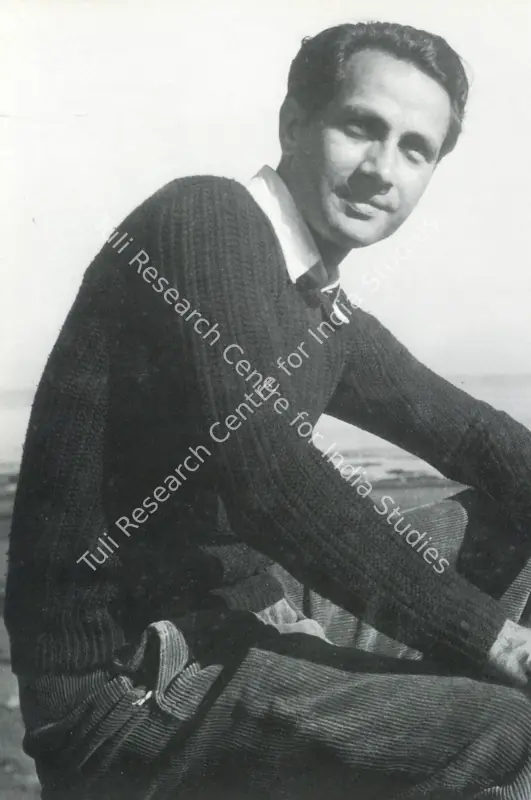
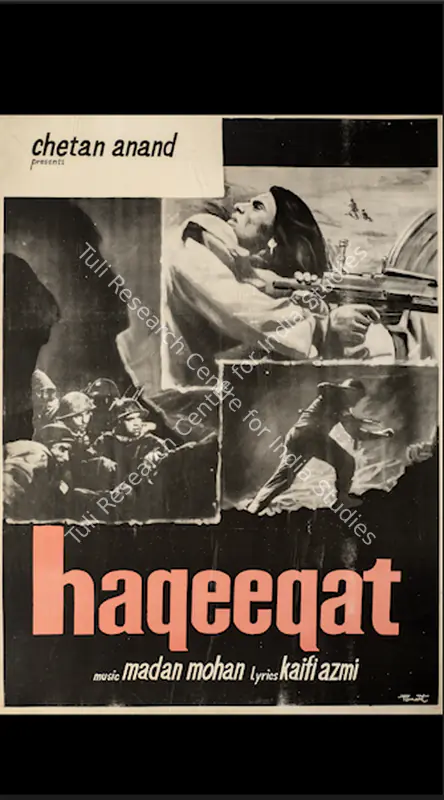
- "Who was Chetan Anand — and why does his cinema still carry such a deep, emotional charge? In this clip, his son Ketan Anand introduces the filmmaker behind Haqeeqat (1964), a man who ""suffered in silence for a long time,"" and the learning he received from that pain, which poured into his films. It was during this time that Kaifi Azmi wrote some of his most remarkable poems for him. The product of this collaboration was a war song that became part of India's collective memory. As Ketan Anand puts it, ""This is not a jingoistic song… this is the pain of human stupidity."" No chest-beating, but a meditation or rather a question on why we go on fighting and killing while talking of love and peace. Somewhere, it is out of this pain that one must evolve. And Anand's cinema did exactly that. This video is an excerpt from the session with Ketan Anand, Ravikant, Pavan Jha and Neville Tuli, part of the series 'Deconstructing the Film Song: A Musical Glue for Nation-Building,' presented by the Tuli Research Centre for India Studies (TRIS) as part of the 7th Self-Discovery via Rediscovering India Festival."
- "What does a patriotic song sound like when it refuses to celebrate aggression? ""Kar Chale Hum Fida"" from Chetan Anand's Haqeeqat (1964) answers that question with a stillness that has stayed with the Indian audiences for over six decades. In this discussion, Ravikant, Professor, CSDS (The Centre for the Study of Developing Societies), highlights that although it is a song about war, it subverts expectations by being devoid of any swashbuckling aggression. The song speaks not of conquest or victory but of sacrifice and collective responsibility; a burden shared equally by soldiers, women, and the young. Kaifi Azmi's lyrics carry no triumphalism of epic proportions, rather only a quiet, devastating sense of duty. Chetan Anand's Haqeeqat released at the time when the idealism of the early independence years was falling apart and the Nehruvian generation, which had carried the dream of a new India, was fading away. The song, with war as it's background, mourns the dead, but it also speaks directly to the living, asking them what they will do with the nation left in their hands. This video is an excerpt from the session with Ketan Anand, Ravikant, Pavan Jha and Neville Tuli, ""A Musical Glue for Nation-Building: Deconstructing the Film Song"", presented by the Tuli Research Centre for India Studies (T.R.I.S.) at the 7th Self-Discovery via Rediscovering India Festival."
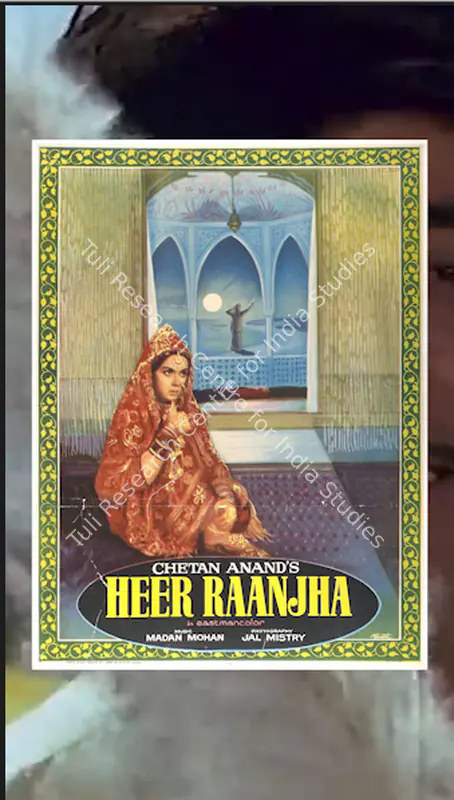
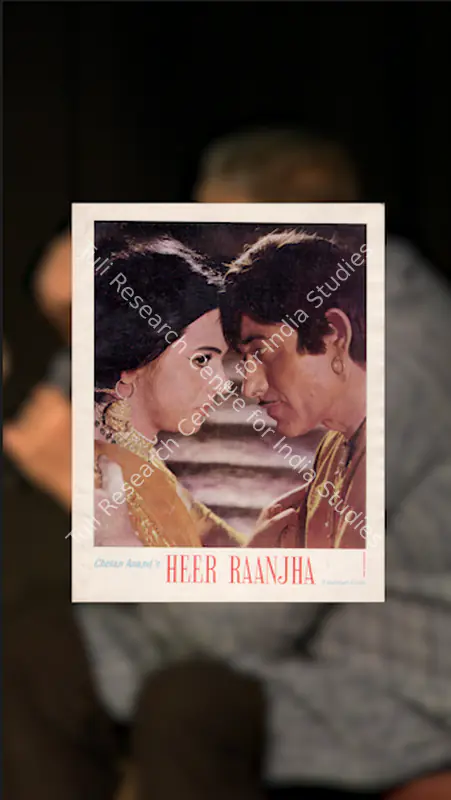
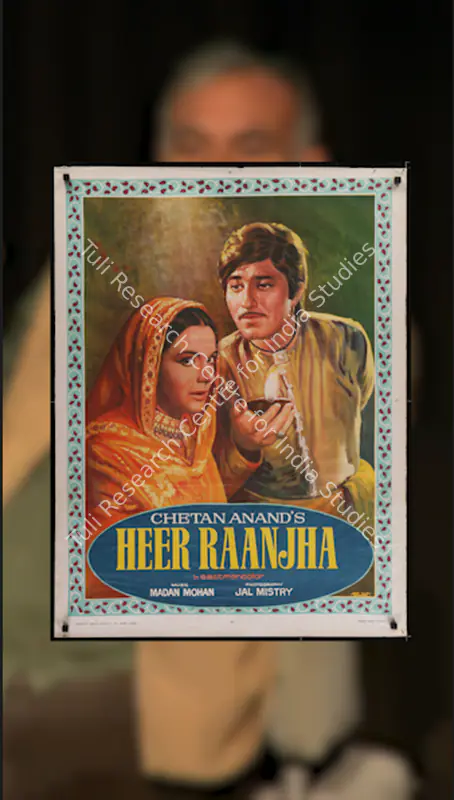
- “Milo Na Tum to hum Ghabrayen” from Chetan Anand's Heer Raanjha (1970) is the film's song of joy. Sung by Lata Mangeshkar and Mohammed Rafi, with music by Madan Mohan and lyrics by Kaifi Azmi, it captures the first flush of love as playful delight, capturing the confusion, the shyness, the sudden overflow of happiness that makes the heart ask, “What has happened to us?” Reminiscing about the song, filmmaker Ketan Anand revealed that this was the first time in the film that the colour yellow floods the screen. This change of palette signals the change of mood. After the earlier, more restrained tones, the arrival of yellow signals spring, joy and the fullness of life. “He went bananas with this song,” said Ketan Anand about his father, who expressed that joy in this song through Bhangra (traditional Punjabi folk dance) and the vibrant colours. This video is from 'A Musical Glue for Nation-Building: Deconstructing the Film Song', presented by the Tuli Research Centre for India Studies (T.R.I.S.) at the 7th Self-Discovery via Rediscovering India Festival.
- "Yeh Duniya Yeh Mehfil Mere Kaam Ki Nahi" from Chetan Anand's Heer Raanjha (1970) is more than a sad song, it is a declaration that love is above all. Sung by Mohammed Rafi, with lyrics by Kaifi Azmi and music by Madan Mohan, it turns the pain of separation into a universal cry about the world, its gatherings and its celebrations; none of which matters once the love is lost. In this reel, film historian Pavan Jha examines the Sufi love at the song's core, where longing for the beloved doubles as a spiritual quest, and "duniya" and "mehfil" stand for everything that feels empty in absence of love. Madan Mohan's genius lies in keeping this firmly within the idiom of a popular film song, never pushing it into another genre, but crafting a melody that is soulful, accessible and instantly memorable. A deeply philosophical, Sufi-inflected lyric, the song reached the masses as a hit film number, and this is the reason why, decades later, the song remains a touchstone for heartbreak, longing, and the simple, powerful idea that love is the only thing that truly matters. This video is from 'A Musical Glue for Nation-Building: Deconstructing the Film Song', presented by the Tuli Research Centre for India Studies (T.R.I.S.) at the 7th Self-Discovery via Rediscovering India Festival.
- Chetan Anand shot heartbreak the way other directors shot war, against a landscape vast enough to hold it. "Yeh Duniya Yeh Mehfil Mere Kaam Ki Nahi" from Heer Raanjha (1970) is a song of heartbreak staged against stunning visuals. Sung by Mohammed Rafi, with music by Madan Mohan and lyrics by Kaifi Azmi, it turns separation into philosophy. In this clip, Ravikant, Professor, CSDS (Centre for the Study of Developing Societies), calls the song one of the best statements on loss and the ambition to win it back. What makes the song unforgettable is the way voice, music and visuals come together, and Chetan Anand's use of landscape gives it a vast, almost mythical quality, creating a fantasy space where pain can be larger than life, where the song can say what the narrative cannot. The result is a beautiful moment in Indian cinema, where heartbreak, spirituality and landscape fuse into a deeply moving, visually rich film song that has become a timeless expression of love. This video is from 'A Musical Glue for Nation-Building: Deconstructing the Film Song', presented by the Tuli Research Centre for India Studies (T.R.I.S.) at the 7th Self-Discovery via Rediscovering India Festival.
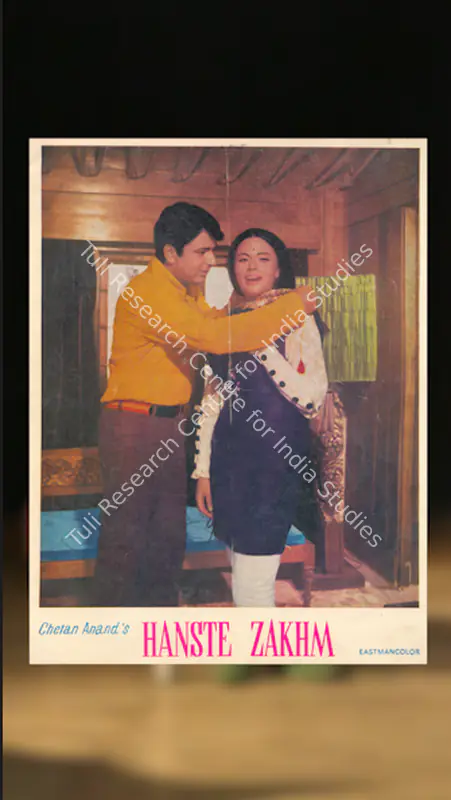
- In this clip from the workshop ""A Musical Glue for Nation-Building: Deconstructing the Film Song,"" Ketan Anand, son of legendary filmmaker Chetan Anand, recalls how he brokered the casting of Navin Nischol in the lead role of Hanste Zakhm (1973), sharing a first-hand account of the decisions that shaped the film. Featuring Ketan Anand, Ravikant, Pavan Jha, and Neville Tuli as panelists, this session was presented by the Tuli Research Centre for India Studies (T.R.I.S.) at the 7th Self-Discovery via Rediscovering India Festival.
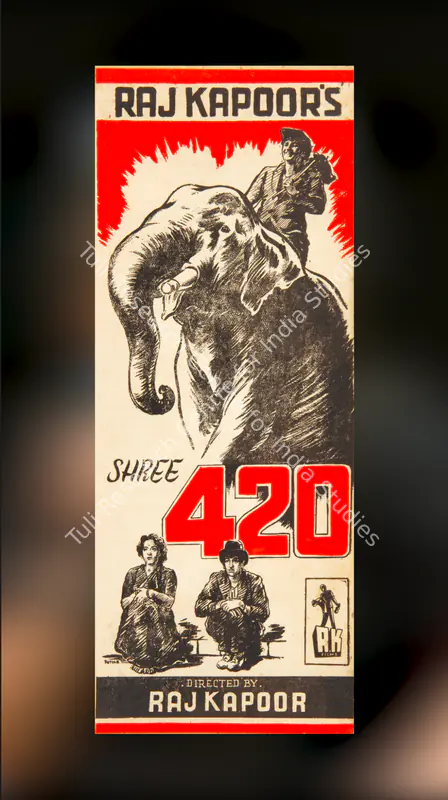
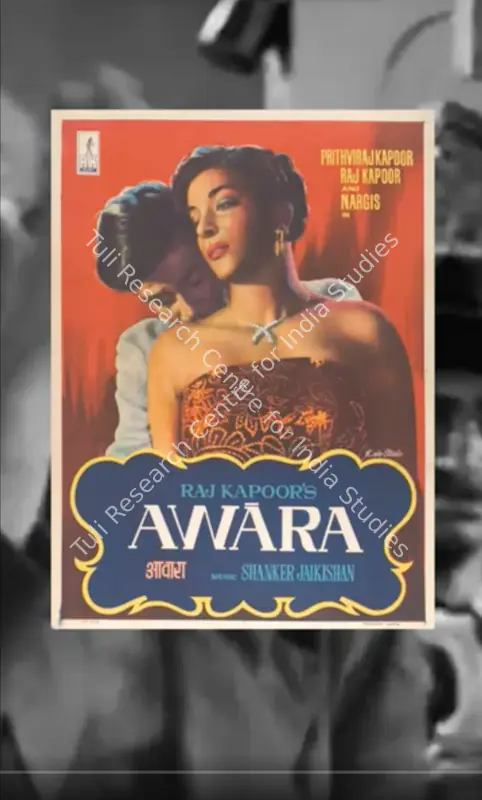
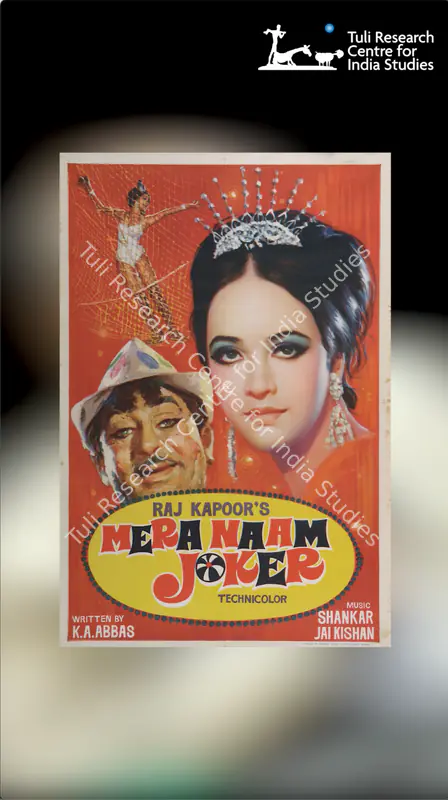
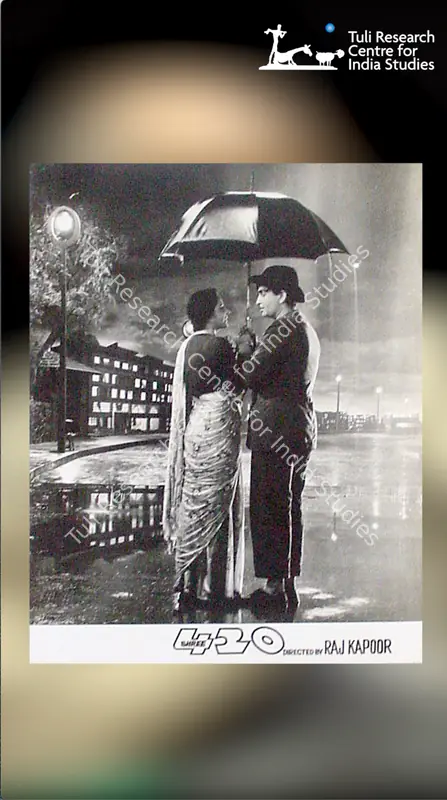
- "Raj Kapoor's tramp, the wide-eyed wanderer in oversized clothes and a battered hat, was one of Hindi cinema's most deliberate creative constructions. Borrowed in spirit from Charlie Chaplin but rooted firmly in the anxieties of post-independence India, the figure carried the dreams and displacements of a nation still finding its footing. "Awara Hoon" from Awara (1951) became the song that gave that figure its voice, and its reach was extraordinary. In this clip, the panel discusses how the film introduced Raj Kapoor to audiences across the erstwhile Soviet Union, China and beyond. Composer-Writer Madan Gopal Singh points to ""Ramaiya Vastavaiya"" from Shree 420 (1955) as a moment of genuine creative risk, where Lata Mangeshkar's voice moves the song from a collective street chorus into something laden with intimate individuality. The panel also deconstructs two more songs from Raj Kapoor's career: "Pyar Hua Ikrar Hua" from Shree 420 (1955) and "Jeena Yahan Marna Yahan" from Mera Naam Joker (1970), examining what makes them endure across generations. In the workshop "A Musical Glue for Nation-Building: Deconstructing the Film Song," organised by the Tuli Research Centre for India Studies (T.R.I.S.), Madan Gopal Singh, Juhi Saklani, Ravikant, and Amit Khanna, in conversation with Neville Tuli, explore the lasting appeal of these songs and what they reveal about India's greatest showman's vision of cinema, emotion, and India itself.
- "Ramaiya Vastavaiya" from Shree 420 (1955) is much more than a folk street song. In this clip, the panel unpacks the layers beneath its apparent simplicity. Writer and Cinephile Juhi Saklani reflects on Shailendra's contribution to the building of the Raj Kapoor persona, noting that his lyrics carry a quality of innocence and moral incorruptibility that is, in its own way, a political stance. To sound that guileless in a world of compromise is itself an act of resistance. Ravikant picks up on a related thread, observing that the image of the worker or peasant singing while working, as in this song, is a recurring and almost static theme in Hindi cinema's representation of labouring life. This clip is from the workshop "A Musical Glue for Nation-Building: Deconstructing the Film Song", presented by the Tuli Research Centre for India Studies (T.R.I.S.) at the 7th Self-Discovery via Rediscovering India Festival, featuring Madan Gopal Singh, Amit Khanna, Ravikant and Juhi Saklani in conversation with Neville Tuli.
- What exactly is “Awaara Hoon” from Raj Kapoor's Awaara (1951) about? A song that lives inside too many uncertainties keeps asking the question, am I a wanderer, or a star in orbit (Gardish mein hun ya aasman ka taara hoon). There is no home, no belongingness, no clear destiny, only movement, longing, and doubt. It is the sound of a world that's unsure of itself, and still singing joyously. Visually, the influence of Charlie Chaplin is unmistakable. From Raj Kapoor's attire to his tramp's gait, the vagabond persona is shaped by Chaplin's image of the little man buffeted by forces beyond his control. The song turns that figure into a symbol of the post-independence anxiety about entitlement, class, and the future; yet capturing the emotion of being spirited, hopeful, and strangely free. The collaboration of Raj Kapoor, the lyricist Shailendra, composers Shankar–Jaikishan, and singer Mukesh, creates a song that is at once both philosophical and popular. It poses questions about destiny and identity while also reaching millions as an unforgettable film hit. Panelists Amit Khanna, Madan Gopal Singh, Ravikant, Juhi Saklani, and Neville Tuli, examine this iconic song, sung by Mukesh, with lyrics by Shailendra and music by Shankar–Jaikishan in this video from 'A Musical Glue for Nation-Building: Deconstructing the Film Song' session, presented by the Tuli Research Centre for India Studies (T.R.I.S.) at the 7th Self-Discovery via Rediscovering India Festival.
- "Jeena Yahan Marna Yahan" from Mera Naam Joker (1970) was penned by Shailendra, composed by Shankar-Jaikishan, and sung by Mukesh. The song is situated at the philosophical heart of Raj Kapoor's most personal and ambitious film. The film was a commercial disaster on release, and as Neville Tuli notes, both the song and the film found the audiences' acknowledgement only years later. Filmmaker-Lyricist Amit Khanna reveals a lesser-known detail about its making: the song was shot in Delhi at the Gemini Circus, but it had become extremely difficult to gather all the stars, who by that point had become huge in their own careers, at one point of time. The scenes featuring them were shot solo and then later assembled in Bombay to be inserted into the song sequence. Ravikant, Professor, CSDS (The Centre for the Study of Developing Societies), reads the song as both a philosophical and a deeply materialistic reflection on existence. There is a continuity in the persona that may take rebirth, he argues, but it is not the same person who returns. The world itself is one's heaven and hell simultaneously, and that, he suggests, is why we return to this song whenever life demands reflection. This clip is from the workshop "A Musical Glue for Nation-Building: Deconstructing the Film Song," conducted by the Tuli Research Centre for India Studies (T.R.I.S.) at the 7th Self-Discovery via Rediscovering India Festival, featuring Madan Gopal Singh, Amit Khanna, Ravikant, Juhi Saklani, and Neville Tuli.
- "Pyar Hua Ikrar Hua" from Shree 420 (1955) at first glance is a song about two people standing in the rain, declaring their love for each other with nothing to their names. This conversation between the panelists peels back the layers, finding in it a richness that a casual listen rarely reveals. Filmmaker-Lyricist Amit Khanna opens with an anecdote about the battle between Raj Kapoor and Shankar-Jaikishan over whether Manna Dey or Mukesh should sing the song. It was Manna Dey who finally got the opportunity, and his voice immortalised it. Ravikant, Professor, CSDS (The Centre for the Study of Developing Societies), draws a parallel between the song and Roland Barthes' A Lover's Discourse, noting how the lovers believe their love to be eternal and absolute. For Ravikant, that sense of transcendence finds its most powerful visual expression when the camera pans to three young children, an image of radiant vitality that lifts the moment beyond the two figures standing in the rain. Composer-Writer Madan Gopal Singh reads the song through a different lens, comparing the condition of the two destitute lovers to that of newly independent India itself, a nation full of longing, uncertain of its footing, but reaching toward something better. This clip is from the workshop "A Musical Glue for Nation-Building: Deconstructing the Film Song" presented by the Tuli Research Centre for India Studies (T.R.I.S.) at the 7th Self-Discovery via Rediscovering India Festival, featuring Madan Gopal Singh, Amit Khanna, Ravikant, Juhi Saklani, and Neville Tuli.
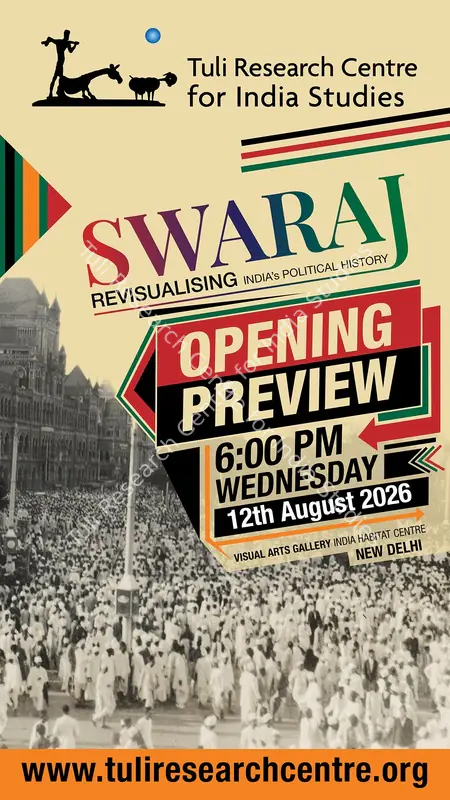
- "What does 𝗦𝘄𝗮𝗿𝗮𝗷 truly mean? Is freedom achieved at a single historic moment or period, or must self-rule be continually imagined, questioned and renewed? India's journey towards Swaraj was shaped not by one voice or one path, but through reform and resistance, revolution and non-violence, political thought, public protest, art, print, photography, cinema and the collective will of its people. The Tuli Research Centre for India Studies (T.R.I.S.) presents 𝗦𝗪𝗔𝗥𝗔𝗝: 𝗥𝗲𝘃𝗶𝘀𝘂𝗮𝗹𝗶𝘀𝗶𝗻𝗴 𝗜𝗻𝗱𝗶𝗮'𝘀 𝗣𝗼𝗹𝗶𝘁𝗶𝗰𝗮𝗹 𝗛𝗶𝘀𝘁𝗼𝗿𝘆, a pioneering exhibition curated by Neville Tuli. Bringing together rare artworks, prints, photographs, books, film publicity art, political propaganda and visual-textual-audio archives, SWARAJ traces India's complex journey towards political self-rule and self-discovery. From early European coastal encounters, the Bengal Renaissance and the First War of Independence in 1857 to the rise of Bharat Mata, the Tiranga, Gandhiji's inspired satyagraha, civil disobedience and mass mobilisation, the exhibition explores how the idea of India was envisioned, contested and transformed. It journeys through revolutionary movements and non-violence, subaltern uprisings, the Partition, the Constitution, the integration of the Princely States, the Emergency, wars, civic dissent and people's protests. It also foregrounds the vital role of artists, photographers, publishers, newspapers, journals, cartoons and cinema in recording and shaping the nation's political consciousness. SWARAJ invites us to encounter history not as something distant or settled, but as a daily living inheritance that continues to influence who we are and how we understand freedom, identity, and ourselves today. Watch the video for a glimpse into this expansive visual journey, and follow the exhibition as it revisualises India's political history through art, image, text and sound.
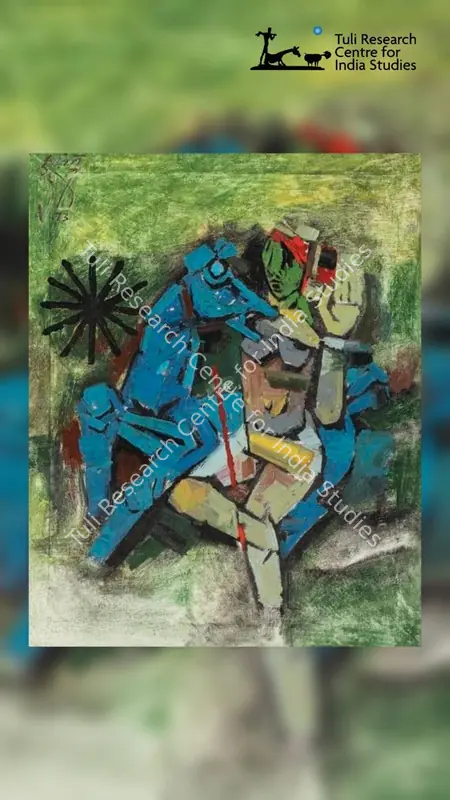
- India’s energy and rhythm lives within her colours, forms, lines, textures, and stories. Art is that glorious way of seeing and reading India as a vibrant continuum of ideas, emotions, experiences and the beyond. Today on his birthday, we remember M.F. Husain, a key figure in the history of modern Indian art and India, whose restless imagination helped to transform the visual language of modern India. Maqbool Fida Husain (17th September 1915, Pandharpur) began his career by painting cinema hoardings and designing children’s furniture and toys in Bombay. As a member of the Progressive Artists’ Group, brought in by his dear friend and early mentor - Francis Newton Souza - he stood at a unique juncture as part of the first generation of post-Independence modernists. Curious and restless by nature, Husain drew inspiration from everything - epics, village life, cities, horses, women, music, cinema, the political life of the nation. His swift lines and bold compositions, along with his recurring motifs, made his work instantly recognisable. His creativity extended to filmmaking, with “Through the Eyes of a Painter” receiving the Golden Bear for Short Film at the Berlin International Film Festival in 1967. Awarded the Padma Shri, Padma Bhushan, and Padma Vibhushan, and nominated to the Rajya Sabha in 1986, Husain remained a graphic storyteller and visual documenter of the changing landscape of his time. On his birth anniversary, Tuli Research Centre for India Studies pays tribute to the artist and the remarkable life behind the art. In this reel, Neville Tuli briefly shares his first discussion with M.F. Husain in October 1993, offering a personal glimpse into an encounter with one of modern India’s most distinctive artists.
Calendar 24
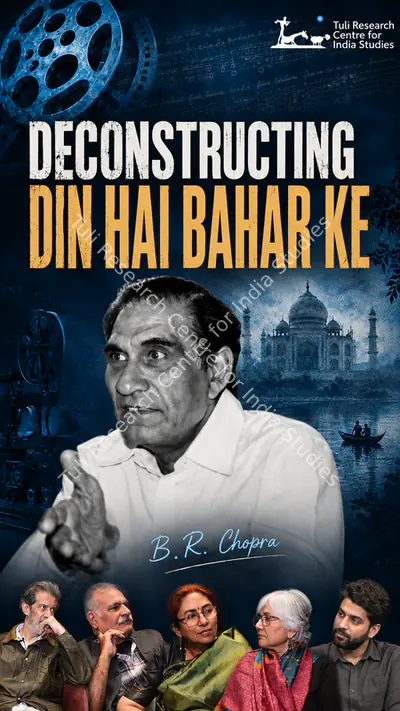
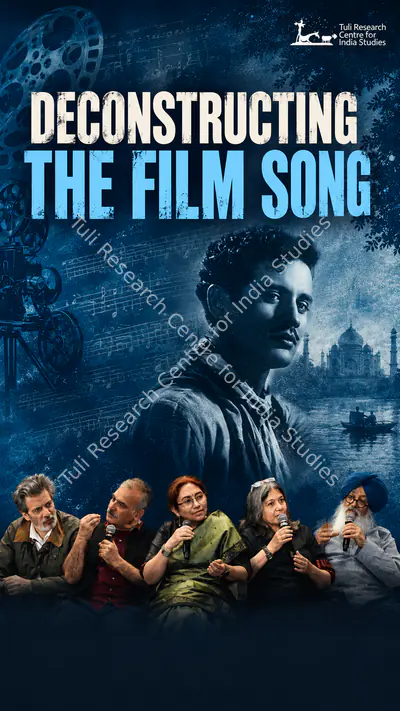
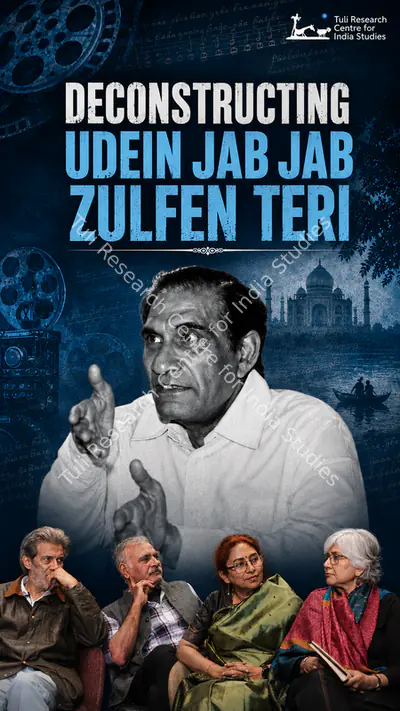
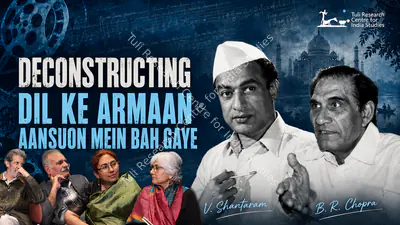
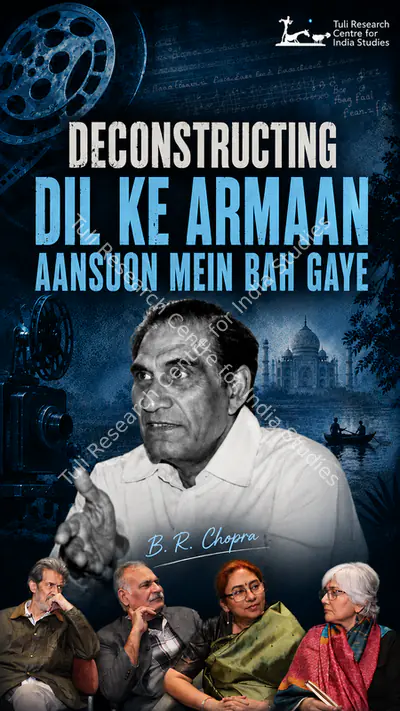
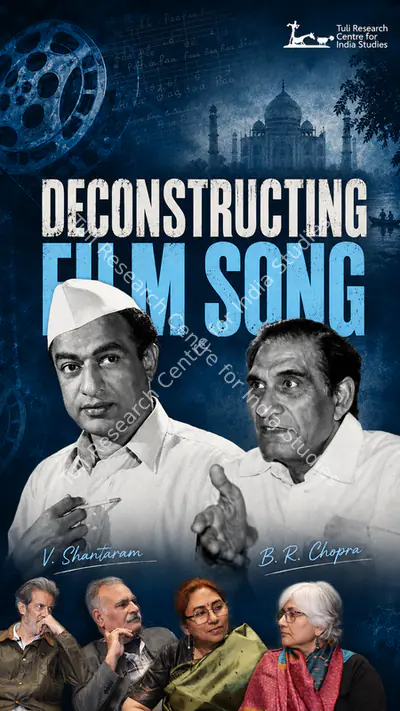
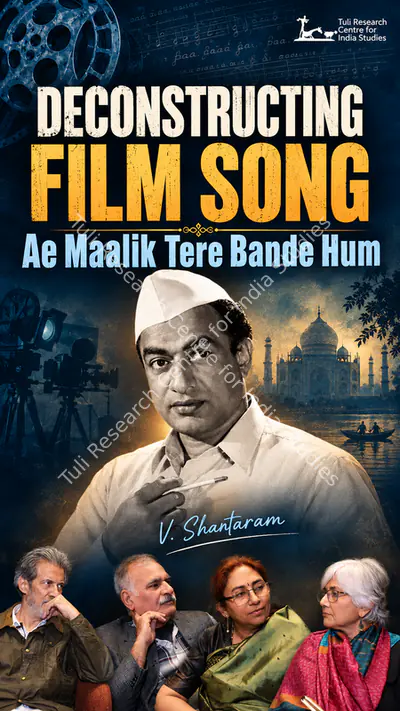
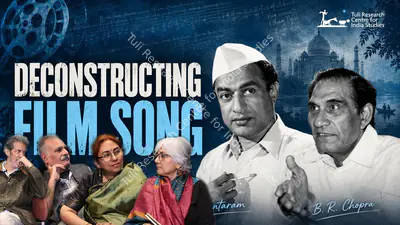
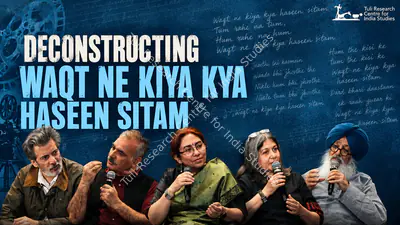
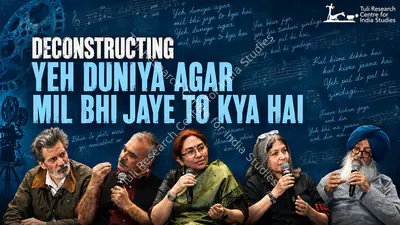
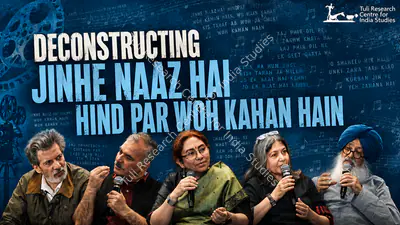
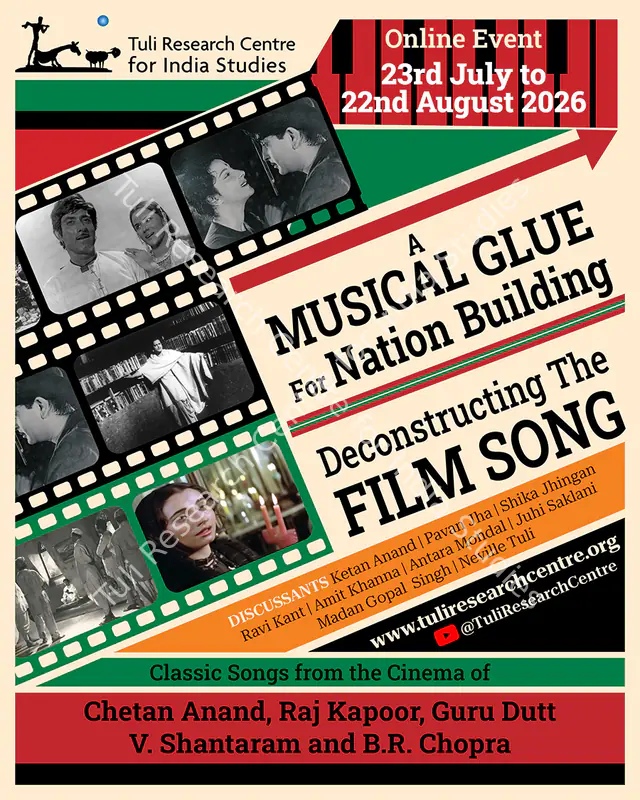
- ArchivedOffline-Online EventProject 80A Musical Glue for Nation-BuildingDeconstructing the Film Song23rd July - 22nd August 2026Ketan Anand | Ravikant | Pavan Jha | Madan Gopal Singh | Amit Khanna | Juhi Saklani | Antara Mondal | Shikha Jhingan | Neville TuliA key section of the India Studies framework at The Tuli Research Centre for India Studies (T.R.I.S.) is “Deconstructing the Film Song”. It began with a series of four workshops during our Self-Discovery via Rediscovering India Festival Series that brought together leading scholars & academics, film practitioners & students, along with fans of the Hindi film song. The objective of these workshops was to deconstruct iconic Hindi film songs to examine their formation across music, lyrics, playback, choreography, directorial visualisation, as they fuse into sites where aesthetics, ideology, and performance intersect, so as to help clarify the nature of India and her relationship to the film song. The Hindi Film Song functions as a narrative device, conveying myriad textures of emotion through melody, voice and poetry. As cultural texts that encode memory, desire, and ideology, songs are integral to the circulation and resonance of films in the public realm. Over time they have become autonomous bundles of creative energy - the glue that binds us over time, articulating and perhaps even defining the idea of Indianness. These first Workshops were an attempt to understand the nature and power of this glue, while contemplating the ways to situate it within TRIS' academic framework for Contemporary India Studies.Read More →
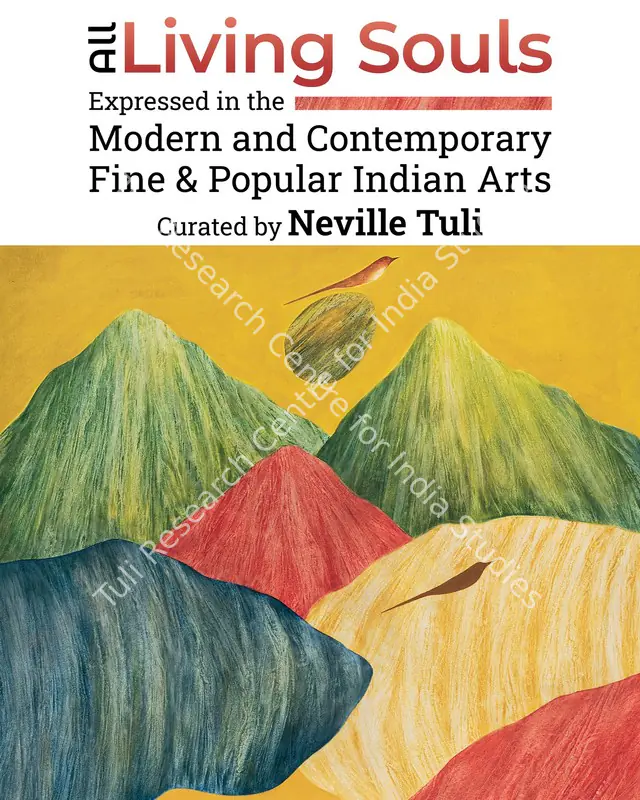
- ArchivedExhibitionProject 79All Living SoulsExpressed in Modern & Contemporary Fine and Popular Arts | Curated by Neville Tuli6th - 11th May 202610:30am - 7:30pmVisual Arts Gallery, India Habitat Centre, Lodhi Road, New Delhi - 110003
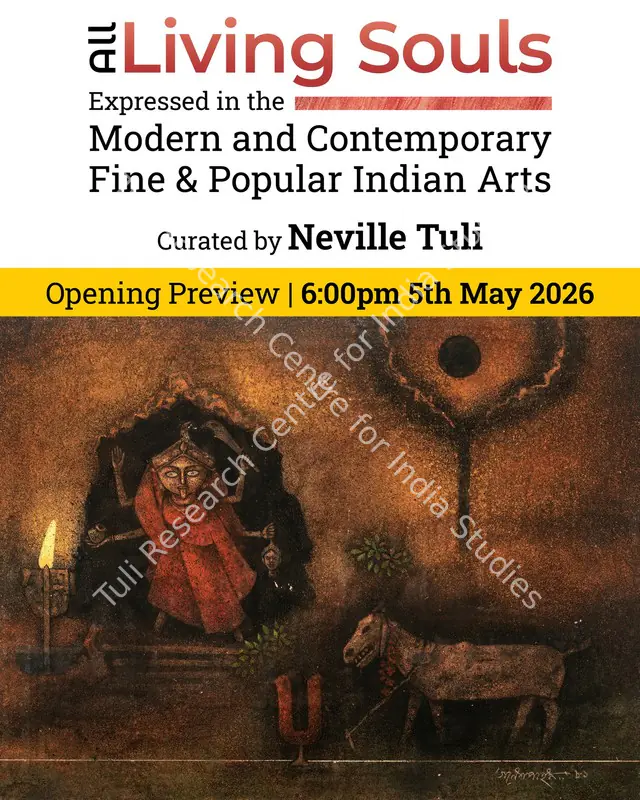
- ArchivedOpening PreviewProject 78All Living SoulsExpressed in Modern & Contemporary Fine and Popular Arts | Curated by Neville Tuli5th May 20266:00pm - 9:00pmVisual Arts Gallery, India Habitat Centre, Lodhi Road, New Delhi - 110003
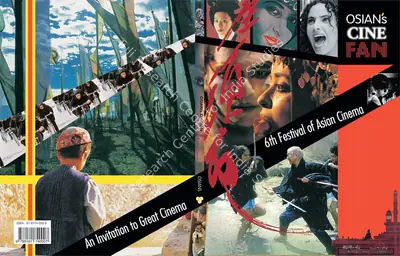
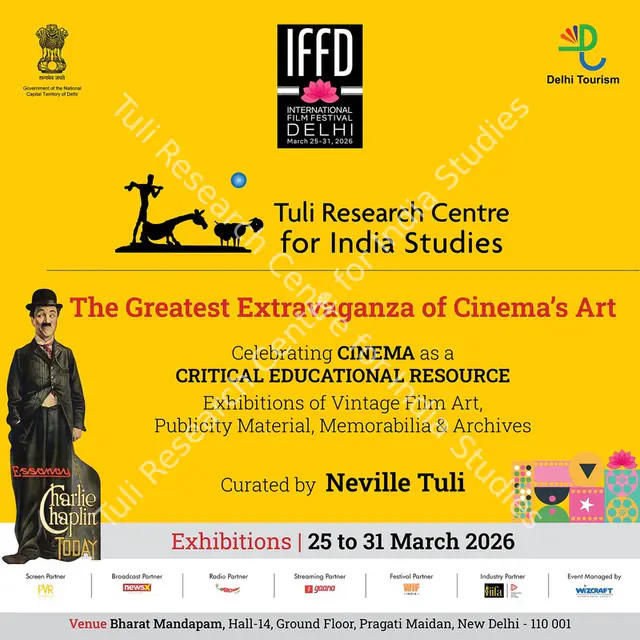
- ArchivedExhibitionProject 65The Greatest Extravaganza of Cinema's Art25th - 31st March 202611:00am - 7:00pmBharat Mandapam, Hall-14, Ground Floor, Pragati Maidan, New Delhi - 110001As we near sharing the vast online India Studies knowledge base on tuliresearchcentre.org with the world, we end with our last grand archival Exhibition on the rare and vintage cinematic arts. The Expo covers over 110 years of cinematic art, created by some of the finest film directors, cinematographers, art directors, technicians and designers working in cinema from India, Hollywood, Japan, Germany, France, and Poland. It is also a key principle at the Tuli Research Centre for India Studies (TRIS) to support new and nascent International Film Festivals in whatever capacity possible. Hence it is our privilege to help the International Film Festival of Delhi (IFFD) successfully launch its first edition on 25th March 2026. In the pioneering tradition of IFFI, and as Head of the erstwhile and much respected Osian's-Cinefan Festival for Asian and Arab Cinema with my dearly departed friend and Founder of Cinefan - Aruna Vasudev - we know what energy, expertise and commitment is required to galvanise and inspire the cinematic fraternities of Delhi, India and the rest of the world. It is a very serious and difficult task. Our audiences are demanding and to attract the young and non-cinephile is also no easy task. I hope these exhibitions will help the public grasp how deeply history is living in the contemporary. That contemporary life or creativity cannot achieve its best version without knowing and respecting the work of the best who came before us, nurturing and guiding our path with their service and vision. We look forward to welcoming you to Bharat Mandapam Hall 14 in the days to come. Please register at https://www.iffdelhi.com for the films and other events, it is free to all.Read More →
- ArchivedConversationProject 59Relocating our poetic sensibilities within a learning framework for India Studies12th February 20264:00pmM.L. Bhartia Auditorium, Alliance Francaise de Delhi, 72 K.K. Birla Lane, Lodi Estate, New Delhi, 110003Udayan Vajpeyi & Neville Tuli
- ArchivedConversationProject 55There are no lines to be drawnThe Philosophy and Practice regarding the formulating of Rights to the Freedom for Creative Expression11th February 20265:30pmM.L. Bhartia Auditorium, Alliance Francaise de Delhi, 72 K.K. Birla Lane, Lodi Estate, New Delhi, 110003
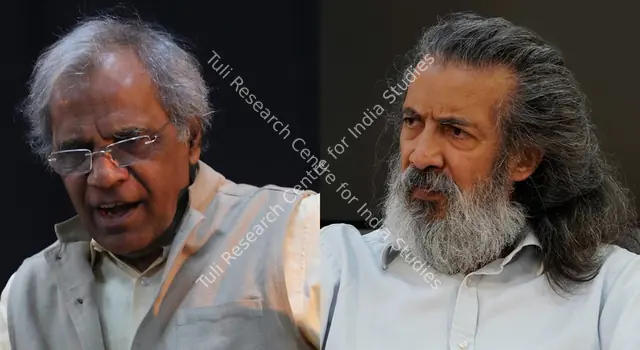
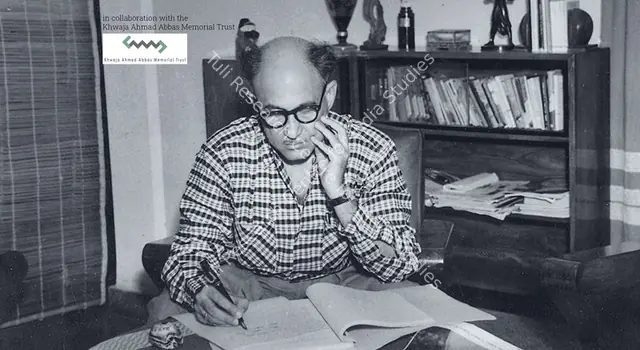
- ArchivedPanel DiscussionProject 45KHWAJA AHMAD ABBASA Karmayogi's Polymathic Vision of Love8th February 20267:30pmIndia International Centre, 1st Floor Seminar Halls, Kamaladevi Chattopadhyay Block, Max Mueller Marg, New Delhi, 110003Syeda Hameed,Neelima Azeem, Saeed Akhtar Mirza & Neville Tuli
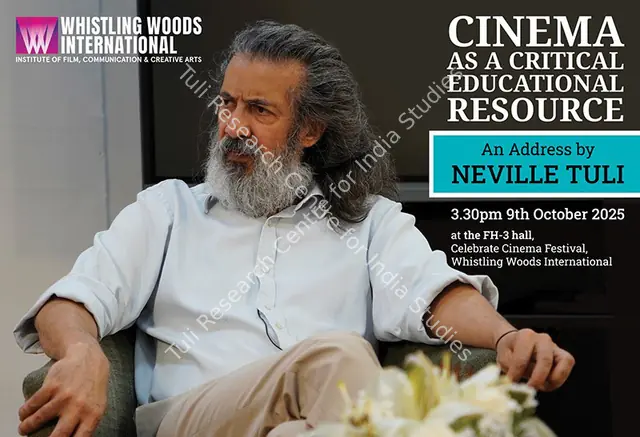
- ArchivedMasterclassProject 19Cinema as a Critical Educational Resource9th October 2025An address by Neville Tuli at the Celebrate Cinema Festival, organised by Whistling Woods International in collaboration with the Tuli Research Centre for India Studies. The address will provide insight into Tuli's unique India Studies conceptual framework where "Cinema as a Critical Educational Resource" provides the first core Research Category. His address takes forward how knowledge regarding Cinema is radically revisualised, redefined and restructured so as to build a deep and vast framework to understand ourselves, our sense of identity as creative individuals, our relationship with India, and the rest of the world, and naturally the nature of India itself, as much for the general public as for the scholar and student.Read More →
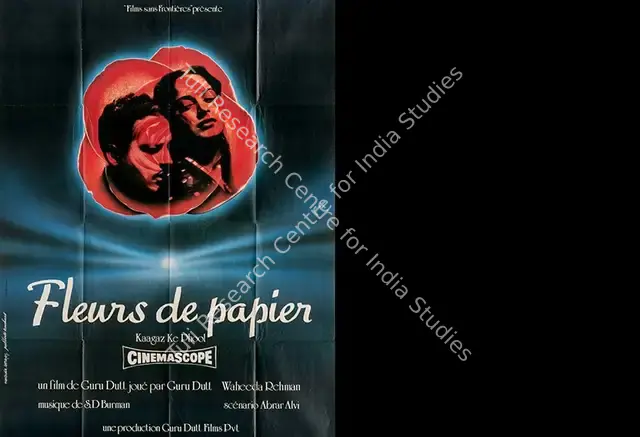
- ArchivedExhibitionProject 18A Glimpse of Guru: Rare and Vintage Artworks from the Cinema of Guru Dutt8th - 9th October 2025Tuli Research Centre for India Studies In collaboration with Whistling Woods International Presents '𝘼 𝙂𝙡𝙞𝙢𝙥𝙨𝙚 𝙤𝙛 𝙂𝙪𝙧𝙪: 𝙍𝙖𝙧𝙚 𝙖𝙣𝙙 𝙑𝙞𝙣𝙩𝙖𝙜𝙚 𝘼𝙧𝙩𝙬𝙤𝙧𝙠𝙨 𝙛𝙧𝙤𝙢 𝙩𝙝𝙚 𝘾𝙞𝙣𝙚𝙢𝙖 𝙤𝙛 𝙂𝙪𝙧𝙪 𝘿𝙪𝙩𝙩' An exhibition of rare and vintage artworks, mostly from the film publicity departments of the film-makers illuminating the many facets of Guru Dutt's artistic and cinematic journey, highlighting forms of creativity from the glorious silver-gelatin photographic prints to the grande French release poster.Read More →
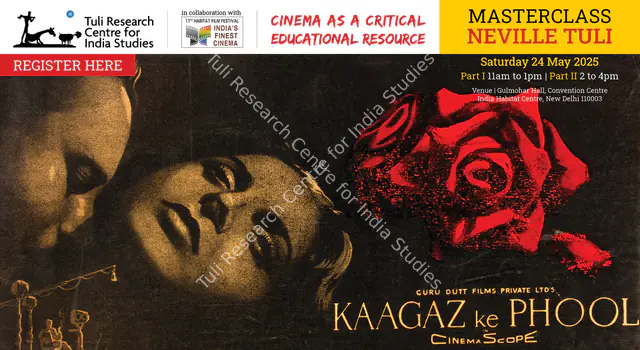
- ArchivedMasterclassProject 17Masterclass with Neville Tuli | Cinema as a Critical Educational Resource PART 223rd May 2025T.R.I.S. in Collaboration with the 17th Habitat Film Festival Cinema as a Critical Educational Resource is the 1st Research Category of Sixteen for T.R.I.S.'s India Studies framework. Its significance is amply visible in its online knowledge base tuliresearchcentre.org The Masterclass will include a walk-through of the archival exhibition on The Cinema of Shyam Benegal & Raj Kapoor with Mr Tuli. The Masterclass will not only highlight the history of Indian cinema but will also demonstrate how the T.R.I.S. online knowledge-base invites a deeper study of visual materials, embracing, equally, an enquiry into art arising from the genre of cinema – posters, song synopsis booklets, lobby cards, film and working stills, trophies etc from across the world, and their relationship to the fine and popular arts and photography.Read More →
- ArchivedMasterclassProject 16Masterclass with Neville Tuli | Cinema as a Critical Educational Resource PART 123rd May 2025T.R.I.S. in Collaboration with the 17th Habitat Film Festival Cinema as a Critical Educational Resource is the 1st Research Category of Sixteen for T.R.I.S.'s India Studies framework. Its significance is amply visible in its online knowledge base tuliresearchcentre.org To ensure that the Habitat Film Festival is not merely a viewing opportunity, but a learning experience that widens the knowledge-base of every cinephile, this year's HFF will also feature an extended masterclass by Neville Tuli, Founder and President, Tuli Research Centre for India Studies, on Cinema as a Critical Educational Resource. This will be especially interesting for students, academics, faculty members and the film fraternity who are primarily interested in using the world of cinema to integrate across other subjects with an in-depth and unique transdisciplinary pedagogic approach to learning and education.Read More →
- ArchivedExhibitionProject 15Exhibition | The Cinema of Shyam Benegal | T.R.I.S. in Collaboration with 17th Habitat Film Festival20th - 24th May 2025T.R.I.S. in Collaboration with 17th Habitat Film Festival will be commemorating the life and work of two pioneering individuals of the Indian film industry, who shaped Indian cinema in their unique ways. One exhibition celebrates the birth centenary of Raj Kapoor, while the other remembers Shyam Benegal. The Cinema of Raj Kapoor – 15 to 20 May 2025 The Cinema of Shyam Benegal - 21 to 25 May 2025 10:00 am to 8:00 pm daily at the Convention Centre Foyer GalleryRead More →
- ArchivedExhibitionProject 14Exhibition | The Cinema of Raj Kapoor | T.R.I.S. in Collaboration with 17th Habitat Film Festival14th - 19th May 2025T.R.I.S. in Collaboration with 17th Habitat Film Festival will be commemorating the life and work of two pioneering individuals of the Indian film industry, who shaped Indian cinema in their unique ways. One exhibition celebrates the birth centenary of Raj Kapoor, while the other remembers Shyam Benegal. The Cinema of Raj Kapoor – 15 to 20 May 2025 The Cinema of Shyam Benegal - 21 to 25 May 2025 10:00 am to 8:00 pm daily at the Convention Centre Foyer GalleryRead More →
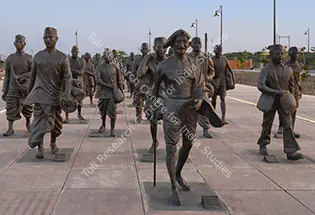
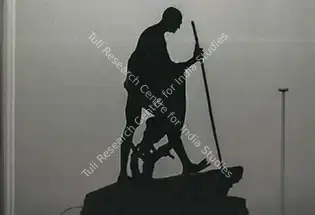
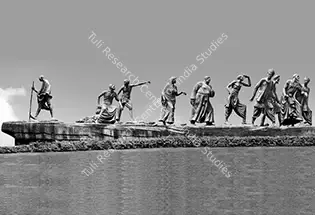
- ArchivedConversationProject 13Conversation Series | Neville Tuli & Prof. Kirti Trivedi Designer, Educator & Innovator2nd May 2025Lead Designer from IIT Bombay for National Salt Satyagraha Memorial, Dandi (2019). Currently, Project Head, School of Innovation IIT Indore. The Conversation and Visual Presentation will focus on the Research, Process, Planning and Design of the Dandi Memorial to tell the story of how Gandhiji demonstrated the power of Truth and Non-violence.Read More →
- ArchivedConversationProject 11Conversation Series | Neville Tuli & Prof. Vidhu Verma Academic & Educator28th April 2025Professor of Political Studies at School of Social Sciences, Jawaharlal Nehru University, New Delhi. The Conversation will focus upon understanding the nature of courage and fearlessness required today so as to sustain a life of action dedicated to Gandhi's supreme moral principle of 'Ahimsa'.Read More →
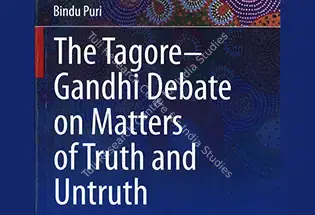
- ArchivedConversationProject 10Conversation Series | Neville Tuli & Prof. Bindu Puri Academic & Educator27th April 2025Professor of Modern and Contemporary Philosophy at the Centre for Philosophy, School of Social Sciences, Jawaharlal Nehru University, New Delhi. Conversation will focus on the dialogue & debate between Mahatma Gandhi & Rabindranath Tagore.Read More →
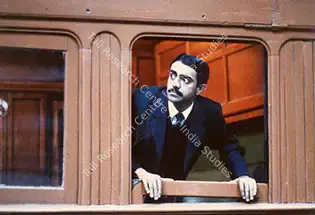
- ArchivedConversationProject 9Conversation Series | Neville Tuli & Rajit Kapur Theatre & Film Actor26th April 2025Lead Role in Shyam Benegal's “The Making of the Mahatma” (1996). Conversation will focus on the role of Cinema and its potential educational impact, and specifically regarding Gandhiji, and Rajit's personal experiences as a creative individual and his understanding of public perception towards Gandhian thought.Read More →
- ArchivedExhibitionProject 8Self Discovery via Rediscovering India Series Part V Mahatma Gandhi25th April 2025as part of the Rediscovering India via Self-Discovery Exhibition Series Part VRead More →
- ArchivedLaunch EventProject 6Launch of the Search Engine for www.beta.tuliresearchcentre.org20th February 2025for www.beta.tuliresearchcentre.orgRead More →
- ArchivedExhibitionProject 5Self Discovery via Rediscovering India Series Part IV Building www.tuliresearchcentre.org20th - 23rd February 2025Self Discovery via Rediscovering India Series Part IVRead More →
- ArchivedLaunch EventProject 4Tuli Research Centre for India Studies Youtube Channel Launch youtube.com/@TuliResearchCentre20th February 2025Tuli Research Centre for India StudiesRead More →
- ArchivedExhibitionProject 3Self Discover via Rediscovering India Series Part III History of Photography in India21st - 31st January 2025Self Discover via Rediscovering India Series Part IIIRead More →
- ArchivedExhibitionProject 2Self-Discovery via Rediscovering India Series Part II India's Cinematic Heritage12th - 24th August 2024Self-Discovery via Rediscovering India Series Part IIRead More →
- ArchivedExhibitionProject 1Self-Discovery via Rediscovering India Series Inaugural Exhibition14th - 29th March 2024Inaugural ExhibitionRead More →
Related
41
Personalities
33
Events
5
Themes
1