TRIS logo image
Search275,000+ actors, artists, objects, artworks, films, exhibitions, archives

EN

EN

English

HI

Hindi

EN

EN

English

HI

Hindi

Tuli Research Centre for India Studies

Tuli Research Centre for India Studies

Vision

Manifesto

Archive & Library

Vanraja Sanctuary & Hospice

Home

Research Categories

Browse All

ICore

1_CinemaEducation_Cinema as a Critical Educational Resource

2_FineArts_Modern and Contemporary Indian Fine Arts

3_Photography_Photography in India

4_PopCulture_The Printed Image, Popular Arts, and Crafts

IIMaterial

5_ArcHeritage_India's Architectural Heritage as Inspiration

6_EconomicsArt_Economics of Art & Cultural Industry

7_Travel_Automobile, Transport and Travel Heritage

8_Uncertainty_Uncertainty

IIICritical

9_SocialDuty_Social Responsibility of the Creative Mind

10_Childhood_The Changing Smile of Childhood & Its Second Coming

11_Sensuality_The Sensual Discipline within Creativity

12_Scholarship_The History & Historiography of Scholarship in the Arts, Humanities, and Social Sciences

IVMeaningful

13_SeekJustice_Seeking Justice and Political Integrity

14_IndoWorld_India and her Relationship with the World

15_SpiritualPoetics_The Religious-Spiritual-Poetic-Philosophical Framework

16_Continuum_The Animal-Human-Nature Continuum

Explore

All

Posts

Masterlists

Calendar

Live | Upcoming

All Events

Timetable

Search275,000+ actors, artists, objects, artworks, films, exhibitions, archives

EN

EN

English

HI

Hindi

M.F. Husain

M.F. Husain

Virgob. 17 Sep 1915, Pandharpur, Maharashtra, Indiad. 09 Jun 2011, London, UK

Personality.Artist
On this Page
Introduction
Exhibitions412
Integrated Timeline84
Chronicled Highlights70
Economics of Art2,547
Research Centre4,034
All4,034
Library798
Archive3,234
Videos2
Highlights41
Posts4
Calendar6
Home/Modern and Contemporary Indian Fine Arts/Personality · Artist/M.F. Husain
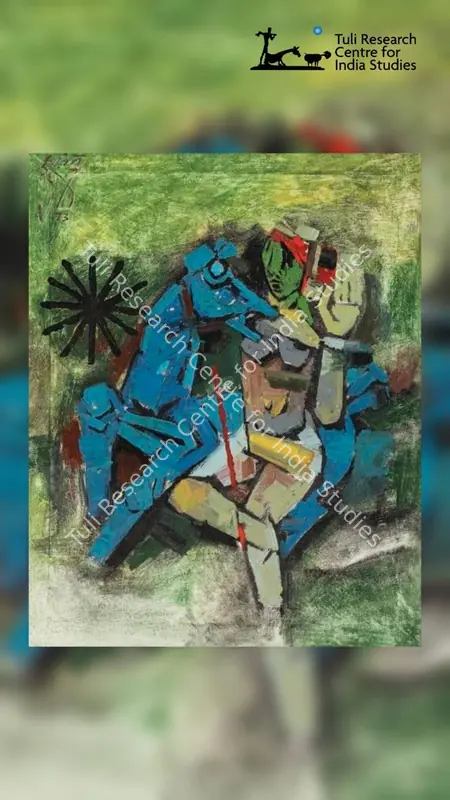
M.F. Husain — featured artwork

Introduction

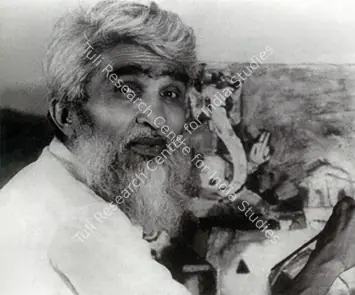
M. F. Husain is one of the most widely recognisable names in Indian Modern Art. Famous for his narrative paintings, Husain was one of the founding members of the Progressive Artist's Group formed in 1947. Recurring themes in his ouvre are motifs inspired from the Indic and Islamic pictorial traditions rendered in bold lines and colours.

Date of Birth
17 Sep 1915
Zodiac sign
Virgo
Date of Death
09 Jun 2011
Age
95
Place of Birth
Pandharpur, Maharashtra, India
Place of Death
London, UK
Spouse(s)
Fazila Bibi
Year Marriage Registered
1941
Children
Owais Husain (b. 1967), Shamshad Husain (1946 – 24 Oct 2015), Raisa Husain, Aqueela Husain, Shafaat Husain, Mustafa Husain
Parent(s)
Zunaib Husain, Fida Husain
Siblings
Zubeida S. Ali
State Country of Birth
Maharashtra, India
State Country of Death
UK
  1. 1932

    1. Trained for a year at Indore School of Art, under the tutelage of D.D. Deolalikar and N.S. Bendre
  2. 1933

    1. Trained briefly at Sir J.J. School of Art, Mumbai, India
  1. 1947

    1. Joined the Progressive Artists' Group, Mumbai, IndiaAssociated Institution
  2. 1952

    1. Part of a sixty member delegation from India to the World Peace Conference, ChinaOfficial Position
  3. 1986

    1. Nominated to the Rajya SabhaOfficial Position

      1986 – 1992

  4. 1988

    1. Participated in a fund raising programme for the Bombay Art Society with Pandit Bhimsen Joshi, Tata Theatre, Mumbai, IndiaAssociated Institution
  5. 1990

    1. Established Sankalana Museum, Bengaluru on land allotted by the then Chief Minister of Karnataka, Ramakrishna HegdeAssociated Institution
  6. 1991

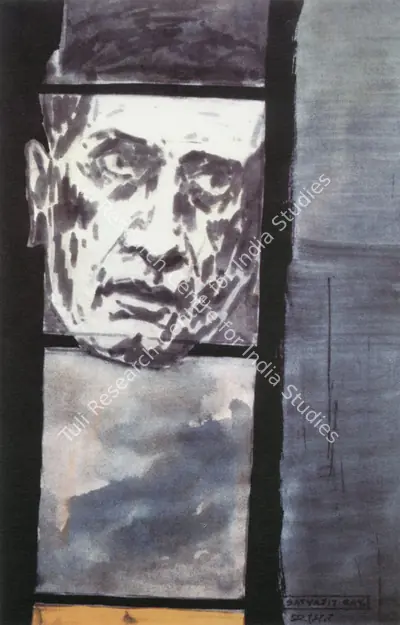
    1. Painted the Satyajit Ray Series as part of the Indian Express Fund raiser for victims of the Garhwal earthquakeAssociated Institution
  7. 1992

    1. Established his own gallery, Husain ki Sarai in Faridabad, IndiaAssociated Institution
    2. Started the Husain-Doshi Gufa in Ahmedabad, India; construction began in 1992, opened in 1995Associated Institution

      1992 – 1995

  8. 2001

    1. Associated with RABO India Finance Pvt. Ltd., to encourage associations between art and bankingAssociated Institution

Exhibitions

  1. 1941

    1. Exhibited in the Artists' Aid Centre Exhibition in India
  2. 1947

    1. Exhibited paintings for the first time in Mumbai, India
  3. 1949

    1. Progressive Artists' Group first exhibition of Paintings & Sculptures, Bombay Art Society, Mumbai, India
  4. 1950

    1. Bombay Art Society, Mumbai, India
    2. Calcutta Group and Progressive Art Group, Kolkata, India
    3. Bombay Art Society's Salon, Mumbai, India
  5. 1951

    1. Salon de Mai, France
  6. 1953

    1. Gallery Palette, Zurich, Switzerland
    2. Venice Biennale, Venice, Italy
  7. 1956

    1. Gallery Mannes, Prague, Czechoslovakia
    2. Gallery Palette, Zurich, Switzerland
  8. 1958

    1. Eight Painters, International Culture Centre, New Delhi, India
  9. 1959

    1. Sao Paulo Biennale, Brazil
    2. Tokyo Biennale, Japan
    3. Trends in Contemporary Paintings from India, The American Federation for the Arts, at Graham Gallery, New York, USA
  10. 1960

    1. Gallery Pax, Rome Italy
  11. 1961

    1. One-man show, Gallery Palse, Rome, Italy
    2. One-man show, Tokyo, Japan
  12. 1964

    1. One-man show, India House, New York, USA
    2. One-man show in Kabul, Afghanistan
20 of 412
  1. 1950

    1. Bombay Art Society, Mumbai, India
  2. 1953

    1. Gallery Palette, Zurich, Switzerland
  3. 1956

    1. Gallery Mannes, Prague, Czechoslovakia
    2. Gallery Palette, Zurich, Switzerland
  4. 1960

    1. Gallery Pax, Rome Italy
  5. 1961

    1. One-man show, Gallery Palse, Rome, Italy
    2. One-man show, Tokyo, Japan
  6. 1964

    1. One-man show, India House, New York, USA
    2. One-man show in Kabul, Afghanistan
    3. Dhoomimal Art Gallery, New Delhi, India
  7. 1965

    1. Drawings: The Arab Image, Gallery Chemould, Mumbai, Kolkata and New Delhi, USA
    2. Gallery Wasity, Baghdad, Iraq; Kabul, Afghanistan
  8. 1966

    1. Oberoi Hotel, Mumbai, India
  9. 1967

    1. One-man show at Gallery, Navina, New York, USA
  10. 1968

    1. Images of Kerala, Pundole Art Gallery, Mumbai, India
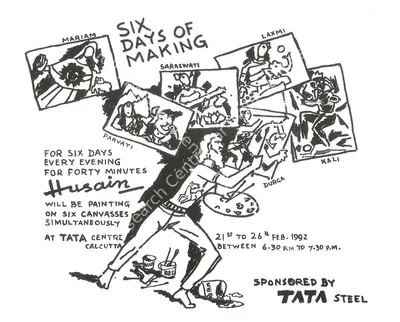
    2. Six Days of Making: Movements and Moods in Paintings, Shridharani Gallery, Triveni Kala Sangam, New Delhi, India

      27 Dec 1968 to 01 Jan 1969

  11. 1969

    1. A Tribute to Man's Landing on Moon, Gallery Chanakya, New Delhi, India
    2. 21 Years of Painting, Organised by Gallery Chemould, Jehangir Art Gallery, Mumbai, India
    3. Gallery du Grand Meselles, Geneva, Switzerland
  12. 1971

    1. Solo Show, Organised by Gallery Chanakya and Pundole Art Gallery, at Ashoka Hotel Gallery, New Delhi, India
20 of 105
  1. 1941

    1. Exhibited in the Artists' Aid Centre Exhibition in India
  2. 1947

    1. Exhibited paintings for the first time in Mumbai, India
  3. 1949

    1. Progressive Artists' Group first exhibition of Paintings & Sculptures, Bombay Art Society, Mumbai, India
  4. 1950

    1. Calcutta Group and Progressive Art Group, Kolkata, India
    2. Bombay Art Society's Salon, Mumbai, India
  5. 1951

    1. Salon de Mai, France
  6. 1953

    1. Venice Biennale, Venice, Italy
  7. 1958

    1. Eight Painters, International Culture Centre, New Delhi, India
  8. 1959

    1. Sao Paulo Biennale, Brazil
    2. Tokyo Biennale, Japan
    3. Trends in Contemporary Paintings from India, The American Federation for the Arts, at Graham Gallery, New York, USA
  9. 1964

    1. India House, New York, USA
  10. 1965

    1. Indian Paintings Now, Arts Concil, Commonwealh Institute, London, UK
  11. 1967

    1. Ramkumar and M. F. Husain, Geeta Gallery, New Delhi, India
    2. 25 Years of Paintings seen in Bombay, Mumbai, India
    3. Ramkumar and M. F. Husain, Prague, Czechoslovakia
  12. 1969

    1. 6th Anniversary Show, Pundole Art Gallery, Mumbai, India

      02 May 1969 to 24 May 1969

    2. Art Today I, New Delhi, India
  13. 1970

    1. Art Today II, Ashoka Gallery, Kolkata and Shridharni Gallery, New Delhi, India
  14. 1971

    1. Exhibited at the Sao Paulo Biennale as a special invited Artist, along with Pablo Picasso, Sao Paulo, Brazil
20 of 307

Integrated Timeline

84 entries
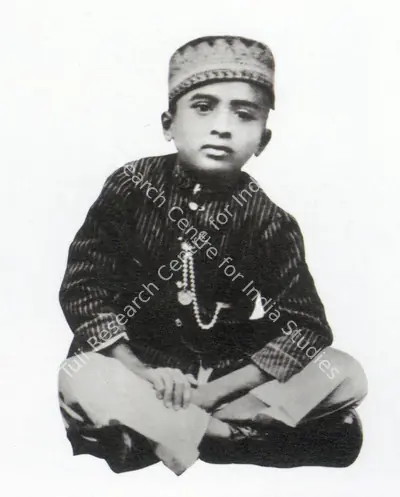
(Photographer). Husain as a six year old. Photographic Still, 0 | Contemporary Photograph, Maqbool Fida Husain, 1971 | Photography | 00501644

1915

(Photographer). Husain as a six year old. Photographic Still, 0 | Contemporary Photograph, Maqbool Fida Husain, 1971 | Photography | 00501644
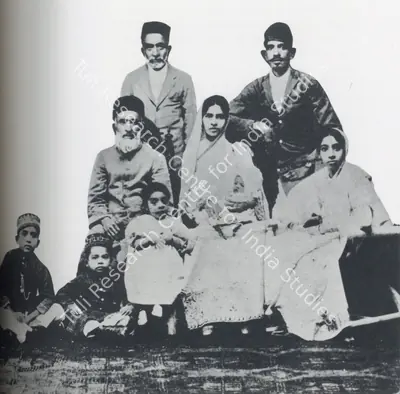
It is widely accepted that Maqbool Fida Husain was born in the year 1915. However, A birth certificate issued by the Sulaymani Bohras establishes 1913 as his birth year. Upon growing up he dropped an 's' from the widely used Hussain simply because, he revealed, the surname looked more 'compact' with the omission. Born in the small Maharashtrian town of Pandharpur to a Sulaymani-Bohra micro-minority, Husain's family traced their Shi'a lineage back to Yemen through coastal Gujarat. His mother, Zaineb, breathed her last only a few months after giving birth to him. A caesarian baby, Husain was born weak and skinny, and apprehensions were that the child would not survive the winters. Growing up, he would be haunted by the fact that she had circumambulated his bed when he was ill to take his illness upon herself as was traditionally believed. The implications of that sacrifice would leave a void in the child's life. Ila Pal, the biographer of Husain has explained the circumstances of this invention based on a conversation with Husain. In 1950 Husain applied for a passport for the first time. He had no proof of his date of birth: "With no documentary proof surviving, I had to invent a date of birth I knew I was a Leo, but did not know the date and the year But because I like the sound of September, I decided I was born on th September, 1917. However, the alliterative sound of three 'Ss' in that date made me change the year to 1915."
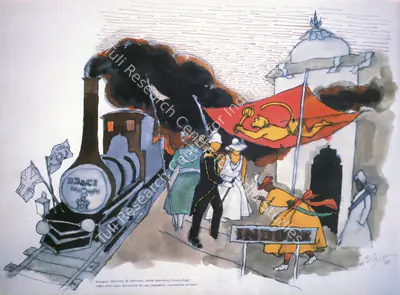
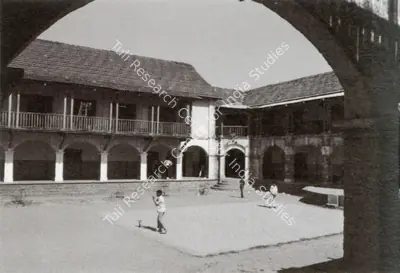
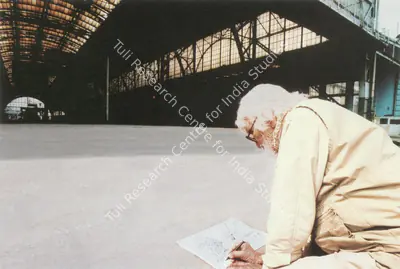
Husain, M. F. (Artist). My Childhood Railway Station, Indore. Watercolour, 1986 | Husain , 1988 | Painting | FineArts | 00495146

1921

Husain, M. F. (Artist). My Childhood Railway Station, Indore. Watercolour, 1986 | Husain , 1988 | Painting | FineArts | 00495146
After Zaineb's death, Fida Husain moved to Indore with his family upon securing a job in the Malwa Textile Mill. Indore at that time was being ruled by Tukoji Rao Holkar III, a pricely state under the suzerainty of the British. By 1926, the ruler was coerced by the British to give up his throne in favour of his son, Yashwant Rao Holkar II. The new ruler had a marked interest in the arts and was famous for organizing an exhibition on Nicholas Roerich in the Town Hall of Indore and had also purchased some of his paintings for the Manak Bagh Palace. An active patronage of the arts by the sovereigns created a lively art scene that inspired a growing Husain. Growing up, Husain voraciously took up versification after being inspired by an uncle who wrote religious poetry. He would engage with poetry all his life. He had started reading poets such as Mir and Muhammad Iqbal from his early years and started composing in Urdu.
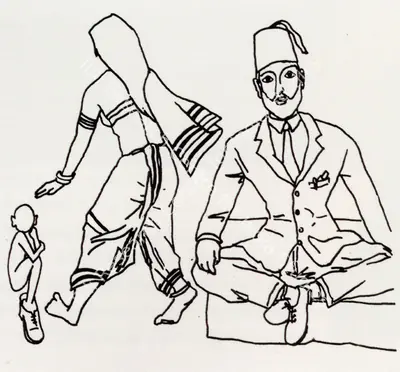
Husain, M. F. (Artist). Maqbool with Parents. Ink on paper, n.d. | Maqbool Fida Husain, 2008 | Drawing | FineArts | 00495151
2 images

1922

Husain, M. F. (Artist). Maqbool with Parents. Ink on paper, n.d. | Maqbool Fida Husain, 2008 | Drawing | FineArts | 00495151
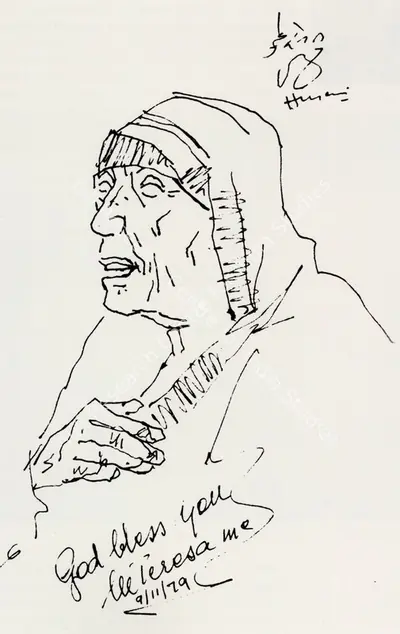
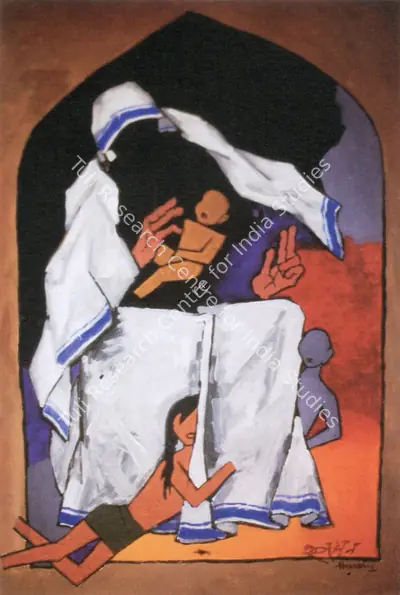
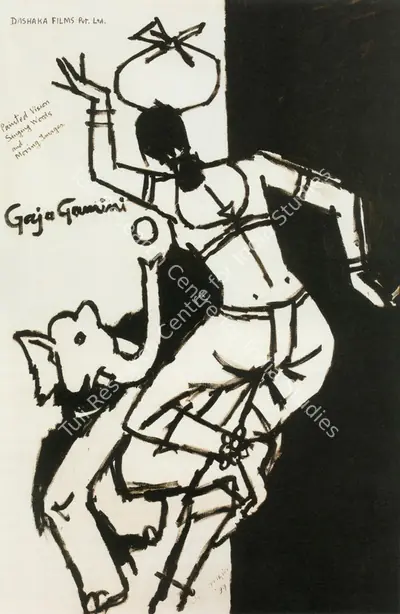
The lingering memory of his mother made him write:"Even today whenever the son comes across a Marathi saree lying around, he starts looking for his mother in its thousand folds." Pandharpur, where Husain lived the initial few years of his life, was a venerated hindu pilgrimage centre of the Vaishnavite Bhagvata Sampradaya. The socio-cultural milieu of the town revolved around the Vithoba Temple. The muslims of the town, like the Hindus, spoke the local Marathi and the women wore the traditional nine-meter saree, passing it through their legs and then tucking it in at the waist, leaving one leg bare. This saree became emblematic of several of Husain's women in his later sketches and canvases. Decades later, Husain's leading lady in his first feature film Gajagamini draped the same traditional Marathi saree. The longing for his mother inspired the series such as the Mother Teresa Series of the late 1970s.
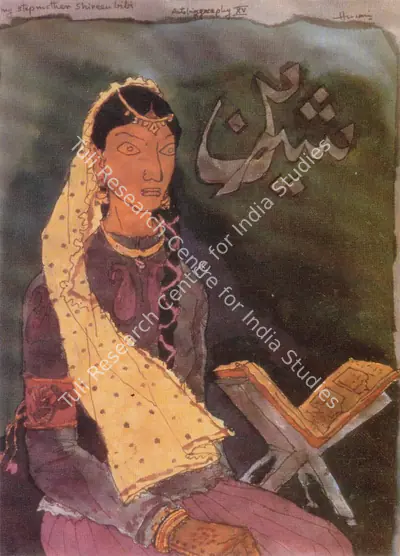
Husain, M. F. (Artist). My Stepmother, Shireen Bibi: Autobiography XV. Watercolour , 1961 | Barefoot Across the Nation, 2011 | Painting | FineArts | 00495140

1923

Husain, M. F. (Artist). My Stepmother, Shireen Bibi: Autobiography XV. Watercolour , 1961 | Barefoot Across the Nation, 2011 | Painting | FineArts | 00495140
Fida Husain married Shireen Bibi, the daughter of the head of a religious order of Siddhpur. Fida Hussain was not particularly close to his son. Like most Indian fathers from the small town milieau of 1910s, Fida Hussain was undemonstratively caring and demonstratively stern. He worked in a textile mill at Sholapur, rose in rank and became accountable for mills in Bombay, Hyderabad and Indore. He would vacillate between these places and upon his return, young Husain would present him with calligraphed panegyrics (qasidah) in the father's praise. A man of liberal tastes, Fida Hussain spent most of his time indulging in artistic pursuits as much as his limited means would permit.
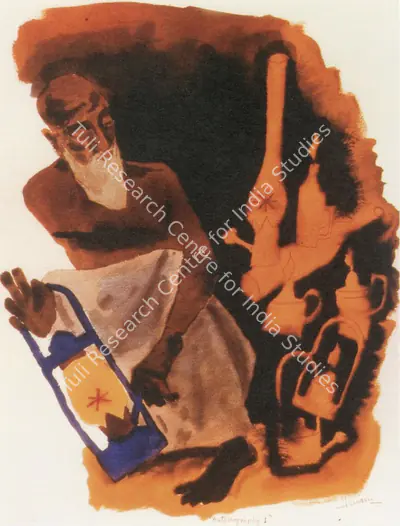
Husain, M. F. (Artist). Autobiography I, (Abdul Husain with Oil Lamp). Watercolour , n.d. | Maqbool Fida Husain, 2008 | Painting | FineArts | 00495152
3 images

1925

Husain, M. F. (Artist). Autobiography I, (Abdul Husain with Oil Lamp). Watercolour , n.d. | Maqbool Fida Husain, 2008 | Painting | FineArts | 00495152
Husain's grandfather, affectionately addressed by him as 'Dada Abdul' was an important anchor in Husain's life. He often took Husain to the workshop of his friend Acchan Mian who was a naalbund or a farrier. Watching him fix iron-shoes on horse hooves left an indelible impact on the young boy's mind. When Husain was between 6-10 years of age, Dada Abdul took ill and died. A tinsmith at a small roadside shop for repairing oil lamps, Dada Abdul's imagery became a recurring motif in Husain's oeuvre. The figure of a bearded old man of ordinary means, often carrying a lamp or an umbrella appear in works such as Autobiography I. In 1981, he did a series of sketches called Portrait of an Umbrella which according to him was "homage to the common man". The umbrella as a symbol occurred again in his short film Through the Eyes of a Painter (1967). Addressing his childhood in his autobiography "Where Art Thou", Husain wrote, "I am blessed. I can still see you distinctly even if you have kept your distance. It's been an age since we've talked of the good old days. I long to hold you close to my heart and remember how you used to be. I long to rekindle the memories of Pandharpur, the mischievous moments of Indore. I long to return to grandpa's corner shop where the ground must still be wet with the oil spilt from the lamps. I long to return to dada's room where you and I lived. Remember the window from where we began to recognise the outside world?"
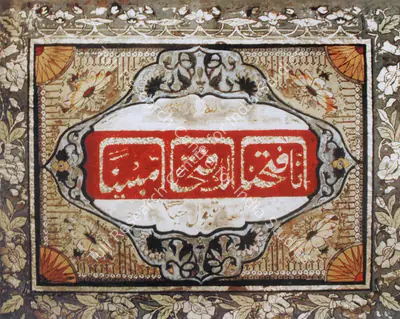
Husain, M. F. (Artist). Calligraphy. Brush and ink on glass, 1928 | Maqbool Fida Husain, 2008 | Painting | FineArts | 00495156

1926

Husain, M. F. (Artist). Calligraphy. Brush and ink on glass, 1928 | Maqbool Fida Husain, 2008 | Painting | FineArts | 00495156
After grandfather Abdul's death, Husain was sent to Siddhpur to be instructed in religious studies by his stepmother's father. Husain would get instructed by him in Islamic studies, learn to recite the Koran, get up early in the morning and offer prayers five times a day. A regimented life in this rather orthodox environment made him wary of organized religion. He fostered a complicated relationship with faith and was fond of quoting E. M. Forster's epigrammatic remark "I don't believe in belief; Lord help me in my disbelief". However, religious experience never remained far from his life. The earliest verses that he wrote contained the icon of the apocalyptic horse of the Tazia processions that he had watched as a child, and he would remain loyal to that icon all his life. At Siddhpur Maqbool also got introduced to Islamic history, arts and literature, picked up Arabic, Gujarati and learnt calligraphy. Richard Bartholomew remarks: "The ambience of his childhood and youth laid the groundwork for his mystic preoccupation and for his concern with sensuality and the nature of knowledge and innocence. It also brought forth from the depths of his personal loneliness his prototypical featureless figure robed in impenetrable solitude."
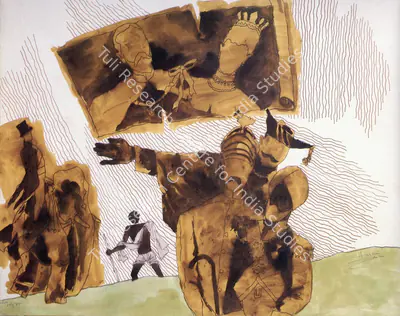
Husain, M. F. (Artist). Arrival of Gandhi in nineteen-twenties. Watercolour, 1985 | Husain , 1988 | Painting | FineArts | 00495147
2 images

1927

Husain, M. F. (Artist). Arrival of Gandhi in nineteen-twenties. Watercolour, 1985 | Husain , 1988 | Painting | FineArts | 00495147
After Siddhpur, Husain was sent to Baroda for further tutelage at the Darul Taluba Husamiya Madrasa where he picked up Persian. The head of this school was a follower of Gandhi. Naturally, Husain was introduced to Gandhian values at an early age at this Madrasa where children were encouraged to wear khadi and Gandhi caps. After Baroda, he returned to Indore and was admitted to the Government Middle School but dropped out without completing his matriculation. Husain's biographer, Bikram Singh notes,"While still at school. Maqbool seems to have been apprenticed to learn on a part time basis several odd jobs including tailoring, working in a small restaurant and selling groceries at his uncle's shop in Ranipura Bazar. Maqbool obeyed his father but had no inclination to learn any useful trade. Instead, he would sit at his uncle's shop, who himself was not much of a businessman, and spend his time sketching whatever caught his fancy veiled sweeper women, labourers carrying bags of wheat, stray dogs, goals and cattle. These images from ordinary life were to become a part of his repertoire as an artist. His uncle reported Husain's indiscretions to his father but Fida Husain did not discourage his son from painting. Instead he bought him a box camera hoping to divert his energies towards an activity that would at least enable him to earn a living. Maqbool enjoyed shooting with the camera but continued with his pursuit of painting. He would leave home on his bicycle with a bag slung on his shoulder and make landscapes with water-colour or coloured chalk. At night, he would sketch scenes from films that he had seen on the sly without his father's knowledge. It was during this period of painting on the spot and sketching from memory that Husain developed his strong drawing and painting skills, and a good retentive memory."
(Photographer). Indore School of Arts. Photographic Still, 0 | Contemporary Photograph, Maqbool Fida Husain, 2008 | Photography | 00501647
2 images

1932

(Photographer). Indore School of Arts. Photographic Still, 0 | Contemporary Photograph, Maqbool Fida Husain, 2008 | Photography | 00501647
A preliminary meeting with N. S. Bendre, who was at that time teaching at the Indore School of Art, took place during one of Husain's numerous outings to do plein air sketching and painting within the city. Bendre convinced Maqbool's father to let him pursue the arts. Fida Husain bought his son paints and got him admitted to the evening classes at the Indore School of Arts. D.D. Deolalikar was the principal of the school at the time. Here, Husain could see the reproductions of works by Nandalal Bose, Abanindranath Tagore and Rembrandt. He would start learning English and this opened another world of possibilities for him—Husain could now read books on art and literature. Husain's neighbour Yavar Husain had an eclectic collection of books that was accessible to Husain . He started reading such writers as Coomaraswamy, John Ruskin and several journals. Since the Holkars were also patrons of Indian Classical Music, Husain attended several music performances. A close friend Mankeshwar, a Brahmin boy with an inclination towards learning the Geeta and Puranas would take him to attend Ramlila performances which they often enacted among themselves. Husain wrote in his memoir: "Mankeshwar remained a friend for fifty years. The characters of Ramayana and Mahabharata left a deep imprint on Maqbool which years later, M.F.Husain recreated on his canvas in colours, lines and forms of contemporary art language."
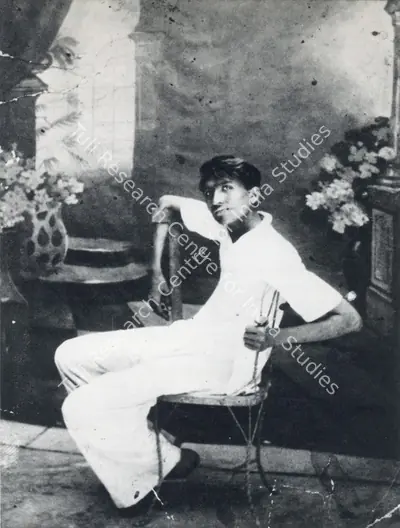
(Photographer). Husain as a teenager, photographed against a backdrop he painted. Photographic Still, 1934 | Contemporary Photograph, Maqbool Fida Husain, 1971 | Photography | 00501645

1935

(Photographer). Husain as a teenager, photographed against a backdrop he painted. Photographic Still, 1934 | Contemporary Photograph, Maqbool Fida Husain, 1971 | Photography | 00501645
Husain left the Indore School of Arts in an year and joined the J.J. School of Art, Bombay. Around the same time however, his father lost his job due to the Great Depression of the early 1930s and Husain was obliged to return home.
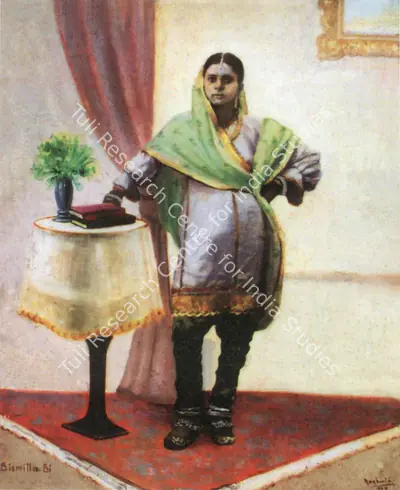
Husain, M. F. (Artist). Bismillah Bi, Abdul Wahid's mother. Watercolour , 1939 | Maqbool Fida Husain, 2008 | Painting | FineArts | 00495159

1936

Husain, M. F. (Artist). Bismillah Bi, Abdul Wahid's mother. Watercolour , 1939 | Maqbool Fida Husain, 2008 | Painting | FineArts | 00495159
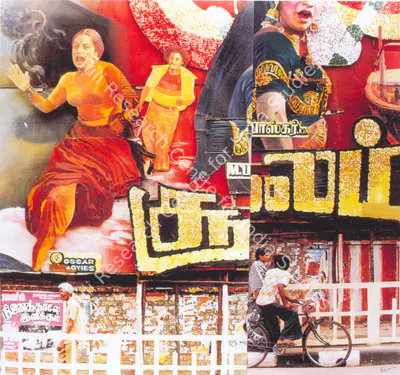
In 1936, Husain arrived in a Bombay with a vibrant art scene. The Bombay Art Society and the J. J. School of Art were at the helm of affairs at the institutional level and portrait artists were patronised. The Parsees and the Europeans had become the mainstay of the art-school trained artists. Husain, however, had not acquired the acquity at oil painting to render portraits in the academic-realist style. One of the two portraits known from this time was of a woman named Bismillah Bi, a friend's mother. He thus had to explore other avenues; starting off by assistanting a painter of cinema hoarders. Frequent sketching during his Indore years gave him a good command over line; which was a useful skill in drawing over hoardings. When acrylic paints were introduced in India in the 1950s, Husain promptly adopted them. He soon mastered the craft and became assistant to Bhide, who was a renowned cinema hoarding painter at the time who worked out of Prabhat Studios of V. Shantaram. Husain later became an independent bill board painter for the films of New Theatres. For Husain, the significance of this venture was recognized, "If I didn't do cinema hoardings, I would have been a different man"
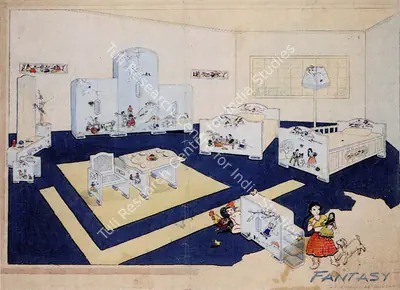
Husain, M.F. (Artist). Design for a Suite of Nursery Furniture Decorated with Scenes of Indian Village Life. Gouache on paper, unframed, n.d. | Painting | FineArts | 00373646
3 images

1942

Husain, M.F. (Artist). Design for a Suite of Nursery Furniture Decorated with Scenes of Indian Village Life. Gouache on paper, unframed, n.d. | Painting | FineArts | 00373646
Husain married Fazila Bibi in 1941, who was the daughter of his landlady. They rented a room in Yamani Building in Badarbaug at Balaram Street, Grant Road and within the first year of their marriage, their first son Safat was born. For the next seven years he worked at a firm where he would design nursery furniture and wooden toys at Fantasy Furniture Shop. He brought in his innovations by bringing in a whole range of themes based on Indian folklore and Panchatantra, eventually designing entire interiors for children's rooms. These designs were meticulously rendered on paper with watercolours. Classical Indian motifs such as lotuses abound these little designs. Later he would also go on to design toys which included motifs such as a the camel, horse and drummers. The simple, angular shape of the wooden toy would also reappear in his paintings. By the late 1940s, he left his secure job at Fantasy. All the while that he was designing toys and painting cinema hoardings, he had continued his pursuit of creative painting and resumed his self-education in art. He painted everyday after work, visited exhibitions and studied the reproductions of European paintings. Besides, he watched films regularly. One of the films seen during this time was Alexander Korda's 1936 film Rembrandt. To Husain, Rembrandt represented an innate humanity,"he painted even kings and nobility as human beings. After seeing the film, I was so moved that I used to paint portraits day and night, for several days." Ram Chatterjee wrote in a catalogue of Husain's toys in 1960, "To call a spade a spade, Husain's 'toys' should not be called toys. They are not play things for the amusement of children. They are neither ephemeral nor piquant in appeal. Their formal beauty and decorative charm are enduring which give these 'toys' almost a monumental quality."
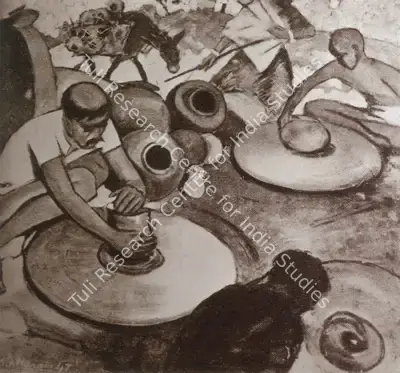
Husain, M. F. (Artist). Kumhaar. Oil on canvas, 1947 | Maqbool Fida Husain, 2008 | Painting | FineArts | 00495163

1947

Husain, M. F. (Artist). Kumhaar. Oil on canvas, 1947 | Maqbool Fida Husain, 2008 | Painting | FineArts | 00495163
After leaving Fantasy, he took part in his first major exhibition held by the Bombay Art Society. Three of his paintings were accepted. One was a water-colour portrait of his son Shamshad. The other two were Sunehra Sansar and Kumhar. Both the paintings conformed, in a way, to what the BAS demanded of a native artist (note that within the general preference of the BAS was an ethnographic section "as a distinct category for the native artists at the art society exhibitions.") Kumhar (1947), which is one of the earliest surviving examples of Husain's paintings shows a sense of rhythm and movement and has been casually described as an impressionistic work. However, it is likely that Husain may not have fully grasped the principles of impressionism yet. Of Kumhar, Bikram Singh writes, "Husain provides us a slightly top angle view of a group of Kumhars at work, as if he was looking down at the event from the height of a cinema hoarding. Two potter's wheels cut diagonally across the canvas and a third wheel is placed at the bottom right of the frame. These circular forms are balanced by the vertically bent forms of the potters, a pack-mule and some triangular forms in the background. The space between the two potters in the middle ground is filled up by round forms of earthen pots. It is primarily this interplay of forms that creates interest in painting. This technique of balancing forms of different shapes was to become an important feature of Husain's work in later years."
(Photographer). The Progressive Artists Group L to R—First row: Souza, Ara, Gade; Second row: Husain, Bakre, Raza. Photographic Still, 0 | Contemporary Photograph, Maqbool Fida Husain, 1971 | Photography | 00501657
2 images

1947

(Photographer). The Progressive Artists Group L to R—First row: Souza, Ara, Gade; Second row: Husain, Bakre, Raza. Photographic Still, 0 | Contemporary Photograph, Maqbool Fida Husain, 1971 | Photography | 00501657
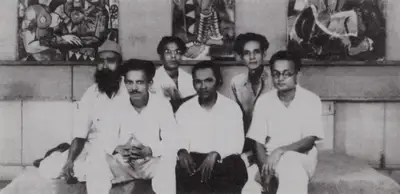
The Bombay Art Society exhibition marked a crucial moment for Husain as it was here that he came across F. N. Souza for the first time. Souza would become friend and mentor to young Husain and together they went on to form the Progressive Artist's Group, with other members including S.H. Raza, K.H. Ara, H.A. Gade, and S.K. Bakre. Daniel Herwitz writes of the struggle in the establishment of a new modernism that the Progressives, and by extension, Husain, sought to create, i.e., the struggle to find the terms of modernization which work: "Such an act of discovery and creation cannot take place in a day, one cannot simply know in advance how deep certain traditions penetrate people and situations, which traditions can be made to speak again in the light of the present, and how. The continuous discovery in art of such terms has been Husain's project since the 1940s. According to Husain: "In 1945 I was one of a group of painters who thought we must find our own roots. In those days the dominant style was the academic school of Britain Royal Academy and all that we revolted against that school of painting we just wanted to find the language we adopted the Western technique but not in concept... I have a very definite goal—I must find a bridge between the Western technique and the Eastern concept." To this effect in 1947 Husain, along with Raza, Souza, Ara and others formed the Progressive Artists Group, which dedicated itself to the overthrow of the British cultural imposition. They wanted to know their own artistic traditions, repressed by the British, to engage the dormant powers of those traditions yet again. Their other need was to explore what modernism in the West might offer a newly independent India. In this regard the earlier Bengali modernist school of painting was opposed because it was felt to be romantic, unmodern and merely nostalgic about Indian tradition. Though grounded in strong ideals, the group was short-lived and had disintegrated by the early 1950s.
(Photographer). Husain with K. H. Ara, Dr. Mulk Raj Anand and other supporters of PAG at Bombay Art Society Salon. Photographic Still, 1947 | Contemporary Photograph, Barefoot Across the Nation, 2011 | Photography | 00501648

1947

(Photographer). Husain with K. H. Ara, Dr. Mulk Raj Anand and other supporters of PAG at Bombay Art Society Salon. Photographic Still, 1947 | Contemporary Photograph, Barefoot Across the Nation, 2011 | Photography | 00501648
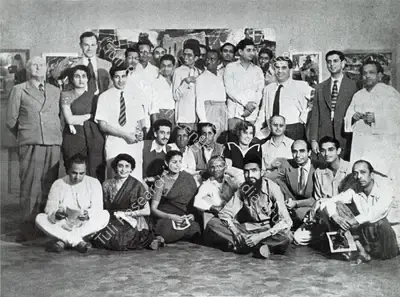
Barbara D. Metcalf and David Gilmartin in their analysis of Husain's self-presentation as a muslim artist within the Progressive circle draw our attention to the concerns of identity: "In photographs of him at the time of the formation of the Progressive Artists Group, he is marked as a Muslim in dress and facial style, in that mode he would fit the heterogeneous sartorial styles of Bombay of his day with its proliferation of sects and sub-sects, linguistic and even national groups (Of the six members of the initial group, Tyeb Mehta, Abbasy and Raza are unbearded). He is easy to identify in a photograph of the Progressive Artists Group of the late 1940s, where he stands out in the front row with his flowing beard and cap. Subsequently, the black topi (cap) gone, the beard varying from that of an artist to a holy man to a cosmopolite, he evokes visually neither a Suleimani Muslim nor any religiously-marked figure. In paintings, he often presented himself as the embodiment of the modernist image, recognisable certainly as a bearded figure but defined preeminently by bold lines and colours. In some contexts Husain saw himself as part of a transnational elite, in others he dressed not only in local costumes but also bare feet, evoking either the ascetic or the villager that became his trademark."
Husain, M. F. (Artist). Morning Bath. Oil , 1948 | Maqbool Fida Husain, 2008 | Painting | FineArts | 00495164

1948

Husain, M. F. (Artist). Morning Bath. Oil , 1948 | Maqbool Fida Husain, 2008 | Painting | FineArts | 00495164
A turning point in Husain's career took place when in 1948 he visited, along with Souza, the exhibition of Indian classical sculptures and miniature paintings at the Rashtrapati Bhawan. Husain saw firsthand Buddhist and Hindu sculptures of the Mathura School and Gupta period as well as a selection of Mughal and Pahadi miniatures. The intersection of the sensuos and erotic with the spiritual in Hindu sculpture left Husain awe-struck and had a marked impact on the evolution of his pictorial language, he said: "The exhibition left me both humbled and exhilarated. It was like scaling a mountain and then discovering a whole new range of mountains. Looking at the forms of the Gupta sculptures, experiencing the innocence of Indian folk art and seeing the rawness of colours in Basholi and Pahadi paintings, I knew I had stumbled upon something priceless." Subsequently, he started modelling the human form in distinctly Indian ways inspired by the Gupta Sculptures he saw. He put the point eloquently when he said: "One reason why I went back to the Gupta period of sculpture was to study the human form when the British ruled we were taught to draw a figure with the proportions from Greek and Roman sculpture [whereas]... in the East the human form is an entirely different structure the way a woman walks in the village there are three breaks . from the feet, the hips and the shoulder. they move in rhythm... the walk of a European is erect and archaic."
Husain, M. F. (Artist). Mirror. Oil on canvas, 1949 | Maqbool Fida Husain, 2008 | Painting | FineArts | 00495165
2 images

1949

Husain, M. F. (Artist). Mirror. Oil on canvas, 1949 | Maqbool Fida Husain, 2008 | Painting | FineArts | 00495165
Basohli painting left a marked impact on Husain, which he had first seen in 1948. Richard Bartholomew describes Husain's engagement with Basohli painting thus: "The urge to energy in Husain made him respond with delight to the paintings of the Basohli school…Produced in the Punjab hills in the late seventeenth and early eighteenth centuries, they are marked by a fierce vitality of color, applied in a basically simple design within strong, broad borders. The nayaka-nayika (hero and heroine) theme—often portrayed in the guise of Radha and her divine lover Krishna—was the Basohli painter's favorite subject; in pictorial compositions of eloquent lyricism, he made his theme quick with emotion, conveyed by a swinging line and clear patches of hot orange, yellow, and brown that called to Husain as snatches of pure song. The Basohli style contributed to the release of lucid colors in his own work. The secret of painting, he discovered, lay in the orchestration of colors....The delicacy of line of the Basohli paintings, however, did not appeal to him for the same reason that the elegant forms of Ajanta did not." Influences notwithstanding, Husain's figures from this time do not show a marked departure in terms of the treatment of subjects. The female forms do not necessarily show the influence of Gupta sculptural aesthetics. There is a sense of expressionism that is marked by brushstrokes and use of vibrant colours, less so of the sensuosness of form. In Mirrror (1949), there is an exploration of the very Indian theme of the bride's toilet—a theme found across Indian sculpture and miniature paintings. While inspired by the use of colours in Indian painting, Husain and his contemporaries rejected the earlier lyricism associated with the subject of woman in the same tradition. They accorded a sense of crudeness to her form instead—the rawly painted female figures became intentional contortions from reality. The women, full-bodied and roughly hewn indicate through their attire and surroundings, a rural background. Husain would situate a number of his figures in a rural setting in the early fifties. Other icons that become part of his repertoire also reflect a conventional Indian idiom—for instance, a lady with a parrot—the commonly understood reference to Indian painting.
Husain, M. F. (Artist). Man. Oil on canvas, 1950 | Maqbool Fida Husain, 2008 | Painting | FineArts | 00495166

1950

Husain, M. F. (Artist). Man. Oil on canvas, 1950 | Maqbool Fida Husain, 2008 | Painting | FineArts | 00495166
Man (1950) is a large oil painting and one of the first paintings of his that deals with the complex situation of man in modern times. It is as ambitious in conception as Picasso's Guernica (1937) though Husain could not have seen Picasso's work in original as his travels to Europe were yet to begin. By this time Husain seems to have internalized the great tragedy of the partition of the Indian subcontinent and the mass murder that Hindus and Muslims had unleashed on each other that had completely dislocated the aesthetic and the moral fundamentals of human existence. According to Ayaz S. Peerbhoy, who wrote the first book on Husain published in 1955, "This is an analytical work, bringing to the surface the psychosis which has torn the man from his happy home and hurled him into a conflict. Here colours express a new emotion, with dark colours emphasizing the evil in the nature of man." Daniel A. Herwitz on the other hand, wrote of Man as a work representing contemporaneity and the universality of our existence: "Man" presents us with a person who is lacking in individuality and largely defined by his social context (his village). Like a monumental Rodin head, he is impelled as if by fate to think. Yet, Husain's man lacks the voice, the distance, the powers of articulation, to fully think through the nature of his fate. Indeed we yearn to give him words, forging a connection between him and us. The man's universality derives from his position: He is thrown into the world and forced to think without full perspective—not merely the situation of traditional India but a kind of immersion into existence the modern world also known to be true of itself."
Husain, M. F. (Artist). Self Portrait. Oil on canvas, 1950 | Maqbool Fida Husain, 2008 | Painting | FineArts | 00495231

1950

Husain, M. F. (Artist). Self Portrait. Oil on canvas, 1950 | Maqbool Fida Husain, 2008 | Painting | FineArts | 00495231
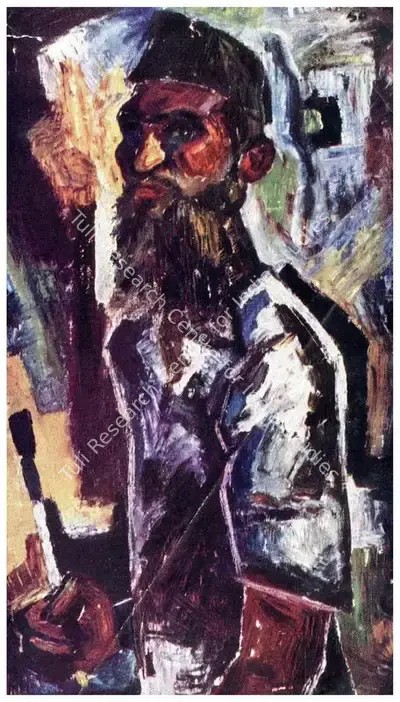
Husain describes his process of evolution through the 1950s thus: "I was using expressionistic colours…I was coming from impressionism and cinema realism. The form, however, was not there. My wildness, like the Fauves, was in colours." The process of this exploration was to continue. In the Self Portait (1950), he reached a transitional maturity with form. The body turns and directly and confidently gazes at the viewer. The look is complimented by the passionate use of colours. The forms spill over and expand into colour ; the figure and background both exist in the same plane. The palette remains sombre with stabbing brush strokes of whites and yellows. This is painted at a time when Husain had not yet emerged from the shadows of anonymity.
Husain, M.F. (Artist). Doll's Marriage. Oil on canvas, 1950 | Painting | FineArts | 00375545

1950

Husain, M.F. (Artist). Doll's Marriage. Oil on canvas, 1950 | Painting | FineArts | 00375545
One of M. F. Husain's early works, Doll's Wedding (1950) celebrates both the childhood play that prefigures adult roles and the rituals and festivities of traditional Indian weddings. The colours of the painting suggest the vegetable and mineral dyes customarily used in clothing, ceremonies and the interiors of homes in rural and small-town India. In the semi-rural milieau to which Husain was born, Muslims and Hindus shared many customs, greetings and forms of clothing until the 1930s, after which time each community began to identfy itself more distinctively as separate.
Husain, M. F. (Artist). HAI-SEEN-YE-NOON. Watercolour , 1978 | Maqbool Fida Husain, 2008 | Painting | FineArts | 00495200

1952

Husain, M. F. (Artist). HAI-SEEN-YE-NOON. Watercolour , 1978 | Maqbool Fida Husain, 2008 | Painting | FineArts | 00495200
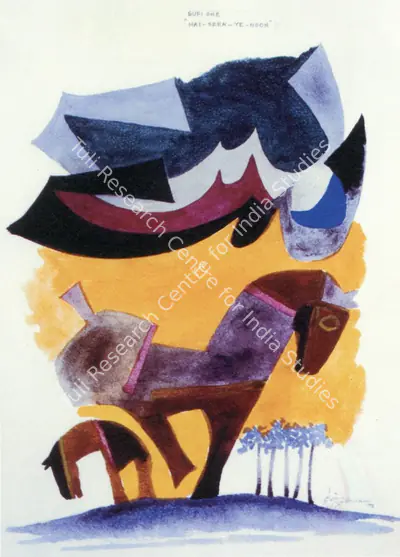
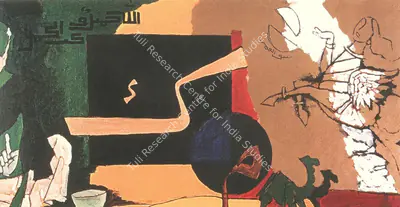
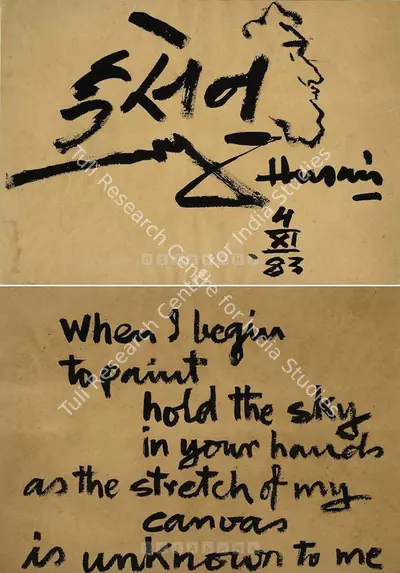
In 1952 Husain visited China and was deeply impressed by the calligraphic lines of Chinese paintings. He had already received extensive training in Arabic calligraphy, practiced the kufic khat, the earliest extant Islamic lettering known to have been used for writing the Quran, and tughra, emphasising on the structural use of lettering. He would independently employ some calligraphic elements in his later compositions. Richard Bartholomew suggests that his early work shows the influence of calligraphy that is manifest in the suppleness of his lines. His preference for strong lines also drew him to Jain miniature painting with its strong, even coarse, lines and expressions of energy and movement in the stance of the figures. It also made him react sympathetically to the evocation of volume by calligraphic line in Chinese painting, which he saw in 1952 when he visited China and met Ch'i Pai Shih, then its leading contemporary painter. The heavy lines he employed to separate the colors in the paintings of Marathi women that he executed on his return confirmed another element of his subsequent technique.
Husain, M. F. (Artist). Picasso in New York. Watercolour, 1980 | Husain , 1988 | Painting | FineArts | 00495144

1953

Husain, M. F. (Artist). Picasso in New York. Watercolour, 1980 | Husain , 1988 | Painting | FineArts | 00495144
A direct confrontation with European modernism took place by seeing the paintings of Paul Klee when Husain visited Europe for the first time in 1953. Klee's remark in his Diary,"I should like to demand—over and above feeling—movement", suck a responsive chord in Husain, as did the humor and pathos of his forms. In Europe he also saw for the first time the works of other European masters that he had hitherto only seen reproductions of—from Picasso, Matisse, Klee to Modigliani. He would see, in other artist's use of line, form and colour, the reassurance of his own practise. Formally attached to the human form, the logic of abstraction championed by the likes of Kadinsky remained remote to him. He was fundamentally a humanist, with the human motif at the centre of his art— the catalyst to his unearthing the nature of reality. Of someone like Picasso, Husain would say, "Human beings, that's all that's really interesting. You paint and you draw in order to learn how to look at human beings, how to look at yourself." Of his influence on him, he simply remarked, "Picasso created the language of modern art."
Husain, M.F. (Artist). Untitled. Oil on canvas, 1950 | Painting | FineArts | 00375541
2 images

1953

Husain, M.F. (Artist). Untitled. Oil on canvas, 1950 | Painting | FineArts | 00375541
Amrita Sher-gil's Legacy Geeta Kapur highlights the legacy of Amrita Sher-Gil in influencing Husain. Kapur remarks how she is the only immediate predecessor acknowledged by Husain and his arrogant peers. Sher-Gil's means reverberate with Husain, as does her self-inscription within a romantically pitched Indian project. On a larger, art historical scale, influences in the early period include Husain's inspirational encounter (in the seminal exhibition entitled Masterpieces of Indian Art, held in New Delhi in 1948) with Kushana, classical Gupta and Khajuraho sculpture, and with miniatures including especially Basohli paintings. This encounter is reinforced and internalised to become a stylistic accomplishment with his c.1952-54 visit to the site of Khajuraho, concurrent travels across India become ever-more frequent and begin to manifest themselves in his imagery if not also his stylistics. After making a major bid to stylise her figures after Kushan sculptures and Ajanta frescoes, Sher-Gil moved over to the pictorial world of miniatures, seeking a more generic, more everyday theme and language for her representational project in India. Her experiments with Indian pictorial language from classical to medieval to folk and popular especially evident in her use of brilliant colour, and her invention of a female prototype with a dark, sharp profile, high conical bun, prominent hands, flexed toes—find their transformational moments in early Husain. Both as to ends and means, Husain's 'debt' to Sher-Gil is evident.
Husain, M. F. (Artist). Horse Carriage. Woodern Toy, 1950s | Maqbool Fida Husain, 2008 | Sculpture | FineArts | 00495161
3 images

1953

Husain, M. F. (Artist). Horse Carriage. Woodern Toy, 1950s | Maqbool Fida Husain, 2008 | Sculpture | FineArts | 00495161
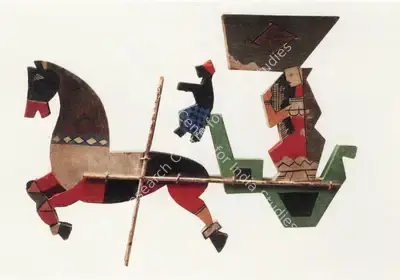
For some years in the 1950s, Husain made (commercial) toys for a small firm in Bombay. What is left from that time is a set of vividly painted wooden toys in flat, cut-out shapes, akin to puppets, their jauntily improvised folk motifs can be handled by the child or, more properly, displayed like an appliqued wall-mural in a child's room. An exercise in abbreviation, Husain's toys could serve as witty little maquettes for his mural-size paintings of the time, as also for his beautiful camees on paper inspired by Rajput, especially Basohli, miniatures. But they are also a prototype for his idolising instinct when seen apropos his images of gods and goddesses that come a decade later. This is at least one, less lugubrious, way to both love and redeem Husain's innocent pleasures Puppets/puppeteer, toys/toy-maker, idol-maker/star-gazer - these make a further relay with Husam's interest in performative modes such as religious processions, festival pageants and roughly rigged theatres festooned with backdrops, as for example the Ramlila from his boyhood city, Indore. In addition, there is his unique relationship with film-hoarding-montage banners or colossal cut-outs of film stars - which is a peculiarly Indian genre devised from a double lineage: filmy histrionics after the style of 'Parsi theatre melded with quasi-academic portraiture learnt in (metropolitan and provincial) art academies.
Husain, M. F. (Artist). Khajuraho Drawing. Pen and ink, 1954 | Maqbool Fida Husain , 1971 | Drawing | FineArts | 00495228
2 images

1954

Husain, M. F. (Artist). Khajuraho Drawing. Pen and ink, 1954 | Maqbool Fida Husain , 1971 | Drawing | FineArts | 00495228
Khajuraho Drawings "You cannot reinvent the wheel—your individuality, your creative eye lies in what you pick." Husain had remarked. He begins with an Indian artistic tradition periodised, and therefore understood through its attachments to religious traditions, both high and low. For instance, the Khajuraho complex which Husain visited in 1954 is frequently used to show the place of eroticism in Hinduism. Husain travelled to the site to educate his eye, and he made around 200 sketches of its temple sculpture. As he recalls, the sketches were not copies: "While transfiguring them on to paper I simplified the form to get the minimum structure. The aim was to understand and evolve, not imitate." Karin Zitzewitz remarks about the Khajuraho drawings: "In drawings that privileged structure over either verisimilitude or ornament, Husain devised formal strategies that he considered to be essentially Indian. And yet, the way that he deployed those formal strategies came to be recognised as his own modern, individual style. Husain's idea of 'influence' involved stripping away the historical and social context of a work of art in order to discover its core set of formal properties. The sketches signify, even more than a 'finished' painting, the development of Husain's individual style and the expansion of his oeuvre. Representing a chunk of space-time out of the artist's life, it is a step in the gradual unfolding of Husain's genius and evidence of his connection to cultural plenitude. It is therefore both a trace of his agency, his mediation of the relationship that others have to their own artistic tradition and of his passivity, the manner in which the national past is spontaneously transmitted through him."
Husain, M. F. (Artist). Passage of Time. Oil on canvas, 1954 | Maqbool Fida Husain, 2008 | Painting | FineArts | 00495178
2 images

1954

Husain, M. F. (Artist). Passage of Time. Oil on canvas, 1954 | Maqbool Fida Husain, 2008 | Painting | FineArts | 00495178
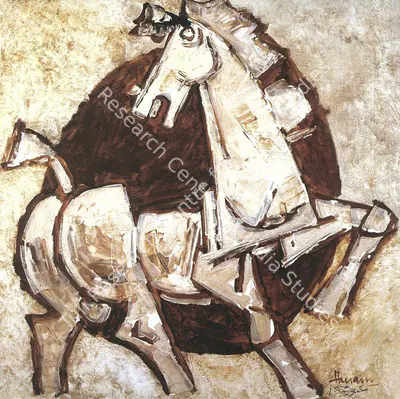
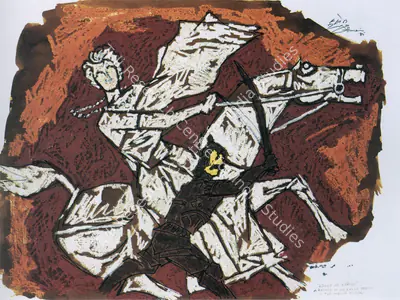
The horse as a multidimensional symbolic motif was itself to interest Husain deeply. During his travels in China in 1952 he studied the Sung dynasty renderings of horses. Later, in Europe, whereas he found the Renaissance horses unexciting, he was strongly attracted by Franz Marc's work and by Mario Marini's archaic equestrian sculpture, with its balance between horizontal and vertical lines to achieve a feeling of solitary and monumental anguish. Husain's own use of the horse motif has been , however, even more intuitive and complex. Husain's image of the horse stems from an early memory of the Duldul horse seen during Muharram processions in his childhood. Onto this foundational image, he layered diverse equine forms: the stylized horses from Chinese art encountered during his 1952 visit to China; the broad-rumped steeds of Paolo Uccello; Marino Marini's horses with their assertive, phallic necks; and Franz Marc's shy, dreamlike animals. These varied influences come together in Husain's work to create a singular vision of the horse—untamed, majestic, and emblematic of boundless space.
Husain, M. F. (Artist). Zameen. Oil on canvas, 1955 | Maqbool Fida Husain, 2008 | Painting | FineArts | 00495167

1955

Husain, M. F. (Artist). Zameen. Oil on canvas, 1955 | Maqbool Fida Husain, 2008 | Painting | FineArts | 00495167
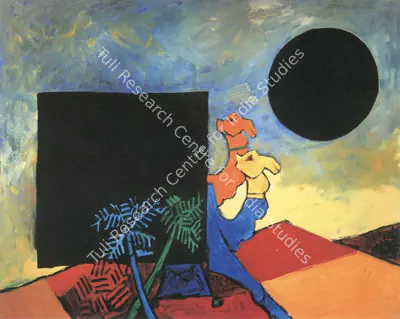
Zameen (1955) is one of Husain's first large murals that won him the National Award from India's Lalit Kala Akademi after Rudy Von Leyden, who was then a member of the jury, fought for it. The composition is divided into rectangular sections and contain scenes of an Indian Village. Richard Bartholomew describes Zameen thus: "One panel has a huge black sun looming over a seated nude woman. The simplified female figure is powerfully outlined, and is painted in pure red, with a distorted child between its legs echoing the blackness of the sun. The woman has been given two curious horn- like protuberances over her forehead. While the other panel of the painting, with its images of a Cubistic cock, a serpent, and a tree in fruit, uses simple symbols to convey a sense of daily living, the vermilion female figure is clearly an anthropomorphous representation of the earth. From her belly man emerges in darkness, his birth presided over by a blackly burning sun. Although the dark sun in this painting, and the conception of the kite in the previous one, may owe something to Klee's influence, Zameen remains a characteristic product of Husain's imagination in which light and darkness shadow each other and life is spawned in anguish and primeval strength."
Husain, M. F. (Artist). Between the Spider and the Lamp. Oil on board, 1956 | Maqbool Fida Husain, 2008 | Painting | FineArts | 00495168
2 images

1956

Husain, M. F. (Artist). Between the Spider and the Lamp. Oil on board, 1956 | Maqbool Fida Husain, 2008 | Painting | FineArts | 00495168
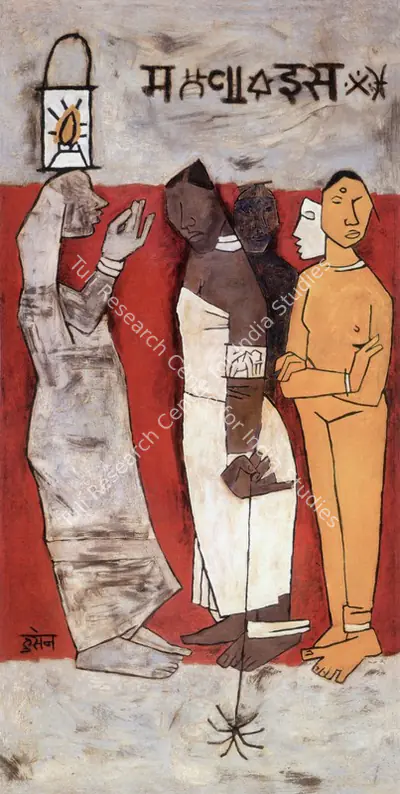
An interest in the formal value of things lead Husain to accommodate several objects of day-to-day living in his repertoire. Geeta Kapur observes, "He establishes such a sense of intimacy with familiar objects that a meaning often appears out of the very eccentricity of their relationship". Reminiscent of the 'weighty elegance' of Gauguin's figures, Between the Spider and Lamp (1956), unlike his other more spontaneous works, was made carefully with a preparatory drawing which had, apart from the five figures in the final painting, a child lurking between two figures. Husain omits the child in the final painting.The dominant element in the painting is the line with a characteristic boldness. The spider, and the lamp for that matter, do not have to be specifically understood; but a visual relationship can be established through spontaneous and free association. Despite their ambiguity when on their own, meaningfulness in Husain's symbols gets created through their association with other symbols when placed in a particular painting.In this painting, both the spider and the lamp are held by women who stand motionless, the overeall mood of the painting solemn . The woman holding the spider appears to be the matriarch who is painted in a shade of brown and the woman carrying the lamp is seemingly conversing with her—except, the matriarch's attention is directed towards the spider. A strip of red further accentuates the distance between them. Another figure painted in ochre turns her face away from the rest of the coterie. One figure in the middle looks straight ahead, ignoring another figure who is talking. There is a general mood of non-communication among the figures. The lamp here could have an autobiographical connotation since his grandfather was a lamp maker. Husain does a few more renditions of the Spider and The Lamp even later in his career.
Husain, M. F. (Artist). Landscape. Oil on board, 1956 | Maqbool Fida Husain, 2008 | Painting | FineArts | 00495171
3 images

1956

Husain, M. F. (Artist). Landscape. Oil on board, 1956 | Maqbool Fida Husain, 2008 | Painting | FineArts | 00495171
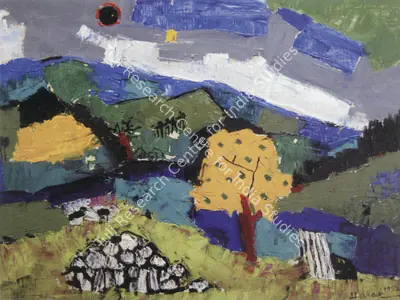
In 1956, Husain was invited to exhibit in Prague and did several landscapes. There he also met a woman named Maria who was a linguist with an interest in oriental studies. She was assigned as translator to Husain. Soon enough, an affair blossomed between the two, with Husain claiming that he "used to write a letter to Maria everyday" on his return to India. Husain is reported to have visited Prague several times over the course of the next few years and even considered marriage with her. Husain's biographer Bikram Singh narrates the anecdote and the series of incidents that followed thus: "His passion for Maria was so strong that Husain had even offered to divorce his wife and had persuaded one of his friends to temporarily marry Fazila, so that he could perhaps remarry her after a ritual gap as prescribed in Islam and after his marriage with Maria. Unfortunately, the differences in their backgrounds were enormous. Maria was a European and a Christian. Husain was an Indian and a traditional Muslim. Maria was not prepared to shift to India and Husain was not ready to leave India. [...] This love affair finally came to an end in 1964 when Maria got married to lans Dottier, an Icelandic youngman studying in Prague. However, the friendship of Maria and Husain continued. Husain attended Maria's wedding and when the couple decided to migrate to Australia and wanted to carry Husain's paintings with them. Husain specially went to Prague to carry the paintings for them through the customs. In September 2005 when Husain celebrated his 90th birth anniversary, he visited Maria and her husband in Australia. A year later in August 2006 when Maria decided to return to her home in the Czech Republic, she gave back to Husain all the paintings which were then worth several million dollars. When I went to Dubai in February 2007 to meet Husain, I found about sixty of these paintings displayed in a section of his house there. This is a love story that is the stuff of fiction. But then Husain's whole life—his rise from the pavements of Bombay to an art icon of international stature—also seems to belong to the world of fiction."
Husain, M. F. (Artist). Horse. Oil on canvas, 1958 | Maqbool Fida Husain, 2008 | Painting | FineArts | 00495181

1958

Husain, M. F. (Artist). Horse. Oil on canvas, 1958 | Maqbool Fida Husain, 2008 | Painting | FineArts | 00495181
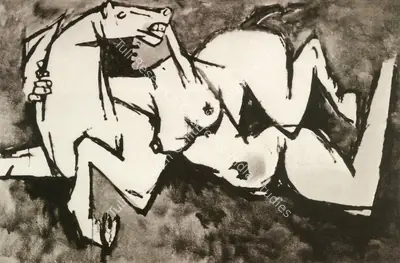
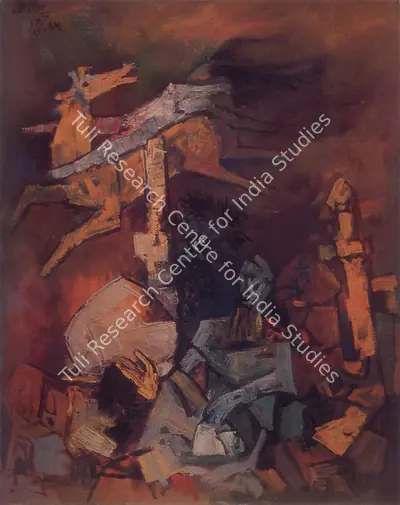
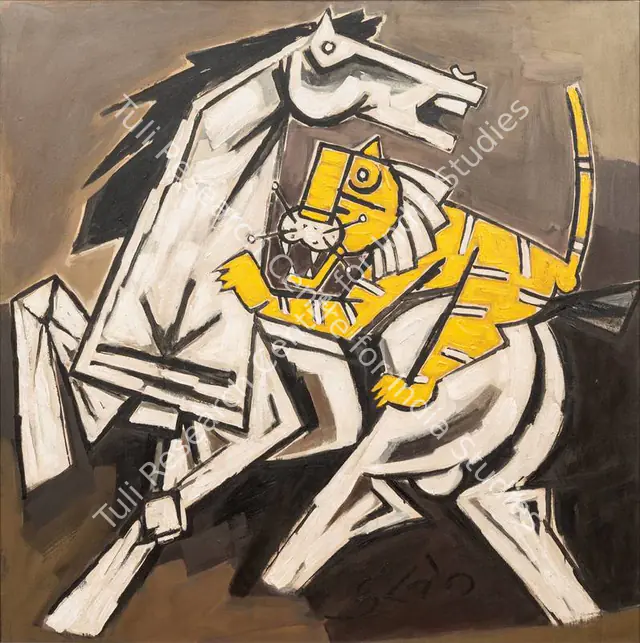
Although affected by Mario Marini's basic feeling about the horse as a plastic form, Husain's horse is different from Marini's symbol of "the last stage of a dying myth, the myth of the individual, of the humanist's man of virtue." It is at once more personal and more archetypal. Like his bulls, spiders, and lamps on women's thighs, boastful snakes and blackly passionate suns, Husain's horses are subterranean creatures. Their nature is not intellectualized: it is rendered as sensation or as abstract movement, with a capacity to stir up vague premonitions and passions, in a mixture of ritualistic fear and exultant anguish. He had first encountered the figure of the horse in the tazias of his youth, in the religiously imbued story of the martyrdom of Imam Husain. The challenging horse of ancient Hindu princes, the aswamedha, heightened in his imagination the heroic, and there-fore to him ultimately tragic, character of the riderless figure. A combination of horse and a female nude appears in Husain's work as early as the Horse (1958). In this painting, a woman in the nude is shown grasping a horse by the neck and the horse almost riding the woman. Surcharged with sexual energy, the bodies of the horse and the woman are intertwined in a kind of frenzy. The power of this painting arises from the strong lines that define the contorted figures of the horse and the woman.
Husain, M. F. (Artist). Blue Night. Oil on canvas, 1959 | Maqbool Fida Husain , 1971 | Painting | FineArts | 00495229

1959

Husain, M. F. (Artist). Blue Night. Oil on canvas, 1959 | Maqbool Fida Husain , 1971 | Painting | FineArts | 00495229
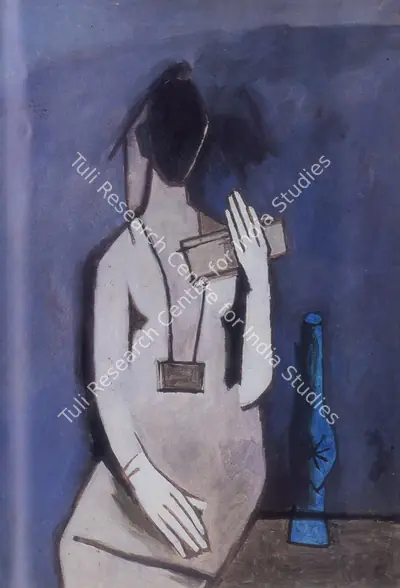
Through the end of the 1950s, Husain engages with a number of themes including a series on musicians and dancers. However, nearer to the center of his concern are individual figures, such as the one exemplified in Blue Night (1959), which emerge with a depth of meaning close to the symbolic. The theme of Blue Night is plainly a woman reading a letter. Once again this is a subject fairly common in Indian sculpture, and it is the treatment that imparts a new significance to the painting. The gray-white figure stands out starkly from the darker back-ground, its simple lines investing it with an innocence that goes with youth. The lamp is a frequent symbol in Husain's work, often in a phallic connotation. It also appears as an agent of knowledge and disturbance in the drama of the daemonic. The fact that the figure has only a dark patch of paint where the face should be makes of it a stylized and universal image, timelessly poised on the edge of mystery.
Husain, M. F. (Artist). Farmer's Family. Oil on canvas, 1960 | Maqbool Fida Husain, 2008 | Painting | FineArts | 00495170

1960

Husain, M. F. (Artist). Farmer's Family. Oil on canvas, 1960 | Maqbool Fida Husain, 2008 | Painting | FineArts | 00495170
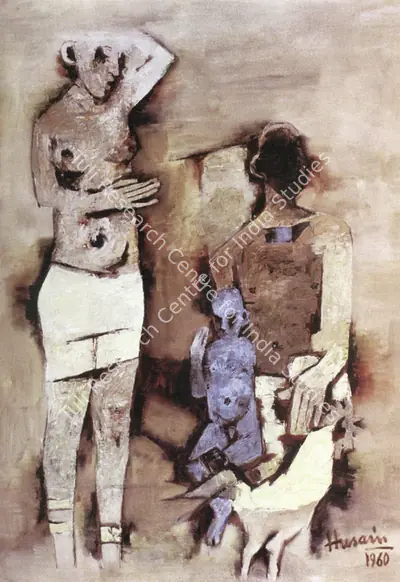
The human figure remains a primary motif in Husain's ouvre throughout the 1950s with only occassional landscapes. Like the ones done after a visit to Prague. An example of several paintings where he uses soft, muted colours as opposed to the earlier bold lines, Farmer's Family (1960)is suffused in what Orhan Pamuk calls huzun in Turkish "which denotes a melancholy that is communal rather than private". Bikram Singh states how Husain had come to associate this communal melancholy with Indian Tribals and Peasants: "The gesturing standing female figure is semi-nude. It is simplified and is far removed from the tribhanga concept. It is a tribal farmer woman who is not conditioned to be conscious of her nudity. The sitting figure of the man, with a child on his knee and a cock in the foreground, is similarly simplified but evocative. There are no facial details. The mood is of domestic harmony, unconditioned by gender role division that dictates that the child should be in the woman's arms. Such gender role divisions are less sharply defined in the tribal communities who are also marginal farmers."
Husain, M. F. (Artist). Empty River Bend. Oil on canvas, 1961 | Maqbool Fida Husain , 1971 | Painting | FineArts | 00495230
2 images

1961

Husain, M. F. (Artist). Empty River Bend. Oil on canvas, 1961 | Maqbool Fida Husain , 1971 | Painting | FineArts | 00495230
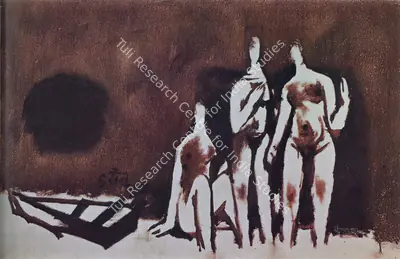
Husain's searching yet brooding mood reaches a climax in the painting Empty River Bend (1961). The retreat from actuality is here virtually complete. The three starkly lonely figures of this painting come from a territory of the mind spiked with questions and agony of the spirit. The flowing and simple lines of the figures and their stance give them a curiously abstract physical presence. Yet in their elongated proportions, with heads that are practically faceless pinheads, they are symbols expressive of a deep inner unrest. They stand on an empty shore, by the side of a boat, outlined against a burnt-out sky and a massive sun that has the feel of molten black-ness. The painting is almost existential in spirit, an image of a possibility under an empty sky. It carries in it the weight of an impending departure, destination unknown. Lovers in Japan takes on an element of abstraction. Shiv S. Kapur describes it thus: "In this work the distnguishing features of female body are barely suggested as the Symbolists used to do. The figure, in a shade of brown, is created through a mass of colour and the sun-like image in the background is suggested by an outline. Lying nude lover is also hardly noticeable in a first look." The brown vertical of the woman's standing figure is cut in the middle by the dark horizontal of the man lying behind her, to create an effect of destruc-tive stability. A wispy sun looks out of a white and empty sky upon a scene of utter desolation that, in its associative emotion, calls to mind Kandinsky's remark, "In my mind, the collapse of the atom was the collapse of the whole world." By the late 60s,Husain had found himself a new muse and lover. Simultaneously his female forms had started to undergo a discernible shift.
Husain, M. F. (Artist). Nehru. Oil on canvas, 1963 | Maqbool Fida Husain, 2008 | Painting | FineArts | 00495212
2 images

1963

Husain, M. F. (Artist). Nehru. Oil on canvas, 1963 | Maqbool Fida Husain, 2008 | Painting | FineArts | 00495212
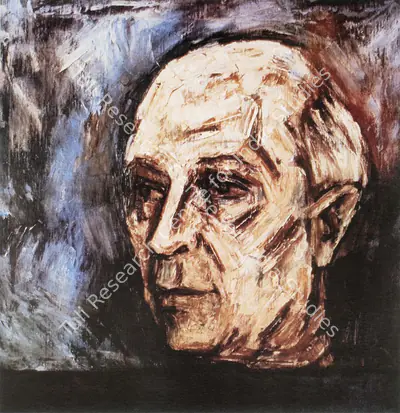
Portraits of Nehru Geeta Kapur discusses how Husain, following in the footsteps of Nandalal Bose, sought to develop a visual language capable of articulating a national iconography: "While Bose was committed to Mahatma Gandhi's India, Husain entered the nation-space in the first decade after Independence and this, of course, marks him differently. A self-declared modernist and an artist of/for modern India, he fell in step with the national as it was set apace by Nehru's modernising project. Husain also put his faith in the new state, as did a legion of post-Independence modernists. It gave them a participatory if also an almost formulaic agenda of sovereignty that conflated national and individual self-representation, and both these with the national state. Husain is thus engaged in a tripartite project, with the civilisational nature of Indian nationalism as derived, among others, from Nehru (a Discovery of India perspective), with the nation as an imagined community (in somewhat the Benedict Anderson sense of imagining and hypothesising, but also of making and sustaining the nation), and with the nation-state where the state's constitutional mandate defines the new nation's value structure, and enjoins citizen-protagonists to advance its agenda for a democratic, secular, progressive, and egalitarian future. The artist must of course convert the above into a workable aesthetic, a visual language, giving the otherwise wholly ideological paradigm an idiosyncratic twist." He had met Nehru with the help of Rajni Patel and P.N. Haksar. In 1963, he made the first portrait of Nehru. He depicts Nehru's quarter profile in a brooding mood painted in sienna. This portrait was painted following the Indo-China war and Husain seems to be aware of the complexity of Nehru's personality. He does not use flat colours for the background in the portrait. Instead, he uses strokes of bluish grey, sepia and brown colours, rendering Nehru's deeply lined face in a sculpturesque manner.
Husain, M. F. (Artist). Jawaharlal Nehru. Oil on canvas, 1964 | Maqbool Fida Husain, 2008 | Painting | FineArts | 00495214
2 images

1964

Husain, M. F. (Artist). Jawaharlal Nehru. Oil on canvas, 1964 | Maqbool Fida Husain, 2008 | Painting | FineArts | 00495214
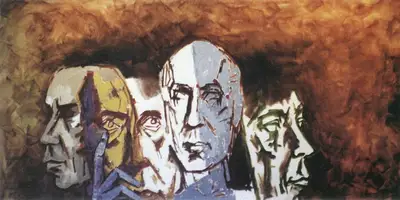
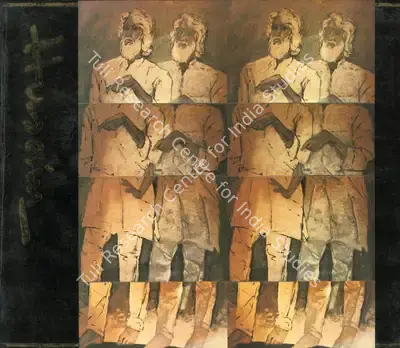
Sometimes later, perhaps after the death of Nehru on May 27,1964, in an undated portrait Husain creates three faces of Nehru in black and white. All three faces depict Nehru as an old person in a thoughtful and somewhat melancholic mood. This portrait has been done in broad brush strokes and the deep shadows on Nehru's face give it a dark brooding quality. This was perhaps a preparatory study for another more complex portrait of Nehru done in 1964 which is Husain's visual summation of Nehru from youth to old age and appears to have been made after Nehru's death. This is a multi-layered portrait of Nehru. It depicts five overlapping faces of Nehru against a brooding dark brown background. Two heads at two ends of the composition look beyond the frame, one of young impatient Nehru and the other of an older Nehru still looking far into the future. There are two half faces and a complete face of Nehru in the center. It is this complete face sensitive, thoughtful, idealistic and pensive that has become the iconic image of Nehru for the people of India. Husain makes us aware that Nehru was a profound thinker, a visionary statesman and a complex human being.
(Photographer). Huain walking barefeet in Nizamuddin Basti, New Delhi. Photographic Still, 0 | Contemporary Photograph, M. F. Husain, 2019 | Photography | 00501649

1964

(Photographer). Huain walking barefeet in Nizamuddin Basti, New Delhi. Photographic Still, 0 | Contemporary Photograph, M. F. Husain, 2019 | Photography | 00501649
"I didn't intend to shock or startle," Husain remarked at a later stage in life, "But if I stopped wearing shoes, it became news. I gave up footwear in 1964 because (the Hindi poet) Muktibodh was in a coma. I didn't know him closely but I felt the pain of his poetry. I wanted to feel the heat and pain in the soles of my feet. With the years, the nerves of my feet have become taut and cauterised. Now, I've started wearing shoes again simply because my sister asked me to."
Husain, M. F. (Artist). Bharat Bhagya Vidhata. Oil on canvas, 1964 | Maqbool Fida Husain, 2008 | Painting | FineArts | 00495215

1964

Husain, M. F. (Artist). Bharat Bhagya Vidhata. Oil on canvas, 1964 | Maqbool Fida Husain, 2008 | Painting | FineArts | 00495215
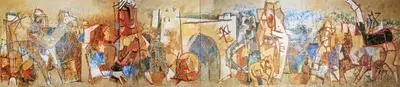
Bharat Bhagya Vidhata In 1964, Tata Institute of Fundamental Research (TIFR) decided to commission a large painting for its lobby in Mumbai. It invited several artists including N.S. Bendre and Husain to submit conceptual designs and colour sketches. Husain's concept of Bharat Bhagya Vidhata (1964) was selected after careful evaluation by the TIFR. The final mural size painting of 2.76 meters X 13.26 meters has been done in oil on four canvases. It is a grand evocation of eternal India that he had first explored in Zameen (1955) but there is an important difference. Zameen was primarily a collage of symbolic but static images. In Bharat Bhagya Vidhata, India seems to be on the move while celebrating its identity forged over several centuries. The dominant metaphor of this painting is an ancient caravan sarai through which a variety of ethnic people and other forms of life have passed over the ages. Reading it from the left to right, we first see a stylised camel followed by a group of women, a lion, a large entrance gate to the ancient caravan sarai, a family of elephants and finally a group of horses led by a turbaned man. These are all perennial symbols of eternal India. Surprisingly, Husain does not make any reference to the rapidly industrializing India though by this time Jawaharlal Nehru had already started building heavy industrial plants which he had described as the Temples of Modern India. Nor does he directly refer to the vision of TIFR that was devoted to fundamental research in science and that would soon drastically change the rhythm of Indian life. However, the installation of this painting in TIFR does suggest that Husain believes that even fundamental research in science should ultimately be devoted to the service of ordinary man and help enrich the multi-ethnic culture of India.
Husain, M. F. (Artist). Three Monks. Oil on canvas, 1965 | Maqbool Fida Husain , 1971 | Painting | FineArts | 00495224
3 images

1965

Husain, M. F. (Artist). Three Monks. Oil on canvas, 1965 | Maqbool Fida Husain , 1971 | Painting | FineArts | 00495224
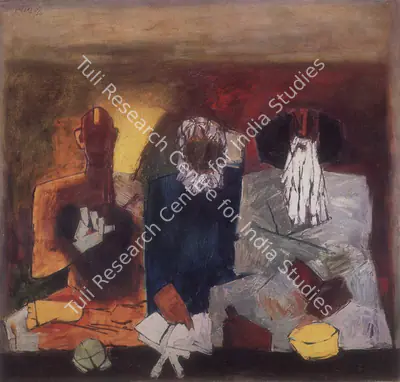
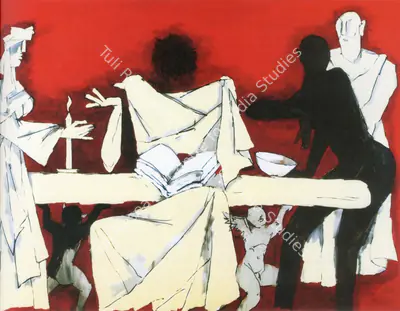
The Mullah and Maryam (1965) series, along with the Horse That Looked Back (1967), belong to the category of paintings of mockery. The former has its beginnings in the painting of Three Monks (1965), the self-important and rigid image of man as the initiator. Mullah and Maryam is a ritualistic parody in severe black and white. The Mullah is a seated black figure, a grave shadow touched with active white around the face and on the hands. Maryam kneels beside him in the posture of a penitent, her bare breast covered by her crossed arms, in a gesture of mingled penitence and modesty. The Holy Book glows white in front of the Mullah. Yet the two fingers of the Mullah's right hand, extended in the traditional gesture of instruction, are distinctly phallic and reduce the entire theme of the painting to mockery. The same mood of make-believe mixed with grotesque humor marks the other paintings in this series.
Husain, M. F. (Artist). Baghdad. Oil on canvas, 1965 | Maqbool Fida Husain , 1971 | Painting | FineArts | 00495223

1965

Husain, M. F. (Artist). Baghdad. Oil on canvas, 1965 | Maqbool Fida Husain , 1971 | Painting | FineArts | 00495223
In 1965, when the Indo-Pak war broke out, Husain found himself in a complicated terrain. Being a Muslim, he would find himself at the receiving end of hostile attention of Hindu extremists. Towards the close of the war, Husain visited the war front and was horrified by the death, destruction and mutilation of the human body that he witnessed. The same year he visited the Karbala, Iraq, which is the site of the martyrdom of Imam Husain. Overwhelmed by the weight of his spiritual turmoil, he broke down in tears. His works from this period reflect an almost prophetic foreshadowing of his ultimate emotional experiences. Baghdad (1965) is a fairly straightforward cityscape, complete with a bearded figure, looking suspiciously like a portrait of the painter himself, seated in the foreground. Over the turrets of the city appears the rushing figure of a horse, with a bleeding nude flung supine on its back. From this figure's head smoke streaks out in a surrealistic nightmare and blots out the sun. One is tempted to look upon Baghdad as a symbolic view of the artist's arrival in the city, in a confusion of sensual and spiritual torment.
Husain, M. F. (Artist). Shouting Man I. Pen and ink, 1965 | Maqbool Fida Husain , 1971 | Drawing | FineArts | 00495221
2 images

1965

Husain, M. F. (Artist). Shouting Man I. Pen and ink, 1965 | Maqbool Fida Husain , 1971 | Drawing | FineArts | 00495221
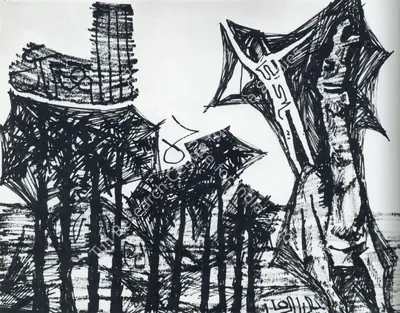
Around the same time, a series of pen-and-ink drawings in a prophetic mood follow, exploring the nature of man's spiritual captivity and his urge for freedom and personal meaning in his existence. The surrealistic and nightmarish mood persists in these drawings. New symbols of dark power make their appearance. In Husain's characteristic manner, however, the underlying emotion is abstracted, made more rich and abiding by a contrapuntal use of signs and letters and commonplace symbols along with human figuration. Richard Bartholomew writes: "In Shouting Man I (1965) and Shouting Man II (1965) the bat form makes its appearance. In India and the Middle East this creature is associated with ruins and graveyards and is evocative of a time-eroded and twilight emotion, as when the frontiers of the world appear to close in upon one. In traditional Islamic belief doomsday will be marked by lowering bats or massive birds, darkening the world. A cloaked figure of man assumes the bat form in Shouting Man I, his body of white caught in the inky webbing around him. In Shouting Man II, the batlike figure poised for flight on the tower is echoed in the form on the donkey's back. The face of the man on the donkey is extinguished in black, his legs dangle straight down, and his cloaked arms are rigidly stretched out on either side of him. The painting creates a phantom image of man as will-less scarecrow or bat-haunted doll, being carried shouting to a macabre crucifixion. The vertical and horizontal lines of the figures and the black and white of their coloring are dynamically balanced. Around the agonized cry of the Shouting Man the towers and minarets continue to push upward."
Husain, M. F. (Artist). Mural and Mosaic, Indraprastha Building, New Delhi. Mural on wall, 1966 | Maqbool Fida Husain , 1971 | Mural | FineArts | 00495226

1966

Husain, M. F. (Artist). Mural and Mosaic, Indraprastha Building, New Delhi. Mural on wall, 1966 | Maqbool Fida Husain , 1971 | Mural | FineArts | 00495226
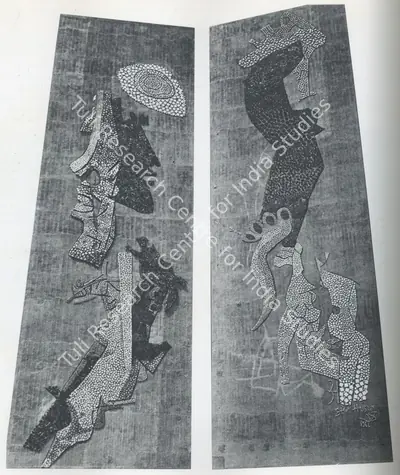
In 1966, Husain completed Mural in Mosaic (1966), a two-panel design measuring 80 feet in height and 50 feet in width, created on the outer wall of the Indraprastha Building in New Delhi. The building, designed by renowned Indian architect Habib Rehman, was specifically constructed to accommodate a mural. Husain brought together artisans from across the country, personally overseeing the design and firing of the tiles. Once everything was prepared, he applied the tiles directly to the wall without any preliminary outline, working from a suspended bricklayer's platform. The forms in the mural closely resemble those in his canvases but are set free in space. They convey a sense of urgent, dual desire—expressing themes of multiple identities, procreation, and an upward-gazing face. A dynamic interplay between familiarity and ambiguity gives the composition an internal tension, while the sweeping lines of the figures and their rhythmic movement bring them to life. The mural stands covered by foliage today. The building itself was demolished.
Husain, M. F. (Photographer). Still from Throught the Eyes of a Painter. Photographic Still, 1967 | Contemporary Photograph, Maqbool Fida Husain, 2008 | Photography | 00501653
2 images

1967

Husain, M. F. (Photographer). Still from Throught the Eyes of a Painter. Photographic Still, 1967 | Contemporary Photograph, Maqbool Fida Husain, 2008 | Photography | 00501653
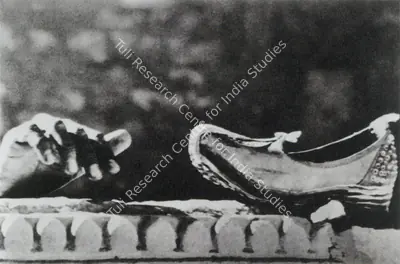
Through the Eyes of a Painter: A tryst with Celluloid Husain's exploration of the visual potential of the camera takes place through his first film Through the Eyes of a Painter (1967), which is shot in black and white. The shooting for the film commenced in 1966. It is, in a sense, a painterly exploration of Rajasthan's ancient towns. The film, which won the Golden Bear for Best Short Film at the Berlin Film Festival in 1967, does not follow a traditional narrative. Instead, it presents a series of evocative images with an interplay of line and form. It set against a backdrop of historic architecture and the people who now inhabit these spaces. Interwoven with these visuals are surreal, symbolic elements that hint at another dimension: an open umbrella falling in slow motion into a lake or standing upright in the desert sand, an empty bottle left on a chair, a Nagra scroll painting resting on a dune, or a villager's shoe placed on a crumbling wall. Husain uses associative and instinctive emotions to connect these symbols, forming a cohesive experience in the viewer's mind. What binds the film together is his uninhibited camera eye, which finds meaning in the most ordinary details, and his deep, joyous love for the world he captures.
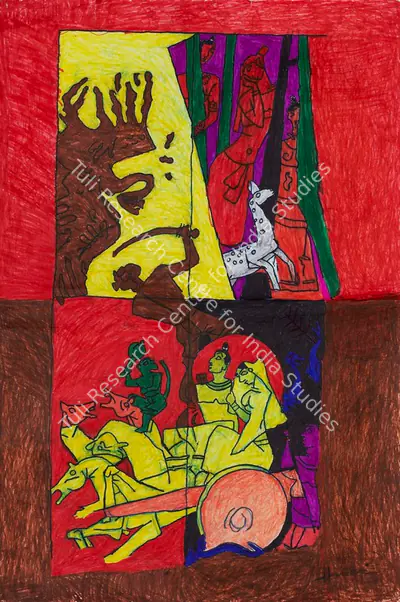
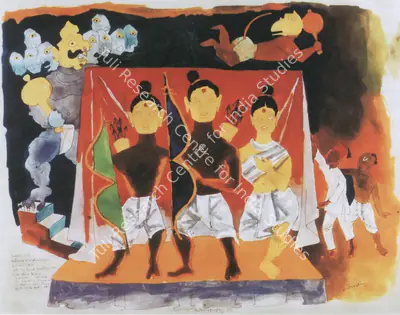
Husain, M.F. (Artist). Untitled (Ramayana). Felt tip pen and pastel on paper, n.d. | Painting | FineArts | 00416399
2 images

1968

Husain, M.F. (Artist). Untitled (Ramayana). Felt tip pen and pastel on paper, n.d. | Painting | FineArts | 00416399
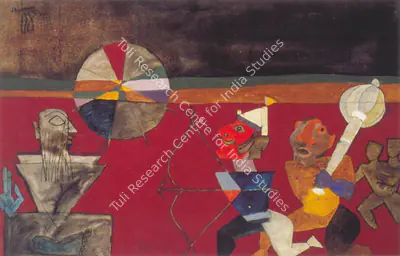
The Ramayana Paintings An encounter with Hindu mythology seriously began around 1968. Around this time Husain happened to meet Dr. Ram Manohar Lohia, the Socialist ideologue, at Badri Vishal Pittie's house in Hyderabad. In this context. Ila Pal recalls a conversation during which Husain said: "Talking about the relevance of modern Indian paintings to villagers Dr. Ram Manohar Lohia remarked, stop painting for Tatas and Birlas. Start painting for the common man. Paint Ramayana...that is the best way to penetrate the popular psyche and reach the masses." The words of Dr. Ram Manohar Lohia went straight to Husain's heart. He engaged a Pundit to recite the chaupais or the couplets from Tulsi's Ramayana. The music and the imagery of the Ramayana got immediately coalesced in his mind with the experience of Ramayana as Ramlila that was already with him from his childhood. It is apparent from this story that Husain's purpose in going back to the Hindu epics was not to look for exotica but to evolve a language of art that would help him reach out to the people in a more meaningful way.
Husain, M. F. (Artist). Autobiography XXI. Watercolour on paper, n.d. | Maqbool Fida Husain, 2008 | Painting | FineArts | 00495174
2 images

1968

Husain, M. F. (Artist). Autobiography XXI. Watercolour on paper, n.d. | Maqbool Fida Husain, 2008 | Painting | FineArts | 00495174
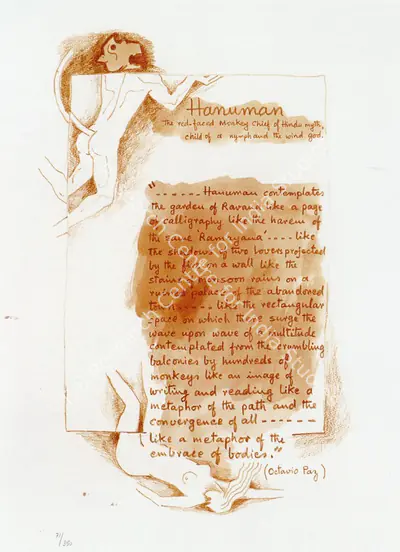
About 20 paintings from the Ramayana series were carried on bullock-carts to a village near Hyderabad during the yearly Ramlila, as a tribute to folk and popular performance. Husain soughth entry as an artist into the living tradition that was the Ramlila. Puppets, dance and drama were enacted with the paintings of Husain as a backdrop. In this, Hanuman, the son of the wind-god fulfilled the painter's desire for an epic motif. It was also coming from Husain's lived experience since he had grown up in a multi-cultural sphere—as a child he had enacted the role of Hanuman with his Brahmin friend Mankeshwar. Having assumed the role of a modern sutradhar for the nation, Husain was seen by both contemporaries Ram Manohar Lohia and Jawaharlal Nehru as the painter of his time, someone who had the pulse of the people. Reverred as a painter for the nation as opposed to the state, Husain was to soon lose that credibility after his allegiance to Indira Gandhi in a time of reckless political strife and clamour and the state's cracking down upon individual freedom.
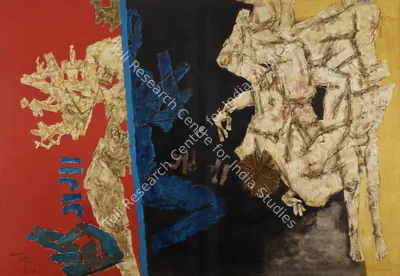
Husain, M.F. (Artist). Mahabharata. Oil on canvas, 1971 | Painting | FineArts | 00373940
2 images

1971

Husain, M.F. (Artist). Mahabharata. Oil on canvas, 1971 | Painting | FineArts | 00373940
The Mahabharata Series After the Ramayana, The Mahabharata emerged out of an altogether different context. In 1971, Husain was invited to exhibit at the Sau Paulo Biennale. It so happened that Picasso's works were being displayed on a major scale. Electrified and challenged by the opportunity, Husain decided to display something that could prove as monumental as the celebrated Spanish painter's Guernica. His choice was the Mahabharata with its epic cast of characters—scaled stunningly in their magnificence and humanity. He could then expand his scale and ambition with a style derived from his antecedent as a painter of hoardings. Husain was, in some senses deploying the puranic pantheon and the great epics, appropriating their abundance of motif and un-depleted iconography. In the Catalogue for the Sau Paulo Biennale, Husain quoted K. M. Munshi regarding the significance of Mahabharata: "The Mahabharata is not a mere epic; it is a romance, telling the tale of heroic men and women and of some who were divine; it is a whole literature in itself, containing a code of life, a philosophy of social and ethical thought on human problems that is hard to rival."
Husain, M.F. (Artist). Battle of Ganga and Jamuna: Mahabharata 12. Oil on canvas, 1972 | Painting  | 00866369

1972

Husain, M.F. (Artist). Battle of Ganga and Jamuna: Mahabharata 12. Oil on canvas, 1972 | Painting | 00866369
Husain projects the epic's monumentality and pageantry in almost cinematic terms. His canvases are huge, densely packed and animated. Some seem to layer filmic images telescopically. Together the canvases can be read as if the precis of a film. As a young man Husain made his living painting the huge film posters one can see splashed across the walls of Indian cities. He grasped a continuity between these and the more ancient Indian sense of monumentality, but also the general idea that cinemascope is our century's way of presenting the larger-than-life with immediacy. What better way to modernize the epic than to present it as cinematic. Husain is concerned to understand and depict the Mahabharata as a psychological drama. It is not that he ignores the social dimension to the drama; he does not project conflict as basic to the social fabric of the world. It is rather that he is primarily interested in portraying the intense conflict within people. The series begins with Gunga/Jumna (1972). The two warring families of the Mahabharata spring from the same lineage, just as the two rivers Gunga (Ganges) and Jumna share a common source in the Himalayas. Husain portrays these two rivers—these two families in the act of division. His representation is one of chaotic and violent separation.
Husain, M. F. (Artist). Varanasi VIII. Serigraph, 1973 | Maqbool Fida Husain, 2008 | Print | FineArts | 00495182
2 images

1973

Husain, M. F. (Artist). Varanasi VIII. Serigraph, 1973 | Maqbool Fida Husain, 2008 | Print | FineArts | 00495182
Varanasi Serigraphs Husain and Ram Kumar together visited Varanasi in 1960 upon the insistence of Husain. Several years later, during a conversation with Ila Pal, Husain's biographer, he recalled, "There are several women among the dead who were young, shapely and beautiful. They lay there propped up on the slope, their feet touching the Ganges, profusely adorned as brides. And strangely I felt an exhilarating sense of freedom [..] this could happen only in my country in a country where even death is beautiful and joyous...a means of recycling." According to Ram Kumar, "Even though the ghats of Varanasi, the stairs, the temples and people bathing in the river Ganga could be clearly seen in the pencil sketches of Husain, he did not seem satisfied with his own sketches and that is why after one week, he suddenly announced that he would return to Delhi the next day." Bikram Singh writes: Several drawings emerged out of this visit, but it was in the 1970s that he started making more lyrical ink-on-paper serigraphs. The subjects of these serigraphs is somber and grave but the mood is one of acceptance without anguish. Along with the presence of death, we also see in these serigraphs symbols of hope like the rising sun or a bird flying in the sky above the head of a person washing a corpse in the waters of the holy Ganga. His involvement with Varanasi continued through the late 1970's but now instead of concentrating on life in the midst of death, he explores the mythical, the mythological, the religious, the ascetic and the sensuous associations of Varanasi.
Husain, M.F. (Artist). | Graphic Art | CinemaEducation | 00333382
2 images

1973

Husain, M.F. (Artist). | Graphic Art | CinemaEducation | 00333382
An essay in the important Harry Abrams volume on Husain (the first international book on an Indian artist) described Husain as 'the inheritor... of two traditions of expression in India the Muslim... and the Hindu'. Nothing in Husain's performative style, if one might call it that, nor in his art, draws that line. Banaras, which he began drawing in the late 1950s, most famously in a series of serigraphs from the 1970s, is often presented as the quintessential Hindu' city, but as Husain himself later commented while drawing in that city, "I felt an exhilarating sense of freedom all barriers between life and death were broken down." Similarly in the epics he found keys to the human condition beyond any specific religious tradition. Husain's art implicitly, then, embodies a particular expression of a unitary vision of what secular nationalism might mean.
Husain, M.F. (Artist). India June 75. Pen and Ink on Paper, 1975 | Drawing | FineArts | 00576841

1975

Husain, M.F. (Artist). India June 75. Pen and Ink on Paper, 1975 | Drawing | FineArts | 00576841
The Emergency Era Triptych In June 1975, the then Prime Minister Indira Gandhi suspended all civil and political liberties of the citizenry by declaring a state of national Emergency. Husain produced a now-infamous triptych that is apparently not available in the public domain anymore. In the book Making of Modern India, Yashodhara Dalmia has described the triptych thus: "The first, made on 12 June, has a headless body with accusing fingers emerging from four arms thrust in a menacing fashion towards a pale, victimized Sita. The second, painted on 24 June and titled Uthal Puthal, has a nude female body outstretched in the shape of the map of India. The configurations of the hair form the Himalayas, while the feet stretch towards the Bay of Bengal. The painting shows Mother India in distress as the national flag is shred to rags. In the painting made on 26 June, Mother India emerges in the form of Durga riding a roaring tiger. She is crowned with triple heads and in her ferocious aspect is determined to eliminate all evil." The triptych that was exhibited at a show inaugurated by the President of Inida was accompanied by a brochure titled 'The Triumph of Good over Evil'. While the triptych itself is absent from public domain, what remains is a document titled 'India June' 75: The Triptych in the Life of a Nation'. Invoking Guernica which was painted when another nation was grappling with a disastrous civil war, Husain seems to have found equivalence in that nation's experience with India, with India teetering on the edge of a similar civil war. He characterised this as 'the contours of the great continent in peril'. In later interpretations that Husain offers of this work, the artist prevaricates about the composite identity of the female body represented in the triptych. In a 1985 interview, he insisted, 'The Emergency paintings were my reactions to a historical event where an Indian leader for the first time had the courage to ban dangerous cancerous bodies like such as [sic] the Rashtriya Swayamsevak Sangh and Jamaat-i-Islam, who threatened our composite culture.' In another interview with journalist Madhu Jain, he observed, 'I remember Ezra Pound's poem on Mussolini in which he said that creative people were fascinated by power, evil or otherwise. To defeat an evil force, you have to be equally forceful.' In a 2006 conversation, he stated, however, that his intention was to show Mother India in turmoil: 'It is not that I endorsed the Emergency, because even I wrote it in the brochure even in the exhibition I put a big placard. They just ignored it. They just attacked me. I am with a tyrant [they were saying] and [that] I supported this. That figure which I painted on the tiger, Durga, was Mother India. There were three heads, they were not a portrait of Indira Gandhi.'
Husain, M. F. (Artist). Satyajit Ray. Watercolour on paper, n.d. | Maqbool Fida Husain, 2008 | Painting | FineArts | 00495185
3 images

1975

Husain, M. F. (Artist). Satyajit Ray. Watercolour on paper, n.d. | Maqbool Fida Husain, 2008 | Painting | FineArts | 00495185
From Gitanjali to Pather Panchali In a letter dated 27th May 1975 to Daniel Herwitz, Husain wrote, "The water colour school of painting is always associated [in India] with the British School of pure water colour painting. In my work, I will try to be impure and unBritish." Husain had commenced a series of paintings, predominantly in water colour, titled From Gitanjali to Pather Panchali as a way of paying tribute to the literary and film culture of Bengal. Two decades earlier, Husain's art was dismissed by the leading critic O. C. Ganguly as a betrayal of Jamini Roy especially in terms of how Husain posited his rural imagery. In the 1970s however, Husain returned to Kolkata with this series. Chronicling the history of the Bengal Renaissance through major figures like Sarat Chandra Chattopadhyaya, Rabindranath Tagore and Satyajt Ray, Husain deliberately adopted a deferential and serious note. Portraits of Tagore and Sarat Chandra are painted sans discernible eyes and Ray's auteurial, all seeing eyes are posited against a film strip.
Husain, M. F. (Artist). Cyclonic Silence-I. Ink and wash on paper, 1977 | Maqbool Fida Husain, 2008 | Painting | FineArts | 00495195
3 images

1977

Husain, M. F. (Artist). Cyclonic Silence-I. Ink and wash on paper, 1977 | Maqbool Fida Husain, 2008 | Painting | FineArts | 00495195
Cyclonic Silences In 1977, a devastating cyclone had hit the coastal region of Andhra Pradesh killing more than twenty thousand people and displacing several others. Husain's response to the calamity were a series of small paintings called Cyclonic Silence (1977). The first painting Cyclonic Silence-I (1977) is an ink-&-wash on paper and shows a dead emaciated body with an outstretched hand against the backdrop of a dark sea. There is a figure of a lamb crawling over the body. In this painting the lamb does not appear to be a life affirmative symbol because it is painted as almost a fearsome animal. The mood is of terror and unredeemed gloom. This mood changes in two oil-on-canvases that he seems to have created after he had internalized the tragedy and had realized that life continues despite death, a lesson that he had learnt in Varanasi. Now the background of the paintings changes to a brooding grey instead of black. In Cyclonic Silence-II (1977), another skull is added and in Cyclonic Silence-III (1977) another corpse in bluish grey is shown floating in dark waters in the background. The figure of the lamb becomes gentle, instead of fearsome. It symbolizes hope and life because it has the quality of innocence that is absent in the first painting. The starkness and the imaginative tonalites of colours make these paintings visually arresting.
Husain, M. F. (Artist). Pilu Raag. Oil on Canvas, 1977 | Maqbool Fida Husain, 2008 | Painting | FineArts | 00495203
2 images

1977

Husain, M. F. (Artist). Pilu Raag. Oil on Canvas, 1977 | Maqbool Fida Husain, 2008 | Painting | FineArts | 00495203
Musician Series Fond as he was of music, Husain had started creating paintings inspired by Indian music since the 1960s in his studio in the Bhulabhai Desai Institute of Bombay. By the 1970s, he painted several paintings visualising specific raagas. In the painting Pilu Raag (1977), which is identified with Shringar Rasa, the dominant emotion is one of sensuality or erotic desire. The figure of the woman performer seems to be aflame with desire. The image of the tabla player is abstracted and is symbolized by a playing hand. A white masked face peers over the shoulder of the performer like a distant memory. Pilu is a raag of early evening. The approaching night in the painting is suggested by the mauve colour of the sky. The painting is divided into two panels by the tanpura; one panel is dominated by mauve and the other by golden yellow creating a musical harmony of different colour notes. One of the most memorable paintings of Husain inspired by music is Deepak Raag (1977). This raag is associated with Tansen, the great musician in the Mughal emperor Akbar's court. According to legend, when Tansen sang this raag in the court of Akbar, the wicks of unlit oil lamps spontaneously caught fire and "the intensity of the notes set scorching the singing Tansen. He started turning into cobalt ash." In this painting, Husain recreates both the fire-lit glow of Deepak Raag and the brooding clouds that form in the sky in response to raag malhar. The association of Deepak Raag with Tansen is suggested by the cobalt ash colours of the musician who seems to be getting reduced to ashes in the process of creating the raag. Deepak Raag itself is symbolized by the female figure on the right of the canvas, suffused in the fires of passion. Thus, Husain creates a strange harmony of the skeletal and the sensuous.
Husain, M. F. (Artist). QAF. Watercolour on paper, 1978 | Maqbool Fida Husain, 2008 | Painting | FineArts | 00495198
2 images

1978

Husain, M. F. (Artist). QAF. Watercolour on paper, 1978 | Maqbool Fida Husain, 2008 | Painting | FineArts | 00495198
Calligraphy Series During the late 1970s, Husain created some calligraphic works especially inspired by specific Arabic alphabets such as Qaf, Hai, HAI-SEEN-YE-NOON and Ya Azeezo. Calligraphy has played an important role in the evolution of Husain's art. His experiments with calligraphic forms since is childhood have influenced his line which can be fluid, supple, bold, rhythmic and staccato as the occasion demands. Husain had once remarked, "Drawing is a form of thinking In my doawing I write images and concentrate on the way the whole moves from one thought to another." Calligraphy has also enriched Husain's language of symbols. According to Shiv S. Kapur, "From the very beginning Husain bad been sensitive to the force of symbolization, to the capacity of the metaphor to mirror the ambiguities of reality beyond the reach of reason"
Husain, M. F. (Artist). April Fourth 1979. Acrylic on Canvas, 1979 | Maqbool Fida Husain, 2008 | Painting | FineArts | 00495194
2 images

1979

Husain, M. F. (Artist). April Fourth 1979. Acrylic on Canvas, 1979 | Maqbool Fida Husain, 2008 | Painting | FineArts | 00495194
April 4th, 1979 marked the day when Zulfikar Ali Bhutto, the former Prime Minister of Pakistan was convicted of having conspired the assassination of his political opponent, Ahmad Raza Kasuri. The execution led to widespread unrest especially in Kashmir. Husain's response was a painting titled April Fourth (1979) wherein one sees, once again, the body of a wounded man wrapped in blood-stained shrouds of cloth. The body of the man is suspended mid-air against a dull grey and black background, his eyes draped with cloth, mouth letting out an agonizing cry. There is a poem inscribed at the right-hand corner where words seem scattered above a black sun rising over a green horizon. A decade later, in 1989, when communist theatre activist Safdar Hashmi was brutally murdered while performing a street play in a working-class neighbourhood of Delhi, Husain responded with a powerful tribute. The painting which was created in the immediate aftermath, echoed the visual idiom he had earlier developed to depict the violated human form. Drawing on the motif of the wounded body, Husain's response to Hashmi's death was both visceral and political
Husain, M. F. (Artist). Untitled. Pen and ink, 1979 | Maqbool Fida Husain, 2008 | Drawing | FineArts | 00495186
3 images

1979

Husain, M. F. (Artist). Untitled. Pen and ink, 1979 | Maqbool Fida Husain, 2008 | Drawing | FineArts | 00495186
Mother Teresa Series The eighth decade, the decade of eternal mother, Her white sari, lights up the unlit lanes of Calcutta, I paint and unfold several layers of her sari. In search of my lost mother: Sometimes her trembling hand, Appears from the bodyless bundle of cloth To touch her fugitive son." When Mother Teresa received the Nobel Peace Prize in November 1979, Husain briefly met and did a pen-&-ink sketch of the Mother seemingly on the spot at the Palam airport as it was signed by Mother Teresa on 9th November 1979. Another ink drawing of the same date is in a similar realistic style. The border of her sari frames her face. It is this border that points to the direction in which Husain was seeking a solution to the artistic problem of going beyond realism and creating an abstract metaphor that would evoke both her person and the spiritual aura surrounding her. In another sketch of 1979, he took a huge step towards solving this problem by removing the face of Mother Teresa from the portrait and concentrating on her all-enfolding robe. He also added figures of two children because children were a part of Mother Teresa's persona. Yet he was not satisfied with the results.To him, the lines were not lyrical enough, the folds of her sari not quite expressive and the children, not really emaciated and hungry who Instinctively evoke compassion. He finally found the solution by studying the treatment of saints in the pre-Renaissance paintings of Italy: "In the pre Renaissance paintings of saints and apostles, I had seen how their robes seemed capable of covering, canopying and sheltering. To re-invigorate my vision, I went to Italy, to Milan, to small churches. I made several drawings of these paintings, concentrating on the robes and the folds." too
Husain, M.F. (Artist). That Obscure Object Of Desire III. Acrylic on canvas, n.d. | Painting | FineArts | 00598770
3 images

1979

Husain, M.F. (Artist). That Obscure Object Of Desire III. Acrylic on canvas, n.d. | Painting | FineArts | 00598770
That Obscure Object of Desire Sometimes, Husain's tribute to a film became merely a title of a series of paintings that does not directly identify with the film's narrative and may only vaguely resonate with its spirit. During the late 1970's and the 1980's, Husain did a series of paintings under the title That Obscure Object of Desire. This is the title of a well known film of 1977 made by the Spanish Director Luis Bunuel who mainly worked in Mexico and France. That Obscure Object of Desire is the story of Mathieu and his obsessive desire for Conchita who constantly deceives him. Of his inspirations, Husain commented: "Most of my thematic series of paintings are inspired by the works of great film makers. Kurosawa, Bunuel, Pasolini and Satyajit Ray. Never miss any of their films. Very seldom I sit through its full length. Though I do respect their concept, their philosophy but my concern falls heavily on how to transform sound and movement into a statement of colour and line."
Husain, M. F. (Artist). Mother. Oil on canvas, 1980 | Maqbool Fida Husain, 2008 | Painting | FineArts | 00495188
3 images

1980

Husain, M. F. (Artist). Mother. Oil on canvas, 1980 | Maqbool Fida Husain, 2008 | Painting | FineArts | 00495188
Husain has explored the phenomenon of Mother Teresa in a variety of media—oil, water colour, acrylic, pastel, lithography and serigraphy. His first exhibition of Mother Teresa paintings was held in Calcutta in Victor Banerjee's gallery in 1980 and was a huge success. The identification of Mother Teresa with the ideal of motherhood was obvious because all activities of Mother Teresa, as Pranabranjan Ray points out, were truly 'motherly'. Husain was also aware of two distinct artistic traditions of portraying this ideal: one that of Pieta, the grieving Virgin Mary holding the body of crucified Christ in her lap, and the other more universal tradition of mother-and-child in the western and Indian art of a mother full of love for her own child. While the former was suffused in suffering and sorrow and was too closely identified with Christianity, the latter had the inherent risk of becoming sentimental. Husain was aware that Mother Teresa's love was inspired by her Christian convictions. In a limited edition portfolio of serigraphs published in 2004, he brings in elements of Christian iconography into his imagery such as the lamb and the church. One serigraph is titled Christianity (2005) in which he identifies Mother Teresa with the highest values of Christianity such as compassion. He incorporates the Indian symbol of hand that he has evolved over a period from panja as a symbol of grace.
Husain, M. F. (Artist). Untitled (Horse that looked back). Oil on canvas, 1980 | Maqbool Fida Husain, 2008 | Painting | FineArts | 00495179
2 images

1980

Husain, M. F. (Artist). Untitled (Horse that looked back). Oil on canvas, 1980 | Maqbool Fida Husain, 2008 | Painting | FineArts | 00495179
Husain has done several horse paintings under the generic title The Horse that Looked Back though he has not given this title to all such paintings in which the figure of a horse is presented in this manner. This gesture of looking back, as if out of curiosity. has a poetic association in Husain's mind. In one of his poems he says: Suddenly, a black horse noticed me. He paused, turned back and said to me, "Go forth and see the world". Indeed it is true. Seeing the world is to understand one's own existence. Husain knows this well. Hence he never stays at one place for long. In two oils of 1980's, Husain explores the galloping horse that looks back, as a joyous symbol of freedom. He creates a dynamic equilibrium between two contrary movements of looking back and running forward. In both these paintings Husain uses the extended raised neck of the Bankura horse and gives his horses a playful toy like quality.
Husain, M.F. (Artist). Culture of the Streets. Photographic collage, n.d. | Collage | FineArts | 00372880
3 images

1982

Husain, M.F. (Artist). Culture of the Streets. Photographic collage, n.d. | Collage | FineArts | 00372880
Culture of the Street One of Husain's initial influences had been Chola bronzes that he had encountered as a young painter in the beginning of his career. In the 1980s, he returned to Chennai and engaged with the contemporary milieau of Tamil Nadu. He captured the street culture of Madras through a series of photographs whose enlarged blowups were exhibited at London's Tate Gallery in April 1982 under the title Culture of Street (1982). Paddy Kitchen, who had reviewed this exhibition in the Times (London) of April 1982, wrote, "Huge cut-out figures gesticulate histrionically, ignored by chattering cyclists and a woman picks over a waste ground of rubble, alone apart from the painted giants above her. When Husain first went to Bombay to become an artist in the 1930s, he supported himself by painting such hoardings...so there is a personal irony in these images as well as a social one." Husain had been presented with a Agfa box camera by his father when he was twelve. His tryst with cinema was also a long standing one. He had apprenticed under Ram Chandram, who was the official photographer of the Holkar family. In an interview with Khaled Mohamed Husain says, "He (Ram Chandran) had a huge studio, with a collection of original Ravi Varma paintings. I would watch him for hours, taking portraits, so in a way I did my apprenticeship with Ram Chandra." In 2005, Husain manipulated these images again and released a limited edition of laminated prints in 2005, expressing how he felt "some of these photos could work better with the collage effect, the entire perspective changes with an interpolation, a nose or a lip cut from the copy of the same photograph."
Husain, M. F. (Artist). Hanuman. Lithograph, 1982 | M. F. Husain, 2019 | Print | FineArts | 00495141
2 images

1982

Husain, M. F. (Artist). Hanuman. Lithograph, 1982 | M. F. Husain, 2019 | Print | FineArts | 00495141
Hanuman Series “You say tradition is the past, but in India it is living. I like to go to the epics because there I find the roots... I look to the roots to discover what form the symbols have... I like to relate all these symbols and images to the present situation... to make these symbols come alive,” Husain once remarked. These words found visual resonance in 1982, when he created a series of lithographs centered on the monkey god Hanuman, depicting the moment he finds and reassures Sita of her imminent rescue.
Husain, M. F. (Artist). Untitled (Ghalib, Iqbal and Faiz). Watercolour, 1984 | Maqbool Fida Husain, 2008 | Painting | FineArts | 00495201
2 images

1984

Husain, M. F. (Artist). Untitled (Ghalib, Iqbal and Faiz). Watercolour, 1984 | Maqbool Fida Husain, 2008 | Painting | FineArts | 00495201
In the 1980s, Husain pays ardent homage to some of the great poets of the Urdu language. The poets that he especially admires are Asadullah Baig Khan Ghalib, Muhammad Iqbal and Faiz Ahmed Faiz. In a water-colour of 1984. Husain places Ghalib in the centre with Iqbal sitting on his left and Faiz in a walking posture on his right. In another painting inspired by this very theme of trimurti or triumvirate of poets, Husain makes important additions and alterations to his original concept. In the first version the background is black. In the second version, the background is off-white and in this space, he inscribes a couplet of each of these poets. Again, in the first version, the three poets are shown in three separate blocks. In the second version, the image of Iqbal has been brought closer to Ghalib while the distance between Ghalib and Faiz is maintained as it is in the first painting. Not only the composition but the colours also change. In the second version, the figure of Faiz is dominated by red. Ghalib is painted in golden ochre and Iqbal in a shade of blue with a golden ochre shawl around his shoulders against a blazing green background. According to Rashda Siddiqui, "The colour that Husain associates with Ghalib is gold which symbolizes splendour of Ishq. Every time be reads or listens to Ghalib's poetry, be visualises him in golden hue." She goes on to suggest that the colour of Iqbal's poetry is green which symbolizes depth and philosophical thought and that of Faiz red "which signifies revolutionary thought".
Husain, M. F. (Artist). Ranee of Jhansi-A recast of an early period in the Indian History. Mixed media on paper, 1985 | Maqbool Fida Husain, 2008 | Painting | FineArts | 00495191
3 images

1985

Husain, M. F. (Artist). Ranee of Jhansi-A recast of an early period in the Indian History. Mixed media on paper, 1985 | Maqbool Fida Husain, 2008 | Painting | FineArts | 00495191
Husain's controversial triptych from the Emergency era drew sharp criticism from intelligentsia and cast a long shadow over his artistic integrity, positioning him, in retrospect, on what appeared to be the wrong side of history. Husain's fascination with Indira Gandhi was long-standing and complex. On October 31, 1984, she was assassinated by her Sikh bodyguards in retaliation for Operation Blue Star, which saw the Indian Army enter the Golden Temple to capture Sikh leader Jarnail Singh Bhindranwale. Nearly a decade after the Emergency, Gandhi had re-emerged as a dominant political figure through her re-election. Following her death, Husain returned to commemorating Indira Gandhi through a 1985 series of paintings that traced her life from childhood to her assassination. These portraits, like the allegory of Indira Gandhi as Ranee of Jhansi (1985) impress upon the viewer like a panegyric while others like Three Faces of Indira Gandhi (1985) project her as a multi-faceted persona. Husain had also painted a watercolour painting titled Ekla Chalo Ekla Chalo (1985) after the assassination of her son Rajiv Gandhi. Indira is seen walking barefoot towards a horizon that has nothing, but a leafless tree painted in burnt sienna, cobalt blue and sepia tones. Indira appears almost like a phantom draped in a white saree moving towards an uncertain horizon. Several other portraits show her as a faceless woman where the persona is speaking for itself. This is a device also used for painting Mother Teresa's portraits. While these portraits were intended as tributes to the late leader, they revealed a notable omission. Husain, known for his narrative style and for responding to major events—from Kennedy's assassination to floods in southern India—did not address the violence that followed Indira Gandhi's death. The 1984 anti-Sikh riots, in which hundreds lost their lives and livelihoods during state-sponsored pogroms, found no place in his work.
Husain, M. F. (Artist). Her Highness Maharani Rosy Devi. Acrylic on Canvas, 1986 | Maqbool Fida Husain, 2008 | Painting | FineArts | 00495154
3 images

1986

Husain, M. F. (Artist). Her Highness Maharani Rosy Devi. Acrylic on Canvas, 1986 | Maqbool Fida Husain, 2008 | Painting | FineArts | 00495154
Images of the Raj Around mid 1980's, Husain came out with a series of paintings called the Raj Series or Images of the Raj. This series focuses primarily on the silly side of the Raj. Husain's family lived in a Chhavani close to the headquarters of the British Resident in Indore, therefore he grew up witnessing the pomp and show of Raj quite often. The Holkars, who ruled Indore while Husain was growing up, though progressive rulers, indulged in opulence and grandeur to reinforce their authority. Their durbars were marked by lavish regalia, extravagant lifestyles, shikar parties with British officers, and public displays of wealth—essentially a theatrical performance to project a god-like image. This was both fashionable and a political necessity. By then, the British no longer mimicked Indian royalty. They had become the dominant power, with Indian princes reliant on their favor. While the British maintained their own cultural norms, they adopted royal Indian symbols to assert superiority. Conversely, Indian rulers embraced British customs to curry favor and signal modernity. This cultural blend often appeared absurd. Maqbool, who lived near the British Resident's quarters in Indore, witnessed this spectacle firsthand. Frequent visits to the Rajwada palace with his father and grandfather exposed him to both British and royal pomp. While initially awed, he later recognized the theatrical and sometimes comical nature of the Raj. Whether it is a bearer serving chhoti haazri or tea to a Memsahib in the nude or a British officer full of self-importance watching a nautch girl, these paintings are full of wit without venom. Husain does not make fun only of the British Sahibs. His humorous gaze is equally directed towards the Indian princes who loved to acquire a white queen as a sign of social status. This can be seen in several paintings of the Raj Series including Her Highness Maharani Rosy Devi (1986). His passion for painting images of the British Raj did not diminish over the years.
Husain, M. F. (Artist). Appu and the Train (Pather Panchali). Oil Crayon on paper, n.d. | Maqbool Fida Husain, 2008 | Drawing | FineArts | 00495205
3 images

1986

Husain, M. F. (Artist). Appu and the Train (Pather Panchali). Oil Crayon on paper, n.d. | Maqbool Fida Husain, 2008 | Drawing | FineArts | 00495205
From Gitanjali to Pather Panchali In 1986, Husain held an exhibition titled From Gitanjali to Pather Panchali (1986) as homage to and exploration of the Bengali contribution to modern Indian art and culture from Rabindranath Tagore to Satyajit Ray. This series, seen as a whole is a virtuoso display of Husain's intelligence, talent and wit. Husain speaks of Calcutta as a place of modern political and social change and of closeness to tradition. The Bengali tendency to romanticize or otherwise idealize tradition has made the best of Bengali art sensitive to the disruptions of social change. From Tagore's poem Gitanjali to Ray's film Pather Panchali, modernization, however ultimately good or at least unavoidable, has been understood to pose a threat, the threat of loss of roots which is construed as loss of self. Husain captures this ambivalent position on tradition and change through deft stylistic appropriations. On the one hand he gives us the folk style and colors of Jamini Roy and the green-black of Gaganendranath Tagore as mottos of attachment to tradition. These he gives us with humor and charm. On the other he offers the style of cinema: motto in this series of the fast pace of Indian change. Husain explains a central scene in Pather Panchali in which the brother and sister run to gaze at the passing train: "The train [symbol of modernization and displacement from the space of the village] passes. She doesn't want to go to look at it and he does. Her name is Durga, the name of the goddess they all worship. He leaves and she dies. The moral: You must go back to your roots; you cannot abandon them. Change presents conflict. Modern India presents a warning to the 80% of Indians who still, like Ray's characters, live in villages." Husain paid tribute to Ray and his films in several of his paintings including films like Charulata, Shatranj Ke Khiladi and Goopy Gyne Bagha Byne. The source of inspiration for these works had their source iof imagery in the specific film itself while not being necessarily illustrative.
Husain, M. F. (Artist). Sansad Upanishad. Pen on paper, n.d. | Drawing | FineArts | 00495233
2 images

1986

Husain, M. F. (Artist). Sansad Upanishad. Pen on paper, n.d. | Drawing | FineArts | 00495233
Sansad Upanishad Shortly after his nomination in 1986 to the Rajya Sabha, Husain reportedly told a journalist: For the last 40 years I have depicted in my works nothing but India herself.' In 1994, a book titled Sansad Upanishad got published featuring some of Husain's observations as member of the Rajya Sabha. In the preface to the Sansad Upanishad, Husain remarked, "I think what I have tried to capture in these drawings (mind you not caricature) is not just reportage of events in the life of a nation, but several voices of tearing turmoil and crying cracks of parched earth." Of his sketch The Gang of Four he wrote, "We the gang of four invaded the parliament, cultural invasion: Ravi Shankar with his Sitar, R K Narayan with his Malgudi Days, Amrita Pritam with her powerful Punjabi poetry and a painter like me. We all sometimes sit together in a row like a comic strip, looking a bunch of strangers surrounded by dealers in the wholesale politics."
Husain, M. F. (Artist). Raman Effect-Untitled-2. Acrylic on Canvas, 1987 | Maqbool Fida Husain, 2008 | Painting | FineArts | 00495211
2 images

1987

Husain, M. F. (Artist). Raman Effect-Untitled-2. Acrylic on Canvas, 1987 | Maqbool Fida Husain, 2008 | Painting | FineArts | 00495211
Raman Effect Series Most of Husain's work is figurative but occasionally he has experimented with abstraction or geometrical forms as in the case of Time and Space Series and The Raman Effect Series. The latter was exhibited in 1987 at the Pundole Art Gallery, Mumbai, on the occasion of ninety nine years of C.V. Raman. In this series, Husain is primarily interested in experimenting with how colours respond to each other rather than in creating forms with identifiable meanings. The forms in this series are abstract and so are the words written alongside the forms that combine two apparently unrelated ideas, one about the nature of the colours and the other about the image that these colours trigger in the mind of the painter but that cannot be seen in the painting.
Husain, M. F. (Artist). A sketch on paper, Jewellery design (Ganesha). Pen on paper, n.d. | Maqbool Fida Husain, 2008 | Drawing | FineArts | 00495208
2 images

1989

Husain, M. F. (Artist). A sketch on paper, Jewellery design (Ganesha). Pen on paper, n.d. | Maqbool Fida Husain, 2008 | Drawing | FineArts | 00495208
An exhibition of jewelry based on Husain's designs was held at The Oberoi Hotel, New Delhi, on 9th December 1989. His jewelry designs are inspired by religious icons such as Ganesha, Lakshmi, Hanuman and The Hand of Fatima which represents the protective hand of the daughter of Prophet Muhammad. Interestingly, in the catalogue accompanying his jewelry exhibition Husain has written, "The purpose of most of these amulets is not so religious as it is for protection against danger..." All these diverse activities of Husain, apparently beyond the world of painting, are interlinked and have the 'stamp of the same creative artist'. As Narayana Menon had noted in the foreword to the catalogue of his Retrospective '21 Years of Painting M.F. Husain', organized at the Jehangir Art Gallery in March 1969 by Gallery Chemould, "He doesn't keep painting and the rest of his activities apart in watertight compartments. He is a painter in his poetry; a poet in his paintings. His toys and his murals have the same quality. The umbrella and the lantern appear in his painting and in his film."
Husain, M.F. (Artist). Job Charnock's Kalikota 1690 To Satyajit Ray's Mahanagar 1990. Acrylic on paper, 1989 | Painting | FineArts | 00417003

1990

Husain, M.F. (Artist). Job Charnock's Kalikota 1690 To Satyajit Ray's Mahanagar 1990. Acrylic on paper, 1989 | Painting | FineArts | 00417003
Calcutta 300 Series In 1990, Calcutta celebrated its tercentenary. On this occasion, Husain came out with his Calcutta 300 series of acrylic-on-paper works. These were later converted into a folio of limited edition prints. Herein he covers the social history of Calcutta from Job Charnock's Calcutta right up to the Calcutta of Satyajit Ray's Mahanagar. The mood of these paintings is light-hearted and irreverent but not hurtful. These works are a fine example of Husain's humorous artistic gaze. In From Job Charnock's Calcutta to Satyajit Ray's Mahanagar (1990), Husain adopts the metaphor of woman for alluding to the three villages of Sutanuti, Govindapur and Kalikata where Charnock had set up the first trade centre of East India Company. The three women are painted in folk style of Kalighat pat with simple flowing lines and rounded forms. Obviously, with his fondness for the folk art traditions of central and northern India, Husain now felt free to appropriate the Imagery of Bengal's Kalighat pat painting. As Behula Chowdhary has pointed out in the introduction to the limited edition folio of these paintings, the three women depict "fertility and overflowing, abundant sensuality". On the right side of the panel we see a more modernized version of Bengali woman who, as in Mahanagar of Satyajit Ray, is ready to enter the man's world.
Husain, M. F. (Artist). Museum in a Museum. Acrylic on Canvas, 1991 | Maqbool Fida Husain, 2008 | Painting | FineArts | 00495216

1991

Husain, M. F. (Artist). Museum in a Museum. Acrylic on Canvas, 1991 | Maqbool Fida Husain, 2008 | Painting | FineArts | 00495216
Let History Cut Across Me Without Me In 1990-93, when Hindutva's vituperative ideology was in place and Husain as a Muslim had already been targeted in Mumbai, the painter Husain came into his own in a flash. He executed what might well be his last set of significant paintings, a series that extended itself to the farthest shores and netted iconographic references to world civilisation. He crafted giant oil-on-canvas 'marionettes', picking characters from Arab, Negro, Caucasian-Christian, Muslim. Hindu - Oriental and Occidental - Ancient and Modern mythologies, he arranged them in tableaux, staged them within the shallow proscenium of a modernist picture and wrote naive/faux-Dada inscriptions for captions. He signed off the exhibition, shown in 1993 at the National Gallery of Modern Art in New Delhi, with the declaration: 'Let History cut across me without me." All paintings in this series are big, even as wide as 12 metres. In the foreword to the monograph of these paintings Chester E. Herwitz, the distinguished American collector of Indian paintings, wrote: "If these powerful pictures are about anything at all, they are about contradiction, contrast, paradox. We must look for the enigma of time/timelessness.... violence/sublime... resurrection/ destruction... disequilibrium / harmony... sacred/profane... creation/negation...static/ tension/freedom. These painting are also the narratives of our time, of history and mythology."
Husain, M. F. (Artist). Last Supper in Red. Acrylic on Canvas, 1991 | Maqbool Fida Husain, 2008 | Painting | FineArts | 00495217
2 images

1991

Husain, M. F. (Artist). Last Supper in Red. Acrylic on Canvas, 1991 | Maqbool Fida Husain, 2008 | Painting | FineArts | 00495217
The narratives in these paintings are not straight forward as was the case of narratives in the miniature and wall paintings of medieval times. A huge parade of characters with their own stories appear on the canvases in response to Husain's invocation. In Last Supper in Red (1991), a headless figure presides over a table that has been cut into two by Damocle's sword and is held aloft by the devil himself. Despite its vibrant colours, it is a painting with a very dark vision. Only the presence of Buster Keaton with his briefcase and umbrella relieves the dark mood and gives it a sense of irony. In another canvas Buster Keaton becomes the metaphor of the modern 9 to 5 man and a crowing rooster strut as a symbol of Super Power while the factory workers are on strike. Only a pregnant woman protests for peace. In these canvases, there is a swirl of images and stories that go back and forth in time. They cut across not only social and political history but also the history of art. Husain pays homage to some great western artists but his homage is tongue-in-cheek and sometimes irreverent. The humor and irony inherent in these strange associations and the manner of their presentation should not distract our attention from the approaching darkness that Husain fears will soon envelop the world. His desperate cry for peace in the face of the approaching doom is symbolized by the pregnant woman. As Chester Herwitz has noted, "It is extremely disturbing to face in these pictures the awareness that as civilization progresses so too does the scale of violence even to the point where Husain foresees the possibility of cataclysmic upheaval."
Husain, M. F. (Artist). A sketch of 'Six Days of Making'. Pen and ink, 1992 | In Conversation with Husain Paintings , 2001 | Drawing | FineArts | 00495149
2 images

1992

Husain, M. F. (Artist). A sketch of 'Six Days of Making'. Pen and ink, 1992 | In Conversation with Husain Paintings , 2001 | Drawing | FineArts | 00495149
Six Days of Making "I love gimmicks. If I had been in Europe, I would have been more gimmicky than Salvador Dali. We Indians have no sense of humour left in us once we pass the age of 25." This remark by Husain reflects the playful performance art he had begun exploring in galleries. During a February exhibition at the Tata Centre, Calcutta, Husain simultaneously painted six canvases on the six days of the exhibition in front of an audience. The images were of the six goddesses—Laxmi, Saraswati, Kali, Durga, Parvati and Mariam. Mariam resembled the image of Mother Teresa who had by now acquired a divine status in Husain's ouvre. On the seventh day of the exhibition, Husain, to the surprise of the spectators, covered the paintings with white paint within 25 minutes. In his own words, he systematically and deliberately destroyed the paintings "because of a mythological idea that what is created has to be destroyed [...] When a thing does not exist any more or passes away, it becomes a myth. And the existence of a myth is stronger than reality." On February 28, 1992, The Telegraph reported that Russi Mody, who was the Chairman of the Tata Iron and Steel Company and had sponsored the project had suggested to Husain that the paintings be sold and the proceeds to be donated to charitable organisations like that of Mother Teresa. Husain exclaimed upon questioned why he destroyed them, "I am not destroying. It is actually re-creation through the act of elimination." The event was recorded by his son, Mustafa Husain and eventually converted into a short film called Six Days of Making.
Husain, M.F. (Artist). 50 Years of Emerging India. Fine Silver, 1997 | Painting | FineArts | 00419255
2 images

1997

Husain, M.F. (Artist). 50 Years of Emerging India. Fine Silver, 1997 | Painting | FineArts | 00419255
On 15 August 1997, on the occasion of the 50th anniversary of Indian Independence, The Times of India printed a black-and-white triptych under the banner: 50 Years of Emerging India: A Triptych by M. F. Husain.' In the middle panel of this narrative triptych, as the text states, 'Contours of our great country transform into the image of Mother India sprinkling Ganga water from one hand, the other releasing the bird of freedom. Ganesha perched on her arm like Bhujbal. As the sun rises over the jagged Himalayan peaks alongside a crescent moon, Mother India appears as a youthful woman whose torso and limbs are playfully arranged to approximate an outline map of India-the contours of our great country'-the heartland of whose terrain is occupied by the emblematic spoke wheel of the national flag, immediately recognisable to any Indian reader. The figure of Gandhi moves out of the first panel of the triptych to settle at the bottom of this centre-piece (albeit outside the mapped form of India) and leads his fellow citizens on one of his marches, his trademark staff in hand. Another work signed by Husain, also dated 1997, reiterates this cartographic and pictorial commemoration of India. Here as well the female shape approximates the map form of India but with some significant differences. The single, faceless head of the Times of India triptych as joined by two others, possibly aligning Mother India more closely with some of the multi-headed divinities of the vast Hindu-Indic pantheon that the artist has imaginatively, playfully and reverentially engaged with from the late 1950s. Added to the picture is an airplane, flying off into the distant skies, possibly taking the country along with a on its new global adventures, as are Husain's trademark horses. Strikingly, parts of the woman's body and her attire, and the map of India that she suggestively outlines are painted in the saffron, white and green colors of the national flag, as Ganesha nestles in her brown scarf that gracefully sweeps across the heartland of India. While shown abundantly in bazaar arts, Bharat Mata as mapped reincarnation of the nation was imagined by Husain here onwards- an image that would become the catalyst for right-wing attacks against him.
Husain, M. F. (Artist). Saraswati. Pen and ink, c. 1970 | Barefoot Across the Nation, 2011 | Drawing | FineArts | 00495137
2 images

1998

Husain, M. F. (Artist). Saraswati. Pen and ink, c. 1970 | Barefoot Across the Nation, 2011 | Drawing | FineArts | 00495137
Art Under Siege: The Politics of Offence In 1996, campaigns against Husain started over a Saraswati drawing (which had been in the public realm for many years before 1996), which was reprinted in Vichar Mimamsa in Madhya Pradesh, two days later. Pramod Navalkar of the Shiv Sena started his campaign in Bombay. Ram Rahman writes of this campaign: "The beginning of this campaign was not a chance event; it was in fact, highly coordinated [...] just as the Babri Masjid demolition had been a core programme of the Sangh Parivar earlier, the campaign against Husain became a core programme too. Husain became the perfect target for the communal reconstruction of Indian society, which is the vision of the Sangh. He is a Muslim, he is secular, he is a modernist, his work and indeed his persona had become a prime symbol of the syncretic cultural fabric of India. Every one of these is anathema to the Sangh and they can attack each of these at the 'site' Husain has become." As this campaign progressed, there was an exhibition at the Arpana Caur Gallery in New Delhi (in 1998) curated by Suneet Chopra, in which he had shown an offset lithograph by Husain from his Ramayana series, of a flying Hanuman with a nude on his tail. This was an untitled work which Chopra had named "Sita rescued". Husain knew his Ramayana too well to have given such a title. Sadly, that is now the title of record (The so-called Bharat Mata painting, also untitled, had been given that title by the Apparao Gallery in Chennai, which had placed it in an auction in 2006). There was a big assault on the Arpana Caur Gallery led by the artist Raghu Vyas and B. L. Sharma Prem', who, incidentally, was the losing BJP electoral candidate in north-east Delhi in the 2009 general elections.
(Photographer). Husain painting a hoarding for Gajagamini. Photographic Still, 0 | Contemporary Photograph, Maqbool Fida Husain, 2008 | Photography | 00501652

2000

(Photographer). Husain painting a hoarding for Gajagamini. Photographic Still, 0 | Contemporary Photograph, Maqbool Fida Husain, 2008 | Photography | 00501652
Gajagamini When the Madhuri Dixit and Salman Khan starrer Hum Aapke Hain Kaun…! released in 1994, M. F. Husain was one among the numerous of its compulsive viewers—going as far as sponsoring friends, students and acquaintances at screenings. So inspired was he by her on-screen persona, that he painted a series of canvases on Madhuri, to issue a set of serigraphs for wider circulation. In the film, Madhuri's body is spectacularized—recalling, as Patricia Uberoi notes, Husain's moment of inspiration in the opening bars of 'Didi Tera Dewar Diwana', a song sequence that had made Husain mesmerized by Madhuri. In this role, Madhuri was presented in rear view, her face tantalizingly occluded. The film ends with the image of Gaja Gamini from behind and wearing a black, nine-yard Maharashtrian sari with a backless blouse, and it was the rear view of the eponymous heroine that was selected by Husain for the film's publicity stills. This was certainly no casual gesture on the director's part but a deliberate aesthetic choice, exaggerated by costume and sustained by choreography artfully contrived to emphasise the tribhanga posture of Indian classical dance and sculpture and—in motion—to mimic the sensuous gait of the elephant, seen from behind. In Husain's words, he was celebrating the “essence of womanhood”. His well-advertised infatuation with Madhuri repeatedly invoked the figure of the “muse” as he remarked: 'Today I'm in a state of bliss. This happened to me the moment I started making my second film, Gaja Gamini.' Altogether, the film failed to garner acclaim both critically and success commercially. Husain had claimed he made the film for ordinary film-goers and hence had incorporated sequences reminiscent of the folk genre like yakshagana and burrakatha as well as Bollywood features like songs, dance and studio sets, and stars of course. Stalwarts like Naseeruddin Shah would be at a loss of words trying to describe the film, declaring it 'impossible' to explain. 'You have to experience it', he would conclude.
Husain, M. F. (Artist). Painting for Gajagamini poster. Acrylic on Canvas, 1999 | Maqbool Fida Husain, 2008 | Painting | FineArts | 00495207

2000

Husain, M. F. (Artist). Painting for Gajagamini poster. Acrylic on Canvas, 1999 | Maqbool Fida Husain, 2008 | Painting | FineArts | 00495207
Like Mother Teresa, Madhuri inspired, and featured almost obsessively in several of Husain's paintings and drawings. He famously introduced the film Gaja Gamini (1999) as a cinematic tribute to three women: to the woman who gave birth to me; to the woman I lived with; to the woman who lives in my work. Notably, Madhuri in her role of Gaja Gamini, is dressed by Husain in a Maharashtrian nine-yard sari. The painter makes the connection explicit for the viewer in Where Art Thou (pp. 246-47): “When Hasain saw Madhuri, above all, he saw his mother in the midst of the Pandharpur fair, carrying a basket by her hip. The basket wasn't empty. The six-month-old Maqbool was sleeping in it, wrapped in a grimy sheet of cloth. […] Eighty years later, the son returned to Pandharpur to meet his mother earth. The town built an ornate pandal to welcome the prodigal son of the soil. He was overcome with the feeling that his mother was still waiting for him on the fairground. If she were to see him, she would say to him, 'How tall and gaunt you've become my son.' After all, he was starved of her love for 80 years. […] The mother, shy and bewildered, remained hidden within the walls. Bewildered because she was still 28 and felt strange about standing next to her 80-year-old son. She felt that she was an incomplete mother, an adhuri mother. The Pandharpur people laughed. 'Oh, that's why he's painting Madhuri nowadays. His ma…adhuri'. In her role as Gaja Gamini, Husain explained, Madhuri 'is the mother I could never know […] She is the timeless beloved. She is the muse and more.'
Husain, M. F. (Artist). Islam. Serigraph, 2003 | Maqbool Fida Husain, 2008 | Print | FineArts | 00495175
3 images

2003

Husain, M. F. (Artist). Islam. Serigraph, 2003 | Maqbool Fida Husain, 2008 | Print | FineArts | 00495175
Theonama Series In 2003, Husain published a limited edition of ten serigraphs called Theonama (2003) containing paintings inspired by ten faiths. Theonama serigraphs covers Vedic, Islam. Christianity, Judaism, Buddhism, Jainism, Sikhism, Zoroastrianism, Taoism and finally Humanism. Normally Husain does not explain his paintings but each of these ten serigraphs in the Theorama portfolio carries a note that provides some clues to Husain's vision and the meaning of the painting. For example, about his painting on Islam Husain says. "The Alphabets KAAF and MEEM superimposed on the Theorem of a square and circle. The square in jet black (KAABA at Mecca), the circle in rich green (Prophet's tomb). The Messenger of peace attained MERAAJ by riding the lightening Horse (called BURAAQ). A Sufi mendicant sits in one corner, a boul in front. Inscription in Kufi calligraphy says: "God is beautiful and loves beauty" Husain goes on to add, "But unless we know, where to look we will never find God's beauty. In His compassion. He sends each of us a messenger to lift us above ourselves along the right path." These serigraphs do not try so much to reinterpret the iconography of a specific religion as they do to capture the essence of that religion in the language of painting. In that sense, these are some of the finest works of Husain in a semi-abstract mode.
(Photographer). Husain Sketching for the set of Meenaxi. Photographic Still, 0 | Contemporary Photograph, Maqbool Fida Husain, 2008 | Photography | 00501655

2004

(Photographer). Husain Sketching for the set of Meenaxi. Photographic Still, 0 | Contemporary Photograph, Maqbool Fida Husain, 2008 | Photography | 00501655
Meenaxi: A Tale of 3 Cities Husain's second directorial, Meenaxi: A Tale of 3 Cities, starring Tabu was released. The film, vacillating between Hyderabad, Jaisalmer and Prague where the characters variously reincarnate, is the story of a writer (played by Raghubir Yadav) in search of his muse. The muse (played by Tabu) exhorts and haunts him to write her story that plays out in the aforementioned cities. In the envisioned stories, she meets her lover (played by Kunal Kapur) transcending temporality and spatiality. Albeit experimental in nature, it blends the traditional Bollywood elements of song-and-dance. Owais Husain, who was Husain's son and an associate director of the venture, seems to have played a more decisive role in the making of the film. Husain revealed how "Meenaxi is Owais's film. Not mine." After the first not-so-successful cinematic venture with Gajagamini, it was Tyeb Mehta who sparked the idea of Meenaxi, his next film. "He pointed out that Gajagamini had been shot entirely on studio sets. He suggested that I should now take the camera out to the landscape, transform the written word of the script into a landscape of cities. Cities have always been one of my favourite themes."
Husain, M. F. (Artist). Untitled (The Lost Continent Series). Acrylic on Canvas, 2005 | Maqbool Fida Husain, 2008 | Painting | FineArts | 00495218

2005

Husain, M. F. (Artist). Untitled (The Lost Continent Series). Acrylic on Canvas, 2005 | Maqbool Fida Husain, 2008 | Painting | FineArts | 00495218
The Lost Continent Series In 2005, while Husain was in London, he painted twenty one canvases as a part of the series The Lost Continent (2005). These paintings also have a strong narrative element. In an Untitled painting redolent of the biblical Last Supper as also his own Last Supper in Red, an empty food bowl rests on the table that is held in place by two goblins. Just like the Last Supper in Red, the presiding figure in ancient robes is faceless: there is only a mysterious dark grey symbol in place of the head. But now, instead of a candle and a book before it, there is just a large book with blank pages in front of the figure. Has 'The Book' lost its meaning in our times? Has it become indecipherable? Another figure in priestly robes seems to be asking a question to the faceless figure in the centre whose gesture shows that he has no answer. The lemon yellow of the figures makes a strong contrast against the red background. The balance in these contrasting colours is created by the selective use of black and white.
(Writer). Art Attack. Mumbai: Hindustan Times | Newspaper Clipping | FineArts | 00802394
3 images

2006

(Writer). Art Attack. Mumbai: Hindustan Times | Newspaper Clipping | FineArts | 00802394
Art Under Siege: The Politics of Offence On 7 February 2006, groups calling themselves protectors of Hinduism, declared that the modernist M. F. Husain had violated and offended religious sentiments of the community by painting a nude Bharat Mata. The painting was brought to attention by its appearance in a charity auction held in a New Delhi hotel where the painting was sold for Rs. 8,000,000 just before the artist was compelled to pull it from public exhibition and issue an apology. The Vishwa Hindu Parishad described the work as a “nude goddess”. The Financial Express (New Delhi) on the eve of the auction 'Art for Mission Kashmir', organised by Action India and the Apparao Gallery, where Husain's painting was clearly the star of the show, it was described thus by the commentator Suneet Chopra: "The work has an important place in our visual tradition. The Mother India theme is a powerful one of the literature of the national movement that was picked up in art by painters like Abanindranath Tagore at the turn of the last century and by Bollywood a good 60 years later in one of its most famous films, Mother India Husain's painting is of a series that takes off from there. It is a work that represents India not as goddess but as woman. Moreover, the mariner in which he uses the colours of the flag is so subtle that it's one of the best works of this genre. It reflects the not often remembered reality of how an ancient people overthrew colonial oppression... The work is one of Husain's best..." Interestingly, the artist had himself withheld from it his prerogative of naming. Originally created for a private collector in 2005 (the painting is clearly signed and dated) and not intended for public circulation, it acquired its title when it was put up for auction in February 2006. On 8 May 2008, the Delhi High Court dismissed several cases filed against the artist on grounds of 'obscenity', 'causing offence to religious sensibilities, and 'creating ill-will among communities on religious grounds by painting Bharat Mata in the nude; the Supreme Court of India upheld this decision on 8 September 2008, insisting to those who had brought charges against the artist that Husain's work is art: If you don't want to see it, don't see it. An earlier judgement on 8 April 2004 by the Delhi High Court had already dismissed (on technical grounds) the charges against the artist for his painting of goddesses like Durga and Saraswati in the nude.
Husain, M. F. (Artist). Al Arabia 2. Acrylic on Canvas, 2007 | Maqbool Fida Husain, 2008 | Painting | FineArts | 00495220
2 images

2007

Husain, M. F. (Artist). Al Arabia 2. Acrylic on Canvas, 2007 | Maqbool Fida Husain, 2008 | Painting | FineArts | 00495220
Al-Arabia Series Vacillating between London and Dubai in the late 2000s, Husain undertook several series of paintings. One of them was a series of paintings called Al-Arabia. Husain remarked, "I am exploring the primordial symbols of the Arabs—the horse, the falcon, the camel."
Husain, M. F. (Artist). Arab Astronomy. Acrylic on Canvas, 2008 | M. F. Husain, 2019 | Drawing | FineArts | 00495143
2 images

2008

Husain, M. F. (Artist). Arab Astronomy. Acrylic on Canvas, 2008 | M. F. Husain, 2019 | Drawing | FineArts | 00495143
While in Qatar, Husain undertook a major project centred on Islamic Arab cvilization and which he was commissioned to paint in Doha.The announced theme of Husain's Doha project on Arab civilisation was the relationship of Islam and Christianity. The paintings were first displayed at the opening of the Museum of Islamic Art (designed by I. M. Pei) in November 2008. Although projected to become 99 canvasses, only 32 had been completed by the time of Husain's death. Some of the paintings are so small they may seem inconsequential: three men conversing, a fisherman and a falcon, a red camel against a black sky, a tea stall. Others seem didactic: to highlight the achievements of Arab science, there is a tableau tribute to Jabir ibn Hayyan and the Ikhwan al-Safa, as also to Arab astronomy. Still others evoke Husain's own ancestral country, Yemen (to which he is linked spiritually through the Sulaymani subsect of the Bohras), along with a tribute to the Queen of Sheba and to a modern street scene in Sanaa. There are but three paintings in the sequence that seem to fit the ostensible theme, and what these three have in common is their effort to show how opposites elide rather than collide.
(Writer). Qatar Nationality is a personal choice for my peace of mind. Live Mint | Newspaper Clipping | FineArts | 00802396

2010

(Writer). Qatar Nationality is a personal choice for my peace of mind. Live Mint | Newspaper Clipping | FineArts | 00802396
Qatar Nationality In M. F. Husain: Where Art Thou, the artist had made the following remark (p. xiv): 'I was totally against the Partition [...] My wife's brother crossed the border and I insisted that he should not write letters or keep in touch with us. I couldn't understand why he was leaving his country. This is where we belonged and always will.' However, directed by activists divided between India and the West, the campaign against Husain has included acts of vandalism and threats of violence but its main focus has been legal prosecution within the Indian courts. According to Hindutva activist reports, over 1,250 separate cases were lodged against the artist, charging him under three Sections of the Indian Penal Code (IPC), including obscenity, offending religious sentiments and inflammatory speech. Only seven of those cases have been fought in court. Although the principal judgement came down in the artist's favour in May 2008, Husain's state of 'voluntary exile' in Dubai and London, as well as the repeated protests and vandalism at exhibitions held in India, the United Kingdom and the United States, extended the campaign beyond the life of the legal case. On 7 March, 2010, Husain decided to become a citizen of Qatar and surrender his Indian passport adding another layer to the large corpus of public debate about him.
Husain, M.F. (Artist). ... Hold The Sky In Your Hands…'. Watercolour on paper, 1983 | Painting | FineArts | 00897357

2011

Husain, M.F. (Artist). ... Hold The Sky In Your Hands…'. Watercolour on paper, 1983 | Painting | FineArts | 00897357
"I have worked very hard and I am still on my toes. I have all this energy. For the first 20 years, after I moved from a small town in Mumbai, when I was sleeping on footpaths, I never regretted what I was doing. My concentration and focus never failed. That is the test." Husain breathed his last in London on June 9, 2011. His legacy continues today as a lasting contribution to the history of Indian modern art.
Shah, Parthiv (Photographer). Untitled. 1993 | Contemporary Photograph, Marg, March - June 2018 | FineArts | 00512998

Preface

Shah, Parthiv (Photographer). Untitled. 1993 | Contemporary Photograph, Marg, March - June 2018 | FineArts | 00512998
M. F. Husain is one of the most widely recognisable names in Indian Modern Art. Famous for his narrative paintings, Husain was one of the founding members of the Progressive Artist's Group formed in 1947. Recurring themes in his ouvre are motifs inspired from the Indic and Islamic pictorial traditions rendered in bold lines and colours.
(Photographer). Husain Family group, including the artist (at the bottom left) at the age of six. Photographic Still, 1921 | Contemporary Photograph, Maqbool Fida Husain, 1971 | Photography | 00501646

Personalia

(Photographer). Husain Family group, including the artist (at the bottom left) at the age of six. Photographic Still, 1921 | Contemporary Photograph, Maqbool Fida Husain, 1971 | Photography | 00501646
Born: Pandharpur, Maharashtra, India Died:London, UK Spouse: Fazila Bibi, m.1941 Parents: Zunaib Husain, Fida Husain Siblings: Zubeida S. Ali Children: Shamshad Husain (1946 - 24 Oct 2015), Owais Husain (1967), Raisa Husain, Aqueela Husain, Shafaat Husain, Mustafa Husain

Chronicled Highlights 70

M.F. Husain
1915Born
M.F. Husain

M.F. Husain was born in 1915 in Pandharpur, Maharashtra, India.
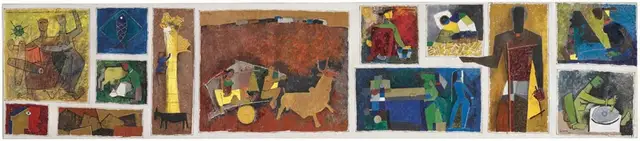
Husain, M.F. (Artist). Untitled (Gram Yatra). Oil on canvas, 1954 | Painting | EconomicsArt | 00869667

In 2025, the artist achieved a new high in the auction market with the sale of Untitled (Gram Yatra) (1954), offered in the South Asian Modern + Contemporary Art by Christie's, which concluded on 19 March 2025 at New York, achieving a sale price of ₹1,18,93,97,000 ($13,750,000). This record marked a defining moment in the artist's market history, reflecting both the significance of the artwork and its reception within the broader art world.
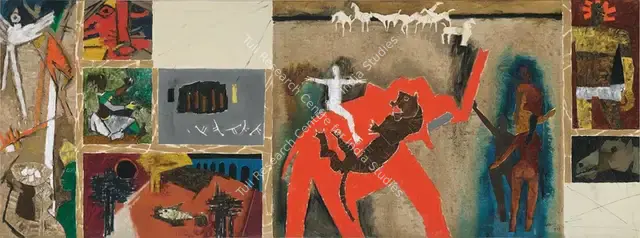
Husain, M.F. (Artist). Untitled. Oil on canvas, 1956 | Painting | FineArts | 00331751

In 2015, the artist achieved a new high in the auction market with the sale of Untitled (1956), offered in the South Asian Modern and Contemporary Art by Christie's, which concluded on 10 June 2015 at London, achieving a sale price of ₹10,65,96,156.5 ($1,668,565.76). This record marked a defining moment in the artist's market history, reflecting both the significance of the artwork and its reception within the broader art world.
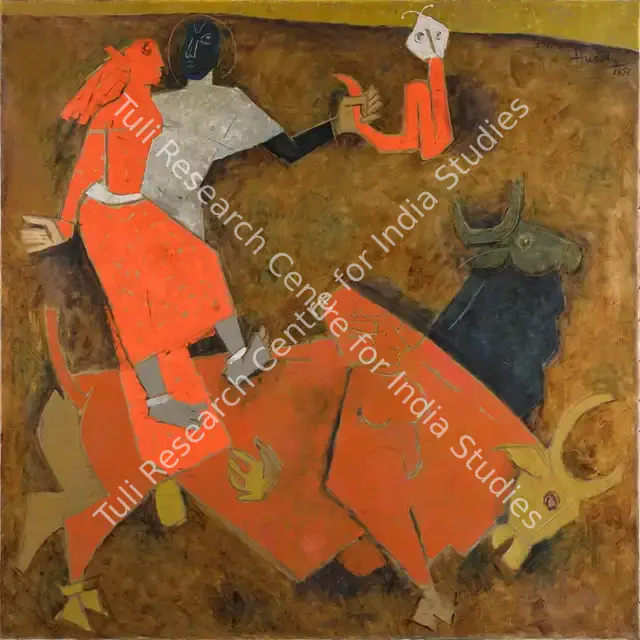
Husain, M.F. (Artist). Untitled (Reincarnation). Oil on canvas, 1957 | Painting | FineArts | 00604812

In 2024, the artist achieved a new high in the auction market with the sale of Untitled (Reincarnation) (1957), offered in the Modern & Contemporary South Asian Art by Sotheby's, which concluded on 26 September 2024 at London, achieving a sale price of ₹26,80,75,920 ($3,202,784.2). This record marked a defining moment in the artist's market history, reflecting both the significance of the artwork and its reception within the broader art world.
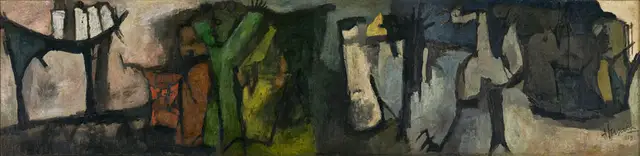
Husain, M.F. (Artist). Voices. Oil on canvas, 1958 | Painting  | 00867320
Husain, M.F. (Artist). Voices. Oil on canvas, 1958 | Painting | 00867320

In 2020, the artist achieved a new high in the auction market with the sale of Voices (1958), offered in the Husain Auction by Asta Guru, which concluded on 30 August 2020 at Online, achieving a sale price of ₹18,47,47,500 ($2,510,323.38). This record marked a defining moment in the artist's market history, reflecting both the significance of the artwork and its reception within the broader art world.
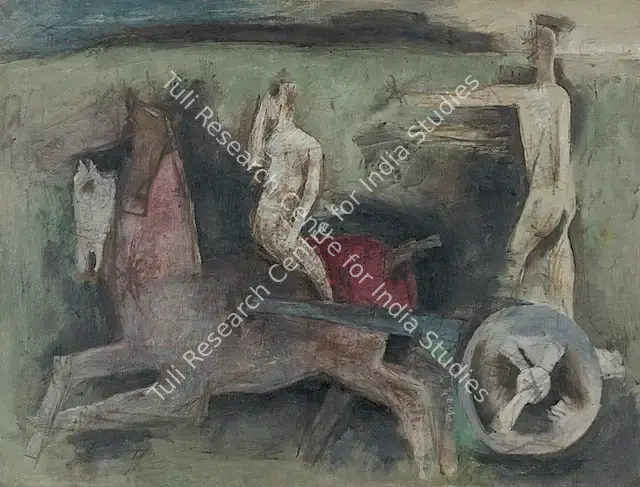
Husain, M.F. (Artist). Untitled. Oil on canvas, 1959 | Painting | FineArts | 00416692

Art has always been a combination of Indian literature, music, dance and architectural traditions.
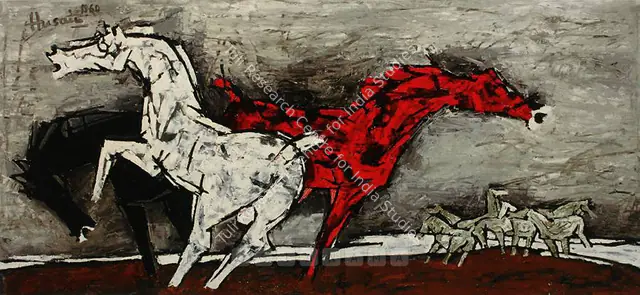
Husain, M.F. (Artist). Untitled. Oil on canvas, 1960 | Painting  | 00880222
Husain, M.F. (Artist). Untitled. Oil on canvas, 1960 | Painting | 00880222

In 2006, the artist achieved a new high in the auction market with the sale of Untitled (1960), offered in the Modern and Contemporary Indian Art by Christie's, which concluded on 30 March 2006 at New York, achieving a sale price of ₹2,46,96,096 ($553,600). This record marked a defining moment in the artist's market history, reflecting both the significance of the artwork and its reception within the broader art world.
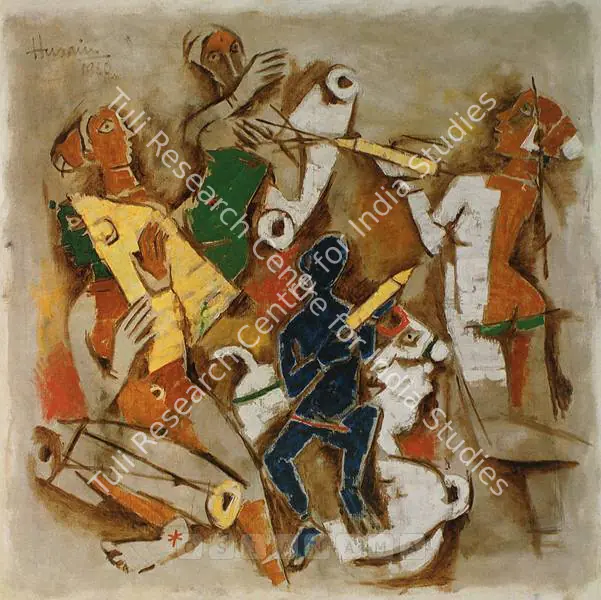
Husain, M.F. (Artist). Holi. Oil on canvas, 1960 | Painting  | 00880519
Husain, M.F. (Artist). Holi. Oil on canvas, 1960 | Painting | 00880519

In 2006, the artist achieved a new high in the auction market with the sale of Holi (1960), offered in the Modern Indian Art: Summer Online Auction by Saffronart, which concluded on 11 May 2006 at Online, achieving a sale price of ₹2,64,88,000 ($587,708). This record marked a defining moment in the artist's market history, reflecting both the significance of the artwork and its reception within the broader art world.
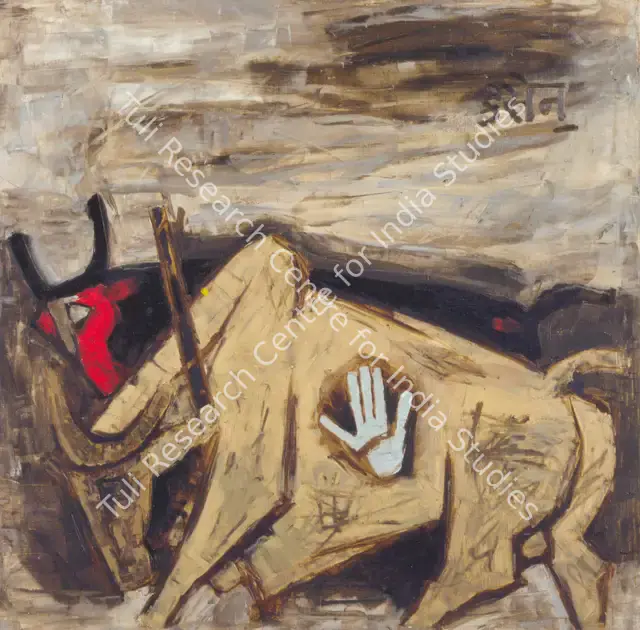
Husain, M.F. (Artist). Bulls. Oil on canvas, 1961 | Painting | FineArts | 00599631

In 2003, the artist achieved a new high in the auction market with the sale of Bulls (1961), offered in the Indian and Southeast Asian Art: Including 20th Century Indian Paintings by Christie's, which concluded on 17 September 2003 at New York, achieving a sale price of ₹49,38,860 ($107,507). This record marked a defining moment in the artist's market history, reflecting both the significance of the artwork and its reception within the broader art world.
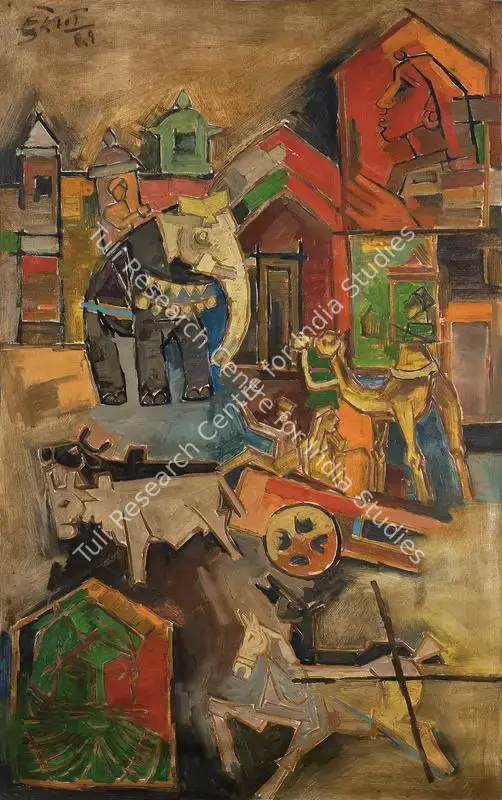
Husain, M.F. (Artist). Elephant in Town. Oil on canvas, 1961 | Painting | FineArts | 00336070

Husain’s metaphor is rich and of great expressiveness. It brings a wide sweep to his way of looking at things, to his many approaches to reality. His symbols and represented objects are often startling in juxtaposition because they are drawn from such far reaches of artistic memory. Dark, intuitive, sometimes traditional symbols are cast within a contemporary design and given meanings that seem valid for this and every other time. And if the innocent in art is also the original, as indeed it is, then innocence is the other noteworthy feature of Husain’s work…Husain wields a quick, nervous line of great sensitiveness and energy. It is a versatile line, capable of both power and poetry. It divides his forms in firm definition, broods among his grouped figures. It pounds across the canvas in his horses, lurks in women’s faces in tender almost tentative hint, or threads sharply across his compositions like a scalpel, separating one figure, one face, from the other in subtly differentiated tones of colour, as though he sculpted his figures from paint. But impeccable draughtsman that he is, Husain is a greater painter and his line is never conceived apart from form and colour, from his exacting demands of spatial organisation. He has spent years exploring the interaction of line and colour in his paintings. Sometimes he has allowed his line greater definition, allowed it to build and divide with power; at others he has sought a more muted line, working inwards from the edges of the canvas, towards a face or a form, and stopping with the line only a suggestion. The result of these years has been a realisation that line moves faster than colour, that the eye catches the colour quicker but also retains it longer than the line.
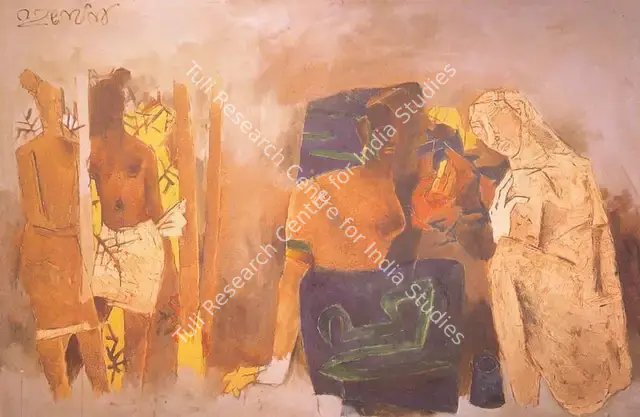
Husain, M.F. (Artist). Figures in Landscape (Kerala Series). Oil on canvas, 1967 | Painting | FineArts | 00371227

In 1992, the artist achieved a new high in the auction market with the sale of Figures in Landscape (Kerala Series) (1967), offered in the Indian European and Oriental Paintings and Works of Art by Sotheby's, which concluded on 09 October 1992 at New Delhi, achieving a sale price of ₹8,80,000 ($29,285). This record marked a defining moment in the artist's market history, reflecting both the significance of the artwork and its reception within the broader art world.
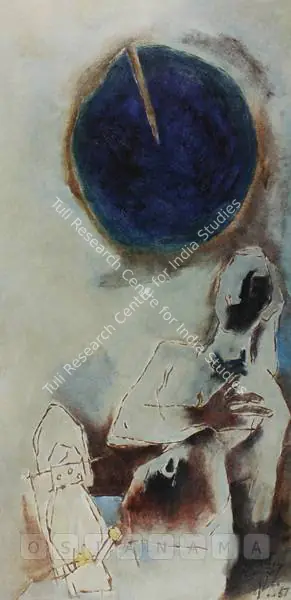
Husain, M.F. (Artist). Untitled. Oil on canvas, 1967 | Painting | FineArts | 00597905

In 2005, the artist achieved a new high in the auction market with the sale of Untitled (1967), offered in the Modern and Contemporary Paintings by Nine Masters: Spring Online Auction by Saffronart, which concluded on 02 March 2005 at Online, achieving a sale price of ₹76,91,200 ($176,000). This record marked a defining moment in the artist's market history, reflecting both the significance of the artwork and its reception within the broader art world.
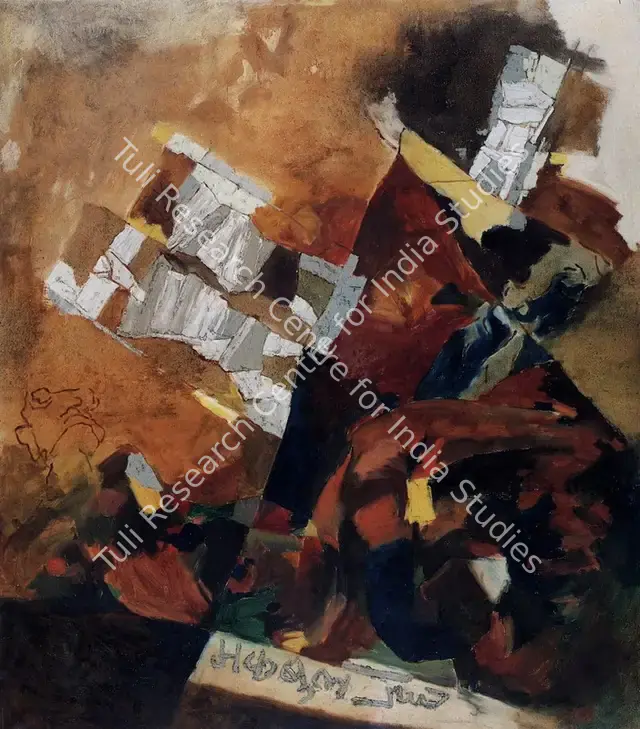
Husain, M.F. (Artist). Untitled. Oil on canvas, 1969 | Painting | FineArts | 00371278

In 1995, the artist achieved a new high in the auction market with the sale of Untitled (1969), offered in the Contemporary Indian Paintings: From The Chester and Davida Herwitz Charitable Trust by Sotheby's, which concluded on 12 June 1995 at New York, achieving a sale price of ₹15,34,919 ($48,875). This record marked a defining moment in the artist's market history, reflecting both the significance of the artwork and its reception within the broader art world.
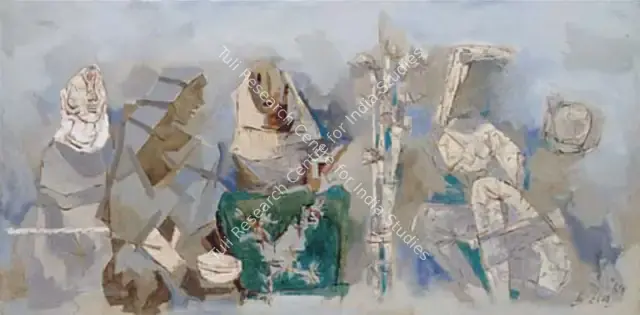
Husain, M.F. (Artist). Trial. Oil on canvas, 1969 | Painting | FineArts | 00598881

In 2005, the artist achieved a new high in the auction market with the sale of Trial (1969), offered in the Indian And Southeast Asian Art: Including Modern And Contemporary Indian Art by Christie's, which concluded on 21 September 2005 at New York, achieving a sale price of ₹2,13,62,688 ($486,400). This record marked a defining moment in the artist's market history, reflecting both the significance of the artwork and its reception within the broader art world.
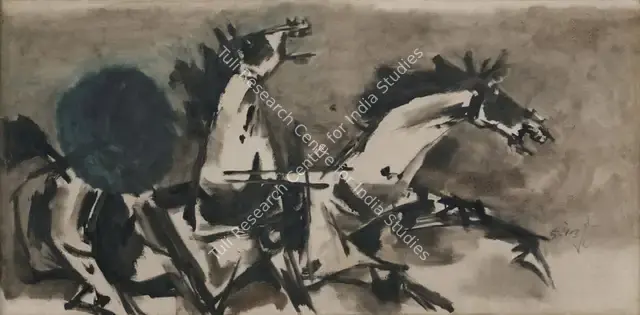
Husain, M.F. (Artist). Tearing Apart. Oil on canvas, 1970 | Painting | FineArts | 00362789
When we look at these creatures we must remember that the animal is not the subject of Husain’s painting; it is the daemonic principle that he depicts, and to him it is neither good nor bad. The horses have become symbols of power and pursuit, or of
mysterious encounters
Husain, M.F. (Artist). Bodies Drift. Oil on canvas, 1971 | Painting | FineArts | 00598510

In 2005, the artist achieved a new high in the auction market with the sale of Bodies Drift (1971), offered in the Indian and Southeast Asian Art: Including Modern Indian Paintings from The Wilberding Collection by Sotheby's, which concluded on 20 September 2005 at New York, achieving a sale price of ₹1,25,05,568 ($284,800). This record marked a defining moment in the artist's market history, reflecting both the significance of the artwork and its reception within the broader art world.
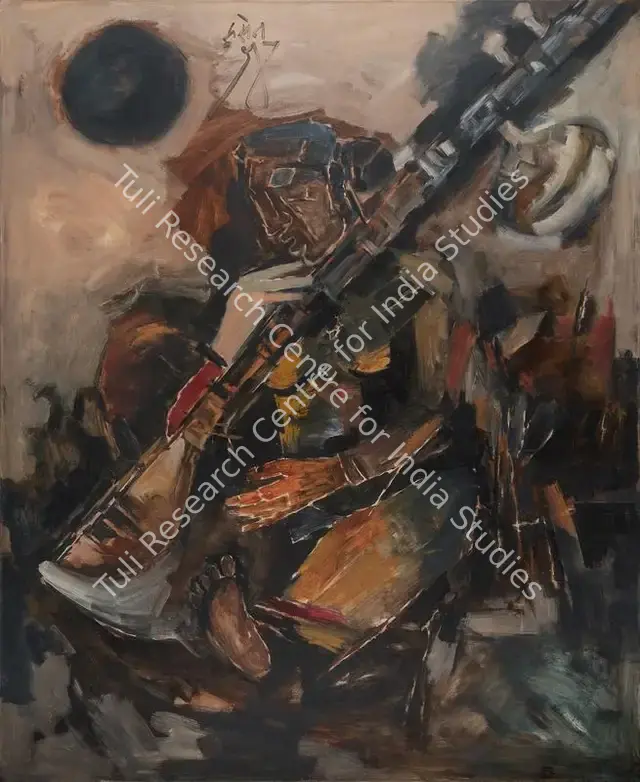
Husain, M.F. (Artist). Sitar Player Series. Oil on canvas, early 1970s | Painting | FineArts | 00336089

Husain’s paintings of this period reveal an almost prophetic foreshadowing of his climactic emotional experiences…His figures are frequently distorted or metamorphosed…The central concern of Husain’s art, and its dominant motif, is woman, and it is this motif that now best embodies these two moods. Man, in Husain’s view, is dynamic only in heroism. He is diminished by confusion and broken by unbelief, and these are unheroic and unbelieving times. Spiritually, woman is more enduring. Pain comes naturally to her, as do compassion and a sense of the birth and death of things…strong, angular lines and flatly applied patches of colour are the instrumentation of the female form. Woman is seen either as a creation of lyric poetry, a sculpturesque and rhythmic figure of dance, or as an agent of fecundity….
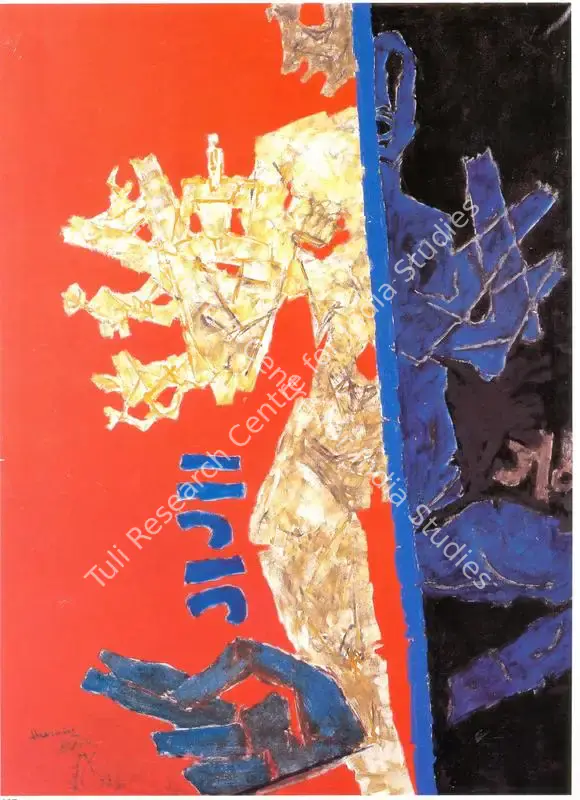
Husain, M.F. (Artist). Untitled. Acrylic on canvas, 1972 | Painting  | 00878523
Husain, M.F. (Artist). Untitled. Acrylic on canvas, 1972 | Painting | 00878523

In 2000, the artist achieved a new high in the auction market with the sale of Untitled (1972), offered in the Contemporary Indian Paintings: From the Chester and Davida Herwitz Collection by Sotheby's, which concluded on 05 December 2000 at New York, achieving a sale price of ₹24,57,000 ($52,500). This record marked a defining moment in the artist's market history, reflecting both the significance of the artwork and its reception within the broader art world.
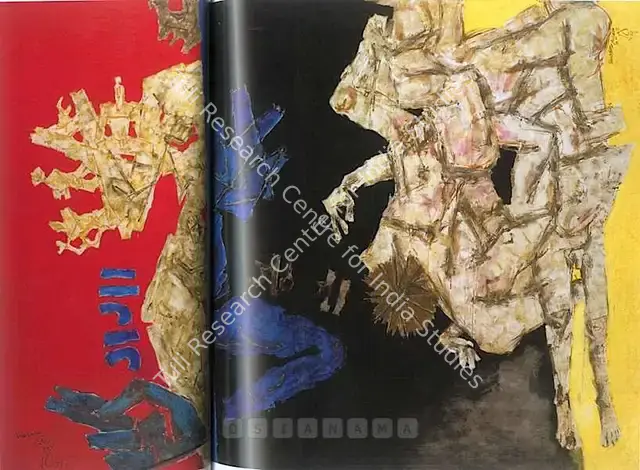
Husain, M.F. (Artist). Battle Of Ganga And Jamuna: Mahabharata 12. Oil on canvas, 1971-1972 | Painting | FineArts | 00575352

In 2008, the artist achieved a new high in the auction market with the sale of Battle Of Ganga And Jamuna: Mahabharata 12 (1972), offered in the South Asian Modern and Contemporary Art by Christie's, which concluded on 20 March 2008 at New York, achieving a sale price of ₹6,49,07,060 ($1,609,000). This record marked a defining moment in the artist's market history, reflecting both the significance of the artwork and its reception within the broader art world.
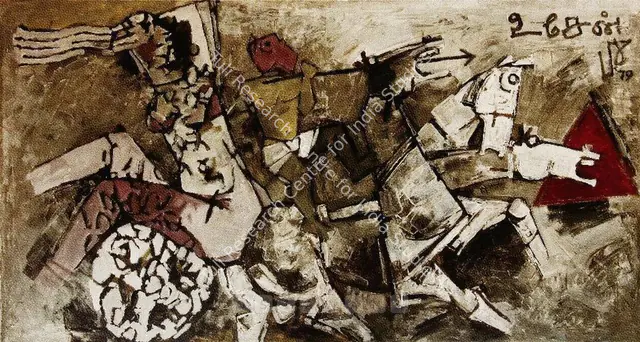
Husain, M.F. (Artist). Sita Hanuman. Acrylic on canvas, 1979 | Painting  | 00880267
Husain, M.F. (Artist). Sita Hanuman. Acrylic on canvas, 1979 | Painting | 00880267

In 2006, the artist achieved a new high in the auction market with the sale of Sita Hanuman (1979), offered in the Modern and Contemporary Indian Art by Christie's, which concluded on 30 March 2006 at New York, achieving a sale price of ₹2,56,95,360 ($576,000). This record marked a defining moment in the artist's market history, reflecting both the significance of the artwork and its reception within the broader art world.
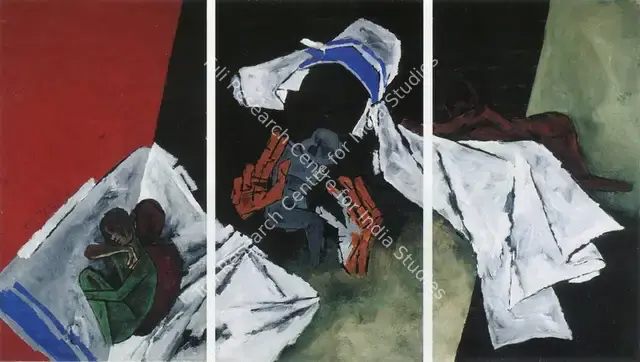
Husain, M.F. (Artist). Holy mother. Acrylic on canvas, 1980 | Painting | FineArts | 00373571

In 1996, the artist achieved a new high in the auction market with the sale of Holy mother (1980), offered in the Modern and Contemporary Indian Paintings: One Hundred Years by Sotheby's, which concluded on 08 October 1996 at London, achieving a sale price of ₹17,80,480 ($50,006.46). This record marked a defining moment in the artist's market history, reflecting both the significance of the artwork and its reception within the broader art world.
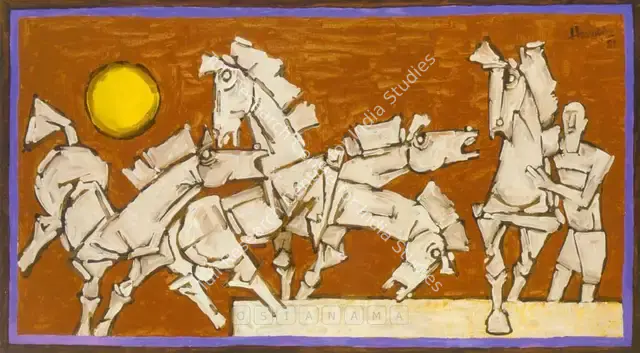
Husain, M.F. (Artist). The Arrival Of Fifth. Acrylic on canvas, 1981 | Painting | FineArts | 00600607

In 2004, the artist achieved a new high in the auction market with the sale of The Arrival Of Fifth (1981), offered in the Indian and Southeast Asian Art: Including 20th Century Indian Paintings by Christie's, which concluded on 23 September 2004 at New York, achieving a sale price of ₹70,33,414 ($153,100). This record marked a defining moment in the artist's market history, reflecting both the significance of the artwork and its reception within the broader art world.
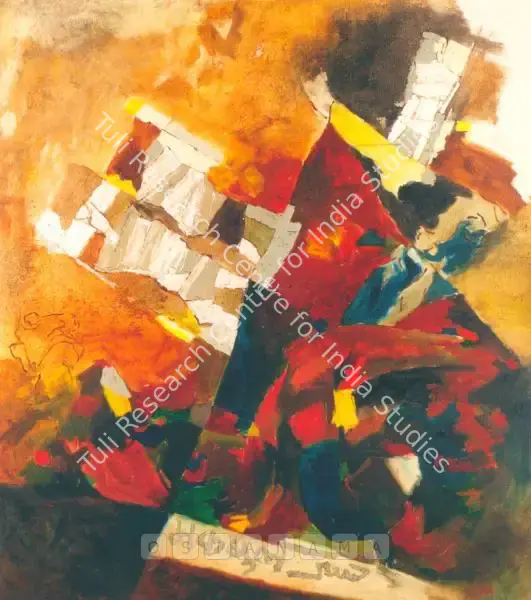
Husain, M.F. (Artist). Untitled. Oil on canvas, 1984 | Painting | FineArts | 00375420

In 2002, the artist achieved a new high in the auction market with the sale of Untitled (1984), offered in the Indian and Southeast Asian Art: Including 20th Century Indian Paintings by Christie's, which concluded on 19 September 2002 at New York, achieving a sale price of ₹28,93,095 ($59,750). This record marked a defining moment in the artist's market history, reflecting both the significance of the artwork and its reception within the broader art world.
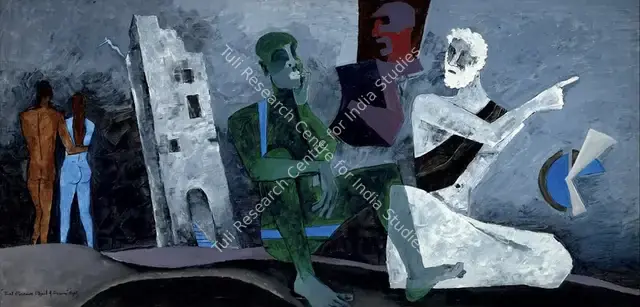
Husain, M.F. (Artist). The Obscure Object of Desire. Oil on canvas, c.1980s | Painting | FineArts | 00357383

The works which form part of That Obscure Object of Desire, too, end up with curiously poster‒like attributes. Its pictorial look is bold and cinematic, with the look of film posters. Their cinematic qualities extend to the colors which are uniform, brilliant, unbrushed and unbuilt‒up in the manner of color in films
Christie's (Auction House). Contemporary Indian Art (Charity Auction). 20 December 1987, Bombay | Auction Catalogue | EconomicsArt | 00861836
1 / 2
Christie's (Auction House). Contemporary Indian Art (Charity Auction). 20 December 1987, Bombay | Auction Catalogue | EconomicsArt | 00861836

On 20 December 1987, made their debut in the Indian public auction market when Mother Teresa was presented as Lot in Contemporary Indian Art (Charity Auction), conducted by Christie's in Mumbai, India. This auction marked the artist's first recorded appearance in the public auction market, establishing the earliest chapter of their auction history.
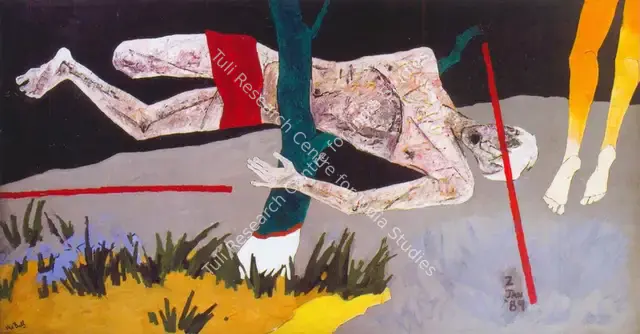
Husain, M.F. (Artist). Safdar Hashmi. Acrylic on canvas, 1989 | Painting | FineArts | 00574862

In 2008, the artist achieved a new high in the auction market with the sale of Safdar Hashmi (1989), offered in the Indian Modern & Contemporary Art by Emami Chisel, which concluded on 23 February 2008 at Online, achieving a sale price of ₹4,40,00,000 ($1,098,627). This record marked a defining moment in the artist's market history, reflecting both the significance of the artwork and its reception within the broader art world.
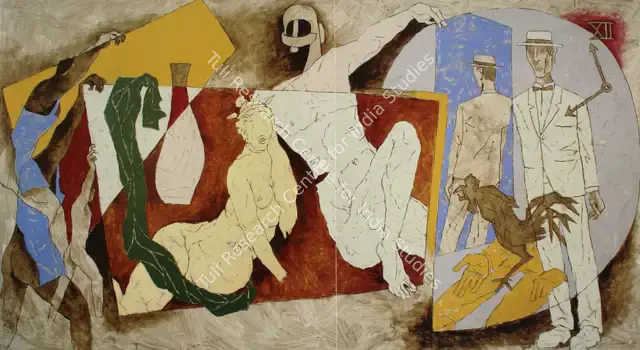
Husain, M.F. (Artist). Civilisation. Acrylic on canvas, 1991 | Painting  | 00881901
Husain, M.F. (Artist). Civilisation. Acrylic on canvas, 1991 | Painting | 00881901

In 2006, the artist achieved a new high in the auction market with the sale of Civilisation (1991), offered in the Modern Indian Art: Winter Online Auction by Saffronart, which concluded on 07 December 2006 at Online, achieving a sale price of ₹3,45,94,984 ($774,630). This record marked a defining moment in the artist's market history, reflecting both the significance of the artwork and its reception within the broader art world.
Christie's (Auction House). Indian Contemporary Paintings. 16 October 1995, London | Auction Catalogue | EconomicsArt | 00861842

In 1995, an artwork by M.F. Husain was featured on the cover of Christie's: Indian Contemporary Paintings (October 1995, London), marking a documented highlight in the artist's public and auction market visibility.
Sotheby's (Auction House). Contemporary Indian Paintings - From The Chester and Davida Herwitz Charitable Trust. 12 June 1995, New York | Auction Catalogue | EconomicsArt | 00861841

In 1995, an artwork by M.F. Husain was featured on the cover of Sotheby's: Contemporary Indian Paintings (June 1995, New York), marking a documented highlight in the artist's public and auction market visibility.
Sotheby's (Auction House). Contemporary Indian Paintings - From The Chester and Davida Herwitz Charitable Trust Part II. 03 April 1996, New York | Auction Catalogue | EconomicsArt | 00861844

In 1996, an artwork by M.F. Husain was featured on the cover of Sotheby's: Contemporary Indian Paintings (April 1996, New York), marking a documented highlight in the artist's public and auction market visibility.
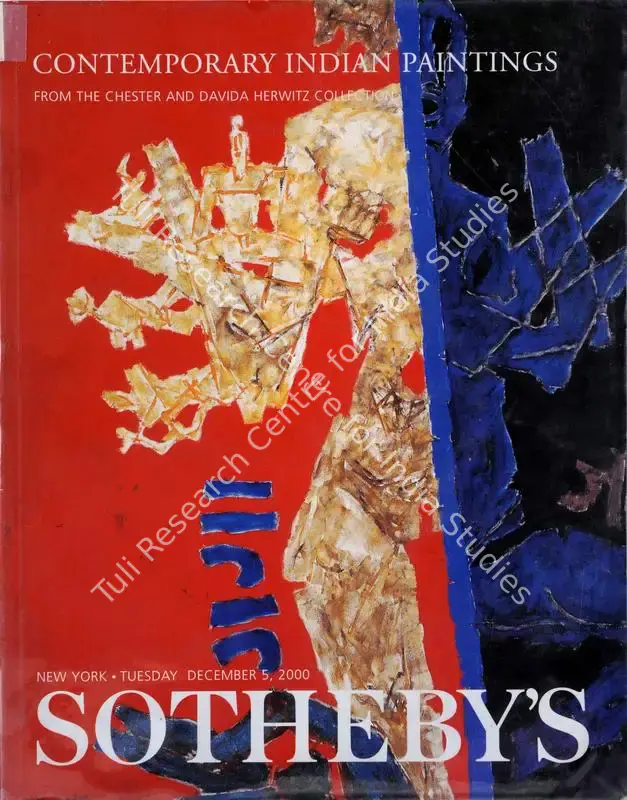
Sotheby's (Auction House). Contemporary Indian Paintings - From the Chester and Davida Herwitz Collection. 05 December 2000, New York | Auction Catalogue | EconomicsArt | 00861870

In 2000, an artwork by M.F. Husain was featured on the cover of Sotheby's: Contemporary Indian Paintings (December 2000, Mumbai), marking a documented highlight in the artist's public and auction market visibility.
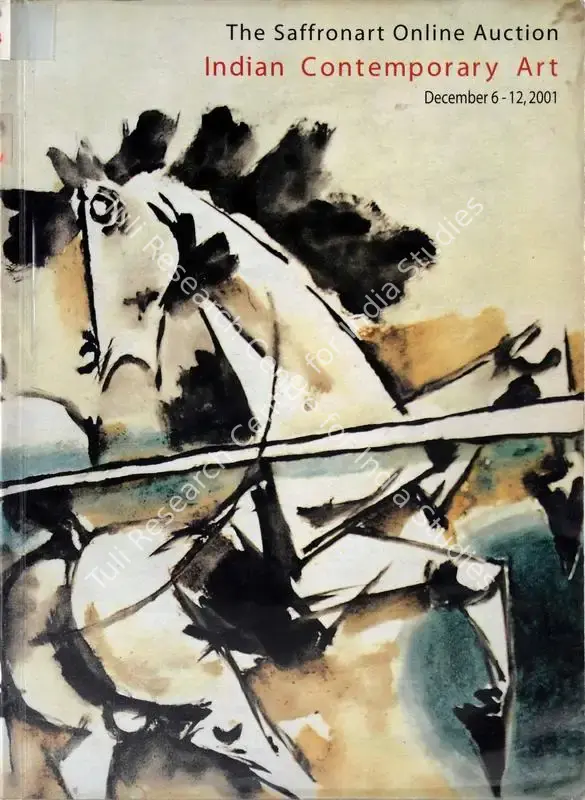
Saffronart (Auction House). Indian Contemporary Art - Online Auction. 12 December 2001, Online | Auction Catalogue | EconomicsArt | 00861883

In 2001, an artwork by M.F. Husain was featured on the cover of Saffronart: Indian Contemporary Art (December 2001, Hong Kong), marking a documented highlight in the artist's public and auction market visibility.
Osians (Auction House) and Neville Tuli (Curator). Masterpieces & Museum Quality Series V - Indian Contemporary Art. 02 December 2005, Mumbai | Auction Catalogue | EconomicsArt | 00861927

In 2005, an artwork by M.F. Husain was featured on the cover of Osians: Masterpieces & Museum Quality Series V (December 2005, Mumbai), marking a documented highlight in the artist's public and auction market visibility.
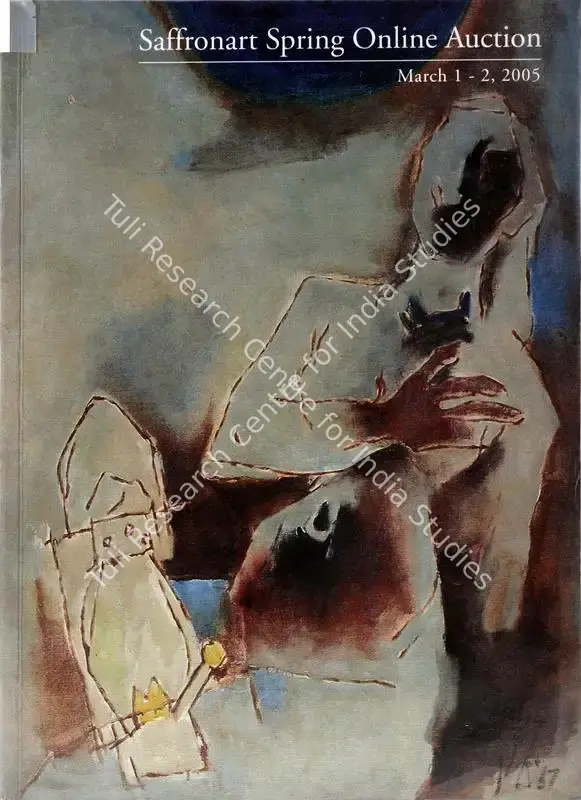
Saffronart (Auction House). Modern and Contemporary Paintings by Nine Masters - Spring Online Auction. 02 March 2005, Online | Auction Catalogue | EconomicsArt | 00861916

In 2005, an artwork by M.F. Husain was featured on the cover of Saffronart: Modern and Contemporary Paintings by Nine Masters (March 2005, Mumbai), marking a documented highlight in the artist's public and auction market visibility.
Apparao Art (Auction House). Art for Mission Kashmir. 08 February 2006, New Delhi | Auction Catalogue | EconomicsArt | 00861929

In 2006, an artwork by M.F. Husain was featured on the cover of Apparao Art: Art for Mission Kashmir (February 2006, New York), marking a documented highlight in the artist's public and auction market visibility.
Osians (Auction House) and Neville Tuli (Curator). Forty Masterpieces Museum Quality Series VII. 09 September 2006, Mumbai | Auction Catalogue | EconomicsArt | 00861943

In 2006, an artwork by M.F. Husain was featured on the cover of Osians: Forty Masterpieces Museum Quality Series VII (September 2006, London), marking a documented highlight in the artist's public and auction market visibility.
Bonhams (Auction House). Modern and Contemporary Indian and Pakistani Paintings. 21 May 2007, London | Auction Catalogue | EconomicsArt | 00861959

In 2007, an artwork by M.F. Husain was featured on the cover of Bonhams: Modern and Contemporary Indian and Pakistani Paintings (May 2007, Dubai), marking a documented highlight in the artist's public and auction market visibility.
Emami Chisel (Auction House). Contemporary and Modern Indian Art. 08 November 2008, Online | Auction Catalogue | EconomicsArt | 00862015

In 2008, an artwork by M.F. Husain was featured on the cover of Emami Chisel: Contemporary and Modern Indian Art (November 2008, New York), marking a documented highlight in the artist's public and auction market visibility.
Sotheby's (Auction House). Indian Art. 19 March 2008, New York | Auction Catalogue | EconomicsArt | 00861987

In 2008, an artwork by M.F. Husain was featured on the cover of Sotheby's: Indian Art (March 2008, Hong Kong), marking a documented highlight in the artist's public and auction market visibility.
Emami Chisel (Auction House). Indian Modern & Contemporary Art. 23 February 2008, Online | Auction Catalogue | EconomicsArt | 00861982

In 2008, an artwork by M.F. Husain was featured on the cover of Emami Chisel: Indian Modern & Contemporary Art (February 2008, London), marking a documented highlight in the artist's public and auction market visibility.
Sotheby's (Auction House). Indian & Southeast Asian Art. 18 March 2009, New York | Auction Catalogue | EconomicsArt | 00862030

In 2009, an artwork by M.F. Husain was featured on the cover of Sotheby's: Indian & Southeast Asian Art (March 2009, New York), marking a documented highlight in the artist's public and auction market visibility.
Asta Guru (Auction House). Modern & Contemporary Indian Art. 12 May 2009, Online | Auction Catalogue | EconomicsArt | 00862035

In 2009, an artwork by M.F. Husain was featured on the cover of Asta Guru: Modern & Contemporary Indian Art (May 2009, New York), marking a documented highlight in the artist's public and auction market visibility.
Christie's (Auction House). South Asian Modern and Contemporary Art. 19 March 2009, New York | Auction Catalogue | EconomicsArt | 00862032

In 2009, an artwork by M.F. Husain was featured on the cover of Christie's: South Asian Modern and Contemporary Art (March 2009, New Delhi), marking a documented highlight in the artist's public and auction market visibility.
Sotheby's (Auction House). South Asian Art. 16 September 2010, New York | Auction Catalogue | EconomicsArt | 00862073

In 2010, an artwork by M.F. Husain was featured on the cover of Sotheby's: South Asian Art (September 2010, New York), marking a documented highlight in the artist's public and auction market visibility.
Bonhams (Auction House). Modern and Contemporary Middle Eastern Art and South Asian Art. 01 June 2011, London | Auction Catalogue | EconomicsArt | 00862088

In 2011, an artwork by M.F. Husain was featured on the cover of Bonhams: Modern and Contemporary Middle Eastern Art and South Asian Art (June 2011, Mumbai), marking a documented highlight in the artist's public and auction market visibility.
Sotheby's (Auction House). Modern and Contemporary South Asian Art. 31 May 2011, London | Auction Catalogue | EconomicsArt | 00862087

In 2011, an artwork by M.F. Husain was featured on the cover of Sotheby's: Modern and Contemporary South Asian Art (May 2011, Goa), marking a documented highlight in the artist's public and auction market visibility.
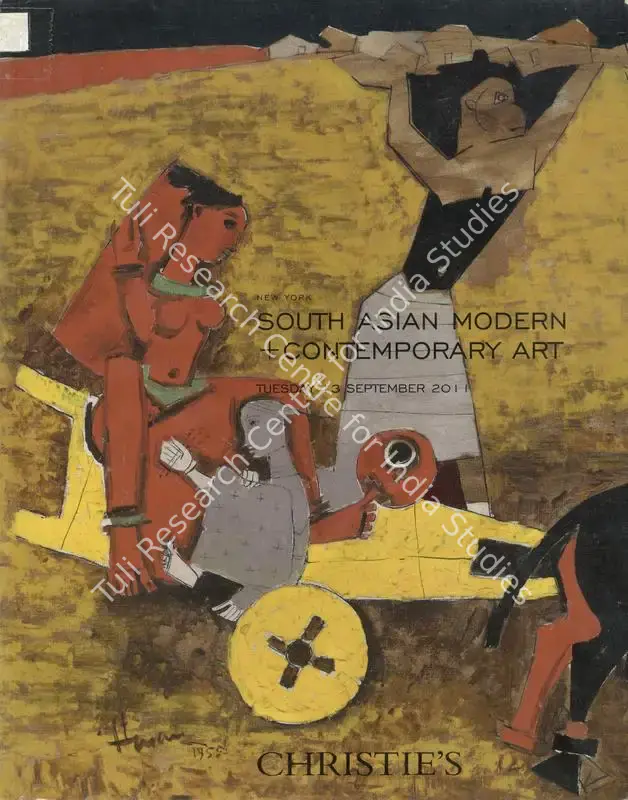
Christie's (Auction House). South Asian Modern and Contemporary Art. 13 September 2011, New York | Auction Catalogue | EconomicsArt | 00862093

In 2011, an artwork by M.F. Husain was featured on the cover of Christie's: South Asian Modern and Contemporary Art (September 2011, New York), marking a documented highlight in the artist's public and auction market visibility.
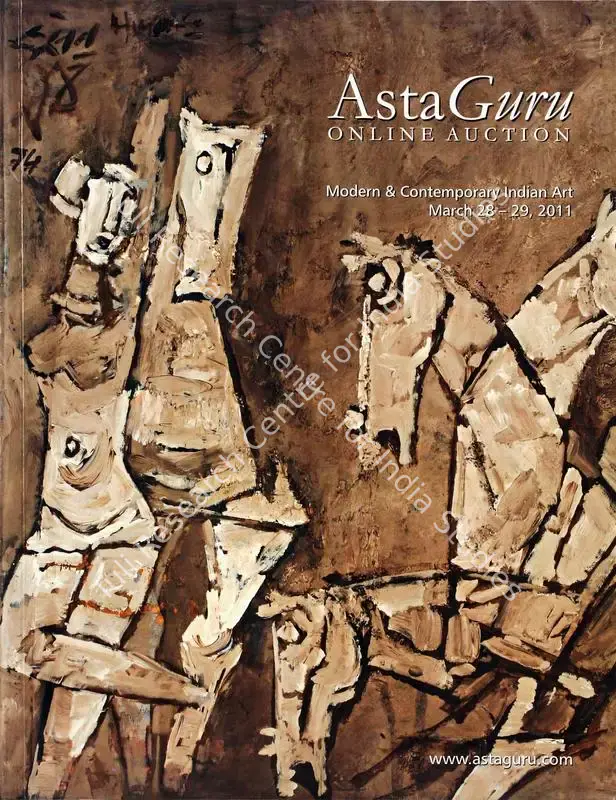
Asta Guru (Auction House). Modern and Contemporary Indian Art. 29 March 2011, Mumbai | Auction Catalogue | EconomicsArt | 00862082

In 2011, an artwork by M.F. Husain was featured on the cover of Asta Guru: Modern and Contemporary Indian Art (March 2011, Mumbai), marking a documented highlight in the artist's public and auction market visibility.
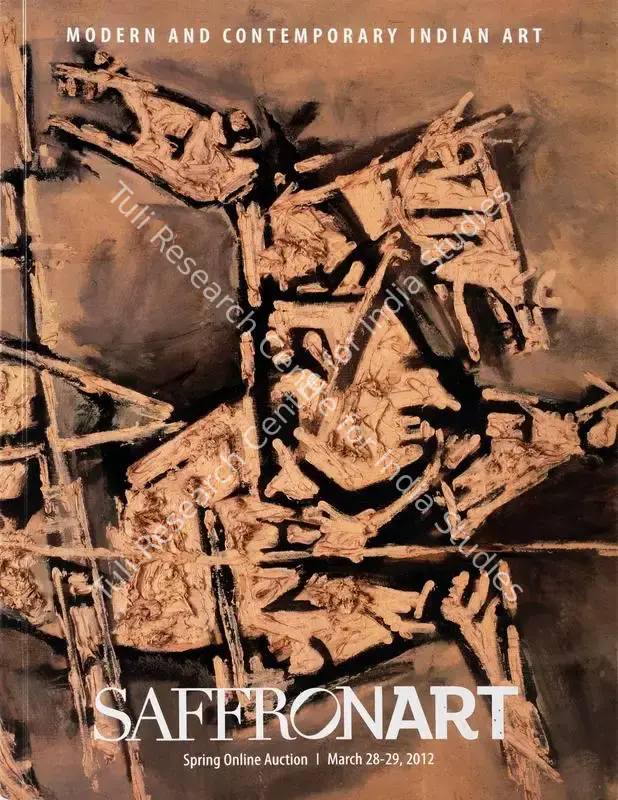
Saffronart (Auction House). Spring Art Auction. 29 March 2012, Online | Auction Catalogue | EconomicsArt | 00862111

In 2012, an artwork by M.F. Husain was featured on the cover of Saffronart: Spring Art Auction (March 2012, Mumbai), marking a documented highlight in the artist's public and auction market visibility.
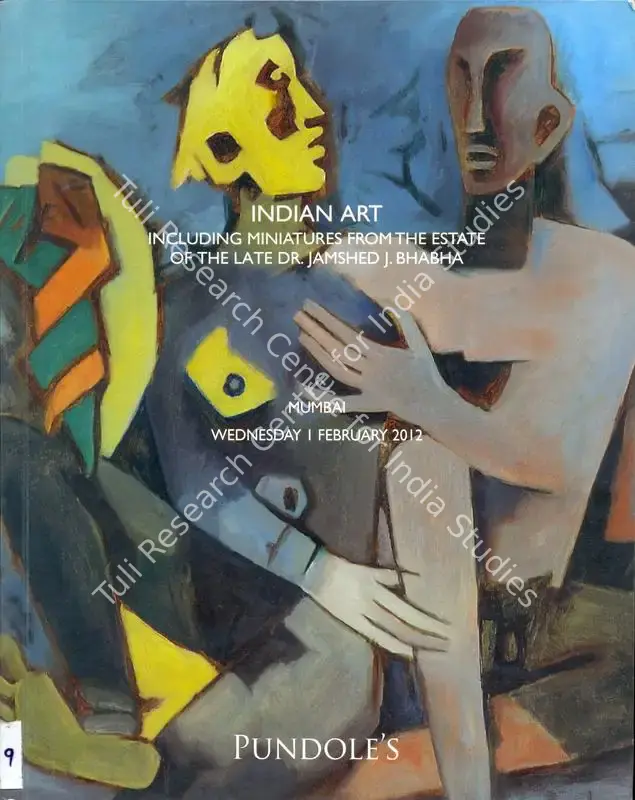
Pundole (Auction House). Indian Art - Including Miniatures from the Estate of the Late Dr. Jamshed J. Bhabha. 01 February 2012, Mumbai | Auction Catalogue | EconomicsArt | 00862106

In 2012, an artwork by M.F. Husain was featured on the cover of Pundole: Indian Art (February 2012, New York), marking a documented highlight in the artist's public and auction market visibility.
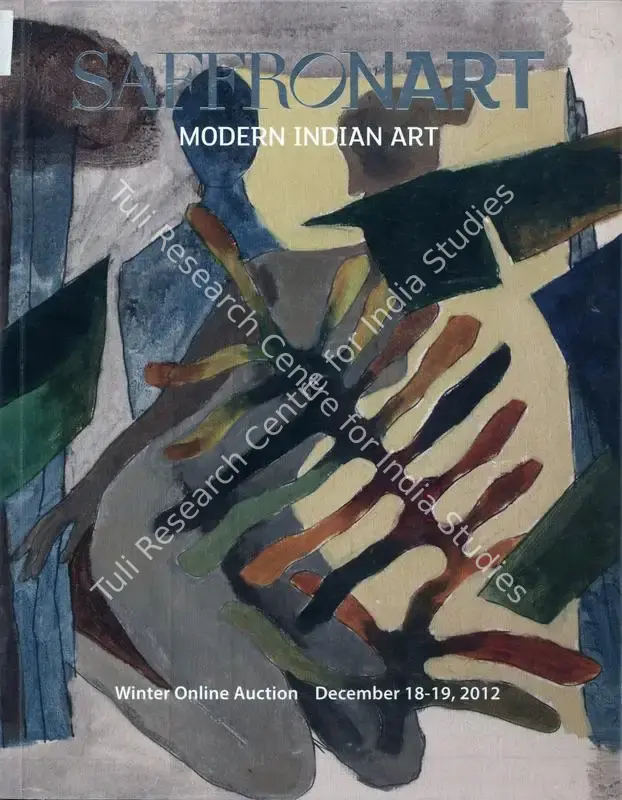
Saffronart (Auction House). Winter Online Auction - Modern Indian Art. 19 December 2012, Online | Auction Catalogue | EconomicsArt | 00862134

In 2012, an artwork by M.F. Husain was featured on the cover of Saffronart: Winter Online Auction (December 2012, New York), marking a documented highlight in the artist's public and auction market visibility.
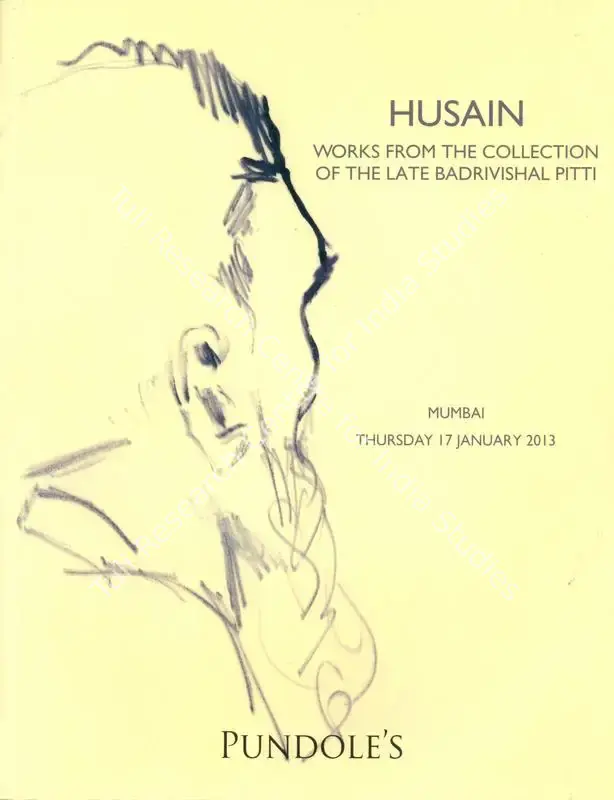
Pundole (Auction House). Husain - Works from the Collection of the late Badrivishal Pitti. 17 January 2013, Mumbai | Auction Catalogue | EconomicsArt | 00862135

In 2013, an artwork by M.F. Husain was featured on the cover of Pundole: Husain (January 2013, London), marking a documented highlight in the artist's public and auction market visibility.
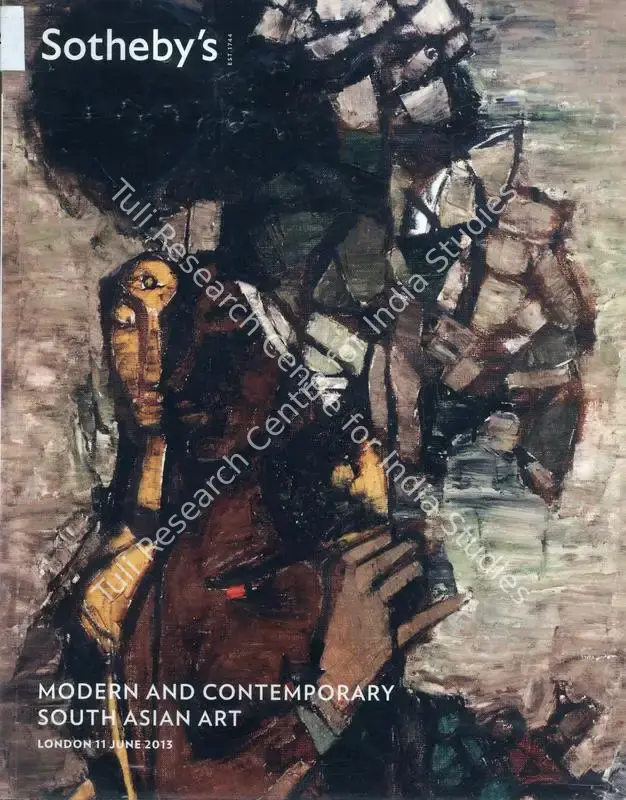
Sotheby's (Auction House). Modern and Contemporary South Asian Art. 11 June 2013, London | Auction Catalogue | EconomicsArt | 00862148

In 2013, an artwork by M.F. Husain was featured on the cover of Sotheby's: Modern and Contemporary South Asian Art (June 2013, Mumbai), marking a documented highlight in the artist's public and auction market visibility.
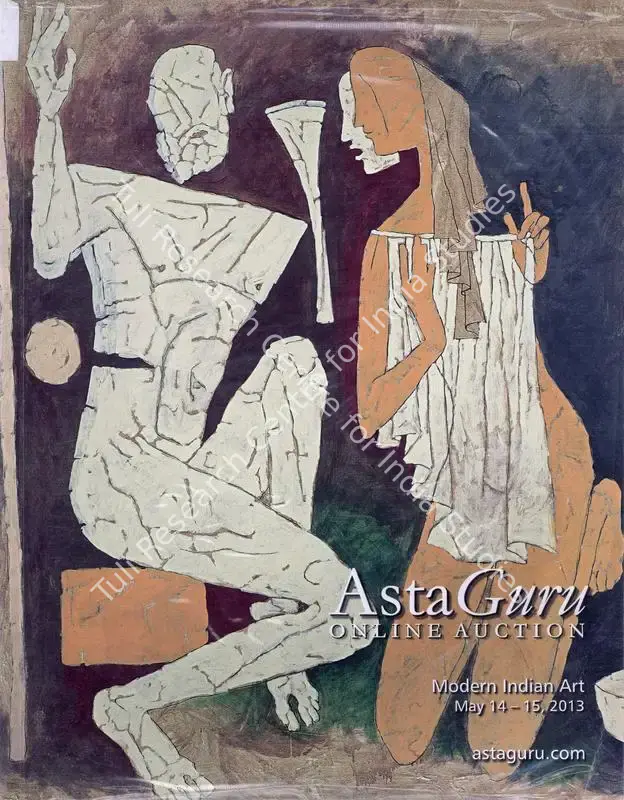
Asta Guru (Auction House). Modern Indian Art. 15 May 2013, Mumbai | Auction Catalogue | EconomicsArt | 00862146

In 2013, an artwork by M.F. Husain was featured on the cover of Asta Guru: Modern Indian Art (May 2013, New Delhi), marking a documented highlight in the artist's public and auction market visibility.
Pundole (Auction House). The Fine and Decorative Arts Sale. 27 August 2014, Mumbai | Auction Catalogue | EconomicsArt | 00862181

In 2014, an artwork by M.F. Husain was featured on the cover of Pundole: The Fine and Decorative Arts Sale (August 2014, London), marking a documented highlight in the artist's public and auction market visibility.
DAG (Auction House). India Modern - Auction of 20th Century Indian Modern Art. 11 April 2014, New Delhi | Auction Catalogue | EconomicsArt | 00862175

In 2014, an artwork by M.F. Husain was featured on the cover of DAG: India Modern (April 2014, Hong Kong), marking a documented highlight in the artist's public and auction market visibility.
Art Bull (Auction House). Indian Modern & Contemporary Art Auction. 16 November 2014, New Delhi | Auction Catalogue | EconomicsArt | 00862189

In 2014, an artwork by M.F. Husain was featured on the cover of Art Bull: Indian Modern & Contemporary Art Auction (November 2014, Mumbai), marking a documented highlight in the artist's public and auction market visibility.
Bid & Hammer (Auction House). Significant Indian Art - Centenary Year Auction II. 27 June 2014, New Delhi | Auction Catalogue | EconomicsArt | 00862178

In 2014, an artwork by M.F. Husain was featured on the cover of Bid & Hammer: Significant Indian Art (June 2014, Mumbai), marking a documented highlight in the artist's public and auction market visibility.
Asta Guru (Auction House). Modern Indian Art (No Reserve Auction). 21 December 2017, Mumbai | Auction Catalogue | EconomicsArt | 00862251

In 2017, an artwork by M.F. Husain was featured on the cover of Asta Guru: Modern Indian Art (No Reserve Auction) (December 2017, Mumbai), marking a documented highlight in the artist's public and auction market visibility.
DAG (Auction House). 20th Century Indian Art. 24 April 2017, Mumbai | Auction Catalogue | EconomicsArt | 00862256

In 2017, an artwork by M.F. Husain was featured on the cover of DAG: 20th Century Indian Art (April 2017, New York), marking a documented highlight in the artist's public and auction market visibility.
Pundole (Auction House). The Fine Art Sale. 22 November 2018, Mumbai | Auction Catalogue | EconomicsArt | 00862293

In 2018, an artwork by M.F. Husain was featured on the cover of Pundole: The Fine Art Sale (November 2018, London), marking a documented highlight in the artist's public and auction market visibility.
Asta Guru (Auction House). Modern Indian Art. 14 May 2019, Mumbai | Auction Catalogue | EconomicsArt | 00862313

In 2019, an artwork by M.F. Husain was featured on the cover of Asta Guru: Modern Indian Art (May 2019, Mumbai), marking a documented highlight in the artist's public and auction market visibility.
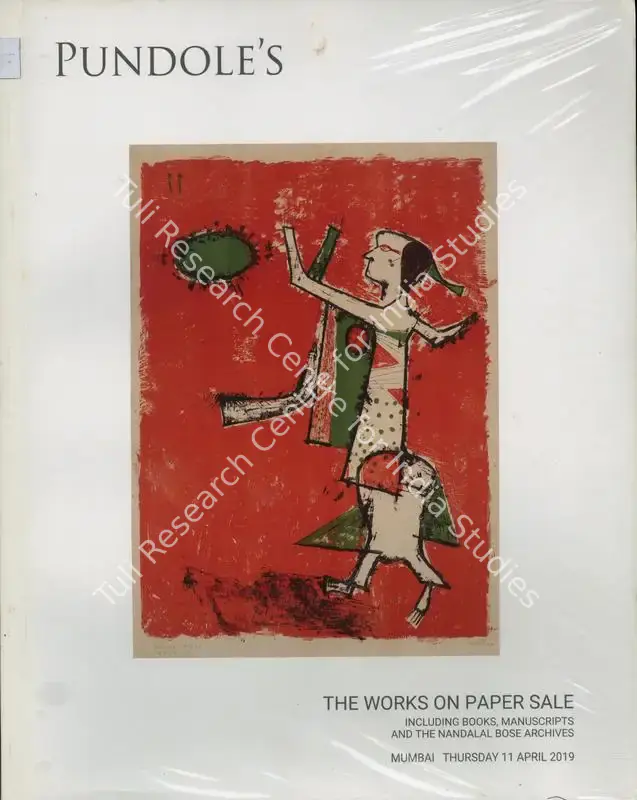
Pundole (Auction House). The Works on Paper Sale - Including Books, Manuscrits and the Nandalal Bose Archives. 11 April 2019, Mumbai | Auction Catalogue | EconomicsArt | 00862311

In 2019, an artwork by M.F. Husain was featured on the cover of Pundole: The Works on Paper Sale (April 2019, London), marking a documented highlight in the artist's public and auction market visibility.
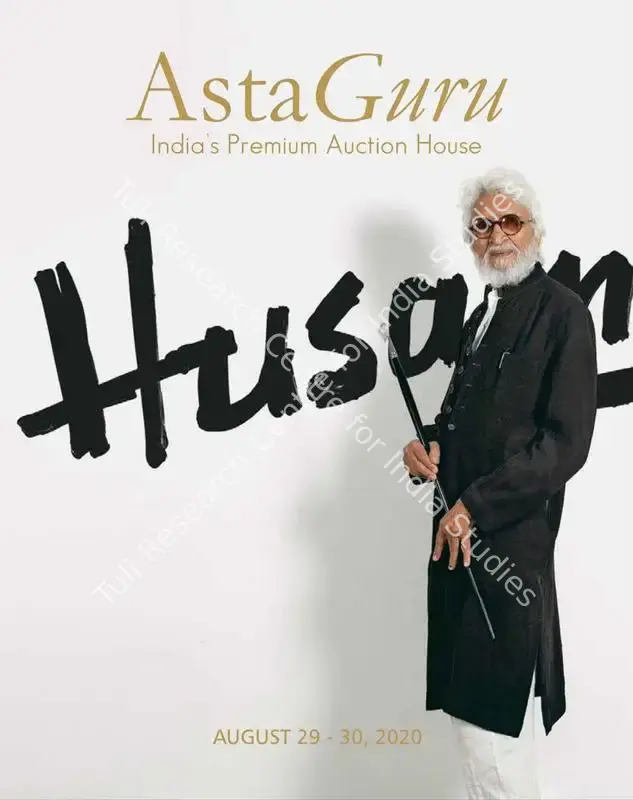
Asta Guru (Auction House). Husain Auction. 30 August 2020, Online | Auction Catalogue | EconomicsArt | 00862357

In 2020, an artwork by M.F. Husain was featured on the cover of Asta Guru: Husain Auction (August 2020, Mumbai), marking a documented highlight in the artist's public and auction market visibility.
Asta Guru (Auction House). Modern Indian Art-No Reserve Auction. 28 June 2020, Online | Auction Catalogue | EconomicsArt | 00862349

In 2020, an artwork by M.F. Husain was featured on the cover of Asta Guru: Modern Indian Art-No Reserve Auction (June 2020, Mumbai), marking a documented highlight in the artist's public and auction market visibility.
Asta Guru (Auction House). Collectors Choice - Modern Indian Art. 21 November 2021, Online | Auction Catalogue | EconomicsArt | 00862408

In 2021, an artwork by M.F. Husain was featured on the cover of Asta Guru: Collectors Choice (November 2021, Mumbai), marking a documented highlight in the artist's public and auction market visibility.
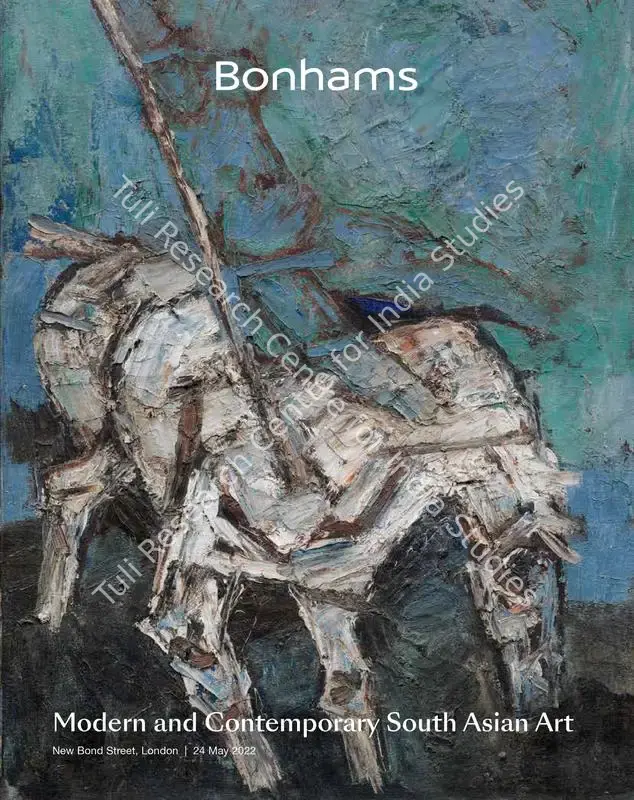
Bonhams (Auction House). Modern & Contemporary South Asian Art. 25 May 2022, London | Auction Catalogue | EconomicsArt | 00862429

In 2022, an artwork by M.F. Husain was featured on the cover of Bonhams: Modern & Contemporary South Asian Art (May 2022, London), marking a documented highlight in the artist's public and auction market visibility.
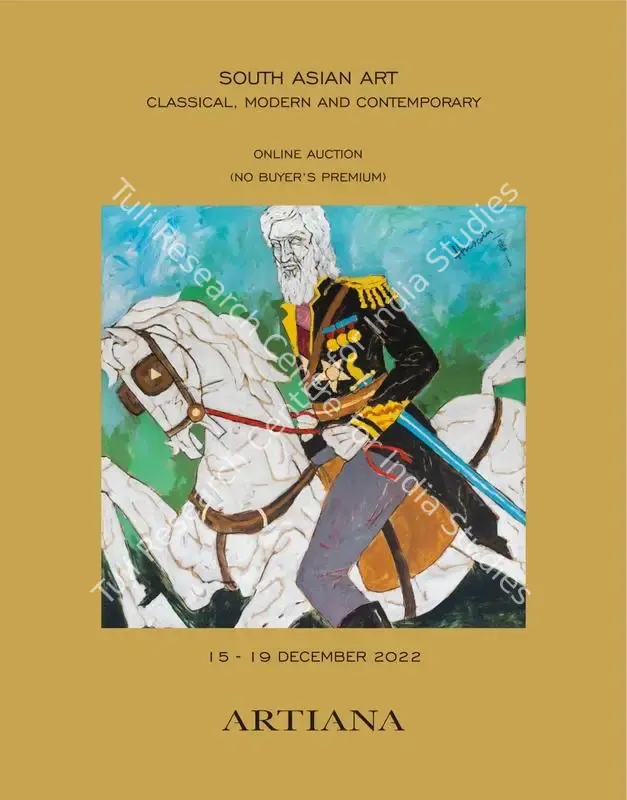
Artiana (Auction House). South Asian Art - Classical, Modern and Contemporary. 19 December 2022, Online | Auction Catalogue | EconomicsArt | 00862458

In 2022, an artwork by M.F. Husain was featured on the cover of Artiana: South Asian Art (December 2022, Dubai), marking a documented highlight in the artist's public and auction market visibility.
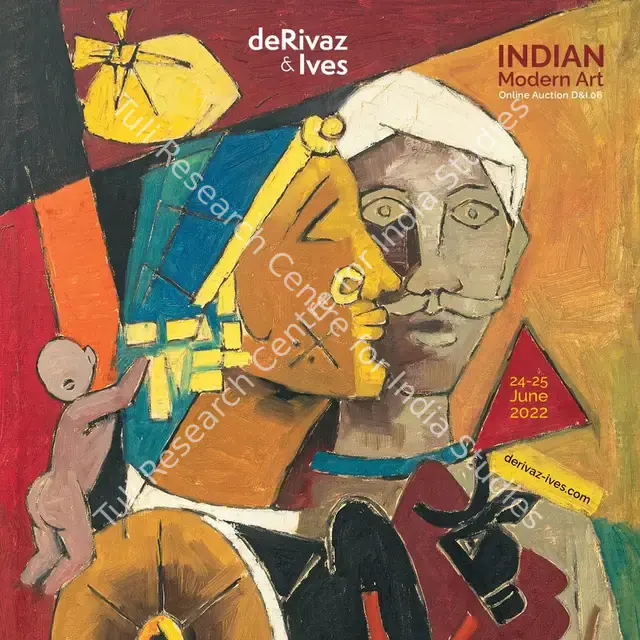
deRivaz & Ives (Auction House) and Neville Tuli (Curator). Indian Modern Art. 25 June 2022, Online | Auction Catalogue | EconomicsArt | 00862436

In 2022, an artwork by M.F. Husain was featured on the cover of deRivaz & Ives: Indian Modern Art (June 2022, New Delhi), marking a documented highlight in the artist's public and auction market visibility.
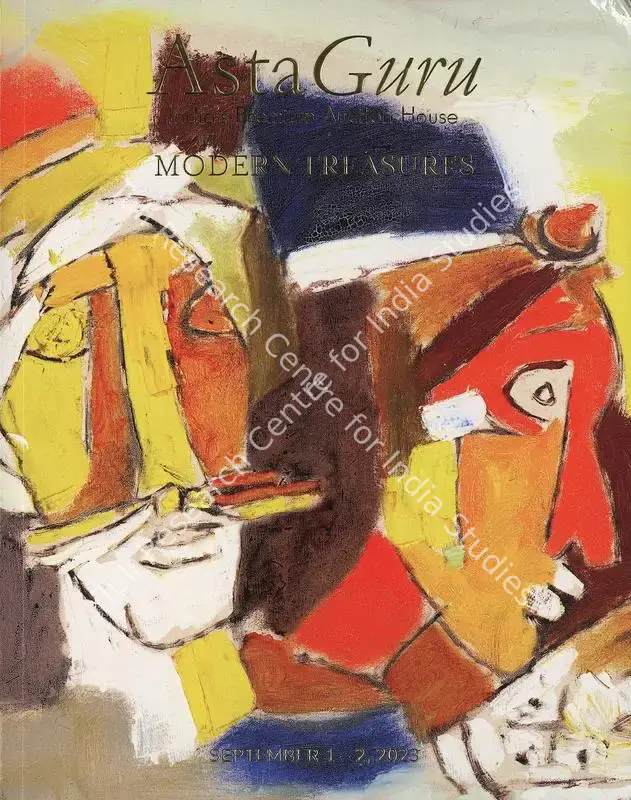
Asta Guru (Auction House). Modern Treasures. 02 September 2023, Online | Auction Catalogue | EconomicsArt | 00862485

In 2023, an artwork by M.F. Husain was featured on the cover of Asta Guru: Modern Treasures (September 2023, Mumbai), marking a documented highlight in the artist's public and auction market visibility.
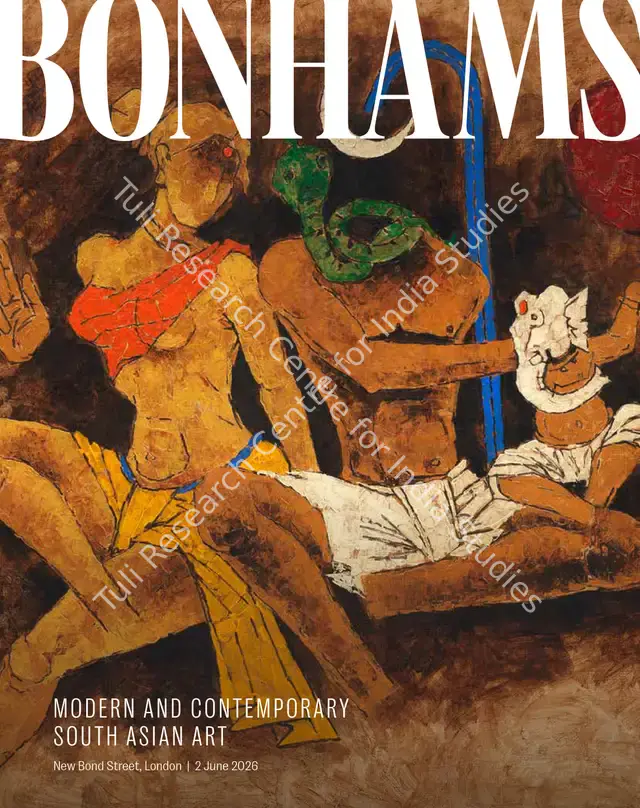
Bonhams (Auction House). Modern and Contemporary South Asian Art. 02 June 2026, London | Auction Catalogue | EconomicsArt | 00892106

In 2026, an artwork by M.F. Husain was featured on the cover of Bonhams: Modern and Contemporary South Asian Art (June 2026, London), marking a documented highlight in the artist's public and auction market visibility.

Economics of Art

20 of 50
This section showcases auction lots that achieved record-high sale prices, tracked by the date each record was set based on the artist's historical auction data.

Record-high lots25

Public Auction Market (1987–2026) | Select Indicators

  1. Annual Auction Sale Turnover
  2. Average Sale Price Per Lot
  3. Square Inch Rate Trend

Annual Auction Sale Turnover

This indicator tracks the Total Annual Auction Sales value of M.F. Husain’s artworks, beginning in 1987 through to the present.
It aggregates all sales across global auction houses into yearly totals.

Analysis reflected in the chart:
The turnover graph highlights periods of strong growth, moments of market correction, and resilience during downturns. Peaks often align with landmark works coming to public auction, while troughs may indicate reduced supply or weaker demand. Over time, the curve illustrates the overall trajectory of M.F. Husain’s public auction market presence.

Average Sale Price Per Lot

This measure calculates the Average Sale Price of all lots by M.F. Husain sold each year.
It smooths out fluctuations caused by the quantity of works offered and focuses on the Average Sale Price level per artwork.

Analysis reflected in the chart:
Rising average sale prices indicate growing collector confidence and a stronger willingness to pay higher amounts per work. Assuming the mix of mediums remains relatively stable over time, the proportion of works on paper typically priced lower than works on canvas adds important context to understanding these market movements.

Square Inch Rate Trend

The Square Inch Rate normalizes prices by the size of each artwork, showing the average sale value per square inch over time.
This allows fair comparisons between smaller works and larger canvases.

Analysis reflected in the chart:
The Square Inch Rate shown in the graph combines various medium types such as canvas, paper, board, and others. Historically, works on canvas and board have broadly commanded higher prices compared to works on paper.

  1. 1947

    1. Bombay Art Society Award

      Bombay Art Society, Mumbai, India

  2. 1954

    1. Participation and International RecognitionInternational

      Venice Biennale

    2. Nominated Eminent Artist Member

      Lalit Kala Akademi, New Delhi, India

  3. 1955

    1. International Biennale AwardInternational

      Tokyo Biennale, Japan

    2. First Prize at the National Exhibition of Art

      Lalit Kala Akademi, Rabindra Bhavan, New Delhi, India

  4. 1959

    1. International Biennale AwardInternational

      Tokyo Biennale, Japan

  5. 1966

    1. Padma Shri

      Government of India

  6. 1967

    1. Golden Bear for the film 'Through the Eyes of a Painter'International

      Berlin International Film Festival

  7. 1973

    1. Padma Bhushan

      Government of India

  8. 1977

    1. Honorary Doctorate

      Mysore University, Mysore, India

  9. 1978

    1. Honorary Doctorate

      Benaras Hindu University (BHU), Varanasi, India

  10. 1986

    1. Nominated to the Rajya Sabha, Member of Parliament till 1992

      Government of India

  11. 1991

    1. Padma Vibhushan

      Government of India

  12. 1997

    1. Lifetime Achievement Award

      Aditya Vikram Birla Kalashikhar

  13. 2004

    1. Lalit Kala Ratna Puraskar

      Lalit Kala Akademi, New Delhi, India

  14. 2007

    1. Raja Ravi Varma Award

      Government of Kerala, India

    2. Honorary Doctorate

      Benaras Hindu University (BHU), Varanasi, India

    3. Honorary Doctorate

      Jamia Milia Islamia University, New Delhi, India

    4. Honorary Doctorate

      Mysore University, Mysore, India

Research Centre
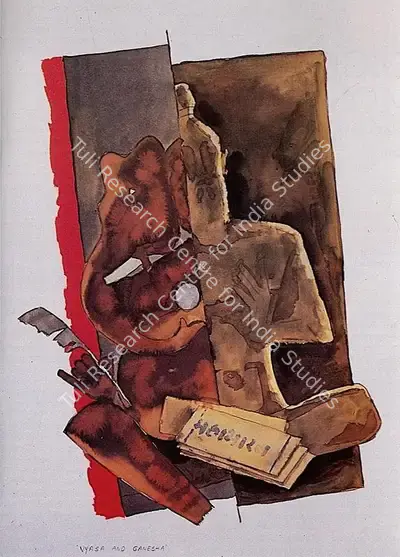
M. F. Husain (Artist), Maqbool with Parents, Drawing
Husain, M. F. (Artist). Maqbool with Parents, n.d. | Drawing
View full record
M. F. Husain (Artist), Sansad Upanishad, Drawing
Husain, M. F. (Artist). Sansad Upanishad, n.d. | Drawing
View full record
M.F. Husain (Artist), Vyasa and Ganesh, Painting
Husain, M.F. (Artist). Vyasa and Ganesh, n.d. | Painting
View full record
M.F. Husain (Artist), Balance, Drawing
Husain, M.F. (Artist). Balance, n.d. | Drawing
View full record
M. F. Husain (Artist), Mankeshwar and Maqbool watching Ramlila, Drawing
Husain, M. F. (Artist). Mankeshwar and Maqbool watching Ramlila, n.d. | Drawing
View full record
M. F. Husain (Artist), A sketch on paper, Jewellery design (Lakshmi), Drawing
Husain, M. F. (Artist). A sketch on paper, Jewellery design (Lakshmi), n.d. | Drawing
View full record
M. F. Husain (Artist), A sketch on paper, Jewellery design (Ganesha), Drawing
Husain, M. F. (Artist). A sketch on paper, Jewellery design (Ganesha), n.d. | Drawing
View full record
M. F. Husain (Artist), Autobiography I, (Abdul Husain with Oil Lamp), Painting
Husain, M. F. (Artist). Autobiography I, (Abdul Husain with Oil Lamp), n.d. | Painting
View full record
M. F. Husain (Artist), The Gang of four in Parliament, Drawing
Husain, M. F. (Artist). The Gang of four in Parliament, n.d. | Drawing
View full record
M.F. Husain (Artist), At the Well, Drawing
Husain, M.F. (Artist). At the Well, n.d. | Drawing
View full record
M.F. Husain (Artist), The Fortune Bird, Drawing
Husain, M.F. (Artist). The Fortune Bird, n.d. | Drawing
View full record
M.F. Husain (Artist), Culture of the Streets, Graphic Art
Husain, M.F. (Artist). Culture of the Streets, n.d. | Graphic Art
View full record
M.F. Husain (Artist), Lotus Girl, Drawing
Husain, M.F. (Artist). Lotus Girl, n.d. | Drawing
View full record
M. F. Husain (Artist), Acchan Mian's shop with Dada Abdul, Drawing
Husain, M. F. (Artist). Acchan Mian's shop with Dada Abdul, n.d. | Drawing
View full record
M. F. Husain (Artist), Untitled, Print
Husain, M. F. (Artist). Untitled, n.d. | Print
View full record
M. F. Husain (Artist), Rabindranath Tagore, Painting
Husain, M. F. (Artist). Rabindranath Tagore, n.d. | Painting
View full record
M. F. Husain (Artist), Autobiography XXI, Painting
Husain, M. F. (Artist). Autobiography XXI, n.d. | Painting
View full record
M.F. Husain (Artist), Bhishma, Painting
Husain, M.F. (Artist). Bhishma, n.d. | Painting
View full record
M.F. Husain (Artist), Satyavati, Painting
Husain, M.F. (Artist). Satyavati, n.d. | Painting
View full record
M. F. Husain (Artist), Appu and the Train (Pather Panchali), Drawing
Husain, M. F. (Artist). Appu and the Train (Pather Panchali), n.d. | Drawing
View full record
20 of 4,034
M.F. Husain (Artist), Maqbool Fida Husain, Solo Exhibition Invitation
Husain, M.F. (Artist). Maqbool Fida Husain, n.d. | Solo Exhibition Invitation | 00859160
View full record
M.F. Husain (Artist), Husain Limited Edition Prints & Other Posters, Solo Exhibition Catalogue
Husain, M.F. (Artist). Husain Limited Edition Prints & Other Posters, n.d. | Solo Exhibition Catalogue | 00882989
View full record
M.F. Husain (Artist), My Friend Husain, Solo Exhibition Invitation
Husain, M.F. (Artist). My Friend Husain, n.d. | Solo Exhibition Invitation | 00859805
View full record
P.R. Ramachandra Rao (Author), Modern Indian Painting, 1949, Authored Book
Rao, P.R. Ramachandra (Author). Modern Indian Painting, 1949 | Authored Book | 00169589
View full record
Indian Art, 1951, Edited Book
Indian Art, 1951 | Edited Book | 00169921
View full record
K. Khanna (Essayist), Studies in Development of M. F. Husain, 1953, Essay
Khanna, K. (Essayist). Studies in Development of M. F. Husain. In Marg. 6(2). April 1953 | Essay | 00668812
View full record
Contemporary Indian Painters, 1954, Edited Book
Contemporary Indian Painters, 1954 | Edited Book | 00169926
View full record
Ayaz S. Peerbhoy (Author), Paintings of Husain, 1955, Authored Book
Peerbhoy, Ayaz S. (Author). Paintings of Husain, 1955 | Authored Book | 00169457
View full record
M.R. A. (Essayist), Paintings of Husain, 1955, Essay
A., M.R. (Essayist). Paintings of Husain. In Marg. 8(3). June 1955 | Essay | 00668835
View full record
Ajit Mookerjee (Author), Modern Art in India, 1956, Authored Book
Mookerjee, Ajit (Author). Modern Art in India, 1956 | Authored Book | 00169580
View full record
Dwijendra Moitra (Editor), Academy of Fine Arts, 1960, Edited Book
Moitra, Dwijendra (Editor). Academy of Fine Arts, 1960 | Edited Book | 00169954
View full record
R. Furtado (Author), Three Painters, 1960, Authored Book
Furtado, R. (Author). Three Painters, 1960 | Authored Book | 00169563
View full record
Husain, 1961, Edited Book
Husain, 1961 | Edited Book | 00169963
View full record
Manohar Kaul (Author), Trends in Indian Painting, 1961, Authored Book
Kaul, Manohar (Author). Trends in Indian Painting, 1961 | Authored Book | 00169572
View full record
P.V. Janakiram (Editor), Artrends, 1962, Bulletin
Janakiram, P.V. (Editor). Artrends, April 1962 | Bulletin | 00842083
View full record
B.K. Karanjia (Editor), Filmfare, 1967, Magazine
Karanjia, B.K. (Editor). Filmfare, 04 August 1967 | Magazine | 00793360
View full record
Gulshan Ewing (Editor), Star & Style, 1967, Magazine
Ewing, Gulshan (Editor). Star & Style, 1 October 1967 | Magazine | 00808434
View full record
Gulshan Ewing (Editor), Star & Style, 1967, Magazine
Ewing, Gulshan (Editor). Star & Style, 1 October 1967 | Magazine | 00808434
View full record
Husain Letters, 1968, Edited Book
Husain Letters, 1968 | Edited Book | 00170012
View full record
Jaya Appasamy (Editor), Lalit Kala Contemporary, 1969, Journal
Appasamy, Jaya (Editor) and S.A. Krishnan (Assistant Editor, design and layout). Lalit Kala Contemporary, September 1969 | Journal | 00857960
View full record
20 of 798
M. F. Husain (Artist), The Gang of four in Parliament, Drawing
Husain, M. F. (Artist). The Gang of four in Parliament, n.d. | Drawing
View full record
M. F. Husain (Artist), Untitled, Print
Husain, M. F. (Artist). Untitled, n.d. | Print
View full record
M. F. Husain (Artist), Sansad Upanishad, Drawing
Husain, M. F. (Artist). Sansad Upanishad, n.d. | Drawing
View full record
M.F. Husain (Artist), The Fortune Bird, Drawing
Husain, M.F. (Artist). The Fortune Bird, n.d. | Drawing
View full record
M. F. Husain (Artist), Acchan Mian's shop with Dada Abdul, Drawing
Husain, M. F. (Artist). Acchan Mian's shop with Dada Abdul, n.d. | Drawing
View full record
M.F. Husain (Artist), Lotus Girl, Drawing
Husain, M.F. (Artist). Lotus Girl, n.d. | Drawing
View full record
M.F. Husain (Artist), Vyasa and Ganesh, Painting
Husain, M.F. (Artist). Vyasa and Ganesh, n.d. | Painting
View full record
M. F. Husain (Artist), Autobiography I, (Abdul Husain with Oil Lamp), Painting
Husain, M. F. (Artist). Autobiography I, (Abdul Husain with Oil Lamp), n.d. | Painting
View full record
M. F. Husain (Artist), Appu and the Train (Pather Panchali), Drawing
Husain, M. F. (Artist). Appu and the Train (Pather Panchali), n.d. | Drawing
View full record
M.F. Husain (Artist), Balance, Drawing
Husain, M.F. (Artist). Balance, n.d. | Drawing
View full record
M. F. Husain (Artist), Mankeshwar and Maqbool watching Ramlila, Drawing
Husain, M. F. (Artist). Mankeshwar and Maqbool watching Ramlila, n.d. | Drawing
View full record
M. F. Husain (Artist), A sketch on paper, Jewellery design (Ganesha), Drawing
Husain, M. F. (Artist). A sketch on paper, Jewellery design (Ganesha), n.d. | Drawing
View full record
M.F. Husain (Artist), Satyavati, Painting
Husain, M.F. (Artist). Satyavati, n.d. | Painting
View full record
M. F. Husain (Artist), A sketch on paper, Jewellery design (Lakshmi), Drawing
Husain, M. F. (Artist). A sketch on paper, Jewellery design (Lakshmi), n.d. | Drawing
View full record
M.F. Husain (Artist), Bhishma, Painting
Husain, M.F. (Artist). Bhishma, n.d. | Painting
View full record
M. F. Husain (Artist), Rabindranath Tagore, Painting
Husain, M. F. (Artist). Rabindranath Tagore, n.d. | Painting
View full record
M. F. Husain (Artist), Autobiography XXI, Painting
Husain, M. F. (Artist). Autobiography XXI, n.d. | Painting
View full record
M.F. Husain (Artist), Culture of the Streets, Graphic Art
Husain, M.F. (Artist). Culture of the Streets, n.d. | Graphic Art
View full record
M.F. Husain (Artist), At the Well, Drawing
Husain, M.F. (Artist). At the Well, n.d. | Drawing
View full record
M. F. Husain (Artist), Maqbool with Parents, Drawing
Husain, M. F. (Artist). Maqbool with Parents, n.d. | Drawing
View full record
20 of 3,234
Tuli Research Centre for India Studies (Editor). M. F. Husain's Horse, 28 April 2026 | In-house Video, 2026 · 21 sec · Reel
▶
Tuli Research Centre for India Studies (Editor). M. F. Husain's Horse, 28 April 2026 | In-house Video
2026 · 21 sec · Reel
Tuli Research Centre for India Studies (Editor). SWARAJ - Revisualising India's Political History, 07 August 2026 | In-house Video, 2026 · 1 min 19 sec · Vertical Video
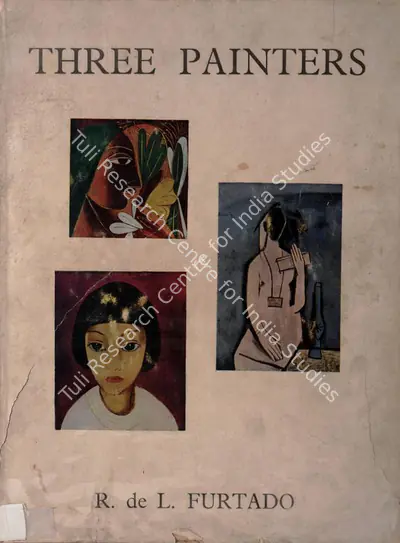
▶
Tuli Research Centre for India Studies (Editor). SWARAJ - Revisualising India's Political History, 07 August 2026 | In-house Video
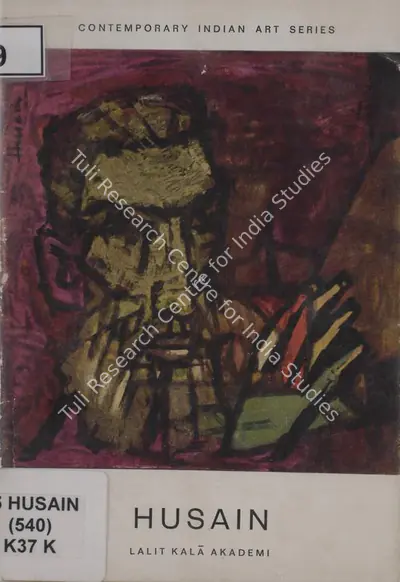
2026 · 1 min 19 sec · Vertical Video
M.F. Husain (Artist), Horse and Tiger, Painting
Husain, M.F. (Artist). Horse and Tiger, n.d. | Painting
View full record
P.R. Ramachandra Rao (Author), Modern Indian Painting, 1949, Authored Book
Rao, P.R. Ramachandra (Author). Modern Indian Painting, 1949 | Authored Book | 00169589
View full record
M.F. Husain (Artist), Untitled (Gram Yatra), 1954, Painting
Husain, M.F. (Artist). Untitled (Gram Yatra), 1954 | Painting
View full record
Ayaz S. Peerbhoy (Author), Paintings of Husain, 1955, Authored Book
Peerbhoy, Ayaz S. (Author). Paintings of Husain, 1955 | Authored Book | 00169457
View full record
Ajit Mookerjee (Author), Modern Art in India, 1956, Authored Book
Mookerjee, Ajit (Author). Modern Art in India, 1956 | Authored Book | 00169580
View full record
M.F. Husain (Artist), Between the Spider and the Lamp, 1956, Painting
Husain, M.F. (Artist). Between the Spider and the Lamp, 1956 | Painting
View full record
R. Furtado (Author), Three Painters, 1960, Authored Book
Furtado, R. (Author). Three Painters, 1960 | Authored Book | 00169563
View full record
Manohar Kaul (Author), Trends in Indian Painting, 1961, Authored Book
Kaul, Manohar (Author). Trends in Indian Painting, 1961 | Authored Book | 00169572
View full record
M.F. Husain (Artist), Untitled (Women), 1965, Painting
Husain, M.F. (Artist). Untitled (Women), Circa late 1960s | Painting
View full record
Maqbool Fida Husain, 1971, Edited Book
Maqbool Fida Husain, 1971 | Edited Book | 00170034
View full record
Indian Art Since the Early 40s, 1974, Edited Book
Indian Art Since the Early 40s, 1974 | Edited Book | 00170048
View full record
Ratan Parimoo (Author), Studies in Modern Indian Art, 1975, Authored Book
Parimoo, Ratan (Author). Studies in Modern Indian Art, 1975 | Authored Book | 00169583
View full record
M.F. Husain (Artist), Untitled, 1975, Painting
Husain, M.F. (Artist). Untitled, Circa 1970s | Painting
View full record
Geeta Kapur (Author), Contemporary Indian Artists, 1979, Authored Book
Kapur, Geeta (Author). Contemporary Indian Artists, 1979 | Authored Book | 00169570
View full record
Tate Gallery (Organiser), Six Indian Painters, 1982, Group Exhibition Catalogue
Tate Gallery (Organiser). Six Indian Painters, 1982 | Group Exhibition Catalogue | 00883433
View full record
M.F. Husain (Artist), Vishalya Karni, 1982, Painting
Husain, M.F. (Artist). Vishalya Karni, 1982 | Painting
View full record
Festival of India (Compiler), Contemporary Indian Art, 1982, Group Exhibition Catalogue
Festival of India (Compiler), Akbar Padamsee, Richard Bartholomew and Geeta Kapur (Curator). Contemporary Indian Art, 1982 | Group Exhibition Catalogue | 00883496
View full record
Grey Art Gallery and Study Center (Organiser), Contemporary Indian Art, 1985, Group Exhibition Catalogue
Grey Art Gallery and Study Center (Organiser) and Thomas W. Sokolowski (Director). Contemporary Indian Art, 1985 | Group Exhibition Catalogue | 00883528
View full record
Thomas W. Sokolowski (Director), Contemporary Indian Art, 1985, Edited Book
Sokolowski, Thomas W. (Director). Contemporary Indian Art, 1985 | Edited Book | 00169818
View full record
Husain, 1988, Edited Book
Husain, 1988 | Edited Book | 00170170
View full record
20 of 41

Posts 4

  1. All Living Souls
    All Living Souls
    Tuli Research Centre for India Studies presents All Living Souls - Expressed in the Modern and Contemporary Fine & Popular Indian Arts Curated by Neville Tuli As part of launching the 16th Research Category for India Studies - "The Animal-Human-Nature-Continuum" we present a fascinating exhibition of modern and contemporary Indian fine and popular arts and their expression of the ideas and forms related to the dialogue between animals and humans, and the larger cosmic and spiritual thoughts which abide therein. Please visit the Exhibition and see the artworks by modern and contemporary masters such as Rabindranath Tagore, D.P. Roy Chowdhury, M.F. Husain, J. Swaminathan, J. Sultan Ali, Somnath Hore, Ganesh Pyne, Manjit Bawa, K. Laxma Goud, Krishna Reddy, Jyoti Bhatt, Rekha Rodwittiya, Amit Ambalal, among others, along with vintage and rare prints from the pioneering Indian chromolithographic presses such as Chitrashala, Ravi Varma, Calcutta Art Studio, Chore Bagan & Kansaripara.
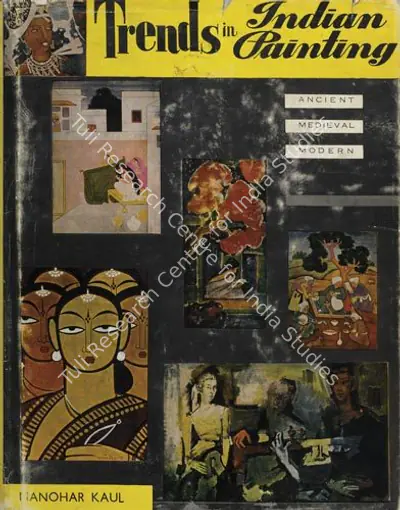
    2_FineArts4_PopCulture16_Continuum
    A.L. SyedAbanindranath TagoreAmit AmbalalAmitava DasAnita DubeBenode Behari MukherjeeBhupen P. KhakharBireshwar Sen+37 more
    Read Post →
  2. M.F. Husain's Tiger Attacking the Horse
    M.F. Husain's Tiger Attacking the Horse
    One of the foremost Indian modernists of the 20th century, MF Husain is recognizably the most popular painter of horses. His horses leap and gallop in agonizing, abstracted movements across the length and breadth of his canvases. Though modern in form, Husain remained deeply rooted in India, and his imagery draws from the vast reservoir of the country's mythologies, rituals, and visual traditions. His works are thus both intensely personal and broadly archetypal. Growing up, a major source for Husain's horses was the iconic Duldul, Imam Husain's horse in the battle of Karbala, whose decorated image was carried during the Muharram processions in Indore that Husain had often watched in his boyhood. The symbol of the tiger is another bearer of myth and identity for Husain, at once the 𝙑𝙖𝙝𝙖𝙣𝙖 of the goddess and a national emblem. Rendered in stylized, angular forms, his tiger departs from naturalism and harks back to the miniature paintings and stone sculptures of the sub-continent. Many rare visual narratives and artistic expressions come together in 𝘼𝙡𝙡 𝙇𝙞𝙫𝙞𝙣𝙜 𝙎𝙤𝙪𝙡𝙨 Expressed in the Modern and Contemporary Fine & Popular Indian Arts, a compelling exhibition curated by Neville Tuli that explores the 16th Research Category for India Studies— "The Animal Human Nature Continuum" on 5th to 11th May 2026 at 📍 Visual Arts Gallery, India Habitat Centre, Lodhi Road, New Delhi 110003 Visit the Integrated Timeline of the artist on tuliresearchcentre.org for an extensive, in-depth analysis of the life and works of one of India's most celebrated artists!
    2_FineArts4_PopCulture16_Continuum
    Neville TuliM.F. HusainAll Living Souls
    Read Post →
  3. SWARAJ - Revisualising India's Political History
    SWARAJ - Revisualising India's Political History
    "What does 𝗦𝘄𝗮𝗿𝗮𝗷 truly mean? Is freedom achieved at a single historic moment or period, or must self-rule be continually imagined, questioned and renewed? India's journey towards Swaraj was shaped not by one voice or one path, but through reform and resistance, revolution and non-violence, political thought, public protest, art, print, photography, cinema and the collective will of its people. The Tuli Research Centre for India Studies (T.R.I.S.) presents 𝗦𝗪𝗔𝗥𝗔𝗝: 𝗥𝗲𝘃𝗶𝘀𝘂𝗮𝗹𝗶𝘀𝗶𝗻𝗴 𝗜𝗻𝗱𝗶𝗮'𝘀 𝗣𝗼𝗹𝗶𝘁𝗶𝗰𝗮𝗹 𝗛𝗶𝘀𝘁𝗼𝗿𝘆, a pioneering exhibition curated by Neville Tuli. Bringing together rare artworks, prints, photographs, books, film publicity art, political propaganda and visual-textual-audio archives, SWARAJ traces India's complex journey towards political self-rule and self-discovery. From early European coastal encounters, the Bengal Renaissance and the First War of Independence in 1857 to the rise of Bharat Mata, the Tiranga, Gandhiji's inspired satyagraha, civil disobedience and mass mobilisation, the exhibition explores how the idea of India was envisioned, contested and transformed. It journeys through revolutionary movements and non-violence, subaltern uprisings, the Partition, the Constitution, the integration of the Princely States, the Emergency, wars, civic dissent and people's protests. It also foregrounds the vital role of artists, photographers, publishers, newspapers, journals, cartoons and cinema in recording and shaping the nation's political consciousness. SWARAJ invites us to encounter history not as something distant or settled, but as a daily living inheritance that continues to influence who we are and how we understand freedom, identity, and ourselves today. Watch the video for a glimpse into this expansive visual journey, and follow the exhibition as it revisualises India's political history through art, image, text and sound.
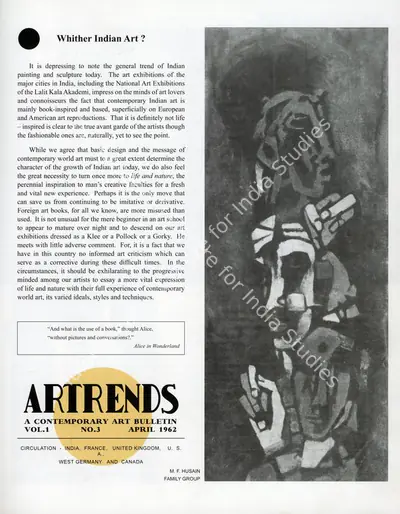
    13_SeekJustice
    Gobardhan AshRamkinkar BaijFelice BeatoNandalal BoseHenri Cartier-BressonRamendranath ChakravortyChittaprosadKanu Gandhi+14 more
    Read Post →
  4. The Indian Street and MF Husain’s Line
    The Indian Street and MF Husain’s Line
    India’s energy and rhythm lives within her colours, forms, lines, textures, and stories. Art is that glorious way of seeing and reading India as a vibrant continuum of ideas, emotions, experiences and the beyond. Today on his birthday, we remember M.F. Husain, a key figure in the history of modern Indian art and India, whose restless imagination helped to transform the visual language of modern India. Maqbool Fida Husain (17th September 1915, Pandharpur) began his career by painting cinema hoardings and designing children’s furniture and toys in Bombay. As a member of the Progressive Artists’ Group, brought in by his dear friend and early mentor - Francis Newton Souza - he stood at a unique juncture as part of the first generation of post-Independence modernists. Curious and restless by nature, Husain drew inspiration from everything - epics, village life, cities, horses, women, music, cinema, the political life of the nation. His swift lines and bold compositions, along with his recurring motifs, made his work instantly recognisable. His creativity extended to filmmaking, with “Through the Eyes of a Painter” receiving the Golden Bear for Short Film at the Berlin International Film Festival in 1967. Awarded the Padma Shri, Padma Bhushan, and Padma Vibhushan, and nominated to the Rajya Sabha in 1986, Husain remained a graphic storyteller and visual documenter of the changing landscape of his time. On his birth anniversary, Tuli Research Centre for India Studies pays tribute to the artist and the remarkable life behind the art. In this reel, Neville Tuli briefly shares his first discussion with M.F. Husain in October 1993, offering a personal glimpse into an encounter with one of modern India’s most distinctive artists.
    2_FineArts
    M.F. HusainNeville Tuli
    Read Post →

Calendar 6

View All →
  1. SWARAJ - Revisualising India's Political History
    ArchivedOpening PreviewProject 82
    SWARAJ - Revisualising India's Political History
    An Exhibition of Modern & Contemporary Fine & Popular Arts, Photography, Film Memorabilia and Visual-Textual-Audio Archive
    12th August 2026
    6:00 PM - 9:00 PM
    Visual Arts Gallery, India Habitat Centre, Lodhi Road, New Delhi,
    The Tuli Research Centre for India Studies (T.R.I.S.) announces its seventh exhibition. “Swaraj – Revisualising India's Political History” -- An exhibition of Modern and Contemporary Fine and Popular Arts, Photography, Film Memorabilia and Visual-Textual-Audio Archives. Swaraj will open at 6 p.m. on Wednesday, 12 August 2026 at the Visual Arts Gallery and will remain open till 7 p.m. Sunday, 16 August 2026. Tuli Research Centre for India Studies (T.R.I.S.) presents SWARAJ | Revisualising India's Political History, a pioneering inter-disciplinary offline-online exhibition conceptualised and curated by Neville Tuli with Team T.R.I.S.. SWARAJ explores India's journey towards political self-rule and self-discovery through a remarkable collection of rare modern and contemporary fine and popular arts, albums, photographs, books, prints, propaganda, cartoons, film publicity artworks and other "text-visual-audio" archives contextualised within a clear historical framework, which defines T.R.I.S.' pedagogic approach to learning. The Exhibition will be of particular interest to students and scholars of India & Cultural Studies, and India's political and modern histories as well as those interested in the passage of events and ideas from the mid-1850s leading up to the turn of the 21st century. Unique to the Tuli Research Centre for India Studies is the richness of visual material that not only exhorts a deeper understanding of the art and archival materials on display but also brings alive the multi-layered narratives of the exhibition and naturally India's journey in being ad searching for herself.
    Read More →
    13_SeekJustice·9_SocialDuty
    +16 more
  2. SWARAJ - Revisualising India's Political History
    ArchivedExhibitionProject 81
    SWARAJ - Revisualising India's Political History
    An Exhibition of Modern & Contemporary Fine & Popular Arts, Photography, Film Memorabilia and Visual-Textual-Audio Archive
    12th - 19th August 2026
    10:00 AM - 7:00 PM
    Visual Arts Gallery, India Habitat Centre, Lodhi Road, New Delhi,
    19
    The Tuli Research Centre for India Studies (T.R.I.S.) announces its seventh exhibition. “Swaraj – Revisualising India's Political History” -- An exhibition of Modern and Contemporary Fine and Popular Arts, Photography, Film Memorabilia and Visual-Textual-Audio Archives. Swaraj will open at 6 p.m. on Wednesday, 12 August 2026 at the Visual Arts Gallery and will remain open till 7 p.m. Sunday, 16 August 2026. Tuli Research Centre for India Studies (T.R.I.S.) presents SWARAJ | Revisualising India's Political History, a pioneering inter-disciplinary offline-online exhibition conceptualised and curated by Neville Tuli with Team T.R.I.S.. SWARAJ explores India's journey towards political self-rule and self-discovery through a remarkable collection of rare modern and contemporary fine and popular arts, albums, photographs, books, prints, propaganda, cartoons, film publicity artworks and other "text-visual-audio" archives contextualised within a clear historical framework, which defines T.R.I.S.' pedagogic approach to learning. The Exhibition will be of particular interest to students and scholars of India & Cultural Studies, and India's political and modern histories as well as those interested in the passage of events and ideas from the mid-1850s leading up to the turn of the 21st century. Unique to the Tuli Research Centre for India Studies is the richness of visual material that not only exhorts a deeper understanding of the art and archival materials on display but also brings alive the multi-layered narratives of the exhibition and naturally India's journey in being ad searching for herself.
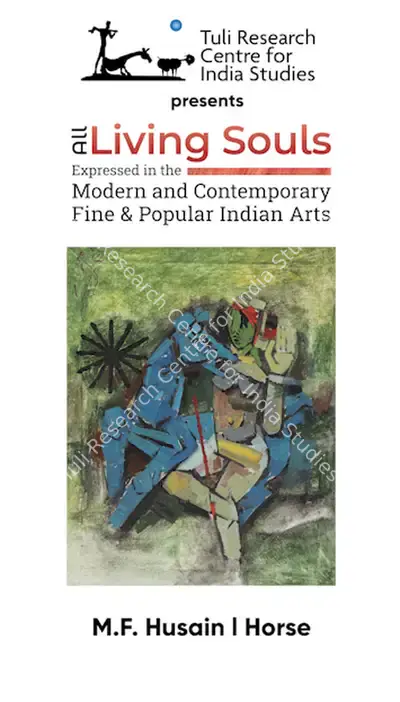
    Read More →
    13_SeekJustice·9_SocialDuty
    +16 more
  3. All Living Souls
    ArchivedExhibitionProject 79
    All Living Souls
    Expressed in Modern & Contemporary Fine and Popular Arts | Curated by Neville Tuli
    6th - 11th May 2026
    10:30am - 7:30pm
    Visual Arts Gallery, India Habitat Centre, Lodhi Road, New Delhi - 110003
    2_FineArts·4_PopCulture
    +5 more
  4. All Living Souls
    ArchivedOpening PreviewProject 78
    All Living Souls
    Expressed in Modern & Contemporary Fine and Popular Arts | Curated by Neville Tuli
    5th May 2026
    6:00pm - 9:00pm
    Visual Arts Gallery, India Habitat Centre, Lodhi Road, New Delhi - 110003
    2_FineArts·4_PopCulture
    +5 more
  5. Self Discovery via Rediscovering India Series  Part IV Building www.tuliresearchcentre.org
    ArchivedExhibitionProject 5
    Self Discovery via Rediscovering India Series Part IV Building www.tuliresearchcentre.org
    20th - 23rd February 2025
    Self Discovery via Rediscovering India Series Part IV
    Read More →
    14_IndoWorld·Building Www Tuliresearchcentre Org 21 24 February 2025 Project 5 Cal
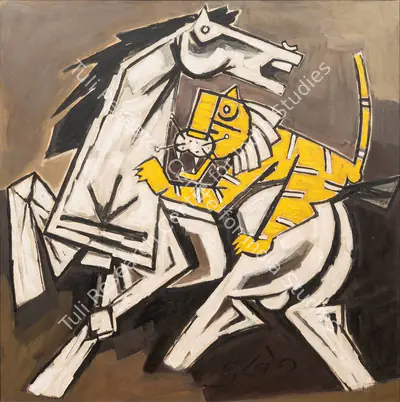
    +16 more
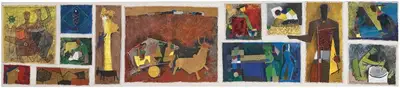
  6. Self-Discovery via Rediscovering India Series Inaugural Exhibition
    ArchivedExhibitionProject 1
    Self-Discovery via Rediscovering India Series Inaugural Exhibition
    14th - 29th March 2024
    Inaugural Exhibition
    Read More →
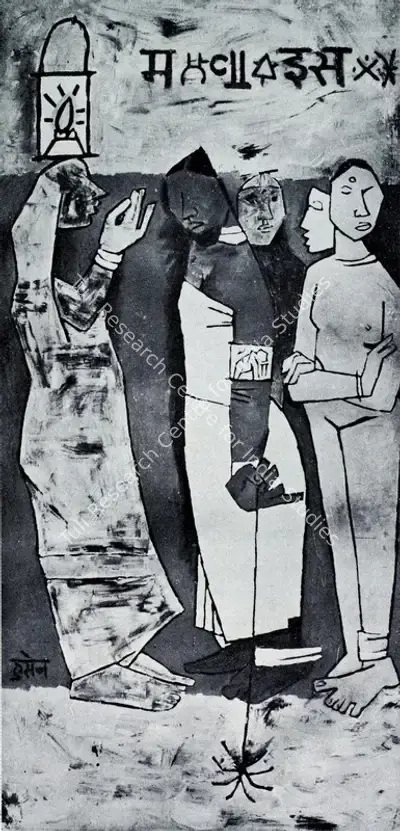
    14_IndoWorld·Self Discovery Via Rediscovering India Series 15 30 March 2024 Project 1 Cal
    +33 more

Related

54

Personalities

33

A. RamachandranComparable Artworks
Adi M. DavierwallaComparable Artworks
Akbar PadamseeComparable Artworks
Amrita Sher-GilComparable Artworks
Bharti KherComparable Artworks
Bhupen P. KhakharComparable Artworks
Bikash BhattacharjeeComparable Artworks
Biren DeComparable Artworks
Ebrahim AlkaziComparable Artworks
F.N. SouzaComparable Artworks
Ganesh PyneComparable Artworks
Geeta KapurComparable Artworks
Gieve PatelComparable Artworks
H.A. GadeComparable Artworks
HEARTComparable Artworks
Hemendranath MazumdarComparable Artworks
J. Sultan AliComparable Artworks
J. SwaminathanComparable Artworks
Jamini RoyComparable Artworks
Jehangir SabavalaComparable Artworks
Jeram PatelComparable Artworks
Jogen ChowdhuryComparable Artworks
K.G. SubramanyanComparable Artworks
K.K. HebbarComparable Artworks
Krishen KhannaComparable Artworks
Madhuri DixitComparable Artworks
Manjit BawaComparable Artworks
Manoj KumarComparable Artworks
Meera MukherjeeComparable Artworks
N.S. BendreComparable Artworks
Nasreen MohamediComparable Artworks
Nicholas RoerichComparable Artworks
NutanComparable Artworks

Institutions

11

Apparao ArtComparable Artworks
Art BullComparable Artworks
ArtianaComparable Artworks
Asta GuruComparable Artworks
Bid & HammerComparable Artworks
BonhamsComparable Artworks
BowringsComparable Artworks
Christie'sComparable Artworks
DAGComparable Artworks
Emami ChiselComparable Artworks
Mapin PublishingComparable Artworks

Themes

5

Art Heritage AnnualComparable Artworks
ArtrendsComparable Artworks
Journal of Arts & IdeasComparable Artworks
Lalit Kala Contemporary JournalComparable Artworks
MargComparable Artworks

Events

3

All Living SoulsEvent Artists · Comparable Artworks
Pictorial Space 1978Event Artists
SWARAJ - Revisualising India's Political HistoryEvent Artists

Films

2

Gaja Gamini 2000Film Director
Meenaxi Tale Of Three Cities 2004Film Director
Tuli Research Centre for India Studies

Tuli Research Centre

for India Studies

A free and open knowledge base for the modern and contemporary Indian arts, cinema, photography and cultural heritage.

Support

Contact Us

Discover

Tuli Research Centre for India StudiesVisionManifestoArchive & LibraryVanraja Sanctuary & Hospice

Legal

Privacy PolicyTerms & Conditions

Follow us

Youtube

Youtube

Instagram

Instagram

Facebook

Facebook

© Tuli Research Centre for India Studies 2026

Tuli Research Centre for India Studies

Tuli Research Centre

for India Studies

A free and open knowledge base for the modern and contemporary Indian arts, cinema, photography and cultural heritage.

Tuli Research Centre for India StudiesVisionManifestoArchive & LibraryVanraja Sanctuary & Hospice
Contact Us
Privacy PolicyTerms & Conditions

Follow us

YoutubeInstagramFacebook

© Tuli Research Centre for India Studies 2026

              Maqbool Fida Husain. New York: Abrams Books, 1971 | Edited Book | FineArts | 00170034
              TitleMaqbool Fida Husain
              Contributor(s)Richard Bartholomew, Shiv S. Kapur, Shafaat Husain
              Document TypeEdited Book
              PublisherAbrams Books, New York
              Date of Publication1971
              First Edition1971
              Pages206
              BindingHardbound
              LanguageEnglish
              ISBN810901897
              Keywordsm-f-husain | authored-edited-books | book-bka | library

              Research Categories

              2_FineArts
              14_IndoWorld
              16_Continuum

              Related Links5

              Masterlist2
              M F HusainAuthored Edited Books
              Research Categories3
              02Modern and Contemporary Indian Fine Arts14India and her Relationship with the World16The Animal-Human-Nature Continuum