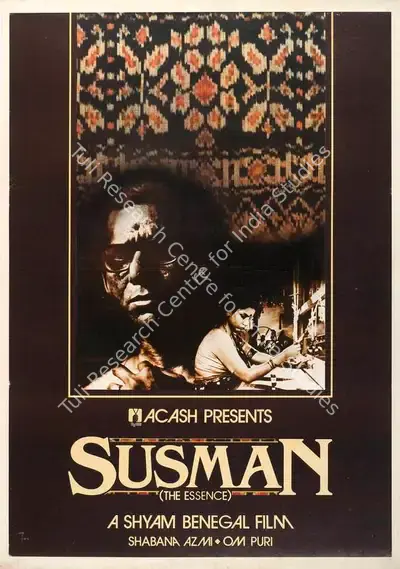

Susman1986
Introduction
Susman (Essence, 1987) directed by Shyam Benegal, is a poignant exploration of the lives of rural handloom weavers, particularly the "Ikat" artisans of Pochampally, amidst the sweeping tide of industrialisation. At the heart of the film is Ramulu (Om Puri), a master weaver whose deep-rooted commitment to his craft is challenged by shifting socio-economic realities. His family's livelihood and identity is jeopardised as traditional artistry clashes with the impersonal mechanisms of mass production.The film features Shabana Azmi, Om Puri, Kulbhushan Kharbanda, Neena Gupta, Mohan Agashe, K.K. Raina, Annu Kapoor, Ila Arun, Anita Kanwar, Pankaj Kapur, Jayant Kripalani, Satish Kaushik, Harish Patel, and Pallavi Joshi as the daughter, Chinna.
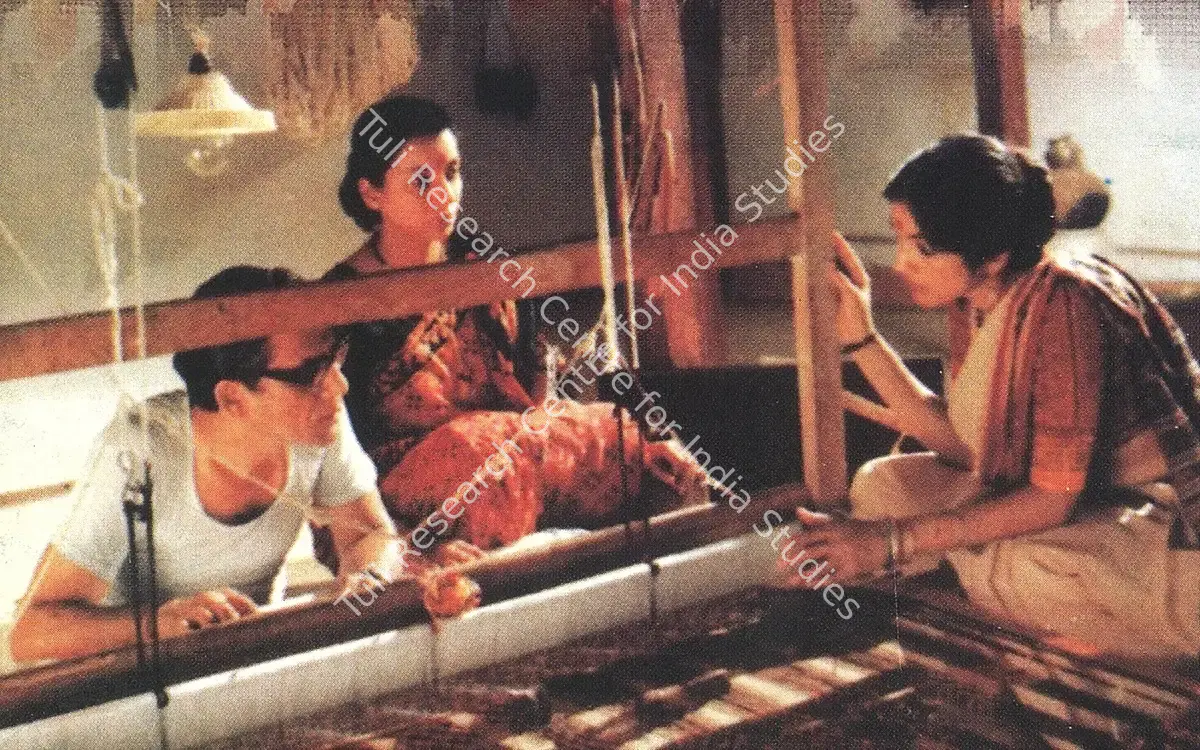
Benegal crafts an intimate portrait of the weavers' world, where looms hum with generational knowledge and every thread tells a story. Ramulu's son-in-law, enticed by the security of mill work, embodies the younger generation's pragmatic turn away from ancestral trades. The narrative weaves in layers of conflict: internal rivalries within the weaving community, the pressures of government intervention in the form of an official scouting for an exhibition, and a deeply personal betrayal when Ramulu's wife Gauramma (Shabana Azmi) uses precious cooperative-assigned silk to weave a wedding sari for their daughter, breaching rigid rules.
Om Puri delivers a powerful, understated performance, capturing the silent dignity and despair of a craftsman witnessing the erosion of his world. Benegal's direction emphasises authenticity, immersing viewers in the rhythms and rituals of weaver life. Enhancing its thematic depth, the film features soul-stirring poetry by the mystic saint Kabir who himself was born into a weaver family, set to music by Sangeet Martand Pandit Jasraj.
Though not a commercial blockbuster, Susman was a critical success. It was selected for the Indian Panorama at Filmotsav 1987 and screened at international festivals including London, Chicago, Vancouver, Sydney, and Melbourne. Later, it inspired the Tamil remake Kanchivaram by Priyadarshan. As a hallmark of Indian parallel cinema, Susman remains a compelling meditation on tradition, dignity, and the price of progress.
श्याम बेनेगल बुनकरों की दुनिया का आत्मीय चित्र खींचते हैं जहाँ हथकरघा सिर्फ़ एक यंत्र नहीं, पीढ़ियों से संचित ज्ञान का खज़ाना है और उसका हर धागा खुद में एक कहानी कहता है। उधर खुद रामुलु का दामाद मिल की नौकरी में दिखते स्थायित्व से आकर्षित होता है। वह उस नई पीढ़ी की उस व्यावहारिक सोच का प्रतिनिधि है जो अपने ही पुश्तैनी धंधे से मुँह मोड़ रही है। इस कथा में कई और परतें भी हैं जैसे बुनकर समुदाय के भीतर की आपसी प्रतिद्वंद्विता, सरकार पर हस्तक्षेप का दबाव जहाँ एक अधिकारी प्रदर्शनी के लिए हुनर की तलाश करता दिखाया गया है। कहानी में त्रासदी वहाँ घटती है जब रामुलु की पत्नी गौरम्मा (शबाना आज़मी) सहकारी समिति द्वारा आवंटित कीमती रेशम का उपयोग अपनी बेटी की शादी के लिए साड़ी बुनने में कर लेती है जबकि सख़्त सरकारी नियम इसकी इजाज़त नहीं देते।
फ़िल्म में ओम पुरी ने एक सशक्त और संयमित भूमिका निभाई है जिसमें एक ऐसे कारीगर की मौन गरिमा और निराशा दोनों झलक रही है, जो अपनी दुनिया को अपनी ही आँखों के सामने बिखरते हुए देख रहा है। बेनेगल का निर्देशन सच्चाई दिखाने पर ज़ोर देता है और दर्शकों को बुनकरों के जीवन की लय और रीति में गहराई तक लेकर जाता है। इस फ़िल्म के जज़्बातों को और सशक्त बनाता है फ़िल्म में संत कबीर के आत्मा को झकझोर देने वाले दोहों और साखियों का इस्तेमाल। पता हो कि कबीर स्वयं एक जुलाहे परिवार में जन्मे थे और पेशे से कपड़ा बुनने का काम करते थे। इस फ़िल्म के लिए कबीर के दोहों को संगीत मार्तंड पंडित जसराज ने संगीतबद्ध किया था।
व्यावसायिक दृष्टि से भले यह फ़िल्म सफल न रही हो लेकिन सुस्मन को आलोचकों की भरपूर सराहना मिली। इसे भारतीय फ़िल्मोत्सव में सन् 1987 में इंडियन पैनोरामा में चुना गया और लंदन, शिकागो, वैंकूवर, सिडनी, मेलबॉर्न सहित कई अंतरराष्ट्रीय महोत्सवों में भी प्रदर्शित किया गया। बाद में यह फ़िल्म इसी कथानक पर प्रियदर्शन की तमिल रीमेक कांचीवरम (2008) के लिए प्रेरणा बनी। तमिल फ़िल्म में चर्चित अभिनेता प्रकाश राज मुख्य भूमिका निभा रहे थे। अस्सी के दशक में भारतीय समांतर सिनेमा की एक पहचान बनकर उभरी सुस्मन देशज परम्परा और इंसानी गरिमा की कीमत पर होती विकास यात्रा पर गहरी टिप्पणी करती है।