Leela Mishra
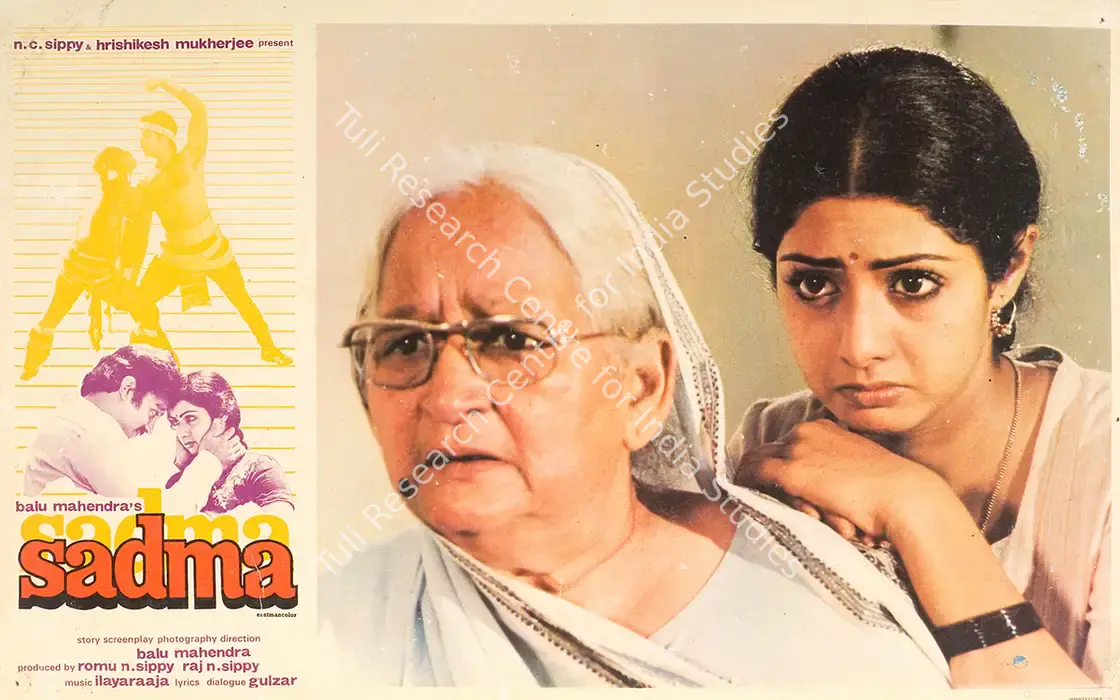
Leela Mishra (1 January 1908 – 17 January 1988) She occupies a distinguished place in the annals of Indian cinema as one of its most prolific and enduring character actors. Over a remarkable career spanning five decades, she appeared in more than 200 Hindi films, carving a niche for herself through portrayals of maternal figures, benevolent or scheming aunts, and memorable comic characters. Audiences remember her most fondly as the quintessential mausi, a persona immortalised by her role in the iconic blockbuster Sholay (1975). Her presence also enriched films such as Dil Se Mile Dil (1978), Baaton Baaton Mein (1979), and numerous Rajesh Khanna classics including Amar Prem (1972), Mehbooba (1976), Aanchal (1980), and Palkon Ki Chhaon Mein (1977). Rajshri Productions repeatedly cast her in family-centric narratives like Geet Gaata Chal (1975), Nadiya Ke Paar (1982), and Abodh (1971). An endearing human presence on screen, she ultimately came to embody a gallery of affable, warm-hearted, and gently humorous characters, each rendered with effortless authenticity and consummate perfection. Born in Jais, Raebareli, into a zamindari family, Leela Mishra was married at the tender age of twelve to Ram Prasad Mishra, himself a character artist from the silent-film era. By seventeen, she was already a mother of two daughters. Her entry into cinema came through Mama Shinde of Dadasaheb Phalke's Nasik Cinetone, who persuaded her husband to allow her to work in films at a time when female actors were scarce. Ironically, despite being offered a higher salary than her husband, her early contracts were terminated due to inexperience before the camera. Her steadfast adherence to personal values led her to refuse roles requiring physical intimacy, costing her several early opportunities. Yet this moral resolve proved providential. Cast as a mother at just eighteen in Honhaar (1940), she discovered a calling that would define her career. Thereafter, she lent gravitas to films such as Anmol Ghadi (1946), Awaara (1951), and Lajwanti (1958), the latter earning international acclaim at Cannes. Her finest performance came late in life with Naani Maa (1981), which earned her the Best Actress Award at the age of seventy-three. Leela Mishra passed away in Bombay following a heart attack in 1988, leaving behind a legacy of dignity, versatility, and quiet excellence that continues to resonate in Indian cinema.
Leela Mishra (1 January 1908 – 17 January 1988) She occupies a distinguished place in the annals of Indian cinema as one of its most prolific and enduring character actors. Over a remarkable career spanning five decades, she appeared in more than 200 Hindi films, carving a niche for herself through portrayals of maternal figures, benevolent or scheming aunts, and memorable comic characters. Audiences remember her most fondly as the quintessential mausi, a persona immortalised by her role in the iconic blockbuster Sholay (1975). Her presence also enriched films such as Dil Se Mile Dil (1978), Baaton Baaton Mein (1979), and numerous Rajesh Khanna classics including Amar Prem (1972), Mehbooba (1976), Aanchal (1980), and Palkon Ki Chhaon Mein (1977). Rajshri Productions repeatedly cast her in family-centric narratives like Geet Gaata Chal (1975), Nadiya Ke Paar (1982), and Abodh (1971). An endearing human presence on screen, she ultimately came to embody a gallery of affable, warm-hearted, and gently humorous characters, each rendered with effortless authenticity and consummate perfection. Born in Jais, Raebareli, into a zamindari family, Leela Mishra was married at the tender age of twelve to Ram Prasad Mishra, himself a character artist from the silent-film era. By seventeen, she was already a mother of two daughters. Her entry into cinema came through Mama Shinde of Dadasaheb Phalke's Nasik Cinetone, who persuaded her husband to allow her to work in films at a time when female actors were scarce. Ironically, despite being offered a higher salary than her husband, her early contracts were terminated due to inexperience before the camera. Her steadfast adherence to personal values led her to refuse roles requiring physical intimacy, costing her several early opportunities. Yet this moral resolve proved providential. Cast as a mother at just eighteen in Honhaar (1940), she discovered a calling that would define her career. Thereafter, she lent gravitas to films such as Anmol Ghadi (1946), Awaara (1951), and Lajwanti (1958), the latter earning international acclaim at Cannes. Her finest performance came late in life with Naani Maa (1981), which earned her the Best Actress Award at the age of seventy-three. Leela Mishra passed away in Bombay following a heart attack in 1988, leaving behind a legacy of dignity, versatility, and quiet excellence that continues to resonate in Indian cinema.
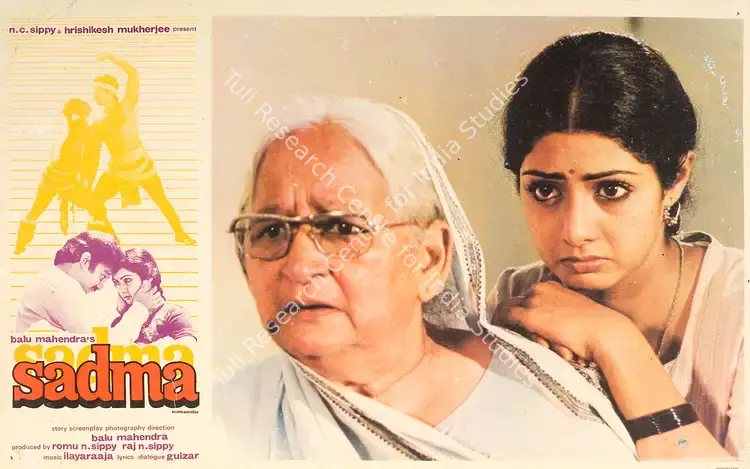
Leela Mishra (1 January 1908 – 17 January 1988) She occupies a distinguished place in the annals of Indian cinema as one of its most prolific and enduring character actors. Over a remarkable career spanning five decades, she appeared in more than 200 Hindi films, carving a niche for herself through portrayals of maternal figures, benevolent or scheming aunts, and memorable comic characters. Audiences remember her most fondly as the quintessential mausi, a persona immortalised by her role in the iconic blockbuster Sholay (1975). Her presence also enriched films such as Dil Se Mile Dil (1978), Baaton Baaton Mein (1979), and numerous Rajesh Khanna classics including Amar Prem (1972), Mehbooba (1976), Aanchal (1980), and Palkon Ki Chhaon Mein (1977). Rajshri Productions repeatedly cast her in family-centric narratives like Geet Gaata Chal (1975), Nadiya Ke Paar (1982), and Abodh (1971).
An endearing human presence on screen, she ultimately came to embody a gallery of affable, warm-hearted, and gently humorous characters, each rendered with effortless authenticity and consummate perfection.
Born in Jais, Raebareli, into a zamindari family, Leela Mishra was married at the tender age of twelve to Ram Prasad Mishra, himself a character artist from the silent-film era. By seventeen, she was already a mother of two daughters. Her entry into cinema came through Mama Shinde of Dadasaheb Phalke's Nasik Cinetone, who persuaded her husband to allow her to work in films at a time when female actors were scarce. Ironically, despite being offered a higher salary than her husband, her early contracts were terminated due to inexperience before the camera.
Her steadfast adherence to personal values led her to refuse roles requiring physical intimacy, costing her several early opportunities. Yet this moral resolve proved providential. Cast as a mother at just eighteen in Honhaar (1940), she discovered a calling that would define her career. Thereafter, she lent gravitas to films such as Anmol Ghadi (1946), Awaara (1951), and Lajwanti (1958), the latter earning international acclaim at Cannes.
Her finest performance came late in life with Naani Maa (1981), which earned her the Best Actress Award at the age of seventy-three. Leela Mishra passed away in Bombay following a heart attack in 1988, leaving behind a legacy of dignity, versatility, and quiet excellence that continues to resonate in Indian cinema.
Introduction
Filmography


Qaidi | Hindi | Actor
Booklet
Angoothi | Hindi | Actor
Booklet
Vijay Laxmi | Hindi | Actor
Booklet
Vish Kanya | Hindi | Actor
Booklet
Aina | Hindi | Actor
Booklet
Bare Nawab Saheb | Hindi | Actor
Booklet
Draupadi | Hindi | Actor
Booklet
Kaliyan | Hindi | Actor
Booklet
Anmol Ghadi | Hindi | Actor
Feature | Fiction | Black and White | Booklet
8 Days | Hindi | Actor
Booklet
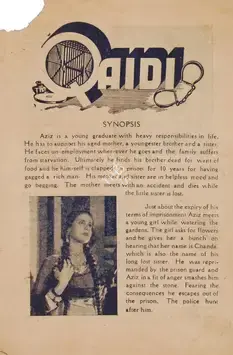
Hasnain, S.F. (Director), Qaidi, 1940 | Cyclostyled Lyrics Leaflet

Desai, Chhotubhai B. (Producer), Angoothi, 1943 | Song-Synopsis Booklet
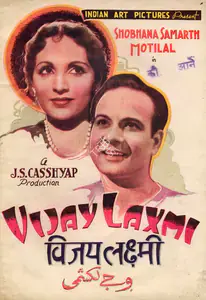
Casshyap, J.S. (Producer), Vijay Laxmi, 1943 | Song-Synopsis Booklet
Research Centre
Sort By | Year (ASC)
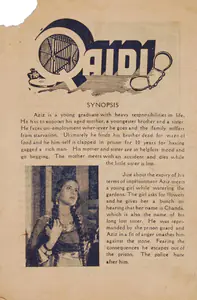
Hasnain, S.F. (Director), Qaidi, 1940 | Cyclostyled Lyrics Leaflet
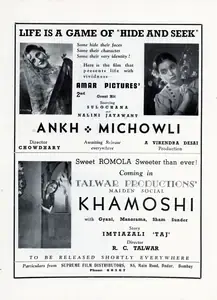
Desai, Virendra C. (Producer), Ankh Michowli, 1942 | Advertisement
Desai, Chhotubhai B. (Producer), Angoothi, 1943 | Song-Synopsis Booklet
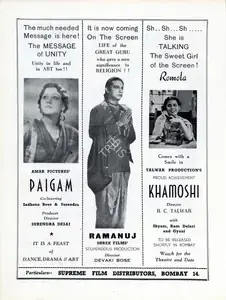
Desai, Surendra (Producer), Paigam, 1943 | Advertisement
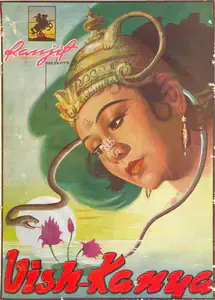
Sharma, Kidar (Director), Vish Kanya, 1943 | Song-Synopsis Booklet
Casshyap, J.S. (Producer), Vijay Laxmi, 1943 | Song-Synopsis Booklet
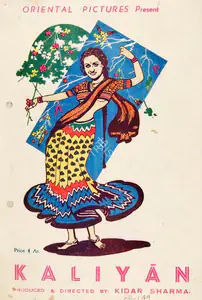
Sharma, Kidar (Producer), Kaliyan, 1944 | Song-Synopsis Booklet

Patel, Baburao (Producer), Draupadi, 1944 | Song-Synopsis Booklet

Pramila (Producer), Bare Nawab Saheb, 1944 | Song-Synopsis Booklet
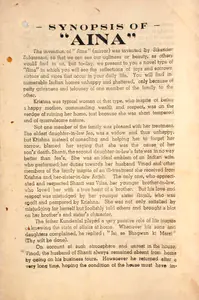
Yusuf, S.M. (Director), Aina, 1944 | Song-Synopsis Booklet
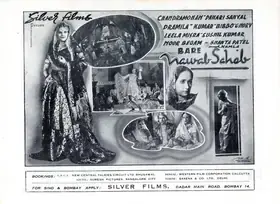
Pramila (Producer), Bare Nawab Saheb, 1944 | Advertisement
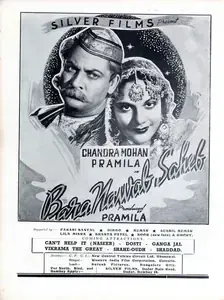
Pramila (Producer), Bare Nawab Saheb, 1944 | Advertisement
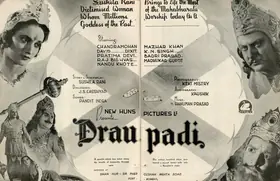
Patel, Baburao (Producer), Draupadi, 1944 | Advertisement
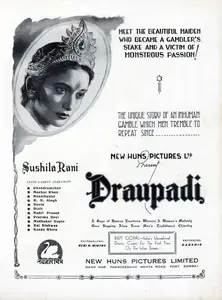
Patel, Baburao (Producer), Draupadi, 1944 | Advertisement
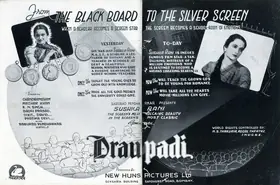
Patel, Baburao (Producer), Draupadi, 1944 | Advertisement
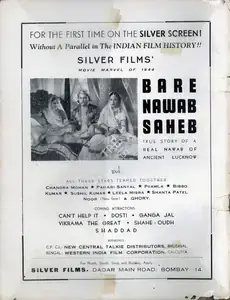
Pramila (Producer), Bare Nawab Saheb, 1944 | Advertisement
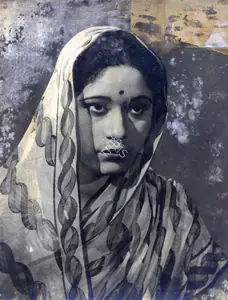
Yusuf, S.M. (Director), Aina, 1944 | Photographic Still
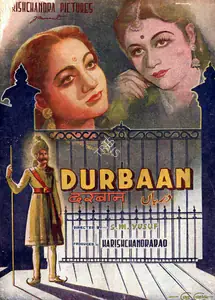
Rao, Harishchandra (Producer), Durbaan, 1946 | Song-Synopsis Booklet
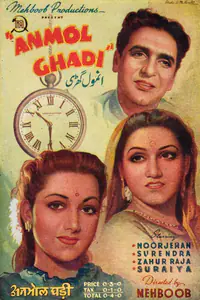
Mehboob (Producer), Anmol Ghadi, 1946 | Song-Synopsis Booklet
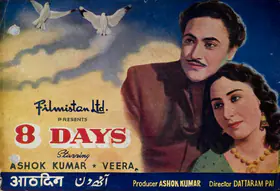
Kumar, Ashok (Producer), 8 Days, 1946 | Song-Synopsis Booklet
Loading...
Sort By | Year (ASC)

Sholay . In Blitz. 16 August 1975 | Film Review | 00143530

Ahmed, Rauf (Editor). Filmfare, 01 March 1988 | Magazine | 00793838

Ahmed, Rauf (Editor). Filmfare, 01 March 1988 | Magazine | 00793838
No more items to load
Sort By | Year (ASC)
Hasnain, S.F. (Director), Qaidi, 1940 | Cyclostyled Lyrics Leaflet
Desai, Virendra C. (Producer), Ankh Michowli, 1942 | Advertisement
Desai, Chhotubhai B. (Producer), Angoothi, 1943 | Song-Synopsis Booklet
Desai, Surendra (Producer), Paigam, 1943 | Advertisement
Sharma, Kidar (Director), Vish Kanya, 1943 | Song-Synopsis Booklet
Casshyap, J.S. (Producer), Vijay Laxmi, 1943 | Song-Synopsis Booklet
Sharma, Kidar (Producer), Kaliyan, 1944 | Song-Synopsis Booklet
Patel, Baburao (Producer), Draupadi, 1944 | Song-Synopsis Booklet
Pramila (Producer), Bare Nawab Saheb, 1944 | Song-Synopsis Booklet
Yusuf, S.M. (Director), Aina, 1944 | Song-Synopsis Booklet
Pramila (Producer), Bare Nawab Saheb, 1944 | Advertisement
Pramila (Producer), Bare Nawab Saheb, 1944 | Advertisement
Patel, Baburao (Producer), Draupadi, 1944 | Advertisement
Patel, Baburao (Producer), Draupadi, 1944 | Advertisement
Patel, Baburao (Producer), Draupadi, 1944 | Advertisement
Pramila (Producer), Bare Nawab Saheb, 1944 | Advertisement
Yusuf, S.M. (Director), Aina, 1944 | Photographic Still
Rao, Harishchandra (Producer), Durbaan, 1946 | Song-Synopsis Booklet
Mehboob (Producer), Anmol Ghadi, 1946 | Song-Synopsis Booklet
Kumar, Ashok (Producer), 8 Days, 1946 | Song-Synopsis Booklet
No more items to load
Sort By | Year (ASC)

Modi, Sohrab (Director), Dawlat, 1949 | Song-Synopsis Booklet

Chughtai, Ismat (Producer), Darwaza, 1954 | Song-Synopsis Booklet

Jindal, Suresh (Producer), Shatranj Ke Khilari, 1977 | Song-Synopsis Booklet
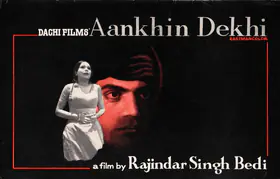
Bedi, Rajinder Singh (Producer), Aankhin Dekhi, 1978 | Song-Synopsis Booklet

Chatterjee, Basu (Producer), Baton Baton Mein, 1979 | Song-Synopsis Booklet
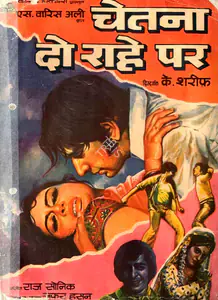
Ali, S.Waris (Producer), Chetna Do Rahe Par, 1980 | Song-Synopsis Booklet
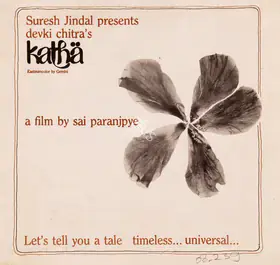
Jindal, Suresh (Producer), Katha, 1983 | Song-Synopsis Booklet

Gupta, Dharam Pal (Producer), Doosri Dulhan, 1983 | Song-Synopsis Booklet
No more items to load

EN
EN