


Introduction
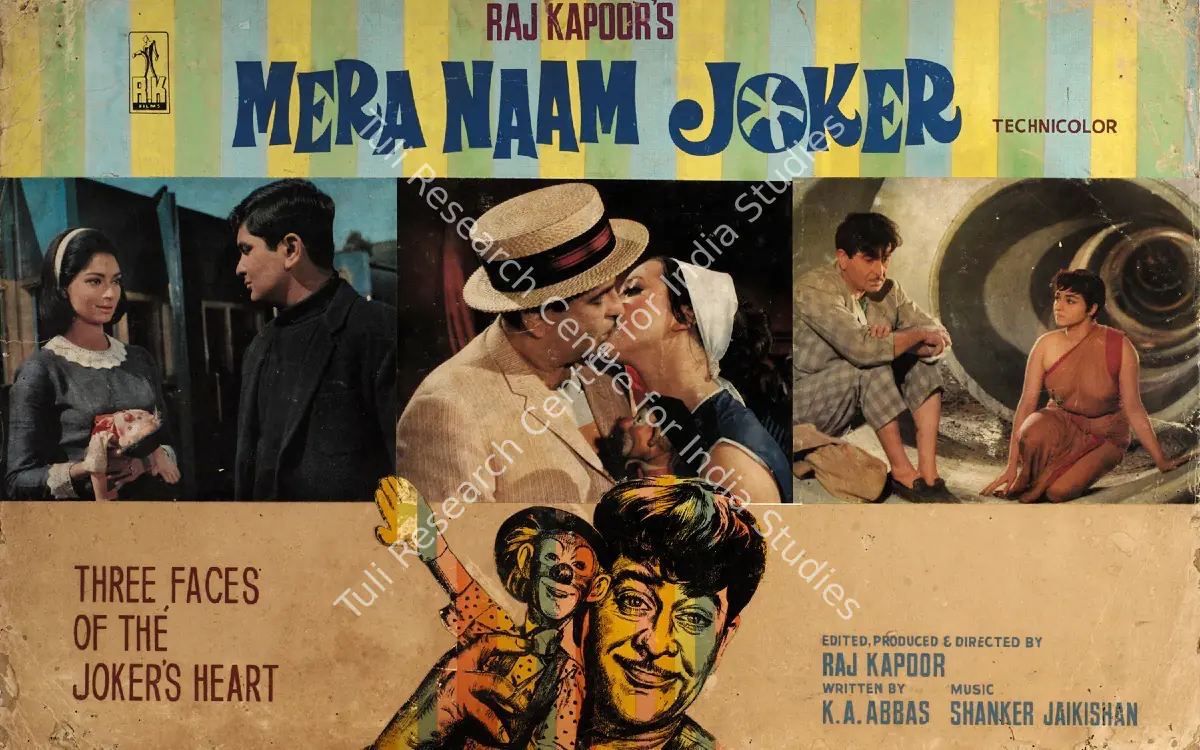
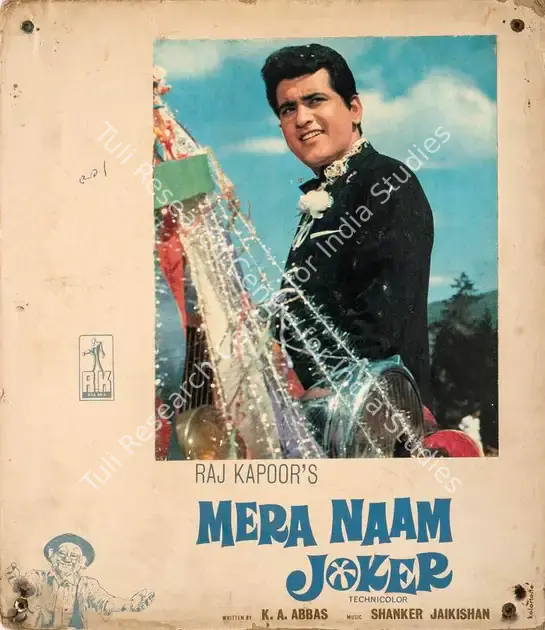
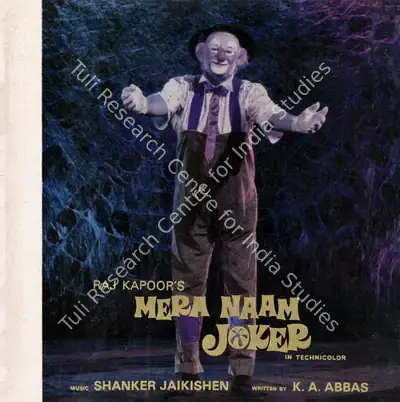
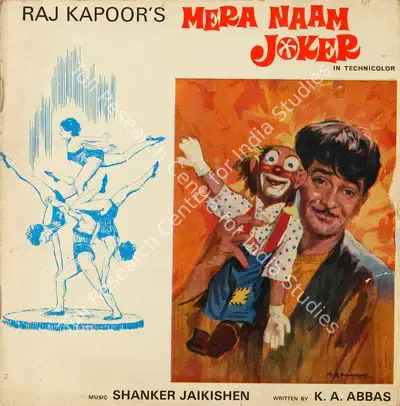
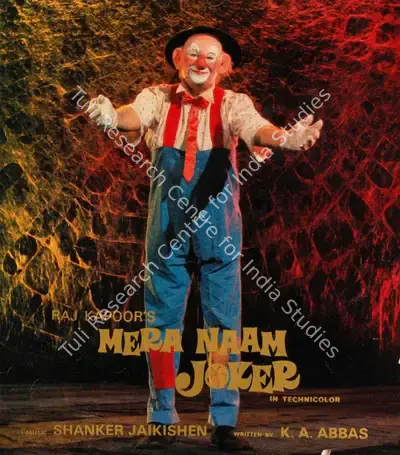
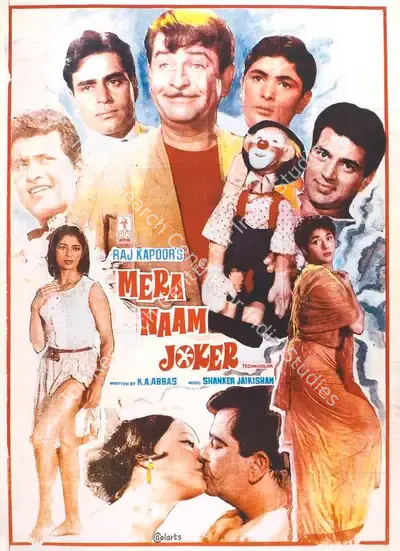
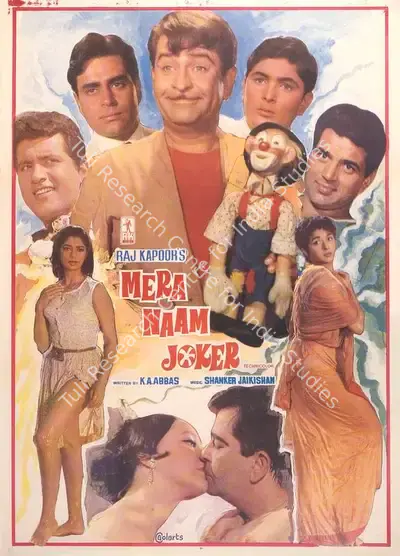
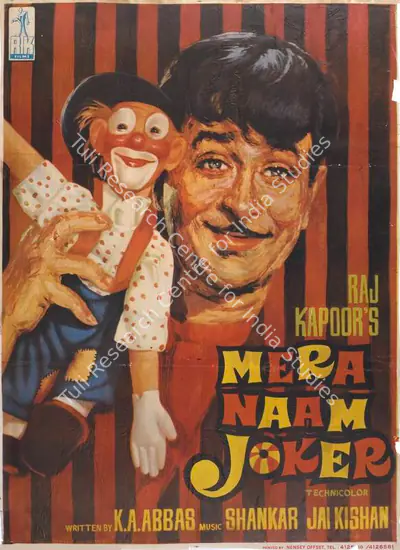
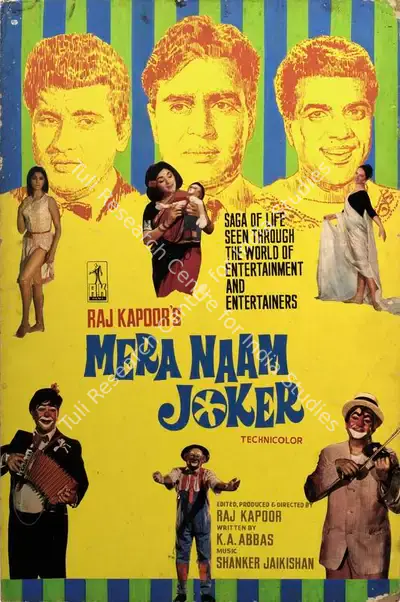
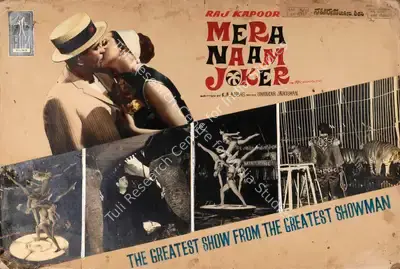
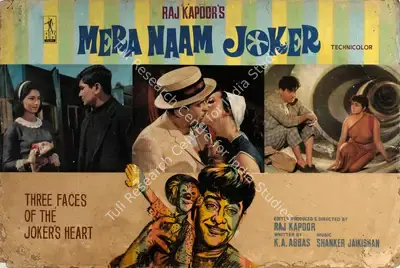
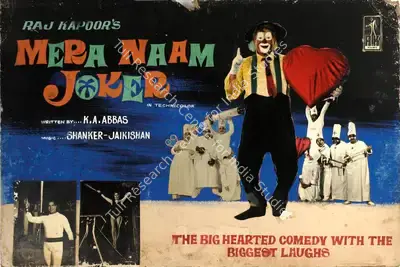
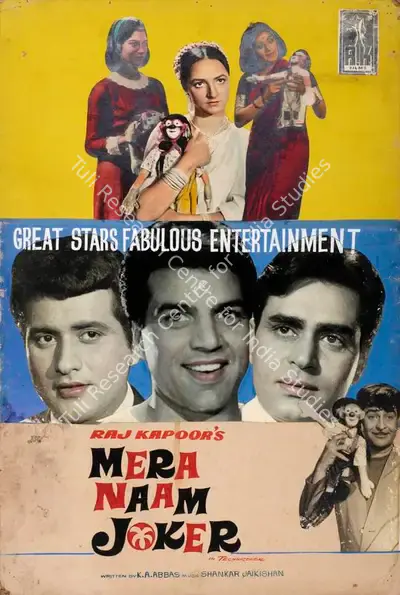
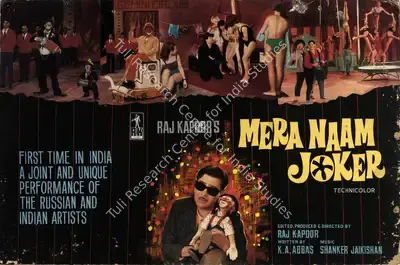
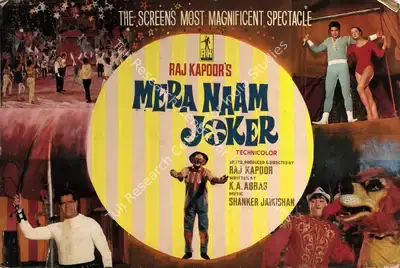
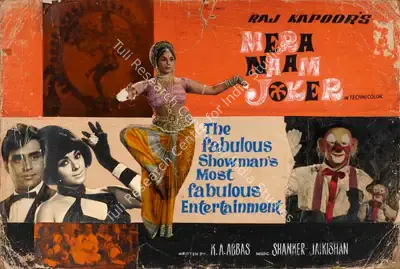
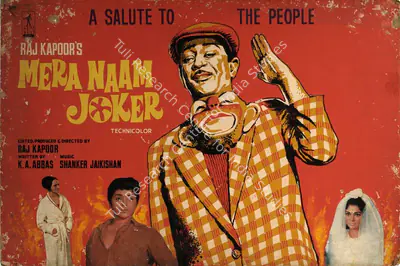
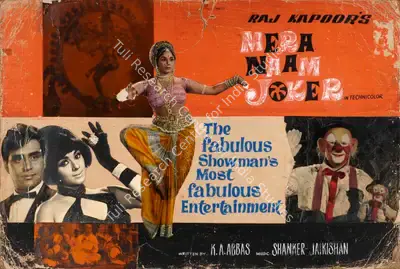
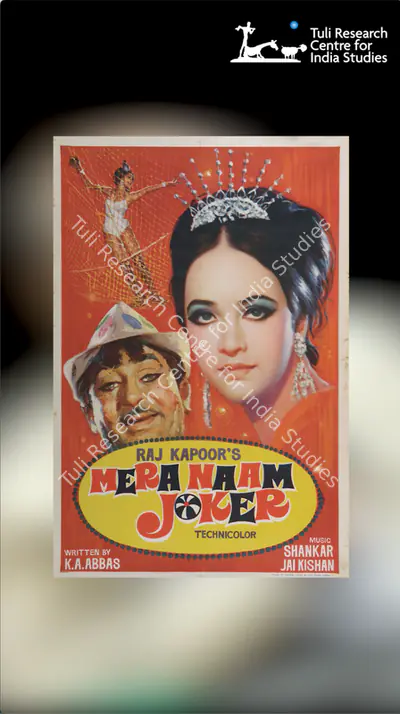
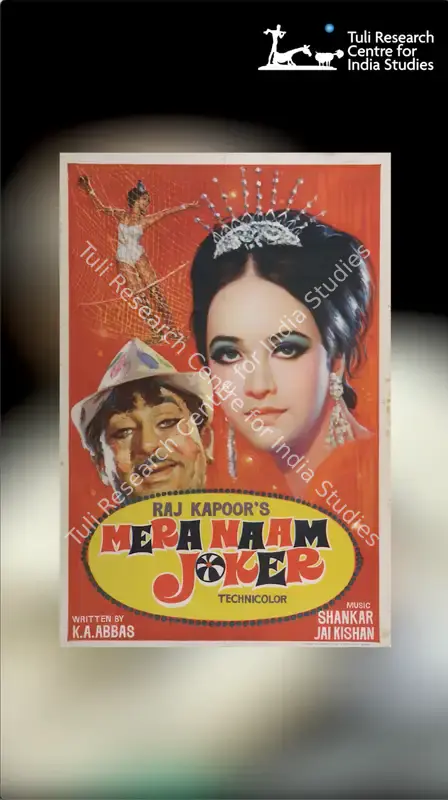
Mera Naam Joker is the most ambitious film directed by Raj Kapoor. It is a semi-autobiographical film about the life of a clown who believes that the world is a stage and his role is to entertain despite his inner sorrows. This self-reflexive film follows Raju, played by Raj Kapoor himself, who looks at three pivotal stages of his life- his adolescence, first love, and disillusionment in adulthood.
Though considered a magnum opus in retrospect, Mera Naam Joker was a commercial failure upon its release, primarily due to its original lengthy runtime, which could have alienated the Indian audiences. The failure was a huge financial setback for Raj Kapoor as well as RK Studios, bringing it to the verge of bankruptcy. A decade later, a shorter version found success, particularly abroad. In Russia, it was released in three parts and became a cultural phenomenon, making it a massive hit. The film tackles profound social issues, including the transient nature of fame, the loneliness of artists, and the universal human desire for love and acceptance. Though initially not heralded, Mera Naam Joker is now recognised as a classic, ahead of its time in both scope and emotional depth.
हालाँकि बाद में इसे फ़िल्मकार की एक महान कृति मानकर देखा जाने लगा, लेकिन अपनी रिलीज़ के समय मेरा नाम जोकर को घोर व्यावसायिक असफलता का सामना करना पड़ा था। इसके पीछे एक बड़ी वजह रिलीज़ के समय फ़िल्म की चार घंटे से अधिक लम्बी अवधि को माना गया। भारतीय दर्शक इतनी लम्बी फ़िल्में देखने के आदी नहीं थे। यह फ़िल्मकार राज कपूर की नाकामयाबी तो थी ही, आरके स्टूडियो के लिए भी एक बहुत बड़ा आर्थिक झटका थी। यहाँ तक कि स्टूडियो दिवालिया होने की कगार पर आ गया था। इसके एक दशक बाद फ़िल्म को संपादित कर फिर से रिलीज़ किया गया और इस बार उसे कामयाबी मिली। ख़ासकर विदेशों में फ़िल्म को खूब पसन्द किया गया। सोवियत रशिया में इसे तीन हिस्सों में बाँटकर रिलीज़ किया गया था और वहाँ तो यह इतनी सफल रही कि एक सांस्कृतिक परिघटना बन गई। यह फ़िल्म प्रसिद्धि की क्षणभंगुरता, कलाकार का अकेलापन और प्यार और अपनापन पाने की इंसान की सार्वभौम चाह जैसे गहन सामाजिक मुद्दों को उठाती है। हालाँकि शुरू में इसे तारीफ़ नहीं मिली, पर आज मेरा नाम जोकर को एक क्लासिक फ़िल्म माना जाता है जो अपनी भव्यता और भावनाओं की गहराई दोनों में अपने समय से आगे की फ़िल्म थी।
Body of Work
have retired. Three women came to the circus by special invitation-
Mary, a grey-haired lady teacher with her husband, David.
Marina, a Russian woman, past her youth, but still very beautiful, Mina, a film star at the age of retirement, accompanied by her former actor producer, Mr. Kumar. They all sat in the front row--eagerly looking forward to seeing Rajoo who had played a significant role in each of their lives.
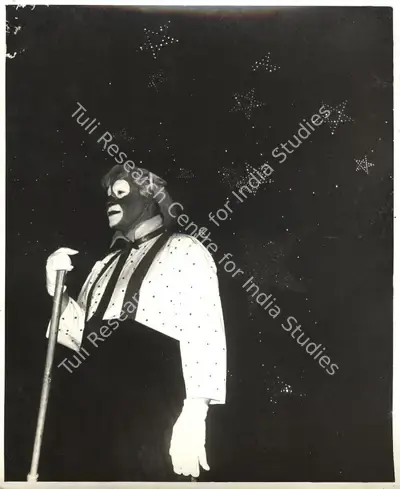
In the circus ring, the clown Rajoo stages a strange Act-he is the clown-patient, while the other clowns are doctors and surgeons who operate upon him and take out his "enlarged" heart.
"Keep it safe" says one of the clown-doctors, handing over the heart to Rajoo.
"It is getting bigger all the time. One day the whole world would be accomodated in your heart". And this makes the clown happy-he sings and dances with his heart, sends it up. It comes down and breaks into a thousand fragments-and each frag- ment of the broken heart reflects the face of Mary-not as she is today-but as she was many years ago when Rajoo first saw her.
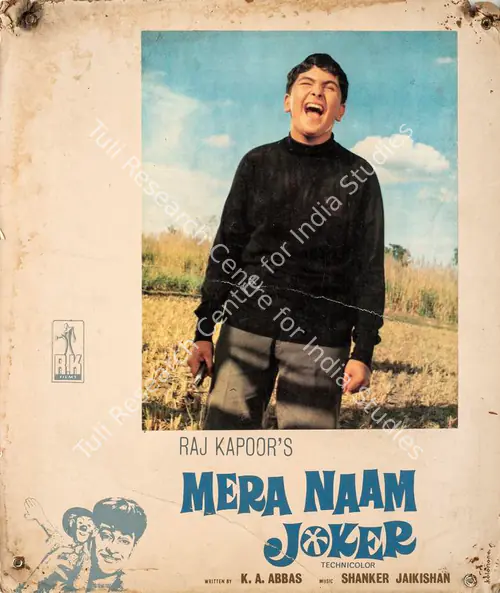
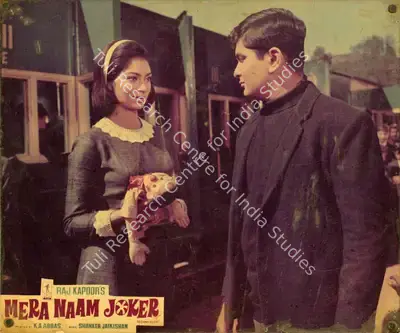
The school boy, Rajoo, was infatuated by Mary, the young lady teacher. It was calf love, as she was five years his senior. Mary had a little lamb-and he was the lamb who followed Mary wherever she went.
One day Rajoo saw Mary fall down in a river, emerge from it with her wet clothes clinging to her, youthful body changing her clothes in a thicket in the jungle, and the little boy grew up into a man. When she went on a holiday, he
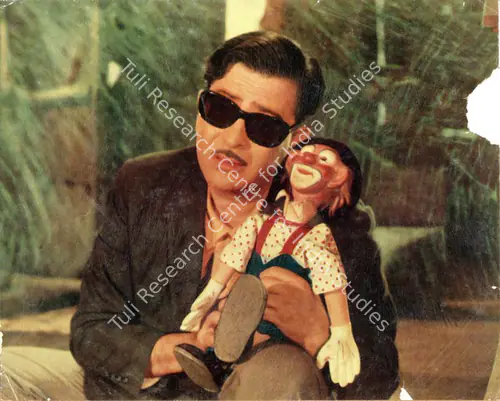
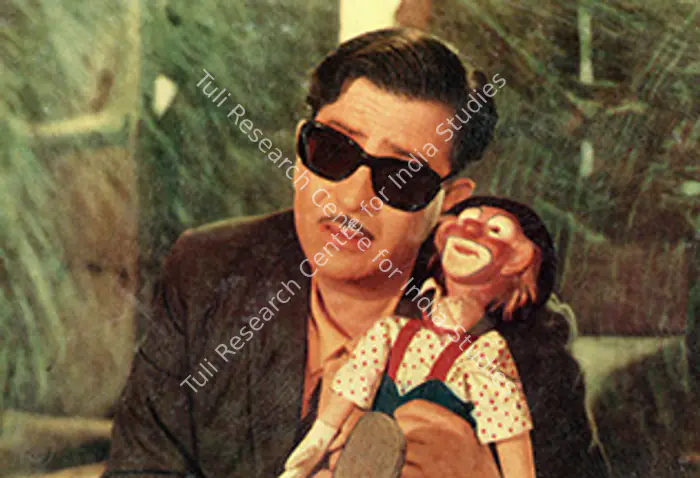
gave her a clown doll. "What is this?"
"It's a clown-a joker-it's me", he replied.
Rajoo knew that his father was a clown, too, he could make millions laugh. But one day he fell from a trapeze and was killed That is why his mother starved and slaved to send him to a good school so that he could rise to the top in the world. She didn't want to let her son suffer the fate of his father.
When Mary returned from holidays, she was already engaged to a young man, of her own age. She introduced David to Rajoo. and revealed her intention of marrying him just as Rajoo was being sent away from school for clowning on the streets to supplement his sick mother's earnings.
"Oh, Rajoo, why could you not be five years older" she sighed remorsefully. Rajoo went to the wedding-rang the Church bells- then as the Best Man, he was invited by David to kiss the bride. He gave a shy peck, and while parting he received a present-It was the clown-doll, being returned to him.
And as he walked away with the doll in his hands, the words of David rang in his ear-"You will grow up, but this clown-doll will remain as youthful and vivacious as it is today".
Time passes, the boy becomes a man, now he is dressed like a clown, beating a Tamborine Showing Janata Bioscope in a carnival, but on his face he has the same laughter, and the same sadness in his eyes. He is followed by a crowd of children, shouting Joker ! Joker !!" When the mother asks him if he has found a job, Rajoo reports that everyone says that "The place for a clown is a circus!"
"Circus?" The mother is alarmed, "Never mention that name before me. I don's want to lose my son as I lost his father".
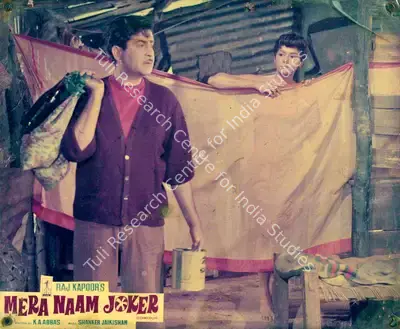
And yet Raico's steps inevitably take him towards a circus, where there is a big crowd to welcome a group of Soviet circus artistes. Because of his fair skin and blue eyes, and nondescript clothes, Rajoo is mistaken to be a Russian and finds himself in a lion-tamer's uniform. If he reveals his real identity he loses the Rs. 200/- advance that he has received as pocket money. And he needs the money for the treatment of his sick mother!
After many misunderstandings and misadventures, Rajoo at last achieves what he had always desired-he is made a clown, a singing clown who must sing and laugh and make others laugh.
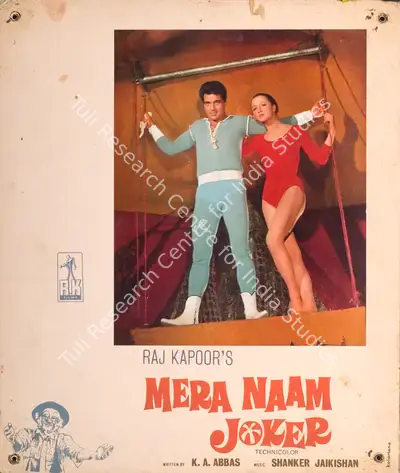
His gift of laughter, his genius as a clown, his simple-hearted ways, win the love of Marina, the beautiful trapeze artist from Russia who appears to Rajoo as the embodiment of that very fairy of whom his mother had always dreamed as her daughter-in-law.
Rajoo takes Marina to meet his mother, and the old and sick woman is enraptured by the winsome smile of the Russian beauty, though she does not know that she is from another country. "Rajoo, I like her, I approve of her, make her my daughter-in-law", she tells her son. "Then I can die in peace".
But that is the dilemma for Rajoo-and for Marina who has to go back to her people. to her country, to her aged and ailing father.
One night the Mother discovers that his son is working as a clown in a circus. She comes there, tottering on her sick legs, and her heart fails when she sees her son falling from a high trapeze-iust like her husband had his fatal fall!
The mother is dead. but the clown must not weep, his destiny is to laugh and make others laugh-even if his own heart be breaking!
And when he must part from his love, then too there should be no tears in his eyes, he must hide them behind dark glasses.
So when Marina flies away, she requests him to sing the "Awara" song which she has loved since her childhood and which symbolizes to her the spirit of India which is also the spirit of Rajoo, the man she loves. Once again, Rajoo is walking along the shore of life, the eternal tramp. With his mother dead, he carries his home on his shoulders-in a ruck-sack. Tired of the clown-doll which keeps returning to him, like his heart, he throws it to drown in the sea. But a dog jumps in, and drags it back and lays it at his feet.
The dog belongs to a "boy" who is pasting cinema posters on hoardings near the sea-beach, and the three of them become friends-Rajoo, Minco the boy, Moti the dog.
Together these three start a "Footpath Circus" till one day Rajco discovers that the boy he had befriended is a girl-and that the male attire was a mas- querade to protect her honour in the heartless city. Minco the boy becomes Mina the girl and the sari that Rajoo presents to her becomes a wall bet ween them.
But realy between them is the consuming ambition of Mina-the ambition of becoming a film star, with fame and fortune and glamour-for which she is willing to sacrifice Moti their faithful dog. to betray the people who had put up money to arrange their Qawwali, and eventually when the famous film hero, Kumar appears on her horizon, she can even sacrifice Rajco, Rajoo who be friended her when she was friendless, who taught her acting, singing. dancing, transforming an uncouth "boy" into a refined, glamorous actress!
And Rajoo is left, dangling among the cob-webs of his memories, like the clown-doll that lies abandoned in a corner of the deserted and haunted hut that was once their love-nest, as Mr. Kumar, the producer-star, introduces his new discovery-Meena-to the press and to the trade at a dazzling press conference.
Amidst the popping flash-bulbs, Meena smiles, and now it is her face that is reflected in the pieces of the glass heart that broke in the Circus. The old singing clown is still performing.
while he picks up the pieces of glass-the broken pieces of his heart-watched by the three women who had played their respective roles in shaping the pattern of his destiny.
But there are three more chairs, empty, beside them, and the singing clown, as he reaches the finale of his song, announces an interval-of fifteen minutes or fifteen months. For, he says, my-show has not ended-nor has my story!
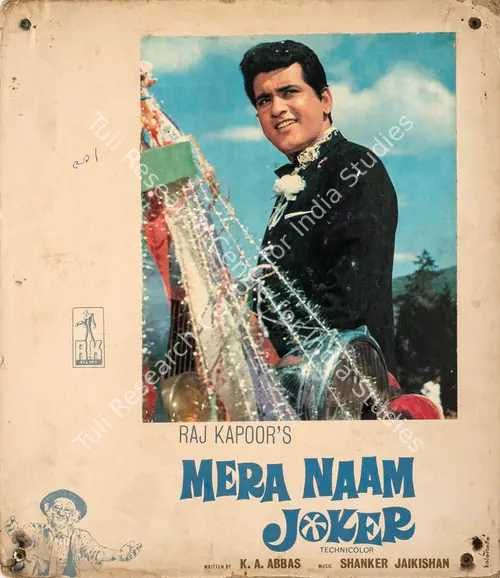
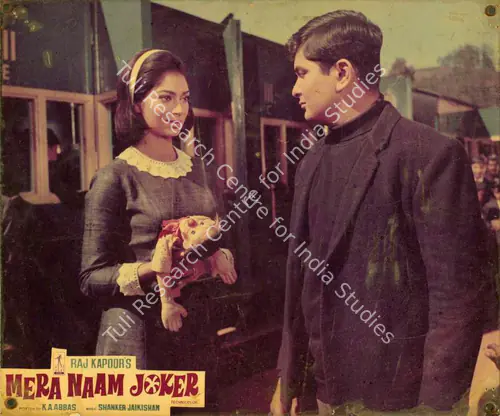
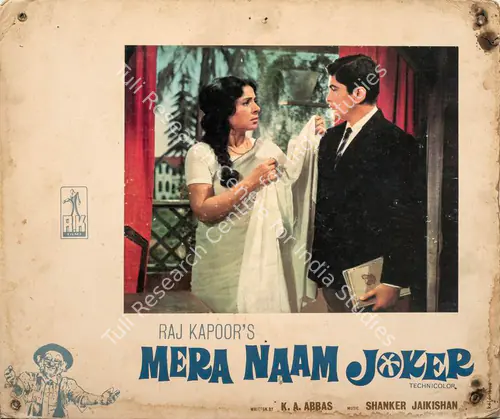
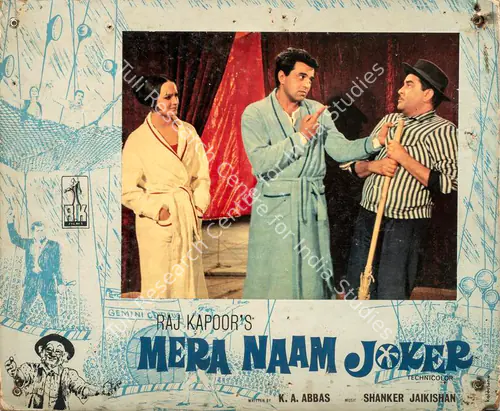
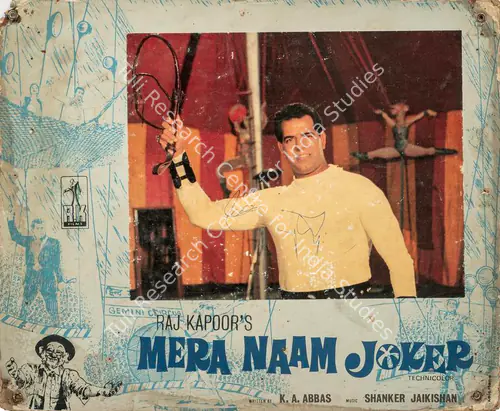
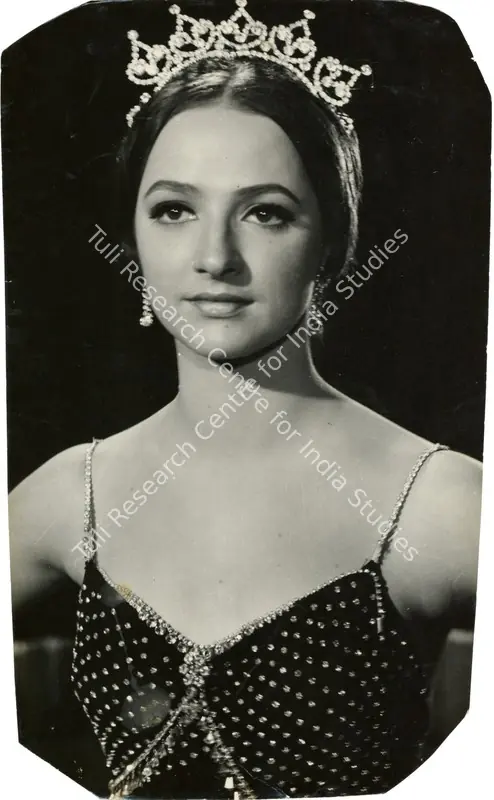
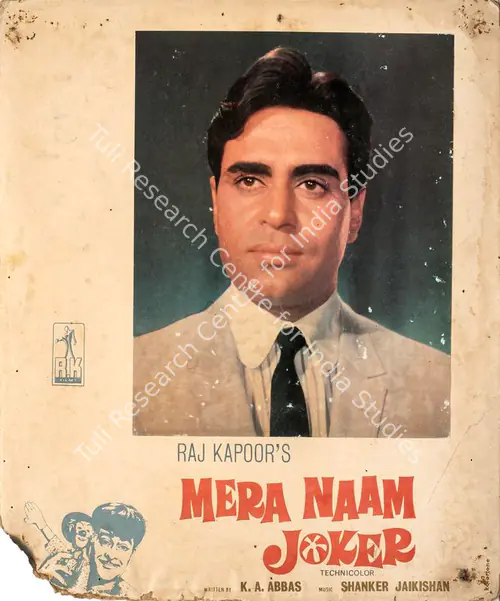
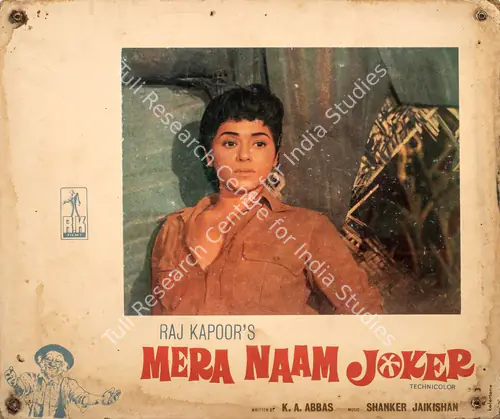
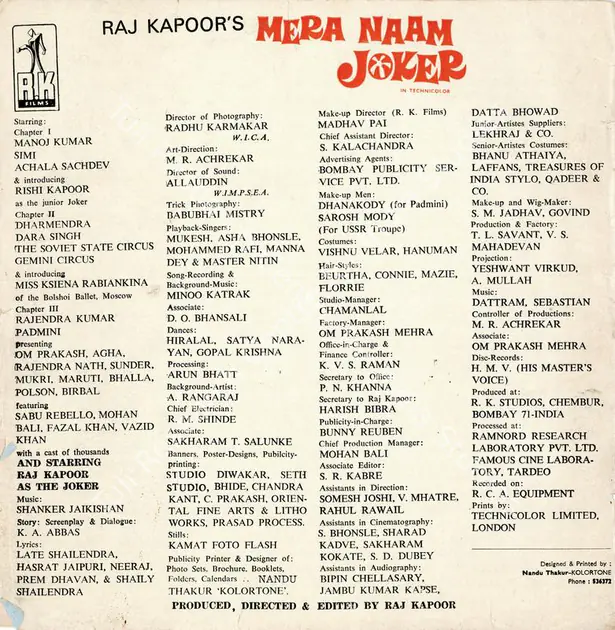
Kapoor, Raj (Producer), Mera Naam Joker, 1970 | Song Synopsis Booklet | CinemaEducation | 00543461
04:38
03:47
05:28
06:02
07:13
04:51
10:13
02:55
04:26
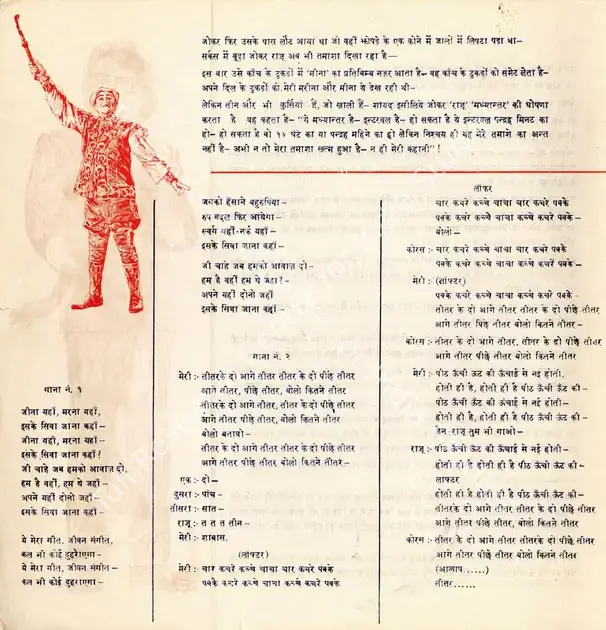
Economics of Cinema
1970
- Mera Naam JokerPremiere
Chankaya Cinema Pride · Delhi, India · 17 Dec 1970
- Mera Naam JokerPremiere
Regal Cinema · Delhi, India · 17 Dec 1970
- Mera Naam JokerPremiere
Vigyan Bhawan · Delhi, India · 17 Dec 1970
1985
- Film Utsav IndiaFilm Festival
Museum of Modern Art Department of Film · The Roy and Niuta Titus Theatre 1, New York, USA · 25 Oct 1985 to 18 Dec 1985
2011
- Raj Kapoor RetrospectiveRetrospective
Toronto International Film Festival, International Indian Film Academy · Toronto, Canada · 26 Jun 2011
2012
- Raj Kapoor Film SeriesFilm Festival
Havard University South India Initiative and Harvard Film Archive · Harvard Film Archive Theatre, Carpenter Centre, Cambridge · 07 Sep 2012 to 15 Sep 2012
- Raj Kapoor RetrospectiveRetrospective
British Film Institute · London, United Kingdom · 13 Feb 2012 to 29 Feb 2012
- Raj Kapoor and the Golden Age of CinemaRetrospective
Museum of Modern Art · New York, USA · 06 Jan 2012 to 16 Jan 2012
2015
- 6th Jagran Film FestivalFilm Festival
Jagaran Prakashan Group · Siri Fort, Delhi, India · 01 Jul 2015 to 05 Jul 2015
2017
- Mera Naam JokerFilm Festival
Regal Cinema · Delhi · 30 Mar 2017 to 30 Mar 2017
- 8th Jagran Film FestivalFilm Festival
Jagaran Prakashan Group · Siri Fort, Delhi, India · 01 Jul 2017 to 24 Sep 2017
- Cairo International Film FestivalFilm Festival
Maulana Azad Centre of Indian Culture, Embassy of Cairo · Cairo, Egypt · 28 Oct 2017 to 02 Nov 2017
- Russian Film DaysFilm Festival
Indo-Russian Government · Delhi, India · 10 Nov 2017 to 12 Nov 2017
2018
- Raj Kapoor RetrospectiveRetrospective
16th Pune International Film Festival · Pune, India · 13 Jan 2017 to 17 Jan 2017
- Ekagra Film FestivalFilm Festival
Bharat Bhavan · Bhopal, India · 20 Nov 2018 to 25 Nov 2018
2022
- Mera Naam JokerFilm Festival
Entertainment Society of Goa · Cinephile Film Club, Maquinez Palace, Panjim · 12 May 2022 to 12 May 2022
- Cinema and Books - A Boundless RelationshipFilm Festival
8th Rajasthan International Film Festival · Jodhpur, Rajasthan · 25 Mar 2022 to 30 Mar 2022
1971
- National Award
Best Cinematography · Directorate of Film Festivals, Government of India
- National Award
Best Child Artist · Directorate of Film Festivals, Government of India
- National Award
Best Male Playback Singer · Directorate of Film Festivals, Government of India
1972
- Filmfare Award
Best Sound Recordist · Filmfare - The Times Group
- Filmfare Award
Best Playback Singer · Filmfare - The Times Group
- Filmfare Award
Best Music Director · Filmfare - The Times Group
- Filmfare Award
Best Cinematographer Colour · Filmfare - The Times Group
- Filmfare Award
Best Director · Filmfare - The Times Group
Research Centre
Posts 2
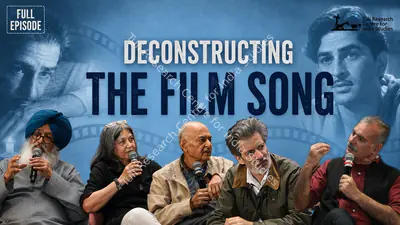
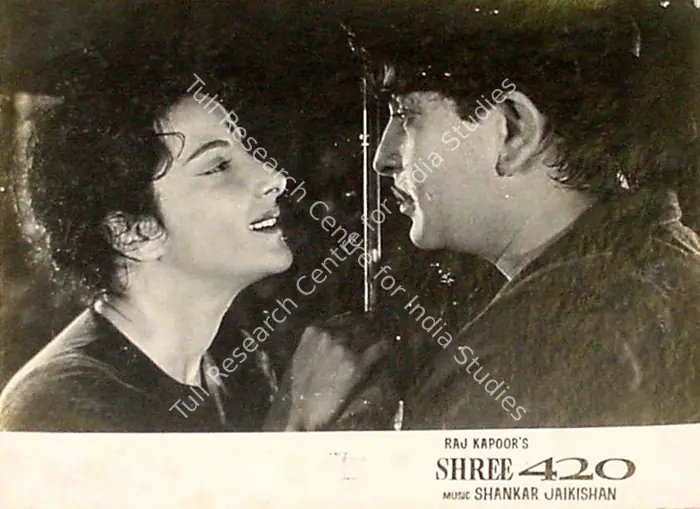
- "Raj Kapoor's tramp, the wide-eyed wanderer in oversized clothes and a battered hat, was one of Hindi cinema's most deliberate creative constructions. Borrowed in spirit from Charlie Chaplin but rooted firmly in the anxieties of post-independence India, the figure carried the dreams and displacements of a nation still finding its footing. "Awara Hoon" from Awara (1951) became the song that gave that figure its voice, and its reach was extraordinary. In this clip, the panel discusses how the film introduced Raj Kapoor to audiences across the erstwhile Soviet Union, China and beyond. Composer-Writer Madan Gopal Singh points to ""Ramaiya Vastavaiya"" from Shree 420 (1955) as a moment of genuine creative risk, where Lata Mangeshkar's voice moves the song from a collective street chorus into something laden with intimate individuality. The panel also deconstructs two more songs from Raj Kapoor's career: "Pyar Hua Ikrar Hua" from Shree 420 (1955) and "Jeena Yahan Marna Yahan" from Mera Naam Joker (1970), examining what makes them endure across generations. In the workshop "A Musical Glue for Nation-Building: Deconstructing the Film Song," organised by the Tuli Research Centre for India Studies (T.R.I.S.), Madan Gopal Singh, Juhi Saklani, Ravikant, and Amit Khanna, in conversation with Neville Tuli, explore the lasting appeal of these songs and what they reveal about India's greatest showman's vision of cinema, emotion, and India itself.
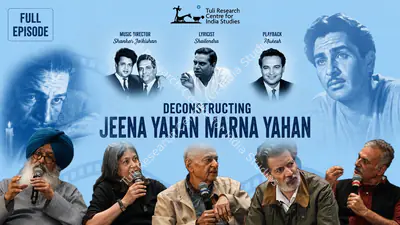
- "Jeena Yahan Marna Yahan" from Mera Naam Joker (1970) was penned by Shailendra, composed by Shankar-Jaikishan, and sung by Mukesh. The song is situated at the philosophical heart of Raj Kapoor's most personal and ambitious film. The film was a commercial disaster on release, and as Neville Tuli notes, both the song and the film found the audiences' acknowledgement only years later. Filmmaker-Lyricist Amit Khanna reveals a lesser-known detail about its making: the song was shot in Delhi at the Gemini Circus, but it had become extremely difficult to gather all the stars, who by that point had become huge in their own careers, at one point of time. The scenes featuring them were shot solo and then later assembled in Bombay to be inserted into the song sequence. Ravikant, Professor, CSDS (The Centre for the Study of Developing Societies), reads the song as both a philosophical and a deeply materialistic reflection on existence. There is a continuity in the persona that may take rebirth, he argues, but it is not the same person who returns. The world itself is one's heaven and hell simultaneously, and that, he suggests, is why we return to this song whenever life demands reflection. This clip is from the workshop "A Musical Glue for Nation-Building: Deconstructing the Film Song," conducted by the Tuli Research Centre for India Studies (T.R.I.S.) at the 7th Self-Discovery via Rediscovering India Festival, featuring Madan Gopal Singh, Amit Khanna, Ravikant, Juhi Saklani, and Neville Tuli.
Calendar 4
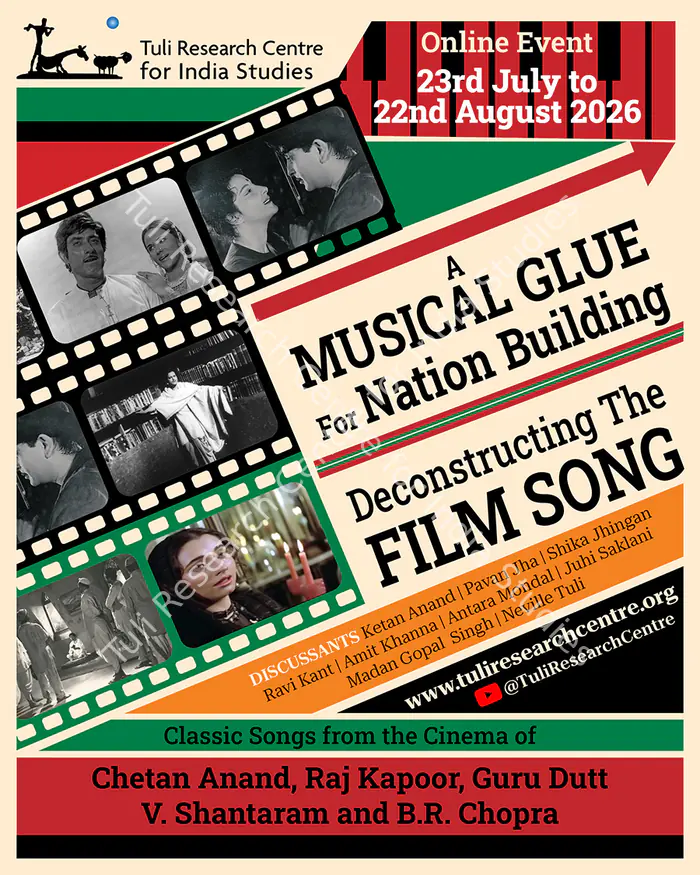
- ArchivedOffline-Online EventProject 80A Musical Glue for Nation-BuildingDeconstructing the Film Song23rd July - 22nd August 2026Ketan Anand | Ravikant | Pavan Jha | Madan Gopal Singh | Amit Khanna | Juhi Saklani | Antara Mondal | Shikha Jhingan | Neville TuliA key section of the India Studies framework at The Tuli Research Centre for India Studies (T.R.I.S.) is “Deconstructing the Film Song”. It began with a series of four workshops during our Self-Discovery via Rediscovering India Festival Series that brought together leading scholars & academics, film practitioners & students, along with fans of the Hindi film song. The objective of these workshops was to deconstruct iconic Hindi film songs to examine their formation across music, lyrics, playback, choreography, directorial visualisation, as they fuse into sites where aesthetics, ideology, and performance intersect, so as to help clarify the nature of India and her relationship to the film song. The Hindi Film Song functions as a narrative device, conveying myriad textures of emotion through melody, voice and poetry. As cultural texts that encode memory, desire, and ideology, songs are integral to the circulation and resonance of films in the public realm. Over time they have become autonomous bundles of creative energy - the glue that binds us over time, articulating and perhaps even defining the idea of Indianness. These first Workshops were an attempt to understand the nature and power of this glue, while contemplating the ways to situate it within TRIS' academic framework for Contemporary India Studies.Read More →
- ArchivedDeconstructing the Hindi Film SongProject 61A Musical Glue for Nation-BuildingFour Classic Songs from the cinema of Raj Kapoor and the genius of Shankar-Jaikishan, Shailendra, Lata Mangeshkar, Mukesh, Manna Dey & Mohammed RafinnAwara Hoon | Awara-1951 nRamaiya Vastavaiya | Shree 420-1955 nPyar Hua Ikrar Hua | Shree 420-1955 nJeena Yahan Marna Yahan | Mera Naam Joker-197017th February 20265:00pmM.L. Bhartia Auditorium, Alliance Francaise de Delhi, 72 K.K. Birla Lane, Lodi Estate, New Delhi, 110005Madan Gopal Singh, Amit Khanna, Ravikant, Juhi Saklani & Neville TuliA key section of the India Studies framework at The Tuli Research Centre for India Studies (T.R.I.S.) is “Deconstructing the Hindi Film Song”. It will begin with a series of four workshops that brings together leading scholars & academics, film practitioners & students, along with fans of the Hindi film song. The objective of these workshops is to deconstruct iconic Hindi film songs to examine their formation across music, lyrics, playback, choreography, directorial visualisation, as they fuse into sites where aesthetics, ideology, and performance intersect. The Hindi Film Song functions as a narrative device, conveying myriad textures of emotion through melody, voice and poetry. As cultural texts that encode memory, desire, and ideology, songs are integral to the circulation and resonance of films in the public realm. Over time they have become autonomous bundles of creative energy - the glue that binds us over time, articulating and perhaps even defining the idea of Indianness. The first Workshops are an attempt to understand the nature and power of this glue, while contemplating the ways to situate it within TRIS' academic framework for Contemporary India Studies.Read More →
- ArchivedExhibitionProject 14Exhibition | The Cinema of Raj Kapoor | T.R.I.S. in Collaboration with 17th Habitat Film Festival14th - 19th May 2025T.R.I.S. in Collaboration with 17th Habitat Film Festival will be commemorating the life and work of two pioneering individuals of the Indian film industry, who shaped Indian cinema in their unique ways. One exhibition celebrates the birth centenary of Raj Kapoor, while the other remembers Shyam Benegal. The Cinema of Raj Kapoor – 15 to 20 May 2025 The Cinema of Shyam Benegal - 21 to 25 May 2025 10:00 am to 8:00 pm daily at the Convention Centre Foyer GalleryRead More →
- ArchivedExhibitionProject 2Self-Discovery via Rediscovering India Series Part II India's Cinematic Heritage12th - 24th August 2024Self-Discovery via Rediscovering India Series Part IIRead More →
Related
13
Personalities
13