Prem Dhawan
Prem Dhawan (1923–2001) was a multifaceted figure in Hindi cinema, distinguished as a lyricist, music composer, choreographer, and actor. He is particularly remembered for his powerful corpus of patriotic songs, most notably those written and composed for Manoj Kumar's landmark film Shaheed (1965). His contributions to film music earned him the National Film Award for Best Lyrics in 1971, and he was conferred the Padma Shri in 1970, one of India's highest civilian honours.
Born on 13 June 1923 in Ambala (present-day Haryana), Dhawan was the son of a Jail Superintendent employed under the British administration. He pursued his collegiate education in Lahore, where he became associated with progressive political thought and was actively involved with the Communist Party of India. His early professional journey began in 1946 in Lahore as an assistant to the composer Khwaja Khurshid Anwar in Khwaja Ahmad Abbas's film Aaj Aur Kal. He subsequently moved to Bombay, joining the Indian People's Theatre Association (IPTA), an affiliation that proved formative to his artistic and ideological outlook. Through IPTA, he also received training in classical music under the guidance of Ravi Shankar.
Dhawan made his debut as a lyricist with Dharti Ke Lal (1946), and over the following decades established a steady presence in Hindi cinema, continuing until his final credited work in the Hindi version of Apoorva Sagodharargal (1989). His lyrical contributions spanned a wide range of films, including Aaram (1951), Tarana (1951), Aasman (1952), Shola Aur Shabnam (1961), Kabuliwala (1961), Ek Phool Do Mali (1969), and Purab Aur Paschim (1970). His association with Shaheed (1965) proved particularly significant, with iconic compositions such as Mera Rang De Basanti Chola and Ae Watan Ae Watan becoming enduring symbols of cinematic patriotism and nationalist spirit.
In addition to lyric writing, Dhawan also composed music for several films, including Shaheed, a collaboration that significantly enhanced both his stature and the film's cultural impact. His compositions for Hum Hindustani (1961), particularly Chhodo Kal Ki Baatein, further reinforced his identity as a voice of nation-building and social idealism through music.
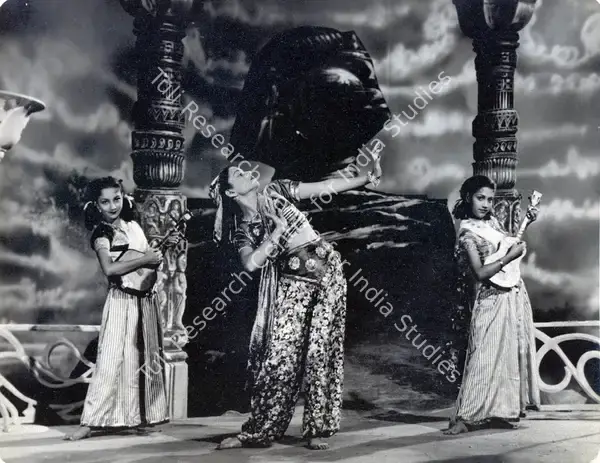
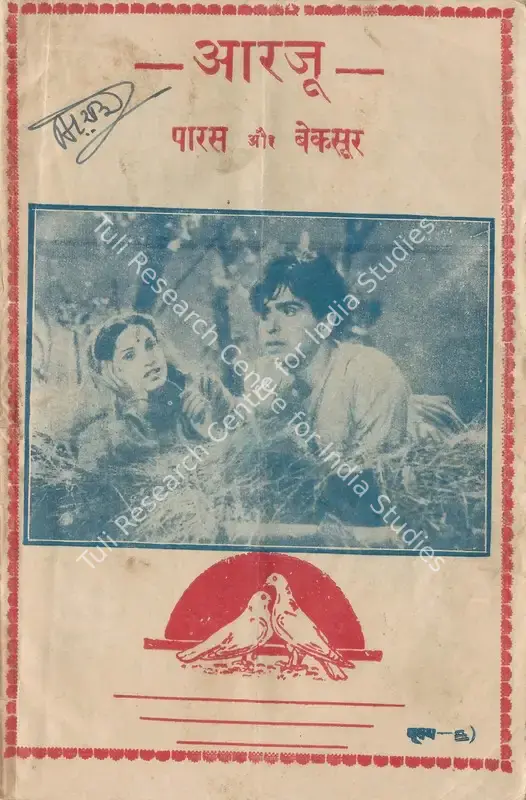
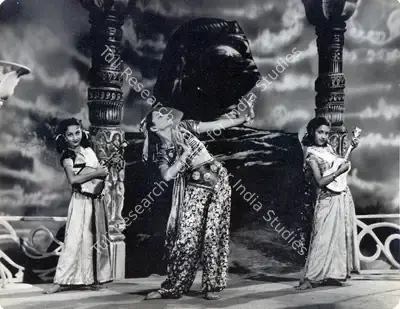
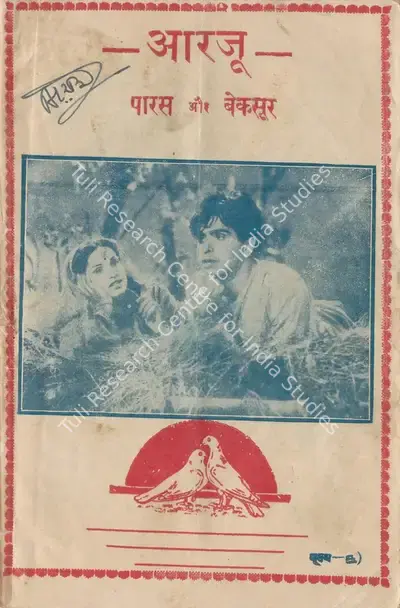
Dhawan's versatility extended beyond writing and composing. He acted in films such as Lajawab (1950) and Goonj Uthi Shehnai (1959), and also worked as a choreographer for several productions, although with comparatively limited recognition in that domain. His choreography credits include films such as Arzoo (1950), Do Bigha Zamin (1953), Naya Daur (1957), Dhool Ka Phool (1959), Goonj Uthi Shehnai (1959), and Waqt (1965). Notably, he also appeared on screen performing dance alongside Cuckoo in Singaar (1949), reflecting his early engagement with performance as well as creative direction.
Among his most celebrated lyrical works are Seene Mein Sulagte Hain Armaan from Tarana (1951), Aye Mere Pyaare Watan from Kabuliwala (1961), and Teri Duniya Se Hoke Majboor Chala from Pavitra Papi (1970), each marked by emotional intensity and melodic restraint. His work in Ek Phool Do Mali (1969), including songs such as Parda Hata Do and Tujhe Suraj Kahoon Ya Chanda, demonstrated his ability to adapt to romantic and popular idioms alongside Dheere Se Jaana Khatiyan Mein his more solemn patriotic repertoire.
Dhawan also contributed as a composer to films such as Kisan Aur Bhagwan (1974), The Naxalites (1980), and others, though his later career gradually receded from mainstream prominence. One of his later notable compositions, Agar Bewafa Tujhko Pehchan Jate from Raat Ke Andhere Mein (1987), sung by Mohammed Rafi, reflects his continued ability to evoke emotional depth even in the twilight of his career.
His achievements were formally recognised with the Padma Shri in 1970 and the National Film Award for Best Lyrics for Nanak Dukhiya Sub Sansar (1971).
Prem Dhawan's legacy endures as that of an artist who seamlessly bridged ideology and aesthetics, leaving behind a body of work that is deeply embedded in the cultural and emotional memory of Indian cinema.
Born on 13 June 1923 in Ambala (present-day Haryana), Dhawan was the son of a Jail Superintendent employed under the British administration. He pursued his collegiate education in Lahore, where he became associated with progressive political thought and was actively involved with the Communist Party of India. His early professional journey began in 1946 in Lahore as an assistant to the composer Khwaja Khurshid Anwar in Khwaja Ahmad Abbas's film Aaj Aur Kal. He subsequently moved to Bombay, joining the Indian People's Theatre Association (IPTA), an affiliation that proved formative to his artistic and ideological outlook. Through IPTA, he also received training in classical music under the guidance of Ravi Shankar.
Dhawan made his debut as a lyricist with Dharti Ke Lal (1946), and over the following decades established a steady presence in Hindi cinema, continuing until his final credited work in the Hindi version of Apoorva Sagodharargal (1989). His lyrical contributions spanned a wide range of films, including Aaram (1951), Tarana (1951), Aasman (1952), Shola Aur Shabnam (1961), Kabuliwala (1961), Ek Phool Do Mali (1969), and Purab Aur Paschim (1970). His association with Shaheed (1965) proved particularly significant, with iconic compositions such as Mera Rang De Basanti Chola and Ae Watan Ae Watan becoming enduring symbols of cinematic patriotism and nationalist spirit.
In addition to lyric writing, Dhawan also composed music for several films, including Shaheed, a collaboration that significantly enhanced both his stature and the film's cultural impact. His compositions for Hum Hindustani (1961), particularly Chhodo Kal Ki Baatein, further reinforced his identity as a voice of nation-building and social idealism through music.
Dhawan's versatility extended beyond writing and composing. He acted in films such as Lajawab (1950) and Goonj Uthi Shehnai (1959), and also worked as a choreographer for several productions, although with comparatively limited recognition in that domain. His choreography credits include films such as Arzoo (1950), Do Bigha Zamin (1953), Naya Daur (1957), Dhool Ka Phool (1959), Goonj Uthi Shehnai (1959), and Waqt (1965). Notably, he also appeared on screen performing dance alongside Cuckoo in Singaar (1949), reflecting his early engagement with performance as well as creative direction.
Among his most celebrated lyrical works are Seene Mein Sulagte Hain Armaan from Tarana (1951), Aye Mere Pyaare Watan from Kabuliwala (1961), and Teri Duniya Se Hoke Majboor Chala from Pavitra Papi (1970), each marked by emotional intensity and melodic restraint. His work in Ek Phool Do Mali (1969), including songs such as Parda Hata Do and Tujhe Suraj Kahoon Ya Chanda, demonstrated his ability to adapt to romantic and popular idioms alongside Dheere Se Jaana Khatiyan Mein his more solemn patriotic repertoire.
Dhawan also contributed as a composer to films such as Kisan Aur Bhagwan (1974), The Naxalites (1980), and others, though his later career gradually receded from mainstream prominence. One of his later notable compositions, Agar Bewafa Tujhko Pehchan Jate from Raat Ke Andhere Mein (1987), sung by Mohammed Rafi, reflects his continued ability to evoke emotional depth even in the twilight of his career.
His achievements were formally recognised with the Padma Shri in 1970 and the National Film Award for Best Lyrics for Nanak Dukhiya Sub Sansar (1971).
Prem Dhawan's legacy endures as that of an artist who seamlessly bridged ideology and aesthetics, leaving behind a body of work that is deeply embedded in the cultural and emotional memory of Indian cinema.
The whole holding
Research Centre
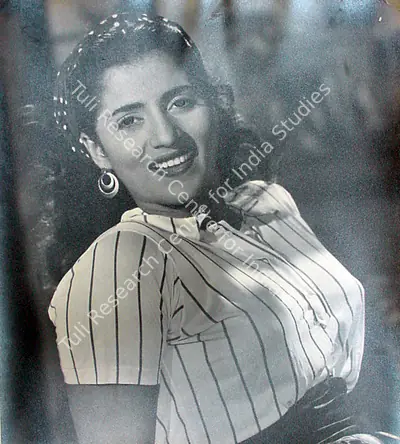
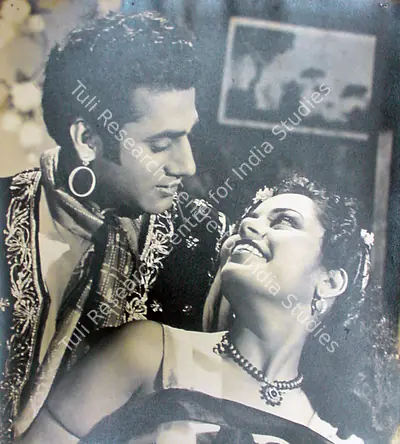
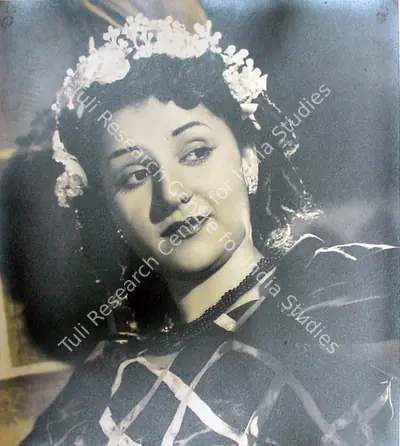
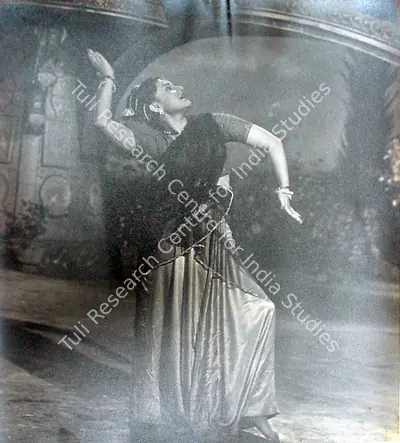
20 of 218
20 of 217
Calendar 1
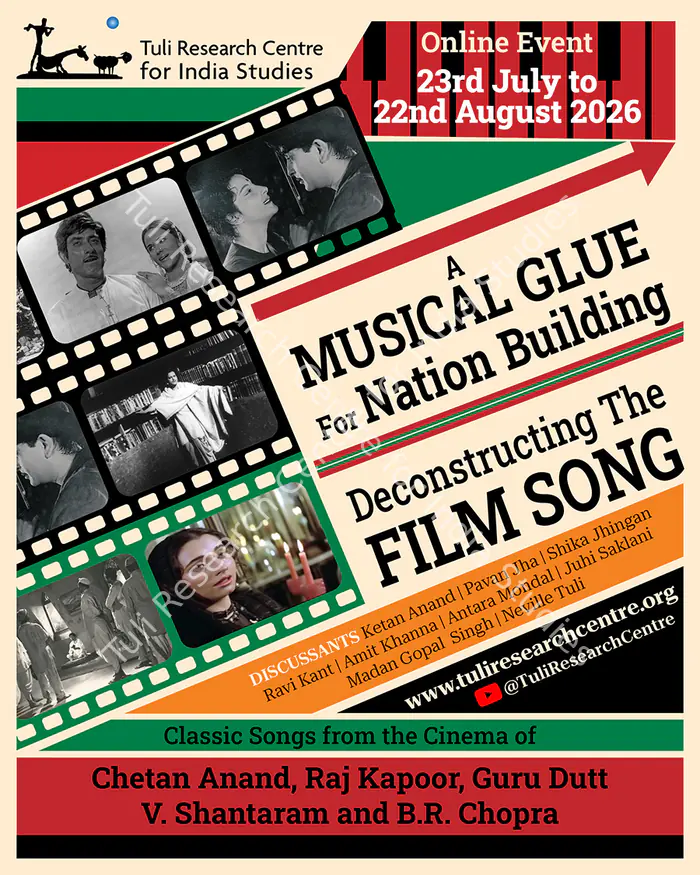
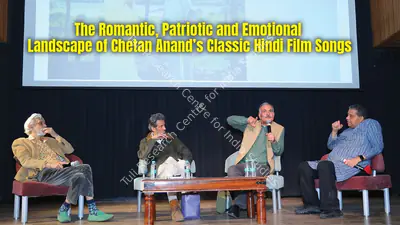
- ArchivedOffline-Online EventProject 80A Musical Glue for Nation-BuildingDeconstructing the Film Song23rd July - 22nd August 2026Ketan Anand | Ravikant | Pavan Jha | Madan Gopal Singh | Amit Khanna | Juhi Saklani | Antara Mondal | Shikha Jhingan | Neville TuliA key section of the India Studies framework at The Tuli Research Centre for India Studies (T.R.I.S.) is “Deconstructing the Film Song”. It began with a series of four workshops during our Self-Discovery via Rediscovering India Festival Series that brought together leading scholars & academics, film practitioners & students, along with fans of the Hindi film song. The objective of these workshops was to deconstruct iconic Hindi film songs to examine their formation across music, lyrics, playback, choreography, directorial visualisation, as they fuse into sites where aesthetics, ideology, and performance intersect, so as to help clarify the nature of India and her relationship to the film song. The Hindi Film Song functions as a narrative device, conveying myriad textures of emotion through melody, voice and poetry. As cultural texts that encode memory, desire, and ideology, songs are integral to the circulation and resonance of films in the public realm. Over time they have become autonomous bundles of creative energy - the glue that binds us over time, articulating and perhaps even defining the idea of Indianness. These first Workshops were an attempt to understand the nature and power of this glue, while contemplating the ways to situate it within TRIS' academic framework for Contemporary India Studies.Read More →