Introduction
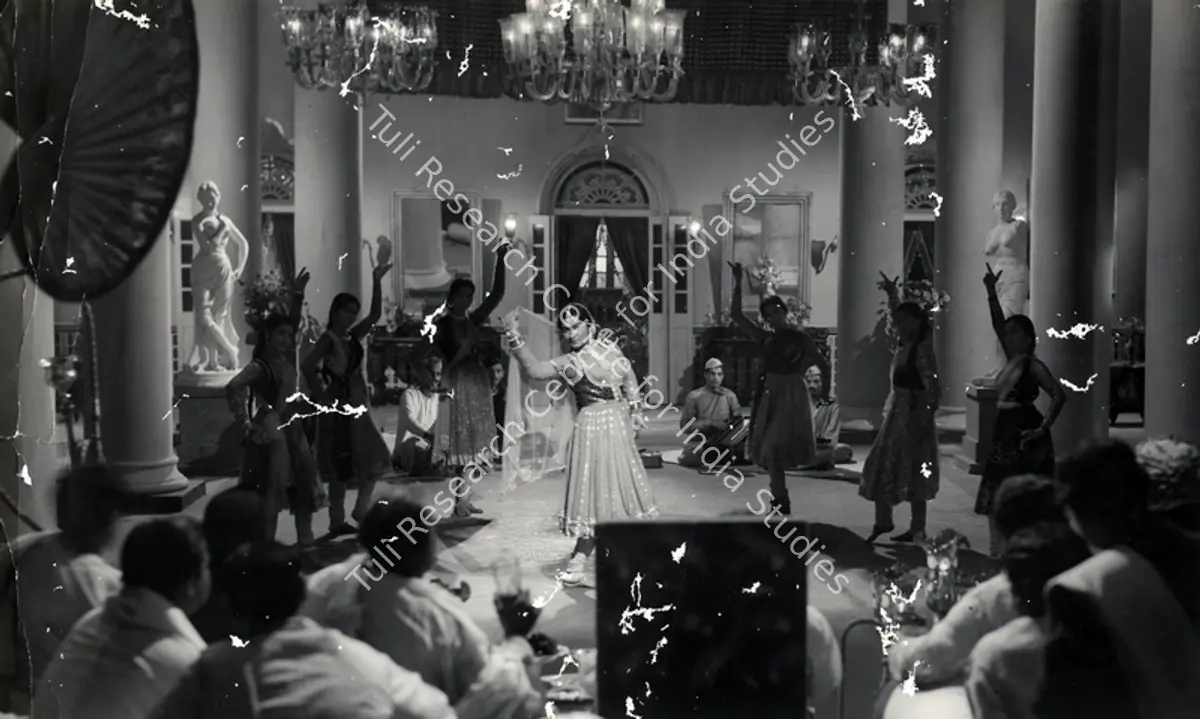
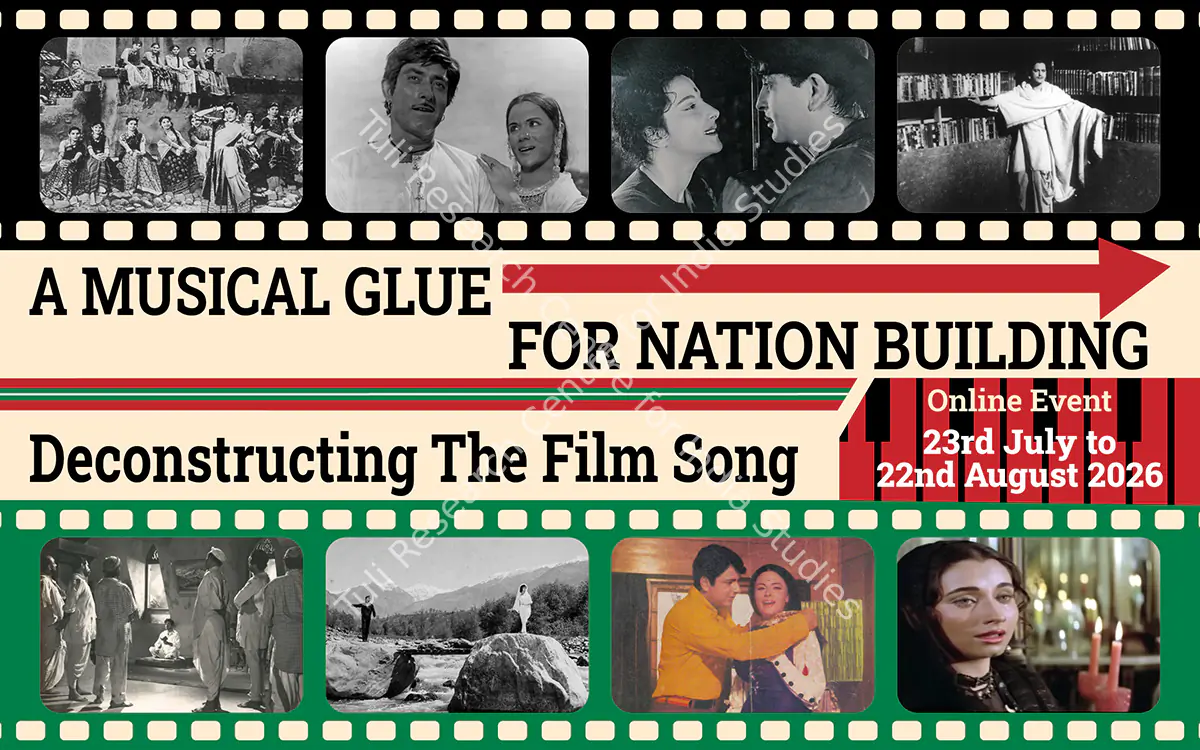
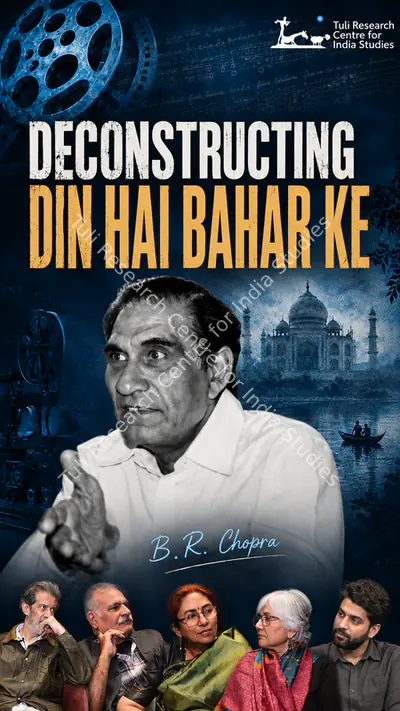
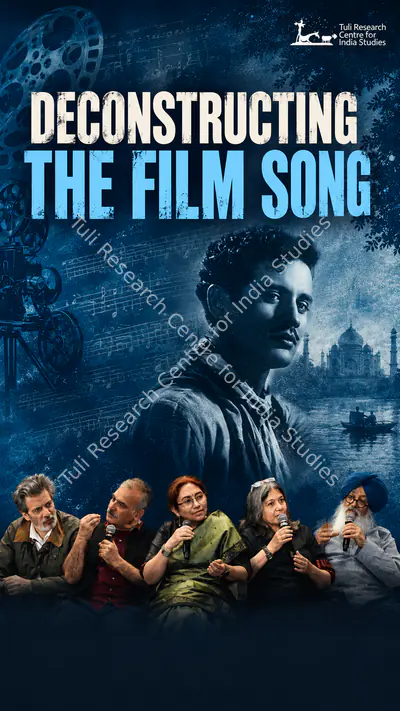
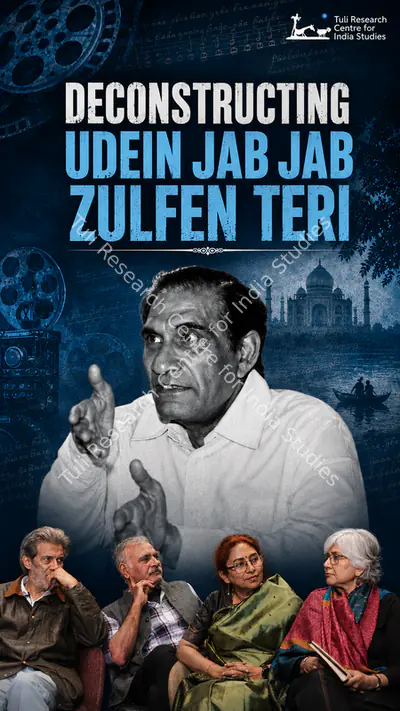
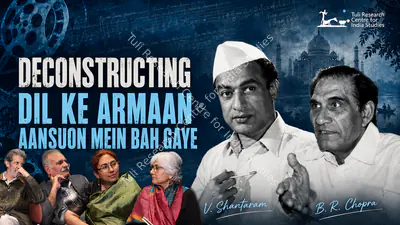
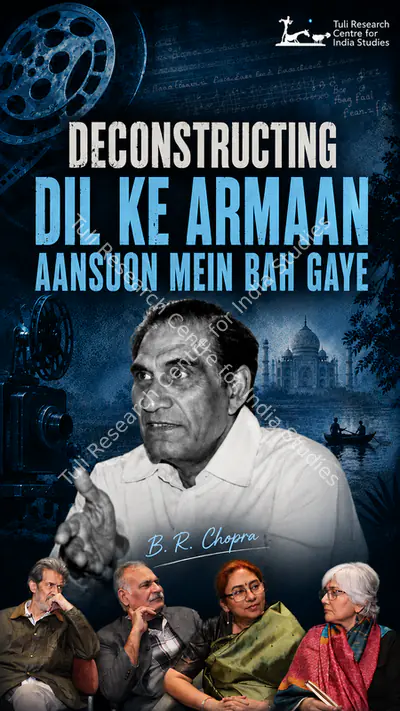
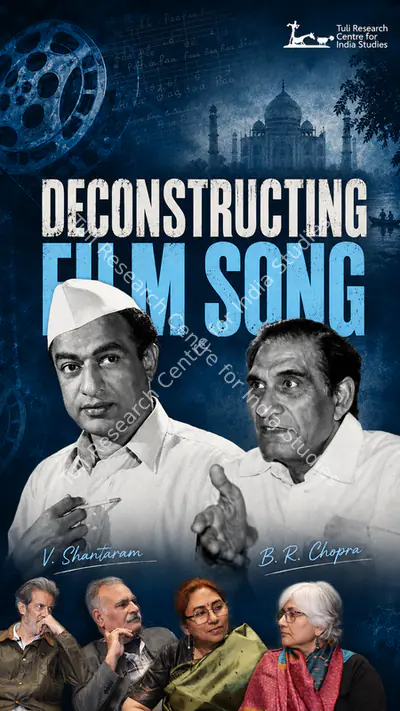
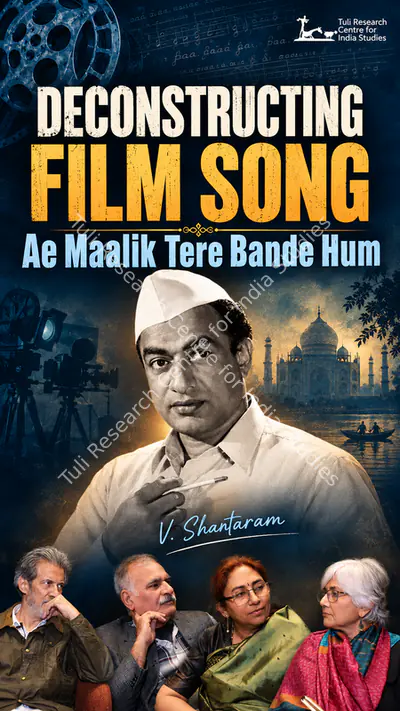
A key section of the India Studies framework at The Tuli Research Centre for India Studies (T.R.I.S.) is “Deconstructing the Film Song”. It began with a series of four workshops during our Self-Discovery via Rediscovering India Festival Series that brought together leading scholars & academics, film practitioners & students, along with fans of the Hindi film song. The objective of these workshops was to deconstruct iconic Hindi film songs to examine their formation across music, lyrics, playback, choreography, directorial visualisation, as they fuse into sites where aesthetics, ideology, and performance intersect, so as to help clarify the nature of India and her relationship to the film song. The Hindi Film Song functions as a narrative device, conveying myriad textures of emotion through melody, voice and poetry. As cultural texts that encode memory, desire, and ideology, songs are integral to the circulation and resonance of films in the public realm. Over time they have become autonomous bundles of creative energy - the glue that binds us over time, articulating and perhaps even defining the idea of Indianness. These first Workshops were an attempt to understand the nature and power of this glue, while contemplating the ways to situate it within TRIS' academic framework for Contemporary India Studies.
Festival team
Curators
Body of Work
2026
Tuli Research Centre for India Studies · 6:30 PM, 17 February 2026 · M.L. Bhartia Auditorium, Alliance Francaise de Delhi, Birla Lane, Lodi Estate, New Delhi
Tuli Research Centre for India Studies · 3:30 PM, 16 February 2026 · M.L. Bhartia Auditorium, Alliance Francaise de Delhi, Birla Lane, Lodi Estate, New Delhi
Tuli Research Centre for India Studies · 11:30 AM, 19 February 2026 · M.L. Bhartia Auditorium, Alliance Francaise de Delhi, Birla Lane, Lodi Estate, New Delhi
Tuli Research Centre for India Studies · 5:00 PM, 17 February 2026 · M.L. Bhartia Auditorium, Alliance Francaise de Delhi, Birla Lane, Lodi Estate, New Delhi
Research Centre
Posts 11
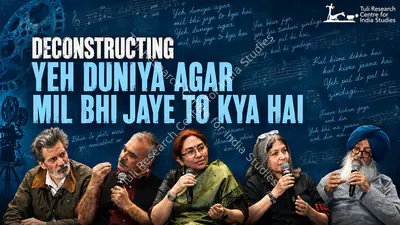
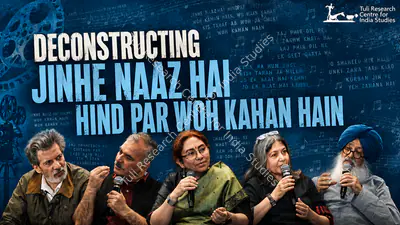
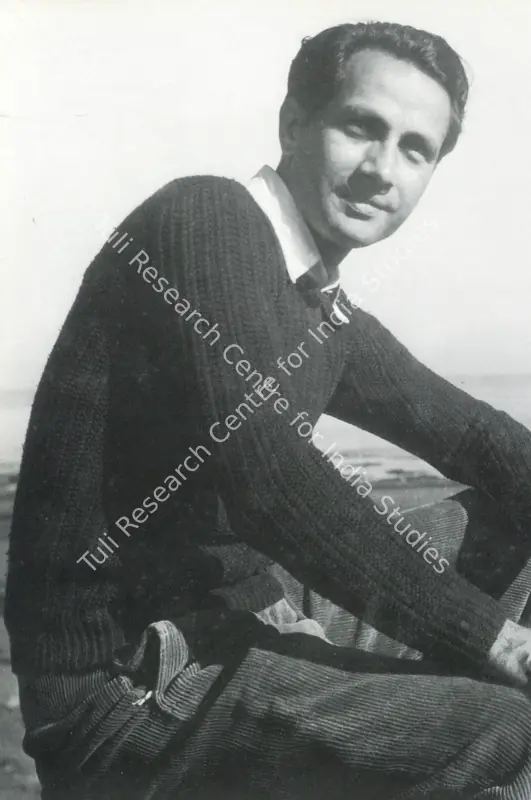
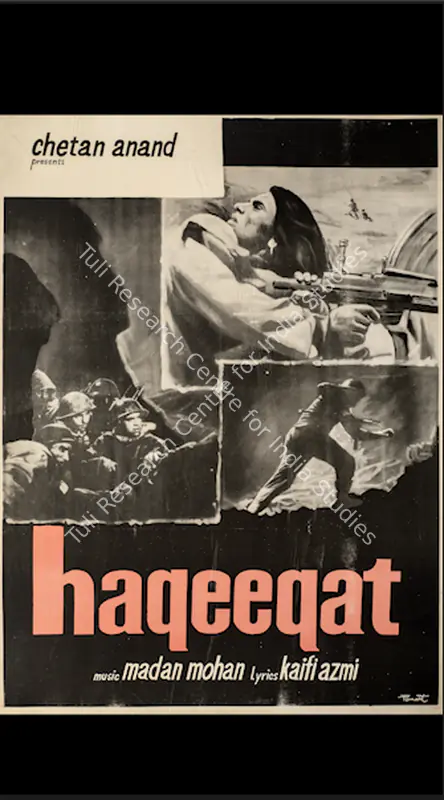
- "Who was Chetan Anand — and why does his cinema still carry such a deep, emotional charge? In this clip, his son Ketan Anand introduces the filmmaker behind Haqeeqat (1964), a man who ""suffered in silence for a long time,"" and the learning he received from that pain, which poured into his films. It was during this time that Kaifi Azmi wrote some of his most remarkable poems for him. The product of this collaboration was a war song that became part of India's collective memory. As Ketan Anand puts it, ""This is not a jingoistic song… this is the pain of human stupidity."" No chest-beating, but a meditation or rather a question on why we go on fighting and killing while talking of love and peace. Somewhere, it is out of this pain that one must evolve. And Anand's cinema did exactly that. This video is an excerpt from the session with Ketan Anand, Ravikant, Pavan Jha and Neville Tuli, part of the series 'Deconstructing the Film Song: A Musical Glue for Nation-Building,' presented by the Tuli Research Centre for India Studies (TRIS) as part of the 7th Self-Discovery via Rediscovering India Festival."
- "What does a patriotic song sound like when it refuses to celebrate aggression? ""Kar Chale Hum Fida"" from Chetan Anand's Haqeeqat (1964) answers that question with a stillness that has stayed with the Indian audiences for over six decades. In this discussion, Ravikant, Professor, CSDS (The Centre for the Study of Developing Societies), highlights that although it is a song about war, it subverts expectations by being devoid of any swashbuckling aggression. The song speaks not of conquest or victory but of sacrifice and collective responsibility; a burden shared equally by soldiers, women, and the young. Kaifi Azmi's lyrics carry no triumphalism of epic proportions, rather only a quiet, devastating sense of duty. Chetan Anand's Haqeeqat released at the time when the idealism of the early independence years was falling apart and the Nehruvian generation, which had carried the dream of a new India, was fading away. The song, with war as it's background, mourns the dead, but it also speaks directly to the living, asking them what they will do with the nation left in their hands. This video is an excerpt from the session with Ketan Anand, Ravikant, Pavan Jha and Neville Tuli, ""A Musical Glue for Nation-Building: Deconstructing the Film Song"", presented by the Tuli Research Centre for India Studies (T.R.I.S.) at the 7th Self-Discovery via Rediscovering India Festival."
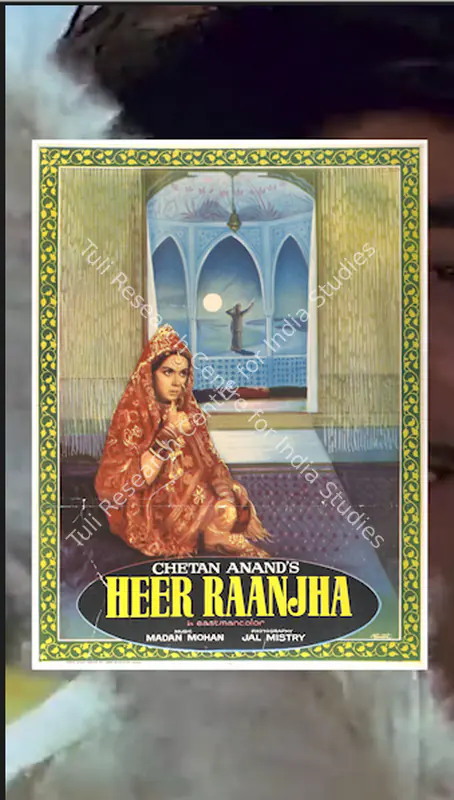
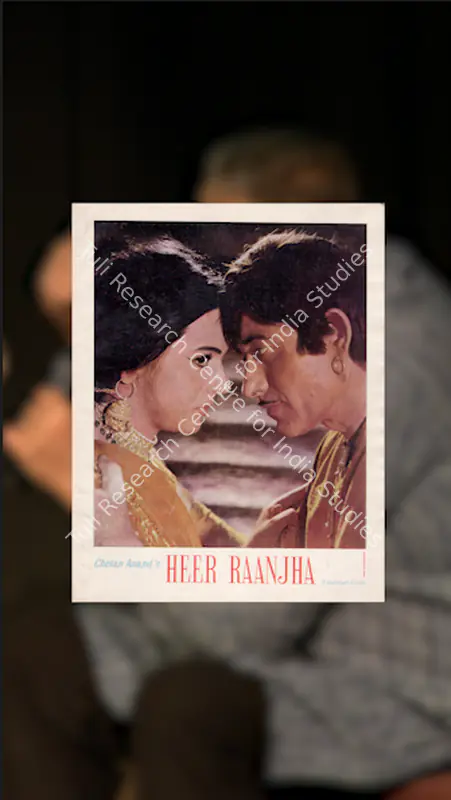
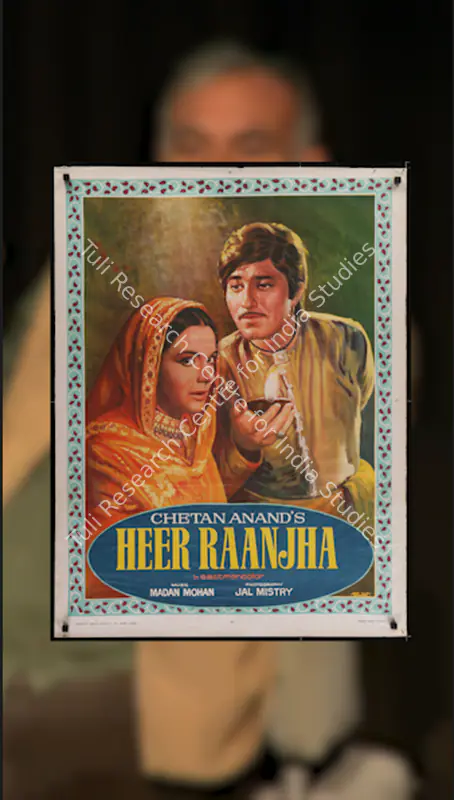
- “Milo Na Tum to hum Ghabrayen” from Chetan Anand's Heer Raanjha (1970) is the film's song of joy. Sung by Lata Mangeshkar and Mohammed Rafi, with music by Madan Mohan and lyrics by Kaifi Azmi, it captures the first flush of love as playful delight, capturing the confusion, the shyness, the sudden overflow of happiness that makes the heart ask, “What has happened to us?” Reminiscing about the song, filmmaker Ketan Anand revealed that this was the first time in the film that the colour yellow floods the screen. This change of palette signals the change of mood. After the earlier, more restrained tones, the arrival of yellow signals spring, joy and the fullness of life. “He went bananas with this song,” said Ketan Anand about his father, who expressed that joy in this song through Bhangra (traditional Punjabi folk dance) and the vibrant colours. This video is from 'A Musical Glue for Nation-Building: Deconstructing the Film Song', presented by the Tuli Research Centre for India Studies (T.R.I.S.) at the 7th Self-Discovery via Rediscovering India Festival.
- "Yeh Duniya Yeh Mehfil Mere Kaam Ki Nahi" from Chetan Anand's Heer Raanjha (1970) is more than a sad song, it is a declaration that love is above all. Sung by Mohammed Rafi, with lyrics by Kaifi Azmi and music by Madan Mohan, it turns the pain of separation into a universal cry about the world, its gatherings and its celebrations; none of which matters once the love is lost. In this reel, film historian Pavan Jha examines the Sufi love at the song's core, where longing for the beloved doubles as a spiritual quest, and "duniya" and "mehfil" stand for everything that feels empty in absence of love. Madan Mohan's genius lies in keeping this firmly within the idiom of a popular film song, never pushing it into another genre, but crafting a melody that is soulful, accessible and instantly memorable. A deeply philosophical, Sufi-inflected lyric, the song reached the masses as a hit film number, and this is the reason why, decades later, the song remains a touchstone for heartbreak, longing, and the simple, powerful idea that love is the only thing that truly matters. This video is from 'A Musical Glue for Nation-Building: Deconstructing the Film Song', presented by the Tuli Research Centre for India Studies (T.R.I.S.) at the 7th Self-Discovery via Rediscovering India Festival.
- Chetan Anand shot heartbreak the way other directors shot war, against a landscape vast enough to hold it. "Yeh Duniya Yeh Mehfil Mere Kaam Ki Nahi" from Heer Raanjha (1970) is a song of heartbreak staged against stunning visuals. Sung by Mohammed Rafi, with music by Madan Mohan and lyrics by Kaifi Azmi, it turns separation into philosophy. In this clip, Ravikant, Professor, CSDS (Centre for the Study of Developing Societies), calls the song one of the best statements on loss and the ambition to win it back. What makes the song unforgettable is the way voice, music and visuals come together, and Chetan Anand's use of landscape gives it a vast, almost mythical quality, creating a fantasy space where pain can be larger than life, where the song can say what the narrative cannot. The result is a beautiful moment in Indian cinema, where heartbreak, spirituality and landscape fuse into a deeply moving, visually rich film song that has become a timeless expression of love. This video is from 'A Musical Glue for Nation-Building: Deconstructing the Film Song', presented by the Tuli Research Centre for India Studies (T.R.I.S.) at the 7th Self-Discovery via Rediscovering India Festival.
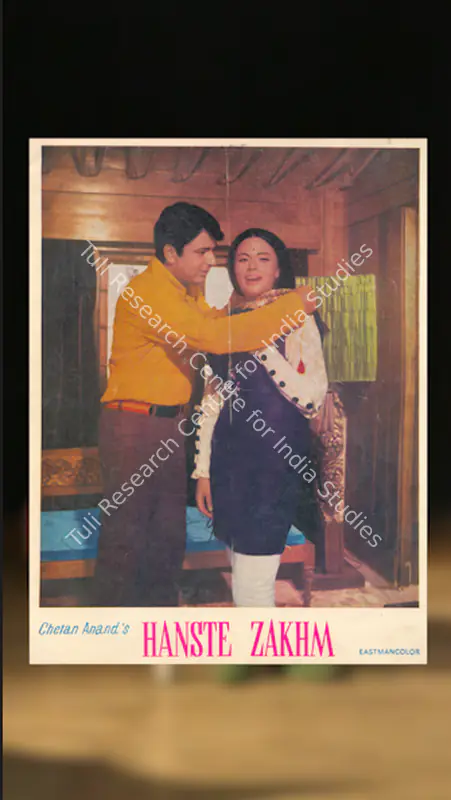
- In this clip from the workshop ""A Musical Glue for Nation-Building: Deconstructing the Film Song,"" Ketan Anand, son of legendary filmmaker Chetan Anand, recalls how he brokered the casting of Navin Nischol in the lead role of Hanste Zakhm (1973), sharing a first-hand account of the decisions that shaped the film. Featuring Ketan Anand, Ravikant, Pavan Jha, and Neville Tuli as panelists, this session was presented by the Tuli Research Centre for India Studies (T.R.I.S.) at the 7th Self-Discovery via Rediscovering India Festival.
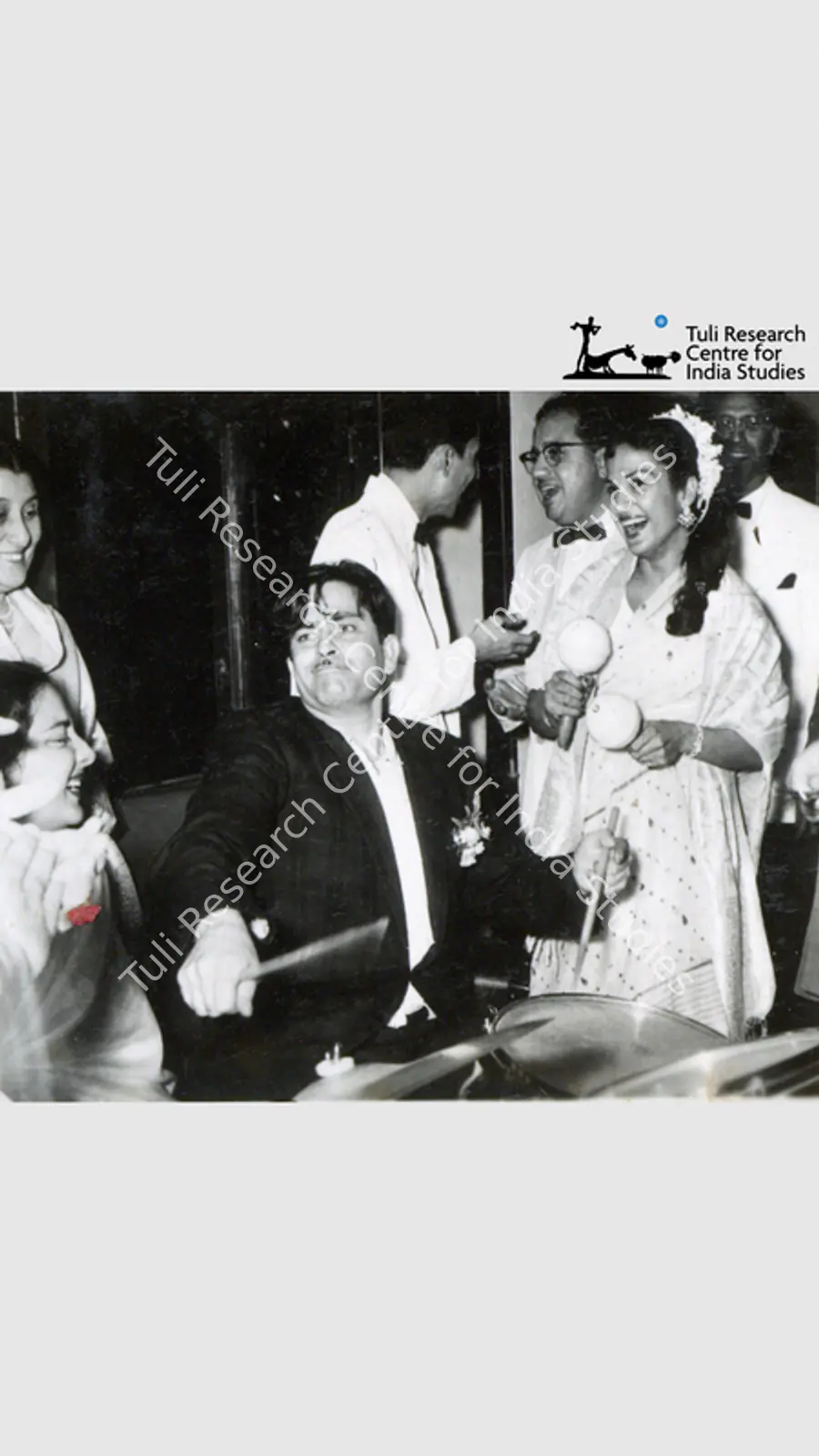
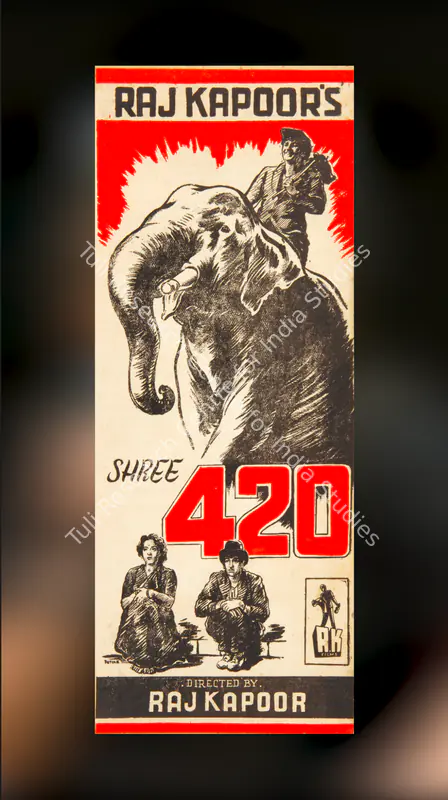
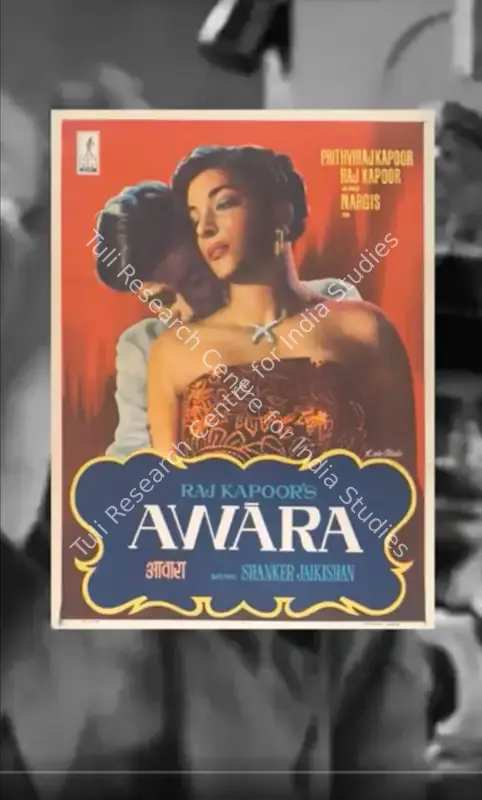
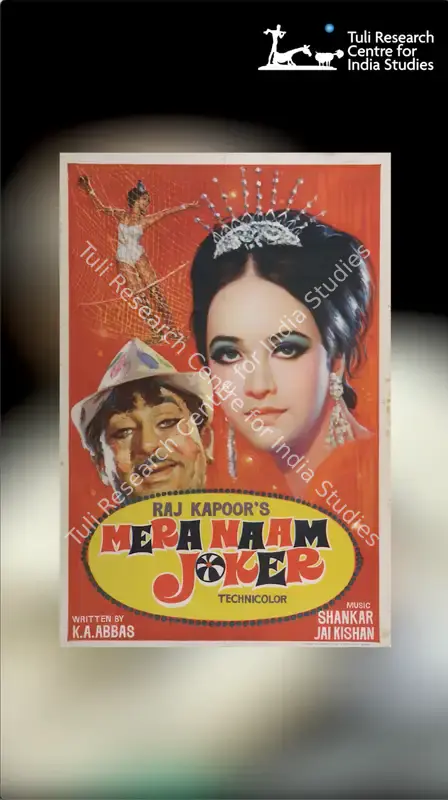
- "Raj Kapoor's tramp, the wide-eyed wanderer in oversized clothes and a battered hat, was one of Hindi cinema's most deliberate creative constructions. Borrowed in spirit from Charlie Chaplin but rooted firmly in the anxieties of post-independence India, the figure carried the dreams and displacements of a nation still finding its footing. "Awara Hoon" from Awara (1951) became the song that gave that figure its voice, and its reach was extraordinary. In this clip, the panel discusses how the film introduced Raj Kapoor to audiences across the erstwhile Soviet Union, China and beyond. Composer-Writer Madan Gopal Singh points to ""Ramaiya Vastavaiya"" from Shree 420 (1955) as a moment of genuine creative risk, where Lata Mangeshkar's voice moves the song from a collective street chorus into something laden with intimate individuality. The panel also deconstructs two more songs from Raj Kapoor's career: "Pyar Hua Ikrar Hua" from Shree 420 (1955) and "Jeena Yahan Marna Yahan" from Mera Naam Joker (1970), examining what makes them endure across generations. In the workshop "A Musical Glue for Nation-Building: Deconstructing the Film Song," organised by the Tuli Research Centre for India Studies (T.R.I.S.), Madan Gopal Singh, Juhi Saklani, Ravikant, and Amit Khanna, in conversation with Neville Tuli, explore the lasting appeal of these songs and what they reveal about India's greatest showman's vision of cinema, emotion, and India itself.
- "Ramaiya Vastavaiya" from Shree 420 (1955) is much more than a folk street song. In this clip, the panel unpacks the layers beneath its apparent simplicity. Writer and Cinephile Juhi Saklani reflects on Shailendra's contribution to the building of the Raj Kapoor persona, noting that his lyrics carry a quality of innocence and moral incorruptibility that is, in its own way, a political stance. To sound that guileless in a world of compromise is itself an act of resistance. Ravikant picks up on a related thread, observing that the image of the worker or peasant singing while working, as in this song, is a recurring and almost static theme in Hindi cinema's representation of labouring life. This clip is from the workshop "A Musical Glue for Nation-Building: Deconstructing the Film Song", presented by the Tuli Research Centre for India Studies (T.R.I.S.) at the 7th Self-Discovery via Rediscovering India Festival, featuring Madan Gopal Singh, Amit Khanna, Ravikant and Juhi Saklani in conversation with Neville Tuli.
- What exactly is “Awaara Hoon” from Raj Kapoor's Awaara (1951) about? A song that lives inside too many uncertainties keeps asking the question, am I a wanderer, or a star in orbit (Gardish mein hun ya aasman ka taara hoon). There is no home, no belongingness, no clear destiny, only movement, longing, and doubt. It is the sound of a world that's unsure of itself, and still singing joyously. Visually, the influence of Charlie Chaplin is unmistakable. From Raj Kapoor's attire to his tramp's gait, the vagabond persona is shaped by Chaplin's image of the little man buffeted by forces beyond his control. The song turns that figure into a symbol of the post-independence anxiety about entitlement, class, and the future; yet capturing the emotion of being spirited, hopeful, and strangely free. The collaboration of Raj Kapoor, the lyricist Shailendra, composers Shankar–Jaikishan, and singer Mukesh, creates a song that is at once both philosophical and popular. It poses questions about destiny and identity while also reaching millions as an unforgettable film hit. Panelists Amit Khanna, Madan Gopal Singh, Ravikant, Juhi Saklani, and Neville Tuli, examine this iconic song, sung by Mukesh, with lyrics by Shailendra and music by Shankar–Jaikishan in this video from 'A Musical Glue for Nation-Building: Deconstructing the Film Song' session, presented by the Tuli Research Centre for India Studies (T.R.I.S.) at the 7th Self-Discovery via Rediscovering India Festival.
- "Jeena Yahan Marna Yahan" from Mera Naam Joker (1970) was penned by Shailendra, composed by Shankar-Jaikishan, and sung by Mukesh. The song is situated at the philosophical heart of Raj Kapoor's most personal and ambitious film. The film was a commercial disaster on release, and as Neville Tuli notes, both the song and the film found the audiences' acknowledgement only years later. Filmmaker-Lyricist Amit Khanna reveals a lesser-known detail about its making: the song was shot in Delhi at the Gemini Circus, but it had become extremely difficult to gather all the stars, who by that point had become huge in their own careers, at one point of time. The scenes featuring them were shot solo and then later assembled in Bombay to be inserted into the song sequence. Ravikant, Professor, CSDS (The Centre for the Study of Developing Societies), reads the song as both a philosophical and a deeply materialistic reflection on existence. There is a continuity in the persona that may take rebirth, he argues, but it is not the same person who returns. The world itself is one's heaven and hell simultaneously, and that, he suggests, is why we return to this song whenever life demands reflection. This clip is from the workshop "A Musical Glue for Nation-Building: Deconstructing the Film Song," conducted by the Tuli Research Centre for India Studies (T.R.I.S.) at the 7th Self-Discovery via Rediscovering India Festival, featuring Madan Gopal Singh, Amit Khanna, Ravikant, Juhi Saklani, and Neville Tuli.
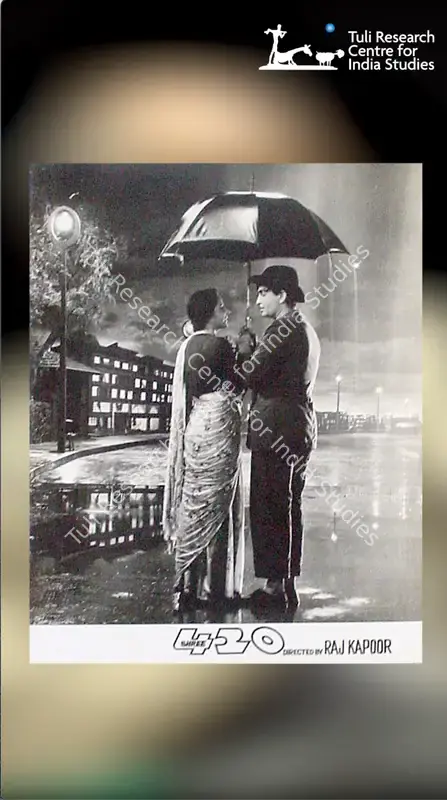
- "Pyar Hua Ikrar Hua" from Shree 420 (1955) at first glance is a song about two people standing in the rain, declaring their love for each other with nothing to their names. This conversation between the panelists peels back the layers, finding in it a richness that a casual listen rarely reveals. Filmmaker-Lyricist Amit Khanna opens with an anecdote about the battle between Raj Kapoor and Shankar-Jaikishan over whether Manna Dey or Mukesh should sing the song. It was Manna Dey who finally got the opportunity, and his voice immortalised it. Ravikant, Professor, CSDS (The Centre for the Study of Developing Societies), draws a parallel between the song and Roland Barthes' A Lover's Discourse, noting how the lovers believe their love to be eternal and absolute. For Ravikant, that sense of transcendence finds its most powerful visual expression when the camera pans to three young children, an image of radiant vitality that lifts the moment beyond the two figures standing in the rain. Composer-Writer Madan Gopal Singh reads the song through a different lens, comparing the condition of the two destitute lovers to that of newly independent India itself, a nation full of longing, uncertain of its footing, but reaching toward something better. This clip is from the workshop "A Musical Glue for Nation-Building: Deconstructing the Film Song" presented by the Tuli Research Centre for India Studies (T.R.I.S.) at the 7th Self-Discovery via Rediscovering India Festival, featuring Madan Gopal Singh, Amit Khanna, Ravikant, Juhi Saklani, and Neville Tuli.
Calendar 1
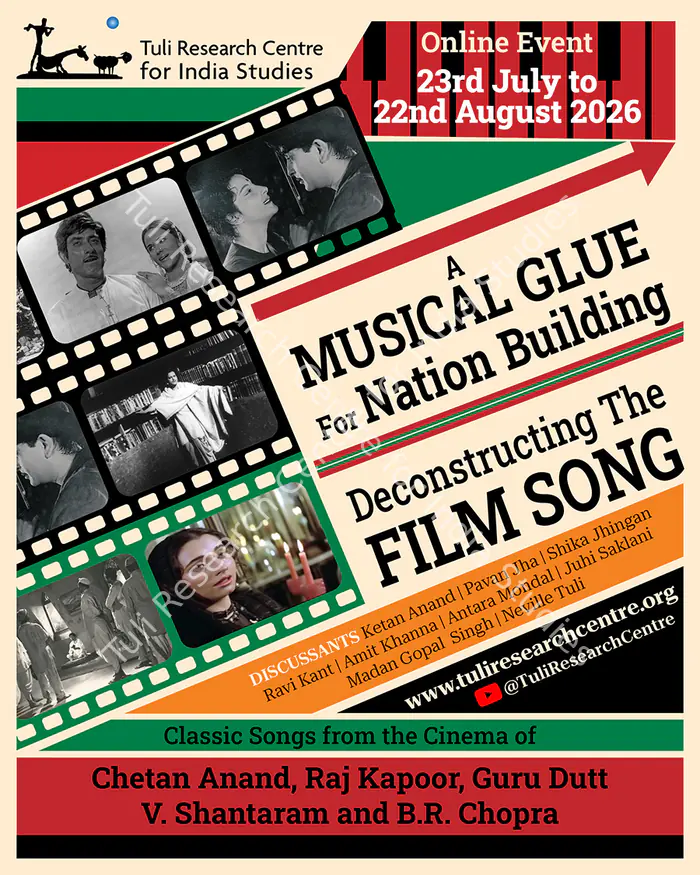
- ArchivedOffline-Online EventProject 80A Musical Glue for Nation-BuildingDeconstructing the Film Song23rd July - 22nd August 2026Ketan Anand | Ravikant | Pavan Jha | Madan Gopal Singh | Amit Khanna | Juhi Saklani | Antara Mondal | Shikha Jhingan | Neville TuliA key section of the India Studies framework at The Tuli Research Centre for India Studies (T.R.I.S.) is “Deconstructing the Film Song”. It began with a series of four workshops during our Self-Discovery via Rediscovering India Festival Series that brought together leading scholars & academics, film practitioners & students, along with fans of the Hindi film song. The objective of these workshops was to deconstruct iconic Hindi film songs to examine their formation across music, lyrics, playback, choreography, directorial visualisation, as they fuse into sites where aesthetics, ideology, and performance intersect, so as to help clarify the nature of India and her relationship to the film song. The Hindi Film Song functions as a narrative device, conveying myriad textures of emotion through melody, voice and poetry. As cultural texts that encode memory, desire, and ideology, songs are integral to the circulation and resonance of films in the public realm. Over time they have become autonomous bundles of creative energy - the glue that binds us over time, articulating and perhaps even defining the idea of Indianness. These first Workshops were an attempt to understand the nature and power of this glue, while contemplating the ways to situate it within TRIS' academic framework for Contemporary India Studies.Read More →
Related
1
Personalities
1