TRIS logo image
Search names, films, exhibitions

EN

EN

English

HI

Hindi

EN

EN

English

HI

Hindi

Tuli Research Centre for India Studies

Home

Tuli Research Centre for India Studies

Vision

Manifesto

Archive & Library

Vanraja Sanctuary & Hospice

Research Categories

Browse All

ICore

1_CinemaEducation_Cinema as a Critical Educational Resource

2_FineArts_Modern and Contemporary Indian Fine Arts

3_Photography_Photography in India

4_PopCulture_The Printed Image, Popular Arts, and Crafts

IIMaterial

5_ArcHeritage_India's Architectural Heritage as Inspiration

6_EconomicsArt_Economics of Art & Cultural Industry

7_Travel_Automobile, Transport and Travel Heritage

8_Uncertainty_Uncertainty

IIICritical

9_SocialDuty_Social Responsibility of the Creative Mind

10_Childhood_The Changing Smile of Childhood & Its Second Coming

11_Sensuality_The Sensual Discipline within Creativity

12_Scholarship_The History & Historiography of Scholarship in the Arts, Humanities, and Social Sciences

IVMeaningful

13_SeekJustice_Seeking Justice and Political Integrity

14_IndoWorld_India and her Relationship with the World

15_SpiritualPoetics_The Religious-Spiritual-Poetic-Philosophical Framework

16_Continuum_The Animal-Human-Nature Continuum

Explore

All

Posts

Masterlists

Calendar

Live | Upcoming

All Events

Timetable

Search names, films, exhibitions

EN

EN

English

HI

Hindi

Bhupen P. Khakhar

Bhupen P. Khakhar

Piscesb. 10 Mar 1934, Gulalwadi, Bombay, Maharashtra, Indiad. 08 Aug 2003, Vadodara, Gujarat, India

Personality.Artist
A-Graphy
Introduction
Exhibitions199
Integrated Timeline58
Chronicled Highlights25
Economics of Art330
Research Centre961
All961
Library336
Archive625
Highlights21
Posts2
Home/Modern and Contemporary Indian Fine Arts/Personality · Artist/Bhupen P. Khakhar
Bhupen P. Khakhar — featured artwork

Introduction

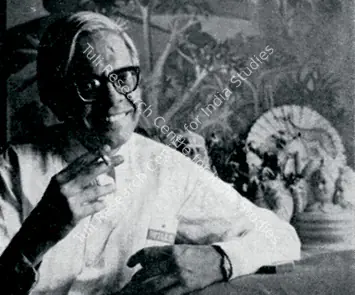
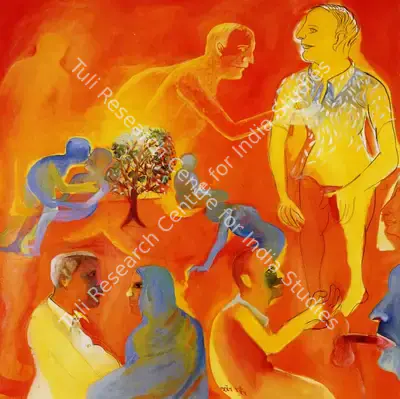
Bhupen Khakhar is one of the pioneers of Indian Pop-Art and a member of the Baroda Group of artists. Being an autodidact, he sought out to combine traditional Indian aesthetics with Indian and Western pop and figurative art. He is, among other things, a reconteur and writer of short stories. In the 1980s he became one of the first artists to openly come out as gay and deal with the issues of homosexuality through his paintings.

Date of Birth
10 Mar 1934
Date of Death
08 Aug 2003
Age
69
Nationality
Indian
Place of Birth
Gulalwadi, Bombay, Maharashtra, India
Place of Death
Vadodara, Gujarat, India
Parent(s)
Mahalakshmi, Parmanand Kalidas
State Country of Birth
Maharashtra, India
State Country of Death
Gujarat, India
  1. 1950

    1. Sydenham College of Commerce and Economics
  2. 1954

    1. University of Bombay
  3. 1960

    1. J J School of Art

      1960 – 1961

  4. 1962

    1. M S U Baroda

      1962 – 1964

  1. 1976

    1. Bath Academy of ArtOfficial Position

Exhibitions

  1. 1963

    1. Inaugural Exhibition, Chemould Prescott Road, Mumbai, India
  2. 1965

    1. Art Now in India, Liang Art Gallery, New Castle, UK
    2. Art Now in India, Royal Festive Hall, London, UK
    3. Jehangir Art Gallery, Mumbai, India
  3. 1966

    1. Art Now in India, Curated by George Butcher, at London, New Castle & Ghent
  4. 1967

    1. Kunika-Chemould Art Gallery, New Delhi, India
    2. Taj Art Gallery, Mumbai, India
    3. Seven Painters, Gallery One, London, UK
  5. 1968

    1. Art Scene Today, Organised by Gallery Chemould, at Sanskar Kendra, Ahmedabad, India
    2. IX Biennale de Sao Paulo, Brazil
    3. 1st International Triennale India, New Delhi, India
    4. Joint exhibition with Helen Marshall and Phillip Martin at, Jehangir Art Gallery, Mumbai, India
  6. 1969

    1. Represented in Sao Paulo Biennale, Brazil
    2. Indian Painters'69, Organised by Max Mueller Bhavan, at the Birla Academy of Art & Culture, Kolkata, India
    3. Art Today I & II, Kunika Chemould Art Centre, New Delhi, India
  7. 1970

    1. Kunika-Chemould Art Gallery, New Delhi, India
  8. 1971

    1. Art Today III, Kunika Chemould Art Centre, New Delhi, India
  9. 1972

    1. Chemould Prescott Road, Mumbai, India
    2. 2nd International Triennale India, New Delhi, India
    3. Gallery Kore, Zurich, Switzerland
20 of 199
  1. 1965

    1. Jehangir Art Gallery, Mumbai, India
  2. 1967

    1. Kunika-Chemould Art Gallery, New Delhi, India
  3. 1970

    1. Kunika-Chemould Art Gallery, New Delhi, India
  4. 1972

    1. Chemould Prescott Road, Mumbai, India
  5. 1976

    1. Black Partridge Gallery, New Delhi, India
  6. 1979

    1. 20 Jun 1979 to 14 Jul 1979

    2. Anthony Stokes Gallery, London, UK
  7. 1981

    1. Chemould Prescott Road, Mumbai, India
  8. 1982

    1. Urja Art Gallery, Vadodara, Gujarat, India
  9. 1983

    1. 09 Mar 1983 to 16 Mar 1983

    2. Urja Art Gallery, Vadodara, Gujarat, India
    3. Contemporary Art Gallery, Ahmedabad, Gujarat, India
  10. 1985

    1. 10 Oct 1985 to 26 Oct 1985

    2. Kanoria Centre for Art, Ahmedabad, Gujarat, India
    3. Hutheesing Visual Arts Centre, Ahmedabad, Gujarat, India
    4. Paintings and Water Colours, Kunika-Chemould Gallery, Cottage Industries, Janpath, New Delhi, India

      18 Dec 1985 to 21 Dec 1985

  11. 1986

    1. Gallery Watari, Tokyo, Japan
20 of 56
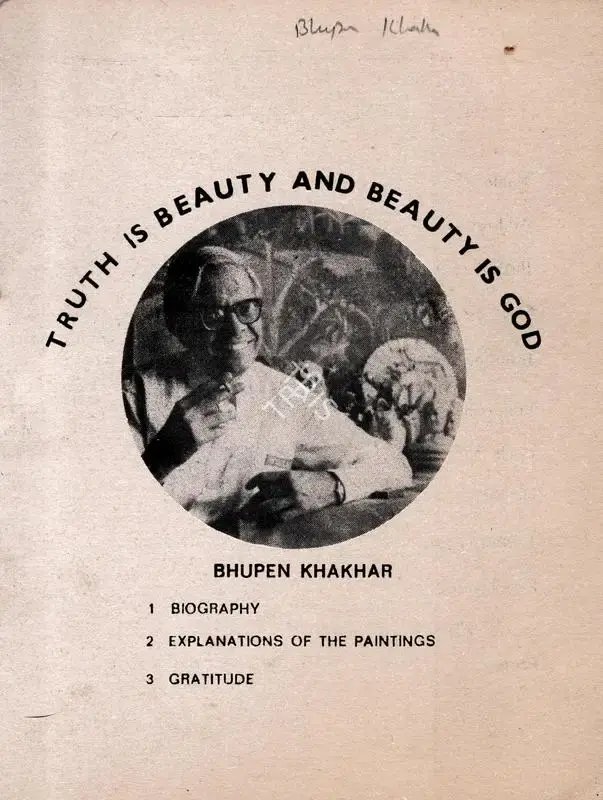
Khakhar, Bhupen P. (Artist). Truth is Beauty and Beauty is God, 1972 | Solo Exhibition Catalogue | 00172701
1 / 6

Khakhar, Bhupen P. (Artist). Truth is Beauty and Beauty is God, 1972 | Solo Exhibition Catalogue | 00172701

  1. 1963

    1. Inaugural Exhibition, Chemould Prescott Road, Mumbai, India
  2. 1965

    1. Art Now in India, Liang Art Gallery, New Castle, UK
    2. Art Now in India, Royal Festive Hall, London, UK
  3. 1966

    1. Art Now in India, Curated by George Butcher, at London, New Castle & Ghent
  4. 1967

    1. Taj Art Gallery, Mumbai, India
    2. Seven Painters, Gallery One, London, UK
  5. 1968

    1. Art Scene Today, Organised by Gallery Chemould, at Sanskar Kendra, Ahmedabad, India
    2. IX Biennale de Sao Paulo, Brazil
    3. 1st International Triennale India, New Delhi, India
    4. Joint exhibition with Helen Marshall and Phillip Martin at, Jehangir Art Gallery, Mumbai, India
  6. 1969

    1. Represented in Sao Paulo Biennale, Brazil
    2. Indian Painters'69, Organised by Max Mueller Bhavan, at the Birla Academy of Art & Culture, Kolkata, India
    3. Art Today I & II, Kunika Chemould Art Centre, New Delhi, India
  7. 1971

    1. Art Today III, Kunika Chemould Art Centre, New Delhi, India
  8. 1972

    1. 2nd International Triennale India, New Delhi, India
    2. Gallery Kore, Zurich, Switzerland
    3. Art Today IV, Kunika Chemould Art Centre, New Delhi, India
    4. Participates in Group exhibition with Krishna Chhatpar, Nagji Patel and G. M. Sheikh, Jehangir Art Gallery, Mumbai, India
  9. 1973

    1. Contemporary Indian Paintings, Renwick Gallery, Washington, DC, USA
    2. Jehangir Art Gallery, Mumbai, India
20 of 143

Integrated Timeline

58 entries
Born in Gulalwadi in Bombay, Bhupen was the youngest among 4 children. His mother had a big influence in his formative years. In the passbook catalogue titled Truth is Beauty and Beauty is God of 1972, a 'Biographical Sketch' introduces Bhupen Khakhar. After a rudimentary family tree, his past lives are recounted in an exaggerated text: he was killed for having an adulterous affair, reborn a butterfly, and finally reincarnated in a Gujarati family in Bombay. This early self-imagining of the man as artist appears deliberately unsophisticated, yet sharply aware of the foibles of the modest class yet upper caste he represents.
Between 1949 to 1962, he completes his matriculation, and goes on to earn several degrees in Economics and Commerce from the University of Bombay; qualifies as a Chartered Accountant and gradually starts developing an interest in the Arts. By 1952, he starts attending evening classes at Grant Road and earns a diploam. Also starts visiting libraries and art exhibitions. Becomes good friends with Sunil Kothari and Pradumna Tana. Develops a penchant for painting as well as for literature.
Meets Ghulam Mohammed Sheikh in 1958 and becomes close to him. Ghulam introduces him to the newly founded Faculty of Fine Arts in Baroda and encourages him to apply. By 1960, he joins the evening classes at the Sir J. J. School of Art but gets dejected by the pedagogy. In 1961, he joins the printmaking class of Vasant Parab who becomes his first teacher.
Moves to Baroda upon Ghulam Mohammed Sheikh's insistence. Joins the Art Criticism Course at the Faculty of Fine Arts. Is introduced to pop art through Jim Donovan- a British exchange student. Befriends Vivan Sundaram after meeting him at the Tarnetar Fair. This culminates into another important friendship. After the rather oppressive atmosphere of Bombay, Baroda was a place where he recalled he "felt more at home". Although mentored by the likes of N.S. Bendre and K. G. Subramanyan, Khakhar remained to a large extent an autodidact. This is a pivotal time where a new "movement" in art was brewing and Baroda emerged as its epicentre. Bhupen initially looked up to the progressives of Bombay as embodying a modernist visual culture but soon got disenchanted by that.
Returns to Bombay after completing his diploma in Art Criticism. Moving back to Bombay results in Bhupen's family imposing on him traditional heteronormative roles and resist his decision to pursue art. This compels him to leave home and recalled this event later, "Everything was crumbling to dust: chartered accountant, bungalow, car, flourishing practice, a queue of girls ready to be matched, wealth, prosperity..."He does not know what the world is like...soon he will come to his senses". Some of them even went on a fast. Would not speak to me for days on end. All their dreams were shattered..." To this he added later, "I came to Baroda because it would have been impossible for me to stay in Bombay and paint. Because my family members would not allow me. I wanted complete freedom. At the back of my mind it also must be my gay attitude. I wanted to be in college for a few years so as to learn the craft of painting." Thereafter he moves back to Baroda where he takes up a part time job as an accountant at Jyoti Limited, an engneering firm. Starts working on collages using popular oleographic images of deities and posters etc.
Collages are displayed at his first Solo Exhibition at Jehangir Art Gallery, Bombay. It is here that he gets hailed as "India's first Pop Artist". Meets Shankarbhai Patel, who would go on to become an important influence, muse and companion in the years to come. Gets represented in Art Now in India, curated by George Butcher, Commonwealth Arts Festival, at Royal Festival Hall, London and Liang Art Gallery, Newcastle, UK After returning to Baroda, he begins working on collages, explaining how "right from the beginning I was very much interested in things which were around me, and I was trying to find a different way of handling this." Oleographs of deities and divinities were reworked by him using the visual language of kitsch and pastische with mirror, graffiti, gestural brushwork. The inspiration for these works were numerous- mughal court miniatures; romantic landscapes of Kishangarh; nineteenth century Company paintings; pichwais from Nathdwara;modern bazar oleographs; temple-maps of Jain temples etc. American modern artists Jasper Johns and Robert Rauschenberg are also stylistc influences. Timothy Hyman questions this phase of Khakhar's Pop Art: "Was Khakhar sneering at, or celebrating, the imagery of popular religion? When Vivan Sundaram tried an experiment- hanging one of the collages in the Fine Arts canteen- he found it a few hours later, torn to shreds. The illiterate canteen-workers were in no doubt; it was blasphemy."
Throughout the mid sixties, he continues making collages out of popular oleographs and calendars. Starts sharing rooms with Nagji Patel, Krishna Chhatpar and Ghulam Mohammad Sheikh (who had just returned from R.C.A. London) at the Shivmahal Palace Farmhouse, Baroda. By 1967 he was represented in Seven Painters, Gallery One, London. This proved a pivotal moment in his career.. Of his tendency for iconoclam, he wrote, "I am somewhat of an iconoclast. In 1965 I had taken oleographs of divinities from popular calendars and stuck them on to canvas and painted over them. That upset people, I think. To them, gods are sacrosanct. My play (referring to his 1988 play Maujila Manilal) refutes that. I have shown that it rains in the fields of Badman as well as Goodman-the gods don't make any distinction there. Good deeds don't get you a place in heaven. The gods decide that- with a roll of the dice."
Leaves Jyoti Limited for a job with Bharat Lindner Pvt. Sets up quarters at the ground floor of the Residency Bungalow, Baroda where K.G. Subramanyan is a neighbour. The painting "People at Dharmshala" earns him an Honourable Mention at I Triennale, India, New Delhi. Represented in Art Scene Today, group show at Sanskar Kendra, Ahmedabad, organised by Gallery Chemould, Bombay. Joint exhibition with Helen Marshall and Philliip Martin at Jehangir Art Gallery, Bombay.
Gets represented in Sao Paulo Biennale, Brazil; Art Today I and II, Kunika Chemould Art Centre, New Delhi; and Indian Painters '69, organised by Max Mueller Bhavan at the Birla Academy of Art and Culture, Calcutta. Becomes co-editor (with G.M. Sheikh) of Vrischik, a journal of art (1969-73) Paints Sheikh, Flower-pot and the Moon based on G.M. Sheikh. Timothy Hyman describes it as a work that "commemorates the enormous expanse of the room by moonlight. There is a "romantic" view beyond, across a park, to a doomed building of Taj Mahal affinity. But into the delicate conjunction of blue, lilac and white, there breaks a very red rectangle: Khakhar's comment on a painting by Sheikh himself."
The Vrischik magazine became in some senses "part of a wider reaction against the art of the "Bombay Progressive" generation. To substitute indigenous for international, and subject-matter to style- these were the basic propositions that would be contested over the next twenty years in Baroda; and by extension, in Khakhar's art."
A solo exhibition of his works is held at Kunika Chemould Art Centre, New Delhi. Participates in Smithsonian Printmaking Workshop, New Delhi.
Despite slowly getting his due recognition after moving to Baroda, Khakhar struggled with a sense of identity as an artist. He lamented, "I felt very inferior; not able to speak in English; not so erudite....My painting, I felt very ashamed of it." Till this time and until some time later, Khakhar primarily wanted to become a writer. Infact, painting for him was not something "serious", in his own words. He explained "I feel I've done my work as a social being when I've done my morning accountancy....I can't really paint 24 hours a day. So going to the office for two or three hours gives me the feeling that I have done my duty and I feel: now I can go and paint."
Becomes a member of the All India Protest Committee, organised by Vivan Sundaram, opposing the undemocratic modus operandi of the Lalit Kala Akademi, New Delhi. Vrischik (Year 2, No.3) features an account of the 1971 protest, the activities of the Committee, and the related formation of a Council of Indian Artists. Starts painting in a style that is inspired by the miniature style of Indian painting. Timothy Hyman calls it a "neo-miniature" style. In his "neo-miniatures", as Khakhar himself points out, "the human element is very limited…they don't assert themselves. The profile of the blind-eyed Shankarbhai, in Portrait of Shri Shankarbhai Patel near Red Fort (1971), is juxtaposed against trees and architecture but still in a rather schematic and unintegrated way; the figure too diminished to be of much consequence. But in Portaits of My Mother and My Father Going to Yatra (1971) the figures are much larger, and there is a sense of their being summoned from the distant past- as though pressed up against the picture-plane, battering to get in." Drawing comparison with his inspiration David Hockney, he says "Hockney is concerned with physical beauty. I am much more concerned with other aspects like warmth, pity, vulnerability, touch."
Holds a Solo Exhibition titled Truth is Beauty and Beauty is God, Gallery Chemould, Bombay and designs a satirical catalogue for it. This Catalogue was playful, witty and unusual—he made three sections, a Biography, an 'Explanation of Paintings' and a 'Gratitude' section. During his visit to the Second Triennale-India, New Delhi, Howard Hodgkin who is a British artist and collector, admires his work. In the Catalogue he writes: "When one is facing life in the raw one has to face many difficulties. These difficulties can be overcome if one possesses a sense of duty and patience. One should adhere to truth, should listen only to Truth and nothing but Truth. And this Truth ultimately leads us to Beauty. This Beauty is not skin deep. It is the beauty of soul."
The 70s were a time of political upheaval that several artists respond to in their own way—as does Bhupen. In the 1971 edition of Vrischik, he writes a description of Muktibahini soldier with a Gun, emphasising the political character of art that: "During our war with Pakistan...many Indian artists were inspired to do political paintings. I was one of the artists to be inspired. My only regret is that I started painting it after the war was over. I do not know why I was not inspired by the situation in the beginning."
Another painting done in the same year—Factory Strike relates to Muktibahini in the sense that the central figures look tame—and for a reason that Bhupen himself explains, "The middle class man has a peculiar position in society...he wants to reach the top but there is no room for him, or people at the top will not accept him. He cannot belong to workers because he always feels superior to them. He is in a dilemma. That is the reason why he stares at the audience. He is left alone."
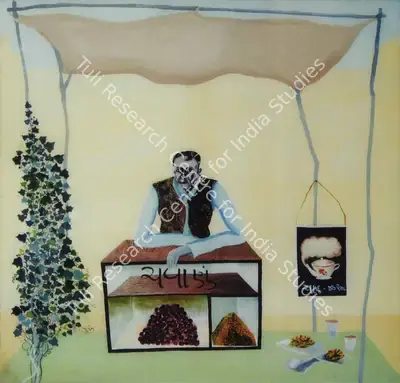
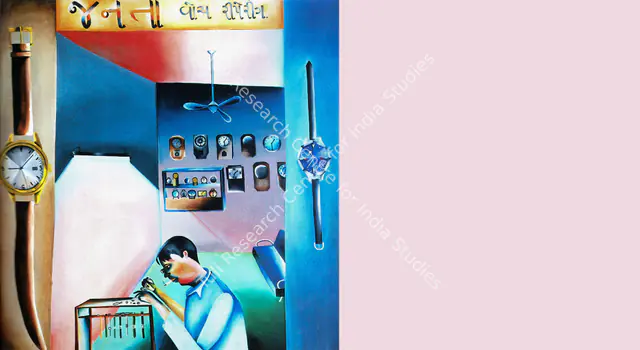
The beginning of the decade of the 70s is a pivotal moment in Khakhar's art. Around the time of 1972, his visual language starts to acquire a quintessential character and the everyday men become his subject-matter. He began making little portraits that were approximately the size of a shop-sign board. These started to be called his "trade paintings". "They described the professions of their subjects in the hybrid manner of eighteenth century colonial paintings referred to as the Company School, which Khakhar had studied. But rather than true likeness or documentation of the various trades, these were a most compassionate inventory, an effort to touch and handle what is real....He found himself entering upon a vista no painter had ever penetrated before: the vast terrain of half-westernised, half-urbanised modern India. His own background and lifestyle—his daily work as an accountant on the fringe of the city, his continuing intimacy with a wider range of human types and conditions than most artists' lives allow for—now began to pay off. More than any of his contemporaries, he was at home in his impure environment. An Indian painter who would, in Duranty's slogan, "take away the partition separating the studio from everyday life." Nada Raza described one of these trade paintings thus: "Take, for instance, the work Barber's Shop 1972. The panes of the glass shopfront divide the image into thirds. Khakhar uses a Pepto-Bismol pink for the floor, petrol green for the walls, and decorates the raised plinth outside the shopfront with multicolored terrazzo....The shading of planes is Leger-esque, the crooked blue towel on the rail reminiscent of David Hockney, the faces painted amateurishly. The artist's enjoyment of the medium, of the application of paint and juxtaposition of colour, is evident in the detail of the letters, in the shadow and texture of the towel, and the jewelled terrazzo mosaic."
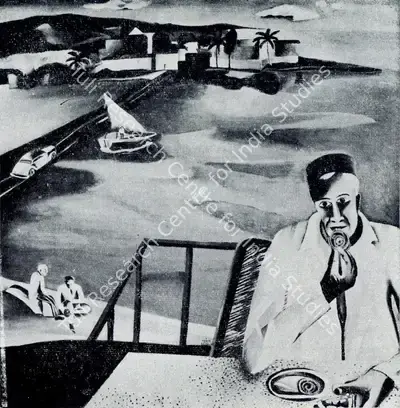
Adil Jussawalla talks about the sexual imagery, the euphemisms present in Khakhar's works. He writes: Man Eating Jalebee shows a man in the right foreground doing just that, while behind him there is a sea, a conversation, a departure. A detail of the face: The man is barely eating the jalebee. His eyes indicate he is not thinking of it at all, his teeth are gritted, he is going to have to force the sweet between them. And we are recalled to the sexual suggestiveness of the left hand on the table. Food in place of sex?" Talking further about the figures of Bhupen's paintings, he comments that "If Khakhar's figures are lonely, and not all of them are, it is due to reasons specific to the individual painted—each individual's candour responding to the artist's, the artist's secrecy corresponding with what each individual wants kept secret. Painting them then becomes an act of empathy. The painter enters their vulnerable selves to exploit their vulnerablity; in doing so he exposes that vulnerability to public gaze. And we, the public, find ourselves admiring and supporting it. It shames us into acknowledging our own. And so the painter makes the weak lastingly strong. By exposing his subjects' strong weaknesses to our feeble strengths, he makes them acquire a permanent place in our affections. That is why we are drawn to them, why, sometimes, we love them. Painting as an act of empathy occasionally becomes a transformed act of love"
Gets his house 'Parmanand' (named after his late father) built in Vadodara and gets it designed according to his specification. His long-term companion, Shankarbhai, dies. Shankarbhai's death leaves him grief-stricken and an observable shift occurs in his painterly theme which is informed by this personal loss, mourning and grief. The earlier trade paintings give way to large scale paintings such as Man with a bouquet of Plastic Flowers. "It is nearly twice the size of the signboard pictures; and the foreground figure atleast four times the scale of the earlier "traders"—in fact, somewhat over life-size, and threatening to press forward beyond the picture-plane. This insistent white-garbed figure has about it something funereal-no longer advertisement, but effigy. He stares out at us, zombie eyes set in a darkened face, as minatory as a messenger from the grave. His stance is awkward: arms crossed, but while one huge hand clutches the bouquet, the other clenches a fold of his kurta- clinging on for dear life. Geeta Kapur calls him "the enshrined dummy of a man gone mad....The picture is about a milieu, and an absence; alterpiece and icon to a life misspent, to a death-in-life. The double scales are extremely deft and inventive; they enhance one another, so that the "miniature" is enlarged, and the "close-up" given a setting. With the help of a beautifully handled orange/pale-blue polarity, the complex image is unified."
Attends the first Kasauli Art Centre Artist Workshop organised by Vivan Sundaram. Travels internationally for the first time to USSR, Yugoslava, Italy and the UK with the help of a cultural exchange programme of the Indian government. Whilst in UK, he stays with Howard Hodgkin and meets the painter and critic Timothy Hyman who in the late 1990s writes the first English-language monograph on Khakhar.
Khakhar was a precocious collector of objects—toys, figurines, prints, everyday collectibles that he would display in his home and studio in shelves and glass cabinets. Nada Raza contends that an early painting like Cabinet and the Shiva "served as an inventory of precious objects evidently belonging to a modest household, a cabinet of curiosities rendered in great detail." Geeta Kapur while talking of his style sates that "In taste and style Bhupen instinctively identifies with the petty bourgeois. In this sense his indigenism, far from being a high-minded sentiment, is a matter of simple inevitability. In terms of values, however, the question is more complex. The commonness of his style is a cover for intentions that are quite often wicked. And his images, for all their deadpan appearance, manage to topsy turvy the class based sensibilities of the viewers."
Participates in Pictorial Space: A Point of View on Contemporary Indian Art, Lalit Kala Akademi, Rabindra Bhavan Galleries, curated by Geeta Kapur. "Bhupen Khakhar, extraordinarily inventive in the treatment of pictorial space, has used the diagrammatic space of the popular maps of pilgrimage cities, where all objects are laid out flat with naive consistency and schematically related; the realistic space in calender scenery where the trompe l'oeil effects lead to the most eccentric distortions on account of the awkward hand of the bazaar artist; and, he has used the sweeping space of certain schools of miniatures (Kishangarh, and particularly Oudh) employing the device of the raised horizon to paint vistas of small town suburbs. In all these alternative uses of pictorial space, Bhupen's intention has been singular: to place his subject, the common, middle-class householder, in a setting that fuses his specific environment with his three-penny dream."
Works get shown in the XII Biennale internationale d'art, Palais d'Europe, Menton, France. Following Geeta Kapur's 1975 essay titled 'The Fallacy of the Triennials', presented in a seminar at the Third Triennale India, Khakhar, Sheikh, Sundaram, Laxma Goud, Mrinalini Mukherjee and Gieve Patel boycott the Fourth Triennale—India. Instead, they open their own exhibition titled 'Six Who Declined to Show at the Triennale' at Kumar Gallery, New Delhi. Upon his return to India, Khakhar's paintings evolve into large narrative paintings. "Returning from his first visit to Europe, Khakhar spoke of how the early Italians "faced certain problems which I face also as a painter: how to include the narrative aspects in a painting without destroying its structure." Khakhar was especially interested in the predellas, the narrative strips appended to the large central icon of an alterpiece, and demanding a more intimate devotional reading. Death in the Family comes partly out of his response to early Italian art; to a visual world where the everyday and the miraculous, the humdrum street and the winged soul, were so closely meshed. But the parallels between Indian miniatures and Italian medieval painting are striking anyway- and the actual contemporary Indian scene often recalls 14th century Italy."
Bhupen spent close to six months in the Bath Academy in London upon getting invited to teach there and stays with Howard Hodgkin. This marked a pivotal moment in his journey of coming out of the closet. Having struggled with his sexuality for years, the West accorded him a new perspective. He had confessed how "I was very much ashamed of my sexuality. I never wanted to be known I was gay. Up to 1975, I felt that if my friends knew I am gay, I was prepared to commit suicide...After my visit to England in 1979, I saw that homosexuality was accepted. People lived together..." Somewhere then, Britain's greater liberal environment and acceptance of a sexuality that would have been considered "deviant" back in India helped Khakhar re-discover himself through an exploration of his sexuality. He saw first-hand the works of David Hockney who was an openly gay artist. Here onwards, instilled with a new sense of self-assurance, Khakhar's works start to acquire a confessional character. The painting Shadow of Death comes in the wake of such a critical time in his life. A handwritten poem on the verso thus goes "A shadow of thing that seem, and the greatest good is but small, that all life and Death is a dream all and that dreams. themselves is due to dream." Khakhar, in the long line of greats like M.F. Husain, Nandalal Bose, Jamini Roy, F.N. Souza and Hemendranath Mazumdar made the same artwork with minor variations in size, medium and form. Shadow of Death too can be found with minor alterations. In this case, the earliest collection of Bhupen's Art was built by Prince (now King) Manvendra Singh Gohil of Rajpipla. Interestingly, he was the first openly gay member of India's Rajput Royalty. He owned the larger version of the painting.
Adil Jussawalla comments how "making full use of the more liberal climate in Britain during his two brief stays there, he has produced explicit sexual imagery that in some way challenges that very liberalism. Man in Pub, with the man clutching a repulsive pair of gloves in front of his crotch, the very arrangement of his trousers on a chair in a narrative panel suggesting a sexual posture, is a painting about sexual frustration if ever there was one. For the man there is no enjoyment in any sexual act, even a solitary one. His expression is held-in, taut. And his thighs and hips are gripped by the sides of his jacket as though in an iron clamp."
"The Weatherman (1979,) is a fantasy generated by the desolate preoccupations of an English winter. Off-duty between his interminable TV appearances, in a bedroom still haunted by charts, and clad only in pyjama-bottoms, socks and specs, he is (Khakhar tells us) "facing rejection on sexual grounds". The Englishman is here imagined in all his ghastly pinkness, as he prods his comatose spouse. Outside, the dreary pub beckons, with TOILETS and (it is needed) COURAGE. Despite the high-keyed colour, the flow of pattern, the rose-strewn carpet flooded with light, the sense is of an appalling tedium and blankness. Khakhar wanted to attempt a non-Indian interior ("the bed looks very English") and also to use a different range of colour. He began the picture with as he usually does - one dominating hue, in this case the deep blue of the carpet. With that in place, the figures could take shape (the wife with characteristically tiny feet); until, several weeks later - and with the glossy blue finally dried he painted the roses over it."
Khakhar's mother as well as his beloved Vallavbhai pass away. The death of his mother—in itself traumatic— accorded him a new freedom of public action. Hereforth his art became extremely confessional as a result of his openly coming out of the closet. Timothy Hyman noted how "He found himself, once again, speaking for a class and a world hitherto unregarded, unrecorded." Adil Jussawala remarks, "If I had to define him according to the evidence of his work so far, I'd call him a Master of Mischief; one who, along with the many venerable objects he has overturned, has succeeded in standing Plato on his head. If he has a belief, I think it is this: The world we inhabit and the world of ideal forms are both part of one world—this, the only one there is. And the ideal world is represented in his paintings....Khakhar is not basically concerned with attacking the injustice and the hypocrisy of the world we live in through his paintings. He attacks the world because it is not like his paintings."
In 1981, Khakhar paints one of his most well-known paintings—You Can't Please All. Inspired by two episodes from Aesop's Fable about two men and a donkey, Khakhar situates the Greek lore in the panorama of a small Indian town. He describes the fable like this: "There's an old man—father and son. They go to market to sell a donkey. While they're going, there are people who say "why are you walking? why don't you sit on the donkey?" So they both sit on the donkey. Afterwards people say "look at those two fellows, they're so inhuman sitting on a donkey" So, father gets down and son sits on the donkey. When son is sitting on the donkey, people say "look at this son...this old man is walking and he doesn't have any pity on his father." So the son gets down and the father climbs. Then people say—"look at this old man, this young boy hardly 16 is walking in the sun and the father doesn't have any pity." So they both get down and decide to carry the donkey. While they carry the donkey, there is a bridge and they try to cross the bridge and the donkey falls into the river and dies. While they bury the donkey, the old man says "You really can't please all". "Guru Jayanti and its successor You Can't Please All might be seen as the fulfilment of the Baroda "project". It was in the late seventies that people first began to speak of a Baroda "School" of painting, centered on the Faculty of Fine Arts, but including in its looser sense several of the outstanding artists of the middle generation. In Bombay, Sudhir Patwardhan, Nalini Malani and Gieve Patel; in Delhi, Vivan Sundaram and Jogen Chowdhury; together with Nilima and Gulam Sheikh, and Khakhar in Baroda itself. Their shared rediscovery (in full awareness of modernist taboos) of deep space, of narrative, of the world and its depiction- all this united a distinct group. Their shared exemplars might comprise: Sienese painting, Brueghel, Kitaj, Romanesque manuscripts, Bonnard; but also, centrally, a reappraisal of the entire Indian tradition, carried out over many years by Gulam Sheikh."
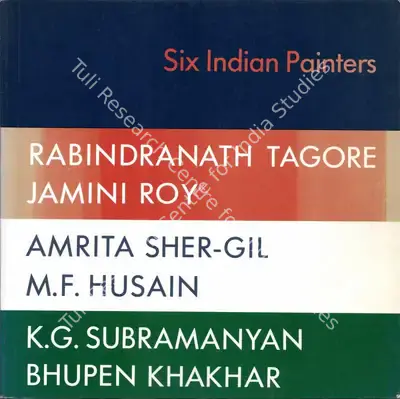
Participates in Six Indian Painters at Tate, London, curated by Howard Hodgkin. By displaying his works alongside those by deceased artists Jamini Roy, Rabindranath Tagore and Amrita Sher-Gil, K.G. Subramanyan and M.F. Husain, Hodgkin writes hm into an Indian genealogy of artistic greatness. Participates in Contemporary Indian Art, Festival of India Exhibtion at the Royal Academy of Arts, London, conceived by Richard Bartholomew, Geeta Kapur and Akbar Padamsee. Works get shown in Contemporary Indian Art, selected by L.P. Sihare from the collection of the National Gallery of Modern Art, Hirshhorn Museum, Washington DC.
'I told lies. I did not have the courage to confess I was going to see and meet my boyfriend… But Gandhi spoke truth; I told lies. He was fearless; I was and am still, a coward. Now slowly at the age of sixty I have summoned up the courage to speak about my preferences, about my boyfriends…' Khakhar confessed in an interview given to Timothy Hyman in 1995. Two Men in Benaras proved to be one of Khakhar's most pivotal and "explicit" works—a bridge for the artist in his efforts to "come-out in open". By placing the sacred and the profane/sexual on the same plane, juxtaposed together, he's making a larger claim of the body on the barricades of the two realms. "Khakhar's sexual encounters were for much of his life with men of his own age or younger, met by chance, perhaps on a single occasion. I think it is an episode of this kind that he records in the large (almost six-foot-square) canvas, Two Men in Banaras. This is a divided and double-scaled image: the lyrical golden landscape, with its sadhus and small shrines among trees (the Ganges flowing round them), set so surprisingly against the two giant men on the left. They are dramatically lit, a blue and purple margin surrounds them like a dark aureole. They stand in a naked embrace, their erect penises almost touching. Significantly, the face of the older man is masked by the dark, urgent profile of the younger. But we see the back of the head, whose white hair and elephantine ear are unmistakably Khakhar's own. The image conjoins genital excitement and a religious setting, the sexual (even if it might seem mere casual lust) is located in the sacred. This "religious" sense of sexuality becomes more evident in his devotion to elderly men, already mentioned in relation to Shankarbhai. Khakhar himself refers to such relationships as "compulsive" and "obsesional", but their outward character is more like the service of a chela; all tender companionship and gentle affectionate sympathy."
The film 'Messages from Bhupen Khakhar' made by Judy Marle for the Arts Council of Great Britain gets screened on ITV. Sanay Jhaveri writes that "Messages from Bhupen Khakhar (1983) vividly portrays the artist in Baroda (now Vadodara), where he lived and worked for most of his life. Over images depicting Khakhar's home and studio, he introduces himself as: 'A man labelled Bhupen Khakhar, branded as painter'. The implication is that although he performs and inhabits the role of a painter every day, he does so from a knowing distance. As the film progresses, it becomes evident that Khakhar played an active collaborative role in the making of the film, and thus the presentation of himself. "
Gets awarded the Padma Shri- the fourth highest civilian honour by the Government of India. Khakhar advises, at this stage of his life, that one must avoid "safety": "Safety" is the word you all should hate. In education, in marriage, in journey, in job, in neighbourhood, on a picnic- anywhere we inherently need safety. The safety of people and places we already know very well. Who are familiar to us. The moment you are with strangers, whether on a train, street, or in a classroom, you become uneasy. Uncomfortable."
Partcipates in East-West Encounter, exhibition and symposium, Jehangir Art Gallery, Max Mueller Bhavan, and National Centre for the Performing Arts, Bombay
"A key image (which I at first considered awkward and unachieved) is Seva (service). It tells explicitly of the relation between master and disciple, through the medium of touch the grasping of the leg The surrounding element the women waiting for their separate darshan, and the nocturnal world beyond - are extinguished by this numinous enactment; the light which fills the two profiles creates, a moment of revelatory stillness. What passes between them is both a surrender, and a bestowal, of power, this passing of energy is conveyed by a sort of bafflement on the face of the master. The image marvellously embodies Khakhar's own transaction with his older partners. Throughout the 1980s, the loved one whose features constantly recur is Vallavbhai, a retired building contractor who Khakhar first met in 1965, but came to know well only a decade or so later. My Dear Friend (1983) presents them joyously together under a quilt, the bespectacled Khakhar gazing raptly at the other's somewhat skeletal features. Below their upper room (cut-away, so that it resembles the simple cowshed of a Christian nativity) one sees the various activities of a typical Khakhar town. But on the roof are two male figures, who spy down upon the lovers - and whose gossip will have to be faced."
Works get shown in Coups de Coeur, Halle Sud, Geneva. Works in collaboration with Nalini Malani and Vivan Sundaram to paint a large-scale mural at Shah House in Juhu, Bombay.
Paints Yayati, of which Timothy Hyman notes that :"Khakhar's strange sexual predicament is made most explicit in Yayati, whose ostensible theme is a myth from the Mahabharata: the king who, rather than grow old and impotent, asks his son to give him his youth….Khakhar acknowledges that Yayati is "about me", and that the prince/angel is recognisably a self. Yet, at 53, Khakhar already felt elderly. He suffered from "loss of vitality". From this point on, much of Khakhar's work will be, in one way or another, fantasy. As Khakhar explains, "with old people, whose sexual capacity has withered, fantasy plays a greater role". But his pleasure in painting has always involved, he says, a "fetishist" dimension (for instance, of representing the clothes of the beloved). And thus, in many works, "the act of painting turned into the act of making love".
Starts writing a script for a full-length comedy drama, Maujila Manilal. For the writing of his play Maujila Manilal he would not paint in as fecund a manner anymore. For the next two years he devoted his focus on the theatrical mise en scène, the production and the dramatics of the play. His interest in theatre would later on also get explored through designing the interior set for Fareeda Mehta's 2002 film Kali Salwar, based on several short stories by Saadat Hasan Manto. Preeti Shah writing for the The Independent commented: "Manilal himself is a caricature of Krishna, Khakhar's favourite God, the ethereal enchanter, the eternal lover. As Savita says, "Manilal is neither mine nor yours. He is everyone's". But he is not portrayed as a handsome dandy. He is middle-aged and can boast of no physical attraction. The two potent aphrodisiacs that he brandishes are his fragrant hair (plastered with Brahmi oil) and the ability to make love in English." Even though the play would not help him make any money, he went on to proclaim that he simply had to do it— "I know how to assess myself. If I don't paint for a year, I don't think the world is going to be bereft."
Works are shown in Open Mind, curated by Jan Hoet, Museum van Hedendaagese Kunst, Ghent; The Richness of the Spirit: Selection from Contemporary Figurative Indian Art, Kuwait Museum and Egyptian Academy, Rome; and Artists Alert, exhibition and auction of works for the Safdar Hashmi Memorial Trust (Sahmat), Rabindra Bhavan, New Delhi. Starts painting the stage set for the performances in Bombay, Vadodara and Ahmedabad. Produces five woodcuts and three linocuts for a privately published limited edition of Two Stories by Salman Rushdie, Free Radio and The Prophet's Hair.
Retires from his accountancy job at Bharat Lindner Pvt. Ltd after twenty-seven years. Gets featured in Figures of Thought by Arun Khopkar along with Nalini Malani and Vivan Sundaram. Works are shown in Ambassador's Choice: Contemporary Indian Art from the Collection of H.E. Mrs. E.M. Schoo, National Gallery of Modern Art, New Delhi. Collaborates with Malani and Sundaram on a series of mixed-media works for Splash: Images on Glass, Gallery Chemould, Bombay
In an interview given to the Economic Times, he proclaims that :"My interests have changed over the years. There was a time when I painted landscapes, with the human figure kept very small. Then came man and his environment; as a result, traders, barbers and tailors have long inhabited my painting. Now fantasy has entered my work, along with a certain spirit of freedom..and my work is much less naturalistic."
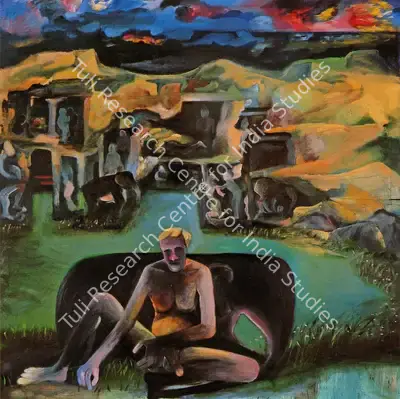
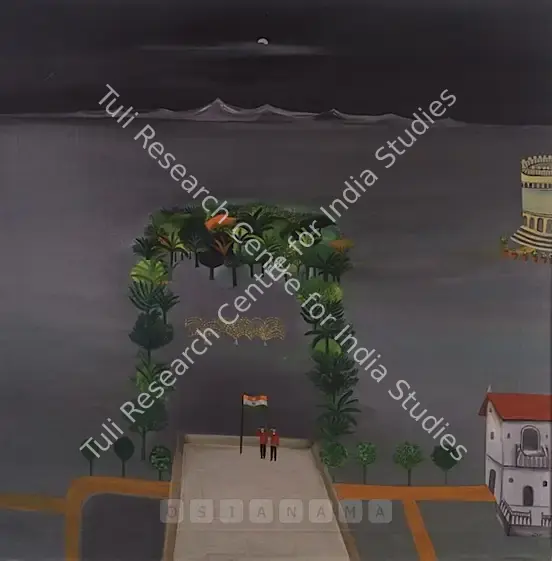
Gets selected by curator Jan Hoet to showcase works at Documenta IX, Kassel—becoming, along with Anish Kapoor, the first Indian Artist to do so. Khakhar presented a group of paintings in the Documenta—namely Caves (1991), Ghost City Night (1991) and Pink City (1991) alongside the installation entitled Paan Beedi Shop—a dummy of a life-sized booth with Khakhar himself imitating a seller selling cigarettes and paan (betel-nut leaves). This also alluded to a previous collage work titled Paan Shop that he had done in the beginning of his career. Jan Hoet had remarked how the installation was not well received: "Earlier Bhupen Khakhar painted booths, and now he combines reality with painting: he constructs the booths from his paintings and now one really can buy cigarettes there. However western-like, many people do not like it. I think it is a possibility to experience another world, to reflect one's own world. Khakhar does not place his booth as irrevocable statement, but questions our complacency."
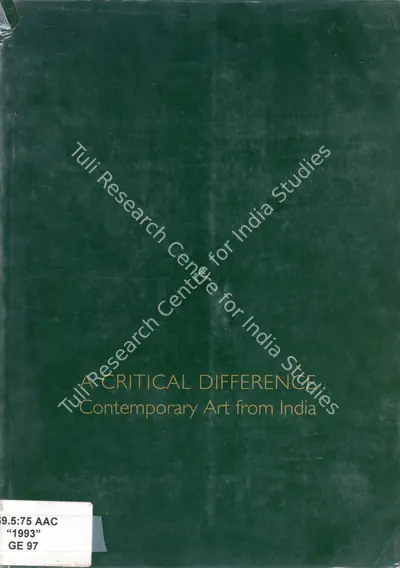
Works are shown in the exhibition, The Spirit of India. Gallery Nouvelles, The Hague. Participates in India Songs: Multiple Streams in Contemporary Indian Art, Art Gallery of New South Wales, Sydney; A Critical Differrence: Contemporary Art from India, an Aberystwyth Arts Centre Touring Exhibition, UK; and Trends and Image, Centre of International Modern Art, Calcutta. Nada Raza reveals: "Khakhar's lovers were often older men, ordinary men with undistinguished lives whom he looked after and cared for with exceptional devotion, as remembered by Sheikh. In Gallery of Rogues (1993) they are lovingly enshrined, like deities. Once he spotted such a companion, he would fall deeply in love with him and offer worshipful service to the deity of the day. The needy would receive financial aid, the sick and ailing would get tender care. The gallery in the painting consists of a series of smaller canvases framed and then nailed together. Khakhar is now taking the multiple scenes into individual, independent frames, forcing the viewer to consider each face, each mood and inflection as having a life of its own, amalgamated by the artist into a memorial for the dearest of his lovers."
Starting from the seventies, Khakhar had started watercolours. Initally the subject matter was mostly what he saw—landscapes, trees, shrines, figures etc. But Hyman notes that he soon "began to exploit the potential of watercolour to dematerialise—its rendering all transparent, evanescent. Bodies and objects could overlay or interpenetrate one another, in a sort of underwater weightlessness, that also affirmed the mind's free fantasy. Watercolour's insubstantiality seemed more easily reconcilable than oil with these nonchalant inventions, a "magic realist" genre in which heads might contain a multiplicity of figures or figures sprout a multiplicity of heads."
Gets invited by BBC to travel to London to paint a portrait of Salman Rushdie. Works are shown in 100 Years: From the NGMA Collection, curated by Geeta Kapur, National Gallery of Modern Art, New Delhi. Works get shown in a solo exhibition at Kapil Jariwala Gallery, London. Participates in The Other Self, a group exhibition and workshop of Indian and Dutch artists.
Nada Raza remarks: "While Khakhar's contemporaries rallied around darkening social conditions in India—communal violence in Ayodhya in the 1990s, which had spilled over into terrible riots in Gujarat and attacks in Mumbai In the decade to follow- he was contending with a personal battle. Khakhar was perhaps as belated and indirect in responding to the overtly political now as he had been in 1971, but his embrace of the grotesque coincided with a particularly ugly reality. Wall/Woman/Masjid (1995) depicts the mosque being destroyed amid great controversy in Ayodhya in 1992, behind a brick wall bearing the lotus symbol of the Bhartiya Janata Party."
Sakhibhav, Karin Zitzwitz remarks, "depicts a disputed practice of Krishna Bhakti, in which devotees dress and act as Sakhis, the female friends of Krishna's lover Radha, in order to express their love for God. In this and other images, Khakhar calls attention to the value placed on the ecstatic physical effects of religious devotion, and considers their proximity to the experience of sexual love."
Works shown in Contemporary Art in Asia: Traditions/Tensions, curated by Apinan Poshyananda, Asia Society, New York.
Gulammohammed Sheikh writes of Son is the Father of Man: "The age gap between the protagonist and the 'midget' is reduced:you find a middle-aged man with a middle-aged man-child in his arms. Is it a rumination on ageing by invoking infancy, or vice-versa? Is this man dreaming of his own childhood-self in the guise of an aged man or has his middle-aged self turned infant-like? Who is the child then? Were you to look for kinship, you would conclude that the 'child' hardly resembles the man holding it. The finely etched face of the 'child' looks upwards, desirous, while his hand mimics the massive hand of his holder. But why is he a baby? Does it hint at the gay protagonist's deprivation, or a secret desire for children? Chiildhood and old age are sad bedfellows: the very thought of their companionship throws wager at destiny."
Works get shown in Private Mythology: Contemporary Art from India, The Japan Foundation, Tokyo. His short story- Phoren Soap gets published in a bilingual Gujarati-English edition with etchings and deals with the themes of infidelity and fantasy intertwined with humour. Gets diagnosed with prostate cancer.
It is interesting to note that Khakhar although not a declared believer, grew up in a Vaishnava household and had deep influence of his partner Vallavbhai Shah who was a follower of the Radhasoami sect. In his painting Ram Bhakt Hanuman, Khakhar draws on the cult of Ram which is based on loyalty and exemplified by the Monkey warrior Hanuman. Karin Zitzwitz notes: "While Khakhar's painting is largely iconographically correct, it casts this moment in a very different light. It shows a slender and relatively humble Ram extending his arms protectively around an unusually monkey-like Hanuman, whose long arms grasp him tightly in return. While this large watercolour displays his considerable virtuosity in the medium, Khakhar demonstrates discomfort in his treatment of the figures' overlapping legs" In an interview given to Sadanand Menon, Khakhar reveals: "When I did Ram Bhakt Hanuman 1998, I was quite serious. Because there is a certain kind of relation I feel may have existed between them- animal and man- but I have not made it very explicit or I would not have been able to exhibit in anywhere."
Designs the Poster for Gay Games Amsterdam 1998 Cultural Program
After the diagnosis with cancer, Khakhar's works acquire a new character and sensibility. Nada Raza comments of the materiality of his paintings: "In works expressing agony and the humiliation of bodily failure, Khakhar returned to the luminous Kalighat-inspired technique with which he had experimented in Muktibahini Soldier with a Gun 1972, balancing the horror of violence with the lightest transluscent glazes of colour like in At the End of the Day Iron Ingots Came Out 1999 and the watercolour Birth of Crocodile 2000. 'The essense of the grotesque is precisely to present a contradictory and double-faced fullness of life.' wrote Bakhtin of Rabelais, and Khakhar's work from this period similarly embraces the terrible, the violent and the cruel without hesitation."
Participates in the Third Gwangju Biennale, South Korea Receives a Prince Claus Award, supported by the Dutch Ministry of Foreign Affairs. "In Khakhar's large narrative paintings",writes Nada Raza," the urban vista became the staging ground for multiple stories, doorways and windows theatrically framing the action as detailed vignettes. Views through windows, or an azure sea near the high line of the horizon, are motifs that Khakhar used often, delineating interior, private worlds alongside more imaginative yearnings. Yagnya or Marriage describes a central ritual event taking place as residents of the town continue to perform more mundane actions, allowing for the simultaneity of high and low, of the spiritual existing alongside the base, the banal next to the extraordinary. These were ambitious works, cinematic in scope, describing in detail the 'modern life' of a small town such as Baroda. For Khakhar, the pictorial plane became a ground for describing the world in affectionate, idiosyncratic, simultaneous detail."
Partcipates in Century City: Art and Culture in the Modern Metropolis, Tate Modern, London, alongside Vivan Sundaram, Nalini Malani and Atul Dodiya; and Telling Tales: Narrative Impulses n Recent Art, Tate Liverpool. Works are shown in Abbild: Recent Portraiture and Depiction, curated by Peter Pakesch for Steirischer Herbst, Graz. His collection of ten illustrated short stories, Maganbhai No Gundar gets published in Gujarati. The same year, a selection of his writngs (Maganbhai's Glue, Pages from a Diary, Vadki, Phoren Soap and Maujila Manilal) is published in a single-volume English translation. Since the diagnosis, disease became an everyday lived reality- he faced death as a daily struggle and his paintings now reflected that human condition- of mortality and morbidity. Geeta Kapur writes "Khakhar's myriad friendships mutated into painterly language. The act of applying oil paint on canvas and watercolour on paper was lovingly fetishised in the touch of the brush...Through the course of his illness, Khakhar's organs (brain, abdomen, genitals) were treated with radiation; he was driven to anxiety and to incontinence. This led him to act out, in the medium of painting, the state of being endured as a despoiled body, fearful of being spurned and in turn spurning the other's touch"
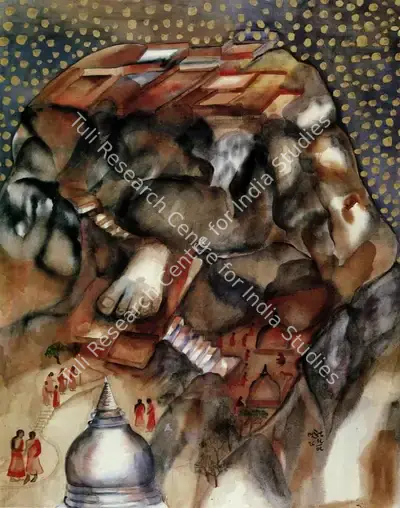
Travels with Ghulammohammad Sheikh to Chicago where their works are exhibitedin Walsh Gallery. Visits Sri Lanka with a group of artists and writers, organized by the Guild Art Gallery, Mumbai. The playwright Naushil Mehta wrote in his recollection of Khakhar: "Khakhar's cancer resurfaced savagely, towards the end of '02. His radiation treatment was now possible locally, so he did not need to be in Mumbai. This was the most frantic period his friends ever saw in the Khakhar household…Of course, Bhupen was working every moment he could- managing the debility along with the pain- recovering from a new show in Baroda, planning a retrospective in Mumbai, writing new stories, sketching, painting." The playwright Naushil Mehta wrote in his recollection of Khakhar: "Khakhar's cancer resurfaced savagely, towards the end of 2002. His radiation treatment was now possible locally, so he did not need to be in Mumbai. This was the most frantic period his friends ever saw in the Khakhar household…Of course, Bhupen was working every moment he could- managing the debility along with the pain- recovering from a new show in Baroda, planning a retrospective in Mumbai, writing new stories, sketching, painting."
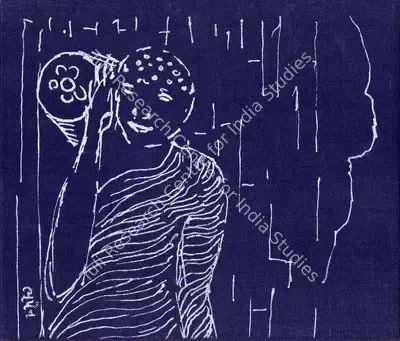
His last solo exhibition takes place at Sarjan Art Gallery, Vadodara. Khakhar's long-term partner. Vallavdas Shah dies on 30 July, aged eighty-one; on August 8, aged sixty-nine, Khakhar himself dies. Three months after his death, NGMA opens a retrospective. Nada Raza comments: "After his visit to Sri Lanka, Khakhar tried metallic paints, using burnished tones to highlight delicate clouds or rain, or to decorate the background behind a series of Buddhist monks that he painted in this period. The accordion-fold book on Sri Lanka, made in 2003 best represents the mood of these works, the beatific expressions of the figures perhaps an attempt to connect to higher, exalted states even as his body deteriorated."
Bhupen Khakhar is one of the pioneers of Indian Pop-Art and a member of the Baroda Group of artists. Being an autodidact, he sought out to combine traditional Indian aesthetics with Indian and Western pop and figurative art. He is, among other things, a reconteur and writer of short stories. In 1980 he became one of the first artists to openly come out as gay and deal with the issues of homosexuality through his paintings. He was forced to life a double-life on many levels given his love and loyalty to his humble childhood friends and family while engaging with pockets of the artistic intelligentsia, his roots within the conservative life and values of the Gujarati community and the need to be part of the underground gay communities, until openly declaring being gay after the passing away of his mother in 1980. Today, most international museums seek his art as part of their Modern and Contemporary Art Collections.
Born: Gulalwadi, Bombay, Maharashtra, India Died: Vadodara, Gujarat, India Parents: Mahalakshmi, Parmanand Kalidas

Chronicled Highlights 25

Bhupen P. Khakhar
1934Born
Bhupen P. Khakhar

Bhupen P. Khakhar was born in 1934 in Gulalwadi, Bombay, Maharashtra, India.
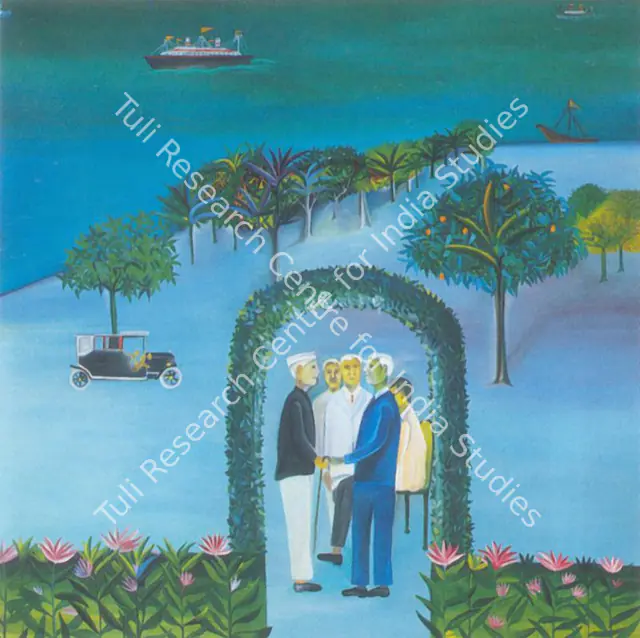
Khakhar, Bhupen (Artist). Departure of a Friend. Oil on canvas, 1970 | Painting | FineArts | 00374016

In 1997, the artist achieved a new high in the auction market with the sale of Departure of a Friend (1970), offered in the The Indian Sale by Sotheby's, which concluded on 08 May 1997 at London, achieving a sale price of ₹4,67,438 ($13,055). This record marked a defining moment in the artist's market history, reflecting both the significance of the artwork and its reception within the broader art world.
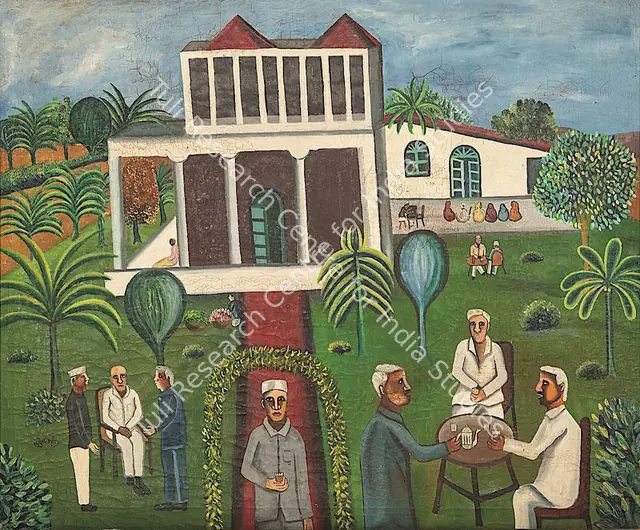
Khakhar, Bhupen (Artist). Send-Off Party. Oil on canvas, 1970 | Painting | FineArts | 00419202

An incorrigible eclectic, Bhupen has contrived a style of his own with the assortment of signs and characters picked up from the Indian environment. His work makes sense in the very hodgepodge of India’s urban culture, which is hybrid by circumstance and capable of making outlandish visual combinations.
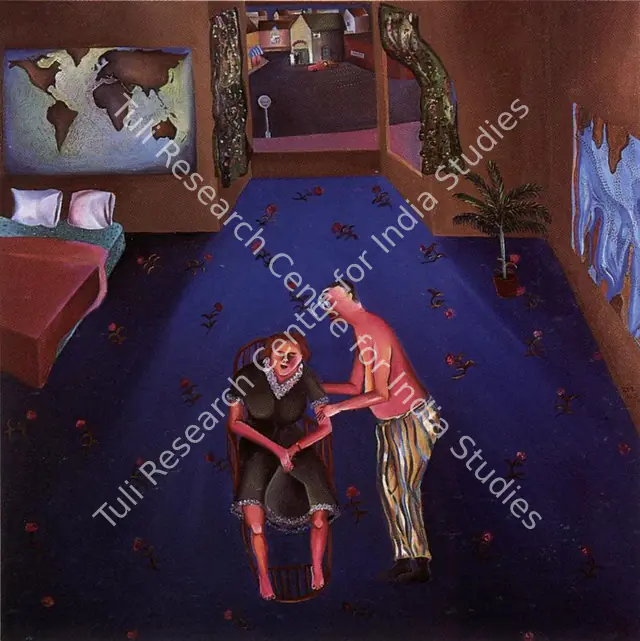
Khakhar, Bhupen (Artist). Weatherman. Oil on canvas, 1979 | Painting | FineArts | 00372246

In 1995, the artist achieved a new high in the auction market with the sale of Weatherman (1979), offered in the Indian Contemporary Paintings: Islamic Works of Art and Indian, Himalaya and South-East Asian Art by Christie's, which concluded on 16 October 1995 at London, achieving a sale price of ₹1,98,996 ($5,803). This record marked a defining moment in the artist's market history, reflecting both the significance of the artwork and its reception within the broader art world.
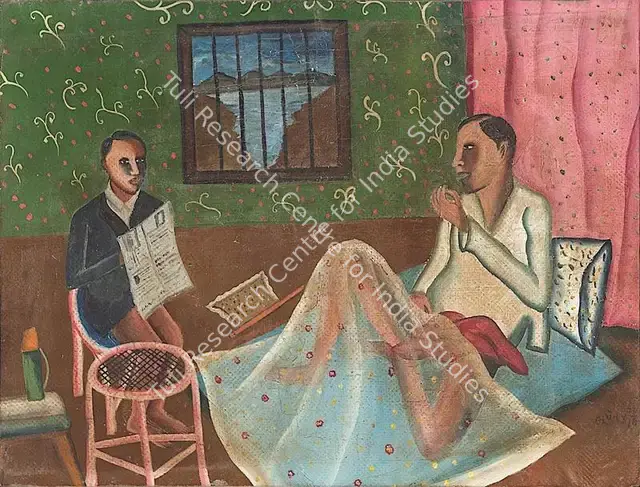
Khakhar, Bhupen (Artist). Untitled. Oil on canvas, 1980 | Painting | FineArts | 00416384

An incorrigible eclectic, Bhupen has contrived a style of his own with the assortment of signs and characters picked up from the Indian environment. His work makes sense in the very hodgepodge of India’s urban culture, which is hybrid by circumstance and capable of making outlandish visual combinations. It is the perpetual paradox of pictorial references in popular art which intrigues Bhupen: the way in which the folk and classical forms mutually transfigure each other, the lavishness with which a realistic figure in the European tradition is overlaid with ornamentation pilfered from the medieval image.
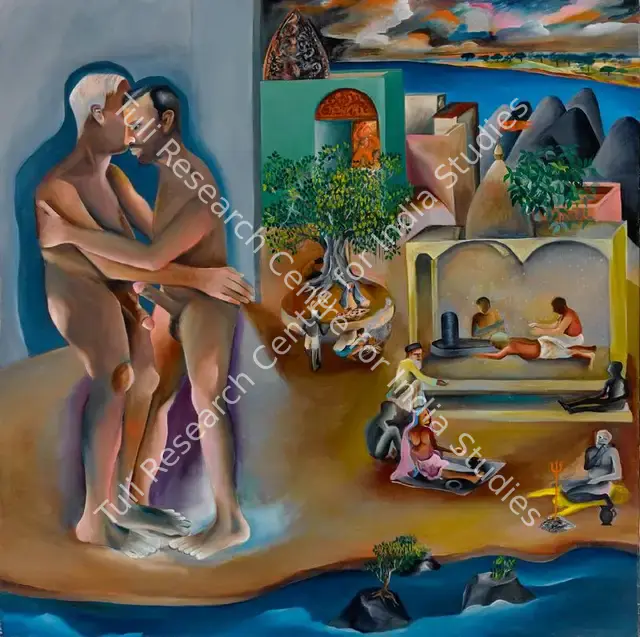
Khakhar, Bhupen (Artist). Two Men in Benares. Oil on canvas, 1982 | Painting | FineArts | 00338991

In 2019, the artist achieved a new high in the auction market with the sale of Two Men in Benares (1982), offered in the Coups de Coeur: The Guy And Helen Barbier Collection by Sotheby's, which concluded on 10 June 2019 at London, achieving a sale price of ₹22,37,53,803 ($3,221,342.46). This record marked a defining moment in the artist's market history, reflecting both the significance of the artwork and its reception within the broader art world.
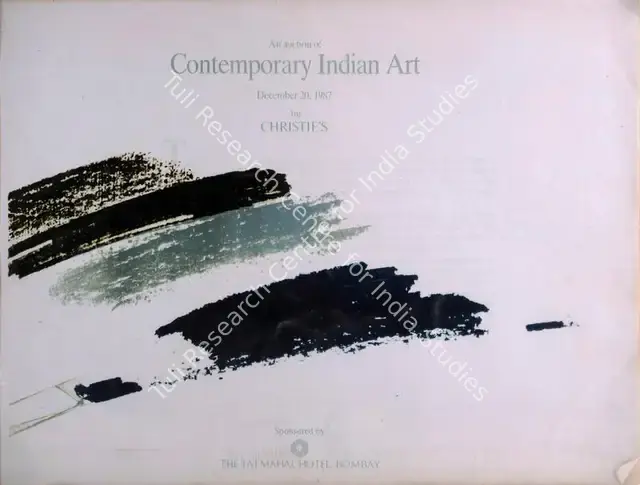
Christie's (Auction House). Contemporary Indian Art (Charity Auction). 20 December 1987, Bombay | Auction Catalogue | EconomicsArt | 00172997
1 / 2
Christie's (Auction House). Contemporary Indian Art (Charity Auction). 20 December 1987, Bombay | Auction Catalogue | EconomicsArt | 00172997

On 20 December 1987, Bhupen Khakhar made their debut in the Indian public auction market when Fishermen was presented as Lot 13 in Contemporary Indian Art (Charity Auction), conducted by Christie's in Mumbai, India. This auction marked the artist's first recorded appearance in the public auction market, establishing the earliest chapter of their auction history.
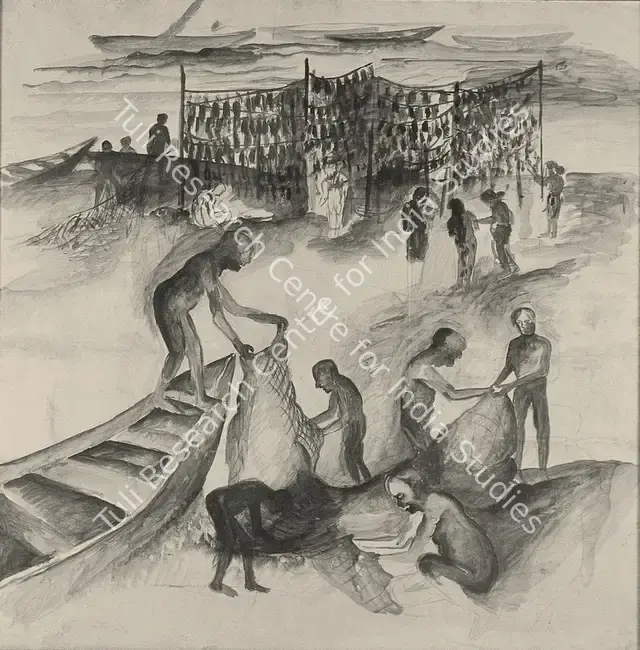
Khakhar, Bhupen (Artist). Fisherman. Watercolour on paper, 1989 | Painting  | 00879889
Khakhar, Bhupen (Artist). Fisherman. Watercolour on paper, 1989 | Painting | 00879889

In 2006, the artist achieved a new high in the auction market with the sale of Fisherman (1989), offered in the Masterpieces & Museum Quality Series VI: With Rare Drawings and Books on Indian Contemporary Art by Osian's, which concluded on 01 March 2006 at New Delhi, achieving a sale price of ₹17,25,000 ($38,895). This record marked a defining moment in the artist's market history, reflecting both the significance of the artwork and its reception within the broader art world.
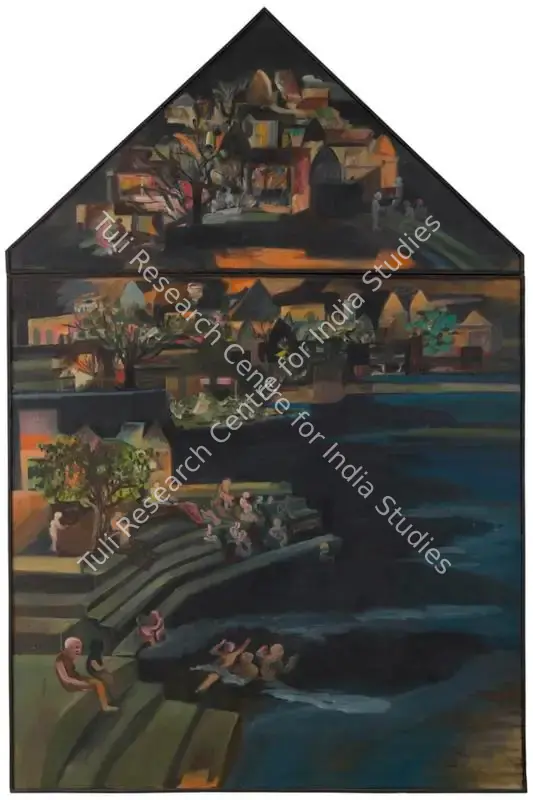
Khakhar, Bhupen (Artist). Untitled (The Bathing Ghat). Oil on canvas, 1994 | Painting | FineArts | 00336607

In 2018, the artist achieved a new high in the auction market with the sale of Untitled (The Bathing Ghat) (1994), offered in the Modern Indian Art by Saffronart, which concluded on 06 December 2018 at Online, achieving a sale price of ₹6,21,00,000 ($900,000). This record marked a defining moment in the artist's market history, reflecting both the significance of the artwork and its reception within the broader art world.
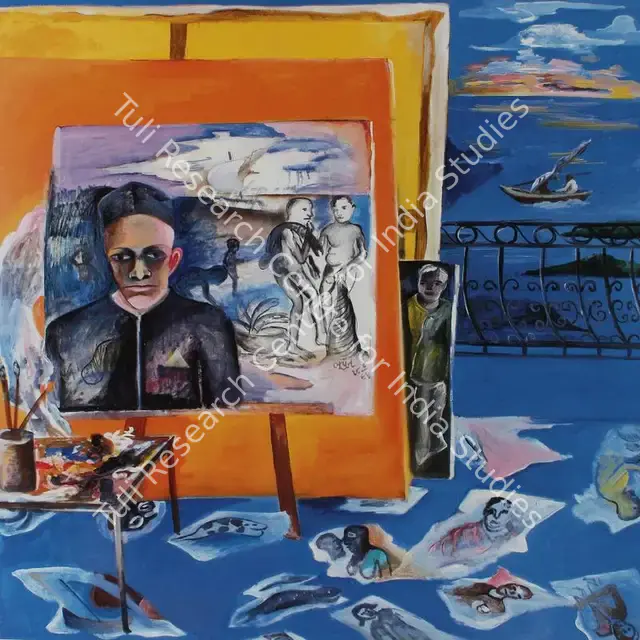
Khakhar, Bhupen (Artist). Artists Studio. Oil on canvas, 1995 | Painting  | 00881421
Khakhar, Bhupen (Artist). Artists Studio. Oil on canvas, 1995 | Painting | 00881421

In 2006, the artist achieved a new high in the auction market with the sale of Artists Studio (1995), offered in the Modern and Contemporary Indian Art by Christie's, which concluded on 20 September 2006 at New York, achieving a sale price of ₹1,10,52,000 ($240,000). This record marked a defining moment in the artist's market history, reflecting both the significance of the artwork and its reception within the broader art world.
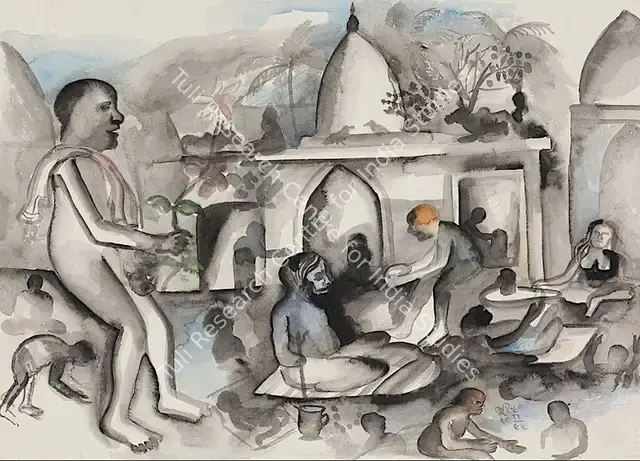
Khakhar, Bhupen (Artist). Untitled. Watercolour on handmade paper pasted on mount board, 1995 | Painting | FineArts | 00416717

I feel much lighter now. My personal tensions have been resolved. At 64, you no longer have the feeling that you will never die. One leaves the ambition to become a great painter and accepts whatever one is. Eariler, I worried all the time about my position as an artist.
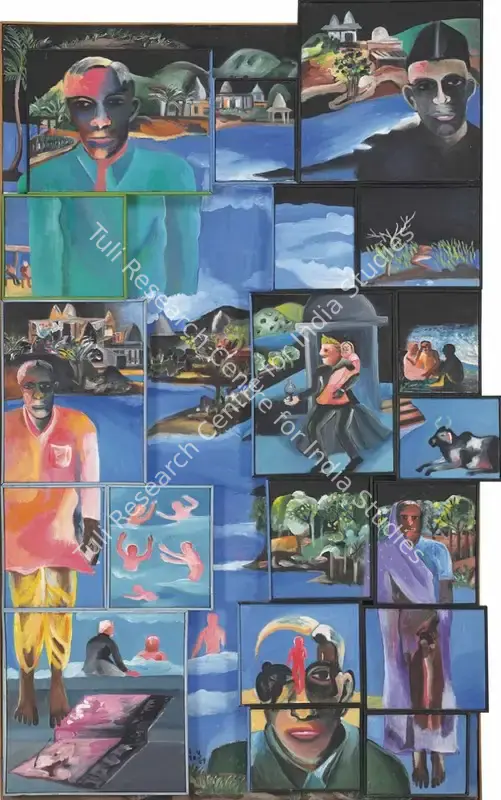
Khakhar, Bhupen (Artist). Night. Oil on canvas laid on board, 1996 | Painting | FineArts | 00646394

In 2014, the artist achieved a new high in the auction market with the sale of Night (1996), offered in the South Asian Modern and Contemporary Art by Christie's, which concluded on 11 June 2014 at London, achieving a sale price of ₹4,31,96,599.6 ($728,134.84). This record marked a defining moment in the artist's market history, reflecting both the significance of the artwork and its reception within the broader art world.
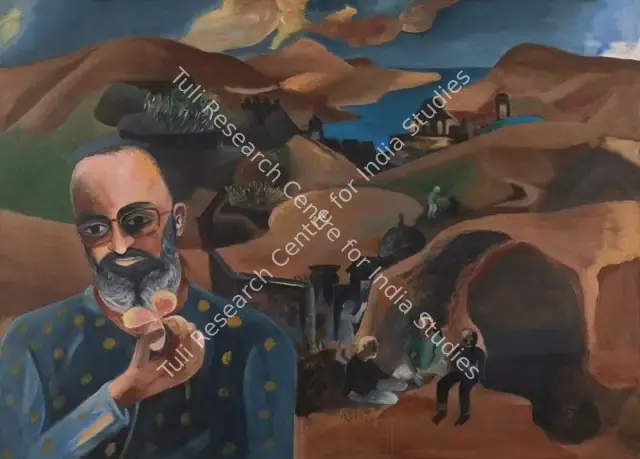
Khakhar, Bhupen (Artist). Untitled (Champaner). Oil on canvas, 1996 | Painting | FineArts | 00362757
Khakhar’s coming out in the course of the 1980s was probably the most courageous
act of his life, and it may also prove to be one of the most consequential. The most striking change was that his art became explicitly confessional, as often as not including a self‒portrayal. The self is always juxtaposed to the world; the self interrogates, and is interrogated by, the world
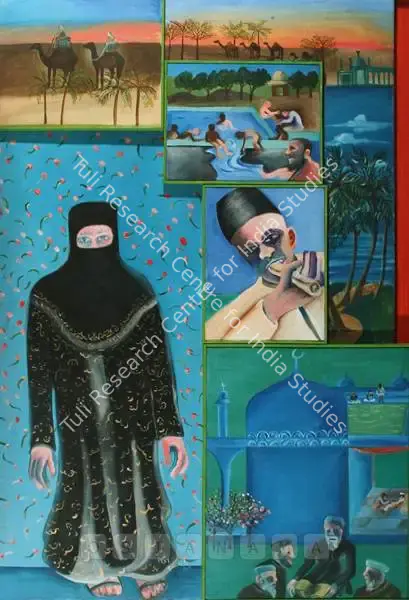
Khakhar, Bhupen (Artist). Muslims Around The Mosque II. Oil on canvas, 2001 | Painting  | 00880310
Khakhar, Bhupen (Artist). Muslims Around The Mosque II. Oil on canvas, 2001 | Painting | 00880310

In 2006, the artist achieved a new high in the auction market with the sale of Muslims Around The Mosque II (2001), offered in the Modern and Contemporary Indian Art by Christie's, which concluded on 30 March 2006 at New York, achieving a sale price of ₹69,59,160 ($156,000). This record marked a defining moment in the artist's market history, reflecting both the significance of the artwork and its reception within the broader art world.
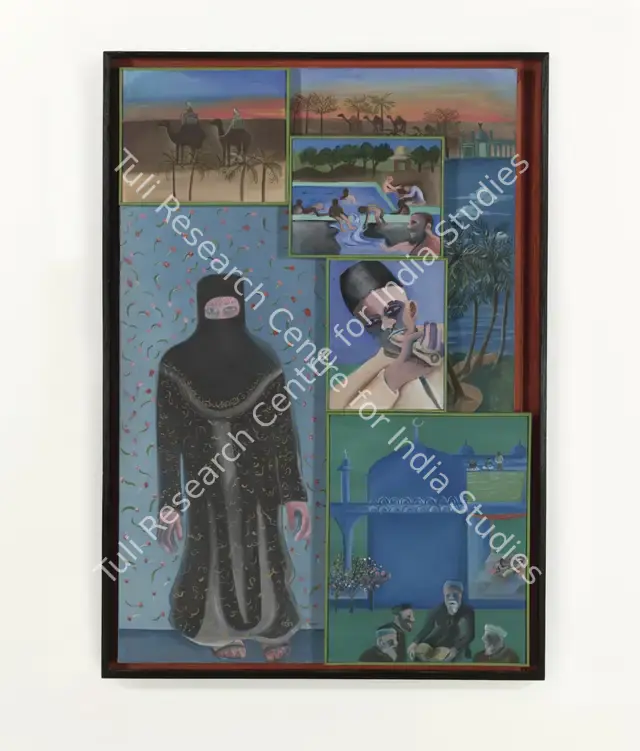
Khakhar, Bhupen (Artist). Muslims Around A Mosque. Oil on canvas, 2001 | Painting | FineArts | 00756065

In 2010, the artist achieved a new high in the auction market with the sale of Muslims Around A Mosque (2001), offered in the South Asian Art by Sotheby's, which concluded on 16 September 2010 at New York, achieving a sale price of ₹3,01,18,150 ($650,500). This record marked a defining moment in the artist's market history, reflecting both the significance of the artwork and its reception within the broader art world.
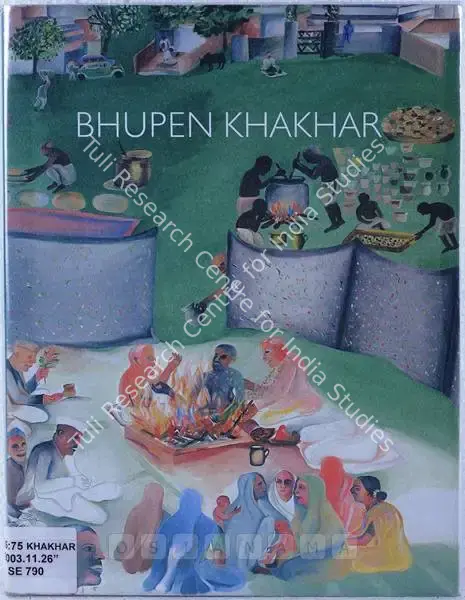
Khakhar, Bhupen P. (Artist). Bhupen Khakhar 1934 - 2003 - A Retrospective. Mumbai: National Gallery of Modern Art, 2003 | Solo Exhibition Catalogue | FineArts | 00172039

In 2003, Bhupen Khakhar 1934 - 2003 A Retrospective marked a major milestone in the exhibition history of Bhupen P. Khakhar, offering a retrospective survey of the artist's artistic production
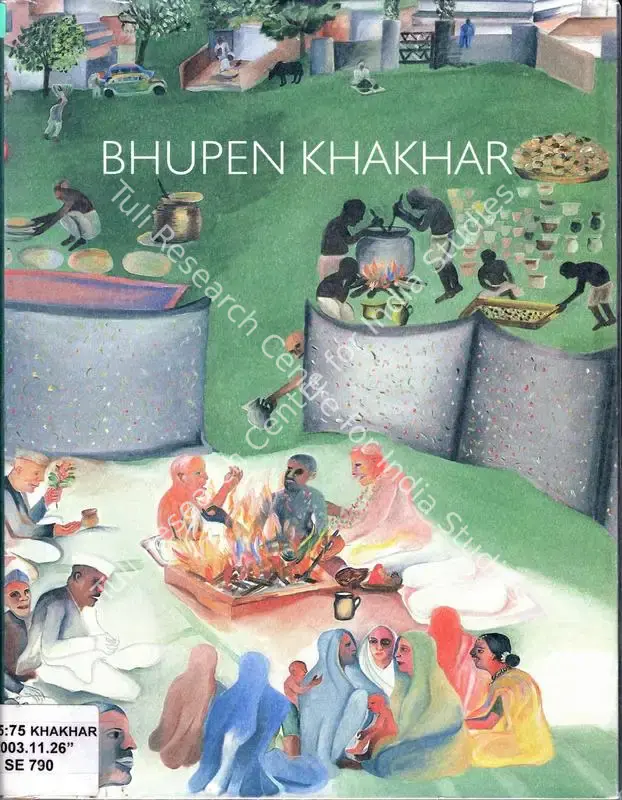
Khakhar, Bhupen P. (Artist) and Usha Mirchandani (Curator). Bhupen Khakhar - A Retrospective. Mumbai: The Fine Art Resource, 2003 | Solo Exhibition Catalogue | FineArts | 00172700

In 2003, Bhupen Khakhar A Retrospective marked a major milestone in the exhibition history of Bhupen P. Khakhar, offering a retrospective survey of the artist's artistic production
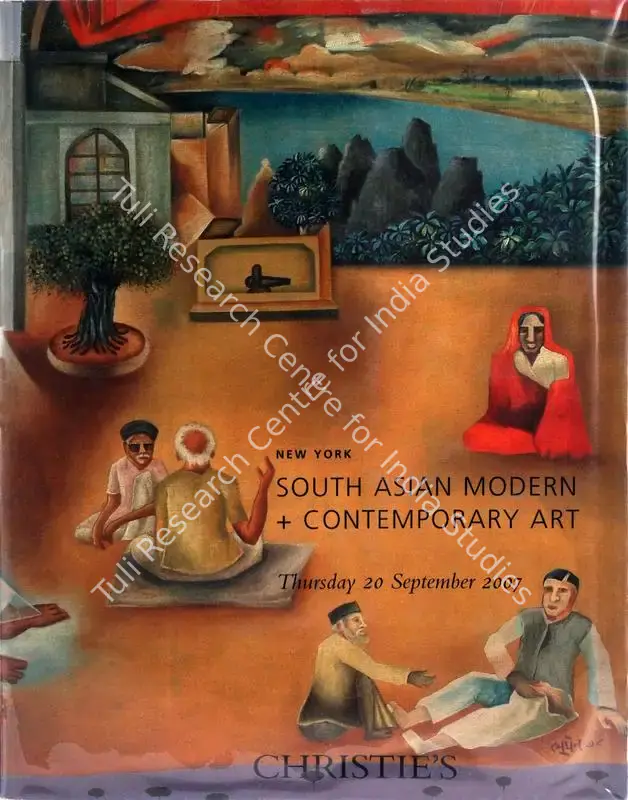
Christie's (Auction House). South Asian Modern and Contemporary Art. 20 September 2007, New York | Auction Catalogue | EconomicsArt | 00173132

In 2007, an artwork by Bhupen P. Khakhar was featured on the cover of Christie's: South Asian Modern and Contemporary Art (September 2007, London), marking a documented highlight in the artist's public and auction market visibility.
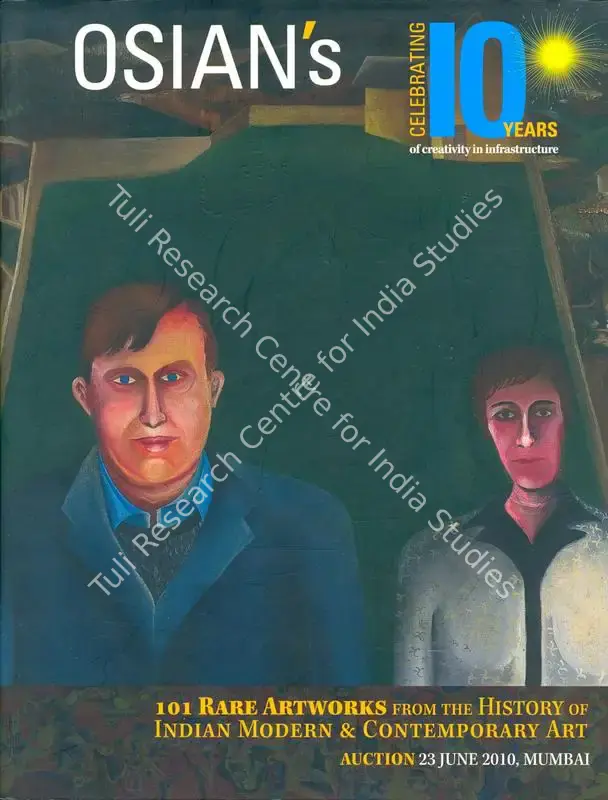
Osians (Auction House) and Neville Tuli (Curator). 101 Rare Artworks from the History of Indian Modern and Contemporary Art. 23 June 2010, Mumbai | Auction Catalogue | EconomicsArt | 00173228

In 2010, an artwork by Bhupen P. Khakhar was featured on the cover of Osians: 101 Rare Artworks from the History of Indian Modern and Contemporary Art (June 2010, New York), marking a documented highlight in the artist's public and auction market visibility.
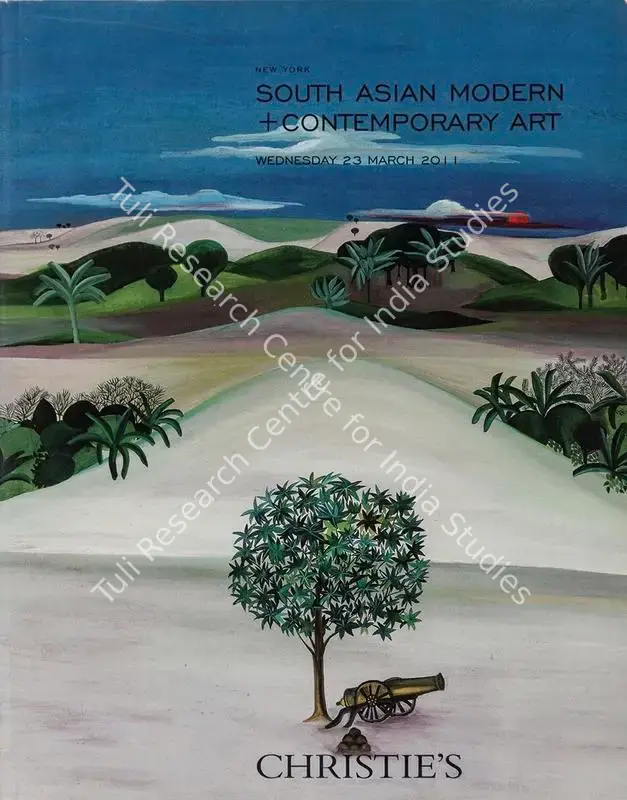
Christie's (Auction House). South Asian Modern and Contemporary Art. 23 March 2011, New York | Auction Catalogue | EconomicsArt | 00173241

In 2011, an artwork by Bhupen P. Khakhar was featured on the cover of Christie's: South Asian Modern and Contemporary Art (March 2011, London), marking a documented highlight in the artist's public and auction market visibility.
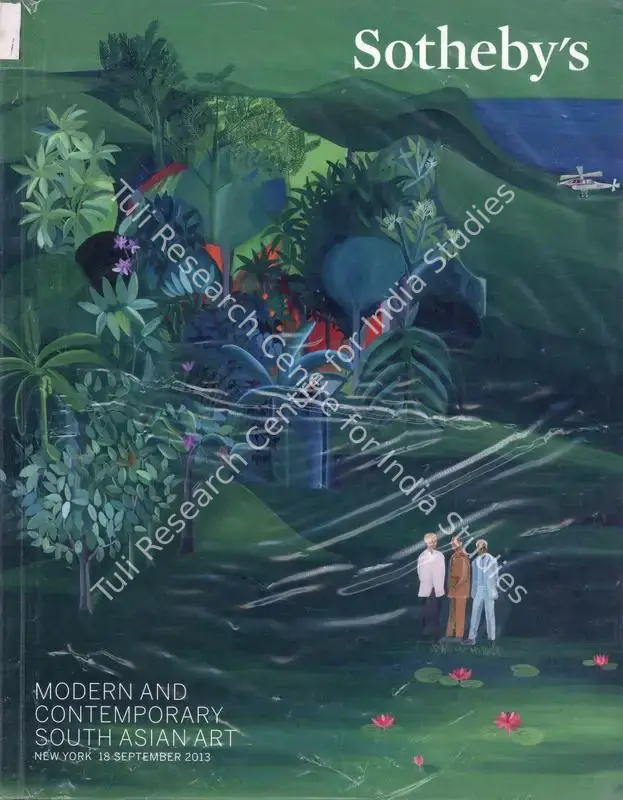
Sotheby's (Auction House). Modern and Contemporary South Asian Art. 18 September 2013, New York | Auction Catalogue | EconomicsArt | 00173320

In 2013, an artwork by Bhupen P. Khakhar was featured on the cover of Sotheby's: Modern and Contemporary South Asian Art (September 2013, Mumbai), marking a documented highlight in the artist's public and auction market visibility.
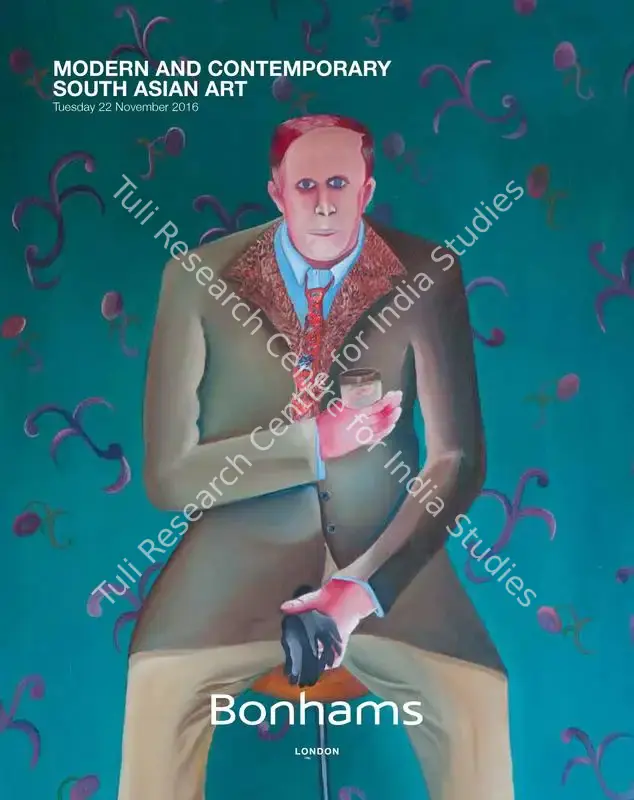
Bonhams (Auction House). Modern and Contemporary South Asian Art. 22 November 2016, London | Auction Catalogue | EconomicsArt | 00173404

In 2016, an artwork by Bhupen P. Khakhar was featured on the cover of Bonhams: Modern and Contemporary South Asian Art (November 2016, Mumbai), marking a documented highlight in the artist's public and auction market visibility.
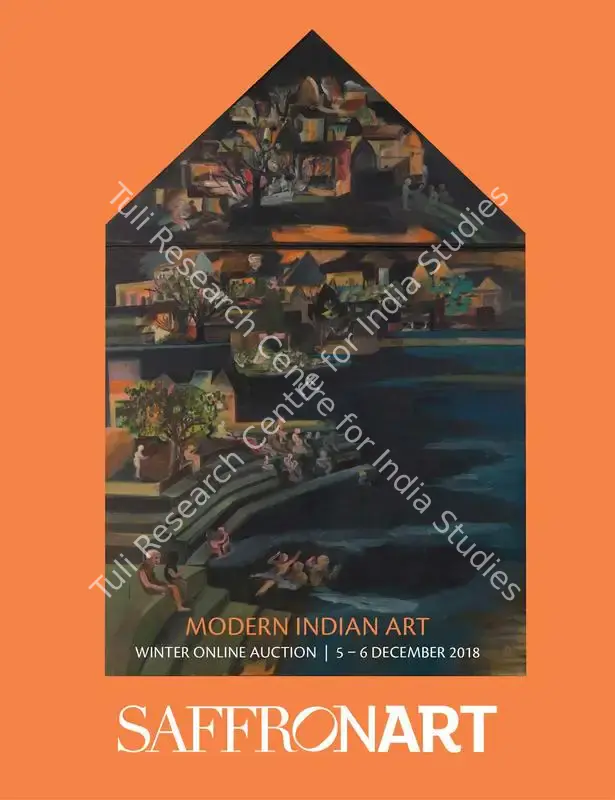
Saffronart (Auction House). Modern Indian Art  - Winter Online Auction. 06 December 2018, Online | Auction Catalogue | EconomicsArt | 00173459

In 2018, an artwork by Bhupen P. Khakhar was featured on the cover of Saffronart: Modern Indian Art  (December 2018, New York), marking a documented highlight in the artist's public and auction market visibility.
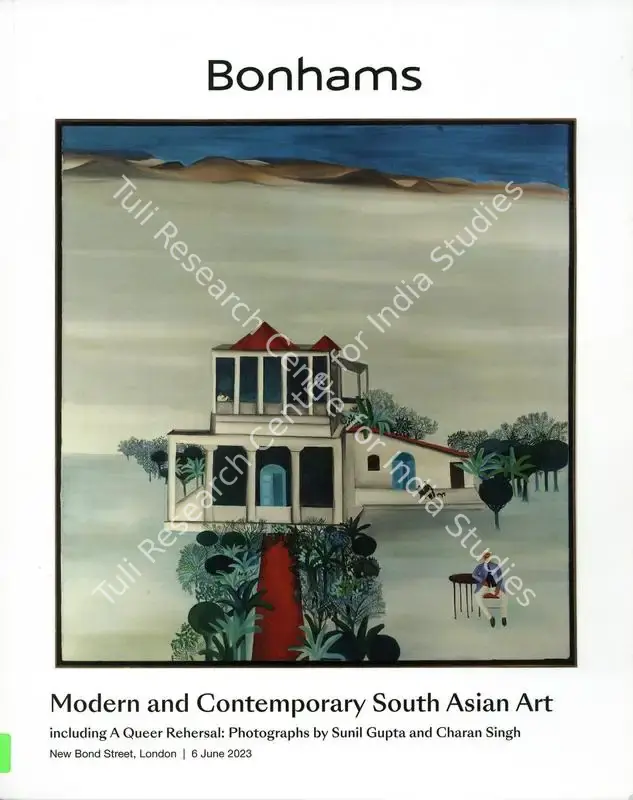
Bonhams (Auction House). Modern and Contemporary South Asian Art. 06 June 2023, London | Auction Catalogue | EconomicsArt | 00173640

In 2023, an artwork by Bhupen P. Khakhar was featured on the cover of Bonhams: Modern and Contemporary South Asian Art (June 2023, London), marking a documented highlight in the artist's public and auction market visibility.
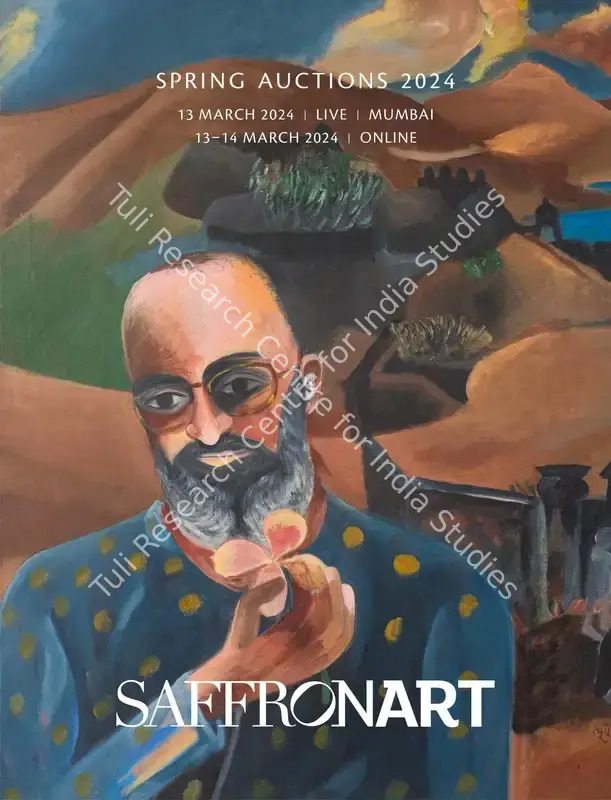
Saffronart (Auction House). Spring Live Auction. 13 March 2024, Mumbai | Auction Catalogue | EconomicsArt | 00173670

In 2024, an artwork by Bhupen P. Khakhar was featured on the cover of Saffronart: Spring Live Auction (March 2024, Mumbai), marking a documented highlight in the artist's public and auction market visibility.
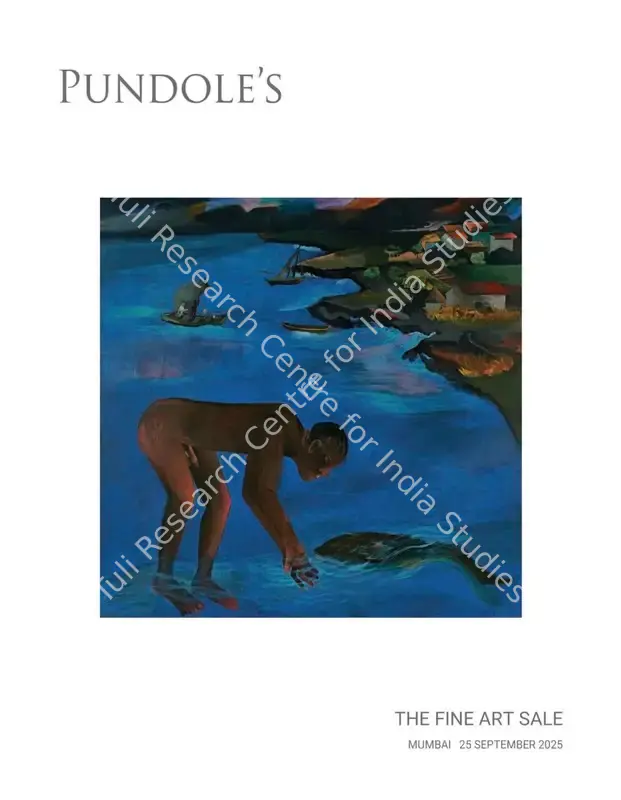
Pundole (Auction House). The Fine Art Sale. 25 September 2025, Mumbai | Auction Catalogue | EconomicsArt | 00173744

In 2025, an artwork by Bhupen P. Khakhar was featured on the cover of Pundole: The Fine Art Sale (September 2025, Mumbai), marking a documented highlight in the artist's public and auction market visibility.

Economics of Art

20 of 50
This section showcases auction lots that achieved record-high sale prices, tracked by the date each record was set based on the artist's historical auction data.

Record-high lots12

Public Auction Market (1987–2026) | Select Indicators

  1. Annual Auction Sale Turnover
  2. Average Sale Price Per Lot
  3. Square Inch Rate Trend

Annual Auction Sale Turnover

This indicator tracks the Total Annual Auction Sales value of Bhupen P. Khakhar’s artworks, beginning in 1987 through to the present.
It aggregates all sales across global auction houses into yearly totals.

Analysis reflected in the chart:
The turnover graph highlights periods of strong growth, moments of market correction, and resilience during downturns. Peaks often align with landmark works coming to public auction, while troughs may indicate reduced supply or weaker demand. Over time, the curve illustrates the overall trajectory of Bhupen P. Khakhar’s public auction market presence.

Average Sale Price Per Lot

This measure calculates the Average Sale Price of all lots by Bhupen P. Khakhar sold each year.
It smooths out fluctuations caused by the quantity of works offered and focuses on the Average Sale Price level per artwork.

Analysis reflected in the chart:
Rising average sale prices indicate growing collector confidence and a stronger willingness to pay higher amounts per work. Assuming the mix of mediums remains relatively stable over time, the proportion of works on paper typically priced lower than works on canvas adds important context to understanding these market movements.

Square Inch Rate Trend

The Square Inch Rate normalizes prices by the size of each artwork, showing the average sale value per square inch over time.
This allows fair comparisons between smaller works and larger canvases.

Analysis reflected in the chart:
The Square Inch Rate shown in the graph combines various medium types such as canvas, paper, board, and others. Historically, works on canvas and board have broadly commanded higher prices compared to works on paper.

  1. 1984

    1. Padma Shri

      Government of India

  2. 1986

    1. Star Foundation FellowshipInternational

      Asian Council

  3. 2000

    1. Prince Claus AwardInternational

      The Royal Palace of Amsterdam

Research Centre
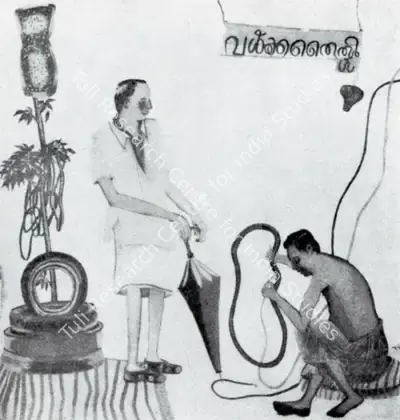
Bhupen Khakhar (Artist), Vulcanizing, Painting
Khakhar, Bhupen (Artist). Vulcanizing, n.d. | Painting
View full record
Bhupen P. Khakhar (Artist), Chavanu, Painting
Khakhar, Bhupen P. (Artist). Chavanu, n.d. | Painting
View full record
Bhupen P. Khakhar (Painter), Recent Works by Bhupen Khakhar, Painting
Khakhar, Bhupen P. (Painter). Recent Works by Bhupen Khakhar, n.d. | Painting
View full record
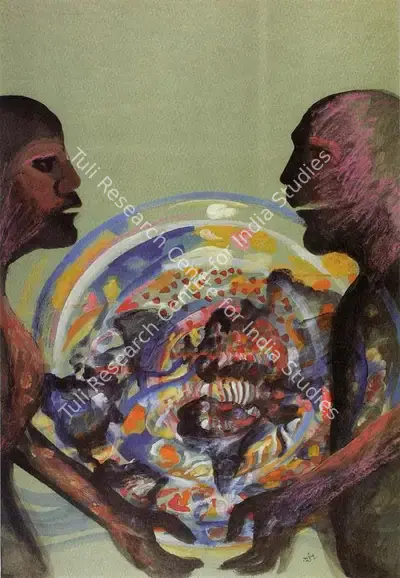
Bhupen P. Khakhar (Artist), Two Men and the World , Painting
Khakhar, Bhupen P. (Artist). Two Men and the World , n.d. | Painting
View full record
Bhupen P. Khakhar (Artist), Savita , Painting
Khakhar, Bhupen P. (Artist). Savita , n.d. | Painting
View full record
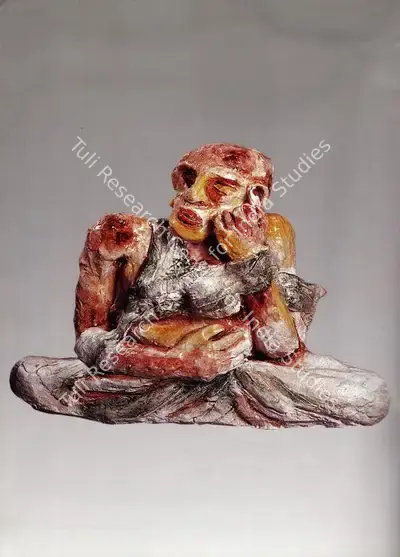
Bhupen P. Khakhar (Sculptor), Untitled, Sculpture
Khakhar, Bhupen P. (Sculptor). Untitled, n.d. | Sculpture
View full record
Bhupen P. Khakhar (Artist), Preliminary Drawing for The Celebration of Guru Jayanti, Painting
Khakhar, Bhupen P. (Artist). Preliminary Drawing for The Celebration of Guru Jayanti, n.d. | Painting
View full record
Bhupen Khakhar (Artist), Three panoramic views of Baroda three views on one rectangular sheet of paper, folded in concertina form , Drawing
Khakhar, Bhupen (Artist). Three panoramic views of Baroda three views on one rectangular sheet of paper, folded in concertina form , n.d. | Drawing
View full record
Bhupen P. Khakhar (Painter), Kapil Jariwala Gallery, Painting
Khakhar, Bhupen P. (Painter). Kapil Jariwala Gallery, n.d. | Painting
View full record
Bhupen P. Khakhar (Painter), Centre Georges Pompidou, Painting
Khakhar, Bhupen P. (Painter). Centre Georges Pompidou, n.d. | Painting
View full record
Bhupen P. Khakhar (Painter), Fine Art Resource Catalogue, Painting
Khakhar, Bhupen P. (Painter). Fine Art Resource Catalogue, n.d. | Painting
View full record
Bhupen Khakhar (Artist), Profile Portrait of Nilima, Painting
Khakhar, Bhupen (Artist). Profile Portrait of Nilima, n.d. | Painting
View full record
Bhupen Khakhar (Artist), Branch Manager, Painting
Khakhar, Bhupen (Artist). Branch Manager, n.d. | Painting
View full record
Bhupen P. Khakhar (Painter), Sigriya Caves, Painting
Khakhar, Bhupen P. (Painter). Sigriya Caves, n.d. | Painting
View full record
Bhupen Khakhar (Artist), Untitled, Drawing
Khakhar, Bhupen (Artist). Untitled, n.d. | Drawing
View full record
Bhupen Khakhar (Artist), Untitled, Drawing
Khakhar, Bhupen (Artist). Untitled, n.d. | Drawing
View full record
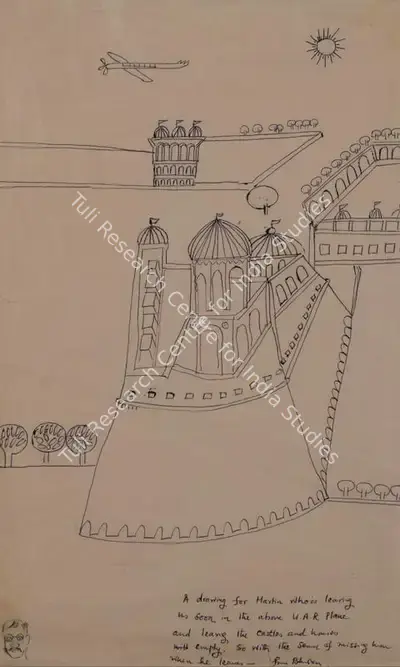
Bhupen Khakhar (Artist), A drawing for Martin who is leaving, Drawing
Khakhar, Bhupen (Artist). A drawing for Martin who is leaving, n.d. | Drawing
View full record
Bhupen Khakhar (Artist), Untitled (Man), Drawing
Khakhar, Bhupen (Artist). Untitled (Man), n.d. | Drawing
View full record
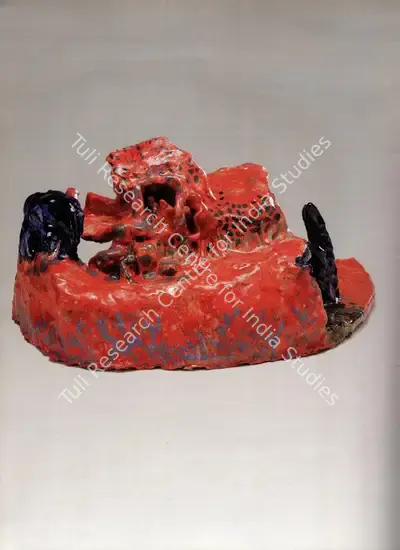
Bhupen P. Khakhar (Sculptor), Sculpture, Sculpture
Khakhar, Bhupen P. (Sculptor). Sculpture, n.d. | Sculpture
View full record
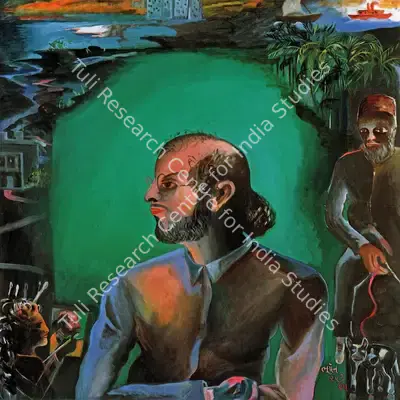
Bhupen P. Khakhar (Painter), Salman Rushdie, Painting
Khakhar, Bhupen P. (Painter). Salman Rushdie, n.d. | Painting
View full record
20 of 961
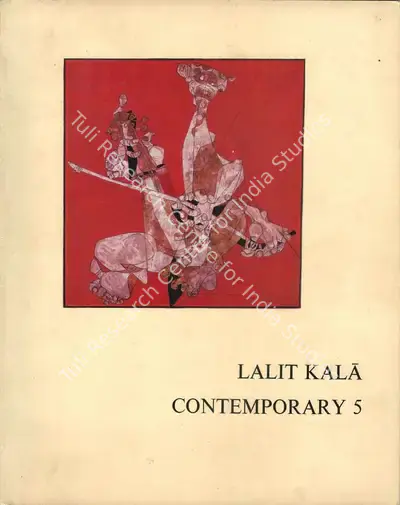
Jaya Appasamy (Editor), Lalit Kala Contemporary, 1966, Journal
Appasamy, Jaya (Editor) and S.A. Krishnan (Assistant Editor, design and layout). Lalit Kala Contemporary, September 1966 | Journal | 00857956
View full record
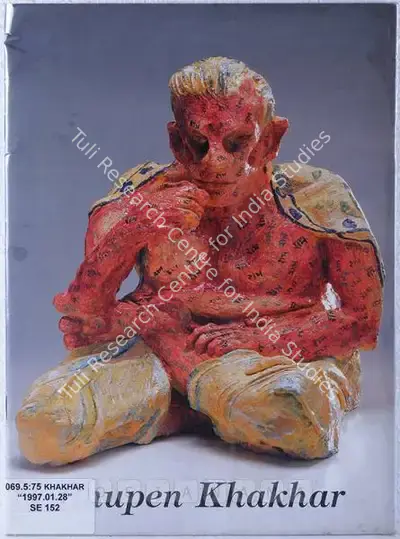
Bhupen P. Khakhar (Artist), Bhupen Khakhar, 1966, Solo Exhibition Catalogue
Khakhar, Bhupen P. (Artist). Bhupen Khakhar, 1966 | Solo Exhibition Catalogue | 00172034
View full record
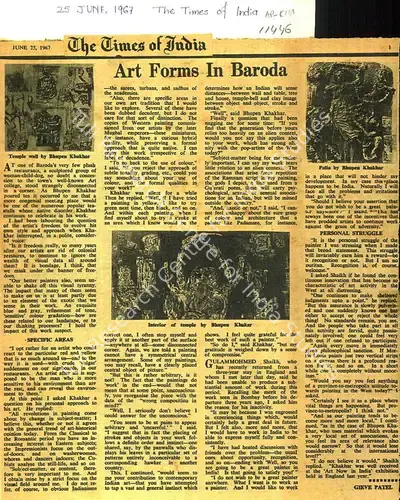
Gieve Patel (Writer), Art Forms In Baroda, 1967, Newspaper clipping
Patel, Gieve (Writer). Art Forms In Baroda, 25 June 1967 | Newspaper clipping | 00635221
View full record
Bhupen P. Khakhar (Essayist), Notes on the Visual Sources in My Paintings, 1969, Essay
Khakhar, Bhupen P. (Essayist). Notes on the Visual Sources in My Paintings. In Lalit Kala Contemporary. 10. September 1969 | Essay | 00795631
View full record
Jaya Appasamy (Editor), Lalit Kala Contemporary, 1969, Journal
Appasamy, Jaya (Editor) and S.A. Krishnan (Assistant Editor, design and layout). Lalit Kala Contemporary, September 1969 | Journal | 00857960
View full record
Bhupen P. Khakhar (Artist), Truth is Beauty and Beauty is God, 1972, Solo Exhibition Catalogue
Khakhar, Bhupen P. (Artist). Truth is Beauty and Beauty is God, 1972 | Solo Exhibition Catalogue | 00172701
View full record
Indian Art Since the Early 40s, 1974, Edited Book
Indian Art Since the Early 40s, 1974 | Edited Book | 00170048
View full record
Ratan Parimoo (Author), Studies in Modern Indian Art, 1975, Authored Book
Parimoo, Ratan (Author). Studies in Modern Indian Art, 1975 | Authored Book | 00169583
View full record
Mala Marwah (Essayist), Notes on Four Artists, 1977, Essay
Marwah, Mala (Essayist). Notes on Four Artists. In Lalit Kala Contemporary. 24 & 25. September 1977-April 1978 | Essay | 00795797
View full record
Geeta Kapur (Essayist), Situation-Scenario, 1978, Essay
Kapur, Geeta (Essayist). Situation-Scenario. In Pictorial Space. 03 January 1978 | Essay | 00149582
View full record
K.V. Haridasan (Editor), Artrends, 1978, Bulletin
Haridasan, K.V. (Editor). Artrends, July-October 1978 | Bulletin | 00842104
View full record
Geeta Kapur (Author), Contemporary Indian Artists, 1979, Authored Book
Kapur, Geeta (Author). Contemporary Indian Artists, 1979 | Authored Book | 00169570
View full record
Bhupen P. Khakhar (Artist), Bhupen Khakhar, 1979, Solo Exhibition Catalogue
Khakhar, Bhupen P. (Artist). Bhupen Khakhar, 1979 | Solo Exhibition Catalogue | 00172569
View full record
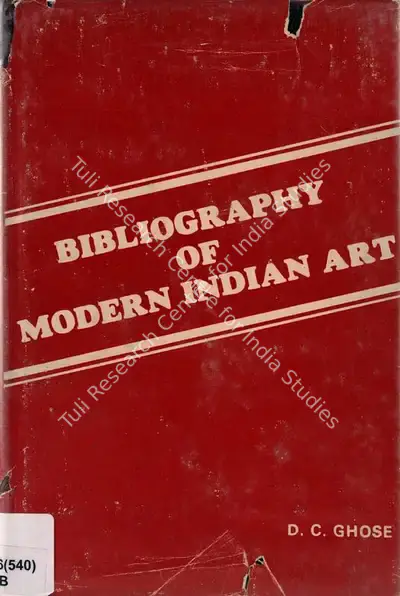
D.C. Ghose (Author), Bibliography of Modern Indian Art, 1980, Authored Book
Ghose, D.C. (Author). Bibliography of Modern Indian Art, 1980 | Authored Book | 00169564
View full record
Geeta Kapur (Essayist), Bhupen Khakkar, 1982, Essay
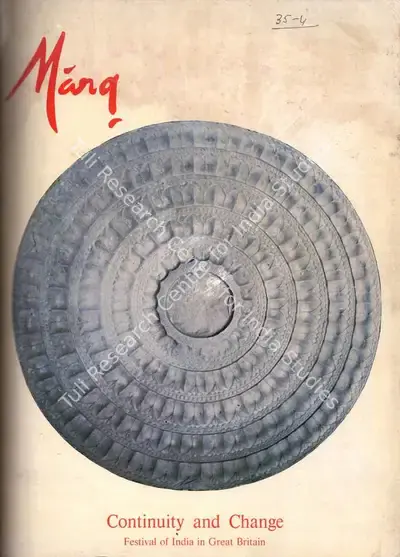
Kapur, Geeta (Essayist). Bhupen Khakkar. In Marg. 35(4). September 1982 | Essay | 00668933
View full record
Ajay Sinha (Essayist), Place for People, 1982, Essay
Sinha, Ajay (Essayist). Place for People. In Journal of Arts & Ideas. 1. October-December 1982 | Essay | 00676257
View full record
Tate Gallery (Organiser), Six Indian Painters, 1982, Group Exhibition Catalogue
Tate Gallery (Organiser). Six Indian Painters, 1982 | Group Exhibition Catalogue | 00883433
View full record
National Gallery of Modern Art (Organiser), Modern Indian Paintings, 1982, Group Exhibition Catalogue
National Gallery of Modern Art (Organiser) and Laxmi P. Sihare (Curator). Modern Indian Paintings, 1982 | Group Exhibition Catalogue | 00883480
View full record
Mohini J. Bazaz (Editor), Festival of India, 1982, Edited Book
Bazaz, Mohini J. (Editor). Festival of India, 1982 | Edited Book | 00170100
View full record
Bhupen P. Khakhar (Artist), An Exhibition of Paintings by Bhupen Khakhar, 1983, Solo Exhibition Invitation
Khakhar, Bhupen P. (Artist) and Kasmin (Organiser). An Exhibition of Paintings by Bhupen Khakhar, 1983 | Solo Exhibition Invitation | 00859885
View full record
20 of 336
Bhupen P. Khakhar (Artist), Savita , Painting
Khakhar, Bhupen P. (Artist). Savita , n.d. | Painting
View full record
Bhupen P. Khakhar (Artist), Chavanu, Painting
Khakhar, Bhupen P. (Artist). Chavanu, n.d. | Painting
View full record
Bhupen P. Khakhar (Artist), Two Men and the World , Painting
Khakhar, Bhupen P. (Artist). Two Men and the World , n.d. | Painting
View full record
Bhupen P. Khakhar (Artist), Preliminary Drawing for The Celebration of Guru Jayanti, Painting
Khakhar, Bhupen P. (Artist). Preliminary Drawing for The Celebration of Guru Jayanti, n.d. | Painting
View full record
Bhupen P. Khakhar (Painter), Salman Rushdie, Painting
Khakhar, Bhupen P. (Painter). Salman Rushdie, n.d. | Painting
View full record
Bhupen P. Khakhar (Painter), Recent Works by Bhupen Khakhar, Painting
Khakhar, Bhupen P. (Painter). Recent Works by Bhupen Khakhar, n.d. | Painting
View full record
Bhupen P. Khakhar (Painter), Fine Art Resource Catalogue, Painting
Khakhar, Bhupen P. (Painter). Fine Art Resource Catalogue, n.d. | Painting
View full record
Bhupen P. Khakhar (Painter), Kapil Jariwala Gallery, Painting
Khakhar, Bhupen P. (Painter). Kapil Jariwala Gallery, n.d. | Painting
View full record
Bhupen P. Khakhar (Painter), Centre Georges Pompidou, Painting
Khakhar, Bhupen P. (Painter). Centre Georges Pompidou, n.d. | Painting
View full record
Bhupen P. Khakhar (Painter), Sigriya Caves, Painting
Khakhar, Bhupen P. (Painter). Sigriya Caves, n.d. | Painting
View full record
Bhupen Khakhar (Artist), Vulcanizing, Painting
Khakhar, Bhupen (Artist). Vulcanizing, n.d. | Painting
View full record
Bhupen Khakhar (Artist), Branch Manager, Painting
Khakhar, Bhupen (Artist). Branch Manager, n.d. | Painting
View full record
Bhupen Khakhar (Artist), Profile Portrait of Nilima, Painting
Khakhar, Bhupen (Artist). Profile Portrait of Nilima, n.d. | Painting
View full record
Bhupen P. Khakhar (Sculptor), Sculpture, Sculpture
Khakhar, Bhupen P. (Sculptor). Sculpture, n.d. | Sculpture
View full record
Bhupen P. Khakhar (Sculptor), Untitled, Sculpture
Khakhar, Bhupen P. (Sculptor). Untitled, n.d. | Sculpture
View full record
Bhupen Khakhar (Artist), Untitled, Drawing
Khakhar, Bhupen (Artist). Untitled, n.d. | Drawing
View full record
Bhupen Khakhar (Artist), Untitled (Man), Drawing
Khakhar, Bhupen (Artist). Untitled (Man), n.d. | Drawing
View full record
Bhupen Khakhar (Artist), Three panoramic views of Baroda three views on one rectangular sheet of paper, folded in concertina form , Drawing
Khakhar, Bhupen (Artist). Three panoramic views of Baroda three views on one rectangular sheet of paper, folded in concertina form , n.d. | Drawing
View full record
Bhupen Khakhar (Artist), A drawing for Martin who is leaving, Drawing
Khakhar, Bhupen (Artist). A drawing for Martin who is leaving, n.d. | Drawing
View full record
Bhupen Khakhar (Artist), Untitled, Drawing
Khakhar, Bhupen (Artist). Untitled, n.d. | Drawing
View full record
20 of 625
Indian Art Since the Early 40s, 1974, Edited Book
Indian Art Since the Early 40s, 1974 | Edited Book | 00170048
View full record
Ratan Parimoo (Author), Studies in Modern Indian Art, 1975, Authored Book
Parimoo, Ratan (Author). Studies in Modern Indian Art, 1975 | Authored Book | 00169583
View full record
Bhupen Khakhar (Artist), Man Eating Jalebi, 1976, Painting
Khakhar , Bhupen (Artist). Man Eating Jalebi, 1976 | Painting
View full record
Geeta Kapur (Author), Contemporary Indian Artists, 1979, Authored Book
Kapur, Geeta (Author). Contemporary Indian Artists, 1979 | Authored Book | 00169570
View full record
Tate Gallery (Organiser), Six Indian Painters, 1982, Group Exhibition Catalogue
Tate Gallery (Organiser). Six Indian Painters, 1982 | Group Exhibition Catalogue | 00883433
View full record
Ursula Bickelmann (Editor), Artists Today, 1987, Edited Book
Bickelmann, Ursula (Editor). Artists Today, 1987 | Edited Book | 00170161
View full record
Caroline Turner (Editor), Tradition and Change, 1993, Edited Book
Turner, Caroline (Editor). Tradition and Change, 1993 | Edited Book | 00170245
View full record
Aberystwyth Arts Centre (Organiser), A Critical Difference, 1993, Group Exhibition Catalogue
Aberystwyth Arts Centre (Organiser) and David Thorp (Curator). A Critical Difference, 1993 | Group Exhibition Catalogue | 00883532
View full record
Bina Sarkar Ellias (Editor), Fifty Years of Indian Art, 1997, Edited Book
Ellias, Bina Sarkar (Editor). Fifty Years of Indian Art, 1997 | Edited Book | 00170306
View full record
Timothy Hyman (Author), Bhupen Khakhar, 1998, Authored Book
Hyman, Timothy (Author). Bhupen Khakhar, 1998 | Authored Book | 00169468
View full record
0 (Organiser), Private Mythology, 1998, Group Exhibition Catalogue
The Japan Foundation Asia Center (Organiser) and Tatehata Akira (Curator). Private Mythology, 1998 | Group Exhibition Catalogue | 00883481
View full record
Shivaji K. Panikkar (Editor), Twentieth-Century Indian Sculpture, 2000, Edited Book
Panikkar, Shivaji K. (Editor). Twentieth-Century Indian Sculpture, 2000 | Edited Book | 00170354
View full record
Geeta Kapur (Author), When was Modernism, 2000, Authored Book
Kapur, Geeta (Author). When was Modernism, 2000 | Authored Book | 00169571
View full record
Yashodhara Dalmia (Author), The Making of Modern Indian Art, 2001, Authored Book
Dalmia, Yashodhara (Author). The Making of Modern Indian Art, 2001 | Authored Book | 00169555
View full record
Yashodhara Dalmia (Editor), Contemporary Indian Art, 2002, Edited Book
Dalmia, Yashodhara (Editor). Contemporary Indian Art, 2002 | Edited Book | 00170392
View full record
Gallery Chemould (Organiser), Crossing Generations, 2003, Group Exhibition Catalogue
Gallery Chemould (Organiser), Geeta Kapur and Shireen Gandhy (Curator). Crossing Generations, 2003 | Group Exhibition Catalogue | 00883487
View full record
Indira Chandrasekhar (Editor), Body-City, 2003, Edited Book
Chandrasekhar, Indira (Editor). Body-City, 2003 | Edited Book | 00170408
View full record
Yashodhara Dalmia (Author), Memory, Metaphor, Mutations, 2007, Authored Book
Dalmia, Yashodhara (Author). Memory, Metaphor, Mutations, 2007 | Authored Book | 00169556
View full record
DAG (Organiser), A Visual History of Indian Modern Art, 2015, Group Exhibition Catalogue
DAG (Organiser) and Kishore Singh (Curator). A Visual History of Indian Modern Art, 2015 | Group Exhibition Catalogue | 00883456
View full record
Shruti Parthasarathy (Editor), KB Goel, 2020, Edited Book
Parthasarathy, Shruti (Editor). KB Goel, 2020 | Edited Book | 00170618
View full record
20 of 21

Posts 2

  1. Bhupen Khakhar's "Trade Series"
    Bhupen Khakhar's "Trade Series"
    The early 1970s marked a transformative period in Bhupen Khakhar's artistic evolution. Around 1972, Khakhar began developing a distinctive visual language focused on portraying the everyday lives of ordinary men. This shift culminated in his renowned "Trade Series" - a collection of paintings that resemble large, marquee-style portraits of individuals engaged in various professions, reminiscent of eighteenth-century Company School paintings. Art critic Timothy Hyman notes that Khakhar ventured into an unprecedented artistic realm, capturing the essence of a half-westernized, half-urbanized modern India. His unique position working as an accountant while engaging intimately with a diverse range of human experiences allowed him to present a vivid portrayal of Indian life. Khakhar's "Trade Series" represents a profound departure from traditional artistic confines, effectively dissolving the barrier between studio art and everyday reality.
    2_FineArts6_EconomicsArt11_Eroticism14_IndoWorld9_SocialDuty
    Bhupen P. Khakhar
    Read Post →
  2. All Living Souls
    All Living Souls
    Tuli Research Centre for India Studies presents All Living Souls - Expressed in the Modern and Contemporary Fine & Popular Indian Arts Curated by Neville Tuli As part of launching the 16th Research Category for India Studies - "The Animal-Human-Nature-Continuum" we present a fascinating exhibition of modern and contemporary Indian fine and popular arts and their expression of the ideas and forms related to the dialogue between animals and humans, and the larger cosmic and spiritual thoughts which abide therein. Please visit the Exhibition and see the artworks by modern and contemporary masters such as Rabindranath Tagore, D.P. Roy Chowdhury, M.F. Husain, J. Swaminathan, J. Sultan Ali, Somnath Hore, Ganesh Pyne, Manjit Bawa, K. Laxma Goud, Krishna Reddy, Jyoti Bhatt, Rekha Rodwittiya, Amit Ambalal, among others, along with vintage and rare prints from the pioneering Indian chromolithographic presses such as Chitrashala, Ravi Varma, Calcutta Art Studio, Chore Bagan & Kansaripara.
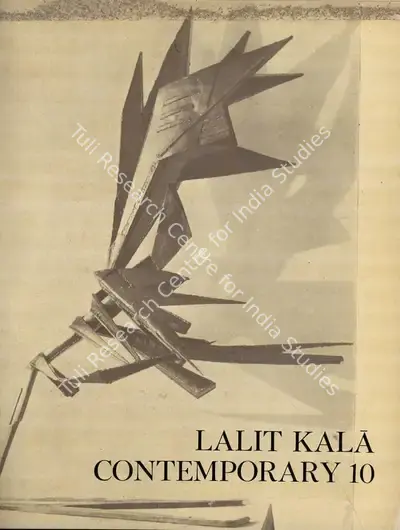
    2_FineArts4_PopCulture16_Continuum
    A.L. SyedAbanindranath TagoreAmit AmbalalAmitava DasAnita DubeBenode Behari MukherjeeBhupen P. KhakharBireshwar Sen+37 more
    Read Post →

Related

51

Personalities

31

A. RamachandranComparable Artworks
Abanindranath TagoreComparable Artworks
Adi M. DavierwallaComparable Artworks
Akbar PadamseeComparable Artworks
Amrita Sher-GilComparable Artworks
Bharti KherComparable Artworks
Bikash BhattacharjeeComparable Artworks
F.N. SouzaComparable Artworks
Ganesh PyneComparable Artworks
Geeta KapurComparable Artworks
Gieve PatelComparable Artworks
HEARTComparable Artworks
Hemendranath MazumdarComparable Artworks
J. Sultan AliComparable Artworks
J. SwaminathanComparable Artworks
Jamini RoyComparable Artworks
Jehangir SabavalaComparable Artworks
Jogen ChowdhuryComparable Artworks
Jyoti BhattComparable Artworks
M.F. HusainComparable Artworks
Manjit BawaComparable Artworks
Meera MukherjeeComparable Artworks
Nasreen MohamediComparable Artworks
Osian'sComparable Artworks
Prabhakar BarweComparable Artworks
Raja Ravi VarmaComparable Artworks
Rameshwar BrootaComparable Artworks
RamkumarComparable Artworks
Rashid RanaComparable Artworks
Ratan ParimooComparable Artworks
Sayed Haider RazaComparable Artworks

Institutions

14

Apparao ArtComparable Artworks
Art BullComparable Artworks
ArtianaComparable Artworks
Asta GuruComparable Artworks
Bid & HammerComparable Artworks
BonhamsComparable Artworks
BowringsComparable Artworks
Christie'sComparable Artworks
DAGComparable Artworks
deRivaz & IvesComparable Artworks
Emami ChiselComparable Artworks
Mapin PublishingComparable Artworks
PrinsepsComparable Artworks
PundoleComparable Artworks

Themes

4

ArtrendsComparable Artworks
Journal of Arts & IdeasComparable Artworks
Lalit Kala Contemporary JournalComparable Artworks
MargComparable Artworks

Events

2

All Living SoulsEvent Artists
Pictorial Space 1978Event Artists · Comparable Artworks
Tuli Research Centre for India Studies
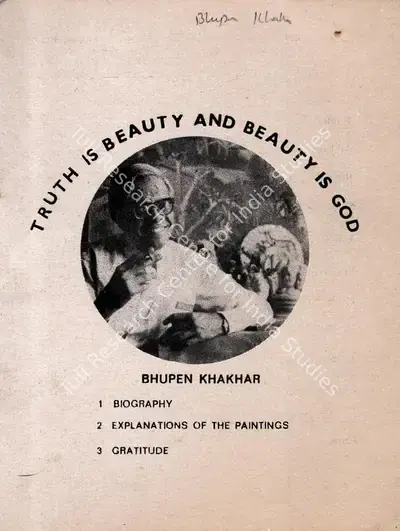
Tuli Research Centre
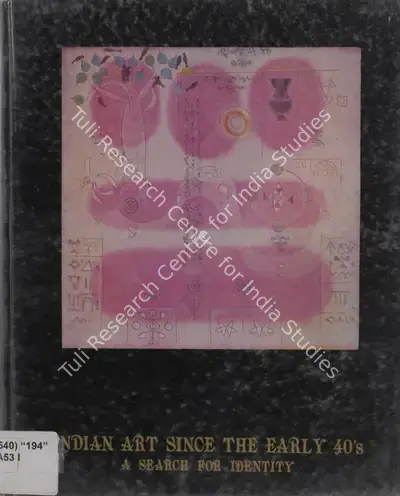
for India Studies

A free and open knowledge base for the modern and contemporary Indian arts, cinema, photography and cultural heritage.

Support

Contact Us

Discover

Tuli Research Centre for India StudiesVisionManifestoArchive & LibraryVanraja Sanctuary & Hospice
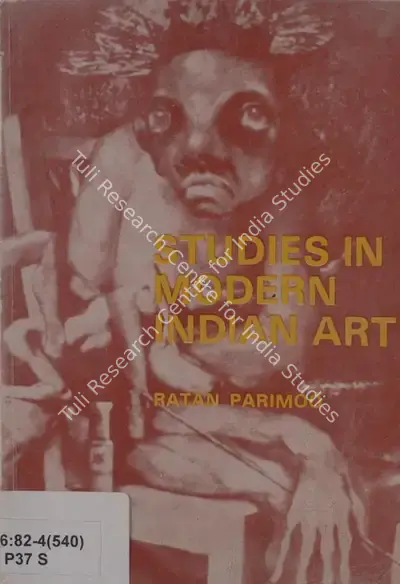
Legal

Privacy PolicyTerms & Conditions

Follow us

Youtube

Youtube

Instagram

Instagram

Facebook

Facebook

© Tuli Research Centre for India Studies 2026
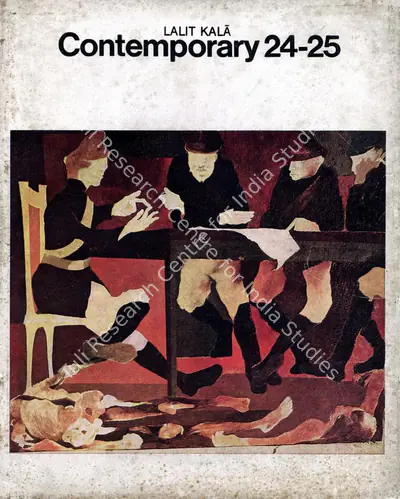
Tuli Research Centre for India Studies
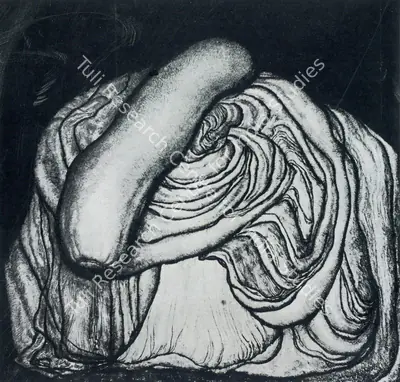
Tuli Research Centre
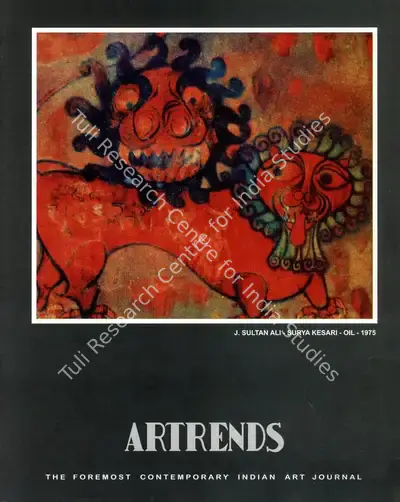
for India Studies

A free and open knowledge base for the modern and contemporary Indian arts, cinema, photography and cultural heritage.

Tuli Research Centre for India StudiesVisionManifestoArchive & LibraryVanraja Sanctuary & Hospice
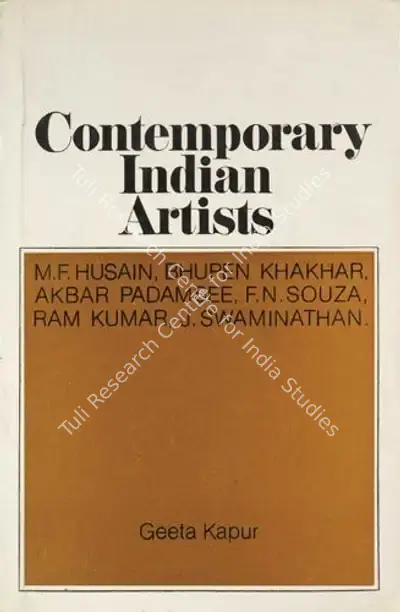
Contact Us
Privacy PolicyTerms & Conditions

Follow us

YoutubeInstagramFacebook

© Tuli Research Centre for India Studies 2026
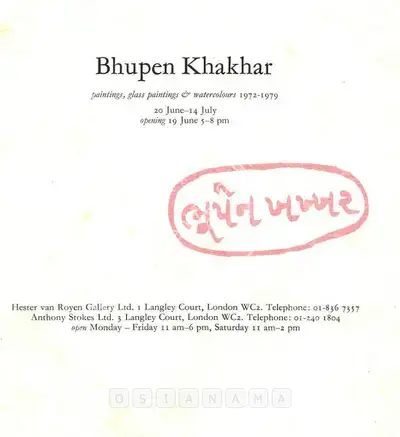
              Khakhar, Bhupen (Artist). Republic Day. Oil on canvas, 1972 | Painting | FineArts | 00755415

              Estimates

              ₹2,084,478 - 2,779,304

              $46,000 - 62,000

              Winning Bid

              ₹8,337,912

              $176,688

              Artwork Square Inch Rate (S.I.R)
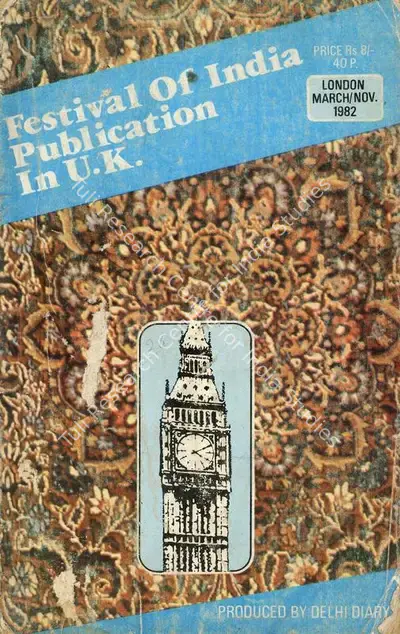
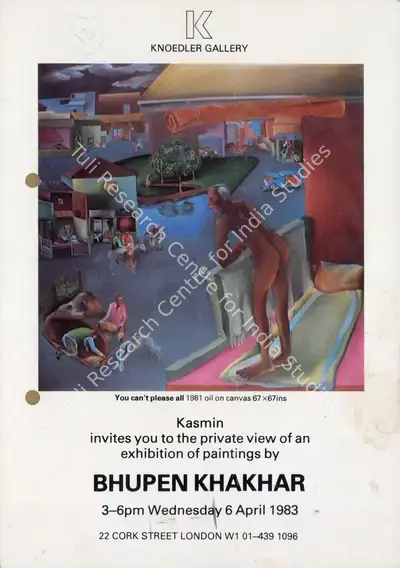
              7560.59

              Lot Ratio | Hammer Price / Lower Estimate

              4.00

              Bhupen Khakhar | 10 Mar 1934 – 08 Aug 2003

              ArtistBhupen Khakhar
              TitleRepublic Day
              MediumOil on canvas
              Date1972
              Size33.27 x 33.15 in (84.50 x 84.20 cm)
              Lot Number21
              Auction HouseBonhams
              Venue / LocationLondon
              Date of Auction02 June 2010
              Type of AuctionOffline

              Research Categories

              2_FineArts6_EconomicsArt14_IndoWorld
              Source
              Modern and Contemporary Middle Eastern and South Asian Art

              Related Links6

              Masterlist2
              BonhamsBhupen Khakhar
              Research Categories3
              02Modern and Contemporary Indian Fine Arts06Economics of Art & Cultural Industry14India and her Relationship with the World
              Object
              Bonhams Modern and Contemporary Middle Eastern and South Asian Art 02 June 2010 London Auction Catalogue