Pardesi1957
Introduction
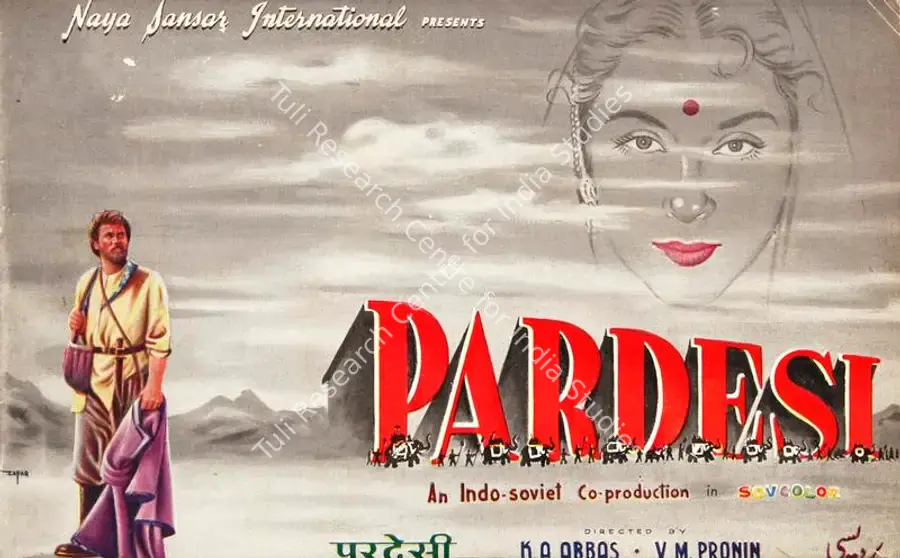
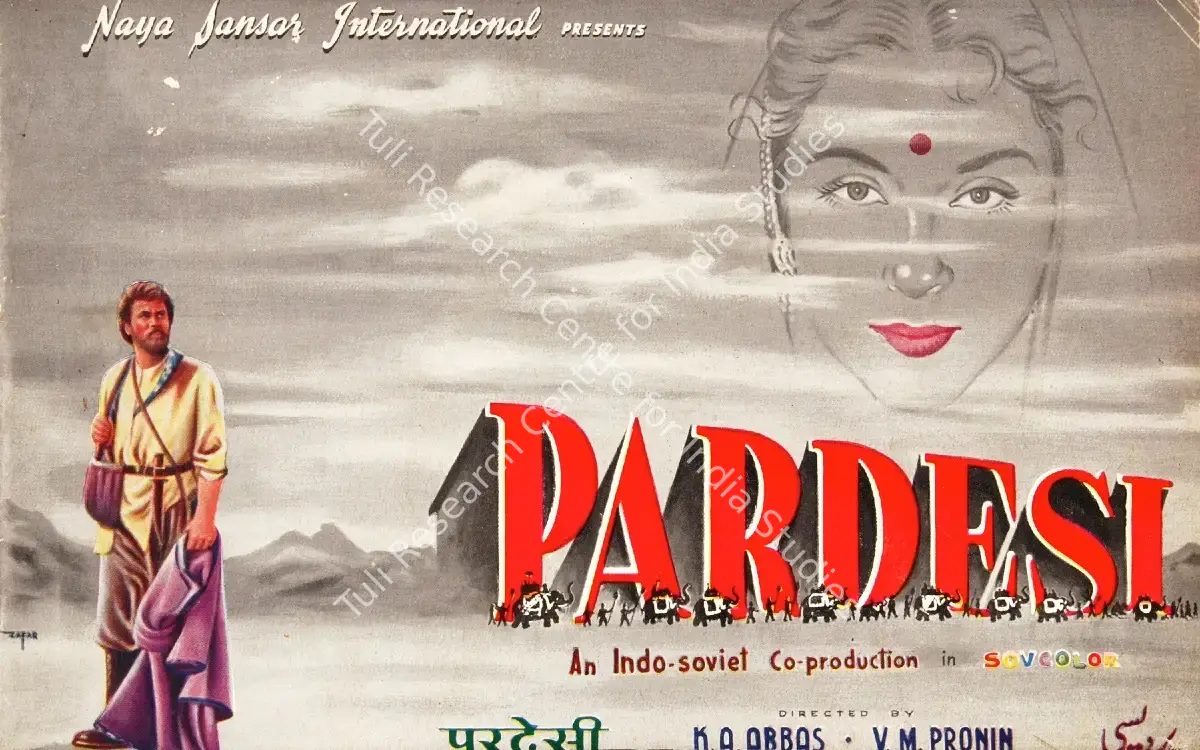
Pardesi (1957) stands as a remarkable cinematic collaboration between India and the Soviet Union—an ambitious Indo-Soviet co-production jointly directed by Khwaja Ahmad Abbas and Russian filmmaker Vasili Pronin. Produced during a period of strong Indo-Russian diplomatic and cultural ties, the film was made in two versions—Hindi and Russian—and is based on the 15th-century travelogues of Russian explorer Afanasy Nikitin, A Journey Beyond the Three Seas, now regarded as a classic of Russian literature.
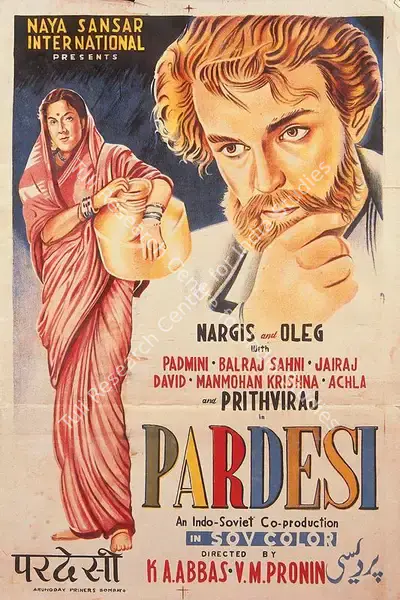
The film brought together an impressive and diverse cast, including Russian actor Oleg Strizhenov alongside Indian screen legends such as Nargis, Padmini, Prithviraj Kapoor, Balraj Sahni, David Abraham, Achala Sachdev, Manmohan Krishna, Paidi Jairaj, and Stepan Kayukov, among others.
Produced by the Soviet state-owned Mosfilm in collaboration with Abbas's Naya Sansar International, Pardesi was one of the earliest examples of a truly international co-production in Indian cinema. Its rich historical narrative and cross-cultural production made it a unique cinematic experiment.
One of the highlights of Pardesi was its music, composed by the celebrated Anil Biswas. The soundtrack featured several memorable songs, including Rasiya Re Man Basiya Re by Meena Kapoor and Na Dir Dhin Tana Dere Na by Lata Mangeshkar, the latter filmed on the graceful dancer-actress Padmini. The film was originally shot in SovColor, yet sadly, no colour prints of the Hindi version are known to survive today—only a black-and-white copy remains in circulation in India.
Despite its star power and high production values, Pardesi did not achieve major commercial success in India. Its release coincided with the monumental success of Mother India (1957), also starring Nargis, which significantly overshadowed Pardesi at the box office. However, the film's true significance lies elsewhere.
Pardesi was India's official entry to the 1958 Cannes Film Festival, where it was nominated for the prestigious Palme d'Or (Golden Palm). Domestically, it received critical acclaim, winning the Filmfare Award for Best Art Direction in 1958. Its exploration of cross-cultural encounters, its historical storytelling, and the pioneering nature of its Indo-Soviet collaboration have earned it a lasting place in the annals of cinema history.
Today, Pardesi is appreciated not only for its artistic merit but also as a symbol of international friendship, cultural exchange, and early cinematic diplomacy between India and the Soviet Union. Though not a commercial blockbuster, its legacy endures as a milestone in Indian and world cinema.
इस फ़िल्म में उस दौर के एक से बढ़कर एक प्रभावशाली और विविध कलाकारों की टोली ने अभिनय किया। रूसी अभिनेता ओलेग स्ट्रिज़ेनोव के साथ भारतीय सिनेमाई पर्दे की दिग्गज हस्तियाँ जैसे नर्गिस, पद्मिनी, पृथ्वीराज कपूर, बलराज साहनी, डेविड अब्राहम, अचला सचदेव, मनमोहन कृष्ण, पैडी जयराज और स्तेपन कायुकोव जैसे कलाकार शामिल थे।
सोवियत सरकारी स्टूडियो 'मॉसफ़िल्म' और अब्बास के निर्माण समूह 'नया संसार इंटरनेशनल' के आपसी सहयोग से बनी परदेसी सही मायनों में भारतीय सिनेमा के शुरुआती अंतरराष्ट्रीय सह-निर्माणों में से एक थी। इसका समृद्ध ऐतिहासिक कथानक और सात समन्दर पार की संस्कृतियों को जोड़नेवाला निर्माण इसे एक अनोखा सिनेमाई प्रयोग बना देता है।
इस फ़िल्म की एक बड़ी विशेषता इसका संगीत था जिसे प्रख्यात संगीतकार अनिल बिस्वास ने तैयार किया था। फ़िल्म में कई यादगार गीत शामिल थे जैसे मीना कपूर का गाया "रसिया रे मन बसिया रे" और लता मंगेशकर का गाया "ना दिर धिन ताना देरे ना" जिसे नृत्यांगना एवं अभिनेत्री पद्मिनी पर फ़िल्माया गया था। यह फ़िल्म मूल रूप से 'सोव कलर' में शूट हुई थी लेकिन दुर्भाग्यवश इसके हिन्दी संस्करण का कोई रंगीन प्रिंट आज मौजूद नहीं है। आज इसे भारत में सिर्फ़ श्वेत-श्याम प्रिंट में ही देखा जा सकता है।
अपनी दमदार स्टारकास्ट और उच्च निर्माण गुणवत्ता के बावजूद परदेसी भारत में बड़ी व्यावसायिक सफलता हासिल नहीं कर सकी। यह उसी समय रिलीज़ हुई थी जब नर्गिस के अपूर्व अभिनय से सजी मदर इंडिया (1957) जैसी ऐतिहासिक फ़िल्म रिलीज़ हुई। मदर इंडिया के टिकट खिड़की पर प्रदर्शन ने परदेसी को काफ़ी हद तक पीछे धकेल दिया। फिर भी इस फ़िल्म का वास्तविक महत्व कहीं और देखा जा सकता है।
परदेसी को भारत की आधिकारिक प्रविष्टि के रूप में सन् 1958 के 'कान फ़िल्म महोत्सव' में भेजा गया, जहाँ इसे प्रतिष्ठित शीर्ष पुरस्कार 'पाल्मे डी'ओर' या गोल्डन पाम के लिए नामांकित किया गया। भारत में भी इसे आलोचनात्मक प्रशंसा मिली और सन् 1958 के फ़िल्मफ़ेयर पुरस्कारों में 'सर्वश्रेष्ठ कला निर्देशन' के लिए इसने पुरस्कार जीता। भिन्न संस्कृतियों के बीच संपर्कों की खोज, समृद्ध ऐतिहासिक कथातत्व और इंडो-सोवियत सहयोग की शुरुआती कोशिश ने इसे सिनेमा इतिहास के पन्नों में स्थायी स्थान दिलाया है।
आज परदेसी न केवल अपनी कलात्मक गुणवत्ता के लिए सराही जाती है बल्कि भारत और सोवियत संघ के बीच अंतरराष्ट्रीय दोस्ती, सांस्कृतिक आदान-प्रदान और सिनेमाई कूटनीति के शुरुआती प्रतीक के रूप में भी याद की जाती है। रिलीज़ के समय भले ही यह कोई व्यावसायिक ब्लॉकबस्टर न बन पाई हो लेकिन इसकी विरासत भारतीय और विश्व सिनेमा दोनों के लिए एक महत्वपूर्ण मील का पत्थर साबित हुई है।