
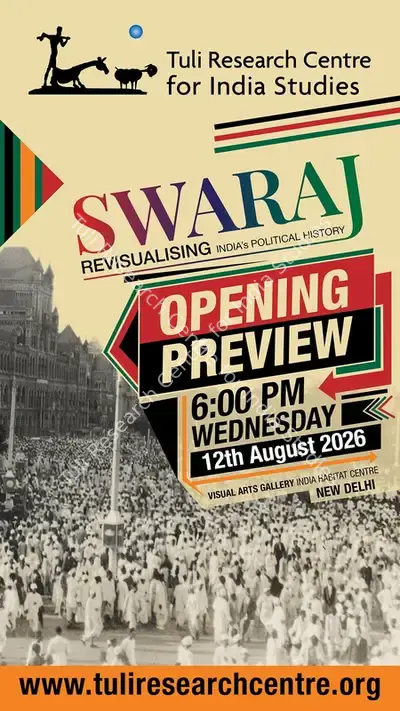
SWARAJ - Revisualising India's Political History
About this post
"What does 𝗦𝘄𝗮𝗿𝗮𝗷 truly mean? Is freedom achieved at a single historic moment or period, or must self-rule be continually imagined, questioned and renewed?
India's journey towards Swaraj was shaped not by one voice or one path, but through reform and resistance, revolution and non-violence, political thought, public protest, art, print, photography, cinema and the collective will of its people.
The Tuli Research Centre for India Studies (T.R.I.S.) presents 𝗦𝗪𝗔𝗥𝗔𝗝: 𝗥𝗲𝘃𝗶𝘀𝘂𝗮𝗹𝗶𝘀𝗶𝗻𝗴 𝗜𝗻𝗱𝗶𝗮'𝘀 𝗣𝗼𝗹𝗶𝘁𝗶𝗰𝗮𝗹 𝗛𝗶𝘀𝘁𝗼𝗿𝘆, a pioneering exhibition curated by Neville Tuli.
Bringing together rare artworks, prints, photographs, books, film publicity art, political propaganda and visual-textual-audio archives, SWARAJ traces India's complex journey towards political self-rule and self-discovery. From early European coastal encounters, the Bengal Renaissance and the First War of Independence in 1857 to the rise of Bharat Mata, the Tiranga, Gandhiji's inspired satyagraha, civil disobedience and mass mobilisation, the exhibition explores how the idea of India was envisioned, contested and transformed.
It journeys through revolutionary movements and non-violence, subaltern uprisings, the Partition, the Constitution, the integration of the Princely States, the Emergency, wars, civic dissent and people's protests. It also foregrounds the vital role of artists, photographers, publishers, newspapers, journals, cartoons and cinema in recording and shaping the nation's political consciousness.
SWARAJ invites us to encounter history not as something distant or settled, but as a daily living inheritance that continues to influence who we are and how we understand freedom, identity, and ourselves today.
Watch the video for a glimpse into this expansive visual journey, and follow the exhibition as it revisualises India's political history through art, image, text and sound.
India's journey towards Swaraj was shaped not by one voice or one path, but through reform and resistance, revolution and non-violence, political thought, public protest, art, print, photography, cinema and the collective will of its people.
The Tuli Research Centre for India Studies (T.R.I.S.) presents 𝗦𝗪𝗔𝗥𝗔𝗝: 𝗥𝗲𝘃𝗶𝘀𝘂𝗮𝗹𝗶𝘀𝗶𝗻𝗴 𝗜𝗻𝗱𝗶𝗮'𝘀 𝗣𝗼𝗹𝗶𝘁𝗶𝗰𝗮𝗹 𝗛𝗶𝘀𝘁𝗼𝗿𝘆, a pioneering exhibition curated by Neville Tuli.
Bringing together rare artworks, prints, photographs, books, film publicity art, political propaganda and visual-textual-audio archives, SWARAJ traces India's complex journey towards political self-rule and self-discovery. From early European coastal encounters, the Bengal Renaissance and the First War of Independence in 1857 to the rise of Bharat Mata, the Tiranga, Gandhiji's inspired satyagraha, civil disobedience and mass mobilisation, the exhibition explores how the idea of India was envisioned, contested and transformed.
It journeys through revolutionary movements and non-violence, subaltern uprisings, the Partition, the Constitution, the integration of the Princely States, the Emergency, wars, civic dissent and people's protests. It also foregrounds the vital role of artists, photographers, publishers, newspapers, journals, cartoons and cinema in recording and shaping the nation's political consciousness.
SWARAJ invites us to encounter history not as something distant or settled, but as a daily living inheritance that continues to influence who we are and how we understand freedom, identity, and ourselves today.
Watch the video for a glimpse into this expansive visual journey, and follow the exhibition as it revisualises India's political history through art, image, text and sound.
Post 28
SWARAJ - Revisualising India's Political History
Post record