TRIS logo image
Search names, films, exhibitions

EN

EN

English

HI

Hindi

EN

EN

English

HI

Hindi

Tuli Research Centre for India Studies

Home

Tuli Research Centre for India Studies

Vision

Manifesto

Archive & Library

Vanraja Sanctuary & Hospice

Research Categories

Browse All

ICore

1_CinemaEducation_Cinema as a Critical Educational Resource

2_FineArts_Modern and Contemporary Indian Fine Arts

3_Photography_Photography in India

4_PopCulture_The Printed Image, Popular Arts, and Crafts

IIMaterial

5_ArcHeritage_India's Architectural Heritage as Inspiration

6_EconomicsArt_Economics of Art & Cultural Industry

7_Travel_Automobile, Transport and Travel Heritage

8_Uncertainty_Uncertainty

IIICritical

9_SocialDuty_Social Responsibility of the Creative Mind

10_Childhood_The Changing Smile of Childhood & Its Second Coming

11_Sensuality_The Sensual Discipline within Creativity

12_Scholarship_The History & Historiography of Scholarship in the Arts, Humanities, and Social Sciences

IVMeaningful

13_SeekJustice_Seeking Justice and Political Integrity

14_IndoWorld_India and her Relationship with the World

15_SpiritualPoetics_The Religious-Spiritual-Poetic-Philosophical Framework

16_Continuum_The Animal-Human-Nature Continuum

Explore

All

Posts

Masterlists

Calendar

Live | Upcoming

All Events

Timetable

Search names, films, exhibitions

EN

EN

English

HI

Hindi

K.G. Subramanyan

K.G. Subramanyan

Aquariusb. 15 Feb 1924, Kuthuparambu, Kerala, Indiad. 29 Jun 2016, Vadodara, Gujarat, India

Personality.Artist
A-Graphy
Introduction
Exhibitions204
Integrated Timeline59
Chronicled Highlights21
Economics of Art377
Research Centre1,311
All1,311
Library496
Archive813
Videos2
Highlights23
Posts2
Calendar2
Home/Modern and Contemporary Indian Fine Arts/Personality · Artist/K.G. Subramanyan
K.G. Subramanyan — featured artwork

Introduction

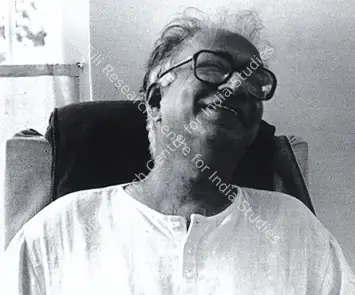
K.G. Subramanyan was one of the most exciting, versatile and polymathic artists of India. He was, among other things, a seminal thinker and intellectual, a prolific writer on art and his art encompassed an ecclectic and diverse range of media.

Date of Birth
15 Feb 1924
Zodiac sign
Aquarius
Date of Death
29 Jun 2016
Age
92
Place of Birth
Kuthuparambu, Kerala, India
Place of Death
Vadodara, Gujarat, India
State Country of Birth
Kerala, India
State Country of Death
Gujarat, India
  1. 1943

    1. Presidency College Madras
  2. 1948

    1. Kala Bhavan Visva-Bharati University Shantiniketan
  3. 1956

    1. British Council Research Scholarship to Slade School of Art London
  1. 1945

    1. Helped Organise the first Delhi Exhibition Featuring Benode Behari Mukherjee and Ramkinkar Baij, New Delhi, India
  2. 1947

    1. Mural for Hindi Bhavan with Benode Behari, Santiniketan, India
  3. 1955

    1. Mural, Jyoti Industry Ltd., Vadodara, India
    2. Mural, Faculty of Fine Arts, M.S. University, Vadodara, India
  4. 1959

    1. Lecturer in Painting, Faculty of Fine Arts, MS University, Vadodara, IndiaOfficial Position
  5. 1961

    1. Deputy Director, Design, All India Handloom Board, Mumbai, IndiaOfficial Position
  6. 1963

    1. Mural, King of the Dark Chamber, Rabindralaya, Lucknow, India
  7. 1965

    1. Reader, Painting Department, Faculty of Fine Arts, Maharaja Sayajirao University, Vadodara, IndiaOfficial Position
    2. Member, Gujarat Lalit Kala Akademi
    3. Mural, India Pavilion, New York World Fair, New York, USA
  8. 1966

    1. Design Consultant, All India Handloom Board, Mumbai, IndiaOfficial Position
  9. 1967

    1. Member, All India Board of Technical Studies in Applied Art
    2. JDR IIIrd Fund Fellowship, New York, USAOfficial Position
  10. 1969

    1. Mural, India of My Dreams Pavilion, Gandhi Darshan, New Delhi, India
  11. 1972

    1. Published The Butterfly and the Cricket, A Summer Story and Robby
  12. 1974

    1. Member, Gujarat Lalit Kala Akademi, India
    2. Dean, Faculty of Fine Arts, MS University, Vadodara, IndiaOfficial Position
    3. Published Our Friends the Ogres and The King and the Little Man
  13. 1975

    1. Member of Direction, World Crafts CouncilAssociated Institution
    2. Delegate, Asian Assembly, World Crafts Council, Sydney, AustraliaAssociated Institution
  14. 1976

    1. President, Crafts Council of IndiaOfficial Position
    2. Member Delegate, General Assembly, World Crafts Council, Oaxtepec, Mexico, USAAssociated Institution
    3. Visiting Lecturer, Canadian Universities in Ottawa and Hamilton, CanadaAssociated Institution
    4. Mural, R&D Building, Jyoti Pvt. Ltd., Vadodara, India
  15. 1977

    1. Member, All India Handicrafts Board
  16. 1978

    1. Member, Governing Council, National Institute of Design, Ahmedabad, IndiaAssociated Institution
    2. Visiting Fellow, Kala Bhavan, Visva Bharati University, Santiniketan, IndiaOfficial Position
    3. Published, Moving Focus: Essays on Indian Art, Lalit Kala Akademi, New Delhi, India
  17. 1979

    1. Member, Lalit Kala Akademi, New Delhi, India
    2. Published, 'How Poppy Grew Happy, Cat's Night and Day and Frog Life is Fun Life'
  18. 1980

    1. Professor, Painting Department, Faculty of Fine Arts, MS University, Vadodara, IndiaOfficial Position
  19. 1982

    1. Invited for seminar on Traditional Arts at Barbican Centre, London, UK
  20. 1984

    1. Member, Siksha-samiti and Karmasamiti, Visva Bharati University, Santiniketan, India
    2. Member, All India Handloom and Handicrafts BoardAssociated Institution
  21. 1985

    1. Guest, Chinese Artists' Association, ChinaOfficial Position
    2. Fellow, Lalit Kala Akademi, New Delhi, IndiaAssociated Institution
    3. Published, 'Of Ogres, Beasts and Men'
  22. 1987

    1. Published, 'The Living Tradition', Seagull Books, Kolkata, India
  23. 1988

    1. Christensen Fellow, St. Catherine's College, Oxford, UKAssociated Institution
    2. Mural, Sand-cast Cement, Kala Bhavan, Visva Bharati University, Santiniketan, India
  24. 1989

    1. Professor, Painting Department, Kala Bhavan, Visva Bharati Univeresity, Santiniketan, IndiaOfficial Position
    2. Mural, Reverse painting on Glass (with school children), Santiniketan, India
    3. Professor Emeritus, Kala Bhavan, Visva Bharati University, Santiniketan, IndiaAssociated Institution
  25. 1990

    1. Mural, Black and White, Kala Bhavan, Visva Bharati University, Santiniketan, India (First phase)
  26. 1991

    1. Fellow, Kerala Lalit Kala AkademiAssociated Institution
  27. 1992

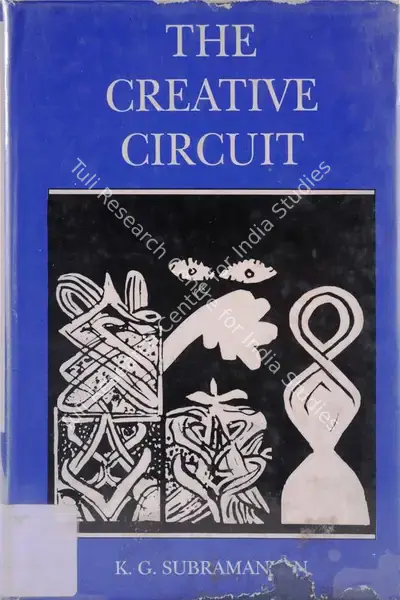
    1. Published, The Creative Circuit, Seagull Books, Kolkata, India
  28. 1993

    1. Mural, Black and White, Kala Bhavan, Visva Bharati University, Santiniketan, India (Second phase)
  29. 1995

    1. Published, 'How Hanu Became Hanuman, Death in Eden and In the Zoo'
  30. 1998

    1. Published, 'The Tale ofthe Talking Face'

Exhibitions

  1. 1953

    1. Indian Art Exhibition, USA
  2. 1955

    1. Delhi Shilpi Chakra, Freemason's Hall, New Delhi, India
  3. 1956

    1. Three Young Artists from Abroad - Hitchin, UK
    2. Jehangir Art Gallery, Mumbai, India
  4. 1958

    1. Delhi Shilpi Chakra, New Delhi, India
  5. 1959

    1. Jehangir Art Gallery, Mumbai, India
  6. 1961

    1. Jehangir Art Gallery, Mumbai, India
    2. Sao Paolo Biennale, Brazil
  7. 1962

    1. Kunika-Chemould Art Centre, New Delhi, India

      24 Dec 1962 to 03 Jan 1963

  8. 1964

    1. Tokyo Biennale, Japan
    2. Ten Indian Artists, USA
  9. 1965

    1. Exhibition of Textile Paintings, Mural, Woven Hangings, New York World Trade Fair, New York, USA
    2. Commonwealth Arts Festival, Commonwealth Gallery, London, UK
    3. Ten Indian Artists, South East Asia
    4. Art now in India, Lanig Art Gallery, Newcastle, UK
  10. 1966

    1. Indian Art Exhibition, Ghent, Belgium
    2. Gallery Chemould, Mumbai, India
  11. 1967

    1. Gallery Navina, New York, USA
    2. Gallery Chemould, Mumbai, India
  12. 1968

    1. 1st Triennale India, Lalit Kala Akademi, Rabindra Bhavan, New Delhi, India
20 of 204
  1. 1955

    1. Delhi Shilpi Chakra, Freemason's Hall, New Delhi, India
  2. 1956

    1. Jehangir Art Gallery, Mumbai, India
  3. 1958

    1. Delhi Shilpi Chakra, New Delhi, India
  4. 1959

    1. Jehangir Art Gallery, Mumbai, India
  5. 1961

    1. Jehangir Art Gallery, Mumbai, India
  6. 1962

    1. Kunika-Chemould Art Centre, New Delhi, India

      24 Dec 1962 to 03 Jan 1963

  7. 1966

    1. Gallery Chemould, Mumbai, India
  8. 1967

    1. Gallery Navina, New York, USA
    2. Gallery Chemould, Mumbai, India
  9. 1969

    1. Kunika-Chemould Art Centre, New Delhi, India
    2. Gallery Chemould, Mumbai, India
  10. 1971

    1. Exhibition of Polytichs, Kunika-Chemould Art Centre, New Delhi, India
  11. 1972

    1. Exhibition of Terracotta Reliefs, Kunika-Chemould Art Centre, New Delhi, India
  12. 1978

    1. Exhibition of Terracotta Reliefs, Art Heritage, Triveni Kala Sangam, New Delhi, India
    2. Exhibition of Terracotta Reliefs and Paintings, Nandan Gallery, Santiniketan, India
  13. 1979

    1. Exhibition of Prints, Art Heritage, Triveni Kala Sangam, New Delhi, India
  14. 1980

    1. Art Heritage, Triveni Kala Sangam, New Delhi, India
  15. 1981

    1. Retrospective Exhibition, Bharat Bhavan, Vadodara, India
  16. 1982

    1. Exhibition of Glass and Acrylic Sheet Paintings, Nandan Gallery, Santiniketan, India
    2. Exhibition of Glass and Acrylic Sheet Paintings, Art Heritage, Triveni Kala Sangam, New Delhi, India
20 of 78
  1. 1953

    1. Indian Art Exhibition, USA
  2. 1956

    1. Three Young Artists from Abroad - Hitchin, UK
  3. 1961

    1. Sao Paolo Biennale, Brazil
  4. 1964

    1. Tokyo Biennale, Japan
    2. Ten Indian Artists, USA
  5. 1965

    1. Exhibition of Textile Paintings, Mural, Woven Hangings, New York World Trade Fair, New York, USA
    2. Commonwealth Arts Festival, Commonwealth Gallery, London, UK
    3. Ten Indian Artists, South East Asia
    4. Art now in India, Lanig Art Gallery, Newcastle, UK
  6. 1966

    1. Indian Art Exhibition, Ghent, Belgium
  7. 1968

    1. 1st Triennale India, Lalit Kala Akademi, Rabindra Bhavan, New Delhi, India
  8. 1971

    1. Indian Art Exhibition, Tehran, Iran
  9. 1975

    1. 3rd Triennale India, Lalit Kala Akademi, Rabindra Bhavan, New Delhi, India
  10. 1976

    1. Menton Biennale, Menton, France
  11. 1979

    1. Sao Paolo Biennale, Brazil
    2. Asian Artist Exhibition, Part - 1, Japan
  12. 1980

    1. Indian Art Exhibition, Tokyo, Japan
    2. Indian Art Exhibition, Washington DC, USA
    3. Asian Artist Exhibition, Part - II, Japan
  13. 1982

    1. Contemporary Indian Art, Royal Academy of Arts, London, UK
20 of 126

Integrated Timeline

59 entries
Born in a Tamil Brahmin family at Kuthuparambu in North Kerala, K. G. Subramanyan was the youngest among his eight siblings. His father was a connoisseur of Carnatic Music and mother fond of the performing arts. A marked cultural interest in the family nurtured young Subramanyan's interest in the arts. Between 1934-44, he completes his primary education from Mahe, a small district in Puducherry. Mahe at that time was an asylum for political activists and a hub of Marxist youth clubs.
Growing up, Subramanyan gets introduced to world art through issues of L'Illustration, a French journal in the town library and to the new Indian Art scene through issues of The Modern Review. Sees reproductions of works by artists like Abanindranath Tagore and Nandalal Bose. Meets two foreign artists visiting Mahe who work in water colour, and admire Nandalal. Comes to know about Rabindranath Tagore, poet and artist. Reads a lot of English and Malayalam poetry. Harboring great admiration for the Tagores, Subramanyan remarked: "What the Tagores have done in the field of Indian Art is well known to all of us. They drew the attention of artists to the virtues of our art tradition and its specialities; they impressed upon them that it will not do them great good if they get chained to the milestone of realistc rendering; instead, they encouraged them to follow their own special intuitions. They did not preach any specific doctrine; they did not even set great store by the old canons they expounded. "Art is not for the justification of the Shilpa Shastra", says Abanindranath in his preface to the Studies in Indian Artistic Anatomy, "but the Shastra is for the elucidation of the art". Rabindranath says no less revealingly, "Fearfully trying to conform to a conventional type is a sign of immaturity.....I strongly urge our artists vehemently to deny their obligation to produce something that can be labelled as Indian art, according to some old world mannerism"
Reads Indian Thought and Religion through thinkers like Ramakrishna, Vivekananda, Annie Besant and Madam Blavatsky. Tries to learn Sanskrit; learns French at school. Sometime around the late 1930s, gets arrested while returning from a political meeting; released after warning. Discovers Gandhi's My Experiments with Truth and Hind Swaraj; gets interested in Gandhian ideology. By 1939, start frequenting a Charkha Club and meets various political activists of the town. Passes Matriculation soon and enters St. Aloysius College, Mangalore for further studies. Of Gandhiji he wrote: "The early leaders of nationalist opinion were negative in their approach to art; since their political didacticism needed a realistic vehicle and their moral puritanism fought shy of the sensuousness of the country's traditional art, they found it hard to make a choice. It was rather later in the day that Gandhiji showed definite interest in the new developments and made his followers join in the commitment." Gandhiji's personality and ideas would have a lasting impact on Subramanyan in the years to come. Influenced by Gandhian thought, he turns into a political activist and starts engaging with the local nationalists.
Moves to Madras in 1941 and enters Presidency College to study B.A. (Hons.) in Economics. Likes its liberal atmosphere, but not the upper-class slant. Reads a lot of modern literature and paints in spare time. A friend shows his drawings and paintings to D.P. Roy Choudhury, the Principal of the art school in Madras, who tries to persuade him to change over to the study of art. Influenced by Gandhian thought, turns into a political activist and gets to know some local nationalists. Ananda Coomaraswamy's book Art and Swadeshi shapes his early understanding of art and culture as a tool for political nationalism. It is however Medieval Sinhalese Art' that leaves a lasting impact on Subramanyan's thought: "Going beyond the argument that culture plays a role in the shaping of a person and making him fully sensitive. Coomaraswamy brought a rare clarity to how a traditional culture was structured, and how it operated as a whole with its linguistic and creative hierarchies. Impacting everything the members of a society did. Looking around at the milieu he came from Subramanyan was convinced about the essential truth of Coomaraswamy's insight. He saw how his mother and aunts, who lacked formal education in a big way, were remarkably clever with their hands: how they could lay and decorate floors, do up their hair in various ways, make toys for the children, make crisps that were artistically pleasing, how they possessed good visual taste, and were often good at singing. This led him to realise that tradition was more than just those cultural facts determined by economics or what professional artists produced. It was what made the community creative as a whole - every person a little more than himself or herself. Whether he was fully aware of it then or not. Medieval Sinhalese Art sowed the seeds of a whole new outlook in Subramanyan's mind."
When Gandhiji launches the quit India movement against British rule, Subramanyan promptly joins him. He organises a strike in Presidency College and gets into contact with a group of underground Congress Socialists. In 1943, he gets sentenced to six months' imprisonment for picketing the Madras Secretariat with a student group in camp jail, Alipuram, Bellary district. Starts to get disillusioned, however, with the sincerity and commitment of political workers and the lackadaisical approach of his fellow countrymen. Gets debarred from further studies and briefly toys with the idea of settling in a village to do rural welfare work.
In 1944, Nandalal Bose calls him to Santiniketan on his brother's request. Enters Kala Bhavana as a student. Participates in the informal academiic community which stresses personal initiative and independence. The contact with Nandalal is important; Binode Behari Mukherjee and Ram Kinkar Baij become close friends and mentors. Upon reaching he remarks: "A fugitive from an over-specific and limited educational system, I heaved a sigh of relief when I reached here". In 1945, he helps to put up the first Delhi exhibition of the work of Benode Behari and Ram Kinkar Baij. Gets to meet Dr. Zakir Husain, Nirode Chaudhuri, Charles Fabri and some Delhi artists. Reads further the writings of Coomaraswamy, E. B. Havell and others with special emphasis on the idea of an art-craft continuum. Wide ranging discussions on such subjects with Binode Behari and Baij. At a later date, in a lecture, Subramanyan remarked: "Artists like Nandalal Bose, Benode Behari Mukherjee, Ramkinker Baij, pushed, by their integrity and dedication, towards basic solutions. They were not strictly part of the situation surrounded by it; and they are, in a sense, the anchorites of the modern Indian art scene. One has only to remember that they never sought their public or came to terms with them; all their exhibitons were sponsored by their admirers and not by themselves. The work of these three artists, however different from each other, was in the nature of a search for the terms of a new art; the cards and sketch books of Nandalal Bose are a veritable thesaurus of visual enquiry; the works of Benode Behari Mukherjee and Ramkinker Baij foreshadow various developments in later Indian painting and sculpture, although this is hardly ever acknowledged. They all worked in terms of an integral solution." Of Havell he wrote: "E.B. Havell's enthusiasm for the Indian art tradition was incontestable. In fact, Havell himself disarmingly confesses to an excess of this enthusiasm in his introduction to the Ideas of Indian Art , justifying it by saying: 'Art does not die of over-praise; it cannot live or thrive in an atmosphere of contempt and depreciation. The half-hearted admirers of Indian Art are those that do it most injury."
In 1947, Subramanyan, then a young student of the master, assists Binode Behari on the Hindi Bhavana mural at Santiniketan. Besides, does odd professional jobs like designing shop windows, jewellery, toys. When, on the eve of Independence the subcontinent is split into two and refugees swarm in, Subramanyan starts imparting vocational training to them to the post-partition refugees. Upon completing his diploma in 1947, he stays at Shantiniketan for 6 months and joins a school as an art teacher but quits soon due to the strict regimentation and discipline imposed on students. Joins the Indian Cooperative Union.
A group of oil paintings are done in 1949 that resemble the expressionistic paintings of Ramkinker Baij. He remarks, about his early works that "I was of a generation that was not satisfied with either academic realism or romantic narrative…we were seeking a kind of poetry of the real. . We had to have a motif…but we wanted to take them beyond the documentary into something iconic, You can call it apotheosis of the ordinary."
Marries Susheela Jasra, who was also an artist and social worker. Moves to Delhi and supports himself with doing copies of old paintings, posters, cinema hoardings. Gets to know artists of the Silpi Chakra group. Starts paintings in oil.
Joins the Faculty of Fine Arts, M.S. University, Baroda in 1951 as junior collegue in the close-knit team of Markand Bhatt, Sankho Chaudhuri, N.S. Bendre. Woman with Lamp represents Subramanyan's engagement with Western Modernism. The shapes, contours and colours hark back to Matisse's approach of simplifying form and flattening the picture plain. The use of multiple perspectives and fragmentation of figures alludes to Picasso's cubist technique.
Between 1949-53, he executes small watercolour paintings of figures and landscapes on sketchpads in a 'post-Cezannian' manner. These little paintings resemble a post-cubist style upon being rendered into large scale oil painting. Alongside these he did a different kind of work loosely modelled after Binodenehari's calligraphic paintings, in which shapes are rendered in a summary linear structure and their volume and spatial artculation are denoted with colour washes used with great economy and precision. Many of his small watercolours on paper and silk especially when they do not excessively lean towards the decorative evoke Oriental painting in general, and Benodebehari in particular. But the same translated into larger oil paintings look more like a post-cubist take-off. Thus although they suggest a distinct cubist strand in his early work, they are essentially Subramanyan's extension of Benodebehari's work. But the fact that they also invoke cubism is not surprising, considering that exploring the common ground between Far Eastern calligraphic painting and post-cubist representational idioms was indeed one of Benodebehari's concerns since the mid-forties.
For Siva Kumar, Subramanyan's interest in the neutrality of subject comes close to the cubists: "Though apparently indifferent to subject matter, the cubists make their man with pipe, woman with mandolin pictures, at once personal and emblematic. There is an inclusion of souvenirs which refer the viewer, through a personal code, to a bohemian sense of community still cherished by the cubists. The structuring principle, however, points towards a kind of futurist manifesto about the changing perception of reality. Or rather, changing perception as such, wherein art and reality are telescoped and the picture surface seen as shifting interface between the two. The cubists are interested in the technques of fabricating this elusive interface: so is Subramanyan."
A more independent development becomes manifest in a third group of paintings done between 1953 and 1955. Many of them revolve around a single motif a bird, an animal, a flowering plant presented in isola-tion against the unrelieved background of a single colour. With the motif broken into a mosaic-like patchwork of colours and bound by a network of black lines, in these we find Subramanyan oscillating between painting as factual representation and crafting of image; we also see him pulling the motif towards the decorative in one and pushing it towards the expressive in another. Without fully resolving these counter pulls, he would continue to work in this vein and style for the next few years.
Gets commissioned to paint a mural in Jyoti Ltd., Baroda. First one man show of paintings in Delhi sponsored by Delhi Silpi Chakra. Receives a British Council scholarship to study in England's Slade School of Art, London, where he does print making. Comes into contact with artists such as Henry Moore, William Coldstream, Victor Pasmore, Ceri Richards, Anthony Gross, Reg Butler, Mcwilliam. Travels in England visiting medieval cathedrals. The first exhibition of his works is organised by the Delhi Shilp Chakra before he leaves for England. Works done in watercolor and tempera in Shantiniketan were destroyed by termites so these works largely displayed his early efforts at Oil Painting. In England, he takes up printmaking- wherein he follows Santiniketan modelling without chiaroscuro, using contour and texture to suggest volume and surface.
1956- A Solo Exhibition held at Jehangir Art Gallery, Bombay Participation in "Three Young Artists from Abroad- Hitchin, UK Father passes away. Daughter Uma is born.
1957- First show of work in Bombay at the Jehangir Art Gallery. Geeta Kapur writes: "In a quasi-realistic mode, Subramanyan does some interesting graphics in England followed in India by somewhat more sentimental paintings such as Man Selling Cocks and Landscape in the Evening. But content never being his major preoccupation, the choice is every time settled in favour of the iconic image. What interests him in any case is never realism but the obvious and the ordinary, and perhaps it is not even the iconic as such that he favours so much as the rules of a game, sets of pictorial conventions that underlie any kind of visual symbolism."
Looking at Subramanyan's work at the end of the fifties. what strikes us is the modesty of his achievements despite their terminological clarity. Compared to the best of his contemporaries he appears less assertive and less extreme. Though technically adequate his works lack physical verve; they stand out more as expressions of tastefulness and understanding rather than passion....Works like Seated Woman (1958) with its painterly brush work and Landscape in the Evening (1960) with its spiky linearism exemplifies an expression that was both comparable to what most of his contemporaries on the Indian art scene were doing.
Starts doing a series of still lives starting from the late 1950s towards the beginning of 1960s. 1959- Solo Exhibition at Jehangir Art Gallery, Bombay 1959-61- Deputy Director (Design) All India Handloom Board, Bombay 1961- Solo Exhibition at Jehangir Art Gallery, Bombay From the start Subramanyan uses anti-naturalistic devices, a heavy black line, for example, that welds the images and makes the picture appear a little like a modernist adaptation of stained-glass constructions. The stained-glass artists are of course using all the ingenuity at their command to make a formal and narra-tive virtue of technical problems. Subramanyan, though he may love the early Christian art forms and the great medieval cathedrals, cannot clarify the hues to anything near the brilliance of coloured glass, leave alone appropriate those cunning means of composition where the figure and ground, the embedded surface, even as it is conspicuously wedged and disaligned becomes de-coratively compact. The black line that grips the image should be seen rather as a much used convention of the fifties. It is a legacy of Picasso furthered by artists loosely grouped together as late expressionists, as for example Sutherland, Buffet and Tamayo, and not least our own Souza who uses the line like an armature for an effigy and achieves his purpose remarkably: of 'primitivising' the image and acting as contemporary exorcist. Subramanyan is obviously not an expressionist, indeed he keeps the image in low profile with such didactic persistence that the heavy constructional device looks like a misapplication of means. Why he uses it at all may, as he says, have to do with his interest in converting a 'volatile sketch' to a 'stable hieroglyph'. In the process perhaps he wishes to draw attention to his graphic accomplishments and thus away from that of surface and colour. Except that once again, even as he is strong in delineation Subramanyan, like many other Indian artists, has at this time a problem of edge in the definition of the image; a problem of resolving the relationship between figure and ground, volume and plane, linear and painterly attributes of an image painted in oils."
The four years between 1956 to 1960, after his return from Europe, he keeps engaging with the commonplace and the idyllic on the one hand and on the other hand with the expressionistc and ornamental. As a student at Santniketan Subramanyan had spent much time observing his mentors at work, trying to figure out their conceptual underpinning, reading books on art, exploring ideas and expanding his critical horizons. He was never happy merely labouring at his work and perfecting his skills;craft, he believed , should follow conceptual insight and reveal it. A closer look at his work from the fifties suggests an application of this attitude and he comes out as an artist exploring various possibilites rather than pushing any of them to a logical extreme....A body of still lifes he painted during the next three years actually marks a turning point in his career.
1961-65- Reader in Painting, Faculty of Fine Arts, Baroda Continues being consultant to All India Handloom Board. Does stage decor and costumes for the play, 'King of the Dark Chamber', by Rabindranath. 1961-66 - Appointed as Design Consultant in All India Handloom Board Paints the bric-a-brack placed on the artist's table and the quintessential bowls and jars. The still lifes done in between 1960-64 replace the inflexible grid with a more fluid one.They demonstrate his fascination with the linguistic and perceptual qualitiies rather than the mimetic strength of representation. The experiments with cubist methods, he believed, already existed in the artistic traditions of the non-western world. Subramanyan opines: "Whether recognised as such or no, art forms prototypical of collage and assemblage, junk and funk, kinetic and conceptual, even ritual events similar to happenings, can be found in traditional and primitive societies, where the professional and non-professional practice of art link up in a connected panorama."
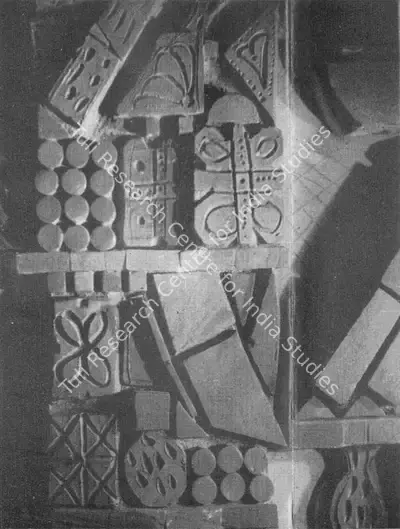
Starts the Fine Arts Fair in Baroda along with Sankho Chaudhuri; works with various materials and designs play objects for exhbition and sale at these annual fairs. In the summer of 1963, K.G., along with a group of students and collegues completed an enormous terracotta tile mural on the façade of the Ravindralaya, the Lucknow theatre built to commemorate the centenary of Rabindranath Tagore. This mural brings to surface his engagement with craft and visual language of post-cubism. The mural was worked up in two phases and conceived in the form of a scaled drawing followed by the designing and manufacturing of the units. With the help of Gyarsilal and his mason brother, Kishore, who managed the operations in the second phase, Subramanyan's figures were bedecked and set with ornate pavilions, balconies, facades to suggest a royal entourage— with a queen, her attendants, her soldiers. Faces and hands requiring mimetic detail were produced individually and the rest of the units—largely geometric and ornamental, structured like his still lifes, were the standard units that were mass produced and then assembled by him in a collage like formation. The mural presents an amalgamation of the decorative, the narrative and the representational and was based on Tagore's play “The King of the Dark Chamber”, wherein Subramanyan makes an allegorical reference to the enigma of absence and of presence in the space of theatre through his design. Placed at the height of the second storey on a wall that faces a busy road and the Lucknow railway station, the mural stands 9 feet tall and goes 81 feet horizontally.
Works get shown at the Tokyo Biennale and in Ten Indian Artists in USA. Starts doing fibre hangings and sculpture. Comes into contact with Jack Larsen, the American designer who blended ancient techniques and modern technology to weave fabrics in postwar America.
Textile paintings, mural, woven hangings get shown in the New York World Fair. Shaped by the interplay of compliant material and cunning hands, the sensuosness of visual experience and the abstractness of language, his textile murals, like his other murals, toys, props annd paintings, have a gestural quality. And gesture was for him an evocative expressive sign. In radio talk given in 1966, drawing attention to the use of gestures in traditional Indian art, he said: 'Broadly speaking all communication involve gesture. Whether it be visual arts like painting or sculpture, drama or literature, it is through signs that communication is effected, and gestures are no more than evocative or expressive signs.
Holds the position of Professor of Painting at the Faculty of Fine Arts, Baroda. The same year he goes to the United States on a JRD IIIrd Fund Fellowship.
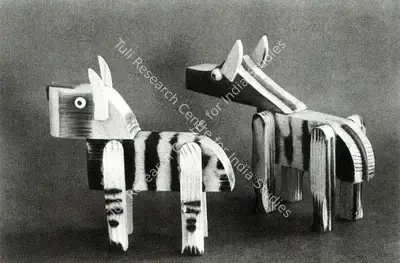
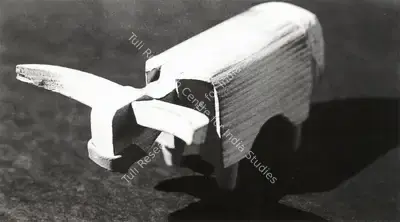
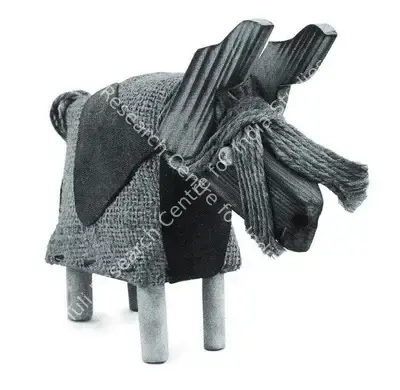
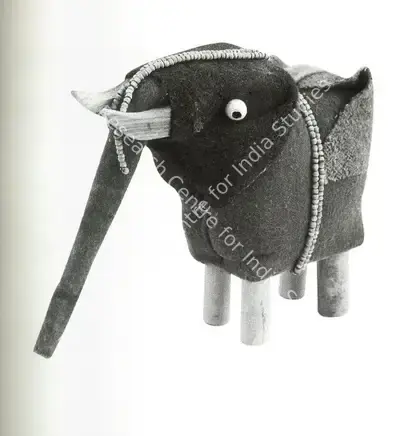
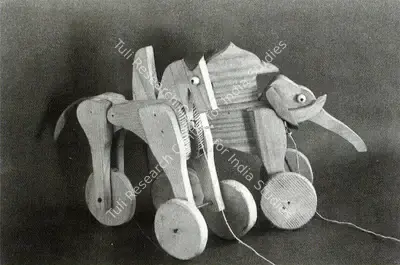
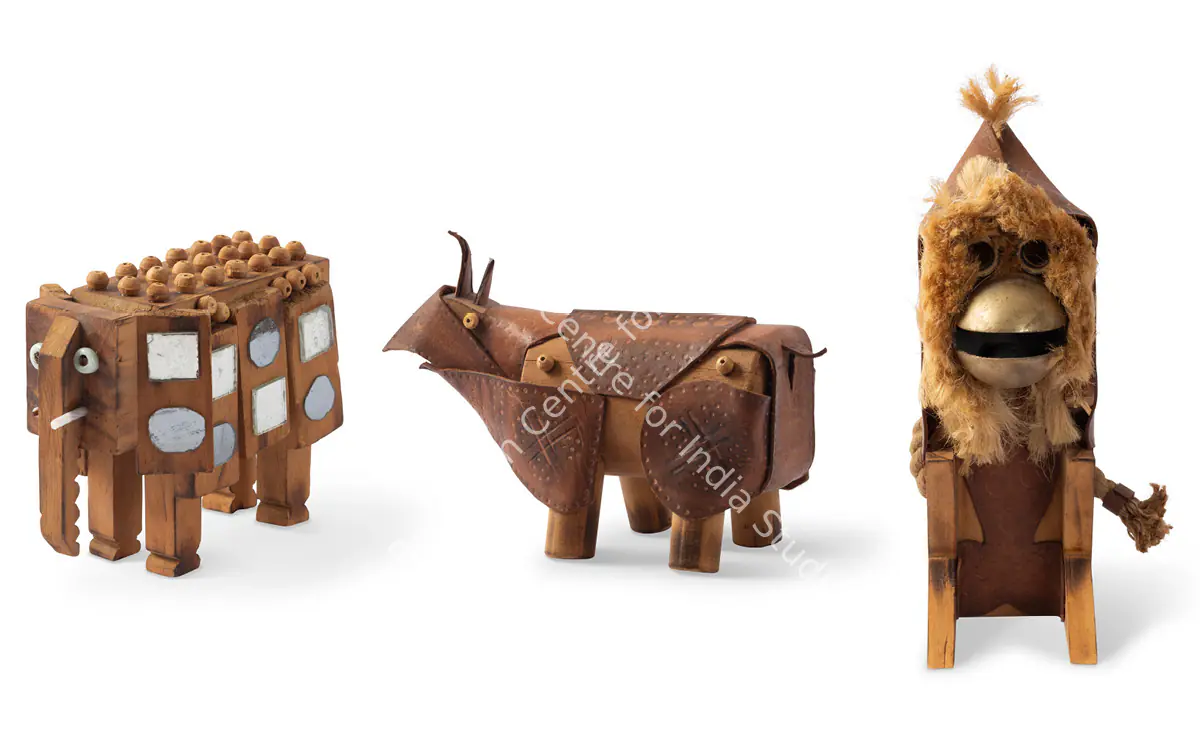
Designs visuals for puppet shows and also dabbles with toy making—an avenue that employed craft and play. Geeta Kapur writes, "From the continuous doodles that Subramanyan is wont to do, little creatures surfaced, the plastic possibilites of which were swiftly tested in plasticine or clay. Then the craftsman collegue in the faculty, Gyarsilal Verma from Rajasthan (a master mason and a mural technician, also profcient in stone and ivory carving), came into the picture. Little blocks of wood of different shapes and sizes were sorted out to fit the animal at hand. With the parts thus rationalised, a working drawing marked with measurements was prepared, then a prototype, and Gyarsilal was now ready to make multiple of the toy. All the toys were usually in the shape of animals from a mock fable."
Makes prints at Pratt Graphic Centre. Meets Clement Greenberg, critic. Returns to India visiting Hawaii, Japan, Cambodia, Indonesia. From the mid 60s, gestural animation comes to dominate his works and colour is employed as an expressive tool. He expresses his desire for ambiguity in a short catalogue note of his 1967 New York exhibition thus saying “The balancing of the abstract with the objective is one of the most significant characteristics of the traditional art of my country- like in its temples which are undoubtedly impressive as abstract heaps of stone, but also bristle with mythology and representational detail at second glance. This is where I get into contact with it. I want my work also to live in such a twilight zone of sensibility, although the ingredients I put into it are not what they used to be, but are of this time." This is also a time when he is getting familiar with the Greenbergian position of formalism and, according to Siva Kumar, "found the formalist notion of linear artistc progress, with one style telescoping onto the next and leading art progressively towards non-objective abstraction, not only untrue but also simplistic as a model for explaining artistic change. Also he did not believe that art would actually become richer and purer by sheding subject matter, or by excluding the tactile from painting or the optical from sculpture."
In 1968, he becomes the Dean, Faculty of Fine Art, Baroda. Already an influential teacher, this gave him further opportunity to introduce a pluralistic approach to art teaching. In the sixties as he began to write on modern art and the Indian art scene, he began to articulate them more formally. Since then they have grown in volume and range; lucidly written and closely argued, they have also led to his recognition as a seminal thinker. But for all this, as his friends and students would readily agree, this is only a fraction of the information and insights he tosses around in his lectures and conversations. For many years besides critiquing the works of students, which usually ended up both as an enlightening and chastening experience for them, he also lectured to them on art. This included, besides the usual historical coverage of Indian and Western art, an extensive course on the primi-tive, tribal, folk and other non-professional arts of the world topics that do not normally figure in most art history courses. Even more Important were his Saturday lectures in Baroda and later, for a while, his Tuesday lectures in Santiniketan where in freewheel-ing talks, often in response to questions raised by students, he discussed what he called the fundamentals of visual arts. connecting details of practice to concepts and illustrating them with off-the-cuff examples drawn from traditional and modern art from across the world.
Starts working in terracotta. Writes and illustrates his first children's book, "When God at First Made Man." It was done in response to a communal flare up and he tries through a fable, to explain to young readers how overstressing differences than the underlying sameness of all men, can lead to such social violence. Since then he has done twelve other books but not all of them are fables focusing on serious social concerns; some are mere excuses to enchant us with the sheer pleasure of graphic images. In either case the images add flesh. animation and sensu-ous amplitude to the words. These are not children's books in the normal sense. While the images with their gestural animation are enticing even for very young children and are designed to quicken their visual sensibility. the texts have nuances that would escape young readers. At least some of them are books designed to be first read to the child and for the child to grow up with. He envisages a new perspective on culture that would facilitate an exchange between the individualistic modern and collective folk. His lectures on art include, besides a coverage of Indian and Western Art, an extensive course on primitive, tribal, folk and other non-professional arts of the world. He begins writing on modern contemporary and Indian art revealing his nature as a thinker and critique. The end of 60s mark a shift from pure visuality and perception to an interplay of text and visuality.
Involved in the construction of the mural 'India of my Dreams' pavilian at the Gandhi Darshan. Begun in 1968 and com-pleted in 1969, the work is composed of three structures, two totally free standing and the other partially attached to a wall. Half relief. half-sculptures and made from brick-red sand-cast cement units fixed onto a concrete arma-ture (along with a few details in ceramics and in fabrics embedded in plastic), they stand in an open courtyard of the pavilion like the large terracotta ensembles seen in Indian villages. Subramanyan remarked, "Although there is a widely held opinion that folk arts are senstive plants that need specially balanced soils if they are to thrive, and are likely to wilt with even a slight change in the supporting circumstances, one can see that this has not been the case within an art tradition like ours, where a movement of art practitioners from one level of skill of another, has not been infrequent. So there is a possibility of re-channelising non-professional folk art activity to professional fields and then onwards to areas of sophistication if the circumstances permit, i.e. if there is a graduated ladder of activity that admits such a movement.....Many kinds of art forms of noticeable aesthetic value can be produced by the comonalty of people with limited fabricatory and visualization skills. They realize these with simple visual symbols, as easily as they speak or write with simple phonetic or scriptic symbols, varying, grouping,overlaying, or reconfiguring them to correspond to various visual facts."
Whereas Subramanyan's pictorial language might suggest a kind of child-like quailty, a playfulness in of form, he explicitly addresses that neither his illustrated books nor the toys he makes are for entertainment. He comments: "My so-called children's books are not children's book per se. If there is a child it addresses, it is the child in me. They are simple parables to spotlight an issue without overdressing it. In a spirit of fun.My so-called toys are playful sculptures; not toys designed for children to play with"
While working with different mediums, he remarks "I work on an inner compulsion. I feel a need for this diversity to satisfy my various response levels. Some of these are open and child-like; some complicated. So I play hopscotch with one and match my wits with another. And this sometimes leads to surprising cross-connections. While doing paper collages to illustrate books, I discover new devices for my paintings and murals; while making clay toys, I gain a new insight into the language of terracotta This follows no plan. There is no conscious effort to woo the viewer; hence, no compromise."
A number of his terracotta murals depict the destruction, the ruthless nature of war and the cunning nature of those in power after the Bangladesh War. He quotes, highlighting the social responsibility of the creative mind that : "No fundamental contact with the environment is possible unless the artist keeps himself clear of attitudinal stereotypes, and redefines his role vis-à-vis society, whether inside it or outside it, whether as its reformer or subverter, keeping squarely in mind that, regardless of his positon, the value of his work will depend on how much it adds a new dimension to one's awareness, be it related to the intimate perception of things, be it related to larger messages. And the social effectiveness of an artist can be complete only if a society also accepts him in this role. Only a poor society would use him as a tool, a mere entertainer or a slogan-shouter."
The diptyches and triptychs of the following year culminate from his New York years where he resorted to using small canvases and pieced them together due to the compact nature of his studio. Geeta Kapur comments: "The Window pictures are alienated and alienating. The point that needs to be remembered is that the high modernist principle of design, with its stylistic abbreviations, often gives way in the second part of the century to reductionist propositions such as certain examples of minimal art on the one hand, and pop art on the other, will demonstrate. And there is this side to the New York connection of Subramanyan, his inclination to detach himself, construing the image with a chancy and wry sense of humour." Siva Kumar writes of the windows thus: "The window/grid functioned as a geometric counterpoint to the organic/ gestural and heightened its dramatic verve. As a see through barrier it also served to make the viewers aware of their voyeuristic role."
Of this and other sets of paintings that employ the grid, Geeta Kapur writes: "Terrace i,ii, interior with figures, brings to a fruitful conclusion Subramanyan's formal manoeuvres. Terrace ii in particular ties up the ouevre into a sort of bouquet. Held out in confidence and quite lovely to behold, it makes sense of virtually twenty-five years of what i call the modernist pros and cons Subramanyan has posed in his paintings."
The face of this terrace picture is a bright fresh ultramarne blue, a fully saturated blue which changes in parts into a turquoise green, a grey and then white. Complimenting the blue there is orange, a bright lozengy hue turning to pink and citrous yellow by the addition of a flaky, softly brushed-in white. In fact white is the common denominator, cream white of the canvas, zinc-white from the tube. This very vivid painting is both drawn and modelled in white. From the point of view of design this implies the conversion of negative into positive space; also the conversion of picture space into picture surface so that the structural problem becomes essentially a matter of decorative layout, a visual spectacle presented up front.
In Fishes and Fossils, the fishes display various states of wholeness and dismemberment. They are flesh and bone, the bare boned fish delicate as an x-ray—one carries the image of life and the other of death. There is an obvious allegory but the plasticity of clay nevertheless renders it its own sensuality. Geeta Kapur calls it a 'sensuality turned to erotic fetishism but with a comic twist'.
Lalit Kala Akademi publishes a selection of his essays titled "Moving Focus" In 1978, an exhibition of Terracotta reliefs and Paintings at Nandan Gallery, Santiniketan Talking about the plasticity and versatile nature of clay, he comments: "Wet clay is plastic; it yields to the pressure on one's hands and can be modelled into various shapes. But because it obeys one's wishes so well, one should not think it is voiceless or inert. To the contrary, it has its own body dialect. It rolls, folds, cracks, fissures, dries or bakes in a special way, behaving almost like flesh. So it is a living thing. Potters have known this through the ages. Also those makers of votive terracottas. They all still do. But some handle clay as dead matter. Others handle it as livng plasma. These latter bring it to life, making it laugh or cry, seem ebullient or sad. A little handling changes its emotional tmbre. Making it portray the sensuous or the tragic. With the slightest touch of hand it turns a plain slit or tear to an articulate lip."
An Exhibition of Prints takes place at Art Heritage, New Delhi Works shown at Sao Paulo Biennale, Brazil, and Asian Art Exhibition- I, Japan. In the one of his essays titled 'The Struggle for Image in Contemporary Art' he writes, regarding tradition: "To find contact points with areas of one's own tradition even at the instance of external stimuli is nothing to be ashamed of, if it pushes one into a genuine position in terms of art and life relationship, or gets one to interpret them in real terms. In most cases this has not happened; instead, a too literal or uncritical an acceptance of the descriptive epithets used by scholars and critics to explain our tradition has led to a sorry misinterpretation of its rationale and various efforts to establish active contacts have failed to catch fire."
Talking about the process of glass paintings, he writes: "Not all body dialects come out of nature of materials. They come also from the manner of their use.For centuries, artisans have done reverse paintings on glass. When one puts a glass on a painting, it protects its surface but pushes the image back. But when one paints on the glass itself, the image presses through, the colours get keyed up, the lines gain precision. Even the most informal scribble achieves an air of gravity. And the whole becomes a gripping artefact. And the process is rapid.. The artisans know this and play around with these. To make those fabulous icons and the fleshy sundaris, mixing the hieratic with the sensuous, gaiety with gravity. These put more windows to our vision, these features of artisan arts. They add feeling and intelligence to our hands. Through the hands to the eyes. And through these, to the eye behind."
Glass paintings get shown in Baroda. Moves to Shantiniketan as Professor of Painting in Kala Bhavana. Geeta Kapur writes: "The glass pictures in particular have this inner game-like dynamic as they have, because the convex and concave parts fit together so neatly in the rectangular face of the picture, a firm compactness. And here it would be well to reiterate that while ornamental construction is an attribute of a great deal of traditional art, oriental and occidental, its appropriation by the moderns makes it the more accessible to Subramanyan. Along with his obvious reference to Matisse there is also a remote reference back to cubism in the way interlocking shapes are faceted and joined, located and dislocated in a shallow planular space, giving the motif its partial, profiled aspect. To be more specific, the reference is to the more decoratively designed phase of synthetic cubism."
Between 1980 and 1989, he is appointed as Professor of Painting, Kala Bhavan, Visva Bharati, Shantinketan. "A contemporary artist's struggle for image", writes Subramanyan, "lies in two major sectors. In one he is pitted against a society that does not whole-heartedly accept him. He has to steel himself against the apathy of its non-responsive majorityon one side and has to be wary of the appreciation of an enthusiastic but not wholly sensitive minority on the other. And in between them he has to fight off a feeling of being an unwanted outsider...The artist's struggle for image is primarily this struggle for identity among other things, this struggle to get, if one may say so, a cosmographic foot-hold, to get a synoptic vision of himself in his experiential environment."
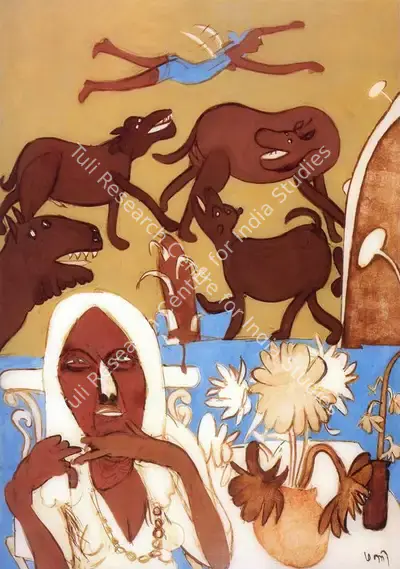
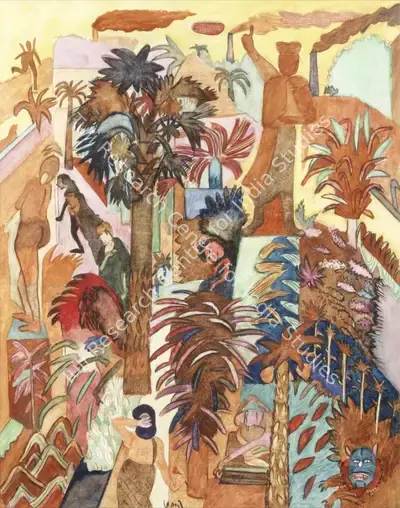
In 1983, a retroscpective is released by the Birla Academy of Art and Culture. In the following year, Art Heritage releases a Retrospective. In the mid-eighties, Subramanyan makes a series of paintings inspired by myths. Purvapalli becomes the stage where these myths play out. Siva Kumar writes: "Myths are stories that enter the collective memory, but there are also all those un-indexed stories we carry as personal memories or share with others who live in the same cultural climate, and project very often into our experiences of the present. In 'Fairytales of Purvapalli', all done in 1986, Subramanyan does just this. Purvapalli is the place where he lives in Shantiniketan, a quiet neighbourhood tucked away under trees and plants, where the residents are all retired and aged. But in Subramanyan's paintings, the figures, the cats and dogs that jump fences, the goats that stray into gardens, the parrots chortling in the shade, and even the trees and plants- everything is caiught in a restless whirl, as if a storm is blowing through the neighbourhood. All this relates to the growing traffic between the inner and the outer worlds on the one hand and his desire to depersonalise artistic expression on the other."
"Subramanyan's art that was so far out-ward looking, revolving around issues and language, or with of perception an themes belonging to public or historical spaces, now began to turn inwards. So far his mind had entered his work largely as reason and intelligence, dismantling and rearticulating perceptual facts at a representational or linguistic level. Now his mind was entering his pictures as an imagination that read stories and dreams into the perceptual. 'What I once read as figures or people, I now read as stories or events,' he says; 'water flows out of my garden hose in a thin stream and spreads on the grass. The crickets hop, the birds come chasing them. The dragonfly dives close to the water as if to see its own image. I do not see it all as a frozen fact; it is more a story, or a fable or a fairy tale.' The world that he saw in detail in snapshots was merging in his mind into a narrative."
A plethora of myths seep into Subramanyan's ouvre. He made mythologies out of the everyday sights and transformed images through imagination. "One can sense behind this an involved viewer, someone who was more than a voyeur, someone who not only imbibed pleasure from what he saw but also turned it over in his mind to decode the meaning hieroglyphed across it. The stories were not all new: often old and known ones were read into discreet experi-ences to give them a larger resonance. Sometimes it was the experiences of the time that were infused into the old stories, to give them another life. Many of the paintings he did from the mid-eighties revolved around this exchange between what was in the mind and what was outside in the world. The most enduring of these is the image of the goddess; sometimes, the girl next door; at times, a flaming female riding the tiger, engaging the brute demon or the clumsy hunk in contests of war or play, mixing, as he says, 'conflict with concupiscence', and many implications into these juxtapositions of women and men. god-dess and demon. It is the archetypal image that deals with the most primal of human tussles and one that engaged him the most. But there are also the stories of the naughty boy-God of Behula the goddess-dancer, of the child Christ, of the doped-up Almighty, of the blood spouting and blood-drinking headless fury that he explored in some of the other paintings from this period: The Black Boys Fight with Demon and Behula Story in 1986, Ethiopian Nativity in 1987, Goan Nativity in 1989, Siva and Parvati in Benares in 1989, and Chinnamasta in 1991."
PURVAPALLI SONNETS -by K. G. Subramanyan Why do certain things move you to tears? A piece of sky, a tree, the golden lights Of a sinking afternoon? Or some sounds pierce The frozen stillness of your inner sites And inflame their air? Or certain smells Manage to sow a madness in your mind? Something in them that moves and rings the bells? Something in you that makes your flesh unbind? Perhaps both; because they aren't fully they Till they have called you out and talked to you; And you too found within this interplay A you outside the normal who is who. The bard had spelt this out quite long ago; Saying this is how our inner tissues grow."
Publication of his second collection of essays titled "The Living Tradition" by Seagull Publishers In 1987, he spends a term as the Christensen Fellow at St. Catherine College in Oxford During his stay in Oxford, he executes paintings such as Death in the Park, Ethiopian Natvity, Studies for Peter and the Wolf—all stark commentaries and reactions to crimes and human problems he encountered while there. This period also features the figure of Inayat Khan in observing the world around hi. Subramanyan comments: "I find it easy to accept the existence of alternative presences, without calling any true or false. In my scheme of things, abstraction and reality are not antagonistic entities, So I find whatever I see entrancing- faces, figures, landscapes, object groups. With advancing years I see them miraculously transformed, even heightened in value. I can now see the truth of some of those descriptions of nature in traditional narratives mentioning gems and crystals, rubies and emeralds. At one time I wondered whether this was not one of the gifts that came with age. The growth of an untramelled vision. Ecstatic eyes peering out of an emaciated body, I conjured up the figure of Inayat Khan, adapted from a Jehangir drawing, to symbolise this."
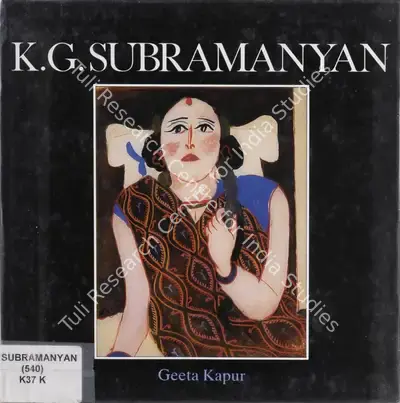
Lalit Kala Akademi publishes a book on K.G. Subramanyan edited by Geeta Kapur. Paints Ethiopian Nativity as a response to an all-night television programme that people in Britain watched to raise funds for a famine in Ethiopia. His response to this absurdity is a painting titled “Ethiopian Nativity”—an image resounding with the Biblical myth of the Magi. The Magi in biblical lore were three wise men who journeyed from the East of Bethlehem in search of their newborn King- the infant Jesus. Dressed in exotic attire, they brought with them precious gifts of gold and frankincense carried by their large retinue. Ethiopian Nativity employs these motifs with a self-aware irony—the modern Magi arrive from the West with a flourish of aid. The emaciated infant, with a cross on his chest, is born in a pool of blood- a child lying between the thighs of his mother in a world of pain and misery; with screeching animals flocked together for slaughter, cherubic angels hovering above the many-limbed mother- resembling the Indian Goddess Durga. The irony of the fund-raising was not lost on this Indian artist who came from a country whose history bespoke of a long line of tragedies inflicted by the British and at the same time who claimed to save the “native” as part of Kipling's (in)famous 'white man's burden'.
Exhibition of Acrylic Sheet Paintings, Museum of Modern Art, Oxford. Exhibition of Acrylic Sheet Paintings, Art Heritage, New Delhi. Reconstructed in the studio from memory, the little landscapes from Oxford were renderings of what Subramanyan saw while going around the streets of Oxford that received scarce to no sunlight.
Subramanyan is a scholar-artist. Whereas on one hand he engages with the practice of making art, on the other hand he also talks and writes insights about what the idea of an aesthetic production means. He writes: "The content or theme of a work and the culture it arises from are doubtless important for the growth of the aesthetic image (rasa rupa) as the earth and the elements are for the growth of a tree. But the relationship between the viewer and the final work is like fire and tinder (a figure of speech that occurs in the discussion on rasa, where the fire is said to be latent in the tinder itself). This is just to say that the aesthetc question is still alive, regardless of what scholars, critics and sociologists might say; it is for what a work offers at the level of sensibility and feeling, beyond its story, meaning and didactic message, that responsive people are attracted to it. Scholars like Coomaraswamy unnecessarily bifurcated knowledge and feeling and put one above the other but the aesthetic image is the concretion of these two in the mind of the rasika (as it was to start with in the mind of the artist). It is idea made flesh. Even the iconographists, whose words Coomaraswamy attaches great importance to, say that a concept has to be visualised in dhayana; meditatng on the description set out in the dhyana sloka, the ideogram has to be recreated as a palpable image. This explains why the same stipulations result in different images in different cultural or ethnic groups."
"Each tradition has areas that grew in response to the needs and aspirations of a society, its ideas and sensibilities. Each tradition comes to have an inner code of discipline or grammar which prevents radical extensions. But it also has certain take-off points that accommodate innovation and thus allow a new vision and dimension to its expression. And that is the point where we each read our basic facts differently and invent new devices to represent them. I am by nature a fabulist. I transform images, change their character, make them float, fly, perform, tell a visual story. To that extent my pictures are playful and spontaneous. I do occasionally build round a well-known theme, and give it new implications."
By the 1990s, Subramanyan had solidified for himself a distinct identity as one of the foremost modernists within India. The ability to string together the personal with the social, the sensuous with the tragic. the celebratory with the lugubrious, serious-ness with irony, prosaic description with lyrical evocation, fact with metaphor, and style for language and his realisation that an artist can grasp the world and give body to his subjectivity only through language. This puts him in league with a small but very distinct group of modern artists beginning with Picasso and including David Hockney and Kitaj. Picasso described style as 'something which locks the painter into the same vision, the same technique, the same formula. Subramanyan too arrived at the same conclusion: 'A distinct style be blowed. he says, 'what I am concerned with is what I feel and give voice to. I do not seek a personal style, I seek a personal language. Each medium I explore responds to a particular ex-pressive need of mine, to a particular sensi-bility strand.... I do not want to be contained by anyone of them. That is the way I am built. Besides Picasso he had also been exposed to the example of his mentors. As a student at Santiniketan, he should have seen how Abanindranath used a collage of styles in his later narrative paintings; Nandalal worked in several mediums and conventions in response to dif-ferent communicational needs; Benodebehari too drew on various traditions and worked in a broadly realist and calligraphic manner before he resolved their counter pulls in his late style; and Ramkinkar worked in various modernist manners simultaneously without paying heed to their historical order. Their example should have encouraged Subramanyan to give short shrift to individual style and pursue creative freedom, but he went beyond that by subsuming style within the wider concept of language.
He talks of the figure of the bahurupee thus: "The world I observe is naturally a fairytale world. It is high-keyed. It is distant. It has a variable configuration. It is ambivalennt in image and implication. At least this is what my work turns out to be when I follow the cues. Not just a bunch of facts but an intriguing icon. The pursuit is challenging. Maybe there is a sense of pantheism in it, making of everything a personage. Maybe there is an assumption, too, of play-acting on nature's own part. Making eachh thing a bahurupee, a volatile polymorph."
Of cats he writes:"So they ask, 'Do you like cats?' You can't say you do. They come from the neighbour's garden . And move like they own the house. Have kittens on your chairs. They pin you with their gaze and claw you fro attention. Eerie hairy things. But fascinating when they leap or slide. Between the sky and the earth hover life and death. Loathing and love. Growth and decay. Man snipes at clouds. Birds land in spectral flight. Between abstract beauty and twisted agony, hearts meet below the moon. All broken fragments of stories to be made."
In an excerpt published in the 1998 edition of Art Heritage, Subramanyan responds to what an avatar could mean for him thus: "I know Avatar means somethng special in your languages. Manifestation? I say, You can call it that. But these manifestations are not wilfully evoked or put together. They come out of my doodles. While doodling, images metamorphose, lose or gain identities, change identities, become composite. We are used to viewing apart a thing and its shadow, dfferentiate a human being from animal, man from woman, even raise controversies about their relative rights. In the doodles there are no barriers. In truth, even in life, many contrary traits coexist."
Responding to the political vicissitudes of the country and reflectng upon the events that unfolded during the Emergency years, Subramanyan weaves an allegorical fable of a Princess who becomes authoritative upon assuming power. The Tale of the Talking Face is an illustrated book interspersed with text that presents a stark crtique of one person turning dictatorial and curbing freedom of expression.
Sara or painting in gouache on terracotta plates form a strand in Subramanyan's ouvre which spreads over several genres and mediums. They were all painted in batches during the last twenty years at Santiniketan to be sold at the Nandan Mela, the annual art fair organised by the art school there to raise funds in aid of students and to support their extramural activities. The fair being designed as an occassion for the local community to interact with the artists and pick up affordable art the saras were made with a specific purpose and context in mind....The saras arre generically playful, refreshing and engaging vignettes of quintessential Subramanyan; and several of them can be described as minor masterpieces.
2003- NGMA launches a retrospective. Art Historian R. Siva Kumar writes for its catalogue. Subramanyan would continue painting until he breathed his last in 2016.
K. G. Subramanyan was one of the most exciting, versatile, and polymathic artists in the canon of Indian modern art. He was, among other things, a seminal thinker and intellectual, a prolific writer on art and a practitioner whose work encompassed an eclectic and diverse range of media.
Born: Kuthuparambu, Kerala, India Died: Vadodara, Gujarat, India Spose: Susheela Jasra, m. 1950 Parents: Alamellu, Ganapati Iyer Children: Uma Padmanabhan

Chronicled Highlights 21

K.G. Subramanyan
1924Born
K.G. Subramanyan

K.G. Subramanyan was born in 1924 in Kuthuparambu, Kerala, India.
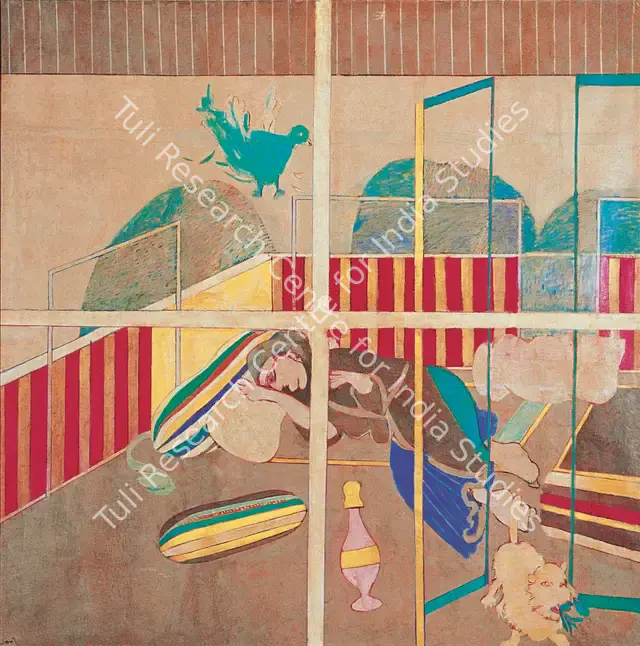
Subramanyan, K.G. (Artist). Terrace I. Oil on canvas, 1973 | Painting  | 00881116
Subramanyan, K.G. (Artist). Terrace I. Oil on canvas, 1973 | Painting | 00881116

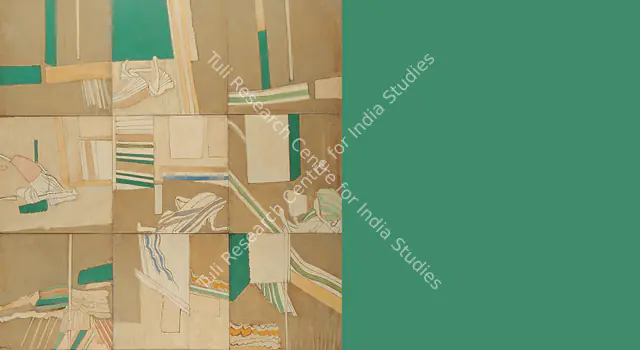
In 2006, the artist achieved a new high in the auction market with the sale of Terrace I (1973), offered in the Forty Masterpieces Museum Quality Series VII by Osian's, which concluded on 09 September 2006 at Mumbai, achieving a sale price of ₹1,20,00,000 ($259,347). This record marked a defining moment in the artist's market history, reflecting both the significance of the artwork and its reception within the broader art world.
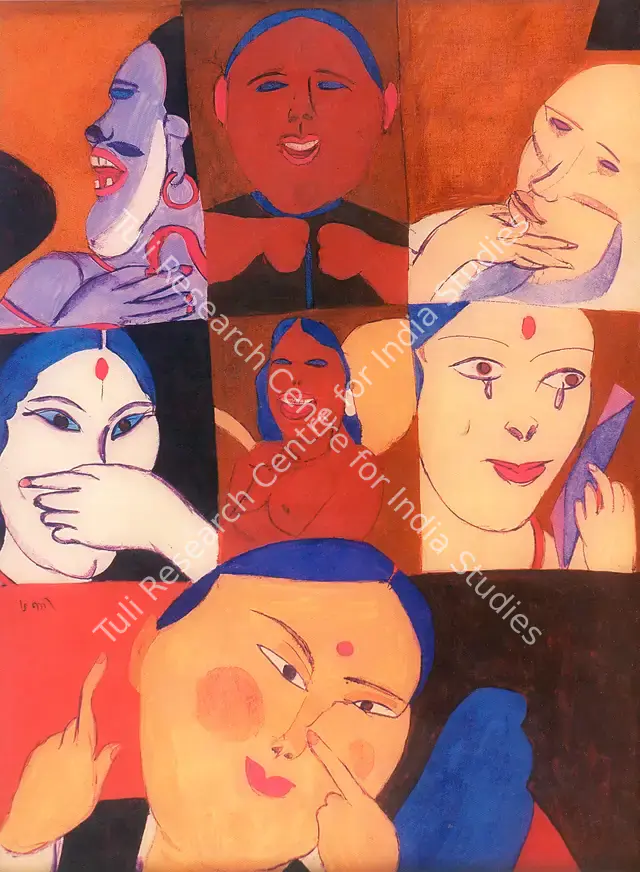
Subramanyan, K.G. (Artist). Portrait Gallery. Reverse oil painting on acrylic sheet, 1981 | Painting | FineArts | 00375820

K.G. Subramanyan’s ability to use the human form, especially the female face, as a means of creating images which fuse the playful and the harsh, the erotic and detached, so evolving an iconicity through the mood of an iconoclast, is unique. The pictorial techniques and modes of traditional Indian glass painting, the Kalighat pats, the Japanese Ukiyo-e woodcut prints and the art of Matisse, are all fused within his original artistic mind and hand, so revealing a style and idiom, totally his own
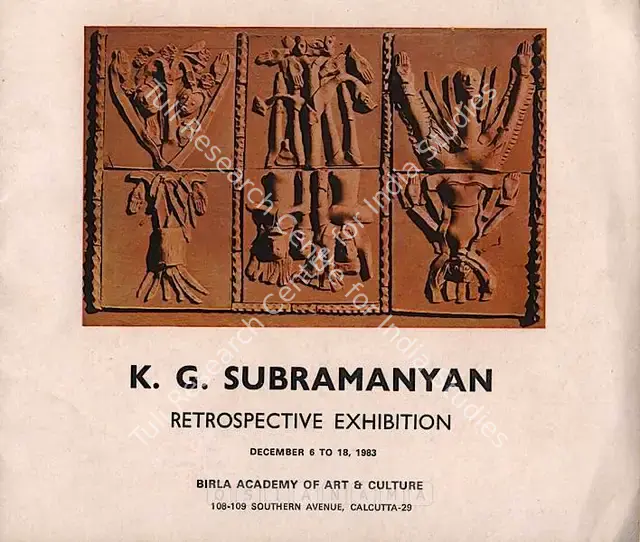
Subramanyan, K.G. (Artist). K. G. Subramanyan - Retrospective Exhibition. Calcutta: Birla Academy of Art and Culture, 1983 | Solo Exhibition Catalogue | FineArts | 00172475

In 1983, K. G. Subramanyan Retrospective Exhibition marked a major milestone in the exhibition history of K.G. Subramanyan, offering a retrospective survey of the artist's artistic production
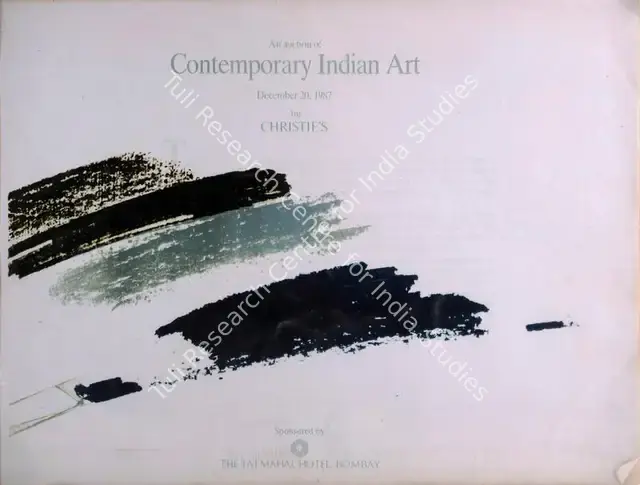
Christie's (Auction House). Contemporary Indian Art (Charity Auction). 20 December 1987, Bombay | Auction Catalogue | EconomicsArt | 00861836
1 / 2
Christie's (Auction House). Contemporary Indian Art (Charity Auction). 20 December 1987, Bombay | Auction Catalogue | EconomicsArt | 00861836

On 20 December 1987, K.G. Subramanyan made their debut in the Indian public auction market when Faces was presented as Lot 32 in Contemporary Indian Art (Charity Auction), conducted by Christie's in Mumbai, India. This auction marked the artist's first recorded appearance in the public auction market, establishing the earliest chapter of their auction history.
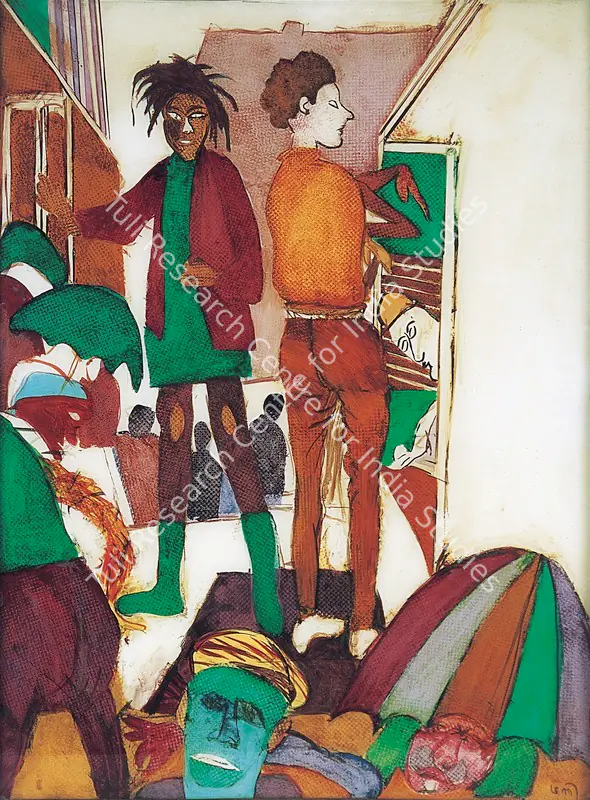
Subramanyan, K.G. (Artist). Rain On High Street. Gouache and oil on perspex, 1987 | Painting  | 00879884
Subramanyan, K.G. (Artist). Rain On High Street. Gouache and oil on perspex, 1987 | Painting | 00879884

In 2006, the artist achieved a new high in the auction market with the sale of Rain On High Street (1987), offered in the Masterpieces & Museum Quality Series VI: With Rare Drawings and Books on Indian Contemporary Art by Osian's, which concluded on 01 March 2006 at New Delhi, achieving a sale price of ₹27,60,000 ($62,232). This record marked a defining moment in the artist's market history, reflecting both the significance of the artwork and its reception within the broader art world.
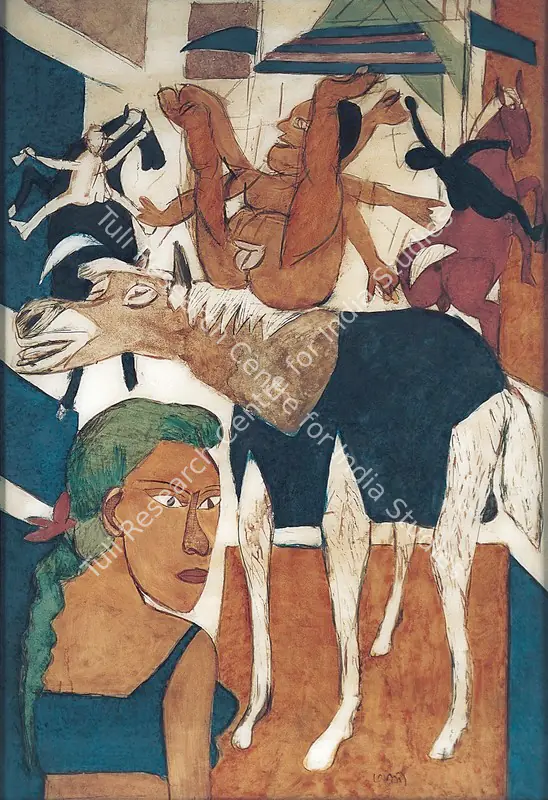
Subramanyan, K.G. (Artist). Training For Circus. Reverse painting in gouache and oil on acrylic sheet, 1989 | Painting  | 00879886
Subramanyan, K.G. (Artist). Training For Circus. Reverse painting in gouache and oil on acrylic sheet, 1989 | Painting | 00879886

In 2006, the artist achieved a new high in the auction market with the sale of Training For Circus (1989), offered in the Masterpieces & Museum Quality Series VI: With Rare Drawings and Books on Indian Contemporary Art by Osian's, which concluded on 01 March 2006 at New Delhi, achieving a sale price of ₹32,20,000 ($72,604). This record marked a defining moment in the artist's market history, reflecting both the significance of the artwork and its reception within the broader art world.
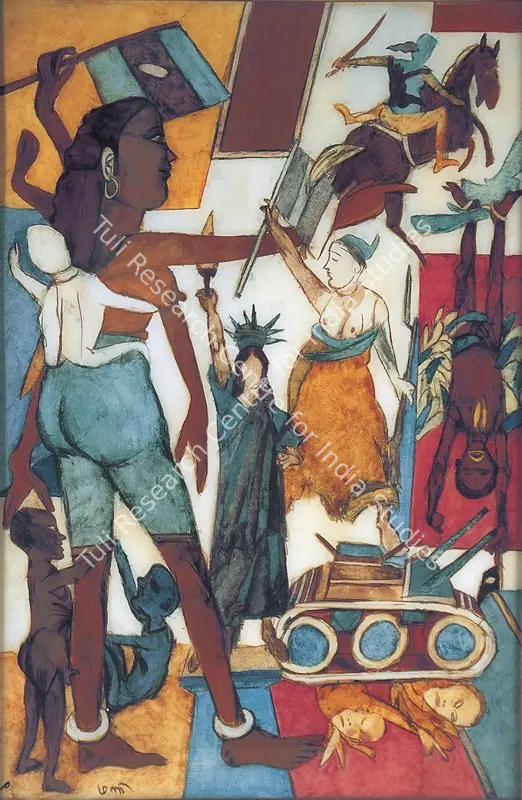
Subramanyan, K.G. (Artist). Symbols Of Liberty. Reverse painting in gouache and oil on acrylic sheet, 1989 | Painting  | 00879885
Subramanyan, K.G. (Artist). Symbols Of Liberty. Reverse painting in gouache and oil on acrylic sheet, 1989 | Painting | 00879885

In 2006, the artist achieved a new high in the auction market with the sale of Symbols Of Liberty (1989), offered in the Masterpieces & Museum Quality Series VI: With Rare Drawings and Books on Indian Contemporary Art by Osian's, which concluded on 01 March 2006 at New Delhi, achieving a sale price of ₹34,50,000 ($77,790). This record marked a defining moment in the artist's market history, reflecting both the significance of the artwork and its reception within the broader art world.
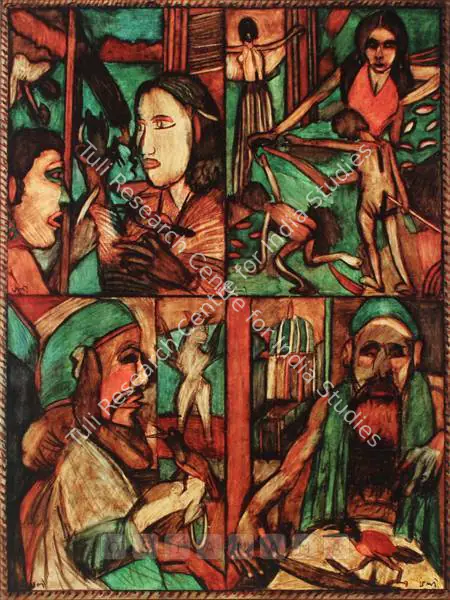
Subramanyan, K.G. (Artist). Untitled. Gouache on paper, 1990 | Painting | FineArts | 00597934

In 2005, the artist achieved a new high in the auction market with the sale of Untitled (1990), offered in the Modern and Contemporary Paintings by Nine Masters: Spring Online Auction by Saffronart, which concluded on 02 March 2005 at Online, achieving a sale price of ₹9,61,400 ($22,000). This record marked a defining moment in the artist's market history, reflecting both the significance of the artwork and its reception within the broader art world.
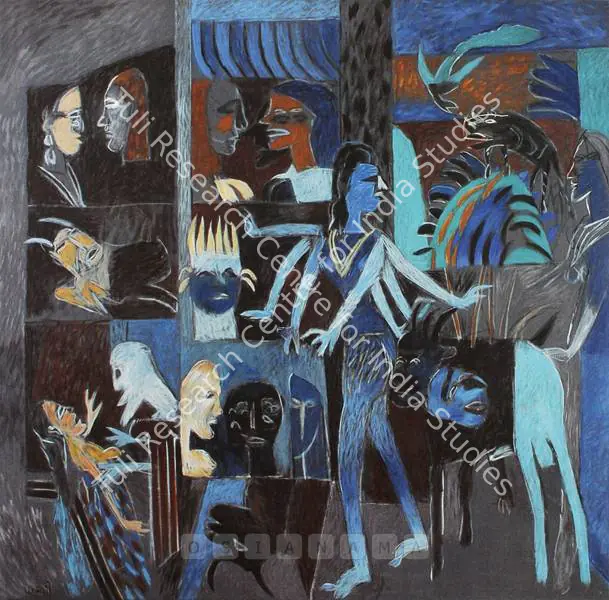
Subramanyan, K.G. (Artist). Odd Encounters. Oil on canvas, 1994 | Painting | FineArts | 00597932

In 2005, the artist achieved a new high in the auction market with the sale of Odd Encounters (1994), offered in the Modern and Contemporary Paintings by Nine Masters: Spring Online Auction by Saffronart, which concluded on 02 March 2005 at Online, achieving a sale price of ₹19,25,597 ($44,064). This record marked a defining moment in the artist's market history, reflecting both the significance of the artwork and its reception within the broader art world.
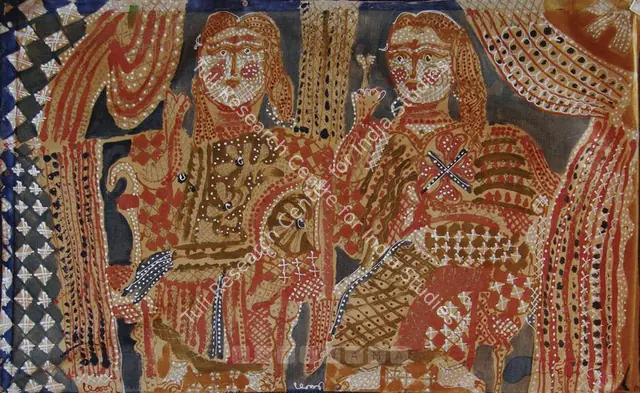
Subramanyan, K.G. (Artist). Two Women. Acrylic on silk, 1999 | Painting  | 00880933
Subramanyan, K.G. (Artist). Two Women. Acrylic on silk, 1999 | Painting | 00880933

In 2006, the artist achieved a new high in the auction market with the sale of Two Women (1999), offered in the The Bengal Art Auction: Early and Current Art of the Region by Apparao Art, which concluded on 03 September 2006 at Online, achieving a sale price of ₹70,85,000 ($152,562). This record marked a defining moment in the artist's market history, reflecting both the significance of the artwork and its reception within the broader art world.
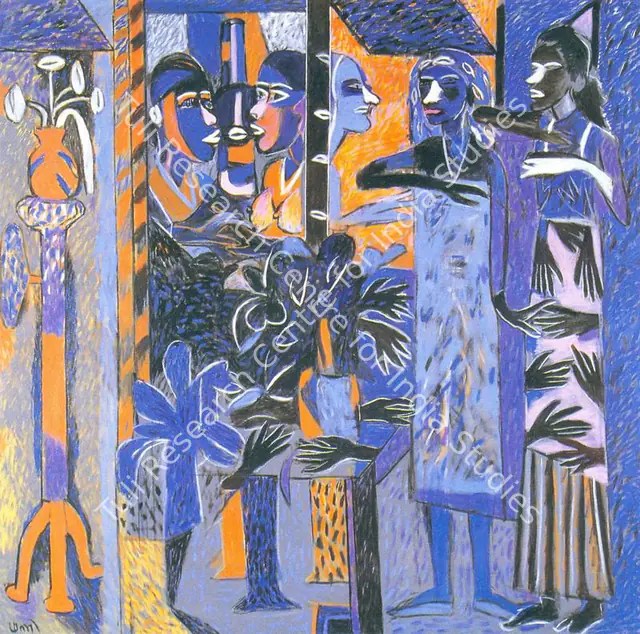
Subramanyan, K.G. (Artist). Buss Cola And The Beauty Queens. Oil on canvas, 2000 | Painting | FineArts | 00372668

In 2001, the artist achieved a new high in the auction market with the sale of Buss Cola And The Beauty Queens (2000), offered in the Indian Contemporary Fine Art by Saffronart, which concluded on 21 September 2001 at Los Angeles, achieving a sale price of ₹3,84,080 ($8,000). This record marked a defining moment in the artist's market history, reflecting both the significance of the artwork and its reception within the broader art world.
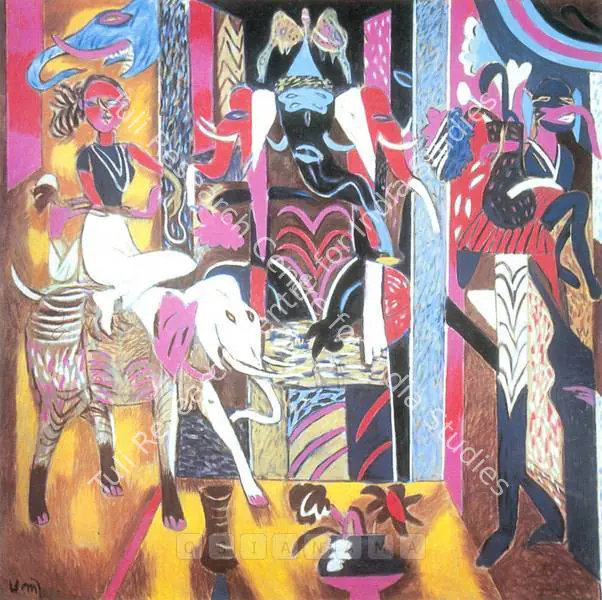
Subramanyan, K.G. (Artist). Mask, Icon, Mount, Mascot. Oil on canvas, 2000 | Painting | FineArts | 00375020

In 2002, the artist achieved a new high in the auction market with the sale of Mask, Icon, Mount, Mascot (2000), offered in the Modern Indian Paintings by Saffronart, which concluded on 16 May 2002 at Online, achieving a sale price of ₹3,98,400 ($8,121). This record marked a defining moment in the artist's market history, reflecting both the significance of the artwork and its reception within the broader art world.
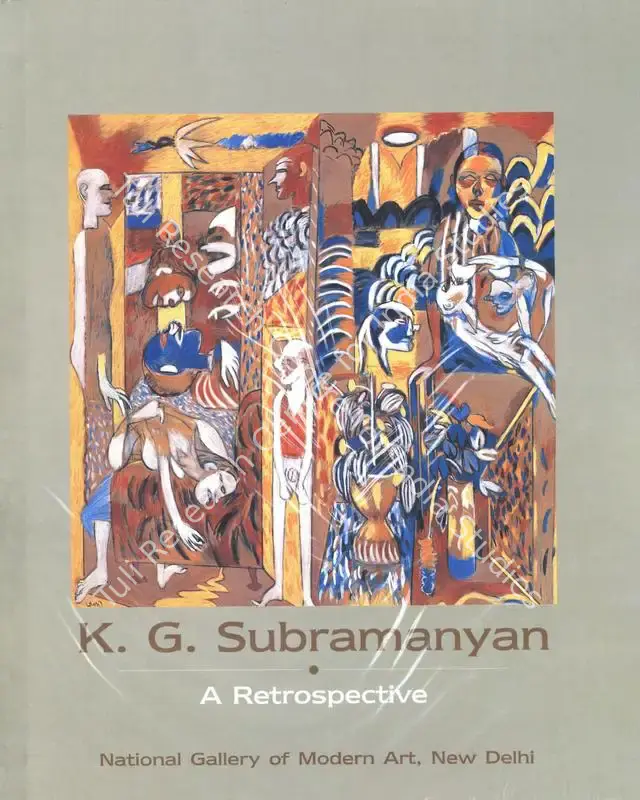
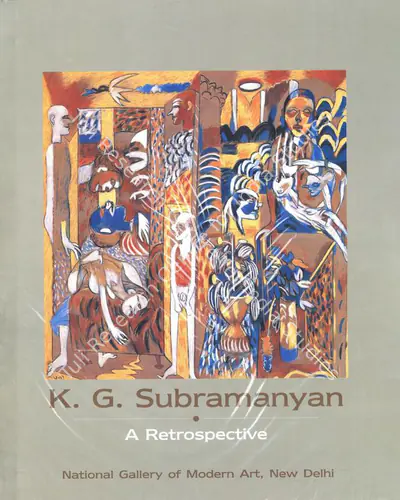
Subramanyan, K.G. (Artist) and R. Siva Kumar (Curator). K.G. Subramanyan - A Retrospective. New Delhi: National Gallery of Modern Art, 2003 | Solo Exhibition Catalogue | FineArts | 00172662

In 2003, K.G. Subramanyan A Retrospective marked a major milestone in the exhibition history of K.G. Subramanyan, offering a retrospective survey of the artist's artistic production
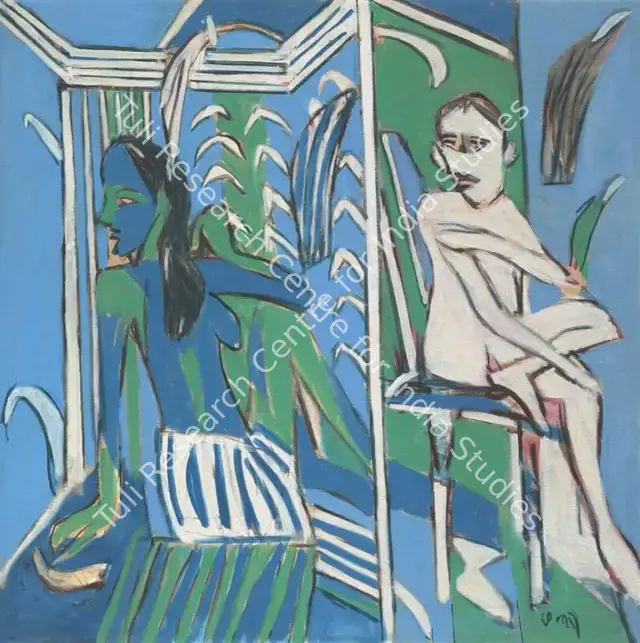
Subramanyan, K.G. (Artist). The Shower. Oil on canvas, 2008 | Painting | FineArts | 00416820

I am by nature a fabulist. I transform images, change their character,make them float, fly, perform, tell a visual story.
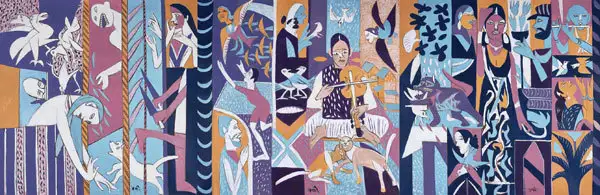
Subramanyan, K.G. (Artist). Black Grey White. Acrylic and oil on canvas, 2014 | Painting | FineArts | 00641739

In 2016, the artist achieved a new high in the auction market with the sale of Black Grey White (2014), offered in the Modern Indian Art by Asta Guru, which concluded on 22 March 2016 at Online, achieving a sale price of ₹1,33,58,400 ($200,754). This record marked a defining moment in the artist's market history, reflecting both the significance of the artwork and its reception within the broader art world.
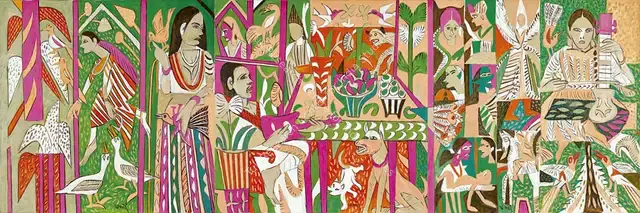
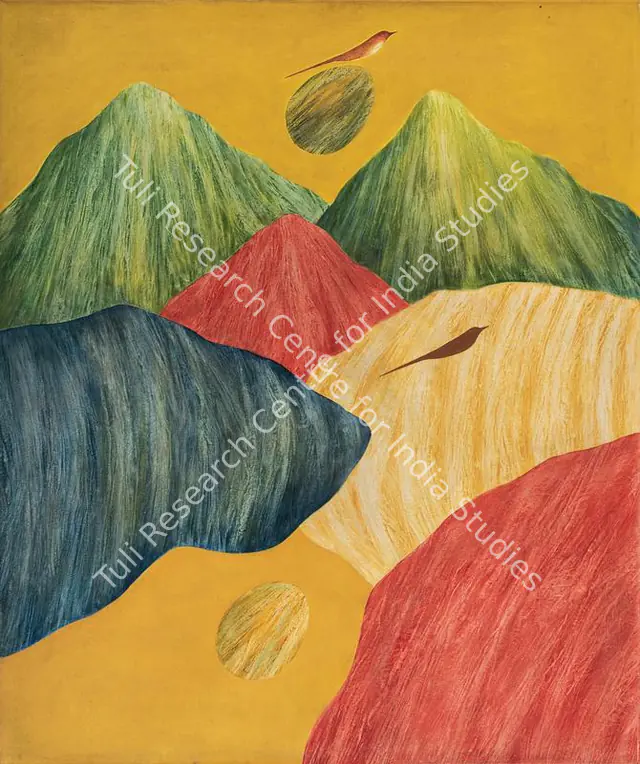
Subramanyan, K.G. (Artist). Pastoral. Acrylic & oil on canvas, 2014 | Painting | FineArts | 00420166

In 2022, the artist achieved a new high in the auction market with the sale of Pastoral (2014), offered in the Historic Masterpieces by Asta Guru, which concluded on 28 December 2022 at Online, achieving a sale price of ₹2,25,02,850 ($271,385.81). This record marked a defining moment in the artist's market history, reflecting both the significance of the artwork and its reception within the broader art world.
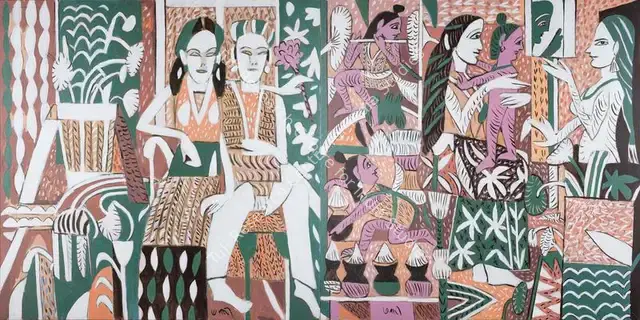
Subramanyan, K.G. (Artist). Janmashtami. Acrylic on canvas, 2015 | Painting | FineArts | 00333587

In 2018, the artist achieved a new high in the auction market with the sale of Janmashtami (2015), offered in the Evening Sale by Saffronart, which concluded on 13 March 2018 at Mumbai, achieving a sale price of ₹1,74,00,000 ($271,875). This record marked a defining moment in the artist's market history, reflecting both the significance of the artwork and its reception within the broader art world.
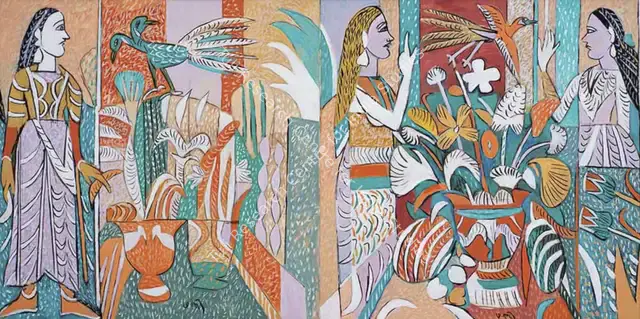
Subramanyan, K.G. (Artist). Figures With Mystical Birds (Diptych). Acrylic on canvas, 2015 | Painting | EconomicsArt | 00892047

In 2026, the artist achieved a new high in the auction market with the sale of Figures With Mystical Birds (Diptych) (2015), offered in the Modern Indian Art: Collector's Choice by Asta Guru, which concluded on 23 June 2026 at Mumbai, achieving a sale price of ₹2,79,51,000 ($295,133.17). This record marked a defining moment in the artist's market history, reflecting both the significance of the artwork and its reception within the broader art world.
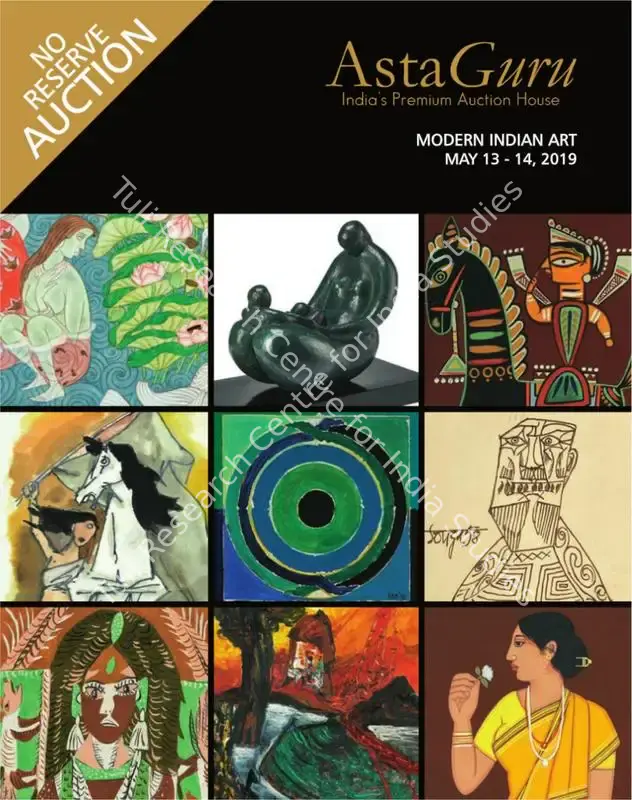
Asta Guru (Auction House). Modern Indian Art. 14 May 2019, Mumbai | Auction Catalogue | EconomicsArt | 00862313

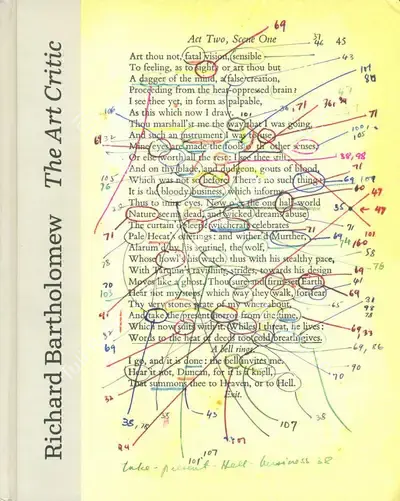
In 2019, an artwork by K.G. Subramanyan was featured on the cover of Asta Guru: Modern Indian Art (May 2019, Mumbai), marking a documented highlight in the artist's public and auction market visibility.
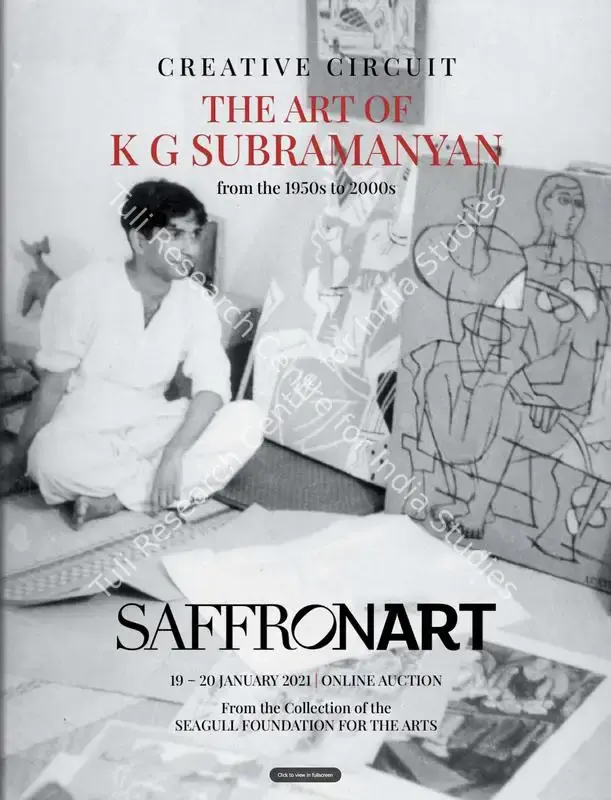
Saffronart (Auction House). Creative Circuit - The Art of K G Subramanyan. 20 January 2021, Online | Auction Catalogue | EconomicsArt | 00862372

In 2021, an artwork by K.G. Subramanyan was featured on the cover of Saffronart: Creative Circuit (January 2021, Mumbai), marking a documented highlight in the artist's public and auction market visibility.
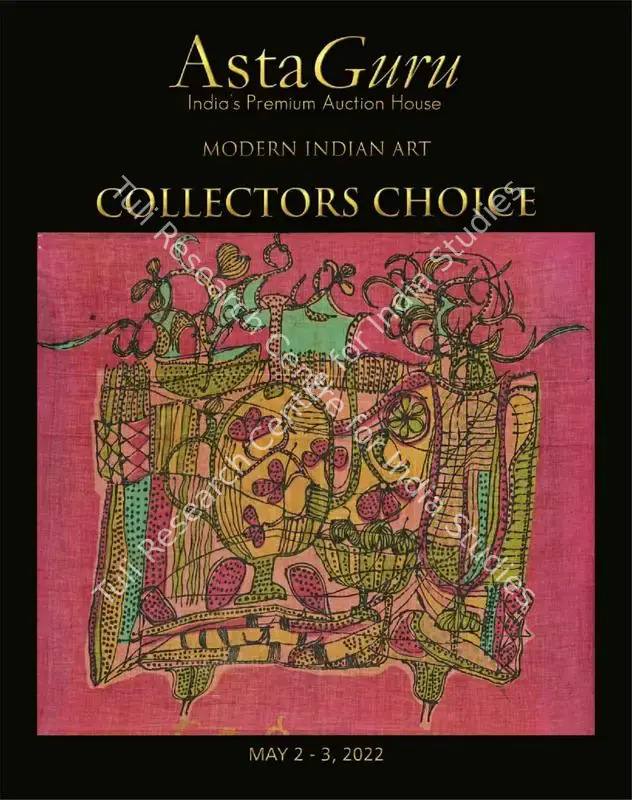
Asta Guru (Auction House). Modern Indian Art - Collectors Choice. 03 May 2022, Online | Auction Catalogue | EconomicsArt | 00862425

In 2022, an artwork by K.G. Subramanyan was featured on the cover of Asta Guru: Modern Indian Art (May 2022, Mumbai), marking a documented highlight in the artist's public and auction market visibility.

Economics of Art

20 of 50
This section showcases auction lots that achieved record-high sale prices, tracked by the date each record was set based on the artist's historical auction data.

Record-high lots21

Public Auction Market (1987–2026) | Select Indicators

  1. Annual Auction Sale Turnover
  2. Average Sale Price Per Lot
  3. Square Inch Rate Trend

Annual Auction Sale Turnover

This indicator tracks the Total Annual Auction Sales value of K.G. Subramanyan’s artworks, beginning in 1987 through to the present.
It aggregates all sales across global auction houses into yearly totals.

Analysis reflected in the chart:
The turnover graph highlights periods of strong growth, moments of market correction, and resilience during downturns. Peaks often align with landmark works coming to public auction, while troughs may indicate reduced supply or weaker demand. Over time, the curve illustrates the overall trajectory of K.G. Subramanyan’s public auction market presence.

Average Sale Price Per Lot

This measure calculates the Average Sale Price of all lots by K.G. Subramanyan sold each year.
It smooths out fluctuations caused by the quantity of works offered and focuses on the Average Sale Price level per artwork.

Analysis reflected in the chart:
Rising average sale prices indicate growing collector confidence and a stronger willingness to pay higher amounts per work. Assuming the mix of mediums remains relatively stable over time, the proportion of works on paper typically priced lower than works on canvas adds important context to understanding these market movements.

Square Inch Rate Trend

The Square Inch Rate normalizes prices by the size of each artwork, showing the average sale value per square inch over time.
This allows fair comparisons between smaller works and larger canvases.

Analysis reflected in the chart:
The Square Inch Rate shown in the graph combines various medium types such as canvas, paper, board, and others. Historically, works on canvas and board have broadly commanded higher prices compared to works on paper.

  1. 1957

    1. Bombay Art Society Award

      Bombay Art Society

  2. 1959

    1. Bombay Art Society Award

      Bombay Art Society

  3. 1961

    1. Maharashtra State Award

      Government of Maharshtra

    2. Medallion of Honourable MentionInternational

      Sao Paulo Biennale

  4. 1965

    1. National Award

      Lalit Kala Akademi

  5. 1968

    1. Gold Medal

      1st International Triennale

  6. 1975

    1. Padma Shree

      Government of India

  7. 1981

    1. Kalidas Samman

      Government of Madhya Pradesh

  8. 1985

    1. Fellow

      Lalit Kala Akademi

  9. 1991

    1. Gagan Aban Puraskar

      Visva Bharati University

  10. 1992

    1. D Litt Honoris Causa

      Rabindra Bharati University

  11. 1993

    1. Fellow

      Lalit Kala Akademi Kerala

  12. 1994

    1. Shiromani Puraskar

      Calcutta

  13. 1997

    1. D Litt Honoris Causa

      Benaras Hindu University

  14. 1999

    1. Kala Ratna

      All India Fine Arts and Crafts Society

  15. 2000

    1. Jadunath Sarkar Gold Medal

      Asiatic Society

    2. Abanindra Puraskar

      Calcutta

  16. 2001

    1. Gana Krishti Puraskar

      Kerala

    2. Manaviyam Ravi Varma Award

      Government of Kerala

  17. 2004

    1. Lalit Kala Ratna Puraskar

      Lalit Kala Akademi, Rabindra Bhavan, New Delhi, India

Research Centre
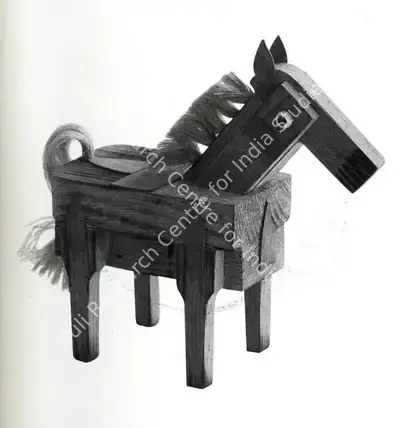
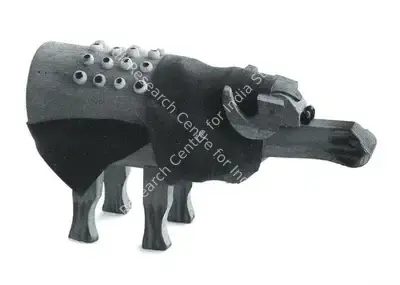
K.G. Subramanyan (Artist), Wooden Toys, Sculpture
Subramanyan, K.G. (Artist). Wooden Toys, n.d. | Sculpture
View full record
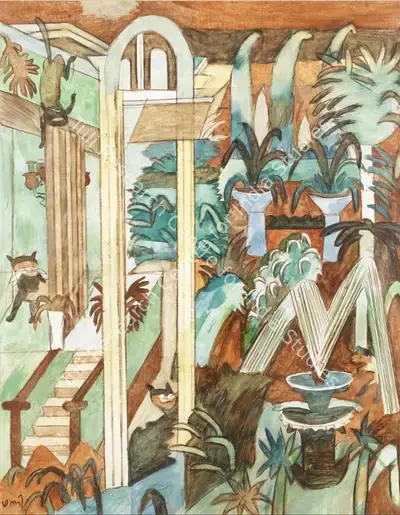
K.G. Subramanyan (Artist), Fairytales from Purvapalli-2, Painting
Subramanyan, K.G. (Artist). Fairytales from Purvapalli-2, n.d. | Painting
View full record
K.G. Subramanyan (Artist), Wooden Toys , Sculpture
Subramanyan, K.G. (Artist). Wooden Toys , n.d. | Sculpture
View full record
K.G. Subramanyan (Artist), Wooden Toys, Sculpture
Subramanyan, K.G. (Artist). Wooden Toys, n.d. | Sculpture
View full record
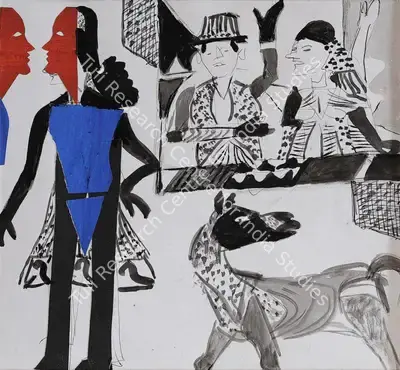
K.G. Subramanyan (Artist), Composition - 2, Painting
Subramanyan, K.G. (Artist). Composition - 2, n.d. | Painting
View full record
K.G. Subramanyan (Artist), Spirits, Painting
Subramanyan, K.G. (Artist). Spirits, n.d. | Painting
View full record
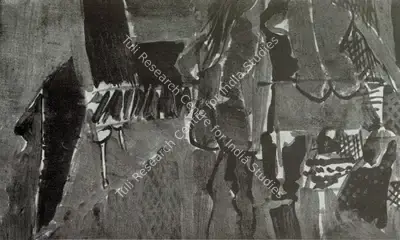
K.G. Subramanyan (Artist), Untitlted, Painting
Subramanyan, K.G. (Artist). Untitlted, n.d. | Painting
View full record
K.G. Subramanyan (Artist), Polyptych VI, Painting
Subramanyan, K.G. (Artist). Polyptych VI, n.d. | Painting
View full record
K.G. Subramanyan (Artist), Detail of Mural, Mural
Subramanyan, K.G. (Artist). Detail of Mural, n.d. | Mural
View full record
K.G. Subramanyan (Artist), TOYS, Sculpture
Subramanyan, K.G. (Artist). TOYS, n.d. | Sculpture
View full record
K.G. Subramanyan (Artist), Three Untitled Works, Drawing
Subramanyan, K.G. (Artist). Three Untitled Works, n.d. | Drawing
View full record
K.G. Subramanyan (Artist), Wooden Toys , Sculpture
Subramanyan, K.G. (Artist). Wooden Toys , n.d. | Sculpture
View full record
K.G. Subramanyan (Artist), Pot of Rajnigandha, Painting
Subramanyan, K.G. (Artist). Pot of Rajnigandha, n.d. | Painting
View full record
K.G. Subramanyan (Artist), TOYS, Sculpture
Subramanyan, K.G. (Artist). TOYS, n.d. | Sculpture
View full record
K.G. Subramanyan (Artist), Water Garden, Painting
Subramanyan, K.G. (Artist). Water Garden, n.d. | Painting
View full record
K.G. Subramanyan (Artist), Couple on Terrace, Painting
Subramanyan, K.G. (Artist). Couple on Terrace, n.d. | Painting
View full record
K.G. Subramanyan (Artist), Plantation, Painting
Subramanyan, K.G. (Artist). Plantation, n.d. | Painting
View full record
K.G. Subramanyan (Artist), Untitled, Collage
Subramanyan, K.G. (Artist). Untitled, n.d. | Collage
View full record
K.G. Subramanyan (Artist), Wooden Toys , Sculpture
Subramanyan, K.G. (Artist). Wooden Toys , n.d. | Sculpture
View full record
K.G. Subramanyan (Artist), Composition - I, Painting
Subramanyan, K.G. (Artist). Composition - I, n.d. | Painting
View full record
20 of 1,311
Somnath Hore (Artist), Somnath Hore, Solo Exhibition Catalogue
Hore, Somnath (Artist). Somnath Hore, n.d. | Solo Exhibition Catalogue | 00172672
View full record
K.G. Subramanyan (Essayist), Exhibitions in Bombay and Calcutta, 1949, Essay
Subramanyan, K.G. (Essayist). Exhibitions in Bombay and Calcutta. In Marg. 3(1). January 1949 | Essay | 00668770
View full record
Dwijendra Moitra (Editor), Academy of Fine Arts, 1960, Edited Book
Moitra, Dwijendra (Editor). Academy of Fine Arts, 1960 | Edited Book | 00169954
View full record
The Paintings of Rabindranath (trans. Gujarati)
1961
Subramanyan, K. G. (Essayist). The Paintings of Rabindranath (trans. Gujarati). In Moving Focus. 1961 | Essay | 00157117
View full record
K.G. Subramanyan (Essayist), The Artist on Art, 1965, Essay
Subramanyan, K.G. (Essayist). The Artist on Art. In Lalit Kala Contemporary. 3. December 1965 | Essay | 00795558
View full record
Jaya Appasamy (Editor), Lalit Kala Contemporary, 1965, Journal
Appasamy, Jaya (Editor) and S.A. Krishnan (Assistant Editor). Lalit Kala Contemporary, December 1965 | Journal | 00857954
View full record
K.G. Subramanyan (Essayist), Book-Reviews, 1966, Essay
Subramanyan, K.G. (Essayist). Book-Reviews. In Lalit Kala Contemporary. 5. September 1966 | Essay | 00795587
View full record
K.G. Subramanyan (Essayist), Book-Reviews, 1968, Essay
Subramanyan, K.G. (Essayist). Book-Reviews. In Lalit Kala Contemporary. 9. 1968 | Essay | 00795625
View full record
The Struggle for Image in Contemporary Art
1969
Subramanyan, K. G. (Essayist). The Struggle for Image in Contemporary Art. In Moving Focus. 1969 | Essay | 00157113
View full record
Benode Behari Mukherjee
1969
Subramanyan, K. G. (Essayist). Benode Behari Mukherjee. In Moving Focus. 1969 | Essay | 00157118
View full record
K.G. Subramanyan (Essayist), Folk Art and the Modern Artist in India, 1969, Essay
Subramanyan, K.G. (Essayist). Folk Art and the Modern Artist in India. In Lalit Kala Contemporary. 10. September 1969 | Essay | 00795629
View full record
K.G. Subramanyan (Essayist), Three  Retrospective Exhibitions, 1969, Essay
Subramanyan, K.G. (Essayist). Three Retrospective Exhibitions. In Lalit Kala Contemporary. 10. September 1969 | Essay | 00795632
View full record
Jaya Appasamy (Editor), Lalit Kala Contemporary, 1969, Journal
Appasamy, Jaya (Editor) and S.A. Krishnan (Assistant Editor, design and layout). Lalit Kala Contemporary, September 1969 | Journal | 00857960
View full record
P.R. Ramachandra Rao (Author), Contemporary Indian Art, 1969, Authored Book
Rao, P.R. Ramachandra (Author). Contemporary Indian Art, 1969 | Authored Book | 00169590
View full record
Art and Change
1970
Subramanyan, K. G. (Essayist). Art and Change . In Moving Focus. 1970 | Essay | 00157110
View full record
Mulk Raj Anand (General Editor), Marg, 1970, Magazine
Anand, Mulk Raj (General Editor). Marg, March 1970 | Magazine | 00760251
View full record
The Image of the Indian Art Tradition
1971
Subramanyan, K. G. (Essayist). The Image of the Indian Art Tradition. In Moving Focus. 1971 | Essay | 00157121
View full record
Modern Art in India and the West
1972
Subramanyan, K. G. (Essayist). Modern Art in India and the West. In Moving Focus. 1972 | Essay | 00157111
View full record
The Uses of Art Criticism
1972
Subramanyan, K. G. (Essayist). The Uses of Art Criticism. In Moving Focus. 1972 | Essay | 00157115
View full record
Ramkinker Baij
1972
Subramanyan, K. G. (Essayist). Ramkinker Baij. In Moving Focus. 1972 | Essay | 00157119
View full record
20 of 496
K.G. Subramanyan (Artist), Untitlted, Painting
Subramanyan, K.G. (Artist). Untitlted, n.d. | Painting
View full record
K.G. Subramanyan (Artist), Composition - I, Painting
Subramanyan, K.G. (Artist). Composition - I, n.d. | Painting
View full record
K.G. Subramanyan (Artist), Composition - 2, Painting
Subramanyan, K.G. (Artist). Composition - 2, n.d. | Painting
View full record
K.G. Subramanyan (Artist), Fairytales from Purvapalli-2, Painting
Subramanyan, K.G. (Artist). Fairytales from Purvapalli-2, n.d. | Painting
View full record
K.G. Subramanyan (Artist), Detail of Mural, Mural
Subramanyan, K.G. (Artist). Detail of Mural, n.d. | Mural
View full record
K.G. Subramanyan (Artist), TOYS, Sculpture
Subramanyan, K.G. (Artist). TOYS, n.d. | Sculpture
View full record
K.G. Subramanyan (Artist), TOYS, Sculpture
Subramanyan, K.G. (Artist). TOYS, n.d. | Sculpture
View full record
K.G. Subramanyan (Artist), Wooden Toys, Sculpture
Subramanyan, K.G. (Artist). Wooden Toys, n.d. | Sculpture
View full record
K.G. Subramanyan (Artist), Wooden Toys, Sculpture
Subramanyan, K.G. (Artist). Wooden Toys, n.d. | Sculpture
View full record
K.G. Subramanyan (Artist), Wooden Toys , Sculpture
Subramanyan, K.G. (Artist). Wooden Toys , n.d. | Sculpture
View full record
K.G. Subramanyan (Artist), Wooden Toys , Sculpture
Subramanyan, K.G. (Artist). Wooden Toys , n.d. | Sculpture
View full record
K.G. Subramanyan (Artist), Wooden Toys , Sculpture
Subramanyan, K.G. (Artist). Wooden Toys , n.d. | Sculpture
View full record
K.G. Subramanyan (Artist), Untitled, Collage
Subramanyan, K.G. (Artist). Untitled, n.d. | Collage
View full record
K.G. Subramanyan (Artist), Three Untitled Works, Drawing
Subramanyan, K.G. (Artist). Three Untitled Works, n.d. | Drawing
View full record
K.G. Subramanyan (Artist), Pot of Rajnigandha, Painting
Subramanyan, K.G. (Artist). Pot of Rajnigandha, n.d. | Painting
View full record
K.G. Subramanyan (Artist), Spirits, Painting
Subramanyan, K.G. (Artist). Spirits, n.d. | Painting
View full record
K.G. Subramanyan (Artist), Water Garden, Painting
Subramanyan, K.G. (Artist). Water Garden, n.d. | Painting
View full record
K.G. Subramanyan (Artist), Polyptych VI, Painting
Subramanyan, K.G. (Artist). Polyptych VI, n.d. | Painting
View full record
K.G. Subramanyan (Artist), Plantation, Painting
Subramanyan, K.G. (Artist). Plantation, n.d. | Painting
View full record
K.G. Subramanyan (Artist), Couple on Terrace, Painting
Subramanyan, K.G. (Artist). Couple on Terrace, n.d. | Painting
View full record
20 of 813
Tuli Research Centre for India Studies (Editor). K.G Subramanyan's Toys & Playfulness - Handmade Toys, 10 March 2026 | In-house Video, 2026 · 14 sec · Reel
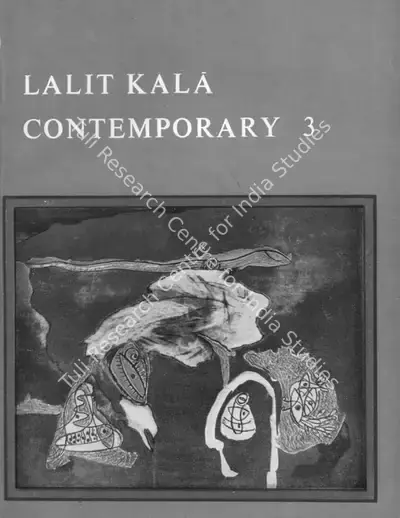
▶
Tuli Research Centre for India Studies (Editor). K.G Subramanyan's Toys & Playfulness - Handmade Toys, 10 March 2026 | In-house Video
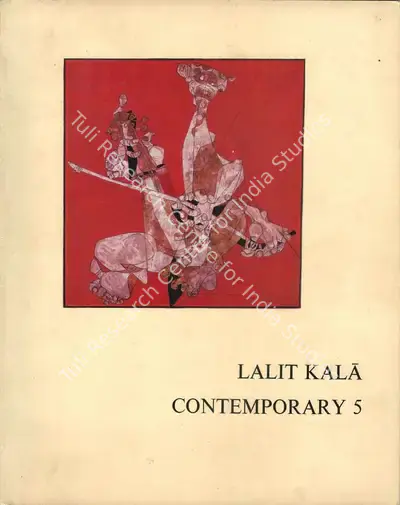
2026 · 14 sec · Reel
Tuli Research Centre for India Studies (Editor). K. G. Subramanyan's Toys, 28 April 2026 | In-house Video, 2026 · 18 sec · Reel
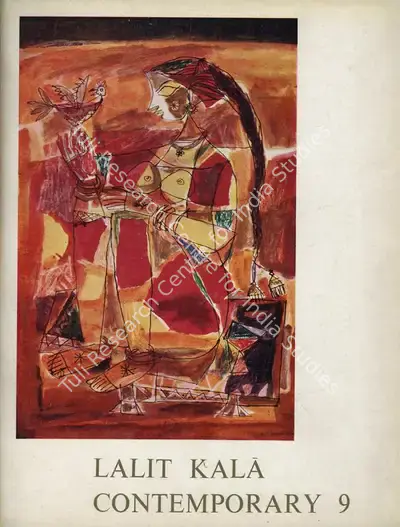
▶
Tuli Research Centre for India Studies (Editor). K. G. Subramanyan's Toys, 28 April 2026 | In-house Video
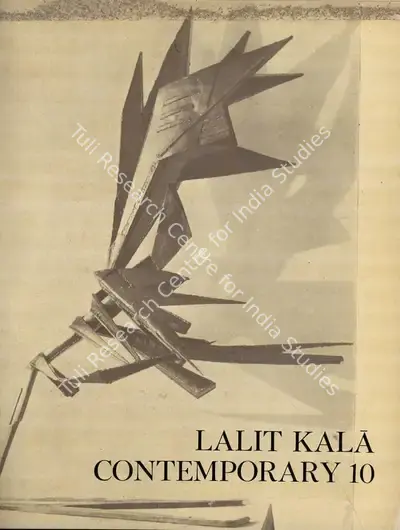
2026 · 18 sec · Reel
K.G. Subramanyan (Artist), Penguin, 1960, Sculpture
Subramanyan, K.G. (Artist). Penguin, c.1960 | Sculpture
View full record
Indian Art Since the Early 40s, 1974, Edited Book
Indian Art Since the Early 40s, 1974 | Edited Book | 00170048
View full record
K.G. Subramanyan (Artist), Interior, 1976, Painting
Subramanyan, K.G. (Artist). Interior, 1976 | Painting
View full record
K.G. Subramanyan (Author), Moving Focus, 1978, Authored Book
Subramanyan, K.G. (Author). Moving Focus, 1978 | Authored Book | 00169516
View full record
Tate Gallery (Organiser), Six Indian Painters, 1982, Group Exhibition Catalogue
Tate Gallery (Organiser). Six Indian Painters, 1982 | Group Exhibition Catalogue | 00883433
View full record
G.M. Sheikh (Editor), Paroksa, 1984, Edited Book
Sheikh, G.M. (Editor). Paroksa, 1984 | Edited Book | 00170118
View full record
Geeta Kapur (Author), K. G. Subramanyan, 1987, Authored Book
Kapur, Geeta (Author). K. G. Subramanyan, 1987 | Authored Book | 00169519
View full record
K.G. Subramanyan (Author), Living Tradition, 1987, Authored Book
Subramanyan, K.G. (Author). Living Tradition, 1987 | Authored Book | 00169520
View full record
Centre for Contemporary Art, 1991, Group Exhibition Catalogue
Centre for Contemporary Art, 1991 | Group Exhibition Catalogue | 00883427
View full record
K.G. Subramanyan (Author), Creative Circuit, 1992, Authored Book
Subramanyan, K.G. (Author). Creative Circuit, 1992 | Authored Book | 00169521
View full record
Caroline Turner (Editor), Tradition and Change, 1993, Edited Book
Turner, Caroline (Editor). Tradition and Change, 1993 | Edited Book | 00170245
View full record
G.M. Sheikh (Editor), Contemporary Art in Baroda, 1997, Edited Book
Sheikh, G.M. (Editor). Contemporary Art in Baroda, 1997 | Edited Book | 00170304
View full record
R. Siva KUmar (Author), K. G. Subramanyan, 1997, Authored Book
KUmar, R. Siva (Author). K. G. Subramanyan, 1997 | Authored Book | 00169312
View full record
Geeta Kapur (Author), When was Modernism, 2000, Authored Book
Kapur, Geeta (Author). When was Modernism, 2000 | Authored Book | 00169571
View full record
Manasij Majumder (Editor), Treasure Trove, 2001, Edited Book
Majumder, Manasij (Editor). Treasure Trove, 2001 | Edited Book | 00170365
View full record
Yashodhara Dalmia (Author), The Making of Modern Indian Art, 2001, Authored Book
Dalmia, Yashodhara (Author). The Making of Modern Indian Art, 2001 | Authored Book | 00169555
View full record
Yashodhara Dalmia (Editor), Contemporary Indian Art, 2002, Edited Book
Dalmia, Yashodhara (Editor). Contemporary Indian Art, 2002 | Edited Book | 00170392
View full record
Yashodhara Dalmia (Author), Memory, Metaphor, Mutations, 2007, Authored Book
Dalmia, Yashodhara (Author). Memory, Metaphor, Mutations, 2007 | Authored Book | 00169556
View full record
Yashodhara Dalmia (Author), Journeys, 2011, Authored Book
Dalmia, Yashodhara (Author). Journeys, 2011 | Authored Book | 00169557
View full record
Rati Bartholomew (Editor), Richard Bartholomew, 2012, Edited Book
Bartholomew, Rati (Editor). Richard Bartholomew, 2012 | Edited Book | 00170536
View full record
20 of 23

Posts 2

  1. The Window of an American Skyscraper
    The Window of an American Skyscraper
    In 1968, KG Subramanyan unveiled "Windows-II", a pivotal piece within his expansive series of polyptychs and murals. Rooted in both practicality and theory, this series emerged from Subramanyan's formative years in New York, where spatial constraints sparked his innovative use of multiple canvases. The concept of polyptychs, manifested in "Windows-II", invites viewers into a voyeuristic exploration through structured panels. Each window in Subramanyan's artwork offers a glimpse into the ordinary lives of people, reminiscent of earlier terracotta panels but now characterized by a modular, repetitive grid. Art critic Siva Kumar describes Subramanyan's technique as transforming figures and landscapes into vibrant, flattened forms, evoking a sense of animated mystery.  Subramanyan's "Windows-II" exemplifies his mastery in merging narrative elements with visual artistry, presenting viewers with a tableau that challenges conventional storytelling through its serial and repetitive structure.
    2_FineArts6_EconomicsArt11_Eroticism14_IndoWorld
    K.G. SubramanyanNew York
    Read Post →
  2. All Living Souls
    All Living Souls
    Tuli Research Centre for India Studies presents All Living Souls - Expressed in the Modern and Contemporary Fine & Popular Indian Arts Curated by Neville Tuli As part of launching the 16th Research Category for India Studies - "The Animal-Human-Nature-Continuum" we present a fascinating exhibition of modern and contemporary Indian fine and popular arts and their expression of the ideas and forms related to the dialogue between animals and humans, and the larger cosmic and spiritual thoughts which abide therein. Please visit the Exhibition and see the artworks by modern and contemporary masters such as Rabindranath Tagore, D.P. Roy Chowdhury, M.F. Husain, J. Swaminathan, J. Sultan Ali, Somnath Hore, Ganesh Pyne, Manjit Bawa, K. Laxma Goud, Krishna Reddy, Jyoti Bhatt, Rekha Rodwittiya, Amit Ambalal, among others, along with vintage and rare prints from the pioneering Indian chromolithographic presses such as Chitrashala, Ravi Varma, Calcutta Art Studio, Chore Bagan & Kansaripara.
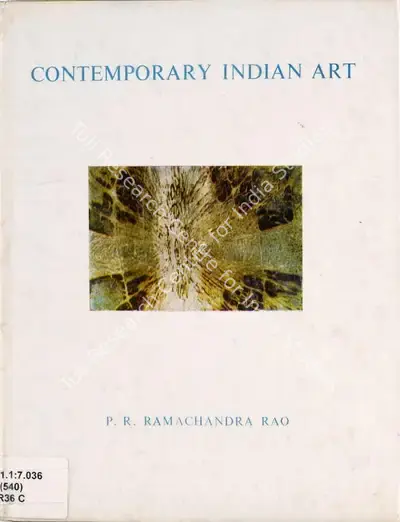
    2_FineArts4_PopCulture16_Continuum
    A.L. SyedAbanindranath TagoreAmit AmbalalAmitava DasAnita DubeBenode Behari MukherjeeBhupen P. KhakharBireshwar Sen+37 more
    Read Post →

Calendar 2

View All →
  1. Self Discovery via Rediscovering India Series  Part IV Building www.tuliresearchcentre.org
    ArchivedExhibitionProject 5
    Self Discovery via Rediscovering India Series Part IV Building www.tuliresearchcentre.org
    20th - 23rd February 2025
    Self Discovery via Rediscovering India Series Part IV
    Read More →
    14_IndoWorld·Building Www Tuliresearchcentre Org 21 24 February 2025 Project 5 Cal
  2. Self-Discovery via Rediscovering India Series Inaugural Exhibition
    ArchivedExhibitionProject 1
    Self-Discovery via Rediscovering India Series Inaugural Exhibition
    14th - 29th March 2024
    Inaugural Exhibition
    Read More →
    14_IndoWorld·Self Discovery Via Rediscovering India Series 15 30 March 2024 Project 1 Cal

Related

50

Personalities

32

A. RamachandranComparable Artworks
Adi M. DavierwallaComparable Artworks
Akbar PadamseeComparable Artworks
Amrita Sher-GilComparable Artworks
Anupam SudComparable Artworks
Benode Behari MukherjeeComparable Artworks
Bhupen P. KhakharComparable Artworks
Bikash BhattacharjeeComparable Artworks
Ebrahim AlkaziComparable Artworks
F.N. SouzaComparable Artworks
G.R. IrannaComparable Artworks
Ganesh PyneComparable Artworks
Geeta KapurComparable Artworks
Gieve PatelComparable Artworks
H.A. GadeComparable Artworks
HEARTComparable Artworks
J. Sultan AliComparable Artworks
J. SwaminathanComparable Artworks
Jamini RoyComparable Artworks
Jeram PatelComparable Artworks
Jogen ChowdhuryComparable Artworks
Jyoti BhattComparable Artworks
Krishen KhannaComparable Artworks
M.F. HusainComparable Artworks
Manjit BawaComparable Artworks
Meera MukherjeeComparable Artworks
N.S. BendreComparable Artworks
Nandalal BoseComparable Artworks
Nasreen MohamediComparable Artworks
Osian'sComparable Artworks
P.V. JanakiramComparable Artworks
Prabhakar BarweComparable Artworks

Institutions

11

Apparao ArtComparable Artworks
Art BullComparable Artworks
ArtianaComparable Artworks
Asta GuruComparable Artworks
BonhamsComparable Artworks
BowringsComparable Artworks
Christie'sComparable Artworks
DAGComparable Artworks
Emami ChiselComparable Artworks
Mapin PublishingComparable Artworks
PrinsepsComparable Artworks

Themes

5

Art Heritage AnnualComparable Artworks
ArtrendsComparable Artworks
Journal of Arts & IdeasComparable Artworks
Lalit Kala Contemporary JournalComparable Artworks
MargComparable Artworks

Events

2

All Living SoulsEvent Artists · Comparable Artworks
Pictorial Space 1978Event Artists · Comparable Artworks
Tuli Research Centre for India Studies
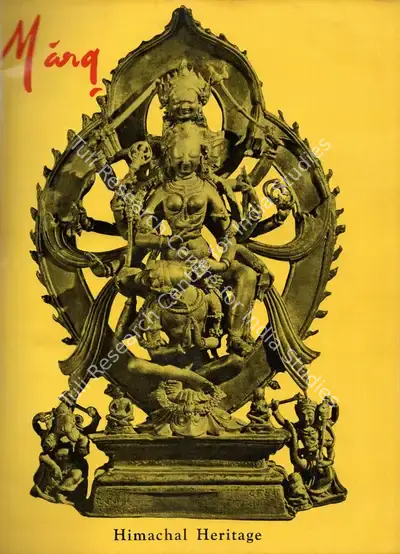
Tuli Research Centre
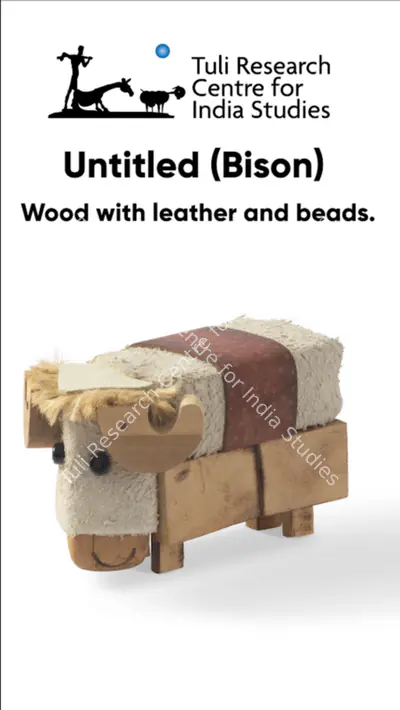
for India Studies

A free and open knowledge base for the modern and contemporary Indian arts, cinema, photography and cultural heritage.

Support

Contact Us

Discover

Tuli Research Centre for India StudiesVisionManifestoArchive & LibraryVanraja Sanctuary & Hospice
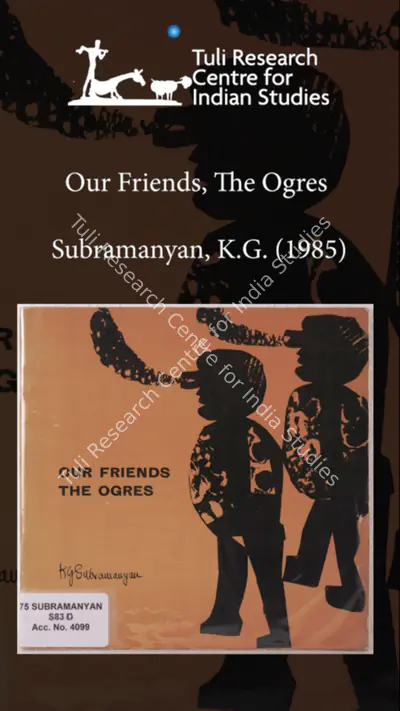
Legal

Privacy PolicyTerms & Conditions

Follow us

Youtube

Youtube

Instagram

Instagram

Facebook

Facebook

© Tuli Research Centre for India Studies 2026
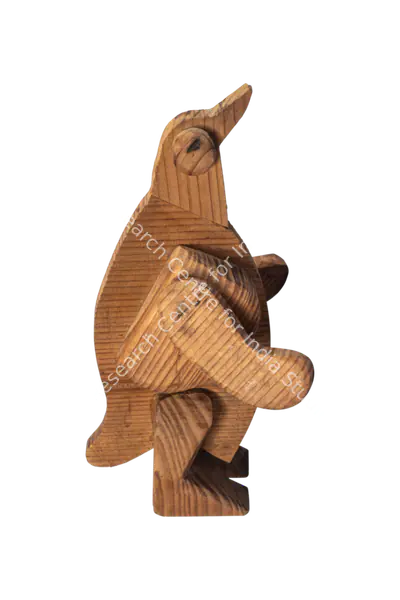
Tuli Research Centre for India Studies
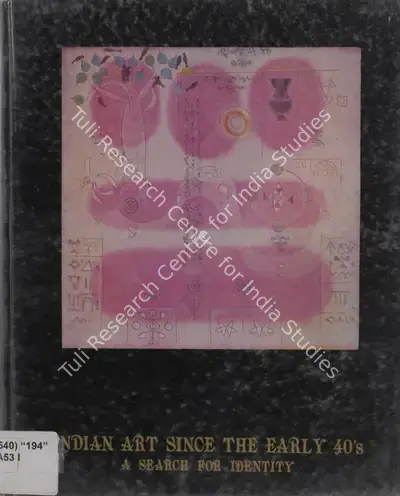
Tuli Research Centre
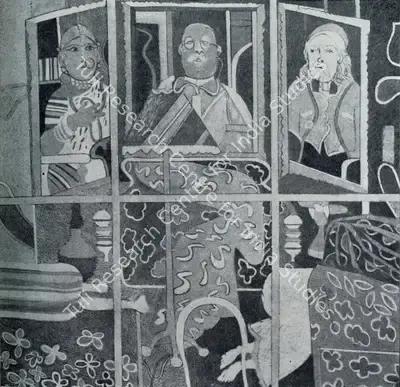
for India Studies

A free and open knowledge base for the modern and contemporary Indian arts, cinema, photography and cultural heritage.

Tuli Research Centre for India StudiesVisionManifestoArchive & LibraryVanraja Sanctuary & Hospice
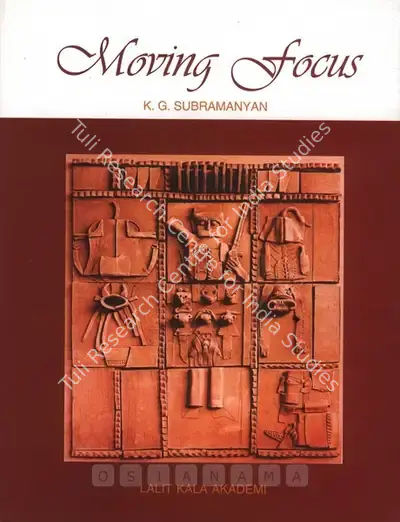
Contact Us
Privacy PolicyTerms & Conditions

Follow us

YoutubeInstagramFacebook

© Tuli Research Centre for India Studies 2026
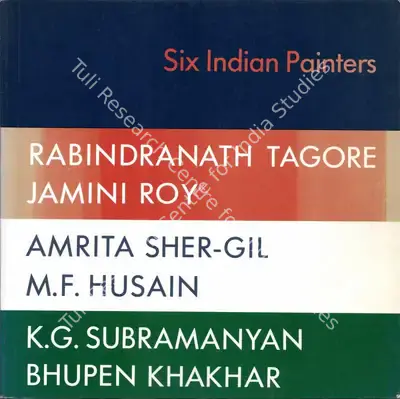
              No image available
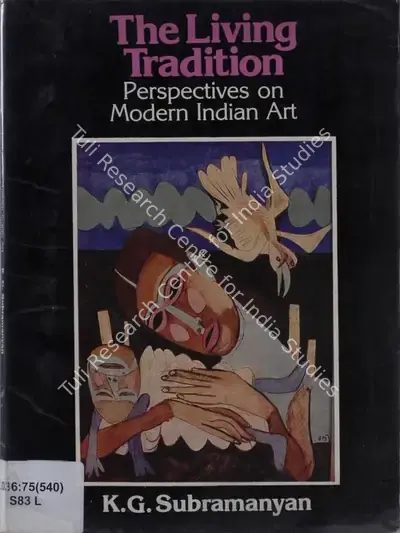
              K. G. Subramanyan (Essayist)
              TitleBenode Behari Mukherjee
              Document TypeEssay
              PublisherLalit Kala Contemporary No. 10
              Date of Publication1969
              BindingHB_Rebound
              LanguageEnglish
              81-87507-14-4

              Research Categories

              12_Scholarship
              2_FineArts
              9_SocialDuty
              Source
              authored-subramanyan-moving-focus-1978-2229

              Related Links6

              Masterlist2
              Essays Write UpsK G Subramanyan
              Research Categories3
              12The History & Historiography of Scholarship in the Arts, Humanities, and Social Sciences02Modern and Contemporary Indian Fine Arts09Social Responsibility of the Creative Mind
              Object
              Authored Subramanyan Moving Focus 1978 2229