Ravikant
Ravikant is an Indian intermedia historian, archivist, writer and translator, whose scholarship explores intersections of languages, media forms, popular cinema, and music in South Asia. He is a Professor at the Centre for the Study of Developing Societies (CSDS), Delhi, where he leads the Indian Languages Programme and edits the peer-reviewed journal Pratiman.
As part of the Sarai Programme at CSDS, he played a leading role in developing digital archives, language technologies, research initiatives and networks on popular culture and media histories.
His work on the social history of Hindi cinema, radio, and film music has established him as an important voice in Indian music and media studies. Through archival projects on Hindi-Urdu print culture, folk traditions, and early cinema, he has helped preserve significant aspects of India's literary and popular heritage.
Ravikant is the author of Media ki Bhasha-leela and has co-edited several influential books and journals, including Translating Partition, Deewan-e-Sarai series and HInglish Live: Language Mixing across Media, as well as the special issues of Hans on New/Social Media(2018) and of Naya Path on Sahir Ludhiyanvi. He has curated intermedia cinematic exhibitions at India Habitat Centre, SAA, JNU, and Arthshila, Patna.
सराय-सीएसडीएस कार्यक्रम में शुरुआती दौर से हाथ बटाते हुए उन्होंने डिजिटल आर्काइव, भारतीय कंप्यूटिंग, शहरी संस्कृति व लोकप्रिय मीडिया के इतिहास पर शोध की पहल करने में अहम भूमिका निभाई।
हिंदी सिनेमा, रेडियो और फ़िल्मी संगीत के सामाजिक इतिहास पर उनके काम ने उन्हें फ़िल्म व मीडिया अध्ययन के क्षेत्र में एक अहम पहचान दिलाई है। हिंदी-उर्दू प्रिंट संस्कृति, लोक परंपराओं और शुरुआती सिनेमा से जुड़े अभिलेखागार के निर्माण के ज़रिए उन्होंने भारतीय लोक-संस्कृति की विरासत के अहम पहलुओं को सहेजकर मुक्त जनपद में डालने में मदद की है।
रविकान्त 'मीडिया की भाषा-लीला' के लेखक हैं और उन्होंने 'ट्रांसलेटिंग पार्टीशन' और 'दीवान-ए-सराय' (Deewan-e-Sarai) शृंखला, 'हिंग्लिश लाइव: लैंग्वेज मिक्सिंग अक्रॉस मीडिया' जैसी कई अहम किताबों और हंस के 'नवसंचार विशेषांक' और नया पथ के 'साहिर लुधियानवी विशेषांक' का सह-संपादन किया है। बतौर क्यूरेटर उन्होंने सीएसडीएस, इंडिया हैबिटैट सेंटर, स्कूल ऑफ़ आर्ट्स ऐंड एस्थेटिक्स, जवाहरलाल नेहरू विश्वविद्यालय, और अर्थशिला में सिनेमा-केंद्रित नुमाइशें लगाई हैं।
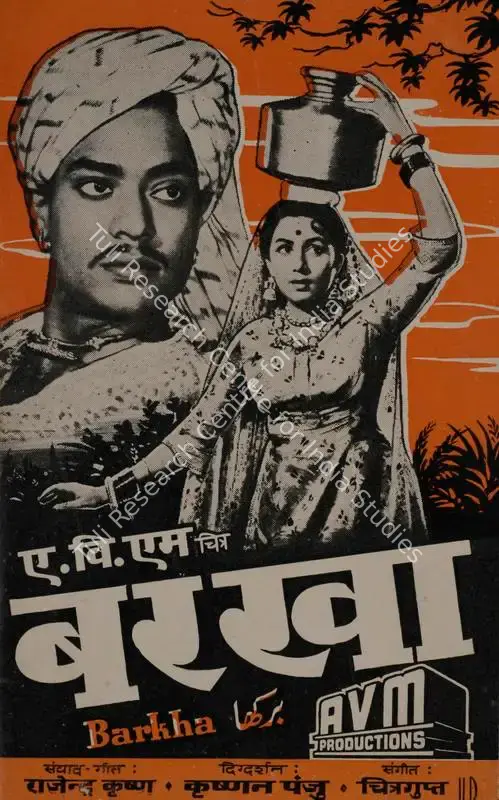
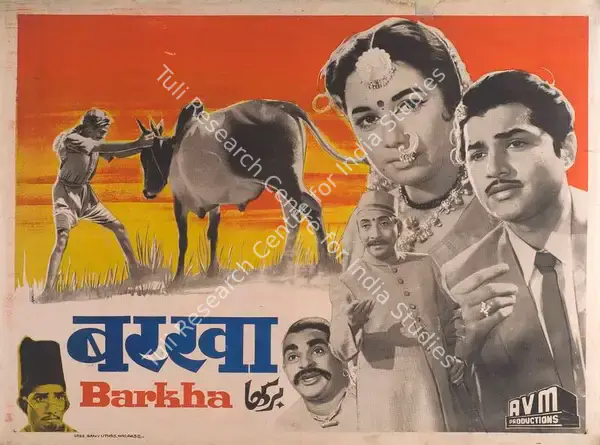
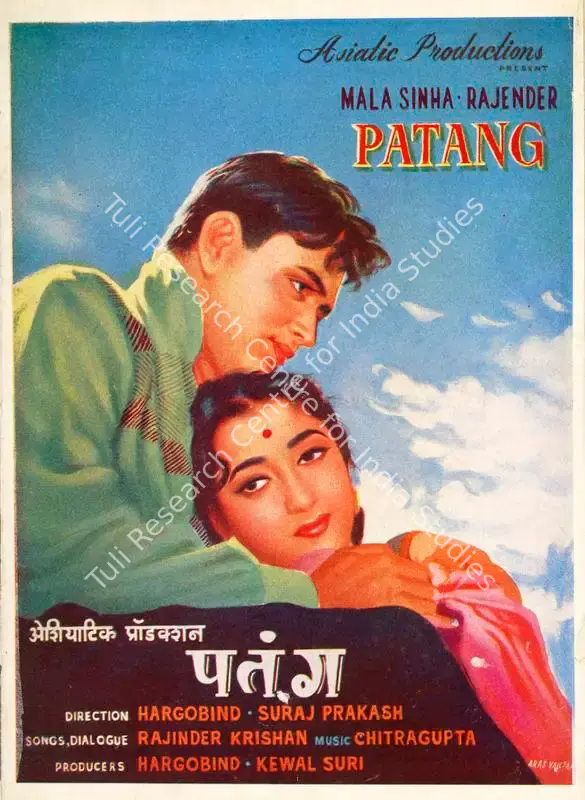
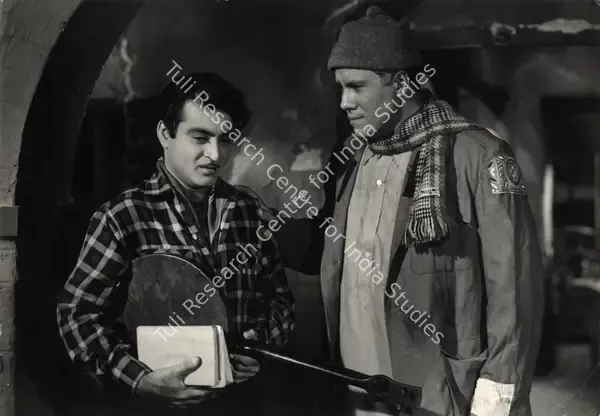
Research Centre


Posts 7
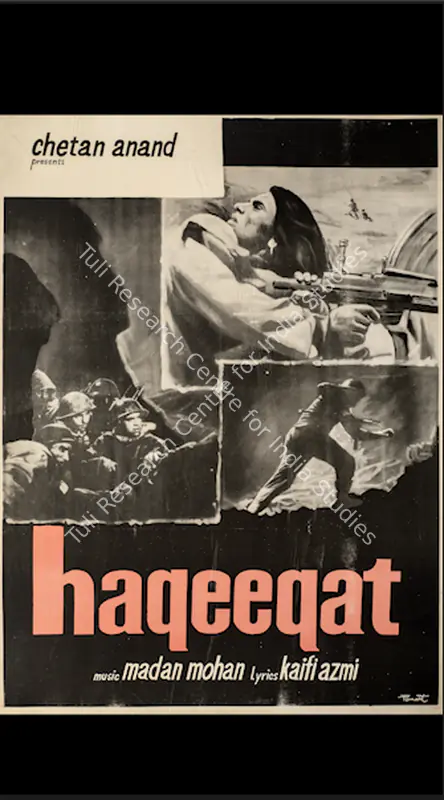
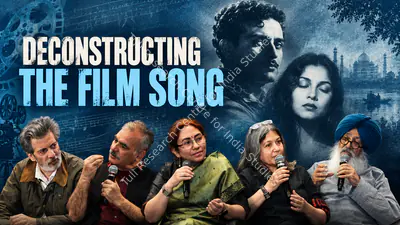
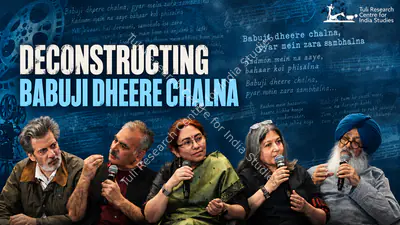
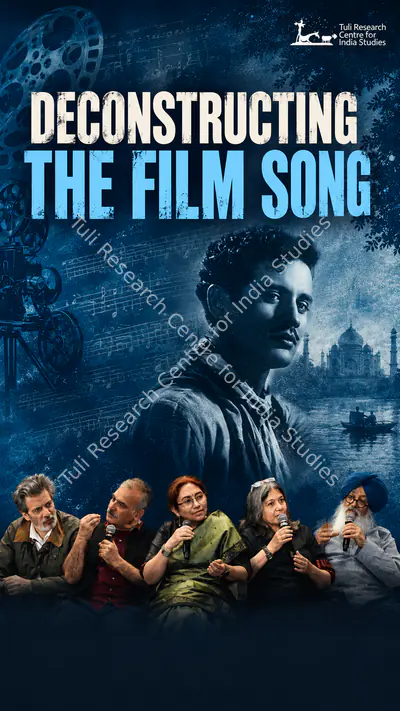
- "What does a patriotic song sound like when it refuses to celebrate aggression? ""Kar Chale Hum Fida"" from Chetan Anand's Haqeeqat (1964) answers that question with a stillness that has stayed with the Indian audiences for over six decades. In this discussion, Ravikant, Professor, CSDS (The Centre for the Study of Developing Societies), highlights that although it is a song about war, it subverts expectations by being devoid of any swashbuckling aggression. The song speaks not of conquest or victory but of sacrifice and collective responsibility; a burden shared equally by soldiers, women, and the young. Kaifi Azmi's lyrics carry no triumphalism of epic proportions, rather only a quiet, devastating sense of duty. Chetan Anand's Haqeeqat released at the time when the idealism of the early independence years was falling apart and the Nehruvian generation, which had carried the dream of a new India, was fading away. The song, with war as it's background, mourns the dead, but it also speaks directly to the living, asking them what they will do with the nation left in their hands. This video is an excerpt from the session with Ketan Anand, Ravikant, Pavan Jha and Neville Tuli, ""A Musical Glue for Nation-Building: Deconstructing the Film Song"", presented by the Tuli Research Centre for India Studies (T.R.I.S.) at the 7th Self-Discovery via Rediscovering India Festival."
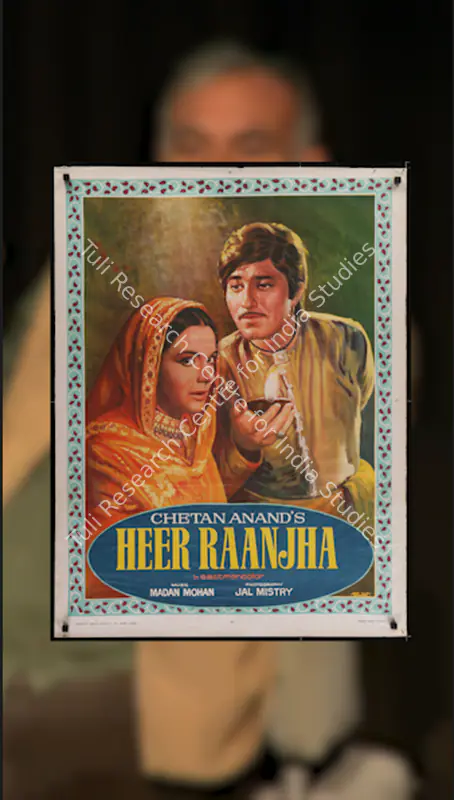
- Chetan Anand shot heartbreak the way other directors shot war, against a landscape vast enough to hold it. "Yeh Duniya Yeh Mehfil Mere Kaam Ki Nahi" from Heer Raanjha (1970) is a song of heartbreak staged against stunning visuals. Sung by Mohammed Rafi, with music by Madan Mohan and lyrics by Kaifi Azmi, it turns separation into philosophy. In this clip, Ravikant, Professor, CSDS (Centre for the Study of Developing Societies), calls the song one of the best statements on loss and the ambition to win it back. What makes the song unforgettable is the way voice, music and visuals come together, and Chetan Anand's use of landscape gives it a vast, almost mythical quality, creating a fantasy space where pain can be larger than life, where the song can say what the narrative cannot. The result is a beautiful moment in Indian cinema, where heartbreak, spirituality and landscape fuse into a deeply moving, visually rich film song that has become a timeless expression of love. This video is from 'A Musical Glue for Nation-Building: Deconstructing the Film Song', presented by the Tuli Research Centre for India Studies (T.R.I.S.) at the 7th Self-Discovery via Rediscovering India Festival.
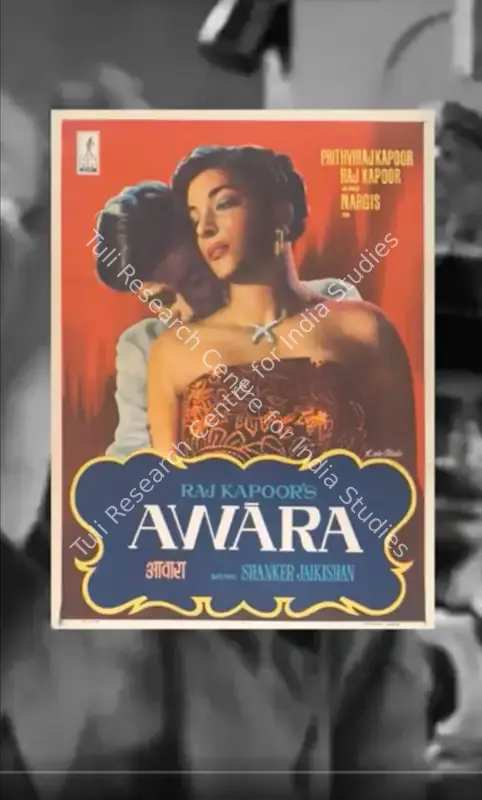
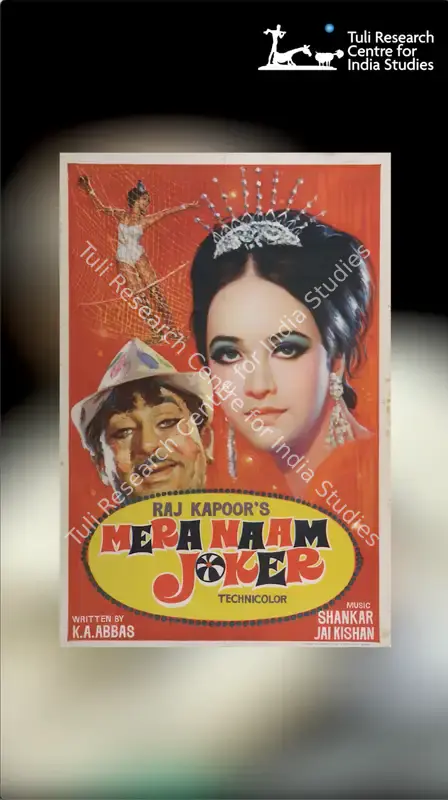
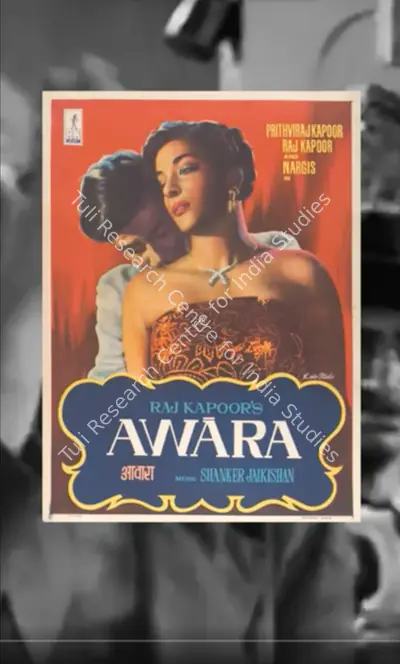
- "Raj Kapoor's tramp, the wide-eyed wanderer in oversized clothes and a battered hat, was one of Hindi cinema's most deliberate creative constructions. Borrowed in spirit from Charlie Chaplin but rooted firmly in the anxieties of post-independence India, the figure carried the dreams and displacements of a nation still finding its footing. "Awara Hoon" from Awara (1951) became the song that gave that figure its voice, and its reach was extraordinary. In this clip, the panel discusses how the film introduced Raj Kapoor to audiences across the erstwhile Soviet Union, China and beyond. Composer-Writer Madan Gopal Singh points to ""Ramaiya Vastavaiya"" from Shree 420 (1955) as a moment of genuine creative risk, where Lata Mangeshkar's voice moves the song from a collective street chorus into something laden with intimate individuality. The panel also deconstructs two more songs from Raj Kapoor's career: "Pyar Hua Ikrar Hua" from Shree 420 (1955) and "Jeena Yahan Marna Yahan" from Mera Naam Joker (1970), examining what makes them endure across generations. In the workshop "A Musical Glue for Nation-Building: Deconstructing the Film Song," organised by the Tuli Research Centre for India Studies (T.R.I.S.), Madan Gopal Singh, Juhi Saklani, Ravikant, and Amit Khanna, in conversation with Neville Tuli, explore the lasting appeal of these songs and what they reveal about India's greatest showman's vision of cinema, emotion, and India itself.
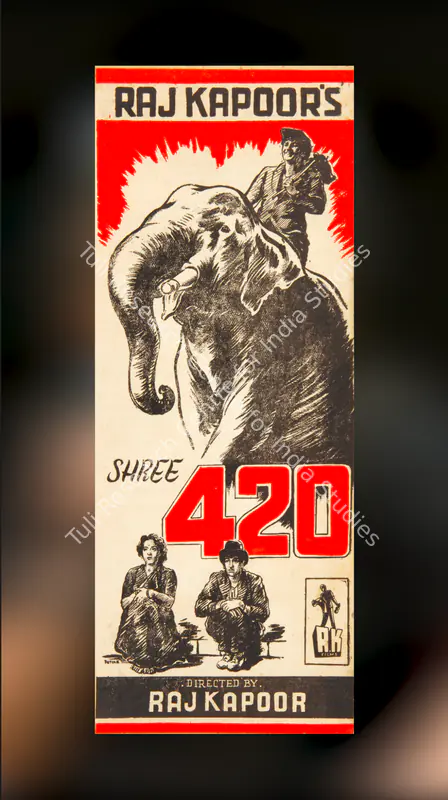
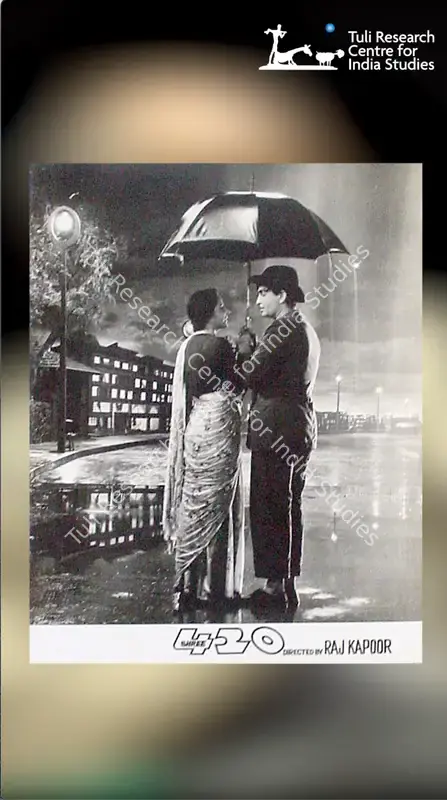
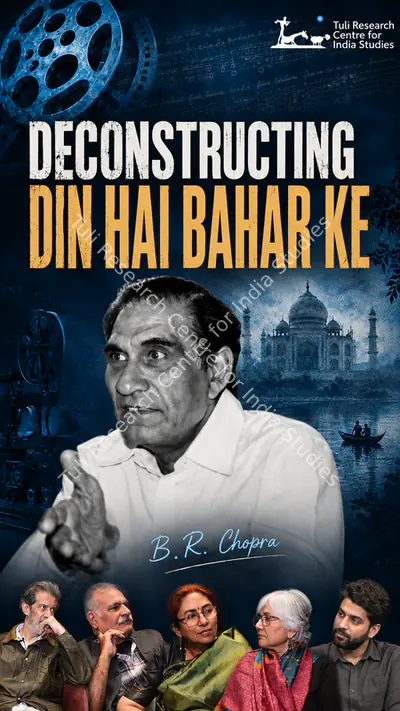
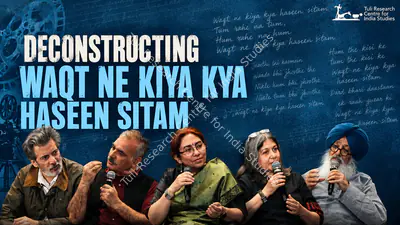
- "Ramaiya Vastavaiya" from Shree 420 (1955) is much more than a folk street song. In this clip, the panel unpacks the layers beneath its apparent simplicity. Writer and Cinephile Juhi Saklani reflects on Shailendra's contribution to the building of the Raj Kapoor persona, noting that his lyrics carry a quality of innocence and moral incorruptibility that is, in its own way, a political stance. To sound that guileless in a world of compromise is itself an act of resistance. Ravikant picks up on a related thread, observing that the image of the worker or peasant singing while working, as in this song, is a recurring and almost static theme in Hindi cinema's representation of labouring life. This clip is from the workshop "A Musical Glue for Nation-Building: Deconstructing the Film Song", presented by the Tuli Research Centre for India Studies (T.R.I.S.) at the 7th Self-Discovery via Rediscovering India Festival, featuring Madan Gopal Singh, Amit Khanna, Ravikant and Juhi Saklani in conversation with Neville Tuli.
- What exactly is “Awaara Hoon” from Raj Kapoor's Awaara (1951) about? A song that lives inside too many uncertainties keeps asking the question, am I a wanderer, or a star in orbit (Gardish mein hun ya aasman ka taara hoon). There is no home, no belongingness, no clear destiny, only movement, longing, and doubt. It is the sound of a world that's unsure of itself, and still singing joyously. Visually, the influence of Charlie Chaplin is unmistakable. From Raj Kapoor's attire to his tramp's gait, the vagabond persona is shaped by Chaplin's image of the little man buffeted by forces beyond his control. The song turns that figure into a symbol of the post-independence anxiety about entitlement, class, and the future; yet capturing the emotion of being spirited, hopeful, and strangely free. The collaboration of Raj Kapoor, the lyricist Shailendra, composers Shankar–Jaikishan, and singer Mukesh, creates a song that is at once both philosophical and popular. It poses questions about destiny and identity while also reaching millions as an unforgettable film hit. Panelists Amit Khanna, Madan Gopal Singh, Ravikant, Juhi Saklani, and Neville Tuli, examine this iconic song, sung by Mukesh, with lyrics by Shailendra and music by Shankar–Jaikishan in this video from 'A Musical Glue for Nation-Building: Deconstructing the Film Song' session, presented by the Tuli Research Centre for India Studies (T.R.I.S.) at the 7th Self-Discovery via Rediscovering India Festival.
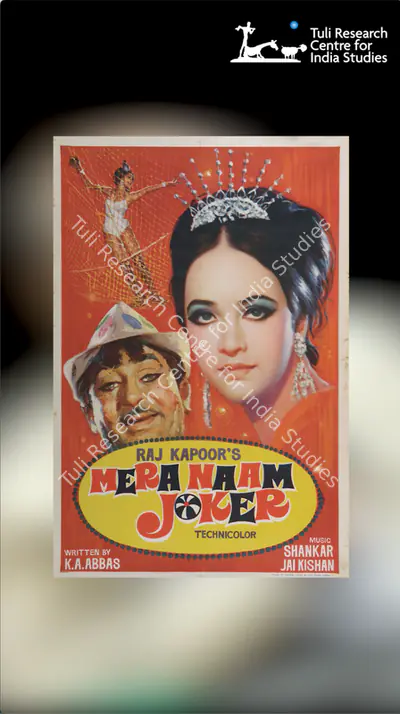
- "Jeena Yahan Marna Yahan" from Mera Naam Joker (1970) was penned by Shailendra, composed by Shankar-Jaikishan, and sung by Mukesh. The song is situated at the philosophical heart of Raj Kapoor's most personal and ambitious film. The film was a commercial disaster on release, and as Neville Tuli notes, both the song and the film found the audiences' acknowledgement only years later. Filmmaker-Lyricist Amit Khanna reveals a lesser-known detail about its making: the song was shot in Delhi at the Gemini Circus, but it had become extremely difficult to gather all the stars, who by that point had become huge in their own careers, at one point of time. The scenes featuring them were shot solo and then later assembled in Bombay to be inserted into the song sequence. Ravikant, Professor, CSDS (The Centre for the Study of Developing Societies), reads the song as both a philosophical and a deeply materialistic reflection on existence. There is a continuity in the persona that may take rebirth, he argues, but it is not the same person who returns. The world itself is one's heaven and hell simultaneously, and that, he suggests, is why we return to this song whenever life demands reflection. This clip is from the workshop "A Musical Glue for Nation-Building: Deconstructing the Film Song," conducted by the Tuli Research Centre for India Studies (T.R.I.S.) at the 7th Self-Discovery via Rediscovering India Festival, featuring Madan Gopal Singh, Amit Khanna, Ravikant, Juhi Saklani, and Neville Tuli.
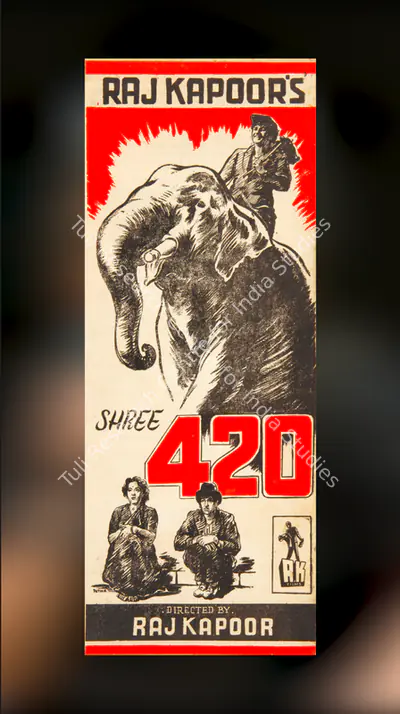
- "Pyar Hua Ikrar Hua" from Shree 420 (1955) at first glance is a song about two people standing in the rain, declaring their love for each other with nothing to their names. This conversation between the panelists peels back the layers, finding in it a richness that a casual listen rarely reveals. Filmmaker-Lyricist Amit Khanna opens with an anecdote about the battle between Raj Kapoor and Shankar-Jaikishan over whether Manna Dey or Mukesh should sing the song. It was Manna Dey who finally got the opportunity, and his voice immortalised it. Ravikant, Professor, CSDS (The Centre for the Study of Developing Societies), draws a parallel between the song and Roland Barthes' A Lover's Discourse, noting how the lovers believe their love to be eternal and absolute. For Ravikant, that sense of transcendence finds its most powerful visual expression when the camera pans to three young children, an image of radiant vitality that lifts the moment beyond the two figures standing in the rain. Composer-Writer Madan Gopal Singh reads the song through a different lens, comparing the condition of the two destitute lovers to that of newly independent India itself, a nation full of longing, uncertain of its footing, but reaching toward something better. This clip is from the workshop "A Musical Glue for Nation-Building: Deconstructing the Film Song" presented by the Tuli Research Centre for India Studies (T.R.I.S.) at the 7th Self-Discovery via Rediscovering India Festival, featuring Madan Gopal Singh, Amit Khanna, Ravikant, Juhi Saklani, and Neville Tuli.