India's finest patriotic song of duty, rooted in loss - "Kar Chale Hum Fida" | Haqeeqat (1964)
Tuli Research Centre for India Studies (Editor)
Document TypeIn-house Video
Date24 July 2026
Duration21 min 01 sec
FormatLong-form Video
Description
"Kar Chale Hum Fida" ("Ab Tumhare Hawale Watan Saathiyon") from Haqeeqat (1964) — deconstructed. Why is India's greatest patriotic song not a song of victory, but a song of responsibility?
In this session, Ketan Anand recalls his father Chetan Anand’s sheer artistry, a filmmaker who had suffered in silence for a long time, whose pain poured into his cinema. He and Kaifi Azmi would sit together, discuss a scene, and then simply fall silent, Azmi tapping his stick, while the filmmaker sat twirling his car keys and the next day, out of those silences, Azmi would create some of his most remarkable poetry. The result is not a jingoistic song where a hero bashes the other army. As Ketan Anand puts it, "This is the pain of human stupidity."
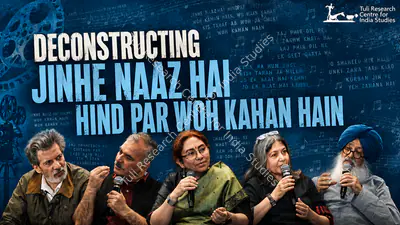
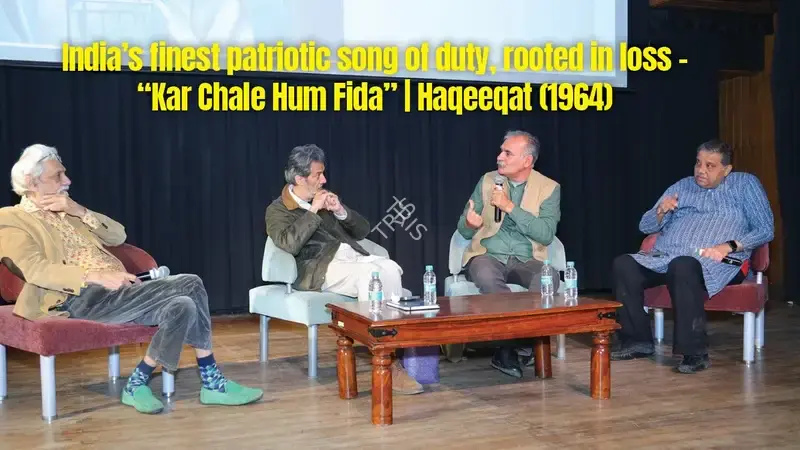
The panel, featuring experts Ravikant, Pavan Jha and Neville Tuli in discussion probes the song deeper, why did the song grow beyond cinema to become almost a ‘rashtriya geet’, a national song; why it belongs to the audience, not the characters; why it begins with a little boy, a baton handed to the coming generation with a plea not to repeat the past; and why, in an ensemble film with no single hero, every soldier, every woman, every citizen becomes the collective voice of the nation. The discussion also examines how India listened to cinema through radio and gramophone, and why nations are imagined and constructed through songs like these.
Chapters:
0:00 — "Kar Chale Hum Fida" (Haqeeqat, 1964)
5:47 — The Silences of Chetan Anand & Kaifi Azmi
10:20 — "Not a Jingoism Song — The Pain of Human Stupidity"
10:46 — A Song of Responsibility, Not Victory
16:42 — The Collective Voice: An Ensemble with No Hero
17:14 — How Nations Are Built Through Songs
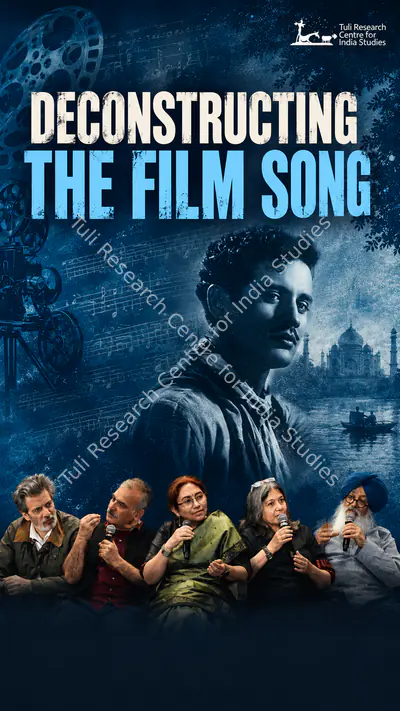
This video is from 'A Musical Glue for Nation-Building: Deconstructing the Film Song', presented by the Tuli Research Centre for India Studies (T.R.I.S.) at the 7th Self-Discovery via Rediscovering India Festival.