TRIS logo image
Search names, films, exhibitions

EN

EN

English

HI

Hindi

EN

EN

English

HI

Hindi

Tuli Research Centre for India Studies

Home

Tuli Research Centre for India Studies

Vision

Manifesto

Archive & Library

Vanraja Sanctuary & Hospice

Research Categories

Browse All

ICore

1_CinemaEducation_Cinema as a Critical Educational Resource

2_FineArts_Modern and Contemporary Indian Fine Arts

3_Photography_Photography in India

4_PopCulture_The Printed Image, Popular Arts, and Crafts

IIMaterial

5_ArcHeritage_India's Architectural Heritage as Inspiration

6_EconomicsArt_Economics of Art & Cultural Industry

7_Travel_Automobile, Transport and Travel Heritage

8_Uncertainty_Uncertainty

IIICritical

9_SocialDuty_Social Responsibility of the Creative Mind

10_Childhood_The Changing Smile of Childhood & Its Second Coming

11_Sensuality_The Sensual Discipline within Creativity

12_Scholarship_The History & Historiography of Scholarship in the Arts, Humanities, and Social Sciences

IVMeaningful

13_SeekJustice_Seeking Justice and Political Integrity

14_IndoWorld_India and her Relationship with the World

15_SpiritualPoetics_The Religious-Spiritual-Poetic-Philosophical Framework

16_Continuum_The Animal-Human-Nature Continuum

Explore

All

Posts

Masterlists

Calendar

Live | Upcoming

All Events

Timetable

Search names, films, exhibitions

EN

EN

English

HI

Hindi

Chittaprosad

Chittaprosad

Geminib. Naihati, West Bengal, Indiad. Calcutta

Personality.Artist
A-Graphy
Introduction
Exhibitions68
Integrated Timeline35
Chronicled Highlights9
Economics of Art74
Research Centre302
All302
Library116
Archive183
Videos3
Highlights5
Posts3
Calendar9
Home/Modern and Contemporary Indian Fine Arts/Personality · Artist/Chittaprosad
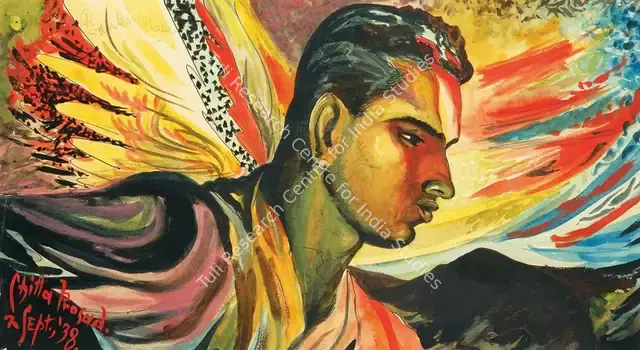
Chittaprosad — featured artwork

Introduction

Eschewing his Brahmin surname that was indicative of his upper caste background, Chittaprosad was radicalized in the 1930s during his student days. Producing sharp satirical critiques of both feudal and colonial systems, the young autodidact was an active member of the Communist Party of India—though he later got disenchanted with it. Inspired by village sculptors, artisans and puppeteers, Chittaprosad rejected the classicism and spiritual preoccupations of the Bengal school as well as western academic style easel painting. Resorting to cheap and versatile mediums such as drawing in pen and ink, sketching, and linocuts, he produced stark, provocative renderings of the human condition, especially during the Bengal Famine of 1943–44. The drawings and reports were published in People’s War, the mouthpiece of the Communist Party and later culminated in a series called Hungry Bengal. An artist imbued with reformist concerns and aware of the needs of his time, Chittaprosad is heralded for his raw honesty and social consciousness as a creative mind.

Zodiac sign
Gemini
Age
63
Place of Birth
Naihati, West Bengal, India
Place of Death
Calcutta
State Country of Birth
West Bengal, India
    1. Had no formal training in art. The village sculptures and puppet players inspired him to become an artist.
  1. 1932

    1. Chittagong Government College, Chittagong, India (present-day Bangladesh)
  2. 1965

    1. Learned the techniques of Czech puppetry by Frantisek Salaba (a puppeteer who was living in Bombay at the time)
  1. 1934

    1. Participated in the National Movement by making posters, drawings and cartoons

      1934 – 1939

  2. 1940

    1. Member of the Communist Party of India, Published Hungry Bengal, a pamphlet documenting his experiences of the Bengal famine of 1943, most copies of which were burned by the British Raj before they could leave the press. A few were salvaged. His drawings of the Bengal Famine were published in Communist party journals People's War and Janayudha.

      1940 – 1948

  3. 1946

    1. He worked for the Left Press, Mumbai. He did works depicting the Telangana Peasants armed struggle against the Nizam's tyrannical regime in Hyderabad
  4. 1949

    1. Responded to the call of the World Peace Movement by contributing his art to the cause of World Peace
  5. 1950

    1. Founded his own puppet-theatre, Khela Ghar, in collaboration with and towards rejuvenating traditional Indian puppeteers
  6. 1952

    1. Made a series of Lino-cuts titled Angels Without Fairy Tales depicting Indian children as sufferers of poverty, disease and oppression
  7. 1969

    1. The Danish U.N.I.C.E.F. Committee published the collection of his Lino-cuts Angels Without Fairy Tales dedicated to the International Conference in Defence of Children
    2. Donated his series of paintings titled Neglected Childhood, to the Danish United Nations Children's Fund Committee
  8. 1971

    1. Was involved in writing stories from the Ramayana and Mahabharata for children, in verse form with illustrations done by himself
    2. Illustrated Indian Fables and Fairy Tales and With Puppets to Calcutta by the Czech writer, Norbert Fryd

Exhibitions

  1. 1955

    1. Around forty black-and-white prints by Chittaprosad were exhibited at India House, 3 East 64th Street, New York, USA
  2. 1956

    1. Exhibitions in Denmark, Holland, Germany and USA
    2. Prague, Czechoslovakia
  3. 1964

    1. Shilpayan, Kolkata, India
  4. 1979

    1. Exhibition of Graphic Art, organised by Prague National Gallery, Czechoslovak Society for Foreign Relations and Mlada Franta Publishers, Fronta Gallery, Prague, Czechoslovakia
    2. Retrospective exhibition, Kolkata Information Centre, sponsored by the Government of West Bengal, Kolkata, West Bengal, India
  5. 1980

    1. Retrospective, Czechoslovakia
  6. 1981

    1. Largest exhibition featuring Chittaprosad's works acquired by Prague's National Gallery since 1956
    2. Chittaprosad - A Retrospective, Works acquired by Prague's National Gallery since 1956, Prague, Czechoslovakia
  7. 1985

    1. Exhibition of works from private collections in India and abroad, and National Museum Prague, at Art Heritage Gallery, New Delhi, India
  8. 1988

    1. Remembering Chittaprosad on his 10th Death Anniversary, Rekha Forum of Fine Arts, Hyderabad, India
  9. 1989

    1. 11th West Bengal Youth Festival, Presidency College Campus, Kolkata, India
  10. 1992

    1. Birthday celebration Chittaprosad, The Centre Art Gallery and Chitrakoot Art Gallery, Kolkata, India

      21 Jun 1992 to 09 Jul 1992

    2. Exhibition of Selected Cartoons and Drawings to mark the 14th Death Anniversary of the Artist, Alliance Francaise, Kolkata, India
    3. 21 Jun 2016 to 09 Jul 1992

  11. 1994

    1. Chittaprosad, Exhibition of works given to the Kala Bhavan Museum as a gift by Gouri Chatterjee, Nandan, Kala Bhavana, Shantiniketan
  12. 1995

    1. 07 Mar 1995 to 20 Mar 1995

  13. 2001

    1. 07 Aug 2001 to 14 Aug 2001

20 of 68
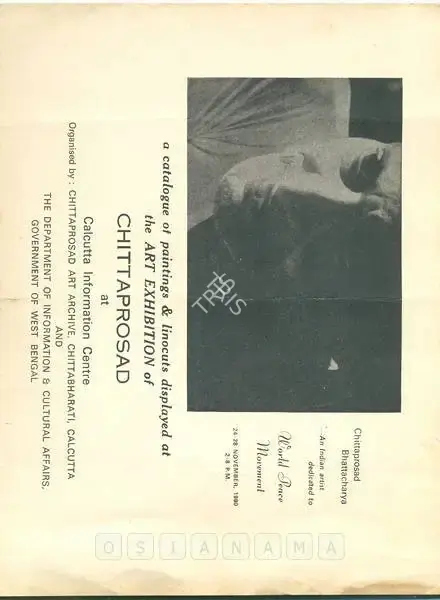
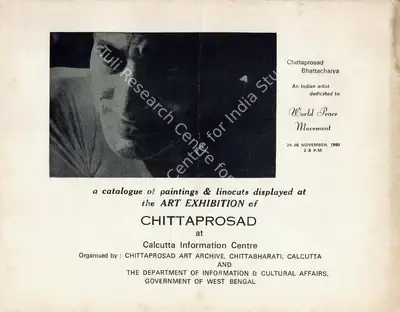
Chittaprosad (Artist). Catalogue of Paintings & Linocuts Dispalyed at Art Exhibition of Chittaprosad, 1980 | Solo Exhibition Catalogue | 00882128
1 / 5

Chittaprosad (Artist). Catalogue of Paintings & Linocuts Dispalyed at Art Exhibition of Chittaprosad, 1980 | Solo Exhibition Catalogue | 00882128

  1. 1956

    1. Exhibitions in Denmark, Holland, Germany and USA
    2. Prague, Czechoslovakia
  2. 1964

    1. Shilpayan, Kolkata, India
  3. 1979

    1. Exhibition of Graphic Art, organised by Prague National Gallery, Czechoslovak Society for Foreign Relations and Mlada Franta Publishers, Fronta Gallery, Prague, Czechoslovakia
    2. Retrospective exhibition, Kolkata Information Centre, sponsored by the Government of West Bengal, Kolkata, West Bengal, India
  4. 1980

    1. Retrospective, Czechoslovakia
  5. 1981

    1. Largest exhibition featuring Chittaprosad's works acquired by Prague's National Gallery since 1956
    2. Chittaprosad - A Retrospective, Works acquired by Prague's National Gallery since 1956, Prague, Czechoslovakia
  6. 1985

    1. Exhibition of works from private collections in India and abroad, and National Museum Prague, at Art Heritage Gallery, New Delhi, India
  7. 1988

    1. Remembering Chittaprosad on his 10th Death Anniversary, Rekha Forum of Fine Arts, Hyderabad, India
  8. 1992

    1. Birthday celebration Chittaprosad, The Centre Art Gallery and Chitrakoot Art Gallery, Kolkata, India

      21 Jun 1992 to 09 Jul 1992

    2. Exhibition of Selected Cartoons and Drawings to mark the 14th Death Anniversary of the Artist, Alliance Francaise, Kolkata, India
    3. 21 Jun 2016 to 09 Jul 1992

  9. 1994

    1. Chittaprosad, Exhibition of works given to the Kala Bhavan Museum as a gift by Gouri Chatterjee, Nandan, Kala Bhavana, Shantiniketan
  10. 1995

    1. 07 Mar 1995 to 20 Mar 1995

  11. 2011

    1. 30 Aug 2011 to 11 Sep 2011

  12. 2013

    1. Zones of contact: Propositions on the Museum, Kiran Nadar Museum of Art (KNMA), New Delhi, India
20 of 22
Chittaprosad (Artist). Catalogue of Paintings & Linocuts Dispalyed at Art Exhibition of Chittaprosad, 1980 | Solo Exhibition Catalogue | 00882128
1 / 6

Chittaprosad (Artist). Catalogue of Paintings & Linocuts Dispalyed at Art Exhibition of Chittaprosad, 1980 | Solo Exhibition Catalogue | 00882128

  1. 1955

    1. Around forty black-and-white prints by Chittaprosad were exhibited at India House, 3 East 64th Street, New York, USA
  2. 1989

    1. 11th West Bengal Youth Festival, Presidency College Campus, Kolkata, India
  3. 2001

    1. 07 Aug 2001 to 14 Aug 2001

  4. 2003

    1. 19 Apr 2003 to 19 May 2003

  5. 2004

    1. Manifestations II, Delhi Art Gallery, New Delhi, India

      09 Aug 2004 to 21 Aug 2004

    2. Manifestations II, Delhi Art Gallery, Jehangir Art Gallery, Mumbai, India

      25 Jul 2004 to 31 Jul 2004

  6. 2005

    1. Manifestations III, Delhi Art Gallery, at Nehru Centre, Mumbai, India

      06 Apr 2005 to 12 Apr 2005

    2. Manifestations III, Delhi Art Gallery, at Lalit Kala Akademi, New Delhi, India

      22 Apr 2005 to 27 Apr 2005

    3. Manifestations III, Delhi Art Gallery, New Delhi, India

      30 Apr 2005 to 14 May 2005

  7. 2010

  8. 2011

    1. Manifestations V, Delhi Art Gallery, New Delhi, India

      18 Apr 2011 to 18 Jun 2011

  9. 2012

    1. 25 Jan 2012 to 17 Mar 2012

  10. 2013

    1. The Naked and the Nude: The Body in Indian Modern Art, Delhi Art Gallery (DAG), New Delhi, India

      15 Jan 2013 to 15 Mar 2013

    2. Zones of Contact,Propositions on the Museum, Kiran Nadar Museum of Art (KNMA), New Delhi, India

      08 Jan 2013 to 30 Nov 2013

    3. Manifestations X: 75 artists, 20th Century Indian Art, Delhi Art Gallery, New Delhi, India

      30 Dec 2013 to 08 Mar 2014

    4. 01 Sep 2013 to 26 Oct 2013

  11. 2014

    1. 09 Oct 2014 to 08 Nov 2014

    2. Indian Portraits - The Face of a People. Delhi Art Gallery, Mumbai, India

      29 Mar 2014 to 15 Jul 2014

    3. Manifestations XI: 75 Artists, 20th Century Indian Art, Delhi Art Gallery, (DAG) New Delhi, India

      15 Oct 2014 to 15 Nov 2014

  12. 2015

20 of 46
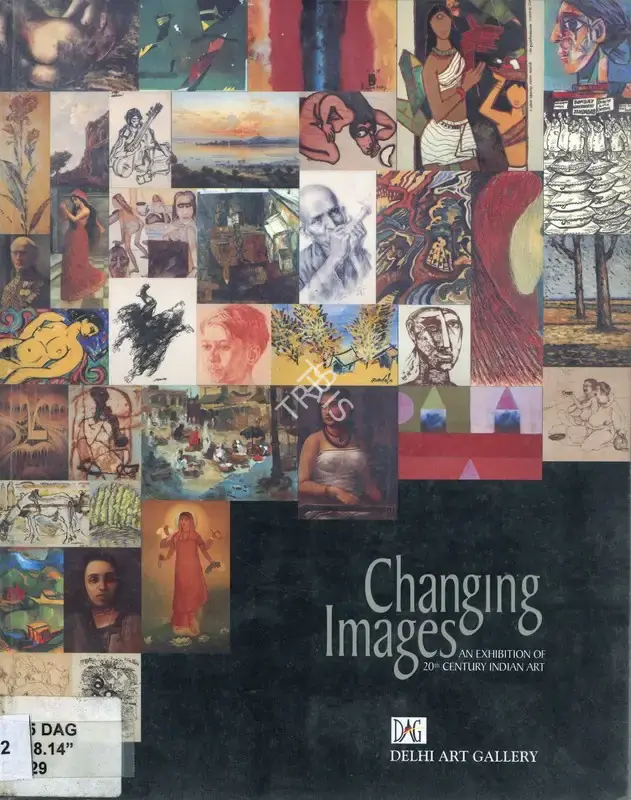
DAG (Organiser). Changing Images, 2001 | Group Exhibition Catalogue | 00883502
1 / 7

DAG (Organiser). Changing Images, 2001 | Group Exhibition Catalogue | 00883502

Integrated Timeline

35 entries
Chittaprosad was born in Naihati, North 24 Parganas District, West Bengal. He was the eldest son to his father Charuchandra Bhattacharya, a government officer, and Indumati Devi, who, in popular records, is mentioned as a homemaker. Indumati seems to have been in possession of literary talents that Chittaprosad greatly admired, as evidenced through one of his letters: "...you write that which is the truth. The essence of your life experiences stored in your soul find expression in what you write to me. I am often stunned on reading your letters - an eternal victor over sorrow and grief - I do not know how to explain this to you but I am always reminded of Valmiki's Sita when I read your letters..... Neither you, me, Gouri nor Bholtu - none of us possess a house, nor a car, and neither a sizeable bank-balance or all such possessions - yet - those who do, they come and stand at our doors! The reason it's that which you have written 'I had learnt that the worship of knowledge, arts, music, and the shelter received from them, was infinitely greater [...] I know today the amazing genius in your writing-you are a poet you can breathe life into words as Kalidas and Rabi-thakur could. I am not over-emphasising a bit. You are not Kalidas or Rabi-thakur, you belong to the same social community - you are Indumati Devi... you are not an imitation of anyone else..." (This excerpt is taken from a letter written by Chittaprosad on 8 April 1964, later published by DAG)
Due to his father's transferable job, Chittaprosad grew up in Chattagram (Chittagong in present-day Bangladesh), attending the municipal school. Never having acquired formal training in art from an institution or individual, Chittaprosad was largely a self-taught artist. From 1932-36, he studied at Chittagong Government College for a degree course in humanities. Chittagong in those days (1930-34) was a battlefield where a Guerilla Warfare between British imperialist army and militant nationalists had continued since 1930. Every young man was thus a political suspect. Sudhi Pradhan, in his reminiscene of Chittaprosad upon his demise wrote: 'Chitta's father thought it wise to send him to Calcutta to get him admitted into the Government Art College. But the principal of the college demanded a declaration by Chitta to the effect that he would not take part in any political activity. Chitta refused to comply. Thereafter, he went to Jaipur (Rajasthan) to study art there. But a severe heat stroke pulled him down so much that he was brought back to Calcutta. His next attempt was to get into the Kala Bhavan of Santiniketan, but the celebrated artist, Nandalal Bose, who was principal of that institution advised Chittaprosad against this since he would have to begin again from the first year where much younger students with little knowledge of painting and drawing were enrolled whereas Chitta was considered much advanced.'
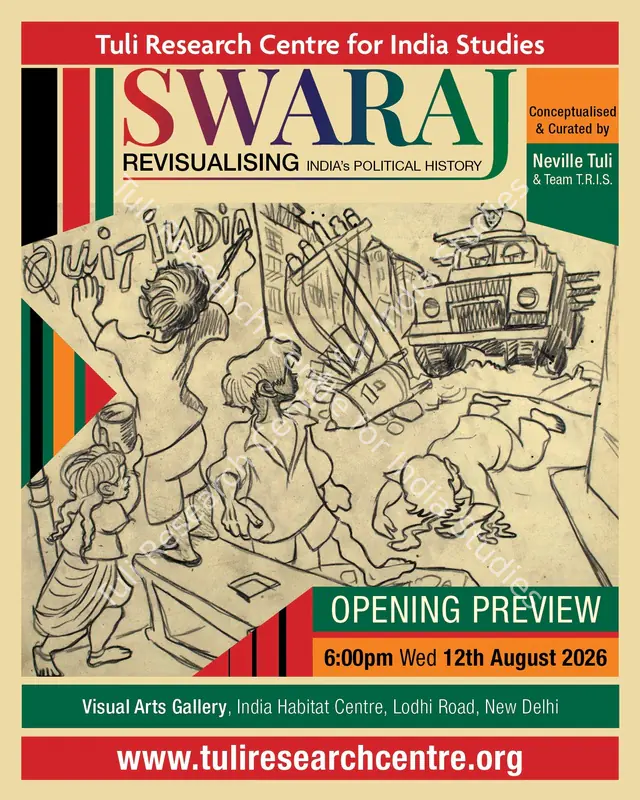
Between 1934-39, as a young student, Chittaprosad was involved in the national movements. The work 'Street Fighter' or 'Little Rebels' dates back to the time of the Quit India movement of August 1942 and marks a critical moment in India's struggle for independence. The drama taking place in this image is that of an approaching military force against a group of children inscribing Quit India on what looks like a wall or a panel. The tension in this work arises by the sheer imbalance of the situation: the heavily armored military car against the innocence of a group of children inscribing words on a wall in something reminiscent of a childlike painterly act. The structure of the image, the way that architectonics have been placed to organize the scenario, is reminiscent of a stage-like setting where panels are being shifted in order to prepare for the next scene.
While still in college, Chittaprosad came into contact with the rising Communist movement. In 1940, impressed by Chittaprosad's penchant for art, P.C. Joshi, who was then the secretary of the Communist Party, inducted him as an artist for their propaganda and publications. In 1941, the British launched their 'scorched earth' policy across coastal Bengal which, under the guise of tackling the Japanese threat after the fall of Burma, effectively led to the seizure of surplus rice stocks and the confiscation of boats. This resulted in a severe disruption of the local food supply, ultimately culminating in the Bengal Famine of 1943. The CPI responded promptly and sent a group of volunteers to Chittagong, of which Chittaprosad was also a part. This encounter with the suffering masses brought him face to face with the rural community and initiated his active engagement in creating posters and drawings for the Party. His works would get published in People's Age. Soon afterwards, the Party sent him (from Bombay, where he had been deputed in the meantime) to Medinipur to document the ravages of the 1943 famine.
The Artist as Witness: Notes on Famine Chittaprosad's first-hand experience of the famine in Medinipur culminated in the account, Hungry Bengal. As an eyewitness report of his travels through the district in November 1943, Chittaprosad came up with a written text and profuse sketches executed in stark black-and-white. However, the published version carried a select and representative number of twenty-two sketches from among the entire gamut of his famine drawings. But unfortunately very few copies of this first and only edition survived. It is reported that the British banned the book as soon as its printing was completed, and nearly all copies were burnt. One copy seems to have remained, however, in the safe custody of his family. In her reminiscence titled Nihsanga Paribrajak (The Lonely Mendicant), Gouri Bhattacharya narrated: '... A few days later, a parcel reached my mother from Bombay. She showed it to my father, to us all it was my elder brother's book! It was a month-long eye-witness description through words and images, Hungry Bengal. Perhaps that single copy sent to my mother survives as the sole evidence of the awful terror of the times. I have heard that five thousand copies of the book were torched due to British rage. Today I realise that probably the ruling class had no other option to do this if they had to cover up their extreme callousness, because Hungry Bengal is an extremely significant historic document. A first-hand survey report.'
The Artist as Witness: Notes on Famine 'In the crowded railway compartment on my way to Midnapur, the daily scenes on Calcutta's pavements kept coming back to my mind: the procession of famished, helpless living skeletons that once formed Bengal's village society — fishermen, boatmen, potters, weavers, peasants, whole families of them; the five corpses that I counted one morning in the short stretch of road between Amherst Street and Sealdah station, and all the other gruesome sights that had become a part of everyday life in the city,' Chittaprosad wrote in dismay in Hungry Bengal. Following a simple narrative sequence from Kolkata to Medinipur, then on to the Kanthi subdivision, and the return journey to Kolkata via Medinipur, Hungry Bengal contained a chronological account of the famine-stricken areas. Among other things, he documented his encounters with the famine-ravaged people, their experiences, and, in turn, the indelible impression they left on him, the pathos that it generated. Accompanied by a Kisan Sabha activist, Tarapada Chakraborty, Chittaprosad proceeded on a long journey on foot from village to village, witnessing the aftermath of a cyclone that had compounded the famine. In one poignant instance, he witnessed a man selling off his family idol and wrote: 'The gods were deserting their poor votaries and going to the abode of the faithful, the fat-bellied Hindu merchant.'
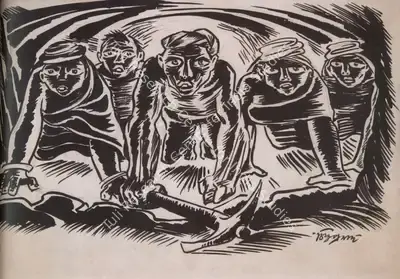
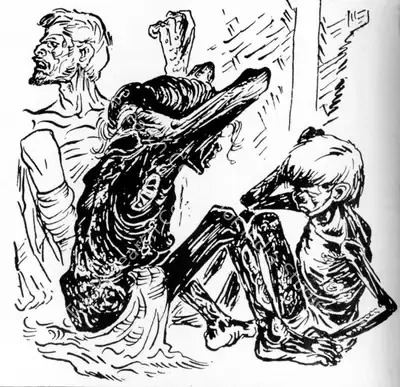
The Artist as Witness: Notes on Famine As a unified text-image publication, Hungry Bengal possesses a phenomenal documentary finality. One is left to wonder when and how, amidst the laborious trudging on foot from village to village, Chittaprosad found the time to pull out his ink, pen, and brush. He certainly did, but in the text there is only a single casual mention of the simultaneous record through pictures — that a gathering at a landlord's house was engaged in looking at his sketches. Amid such a journey on foot, he could not have spared himself more than an extended moment for each swift record, and a sort of abbreviated notation evolved as a pictorial language out of this compulsion. The urgency and the necessity to grasp the totality of the disaster brought about a characteristic modification of his line. He captured the essentials of the emaciated forms in swift strokes that terminated in brisk turns and sharp jabs. In places, the strokes became broader, the thick black marks emphasising the skeletal frame beneath the skin. Through such modification, the Hungry Bengal drawings achieved an unflattering directness, almost factual in detail, like a record. Effective as a mode of representation that evolved from the immediacy of the situation, Chittaprosad's drawings produced scathing images of the famine through the very linguistic possibility of such an abbreviated notation.
Early Drawings' Like most artists, Chittaprosad's œuvre also contains a number of early drawings that employ the linguistic and pictorial conventions of a specific category of realism. These are reflective of his early practice, even if they are markedly different in theme and content from his quintessential later style. They belong to an incipient stage and shed light on his formative years as an artist. Sanjoy Kumar Mallick has referred to two sketchbooks that serve as important documents for understanding the pattern of Chittaprosad's early activity. The first of these is a June–July 1943 record of Chittagong and may be considered an example of pre-'famine' visual reportage. It begins with drawings from meetings in Delhi and portraits of individuals, and continues with group portraits of families actively involved in left-political struggles in Noapara and Chittagong. The final couple of pictures reveal Chittaprosad's response to members of foreign troops; accompanying notes record how British and American soldiers shared their food with starving boys on the street. Elsewhere, he mentions how a British soldier he encountered at a wayside tea stall expressed his preference for such places over furnished restaurants because these “make him feel quite at home,” and how such scenes are “very common” or “most usual” in the region. There is a curiously unproblematic quality in the pictures and a somewhat patronisingly supportive tone in the notes, which probably reflects the political ideology he was part of — the call for support to a “people's war,” overlooking the immediate issues of colonial struggle. The drawings in this sketchbook range from swift, instantaneous notes to more patiently studied portraits, and represent Chittaprosad's pictorial language in the making.
Early Drawings' Another “early work” of Chittaprosad's is a fascinating book of portraits dated 1943. Presented to the CPI's NHQ Commune by the Communist Student Fraction on “Lenin Day” in Calcutta, this sketchbook includes portraits ranging from international Communist leaders to prominent figures in India. Together, they form a visual genealogy: some are rendered in a near-photographic manner, others in a more linear, expressive style. More than just a collection of faces, the album affirms these Indian leaders as rightful heirs in the Communist lineage, asserting their place within the same ideological heritage. The gallery of dignitaries depicted traces a genealogy of political thought and action, and a sense of comradeship within a worldwide movement.
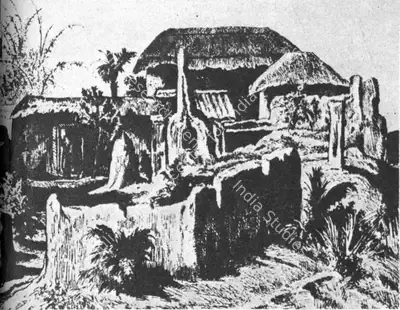
post-Hungry-Bengal' sketches Hungry Bengal, as a generic nomenclature could represent not just the few images reproduced in the 1943 book, but an umbrella term that that includes Chittaprosad'a innumerable sketches recording the 1943 famine as a whole. While some of these drawings and their relevant descriptiona mostly by the artist himself) were being simultaneously published in the Communist Party journals during 1943-44, the original sketches now exist as independent pages. Many drawings have copious notes on the reverse, or at least the identity of the person, inscribed on for at the back of the drawing. Judging from the date and place-names accompanying his signature on the pictures, Chittaprosad followed up his 1943 sketches in Midnapore with further pictorial records in Bikrampur, Cox's Bazar, Munshiganj and Chittagong regions of the eastern part of pre-partition Bengal, between June and August 1944. Though it would be valid to call them post-Hungry Bengal' sketches, taken together they effectively constitute a singular, linguistically coherent, body of work. A number of these sketches continue his evolved pictorial notation for human figures, while others indicate a tendency towards greater control and preciseness. Among these are compositions that show his attempt to integrate and situate human figures within a particular setting. filling in the earlier empty background with details of a rural backdrop. In these, a wider diversity of linear strokes attempt to match the observed object reality of human figures, plants and foliage, and the straw-mat and bamboo structures with almost equal attention, and an increased patience.
From 1946 onwards, Chittaprosad seems to have settled more permanently in Bombay, with occasional visits to Calcutta. Both Prabhas Sen and Somnath Hore mention a policy shift that occurred within the political party during 1948–49, and Chittaprosad's subsequent art practice, thus: “In 1948–49, when the leadership of the Communist Party of India had gone into the hands of a narrow sectarian group, Chittaprosad distanced himself from it and stopped contributing to the party organs. But his creative entity was almost totally aligned with his keen sense of realism and his social consciousness and commitments. Throughout the rest of his life, he remained faithful to his convictions and inclinations. He was hardly capable of using his art to make a living.” Prabhas Sen has written that, following his detachment from the political party, Chittaprosad had “shut himself up almost like a recluse in his modest room in Andheri, a suburb of Bombay.” Away from the dictates of a political collective, this shift, whether immediately physical or not, marked an important juncture in his artistic as well as political journey. Moving forward, Chittaprosad took to expressing himself through printmaking, particularly linocuts. These prints were largely black and white, with occasional departures into colour.
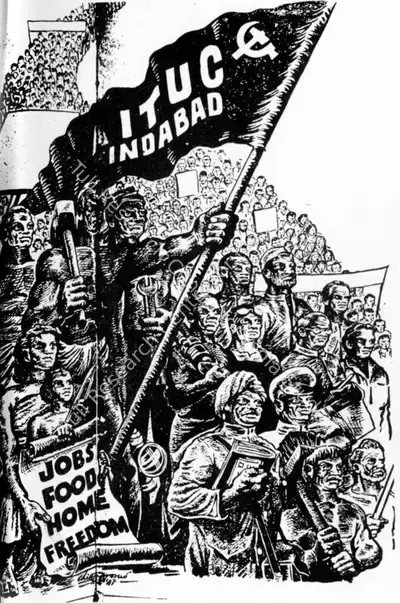
Propaganda and Caricature If on the one hand, Chittaprosad's famine drawings reflected a kind of visual reportage and recording function of art, his propaganda posters exude a different kind of preciseness and detail. While continuing to draw and paint the economic injustices of the war, he also used his skill to bring to attention the armed Telangana movement that began in 1946. In the final days of the fight for independence, and in the postwar years, his propaganda posters that targeted the British, the congress, the landlord, the warmonger, and the imperialist, increasingly focused on the changing balance of power. These images often exude the strong influence of Soviet propaganda art in their shared way of representing a heroic whitewashed reality where strong and forward-marching human bodies are shown with tools and weapons in a quest to conquer the world for the sake of the working class. While these works are marked by an articulated moral authority and a demonstration of humanity, there also survive a number of works that are, as Sanjoy Mullick rightly points out, "built up entirely on the language of sarcastic caricature"
Flower Studies Unpretentious directness marks Chittaprosad's studies of flowers. These are not necessarily grand 'still lifes' by virtue of gorgeous settings or elaborate arrangements, but humble and sincere expressions of the artist's love for flowers — their shapes and colours. Arranged in ordinary vessels, cups, and bowls, and placed in a corner of the artist's room, the flowers become objects of affectionate admiration. In some of these works, Chittaprosad has consciously used contour lines, emphasising the drawn quality of the image and clarifying the structure and shape of the floral forms. In others, he has carefully worked on the backdrop so that the articulated interspaces serve to project the (usually lighter) petals into prominence. And then there are paintings that are freer in treatment and handling, or those that combine elements into compositions of deeper consequence.
Figurative Studies There also exists in his repertoire a series of what, in art history, is termed the 'female nude'. An analogous starting point for a discussion of paintings based on the human figure would be a reclining nude: simple, straightforward, and faithful to natural appearance. Like the initial portrait study, this picture too exudes a confident ease and warmth, both in the artist's rendering and in the posture of the model. As she lies with her eyes shut, the diagonal of her body, with the right hand parallel to the torso and the left cushioning her head on a white pillow, translates into a relaxed confidence that verges on uninhibited personal intimacy. The bare, essential strokes of blue, ochre, and white that serve to create the setting concentrate attention on the emphasised contours of the body and the subtle tonal transitions that model the figure in volume. The transformation from here toward pictures based on heightened colour, vigorous brushwork, and the expressive potential of form is evident in a series of oil-on-paper paintings. One such work is an idyllic, romantic picture, with the nude by the shore complementing the moon in the sky, the broad and wavy orbicular strokes around it radiating a soft glow. The radiant fullness of the figure is firmly modelled. The strokes, too, do not follow the contours smoothly but stand out as forceful marks on the surface. The energetic brushstrokes convey an organic vitality swirling through the painted image.
Landscape Studies In his landscape studies, Chittaprosad adopted formal devices like Cubistic spatial units, adoptions and adaptations in his quest for a viable personal pictorial language. Under colonial influence, where the choice resided between the academic realism espoused in art school pedagogy on the one hand, and conventions of an emerging national in the 'Bengal School' phenomenon on the other, formal devices of European modern movements must have held the promise and possibility of catapulting out of the strictures of both. The chromatic intensities of colour in Fauve paintings, the translation of inner feelings into expressionistic form and colour, and the formal devices of geometric planes assured by the Cubist language must have assumed a liberating dimension with an immediate prospect of contemporaneity. Chittaprosad's foray into such linguistic modes in his paintings testifies to the liberated sense of artistic independence and individuality a painter longed to profess and practice, beyond constricting notions of ideological adherence alone. For instance, the landscape has been thoroughly transformed into a blazing configuration in a 1969 picture. Although a geometric faceting is evident on the surface, this does not follow strictly analytical Cubist logic, but aspires for the expressive nuances of liberated colour harmonies. While each form occupies its allotted space, the transformation of appearances leads to a bejewelled fantasy for the foreground, while the sky bursts into a conflagration.
Images of Peace and Plenitude Disillusioned with the functioning of the Party, Chittaprosad nevertheless remained deeply rooted in his faith in humanity and his commitment to its cause. When the World Peace Movement was inaugurated in 1949, the young artist promptly responded to its call. It is unclear exactly how word of the movement reached him, though given P.C. Joshi's involvement with the World Peace Council meetings, a connection seems likely. From this point onward, Chittaprosad's work began to attract attention on the international stage. His images now adopted a new visual language—one of fullness, bounty, and plenitude—in sharp contrast to the stark depictions of struggle and protest that had characterised his earlier work. The paintings and drawings from this phase depict evocative scenes of family life, lovers, couples, and motherhood, all radiating a sense of serenity and hope.
Images of Peace and Plenitude Several pictures from this time would classify as Utopic images of rural plenitude and happiness, these also indicate his growing affiliation with the world peace movement, and the affirmative tone may be read as reflecting characteristic of a newly liberated nation. More directly, other examples reflect Chittaprosad's affiliation to the peace process employing the pigeon as a motif and symbol. However, it is possible that some of these may be directly inspired by Russian sources as the setting, accessories, dress, and features appear to suggest. But the extent to which the evolved figural style could be effectively transmuted to a contextually local version would be evident only if one places such images against other
Propaganda and Caricature These works testify to the artist's critical sense of humour and they also show his talent for observing the shifting powers and dependencies in local politics. One of his iconic cartoons therefore depicts Jawaharlal Nehru accepting money from the barrel of an American gun while the deprived, represented by a mother and child, are reaching out for communist help-represented by a colossal hand and a fist. In a letter penned at a later date, Chitta vociferated what he construed as the wilful blunders of the Congress: 'What an ill-moment was it when the Congress leaders begged in alms the freedom of this land from the British! Instead of this, how great a mistake, or inhuman in nature, would have been the process of winning a freedom through confrontation-battle and the martyrdom of lives? Having split the country into three through riots, having flooded the land with the blood of helpless millions of children and aged of both the Hindu and Muslim communities, having turned them bankrupt by sowing the poison-plant aided by the British, is this what one calls independence? Has merely the ocean of blood flown? Is it merely an external destruction? Those who have been freed possess an inner-soul, character, education, civilisation, humanity, everything utterly poisoned. That is the living injury to the people of this land. That is why the riot is no longer between Hindus and Muslims any longer Inhabitants of Bengal, Bihar, Assam, Punjab, the South, Marwar, Gujarat, everyone is up in arms in enmity against the other. It is no longer alas golden Bengal any more, today it is 'alas golden India'. Once the people of this country feared the British they were foreigners, tormentors, who had come to plunder this land through the various guiles of cunning, betrayal of trust, and through sheer physical might. Today we are fearing the people of our own country for the very same reasons. Independence, no doubt! Alas independence!'
Little Ballet Troupe, IPTA and 'Do Bigha Zameen' During the early 1950s, Chittaprosad worked as a scene painter and costume designer for the Little Ballet Troupe, Bombay, founded by Shanti Bardhan and Gul Bardhan. Formed in 1952, the Little Ballet Troupe produced culturally significant works such as the puppet dance-dramas Ramayana, Human Puppet Ballet, and Panchatantra, which blended traditional Indian themes with contemporary appeal. Earlier, during the 1940s, Chitta had also designed costumes and stage sets for the Indian People's Theatre Association (IPTA), which was established in Bombay in 1943 by a group of theatre practitioners committed to the anti-fascist and anti-imperialist movement. Alongside these, he also designed the poster for Bimal Roy's 'Do Bigha Zameen', a film about the struggle of a poor peasant for his land, caught between feudal opression in the village and treachery and indignity in the city. Roy's moving portayal of poverty as a deeply emtrenched, systemic condition, as well as the resilience of those with principles must have deeply resonated with Chitta's own belief system. In the years to follow, Chitta would describe in his numerous letters the gradual erosion of his own financial and physical well-being while never compromising with his principles, much like the protagonist of the film.
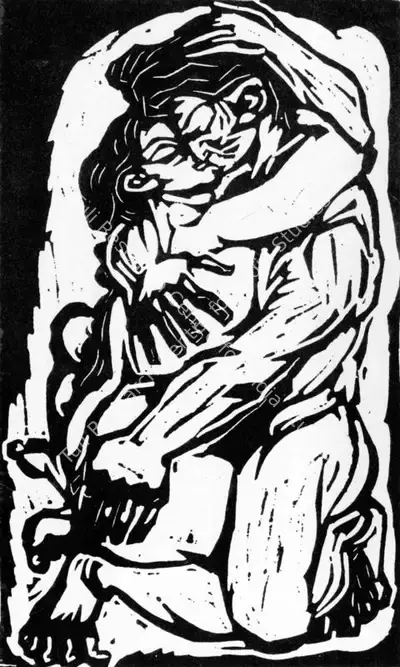
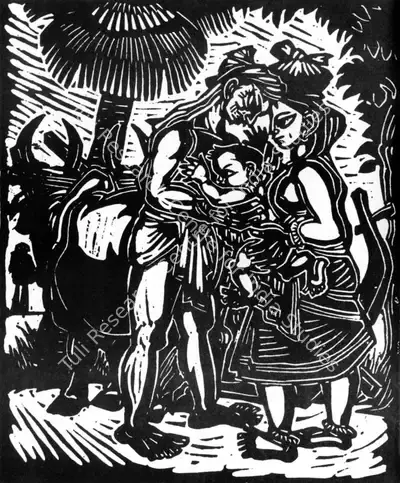
The erotic discipline Where prints are concerned, Chittaprosad explored the theme of the intimate man–woman relationship with great intensity and compositional diversity. In these prints, despite their physical immediacy, the images liberate themselves from any trace of vulgar eroticism. Whether autobiographical or imagined renderings of conjugal union and the fulfilling experiences of family life, these works gain poignancy from the fact that Chittaprosad himself remained unmarried. Somnath Hore wrote somewhat obliquely about this: “...If any woman loved him, I would say she did the right thing. One cannot but love such a wonderful man, a man who had so great a heart. Yet, the torment that entails is no less great. Till death, for a long while, this suffering bestowed a great deal on him, but it exacted a lot from him as well. No blame can attach to the tussle between giving and receiving in the life of so sublime an artist.” Despite the recurrence of the sexual as an aspect of conjugal life, it appears that Chittaprosad believed there was more to a man–woman relationship than physical union or the raising of a family. Characteristically, therefore, in one of his prints, a mature couple is shown engrossed in reading. This becomes a statement of empowerment—of a woman's claim to knowledge and, albeit quietly, of her breaking away from socially defined roles within the seclusion of the home. The home and the world meet, and meet harmoniously, as the man's careful attention guides her toward the open pages before them, with the globe in the foreground symbolising the wide, open world of knowledge.
Works in Colour “In the early fifties, I occasionally met him in Calcutta. He used to stay with Khaled Chowdhury and Prabhas Sen at their Park Circus residence. Whenever we learnt he was in Calcutta, Reba and I would go and see him. One day he came in with a huge bunch of gladioli from New Market and said, 'I am going to paint. A painting sold today for three hundred rupees. I used all the money to buy this bouquet and oil paints and brushes.' Spending the entire amount like that as soon as it was earned was something we could not even imagine doing. During that period, he did quite a lot of work in oil at that house. I remember, he moved away from the subject of war and famine and worked on paintings of historical and secular themes. Whenever he did something new, he would write from Bombay and tell me about it…” This account of Chittaprosad, vividly recounted by his contemporary Somnath Hore, sheds light on the impulsive temperament of the passionate artist that Chittaprosad was. While renowned for his monochrome works, he was also irresistibly drawn to painting in a full range of colours. This realm of polychrome images suggests a significant thematic shift in his artistic journey.
Nurturing Transnational Friendships and Collaboration In 1963, an exhibition of linocuts, drawings, and photographs by Chittaprosad was held at the Hollar Gallery in Prague, Czechoslovakia. Shortly after the exhibition, the National Gallery in Prague acquired thirty-eight works on paper from the artist for their collection. Around the time of India's Independence, Czechoslovakia too had undergone a political shift when, after the Communist victory of 1948, bourgeois democracy was replaced by people's democracy. Nationalisation and Communist control thereafter meant that all avant-garde art was shunned in favour of ideologically aligned work, particularly art that mimicked the lexicon of the Socialist Realist style. As a former ally of the CPI and one whose work often reflected that pictorial language, Chittaprosad's art met the necessary ideological criteria. At the heart of what connected Chittaprosad with Czechoslovakia, however, lay personal friendships and relationships founded on shared cultural and ideological interests, and on mutual admiration. The first Czech to take an interest in Chittaprosad was the Indologist Miloslav Krása (1920–2004), who had briefly studied at Allahabad University. Krása met Chittaprosad in the late 1950s, though their correspondence predated that meeting. As early as 1957, Chittaprosad began contributing regularly to Nový Orient, a journal published since 1945 by the Czech Oriental Institute. In addition, his works also appeared in New Orient Bimonthly. In these publications, his deep empathy with the hopes and suffering of common people often translated into poignant representations of the plight and oppression of children. Another well-wisher and comrade of Chittaprosad was František Salaba, who served as assistant to the Trade Commissioner of Czechoslovakia in Bombay between 1954 and 1957. The two met at a rehearsal of the Little Ballet Troupe. Both Krása and Salaba extended unwavering support and solidarity to Chitta's creative pursuits throughout the rest of his life.
Of Puppets and Marionettes: Chitta's Khelaghar An interesting chapter in Chittaprosad's artistic career was his experiment with puppetry. A fine storyteller, he would often gather children from the slums around his Andheri residence in the evenings to tell them stories of hope and laughter. The idea of creating a puppet theatre for these children came to him through the encouragement of a Czech amateur puppeteer—likely in the early 1960s—who had been living in Bombay for several years. Chittaprosad learned the techniques of Czech puppetry from this friend, Mr. F. Salaba, who also gifted him a small puppet stage. He studied puppet shows and methods of puppet-making in different parts of India and then fused these traditions with his own creative experiments. After the initial trials, he founded his puppet theatre Khelaghar for the children in his neighbourhood. In his letters, Chittaprosad wrote about how his room was often overcrowded with marionettes. He also organized a few public performances with the help of friends, though these required full-time commitment and financial resources that were beyond his means. Nevertheless, he continued to perform, creating shows for his own joy, for friends, and for the children nearby. He made his remarkable puppets himself—out of wood, coconut shells, ropes, strings, and cotton—designed the stage, wrote the scripts, and took part in the performances. The puppets were original, expressive, and capable of the most unusual movements, animated by the magical pull of strings from Chitta's fingers. During one visit, he kept me enthralled for an hour with a triangular conversation, play-acting, and dance between my enchanted twelve-year-old niece, a few puppets, and Chittaprosad himself.
Of Puppets and Marionettes: Chitta's Khelaghar In a letter addressed to his friend, Murari, Chittaprosad recounted the difficulties of running what he had proclaimed as the "first modern puppet theatre in India": Salaba left on the 27th of last month. Before leaving, he had delivered the puppet stage to my residence on the 23rd. I have become addicted to puppets since then. I have already composed two plays in the meanwhile. Number one, Shakuntala. Entirely rearranged, complete in three acts, a matter of about one-and-a-quarter hours. The last act is entirely mine, a little bit of Kalidasa in the initial two. Number two, a fifteen-minute sarcastic drama. Shakuntala won't be possible right away, need plenty of manpower and effort [...] I have learnt much and am still learning plenty [...] The lack of manpower is the most important factor. This is not a one-man job — one needs a team, both boys and girls. Salaba did construct a committee before leaving. I have named my theatre Khelaghar... [one of the members is] an engineer. He is preparing the torso of the puppets, trunks with legs, in the factory following the Czech technique. I will supply the heads. I have already produced some five such whole figures... Since I am still under the spell of foreign prototypes, the puppets continue to follow a naturalistic schema. But other fresh plans are filling my imagination; I intend to 'puppetise' the folk wood and terracotta toys, including Shakuntala. I know I might end up in a conflict with the committee, but will have to exert my legal powers or other measures as the director. Till I die, I will do as my heart pleases. Should you come now you will simply be surprised. The puppet stage glows exactly beneath the R.I.N. painting, my 'children' staring out wide-eyed at all, whichever direction you may choose to cast your eyes on...
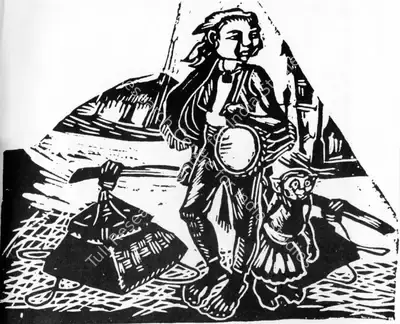
Children's book illustrations While conscious of the oppression of children that Chittaprosad promptly represented through his prints, he also illustrated stories and books for children. In a print titled 'Kingdom of Rasagolla'; the text incorporated within the layout of the print mentions 'Bengali folk tale retold and illustrated by Chittaprosad'. There are some more prints representing three pictures that are evidentially part of the same project. One of these shows a brahmin dancing with a pot full of sweets, which, given the independent self-sufficiency of the visual (without any text incorporated in the design) may be considered an illustration within the book rather than the cover. It exudes a more jovial mood. A third variation for the cover shows an enthroned king. The stern expression is a feigned camouflage for a story about a kingdom of sweets, and this antithetical strategy of form sets the specific tone of the picture.
Children's book illustrations Chittaprosad's choice of themes for children will be apparent from his selection of texts by Hans Christian Anderson: 'The Little Mermaid' (date inscribed November 27th 1968), 'The Angel' (dated November 28th 1968) and 'Holger the Dane'. Using just the cover pages, one cannot delve deep into an analysis of text-image relationships, but they do reveal the formal abbreviation and compositional simplicity of these pictures highlighting the artist's notion of a language specifically oriented to communicate with children as prospective readers of these books. For texts where multiple pictures exist, it is possible to arrange them into a sequential order. In a set of pictures illuminating a text titled 'Fate of a False Friend', we become aware not only of a pictorial language specifically suited to the narration of a particular kind, but also the possibility within such a language to be able to literally narrate the story through visuals alone. These pictures assume the dimension of a parallel and self-sufficient visual text, almost transliterating the story into a connected series of images.
Children's book illustrations Significant from the point of view of children's book design is a series of prints constituting the pages of a book titled Tell Me a Story Please. These pages recount the story of Christ through the voices of various animals that can be associated with different episodes from his life. Once again, we encounter Chittaprosad's thematic choice of the life of Christ for a pictorial project—a choice that raises the question of whether his interest in this theme stems from its religious significance or from the human aspect of the life it portrays. Setting that aside for the moment, if we consider the print in formal terms, it is Chittaprosad's use of linoleum for both image and text—creating a visual unity and coherence across the designed page—that assumes particular importance. The choice of animals as narrators is equally striking. A recluse by temperament, Chittaprosad's letters reveal his deep affection for and comfort in the company of animals. In a 1969 letter to his mother, he wrote: “I am quite at peace living with these [animals]. They do not have a discrepancy between what they say and what they do; unlike human beings, they do not say one thing and mean another. Bhulo does not like being tied to the chain—he wants to roam the streets, just like Bhutni-mother—but nevertheless, at least once at the end of the day, he comes and places his face on my lap to express something, the name of which I do not know—gratitude, or is it love, or something else? Whatever it may be, the heart fills with the touch of an enormously pious and deep feeling. He personally expresses his acknowledgment of my tender care toward him. I can clearly feel that he has not come solely for food. I have hardly experienced any comparable acknowledgment from human acquaintances. Dear Mother, all human acquaintances appear to love me, but they imply that I should be grateful for their affection. The fact that I too love someone does not seem to hold any significance for them. I am not saying this out of anger or hurt, Mother dear. I know very well that no one has reason to be concerned about my love, affection, or respect. Only this—that I have been amazed, rather overwhelmed, by Bhulo's gesture. And Mini keeps guarding me day and night, just as a mother takes care of her children...” (Letter from Chittaprosad to his mother, 1969. Quoted in Singh, Kishore. Yours Chitta. 1st ed., DAG, 2011.)
Angels without a Fairytale Chittaprosad is known to have produced a set of linocut prints that were published as a collection by the Danish UNICEF Committee in 1969 under the title Angels Without Fairy-tales. Back in 1965, these pictures—depicting children as working members of poor and oppressed families—spoke of the deprivation and denial of childhood, and thus carried a distinctly critical edge. The series was originally dedicated to the International Conference in Defence of Children. In all these prints, however, the language of expression is notably different, for the forms do not convey a sense of unease, pain, or loss of innocence. Sanjoy K. Mallick raises a critical question in relation to this series: “A strictly ideological position would perhaps brand these pictorial statements as utopian and idealistic; but what if we shift our point of reference and consider these prints to have been produced for a different consumer—that these were pictures not just intended to be about children, but for them? Would it be entirely impossible that Chittaprosad was reinventing pictorial fairy tales for children, aspiring to give back to the 'angels' their rightful claim to the dreams that fill childhood?”
Angels without a Fairytale Sanjukta Sunderason, while speaking to the National Gallery of Prague about the series 'Angels Without Fairytales', draws attention to the vocabulary of his folk form: "[There was] a recognition—of a vocabulary of folk form—the iconography has striking similarities with a broader socialist book illustration genre [...] Chittaprosad made these works in the early-1950s, for the Youth Congress in Vienna and WPC. We know that these images were not in circulation, and were published only in the late 1960s through his friend Erik Stinus, as 'Angels without Fairy Tales'. I imagine that these were his prized possessions, particularly as ones where he combines two of his dear interests—labour and displacements, and a radical folk-popular form. Childhood to Chittaprosad, I would argue, becomes a generative site where both the promises and the tragedies of a young nation become active—as contradiction. It is also interesting to note how the portrayal of children enslaved is a radically different imagination from a Nehruvian idea of children as the beacon of the new nation."
The Ramayana Series In a letter addressed to his sister Gouri, Chittaprosad wrote of the frantic pace with which he was working on a series of prints on the Indian epic Ramayana: There's no new news from my side either. I am expectantly looking forward to some money — I am doing the Ramayana pictures, sometimes four in a week, at other times only one in a fortnight. Those who have seen these have praised them — however, none among them will pay to buy it when it is published as a book. Another five or six pictures and the Bala Kanda will be complete — that is, up to the marriage of Rama and Sita. Going by the current rate, I suppose the entire year will be required to finish the Ramayana.
The Ramayana Series "During the last decade of Chittaprosad's life he had embarked on a project of illuminated stories of the Indian epics Ramayana and Mahabharata illustrated and written in Bengali verses composed by himself, while constantly fighting his failing health. He did not have time to complete the project but I had the fortune of being shown by him some pages with beautiful illustrations on one page and the text in verses in old Bengali calligraphic style on the opposite page. I have not seen any of these pages or his puppets after his death. If found they should be collected in a museum", wrote Prabhas Sen. However the 'project' referred to here survives both in the form of a large-sized drawing book that consists of the initial draft, with pencil drawn pictures and texts arranged in sequence like a dummy copy of the final version, a pre-press stage for publication, as well as a selection of the prints themselves. Though the draft-book survives, it does so in an extremely delicate state of brittle, termite-eaten fragments. It is possible to turn over only the first few pages. Though Chittaprosad may not have completed the Ramayana project, he appears to have visualised at least the initial section of the epic and certainly did begin working on the blocks and pulled a number of prints in a systematic sequence, following the epic almost chronologically in its initial episodes.
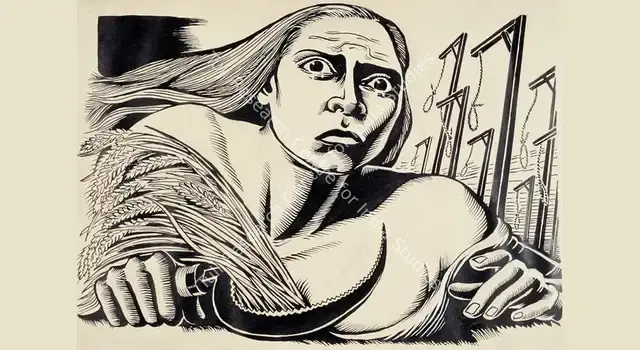
The Bangladesh War Responding to the human travails and frenzy caused by the Bangladesh War in 1971, Chittaprosad made works that, on the one hand, situated the mutilation and sacrifice of the body at the centre of the calamity, and on the other, highlighted the resilience to stand up against the tyranny of those in power. One of his paintings generates pathos in the viewer in the way the bodies are haplessly strangulated and oppressed in the composition. It is reminiscent of one of the greatest anti-war pantings of Picasso, the 1937 painting Guernica. However, Chitta firmly believed in the resistance of people's spirits. Hence we see in another painting a moving portrayal — an almost allegorical representation — of what could possibly be Chitta's own version of a 'Bangla Mata'. Like the Goddess of Plenty, she holds a stalk of grain in one hand and is surrounded by symbolic figures: a baul musician, a child that lightens the dark path by holding an illuminated oil lamp, a child who holds a book and looks fearlessly into the muzzle of a cannon pointed at them, another child resisting shots of a gun with the music of his flute. A woman atop the flames of fire seizes a death-like figure — a skeleton donning an army-general's uniform — and triumphs over him: a triumph, essentially, of good over evil.
Posthumous exhibition Chittaprosad passed away in November 1979 in Calcutta, in the home of his sister, Gouri Chatterjee. In quick succession, Miloslav Krása speedily organized exhibitions of his works across Czechoslovakia: in October 1979, an exhibition was mounted at the Mladá Fronta Gallery in Prague, followed by one in Litoměřice in March 1980. In 1981, a retrospective featuring works acquired by the National Gallery in Prague took place in Brno. Having lived in relative obscurity even until the last decade of his life, Chitta had written to his sister: “From the outside it appears that your dadamoshai is a famous person these days, foreigners are purchasing his pictures—sending money. There's the glitter of lamps in the outhouse and emptiness inside. Anyone who sees me today gets a little shocked—they see my exterior body. But if they speak for a while and see my works, they forget it—I mean, they can see another person within the ruins of this body. There's enough light within the broken lantern, still enough fire, sufficient laughter.” (Letter from Chittaprosad to his sister. Quoted in Singh, Kishore. Yours Chitta. 1st ed., DAG, 2011.) Sanjukta Sunderason remarks on the marginality that he faced within the Indian art market: “It is very important to note, in my opinion, Chittaprosad's marginality in postcolonial India; until, in fact, a private art market–driven salvage in the late 1990s and through the 2000s, which led up to a major retrospective from the Delhi Art Gallery (DAG) in 2011. His reputation in the 1950s–1960s is limited to left-wing circles, that too among close friends; he himself does not seem to circulate in the art circuits of Bombay—in fact, he is cynical of the market-driven art world [...] Chittaprosad's letters to his mother noting his maltreatment from Mulk Raj Anand himself reveal his marginal existence amidst the circuits of Nehruvian socialism and the national-modern aesthetic. So his engagement with Czechoslovakia is, in fact, a rich field to explore aesthetic dialogues via friendships and what can be seen as 'alternate internationalisms'—that steer clear (perhaps consciously too) of nation-state–driven cultural apparatuses or institutional modernisms. It is a private world, and a melancholic one. Chittaprosad's own cynicism, one must admit, plays a role in this; he seems to occupy a curious position of both seeking and refusing recognition. The question of the postcolonial left is critical here too.”
Eschewing his Brahmin surname that was indicative of his upper caste background, Chittaprosad was radicalized in the 1930s during his student days. Producing sharp satirical critiques of both feudal and colonial systems, the young autodidact was an active member of the Communist Party of India—though he later got disenchanted with it. Inspired by village sculptors, artisans and puppeteers, Chittaprosad rejected the classicism and spiritual preoccupations of the Bengal school as well as western academic style easel painting. Resorting to cheap and versatile mediums such as drawing in pen and ink, sketching, and linocuts, he produced stark, provocative renderings of the human condition, especially during the Bengal Famine of 1943–44. The drawings and reports were published in People's War, the mouthpiece of the Communist Party and later culminated in a series called Hungry Bengal. An artist imbued with reformist concerns and aware of the needs of his time, Chittaprosad is heralded for his raw honesty and social consciousness as a creative mind.
Born: 21 June 1915, Naihati, West Bengal, India Died: 13 November 1978, Calcutta, West Bengal, India Parents: Charuchandra Bhattacharya, Indumati Devi Siblings: Gouri Bhattacharya

Chronicled Highlights 9

Chittaprosad
Born
Chittaprosad

Chittaprosad — Naihati, West Bengal, India.
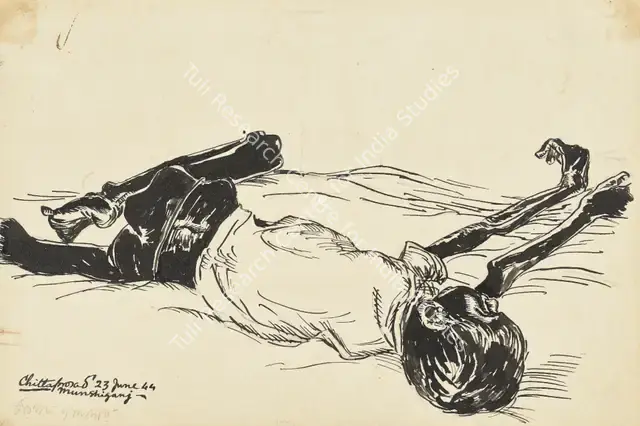
Chittaprosad (Artist). Untitled (Haripada Haldar). Ink and pencil on paper, 1944 | Drawing | EconomicsArt | 00891800

In 2026, the artist achieved a new high in the auction market with the sale of Untitled (Haripada Haldar) (1944), offered in the Sublime Shadows: South Asian Art from a Distinguished Collection by Christie's, which concluded on 11 June2026 at New York, achieving a sale price of ₹45,53,426 ($47,570.02). This record marked a defining moment in the artist's market history, reflecting both the significance of the artwork and its reception within the broader art world.
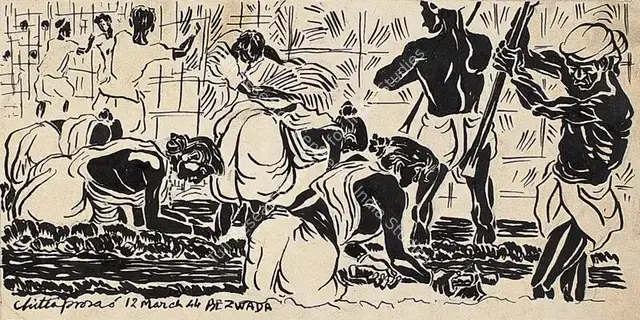
Chittaprosad (Artist). Bengal Famine Series-Bezwada. Pen and ink, 1944 | Drawing | FineArts | 00371695

Their talk revolved round two themes, the sinfulness of war-rich contractors and the rottenness and corruption of the Government officials. But then I would ask point blank: ‘ Do not the common people, you and me have a duty to help and save our neighbors, our own flesh and blood?’ They would become speechless and try and look away, as Rehman did when Amina spoke out. People had stopped thinking. Those who were not yet driven into the Labour Corps or into the ranks of the destitutes had put on blinkers to be able to live their own lives without getting a splitting headache thinking of the human misery all around.
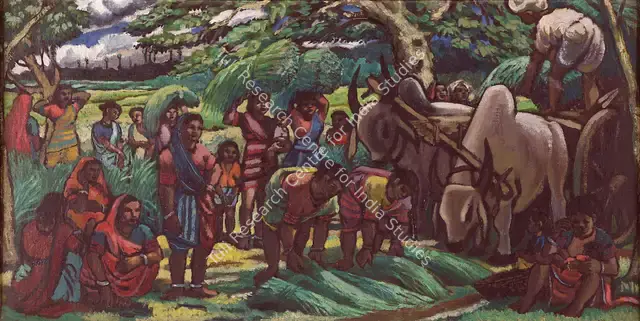
Chittaprosad (Artist). Untitled (Village Scene At Harvesting). Oil on canvas, pasted on board, early 1950s | Painting | FineArts | 00757217

In 2011, the artist achieved a new high in the auction market with the sale of Untitled (Village Scene At Harvesting) (1951), offered in the Creative India Series 1: Bengal by Osian's, which concluded on 15 December 2011 at New Delhi, achieving a sale price of ₹28,80,000 ($53,102). This record marked a defining moment in the artist's market history, reflecting both the significance of the artwork and its reception within the broader art world.
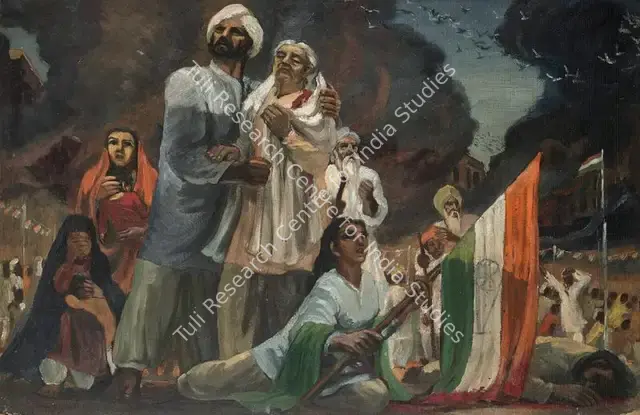
Chittaprosad (Artist). Massacre. Oil on board, 1952 | Painting | FineArts | 00337274

The true significance of Chittoprasad’s work lies in his deep and profound understanding of the suffering and struggle of the ordinary Indian people and also his knowledge and command over the cultural traditions to which he belonged. When the rest of his contemporaries were debating on what should be the character of Indian art – whether to identify with the classical Indian tradition or to borrow from the Western idiom – Chittaprosad, alongwith a few artists, faced the greater social reality of his time and painted them with natural ease, power and conviction.
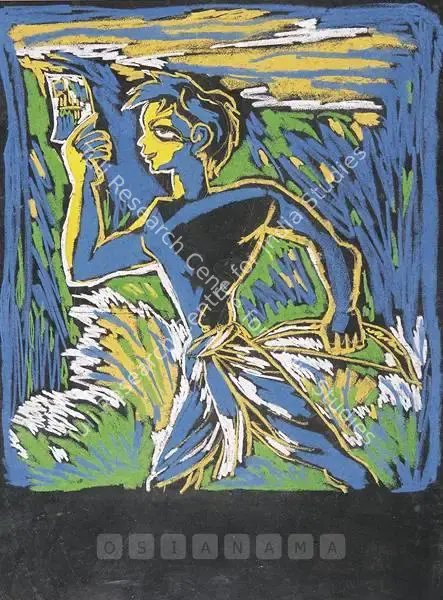
Chittaprosad (Artist). Apu In Pather Panchali. Pastel on paper, c.1955 | Drawing  | 00881811
Chittaprosad (Artist). Apu In Pather Panchali. Pastel on paper, c.1955 | Drawing | 00881811

In 2006, the artist achieved a new high in the auction market with the sale of Apu In Pather Panchali (1955), offered in the Historical Series III by Osian's, which concluded on 24 November 2006 at New Delhi, achieving a sale price of ₹8,70,000 ($19,389). This record marked a defining moment in the artist's market history, reflecting both the significance of the artwork and its reception within the broader art world.
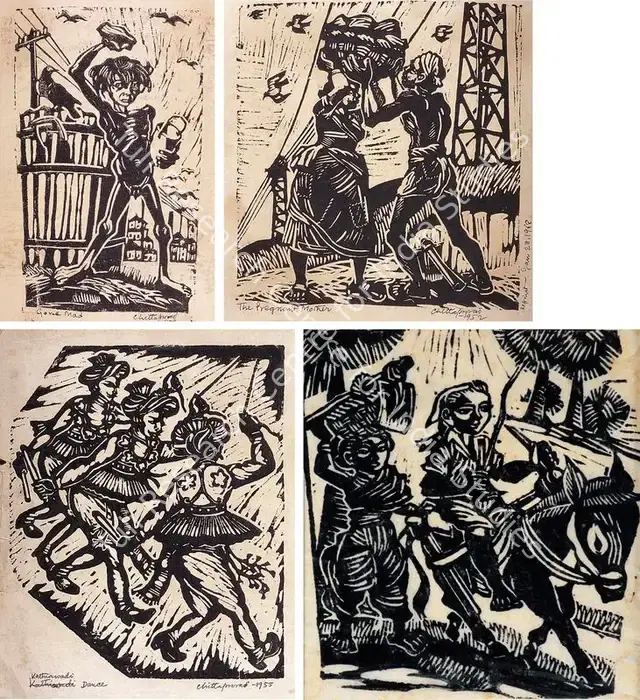
Chittaprosad (Artist). Gone Mad. Linocut, 1952 (rpt. 1968) | Graphic Art | FineArts | 00371672

… his regard for Nandalal had never diminished. He used to tell friends that his understanding of Nandalal’s creative experiments with his feet firmly in Indian traditions and his own commitments to socialist ideals together helped him to formulate his own language and style of work. In his lino cuts we see the fulfilment of Nandalal’s synthesis of India’s folk and classical art forms.
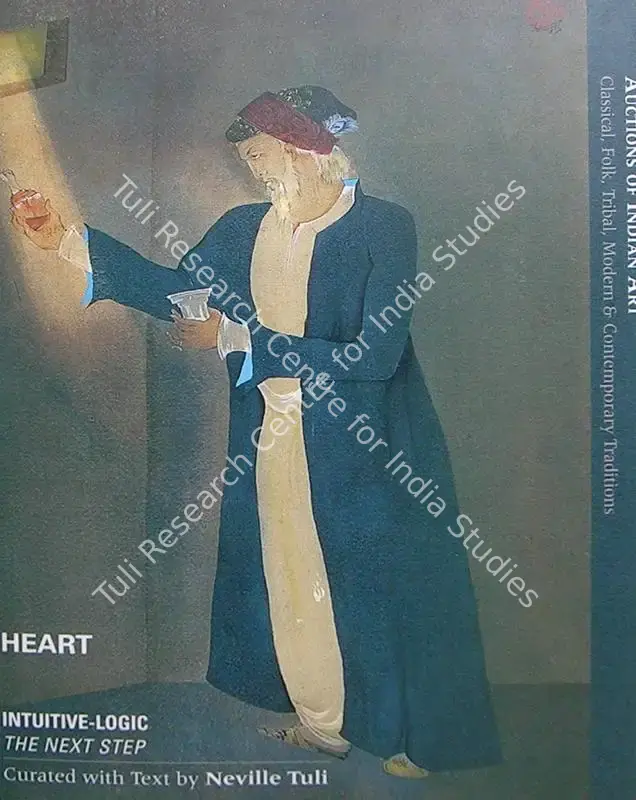
Heart (Auction House) and Neville Tuli (Curator). Intuitive-Logic - The Next Step - Auctions of Indian Art - Classical, Folk, Tribal, Modern & Contemporary Traditions. 28 November 1999, New Delhi | Auction Catalogue | EconomicsArt | 00861862
1 / 2
Heart (Auction House) and Neville Tuli (Curator). Intuitive-Logic - The Next Step - Auctions of Indian Art - Classical, Folk, Tribal, Modern & Contemporary Traditions. 28 November 1999, New Delhi | Auction Catalogue | EconomicsArt | 00861862

On 28 November 1999, made their debut in the Indian public auction market when R.I.N. Bombay Naval Mutiny was presented as Lot in Intuitive-Logic - The Next Step: Auctions of Indian Art - Classical, Folk, Tribal, Modern & Contemporary Traditions, conducted by HEART in New Delhi, India. This auction marked the artist's first recorded appearance in the public auction market, establishing the earliest chapter of their auction history.
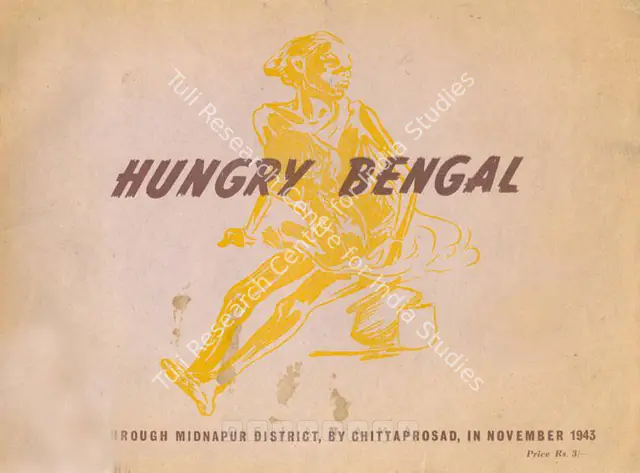
Chittaprosad (Artist). Hungry Bengal - Chittaprosad: A Retrospective 1915 - 1978. New Delhi: DAG, 2011 | Solo Exhibition Catalogue  | 00882130
Chittaprosad (Artist). Hungry Bengal - Chittaprosad: A Retrospective 1915 - 1978. New Delhi: DAG, 2011 | Solo Exhibition Catalogue | 00882130

In 2011, Hungry Bengal Chittaprosad: A Retrospective 1915 - 1978 marked a major milestone in the exhibition history of Chittaprosad, offering a retrospective survey of the artist's artistic production
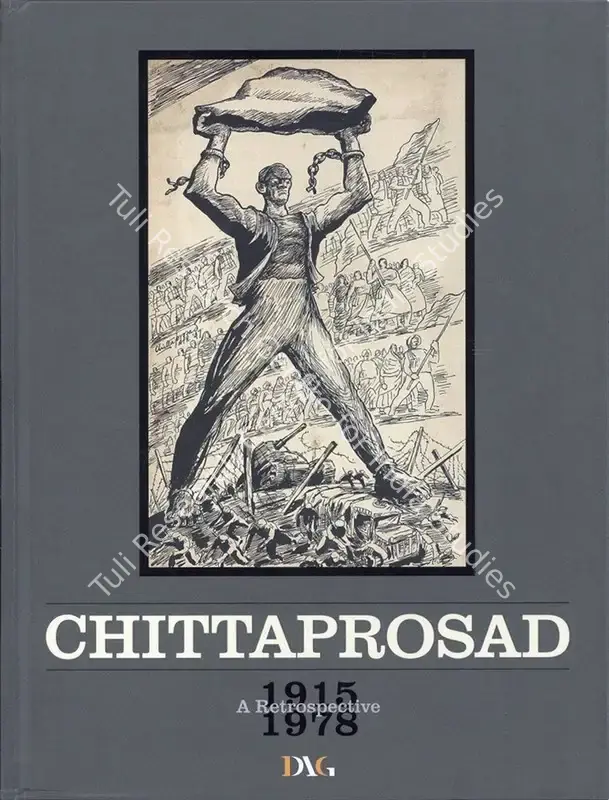
Chittaprosad (Artist) and Sanjoy-Kumar Mallik (Curator). Chittaprosad - A Retrospective - 1915-1978. New Delhi: DAG, 2011 | Solo Exhibition Catalogue  | 00883011
Chittaprosad (Artist) and Sanjoy-Kumar Mallik (Curator). Chittaprosad - A Retrospective - 1915-1978. New Delhi: DAG, 2011 | Solo Exhibition Catalogue | 00883011

In 2011, Chittaprosad A Retrospective - 1915-1978 marked a major milestone in the exhibition history of Chittaprosad, offering a retrospective survey of the artist's artistic production

Economics of Art

20 of 50
This section showcases auction lots that achieved record-high sale prices, tracked by the date each record was set based on the artist's historical auction data.

Record-high lots4

Public Auction Market (1987–2026) | Select Indicators

  1. Annual Auction Sale Turnover
  2. Average Sale Price Per Lot
  3. Square Inch Rate Trend

Annual Auction Sale Turnover

This indicator tracks the Total Annual Auction Sales value of Chittaprosad’s artworks, beginning in 1987 through to the present.
It aggregates all sales across global auction houses into yearly totals.

Analysis reflected in the chart:
The turnover graph highlights periods of strong growth, moments of market correction, and resilience during downturns. Peaks often align with landmark works coming to public auction, while troughs may indicate reduced supply or weaker demand. Over time, the curve illustrates the overall trajectory of Chittaprosad’s public auction market presence.

Average Sale Price Per Lot

This measure calculates the Average Sale Price of all lots by Chittaprosad sold each year.
It smooths out fluctuations caused by the quantity of works offered and focuses on the Average Sale Price level per artwork.

Analysis reflected in the chart:
Rising average sale prices indicate growing collector confidence and a stronger willingness to pay higher amounts per work. Assuming the mix of mediums remains relatively stable over time, the proportion of works on paper typically priced lower than works on canvas adds important context to understanding these market movements.

Square Inch Rate Trend

The Square Inch Rate normalizes prices by the size of each artwork, showing the average sale value per square inch over time.
This allows fair comparisons between smaller works and larger canvases.

Analysis reflected in the chart:
The Square Inch Rate shown in the graph combines various medium types such as canvas, paper, board, and others. Historically, works on canvas and board have broadly commanded higher prices compared to works on paper.

  1. 1935

    1. First Class Certificate in Arts by the Chattagram (Chittagong) Krishi Shilpa and Swasthya Pradarshani, commemorating the Silver Jubliee of the Chattagram Association
  2. 1940s

    1. Drawings of Bengal Famine was widely admired
  3. 1978

    1. Felicitated by Shilpayan, Mime Academy, Kolkata, India
    2. Chittaprosad Art Archive, an institute of research on Chittaprosad's life and works established in Kolkata, India
  4. 1979

    1. Pavel Hoble of Czechoslovakia made a documentary film on him called 'Confession'; it was awarded a special prize by The World Peace Council
  5. 1988

    1. To Remember Chittaprosad On His Tenth Death Anniversary, a tribute was published by Chalasani Prasada Roa, Editor, Eenadu, Hyderabad, India
  6. 1992

    1. Chitta Bharati organisation established in his honour

Research Centre
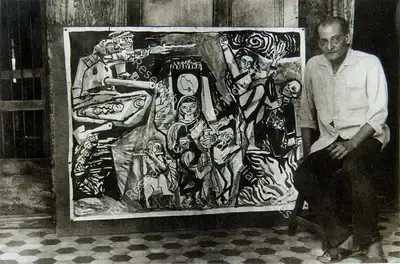
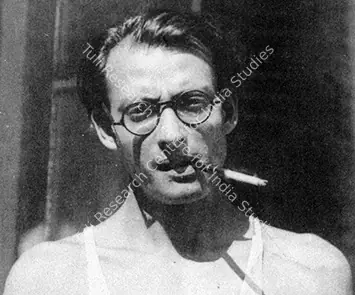
Unknown (Photographer), Chittoprasad beside his painting on the Bangladesh Liberaton War, Photographic Still
Unknown (Photographer). Chittoprasad beside his painting on the Bangladesh Liberaton War | Photographic Still
View full record
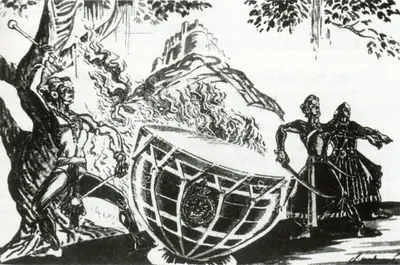
Chittaprosad (Artist), IPTA emblem, Graphic Art
Chittaprosad (Artist). IPTA emblem | Graphic Art
View full record
Somnath Hore (Artist), R. N. Chakravarty, Painting
Hore, Somnath (Artist). R. N. Chakravarty, n.d. | Painting
View full record
Chittaprosad (Artist), India in Revolt, Painting
Chittaprosad (Artist). India in Revolt, n.d. | Painting
View full record
Chittaprosad (Artist), Untitled, Drawing
Chittaprosad (Artist). Untitled, n.d. | Drawing
View full record
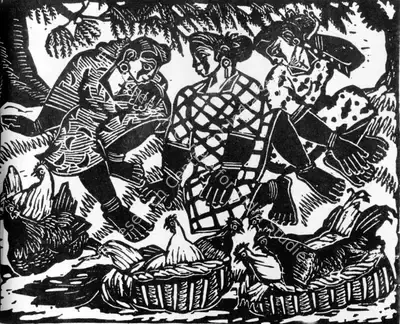
Chittaprosad (Artist), The Chamba Girls from the Himachal Valley, Graphic Art
Chittaprosad (Artist). The Chamba Girls from the Himachal Valley, n.d. | Graphic Art
View full record
Chittaprosad (Artist), Thrashing in a Warli Village, Painting
Chittaprosad (Artist). Thrashing in a Warli Village, n.d. | Painting
View full record
Chittaprosad (Artist), Lovers, Painting
Chittaprosad (Artist). Lovers, n.d. | Painting
View full record
Chittaprosad (Artist), Untitled, Drawing
Chittaprosad (Artist). Untitled, n.d. | Drawing
View full record
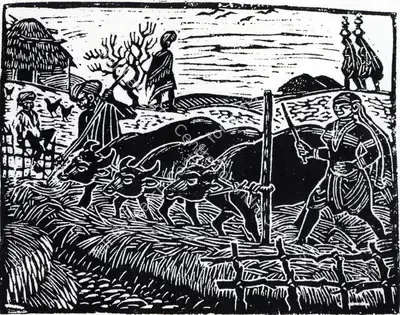
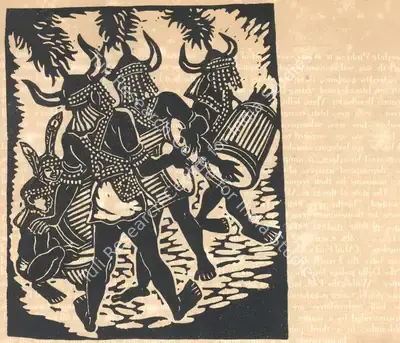
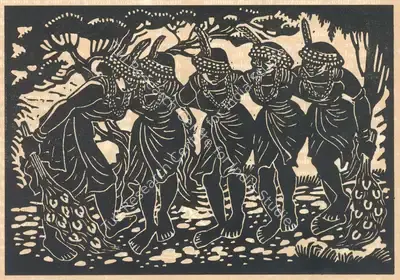
Chittaprosad (Artist), The Muriya Drummers, Graphic Art
Chittaprosad (Artist). The Muriya Drummers, n.d. | Graphic Art
View full record
Chittaprosad (Artist), The Muriya Girls, Graphic Art
Chittaprosad (Artist). The Muriya Girls, n.d. | Graphic Art
View full record
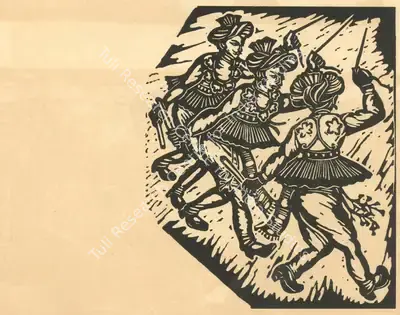
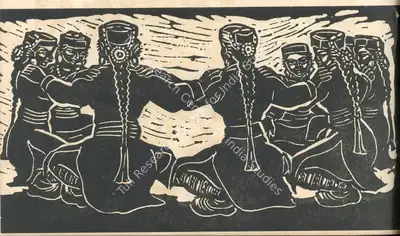
Chittaprosad (Artist), The Kathiawari Dance "Dandiya Ras", Graphic Art
Chittaprosad (Artist). The Kathiawari Dance "Dandiya Ras", n.d. | Graphic Art
View full record
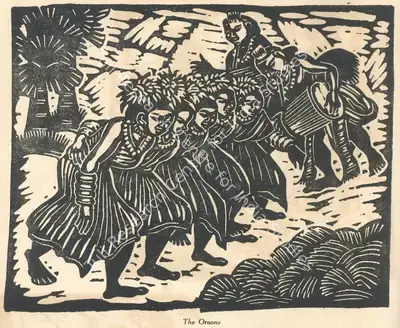
Chittaprosad (Artist), The Oraons, Graphic Art
Chittaprosad (Artist). The Oraons, n.d. | Graphic Art
View full record
Chittaprosad (Artist), Untitled, Drawing
Chittaprosad (Artist). Untitled, n.d. | Drawing
View full record
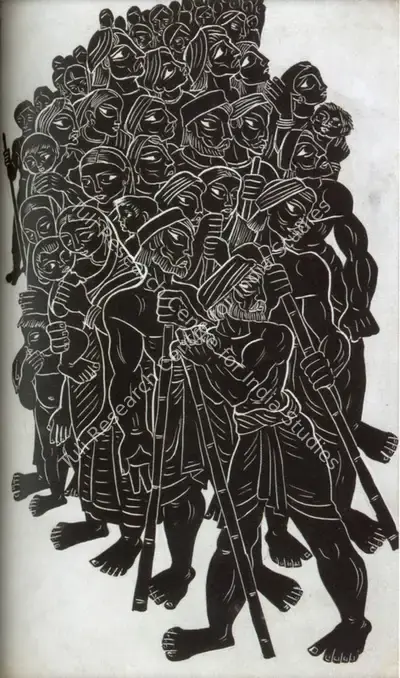
Chittaprosad (Artist), Angels without Fairy Tales, Painting
Chittaprosad (Artist). Angels without Fairy Tales, n.d. | Painting
View full record
Chittaprosad (Artist), Starving Peasants, Painting
Chittaprosad (Artist). Starving Peasants, n.d. | Painting
View full record
Chittaprosad (Artist), Village Family, Painting
Chittaprosad (Artist). Village Family, n.d. | Painting
View full record
Chittaprosad (Artist), Bengal Famine, Painting
Chittaprosad (Artist). Bengal Famine, n.d. | Painting
View full record
Chittaprosad (Artist), Paultry Women, Painting
Chittaprosad (Artist). Paultry Women, n.d. | Painting
View full record
Chittaprosad (Artist), The Mahsu Girls of the Himachal Valley, Graphic Art
Chittaprosad (Artist). The Mahsu Girls of the Himachal Valley, n.d. | Graphic Art
View full record
20 of 302
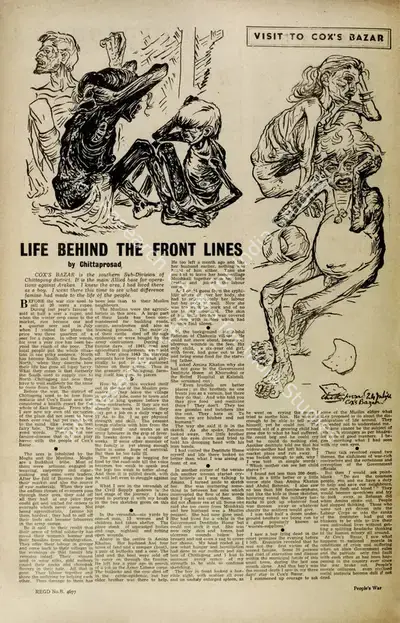
chittaprosad (Writer), Life Behind the Front Lines, 1944, Newspaper Clipping
Chittaprosad (Writer). Life Behind the Front Lines | Newspaper Clipping | 00710063
View full record
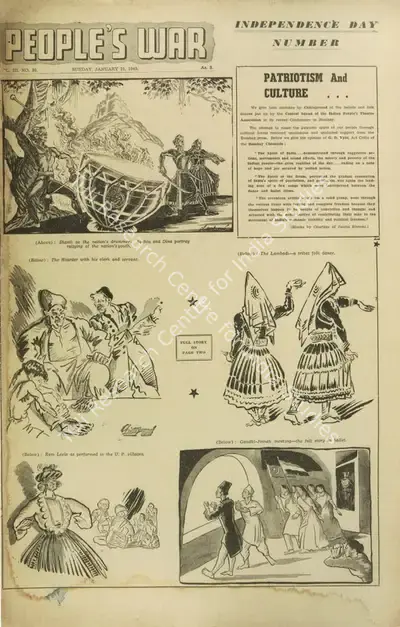
People's War, Vol. III No.3, 1945, Newspaper Clipping
(Writer). People's War, Vol. III No.3 | Newspaper Clipping | 00710062
View full record
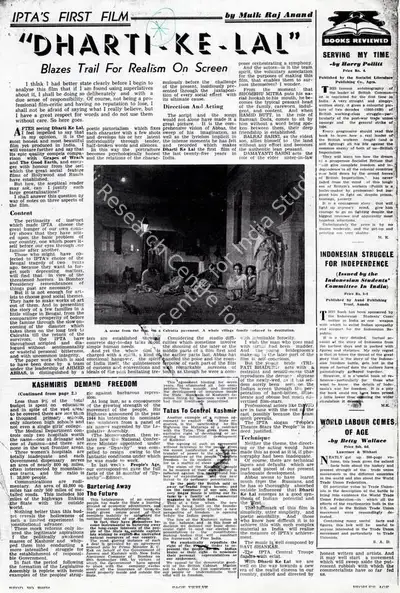
Mulk Raj Anand (Writer), Mulk Raj Anand's review of Dharti Ke Lal in People's Age, a magazine published by the Communist Party of India, 1946, Media Clipping
Anand, Mulk Raj (Writer). Mulk Raj Anand's review of Dharti Ke Lal in People's Age, a magazine published by the Communist Party of India, 10 June 1946 | Media Clipping | 00666616
View full record
Mulk Raj Anand (General Editor), Marg, 1955, Magazine
Anand, Mulk Raj (General Editor). Marg, June 1955 | Magazine | 00760192
View full record
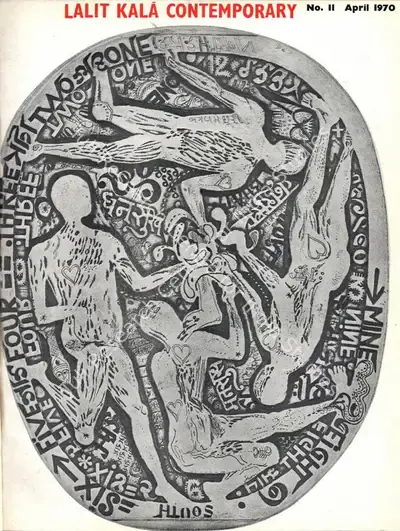
Jaya Appasamy (Editor), Lalit Kala Contemporary, 1970, Journal
Appasamy, Jaya (Editor) and S.A. Krishnan (Assistant Editor). Lalit Kala Contemporary, April 1970 | Journal | 00857961
View full record
Chittaprosad (Artist), Catalogue of Paintings & Linocuts Dispalyed at Art Exhibition of Chittaprosad, 1980, Solo Exhibition Catalogue
Chittaprosad (Artist). Catalogue of Paintings & Linocuts Dispalyed at Art Exhibition of Chittaprosad, 1980 | Solo Exhibition Catalogue | 00171802
View full record
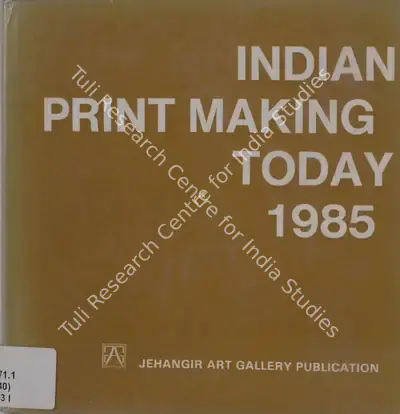
Ram Chatterjee (Editor), Indian Print Making Today 1985, 1985, Edited Book
Chatterjee, Ram (Editor). Indian Print Making Today 1985, 1985 | Edited Book | 00170134
View full record
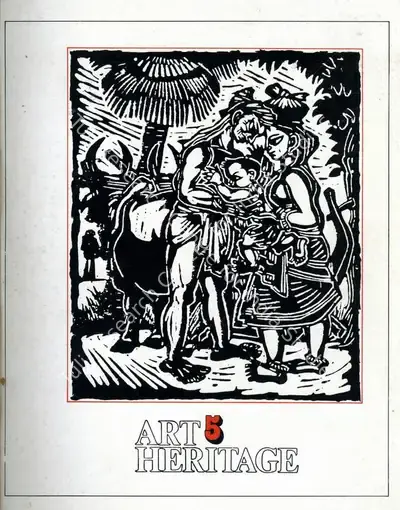
Ebrahim Alkazi (Editor), Art Heritage 5, 1986, Journal
Alkazi, Ebrahim (Editor). Art Heritage 5, 1985-1986 | Journal | 00842126
View full record
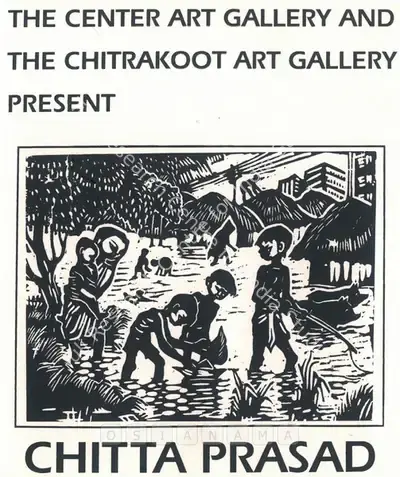
Chittaprosad (Artist), Chittaprasad, 1992, Solo Exhibition Invitation
Chittaprosad (Artist). Chittaprasad, 1992 | Solo Exhibition Invitation | 00858980
View full record
Chittaprosad (Artist), Exhibition of Chittaprosad, 1992, Solo Exhibition Catalogue
Chittaprosad (Artist). Exhibition of Chittaprosad, 1992 | Solo Exhibition Catalogue | 00171803
View full record
Chittaprosad, 1993, Edited Book
Chittaprosad, 1993 | Edited Book | 00170235
View full record
Asok K. Bhattacharya (Author), Calcutta Paintings, 1994, Authored Book
Bhattacharya, Asok K. (Author). Calcutta Paintings, 1994 | Authored Book | 00169547
View full record
Chittaprosad (Artist), Chittaprasad, 1995, Solo Exhibition Invitation
Chittaprosad (Artist). Chittaprasad, 1995 | Solo Exhibition Invitation | 00858981
View full record
Heart (Auction House), Intuitive-Logic - The Next Step, 1999, Auction Catalogue
Heart (Auction House) and Neville Tuli (Curator). Intuitive-Logic - The Next Step. 28 November 1999 | Auction Catalogue | 00861862
View full record
Bonhams (Auction House), Modern and Contemporary Paintings from the Indian Sub-Continent, 2000, Auction Catalogue
Bonhams (Auction House). Modern and Contemporary Paintings from the Indian Sub-Continent. 11 July 2000 | Auction Catalogue | 00861865
View full record
Bonhams (Auction House), Modern and Contemporary Paintings from the Indian Sub-Continent, 2000, Auction Catalogue
Bonhams (Auction House). Modern and Contemporary Paintings from the Indian Sub-Continent. 31 October 2000 | Auction Catalogue | 00861868
View full record
Christie's (Auction House), Indian and Southeast Asian Art, 2000, Auction Catalogue
Christie's (Auction House). Indian and Southeast Asian Art. 20 September 2000 | Auction Catalogue | 00861866
View full record
Sotheby's (Auction House), Indian Miniatures, 2000, Auction Catalogue
Sotheby's (Auction House). Indian Miniatures. 08 June 2000 | Auction Catalogue | 00861864
View full record
Pran Nath Mago (Author), Contemporary Art in India, 2001, Authored Book
Mago, Pran Nath (Author). Contemporary Art in India, 2001 | Authored Book | 00169576
View full record
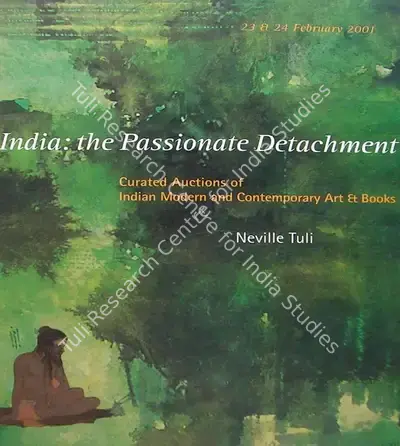
Osians (Auction House), India: The Passionate Detachment, 2001, Auction Catalogue
Osians (Auction House) and Neville Tuli (Curator). India: The Passionate Detachment. 24 February 2001 | Auction Catalogue | 00861871
View full record
20 of 116
Chittaprosad (Artist), IPTA emblem, Graphic Art
Chittaprosad (Artist). IPTA emblem | Graphic Art
View full record
Unknown (Photographer), Chittoprasad beside his painting on the Bangladesh Liberaton War, Photographic Still
Unknown (Photographer). Chittoprasad beside his painting on the Bangladesh Liberaton War | Photographic Still
View full record
Chittaprosad (Artist), Untitled, Drawing
Chittaprosad (Artist). Untitled, n.d. | Drawing
View full record
Chittaprosad (Artist), Untitled, Drawing
Chittaprosad (Artist). Untitled, n.d. | Drawing
View full record
Chittaprosad (Artist), Untitled, Drawing
Chittaprosad (Artist). Untitled, n.d. | Drawing
View full record
Chittaprosad (Artist), The Mahsu Girls of the Himachal Valley, Graphic Art
Chittaprosad (Artist). The Mahsu Girls of the Himachal Valley, n.d. | Graphic Art
View full record
Chittaprosad (Artist), The Kathiawari Dance "Dandiya Ras", Graphic Art
Chittaprosad (Artist). The Kathiawari Dance "Dandiya Ras", n.d. | Graphic Art
View full record
Chittaprosad (Artist), The Chamba Girls from the Himachal Valley, Graphic Art
Chittaprosad (Artist). The Chamba Girls from the Himachal Valley, n.d. | Graphic Art
View full record
Chittaprosad (Artist), The Muriya Girls, Graphic Art
Chittaprosad (Artist). The Muriya Girls, n.d. | Graphic Art
View full record
Chittaprosad (Artist), The Oraons, Graphic Art
Chittaprosad (Artist). The Oraons, n.d. | Graphic Art
View full record
Chittaprosad (Artist), The Muriya Drummers, Graphic Art
Chittaprosad (Artist). The Muriya Drummers, n.d. | Graphic Art
View full record
Somnath Hore (Artist), R. N. Chakravarty, Painting
Hore, Somnath (Artist). R. N. Chakravarty, n.d. | Painting
View full record
Chittaprosad (Artist), Paultry Women, Painting
Chittaprosad (Artist). Paultry Women, n.d. | Painting
View full record
Chittaprosad (Artist), Thrashing in a Warli Village, Painting
Chittaprosad (Artist). Thrashing in a Warli Village, n.d. | Painting
View full record
Chittaprosad (Artist), India in Revolt, Painting
Chittaprosad (Artist). India in Revolt, n.d. | Painting
View full record
Chittaprosad (Artist), Bengal Famine, Painting
Chittaprosad (Artist). Bengal Famine, n.d. | Painting
View full record
Chittaprosad (Artist), Angels without Fairy Tales, Painting
Chittaprosad (Artist). Angels without Fairy Tales, n.d. | Painting
View full record
Chittaprosad (Artist), Lovers, Painting
Chittaprosad (Artist). Lovers, n.d. | Painting
View full record
Chittaprosad (Artist), Village Family, Painting
Chittaprosad (Artist). Village Family, n.d. | Painting
View full record
Chittaprosad (Artist), Starving Peasants, Painting
Chittaprosad (Artist). Starving Peasants, n.d. | Painting
View full record
20 of 183
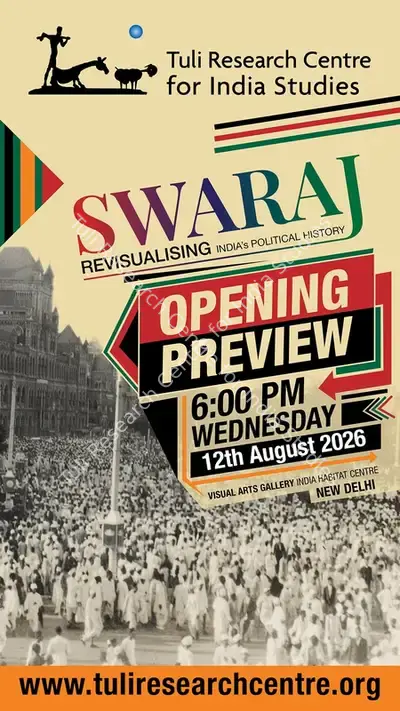
Tuli Research Centre for India Studies (Editor). SWARAJ - Revisualising India's Political History, 07 August 2026 | In-house Video, 2026 · 1 min 19 sec · Vertical Video
▶
Tuli Research Centre for India Studies (Editor). SWARAJ - Revisualising India's Political History, 07 August 2026 | In-house Video
2026 · 1 min 19 sec · Vertical Video
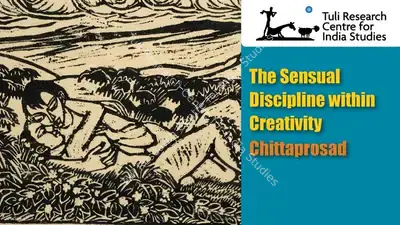
Tuli Research Centre for India Studies (Editor). The Sensual Discipline within Creativity
Chittaprosad, 21 February 2025 | In-house Video, 2025 · 48 sec · Short
▶
Tuli Research Centre for India Studies (Editor). The Sensual Discipline within Creativity Chittaprosad, 21 February 2025 | In-house Video
2025 · 48 sec · Short
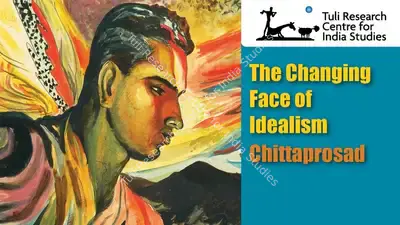
Tuli Research Centre for India Studies (Editor). The Changing Face of Idealism: Chittaprosad, 21 February 2025 | In-house Video, 2025 · 39 sec · Short
▶
Tuli Research Centre for India Studies (Editor). The Changing Face of Idealism: Chittaprosad, 21 February 2025 | In-house Video
2025 · 39 sec · Short
Asok K. Bhattacharya (Author), Calcutta Paintings, 1994, Authored Book
Bhattacharya, Asok K. (Author). Calcutta Paintings, 1994 | Authored Book | 00169547
View full record
Ratan Parimoo (Editor), Historical Development of Contemporary Indian Art 1880-1947, 2009, Edited Book
Parimoo, Ratan (Editor). Historical Development of Contemporary Indian Art 1880-1947, 2009 | Edited Book | 00170509
View full record
DAG (Organiser), The Art of Bengal, 2012, Group Exhibition Catalogue
DAG (Organiser) and Kishore Singh (Curator). The Art of Bengal, 2012 | Group Exhibition Catalogue | 00883448
View full record
DAG (Organiser), A Visual History of Indian Modern Art, 2015, Group Exhibition Catalogue
DAG (Organiser) and Kishore Singh (Curator). A Visual History of Indian Modern Art, 2015 | Group Exhibition Catalogue | 00883453
View full record
DAG (Organiser), A Visual History of Indian Modern Art, 2015, Group Exhibition Catalogue
DAG (Organiser) and Kishore Singh (Curator). A Visual History of Indian Modern Art, 2015 | Group Exhibition Catalogue | 00883457
View full record

Posts 3

  1. SWARAJ - Revisualising India's Political History
    SWARAJ - Revisualising India's Political History
    "What does 𝗦𝘄𝗮𝗿𝗮𝗷 truly mean? Is freedom achieved at a single historic moment or period, or must self-rule be continually imagined, questioned and renewed? India's journey towards Swaraj was shaped not by one voice or one path, but through reform and resistance, revolution and non-violence, political thought, public protest, art, print, photography, cinema and the collective will of its people. The Tuli Research Centre for India Studies (T.R.I.S.) presents 𝗦𝗪𝗔𝗥𝗔𝗝: 𝗥𝗲𝘃𝗶𝘀𝘂𝗮𝗹𝗶𝘀𝗶𝗻𝗴 𝗜𝗻𝗱𝗶𝗮'𝘀 𝗣𝗼𝗹𝗶𝘁𝗶𝗰𝗮𝗹 𝗛𝗶𝘀𝘁𝗼𝗿𝘆, a pioneering exhibition curated by Neville Tuli. Bringing together rare artworks, prints, photographs, books, film publicity art, political propaganda and visual-textual-audio archives, SWARAJ traces India's complex journey towards political self-rule and self-discovery. From early European coastal encounters, the Bengal Renaissance and the First War of Independence in 1857 to the rise of Bharat Mata, the Tiranga, Gandhiji's inspired satyagraha, civil disobedience and mass mobilisation, the exhibition explores how the idea of India was envisioned, contested and transformed. It journeys through revolutionary movements and non-violence, subaltern uprisings, the Partition, the Constitution, the integration of the Princely States, the Emergency, wars, civic dissent and people's protests. It also foregrounds the vital role of artists, photographers, publishers, newspapers, journals, cartoons and cinema in recording and shaping the nation's political consciousness. SWARAJ invites us to encounter history not as something distant or settled, but as a daily living inheritance that continues to influence who we are and how we understand freedom, identity, and ourselves today. Watch the video for a glimpse into this expansive visual journey, and follow the exhibition as it revisualises India's political history through art, image, text and sound.
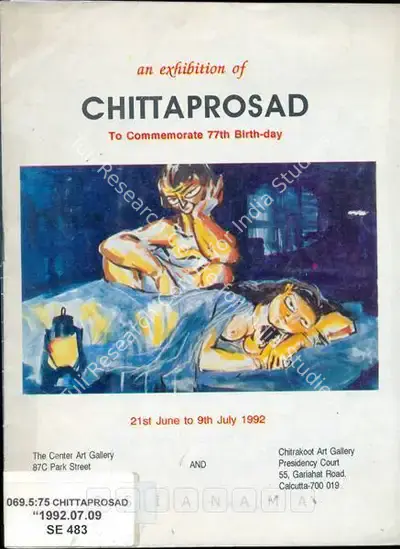
    13_SeekJustice
    Gobardhan AshRamkinkar BaijFelice BeatoNandalal BoseHenri Cartier-BressonRamendranath ChakravortyChittaprosadKanu Gandhi+14 more
    Read Post →
  2. Journey of an Artist: Chittaprosad's Art, Politics and Idealism
    Journey of an Artist: Chittaprosad's Art, Politics and Idealism
    "A poster calls for food and work. A drawing records the human cost of famine. A painting bursts with colour and the energy of folk theatre. Chittaprosad made room for all of these. During the Bengal famine of 1943-44, he travelled and visually recorded the plight of those he encountered. His drawings appeared in political publications and were later brought together in Hungry Bengal. Working with pen and ink and linocut, he made images that could be printed and seen well beyond a gallery. In this video, Neville Tuli asks us to look beyond the familiar label of “political artist”. Chittaprosad's commitment to people runs through his work, but so do satire, tenderness and a restless curiosity about what an image can do. Look at the exuberance of his paintings and the urgency of his prints. Both belong to the same artist.
    2_FineArts9_SocialDuty13_SeekJustice
    ChittaprosadSWARAJ - Revisualising India's Political HistoryNeville TuliIndian People's Theatre Association IPTA
    Read Post →
  3. Gandhi through the eye of the artist by Neville Tuli
    Gandhi through the eye of the artist by Neville Tuli
    On Gandhi Jayanti, 2 October, we invite you to read “Gandhi through the eye of the artist” in The Hindu, written by Neville Tuli, Founder & Trustee of the Tuli Research Centre for India Studies. Article link: www.thehindu.com/society/gandhi-through-the-eye-of-the-artist/article71526987.ece For more detailed context regarding the artworks and their creators, visit our website www.tuliresearchcentre.org where readers can learn more about the artworks and explore our pioneering efforts in building the first undergraduate curricula for Contemporary India Studies.
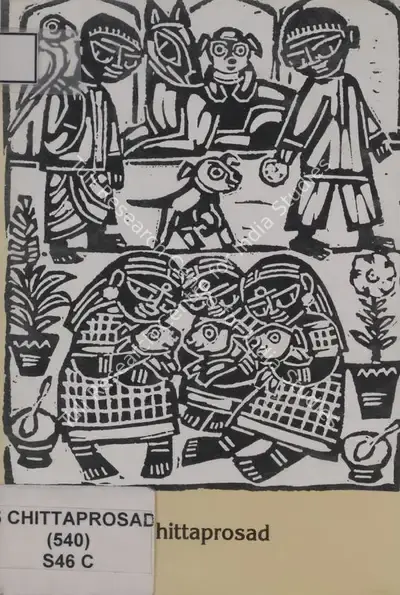
    Mahatma GandhiRamendranath ChakravortyHemendranath MazumdarBrandy Ki BottleRabindranath TagoreChittaprosadDebanjan RoyGigi Scaria+3 more
    Read Post →

Calendar 9

View All →
  1. SWARAJ - Revisualising India's Political History
    ArchivedOpening PreviewProject 82
    SWARAJ - Revisualising India's Political History
    An Exhibition of Modern & Contemporary Fine & Popular Arts, Photography, Film Memorabilia and Visual-Textual-Audio Archive
    12th August 2026
    6:00 PM - 9:00 PM
    Visual Arts Gallery, India Habitat Centre, Lodhi Road, New Delhi,
    The Tuli Research Centre for India Studies (T.R.I.S.) announces its seventh exhibition. “Swaraj – Revisualising India's Political History” -- An exhibition of Modern and Contemporary Fine and Popular Arts, Photography, Film Memorabilia and Visual-Textual-Audio Archives. Swaraj will open at 6 p.m. on Wednesday, 12 August 2026 at the Visual Arts Gallery and will remain open till 7 p.m. Sunday, 16 August 2026. Tuli Research Centre for India Studies (T.R.I.S.) presents SWARAJ | Revisualising India's Political History, a pioneering inter-disciplinary offline-online exhibition conceptualised and curated by Neville Tuli with Team T.R.I.S.. SWARAJ explores India's journey towards political self-rule and self-discovery through a remarkable collection of rare modern and contemporary fine and popular arts, albums, photographs, books, prints, propaganda, cartoons, film publicity artworks and other "text-visual-audio" archives contextualised within a clear historical framework, which defines T.R.I.S.' pedagogic approach to learning. The Exhibition will be of particular interest to students and scholars of India & Cultural Studies, and India's political and modern histories as well as those interested in the passage of events and ideas from the mid-1850s leading up to the turn of the 21st century. Unique to the Tuli Research Centre for India Studies is the richness of visual material that not only exhorts a deeper understanding of the art and archival materials on display but also brings alive the multi-layered narratives of the exhibition and naturally India's journey in being ad searching for herself.
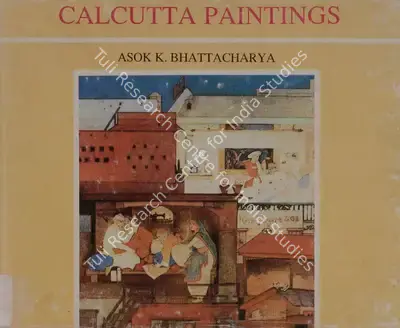
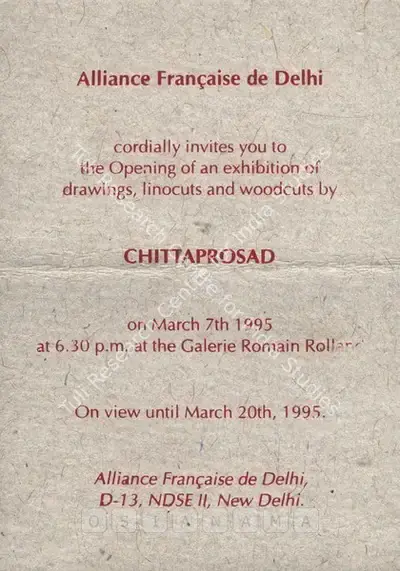
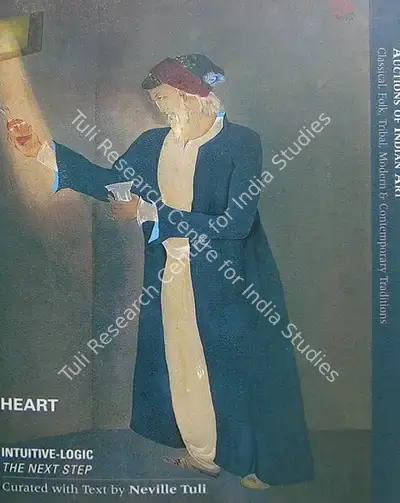
    Read More →
    13_SeekJustice·9_SocialDuty
  2. SWARAJ - Revisualising India's Political History
    ArchivedExhibitionProject 81
    SWARAJ - Revisualising India's Political History
    An Exhibition of Modern & Contemporary Fine & Popular Arts, Photography, Film Memorabilia and Visual-Textual-Audio Archive
    12th - 19th August 2026
    10:00 AM - 7:00 PM
    Visual Arts Gallery, India Habitat Centre, Lodhi Road, New Delhi,
    19
    The Tuli Research Centre for India Studies (T.R.I.S.) announces its seventh exhibition. “Swaraj – Revisualising India's Political History” -- An exhibition of Modern and Contemporary Fine and Popular Arts, Photography, Film Memorabilia and Visual-Textual-Audio Archives. Swaraj will open at 6 p.m. on Wednesday, 12 August 2026 at the Visual Arts Gallery and will remain open till 7 p.m. Sunday, 16 August 2026. Tuli Research Centre for India Studies (T.R.I.S.) presents SWARAJ | Revisualising India's Political History, a pioneering inter-disciplinary offline-online exhibition conceptualised and curated by Neville Tuli with Team T.R.I.S.. SWARAJ explores India's journey towards political self-rule and self-discovery through a remarkable collection of rare modern and contemporary fine and popular arts, albums, photographs, books, prints, propaganda, cartoons, film publicity artworks and other "text-visual-audio" archives contextualised within a clear historical framework, which defines T.R.I.S.' pedagogic approach to learning. The Exhibition will be of particular interest to students and scholars of India & Cultural Studies, and India's political and modern histories as well as those interested in the passage of events and ideas from the mid-1850s leading up to the turn of the 21st century. Unique to the Tuli Research Centre for India Studies is the richness of visual material that not only exhorts a deeper understanding of the art and archival materials on display but also brings alive the multi-layered narratives of the exhibition and naturally India's journey in being ad searching for herself.
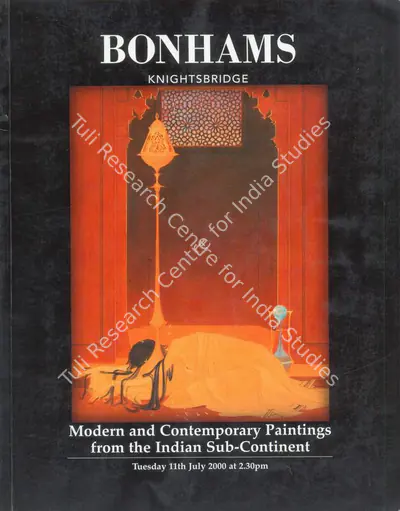
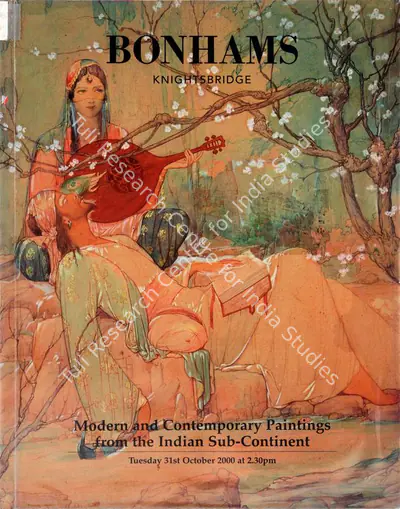
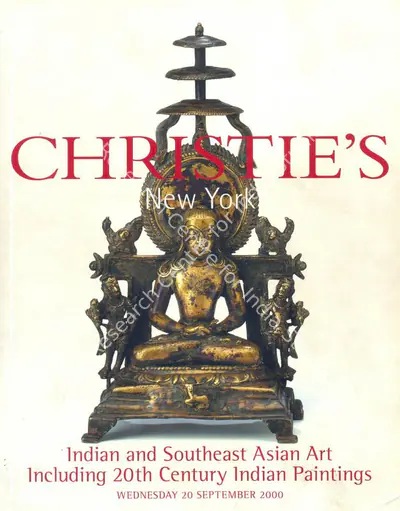
    Read More →
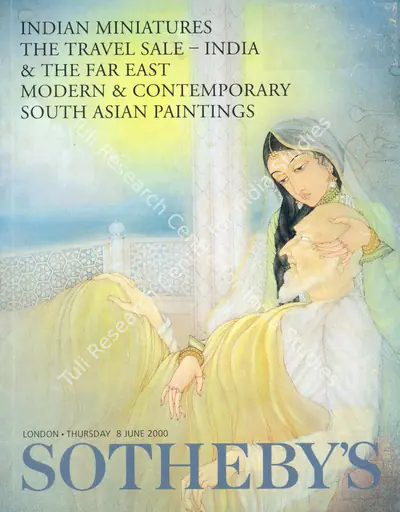
    13_SeekJustice·9_SocialDuty
  3. Public Launch of A-Graphy Pages CHITTAPROSAD
    ArchivedOnline LearningProject 43
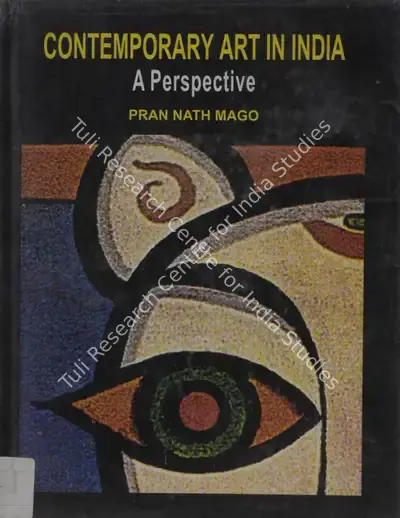
    Public Launch of A-Graphy Pages CHITTAPROSAD
    8th February 2026
    6:15pm
    India International Centre, 1st Floor Seminar Halls, Kamaladevi Chattopadhyay Block, Max Mueller Marg, New Delhi, 110003
    Neville Tuli
    2_FineArts·9_SocialDuty
  4. Vintage Polish Posters previously belonging to Chittaprosad
    ArchivedExhibition by Invitation Only | for Educational InstitutionsProject 40
    Vintage Polish Posters previously belonging to Chittaprosad
    Selections from the Tuli Research Centre for India Studies Collection
    6th - 7th February 2026
    11:00am
    The Well, The Tuli Research Centre for India Studies, 14 Green Avenue, Vasant Kunj, New Delhi, 110070
    2_FineArts·1_CinemaEducation
  5. The Art of Chittaprosad | Living the Idealism
    ArchivedExhibition by Invitation Only | for Educational InstitutionsProject 39
    The Art of Chittaprosad | Living the Idealism
    Selections from the Tuli Research Centre for India Studies Collection
    4th - 5th February 2026
    11:00am
    The Well, The Tuli Research Centre for India Studies, 14 Green Avenue, Vasant Kunj, New Delhi, 110070
    2_FineArts·9_SocialDuty
  6. Social Responsibility of the Creative Mind
    ArchivedExhibition by Invitation Only | for Educational InstitutionsProject 38
    Social Responsibility of the Creative Mind
    Eight Master Artworks of Modern and Contemporary Indian Art by Altaf | Ramkinkar Baij | Chittaprosad | Somnath Hore | Sudhir Patwardhan | Ramkumar | Krishna Reddy | Vivaan Sundaram
    2nd - 3rd February 2026
    11:00am
    The Well, The Tuli Research Centre for India Studies, 14 Green Avenue, Vasant Kunj, New Delhi, 110070
    2_FineArts·9_SocialDuty
  7. Self Discovery via Rediscovering India Series Part V Mahatma Gandhi
    ArchivedExhibitionProject 8
    Self Discovery via Rediscovering India Series Part V Mahatma Gandhi
    25th April 2025
    as part of the Rediscovering India via Self-Discovery Exhibition Series Part V
    Read More →
    9_SocialDuty·Exhibition Opening Depth And Diversity The Life Legacy And Inspiration Of Mahatma Gandhi 26th April 2025 Project 8 Cal
  8. Self Discovery via Rediscovering India Series  Part IV Building www.tuliresearchcentre.org
    ArchivedExhibitionProject 5
    Self Discovery via Rediscovering India Series Part IV Building www.tuliresearchcentre.org
    20th - 23rd February 2025
    Self Discovery via Rediscovering India Series Part IV
    Read More →
    14_IndoWorld·Building Www Tuliresearchcentre Org 21 24 February 2025 Project 5 Cal
  9. Self-Discovery via Rediscovering India Series Inaugural Exhibition
    ArchivedExhibitionProject 1
    Self-Discovery via Rediscovering India Series Inaugural Exhibition
    14th - 29th March 2024
    Inaugural Exhibition
    Read More →
    14_IndoWorld·Self Discovery Via Rediscovering India Series 15 30 March 2024 Project 1 Cal

Related

51

Personalities

33

Abanindranath TagoreComparable Artworks
Akbar PadamseeComparable Artworks
Amrita Sher-GilComparable Artworks
Bhupen P. KhakharComparable Artworks
Bikash BhattacharjeeComparable Artworks
Bimal RoyComparable Artworks
Ebrahim AlkaziComparable Artworks
F.N. SouzaComparable Artworks
Ganesh PyneComparable Artworks
HEARTComparable Artworks
Hemendranath MazumdarComparable Artworks
J. Sultan AliComparable Artworks
Jamini RoyComparable Artworks
Jogen ChowdhuryComparable Artworks
Jyoti BhattComparable Artworks
Krishen KhannaComparable Artworks
M.F. HusainComparable Artworks
Manjit BawaComparable Artworks
Meera MukherjeeComparable Artworks
Nandalal BoseComparable Artworks
Nasreen MohamediComparable Artworks
Nicholas RoerichComparable Artworks
Osian'sComparable Artworks
Prabhakar BarweComparable Artworks
Raghu RaiComparable Artworks
Rameshwar BrootaComparable Artworks
RamkumarComparable Artworks
Ratan ParimooComparable Artworks
Sayed Haider RazaComparable Artworks
Shanti DaveComparable Artworks
Somnath HoreComparable Artworks
Sunil DasComparable Artworks
Tyeb MehtaComparable Artworks

Institutions

14

Apparao ArtComparable Artworks
Art BullComparable Artworks
Asta GuruComparable Artworks
Bid & HammerComparable Artworks
BonhamsComparable Artworks
Christie'sComparable Artworks
DAGComparable Artworks
Indian People's Theatre Association IPTAComparable Artworks
Mapin PublishingComparable Artworks
PrinsepsComparable Artworks
PundoleComparable Artworks
RoseberysComparable Artworks
SaffronartComparable Artworks
Sotheby'sComparable Artworks

Themes

3

Art Heritage AnnualComparable Artworks
Lalit Kala Contemporary JournalComparable Artworks
MargComparable Artworks

Events

1

SWARAJ - Revisualising India's Political HistoryEvent Artists
Tuli Research Centre for India Studies

Tuli Research Centre

for India Studies

A free and open knowledge base for the modern and contemporary Indian arts, cinema, photography and cultural heritage.

Support

Contact Us

Discover

Tuli Research Centre for India StudiesVisionManifestoArchive & LibraryVanraja Sanctuary & Hospice

Legal

Privacy PolicyTerms & Conditions

Follow us

Youtube

Youtube

Instagram

Instagram

Facebook

Facebook

© Tuli Research Centre for India Studies 2026

Tuli Research Centre for India Studies

Tuli Research Centre

for India Studies

A free and open knowledge base for the modern and contemporary Indian arts, cinema, photography and cultural heritage.

Tuli Research Centre for India StudiesVisionManifestoArchive & LibraryVanraja Sanctuary & Hospice
Contact Us
Privacy PolicyTerms & Conditions

Follow us

YoutubeInstagramFacebook

© Tuli Research Centre for India Studies 2026

              Chittaprosad (Artist). Chittaprasad. Calcutta: Chitta Bharati, 1992 | Solo Exhibition Invitation | FineArts | 00858980
              Chittaprosad (Artist)
              Document TypeSolo Exhibition Invitation
              TitleChittaprasad
              PublishedChitta Bharati, Calcutta, 1992
              List of ArtistsChittaprosad
              VenueThe Center Art Gallery | Chitrakoot Art Gallery, Calcutta, India
              Dates21 June 1992 – 09 July 1992

              Research Categories

              2_FineArts
              6_EconomicsArt
              12_Scholarship
              Chittaprosad

              Related Links5

              Masterlist2
              ChittaprosadExhibition Invitation Cards Solo
              Research Categories3
              02Modern and Contemporary Indian Fine Arts06Economics of Art & Cultural Industry12The History & Historiography of Scholarship in the Arts, Humanities, and Social Sciences