
Aadmi Aur Insaan1969
Introduction
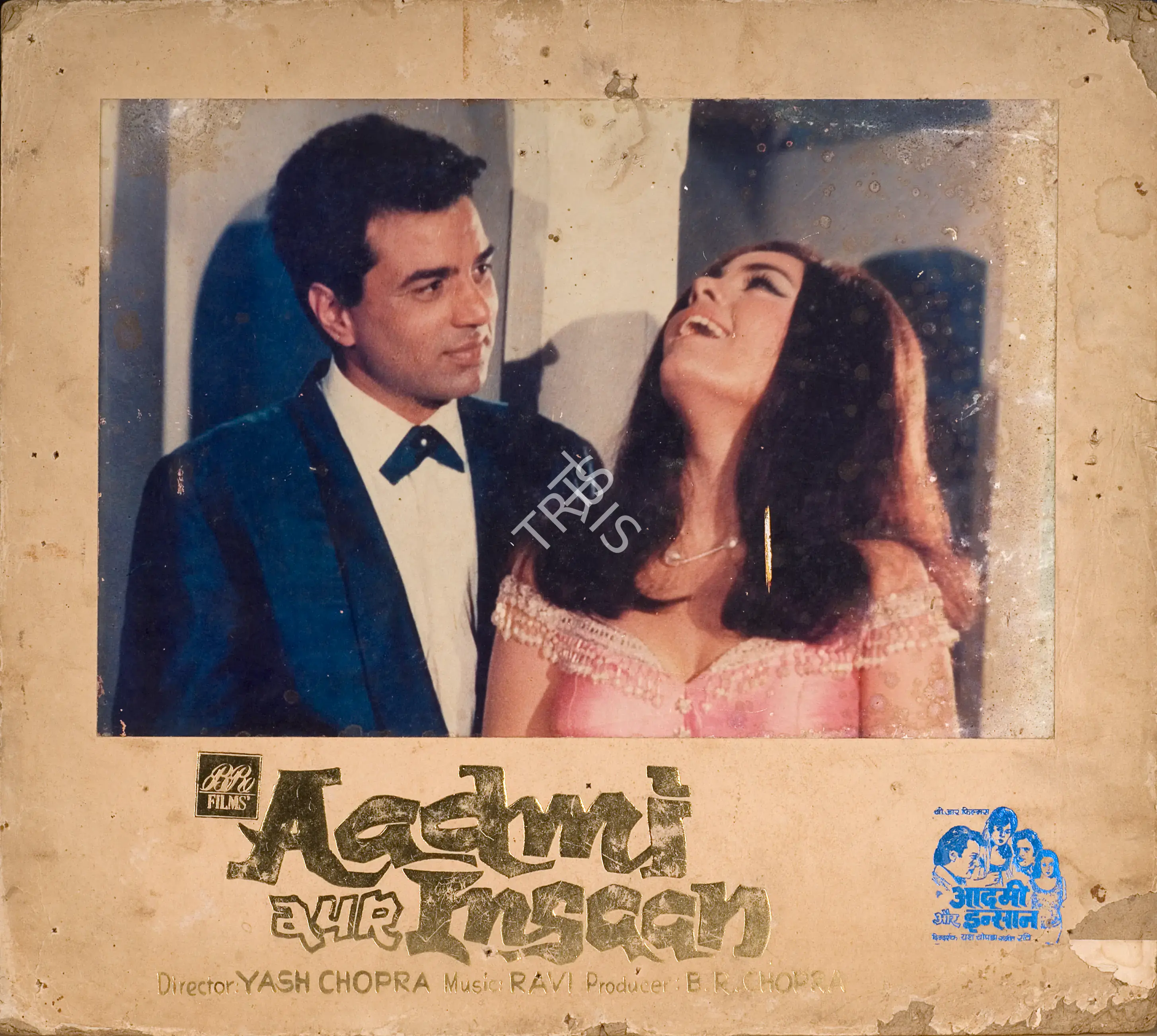
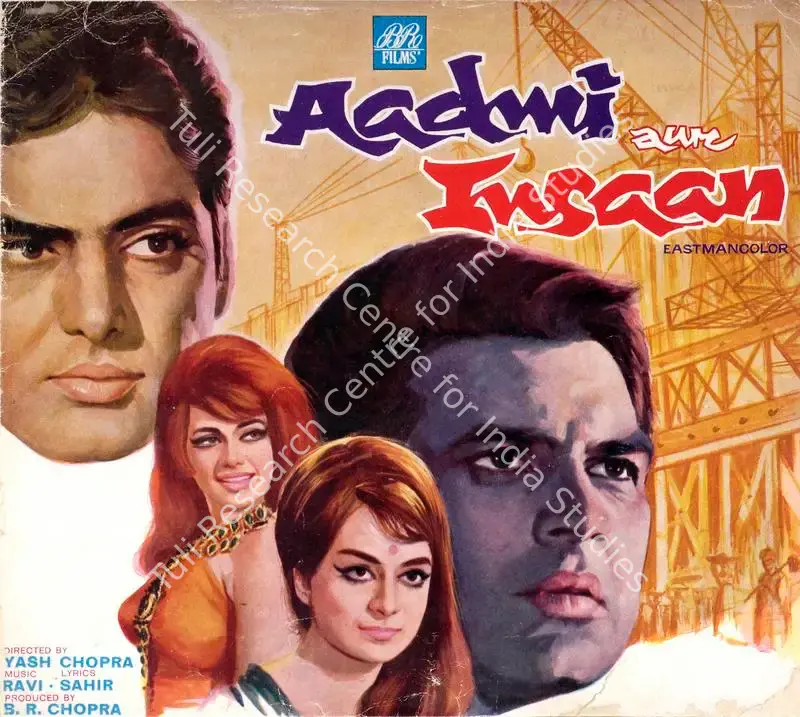
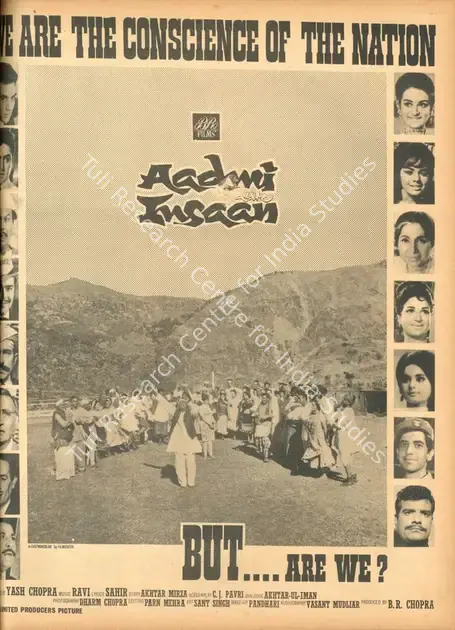
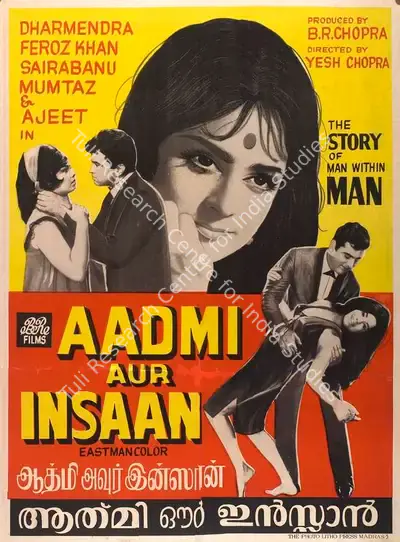
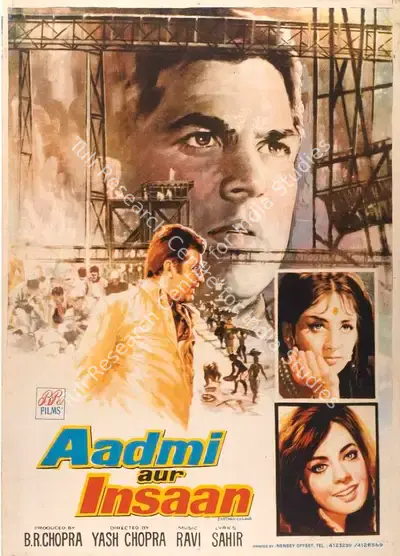
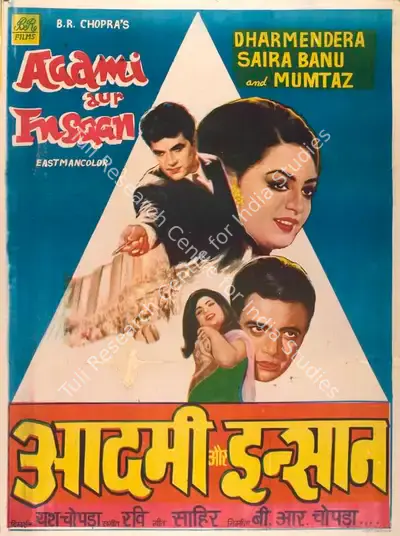
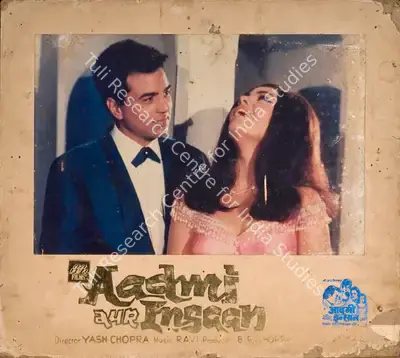
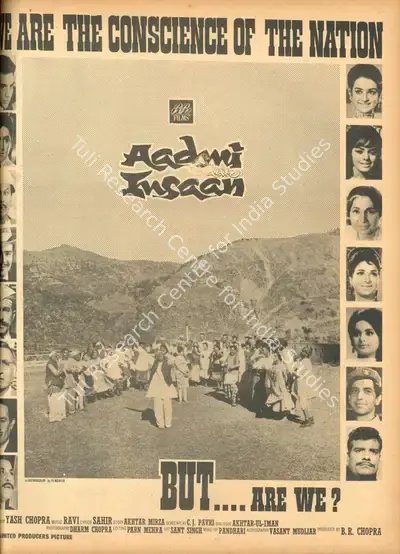
Aadmi Aur Insaan (1969) Produced by B. R. Chopra and directed by Yash Chopra, the film stands as a compelling example of late-1960s Hindi cinema that blends social drama with elements of suspense and moral inquiry. Featuring a distinguished ensemble cast including Dharmendra, Saira Banu, Feroz Khan, Mumtaz, Johnny Walker, and others, the film situates personal relationships within broader questions of ethics, ambition, and social responsibility. The musical score by Ravi, complemented by Sahir Ludhianvi's evocative lyrics, further enriches its emotional and thematic depth.
At its core, the narrative explores the evolution—and eventual disintegration—of a deep friendship between Jai Kishan “J.K.” (Feroze Khan), an ambitious industrialist, and Munish Mehra (Dharmendra), an upright and principled engineer. J.K., who once played a crucial role in supporting Munish's education and professional rise, embodies a pragmatic, success-driven ethos. Munish, by contrast, represents integrity and idealism. Their bond begins to fracture when both men develop feelings for Meena Khanna (Saira Banu), the daughter of a government official, introducing a personal rivalry that mirrors their ideological divergence.
The conflict intensifies dramatically following the collapse of a railway bridge constructed under J.K.'s supervision. The disaster, caused by the deliberate use of substandard materials to reduce costs, exposes the darker consequences of unchecked ambition. Munish is assigned to investigate the incident and soon uncovers evidence implicating his friend. Faced with a profound moral dilemma, he struggles to reconcile personal loyalty with professional duty. His initial refusal to submit a truthful report leads to grave repercussions, including false accusations of bribery against him.
The narrative culminates in a tense courtroom confrontation where issues of truth, accountability, and justice come to the fore. Munish must not only defend his own integrity but also confront J.K.'s ethical failings. The character of Rita (Mumtaz), closely associated with J.K., emerges as a significant figure in this moral landscape, underscoring themes of conscience and redemption.
The film is also notable for elevating Feroz Khan's stature within the industry, with his portrayal of J.K. earning widespread critical acclaim. Anecdotal accounts suggest that Raaj Kumar was initially considered for the role but declined, reportedly due to concerns over character dynamics and perceived status. Khan's performance, marked by charisma and intensity, often rivals that of the principal protagonist and contributed to his emergence as a style icon.
Commercially successful, the film ranked among the higher-grossing releases of 1969, with production costs estimated between ₹80 lakhs and ₹1 crore and global earnings approaching ₹2 crore. Critically, it garnered recognition for its performances and sharp dialogue. At the Filmfare Awards, Feroz Khan received the Best Supporting Actor award, while Akhtar-Ul-Iman was honored for Best Dialogue. Mumtaz also earned a nomination for Best Supporting Actress. The film's enduring legacy lies in its nuanced portrayal of human conflict and ethical responsibility within a rapidly modernizing society.
मूल रूप से यह कहानी महत्वाकांक्षी उद्योगपति जय किशन “जे.के.” (फ़िरोज़ ख़ान) और ईमानदार एवं सिद्धांतवादी इंजीनियर मुनीश मेहरा (धर्मेंद्र) के बीच गहरी दोस्ती के विकास और अंततः टूटने की कहानी बयां करती है। जे.के. ने कभी मुनीश की शिक्षा और पेशेवर उन्नति में महत्वपूर्ण भूमिका निभाई थी, जो समय के हिसाब से व्यावहारिक, सफलता को तवज्जो देने वाला व्यक्ति हैं। इसके विपरीत मुनीश नैतिकता और आदर्शवाद का प्रतीक हैं। उनके संबंधों में दरार तब शुरू होता है जब दोनों को एक सरकारी अधिकारी की बेटी मीना खन्ना (सायरा बानो) से प्यार हो जाता है, जिससे उनके वैचारिक मतभेदों को दर्शाने वाली व्यक्तिगत प्रतिद्वंद्विता शुरू हो जाती है।
जे.के. की देखरेख में बने एक रेलवे पुल के ढह जाने के बाद संघर्ष और भी तीव्र हो जाता है। लागत कम करने के लिए जानबूझकर घटिया सामग्री के इस्तेमाल से हुई इस आपदा ने बेलगाम महत्वाकांक्षा के भयावह परिणामों को उजागर कर दिया। मुनीश को इस घटना की जांच का जिम्मा सौंपा जाता है और जल्द ही उसे अपने दोस्त को दोषी ठहराने वाले सबूत मिल जाते हैं। एक गंभीर नैतिक दुविधा का सामना करते हुए, वह व्यक्तिगत वफ़ादारी और पेशेवर कर्तव्य के बीच सामंजस्य बिठाने के लिए संघर्ष करता है। शुरू में सच रिपोर्ट देने से इनकार करने के कारण उसे गंभीर परिणाम भुगतने पड़ते हैं, जिनमें रिश्वतख़ोरी के झूठे आरोप भी शामिल हैं।
कहानी का अंत एक तनावपूर्ण अदालती टकराव से होता है, जहाँ सत्य, जवाबदेही और न्याय के मुद्दे प्रमुखता से सामने आते हैं। मुनीश को न केवल अपनी ईमानदारी का बचाव करना है, बल्कि जे.के. की नैतिक खामियों का भी सामना करना है। जे.के. से घनिष्ठ रूप से जुड़ी रीता (मुमताज़) का चरित्र इस नैतिक परिदृश्य में एक महत्वपूर्ण भूमिका निभाता है, जो अंतरात्मा और मुक्ति के विषयों को रेखांकित करता है।
यह फ़िल्म फ़िरोज़ ख़ान को फ़िल्म इंडस्ट्री में ऊंचा दर्जा दिलाने में भी महत्वपूर्ण है, जिसमें जे.के. के उनके किरदार को व्यापक आलोचनात्मक प्रशंसा मिली। कुछ लोगों का मानना है कि शुरुआत में इस भूमिका के लिए राज कुमार पर विचार किया गया था, लेकिन उन्होंने कथित तौर पर किरदार के आपसी तालमेल और सामाजिक प्रतिष्ठा सम्बन्धी चिंताओं के कारण मना कर दिया था। ख़ान का करिश्मा और तीव्रता से भरपूर अभिनय अक्सर मुख्य नायक के अभिनय को टक्कर देता है और उन्हें एक स्टाइल आइकन के रूप में उभरने में योगदान दिया।
व्यावसायिक रूप से सफल यह फ़िल्म 1969 की सबसे अधिक कमाई करने वाली फ़िल्मों में शुमार थी। इस निर्माण में लागत लगभग 80 लाख से 1 करोड़ रुपये के बीच थी और वैश्विक कमाई लगभग 2 करोड़ रुपये तक पहुंच गई थी। समीक्षकों ने भी इसके अभिनय और संवादों की सराहना की। फ़िल्मफ़ेयर पुरस्कारों में फ़िरोज़ ख़ान को सर्वश्रेष्ठ सहायक अभिनेता का पुरस्कार मिला, जबकि अख़्तर-उल-इमान को सर्वश्रेष्ठ संवाद के लिए सम्मानित किया गया। मुमताज़ को भी सर्वश्रेष्ठ सहायक अभिनेत्री के लिए नामांकित किया गया था। फ़िल्म की स्थायी विरासत तेजी से आधुनिक हो रहे समाज में मानवीय संघर्ष और नैतिक जिम्मेदारी के सूक्ष्म चित्रण में निहित है।
Body of Work
Research Centre
Related
12
Personalities
12