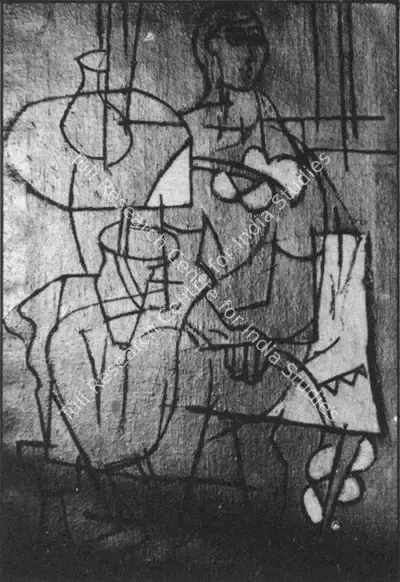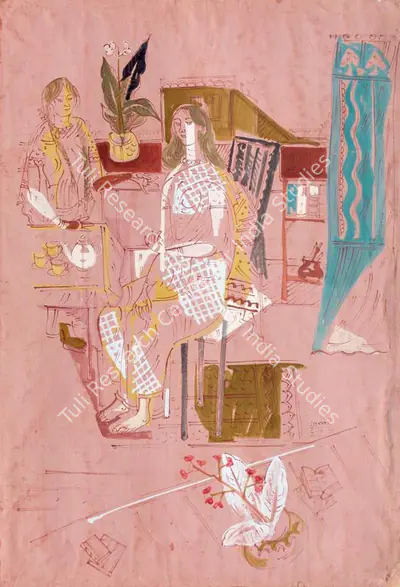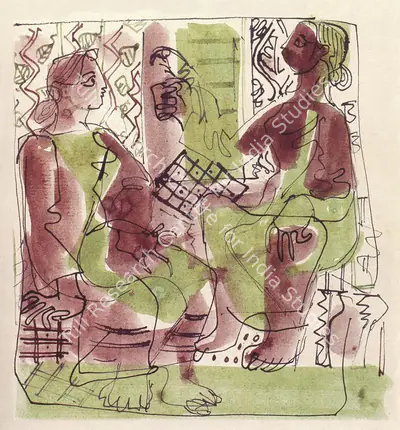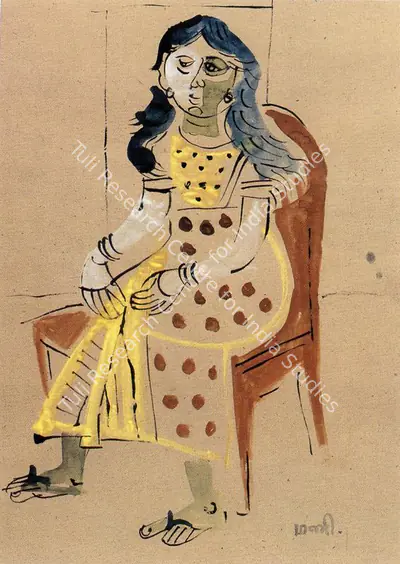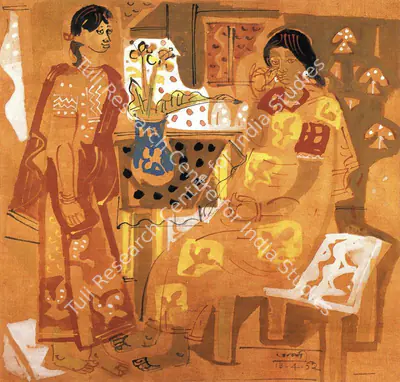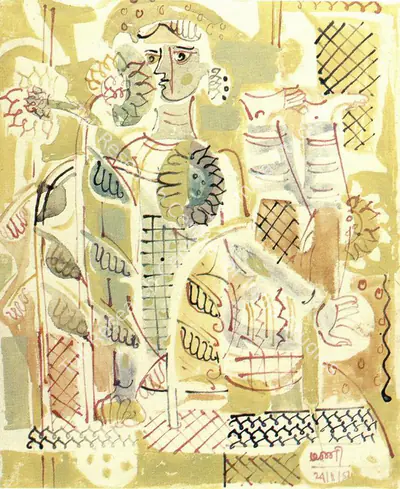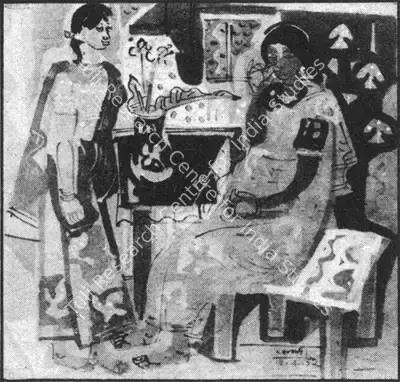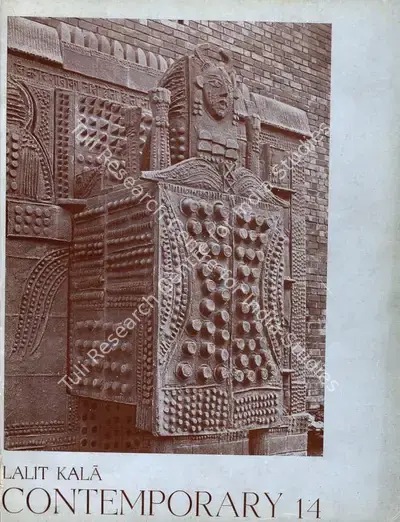
In 2006, the artist achieved a new high in the auction market with the sale of Terrace I (1973), offered in the Forty Masterpieces Museum Quality Series VII by Osian's, which concluded on 09 September 2006 at Mumbai, achieving a sale price of ₹1,20,00,000 ($259,347). This record marked a defining moment in the artist's market history, reflecting both the significance of the artwork and its reception within the broader art world.
Introduction
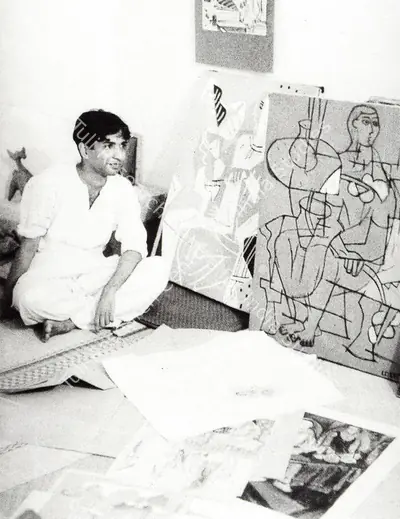
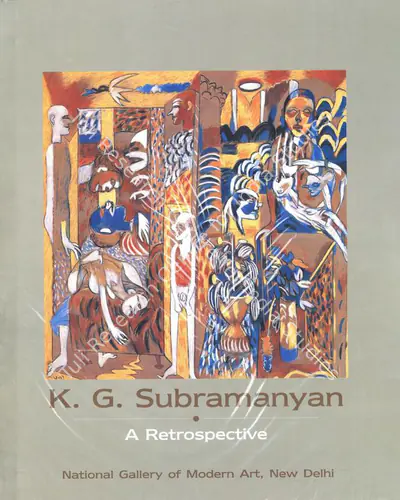
K.G. Subramanyan was one of the most exciting, versatile and polymathic artists of India. He was, among other things, a seminal thinker and intellectual, a prolific writer on art and his art encompassed an ecclectic and diverse range of media.
- Date of Birth
- 15 Feb 1924
- Zodiac sign
- Aquarius
- Date of Death
- 29 Jun 2016
- Age
- 92
- Place of Birth
- Kuthuparambu, Kerala, India
- Place of Death
- Vadodara, Gujarat, India
- State Country of Birth
- Kerala, India
- State Country of Death
- Gujarat, India
1943
- Presidency College Madras
1948
- Kala Bhavan Visva-Bharati University Shantiniketan
1956
- British Council Research Scholarship to Slade School of Art London
1945
- Helped Organise the first Delhi Exhibition Featuring Benode Behari Mukherjee and Ramkinkar Baij, New Delhi, India
1947
- Mural for Hindi Bhavan with Benode Behari, Santiniketan, India
1955
- Mural, Jyoti Industry Ltd., Vadodara, India
- Mural, Faculty of Fine Arts, M.S. University, Vadodara, India
1959
- Lecturer in Painting, Faculty of Fine Arts, MS University, Vadodara, IndiaOfficial Position
1961
- Deputy Director, Design, All India Handloom Board, Mumbai, IndiaOfficial Position
1963
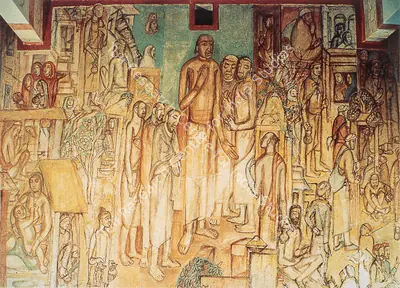
- Mural, King of the Dark Chamber, Rabindralaya, Lucknow, India
1965
- Reader, Painting Department, Faculty of Fine Arts, Maharaja Sayajirao University, Vadodara, IndiaOfficial Position
- Member, Gujarat Lalit Kala Akademi
- Mural, India Pavilion, New York World Fair, New York, USA
1966
- Design Consultant, All India Handloom Board, Mumbai, IndiaOfficial Position
1967
- Member, All India Board of Technical Studies in Applied Art
- JDR IIIrd Fund Fellowship, New York, USAOfficial Position
1969
- Mural, India of My Dreams Pavilion, Gandhi Darshan, New Delhi, India
1972
- Published The Butterfly and the Cricket, A Summer Story and Robby
1974
- Member, Gujarat Lalit Kala Akademi, India
- Dean, Faculty of Fine Arts, MS University, Vadodara, IndiaOfficial Position
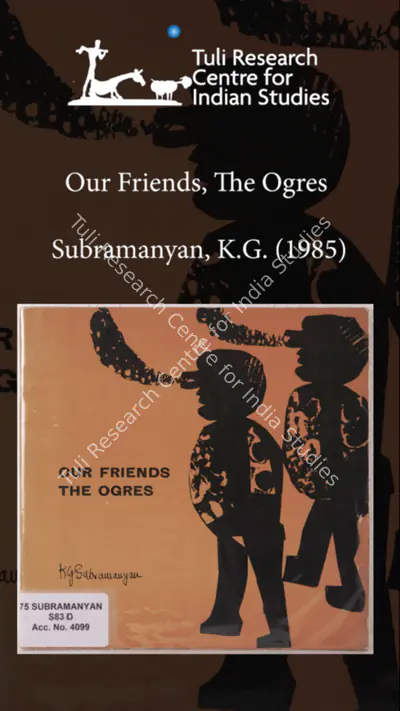
- Published Our Friends the Ogres and The King and the Little Man
1975
- Member of Direction, World Crafts CouncilAssociated Institution
- Delegate, Asian Assembly, World Crafts Council, Sydney, AustraliaAssociated Institution
1976
- President, Crafts Council of IndiaOfficial Position
- Member Delegate, General Assembly, World Crafts Council, Oaxtepec, Mexico, USAAssociated Institution
- Visiting Lecturer, Canadian Universities in Ottawa and Hamilton, CanadaAssociated Institution
- Mural, R&D Building, Jyoti Pvt. Ltd., Vadodara, India
1977
- Member, All India Handicrafts Board
1978
- Member, Governing Council, National Institute of Design, Ahmedabad, IndiaAssociated Institution
- Visiting Fellow, Kala Bhavan, Visva Bharati University, Santiniketan, IndiaOfficial Position
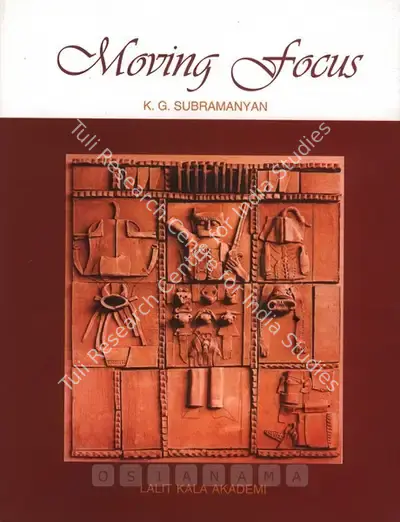
- Published, Moving Focus: Essays on Indian Art, Lalit Kala Akademi, New Delhi, India
1979
- Member, Lalit Kala Akademi, New Delhi, India
- Published, 'How Poppy Grew Happy, Cat's Night and Day and Frog Life is Fun Life'
1980
- Professor, Painting Department, Faculty of Fine Arts, MS University, Vadodara, IndiaOfficial Position
1982
- Invited for seminar on Traditional Arts at Barbican Centre, London, UK
1984
- Member, Siksha-samiti and Karmasamiti, Visva Bharati University, Santiniketan, India
- Member, All India Handloom and Handicrafts BoardAssociated Institution
1985
- Guest, Chinese Artists' Association, ChinaOfficial Position
- Fellow, Lalit Kala Akademi, New Delhi, IndiaAssociated Institution
- Published, 'Of Ogres, Beasts and Men'
1987
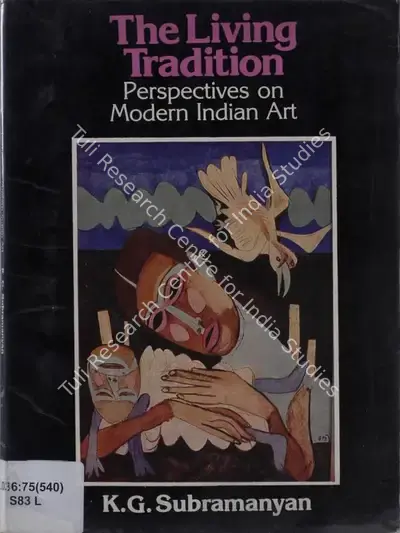
- Published, 'The Living Tradition', Seagull Books, Kolkata, India
1988
- Christensen Fellow, St. Catherine's College, Oxford, UKAssociated Institution
- Mural, Sand-cast Cement, Kala Bhavan, Visva Bharati University, Santiniketan, India
1989
- Professor, Painting Department, Kala Bhavan, Visva Bharati Univeresity, Santiniketan, IndiaOfficial Position
- Mural, Reverse painting on Glass (with school children), Santiniketan, India
- Professor Emeritus, Kala Bhavan, Visva Bharati University, Santiniketan, IndiaAssociated Institution
1990
- Mural, Black and White, Kala Bhavan, Visva Bharati University, Santiniketan, India (First phase)
1991
- Fellow, Kerala Lalit Kala AkademiAssociated Institution
1992
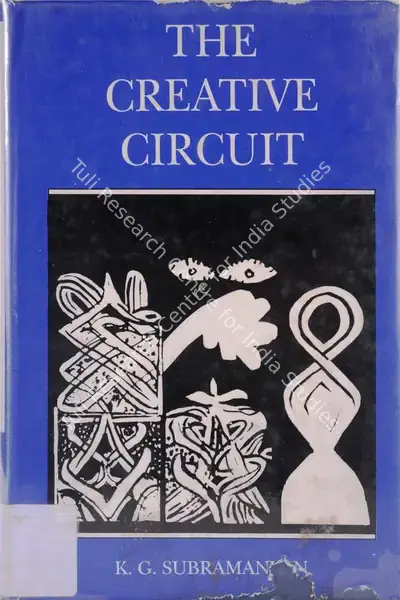
- Published, The Creative Circuit, Seagull Books, Kolkata, India
1993
- Mural, Black and White, Kala Bhavan, Visva Bharati University, Santiniketan, India (Second phase)
1995
- Published, 'How Hanu Became Hanuman, Death in Eden and In the Zoo'
1998
- Published, 'The Tale ofthe Talking Face'
Exhibitions
1953
- Indian Art Exhibition, USA
1955
- Delhi Shilpi Chakra, Freemason's Hall, New Delhi, India
1956
- Three Young Artists from Abroad - Hitchin, UK
- Jehangir Art Gallery, Mumbai, India
1958
- Delhi Shilpi Chakra, New Delhi, India
1959
- Jehangir Art Gallery, Mumbai, India
1961
- Jehangir Art Gallery, Mumbai, India
- Sao Paolo Biennale, Brazil
1962
- Kunika-Chemould Art Centre, New Delhi, India
24 Dec 1962 to 03 Jan 1963
1964
- Tokyo Biennale, Japan
- Ten Indian Artists, USA
1965
- Exhibition of Textile Paintings, Mural, Woven Hangings, New York World Trade Fair, New York, USA
- Commonwealth Arts Festival, Commonwealth Gallery, London, UK
- Ten Indian Artists, South East Asia
- Art now in India, Lanig Art Gallery, Newcastle, UK
1966
- Indian Art Exhibition, Ghent, Belgium
- Gallery Chemould, Mumbai, India
1967
- Gallery Navina, New York, USA
- Gallery Chemould, Mumbai, India
1968
- 1st Triennale India, Lalit Kala Akademi, Rabindra Bhavan, New Delhi, India
1955
- Delhi Shilpi Chakra, Freemason's Hall, New Delhi, India
1956
- Jehangir Art Gallery, Mumbai, India
1958
- Delhi Shilpi Chakra, New Delhi, India
1959
- Jehangir Art Gallery, Mumbai, India
1961
- Jehangir Art Gallery, Mumbai, India
1962
- Kunika-Chemould Art Centre, New Delhi, India
24 Dec 1962 to 03 Jan 1963
1966
- Gallery Chemould, Mumbai, India
1967
- Gallery Navina, New York, USA
- Gallery Chemould, Mumbai, India
1969
- Kunika-Chemould Art Centre, New Delhi, India
- Gallery Chemould, Mumbai, India
1971
- Exhibition of Polytichs, Kunika-Chemould Art Centre, New Delhi, India
1972
- Exhibition of Terracotta Reliefs, Kunika-Chemould Art Centre, New Delhi, India
1978
- Exhibition of Terracotta Reliefs, Art Heritage, Triveni Kala Sangam, New Delhi, India
- Exhibition of Terracotta Reliefs and Paintings, Nandan Gallery, Santiniketan, India
1979
- Exhibition of Prints, Art Heritage, Triveni Kala Sangam, New Delhi, India
1980
- Art Heritage, Triveni Kala Sangam, New Delhi, India
1981
- Retrospective Exhibition, Bharat Bhavan, Vadodara, India
1982
- Exhibition of Glass and Acrylic Sheet Paintings, Nandan Gallery, Santiniketan, India
- Exhibition of Glass and Acrylic Sheet Paintings, Art Heritage, Triveni Kala Sangam, New Delhi, India
1953
- Indian Art Exhibition, USA
1956
- Three Young Artists from Abroad - Hitchin, UK
1961
- Sao Paolo Biennale, Brazil
1964
- Tokyo Biennale, Japan
- Ten Indian Artists, USA
1965
- Exhibition of Textile Paintings, Mural, Woven Hangings, New York World Trade Fair, New York, USA
- Commonwealth Arts Festival, Commonwealth Gallery, London, UK
- Ten Indian Artists, South East Asia
- Art now in India, Lanig Art Gallery, Newcastle, UK
1966
- Indian Art Exhibition, Ghent, Belgium
1968
- 1st Triennale India, Lalit Kala Akademi, Rabindra Bhavan, New Delhi, India
1971
- Indian Art Exhibition, Tehran, Iran
1975
- 3rd Triennale India, Lalit Kala Akademi, Rabindra Bhavan, New Delhi, India
1976
- Menton Biennale, Menton, France
1979
- Sao Paolo Biennale, Brazil
- Asian Artist Exhibition, Part - 1, Japan
1980
- Indian Art Exhibition, Tokyo, Japan
- Indian Art Exhibition, Washington DC, USA
- Asian Artist Exhibition, Part - II, Japan
1982
- Contemporary Indian Art, Royal Academy of Arts, London, UK
Integrated Timeline
Chronicled Highlights 211973 – 2022
K.G. Subramanyan was born in 1924 in Kuthuparambu, Kerala, India.
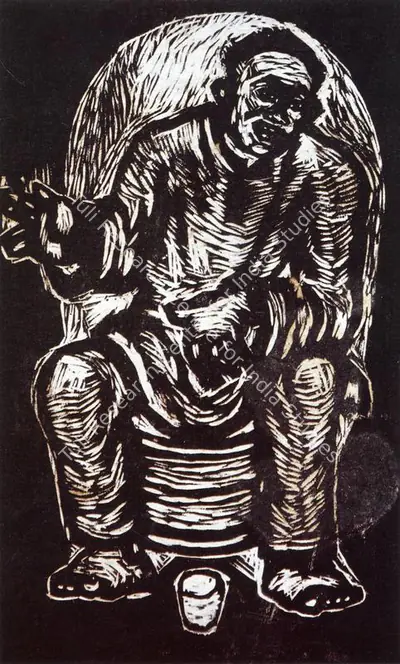
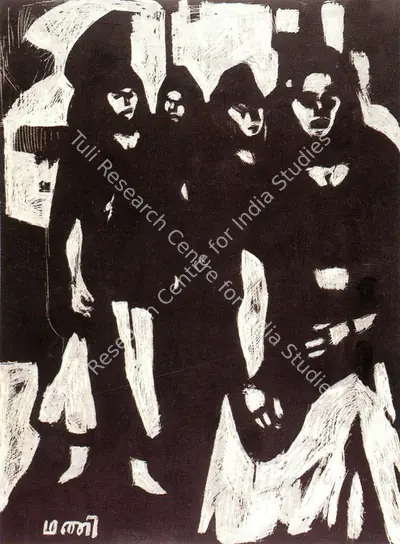
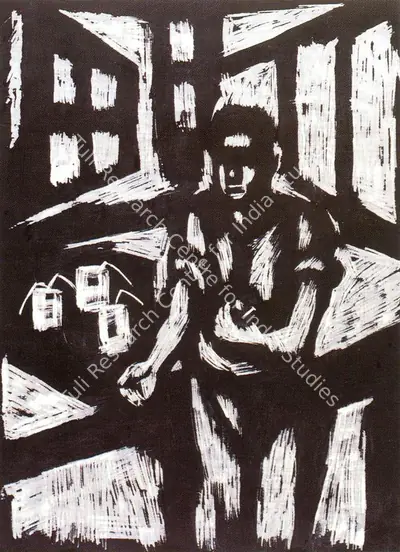
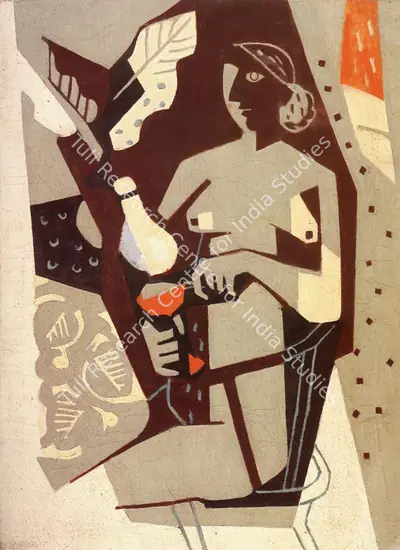
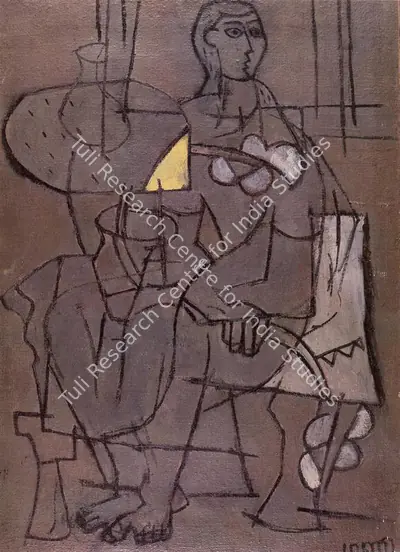
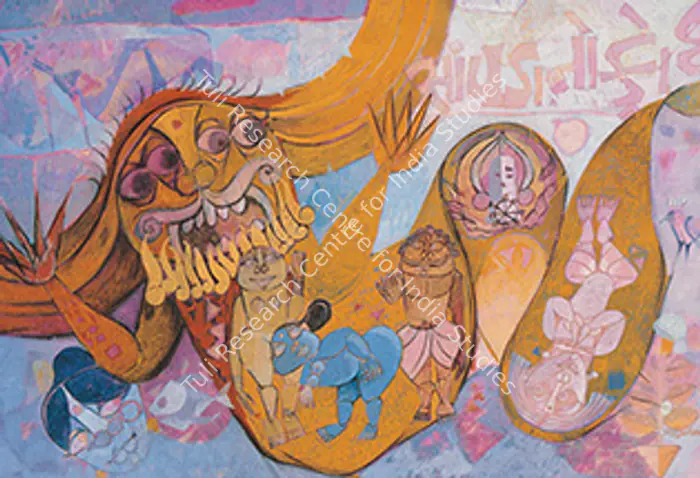
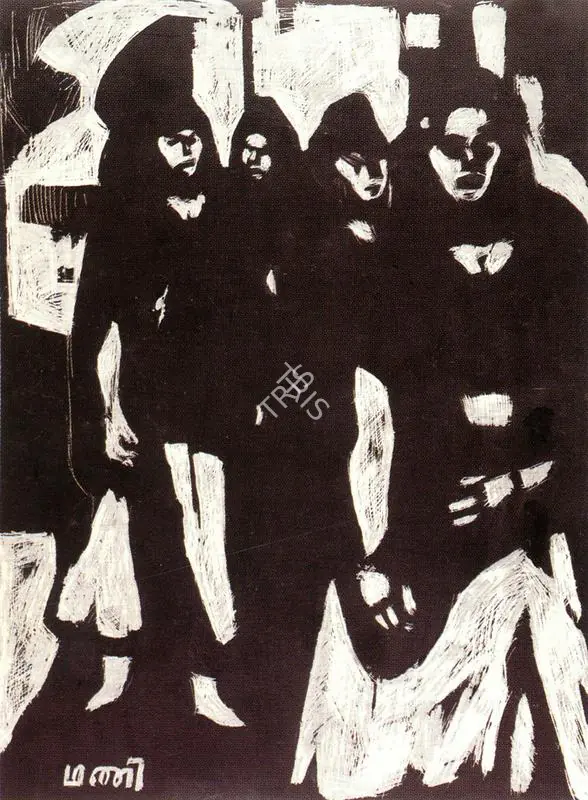
K.G. Subramanyan’s ability to use the human form, especially the female face, as a means of creating images which fuse the playful and the harsh, the erotic and detached, so evolving an iconicity through the mood of an iconoclast, is unique. The pictorial techniques and modes of traditional Indian glass painting, the Kalighat pats, the Japanese Ukiyo-e woodcut prints and the art of Matisse, are all fused within his original artistic mind and hand, so revealing a style and idiom, totally his own
In 1983, K. G. Subramanyan Retrospective Exhibition marked a major milestone in the exhibition history of K.G. Subramanyan, offering a retrospective survey of the artist's artistic production
On 20 December 1987, K.G. Subramanyan made their debut in the Indian public auction market when Faces was presented as Lot 32 in Contemporary Indian Art (Charity Auction), conducted by Christie's in Mumbai, India. This auction marked the artist's first recorded appearance in the public auction market, establishing the earliest chapter of their auction history.
In 2006, the artist achieved a new high in the auction market with the sale of Rain On High Street (1987), offered in the Masterpieces & Museum Quality Series VI: With Rare Drawings and Books on Indian Contemporary Art by Osian's, which concluded on 01 March 2006 at New Delhi, achieving a sale price of ₹27,60,000 ($62,232). This record marked a defining moment in the artist's market history, reflecting both the significance of the artwork and its reception within the broader art world.
In 2006, the artist achieved a new high in the auction market with the sale of Training For Circus (1989), offered in the Masterpieces & Museum Quality Series VI: With Rare Drawings and Books on Indian Contemporary Art by Osian's, which concluded on 01 March 2006 at New Delhi, achieving a sale price of ₹32,20,000 ($72,604). This record marked a defining moment in the artist's market history, reflecting both the significance of the artwork and its reception within the broader art world.
In 2006, the artist achieved a new high in the auction market with the sale of Symbols Of Liberty (1989), offered in the Masterpieces & Museum Quality Series VI: With Rare Drawings and Books on Indian Contemporary Art by Osian's, which concluded on 01 March 2006 at New Delhi, achieving a sale price of ₹34,50,000 ($77,790). This record marked a defining moment in the artist's market history, reflecting both the significance of the artwork and its reception within the broader art world.
In 2005, the artist achieved a new high in the auction market with the sale of Untitled (1990), offered in the Modern and Contemporary Paintings by Nine Masters: Spring Online Auction by Saffronart, which concluded on 02 March 2005 at Online, achieving a sale price of ₹9,61,400 ($22,000). This record marked a defining moment in the artist's market history, reflecting both the significance of the artwork and its reception within the broader art world.
In 2005, the artist achieved a new high in the auction market with the sale of Odd Encounters (1994), offered in the Modern and Contemporary Paintings by Nine Masters: Spring Online Auction by Saffronart, which concluded on 02 March 2005 at Online, achieving a sale price of ₹19,25,597 ($44,064). This record marked a defining moment in the artist's market history, reflecting both the significance of the artwork and its reception within the broader art world.
In 2006, the artist achieved a new high in the auction market with the sale of Two Women (1999), offered in the The Bengal Art Auction: Early and Current Art of the Region by Apparao Art, which concluded on 03 September 2006 at Online, achieving a sale price of ₹70,85,000 ($152,562). This record marked a defining moment in the artist's market history, reflecting both the significance of the artwork and its reception within the broader art world.
In 2001, the artist achieved a new high in the auction market with the sale of Buss Cola And The Beauty Queens (2000), offered in the Indian Contemporary Fine Art by Saffronart, which concluded on 21 September 2001 at Los Angeles, achieving a sale price of ₹3,84,080 ($8,000). This record marked a defining moment in the artist's market history, reflecting both the significance of the artwork and its reception within the broader art world.
In 2002, the artist achieved a new high in the auction market with the sale of Mask, Icon, Mount, Mascot (2000), offered in the Modern Indian Paintings by Saffronart, which concluded on 16 May 2002 at Online, achieving a sale price of ₹3,98,400 ($8,121). This record marked a defining moment in the artist's market history, reflecting both the significance of the artwork and its reception within the broader art world.
Economics of Art
Record-high lots21
Public Auction Market (1987–2026) | Select Indicators
Annual Auction Sale Turnover
It aggregates all sales across global auction houses into yearly totals.
Analysis reflected in the chart:
The turnover graph highlights periods of strong growth, moments of market correction, and resilience during downturns. Peaks often align with landmark works coming to public auction, while troughs may indicate reduced supply or weaker demand. Over time, the curve illustrates the overall trajectory of K.G. Subramanyan’s public auction market presence.
Average Sale Price Per Lot
It smooths out fluctuations caused by the quantity of works offered and focuses on the Average Sale Price level per artwork.
Analysis reflected in the chart:
Rising average sale prices indicate growing collector confidence and a stronger willingness to pay higher amounts per work. Assuming the mix of mediums remains relatively stable over time, the proportion of works on paper typically priced lower than works on canvas adds important context to understanding these market movements.
Square Inch Rate Trend
This allows fair comparisons between smaller works and larger canvases.
Analysis reflected in the chart:
The Square Inch Rate shown in the graph combines various medium types such as canvas, paper, board, and others. Historically, works on canvas and board have broadly commanded higher prices compared to works on paper.
1957
- Bombay Art Society Award
Bombay Art Society
1959
- Bombay Art Society Award
Bombay Art Society
1961
- Maharashtra State Award
Government of Maharshtra
- Medallion of Honourable MentionInternational
Sao Paulo Biennale
1965
- National Award
Lalit Kala Akademi
1968
- Gold Medal
1st International Triennale
1975
- Padma Shree
Government of India
1981
- Kalidas Samman
Government of Madhya Pradesh
1985
- Fellow
Lalit Kala Akademi
1991
- Gagan Aban Puraskar
Visva Bharati University
1992
- D Litt Honoris Causa
Rabindra Bharati University
1993
- Fellow
Lalit Kala Akademi Kerala
1994
- Shiromani Puraskar
Calcutta
1997
- D Litt Honoris Causa
Benaras Hindu University
1999
- Kala Ratna
All India Fine Arts and Crafts Society
2000
- Jadunath Sarkar Gold Medal
Asiatic Society
- Abanindra Puraskar
Calcutta
2001
- Gana Krishti Puraskar
Kerala
- Manaviyam Ravi Varma Award
Government of Kerala
2004
- Lalit Kala Ratna Puraskar
Lalit Kala Akademi, Rabindra Bhavan, New Delhi, India
Research Centre
Posts 2
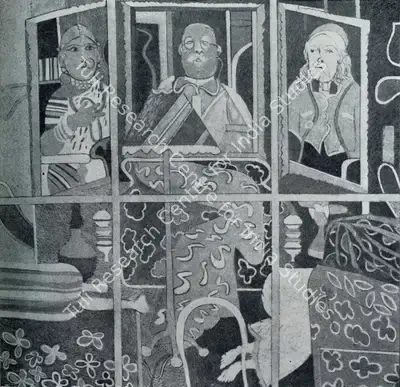
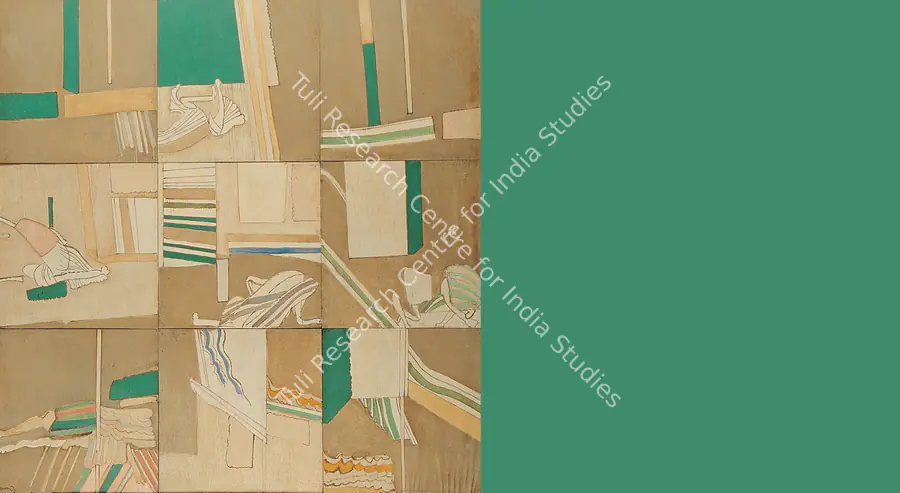
- In 1968, KG Subramanyan unveiled "Windows-II", a pivotal piece within his expansive series of polyptychs and murals. Rooted in both practicality and theory, this series emerged from Subramanyan's formative years in New York, where spatial constraints sparked his innovative use of multiple canvases. The concept of polyptychs, manifested in "Windows-II", invites viewers into a voyeuristic exploration through structured panels. Each window in Subramanyan's artwork offers a glimpse into the ordinary lives of people, reminiscent of earlier terracotta panels but now characterized by a modular, repetitive grid. Art critic Siva Kumar describes Subramanyan's technique as transforming figures and landscapes into vibrant, flattened forms, evoking a sense of animated mystery. Subramanyan's "Windows-II" exemplifies his mastery in merging narrative elements with visual artistry, presenting viewers with a tableau that challenges conventional storytelling through its serial and repetitive structure.
- Tuli Research Centre for India Studies presents All Living Souls - Expressed in the Modern and Contemporary Fine & Popular Indian Arts Curated by Neville Tuli As part of launching the 16th Research Category for India Studies - "The Animal-Human-Nature-Continuum" we present a fascinating exhibition of modern and contemporary Indian fine and popular arts and their expression of the ideas and forms related to the dialogue between animals and humans, and the larger cosmic and spiritual thoughts which abide therein. Please visit the Exhibition and see the artworks by modern and contemporary masters such as Rabindranath Tagore, D.P. Roy Chowdhury, M.F. Husain, J. Swaminathan, J. Sultan Ali, Somnath Hore, Ganesh Pyne, Manjit Bawa, K. Laxma Goud, Krishna Reddy, Jyoti Bhatt, Rekha Rodwittiya, Amit Ambalal, among others, along with vintage and rare prints from the pioneering Indian chromolithographic presses such as Chitrashala, Ravi Varma, Calcutta Art Studio, Chore Bagan & Kansaripara.
Calendar 2
- ArchivedExhibitionProject 5Self Discovery via Rediscovering India Series Part IV Building www.tuliresearchcentre.org20th - 23rd February 2025Self Discovery via Rediscovering India Series Part IVRead More →
- ArchivedExhibitionProject 1Self-Discovery via Rediscovering India Series Inaugural Exhibition14th - 29th March 2024Inaugural ExhibitionRead More →
Related
50
Personalities
31
Institutions
12
Themes
5