
Hum Paanch1981
Introduction
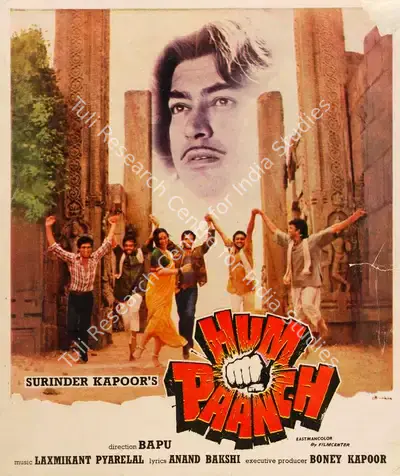
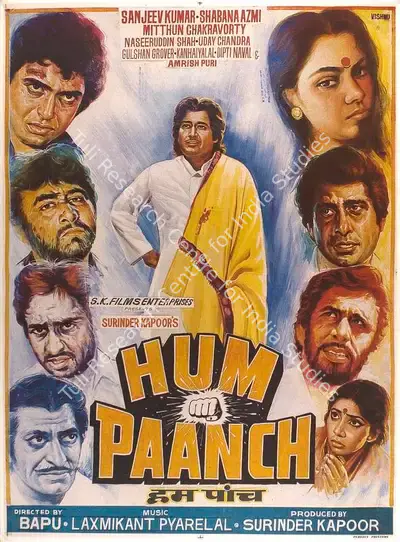
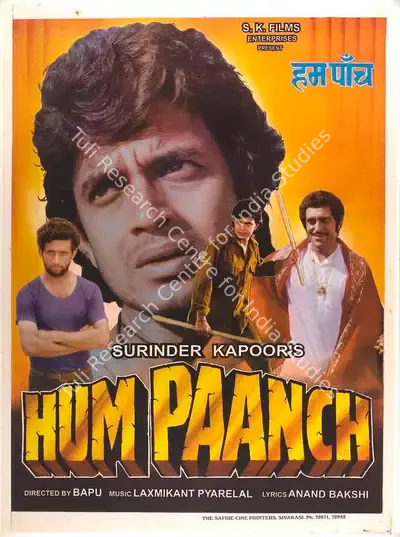
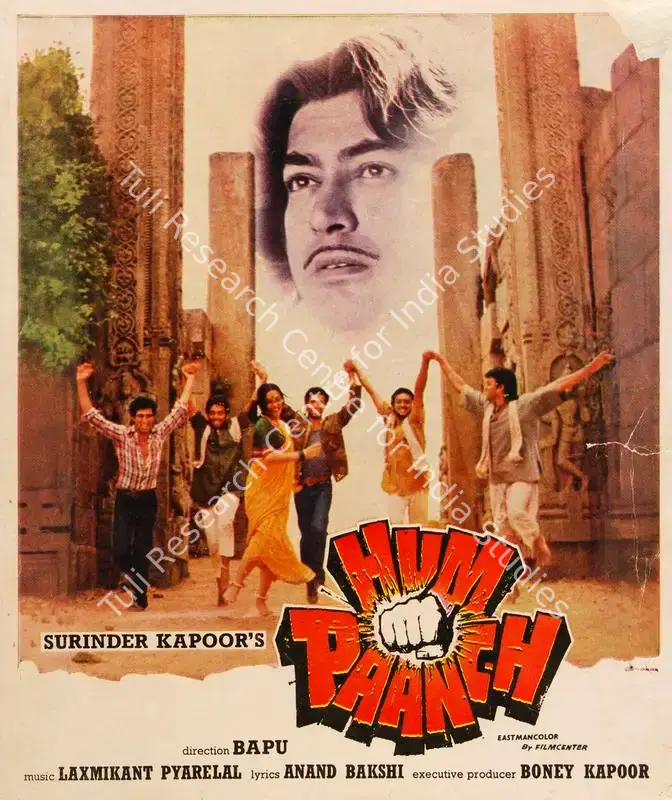
Hum Paanch (1980) Directed by Bapu and produced by Boney Kapoor in his debut venture as a film producer, the film occupies a distinctive place in Hindi cinema as a socially conscious action drama that successfully blends mythology, politics, and popular entertainment. Featuring an ensemble cast comprising Sanjeev Kumar, Shabana Azmi, Mithun Chakraborty, Deepti Naval, Naseeruddin Shah, Raj Babbar, Uday Chandra, Amrish Puri, and Gulshan Grover in his screen debut, the film emerged as one of the surprise commercial successes of the year, ranking among the highest-grossing Hindi films of 1980 and securing the seventh position at the domestic box office.
Set in a remote Indian village, the narrative serves as a loose and contemporary reinterpretation of the Mahabharata. Rather than focusing on royal dynasties and succession, the film relocates the epic conflict to a rural socio-political landscape marked by exploitation, inequality, and resistance. At the centre of the story is the ruthless zamindar Thakur Vir Pratap Singh, portrayed with formidable menace by Amrish Puri. Exercising absolute authority over the region, the Thakur suppresses dissent through violence and intimidation while exploiting the vulnerable inhabitants of the village.
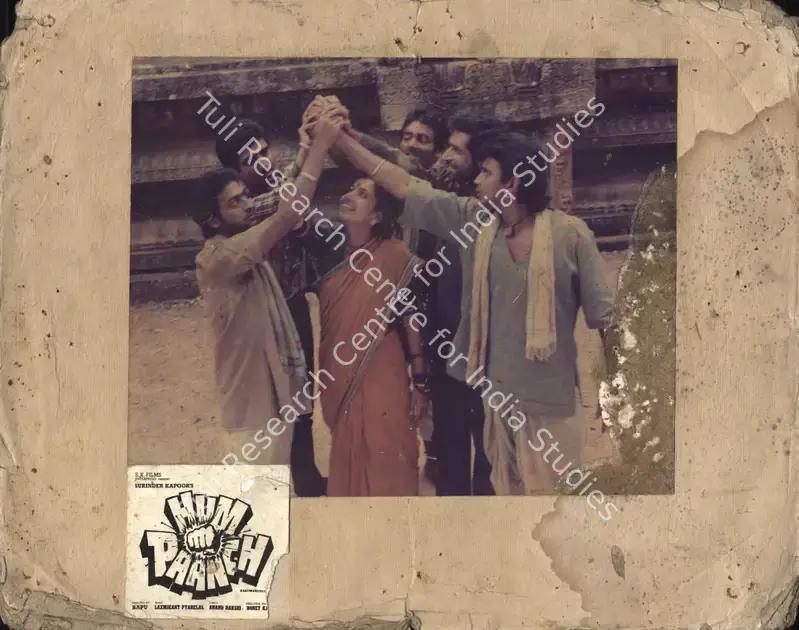
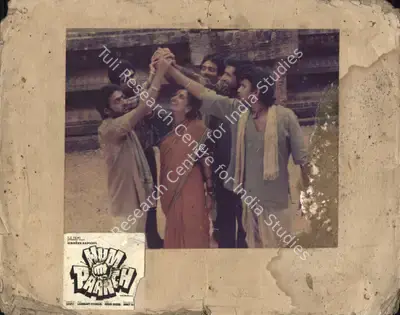
The turning point comes when Sundariya, played by Shabana Azmi, becomes a victim of the landlord's brutality and is pushed to the brink of psychological collapse. In response, a group of five men from diverse backgrounds unite under the moral guidance of Krishna, a reflective and disillusioned alcoholic portrayed by Sanjeev Kumar. Together, they become a symbol of collective resistance, challenging the entrenched structures of feudal oppression and inspiring the villagers to reclaim their dignity and freedom.
The film's engagement with the Mahabharata is particularly significant. While the epic chronicles a dynastic struggle between the Pandavas and the Kauravas, Hum Paanch transforms this conflict into a class-based confrontation between an oppressive feudal elite and an exploited rural populace. In doing so, the film adapts a mythological framework to address contemporary social realities and questions of justice.
The soundtrack, composed by Laxmikant–Pyarelal with lyrics by Anand Bakshi, contributed significantly to the film's appeal. Memorable songs such as Aati Hai Palki, Ka Jaanu Main, Kya Kahiye Bhagwan Se, Apno Se Munh Mod Ke, Hum Paanch Pandav, Aaiye Meharban, Dheere Chal Zara, and Ye Soye Insaan were rendered by leading playback singers including Lata Mangeshkar, Mohammed Rafi, Kishore Kumar, Amit Kumar, Mahendra Kapoor, Suresh Wadkar, Shailendra Singh, and Usha Uthup. The film also features a brief cameo by a young Anil Kapoor. Adapted from the Kannada film Paduvaaralli Pandavaru (1978), which Bapu had earlier remade in Telugu as Mana Voori Pandavulu, Hum Paanch remains a noteworthy example of mythological adaptation fused with social commentary and mainstream cinematic appeal.
भारत के एक दूर-दराज़ गाँव पर आधारित यह कहानी महाभारत की एक आज के दौर की और थोड़ी अलग तरह की व्याख्या है। शाही परिवारों और उत्तराधिकार की बात करने के बजाय, यह फ़िल्म उस महाकाव्य के टकराव को गाँव के सामाजिक-राजनीतिक माहौल में दिखाती है, जहाँ शोषण, असमानता और विरोध जैसी चीज़ें हैं। कहानी के केंद्र में बेरहम ज़मींदार ठाकुर वीर प्रताप सिंह हैं, जिनका किरदार अमरीश पुरी ने बहुत ही डरावने अंदाज़ में निभाया है।ठाकुर पूरे इलाके में अपना दबदबा बनाए रखता है और कमज़ोर लोगों का शोषण करता है।
कहानी में मोड़ तब आता है जब शबाना आज़मी द्वारा निभाया गया किरदार 'सुंदरिया' ज़मींदार की ज़्यादती का शिकार होकर मानसिक रूप से बुरी तरह टूट जाती है। इसके जवाब में, अलग-अलग परिदृश्य वाले पाँच आदमी एकजुट होते हैं। उन्हें संजीव कुमार द्वारा निभाया गया किरदार 'कृष्णा' नैतिक मार्गदर्शन देता है, कृष्णा एक ऐसा शराबी है जो ज़िंदगी को गहराई से समझने वाला और उससे निराश व्यक्ति है। वे सब मिलकर सामूहिक प्रतिरोध की मिसाल बनते हैं, सामंती दमन के गहरे जमे हुए ढाँचों को चुनौती देते हैं और गाँव वालों को अपनी गरिमा और आज़ादी वापस पाने के लिए प्रेरित करते हैं।
फ़िल्म का महाभारत से जुड़ाव ख़ास तौर पर अहम है। जहाँ यह महाकाव्य पांडवों और कौरवों के बीच सत्ता के संघर्ष की कहानी कहता है, वहीं 'हम पाँच' इस टकराव को दमनकारी सामंती वर्ग और शोषित ग्रामीण आबादी के बीच वर्ग-संघर्ष में बदल देती है। ऐसा करके फ़िल्म आज के सामाजिक सच और न्याय से जुड़े सवालों को उठाने के लिए पौराणिक कथा के ढांचे का इस्तेमाल करती है।
आनंद बख़्शी के गीतों के साथ लक्ष्मीकांत-प्यारेलाल द्वारा रचित साउंडट्रैक ने फ़िल्म की अपील में महत्वपूर्ण योगदान दिया। लता मंगेशकर, मोहम्मद रफ़ी, किशोर कुमार, अमित कुमार, महेंद्र कपूर, सुरेश वाडकर, शैलेन्द्र सिंह और उषा उथुप सहित प्रमुख पार्श्व गायकों द्वारा 'आती है पालकी', 'का जानू मैं', 'क्या कहिए भगवान से', 'अपनों से मुंह मोड़ के', 'हम पांच पांडव', 'आइए मेहरबान', 'धीरे चल ज़रा' और 'ये सोए इंसान' जैसे यादगार गीत गाये गये। फ़िल्म में युवा अनिल कपूर का एक छोटा कैमियो भी है। कन्नड़ फ़िल्म पदुवारल्ली पांडवरु (1978) से प्रभावित, जिसे बापू ने पहले तेलुगु में मन वूरी पांडवुलु के नाम से बनाया था, हम पांच सामाजिक टिप्पणी और मुख्यधारा की सिनेमाई अपील के साथ जुड़े पौराणिक प्रभाव का एक उल्लेखनीय उदाहरण बना हुआ है।