TRIS logo image
Search275,000+ actors, artists, objects, artworks, films, exhibitions, archives

EN

EN

English

HI

Hindi

EN

EN

English

HI

Hindi

Tuli Research Centre for India Studies

Tuli Research Centre for India Studies

Vision

Manifesto

Archive & Library

Vanraja Sanctuary & Hospice

Home

Research Categories

Browse All

ICore

1_CinemaEducation_Cinema as a Critical Educational Resource

2_FineArts_Modern and Contemporary Indian Fine Arts

3_Photography_Photography in India

4_PopCulture_The Printed Image, Popular Arts, and Crafts

IIMaterial

5_ArcHeritage_India's Architectural Heritage as Inspiration

6_EconomicsArt_Economics of Art & Cultural Industry

7_Travel_Automobile, Transport and Travel Heritage

8_Uncertainty_Uncertainty

IIICritical

9_SocialDuty_Social Responsibility of the Creative Mind

10_Childhood_The Changing Smile of Childhood & Its Second Coming

11_Sensuality_The Sensual Discipline within Creativity

12_Scholarship_The History & Historiography of Scholarship in the Arts, Humanities, and Social Sciences

IVMeaningful

13_SeekJustice_Seeking Justice and Political Integrity

14_IndoWorld_India and her Relationship with the World

15_SpiritualPoetics_The Religious-Spiritual-Poetic-Philosophical Framework

16_Continuum_The Animal-Human-Nature Continuum

Explore

All

Posts

Masterlists

Calendar

Live | Upcoming

All Events

Timetable

Search275,000+ actors, artists, objects, artworks, films, exhibitions, archives

EN

EN

English

HI

Hindi

Haqeeqat (1964)

Haqeeqat (1964)

Film.Indian Cinema
DirectorChetan Anand
LanguageHindi
On this Page
Introduction
Body of Work
Research Centre32
All32
Library2Archive26Videos4Highlights1
Posts2
Calendar2
Home/1_CinemaEducation/Film/Haqeeqat (1964)
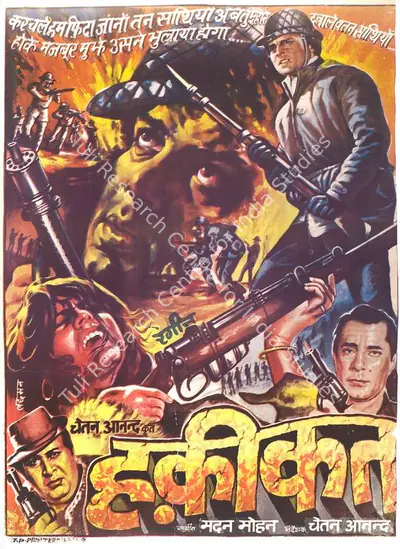
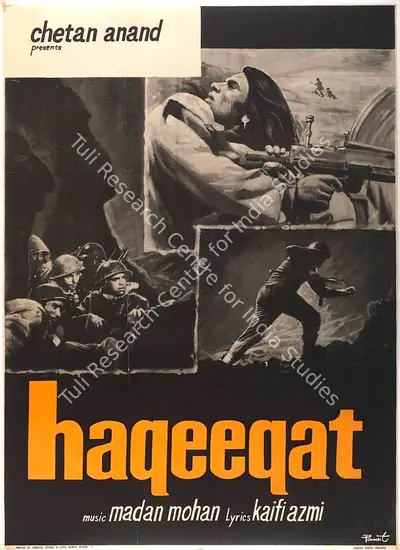
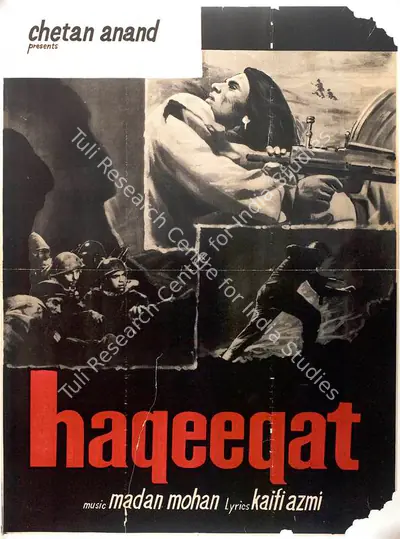
Haqeeqat (1964): title artwork
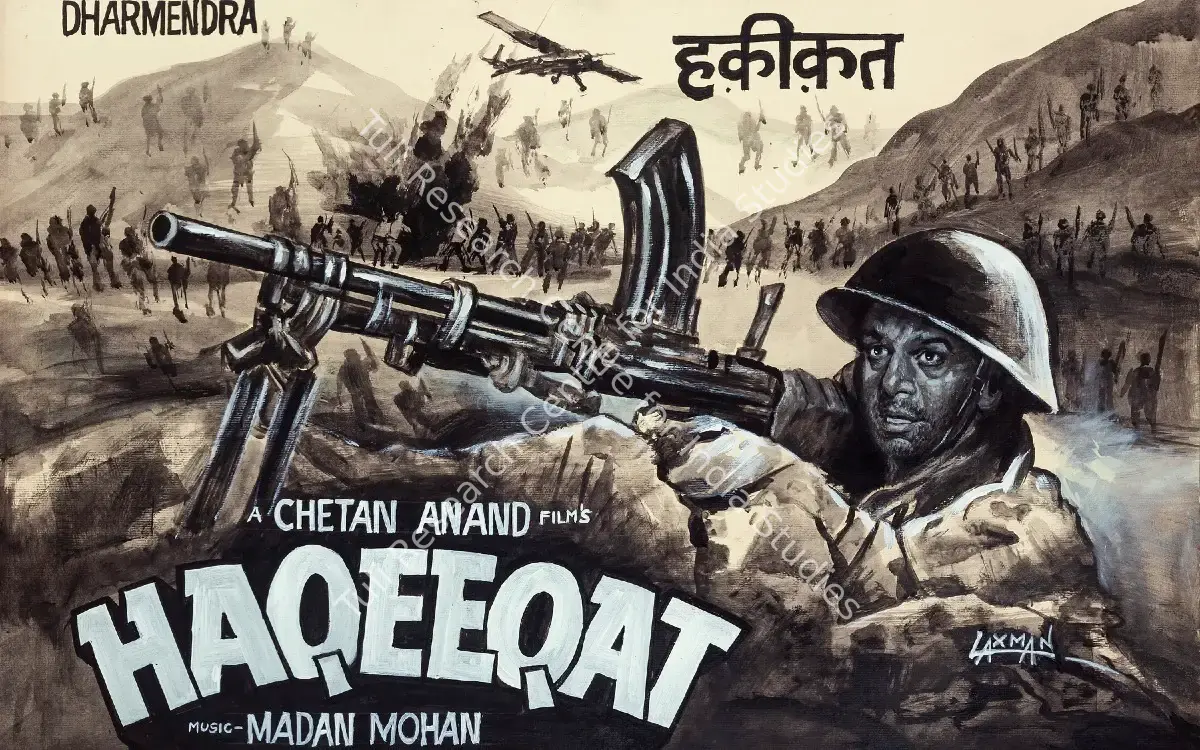
Haqeeqat (1964): featured artwork

Introduction

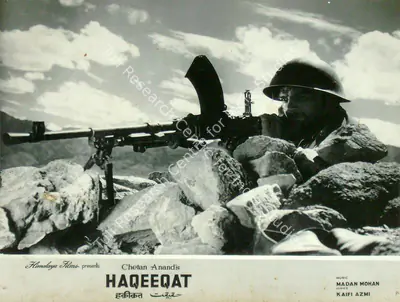
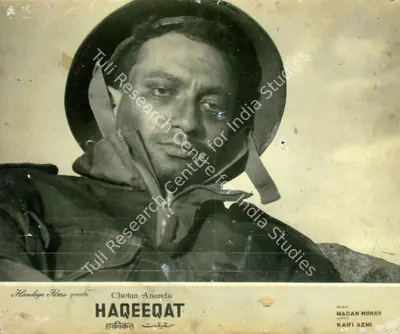
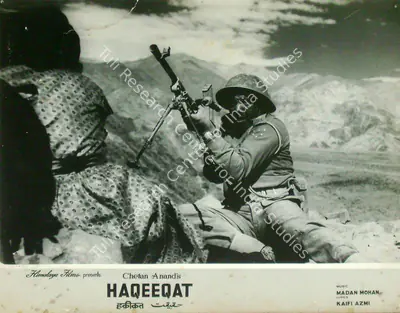
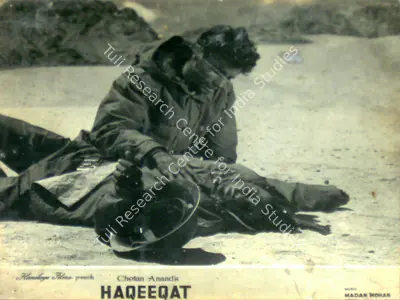
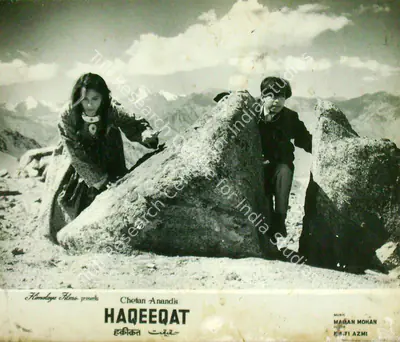
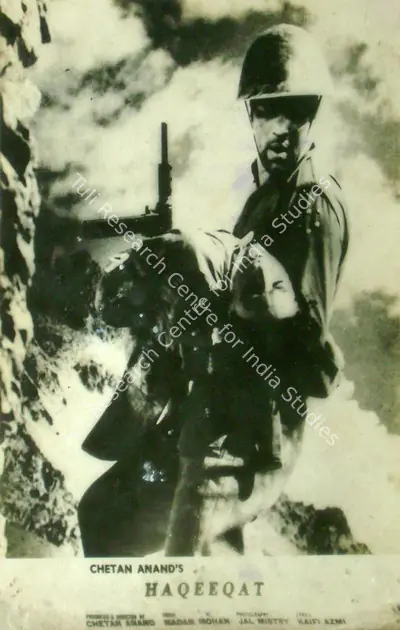
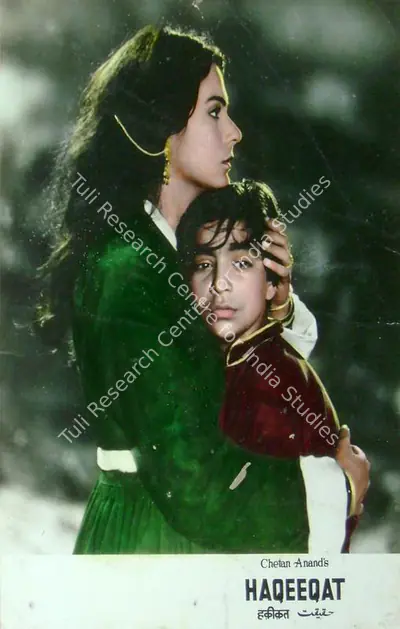
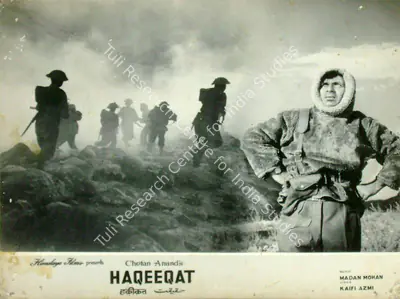
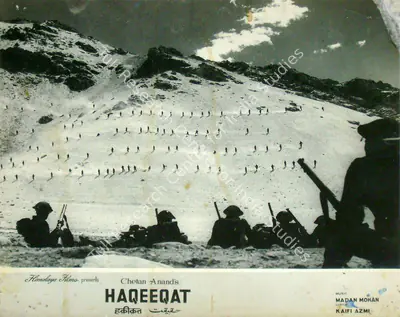
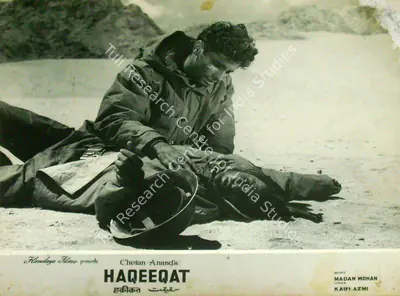
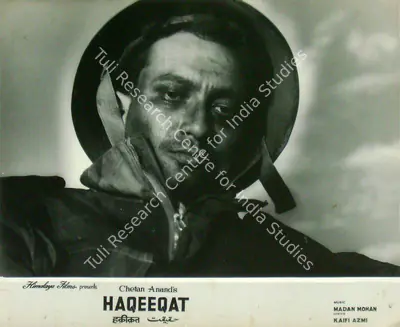
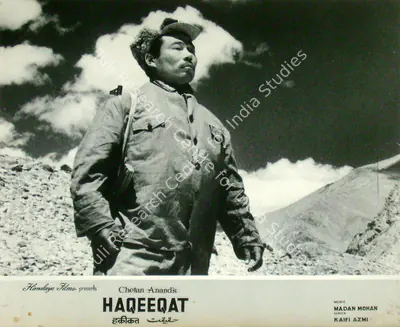
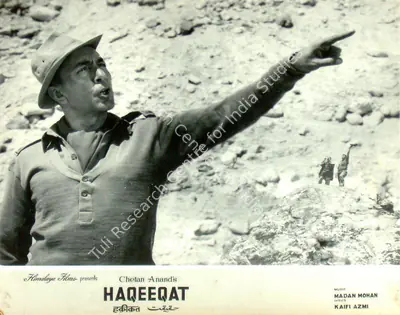
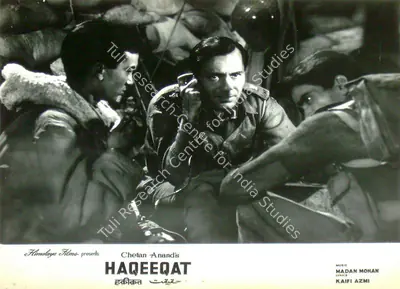
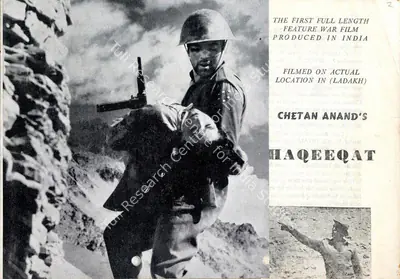
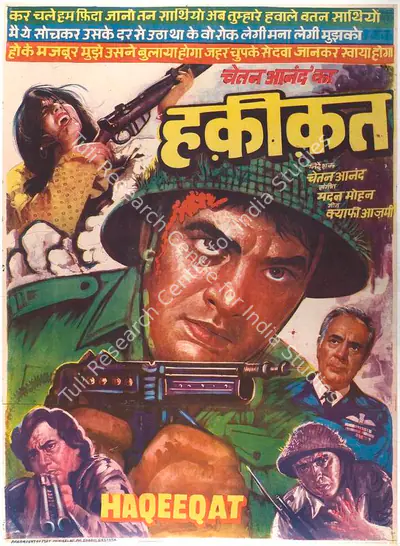
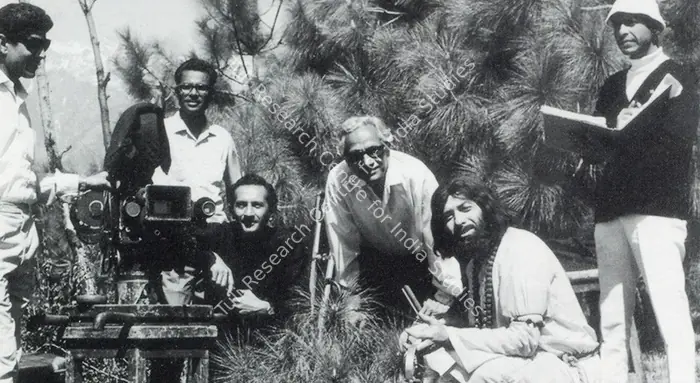
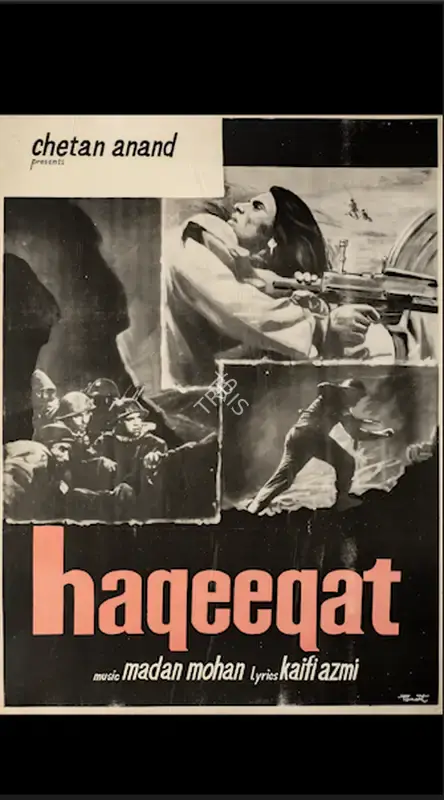
Haqeeqat (1964) written, directed, and produced by Chetan Anand, this is regarded as one of India's greatest black-and-white war dramas helmed by cinematographer Sadanand. The film starred Dharmendra, Balraj Sahni, Priya Rajvansh, Sudhir, Sanjay Khan, and Vijay Anand in pivotal roles. It is a cinematic representation of the 1962 Sino-Indian War, focusing on a small platoon of soldiers in Ladakh who are up against a much larger adversary. The film also incorporates a fictionalized retelling of the last stand of Ahir Company, 13 Kumaon, led by Major Shaitan Singh, which is based on the Battle of Rezang La in Ladakh.

Haqeeqat is a landmark film in Indian cinema, notable for its dramatic portrayal of the impact war has on ordinary soldiers. The film's storytelling remains a pioneering reference for filmmakers, both young and old, when considering narratives based on similar subjects.

Priya Rajvansh's character in the film experiences a traumatic violation but avenges her dignity by killing several enemy soldiers, thus symbolizing a form of moral victory. This theme of resilience was especially resonant as the film was referred to as “a reminder of China's betrayal” during the war. Chetan Anand dedicated Haqeeqat to Jawaharlal Nehru and the soldiers in Ladakh. The film was commercially successful and also became a nostalgic memory, largely due to the legendary collaboration between composer Madan Mohan and lyricist Kaifi Azmi. Their music gave rise to unforgettable songs, which have become benchmarks in Indian cinema.

Some of the standout tracks include Ho Ke Majboor Mujhe Usne Bhulaya Hoga (sung by Mohammed Rafi, Talat Mahmood, Manna Dey, Bhupinder Singh) and Ab Tumhare Hawaale Watan Saathiyon (sung by Mohammed Rafi), both of which evoke tremendous patriotism and often bring tears to listeners. Lata Mangeshkar's Zara Si Aahat Hoti Hai To Dil Sochta Hai is another unparalleled classic, with Lata pouring her heart and soul into the song. Similarly, Main Ye Sochkar Uske Dar Se Utha Tha by Mohammed Rafi carries poignant depth, a trademark of his vocal strength.

Although India lost the war, and history has often blamed Nehru for the defeat, Haqeeqat in a sense absolves him, suggesting that the true blame lies with the Chinese. Tragically, Jawaharlal Nehru passed away before the film's release.

Haqeeqat won the National Film Award for Second Best Feature Film in 1965. In 2012, a colorized version of the film was released. The film was also screened as part of a retrospective on 12 August 2016 at the Independence Day Film Festival, jointly presented by the Indian Directorate of Film Festivals and the Ministry of Defense, commemorating the 70th Indian Independence Day.

हकीकत (1964) के लेखक, निर्माता और निर्देशक चेतन आनंद थे। सिनेमैटोग्राफ़र सदानंद के विलक्षण छायांकन से रची इस फ़िल्म को भारत में बनी स्याह-सफ़ेद दौर की सबसे शानदार युद्ध फ़िल्मों में से एक गिना जाता है। फ़िल्म में धर्मेंद्र, बलराज साहनी, प्रिया राजवंश, सुधीर, संजय खान और विजय आनंद ने प्रमुख भूमिकाएँ निभाई थीं। सन् 1962 के भारत-चीन युद्ध पर आधारित फ़िल्म की कहानी लद्दाख में भटके सैनिकों की एक ऐसी छोटी टुकड़ी पर केंद्रित है, जिसके सामने दुश्मन की भारी फौज खड़ी है। फ़िल्म का कथानक परमवीर चक्र विजेता मेजर शैतान सिंह के नेतृत्व में कुमाऊँ रेजिमेंट की 13वीं बटालियन के रेजांग ला दर्रे पर चीनी सेना के खिलाफ़ बेखौफ़ अंतिम मोर्चे से भी प्रेरित है।
हक़ीक़त इस मायने में एक मील का पत्थर फ़िल्म है कि यह भारतीय सिनेमा में पहली बार इतनी गहराई में जाकर दिखाती है कि युद्ध का किसी आम सैनिक के जीवन पर कैसा घातक प्रभाव पड़ता है। इस फ़िल्म का प्रभाव इतना गहरा है कि भारत में आज भी युद्ध पर फ़िल्म बनाते हुए हक़ीक़त का संदर्भ हटाकर बात नहीं की जा सकती, भले निर्देशक नई पीढ़ी का हो या पुरानी।
फ़िल्म में प्रिया राजवंश के निभाए किरदार के साथ दर्दनाक घटना घटती है, लेकिन वही किरदार कई दुश्मन सैनिकों को मारकर अपने साथ हुए अत्याचार का भी बदला लेता है। इसे फ़िल्म में एक किस्म की नैतिक जीत के प्रतीक की तरह दिखाया गया है। यह नैतिक जीत इसलिए ख़ास बन जाती है क्योंकि यह फ़िल्म भारतवासियों को बासठ के युद्ध रूपी “चीन के विश्वासघात की याद दिलाने वाला” दस्तावेज भी थी। चेतन आनंद ने हक़ीक़त को देश के पहले प्रधानमंत्री जवाहरलाल नेहरू और लद्दाख के सैनिकों को समर्पित किया था।
हक़ीक़त व्यावसायिक रूप से कामयाब फ़िल्म थी और संगीतकार मदन मोहन और गीतकार कैफ़ी आज़मी के बीच हुई यादगार जुगलबन्दी ने इसे हिन्दी सिनमाई संगीत के इतिहास में अमर बना दिया। इस जोड़ी ने ऐसे अविस्मरणीय गीतों को रचा, जो भारतीय सिनेमा में मानक की तरह स्थापित हो गए।
इस फ़िल्म के सबसे यादगार गीत मोहम्मद रफ़ी, तलत महमूद, मन्ना डे, भूपिंदर सिंह का गाया “हो के मजबूर मुझे उसने भुलाया होगा” और रफ़ी का ही गाया “अब तुम्हारे हवाले वतन साथियों” हैं, जिन्हें आज भी सुनते हैं तो तन-बदन सिहर उठता है, दिल में देशप्रेम की भावना हिलोरें मारने लगती है और कोई भी सुननेवाला अपनी आँखें बहने से रोक नहीं पाता। लता मंगेशकर का गाया "ज़रा सी आहट होती है तो दिल सोचता है" इस फ़िल्म का एक और बेमिसाल क्लासिक है, जिसे गाते हुए लताजी ने जैसे अपनी आत्मा को गाने में उतार दिया है। इसी तरह मोहम्मद रफ़ी का गाया गीत "मैं ये सोच कर उसके दर से उठा था" भी मार्मिक गहराई लिये है और उनकी गायकी की ऊँचाई को दिखाता है।
हालाँकि भारत उन्नीस सौ बासठ का युद्ध हार गया था और अक्सर आलोचक इस हार के लिए तत्कालीन प्रधानमंत्री नेहरू को दोषी ठहराते हैं, लेकिन हक़ीक़त एक तरह से उन्हें दोषमुक्त करते हुए युद्ध का असली इल्ज़ाम चीनियों पर डालती है। दुर्भाग्य से जवाहरलाल नेहरू का निधन इस फ़िल्म की रिलीज़ से पहले हो गया।
हक़ीक़त ने सन् 1965 में दूसरी सर्वश्रेष्ठ फीचर फ़िल्म का राष्ट्रीय फ़िल्म पुरस्कार जीता। सन् 2012 में इस फ़िल्म का रंगीन संस्करण रिलीज़ किया गया। 2016 में 70वें भारतीय स्वतंत्रता दिवस के अवसर पर आयोजित फ़िल्म समारोह में हक़ीक़त का भव्य स्तर पर दोबारा प्रदर्शन किया गया। इस समारोह के आयोजक भारत का रक्षा मंत्रालय और फ़िल्म समारोह निदेशालय थे।
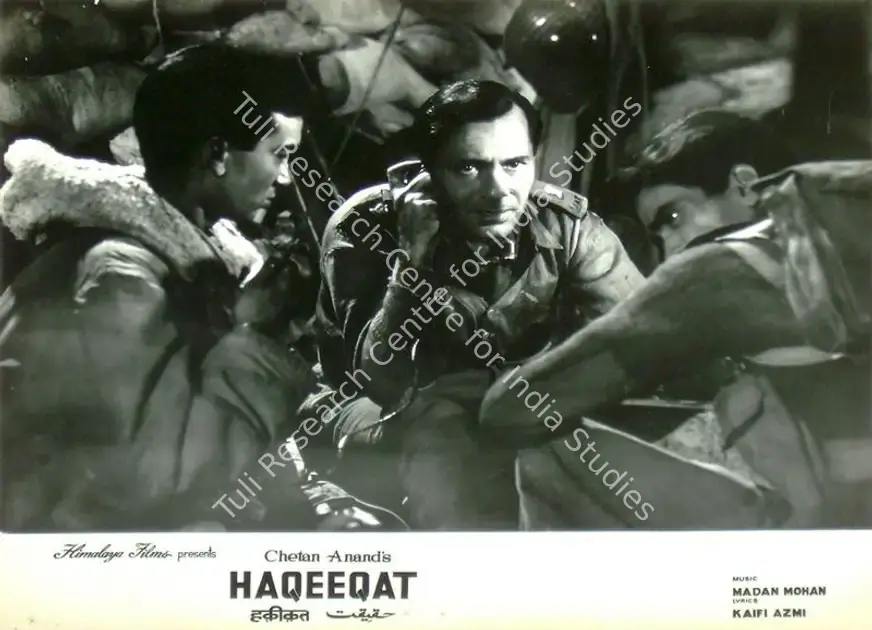
Sadanand (Cinematographer), Haqeeqat, 1964 | Lobby Card | CinemaEducation | 00817243
1 / 5

Body of Work

Art Director
Dadoo Mistry, M.S. Sathyu
Assistant Directors
Ranveer Raj, M.S. Sathyu, A. Pradeep
Banner
Himalaya Films
Cinematographer
Sadanand
Director
Chetan Anand
Editing
M.D. Jadhav Rao
Lead Cast
Vijay Anand, Priya Rajvansh, Balraj Sahni, Dharmendra, Jayant
Lead Cast Rest
Levy Aaron, Shaukat Azmi, Sanjay Khan, Wasi Khan, Sulochana Latkar, Indrani Mukerjee, Sheikh Mukhtar, Achala Sachdev, Chand Usmani, Sudhir
Lyricist
Kaifi Azmi
Music Director
Madan Mohan
Poster Designer
Chopra And
Publicity Designer
Chopra And
Screenplay Writer
Chetan Anand
Still Photographer
Kamat foto

06:13 mins

04:08 mins

03:32 mins

03:48 mins

04:58 mins

03:24 mins

05:35 mins

Research Centre
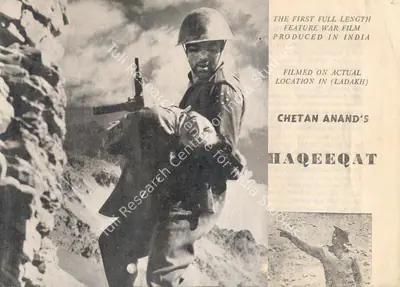
Chetan Anand (Director), Haqeeqat, 1964, Song-Synopsis Booklet
Anand, Chetan (Director), Haqeeqat, 1964 | Song-Synopsis Booklet
Sadanand (Cinematographer), Haqeeqat, 1964, Lobby Card
Sadanand (Cinematographer), Haqeeqat, 1964 | Lobby Card
Sadanand (Cinematographer), Haqeeqat, 1964, Lobby Card
Sadanand (Cinematographer), Haqeeqat, 1964 | Lobby Card
Sadanand (Cinematographer), Haqeeqat, 1964, Lobby Card
Sadanand (Cinematographer), Haqeeqat, 1964 | Lobby Card
Sadanand (Cinematographer), Haqeeqat, 1964, Lobby Card
Sadanand (Cinematographer), Haqeeqat, 1964 | Lobby Card
Sadanand (Cinematographer), Haqeeqat, 1964, Lobby Card
Sadanand (Cinematographer), Haqeeqat, 1964 | Lobby Card
Sadanand (Cinematographer), Haqeeqat, 1964, Lobby Card
Sadanand (Cinematographer), Haqeeqat, 1964 | Lobby Card
Sadanand (Cinematographer), Haqeeqat, 1964, Lobby Card
Sadanand (Cinematographer), Haqeeqat, 1964 | Lobby Card
Sadanand (Cinematographer), Haqeeqat, 1964, Lobby Card
Sadanand (Cinematographer), Haqeeqat, 1964 | Lobby Card
Sadanand (Cinematographer), Haqeeqat, 1964, Lobby Card
Sadanand (Cinematographer), Haqeeqat, 1964 | Lobby Card
Sadanand (Cinematographer), Haqeeqat, 1964, Lobby Card
Sadanand (Cinematographer), Haqeeqat, 1964 | Lobby Card
Sadanand (Cinematographer), Haqeeqat, 1964, Lobby Card
Sadanand (Cinematographer), Haqeeqat, 1964 | Lobby Card
Sadanand (Cinematographer), Haqeeqat, 1964, Lobby Card
Sadanand (Cinematographer), Haqeeqat, 1964 | Lobby Card
Sadanand (Cinematographer), Haqeeqat, 1964, Lobby Card
Sadanand (Cinematographer), Haqeeqat, 1964 | Lobby Card
Sadanand (Cinematographer), Haqeeqat, 1964, Lobby Card
Sadanand (Cinematographer), Haqeeqat, 1964 | Lobby Card
Chetan Anand (Director), Haqeeqat, 1964, Song-Synopsis Booklet
Anand, Chetan (Director), Haqeeqat, 1964 | Song-Synopsis Booklet
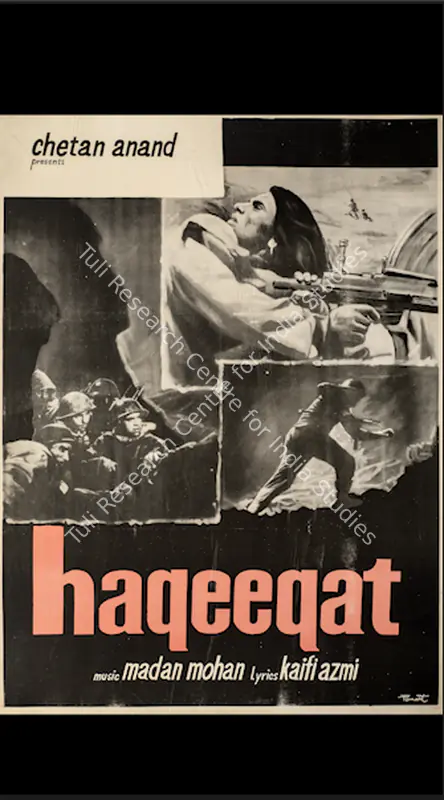
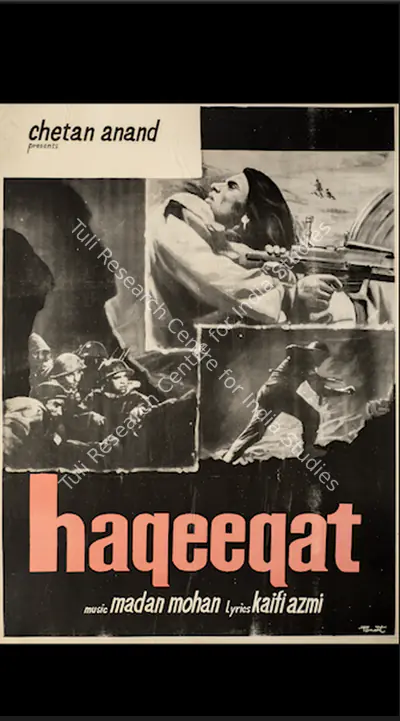
Chetan Anand (Director), Haqeeqat, 1964, Full Sheet Poster
Anand, Chetan (Director), Haqeeqat, 1964 | Full Sheet Poster
Chetan Anand (Director), Haqeeqat, 1964, Full Sheet Poster
Anand, Chetan (Director), Haqeeqat, 1964 | Full Sheet Poster
Chetan Anand (Director), Haqeeqat, 1964, Full Sheet Poster
Anand, Chetan (Director), Haqeeqat, 1964 | Full Sheet Poster
Chetan Anand (Director), Haqeeqat, 1964, Full Sheet Poster
Anand, Chetan (Director), Haqeeqat, 1964 | Full Sheet Poster
20 of 32
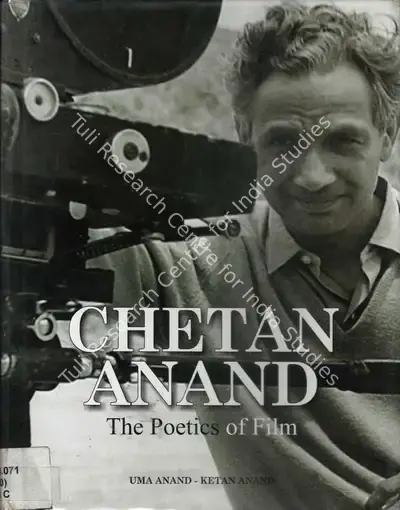
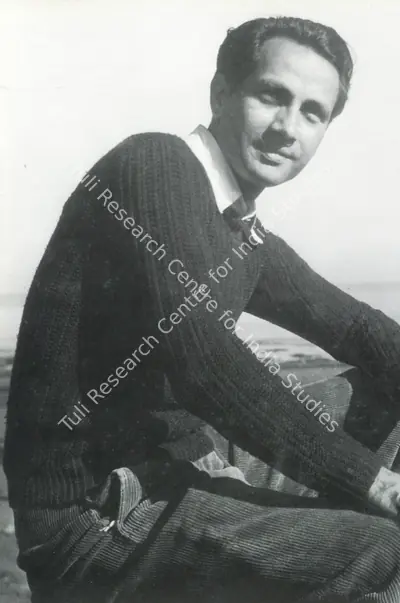
Uma Anand (Author), Chetan Anand, 2007, Authored Book
Anand, Uma (Author). Chetan Anand, 2007 | Authored Book | 00843987
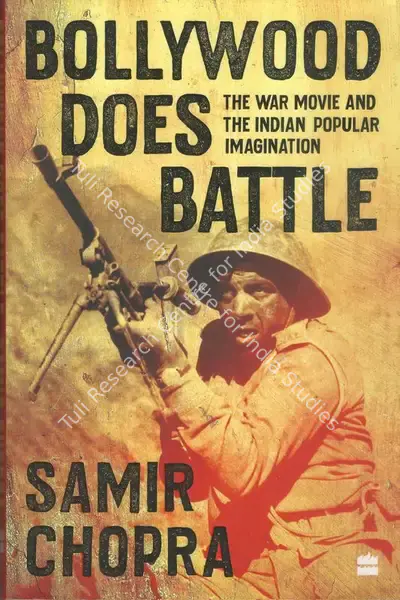
Samir Chopra (Author), Bollywood Does Battle, 2020, Authored Book
Chopra, Samir (Author). Bollywood Does Battle, 2020 | Authored Book | 00843993
Chetan Anand (Director), Haqeeqat, 1964, Song-Synopsis Booklet
Anand, Chetan (Director), Haqeeqat, 1964 | Song-Synopsis Booklet
Sadanand (Cinematographer), Haqeeqat, 1964, Lobby Card
Sadanand (Cinematographer), Haqeeqat, 1964 | Lobby Card
Sadanand (Cinematographer), Haqeeqat, 1964, Lobby Card
Sadanand (Cinematographer), Haqeeqat, 1964 | Lobby Card
Sadanand (Cinematographer), Haqeeqat, 1964, Lobby Card
Sadanand (Cinematographer), Haqeeqat, 1964 | Lobby Card
Sadanand (Cinematographer), Haqeeqat, 1964, Lobby Card
Sadanand (Cinematographer), Haqeeqat, 1964 | Lobby Card
Sadanand (Cinematographer), Haqeeqat, 1964, Lobby Card
Sadanand (Cinematographer), Haqeeqat, 1964 | Lobby Card
Sadanand (Cinematographer), Haqeeqat, 1964, Lobby Card
Sadanand (Cinematographer), Haqeeqat, 1964 | Lobby Card
Sadanand (Cinematographer), Haqeeqat, 1964, Lobby Card
Sadanand (Cinematographer), Haqeeqat, 1964 | Lobby Card
Sadanand (Cinematographer), Haqeeqat, 1964, Lobby Card
Sadanand (Cinematographer), Haqeeqat, 1964 | Lobby Card
Sadanand (Cinematographer), Haqeeqat, 1964, Lobby Card
Sadanand (Cinematographer), Haqeeqat, 1964 | Lobby Card
Sadanand (Cinematographer), Haqeeqat, 1964, Lobby Card
Sadanand (Cinematographer), Haqeeqat, 1964 | Lobby Card
Sadanand (Cinematographer), Haqeeqat, 1964, Lobby Card
Sadanand (Cinematographer), Haqeeqat, 1964 | Lobby Card
Sadanand (Cinematographer), Haqeeqat, 1964, Lobby Card
Sadanand (Cinematographer), Haqeeqat, 1964 | Lobby Card
Sadanand (Cinematographer), Haqeeqat, 1964, Lobby Card
Sadanand (Cinematographer), Haqeeqat, 1964 | Lobby Card
Sadanand (Cinematographer), Haqeeqat, 1964, Lobby Card
Sadanand (Cinematographer), Haqeeqat, 1964 | Lobby Card
Chetan Anand (Director), Haqeeqat, 1964, Song-Synopsis Booklet
Anand, Chetan (Director), Haqeeqat, 1964 | Song-Synopsis Booklet
Chetan Anand (Director), Haqeeqat, 1964, Full Sheet Poster
Anand, Chetan (Director), Haqeeqat, 1964 | Full Sheet Poster
Chetan Anand (Director), Haqeeqat, 1964, Full Sheet Poster
Anand, Chetan (Director), Haqeeqat, 1964 | Full Sheet Poster
Chetan Anand (Director), Haqeeqat, 1964, Full Sheet Poster
Anand, Chetan (Director), Haqeeqat, 1964 | Full Sheet Poster
Chetan Anand (Director), Haqeeqat, 1964, Full Sheet Poster
Anand, Chetan (Director), Haqeeqat, 1964 | Full Sheet Poster
20 of 26
Tuli Research Centre for India Studies (Editor). From Chetan Anand's pain of suffering in silence emerges his cinematic rhythms, music and songs, 24 July 2026 | In-house Video, 2026 · 59 sec · Vertical Video
▶
Tuli Research Centre for India Studies (Editor). From Chetan Anand's pain of suffering in silence emerges his cinematic rhythms, music and songs, 24 July 2026 | In-house Video
2026 · 59 sec · Vertical Video
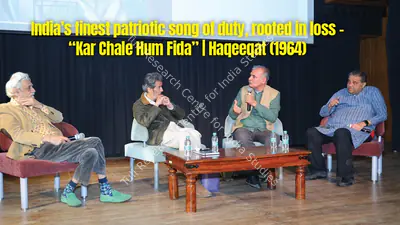
Tuli Research Centre for India Studies (Editor). India's finest patriotic song of duty, rooted in loss - "Kar Chale Hum Fida" | Haqeeqat (1964), 24 July 2026 | In-house Video, 2026 · 21 min 01 sec · Long-form Video
▶
Tuli Research Centre for India Studies (Editor). India's finest patriotic song of duty, rooted in loss - "Kar Chale Hum Fida" | Haqeeqat (1964), 24 July 2026 | In-house Video
2026 · 21 min 01 sec · Long-form Video
Tuli Research Centre for India Studies (Editor). How a film song helps build a Nation, healing her scars | "Kar Chale Hum Fida" | Haqeeqat (1964), 24 July 2026 | In-house Video, 2026 · 1 min 9 sec · Vertical Video
▶
Tuli Research Centre for India Studies (Editor). How a film song helps build a Nation, healing her scars | "Kar Chale Hum Fida" | Haqeeqat (1964), 24 July 2026 | In-house Video
2026 · 1 min 9 sec · Vertical Video
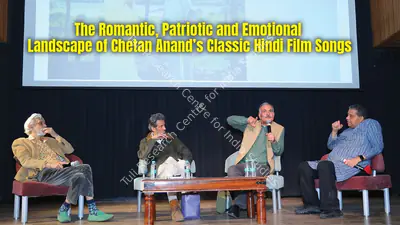
Tuli Research Centre for India Studies (Editor). The Romantic, Patriotic and Emotional Landscape of Chetan Anand’s Classic Hindi Film Songs, 21 July 2026 | In-house Video, 2026 · 1 hour 6 min · Long-form Video
▶
Tuli Research Centre for India Studies (Editor). The Romantic, Patriotic and Emotional Landscape of Chetan Anand’s Classic Hindi Film Songs, 21 July 2026 | In-house Video
2026 · 1 hour 6 min · Long-form Video
Uma Anand (Author), Chetan Anand, 2007, Authored Book
Anand, Uma (Author). Chetan Anand, 2007 | Authored Book | 00843987

Posts 2

  1. "The Pain of Human Stupidity" | Ketan Anand on His Father
    "The Pain of Human Stupidity" | Ketan Anand on His Father
    "Who was Chetan Anand — and why does his cinema still carry such a deep, emotional charge? In this clip, his son Ketan Anand introduces the filmmaker behind Haqeeqat (1964), a man who ""suffered in silence for a long time,"" and the learning he received from that pain, which poured into his films. It was during this time that Kaifi Azmi wrote some of his most remarkable poems for him. The product of this collaboration was a war song that became part of India's collective memory. As Ketan Anand puts it, ""This is not a jingoistic song… this is the pain of human stupidity."" No chest-beating, but a meditation or rather a question on why we go on fighting and killing while talking of love and peace. Somewhere, it is out of this pain that one must evolve. And Anand's cinema did exactly that. This video is an excerpt from the session with Ketan Anand, Ravikant, Pavan Jha and Neville Tuli, part of the series 'Deconstructing the Film Song: A Musical Glue for Nation-Building,' presented by the Tuli Research Centre for India Studies (TRIS) as part of the 7th Self-Discovery via Rediscovering India Festival."
    1_CinemaEducation
    Chetan AnandHaqeeqatKaifi AzmiNida FazliKetan AnandA Musical Glue for Nation-Building - Deconstructing the Film SongNeville Tuli
    Read Post →
  2. How a Film Song Builds a Nation | Kar Chale Hum Fida | Haqeeqat 1964
    How a Film Song Builds a Nation | Kar Chale Hum Fida | Haqeeqat 1964
    "What does a patriotic song sound like when it refuses to celebrate aggression? ""Kar Chale Hum Fida"" from Chetan Anand's Haqeeqat (1964) answers that question with a stillness that has stayed with the Indian audiences for over six decades. In this discussion, Ravikant, Professor, CSDS (The Centre for the Study of Developing Societies), highlights that although it is a song about war, it subverts expectations by being devoid of any swashbuckling aggression. The song speaks not of conquest or victory but of sacrifice and collective responsibility; a burden shared equally by soldiers, women, and the young. Kaifi Azmi's lyrics carry no triumphalism of epic proportions, rather only a quiet, devastating sense of duty. Chetan Anand's Haqeeqat released at the time when the idealism of the early independence years was falling apart and the Nehruvian generation, which had carried the dream of a new India, was fading away. The song, with war as it's background, mourns the dead, but it also speaks directly to the living, asking them what they will do with the nation left in their hands. This video is an excerpt from the session with Ketan Anand, Ravikant, Pavan Jha and Neville Tuli, ""A Musical Glue for Nation-Building: Deconstructing the Film Song"", presented by the Tuli Research Centre for India Studies (T.R.I.S.) at the 7th Self-Discovery via Rediscovering India Festival."
    1_CinemaEducation
    Chetan AnandHaqeeqatKaifi AzmiRavikantA Musical Glue for Nation-Building - Deconstructing the Film SongNeville Tuli
    Read Post →

Calendar 2

View All →
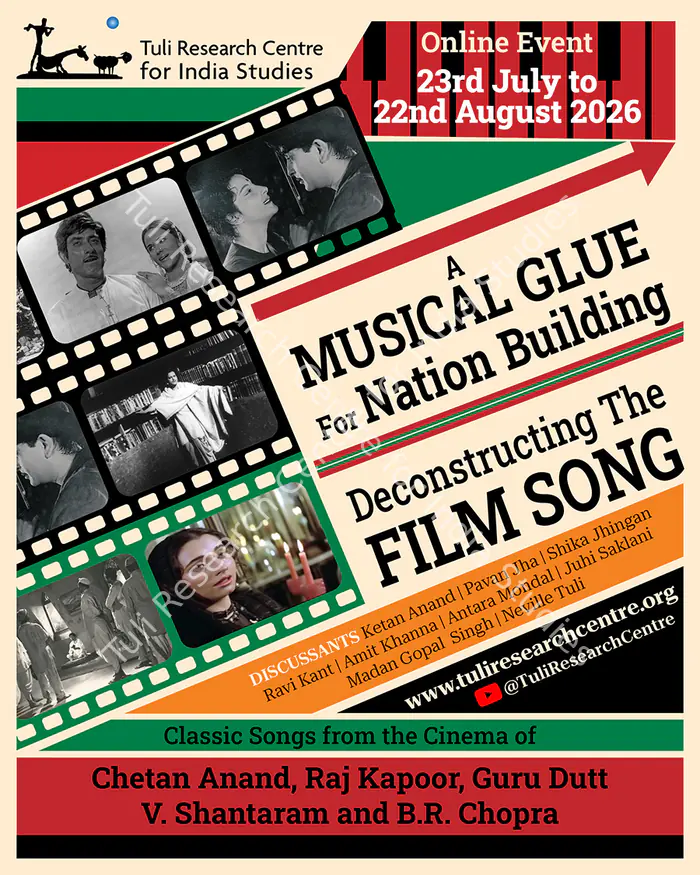
  1. A Musical Glue for Nation-Building
    ArchivedOffline-Online EventProject 80
    A Musical Glue for Nation-Building
    Deconstructing the Film Song
    23rd July - 22nd August 2026
    Ketan Anand | Ravikant | Pavan Jha | Madan Gopal Singh | Amit Khanna | Juhi Saklani | Antara Mondal | Shikha Jhingan | Neville Tuli
    A key section of the India Studies framework at The Tuli Research Centre for India Studies (T.R.I.S.) is “Deconstructing the Film Song”. It began with a series of four workshops during our Self-Discovery via Rediscovering India Festival Series that brought together leading scholars & academics, film practitioners & students, along with fans of the Hindi film song. The objective of these workshops was to deconstruct iconic Hindi film songs to examine their formation across music, lyrics, playback, choreography, directorial visualisation, as they fuse into sites where aesthetics, ideology, and performance intersect, so as to help clarify the nature of India and her relationship to the film song. The Hindi Film Song functions as a narrative device, conveying myriad textures of emotion through melody, voice and poetry. As cultural texts that encode memory, desire, and ideology, songs are integral to the circulation and resonance of films in the public realm. Over time they have become autonomous bundles of creative energy - the glue that binds us over time, articulating and perhaps even defining the idea of Indianness. These first Workshops were an attempt to understand the nature and power of this glue, while contemplating the ways to situate it within TRIS' academic framework for Contemporary India Studies.
    Read More →
    1_CinemaEducation·12_Scholarship
    +34 more
  2. A Musical Glue for Nation-Building
    ArchivedDeconstructing the Hindi Film SongProject 60
    A Musical Glue for Nation-Building
    Four Classic Songs from the cinema of Chetan Anand and the genius of Madan Mohan, Kaifi Azmi, Lata Mangeshkar & Mohammed RafinnKar Chale Hum Fida | Haqeeqat-1964 nYeh Duniya Yeh Mehfil | Heer Ranjha-1970 nMilo Na Tum To Hum Ghabrayen | Heer Ranjha-1970 nYeh Mana Meri Jaan | Hanste Zakhm-1973
    16th February 2026
    3:30pm
    M.L. Bhartia Auditorium, Alliance Francaise de Delhi, 72 K.K. Birla Lane, Lodi Estate, New Delhi, 110004
    Ketan Anand, Ravikant, Pavan Jha, Neville Tuli
    A key section of the India Studies framework at The Tuli Research Centre for India Studies (T.R.I.S.) is “Deconstructing the Hindi Film Song”. It will begin with a series of four workshops that brings together leading scholars & academics, film practitioners & students, along with fans of the Hindi film song. The objective of these workshops is to deconstruct iconic Hindi film songs to examine their formation across music, lyrics, playback, choreography, directorial visualisation, as they fuse into sites where aesthetics, ideology, and performance intersect. The Hindi Film Song functions as a narrative device, conveying myriad textures of emotion through melody, voice and poetry. As cultural texts that encode memory, desire, and ideology, songs are integral to the circulation and resonance of films in the public realm. Over time they have become autonomous bundles of creative energy - the glue that binds us over time, articulating and perhaps even defining the idea of Indianness. The first Workshops are an attempt to understand the nature and power of this glue, while contemplating the ways to situate it within TRIS' academic framework for Contemporary India Studies.
    Read More →
    1_CinemaEducation·12_Scholarship
    +3 more

Related

12

Personalities

12

Achala SachdevLead Cast
Balraj SahniLead Cast
Bhupendra SinghPlayback Singer
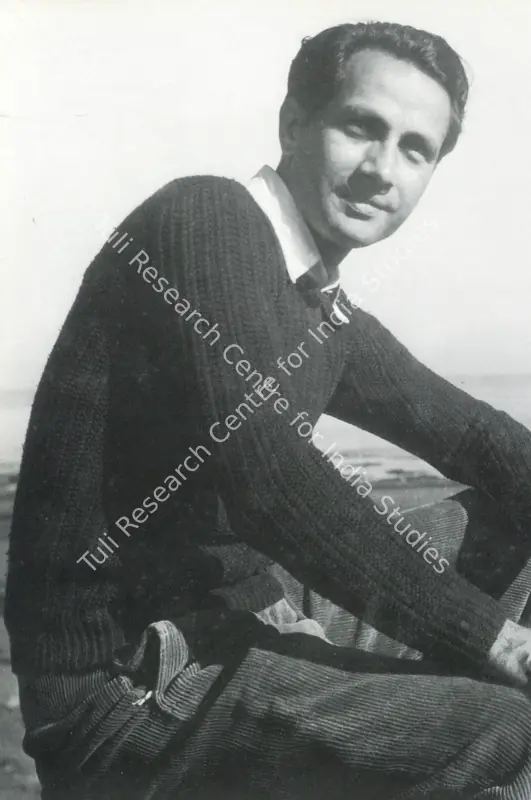
Chetan AnandScreenplay · Film Director +1
DharmendraLead Cast
Kaifi AzmiLyricist
Lata MangeshkarPlayback Singer
Madan MohanMusic Director
Manna DeyPlayback Singer
Mohammad RafiPlayback Singer
Talat MahmudPlayback Singer
Vijay AnandLead Cast
Tuli Research Centre for India Studies

Tuli Research Centre

for India Studies

A free and open knowledge base for the modern and contemporary Indian arts, cinema, photography and cultural heritage.

Support

Contact Us

Discover

Tuli Research Centre for India StudiesVisionManifestoArchive & LibraryVanraja Sanctuary & Hospice

Legal

Privacy PolicyTerms & Conditions

Follow us

Youtube

Youtube

Instagram

Instagram

Facebook

Facebook

© Tuli Research Centre for India Studies 2026

Tuli Research Centre for India Studies

Tuli Research Centre

for India Studies

A free and open knowledge base for the modern and contemporary Indian arts, cinema, photography and cultural heritage.

Tuli Research Centre for India StudiesVisionManifestoArchive & LibraryVanraja Sanctuary & Hospice
Contact Us
Privacy PolicyTerms & Conditions

Follow us

YoutubeInstagramFacebook

© Tuli Research Centre for India Studies 2026

                          Tuli Research Centre for India Studies (Editor). How a film song helps build a Nation, healing her scars | "Kar Chale Hum Fida" | Haqeeqat (1964), 24 July 2026 | In-house Video | CinemaEducation | 00883639
                          1 min 9 sec · Vertical Video

                          How a film song helps build a Nation, healing her scars | "Kar Chale Hum Fida" | Haqeeqat (1964)

                          Tuli Research Centre for India Studies (Editor)

                          Document TypeIn-house Video
                          Date24 July 2026
                          Duration1 min 9 sec
                          FormatVertical Video
                          Description
                          What does a patriotic song sound like when it refuses to celebrate aggression? "Kar Chale Hum Fida" from Chetan Anand's Haqeeqat (1964) answers that question with a stillness that has stayed with Indian audiences for over six decades. In the discussion, Ravikant, Professor, CSDS (The Centre for the Study of Developing Societies), highlights that although it is a song about war, it subverts expectations by being devoid of the swashbuckling aggression. It speaks not of conquest or victory but of sacrifice and collective responsibility, a burden shared equally by soldiers, women, and the young. Kaifi Azmi's lyrics carry no triumphalism of epic proportions, only a quiet, devastating sense of duty. Haqeeqat appeared at a moment when the idealism of the early independence years was falling apart and the Nehru generation, which had carried the dream of a new India, was passing from the stage. The song carries both of these meanings at once. It mourns the dead, and it speaks directly to the living, asking what they will do with the nation left in their hands.

                          Related Links6

                          Masterlist5
                          Chetan AnandKaifi AzmiDigital in House VideosDeconstructing the Film Song 2026Neville Tuli
                          Research Categories
                          01Cinema as a Critical Educational Resource