From Mumbai to Moscow- The enduring appeal of Raj Kapoor’s “Awara Hoon” | Awara (1951)
Tuli Research Centre for India Studies (Editor)
Document TypeIn-house Video
Date04 August 2026
Duration26 min 5 sec
FormatLong-form Video
Description
"Awara Hoon” is not merely a song but a cultural emblem that resonated across the world. Raj Kapoor’s Awara (1951), written by K.A. Abbas and V.P. Sathe, with screenplay and dialogues by K.A. Abbas, established the figure of the tramp associated with Raj Kapoor. “Awara Hoon” transformed the Chaplinesque tramp into a universal symbol of resilience, freedom, and belonging.
The person at the margins of society, reasserting his identity as a vagabond (“Awara”), in a memorable refrain and catchy rhythm, captured the hearts of audiences across classes and countries, especially in the erstwhile Soviet Union. The emotional appeal of the song lies in its simplicity, and the song can be seen as one of defiance, loneliness, or even optimism. Part of a broader exploration of four iconic songs from the cinema of Raj Kapoor, the conversation reflected on Raj Kapoor's creative vision, the contribution of lyricist Shailendra, composers Shankar–Jaikishan, and singer Mukesh, and the song's extraordinary journey across generations and audiences across the world.
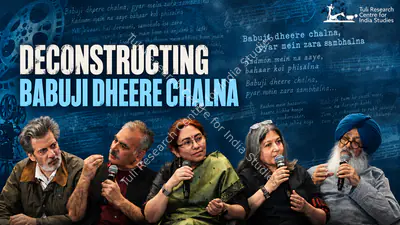
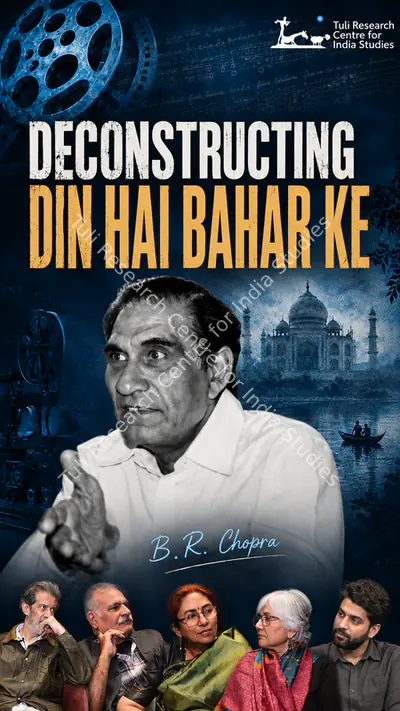
Examining the song's lyrics, music, performance, and circulation, the panelists Amit Khanna, Ravikant, and Juhi Saklani, in conversation with Neville Tuli, were part of the workshop ‘Deconstructing the Hindi Film Song: A Musical Glue for Nation Building’ organised by the Tuli Research Centre for India Studies (TRIS).