

Introduction
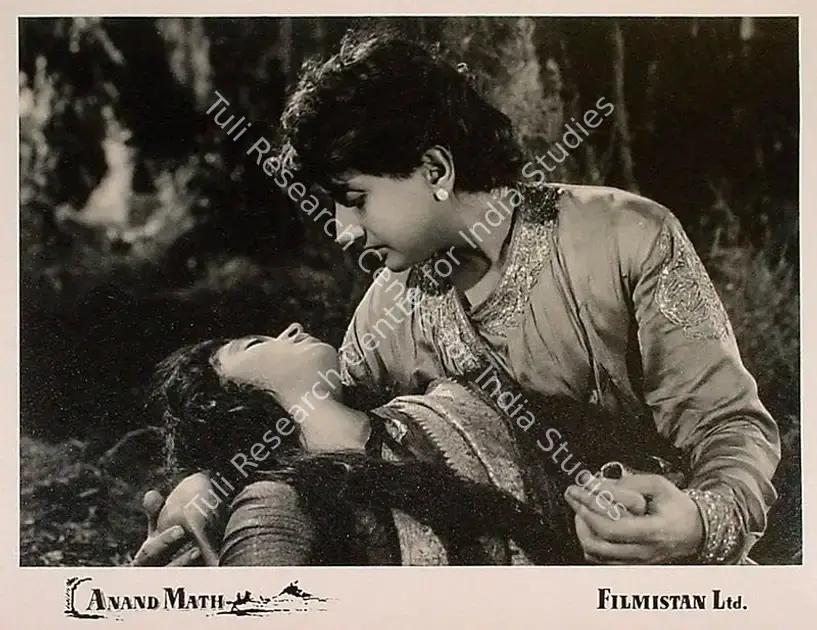
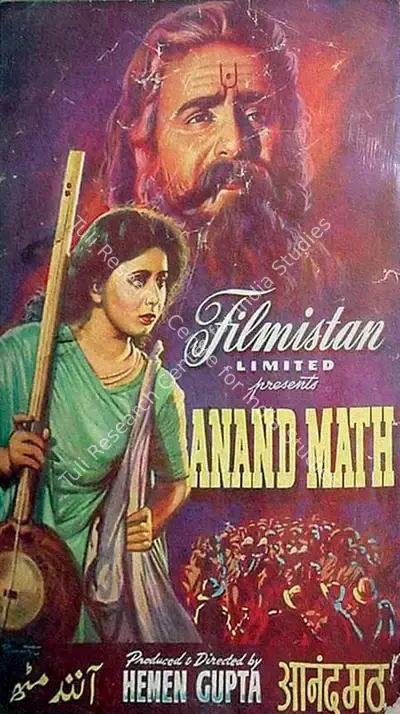
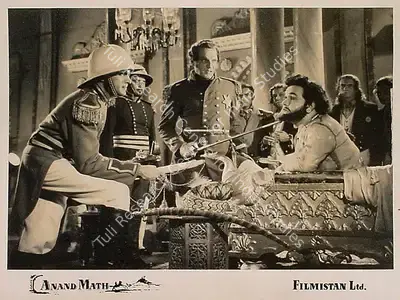
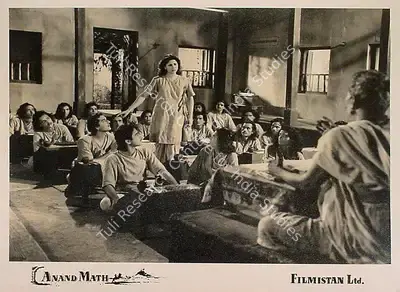
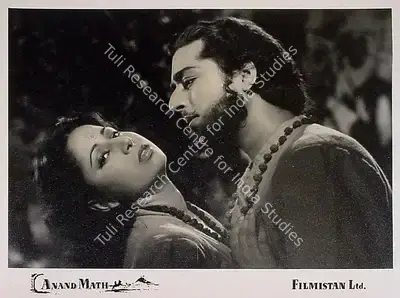
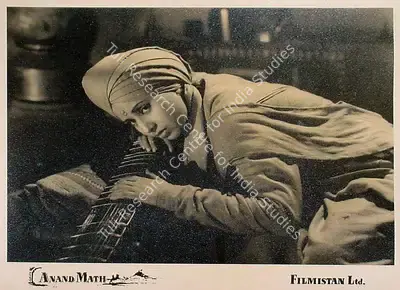
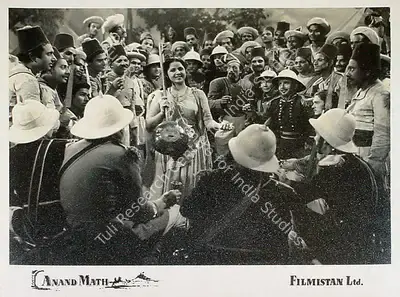
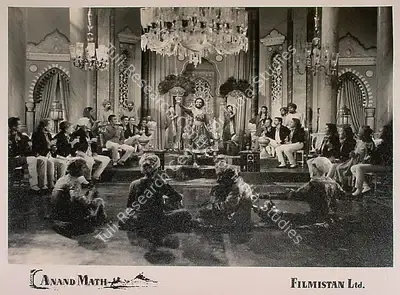
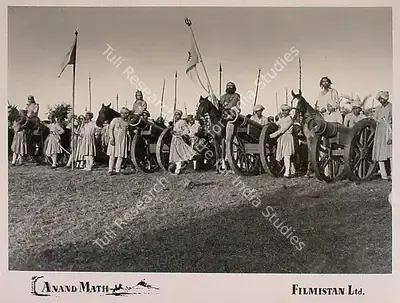
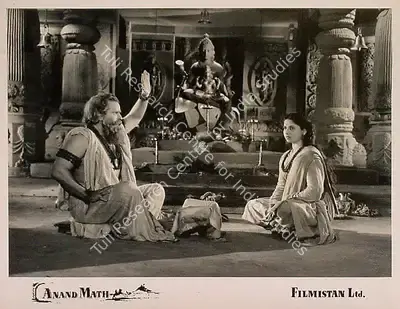
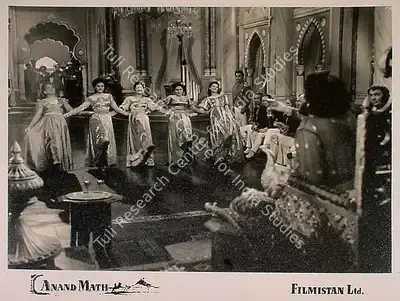
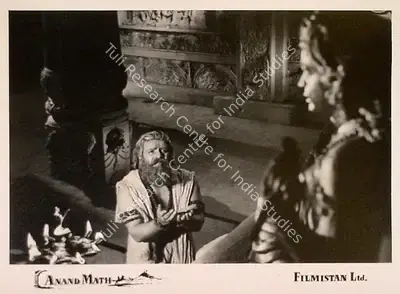
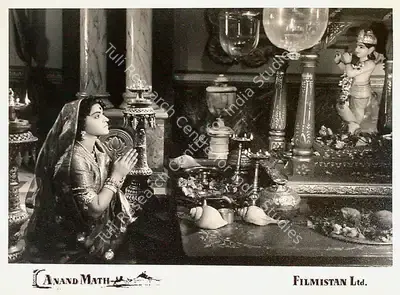
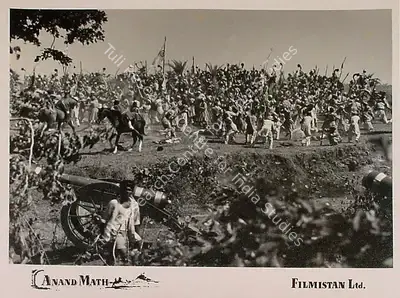
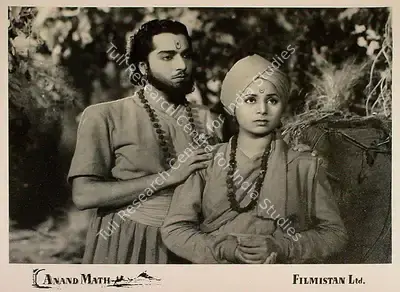
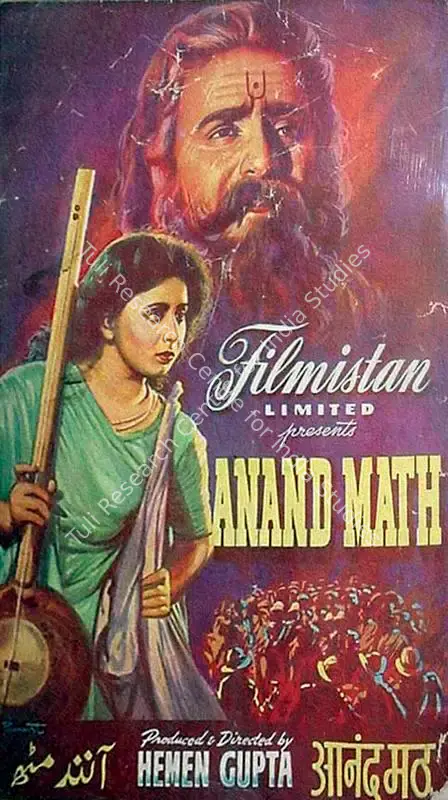
Anand Math (1952) Filmistan Limited studio's 1952 production of Anand Math is a dramatisation of Bengali novelist Rishi Bankim Chattopadhyay's landmark novel of the same name.
The film, like the novel, establishes the Sannyasi rebellion as the first of a series of revolts against the East India Company that started in the lows of the 1770 Bengal famine. Although the historical reality of this brotherhood of ascetics is undeterminable and has arguably other reasons for militating against the Company, the film follows the cue from Chattopadhyay's novel.
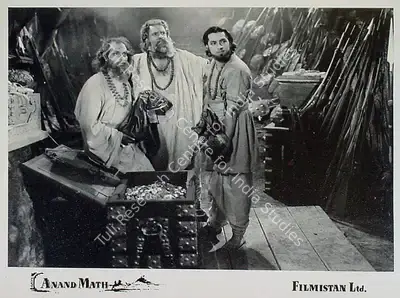
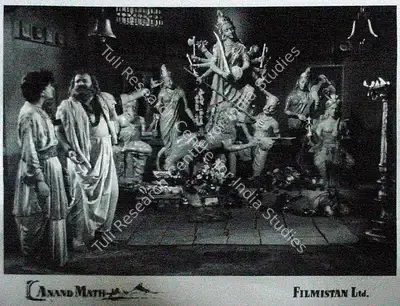
Sage Satyananda, the founder of Anand Math, is tortured by the anarchy of the rulers who squander their wealth when thousands in his “Mother Land” die of hunger. Notably, the conception of the nation is the mother who is akin to the Hindu mythological figure of the goddess. With incredible determination and self-taught battle skills, these 'Santans' fortify the foothills and jungles of the Himalayas from Kabul to China. Five Company Battalions fail to overpower them. These children of the Motherland have vowed their lives to austerity, celibacy, service, sacrifice and discipline which mutated into Gandhian principles that its immediate audience recognised.
The film is a testament to Bombay cinema's nationalising project that tries to homogenise the idea of the 'Indian Nation State' as an entity that always existed and historicised the struggle for independence as a culmination of a 200-year-old resistance ignited by a Hindu ascetic.
उपन्यास की तरह फ़िल्म का कथानक भी बंगाल में हुए अट्ठाहरवीं सदी के संन्यासी विद्रोह को अपनी कथा का केंद्र बनाता है। फ़िल्म इस विद्रोह को ईस्ट इंडिया कंपनी के खिलाफ़ हुए पहले संगठित विद्रोह की तरह स्थापित करती है। संन्यासी विद्रोह के बीज सन् 1770 के बंगाल दुर्भिक्ष की त्रासदी में छिपे हैं। हालांकि ऐतिहासिक रूप से इस संन्यासी विद्रोह के पीछे कई अन्य कारण भी रहे, पर फ़िल्म अपनी कहानी के लिए बंकिमचंद्र चट्टोपाध्याय के उपन्यास को आधार बनाती है।
फ़िल्म में 'आनंदमठ' नामक इस मठ के संस्थापक सत्यानंद नामक ऋषि हैं। आश्रम के ऋषि अपने देश की दुर्दशा और शासकों की लापरवाही से व्यथित होकर अपनी मातृभूमि के लिए बलिदान का मार्ग चुनते हैं। यहाँ राष्ट्र की संकल्पना 'भारतमाता' के रूप में की गई है, जिसका प्रतीक हिंदू देवी के रूपक से मिल जाता है। फ़िल्म में दिखाया गया है कि अंग्रेज़ कंपनी शासन से लोहा लेने के लिए भारतमाता के ये बेटे साधनारत होकर युद्ध कौशल सीखते हैं और हिमालय की तलहटी से लेकर काबुल और चीन तक देश की सीमा पर ईस्ट इंडिया कंपनी की पाँच बटालियनों को नाकों चने चबवा देते हैं।
ये देशभक्त संन्यासी तपस्या, ब्रह्मचर्य, सेवा, त्याग और अनुशासन का व्रत लेते हैं। आगे चलकर इनके इन कर्म सिद्धान्तों की झलक गांधीवादी सिद्धांतों में भी साफ़ देखी जा सकती है। आज़ादी के फ़ौरन बाद रिलीज़ हुई आनंदमठ के दर्शकों ने फ़िल्म के इस पहलू को पहचानने में तनिक भी देर नहीं लगाई।
आनंदमठ फ़िल्म बॉम्बे सिनेमा की उस राष्ट्रवादी परियोजना का प्रतीक है जिसमें सन् सैंतालीस में नवस्वतंत्र हुए 'राष्ट्र-राज्य' को एक ऐसे मुल्क के बतौर पेश किया जाता है जिसका अस्तित्व हमेशा से रहा है। यह भारत के स्वतंत्रता संग्राम को भी 200 वर्षों से एक निरंतर चली आई लड़ाई के बतौर पेश करती है, जिसका आरंभ बंगाल के हिंदू संन्यासियों की इस ऐतिहासिक क्रांति से हुआ था।