TRIS logo image
Search275,000+ actors, artists, objects, artworks, films, exhibitions, archives

EN

EN

English

HI

Hindi

EN

EN

English

HI

Hindi

Tuli Research Centre for India Studies

Tuli Research Centre for India Studies

Vision

Manifesto

Archive & Library

Vanraja Sanctuary & Hospice

Home

Research Categories

Browse All

ICore

1_CinemaEducation_Cinema as a Critical Educational Resource

2_FineArts_Modern and Contemporary Indian Fine Arts

3_Photography_Photography in India

4_PopCulture_The Printed Image, Popular Arts, and Crafts

IIMaterial

5_ArcHeritage_India's Architectural Heritage as Inspiration

6_EconomicsArt_Economics of Art & Cultural Industry

7_Travel_Automobile, Transport and Travel Heritage

8_Uncertainty_Uncertainty

IIICritical

9_SocialDuty_Social Responsibility of the Creative Mind

10_Childhood_The Changing Smile of Childhood & Its Second Coming

11_Sensuality_The Sensual Discipline within Creativity

12_Scholarship_The History & Historiography of Scholarship in the Arts, Humanities, and Social Sciences

IVMeaningful

13_SeekJustice_Seeking Justice and Political Integrity

14_IndoWorld_India and her Relationship with the World

15_SpiritualPoetics_The Religious-Spiritual-Poetic-Philosophical Framework

16_Continuum_The Animal-Human-Nature Continuum

Explore

All

Posts

Masterlists

Calendar

Live | Upcoming

All Events

Timetable

Search275,000+ actors, artists, objects, artworks, films, exhibitions, archives

EN

EN

English

HI

Hindi

Albert Pinto Ko Gussa Kyoon Aata Hai (1980)

Albert Pinto Ko Gussa Kyoon Aata Hai (1980)

Film.Indian Cinema
DirectorSaeed Akhtar Mirza
LanguageHindi
On this Page
Introduction
Body of Work
Research Centre4
All4
Archive4Highlights1
Home/Film/Albert Pinto Ko Gussa Kyoon Aata Hai (1980)

Albert Pinto Ko Gussa Kyoon Aata Hai1980
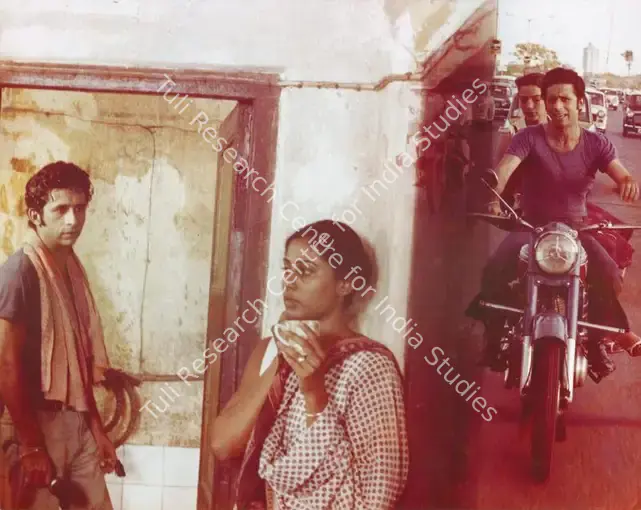
Albert Pinto Ko Gussa Kyoon Aata Hai (1980): featured artwork

Introduction

Albert Pinto Ko Gussa Kyoon Aata Hai (What Makes Albert Pinto Angry?) Written and directed by Saeed Akhtar Mirza, it is a seminal work of Indian parallel cinema that incisively captures the social contradictions of 1970s Mumbai. Starring Naseeruddin Shah, Shabana Azmi, and Smita Patil, the film examines middle-class aspiration, structural inequality, and the slow-burning disillusionment of the common man within a capitalist system. Rather than framing anger as a purely psychological trait, the film situates it firmly within social and economic realities.

The story centres on Albert Pinto (Naseeruddin Shah), a young Christian car mechanic who embodies the fragile optimism of the urban working class. Albert believes that diligence, discipline, and imitation of the wealthy will eventually grant him upward mobility. He cultivates cordial relationships with his affluent customers, absorbing their rhetoric that “good workers” do not strike and that labour unrest is the work of irresponsible, lower-class elements. Internalizing these views, Albert initially directs his anger toward striking workers, whom he sees as obstacles to progress.

This misplaced resentment undergoes a profound transformation when Albert's father, a mill worker, is humiliated and brutalized by goons hired by mill owners. The incident shatters Albert's illusions about meritocracy and exposes the mechanisms of exploitation underpinning the system he once admired. He begins to understand the legitimacy of strikes and collective resistance, recognizing that the true source of workers' suffering lies not with labourers but with capitalists and the structures that protect them.

By the film's conclusion, Albert remains an angry man—but his rage has been politically reoriented. It is no longer directed at fellow workers but at the forces of capital and systemic injustice that shape their lives. Mirza's film thus offers a powerful portrait of class consciousness in formation, capturing the moral and ideological awakening of an individual as emblematic of a broader social struggle.

Albert Pinto Ko Gussa Kyoon Aata Hai received the Filmfare Critics Award for Best Film in 1981, affirming its critical importance and enduring relevance. In 2017, the film was officially remade under the same title, directed by Soumitra Ranade and starring Manav Kaul, Nandita Das, and Saurabh Shukla. The remake premiered at the inaugural Singapore South Asian Film Festival in September 2017 and was released theatrically on April 12, 2019.

सईद अख्त़र मिर्ज़ा द्वारा लिखित और निर्देशित फ़िल्म 'अल्बर्ट पिंटो को गुस्सा क्यों आता है?' भारतीय पैरेलल सिनेमा का एक महत्वपूर्ण कार्य है जो 1970 के दशक के मुंबई के सामाजिक विरोधाभासों को बखूबी दर्शाता है। नसीरुद्दीन शाह, शबाना आज़मी और स्मिता पाटिल अभिनीत यह फ़िल्म पूंजीवादी व्यवस्था में मध्यम वर्ग की आकांक्षाओं, संरचनात्मक असमानता और आम आदमी के मन में धीरे-धीरे टूटते भ्रम को समझाती है। इसमें क्रोध को केवल एक मनोवैज्ञानिक के रूप में प्रस्तुत करने के बजाय, फ़िल्म इसे सामाजिक और आर्थिक वास्तविकताओं के संदर्भ में मजबूती से स्थापित करती है।
कहानी अल्बर्ट पिंटो (नसीरुद्दीन शाह) के इर्द-गिर्द घूमती है, जो एक युवा ईसाई कार मैकेनिक है और शहरी श्रमिक वर्ग के नाजुक उम्मीदों का प्रतीक है। अल्बर्ट का मानना ​​है कि लगन, अनुशासन और अमीरों की नक़ल अंततः उसे ऊपर उठने का मौका देगा। इसके लिए वह अपने धनी ग्राहकों के साथ अच्छे रिश्ते बनाता है और उनकी इस बात को आत्मसात कर लेता है कि "अच्छे कामगार" हड़ताल नहीं करते और श्रमिक अशांति निचले वर्ग के गैर-जिम्मेदार तत्वों का काम है। इन विचारों को अपनाते हुए, अल्बर्ट शुरू में अपनी नाराज़गी हड़ताल कर रहे श्रमिकों पर निकालता है, जिन्हें वह प्रगति में बाधा मानता है।
यह गलत आक्रोश उस समय और जटिल हो जाता है जब अल्बर्ट के मिल मजदूर पिता को मिल मालिकों द्वारा किराए पर लिए गए गुंडों द्वारा अपमानित और सताया जाता है। इस घटना से योग्यता के आधार पर शासन करने की अल्बर्ट की धारणाएं चकनाचूर हो जाती हैं और उस व्यवस्था में निहित शोषण के तंत्र उजागर हो जाते हैं जिसकी वह कभी प्रशंसा करता था। वह हड़तालों और सामूहिक प्रतिरोध की वैधता को समझने लगता है और जानने लगता है कि श्रमिकों की पीड़ा का असली कारण श्रमिक नहीं बल्कि पूंजीपति और उन्हें संरक्षण देने वाली संरचनाएं हैं।
फ़िल्म में अंत तक अल्बर्ट एक गुस्सैल व्यक्ति बना रहता है लेकिन उसका क्रोध अब राजनीतिक दिशा में जा चुका है,जो सहकर्मियों के खिलाफ नहीं है, बल्कि पूंजी और व्यवस्थागत अन्याय की उन शक्तियों के खिलाफ है जो उनके जीवन को आकार देती हैं। इस प्रकार, मिर्ज़ा की फ़िल्म वर्ग चेतना के निर्माण का एक प्रभाशाली दृश्य प्रस्तुत करती है, जो एक व्यक्ति के नैतिक और वैचारिक जागरण को व्यापक सामाजिक संघर्ष के प्रतीक के रूप में दर्शाती है।
अल्बर्ट पिंटो को गुस्सा क्यों आता है को 1981 में सर्वश्रेष्ठ फ़िल्म के लिए फ़िल्मफेयर क्रिटिक्स अवार्ड मिला, जो इसकी आलोचनात्मक महत्त्व और प्रासंगिकता को दर्शाता है। 2017 में इसी नाम से फ़िल्म का आधिकारिक रूप से रीमेक बनाया गया, जिसका निर्देशन सौमित्र रानाडे ने किया और इसमें मानव कौल, नंदिता दास और सौरभ शुक्ला ने अभिनय किया। रीमेक का प्रीमियर सितंबर 2017 में प्रथम सिंगापुर दक्षिण एशियाई फ़िल्म महोत्सव में हुआ और12 अप्रैल 2019 को सिनेमाघरों में रिलीज हुई।
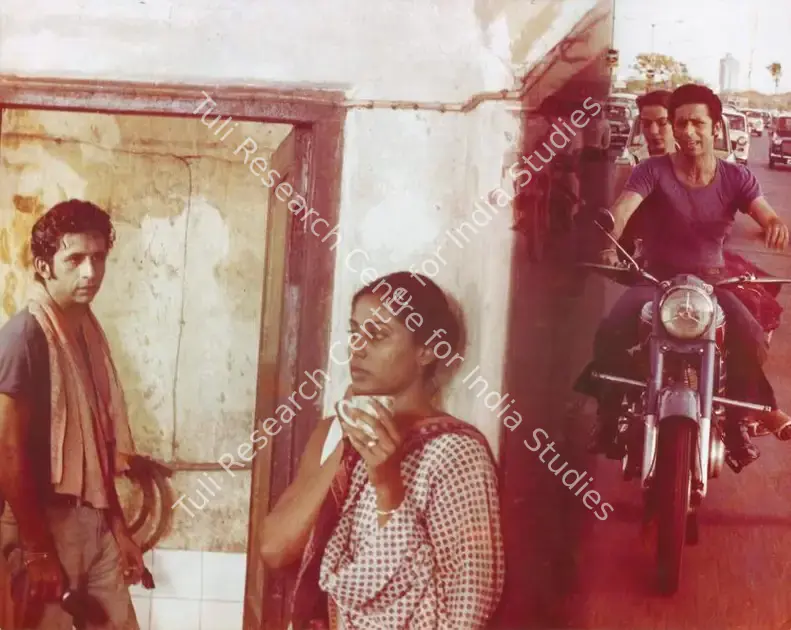
Mirza, Saeed Akhtar (Producer), Albert Pinto Ko Gussa Kyoon Aata Hai, 1980 | Photographic Still | CinemaEducation | 00890809
1 / 2

Body of Work

The film captures the angst of a worker, in Mumbai exemplified by a young Christian car mechanic, Albert Pinto (Naseeruddin Shah) who is under the illusion that if he works hard and emulates the rich, one day he can also be successful. He makes friendly relations with his customers, who are usually the rich of the city and who keep telling him that good workers do not go on strike. Strikes are the handiwork of lumpen elements. Pinto gets angry with the supposedly wrong attitudes of the workers who he assumes go on strike under any pretext. However, when Pinto's father, who is a mill worker is abused by the lumpen elements hired by the mill owners, he realizes that it is not the workers but the capitalists who should be blamed for the plight of the workers. He also realizes the legitimacy of strikes. Towards the end of the movie, Pinto still remains an angry man; but now his anger is directed against the capitalists, not the striking workers.
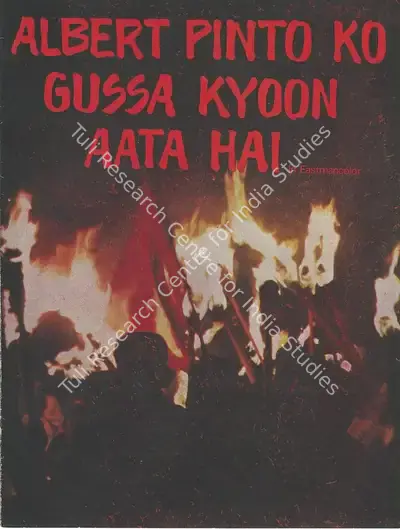
Banner
N. F. D. C.
Director
Saeed Akhtar Mirza
Lead Cast
Shabana Azmi, Dilip Dhawan, Smita Patil, Naseeruddin Shah
Lead Cast Rest
Aravind Deshpande, Sulabha Deshpande, Rohini Hatangadi, Aziz Mirza, Om Puri, Nitin Sethi, Satish Shah, Naresh Suri
Producer
Saeed Akhtar Mirza

Research Centre

Saeed Akhtar Mirza (Producer), Albert Pinto Ko Gussa Kyoon Aata Hai, 1980, Photographic Still
Mirza, Saeed Akhtar (Producer), Albert Pinto Ko Gussa Kyoon Aata Hai, 1980 | Photographic Still
View full record
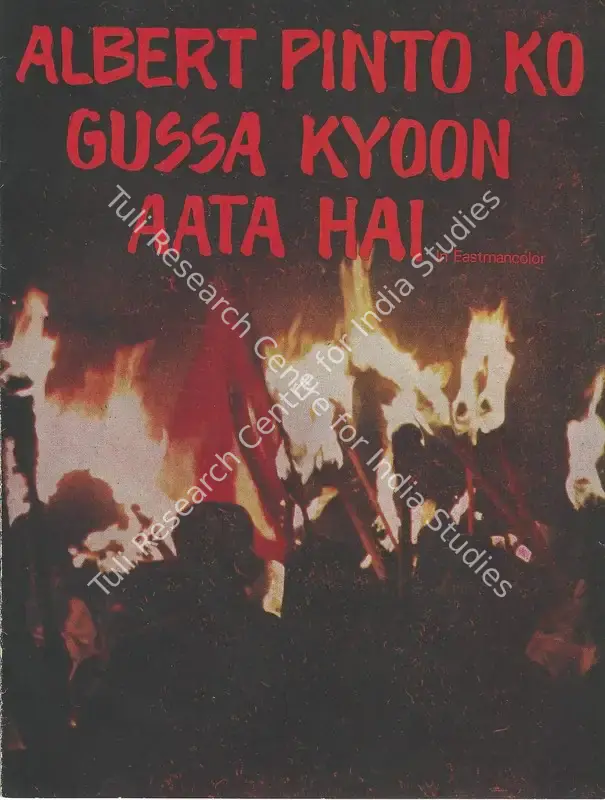
Saeed Akhtar Mirza (Producer), Albert Pinto Ko Gussa Kyoon Aata Hai, 1980, Song-Synopsis Booklet
Mirza, Saeed Akhtar (Producer), Albert Pinto Ko Gussa Kyoon Aata Hai, 1980 | Song-Synopsis Booklet
View full record
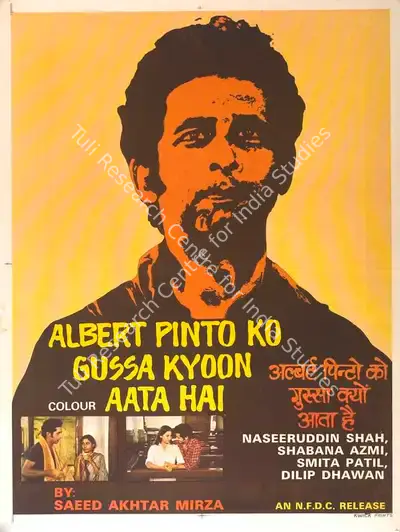
Saeed Akhtar Mirza (Producer), Albert Pinto Ko Gussa Kyoon Aata Hai, 1980, Full Sheet Poster
Mirza, Saeed Akhtar (Producer), Albert Pinto Ko Gussa Kyoon Aata Hai, 1980 | Full Sheet Poster
View full record
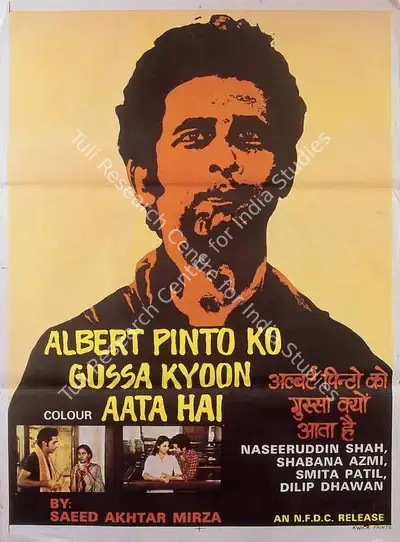
Saeed Akhtar Mirza (Producer), Albert Pinto Ko Gussa Kyoon Aata Hai, 1980, Full Sheet Poster
Mirza, Saeed Akhtar (Producer), Albert Pinto Ko Gussa Kyoon Aata Hai, 1980 | Full Sheet Poster
View full record
Saeed Akhtar Mirza (Producer), Albert Pinto Ko Gussa Kyoon Aata Hai, 1980, Photographic Still
Mirza, Saeed Akhtar (Producer), Albert Pinto Ko Gussa Kyoon Aata Hai, 1980 | Photographic Still
View full record

Related

5

Personalities

5

Naseeruddin ShahLead Cast
Om PuriLead Cast
Saeed Akhtar MirzaFilm Producer · Film Director +1
Shabana AzmiLead Cast
Smita PatilLead Cast
Tuli Research Centre for India Studies

Tuli Research Centre

for India Studies

A free and open knowledge base for the modern and contemporary Indian arts, cinema, photography and cultural heritage.

Support

Contact Us

Discover

Tuli Research Centre for India StudiesVisionManifestoArchive & LibraryVanraja Sanctuary & Hospice

Legal

Privacy PolicyTerms & Conditions

Follow us

Youtube

Youtube

Instagram

Instagram

Facebook

Facebook

© Tuli Research Centre for India Studies 2026

Tuli Research Centre for India Studies

Tuli Research Centre

for India Studies

A free and open knowledge base for the modern and contemporary Indian arts, cinema, photography and cultural heritage.

Tuli Research Centre for India StudiesVisionManifestoArchive & LibraryVanraja Sanctuary & Hospice
Contact Us
Privacy PolicyTerms & Conditions

Follow us

YoutubeInstagramFacebook

© Tuli Research Centre for India Studies 2026

              Mirza, Saeed Akhtar (Producer), Albert Pinto Ko Gussa Kyoon Aata Hai, 1980 | Photographic Still | CinemaEducation | 00890809

              Mirza, Saeed Akhtar (Producer), Albert Pinto Ko Gussa Kyoon Aata Hai, 1980 | Photographic Still

              ProducerSaeed Akhtar Mirza
              Document TypePhotographic Still
              Film TitleAlbert Pinto Ko Gussa Kyoon Aata Hai, 1980, India, Hindi
              DirectorSaeed Akhtar MirzaBannerN. F. D. C.
              CastShabana Azmi, Dilip Dhawan, Smita Patil, Naseeruddin Shah, Aravind Deshpande, Sulabha Deshpande, Rohini Hatangadi, Aziz Mirza, Om Puri, Nitin Sethi, Satish Shah, Naresh Suri
              Copyright of ImageWith Producer | Archive Object

              Research Categories

              1_CinemaEducation3_Photography

              Related Links8

              Masterlist6
              Cinema Photographic StillsNaseeruddin ShahSmita PatilSaeed Akhtar MirzaShabana AzmiOm Puri
              Research Categories2
              01Cinema as a Critical Educational Resource03Photography in India