
Albert Pinto Ko Gussa Kyoon Aata Hai1980
Introduction
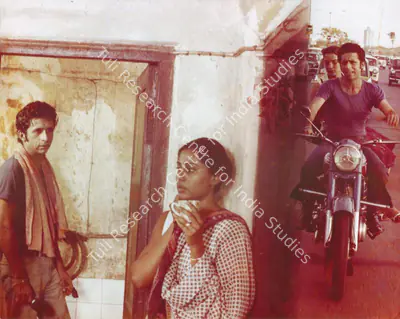
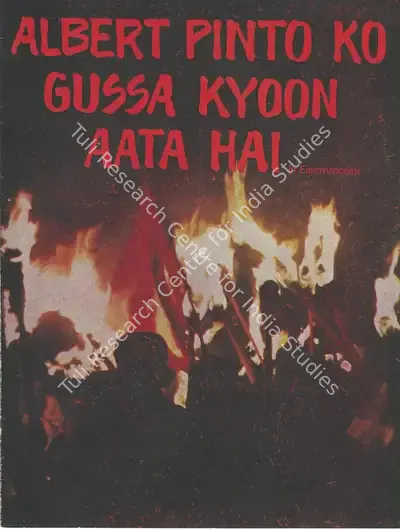
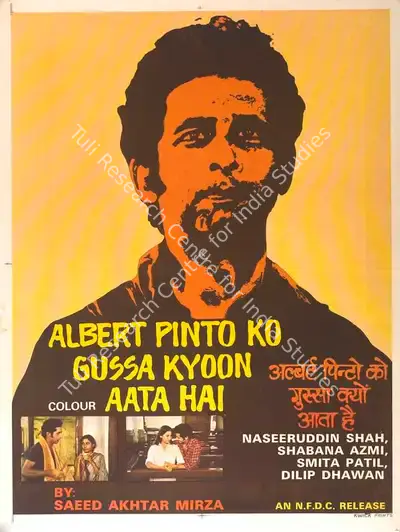
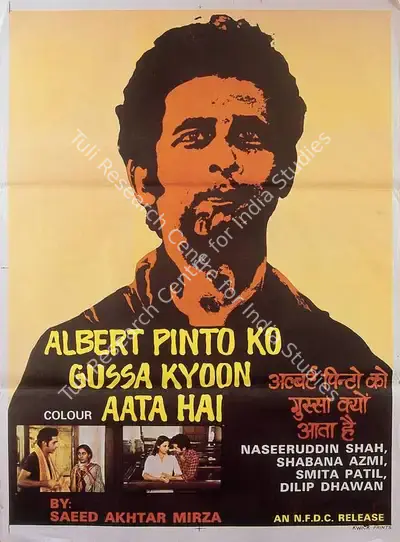
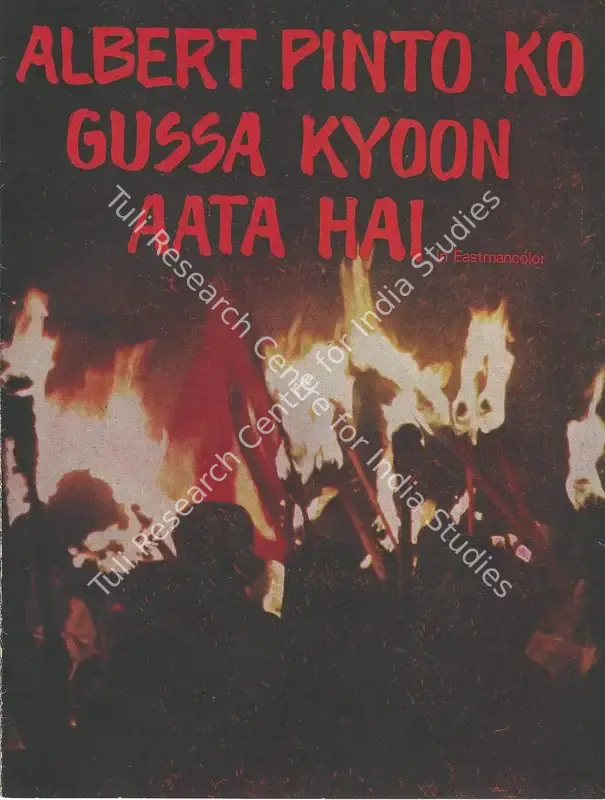
Albert Pinto Ko Gussa Kyoon Aata Hai (What Makes Albert Pinto Angry?) Written and directed by Saeed Akhtar Mirza, it is a seminal work of Indian parallel cinema that incisively captures the social contradictions of 1970s Mumbai. Starring Naseeruddin Shah, Shabana Azmi, and Smita Patil, the film examines middle-class aspiration, structural inequality, and the slow-burning disillusionment of the common man within a capitalist system. Rather than framing anger as a purely psychological trait, the film situates it firmly within social and economic realities.
The story centres on Albert Pinto (Naseeruddin Shah), a young Christian car mechanic who embodies the fragile optimism of the urban working class. Albert believes that diligence, discipline, and imitation of the wealthy will eventually grant him upward mobility. He cultivates cordial relationships with his affluent customers, absorbing their rhetoric that “good workers” do not strike and that labour unrest is the work of irresponsible, lower-class elements. Internalizing these views, Albert initially directs his anger toward striking workers, whom he sees as obstacles to progress.
This misplaced resentment undergoes a profound transformation when Albert's father, a mill worker, is humiliated and brutalized by goons hired by mill owners. The incident shatters Albert's illusions about meritocracy and exposes the mechanisms of exploitation underpinning the system he once admired. He begins to understand the legitimacy of strikes and collective resistance, recognizing that the true source of workers' suffering lies not with labourers but with capitalists and the structures that protect them.
By the film's conclusion, Albert remains an angry man—but his rage has been politically reoriented. It is no longer directed at fellow workers but at the forces of capital and systemic injustice that shape their lives. Mirza's film thus offers a powerful portrait of class consciousness in formation, capturing the moral and ideological awakening of an individual as emblematic of a broader social struggle.
Albert Pinto Ko Gussa Kyoon Aata Hai received the Filmfare Critics Award for Best Film in 1981, affirming its critical importance and enduring relevance. In 2017, the film was officially remade under the same title, directed by Soumitra Ranade and starring Manav Kaul, Nandita Das, and Saurabh Shukla. The remake premiered at the inaugural Singapore South Asian Film Festival in September 2017 and was released theatrically on April 12, 2019.
कहानी अल्बर्ट पिंटो (नसीरुद्दीन शाह) के इर्द-गिर्द घूमती है, जो एक युवा ईसाई कार मैकेनिक है और शहरी श्रमिक वर्ग के नाजुक उम्मीदों का प्रतीक है। अल्बर्ट का मानना है कि लगन, अनुशासन और अमीरों की नक़ल अंततः उसे ऊपर उठने का मौका देगा। इसके लिए वह अपने धनी ग्राहकों के साथ अच्छे रिश्ते बनाता है और उनकी इस बात को आत्मसात कर लेता है कि "अच्छे कामगार" हड़ताल नहीं करते और श्रमिक अशांति निचले वर्ग के गैर-जिम्मेदार तत्वों का काम है। इन विचारों को अपनाते हुए, अल्बर्ट शुरू में अपनी नाराज़गी हड़ताल कर रहे श्रमिकों पर निकालता है, जिन्हें वह प्रगति में बाधा मानता है।
यह गलत आक्रोश उस समय और जटिल हो जाता है जब अल्बर्ट के मिल मजदूर पिता को मिल मालिकों द्वारा किराए पर लिए गए गुंडों द्वारा अपमानित और सताया जाता है। इस घटना से योग्यता के आधार पर शासन करने की अल्बर्ट की धारणाएं चकनाचूर हो जाती हैं और उस व्यवस्था में निहित शोषण के तंत्र उजागर हो जाते हैं जिसकी वह कभी प्रशंसा करता था। वह हड़तालों और सामूहिक प्रतिरोध की वैधता को समझने लगता है और जानने लगता है कि श्रमिकों की पीड़ा का असली कारण श्रमिक नहीं बल्कि पूंजीपति और उन्हें संरक्षण देने वाली संरचनाएं हैं।
फ़िल्म में अंत तक अल्बर्ट एक गुस्सैल व्यक्ति बना रहता है लेकिन उसका क्रोध अब राजनीतिक दिशा में जा चुका है,जो सहकर्मियों के खिलाफ नहीं है, बल्कि पूंजी और व्यवस्थागत अन्याय की उन शक्तियों के खिलाफ है जो उनके जीवन को आकार देती हैं। इस प्रकार, मिर्ज़ा की फ़िल्म वर्ग चेतना के निर्माण का एक प्रभाशाली दृश्य प्रस्तुत करती है, जो एक व्यक्ति के नैतिक और वैचारिक जागरण को व्यापक सामाजिक संघर्ष के प्रतीक के रूप में दर्शाती है।
अल्बर्ट पिंटो को गुस्सा क्यों आता है को 1981 में सर्वश्रेष्ठ फ़िल्म के लिए फ़िल्मफेयर क्रिटिक्स अवार्ड मिला, जो इसकी आलोचनात्मक महत्त्व और प्रासंगिकता को दर्शाता है। 2017 में इसी नाम से फ़िल्म का आधिकारिक रूप से रीमेक बनाया गया, जिसका निर्देशन सौमित्र रानाडे ने किया और इसमें मानव कौल, नंदिता दास और सौरभ शुक्ला ने अभिनय किया। रीमेक का प्रीमियर सितंबर 2017 में प्रथम सिंगापुर दक्षिण एशियाई फ़िल्म महोत्सव में हुआ और12 अप्रैल 2019 को सिनेमाघरों में रिलीज हुई।
Body of Work
The film captures the angst of a worker, in Mumbai exemplified by a young Christian car mechanic, Albert Pinto (Naseeruddin Shah) who is under the illusion that if he works hard and emulates the rich, one day he can also be successful. He makes friendly relations with his customers, who are usually the rich of the city and who keep telling him that good workers do not go on strike. Strikes are the handiwork of lumpen elements. Pinto gets angry with the supposedly wrong attitudes of the workers who he assumes go on strike under any pretext. However, when Pinto's father, who is a mill worker is abused by the lumpen elements hired by the mill owners, he realizes that it is not the workers but the capitalists who should be blamed for the plight of the workers. He also realizes the legitimacy of strikes. Towards the end of the movie, Pinto still remains an angry man; but now his anger is directed against the capitalists, not the striking workers.