Introduction
- Zodiac sign
- Taurus
- Age
- 36
- Place of Birth
- Calcutta, West Bengal, India
- Place of Death
- Calcutta
- State Country of Birth
- West Bengal, India
1949
- Diploma in Fine Arts, Government College of Art & Craft, Kolkata
1949 – 1954
- Diploma in Sculpture, Government College of Art & Craft, Kolkata
1949 – 1954
1950
- Art Lecturer in the Mitra Institution, Kolkata, India
1950 – 1966
1951
- Founder Member and Secretary, Chitrangshu Group,Kolkata, India
1960
- Founder Member, Society of Contemporary Artists, Kolkata, India
1963
- Founder Member, Kolkata Group of Painters
- Illustrator in Bengali News Weeklies - Darpan & Janasebak Sapthahik
Exhibitions
- Paintings by Nikhil Biswas, Sculptures by Sarbari Roy Chowdhury, Max Mueller Bhavan, Kolkata, India
1953
- Kolkata, India
1954
- Kolkata, India
- Mumbai, India
1955
- Mumbai, India
1956
- Mumbai, India
1959
- Kolkata, India
1960
- Mumbai, India
- Kolkata, India
1961
- Kolkata, India
1962
- Exhibition of his paintings, Art and Prints Gallery, Kolkata, India
- Kolkata, India
1963
- Kolkata, India
1964
- Eight Painters from Kolkata, All India Fine Arts & Crafts Society Gallery, New Delhi, India
- Kolkata & New Delhi, India
1965
- Drawings, Berlinz, Munich, West Germany
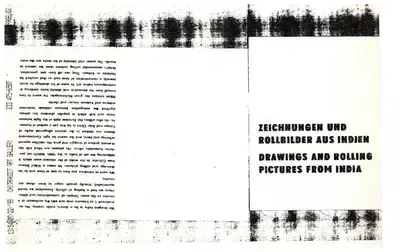
- Drawings and Rolling Pictures from India, Ministry of Culture of the German Democratic Republic, Dresden, Halle, Madgeburg
- Kolkata, India
- Academy of Fine Arts, Kolkata, India
- New Delhi, India
1953
- Kolkata, India
1954
- Kolkata, India
1959
- Kolkata, India
1960
- Kolkata, India
1961
- Kolkata, India
1962
- Kolkata, India
1965
- Drawings, Berlinz, Munich, West Germany
- Drawings and Rolling Pictures from India, Ministry of Culture of the German Democratic Republic, Dresden, Halle, Madgeburg
- Academy of Fine Arts, Kolkata, India
1967
- Retrospective, Jehangir Art Gallery, Mumbai, India
03 Sep 1967 to 15 Sep 1967
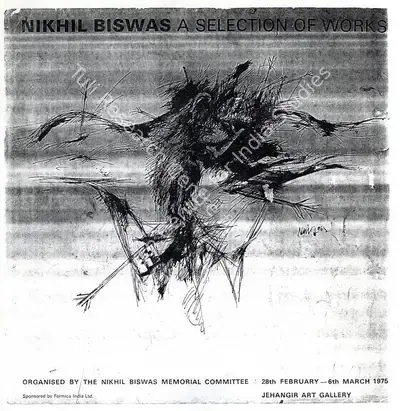
1975
28 Feb 1975 to 06 Mar 1975
1978
- Academy of Fine Arts, Kolkata, India
1987
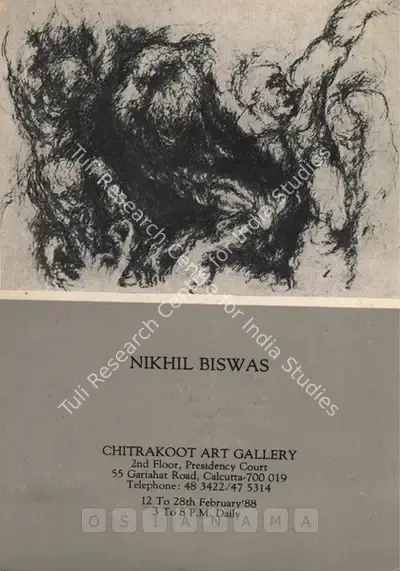
- Retrospective, Chitrakoot Art Gallery, Kolkata, India
1988
12 Feb 1988 to 28 Feb 1988
1989
- Chitrakoot Art Gallery, Kolkata, India
1990
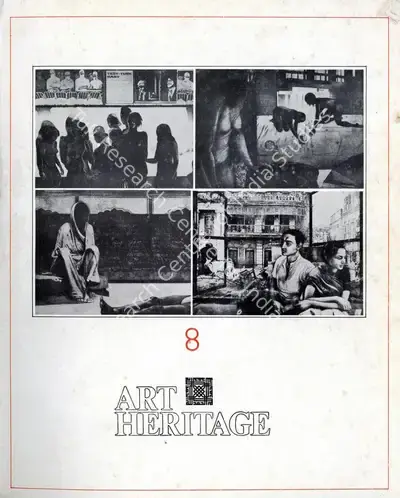
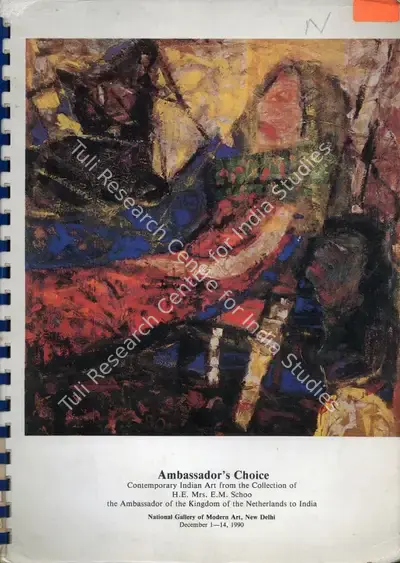
- Art Heritage, New Delhi, India
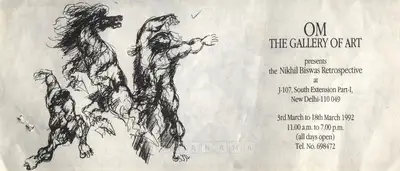
1992
03 Mar 1992 to 18 Mar 1992
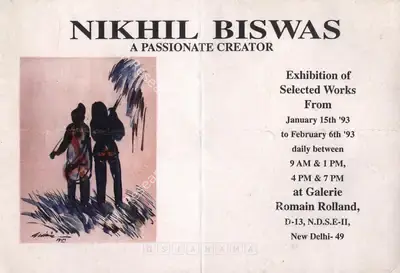
1993
15 Jan 1993 to 06 Feb 1993
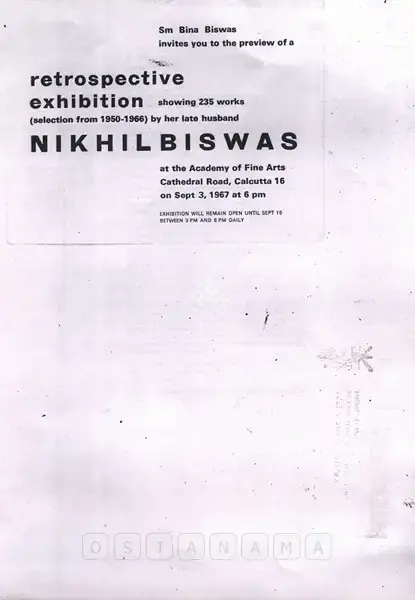
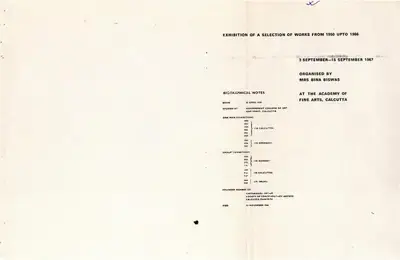
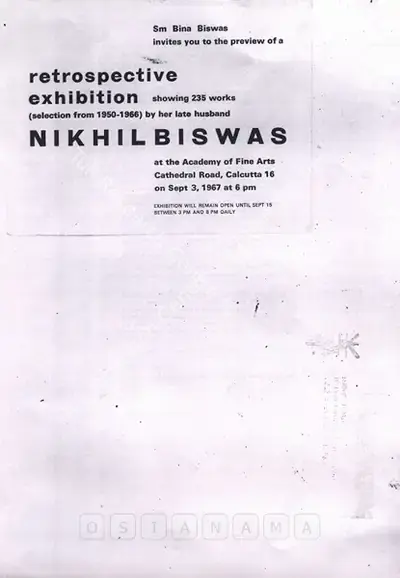
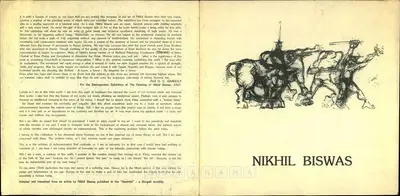
Biswas, Nikhil (Artist). Nikhil Bishwas, 1967 | Solo Exhibition Invitation | 00858921
- Paintings by Nikhil Biswas, Sculptures by Sarbari Roy Chowdhury, Max Mueller Bhavan, Kolkata, India
1954
- Mumbai, India
1955
- Mumbai, India
1956
- Mumbai, India
1960
- Mumbai, India
1962
- Exhibition of his paintings, Art and Prints Gallery, Kolkata, India
1963
- Kolkata, India
1964
- Eight Painters from Kolkata, All India Fine Arts & Crafts Society Gallery, New Delhi, India
- Kolkata & New Delhi, India
1965
- Kolkata, India
- New Delhi, India
1966
- An exhibition of painting and sculpture, dedicated to the memory of Alberto Giacometti, Artistry House, Kolkata, India
1967
1968
- A posthumous exhibition of his paintings, Buffalo, New York, USA
1975
1978
- Exhibition, Academy of Fine Arts, Kolkata, India
1986
- Commonwealth Institute, London, UK
1990
- Exhibition, Art Heritage, New Delhi, India
1993
- Summer Show, Art Heritage, New Delhi, India
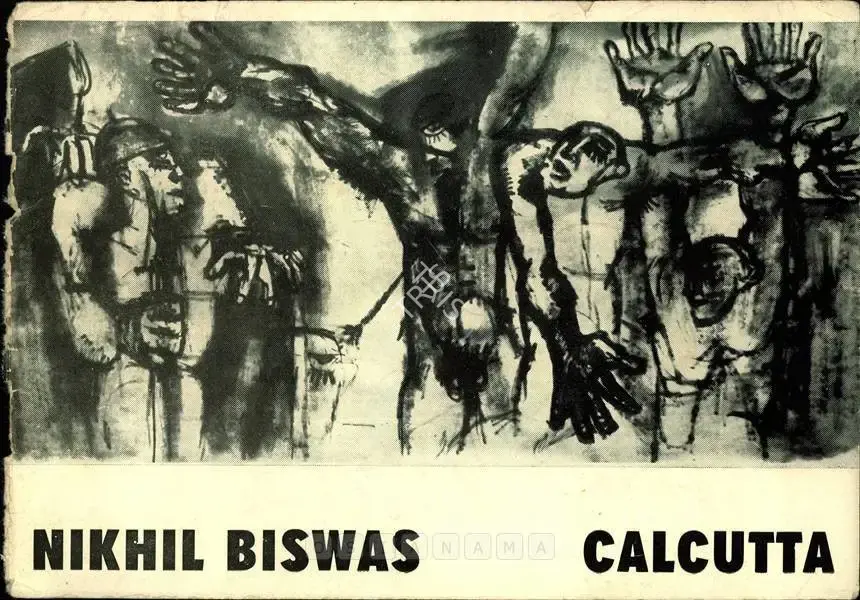
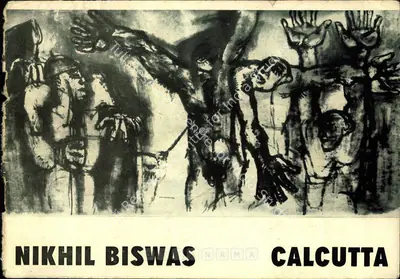
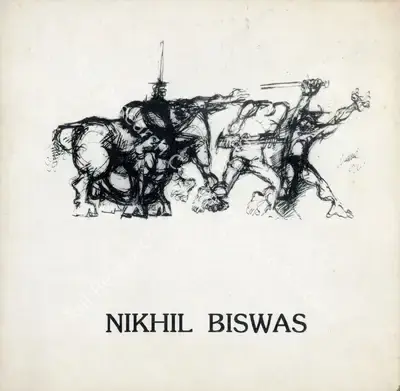
Biswas, Nikhil (Artist). Nikhil Biswas, 1966 | Solo Exhibition Catalogue | 00882081
Chronicled Highlights 8
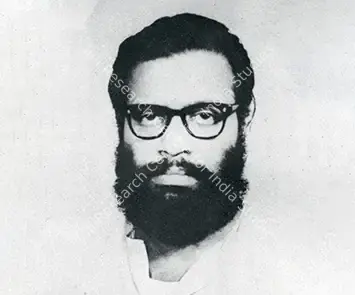
Nikhil Biswas — Calcutta, West Bengal, India.
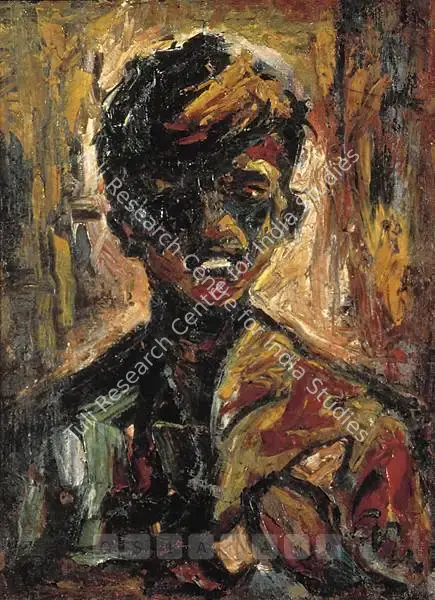
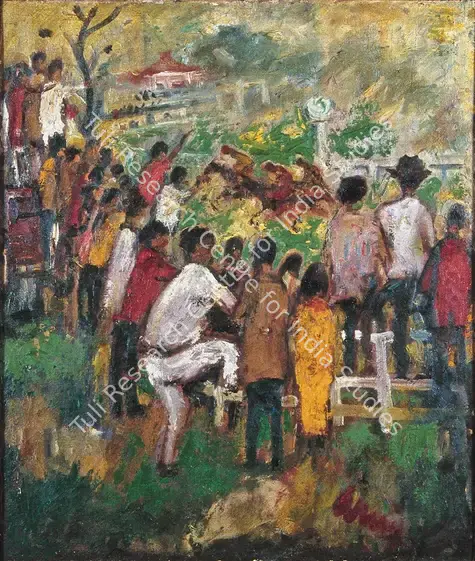
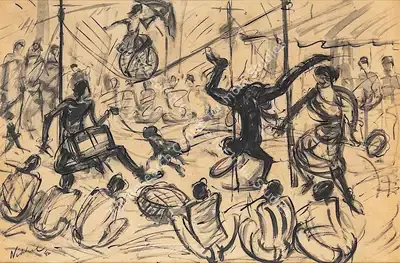
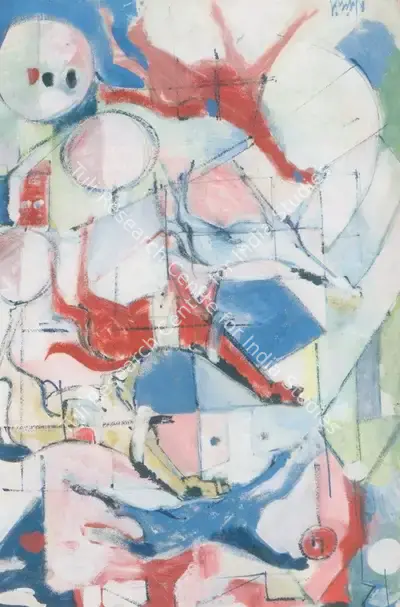
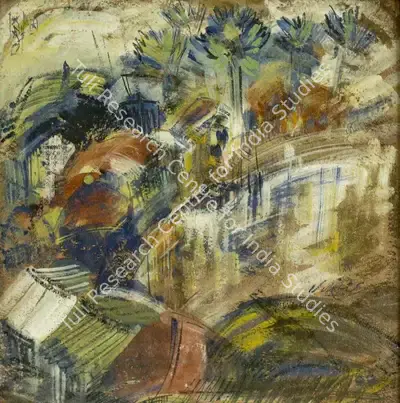
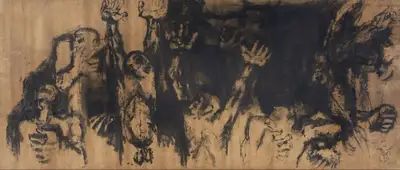
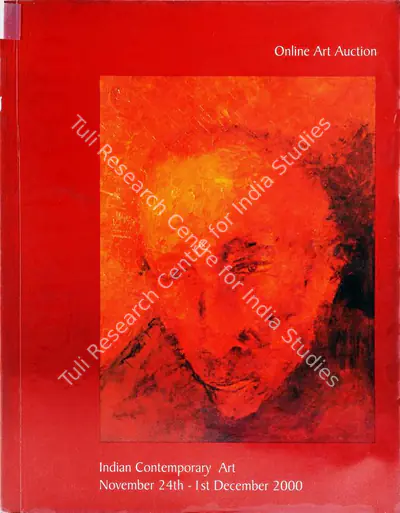
Lot 11 represents a very a rare oil on canvas work by the artist, using the palette knife in the thick impasto expressionist style.
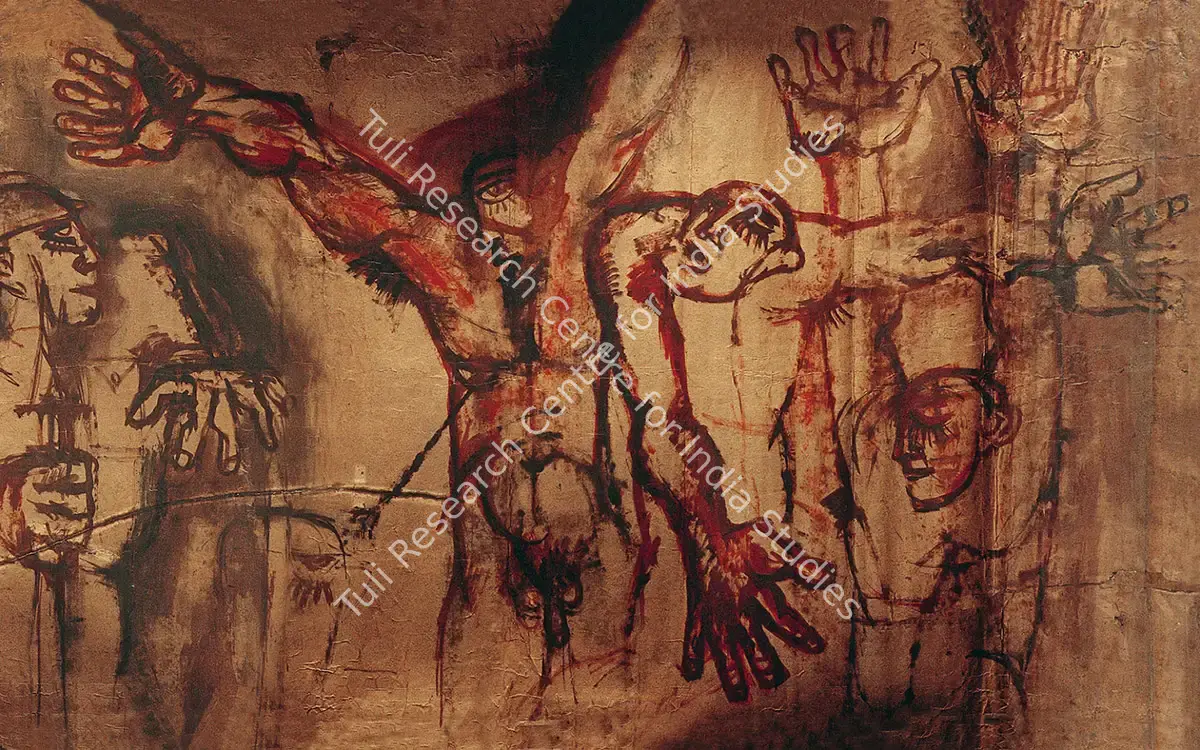
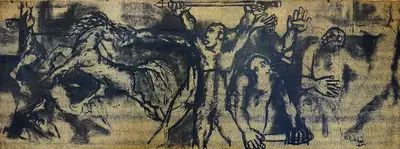
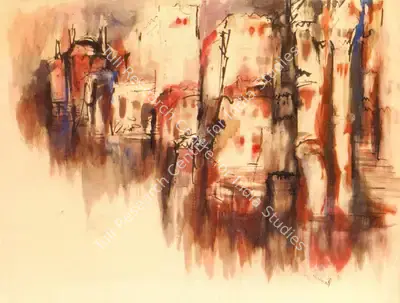
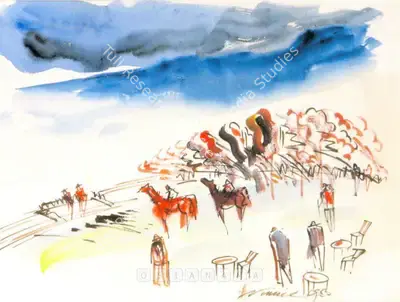
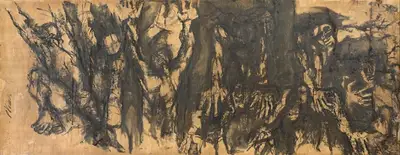
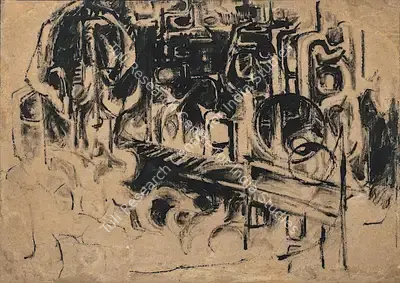
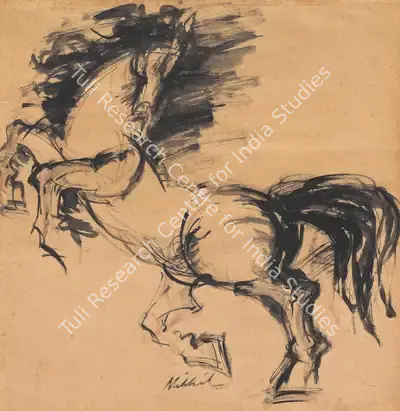
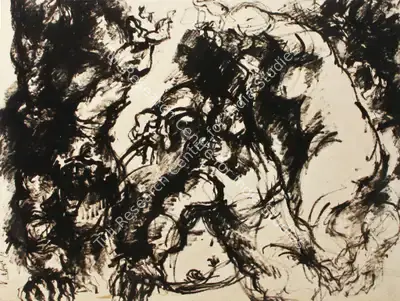
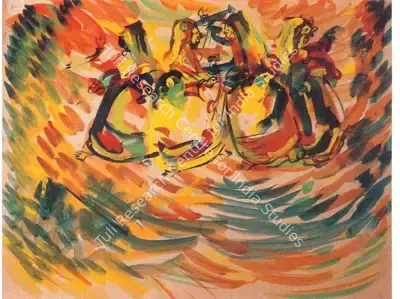
“Whereas his drawings are haunting and evocative in their directness and immediacy, the paintings generally display a rhythmic pattern. While he did sometimes rise to great painterly heights, he usually seemed to be in a great hurry to capture the moment of inspiration. The medium of oil however demands greater patience. Still it is interesting to observe his rhythmic approach. The swirling brush strokes in a blue and black moonlight landscape or the vertical strokes delineating a mass of figures are arresting. The daubs of red or blue, green or orange illuminate the dark tones of his colour drawings. But it is ultimately the pain and angst of the drawings that create the greatest impact. Nikhil Biswas’s painting career spanned only 13 years. But in that time he left an indelible imprint on the contemporary art scene of Calcutta.”
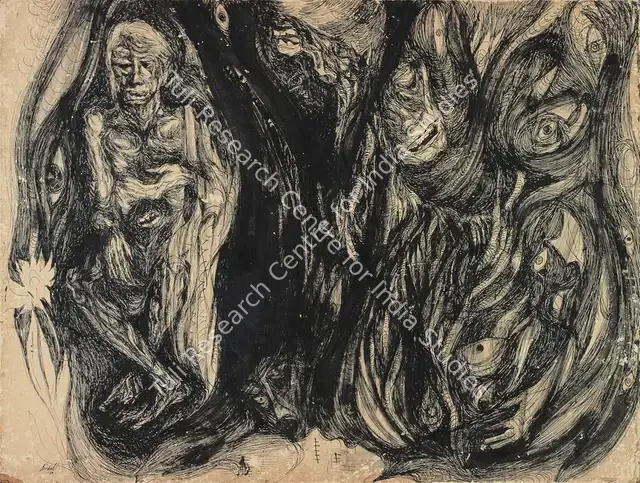
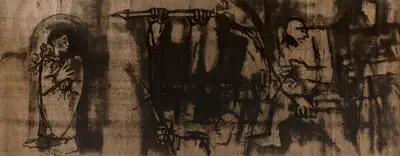
But, Nikhil’s sweet nostalgia disappeared. He said, ‘The picturesque, almost idyllic world of my boyhood days was shattered one day. I could see similarities of events I read or heard about with the ones I had experienced. I will never forget the overcrowded train we took on our way to Majdiah during the War and frightened faces of those fleeing from the city. Just the other day, I was reading a reminiscence of a survivor. He describes how the Gestapo had herded Jewish people into goods trains, packed them in like sardines and sent them off to the concentration camps like Belsen. Think of the slave ships from Africa and Asia during the Western dominance. These are certain underlying themes I have tried to explore in my mature works. Artists of my generation, some of them at least, had gone through the same kind of social circumstances that I experienced and their works show the same set of concerns. Their search for apt imagery and form are similar to mine.
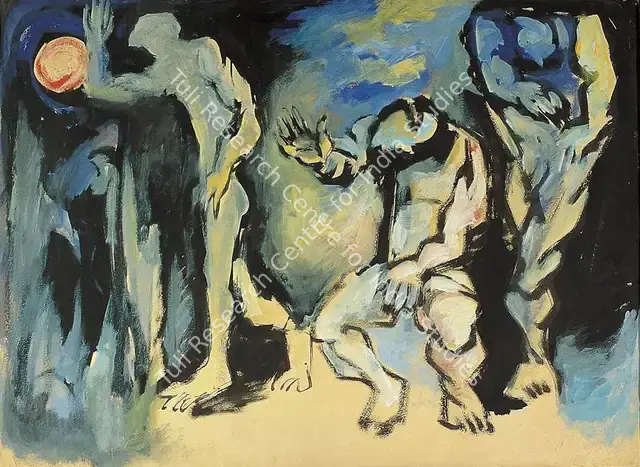
Lonely as I am in this wide world, I see how this spirit of loneliness has infected the mood of our modern artists and coloured their works. I also feel that the themes of my works are slowly attaining an intellectual aspect… But I am after an aspect that should be perceptual. I want to enjoy myself in my art. I want to live peacefully and hopefully with the inmates of my soul. I want to delineate truth in the background of eternal and universal values, the intrinsic nature of which remains ever unchanged despite its metamorphosis. This is the agonizing problem before the artist today.
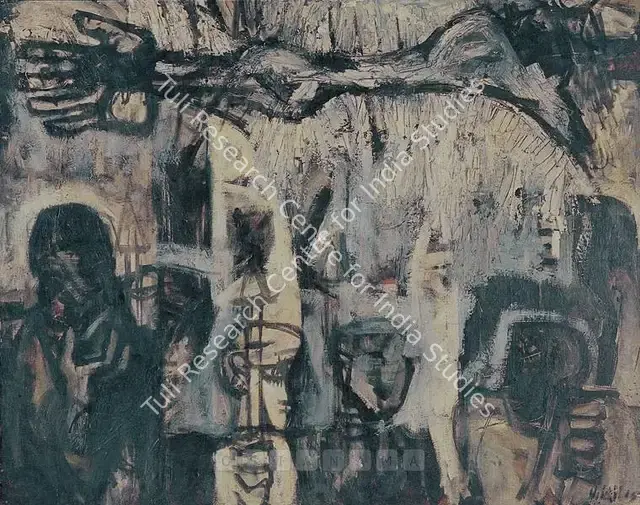
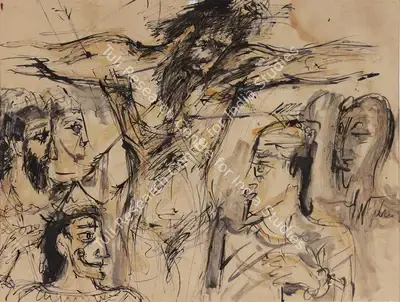
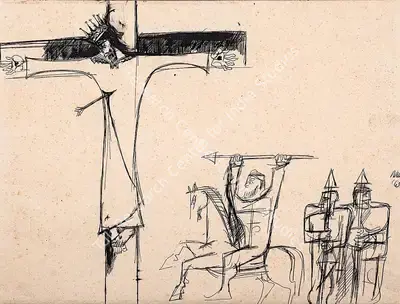
In 2006, the artist achieved a new high in the auction market with the sale of Crucifixion (1965), offered in the Forty Masterpieces Museum Quality Series VII by Osian's, which concluded on 09 September 2006 at Mumbai, achieving a sale price of ₹33,60,000 ($72,617). This record marked a defining moment in the artist's market history, reflecting both the significance of the artwork and its reception within the broader art world.
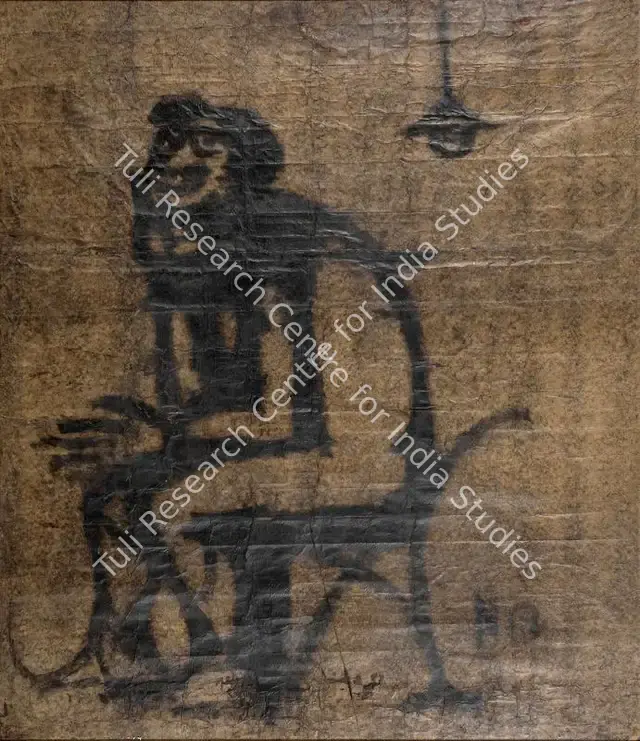
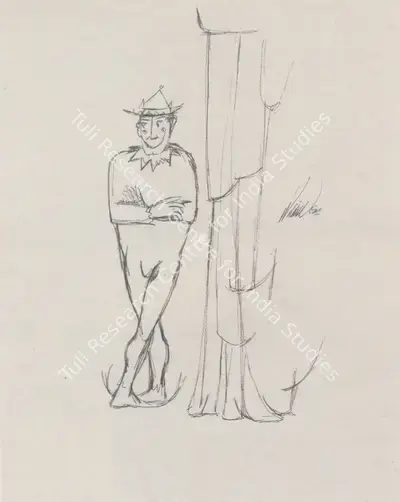
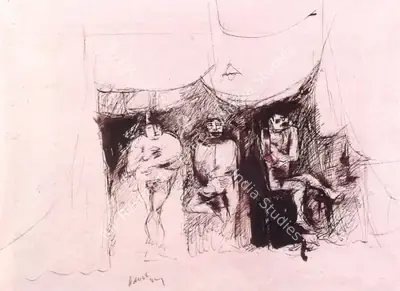
Biswas drew clowns in strong stark profiles or caught unguarded in a frontal view, or standing beside a strange curtain. Biswas’s clown is a brutish figure, half man and half animal. He crouches and slumps in a chair, the face more of a monkey than a man. A naked bulb hangs in the empty room to emphasise his alienation. Biswas’s clown stands or drops at the stage entrance, a forlorn or dejected figure. He wears the hat and his clothes as part of a fabulous masquerade of society, its hypocrisy. There is a note of self-identity which is further emphasised in his own statement: ‘Yes, it is the problem of de-humanisation that confronts us. I am no introvert, for in that case I would have had nothing to complain of. I see how I am being denuded of humanity in spite of my intimate connection with human beings.’
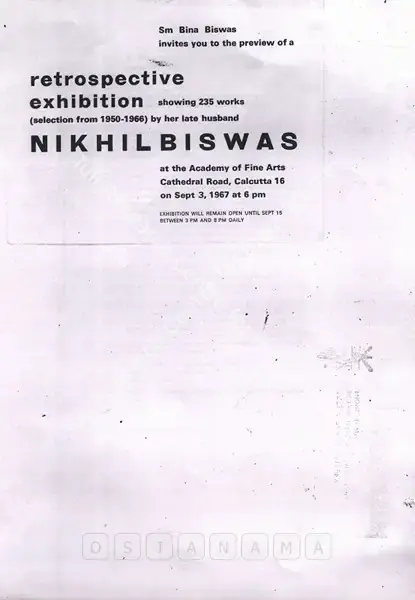
In 1967, Nikhil Bishwas Retrospective Exhibition showing 235 works marked a major milestone in the exhibition history of Nikhil Biswas, offering a retrospective survey of the artist's artistic production
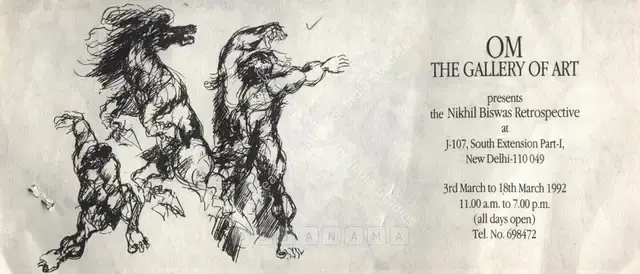
In 1992, Nikhil Bishwas Retrospective marked a major milestone in the exhibition history of Nikhil Biswas, offering a retrospective survey of the artist's artistic production
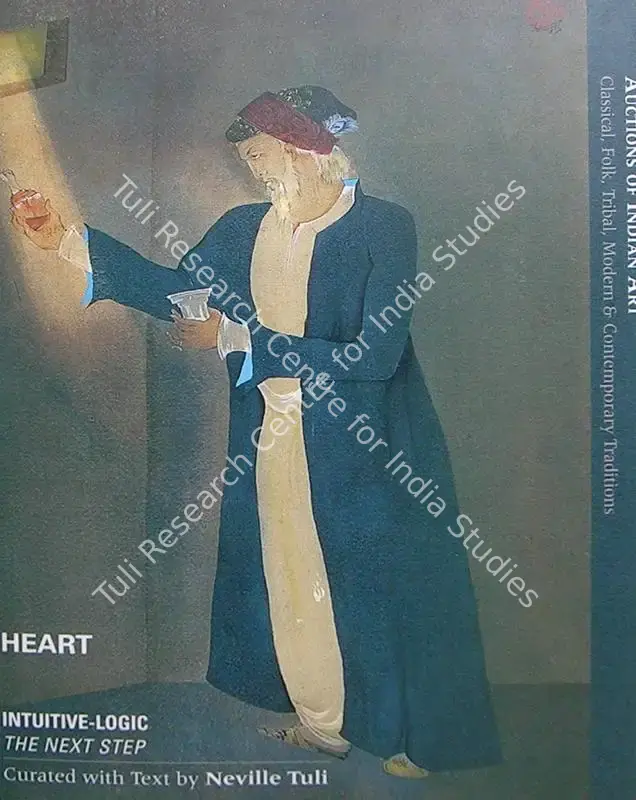
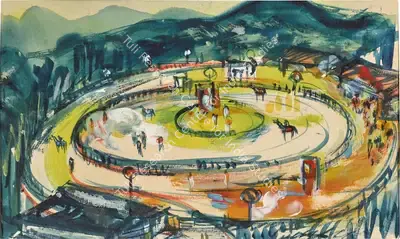
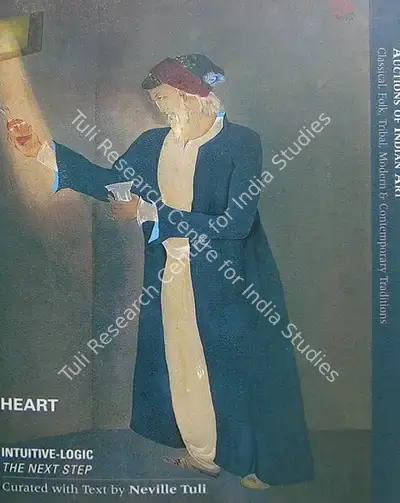
On 28 November 1999, made their debut in the Indian public auction market when Circus & Clown Series was presented as Lot in Intuitive-Logic - The Next Step: Auctions of Indian Art - Classical, Folk, Tribal, Modern & Contemporary Traditions, conducted by HEART in New Delhi, India. This auction marked the artist's first recorded appearance in the public auction market, establishing the earliest chapter of their auction history.
Economics of Art
Record-high lots3
Public Auction Market (1987–2026) | Select Indicators
Annual Auction Sale Turnover
It aggregates all sales across global auction houses into yearly totals.
Analysis reflected in the chart:
The turnover graph highlights periods of strong growth, moments of market correction, and resilience during downturns. Peaks often align with landmark works coming to public auction, while troughs may indicate reduced supply or weaker demand. Over time, the curve illustrates the overall trajectory of Nikhil Biswas’s public auction market presence.
Average Sale Price Per Lot
It smooths out fluctuations caused by the quantity of works offered and focuses on the Average Sale Price level per artwork.
Analysis reflected in the chart:
Rising average sale prices indicate growing collector confidence and a stronger willingness to pay higher amounts per work. Assuming the mix of mediums remains relatively stable over time, the proportion of works on paper typically priced lower than works on canvas adds important context to understanding these market movements.
Square Inch Rate Trend
This allows fair comparisons between smaller works and larger canvases.
Analysis reflected in the chart:
The Square Inch Rate shown in the graph combines various medium types such as canvas, paper, board, and others. Historically, works on canvas and board have broadly commanded higher prices compared to works on paper.
1954
- B.M. Birla's Gold Medal for Best Sculpture for his work 'Mother at Work', Academy of Fine Arts, Kolkata, India.
1956
- Gold Medal for Best Modern Art Exhibit, The Lalit Kala Akademi, New Delhi, India.
Research Centre
Posts 1
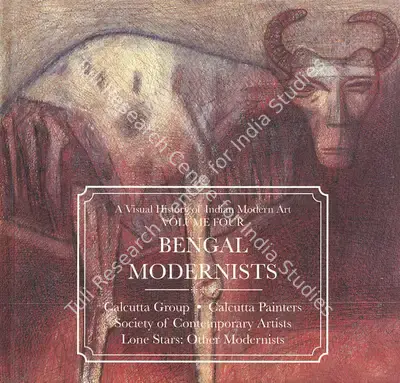
- Tuli Research Centre for India Studies presents All Living Souls - Expressed in the Modern and Contemporary Fine & Popular Indian Arts Curated by Neville Tuli As part of launching the 16th Research Category for India Studies - "The Animal-Human-Nature-Continuum" we present a fascinating exhibition of modern and contemporary Indian fine and popular arts and their expression of the ideas and forms related to the dialogue between animals and humans, and the larger cosmic and spiritual thoughts which abide therein. Please visit the Exhibition and see the artworks by modern and contemporary masters such as Rabindranath Tagore, D.P. Roy Chowdhury, M.F. Husain, J. Swaminathan, J. Sultan Ali, Somnath Hore, Ganesh Pyne, Manjit Bawa, K. Laxma Goud, Krishna Reddy, Jyoti Bhatt, Rekha Rodwittiya, Amit Ambalal, among others, along with vintage and rare prints from the pioneering Indian chromolithographic presses such as Chitrashala, Ravi Varma, Calcutta Art Studio, Chore Bagan & Kansaripara.
Related
40
Personalities
26
Institutions
12