New Delhi Times1985
Introduction
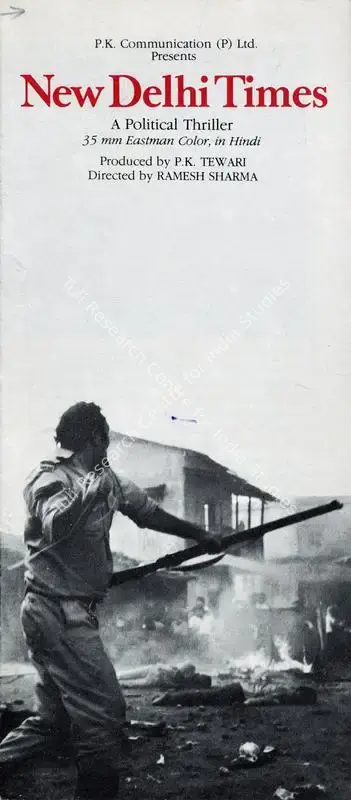
New Delhi Times (1986) Directed by Romesh Sharma and written by Gulzar, it is a landmark political thriller that offers a powerful critique of the nexus between politics, the media, and organized crime. Starring Shashi Kapoor, Sharmila Tagore, Om Puri, and Kulbhushan Kharbanda in pivotal roles, the film explores the ethical dilemmas faced by journalists operating within a politically compromised environment. Through its incisive portrayal of corruption, manipulation, and institutional decay, the film remains one of the most significant cinematic examinations of media ethics and political corruption in Hindi cinema.
The narrative revolves around Vikas Pande (Shashi Kapoor), the principled and uncompromising Executive Editor of the New Delhi Times, a leading Delhi-based newspaper. The story begins with the assassination of a local Member of the Legislative Assembly (MLA), Bhaleram, at a circuit house in Ghazipur during an intense political power struggle between the incumbent Chief Minister, Trivedi, and his ambitious rival, Ajay Singh (Om Puri). Simultaneously, Pande assigns a young reporter to investigate a devastating illicit liquor tragedy that claims hundreds of lives. When the reporter is killed in what appears to be a staged road accident, Pande becomes suspicious and personally undertakes the investigation. As he uncovers layers of political conspiracy and media manipulation, he confronts the entrenched alliance between politicians, influential media proprietors, and criminal networks, exposing the systemic corruption that undermines democratic institutions and press freedom.
Positioned within the tradition of India's parallel cinema movement, New Delhi Times departs from mainstream commercial conventions by foregrounding realism, political critique, and moral complexity. The film presents journalism not merely as a profession but as a vital democratic institution challenged by political interference, commercial interests, and ethical compromise. Its exploration of editorial responsibility and the vulnerability of independent media continues to remain relevant in contemporary debates on press freedom and democratic accountability.
Despite its artistic merit and critical significance, the film encountered considerable distribution challenges because of its controversial political subject matter. Many distributors and television broadcasters were reluctant to exhibit the film, resulting in a limited theatrical release and disappointing commercial performance. Nevertheless, Shashi Kapoor demonstrated his commitment to the project by reportedly accepting only ₹101 as a symbolic signing amount, reflecting his belief in the film's artistic and social importance.
Although New Delhi Times struggled at the box office, it received widespread critical acclaim and won three National Film Awards at the 34th National Film Awards (1987). Shashi Kapoor received the Best Actor Award for his restrained and compelling portrayal of an ethical newspaper editor, Subrata Mitra won the award for Best Cinematography, and debutant director Romesh Sharma received the Indira Gandhi Award for Best First Film of a Director. Alongside Jaane Bhi Do Yaaro (1983), Main Azaad Hoon (1989), and Rann (2010), New Delhi Times remains one of the few Hindi films to critically examine corruption within the media and its intersection with political power.
कहानी 'न्यू दिल्ली टाइम्स' के एग्जीक्यूटिव एडिटर विकास पांडे (शशि कपूर) के इर्द-गिर्द घूमती है, जो अपने उसूलों पर चलने वाले और समझौता न करने वाले व्यक्ति हैं। कहानी की शुरुआत ग़ाज़ीपुर के एक सर्किट हाउस में स्थानीय विधायक (MLA) भलेराम की हत्या से होती है। यह हत्या उस समय होती है जब मौजूदा मुख्यमंत्री त्रिवेदी और उनके महत्वाकांक्षी प्रतिद्वंद्वी अजय सिंह (ओम पुरी) के बीच सत्ता के लिए कड़ा संघर्ष चल रहा होता है। साथ ही, पांडे एक युवा रिपोर्टर को ज़हरीली शराब से हुई उस भयानक त्रासदी की जांच का काम सौंपते हैं जिसमें सैकड़ों लोगों की जान चली गई थी। जब उस रिपोर्टर की मौत एक सड़क दुर्घटना में हो जाती है जो साज़िश के तहत की गई लगती है, तो पांडे को शक होता है और वे ख़ुद जांच का जिम्मा संभालते हैं। जैसे-जैसे वे राजनीतिक साज़िश और मीडिया के हेर-फेर की परतें खोलते हैं। उनका सामना राजनेताओं, प्रभावशाली मीडिया मालिकों और आपराधिक नेटवर्क के बीच बनी गहरी मिलीभगत से होता है। वे उस व्यवस्थागत भ्रष्टाचार को उजागर करते हैं जो लोकतांत्रिक संस्थाओं और प्रेस की आज़ादी को कमज़ोर करता है।
भारत के 'पैरेलल सिनेमा' (समानांतर सिनेमा) आंदोलन की परंपरा में बनी फ़िल्म 'नई दिल्ली टाइम्स' यथार्थवाद, राजनीतिक आलोचना और नैतिक जटिलताओं पर ज़ोर देकर मुख्यधारा के व्यावसायिक सिनेमा के तौर-तरीक़ों से अलग हटकर काम करती है। यह फ़िल्म पत्रकारिता को सिर्फ़ एक पेशे के तौर पर नहीं, बल्कि एक अहम लोकतांत्रिक संस्था के रूप में दिखाती है, जिसे राजनीतिक दख़ल, व्यावसायिक हितों और नैतिक समझौतों जैसी चुनौतियों का सामना करना पड़ता है। संपादकीय ज़िम्मेदारी और आज़ाद मीडिया की कमज़ोरियों पर इसकी पड़ताल, प्रेस की आज़ादी और लोकतांत्रिक जवाबदेही पर आज की बहस में भी प्रासंगिक बनी हुई है।
अपनी कलात्मक ख़ूबी और आलोचनात्मक महत्व के बावजूद, विवादास्पद राजनीतिक विषय-वस्तु के कारण इस फ़िल्म को डिस्ट्रिब्यूशन (वितरण) में काफ़ी चुनौतियों का सामना करना पड़ा। कई डिस्ट्रिब्यूटर और टेलीविज़न ब्रॉडकास्टर इस फ़िल्म को दिखाने में हिचकिचा रहे थे, जिसके चलते इसे सीमित संख्या में सिनेमाघरों में रिलीज़ किया गया और व्यावसायिक तौर पर इसका प्रदर्शन निराशाजनक रहा। इसके बावजूद, शशि कपूर ने इस प्रोजेक्ट के प्रति अपनी प्रतिबद्धता दिखाई। उन्होंने कथित तौर पर साइनिंग अमाउंट के तौर पर सिर्फ़ ₹101 लिए, जो फ़िल्म के कलात्मक और सामाजिक महत्व में उनके विश्वास को दर्शाता है।
हालांकि 'न्यू दिल्ली टाइम्स' बॉक्स ऑफ़िस पर ज़्यादा सफल नहीं रही, लेकिन इसे आलोचकों से काफ़ी तारीफ़ मिली और इसने 34वें नेशनल फ़िल्म अवॉर्ड्स (1987) में तीन नेशनल फ़िल्म अवॉर्ड जीते। शशि कपूर को एक ईमानदार अख़बार एडिटर के संयमित और दमदार किरदार के लिए 'बेस्ट एक्टर' का अवॉर्ड मिला, सुब्रत मित्रा ने 'बेस्ट सिनेमैटोग्राफ़ी' का अवॉर्ड जीता, और पहली बार निर्देशन कर रहे रोमेश शर्मा को 'बेस्ट फ़र्स्ट फ़िल्म ऑफ़ ए डायरेक्टर' के लिए इंदिरा गांधी अवॉर्ड मिला। 'जाने भी दो यारो' (1983), 'मैं आज़ाद हूँ' (1989) और 'रण' (2010) की तरह ही, 'न्यू दिल्ली टाइम्स' भी उन चुनिंदा हिंदी फ़िल्मों में से एक है जो मीडिया में भ्रष्टाचार और राजनीतिक सत्ता के साथ उसके गठजोड़ की आलोचनात्मक पड़ताल करती हैं।