

Introduction
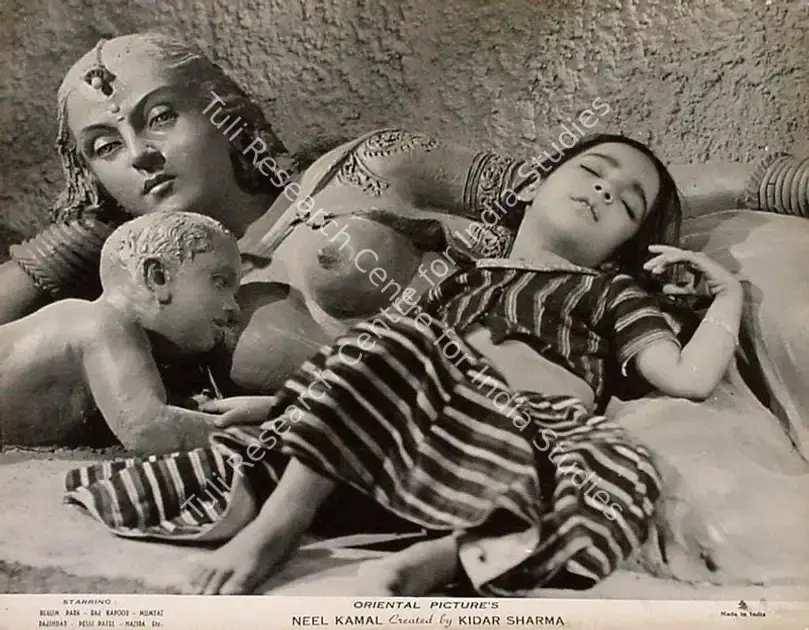
Neel Kamal (1947) Directed by Kidar Sharma, Neel Kamal was a romantic drama that marked a significant milestone in Hindi cinema, primarily as the first leading role for two future legends—Raj Kapoor and Madhubala. Also starring Begum Para, the film told the poignant story of two estranged royal sisters (played by Para and Madhubala) who fall in love with the same man—a self-absorbed artist portrayed by Kapoor. The emotionally charged narrative culminates in tragedy when the younger sister, unable to cope with unrequited love and emotional betrayal, takes her own life.
The film began production in 1946 under the title Bichara Bhagwaan at Ranjit Studios. It faced several setbacks during its making. Initially starring actress Kamla Chatterjee, production was halted following her untimely death. Her husband, director Kidar Sharma, paused filming and later resumed with a completely new cast. He replaced Chatterjee with a 14-year-old Madhubala (then credited as Baby Mumtaz), making it her last film before adopting her now-iconic screen name. When leading actor Jairaj dropped out of the project, Sharma took a bold step by casting a then-unknown clapper boy—Raj Kapoor—as the male lead. Industry scepticism was widespread, and unable to secure backing, Sharma chose to self-finance the film.
Upon its release, Neel Kamal earned ₹2.5 million at the box office, making it a moderate commercial success. However, it received mixed reviews from critics and was ultimately not classified as a major box office hit. Despite this, it gained a degree of historical significance due to the breakthrough performances of Kapoor and Madhubala, both of whom would go on to become cinematic legends.
The 118-minute film featured music composed by Snehal Bhatkar, though he was credited under the pseudonym B. Vasudev. The lyrics were penned by Kidar Sharma himself. The soundtrack played a crucial role in the film's appeal and is widely considered a turning point in Bhatkar's musical career. His work on Neel Kamal established his long-term collaboration with Sharma.
The film's songs enjoyed widespread popularity and are remembered for their lyrical depth and melodic beauty. Notable tracks included: Bhool Jate Hai, Bhool Jaya Karen (Rajkumari), Jaiyo Na Bides (Rajkumari Dubey, Snehal Bhatkar), Aankh Jo Dekhe Hai (Mukesh), Patthar Se Tum Doodh Bahai (Mukesh, Zohrabai Ambalewali), Pyar Se Humko (Mukesh, Zohrabai Ambalewali), Sochta Hai Kya (Mukesh), Bol Bol Balam Bedardi (Rajkumari, Geeta Dutt), Kal Jamuna Tat Par (Rajkumari), Brij Mein Dhool Macha (Geeta Dutt, Rajkumari, Snehal Bhatkar), Jawaani Agar Huk (Rajkumari, Geeta Dutt), and Maa Ne Bheja (Rajkumari, Geeta Dutt).
इस फ़िल्म का निर्माण सबसे पहले सन् 1946 में 'रणजीत स्टूडियोज़' के बैनर तले 'बिचारा भगवान' टाइटल के साथ शुरू हुआ था, लेकिन इसे कई रुकावटों का सामना करना पड़ा। पहले इस फ़िल्म में अभिनेत्री कमला चटर्जी मुख्य भूमिका में थीं, लेकिन उनकी असामयिक मृत्यु के कारण फ़िल्म की शूटिंग रुक गई। कमला चटर्जी के पति और फ़िल्म के निर्देशक किदार शर्मा ने इसके बाद एक नई कास्ट के साथ फ़िल्म को दोबारा शुरू किया। उन्होंने चटर्जी की भूमिका में चौदह वर्षीय मधुबाला को लिया जो उस समय 'बेबी मुमताज़' के नाम से जानी जाती थीं। इस फ़िल्म के बाद ही उन्होंने अपना जगप्रसिद्ध नाम 'मधुबाला' अपनाया था। फिर जब फ़िल्म के प्रमुख अभिनेता जयराज ने इस प्रोजेक्ट को छोड़ दिया तो किदार शर्मा ने साहसिक निर्णय लेते हुए एक अनजान से, सेट पर क्लैपर का काम कर रहे लड़के को मुख्य भूमिका में ले लिया। यह अभिनेता युवा राज कपूर थे। सिनेमा इंडस्ट्री में इस फ़िल्म को लेकर काफी संदेह व्यक्त किया गया और कोई भी निर्माता इसमें अपना पैसा लगाने को तैयार नहीं दिख रहा था, इसलिए किदार शर्मा ने फ़िल्म को अपने पैसों से बनाने का निर्णय लिया।
फ़िल्म ने अपनी रिलीज पर टिकट खिड़की पर 25 लाख रुपए की कमाई की। फ़िल्म की कामयाबी को एक औसत व्यावसायिक सफलता के रूप में दर्ज किया गया। हालाँकि समीक्षकों की राय इसे लेकर मिली-जुली रही और यह फ़िल्म ज़्यादा चर्चा में नहीं आई, पर आगे जाकर इसके ऐतिहासिक महत्व के चलते इसे पहचाना गया। राज कपूर और मधुबाला जैसे सितारों के करियर की शुरुआती फ़िल्म के रूप में यह सिनेमा इतिहास का ख़ास हिस्सा बन गई।
कुल 118 मिनट लंबी इस फ़िल्म के लिए संगीत स्नेहल भाटकर ने तैयार किया था, जिनका फ़िल्म के क्रेडिट में बी. वासुदेव के छद्म नाम से उल्लेख है। फ़िल्म के लिए गीत खुद किदार शर्मा ने लिखे थे। इस फ़िल्म की अपील में इसके संगीत की ख़ास भूमिका थी और यह संगीतकार स्नेहल भाटकर के करियर में एक अहम मोड़ साबित हुई। इसके साथ उनकी निर्देशक किदार शर्मा के साथ दीर्घकालिक रचनात्मक साझेदारी की शुरूआत होती है।
Body of Work
Research Centre
Related
3