

Introduction
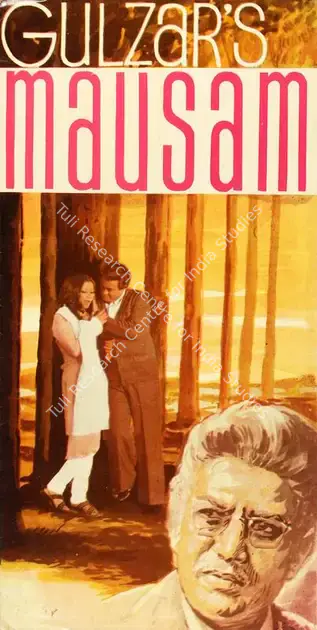
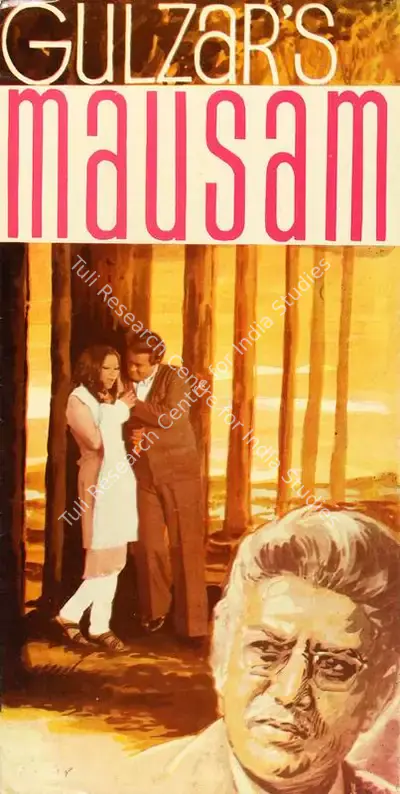
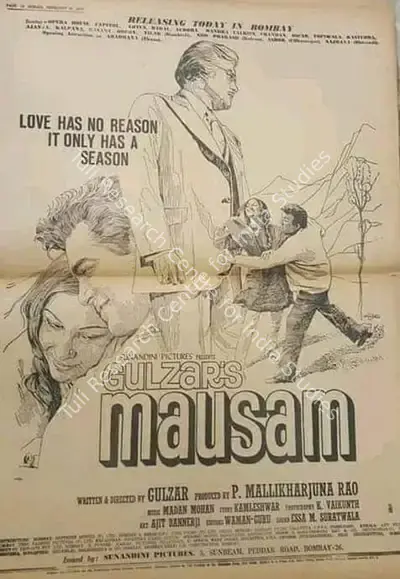
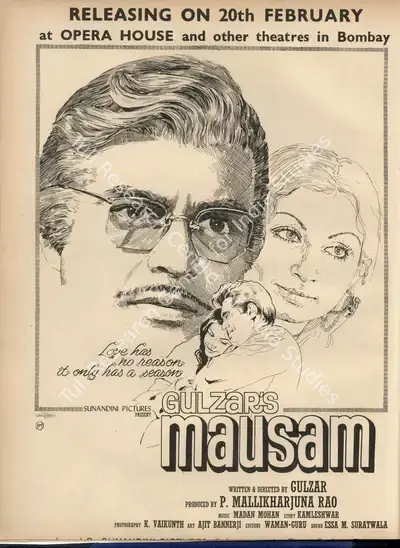
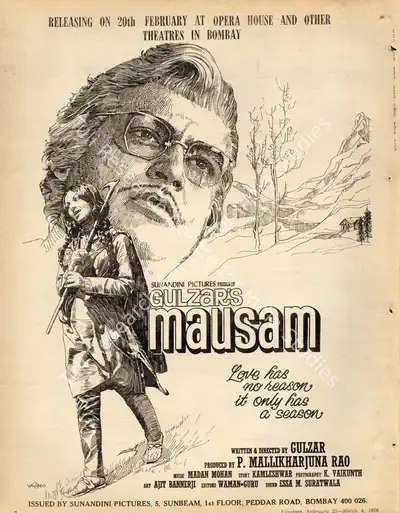
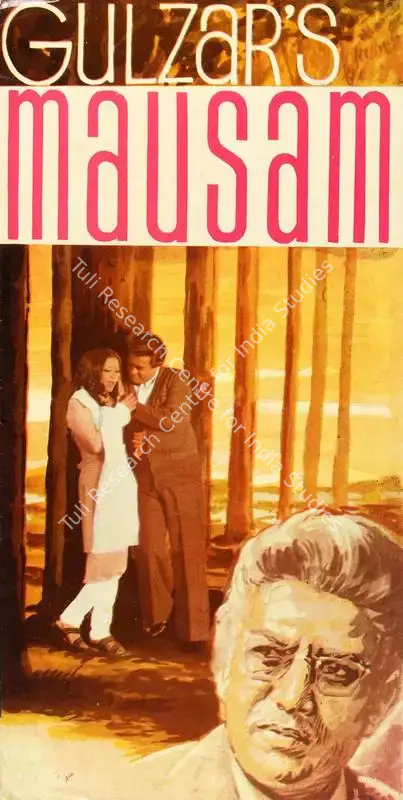
Mausam (1975) It is a poignant Hindi-language romantic drama directed by Gulzar and starring Sanjeev Kumar and Sharmila Tagore in two of the most celebrated performances of their careers. Loosely inspired by A.J. Cronin's 1961 novel The Judas Tree, the film credits its story to noted writers Kamleshwar and Bhushan Banmali. Combining themes of love, loss, guilt, and redemption, Mausam remains one of the most accomplished works in Gulzar's distinguished filmography.
The narrative follows Dr. Amarnath Gill (Sanjeev Kumar), a successful middle-aged physician who returns to a hill town after many years in search of Chanda, the woman he once loved and abandoned. Instead, he encounters Kajli (Sharmila Tagore), Chanda's daughter, whose life has been marked by poverty, exploitation, and hardship. Haunted by remorse, Amarnath attempts to atone for his past mistakes, setting in motion a deeply moving exploration of regret, responsibility, and emotional reconciliation. The film also features notable performances by Dina Pathak and Om Shivpuri in pivotal supporting roles.
Mausam occupies a unique place in Gulzar's oeuvre, having been written simultaneously with Aandhi (1975) by Gulzar, Kamleshwar, and Bhushan Banmali. Both films were shot during roughly the same period and featured Sanjeev Kumar in mature, age-transcending roles. Although Aandhi was released first, its progress was interrupted by political controversy that necessitated reshoots and delayed its full circulation. In the interim, Mausam was completed and released, earning both critical acclaim and audience appreciation.
A mature and deeply nuanced social drama, Mausam was praised for its sensitive treatment of human relationships, emotional complexity, and moral ambiguity. It achieved modest commercial success and was well received by audiences despite being released during a year dominated by major blockbusters, most notably Sholay (1975). Over time, its reputation has only grown, and it is now regarded as one of the finest examples of parallel mainstream cinema—combining artistic sophistication with broad emotional appeal.
An interesting anecdote from the film's production concerns the song Mere Ishq Ke Lakhon Jhatke. During its filming, renowned choreographer Saroj Khan happened to be working at the studio on another project. Gulzar reportedly requested her assistance in teaching a few dance movements to Sharmila Tagore, providing an early glimpse of Khan's future prominence in Indian cinema.
Music constitutes one of the film's greatest strengths. While the songs were composed by Madan Mohan, the evocative background score was created by Salil Chowdhury. Following Madan Mohan's untimely death on 14 July 1975, the film was dedicated to his memory. The lyrics, written by Gulzar, are among his most poetic and emotionally resonant works. Mausam is one of only two Gulzar-directed films for which Madan Mohan composed the music, the other being Koshish (1972).
Among the soundtrack's most enduring achievements is Dil Dhoondta Hai, sung by Lata Mangeshkar and Bhupinder Singh. Widely regarded as one of Gulzar's finest lyrical creations, the song evokes nostalgia for simpler, happier moments while expressing an aching sense of emotional longing. Its imagery, subtlety, and reflective mood have made it one of the most beloved songs in Hindi cinema. The song's popularity was reflected in its inclusion at the twelfth position on the annual Binaca Geetmala year-end chart for 1976.
Equally memorable is Ruke Ruke Se Qadam, rendered with extraordinary sensitivity by Lata Mangeshkar. Madan Mohan's masterful use of Raag Ahiri Todi lends the composition a rare classical depth and emotional richness. Gulzar's lyrics eloquently capture hesitation, unspoken sorrow, and emotional uncertainty, while Lata Mangeshkar's soulful interpretation imbues the song with a haunting poignancy that continues to resonate with listeners decades later.
The film received widespread critical acclaim and garnered numerous accolades. Sharmila Tagore won her the Silver Lotus Award for Best Actress at the 23rd National Film Awards for her nuanced dual portrayal of Chanda and Kajli, while Mausam itself received the National Film Award for Second Best Feature Film. At the 24th Filmfare Awards, the film earned eight nominations and secured two major honours: Best Film and Best Director for Gulzar.
The film's enduring influence extended beyond Hindi cinema and inspired a Tamil-language remake, Vasanthathil Oru Naal (1982), further testament to the timeless appeal of its narrative and themes.
कहानी डॉ. अमरनाथ गिल (संजीव कुमार) के इर्द-गिर्द घूमती है, जो एक सफल अधेड़ उम्र के चिकित्सक हैं और कई वर्षों बाद चंदा की तलाश में एक पहाड़ी कस्बे में लौटते हैं। चंदा से उनका प्रेम था, जिसे उन्होंने त्याग दिया था। वहाँ उनकी मुलाक़ात चंदा की बेटी काजली (शर्मिला टैगोर) से होती है, जिसका जीवन गरीबी, शोषण और कठिनाइयों से भरा रहा है। पश्चाताप से ग्रस्त अमरनाथ अपने अतीत की गलतियों का प्रायश्चित करने का प्रयास करते हैं, जिससे पश्चाताप, जिम्मेदारी और भावनात्मक सामंजस्य की एक मार्मिक कहानी शुरू होती है। फ़िल्म में दीना पाठक और ओम शिवपुरी ने भी महत्वपूर्ण सहायक भूमिकाओं में शानदार अभिनय किया है।
गुलज़ार की फ़िल्मोग्राफ़ी में 'मौसम' का एक अनूठा स्थान है, क्योंकि इसे गुलज़ार, कमलेशवर और भूषण बनमाली ने 'आंधी' (1975) के साथ ही लिखा था। दोनों फ़िल्मों की शूटिंग लगभग एक ही समय में हुई थी और इनमें संजीव कुमार ने परिपक्व और उम्र से परे भूमिकाएं निभाई थीं। हालांकि 'आंधी' पहले रिलीज़ हुई थी, लेकिन राजनीतिक विवाद के कारण इसकी शूटिंग में रुकावट आई और दोबारा शूटिंग करनी पड़ी, जिससे इसकी पूर्ण रिलीज़ में देरी हुई। इसी बीच, 'मौसम' पूरी हुई और रिलीज़ हुई, जिसे समीक्षकों और दर्शकों दोनों ने ख़ूब सराहा।
एक परिपक्व और बारीक सामाजिक नाटक, 'मौसम' को मानवीय रिश्तों, भावनात्मक जटिलता और नैतिक अस्पष्टता के संवेदनशील चित्रण के लिए सराहा गया। इसने मामूली व्यावसायिक सफलता हासिल की और दर्शकों द्वारा खूब पसंद किया गया, जबकि यह उस वर्ष रिलीज़ हुई थी जब कई बड़ी ब्लॉकबस्टर फ़िल्में, विशेष रूप से शोले (1975), रिलीज़ हो रही थीं। समय के साथ, इसकी प्रतिष्ठा बढ़ती ही गई है और अब इसे कलात्मक परिष्कार और व्यापक भावनात्मक अपील के संयोजन से बनी समानांतर मुख्यधारा सिनेमा के बेहतरीन उदाहरणों में से एक माना जाता है।
फ़िल्म के निर्माण से जुड़ा एक रोचक किस्सा 'मेरे इश्क के लाखों झटके' गाने से संबंधित है। इसकी शूटिंग के दौरान, मशहूर कोरियोग्राफ़र सरोज ख़ान स्टूडियो में किसी अन्य प्रोजेक्ट पर काम कर रही थीं। गुलज़ार ने कथित तौर पर शर्मिला टैगोर को कुछ नृत्य मुद्राएं सिखाने में उनकी सहायता मांगी, जिससे भारतीय सिनेमा में ख़ान की भावी प्रसिद्धि की एक झलक मिली।
फ़िल्म का संगीत इसकी सबसे बड़ी ख़ूबियों में से एक है। गाने मदन मोहन ने तैयार किए थे, जबकि भावपूर्ण पृष्ठभूमि संगीत सलिल चौधरी ने तैयार किया था। 14 जुलाई 1975 को मदन मोहन के असामयिक निधन के बाद, फ़िल्म उनकी स्मृति को समर्पित की गई। गुलज़ार द्वारा लिखे गए गीत उनकी सबसे काव्यात्मक और भावनात्मक रूप से प्रभावशाली रचनाओं में से हैं। मौसम गुलज़ार द्वारा निर्देशित उन दो फ़िल्मों में से एक है जिनके लिए मदन मोहन ने संगीत दिया था, दूसरी फ़िल्म कोशिश (1972) है।
इस फ़िल्म के सबसे लोकप्रिय गीतों में से एक है लता मंगेशकर और भूपिंदर सिंह द्वारा गाया गया गीत 'दिल ढूंढता है'। गुलज़ार की बेहतरीन रचनाओं में से एक माने जाने वाले इस गीत में सादगी भरे, ख़ुशहाल पलों की यादों को ताज़ा करते हुए गहरी भावनात्मक तड़प को व्यक्त किया गया है। इसकी कल्पनाशीलता, सूक्ष्मता और चिंतनशील भाव ने इसे हिंदी सिनेमा के सबसे प्रिय गीतों में से एक बना दिया है। इस गीत की लोकप्रियता इस बात से ज़ाहिर होती है कि 1976 के वार्षिक बिनाका गीतमाला वर्ष के अंत के चार्ट में इसे बारहवां स्थान मिला था।
लता मंगेशकर द्वारा असाधारण संवेदनशीलता से गाया गया गीत 'रुके रुके से कदम' भी उतना ही यादगार है। मदन मोहन का राग अहिरी तोड़ी का कुशल प्रयोग इस सांगितिक रचना को एक दुर्लभ शास्त्रीय गहराई और भावनात्मक समृद्धि प्रदान करता है। गुलज़ार के बोल झिझक, अनकहे दुख और भावनात्मक अनिश्चितता को बख़ूबी व्यक्त करते हैं, जबकि लता मंगेशकर की भावपूर्ण प्रस्तुति गीत में एक ऐसी मार्मिकता भर देती है जो दशकों बाद भी श्रोताओं के दिलों में गूंजती रहती है।
फ़िल्म को व्यापक आलोचनात्मक प्रशंसा मिली और इसने कई पुरस्कार जीते। शर्मिला टैगोर को चंदा और काजली के दोहरे किरदारों में उनके बारीक अभिनय के लिए 23वें राष्ट्रीय फ़िल्म पुरस्कारों में सर्वश्रेष्ठ अभिनेत्री का रजत कमल पुरस्कार मिला, जबकि 'मौसम' को द्वितीय सर्वश्रेष्ठ फ़ीचर फ़िल्म का राष्ट्रीय फ़िल्म पुरस्कार प्राप्त हुआ। 24वें फ़िल्मफ़ेयर पुरस्कारों में, फ़िल्म को आठ नामांकन मिले और इसने दो प्रमुख पुरस्कार जीते, सर्वश्रेष्ठ फ़िल्म और गुलजार के लिए सर्वश्रेष्ठ निर्देशक का पुरस्कार मिला।
इस फ़िल्म का स्थायी प्रभाव हिंदी सिनेमा से परे तक फैला हुआ था और इसने तमिल भाषा में बनी रीमेक, वसंतथिल ओरु नाल (1982) को प्रेरित किया, जो इसकी कहानी और विषयों की कालातीत अपील का एक और प्रमाण है।