
Manoranjan1974
Introduction
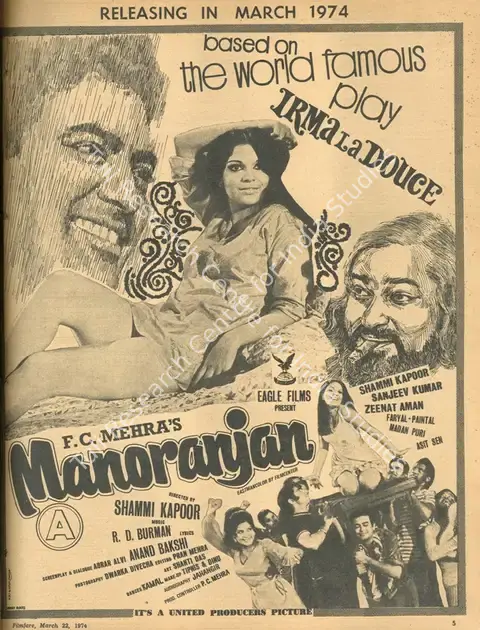
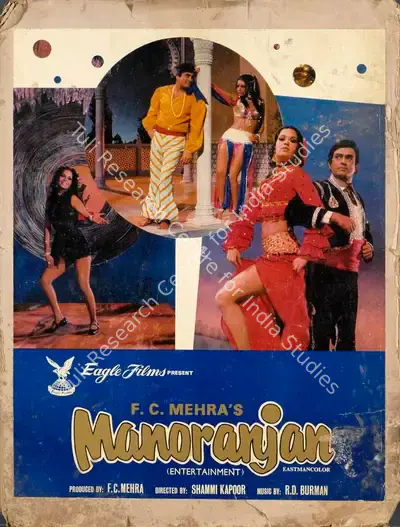
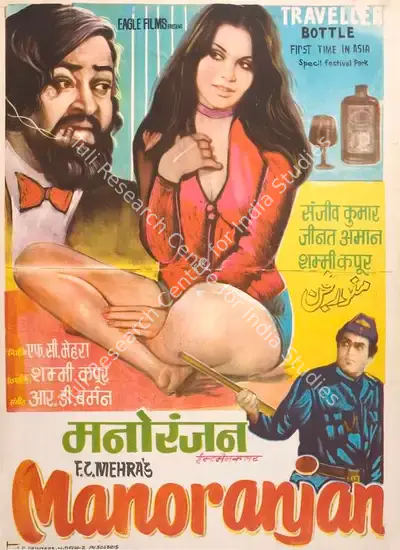
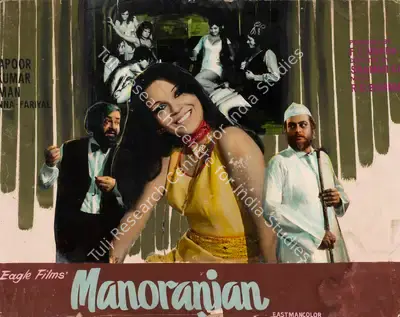
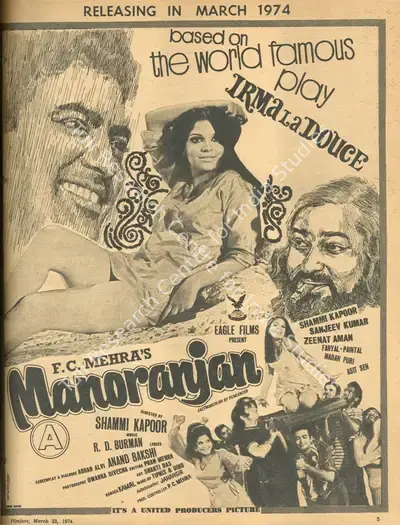
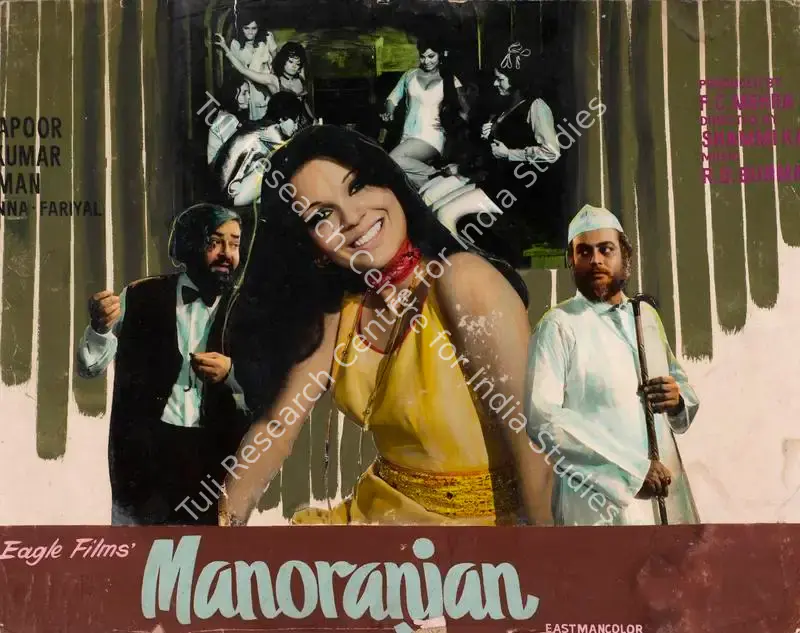
Manoranjan (1974) A romantic comedy directed by Shammi Kapoor was adapted from Billy Wilder's acclaimed film Irma la Douce (1963). It features Sanjeev Kumar in the role originally portrayed by Jack Lemmon, Zeenat Aman in the part played by Shirley MacLaine, and Shammi Kapoor in a role inspired by Lou Jacobi's character. The film reimagines the Parisian setting of the original within an Indian milieu, with the iconic Hotel Casanova transformed into the aptly named Hotel Mauj!
The supporting cast includes notable performers such as Paintal, Asit Sen, and Dev Kumar. Despite its commercial underperformance upon release, Manoranjan has since attained cult status and is widely regarded as one of the most unconventional and progressive films in Hindi cinema.
What distinguishes Manoranjan is its remarkably non-judgmental treatment of prostitution, a subject rarely approached with such candour in mainstream Indian cinema of the 1970s. The film presents sex work without overt moralising, and notably, the heroine's relationships with men other than the protagonist are neither condemned nor treated as a source of dramatic conflict. This departure from conventional cinematic norms has contributed significantly to the film's enduring reputation.
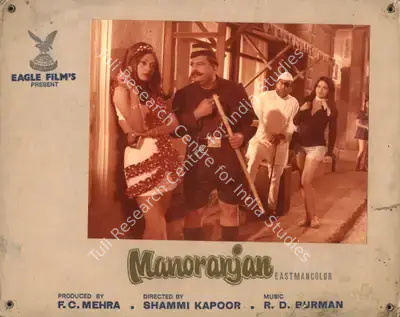
The narrative centres on Ratan Sheru (Sanjeev Kumar), an upright and honest police constable who falls in love with Nisha (Zeenat Aman), a spirited and independent sex worker. Determined to persuade her to abandon her profession, Ratan secretly works additional shifts and adopts the disguise of a wealthy nawab, becoming one of her regular clients. His elaborate deception generates a series of comic misunderstandings, mistaken identities, and police entanglements, forming the basis of the film's humour. While adapted from Irma la Douce, Manoranjan remains notable for its distinctly Indian sensibility and its progressive handling of a socially sensitive subject. Interestingly, writer Abrar Alvi—credited with classics such as Pyaasa (1957), Kaagaz Ke Phool (1959), and Sahib Bibi Aur Ghulam (1962), the latter of which he also directed—adapted the screenplay and dialogues from the original 1963 French film Irma la Douce.
Shammi Kapoor later revealed that he had harboured ambitions of adapting Irma la Douce since the early 1960s, after watching the film during a visit to London. Initially, he intended to play the role corresponding to Nestor Patou, the honest police officer. However, by the time production commenced, Kapoor felt he was no longer suited to the part due to age considerations, and the role was subsequently assigned to Sanjeev Kumar. The film was primarily shot at Mehboob Studios and Natraj Studios in Mumbai. As part of its promotional campaign, Kapoor also produced and directed a video magazine titled Shammi Kapoor Presents Manoranjan, an innovative marketing initiative for its time.
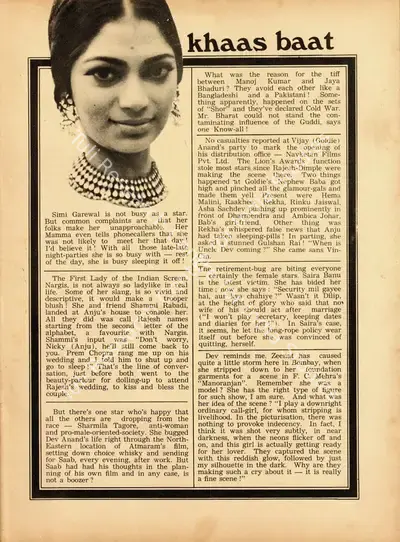
The film's influence extended beyond its immediate reception. Raj Kapoor reportedly acknowledged that Zeenat Aman's performance in Manoranjan inspired him to cast her in the bold and challenging role of Roopa in Satyam Shivam Sundaram (1978). At a time when many leading actresses were reluctant to portray characters requiring a degree of sensuality and semi-nudity, Aman's uninhibited screen presence convinced Kapoor that she was ideally suited to the role.
The soundtrack, composed by R.D. Burman, remains one of the film's enduring strengths. Featuring a blend of playful and melodious compositions, the album includes memorable songs such as Aaya Hoon Main Tujhko Le Jaoonga (Kishore Kumar and Asha Bhosle), Goyake Chunanche Kiya Maine Pyar (Kishore Kumar, Lata Mangeshkar, and Manna Dey), Dulhan Maike Chali (Asha Bhosle, Lata Mangeshkar, and Usha Mangeshkar), and the evergreen Chori Chori Solah Singar (Asha Bhosle). The latter earned Asha Bhosle a Filmfare Award nomination for Best Female Playback Singer, constituting the film's sole major award recognition.
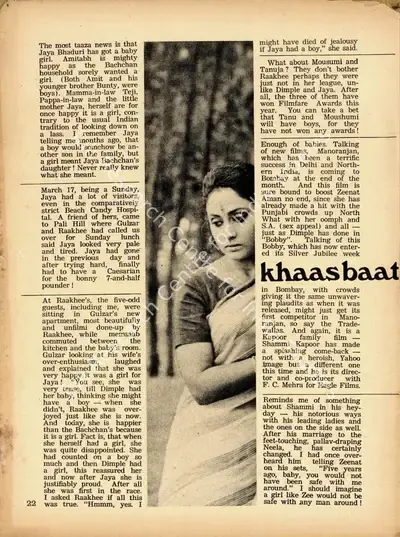
Although Manoranjan generated considerable publicity because of its provocative theme and unconventional premise, audiences of the period were perhaps unprepared for its progressive outlook. Consequently, the film failed to achieve significant box-office success. Nevertheless, its innovative narrative, sophisticated humour, memorable music, and refreshingly liberal perspective have ensured its lasting legacy as a distinctive and influential work in the history of Hindi cinema.
सहायक कलाकारों में पेंटल, असित सेन और देव कुमार जैसे महत्वपूर्ण कलाकार शामिल हैं। रिलीज़ के समय व्यावसायिक रूप से असफल रहने के बावजूद, मनोरंजन ने बाद में एक विशिष्ट फ़िल्म का दर्जा हासिल कर लिया और इसे हिंदी सिनेमा की सबसे अपरंपरागत और प्रगतिशील फ़िल्मों में से एक माना जाता है।
मनोरंजन की ख़ासियत वेश्यावृत्ति के प्रति इसका बेबाक और निष्पक्ष दृष्टिकोण है, जो 1970 के दशक के मुख्यधारा के भारतीय सिनेमा में शायद ही कभी इतने खुलेपन से दिखाया गया हो। फ़िल्म में यौन कार्य को बिना किसी उपदेशात्मक लहजे से प्रस्तुत किया गया है, और विशेष रूप से, नायिका के नायक के अलावा अन्य पुरुषों के साथ संबंधों की न तो निंदा की गई है और न ही उन्हें नाटकीय संघर्ष का स्रोत बनाया गया है। सिनेमाई परंपराओं से यह विचलन फ़िल्म की स्थायी लोकप्रियता में महत्वपूर्ण योगदान देता है।
कहानी रतन शेरू (संजीव कुमार) के इर्द-गिर्द घूमती है, जो एक ईमानदार और नेक पुलिस कांस्टेबल है और निशा (ज़ीनत अमान) से प्यार कर बैठता है, जो एक जोशीली और स्वतंत्र यौनकर्मी है। उसे अपना पेशा छोड़ने के लिए मनाने के इरादे से, रतन चुपके से अतिरिक्त शिफ्ट में काम करता है और एक अमीर नवाब का वेश धारण करके उसका नियमित ग्राहक बन जाता है। उसकी यह चालाकी भरी चाल कई हास्यप्रद ग़लतफ़हमियों, ग़लत पहचान और पुलिस तक पहुँचती है, जो फ़िल्म के हास्य का आधार बनती हैं। हालांकि यह फ़िल्म 'इरमा ला डूस' से रूपांतरित है, 'मनोरंजन' अपनी विशिष्ट भारतीय संवेदनशीलता और सामाजिक रूप से संवेदनशील विषय के प्रगतिशील चित्रण के लिए उल्लेखनीय है। दिलचस्प बात यह है कि लेखक अबरार अल्वी जिन्हें 'प्यासा' (1957), 'कागज़ के फूल' (1959) और 'साहिब बीबी और ग़ुलाम' (1962) जैसी क्लासिक फ़िल्मों का श्रेय दिया जाता है, जिनमें से 'साहिब बीबी और ग़ुलाम' का निर्देशन भी उन्होंने ही किया था, जिसने 1963 की मूल फ़्रांसीसी फ़िल्म 'इरमा ला डूस' से पटकथा और संवादों को रूपांतरित किया था।
शम्मी कपूर ने बाद में ख़ुलासा किया कि 1960 के दशक की शुरुआत से ही वे 'इरमा ला डूस' को फ़िल्म के रूप में ढालने की इच्छा रखते थे, जब उन्होंने लंदन यात्रा के दौरान यह फ़िल्म देखी थी। शुरुआत में वे ईमानदार पुलिस अधिकारी नेस्टर पाटू की भूमिका निभाना चाहते थे। हालांकि, जब फ़िल्म का निर्माण शुरू हुआ, तब कपूर को लगा कि उम्र के कारण वे अब इस भूमिका के लिए उपयुक्त नहीं हैं, और यह भूमिका संजीव कुमार को दे दी गई। फ़िल्म की शूटिंग मुख्य रूप से मुंबई के महबूब स्टूडियो और नटराज स्टूडियो में हुई थी। फ़िल्म के प्रचार अभियान के तहत, कपूर ने 'शम्मी कपूर प्रस्तुत करते हैं मनोरंजन' नामक एक वीडियो पत्रिका का निर्माण और निर्देशन भी किया, जो उस समय के हिसाब से एक अभिनव पहल थी।
फ़िल्म का प्रभाव इसकी तात्कालिक सफलता से कहीं अधिक बड़ा था। कहा जाता है कि राज कपूर ने स्वीकार किया था कि मनोरंजन में ज़ीनत अमान के अभिनय ने उन्हें सत्यम शिवम सुंदरम (1978) में रूपा की साहसी और चुनौतीपूर्ण भूमिका के लिए प्रेरित किया था। ऐसे समय में जब कई प्रमुख अभिनेत्रियाँ कामुकता और अर्ध-नग्नता की आवश्यकता वाले किरदार निभाने से हिचकिचाती थीं, अमान की निडर उपस्थिति ने कपूर को आश्वस्त कर दिया कि वह इस भूमिका के लिए उपयुक्त थीं।
आर.डी. बर्मन द्वारा संगीतबद्ध साउंडट्रैक, फ़िल्म की स्थायी शक्तियों में से एक है। चंचल और मधुर रचनाओं के मिश्रण वाले इस एल्बम में 'आया हूं मैं तुझको ले जाऊंगा' (किशोर कुमार और आशा भोंसले), 'गोयाकि चुनांचे किया मैंने प्यार' (किशोर कुमार, लता मंगेशकर और मन्ना डे), 'दुल्हन मायके चली' (आशा भोसले, लता मंगेशकर और उषा मंगेशकर), और 'सदाबहार चोरी चोरी सोलह सिंगार' (आशा) जैसे यादगार गाने शामिल हैं। भोंसले)। बाद में आशा भोसले को सर्वश्रेष्ठ महिला पार्श्व गायिका के लिए फ़िल्मफ़ेयर पुरस्कार नामांकन मिला, जो फ़िल्म की एकमात्र पुरस्कार थी।
मनोरंजन को अपने उत्तेजक विषय और अपरंपरागत कथानक के कारण काफ़ी प्रचार मिला, लेकिन उस दौर के दर्शक शायद इसके प्रगतिशील दृष्टिकोण के लिए तैयार नहीं थे। परिणामस्वरूप, फ़िल्म बॉक्स ऑफ़िस पर उल्लेखनीय सफलता हासिल नहीं कर पाई। फ़िर भी, इसकी नया कथा, परिष्कृत हास्य, यादगार संगीत और ताज़गी भरे उदार दृष्टिकोण ने हिंदी सिनेमा के इतिहास में एक विशिष्ट और प्रभावशाली कृति के रूप में इसकी स्थायी छाप छोड़ी है।