Legend Of Bhagat Singh, The2002
Introduction
The Legend of Bhagat Singh (2002) A biographical drama film directed by Rajkumar Santoshi, the film is based on Bhagat Singh, a revolutionary who fought for Indian independence along with fellow members of the Hindustan Socialist Republican Association. It features Ajay Devgn as the titular character along with Sushant Singh, Akhilendra Mishra and D. Santosh as the other lead characters. Raj Babbar, Farida Jalal and Amrita Rao play supporting roles. The film chronicles Singh's life from his childhood where he witnesses the Jallianwala Bagh massacre until the day he was hanged to death before the official trial dated 24 March 1931. The film traces the life of Indian revolutionary Bhagat Singh from witnessing the tragic Jallianwala Bagh massacre as a child to his fearless martyrdom alongside Sukhdev and Rajguru.
The narrative begins with his childhood, where witnessing the horrific aftermath of the 1919 Jallianwala Bagh massacre deeply traumatises him and instils a lifelong resolve to free India from British colonial rule. As he grows older, Bhagat Singh joins the Non-Cooperation Movement led by Mahatma Gandhi, but becomes deeply disillusioned when Gandhi abruptly calls off the struggle following the Chauri Chaura incident. Seeking a more revolutionary path to independence, Bhagat Singh joins the Hindustan Republican Association, which he later renames the Hindustan Socialist Republican Association (HSRA) to reflect his socialist ideals. Alongside fellow revolutionaries like Chandrashekhar Azad, Sukhdev Thapar, and Shivaram Rajguru, he begins actively resisting British oppression. The turning point comes when veteran leader Lala Lajpat Rai dies from injuries sustained during a brutal police lathi charge while protesting the Simon Commission. To avenge this loss, Bhagat Singh and his comrades plot to assassinate the police chief responsible, James Scott, but accidentally shoot Deputy Superintendent John Saunders instead. To avoid capture, Bhagat Singh flees Lahore but continues his activism. He later orchestrates non-lethal bombings of the Central Legislative Assembly in Delhi alongside Batukeshwar Dutt, using the trial as a public platform to broadcast their revolutionary message of Inquilab Zindabad (Long Live the Revolution) to the Indian masses. While imprisoned, Bhagat Singh and his fellow inmates launch a historic hunger strike to demand equal rights and humane treatment for Indian political prisoners, which captures the attention of the entire nation. Despite widespread public appeals and legal defene efforts, Bhagat Singh, Sukhdev, and Rajguru are sentenced to death for the murder of Saunders. The film culminates in their execution on 23 March 1931, showcasing how their ultimate sacrifice ignited a massive wave of patriotism across India.
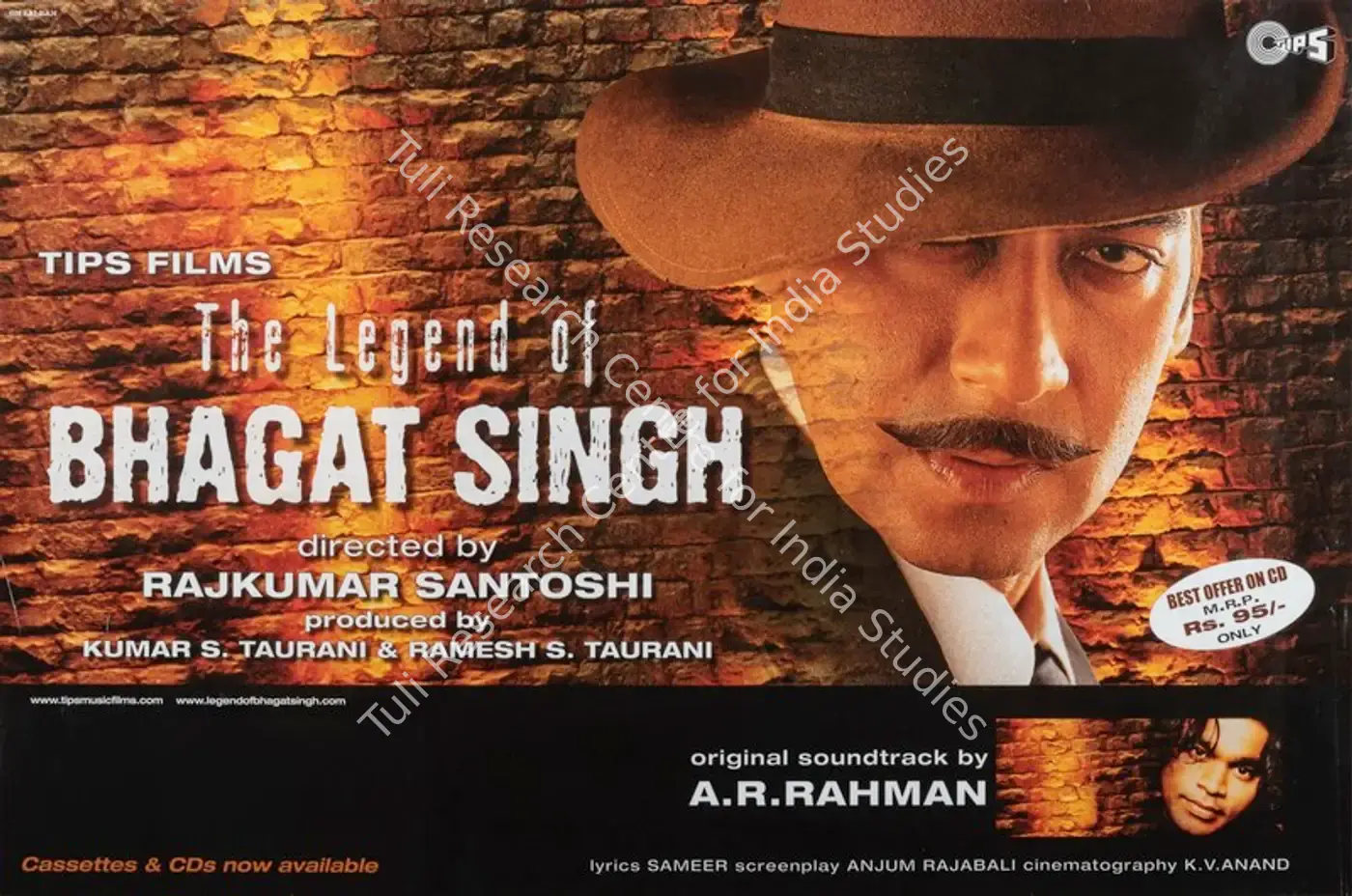
The film was produced by Kumar and Ramesh Taurani's Tips Industries on a budget of ₹200–250 million (about US$4.2–5.2 million in 2002). The story and dialogue were written by Santoshi and Piyush Mishra respectively, while Anjum Rajabali drafted the screenplay. K. V. Anand, V. N. Mayekar and Nitin Chandrakant Desai were in charge of the cinematography, editing and production design respectively. Principal photography took place in Agra, Manali, Mumbai and Pune from January to May 2002. The soundtrack and film score were composed by A. R. Rahman, with the songs Mera Rang De Basanti and Sarfaroshi Ki Tamanna being well received in particular.
A. R. Rahman composed the soundtrack and score for The Legend of Bhagat Singh, marking his second collaboration with Santoshi after Pukar (2000). Sameer wrote the lyrics for the songs. Rahman recalled that Santhoshi had suggested him to compose slow-paced songs, unlike Shaheed which had fast paced compositions and experimented with Punjabi music more than what he done in his previous films.
It achieved widespread critical acclaim and major awards, but suffered a major commercial failure at the box office. It grossed roughly ₹129 million against its production costs, largely hurt by a market saturated with simultaneous competing biopics. However, the film underperformed at the box office, grossing only ₹129 million (US$2.7 million in 2002). It went on to win two National Film Awards – Best Feature Film in Hindi and Best Actor for Devgn – and three Filmfare Awards from eight nominations.
The film's release coincided with another film based on Bhagat Singh directed by Guddu Dhanoa and titled 23rd March 1931: Shaheed. Both films failed at the box office.
The narrative begins with his childhood, where witnessing the horrific aftermath of the 1919 Jallianwala Bagh massacre deeply traumatises him and instils a lifelong resolve to free India from British colonial rule. As he grows older, Bhagat Singh joins the Non-Cooperation Movement led by Mahatma Gandhi, but becomes deeply disillusioned when Gandhi abruptly calls off the struggle following the Chauri Chaura incident. Seeking a more revolutionary path to independence, Bhagat Singh joins the Hindustan Republican Association, which he later renames the Hindustan Socialist Republican Association (HSRA) to reflect his socialist ideals. Alongside fellow revolutionaries like Chandrashekhar Azad, Sukhdev Thapar, and Shivaram Rajguru, he begins actively resisting British oppression. The turning point comes when veteran leader Lala Lajpat Rai dies from injuries sustained during a brutal police lathi charge while protesting the Simon Commission. To avenge this loss, Bhagat Singh and his comrades plot to assassinate the police chief responsible, James Scott, but accidentally shoot Deputy Superintendent John Saunders instead. To avoid capture, Bhagat Singh flees Lahore but continues his activism. He later orchestrates non-lethal bombings of the Central Legislative Assembly in Delhi alongside Batukeshwar Dutt, using the trial as a public platform to broadcast their revolutionary message of Inquilab Zindabad (Long Live the Revolution) to the Indian masses. While imprisoned, Bhagat Singh and his fellow inmates launch a historic hunger strike to demand equal rights and humane treatment for Indian political prisoners, which captures the attention of the entire nation. Despite widespread public appeals and legal defene efforts, Bhagat Singh, Sukhdev, and Rajguru are sentenced to death for the murder of Saunders. The film culminates in their execution on 23 March 1931, showcasing how their ultimate sacrifice ignited a massive wave of patriotism across India.
The film was produced by Kumar and Ramesh Taurani's Tips Industries on a budget of ₹200–250 million (about US$4.2–5.2 million in 2002). The story and dialogue were written by Santoshi and Piyush Mishra respectively, while Anjum Rajabali drafted the screenplay. K. V. Anand, V. N. Mayekar and Nitin Chandrakant Desai were in charge of the cinematography, editing and production design respectively. Principal photography took place in Agra, Manali, Mumbai and Pune from January to May 2002. The soundtrack and film score were composed by A. R. Rahman, with the songs Mera Rang De Basanti and Sarfaroshi Ki Tamanna being well received in particular.
A. R. Rahman composed the soundtrack and score for The Legend of Bhagat Singh, marking his second collaboration with Santoshi after Pukar (2000). Sameer wrote the lyrics for the songs. Rahman recalled that Santhoshi had suggested him to compose slow-paced songs, unlike Shaheed which had fast paced compositions and experimented with Punjabi music more than what he done in his previous films.
It achieved widespread critical acclaim and major awards, but suffered a major commercial failure at the box office. It grossed roughly ₹129 million against its production costs, largely hurt by a market saturated with simultaneous competing biopics. However, the film underperformed at the box office, grossing only ₹129 million (US$2.7 million in 2002). It went on to win two National Film Awards – Best Feature Film in Hindi and Best Actor for Devgn – and three Filmfare Awards from eight nominations.
The film's release coincided with another film based on Bhagat Singh directed by Guddu Dhanoa and titled 23rd March 1931: Shaheed. Both films failed at the box office.
द लेजेंड ऑफ़ भगत सिंह' (2002) राजकुमार संतोषी की निर्देशित एक बायोपिक (जीवनीपरक) ड्रामा फ़िल्म है। यह फ़िल्म क्रांतिकारी भगत सिंह पर आधारित है, जिन्होंने 'हिंदुस्तान सोशलिस्ट रिपब्लिकन एसोसिएशन' के अपने साथियों के साथ मिलकर भारत की आज़ादी के लिए लड़ाई लड़ी थी। इसमें अजय देवगन मुख्य भूमिका में हैं, जबकि सुशांत सिंह, अखिलेंद्र मिश्रा और डी. संतोष अन्य किरदारों में हैं। राज बब्बर, फ़रीदा जलाल और अमृता राव ने सहायक भूमिकाएँ निभाई हैं। यह फ़िल्म भगत सिंह के बचपन से लेकर, जब उन्होंने जलियांवाला बाग़ हत्याकांड देखा था, उस दिन तक की कहानी दिखाती है। उन्हें 24 मार्च 1931 को आधिकारिक ट्रायल से पहले फाँसी दी गई थी। फ़िल्म भारतीय क्रांतिकारी भगत सिंह के जीवन को बचपन में जलियांवाला बाग़ के दुखद हत्याकांड को देखने से लेकर सुखदेव और राजगुरु के साथ उनकी निडर शहादत तक दिखाती है।
कहानी उनके बचपन से शुरू होती है, जहाँ 1919 के जलियांवाला बाग हत्याकांड के भयानक मंज़र को देखकर वे गहरे सदमे में आ जाते हैं और भारत को ब्रिटिश औपनिवेशिक शासन से आज़ाद कराने का जीवन भर का संकल्प लेते हैं। बड़े होने पर, भगत सिंह महात्मा गांधी के नेतृत्व वाले असहयोग आंदोलन में शामिल होते हैं, लेकिन चौरी-चौरा घटना के बाद गांधीजी द्वारा अचानक आंदोलन वापस लेने पर उन्हें गहरी निराशा होती है। आज़ादी के लिए ज़्यादा क्रांतिकारी रास्ता चुनते हुए, भगत सिंह 'हिंदुस्तान रिपब्लिकन एसोसिएशन' में शामिल होते हैं, जिसका नाम वे बाद में अपने समाजवादी विचारों को दर्शाने के लिए बदलकर 'हिंदुस्तान सोशलिस्ट रिपब्लिकन एसोसिएशन' (HSRA) रख देते हैं। चंद्रशेखर आज़ाद, सुखदेव थापर और शिवराम राजगुरु जैसे साथी क्रांतिकारियों के साथ मिलकर, वे ब्रिटिश दमन का सक्रिय रूप से विरोध करना शुरू करते हैं। कहानी में एक अहम मोड़ तब आता है जब साइमन कमीशन का विरोध करते हुए पुलिस के बर्बर लाठीचार्ज में लगी चोटों के कारण वरिष्ठ नेता लाला लाजपत राय की मौत हो जाती है। इस नुक़सान का बदला लेने के लिए, भगत सिंह और उनके साथी इसके लिए ज़िम्मेदार पुलिस प्रमुख जेम्स स्कॉट की हत्या की योजना बनाते हैं, लेकिन गलती से डिप्टी सुपरिटेंडेंट जॉन सॉन्डर्स को गोली मार देते हैं। पकड़े जाने से बचने के लिए भगत सिंह लाहौर से भाग जाते हैं, लेकिन अपनी सक्रियता जारी रखते हैं। बाद में, वे बटुकेश्वर दत्त के साथ मिलकर दिल्ली में सेंट्रल लेजिस्लेटिव असेंबली में नुकसान न पहुँचाने के इरादे से बम धमाके करते हैं और इस मुक़दमे का इस्तेमाल भारतीय जनता तक 'इंक़लाब ज़िंदाबाद' (क्रांति अमर रहे) का क्रांतिकारी संदेश पहुँचाने के लिए एक सार्वजनिक मंच के तौर पर करते हैं। जेल में रहते हुए, भगत सिंह और उनके साथी क़ैदी भारतीय राजनीतिक क़ैदियों के लिए समान अधिकारों और मानवीय व्यवहार की मांग को लेकर एक ऐतिहासिक भूख हड़ताल शुरू करते हैं, जिसने पूरे देश का ध्यान अपनी ओर खींचा। व्यापक सार्वजनिक अपीलों और कानूनी बचाव की कोशिशों के बावजूद, सॉन्डर्स की हत्या के आरोप में भगत सिंह, सुखदेव और राजगुरु को मौत की सज़ा सुनाई जाती है। फ़िल्म का समापन 23 मार्च 1931 को उनकी फाँसी के साथ होता है, जिसमें दिखाया गया है कि कैसे उनके सर्वोच्च बलिदान ने पूरे भारत में देशभक्ति की एक ज़बरदस्त लहर पैदा कर दी।
इस फ़िल्म को कुमार और रमेश तौरानी की टिप्स इंडस्ट्रीज़ ने ₹200–250 मिलियन (2002 में लगभग US$4.2–5.2 मिलियन) के बजट में बनाया था। कहानी और डायलॉग क्रमशः संतोषी और पीयूष मिश्रा ने लिखे थे, जबकि पटकथा अंजुम राजाबली ने तैयार की थी। के. वी. आनंद, वी. एन. मयेकर और नितिन चंद्रकांत देसाई सिनेमैटोग्राफ़ी, एडिटिंग और प्रोडक्शन डिज़ाइन के इंचार्ज थे। मुख्य फ़िल्मांकन जनवरी से मई 2002 के बीच आगरा, मनाली, मुंबई और पुणे में हुआ था। साउंडट्रैक और फ़िल्म का संगीत ए. आर. रहमान ने तैयार किया था, जिसमें 'मेरा रंग दे बसंती' और 'सरफ़रोशी की तमन्ना' गाने विशेष रूप से पसंद किए गए थे।
ए. आर. रहमान ने 'द लेजेंड ऑफ़ भगत सिंह' के लिए साउंडट्रैक और पार्श्व गायन तैयार किया। 'पुक़ार' (2000) के बाद संतोषी के साथ यह उनका दूसरा सहयोग था। गानों के बोल समीर ने लिखे थे। रहमान को याद है कि संतोषी ने उन्हें धीमी गति वाले गाने बनाने का सुझाव दिया था। 'शहीद' में तेज़ गति वाले गाने थे और अपनी पिछली फ़िल्मों की तुलना में इसमें पंजाबी संगीत के साथ ज़्यादा प्रयोग किए गए थे।
फ़िल्म को आलोचकों से काफ़ी तारीफ़ और बड़े पुरस्कार मिले, लेकिन बॉक्स ऑफ़िस पर यह बुरी तरह फ़्लॉप रही। इसकी कमाई लगभग ₹129 मिलियन रही, जबकि इसकी लागत ज़्यादा थी। बाज़ार में एक ही समय पर कई दूसरी बायोपिक फ़िल्मों के होने से इसे काफ़ी नुक़सान हुआ। हालाँकि, फ़िल्म बॉक्स ऑफ़िस पर अच्छा प्रदर्शन नहीं कर पाई और केवल ₹129 मिलियन (2002 में US$2.7 मिलियन) ही कमा पाई। इसने दो राष्ट्रीय फ़िल्म पुरस्कार जीते। हिंदी में सर्वश्रेष्ठ फ़ीचर फ़िल्म और अजय देवगन ने सर्वश्रेष्ठ अभिनेता का पुरस्कार और आठ नॉमिनेशन में से तीन फ़िल्मफ़ेयर पुरस्कार भी जीते।
यह फ़िल्म उसी समय रिलीज़ हुई जब भगत सिंह पर बनी एक और फ़िल्म '23rd मार्च 1931: शहीद' भी रिलीज़ हुई थी, जिसे गुड्डू धनोआ ने डायरेक्ट किया था। दोनों ही फ़िल्में बॉक्स ऑफ़िस पर फ़्लॉप रहीं।
कहानी उनके बचपन से शुरू होती है, जहाँ 1919 के जलियांवाला बाग हत्याकांड के भयानक मंज़र को देखकर वे गहरे सदमे में आ जाते हैं और भारत को ब्रिटिश औपनिवेशिक शासन से आज़ाद कराने का जीवन भर का संकल्प लेते हैं। बड़े होने पर, भगत सिंह महात्मा गांधी के नेतृत्व वाले असहयोग आंदोलन में शामिल होते हैं, लेकिन चौरी-चौरा घटना के बाद गांधीजी द्वारा अचानक आंदोलन वापस लेने पर उन्हें गहरी निराशा होती है। आज़ादी के लिए ज़्यादा क्रांतिकारी रास्ता चुनते हुए, भगत सिंह 'हिंदुस्तान रिपब्लिकन एसोसिएशन' में शामिल होते हैं, जिसका नाम वे बाद में अपने समाजवादी विचारों को दर्शाने के लिए बदलकर 'हिंदुस्तान सोशलिस्ट रिपब्लिकन एसोसिएशन' (HSRA) रख देते हैं। चंद्रशेखर आज़ाद, सुखदेव थापर और शिवराम राजगुरु जैसे साथी क्रांतिकारियों के साथ मिलकर, वे ब्रिटिश दमन का सक्रिय रूप से विरोध करना शुरू करते हैं। कहानी में एक अहम मोड़ तब आता है जब साइमन कमीशन का विरोध करते हुए पुलिस के बर्बर लाठीचार्ज में लगी चोटों के कारण वरिष्ठ नेता लाला लाजपत राय की मौत हो जाती है। इस नुक़सान का बदला लेने के लिए, भगत सिंह और उनके साथी इसके लिए ज़िम्मेदार पुलिस प्रमुख जेम्स स्कॉट की हत्या की योजना बनाते हैं, लेकिन गलती से डिप्टी सुपरिटेंडेंट जॉन सॉन्डर्स को गोली मार देते हैं। पकड़े जाने से बचने के लिए भगत सिंह लाहौर से भाग जाते हैं, लेकिन अपनी सक्रियता जारी रखते हैं। बाद में, वे बटुकेश्वर दत्त के साथ मिलकर दिल्ली में सेंट्रल लेजिस्लेटिव असेंबली में नुकसान न पहुँचाने के इरादे से बम धमाके करते हैं और इस मुक़दमे का इस्तेमाल भारतीय जनता तक 'इंक़लाब ज़िंदाबाद' (क्रांति अमर रहे) का क्रांतिकारी संदेश पहुँचाने के लिए एक सार्वजनिक मंच के तौर पर करते हैं। जेल में रहते हुए, भगत सिंह और उनके साथी क़ैदी भारतीय राजनीतिक क़ैदियों के लिए समान अधिकारों और मानवीय व्यवहार की मांग को लेकर एक ऐतिहासिक भूख हड़ताल शुरू करते हैं, जिसने पूरे देश का ध्यान अपनी ओर खींचा। व्यापक सार्वजनिक अपीलों और कानूनी बचाव की कोशिशों के बावजूद, सॉन्डर्स की हत्या के आरोप में भगत सिंह, सुखदेव और राजगुरु को मौत की सज़ा सुनाई जाती है। फ़िल्म का समापन 23 मार्च 1931 को उनकी फाँसी के साथ होता है, जिसमें दिखाया गया है कि कैसे उनके सर्वोच्च बलिदान ने पूरे भारत में देशभक्ति की एक ज़बरदस्त लहर पैदा कर दी।
इस फ़िल्म को कुमार और रमेश तौरानी की टिप्स इंडस्ट्रीज़ ने ₹200–250 मिलियन (2002 में लगभग US$4.2–5.2 मिलियन) के बजट में बनाया था। कहानी और डायलॉग क्रमशः संतोषी और पीयूष मिश्रा ने लिखे थे, जबकि पटकथा अंजुम राजाबली ने तैयार की थी। के. वी. आनंद, वी. एन. मयेकर और नितिन चंद्रकांत देसाई सिनेमैटोग्राफ़ी, एडिटिंग और प्रोडक्शन डिज़ाइन के इंचार्ज थे। मुख्य फ़िल्मांकन जनवरी से मई 2002 के बीच आगरा, मनाली, मुंबई और पुणे में हुआ था। साउंडट्रैक और फ़िल्म का संगीत ए. आर. रहमान ने तैयार किया था, जिसमें 'मेरा रंग दे बसंती' और 'सरफ़रोशी की तमन्ना' गाने विशेष रूप से पसंद किए गए थे।
ए. आर. रहमान ने 'द लेजेंड ऑफ़ भगत सिंह' के लिए साउंडट्रैक और पार्श्व गायन तैयार किया। 'पुक़ार' (2000) के बाद संतोषी के साथ यह उनका दूसरा सहयोग था। गानों के बोल समीर ने लिखे थे। रहमान को याद है कि संतोषी ने उन्हें धीमी गति वाले गाने बनाने का सुझाव दिया था। 'शहीद' में तेज़ गति वाले गाने थे और अपनी पिछली फ़िल्मों की तुलना में इसमें पंजाबी संगीत के साथ ज़्यादा प्रयोग किए गए थे।
फ़िल्म को आलोचकों से काफ़ी तारीफ़ और बड़े पुरस्कार मिले, लेकिन बॉक्स ऑफ़िस पर यह बुरी तरह फ़्लॉप रही। इसकी कमाई लगभग ₹129 मिलियन रही, जबकि इसकी लागत ज़्यादा थी। बाज़ार में एक ही समय पर कई दूसरी बायोपिक फ़िल्मों के होने से इसे काफ़ी नुक़सान हुआ। हालाँकि, फ़िल्म बॉक्स ऑफ़िस पर अच्छा प्रदर्शन नहीं कर पाई और केवल ₹129 मिलियन (2002 में US$2.7 मिलियन) ही कमा पाई। इसने दो राष्ट्रीय फ़िल्म पुरस्कार जीते। हिंदी में सर्वश्रेष्ठ फ़ीचर फ़िल्म और अजय देवगन ने सर्वश्रेष्ठ अभिनेता का पुरस्कार और आठ नॉमिनेशन में से तीन फ़िल्मफ़ेयर पुरस्कार भी जीते।
यह फ़िल्म उसी समय रिलीज़ हुई जब भगत सिंह पर बनी एक और फ़िल्म '23rd मार्च 1931: शहीद' भी रिलीज़ हुई थी, जिसे गुड्डू धनोआ ने डायरेक्ट किया था। दोनों ही फ़िल्में बॉक्स ऑफ़िस पर फ़्लॉप रहीं।
Body of Work
Banner
Director
Raj Kumar Santoshi
Lead Cast
Lead Cast Rest
Producer
Kumar S. Taurani, Ramesh S. Taurani
Research Centre
Related
1
Personalities
1