Introduction
- Date of Birth
- 20 Jun 1930
- Zodiac sign
- Gemini
- Date of Death
- 18 Jan 2016
- Age
- 85
- Place of Birth
- Sojitra, Kaira Dist., Gujarat, India
- Place of Death
- Vadodara, Gujarat, India
- State Country of Birth
- Gujarat, India
- State Country of Death
- Gujarat, India
1950
- Sir J.J. School of Art, Mumbai, Maharashtra, India
1950 – 1955
1957
- National Diploma in Design, Typography and Publicity Design, Central School of Art and Craft, London, UK
1957 – 1959
1961
- Reader in Applied Arts, Faculty of Fine Arts, MS University, Vadodara, India
1962
- Graphic Design Consultant, National Institute of Design, Ahmedabad, India
- Reader in Visual Design, School of Architecture, Ahmedabad, India
1962 – 1963
1963
- Founder Member, Group 1890, a Group of 12 Artists, Bhavnagar, India
- Deputy Director, Weaver's Service Centre, All India Handloom Board, Government of India
1963 – 1966
1966
- Professor, Faculty of Fine Arts, MS University of Vadodara, India
1966 – 1980
1973
- Member, Gujarat State Lalit Kala Akademi, India
1975
- Elected member, Lalit Kala Akademi, Rabindra Bhavan, New Delhi, India
1975 – 1988
1976
- Member, Gujarat State Lalit Kala Akademi, India
1981
- Member, Gujarat State Lalit Kala Akademi, India
- Dean, Faculty of Fine Arts, Maharaja Sayajirao University of Vadodara, India
1981 – 1985
- Member of the Board of Studies and Faculty Board, Benaras Hindu University, Benaras, India
1981 – 1985
- Chairman, Board of Studies in Fine arts Faculty Board, MS University, Vadodara, India
1981 – 1985
1985
- Invited by the Max Mueller Bhavan to participate in the East-West Encounter, Visual Art Seminar and Workshop, Mumbai, India
1989
- Jury member, Ist International Prints Biennale, Bharat Bhavan, Bhopal, India
1991
- Member, Gujarat State Lalit Kala Akademi, India
1991 – 1993
1994
- The Emeritus Fellowship, Government of India
- Chairman, Gujarat State Lalit Kala Akademi, Gandhinagar, Gujarat, India
1994 – 2000
Exhibitions
1959
- Jehangir Art Gallery, Mumbai, India
1963
- Organised by Group 1890, Gujarat, India
- Tokyo Biennale, Tokyo, Japan
- Sao Paulo Biennale, Sao Paulo, Brazil
1964
- Ten Contemporary Painters from India, University of South Florida Tampa Jacksonville Art Museum, Jacksonville, Florida, USA
- Dagodo Museum of Art, New Orleans, Louisiana, USA
- Long Beach Art Centre, San Francisco, California, USA
- East West Centre, Honolulu, Hong Kong, Manila & Singapore
- Hunter Art Gallery, Colorado Springs, USA
1965
- Lalit Kala Akademi, New Delhi, India
1967
- Seven Painters, London, UK
1968
- Five Contemporary Painters, Kunika-Chemould Art Gallery, New Delhi, India
- Ist Triennale India, Lalit Kala Akademi, Rabindra Bhavan, New Delhi, India
1969
- Indian Painters Exhibition, Kolkata, India
1970
- Contemporary Indian Painters, Tehran, Iran
- Graphics & Drawings, Art Today, New Delhi, India
1971
- Travelling Exhibition of Contemporary Indian Art, Tokyo and South America
1973
- Contemporary Indian Paintings, Renwick Gallery, Washington DC., USA
1975
- 3rd Triennale India, Lalit Kala Akademi, Rabindra Bhavan, New Delhi, India
- Aicon Gallery, New York, USA
1959
- Jehangir Art Gallery, Mumbai, India
1965
- Lalit Kala Akademi, New Delhi, India
1975
- Aicon Gallery, New York, USA
1990
- Jehangir Art Gallery, Mumbai, India
1993
- Art Heritage Gallery, New Delhi, India
1996
06 Dec 1996 to 28 Dec 1996
2000
2003
- Aicon Gallery, New York, USA
2004
12 Mar 2004 to 31 Mar 2004
2005
- Aicon Gallery, London, UK
2006
09 Oct 2006 to 21 Oct 2006
2008
2009
- Sculptures in Stainless Steel and Wood, Organised by Art Home, at Shridharani Gallery, Triveni Kala Sangam, New Delhi, India
06 Feb 2009 to 15 Feb 2009
2012
- Vadehra Art Gallery, New Delhi, India
Patel, Jeram (Artist). Jeram Patel, 1996 | Solo Exhibition Catalogue | 00882554
1963
- Organised by Group 1890, Gujarat, India
- Tokyo Biennale, Tokyo, Japan
- Sao Paulo Biennale, Sao Paulo, Brazil
1964
- Ten Contemporary Painters from India, University of South Florida Tampa Jacksonville Art Museum, Jacksonville, Florida, USA
- Dagodo Museum of Art, New Orleans, Louisiana, USA
- Long Beach Art Centre, San Francisco, California, USA
- East West Centre, Honolulu, Hong Kong, Manila & Singapore
- Hunter Art Gallery, Colorado Springs, USA
1967
- Seven Painters, London, UK
1968
- Five Contemporary Painters, Kunika-Chemould Art Gallery, New Delhi, India
- Ist Triennale India, Lalit Kala Akademi, Rabindra Bhavan, New Delhi, India
1969
- Indian Painters Exhibition, Kolkata, India
1970
- Contemporary Indian Painters, Tehran, Iran
- Graphics & Drawings, Art Today, New Delhi, India
1971
- Travelling Exhibition of Contemporary Indian Art, Tokyo and South America
1973
- Contemporary Indian Paintings, Renwick Gallery, Washington DC., USA
1975
- 3rd Triennale India, Lalit Kala Akademi, Rabindra Bhavan, New Delhi, India
1977
1978
- 4th Triennale India, Lalit Kala Akademi, Rabindra Bhavan, New Delhi, India
1979
- Six British International Print Biennale, London, UK
Lalit Kala Akademi (Organiser). XIV Sao Paulo Biennale 1977, 1977 | Group Exhibition Catalogue | 00883572
Chronicled Highlights 91961 – 2022
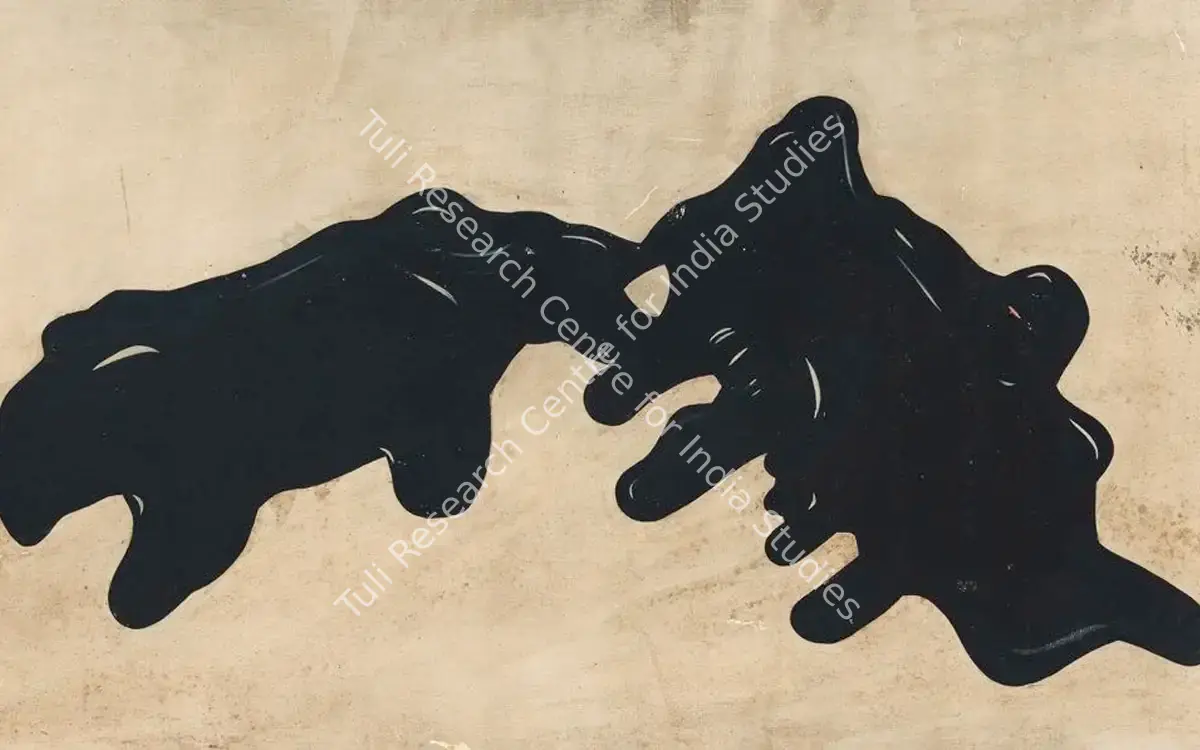
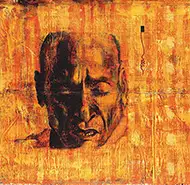
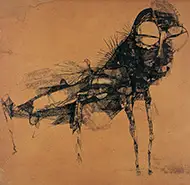
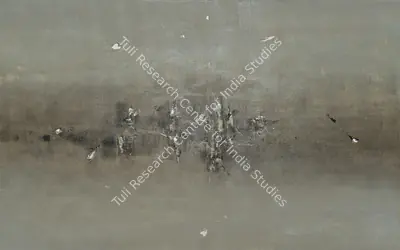
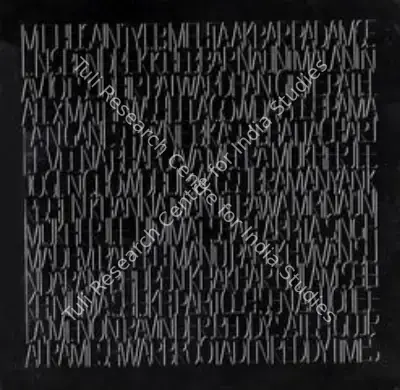
The forms suggest a slow process of decomposition and simultaneous becoming, in spite of the memory of violence. The paradox of sensibility and act is thus captured in all its materiality and is given, in Jeram’s words, the ‘dignity of explicit aesthetics’.
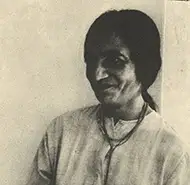
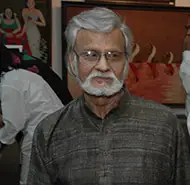
Jeram’s presence in Baroda was felt as powerfully as that of Subramanyan. His personality – intense, singleminded, bold to the point of being brash and marked by an assertive male libido – attracted many. His continually itinerant, restless spirit… his bohemian ways, his hostility towards verbalizing art matters, and his immensely articulate visual expression made him an irresistible prototype of an artist. His work habits also had their aura. Jeram hardly made working a daily ritual (unlike Bhupen Khakhar or Subramanyan), but produced in impulsive and intensive spells enough work for a show or two each year, reaching a prolific count of thirty oneman shows in the last three decades.
His personality stood in contrast to that of Subramanyan. Despite the fact that the administrative positions he occupied were similar to that of Subramanyan, the image he projected was that of an anarchist – abrupt and impatient with adversaries, and of one who attacked the canvas frontally with a near-fatal determination to exterminate it… The example of creative energy he presented through his work, however, left a lasting impression on a generation of artists and designers wherever he worked… Imprints of Jeram’s work and personality can also be seen in the formative phases of a range of very different artists – Piraji Sagara, Himmat Shah, Laxma Goud, Arpita Singh, Manu Parekh and Sunil Das, to name a few.”
Economics of Art
Research Centre
Related
46
Personalities
31
Institutions
9
Themes
5