
Jawani Ki Hawa1935
Introduction
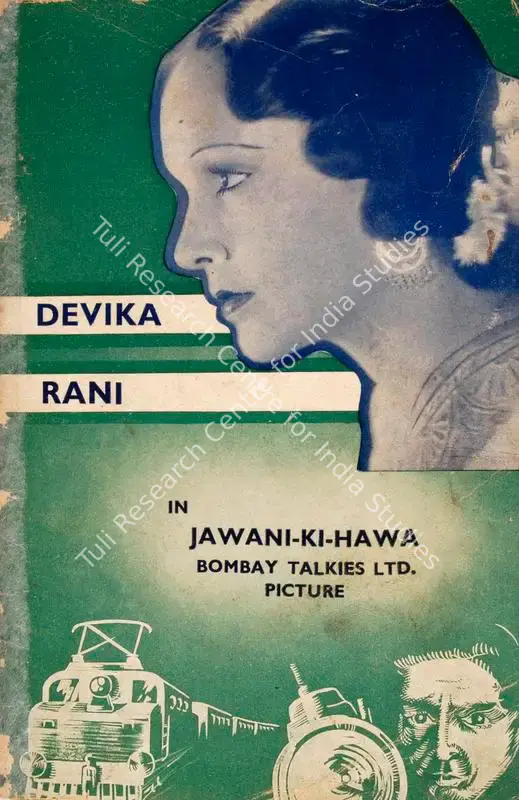
Jawani Ki Hawa (1935) was a groundbreaking romantic crime thriller, notable for being the first film produced by Bombay Talkies, India's pioneering public limited film company. Directed by Bavarian filmmaker Franz Osten, the film featured Devika Rani and Najmul Hussain in the lead roles. Osten, along with Himanshu Rai, co-founded Bombay Talkies and played a key role in shaping the Indian film industry, producing iconic films like Achhut Kanya and Jeevan Naiya.
The creative team behind Jawani Ki Hawa included writers J.S. Casshyap, S.I. Hassan, and Niranjan Pal; cinematographer Josef Wirsching; composer Saraswati Devi; and lyricists Saraswati Devi, J.S. Casshyap, Najmul Hussain, Bare Agha and Dhansuklal K. Mehta. The film stands out for its bold themes and is considered a landmark in Indian cinema. The plot follows Kamala, a young woman who elopes with her childhood friend, Ratanlal, on her wedding day, triggering a thrilling murder mystery with numerous suspects. The captivating story, along with Devika Rani's portrayal of a progressive, educated woman, solidified her status as a daring and self-assured actress.
While Jawani Ki Hawa was a significant film, it was not the first Indian movie to feature a kissing scene. That distinction went to Karma (1933), in which Devika Rani shared the screen with her husband Himanshu Rai, co-founder of Bombay Talkies.
Born to Colonel Dr. N. Choudhary, an army doctor, and Leela Choudhary, the niece of Rabindranath Tagore, Devika Rani was educated in England. She won a scholarship to the Royal Academy of Music and later studied textile design, decor and architecture. Initially working as a textile designer, she joined Himanshu Rai's production unit in 1928 during the studio's transition to sound films. Devika and Himanshu married during the production of A Throw of Dice (1929), which was shot in India. Their honeymoon was combined with business in Germany, where their film was processed and distributed by UFA.
During the making of Jeevan Ki Hava, Devika Rani and co-star Najm-ul-Hassan developed a romantic relationship and eloped, despite her marriage to Himanshu Rai. This caused production delays and financial strain, as much of the film was already shot and a large sum of borrowed money had been spent. Sashadhar Mukherjee, a sound engineer and close friend of Devika, intervened and convinced her to return to Himanshu. To mitigate the situation, Ashok Kumar, Sashadhar's brother-in-law, replaced Najm-ul-Hassan, who eventually faded into obscurity.
After Himanshu's untimely death in 1940, Devika Rani assumed the role of Controller of Production at Bombay Talkies. She successfully led the studio through films like Kangan, Bandhan, Jhoola, Punarmilan, Basant and Kismet. In 1945, she retired from films and married the renowned Russian painter Dr. Svetoslav Roerich.
Devika Rani's significant contributions to Indian cinema were recognized with numerous honours, including the Padma Shri in 1958, the Soviet Land Nehru Award, and the Jubilee Medal of the Bulgarian People's Republic. In 1981, she received a special medal from Mrs. Indira Gandhi in recognition of her work, and she was invited to inaugurate Filmotsav '80 in Bangalore.
इस फ़िल्म से जुड़ी रचनात्मक मंडली में लेखक जे.एस. कश्यप, एस.आई. हसन और निरंजन पाल शामिल थे तथा सिनेमैटोग्राफ़ी का ज़िम्मा जर्मन सिनेमैटोग्राफ़र जोसफ़ वीर्शिंग के हाथ में था। फ़िल्म में सरस्वती देवी ने संगीत दिया था और गाने सरस्वती देवी, जे.एस. कश्यप, नजमुल हुसैन, बड़े आगा और धनसुखलाल के. मेहता ने लिखे थे। फ़िल्म अपने साहसिक विषय चयन के लिए याद की जाती है और आज भी भारतीय सिनेमा की विकास यात्रा का एक ज़रूरी मोड़ बनी हुई है। फ़िल्म की कहानी एक नौजवान स्त्री कमला (देविका रानी) के साथ आगे बढ़ती है। कमला अपनी ही शादी वाले दिन अपने बचपन के साथी रतनलाल के साथ भाग जाती है। इसके बाद शुरु होता है एक रोमांचक सफ़र जिसमें एक हत्यारे की खोज है और कई संदिग्ध सामने हैं। देविका रानी ने इस फिल्म में एक शिक्षित आधुनिक स्त्री का किरदार निभाया और इस किरदार ने उनकी छवि एक साहसी और आत्मनिर्भर अभिनेत्री के रूप में स्थापित कर दी।
हालाँकि जवानी की हवा एक ख़ास फ़िल्म थी लेकिन इसे ऐसी पहली भारतीय फ़िल्म होने का श्रेय नहीं दिया जा सकता, जिसमें पर्दे पर चुंबन दिखाया गया। यह श्रेय देविका रानी की ही इससे पहले की फ़िल्म कर्मा (1933) को जाता है। कर्मा में देविका रानी और उनके पति हिमांशु रॉय के बीच पहली बार पर्दे पर चुम्बन दृश्य फ़िल्माया गया था।
देविका रानी का जन्म आर्मी डॉक्टर कर्नल एन. चौधरी और लीला चौधरी के घर हुआ था। उनकी माँ लीला चौधरी गुरुदेव रवींद्रनाथ टैगोर की भतीजी थीं। देविका रानी की शिक्षा इंग्लैंड में हुई और 'रॉयल एकेडमी ऑफ़ म्यूजिक' से उन्हें वज़ीफ़ा मिला। इसके बाद उन्होंने टेक्सटाइल डिज़ाइन, साजसज्जा और स्थापत्यकला का अध्ययन किया।
आरंभ में देविका रानी एक टेक्सटाइल डिज़ाइनर की भूमिका में काम कर रही थीं, लेकिन 1928 में वे हिमांशु रॉय के साथ उनकी फ़िल्म प्रोडक्शन इकाई में शामिल हो गईं। यह वो दौर था जब सिनेमा स्टूडियो मूक फ़िल्मों से बोलती फ़िल्मों की ओर बढ़ रहा था। देविका रानी और हिमांशु रॉय ए थ्रो ऑफ़ डाइस (1929) के निर्माण के दौरान ही शादी के बंधन में बँध गए। इस फ़िल्म की शूटिंग भारत में हुई थी। इस नवविवाहित जोड़े ने अपना हनीमून जर्मनी में मनाया, जहाँ उनकी फ़िल्म की प्रोसेसिंग और वितरण जर्मन स्टूडियो यूएफ़ए (UFA) के ज़िम्मे था।
ये जवानी की हवा के निर्माण के दौरान का ही किस्सा है कि देविका रानी और उनके सह-अभिनेता नजमुल हुसैन के बीच प्रेम के बीज फूटे और वे फ़िल्म और हिमांशु राय दोनों को छोड़कर फ़िल्म के हीरो नजमुल हुसैन के साथ भाग गईं। इससे न सिर्फ़ हिमांशु रॉय का दिल टूटा होगा, उनकी फ़िल्म भी संकट में आ गई। क्योंकि फ़िल्म का अधिकांश भाग पहले ही फ़िल्माया जा चुका था और उसमें बड़ा पैसा खर्च हो चुका था, अब शूटिंग में हुई देरी से बड़ा आर्थिक संकट खड़ा हो गया। ऐसे में देविका रानी के करीबी मित्र रहे साउंड इंजीनियर शशधर मुखर्जी ने उन्हें हिमांशु राय के पास लौटने के लिए मनाया। संकट तब हल हुआ जब शशधर मुखर्जी के साले अशोक कुमार ने नजमुल हुसैन की जगह ली। नजमुल हुसैन का फ़िल्मी करियर इस घटना के बाद गुमनामी में खो गया।
वर्ष 1940 में हिमांशु रॉय के आकस्मिक निधन के बाद देविका रानी ने बॉम्बे टॉकीज़ की कमान संभाली और वे स्टूडियो की 'कंट्रोलर ऑफ़ प्रोडक्शन' बनीं। उनके ही नेतृत्व में स्टूडियो ने कंगन (1939), बंधन (1940), झूला (1941), पुनर्मिलन (1940), बसंत (1942) और किस्मत (1943) जैसी सफल फिल्में बनाईं। फिर 1945 में देविका रानी ने फ़िल्मों से संन्यास ले लिया और प्रसिद्ध रूसी चित्रकार स्वेतोस्लाव रोरिक से विवाह कर हिमालय की वादियों में बस गईं।
देविका रानी को भारतीय सिनेमा में उनके उल्लेखनीय योगदान के लिए 1958 में पद्म श्री से सम्मानित किया गया। उन्हें रूस की ओर से सोवियत लैंड नेहरू पुरस्कार और बुल्गारियन पीपल्स रिपब्लिक की ओर से जुबली मेडल से सम्मानित किया गया। वे भारत सरकार की ओर से सिनेमा के क्षेत्र में दिये जाने वाले सर्वोच्च सम्मान दादासाहेब फ़ाल्के पुरस्कार की प्रथम विजेता थीं। 1981 में उन्हें प्रधानमंत्री इंदिरा गांधी द्वारा एक विशेष पदक प्रदान किया गया और 1980 में बैंगलोर में आयोजित फ़िल्मोत्सव '80 का उद्घाटन करने के लिए उन्हें आमंत्रित किया गया।