

Gyara Hazar Ladkian1962
Introduction
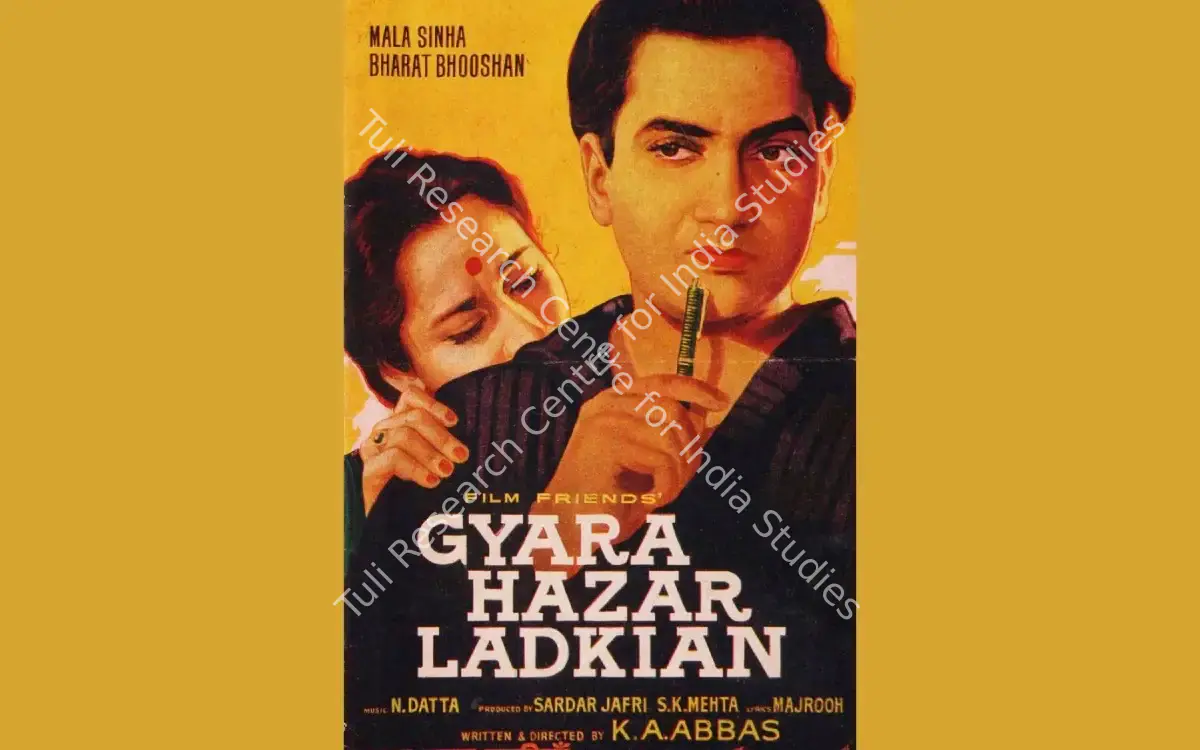
Gyara Hazar Ladkian (1962) A romantic social drama directed by the socially committed filmmaker K. A. Abbas was co-produced by the renowned poet Ali Sardar Jafri—who also collaborated with Abbas on the story. The film was made under the Film Friends banner. With music composed by N. Datta and cinematography by Ramchandra, the film featured a strong ensemble cast, led by Bharat Bhushan and Mala Sinha, with supporting roles played by Murad, Helen and Nadira.
The film tackles the exploitation of women in the workforce and the systemic challenges they face in seeking employment. Set against the backdrop of post-independence India's growing urban centres, it exposes the corruption, black-marketing, and moral compromises rampant in society. Through the character of Puran, a rebellious and idealistic journalist from a wealthy family, the narrative confronts the widening gap between privilege and working-class struggles.
Told largely in flashback, the story centres on Asha (Mala Sinha), a diligent working woman who finds herself on trial for a murder actually committed by her younger sister, Uma. Puran (Bharat Bhushan), both a lawyer and a crusading journalist, takes up her case to prove her innocence. As the courtroom drama unfolds, Puran uses his platform to shed light on the deeper societal injustices faced by women. His impassioned speeches stir public sentiment, ultimately leading to Asha's acquittal and the lovers' reunion.
The film's music was a major highlight, with several memorable songs that resonated with audiences. Lyricists Majrooh Sultanpuri, Kaifi Azmi, and Faiz Ahmed Faiz penned the poetic verses, while the soulful playback was delivered by legendary singers Mohammed Rafi, Asha Bhosle, Lata Mangeshkar, and Mahendra Kapoor. Some of the most popular tracks included: Dil Ki Tamanna Thi Masti Mein (duet by Mohammed Rafi and Asha Bhosle),Dil Ki Tamanna Thi Masti Mein (solo by Mohammed Rafi),Gham Gaya To Gham Na Kar by Asha Bhosle, Gyara Hazar Ladkiyan (also known as Kaam Ki Dhun Mein Hai Ravan) by Mahendra Kapoor,Mere Mehboob Mere Saath Hi by Mohammed Rafi, Pehchano Hum Wahi Hain by Lata Mangeshkar, Sab Log, Jidhar Woh Hai by Asha Bhosle.These songs, both thematically rich and melodically appealing, contributed significantly to the film's popularity and enduring legacy. Gyara Hazar Ladkian remains a powerful cinematic reflection on gender, class, and conscience in a rapidly modernizing India.
यह फ़िल्म काम की जगह पर महिलाओं के शोषण और नौकरी पाने में उन्हें आने वाली व्यवस्थागत चुनौतियों को दिखाती है। आज़ादी के बाद भारत के बढ़ते शहरी इलाक़ों की पृष्ठभूमि पर बनी यह फ़िल्म समाज में फैली भ्रष्टाचार, कालाबाज़ारी और नैतिक समझौतों को उजागर करती है। एक अमीर परिवार के बाग़ी और आदर्शवादी पत्रकार 'पूरन' के किरदार के ज़रिए, यह कहानी विशेषाधिकार और मज़दूर वर्ग के संघर्षों के बीच बढ़ती खाई को सामने लाती है।
ज़्यादातर फ़्लैशबैक में दिखाई गई यह कहानी आशा (माला सिन्हा) के इर्द-गिर्द घूमती है। वह एक मेहनती कामकाजी महिला है, जिस पर अपनी छोटी बहन उमा द्वारा किए गए मर्डर का मुक़दमा चलता है। पूरन (भरत भूषण), जो एक वकील और समाज के लिए लड़ने वाले पत्रकार हैं, आशा की बेगुनाही साबित करने के लिए उसका केस लड़ते हैं। कोर्टरूम ड्रामा के दौरान, पूरन अपने प्लेटफ़ॉर्म का इस्तेमाल महिलाओं के साथ होने वाले गहरे सामाजिक अन्याय को उजागर करने के लिए करते हैं। उनके जोशीले भाषण लोगों की भावनाओं को झकझोर देते हैं, जिससे आख़िरकार आशा बरी हो जाती है और प्रेमी जोड़े का मिलन होता है।
फ़िल्म का संगीत एक प्रमुख आकर्षण था, जिसमें कई यादगार गाने दर्शकों को पसंद आए। गीतकार मजरूह सुल्तानपुरी, कैफ़ी आज़मी और फ़ैज़ अहमद फ़ैज़ ने काव्य छंद लिखे, जबकि भावपूर्ण पार्श्वगायन प्रसिद्ध गायक मोहम्मद रफ़ी, आशा भोसले, लता मंगेशकर और महेंद्र कपूर ने किया। इसके कुछ सबसे लोकप्रिय ट्रैक में शामिल 'दिल की तमन्ना थी मस्ती में' (मोहम्मद रफी और आशा भोंसले द्वारा युगल), 'दिल की तमन्ना थी मस्ती में' (मोहम्मद रफी द्वारा एकल), आशा भोसले द्वारा 'गम गया तो गम ना कर', महेंद्र कपूर द्वारा 'ग्यारा हज़ार लड़कियां' (जिसे काम की धुन में है रावण के नाम से भी जाना जाता है), मोहम्मद रफी द्वारा 'मेरे मेहबूब मेरे साथ ही', लता मंगेशकर द्वारा 'पहचानो हम वही हैं', आशा भोसले द्वारा लिखित 'सब लोग, जिधर वो है'। विषयगत रूप से समृद्ध और मधुर रूप से आकर्षक इन गीतों ने फ़िल्म की लोकप्रियता और स्थायी विरासत में महत्वपूर्ण योगदान दिया। तेजी से आधुनिक हो रहे भारत में ग्यारा हज़ार लड़कियाँ लिंग, वर्ग और विवेक पर एक शक्तिशाली सिनेमाई प्रतिबिंब बनी हुई है।
Body of Work
Research Centre
Related
2