
Dastak1970
Introduction
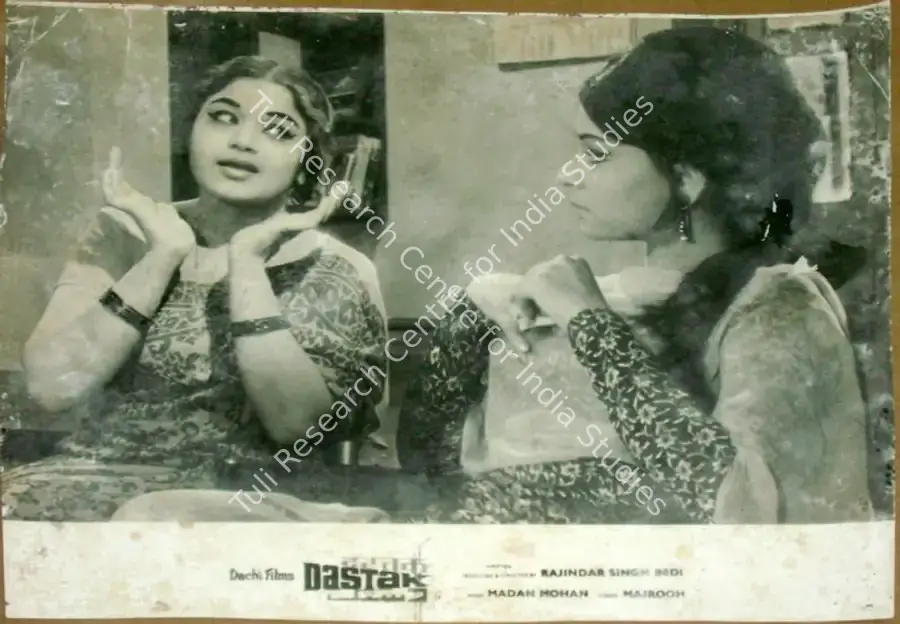
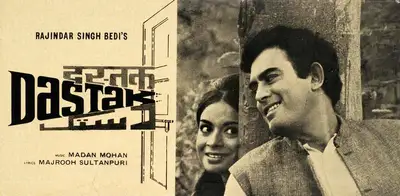
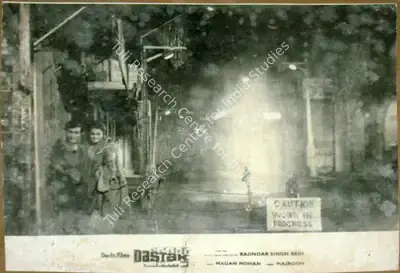
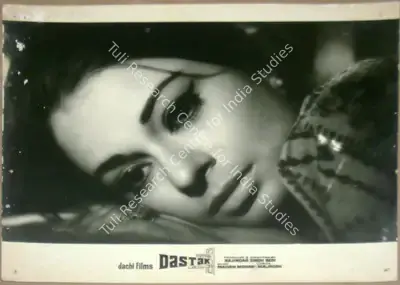
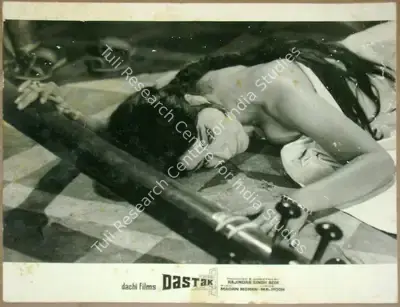
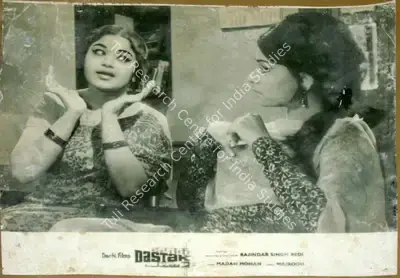
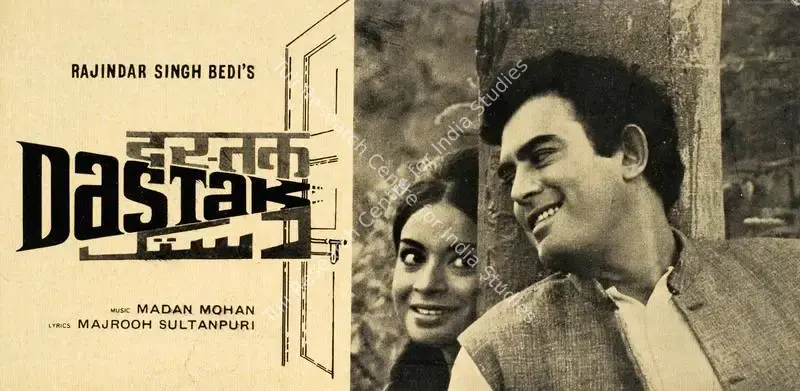
Dastak (1970) Written and directed by Rajinder Singh Bedi, it remains one of the most daring and socially perceptive works in the history of parallel Hindi cinema. The film was notable for its deeply unconventional narrative, set within the confines of a sex workers' district—an environment rarely explored with such sensitivity and realism in mainstream Indian cinema of its time. At the centre of the story is a newly married couple, Hamid and Salma, who unknowingly rent an apartment previously occupied by a courtesan named Shamshad Begum, whose clientele continue to visit the residence long after her departure. The repeated knocks—or dastak—on the couple's door become both a literal and symbolic intrusion into their married life, exposing them to humiliation, suspicion and its resulting emotional turmoil.
Through this deceptively simple premise, the film offers a profound meditation on urban alienation, social hypocrisy, and the moral contradictions embedded within middle-class respectability. Bedi's treatment of the subject was widely praised for its restraint and psychological nuance. Rather than sensationalising the red-light milieu, the film foregrounds the emotional suffering of individuals trapped within rigid social structures and public perceptions. Critics and scholars alike commended the film for its empathetic exploration of gendered vulnerability and the social policing of female respectability, themes that continue to resonate in contemporary discussions of Indian society.
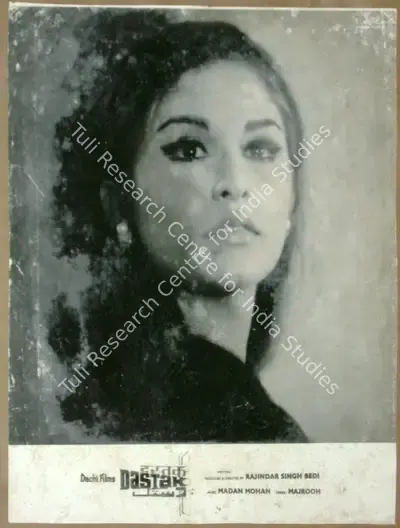
Although Dastak did not achieve commercial success upon its release, it emerged as one of the most critically acclaimed films of its era. The performances of Sanjeev Kumar and Rehana Sultan were especially celebrated for their emotional intensity and realism. Their work earned them the National Film Awards for Best Actor and Best Actress respectively.
The film also brought national recognition to its music director, Madan Mohan, who received the National Film Award for Best Music Direction.
Cinematographer Kamal Bose was similarly honoured for his striking black-and-white visual treatment, which heightened the claustrophobic atmosphere and emotional tension of the narrative. Additionally, filmmaker Hrishikesh Mukherjee won Filmfare Awards for editing, marking his second such recognition after Madhumati (1958).
The film's music remains one of its most enduring artistic achievements. Madan Mohan composed a richly textured score rooted deeply in the traditions of Hindustani classical music, making extensive use of raga-based compositions and delicate dholak rhythms. Songs such as Mai Ri, Main Kaa Se Kahoon and Baiyan Na Dharo, rendered by Lata Mangeshkar and Mohammed Rafi, are today regarded as masterpieces of Hindi film music. The soundtrack is often cited as one of Madan Mohan's finest achievements, particularly for eliciting from Lata Mangeshkar what many critics consider among the greatest performances of her playback career.
Equally significant were the lyrics penned by Majrooh Sultanpuri, whose poetry captured the anguish and social isolation of Salma with remarkable emotional precision. His lyrics evoked a devastating critique of a society that objectifies women while expressing simultaneously a keen, deeply internalised sorrow. Together, the film's music, performances, and thematic boldness established Dastak as a landmark work of socially conscious Bombay cinema.
इस देखने में सरल लगने वाली कहानी के माध्यम से, फ़िल्म शहरी अलगाव, सामाजिक पाखंड और मध्यमवर्गीय प्रतिष्ठा में अंतर्निहित नैतिक विरोधाभासों पर गहन चिंतन प्रस्तुत करती है। बेदी द्वारा इस विषय को संयमित ढंग से प्रस्तुत करने और मनोवैज्ञानिक बारीकियों को समझने के लिए उनकी व्यापक प्रशंसा हुई। रेड-लाइट इलाकों के माहौल को सनसनीखेज़ बनाने के बजाय, फ़िल्म कठोर सामाजिक संरचनाओं और सार्वजनिक धारणाओं में फंसे व्यक्तियों की भावनात्मक पीड़ा को उजागर करती है। आलोचकों और विद्वानों ने समान रूप से फ़िल्म की सराहना की, क्योंकि इसमें लैंगिक संवेदनशीलता और महिलाओं की प्रतिष्ठा पर सामाजिक नियंत्रण जैसे विषयों का सहानुभूतिपूर्ण चित्रण किया गया है, जो भारतीय समाज की समकालीन चर्चाओं में आज भी प्रासंगिक हैं।
हालाँकि दस्तक को रिलीज़ के समय व्यावसायिक सफलता नहीं मिली, लेकिन यह अपने दौर की सबसे प्रशंसित फ़िल्मों में से एक बन गई। संजीव कुमार और रेहाना सुल्तान के अभिनय को विशेष रूप से उनकी भावनात्मक गहराई और यथार्थवाद के लिए सराहा गया। उनके इस अभिनय के लिए उन्हें क्रमशः सर्वश्रेष्ठ अभिनेता और सर्वश्रेष्ठ अभिनेत्री का राष्ट्रीय फ़िल्म पुरस्कार मिला।
इस फ़िल्म ने इसके संगीत निर्देशक मदन मोहन को राष्ट्रीय स्तर पर पहचान दिलाई, जिन्हें सर्वश्रेष्ठ संगीत निर्देशन के लिए राष्ट्रीय फ़िल्म पुरस्कार मिला।
सिनेमैटोग्राफ़र कमल बोस को भी उनके प्रभावशाली ब्लैक-एंड-व्हाइट विज़ुअल ट्रीटमेंट के लिए सम्मानित किया गया, जिसने कहानी के घुटन भरे माहौल और भावनात्मक तनाव को और भी बढ़ा दिया। इसके अलावा, फ़िल्म निर्माता हृषिकेश मुखर्जी को निर्देशन के लिए फ़िल्मफ़ेयर पुरस्कार मिला, जो मधुमती (1958) के बाद उनकी दूसरी ऐसी उपलब्धि थी।
फ़िल्म का संगीत आज भी इसकी स्थायी कलात्मक उपलब्धियों में से एक है। मदन मोहन ने हिंदुस्तानी शास्त्रीय संगीत की परंपराओं में रची गई समृद्ध संगीत रचना का भरपूर उपयोग किया है, जिसमें राग आधारित रचनाओं और मधुर ढोलक की ताल का व्यापक प्रयोग किया गया है। लता मंगेशकर और मोहम्मद रफ़ी द्वारा गाए गए गीत जैसे 'मैं री', 'मैं का से कहूँ' और 'बइयाँ ना धरो' आज हिंदी फ़िल्म संगीत की उत्कृष्ट फ़िल्मी कृतियों में गिने जाते हैं। इस साउंडट्रैक को अक्सर मदन मोहन की सर्वश्रेष्ठ रचनाओं में से एक माना जाता है, विशेष रूप से लता मंगेशकर से वह प्रस्तुति हासिल करने के लिए जिसे कई आलोचक उनके पार्श्व गायन करियर के सर्वश्रेष्ठ प्रदर्शनों में से एक मानते हैं।
मजरूह सुल्तानपुरी द्वारा रचित गीत भी उतने ही महत्वपूर्ण थे, जिनकी कविता ने सलमा की पीड़ा और सामाजिक अलगाव को अद्भुत भावनात्मक सटीकता के साथ व्यक्त किया। उनके गीतों ने उस समाज की तीखी आलोचना की जो महिलाओं को वस्तु की तरह देखता है, साथ ही साथ एक गहन, आंतरिक पीड़ा को भी अभिव्यक्त किया। फ़िल्म के संगीत, अभिनय और विषयगत साहस ने 'दस्तक' को सामाजिक रूप से जागरूक बॉम्बे सिनेमा की एक ऐतिहासिक फ़िल्मी कृति के रूप में स्थापित किया।