
Chhalia1960
Introduction
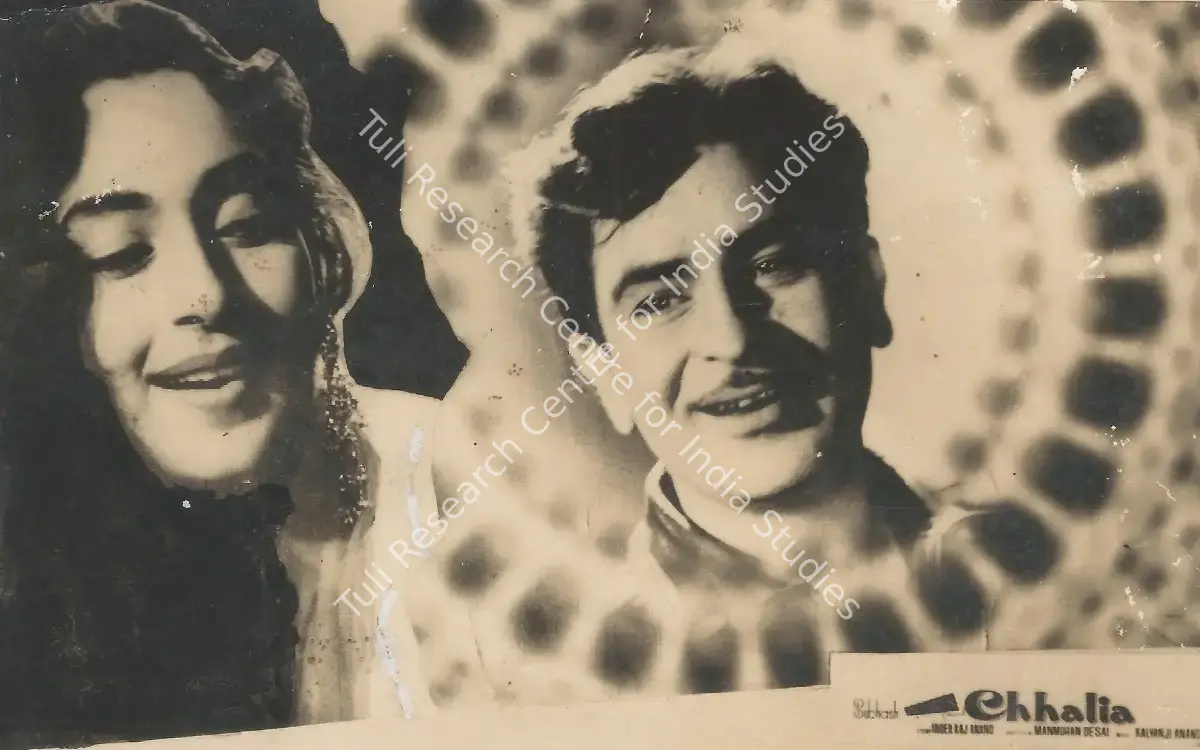
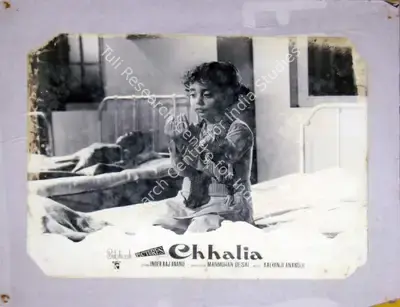
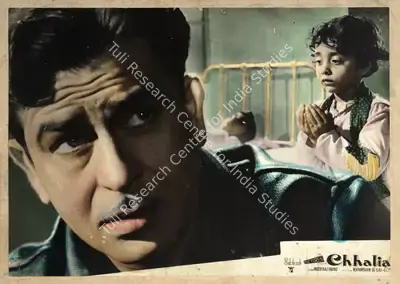
Chhalia (1960) Directed by Manmohan Desai, the film represents an early and formative work in the evolution of post-Independence Hindi cinema. Loosely inspired by White Nights by Fyodor Dostoevsky, the film relocates its thematic concerns to the fraught socio-political landscape of the Partition of India, foregrounding the emotional and moral dilemmas surrounding estranged families, particularly women separated from their husbands and children.
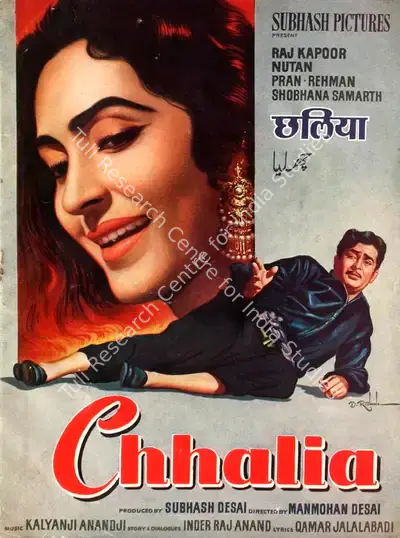
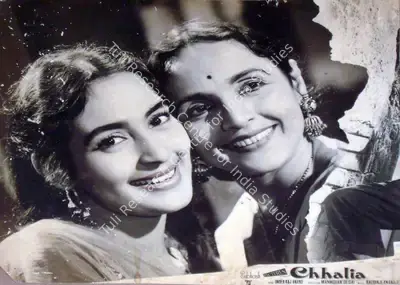
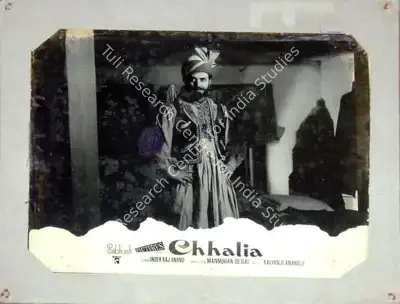
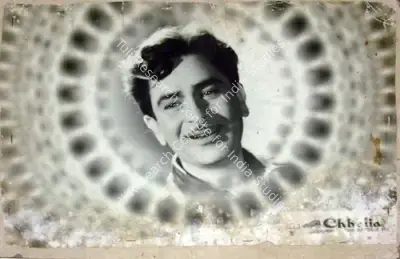
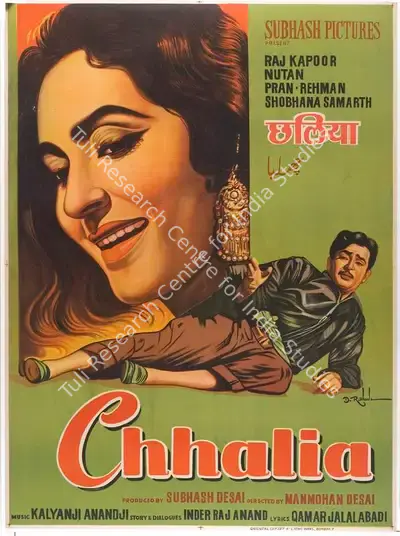
The film features Raj Kapoor in the titular role of Chhalia, a guileless yet compassionate vagabond whose outward frivolity conceals deep moral conviction. Opposite him, Nutan delivers a nuanced performance as Shanti, a woman displaced by the violence of Partition. The supporting cast includes Pran as the benevolent Abdul Rehman, Rehman as Kewal, Shanti's husband, and Shobhana Samarth as her mother. Notably, the film marks Desai's directorial debut and anticipates narrative patterns he would later refine, particularly the lost-and-found motif that achieved iconic status in films such as Amar Akbar Anthony (1977).
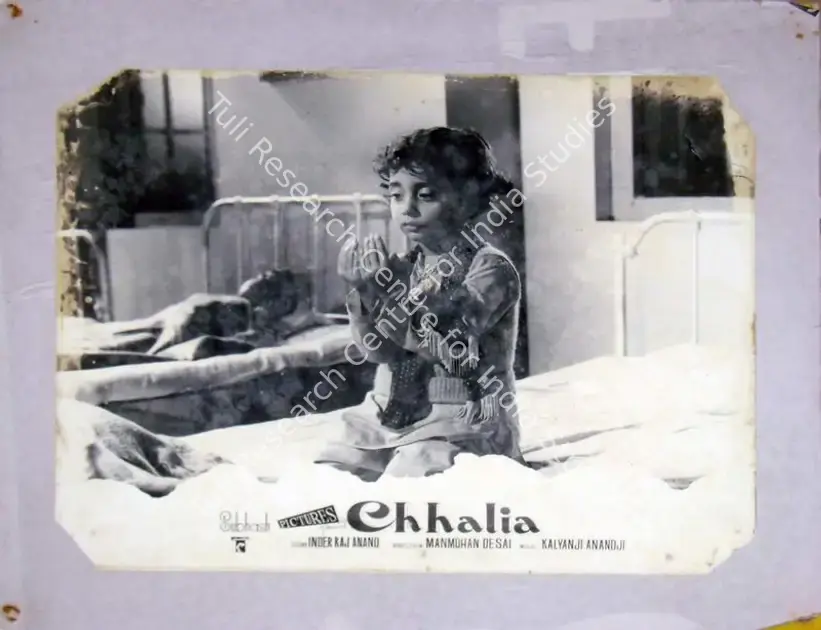
Set against the backdrop of communal upheaval, the narrative traces Shanti's traumatic separation from her husband and child during the riots accompanying Partition. Presumed dead, she is rescued by Abdul Rehman, who offers her protection and dignity. However, upon her eventual return to Delhi, she is repudiated by her husband, whose suspicion is shaped by prevailing social prejudices, including her enforced stay in Pakistan and the Muslim identity temporarily assigned to their child for survival. Ostracised and despairing, Shanti attempts suicide but is saved by Chhalia, whose kindness introduces a redemptive dimension to the narrative.
Unaware of her past, Chhalia develops an unassuming affection for Shanti, who, in turn, remains devoted to the hope of reuniting with her family. The film ultimately unfolds as a story of self-effacing sacrifice, as Chhalia dedicates himself to restoring Shanti's place within her fractured domestic world. Through this trajectory, the narrative explores themes of social stigma, moral courage, and the possibility of reconciliation within a deeply divided society.
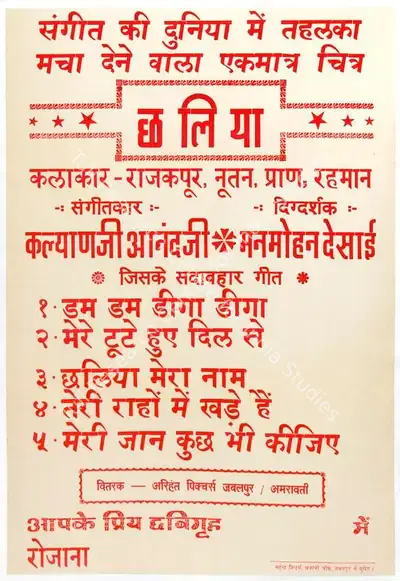
The film's music, composed by the duo Kalyanji–Anandji, constitutes one of its most enduring legacies. With Laxmikant–Pyarelal serving as assistant music directors, the soundtrack achieved considerable popularity. Songs such as Dum Dum Diga Diga, Teri Rahon Mein Khade Hain, Baje Payal Chhun Chhun, Chhalia Mera Naam, Meri Jaan Kuchh Bhi Kijiye, and Mere Toote Huye Dil Se became widely celebrated, with playback contributions from Lata Mangeshkar and Mukesh enhancing their appeal.
Shot in black and white, Chhalia achieved moderate commercial success but secured a lasting place in cinematic memory due to its thematic seriousness and musical richness.
At the 1961 Filmfare Awards, both Raj Kapoor and Nutan received nominations for Best Actor and Best Actress, underscoring the film's critical recognition and its significance within the cinematic landscape of its time.
इस फ़िल्म में राज कपूर ने छलिया की मुख्य भूमिका निभाई है, जो एक भोले-भाले लेकिन दयालु घुमक्कड़ हैं, जिनकी बाहरी चंचलता के पीछे गहरी नैतिक आस्था छिपी है। उनके सामने नूतन ने शांति के किरदार में बेहतरीन अभिनय किया है, जो विभाजन की हिंसा से विस्थापित महिला हैं। सहायक कलाकारों में प्राण ने दयालु अब्दुल रहमान की भूमिका में हैं, रहमान ने शांति के पति केवल और शोभना समर्थ ने उनकी मां की भूमिका निभाई है। गौरतलब है कि यह फ़िल्म देसाई की पहली निर्देशित फ़िल्म है और इसमें उनके द्वारा बाद में विकसित की गई कथा शैली की झलक मिलती है, विशेष रूप से खोया-पाया विषयवस्तु, जिसे अमर अकबर एंथोनी (1977) जैसी फ़िल्मों में प्रतिष्ठित हुआ।
सांप्रदायिक उथल-पुथल की पृष्ठभूमि पर आधारित यह कहानी विभाजन के दौरान हुए दंगों में शांति के अपने पति और बच्चे से अलग होने के दर्दनाक अनुभव को दर्शाती है। मुरदा मान ली गई शांति को अब्दुल रहमान ने बचाया, जिसने उसे सुरक्षा और सम्मान दिया। हालांकि, दिल्ली लौटने पर उसके पति ने उसे ठुकरा दिया, जिसका संदेह उस समय के सामाजिक पूर्वाग्रहों से उपजा था, जिसमें पाकिस्तान में उसका जबरन रहना और जीवित रहने के लिए बच्चे को अस्थायी रूप से दी गई मुस्लिम पहचान शामिल थी। समाज से बहिष्कृत और निराश शांति ने आत्महत्या का प्रयास किया, लेकिन छलिया ने उसे बचा लिया, जिसकी नवाज़िश कहानी में एक सकारात्मक मोड़ लाती है।
अपने अतीत से अनभिज्ञ छलिया, शांति के प्रति सहज स्नेह विकसित कर लेता है, और शांति भी अपने परिवार से पुनर्मिलन की आशा में डूबी रहती है। अंततः यह फ़िल्म निस्वार्थ बलिदान की कहानी के रूप में सामने आती है, जिसमें छलिया शांति को उसके टूटे हुए घरेलू जीवन में पुनः स्थान दिलाने के लिए स्वयं को समर्पित कर देता है। इस घटनाक्रम के माध्यम से, कथा सामाजिक कलंक, नैतिक साहस और गहरे रूप से विभाजित समाज में सुलह की संभावना जैसे विषयों को उजागर करती है।
फ़िल्म का संगीत, कल्याणजी-आनंदजी की जोड़ी द्वारा तैयार किया गया है, जो इसकी स्थायी विरासतों में से एक है। लक्ष्मीकांत-प्यारेलाल के सहायक संगीत निर्देशक के रूप में काम किया था। फ़िल्म का साउंडट्रैक ने काफी लोकप्रियता हासिल की थी। दम दम डिगा डिगा, तेरी राहों में खड़े हैं, बाजे पायल छुं छुं, छलिया मेरा नाम, मेरी जान कुछ भी किजिये, और मेरे टूटे हुए दिल से जैसे गाने मुख्य रूप से मशहूर हुए, लता मंगेशकर और मुकेश के पार्श्व योगदान ने उनकी प्रभावशीलता को और बढ़ा दिया है।
ब्लैक एंड व्हाइट में फ़िल्माई गई छलिया को व्यावसायिक रूप से औसत सफलता मिली, लेकिन अपनी विषयगत गंभीरता और संगीत की समृद्धि के कारण इसने सिनेमाई स्मृति में एक स्थायी स्थान बना लिया।
1961 के फ़िल्मफ़ेयर पुरस्कारों में राज कपूर और नूतन दोनों को सर्वश्रेष्ठ अभिनेता और सर्वश्रेष्ठ अभिनेत्री के लिए नामांकन प्राप्त हुआ, जो फ़िल्म की आलोचनात्मक पहचान और उस समय के सिनेमाई परिदृश्य में इसके महत्व को रेखांकित करता है।
Body of Work
Research Centre
Related
3