TRIS logo image
Search275,000+ actors, artists, objects, artworks, films, exhibitions, archives

EN

EN

English

HI

Hindi

EN

EN

English

HI

Hindi

Tuli Research Centre for India Studies

Tuli Research Centre for India Studies

Vision

Manifesto

Archive & Library

Vanraja Sanctuary & Hospice

Home

Research Categories

Browse All

ICore

1_CinemaEducation_Cinema as a Critical Educational Resource

2_FineArts_Modern and Contemporary Indian Fine Arts

3_Photography_Photography in India

4_PopCulture_The Printed Image, Popular Arts, and Crafts

IIMaterial

5_ArcHeritage_India's Architectural Heritage as Inspiration

6_EconomicsArt_Economics of Art & Cultural Industry

7_Travel_Automobile, Transport and Travel Heritage

8_Uncertainty_Uncertainty

IIICritical

9_SocialDuty_Social Responsibility of the Creative Mind

10_Childhood_The Changing Smile of Childhood & Its Second Coming

11_Sensuality_The Sensual Discipline within Creativity

12_Scholarship_The History & Historiography of Scholarship in the Arts, Humanities, and Social Sciences

IVMeaningful

13_SeekJustice_Seeking Justice and Political Integrity

14_IndoWorld_India and her Relationship with the World

15_SpiritualPoetics_The Religious-Spiritual-Poetic-Philosophical Framework

16_Continuum_The Animal-Human-Nature Continuum

Explore

All

Posts

Masterlists

Calendar

Live | Upcoming

All Events

Timetable

Search275,000+ actors, artists, objects, artworks, films, exhibitions, archives

EN

EN

English

HI

Hindi

Amrit Manthan (1934)

Amrit Manthan (1934)

Film.Indian Cinema
DirectorV. Shantaram
LanguageHindi
On this Page
Introduction
Body of Work
Research Centre3
All3
Archive3
Home/Film/Amrit Manthan (1934)

Amrit Manthan1934

Amrit Manthan (1934): featured artwork

Introduction

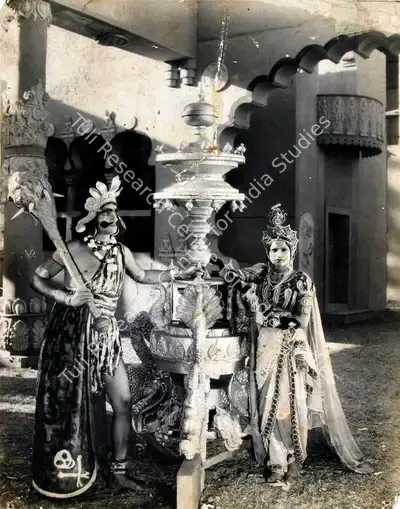
Amrit Manthan, directed by the legendary V. Shantaram, belongs to the rich genre of 'fairy tale' costume drama in Indian cinema. Set in India's fantastical past, the film chronicles the tale of an enlightened king who outlaws 'pashubali' and 'narbali' (animal and human sacrifice), practices considered essential by some fanatical Hindu priests. Consequently, the king becomes the target of assassination by one such priest.

Produced simultaneously in Hindi and Marathi, this bilingual film performed various important functions for the yet-to-be-independent nation. It served to reintroduce reformism in Hinduism, drawing on various Buddhist and Gandhian influences. By portraying a mythic past, the film aimed to disprove colonial notions of native 'savagery' and provide historical legitimacy for Indian civilization.

Through the character of King Kantivarma, a thinly veiled roman à clef of Ashoka, the film attempts to subdue superstitious sects of Hinduism that engage in dark practices such as human sacrifice. It challenged the Western belief that Hinduism was a static and unalterable faith. This idea fueled the notion of the 'white man's burden,' a rationale for bringing "civilization" to India, which in turn served as a justification for the long history of colonial exploitation.

Released during the heyday of Indian nationalism, Amrit Manthan functioned as a reconstructed historical memory, presenting an idealized national past. It provided a romanticized history for an exploited population to embrace, challenging colonial narratives and fostering a sense of cultural pride. The film not only entertained but also served as a powerful tool in shaping the national consciousness during a critical period of India's struggle for independence.

Reference used for a small portion: Colonial India and the Making of Empire Cinema: Image, Ideology and Identity by Prem Chowdhry

सम्मानित फ़िल्म निर्देशक व्ही. शांताराम द्वारा निर्देशित अमृत मंथन भारतीय सिनेमा के आरंभिक दौर में प्रचलित पौराणिक कॉस्ट्यूम ड्रामा शैली की फ़िल्म है। भारत के पौराणिक अतीत में स्थित इस फ़िल्म की कहानी एक ऐसे प्रबुद्ध राजा के बारे में है जो अपने राज्य में पशुबली और नरबली को गैरकानूनी घोषित कर देता है। जवाब में ऐसी प्रथाओं के समर्थक कुछ कट्टर हिंदू पुजारी इसका विरोध करते हैं और ऐसा ही एक धर्मान्ध पुजारी तो राजा की हत्या करने का मन बना लेता है।

हिन्दी और मराठी भाषा में एक साथ निर्मित यह फ़िल्म स्वतंत्रता प्राप्ति से कुछ साल दूर खड़े मुल्क में कई उद्देश्यों की पूर्ति कर रही थी। इसने हिन्दू धर्म के भीतर मौजूद रही सुधारवादी धारा को विभिन्न बौद्ध और गांधीवादी प्रभावों का इस्तेमाल करते हुए फिर से जगाया। इसके साथ ही यह फ़िल्म स्थानीय अतीत को 'बर्बर' की श्रेणी में डालनेवाले औपनिवेशिक नज़रिये को झुठला रही थी और एक सभ्य पौराणिक अतीत की रचना करते हुए भारतीय सभ्यता को ऐतिहासिक वैधता प्रदान कर रही थी।

सम्राट अशोक की छवि को ध्यान में रखकर रचे गए राजा कांतिवर्मा के चरित्र के माध्यम से फ़िल्म हिंदू धर्म के ऐसे अंधविश्वासी पक्ष की आलोचना पेश करती है जिसमें पशुबलि और इंसानी बलि जैसी कुप्रथाएँ मौजूद थीं। साथ ही फ़िल्म पश्चिम की इस मान्यता को चुनौती देती है कि हिन्दू धर्म एक जड़ और अपरिवर्तनीय किस्म का धर्म है। भारत के सांस्कृतिक धरातल को जड़ और गतिहीन मानने वाली उपनिवेशवाद की इसी मान्यता ने आगे चलकर 'व्हाइट मैन्स बर्डन' की सोच को बढ़ावा दिया। यही पश्चिम के भारत में “सभ्यता” लेकर आने का तर्क बना और आगे चलकर औपनिवेशिक शोषण के लंबे इतिहास के दौर में इसने शासन का तर्क गढ़ा।

भारतीय राष्ट्रवाद के उफ़ान के दौर में रिलीज़ हुई अमृत मंथन इतिहास स्मृति की पुनर्रचना करते हुए देश का एक आदर्श राष्ट्रीय अतीत गढ़ती है। इसने मुल्क की शोषित आबादी के लिए एक ऐसा रोमानी इतिहास गढ़ा जो औपनिवेशिक नज़रिये को चुनौती देता था और अपने अतीत को लेकर स्थानीय दर्शक के भीतर एक सांस्कृतिक गौरव का भाव भरता था। आज़ादी की लड़ाई के एक महत्वपूर्ण दौर में इस फ़िल्म ने मनोरंजन के साथ-साथ राष्ट्रीय चेतना को आकार देने का भी काम किया।

इस प्रस्तावना के एक हिस्से के लिए संदर्भ के रूप में इस्तेमाल: चौधरी, प्रेम, 'कॉनोलियन इंडिया एंड द मेकिंग ऑफ़ एम्पायर सिनेमा: इमेज, आइडियोलॉजी एंड आइडेंटिटी'
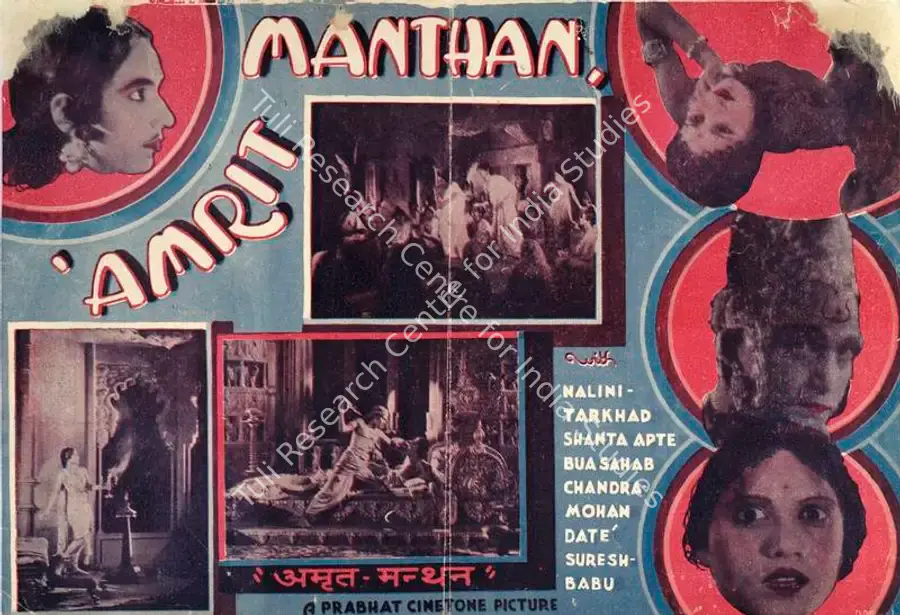
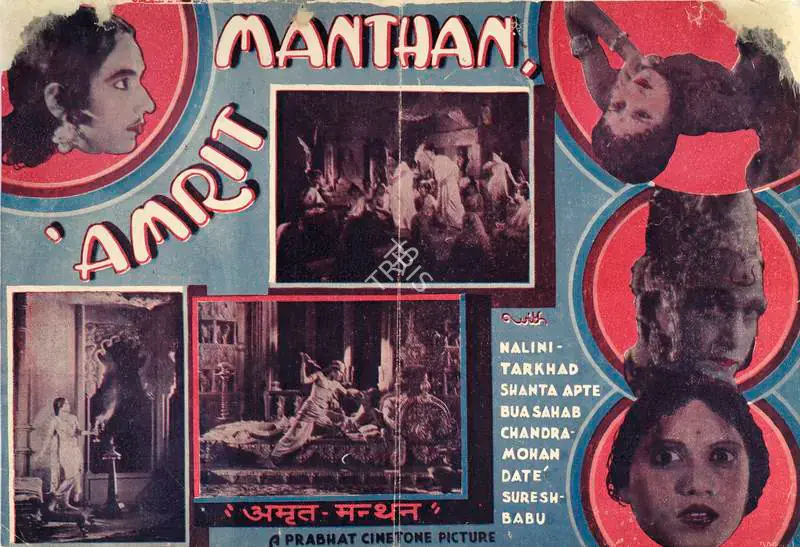
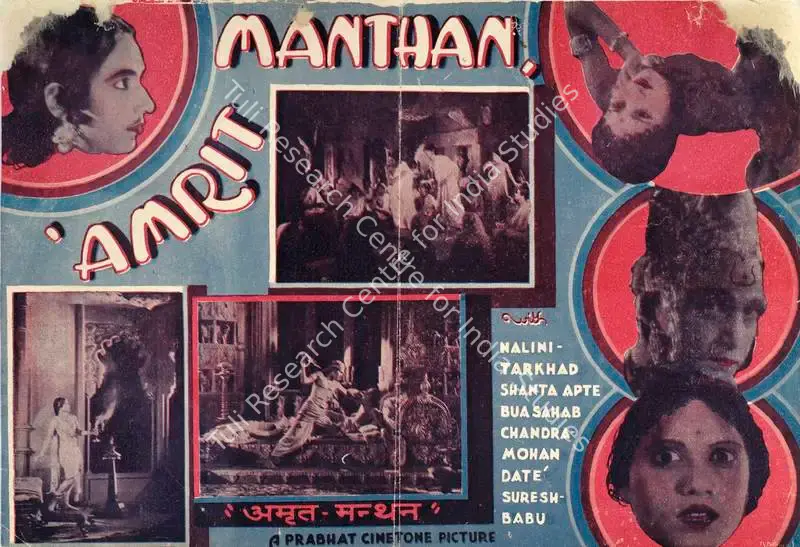
Shantaram, V. (Director), Amrit Manthan, 1934 | Handbill | CinemaEducation | 00515153
1 / 2

Body of Work

Banner
Prabhat
Cinematographer
Keshavrao Dhaiber
Director
V. Shantaram
Lead Cast
Shanta Apte, Buva Saheb, Malini, Tarkhad
Lead Cast Rest
Suresh Babu, Chandramohan Date

Research Centre

Keshavrao Dhaiber (Cinematographer), Amrit Manthan, 1934, Photographic Still
Dhaiber, Keshavrao (Cinematographer), Amrit Manthan, 1934 | Photographic Still
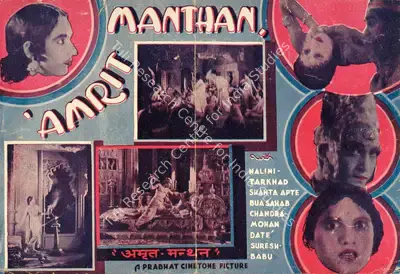
V. Shantaram (Director), Amrit Manthan, 1934, Handbill
Shantaram, V. (Director), Amrit Manthan, 1934 | Handbill
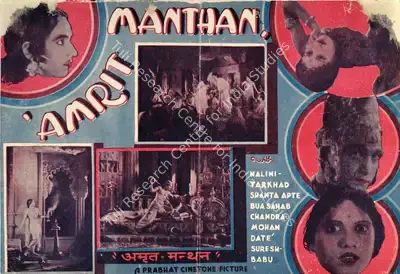
V. Shantaram (Director), Amrit Manthan, 1934, Handbill
Shantaram, V. (Director), Amrit Manthan, 1934 | Handbill
Keshavrao Dhaiber (Cinematographer), Amrit Manthan, 1934, Photographic Still
Dhaiber, Keshavrao (Cinematographer), Amrit Manthan, 1934 | Photographic Still
V. Shantaram (Director), Amrit Manthan, 1934, Handbill
Shantaram, V. (Director), Amrit Manthan, 1934 | Handbill
V. Shantaram (Director), Amrit Manthan, 1934, Handbill
Shantaram, V. (Director), Amrit Manthan, 1934 | Handbill

Related

1

Personalities

1

V. ShantaramFilm Director · Comparable Artworks
Tuli Research Centre for India Studies

Tuli Research Centre

for India Studies

A free and open knowledge base for the modern and contemporary Indian arts, cinema, photography and cultural heritage.

Support

Contact Us

Discover

Tuli Research Centre for India StudiesVisionManifestoArchive & LibraryVanraja Sanctuary & Hospice

Legal

Privacy PolicyTerms & Conditions

Follow us

Youtube

Youtube

Instagram

Instagram

Facebook

Facebook

© Tuli Research Centre for India Studies 2026

Tuli Research Centre for India Studies

Tuli Research Centre

for India Studies

A free and open knowledge base for the modern and contemporary Indian arts, cinema, photography and cultural heritage.

Tuli Research Centre for India StudiesVisionManifestoArchive & LibraryVanraja Sanctuary & Hospice
Contact Us
Privacy PolicyTerms & Conditions

Follow us

YoutubeInstagramFacebook

© Tuli Research Centre for India Studies 2026

                          Shantaram, V. (Director), Amrit Manthan, 1934 | Handbill | CinemaEducation | 00515153

                          Shantaram, V. (Director), Amrit Manthan, 1934 | Handbill

                          DirectorV. Shantaram
                          Document TypeHandbill
                          Film TitleAmrit Manthan, 1934, India, Hindi
                          BannerPrabhat
                          CinematographerKeshavrao Dhaiber
                          CastShanta Apte, Buva Saheb, Malini, Tarkhad, Suresh Babu, Chandramohan Date
                          Copyright of ImageWith Producer | Archive Object

                          Research Categories

                          1_CinemaEducation

                          Related Links2

                          Masterlist
                          V Shantaram
                          Research Categories
                          01Cinema as a Critical Educational Resource