
Amrit Manthan1934
Introduction
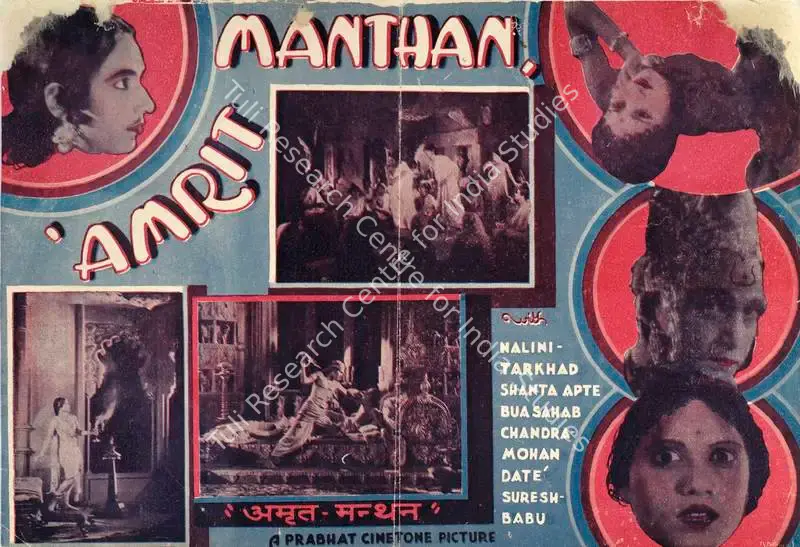
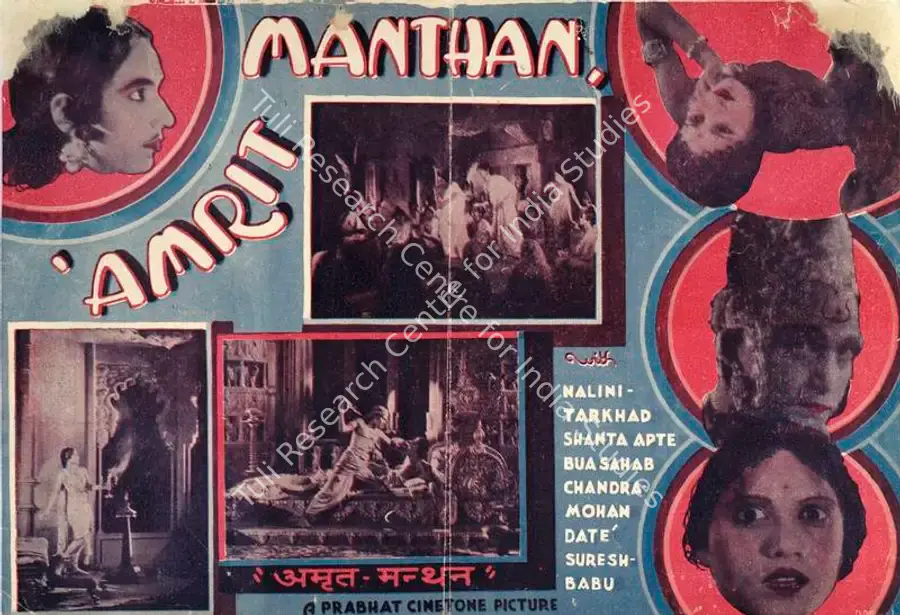
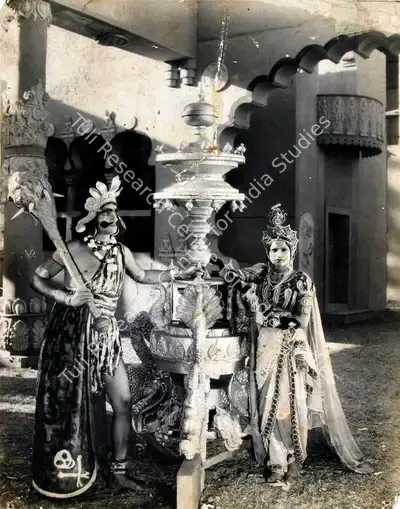
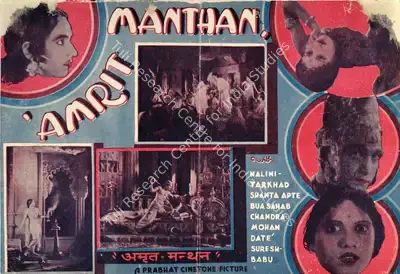
Amrit Manthan, directed by the legendary V. Shantaram, belongs to the rich genre of 'fairy tale' costume drama in Indian cinema. Set in India's fantastical past, the film chronicles the tale of an enlightened king who outlaws 'pashubali' and 'narbali' (animal and human sacrifice), practices considered essential by some fanatical Hindu priests. Consequently, the king becomes the target of assassination by one such priest.
Produced simultaneously in Hindi and Marathi, this bilingual film performed various important functions for the yet-to-be-independent nation. It served to reintroduce reformism in Hinduism, drawing on various Buddhist and Gandhian influences. By portraying a mythic past, the film aimed to disprove colonial notions of native 'savagery' and provide historical legitimacy for Indian civilization.
Through the character of King Kantivarma, a thinly veiled roman à clef of Ashoka, the film attempts to subdue superstitious sects of Hinduism that engage in dark practices such as human sacrifice. It challenged the Western belief that Hinduism was a static and unalterable faith. This idea fueled the notion of the 'white man's burden,' a rationale for bringing "civilization" to India, which in turn served as a justification for the long history of colonial exploitation.
Released during the heyday of Indian nationalism, Amrit Manthan functioned as a reconstructed historical memory, presenting an idealized national past. It provided a romanticized history for an exploited population to embrace, challenging colonial narratives and fostering a sense of cultural pride. The film not only entertained but also served as a powerful tool in shaping the national consciousness during a critical period of India's struggle for independence.
Reference used for a small portion: Colonial India and the Making of Empire Cinema: Image, Ideology and Identity by Prem Chowdhry
Produced simultaneously in Hindi and Marathi, this bilingual film performed various important functions for the yet-to-be-independent nation. It served to reintroduce reformism in Hinduism, drawing on various Buddhist and Gandhian influences. By portraying a mythic past, the film aimed to disprove colonial notions of native 'savagery' and provide historical legitimacy for Indian civilization.
Through the character of King Kantivarma, a thinly veiled roman à clef of Ashoka, the film attempts to subdue superstitious sects of Hinduism that engage in dark practices such as human sacrifice. It challenged the Western belief that Hinduism was a static and unalterable faith. This idea fueled the notion of the 'white man's burden,' a rationale for bringing "civilization" to India, which in turn served as a justification for the long history of colonial exploitation.
Released during the heyday of Indian nationalism, Amrit Manthan functioned as a reconstructed historical memory, presenting an idealized national past. It provided a romanticized history for an exploited population to embrace, challenging colonial narratives and fostering a sense of cultural pride. The film not only entertained but also served as a powerful tool in shaping the national consciousness during a critical period of India's struggle for independence.
Reference used for a small portion: Colonial India and the Making of Empire Cinema: Image, Ideology and Identity by Prem Chowdhry
सम्मानित फ़िल्म निर्देशक व्ही. शांताराम द्वारा निर्देशित अमृत मंथन भारतीय सिनेमा के आरंभिक दौर में प्रचलित पौराणिक कॉस्ट्यूम ड्रामा शैली की फ़िल्म है। भारत के पौराणिक अतीत में स्थित इस फ़िल्म की कहानी एक ऐसे प्रबुद्ध राजा के बारे में है जो अपने राज्य में पशुबली और नरबली को गैरकानूनी घोषित कर देता है। जवाब में ऐसी प्रथाओं के समर्थक कुछ कट्टर हिंदू पुजारी इसका विरोध करते हैं और ऐसा ही एक धर्मान्ध पुजारी तो राजा की हत्या करने का मन बना लेता है।
हिन्दी और मराठी भाषा में एक साथ निर्मित यह फ़िल्म स्वतंत्रता प्राप्ति से कुछ साल दूर खड़े मुल्क में कई उद्देश्यों की पूर्ति कर रही थी। इसने हिन्दू धर्म के भीतर मौजूद रही सुधारवादी धारा को विभिन्न बौद्ध और गांधीवादी प्रभावों का इस्तेमाल करते हुए फिर से जगाया। इसके साथ ही यह फ़िल्म स्थानीय अतीत को 'बर्बर' की श्रेणी में डालनेवाले औपनिवेशिक नज़रिये को झुठला रही थी और एक सभ्य पौराणिक अतीत की रचना करते हुए भारतीय सभ्यता को ऐतिहासिक वैधता प्रदान कर रही थी।
सम्राट अशोक की छवि को ध्यान में रखकर रचे गए राजा कांतिवर्मा के चरित्र के माध्यम से फ़िल्म हिंदू धर्म के ऐसे अंधविश्वासी पक्ष की आलोचना पेश करती है जिसमें पशुबलि और इंसानी बलि जैसी कुप्रथाएँ मौजूद थीं। साथ ही फ़िल्म पश्चिम की इस मान्यता को चुनौती देती है कि हिन्दू धर्म एक जड़ और अपरिवर्तनीय किस्म का धर्म है। भारत के सांस्कृतिक धरातल को जड़ और गतिहीन मानने वाली उपनिवेशवाद की इसी मान्यता ने आगे चलकर 'व्हाइट मैन्स बर्डन' की सोच को बढ़ावा दिया। यही पश्चिम के भारत में “सभ्यता” लेकर आने का तर्क बना और आगे चलकर औपनिवेशिक शोषण के लंबे इतिहास के दौर में इसने शासन का तर्क गढ़ा।
भारतीय राष्ट्रवाद के उफ़ान के दौर में रिलीज़ हुई अमृत मंथन इतिहास स्मृति की पुनर्रचना करते हुए देश का एक आदर्श राष्ट्रीय अतीत गढ़ती है। इसने मुल्क की शोषित आबादी के लिए एक ऐसा रोमानी इतिहास गढ़ा जो औपनिवेशिक नज़रिये को चुनौती देता था और अपने अतीत को लेकर स्थानीय दर्शक के भीतर एक सांस्कृतिक गौरव का भाव भरता था। आज़ादी की लड़ाई के एक महत्वपूर्ण दौर में इस फ़िल्म ने मनोरंजन के साथ-साथ राष्ट्रीय चेतना को आकार देने का भी काम किया।
इस प्रस्तावना के एक हिस्से के लिए संदर्भ के रूप में इस्तेमाल: चौधरी, प्रेम, 'कॉनोलियन इंडिया एंड द मेकिंग ऑफ़ एम्पायर सिनेमा: इमेज, आइडियोलॉजी एंड आइडेंटिटी'
हिन्दी और मराठी भाषा में एक साथ निर्मित यह फ़िल्म स्वतंत्रता प्राप्ति से कुछ साल दूर खड़े मुल्क में कई उद्देश्यों की पूर्ति कर रही थी। इसने हिन्दू धर्म के भीतर मौजूद रही सुधारवादी धारा को विभिन्न बौद्ध और गांधीवादी प्रभावों का इस्तेमाल करते हुए फिर से जगाया। इसके साथ ही यह फ़िल्म स्थानीय अतीत को 'बर्बर' की श्रेणी में डालनेवाले औपनिवेशिक नज़रिये को झुठला रही थी और एक सभ्य पौराणिक अतीत की रचना करते हुए भारतीय सभ्यता को ऐतिहासिक वैधता प्रदान कर रही थी।
सम्राट अशोक की छवि को ध्यान में रखकर रचे गए राजा कांतिवर्मा के चरित्र के माध्यम से फ़िल्म हिंदू धर्म के ऐसे अंधविश्वासी पक्ष की आलोचना पेश करती है जिसमें पशुबलि और इंसानी बलि जैसी कुप्रथाएँ मौजूद थीं। साथ ही फ़िल्म पश्चिम की इस मान्यता को चुनौती देती है कि हिन्दू धर्म एक जड़ और अपरिवर्तनीय किस्म का धर्म है। भारत के सांस्कृतिक धरातल को जड़ और गतिहीन मानने वाली उपनिवेशवाद की इसी मान्यता ने आगे चलकर 'व्हाइट मैन्स बर्डन' की सोच को बढ़ावा दिया। यही पश्चिम के भारत में “सभ्यता” लेकर आने का तर्क बना और आगे चलकर औपनिवेशिक शोषण के लंबे इतिहास के दौर में इसने शासन का तर्क गढ़ा।
भारतीय राष्ट्रवाद के उफ़ान के दौर में रिलीज़ हुई अमृत मंथन इतिहास स्मृति की पुनर्रचना करते हुए देश का एक आदर्श राष्ट्रीय अतीत गढ़ती है। इसने मुल्क की शोषित आबादी के लिए एक ऐसा रोमानी इतिहास गढ़ा जो औपनिवेशिक नज़रिये को चुनौती देता था और अपने अतीत को लेकर स्थानीय दर्शक के भीतर एक सांस्कृतिक गौरव का भाव भरता था। आज़ादी की लड़ाई के एक महत्वपूर्ण दौर में इस फ़िल्म ने मनोरंजन के साथ-साथ राष्ट्रीय चेतना को आकार देने का भी काम किया।
इस प्रस्तावना के एक हिस्से के लिए संदर्भ के रूप में इस्तेमाल: चौधरी, प्रेम, 'कॉनोलियन इंडिया एंड द मेकिंग ऑफ़ एम्पायर सिनेमा: इमेज, आइडियोलॉजी एंड आइडेंटिटी'
1 / 2
Body of Work
Banner
Cinematographer
Director
Lead Cast
Lead Cast Rest
Research Centre
Related
1
Personalities
1