
Rustom Sohrab1963
Introduction
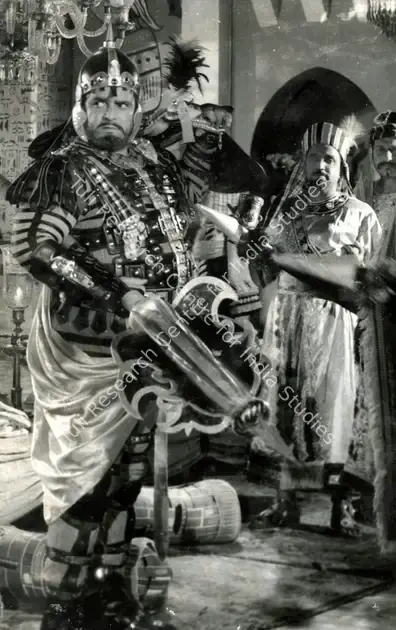
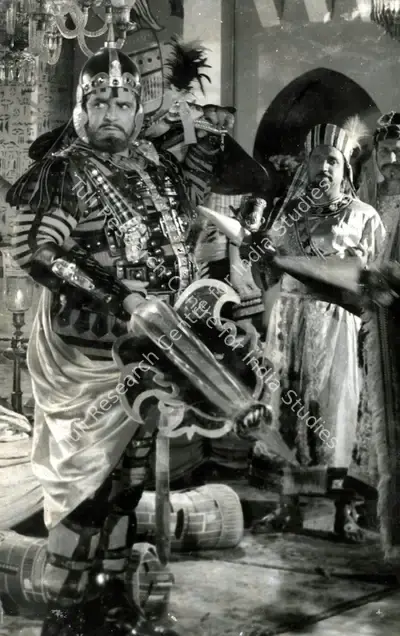
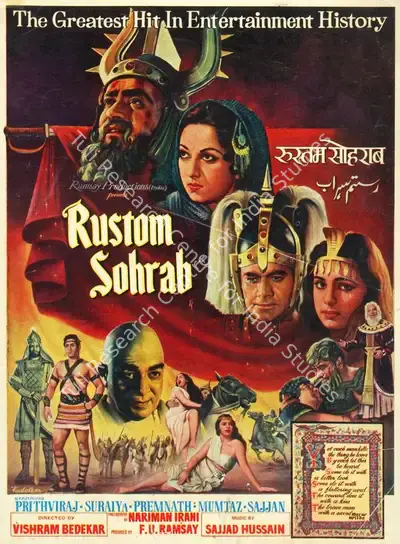
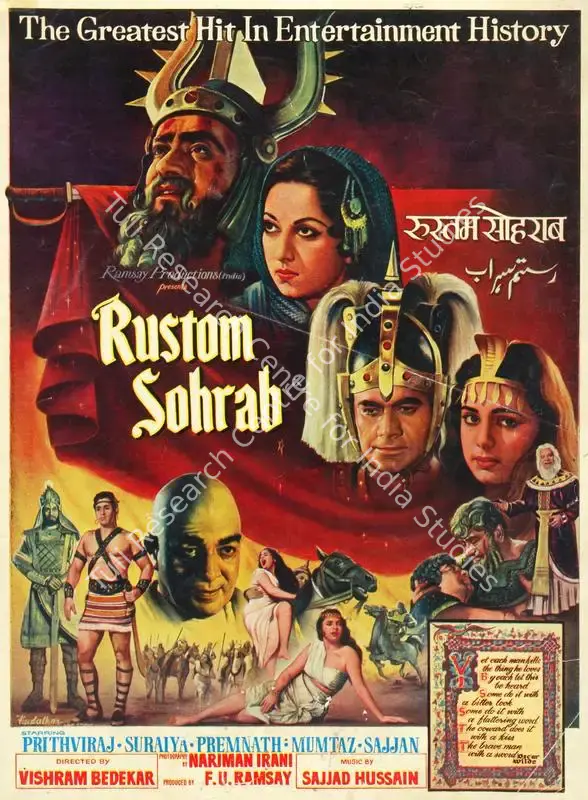
Rustam Sohrab (1963) Produced by F.U. Ramsay, Directed by Vishram Bedekar, this historical drama based on the legendary Persian epic by Ferdowsi, was adapted from the tragic tale of Rostam and Sohrab, a central story in the Shahnameh. The film's producer F.U. Ramsay marked the debut of the Ramsay Brothers, who would later become famous for their horror films. This film holds a special place in Hindi cinema as it was the final appearance of the celebrated actress and singer Suraiya, who retired from both acting and singing after this release. She played the lead role of Shehzadi Tehmina, opposite Prithviraj Kapoor as the legendary warrior Rustom Zabuli, and Prem Nath as his son, Sohrab. Mumtaz appeared in the role of Shahroo, Sohrab's love interest.
A key element in the narrative is an amulet given by Rustom to Tahmina, which later serves as the means for Sohrab to reveal his identity to his father, tragically, on his deathbed. The central tragedy unfolds as Rustom unknowingly kills his own son in battle, unaware of their true relationship.
While the film's storyline was praised for its emotional depth and fidelity to the source material, its casting faced some criticism. Prithviraj Kapoor and Prem Nath were viewed by some as too old and physically unconvincing to portray heroic warriors, which affected the perceived authenticity of the battle scenes.
Despite such critiques, Rustam Sohrab is remembered as a film worth watching for its emotional gravitas, strong performances, and enduring music. The film's soundtrack, composed by Sajjad Hussain, remains popular. Several prominent playback singers contributed to the music, including Ae Dilruba Ae Dilruba Nazrein Mila by Lata Mangeshkar; Ab Der Ho Gayi Wallah by Asha Bhosle; Mazandaran Mazandaran by Talat Mahmood; Phir Tumhari Yaad Aayi Ae Sanam by Mohammed Rafi, Manna Dey, Sadat Khan and Chorus. However, it was Suraiya's emotionally charged farewell performance in Yeh Kaisi Ajab Dastaan Ho Gayi Hai that became the most iconic. The song turned into her swan song and is still cherished as one of her most memorable renditions.
Although the film is occasionally referred to in some sources as a "superhit classic," verifiable box office data confirming its commercial success is limited. Nevertheless, Rustam Sohrab is remembered as a poignant cinematic adaptation of one of Persian literature's greatest tragedies, and a significant film in Suraiya's legacy.
कहानी का एक केंद्रीय तत्व वह ताबीज़ है जिसे रुस्तम तहमीना को देता है। यही ताबीज़ आगे चलकर सोहराब की पहचान उसके पिता के सामने उजागर करता है, लेकिन दुर्भाग्यवश ऐसा उसकी मृत्युशैय्या पर होता है। इस कथानक की सबसे करुणामय त्रासदी यह है कि रुस्तम का किरदार यह जाने बिना कि सोहराब उसका अपना बेटा है, युद्ध में उसकी जान ले लेता है।
हालाँकि फिल्म की कहानी को उसकी जज़्बाती गहराई और मूल स्रोत के प्रति निष्ठा के लिए सराहा गया लेकिन इसे कास्टिंग को लेकर कुछ आलोचनाओं का सामना करना पड़ा। पृथ्वीराज कपूर और प्रेम नाथ को कुछ समीक्षकों ने उनकी उम्र और शारीरिक गठन के चलते योद्धाओं की भूमिकाओं के लिए सही पात्र नहीं माना और कहा कि इससे ख़ासकर युद्ध के दृश्यों की वास्तविकता प्रभावित हुई।
इन आलोचनाओं के बावजूद रुस्तम सोहराब को उसकी भावप्रवण शैली, प्रभावशाली अभिनय और यादगार संगीत के लिए एक उल्लेखनीय फ़िल्म के बतौर याद किया जाता है। इसके लिए संगीत सज्जाद हुसैन ने तैयार किया था और आज भी इसकी लोकप्रियता बरकरार है। फ़िल्म के प्रमुख गीतों में लता मंगेशकर का गाया “ऐ दिलरुबा ऐ दिलरुबा नज़रे मिला”, आशा भोंसले का गाया “अब देर हो गई वल्लाह”, तलत महमूद का गाया “मज़ांदरान मज़ांदरान” और मोहम्मद रफ़ी, मन्ना डे, सादत ख़ान व साथियों की आवाज़ में “फिर तुम्हारी याद आई ऐ सनम” जैसे गाने लोकप्रिय हुए। पर फ़िल्म का सबसे अधिक स्थायी प्रभाव छोड़ने वाला गीत सुरैय्या की आवाज़ में गाया गया अन्तिम गीत “ये कैसी अजब दास्तान हो गई है” था। यह गीत जैसे उनका विदाई गीत बन गया और आज भी उनकी सबसे यादगार प्रस्तुतियों में गिना जाता है।
हालाँकि कुछ स्रोतों में इस फ़िल्म को 'सुपरहिट क्लासिक' का तमगा दिया गया है पर इसकी व्यावसायिक सफलता से संबंधित कोई ठोस आँकड़े उपलब्ध नहीं हैं। कह सकते हैं कि इसकी व्यावसायिक कामयाबी सीमित ही रही होगी। इसके बावजूद रुस्तम सोहराब को फ़ारसी साहित्य की एक महान त्रासदी को भारतीय सिनेमाई पर्दे पर मार्मिक ढंग से पेश करने और सुरैय्या की समृद्ध सिनेमाई विरासत की शानदार अन्तिम कड़ी के रूप में याद किया जाता है।