
Rang De Basanti2006
Introduction
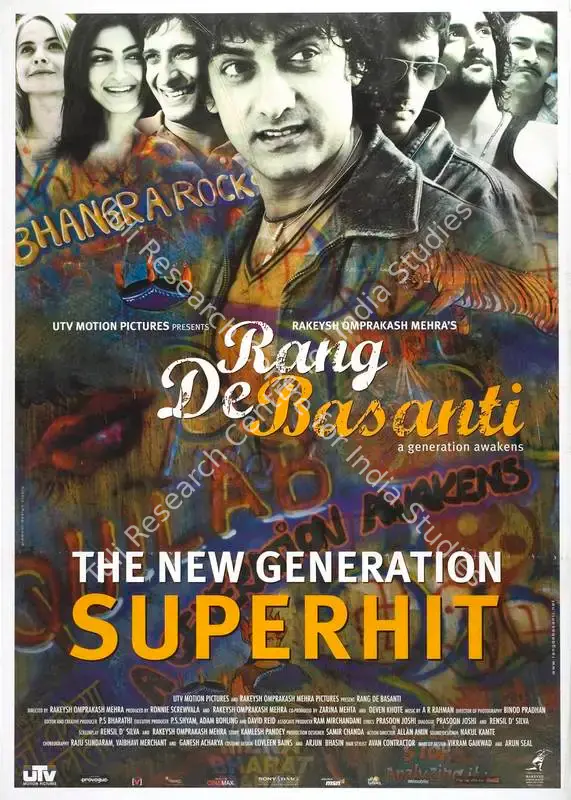
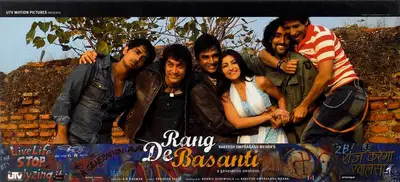
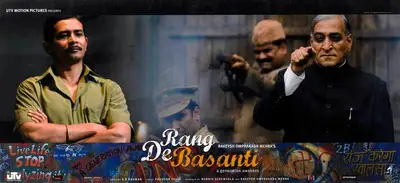
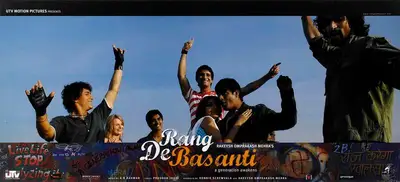
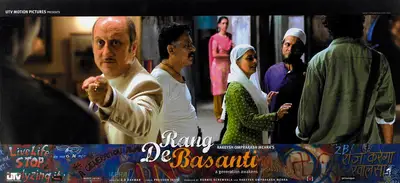
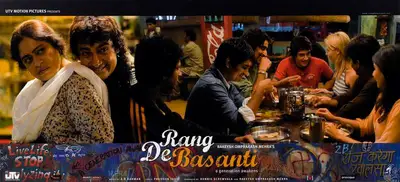
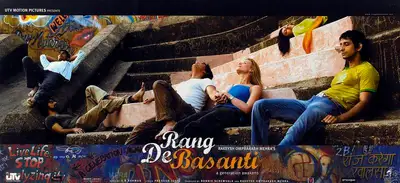
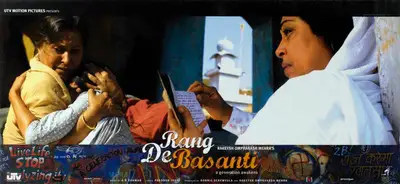
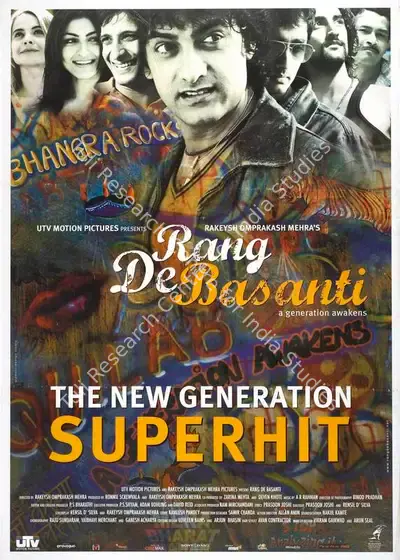
Rang De Basanti (2006) Written, directed, and co-produced by Rakeysh Omprakash Mehra, is widely regarded as one of the most influential Hindi films of contemporary Indian cinema. Featuring an ensemble cast that includes Aamir Khan as Daljit "DJ" Singh, Siddharth (in his Hindi film debut) as Karan Singhania, Sharman Joshi as Sukhi Ram, Kunal Kapoor as Aslam Khan, Atul Kulkarni as Laxman Pandey, Soha Ali Khan as Sonia, and Alice Patten (also making her Hindi film debut) as Sue McKinley, with R. Madhavan in a guest appearance as Flight Lieutenant Ajay Rathod, the film also features Waheeda Rehman as Mrs. Rathod, Anupam Kher as Rajnath Singhania, Kirron Kher as Mitro (DJ's mother), and Om Puri as Amanullah Khan in significant supporting roles. Blending historical memory with contemporary political commentary, the film explores themes of patriotism, youth activism, political corruption, and social responsibility.
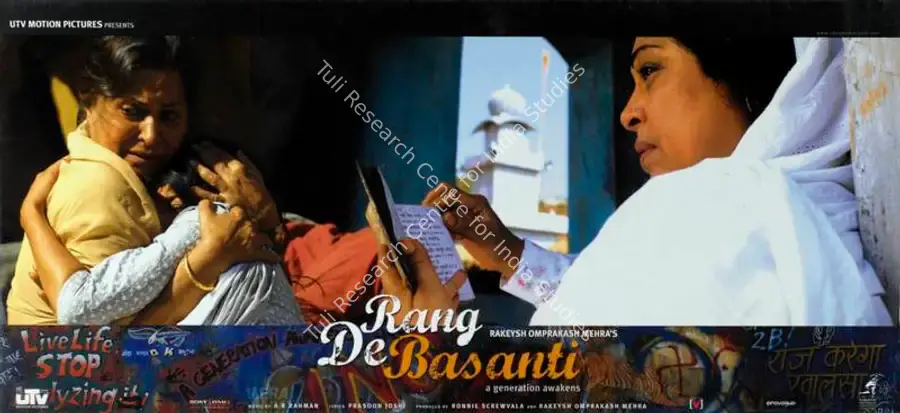
The narrative centres on Sue McKinley (Alice Patten), a young British filmmaker who travels to India to produce a low-budget docudrama based on her grandfather's diary documenting the lives of Indian revolutionary freedom fighters. To portray these historical figures, Sue casts a group of carefree, disillusioned, and largely apolitical Delhi University graduates—DJ (Aamir Khan), Karan (Siddharth), Aslam (Kunal Kapoor), Sukhi (Sharman Joshi), and Laxman (Atul Kulkarni), along with their friend Sonia (Soha Ali Khan). Initially reluctant participants, the young actors gradually internalise the ideals of the revolutionaries they portray: DJ as Chandrashekhar Azad, Karan as Bhagat Singh, Aslam as Ashfaqulla Khan, Sukhi as Rajguru, and Laxman as Ram Prasad Bismil. As the boundaries between performance and reality blur, the historical struggle for justice begins to resonate with their own experiences in contemporary India.
The turning point occurs when their close friend, Flight Lieutenant Ajay Rathod (R. Madhavan), dies in a MiG-21 fighter aircraft crash caused by governmental negligence and corruption. When officials attempt to conceal the truth by attributing the accident to pilot error, the group becomes deeply disillusioned with the political establishment. Inspired by the sacrifices of the freedom fighters they portray, the protagonists transform from passive observers into active protesters, ultimately embracing radical and violent measures in their pursuit of justice. Through this parallel narrative, the film establishes a compelling dialogue between India's anti-colonial struggle and the ethical dilemmas confronting modern democratic society.
Released worldwide on 26 January 2006 and filmed primarily in New Delhi, Rang De Basanti achieved remarkable commercial and critical success. It broke several box-office records upon release, emerging as one of the highest-grossing Hindi films of 2006. The film received widespread acclaim for its innovative narrative, compelling performances, and socio-political relevance. It won the National Film Award for Best Popular Film Providing Wholesome Entertainment and dominated the Filmfare Awards, winning major honours including Best Film, Best Director, and Best Music Director for A. R. Rahman. Internationally, it received a BAFTA Award nomination for Best Film Not in the English Language and was selected as India's official entry for both the Academy Awards and the Golden Globe Awards in the Best Foreign Language Film category, although it did not secure final nominations. Rahman's critically acclaimed soundtrack further enhanced the film's cultural impact, with two compositions being considered for Academy Award recognition.
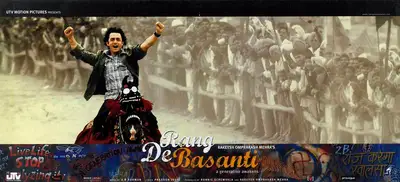
Beyond its cinematic achievements, Rang De Basanti had a profound socio-political impact in India. Studies examining online discourse following its release reported a significant increase in public engagement with issues of political corruption, bureaucratic inefficiency, and governmental accountability. The film stimulated widespread political debate, particularly among urban youth, and inspired greater civic consciousness. Although the Central Board of Film Certification sought the opinion of the Ministry of Defence regarding the depiction of MiG-21 aircraft, the ministry approved the film without objection. Minor concerns were also raised by the Animal Welfare Board of India regarding scenes involving horse racing. Nevertheless, Rang De Basanti remains a landmark film that redefined the representation of patriotism in Indian cinema, demonstrating how historical memory can inspire contemporary political awareness and collective social action.
कहानी सू मैकिन्ले (ऐलिस पैटन) के इर्द-गिर्द घूमती है, जो एक युवा ब्रिटिश फ़िल्ममेकर हैं। वह भारत आकर अपने दादाजी की डायरी पर आधारित एक कम बजट वाली डॉक्युड्रामा फ़िल्म बनाना चाहती हैं। इस डायरी में भारतीय क्रांतिकारी स्वतंत्रता सेनानियों की ज़िंदगी का ज़िक्र है। इन ऐतिहासिक किरदारों को निभाने के लिए, सू दिल्ली यूनिवर्सिटी के कुछ ऐसे ग्रेजुएट्स को चुनती हैं जो बेफ़िक्र और निराश हैं और जिन्हें राजनीति में कोई दिलचस्पी नहीं है। डीजे (आमिर ख़ान), करण (सिद्धार्थ), असलम (कुणाल कपूर), सुखी (शरमन जोशी) और लक्ष्मण (अतुल कुलकर्णी), साथ ही उनकी दोस्त सोनिया (सोहा अली ख़ान)। शुरू में तो ये युवा कलाकार हिचकिचाते हैं, लेकिन धीरे-धीरे वे उन क्रांतिकारियों के आदर्शों को अपना लेते हैं जिनका किरदार वे निभा रहे हैं। डीजे चंद्रशेखर आज़ाद के रूप में, करण भगत सिंह के रूप में, असलम अशफ़ाक़ुल्लाह ख़ान के रूप में, सुखी राजगुरु के रूप में और लक्ष्मण राम प्रसाद बिस्मिल के रूप में। जैसे-जैसे एक्टिंग और असल ज़िंदगी के बीच का फ़र्क मिटने लगता है, न्याय के लिए किया गया वह ऐतिहासिक संघर्ष आज के भारत में उनके अपने अनुभवों से जुड़ने लगता है।
कहानी में मोड़ तब आता है जब उनके क़रीबी दोस्त, फ़्लाइट लिफ़्टिनेंट अजय राठौड़ (आर. माधवन) की मौत एक मिग-21 फ़ाइटर जेट क्रैश में हो जाती है, जो सरकारी लापरवाही और भ्रष्टाचार का नतीजा था। जब अधिकारी इस हादसे को पायलट की ग़लती बताकर सच छिपाने की कोशिश करते हैं, तो यह ग्रुप राजनीतिक व्यवस्था से बुरी तरह निराश हो जाता है। जिन आज़ादी की लड़ाई लड़ने वालों का किरदार वे निभा रहे थे। उनके त्याग से प्रेरित होकर ये मुख्य पात्र चुपचाप देखने वालों की भूमिका छोड़कर विरोध करने लगते हैं और आख़िरकार न्याय पाने के लिए उग्र और हिंसक रास्ते अपनाते हैं। इस समानांतर कहानी के ज़रिए, फ़िल्म भारत के औपनिवेशिक-विरोधी संघर्ष और आधुनिक लोकतांत्रिक समाज के सामने आने वाली नैतिक दुविधाओं के बीच एक प्रभावशाली संवाद स्थापित करती है।
26 जनवरी 2006 को दुनिया भर में रिलीज़ हुई और मुख्य रूप से नई दिल्ली में शूट की गई 'रंग दे बसंती' ने ज़बरदस्त व्यावसायिक और आलोचकों ने सराहा और सफलता हासिल की। रिलीज़ होने पर इसने बॉक्स ऑफ़िस के कई रिकॉर्ड तोड़े और 2006 की सबसे ज़्यादा कमाई करने वाली हिंदी फ़िल्मों में से एक बन गई। फ़िल्म को इसकी अनोखी कहानी, दमदार एक्टिंग और सामाजिक-राजनीतिक महत्व के लिए बहुत तारीफ़ मिली। इसने 'बेस्ट पॉपुलर फ़िल्म प्रोवाइडिंग होलसम एंटरटेनमेंट' (बेहतरीन मनोरंजन देने वाली लोकप्रिय फ़िल्म) के लिए नेशनल फ़िल्म अवॉर्ड जीता और फ़िल्मफ़ेयर अवॉर्ड्स में भी इसका दबदबा रहा। इसने बेस्ट फ़िल्म, बेस्ट डायरेक्टर और ए. आर. रहमान के लिए बेस्ट म्यूज़िक डायरेक्टर जैसे बड़े सम्मान जीते। इंटरनेशनल लेवल पर, इसे 'बेस्ट फ़िल्म नॉट इन द इंग्लिश लैंग्वेज़' (अंग्रेज़ी भाषा में न होने वाली बेहतरीन फ़िल्म) के लिए BAFTA अवॉर्ड नॉमिनेशन मिला और इसे 'बेस्ट फ़ॉरेन लैंग्वेज़ फ़िल्म' कैटेगरी में एकेडमी अवॉर्ड्स और गोल्डन ग्लोब अवॉर्ड्स दोनों के लिए भारत की आधिकारिक एंट्री के तौर पर चुना गया, हालाँकि इसे फ़ाइनल नॉमिनेशन नहीं मिल पाया। रहमान के क्रिटिकली सराहे गए साउंडट्रैक ने फ़िल्म के सांस्कृतिक असर को और बढ़ाया। उनके दो गानों पर एकेडमी अवॉर्ड के लिए विचार भी किया गया था।
सिनेमाई उपलब्धियों के अलावा, 'रंग दे बसंती' का भारत में गहरा सामाजिक-राजनीतिक असर पड़ा। फ़िल्म के रिलीज़ होने के बाद ऑनलाइन बातचीत पर हुई स्टडीज़ से पता चला कि राजनीतिक भ्रष्टाचार, अफ़सरशाही की नाकामी और सरकारी जवाबदेही जैसे मुद्दों पर लोगों की दिलचस्पी काफ़ी बढ़ गई। इस फ़िल्म ने बड़े पैमाने पर राजनीतिक बहस को बढ़ावा दिया, ख़ासकर शहरी युवाओं के बीच, और लोगों में नागरिक चेतना जगाई। हालाँकि सेंट्रल बोर्ड ऑफ़ फ़िल्म सर्टिफ़िकेशन ने MiG-21 विमान दिखाए जाने को लेकर रक्षा मंत्रालय की राय मांगी थी, लेकिन मंत्रालय ने बिना किसी आपत्ति के फ़िल्म को मंज़ूरी दे दी। एनिमल वेलफ़ेयर बोर्ड ऑफ़ इंडिया ने भी घुड़दौड़ वाले दृश्यों को लेकर कुछ छोटी-मोटी चिंताएँ जताई थीं। फिर भी, 'रंग दे बसंती' एक ऐसी अहम फ़िल्म बनी जिसने भारतीय सिनेमा में देशभक्ति को दिखाने के तरीक़े को नए सिरे से परिभाषित किया और यह दिखाया कि कैसे ऐतिहासिक यादें आज की राजनीतिक जागरूकता और सामूहिक सामाजिक कार्रवाई को प्रेरित कर सकती हैं।
Body of Work
Research Centre
Related
4