Introduction
“Born in 1932, in Srinagar, Kashmir, Madan Mahatta (Mehta) studied photography in England in the 1950s at the Guildford School of Arts & Crafts. On his return to India in 1954, he joined the family photo studio, Mahatta & Co., in Connaught Place. He is believed to have introduced the negative to positive colour printing technique in India, a skill he learnt during his time at the photography school in England. Mahatta’s work includes portraiture, dance, theatre, and industrial and architectural photography, with the latter being the defining feature of his career. The budding modernism of the post-colonial India during the Nehruvian period was captured brilliantly by Mahatta, shot almost exclusively in black and white on medium-format monochromatic film from the 1950s to the 1980s.
One of the highlights of his work can be seen in his collaborations with the architects such as Achyut Kanwinde, Ajoy Choudhury, Charles Corea, Habib Rehman, Jasbir Sawhney, J.K. Choudhury, Joseph Allen Stein, Kuldip Singh, Raj Rewal, Ram Sharma, Ranjit Sabhiki and Shiv Nath Prasad. His close associations with these architects aided him in studying the buildings carefully creating images that conveyed the intention of the architect.
Often shot diagonally and with inclusion of foreground details, the images showcased a spatial depth that was accentuated with the lack of human intervention in any of his photographs. The emptiness of buildings swells to magnify their monumentality and bold geometric forms are cast in an even flat light highlighting the interplay between
surface and light.
Documenting the frenzy and euphoria of a budding nation, where the focus was to create institutions for arts, sciences, history as well as educational and government complexes, Mahatta captured the construction of Delhi Development Authority (DDA) Housing Project, Asian Games Village, IIT Delhi Campus, Sapru House, India International Centre, New Delhi Municipal Corporation (NDMC) Building, Parliament annexe, Hall of Nation, Pragati Maidan and others, presenting a rare archive of the budding modernity in Nehruvian modernism.”
One of the highlights of his work can be seen in his collaborations with the architects such as Achyut Kanwinde, Ajoy Choudhury, Charles Corea, Habib Rehman, Jasbir Sawhney, J.K. Choudhury, Joseph Allen Stein, Kuldip Singh, Raj Rewal, Ram Sharma, Ranjit Sabhiki and Shiv Nath Prasad. His close associations with these architects aided him in studying the buildings carefully creating images that conveyed the intention of the architect.
Often shot diagonally and with inclusion of foreground details, the images showcased a spatial depth that was accentuated with the lack of human intervention in any of his photographs. The emptiness of buildings swells to magnify their monumentality and bold geometric forms are cast in an even flat light highlighting the interplay between
surface and light.
Documenting the frenzy and euphoria of a budding nation, where the focus was to create institutions for arts, sciences, history as well as educational and government complexes, Mahatta captured the construction of Delhi Development Authority (DDA) Housing Project, Asian Games Village, IIT Delhi Campus, Sapru House, India International Centre, New Delhi Municipal Corporation (NDMC) Building, Parliament annexe, Hall of Nation, Pragati Maidan and others, presenting a rare archive of the budding modernity in Nehruvian modernism.”
- Date of Birth
- 1932
- Date of Death
- 06 Mar 2014
- Age
- 82
- Nationality
- Indian
- Place of Birth
- Srinagar, Kashmir, India
- State Country of Birth
- India
Research Centre
Posts 2
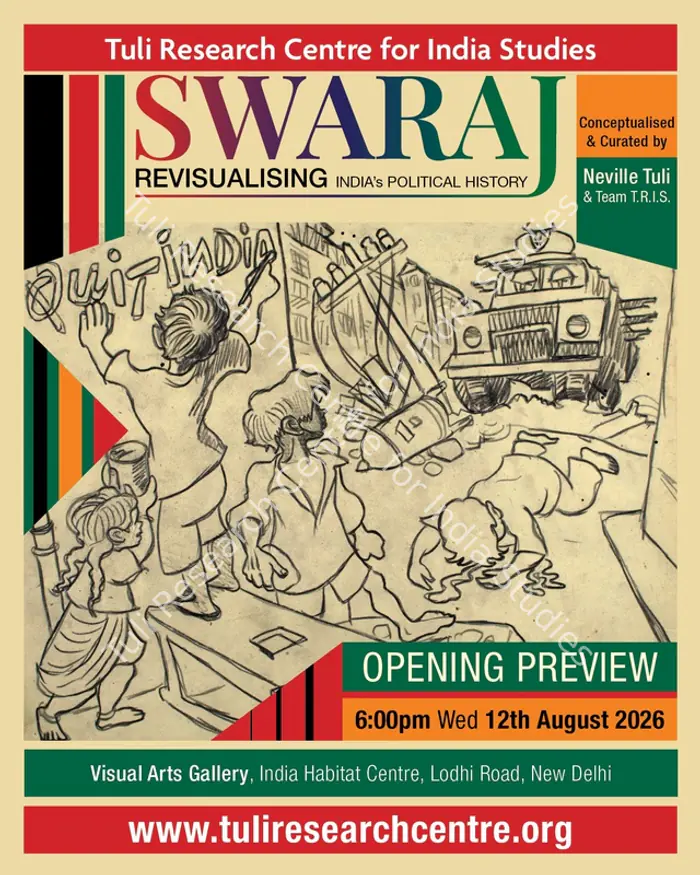
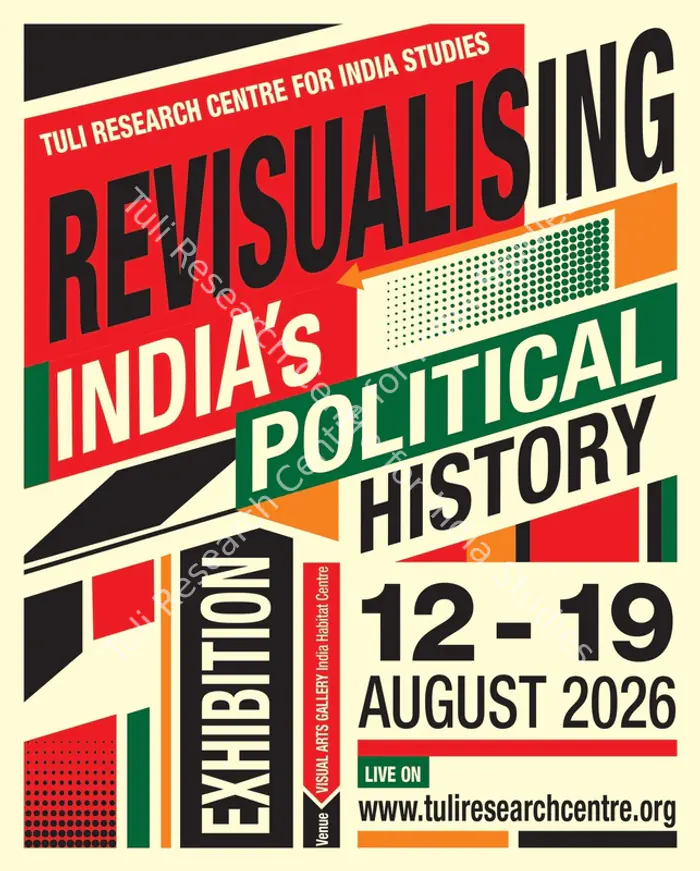
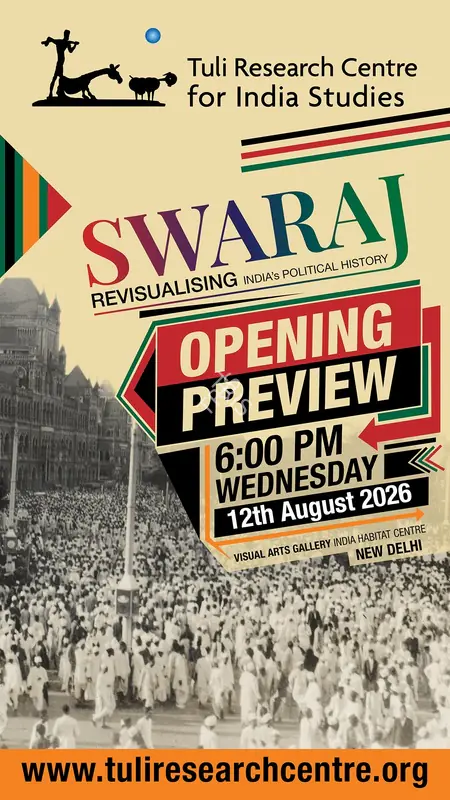
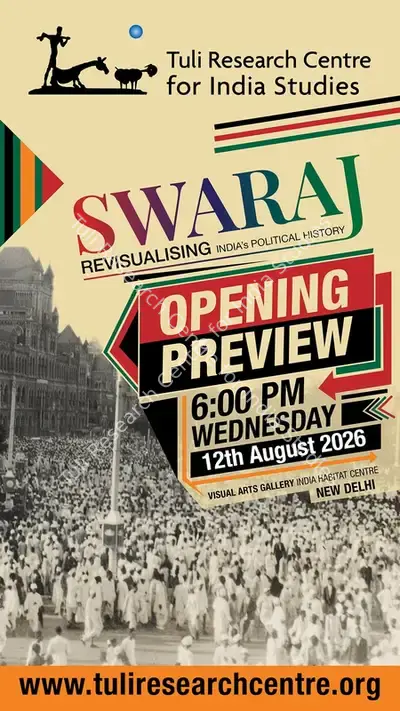
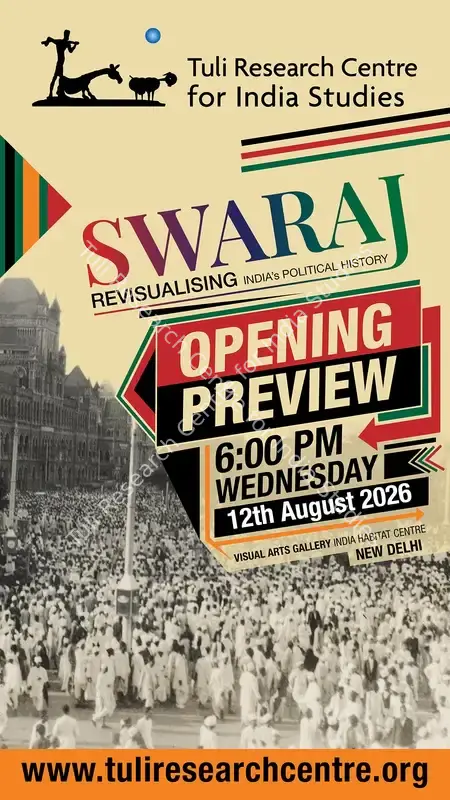
- "What does 𝗦𝘄𝗮𝗿𝗮𝗷 truly mean? Is freedom achieved at a single historic moment or period, or must self-rule be continually imagined, questioned and renewed? India's journey towards Swaraj was shaped not by one voice or one path, but through reform and resistance, revolution and non-violence, political thought, public protest, art, print, photography, cinema and the collective will of its people. The Tuli Research Centre for India Studies (T.R.I.S.) presents 𝗦𝗪𝗔𝗥𝗔𝗝: 𝗥𝗲𝘃𝗶𝘀𝘂𝗮𝗹𝗶𝘀𝗶𝗻𝗴 𝗜𝗻𝗱𝗶𝗮'𝘀 𝗣𝗼𝗹𝗶𝘁𝗶𝗰𝗮𝗹 𝗛𝗶𝘀𝘁𝗼𝗿𝘆, a pioneering exhibition curated by Neville Tuli. Bringing together rare artworks, prints, photographs, books, film publicity art, political propaganda and visual-textual-audio archives, SWARAJ traces India's complex journey towards political self-rule and self-discovery. From early European coastal encounters, the Bengal Renaissance and the First War of Independence in 1857 to the rise of Bharat Mata, the Tiranga, Gandhiji's inspired satyagraha, civil disobedience and mass mobilisation, the exhibition explores how the idea of India was envisioned, contested and transformed. It journeys through revolutionary movements and non-violence, subaltern uprisings, the Partition, the Constitution, the integration of the Princely States, the Emergency, wars, civic dissent and people's protests. It also foregrounds the vital role of artists, photographers, publishers, newspapers, journals, cartoons and cinema in recording and shaping the nation's political consciousness. SWARAJ invites us to encounter history not as something distant or settled, but as a daily living inheritance that continues to influence who we are and how we understand freedom, identity, and ourselves today. Watch the video for a glimpse into this expansive visual journey, and follow the exhibition as it revisualises India's political history through art, image, text and sound.
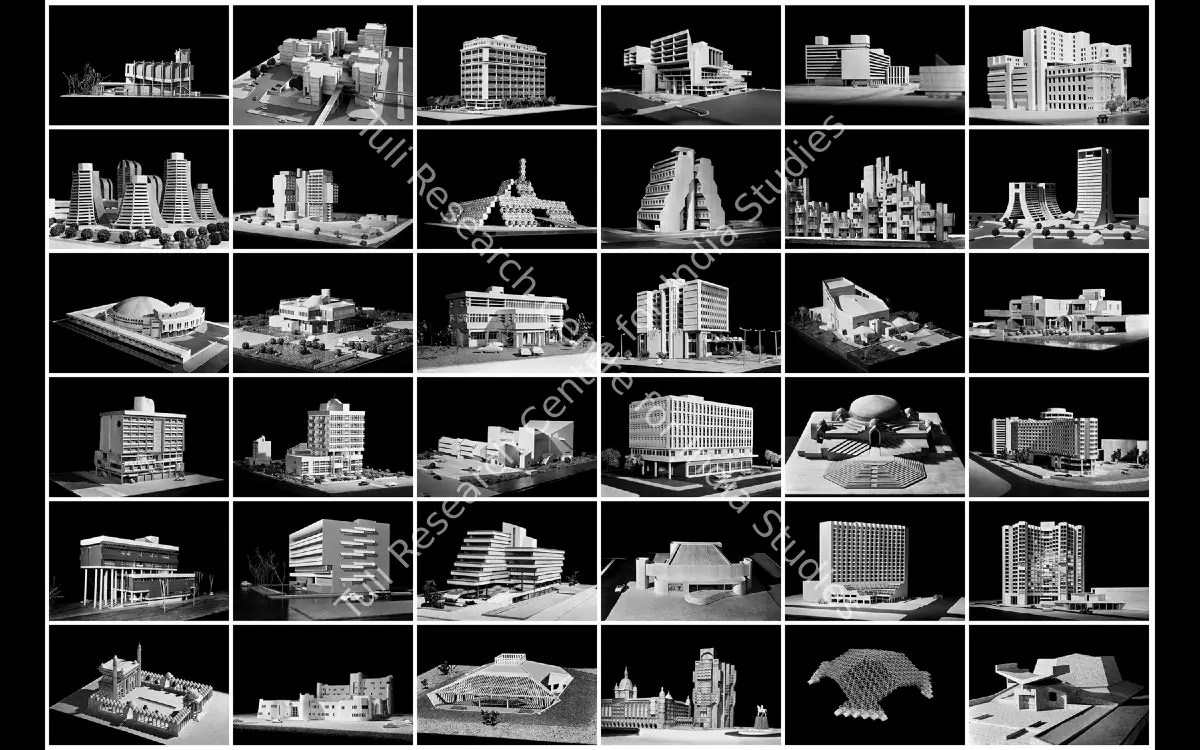
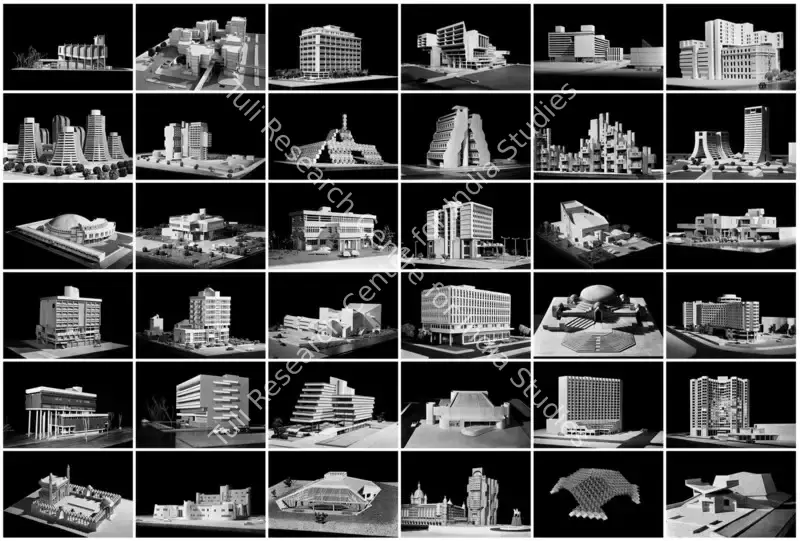
- Madan Mahatta's photographs of 36 architectural models belong to a period when India was giving physical form to the ambitions of a newly independent nation. From the 1950s through the 1980s, new universities, research centres, government offices, housing and cultural institutions were being planned across the country. Architects experimented with new materials, technologies and forms, while models became an important means of developing and presenting ideas before construction. Born in Srinagar in 1932, Mahatta came from the Mahatta family of photographers and studied photography at the Guildford School of Art and Crafts in England. Returning to India in 1954, he worked from the family's New Delhi studio, Mahatta & Co., developing a practice spanning commercial, industrial, architectural and documentary photography. From the 1950s onwards, Mahatta photographed architects including Habib Rahman, Achyut P. Kanvinde, Joseph Allen Stein, Charles Correa, Raj Rewal, Kuldip Singh, Ram Sharma, Ranjit Sabhiki and Jasbir Sawhney. Their work reflects the changing vocabulary of post-Independence Indian architecture, from International Modernism and functionalism to Brutalism, Structural Expressionism and Critical Regionalism. The 36 models bring this architectural imagination into focus, revealing how architects explored massing, structure, circulation, geometry, landscape and the relationship between building and city. Alongside his photographs of completed buildings, Mahatta's model photography preserves architecture at the stage of conception, when ideas were still being tested and given form.
Calendar 4
- ArchivedOpening PreviewProject 82SWARAJ - Revisualising India's Political HistoryAn Exhibition of Modern & Contemporary Fine & Popular Arts, Photography, Film Memorabilia and Visual-Textual-Audio Archive12th August 20266:00 PM - 9:00 PMVisual Arts Gallery, India Habitat Centre, Lodhi Road, New Delhi,The Tuli Research Centre for India Studies (T.R.I.S.) announces its seventh exhibition. “Swaraj – Revisualising India's Political History” -- An exhibition of Modern and Contemporary Fine and Popular Arts, Photography, Film Memorabilia and Visual-Textual-Audio Archives. Swaraj will open at 6 p.m. on Wednesday, 12 August 2026 at the Visual Arts Gallery and will remain open till 7 p.m. Sunday, 16 August 2026. Tuli Research Centre for India Studies (T.R.I.S.) presents SWARAJ | Revisualising India's Political History, a pioneering inter-disciplinary offline-online exhibition conceptualised and curated by Neville Tuli with Team T.R.I.S.. SWARAJ explores India's journey towards political self-rule and self-discovery through a remarkable collection of rare modern and contemporary fine and popular arts, albums, photographs, books, prints, propaganda, cartoons, film publicity artworks and other "text-visual-audio" archives contextualised within a clear historical framework, which defines T.R.I.S.' pedagogic approach to learning. The Exhibition will be of particular interest to students and scholars of India & Cultural Studies, and India's political and modern histories as well as those interested in the passage of events and ideas from the mid-1850s leading up to the turn of the 21st century. Unique to the Tuli Research Centre for India Studies is the richness of visual material that not only exhorts a deeper understanding of the art and archival materials on display but also brings alive the multi-layered narratives of the exhibition and naturally India's journey in being ad searching for herself.Read More →
- ArchivedExhibitionProject 81SWARAJ - Revisualising India's Political HistoryAn Exhibition of Modern & Contemporary Fine & Popular Arts, Photography, Film Memorabilia and Visual-Textual-Audio Archive12th - 19th August 202610:00 AM - 7:00 PMVisual Arts Gallery, India Habitat Centre, Lodhi Road, New Delhi,19The Tuli Research Centre for India Studies (T.R.I.S.) announces its seventh exhibition. “Swaraj – Revisualising India's Political History” -- An exhibition of Modern and Contemporary Fine and Popular Arts, Photography, Film Memorabilia and Visual-Textual-Audio Archives. Swaraj will open at 6 p.m. on Wednesday, 12 August 2026 at the Visual Arts Gallery and will remain open till 7 p.m. Sunday, 16 August 2026. Tuli Research Centre for India Studies (T.R.I.S.) presents SWARAJ | Revisualising India's Political History, a pioneering inter-disciplinary offline-online exhibition conceptualised and curated by Neville Tuli with Team T.R.I.S.. SWARAJ explores India's journey towards political self-rule and self-discovery through a remarkable collection of rare modern and contemporary fine and popular arts, albums, photographs, books, prints, propaganda, cartoons, film publicity artworks and other "text-visual-audio" archives contextualised within a clear historical framework, which defines T.R.I.S.' pedagogic approach to learning. The Exhibition will be of particular interest to students and scholars of India & Cultural Studies, and India's political and modern histories as well as those interested in the passage of events and ideas from the mid-1850s leading up to the turn of the 21st century. Unique to the Tuli Research Centre for India Studies is the richness of visual material that not only exhorts a deeper understanding of the art and archival materials on display but also brings alive the multi-layered narratives of the exhibition and naturally India's journey in being ad searching for herself.Read More →
- ArchivedExhibitionProject 5Self Discovery via Rediscovering India Series Part IV Building www.tuliresearchcentre.org20th - 23rd February 2025Self Discovery via Rediscovering India Series Part IVRead More →
- ArchivedExhibitionProject 3Self Discover via Rediscovering India Series Part III History of Photography in India21st - 31st January 2025Self Discover via Rediscovering India Series Part IIIRead More →