
Introduction
John Henry Ravenshaw (1833–1874) was a Bengal Civil Service officer who served as the Magistrate and Collector of Malda district, Bengal, from 1865 to 1867. During this period, he developed an interest in documenting the ruins of Gaur City, an ancient capital of Bengal located on the India-Bangladesh border. Gaur, once known as Lakshmanavati or Lakhnauti, as a significant center during the Buddhist Pala dynasty in the 8th century and the Hindu Sena dynasty in the 12th century.
He mastered the Woodburytype process, a photomechanical technique invented by Walter Bentley Woodbury. This method, considered the most accurate for reproducing photographic tones, involved creating an intaglio impression filled with pigmented gelatin, which is then transferred to paper. The Woodburytype process was widely used in England and Europe during the 1870s, allowing for more affordable photographic illustrations in books.
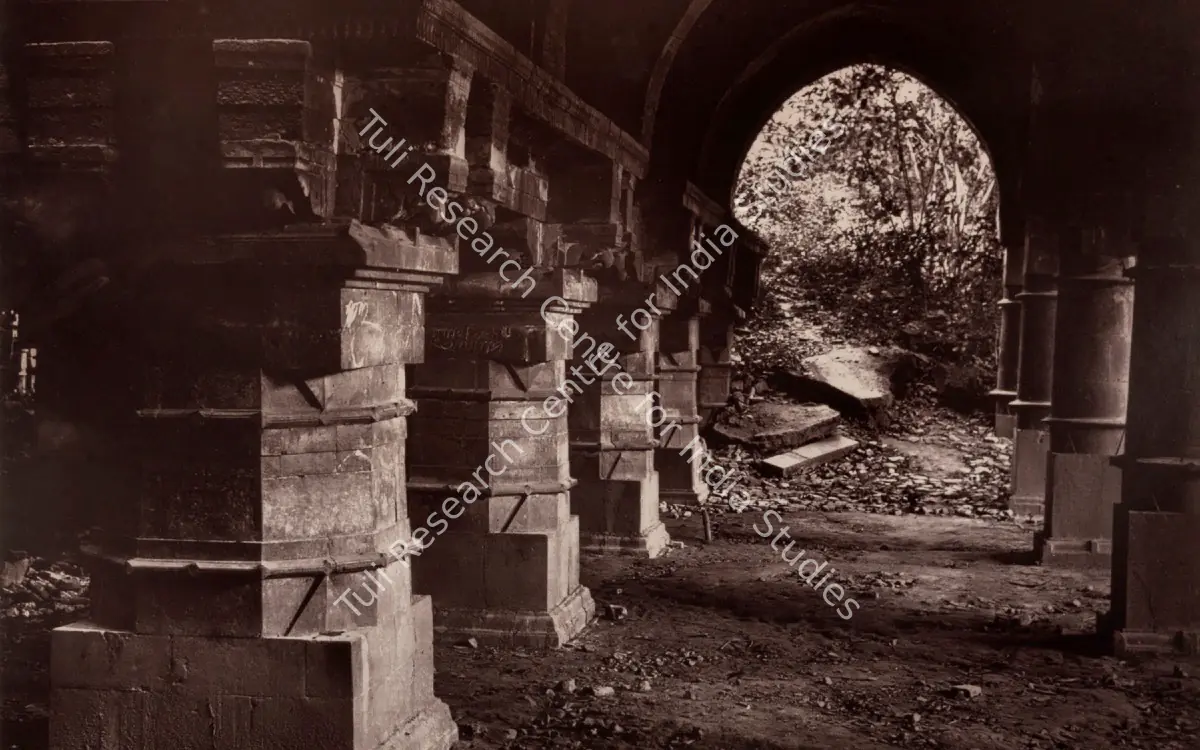
Ravenshaw meticulously photographed the prominent and concealed ruins of Gaur, describing them as “a lamentable wreck of its former elegance and grandeur.” His work culminated in the book Gaur, Its Ruins and Inscriptions, featuring 45 photographs and maps. Although he passed away in 1874 before its publication, his widow, Caroline, compiled and published the book in 1879. This rare volume contains 41 Woodburytype plates and two folding maps, with only a few copies known to exist.
He mastered the Woodburytype process, a photomechanical technique invented by Walter Bentley Woodbury. This method, considered the most accurate for reproducing photographic tones, involved creating an intaglio impression filled with pigmented gelatin, which is then transferred to paper. The Woodburytype process was widely used in England and Europe during the 1870s, allowing for more affordable photographic illustrations in books.
Ravenshaw meticulously photographed the prominent and concealed ruins of Gaur, describing them as “a lamentable wreck of its former elegance and grandeur.” His work culminated in the book Gaur, Its Ruins and Inscriptions, featuring 45 photographs and maps. Although he passed away in 1874 before its publication, his widow, Caroline, compiled and published the book in 1879. This rare volume contains 41 Woodburytype plates and two folding maps, with only a few copies known to exist.
- Date of Birth
- 21 Jan 1833
- Zodiac sign
- Aquarius
- Date of Death
- 04 Mar 1874
- Age
- 41
- Nationality
- British
- Place of Birth
- England, UK
- State Country of Birth
- UK