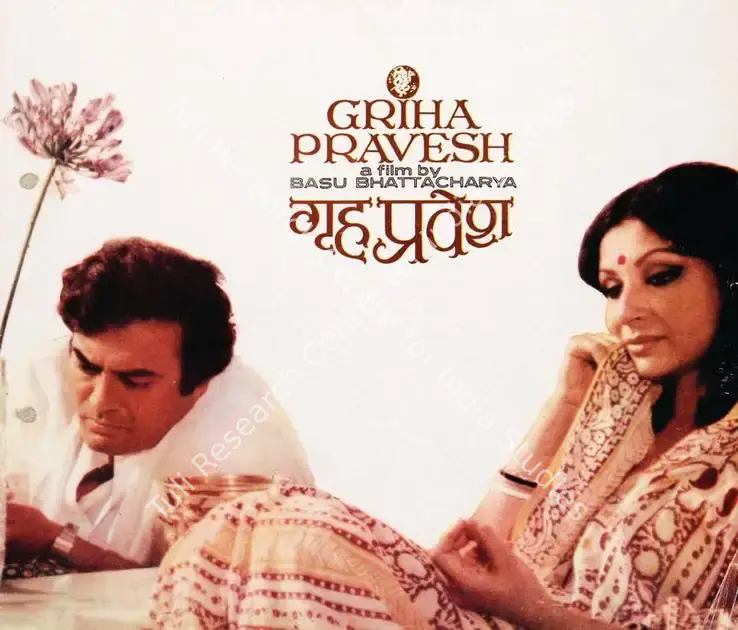

Griha Pravesh1979
Introduction
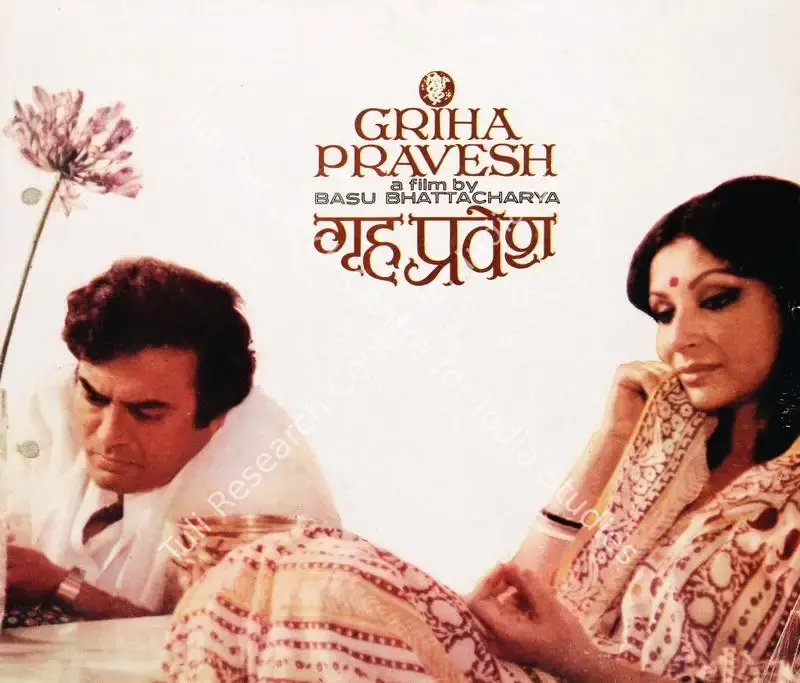
Griha Pravesh (1979) Directed by Basu Bhattacharya, it occupies a significant place in the filmmaker's celebrated trilogy examining marriage and marital discord, following Anubhav (1971) and Avishkaar (1973). Starring Sanjeev Kumar, Sharmila Tagore, and Sarika, the film is a thoughtful and introspective exploration of adultery, emotional alienation, and the gradual erosion of intimacy within urban middle-class marriage. Characteristic of Bhattacharya's understated style, the film moves beyond conventional melodrama to offer a nuanced study of human relationships, focusing on the emotional complexities that accompany domestic routine and personal dissatisfaction.
The narrative centres on Amar (Sanjeev Kumar) and Mansi (Sharmila Tagore), a middle-class couple whose arranged marriage has settled into a predictable and uninspiring routine. Amar is a diligent and frugal bookkeeper whose primary ambition is to save enough money to purchase a flat in Bombay, a symbol of middle-class aspiration and security. Years of financial discipline and family responsibilities, however, have reduced the couple's relationship to a functional partnership, leaving little room for romance or emotional renewal. The monotony of Amar's life is disrupted when Sapna (Sarika), a young and spirited woman, joins his office. Drawn to her vitality and youthful charm, Amar begins an extramarital affair that rekindles emotions he believed had long disappeared from his life.
As the relationship deepens, Amar becomes convinced that his future lies with Sapna and resolves to seek a divorce. Yet Bhattacharya avoids the dramatic confrontations typically associated with such narratives. When Amar confesses his infidelity, Mansi responds with remarkable composure. Rather than expressing anger or bitterness, she agrees to a separation on the condition that Amar invite Sapna to their home. In preparation for the meeting, Mansi subtly transforms both herself and their modest apartment, creating an atmosphere that forces Amar to re-evaluate his assumptions about love, companionship, and marriage. Through quiet dignity and emotional intelligence, she demonstrates that their relationship has not been devoid of affection but has instead suffered from neglect, routine, and a failure to appreciate its deeper strengths. Ultimately, Sapna recognizes the enduring bond between husband and wife and gracefully withdraws, allowing Amar and Mansi an opportunity to rediscover their relationship.
The film's evocative soundtrack, composed by Kanu Roy with lyrics by Gulzar, complements its reflective tone. Songs such as Boliye Surili Boliyaan, Zindagi Phoolon Ki Nahi, Pehchaan To Thi Pehchana Nahi, and Aap Agar Aap Na Hote reinforce the emotional undercurrents of the narrative. Gulzar also makes a brief guest appearance in one of the musical sequences.
Although widely praised by critics for its mature writing and restrained performances, particularly Sharmila Tagore's deeply affecting portrayal of a wounded yet dignified wife, Griha Pravesh struggled to find a broad audience. Released at a time when action-oriented entertainers and the “angry young man” phenomenon dominated Hindi cinema, the film faced distribution challenges and remained largely confined to urban, cinephile audiences. Nevertheless, it endures as one of the most perceptive cinematic examinations of marriage in Indian parallel cinema, anticipating themes that would later find greater mainstream acceptance in films such as Arth (1982).
कहानी अमर (संजीव कुमार) और मानसी (शर्मिला टैगोर) के इर्द-गिर्द घूमती है, जो एक मध्यम-वर्गीय जोड़ा है। उनकी अरेंज्ड मैरिज (तयशुदा शादी) अब एक ऐसी दिनचर्या में बदल गई है जो अनुमानित और नीरस है। अमर एक मेहनती और किफ़ायती बुककीपर है, जिसकी मुख्य महत्वाकांक्षा बॉम्बे में एक फ़्लैट खरीदने के लिए पर्याप्त पैसे बचाना है। यह फ़्लैट मध्यम-वर्गीय आकांक्षा और सुरक्षा का प्रतीक है। हालाँकि, सालों के वित्तीय अनुशासन और पारिवारिक जिम्मेदारियों ने इस जोड़े के रिश्ते को केवल एक कामकाजी साझेदारी तक सीमित कर दिया है, जिससे रोमांस या भावनात्मक जुड़ाव के लिए बहुत कम गुंजाइश बची है। अमर की ज़िंदगी की यह नीरसता तब टूटती है जब सपना (सारिका) नाम की एक युवा और जोशीली महिला उसके ऑफ़िस में काम करने आती है। सपना की जीवंतता और युवा आकर्षण से प्रभावित होकर, अमर एक एक्स्ट्रा-मैरिटल अफ़ेयर (शादी से बाहर का रिश्ता) शुरू कर देता है। इससे उन भावनाओं को फ़िर से हवा मिलती है जिनके बारे में उसे लगता था कि वे उसकी ज़िंदगी से बहुत पहले ही खत्म हो चुकी हैं।
जैसे-जैसे रिश्ता गहरा होता है, अमर को यक़ीन हो जाता है कि उसका भविष्य सपना के साथ है और वह तलाक़ लेने का फैसला करता है। फ़िर भी, भट्टाचार्य ऐसी कहानियों में अक्सर होने वाले ड्रामैटिक टकरावों से बचते हैं। जब अमर अपनी बेवफ़ाई की बात मानता है तो मानसी बहुत शांति से प्रतिक्रिया देती है। ग़ुस्सा या कड़वाहट दिखाने के बजाय, वह इस शर्त पर अलग होने के लिए सहमत हो जाती है कि अमर सपना को उनके घर बुलाए। मुलाक़ात की तैयारी में, मानसी ख़ुद को और अपने साधारण से अपार्टमेंट को धीरे-धीरे बदलती है, और ऐसा माहौल बनाती है जो अमर को प्यार, साथ और शादी के बारे में अपनी सोच पर फ़िर से विचार करने के लिए मज़बूर करता है। अपनी शांत गरिमा और भावनात्मक समझदारी से, वह दिखाती है कि उनके रिश्ते में प्यार की कमी नहीं थी, बल्कि उसे नज़रअंदाज़ किया गया, वह एक रूटीन बन गया और उसकी गहरी ख़ूबियों को नहीं समझा गया। आख़िरकार, सपना पति-पत्नी के बीच के अटूट बंधन को समझ जाती है और शालीनता से पीछे हट जाती है, जिससे अमर और मानसी को अपने रिश्ते को फ़िर से समझने का मौका मिलता है।
कानू रॉय के संगीत और गुलज़ार के बोलों वाला इस फ़िल्म का शानदार साउंडट्रैक, फ़िल्म के गंभीर और सोचने पर मज़बूर करने वाले अंदाज़ को और बेहतर बनाता है। 'बोलिए सुरीली बोलियाँ', 'ज़िंदगी फूलों की नहीं', 'पहचान तो थी पहचाना नहीं' और 'आप अगर आप न होते' जैसे गाने कहानी की भावनाओं को और गहरा करते हैं। गुलज़ार भी फ़िल्म के एक म्यूज़िकल सीन में थोड़ी देर के लिए नज़र आते हैं।
हालांकि आलोचकों ने इसकी मैच्योर राइटिंग और सधे हुए अभिनय ख़ासकर शर्मिला टैगोर द्वारा एक दुखी लेकिन गरिमापूर्ण पत्नी के किरदार को बहुत असरदार ढंग से निभाने के लिए काफ़ी तारीफ़ की, फ़िर भी 'गृह प्रवेश' को ज़्यादा दर्शक नहीं मिल पाए। यह फ़िल्म ऐसे समय में रिलीज़ हुई थी जब हिंदी सिनेमा पर एक्शन-प्रधान मनोरंजक फ़िल्मों और "एंग्री यंग मैन" का बोलबाला था, इसलिए इसे डिस्ट्रिब्यूशन में मुश्किलों का सामना करना पड़ा और यह ज़्यादातर शहरी और सिनेमा के शौक़ीन दर्शकों तक ही सीमित रह गई। इसके बावजूद, यह भारतीय पैरेलल सिनेमा में शादी-शुदा ज़िंदगी की सबसे गहरी और समझदारी भरी पड़ताल करने वाली फ़िल्मों में से एक बनी हुई है। इसने उन विषयों को पहले ही दिखा दिया था जिन्हें बाद में 'अर्थ' (1982) जैसी फ़िल्मों में मुख्यधारा में ज़्यादा स्वीकार्यता मिली।