

Introduction
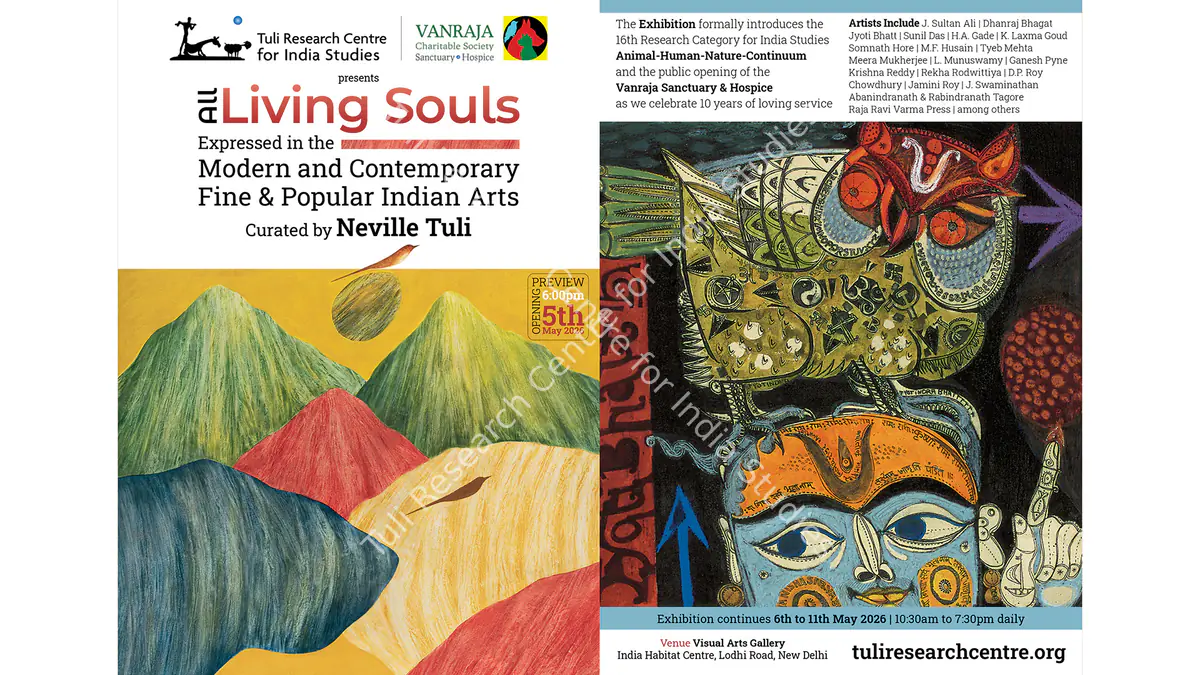
All Living Souls: Expressed in the Modern and Contemporary Fine & Popular Indian Arts, organised by TRIS is an exhibition grounded in a decade of lived engagement, research, and artistic inquiry; drawing from Neville Tuli's sustained work at Vanraja, a sanctuary developed through long-term care for animals.
The exhibition introduces the 16th Research Category for India Studies, Animal–Human–Nature Continuum, focusing on the animals as an integral presence within a shared ecological and cultural context. The exhibition also coincides with the public opening of the Vanraja Sanctuary & Hospice as it completes its ten years.
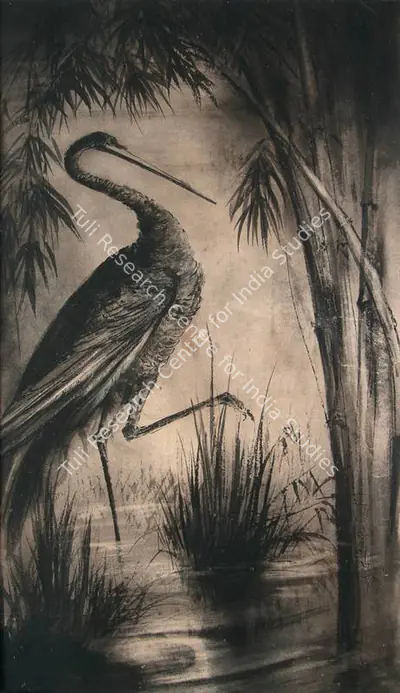
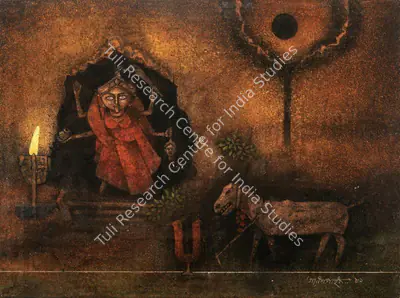
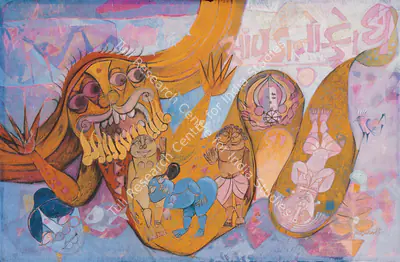
Across the history of the Indian subcontinent, animals hold a central place in both visual and philosophical traditions. Their presence appears in systems of belief such as the vahana, where animals accompany deities, and in courtly, vernacular, and popular imagery. The exhibition brings together works by modern and contemporary Indian artists alongside material from 19th-century print traditions. This range places individual artistic practices in dialogue with widely circulated visual forms. Organised through a wide spectrum of animal forms, it traces representations that move from mythological embodiments to observational and everyday encounters shaped by land, ritual, and urban life.
Across sculpture, painting, print, and other media, All Living Souls examines how animals function as companions, witnesses, and forces within the evolving language of modern and contemporary Indian art practices.
Event details
Artists
45Research Centre
Posts 7
- Tuli Research Centre for India Studies presents All Living Souls - Expressed in the Modern and Contemporary Fine & Popular Indian Arts Curated by Neville Tuli As part of launching the 16th Research Category for India Studies - "The Animal-Human-Nature-Continuum" we present a fascinating exhibition of modern and contemporary Indian fine and popular arts and their expression of the ideas and forms related to the dialogue between animals and humans, and the larger cosmic and spiritual thoughts which abide therein. Please visit the Exhibition and see the artworks by modern and contemporary masters such as Rabindranath Tagore, D.P. Roy Chowdhury, M.F. Husain, J. Swaminathan, J. Sultan Ali, Somnath Hore, Ganesh Pyne, Manjit Bawa, K. Laxma Goud, Krishna Reddy, Jyoti Bhatt, Rekha Rodwittiya, Amit Ambalal, among others, along with vintage and rare prints from the pioneering Indian chromolithographic presses such as Chitrashala, Ravi Varma, Calcutta Art Studio, Chore Bagan & Kansaripara.
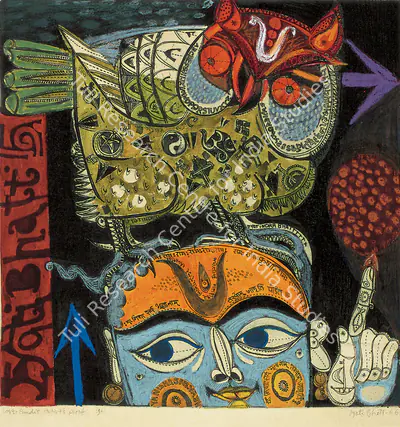
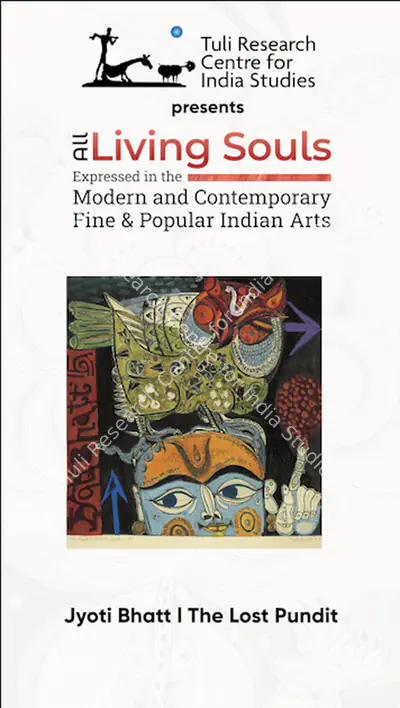
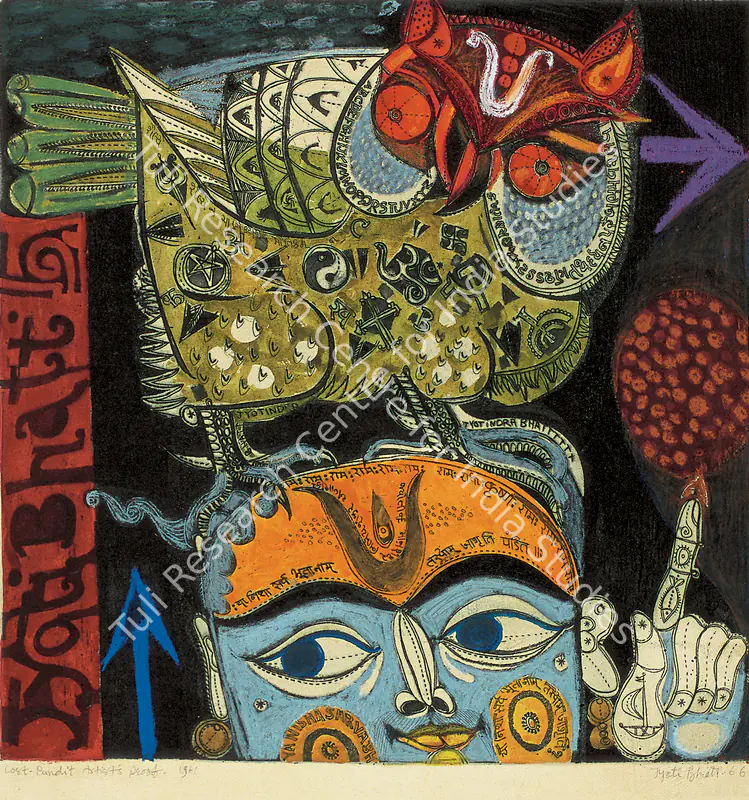
- Jyoti Bhatt's iconic etching “Lost Pundit” is among the featuring works in the exhibition. A pioneering Indian artist, printmaker, and photographer, best known for his contributions to modern printmaking in post-independence India, Bhatt developed a unique visual language by drawing extensively from living traditions including ritual markings and rural craft and folk practices. One of his widely recognisable etchings titled 'Lost Pundit' epitomises a sense of harmony and wit both visually and thematically: an owl is perched atop a somewhat whimsical yet enigmatic figure, a learned man, traditionally associated with knowledge and authority, who appears disoriented or out of place. Bhatt often draws on archetypal figures from Indian society, and here the “Lost Pundit” represents one such figure. This etching is one of Bhatt's early works to be shown at his significant one-man show of prints and paintings at Gallery Chemould in 1967. Many rare visual narratives and artistic expressions come together in 𝘼𝙡𝙡 𝙇𝙞𝙫𝙞𝙣𝙜 𝙎𝙤𝙪𝙡𝙨 Expressed in the Modern and Contemporary Fine & Popular Indian Arts, a compelling exhibition curated by Neville Tuli that explores the 16th Research Category for India Studies- ""The Animal Human Nature Continuum"" on 5th to 11th May 2026 at 📍 Visual Arts Gallery, India Habitat Centre, Lodhi Road, New Delhi 110003 Visit Jyoti Bhatt's Body of Work section on the tuliresearchcentre.org to explore more exhibitions of the master.
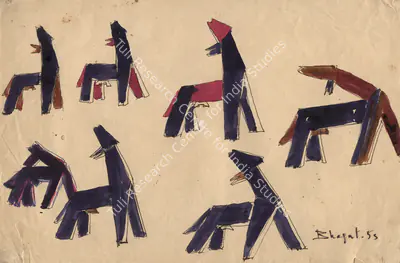
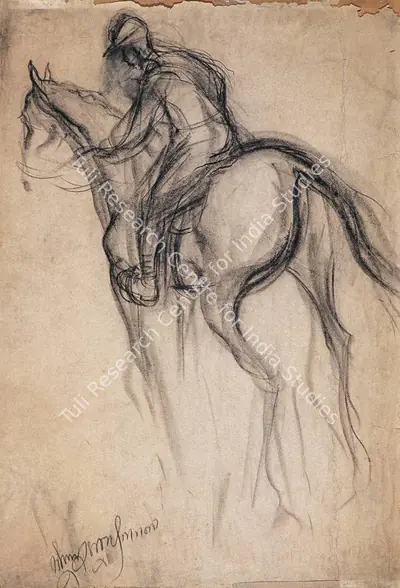
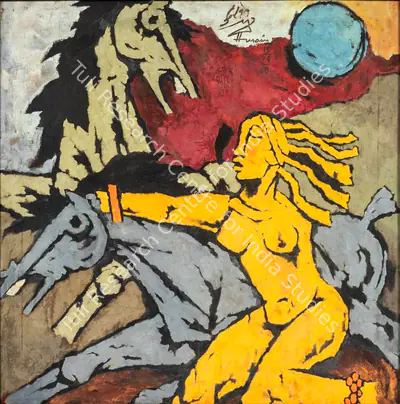
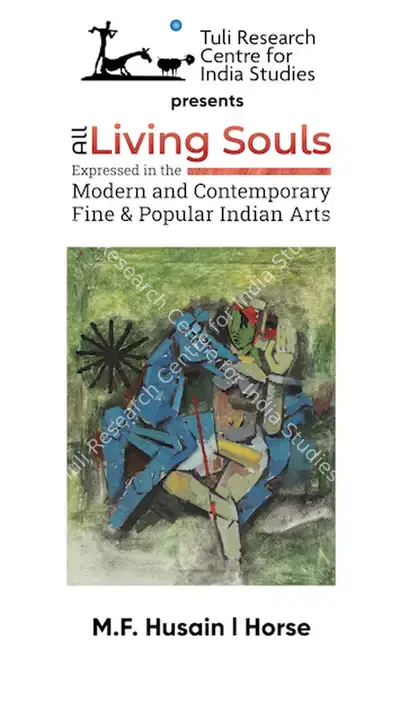
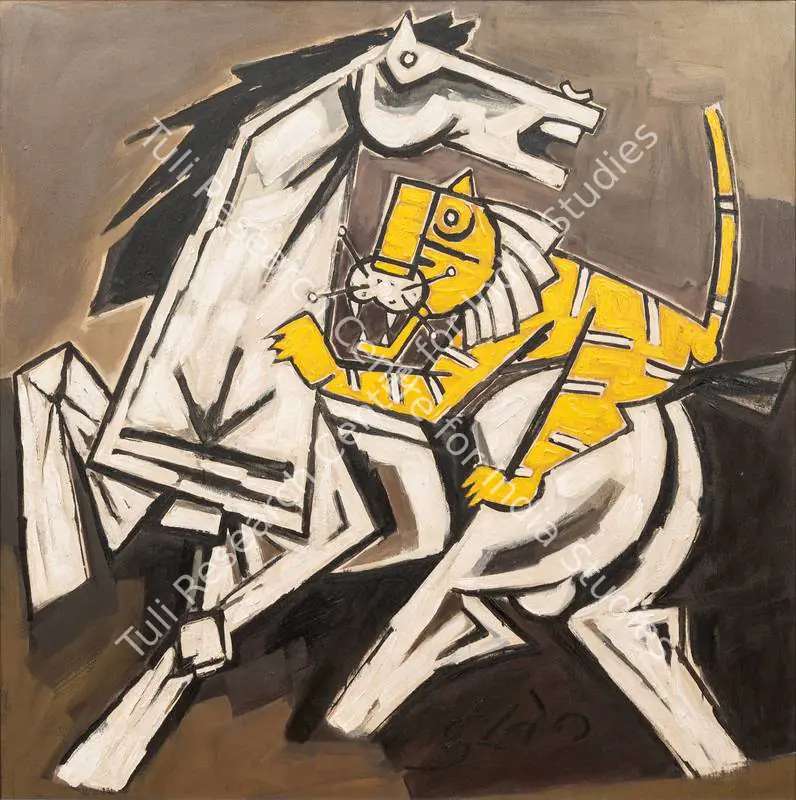
- One of the foremost Indian modernists of the 20th century, MF Husain is recognizably the most popular painter of horses. His horses leap and gallop in agonizing, abstracted movements across the length and breadth of his canvases. Though modern in form, Husain remained deeply rooted in India, and his imagery draws from the vast reservoir of the country's mythologies, rituals, and visual traditions. His works are thus both intensely personal and broadly archetypal. Growing up, a major source for Husain's horses was the iconic Duldul, Imam Husain's horse in the battle of Karbala, whose decorated image was carried during the Muharram processions in Indore that Husain had often watched in his boyhood. The symbol of the tiger is another bearer of myth and identity for Husain, at once the 𝙑𝙖𝙝𝙖𝙣𝙖 of the goddess and a national emblem. Rendered in stylized, angular forms, his tiger departs from naturalism and harks back to the miniature paintings and stone sculptures of the sub-continent. Many rare visual narratives and artistic expressions come together in 𝘼𝙡𝙡 𝙇𝙞𝙫𝙞𝙣𝙜 𝙎𝙤𝙪𝙡𝙨 Expressed in the Modern and Contemporary Fine & Popular Indian Arts, a compelling exhibition curated by Neville Tuli that explores the 16th Research Category for India Studies— "The Animal Human Nature Continuum" on 5th to 11th May 2026 at 📍 Visual Arts Gallery, India Habitat Centre, Lodhi Road, New Delhi 110003 Visit the Integrated Timeline of the artist on tuliresearchcentre.org for an extensive, in-depth analysis of the life and works of one of India's most celebrated artists!
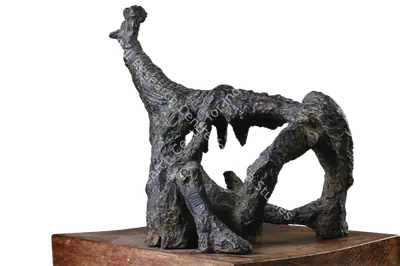
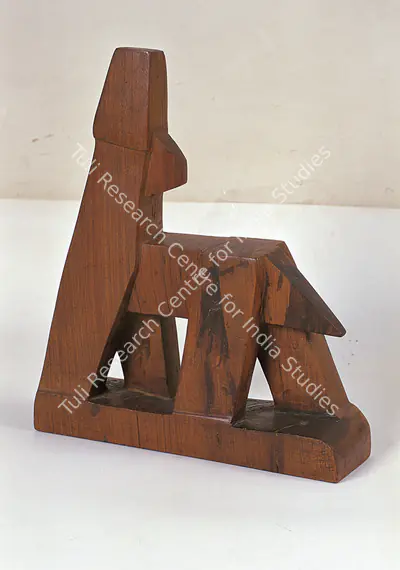
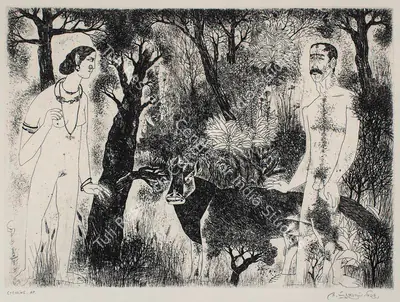
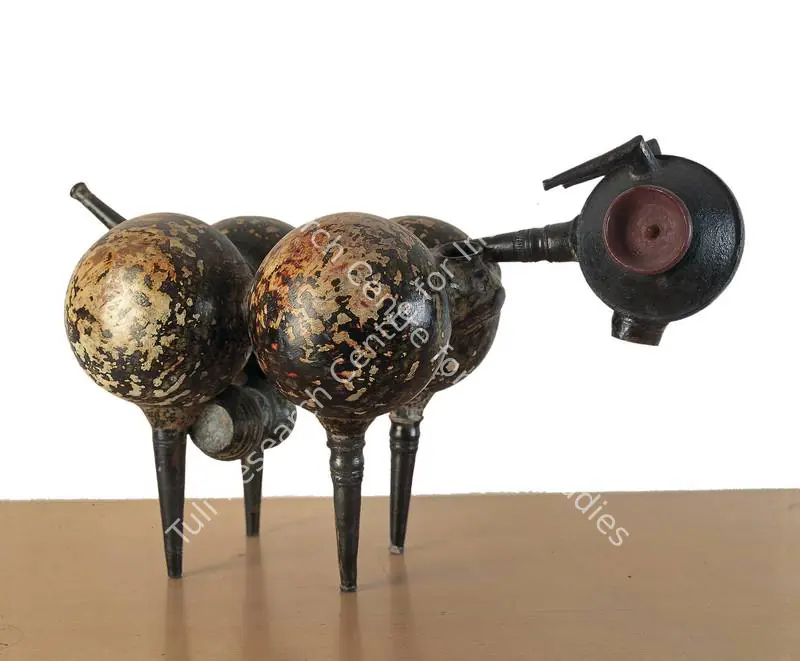
- Laxma Goud is a painter, draughtsman, sculptor and one of India’s finest printmakers. Goud’s childhood was spent in Telangana's village-an environment that shaped his sensibility in the years to come. Goud received his training in drawing and painting at the Government College of Fine Arts and Architecture in Hyderabad and studied Mural Painting under veteran artist K.G. Subramanyan in the 1960s at Baroda. To Goud, urban middle-class morality either repressed sexuality or treated it as taboo while rural societies had an unselfconscious and non-prudish attitude towards it. It is no surprise then that many of Goud’s works were overtly sexual in nature, fusing rural imagery with uninhibited eroticism. While his mastery over printmaking is reflected in his monochromatic copper plate etchings, he expanded into sculptural language in the 1980s utilizing materials such as terracotta and bronze. Goud's goat reflects a heavy sculptural form, returning to his traditional roots of Andhra’s craft traditions like leather puppetry and terracotta sculpting. Goud's goats hark, of course, to those dormant indigenous influences but they also, to some extent, remind one of the goat renderings of Picasso, who had famously kept a pet goat named Esmeralda. In both cases, the goat emerges not merely as a pastoral motif but as a charged and affectionate presence too. In the Indian subcontinent, the goat occupies a long-standing place within agrarian and ritual life, tied closely to everyday economy and forming part of rural systems of livelihood across regions. In Goud's work, the goat is held within this spectrum of memory and the conditions of rural life.
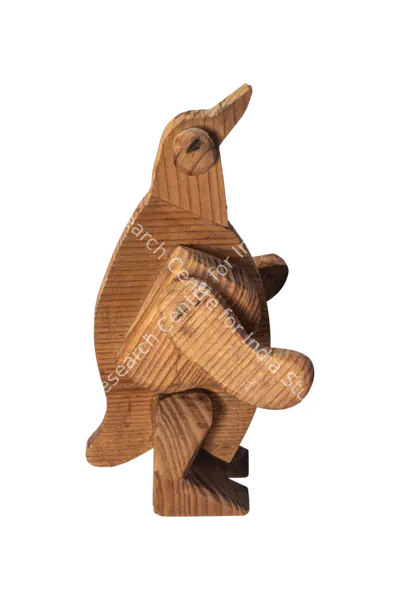
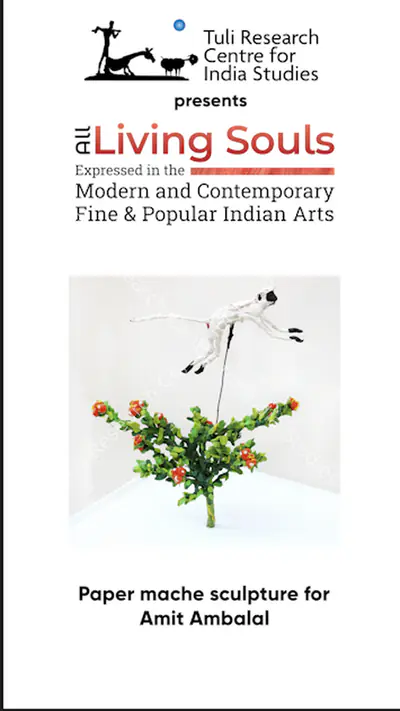
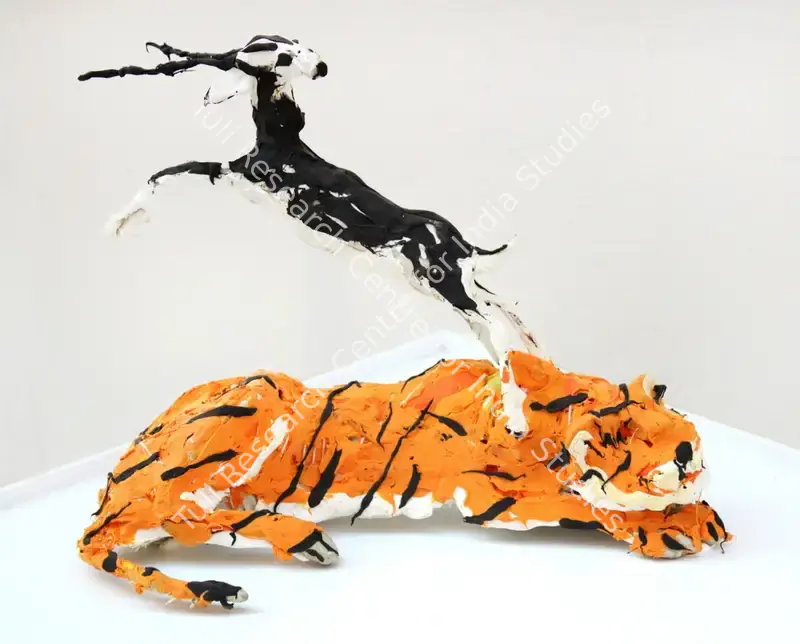
- Amit Ambalal’s exquisite papier mache sculptures embody his larger philosophy of life: to remain inquisitive, playful and humorous, and to embrace life with joy, much like the canine figures that often animate his works. For him, art is an outward expression of an inner spiritual experience, something that is beyond just intellect. Belonging to an industrialist family, Ambalal spent his childhood immersed in stories of Indian mythology wherein the demarcation between reality and mythology often dissolved, and where animals mingled freely with humans. While he was expected to take over his family's business, Ambalal chose to pursue the arts and got trained under veteran artist Chhaganlal Jadav. In Ambalal's papier mache sculptures, a vibrant menagerie of animals emerge as protagonists in his artistic narratives. Inspired by the Pichwais of Nathdwara, he viewed life as Leela or divine play, where all beings, whether human or animal, are interconnected participants. His animals, from pouncing tigers to galloping dogs and leaping and brachiating monkeys are often suspended mid-action on slender rods, creating a sense of weightlessness and motion in a carnivalesque arrangement.
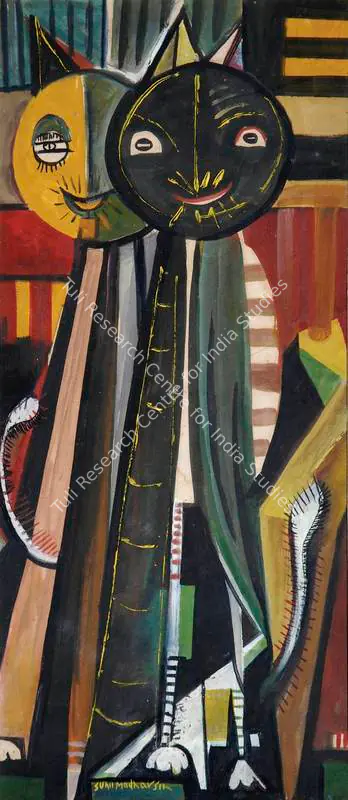
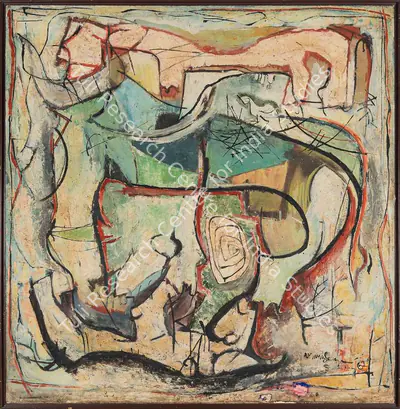
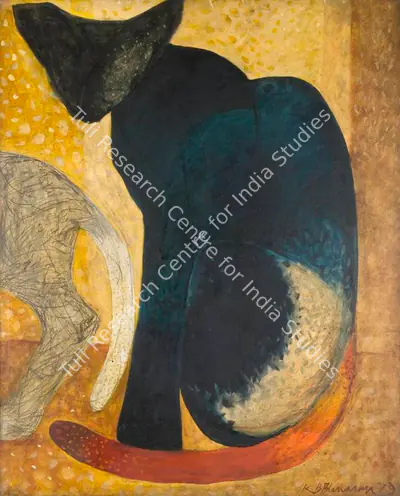
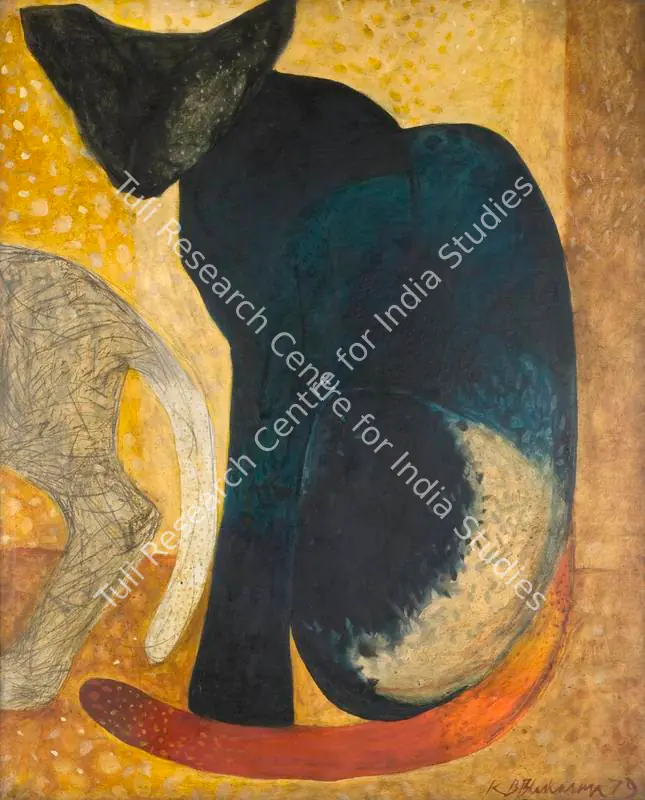
- R.B. Bhaskaran is associated with the Madras Art Movement, often working through recurring motifs and symbolic forms. The cat, within Indian domestic and visual culture, occupies a familiar yet ambiguous space both companion and elusive observer, moving between intimacy and distance. In this work, Bhaskaran elongates and distorts the feline form, allowing it to stretch across the pictorial surface. The animal becomes less a subject and more a sign fluid, shifting, and quietly expressive. Its presence carries both playfulness and unease within the composition. Visit the website to discover more on the artist’s work.
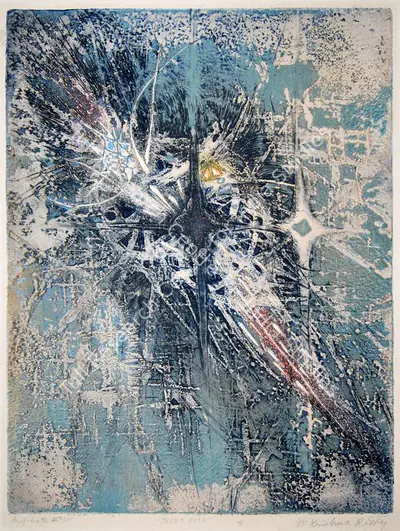
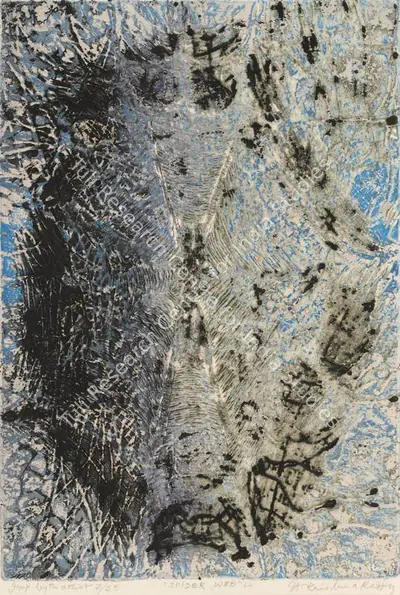
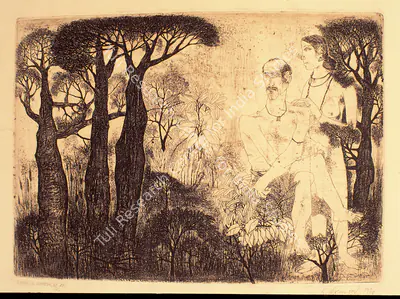
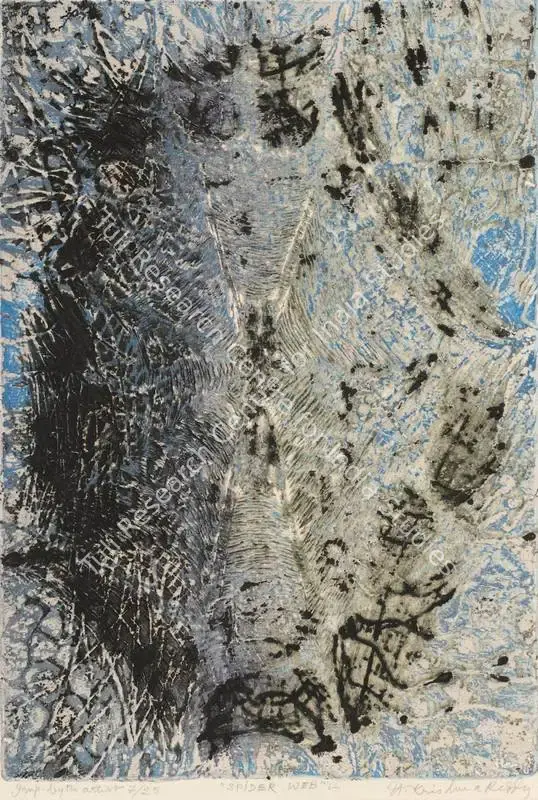
- Krishna Reddy, one of the world's finest printmakers, developed complex viscosity printing techniques to build layered surfaces for his organic artforms, resembling webs or marine organisms which emerge through dense tonal structures. The insect or organism becomes a study of interconnected systems and movement, rooted through a brilliant aesthetic fusing of his individual creative spirit and his unique educational experiences and inspirations at Rabindranath Tagore's Santiniketan with Nandalal Bose, the Slade School of Art with Henry Moore, the Academie Grande Chaumiere with Ossip Zadkine, Atelier 17, Paris with Stanley Hayter and Academia Di Belle Arti Di Brera with Marino Marini during the period 1947-57.
Calendar 2
- ArchivedExhibitionProject 79All Living SoulsExpressed in Modern & Contemporary Fine and Popular Arts | Curated by Neville Tuli6th - 11th May 202610:30am - 7:30pmVisual Arts Gallery, India Habitat Centre, Lodhi Road, New Delhi - 110003
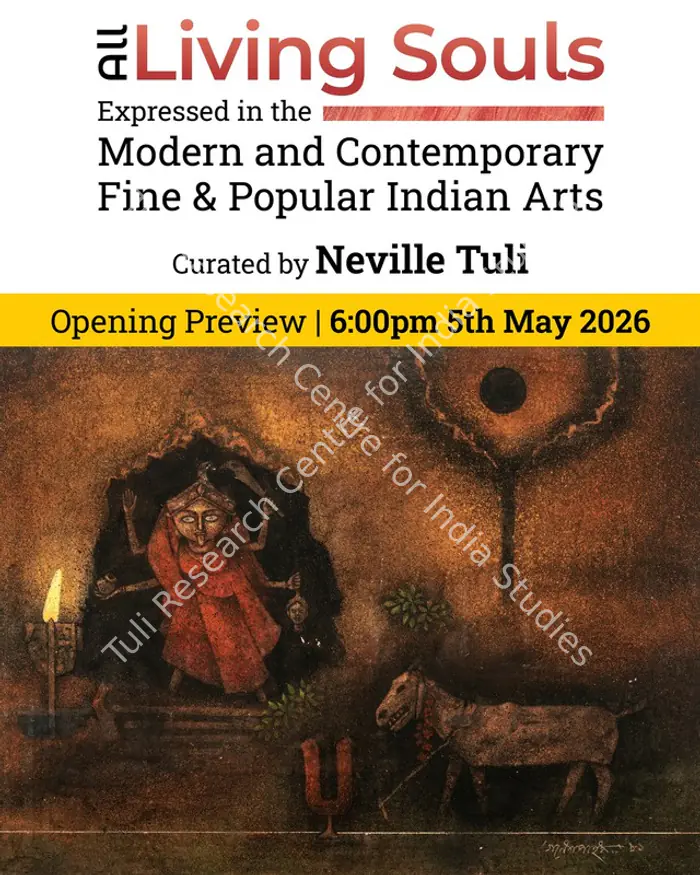
- ArchivedOpening PreviewProject 78All Living SoulsExpressed in Modern & Contemporary Fine and Popular Arts | Curated by Neville Tuli5th May 20266:00pm - 9:00pmVisual Arts Gallery, India Habitat Centre, Lodhi Road, New Delhi - 110003
Related
28
Personalities
28