
Dharti Ke Lal1946
Introduction
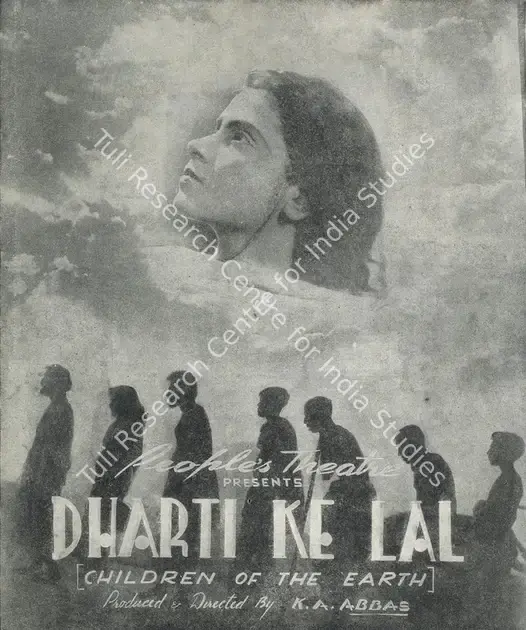
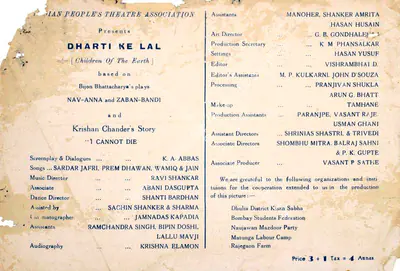
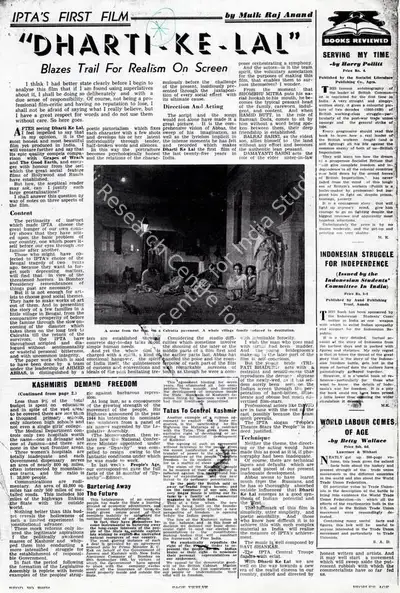
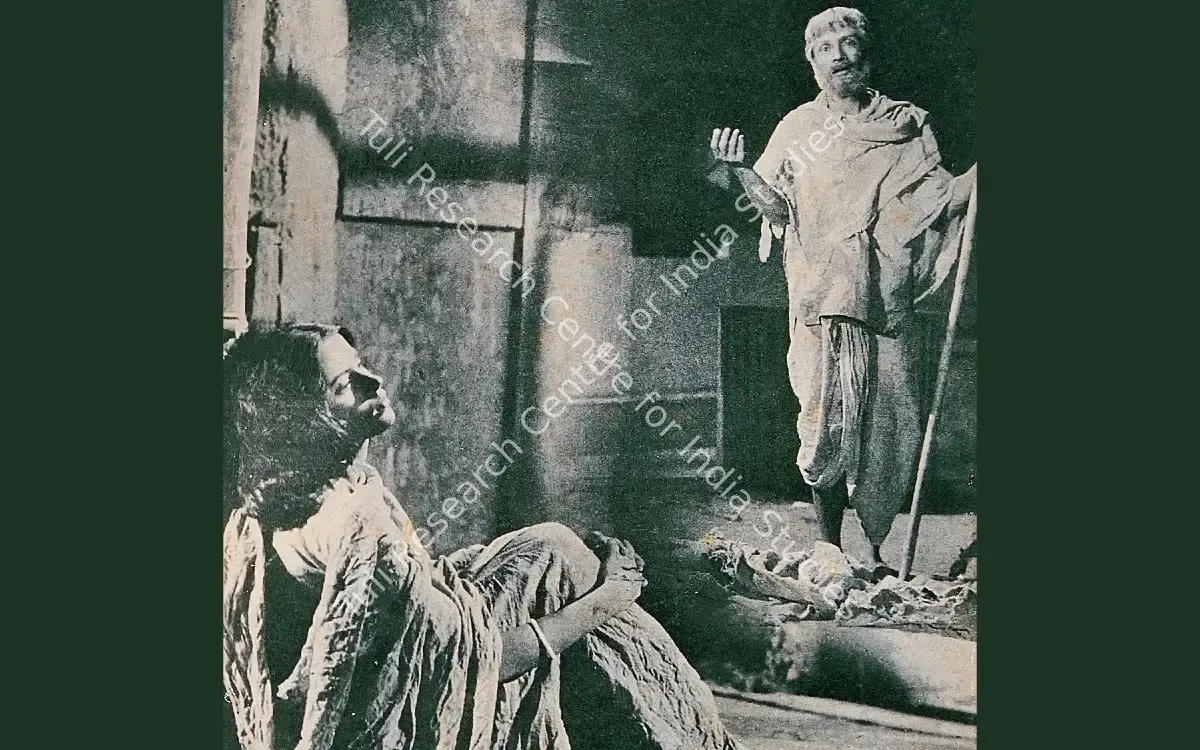
Dharti Ke Lal (1946) The first directorial venture of renowned filmmaker Khwaja Ahmad Abbas (K. A. Abbas), this film is a landmark in Indian cinema's social realist tradition. Co-written by Abbas and Bijon Bhattacharya, the film draws from Bhattacharya's plays Nabanna and Jabanbandi, and the short story Annadata by Krishan Chander. Set against the backdrop of the devastating Bengal famine of 1943, which claimed millions of lives, the film portrays the struggles of a peasant family forced to abandon their land and migrate to Calcutta in search of survival.
The cast featured Balraj Sahni in his first major role as Niranjan, alongside Damayanti Sahni, Tripti Bhaduri, Shombhu Mitra, Anwar Mirza, and Zohra Sehgal (in her screen debut). The film also included notable performances by Usha Dutt, Rashid Ahmed, Hameed Butt, K.N. Singh, David, and Snehaprabha. The New York Times hailed it as a “gritty realistic drama,” reflecting its unflinching portrayal of human suffering and resilience.
Musically, Dharti Ke Lal boasted a powerful score by Pandit Ravi Shankar, with lyrics by prominent poets like Ali Sardar Jafri, Prem Dhawan, Vamiq, and Nemichand Jain. Mumtaz Shanti was the primary playback singer, though Lakshmi Shankar also contributed, notably to the haunting song Beete Ho Sukh Ke Din. Tracks such as Suno Manuva Naiya Ye, Jai Dharti Maiya Jai Ho, and Bhookha Hai Bangal became widely popular for their emotional resonance.
Produced by the Indian People's Theatre Association (IPTA), this was their only full-length feature film and is regarded as a pioneering effort in politically conscious cinema. Many IPTA members were involved in famine relief efforts, which influenced the film's script and performances. Most of the cast and crew came from IPTA's theatre background, lending the film its authentic and empathetic tone.
Although the film's initial box-office run in Bombay was disrupted by riots and a citywide curfew, its significance endured. In 1949, Dharti Ke Lal became the first Indian film to receive wide distribution in the Soviet Union, helping establish Indian cinema's international appeal. Alongside Neecha Nagar (1946) and Do Bigha Zamin (1953), it marked the emergence of Indian neorealism and inspired a generation of socially engaged filmmakers and artists.
इस फ़िल्म की कास्ट में बलराज साहनी ने निरंजन के रूप में अपना पहला बड़ा रोल निभाया। उनके साथ दमयंती साहनी, तृप्ति भादुड़ी, शंभू मित्रा, अनवर मिर्ज़ा और ज़ोहरा सहगल (जिन्होंने इस फ़िल्म से स्क्रीन पर डेब्यू किया) भी शामिल थे। फ़िल्म में उषा दत्त, रशीद अहमद, हमीद बट, के.एन. सिंह, डेविड और स्नेहप्रभा की भी यादगार परफॉर्मेंस देखने को मिलीं। 'द न्यूयॉर्क टाइम्स' ने इसे "ज़बरदस्त रियलिस्टिक ड्रामा" कहा, क्योंकि इसमें इंसानी दुख और हिम्मत को बिना किसी लाग-लपेट के दिखाया गया था।
संगीत की दृष्टि से, धरती के लाल में अली सरदार जाफ़री, प्रेम धवन, वामिक और नेमीचंद जैन जैसे प्रमुख कवियों के गीतों के साथ पंडित रवि शंकर के प्रभावशाली संगीत ने फ़िल्म की भावनात्मक गहराई और यथार्थ को और भी सशक्त बनाया। मुमताज़ शांति मुख्य पार्श्व गायिका थीं, हालांकि लक्ष्मी शंकर ने भी योगदान दिया, विशेष रूप से भूतिया गीत 'बीते हो सुख के दिन में', 'सुनो मनुवा नैया ये',' जय धरती मैया जय हो' और 'भूखा है बंगाल' जैसे ट्रैक अपनी भावनात्मक गूंज के कारण मुख्य रूप से लोकप्रिय हुए।
इंडियन पीपल्स थिएटर एसोसिएशन (IPTA) द्वारा बनाई गई यह उनकी एकमात्र फ़ीचर फ़िल्म थी और इसे राजनीतिक रूप से जागरूक सिनेमा की दिशा में एक अहम पहल माना जाता है। इप्टा के कई सदस्य अकाल राहत कार्यों में शामिल थे, जिसका असर फ़िल्म की स्क्रिप्ट और कलाकारों के अभिनय पर पड़ा। फ़िल्म के ज़्यादातर कलाकार और क्रू सदस्य इप्टा के थिएटर बैकग्राउंड से थे, जिससे फ़िल्म को एक असली और संवेदनशील अंदाज़ मिला।
हालांकि बॉम्बे में फ़िल्म की शुरुआती बॉक्स-ऑफ़िस परफ़ॉर्मेंस दंगों और शहर भर में लगे कर्फ़्यू की वजह से बाधित हुई, फ़िर भी इसका महत्व बना रहा। 1949 में, 'धरती के लाल' सोवियत संघ में बड़े पैमाने पर रिलीज़ होने वाली पहली भारतीय फ़िल्म बनी, जिससे भारतीय सिनेमा की अंतरराष्ट्रीय पहचान बनाने में मदद मिली। 'नीचा नगर' (1946) और 'दो बीघा ज़मीन' (1953) के साथ-साथ, इसने भारतीय नव-यथार्थवाद (neorealism) की शुरुआत की और सामाजिक मुद्दों से जुड़े फ़िल्मकारों और कलाकारों की एक पीढ़ी को प्रेरित किया।