
Introduction
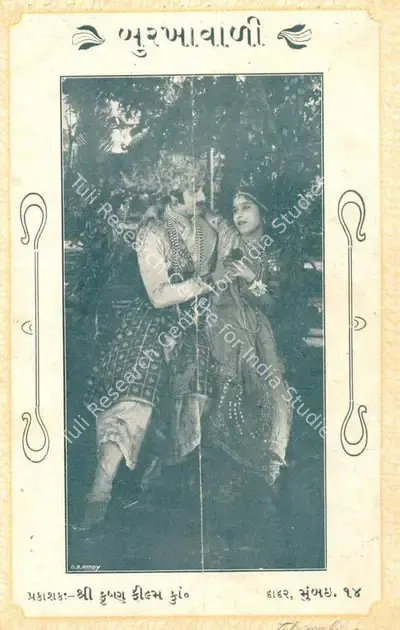
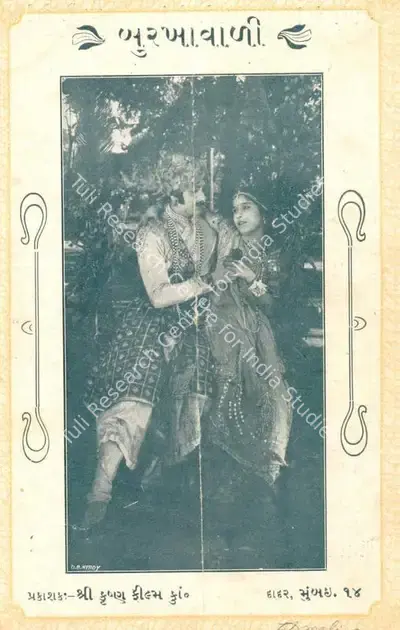
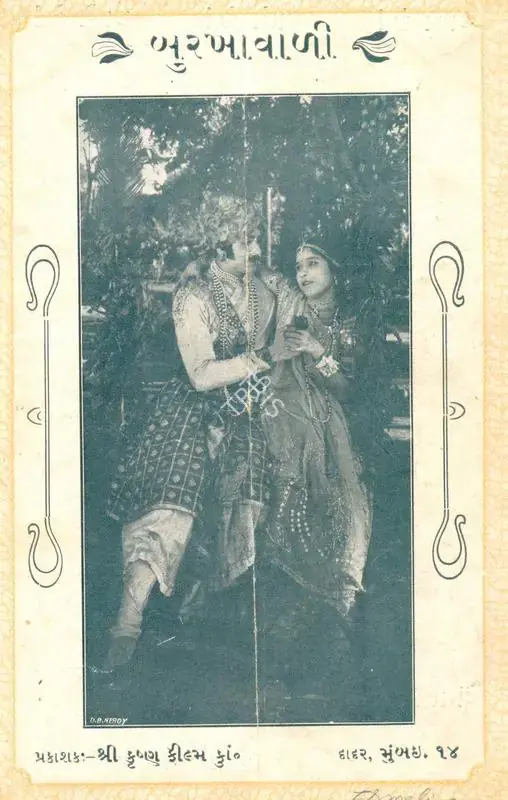
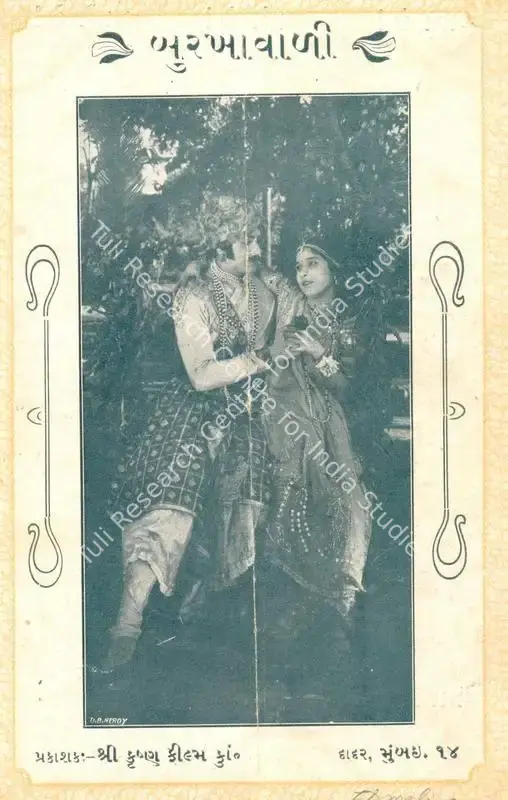
Burkhawali (1926), directed by Kanjibhai J. Rathod, was a silent film based on a script written by Kumar Krishna and Natwar Shyam. Despite featuring acclaimed Director of Photography Chaturbhai Patel, and starring Ermeline, Pehlwan Nandram, Rampiary, Durga, Hydershah, and Vishnu, there are no known records regarding the film's commercial success or failure. What remains significant, however, is the legacy of its director, Kanjibhai J. Rathod, who is remembered as one of the first professional directors in Bombay cinema.
Rathod's journey in cinema began as a still photographer before transitioning into acting. In 1919, he joined Suchet Singh's production team, appearing in Mrichhakatik and playing the lead role in Narasinh Mehta. He is also believed to have completed unfinished films for Singh's Oriental Film Company alongside G.S. Devare. Rathod's career as a director truly took off when he joined Kohinoor Studios in 1920, later becoming a prominent figure in Bombay cinema.
Among his notable works in the 1920s were Gul-e-Bakavali, a commercial hit, and Bhakta Vidur, which, despite its acclaim, was banned for political reasons. Rathod also worked at Saurashtra Film in Rajkot between 1924 and 1925, where he continued to make waves in the industry. After returning to Bombay, Rathod played a pivotal role in Krishna Studio after 1925, contributing to the studio's success in the following years, although he had a brief stint with Kohinoor United Artists.
Rathod made significant contributions to sound cinema as well, with five sound films for Krishna Movietone in 1931. His film Kono Vak?, based on a story by Munshi, was considered a radical social commentary for its time, further cementing Rathod's distinct directorial style. He later worked in the talkie era with Sagar Studios, before moving into freelance filmmaking in both Hindi and Gujarati cinema.
In the later stages of his career, Rathod served as a production manager for Dhirubhai Desai's Chandrakala Pictures. During this time, several of Rathod's silent films, including Bolti Bulbul (1942), Devkanya (1946), and Bhakta Prahlad (both 1946), were remade. Rathod's body of work reflects his resilience and adaptability in an industry that was undergoing significant transitions, leaving an indelible mark on Indian cinema's early history.
राठौड़ का सिनेमा की दुनिया में सफ़र एक फ़ोटोग्राफ़र के रूप में शुरू हुआ और बाद में उन्होंने अभिनय की ओर रुख़ किया। सन् 1919 में वे सुचेत सिंह की निर्माण कंपनी से जुड़ गए और मृच्छकटिक फ़िल्म में अभिनय किया। उन्होंने नरसिंह मेहता नामक फ़िल्म में मुख्य भूमिका भी निभाई। ऐसा भी माना जाता है कि उन्होंने जी. एस. देवरे के साथ मिलकर ओरिएंटल फ़िल्म कंपनी की कुछ अधूरी तैयार फ़िल्मों को पूरा किया। पर एक निर्देशक के तौर पर कांजीभाई की असली पहचान तब बनी जब सन् 1920 में वे कोहिनूर स्टूडियो से जुड़े और जल्द ही बॉम्बे सिनेमा की एक जानी-मानी हस्ती बन गए।
1920 के दशक में उनकी कुछ यादगार फ़िल्मों में गुल-ए-बकावली शामिल थी जिसे बड़ी व्यावसायिक सफलता मिली। उनकी भक्त विदुर को प्रसिद्धि तो मिली लेकिन राजनीतिक कारणों से उसे प्रतिबंधित कर दिया गया था। वर्ष 1924 और 1925 के दौरान राठौड़ ने राजकोट की 'सौराष्ट्र फ़िल्म कंपनी' में कार्य किया। उनके निर्देशन कौशल की वहाँ भी धूम रही। सन् 1925 के बाद वे वापस बॉम्बे लौट आए और 'कृष्णा स्टूडियोज़' के विकास में महत्वपूर्ण भूमिका निभाई। इसी दौर में उन्होंने कुछ समय के लिए 'कोहिनूर' और 'यूनाइटेड आर्टिस्ट्स' के साथ भी काम किया।
बोलती फ़िल्मों या टॉकीज़ के दौर में भी कांजीभाई राठौड़ का उल्लेखनीय योगदान रहा। सन् 1931 में बॉम्बे फ़िल्म उद्योग में आकर उन्होंने 'कृष्णा मूवीटोन' के लिए पाँच बोलती फ़िल्में बनाईं। मुंशी की कहानी पर बनी उनकी फ़िल्म कोनो वाक? उस दौर के हिसाब से क्रांतिकारी सामाजिक हस्तक्षेप मानी गई। इससे राठौड़ ने अपनी विशिष्ट निर्देशन शैली की धाक जमा ली। उन्होंने बाद में 'सागर स्टूडियोज़' के साथ भी काम किया और फिर हिन्दी और गुजराती भाषा के सिनेमा में एक स्वतंत्र फ़िल्मकार के रूप में अपनी पारी जारी रखी।
अपने करियर के अंतिम दौर में राठौड़ ने धीरुभाई देसाई की 'चंद्रकला पिक्चर्स' में प्रोडक्शन मैनेजर के रूप में कार्य किया। इस दौरान खुद उनकी कई मूक सिनेमा दौर की फ़िल्मों का टॉकी में रीमेक किया गया जिनमें बोलती बुलबुल (1942), देवकन्या (1946) और भक्त प्रह्लाद (1946) जैसी फ़िल्में शामिल हैं। राठौड़ का कार्य उनकी निरंतर चलती आ रही रचनात्मक यात्रा और उसके पीछे छिपी सदा कुछ नया करने की भावना को दर्शाता है। जिस तरह से उन्होंने एक बदलते हुए फ़िल्मउद्योग में इतने दशकों तक खुद को प्रासंगिक बनाए रखा, भारतीय सिनेमा के शुरुआती इतिहास में वे एक स्थायी छाप छोड़ने वाले फ़िल्मकार के रूप में याद किए जायेंगे।